
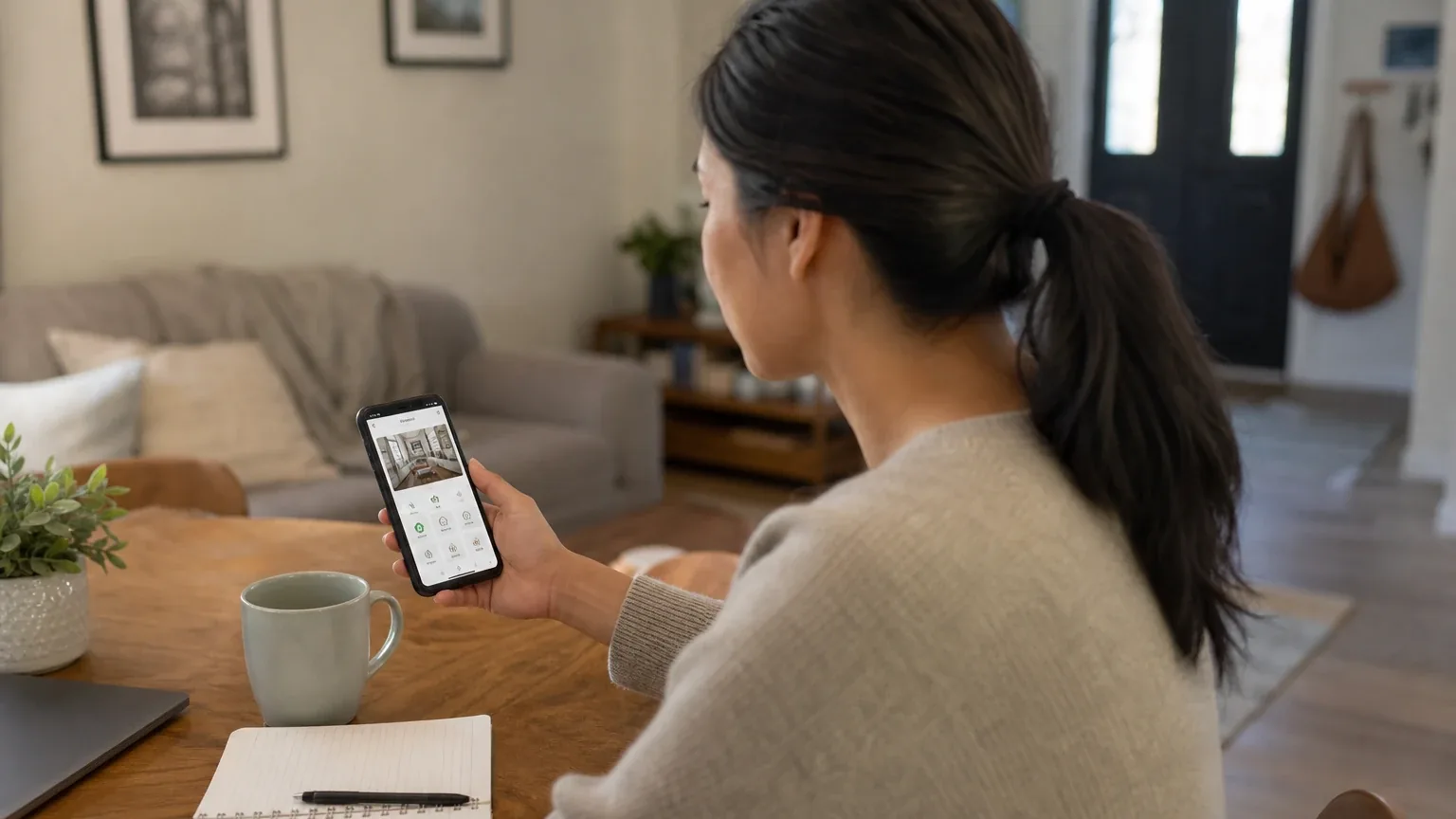
Answer Capsule
Alarm.com is a good—not strong—fit for Comprehensive Caregiver Oversight. Two of seven platforms named it during the ranking stage (google, openai), both at rank 4. Its strongest case: the Alarm.com Wellness solution combines passive activity sensors, routine-anomaly alerts, caregiver app notifications, and optional professional monitoring in one security-plus-wellness ecosystem [1]. The main limitation: Wellness is sold only through authorized dealers, so pricing, contracts, escalation rules, and support vary by provider, and no public source establishes a universal alert-delivery SLA or HIPAA coverage for family deployments [3].
Research Snapshot
| Field | Finding |
|---|---|
| Platform mentions in ranking stage | 2 of 7 platforms (google, openai) |
| Share of included platform responses | 28.6% |
| Average listed rank | 4.0 |
| Best listed rank | 4 |
| Relevant product/model/plan | Alarm.com Wellness solution, provisioned through an authorized provider such as Surety Home or a local dealer |
| Overall use-case fit | Good (six platforms rated good; deepseek rated mixed) |
| Research date | 2026-09-27 |
What Changed Since August 2026
Alarm.com moved down from No. 2 to No. 8, and platform mentions decreased from 3 to 2. The September 2026 review reaches similar buyer conclusions about Alarm.com Wellness, but the supporting evidence was largely rewritten. The fit remains good rather than strong, built on passive routine monitoring, broad sensor coverage, and optional professional monitoring, with the same cautions about dealer-set terms, unverified response times, and unclear HIPAA coverage for family deployments. Pricing now includes a $5 per month Wellness add-on reported through Surety, while the previously repeated $13.95 to $60 monthly range is no longer reported. Differences between the two editions reflect what each article reports; they do not by themselves prove that the product, service, or price changed.
The August 2026 review preserves the earlier article for reference.
Why Alarm.com Qualified for This Study
Questions This Section Answers
- Why did Alarm.com qualify for a Comprehensive Caregiver Oversight review when only two platforms ranked it?
- Is Alarm.com a good choice for Comprehensive Caregiver Oversight compared with dedicated medical alert systems?
Alarm.com qualified because it cleared the study's minimum-mention threshold and because its Wellness solution maps directly onto the use case: passive activity monitoring, anomaly alerts, caregiver notifications, and optional professional monitoring [5]. Google and openai each placed it at rank 4, giving an average listed rank of 4.0 and a 28.6% share of included platform responses.
Qualification is not the same as endorsement. All seven platforms evaluated fit, but only two named Alarm.com during ranking discovery. The other five platforms discussed Alarm.com's Wellness solution in their fit research without listing it in the ranking stage, and deepseek rated the overall fit "mixed" rather than good. The entity also qualified on breadth: the same platform covers doors, motion, bed presence, medication-related routines, environmental safety, video, and security in one app [6].
The Product, Model, Plan, or Service Most Relevant to Comprehensive Caregiver Oversight
Questions This Section Answers
- Which Alarm.com product should a family caregiver buy for Comprehensive Caregiver Oversight?
- Does Alarm.com Wellness require a security panel and professional installation?
The relevant offering is the Alarm.com Wellness solution, sold as an add-on to an Alarm.com-compatible security system and provisioned through an authorized dealer such as Surety Home or a local home-security provider [7]. It is not a standalone consumer device.
Wellness layers activity monitoring onto a security panel. Alarm.com describes it as connecting security, automation, video, bed, alert-button, medicine-cabinet, and refrigerator sensors with smartphone alerts delivered to authorized providers [8]. Google's research found the system requires a compatible physical panel—Qolsys, 2GIG, or DSC—plus compatible sensors to transmit data to the cloud [9]. Alarm.com's knowledge base describes Wellness as an add-on to Interactive + Automation, Commercial Plus, and Interactive Gold plans [11].
Naming is inconsistent across sources: Wellness, Wellness Insights, Wellness Solution, and Wellness Package all appear, and the exact residential SKU is unclear (perplexity). A separate Enterprise Wellness offering targets senior housing and healthcare facilities and should not be conflated with the family deployment [12].
What the AI Platforms Agreed About
Questions This Section Answers
- What do AI platforms agree Alarm.com Wellness does well for caregiver oversight?
- Does Alarm.com Wellness track routines and alert caregivers to anomalies?
Platforms broadly agreed on four points.
Integrated multi-sensor scope. Alarm.com Wellness combines security sensors, lights, locks, thermostats, video, bed sensors, alert buttons, and medicine-cabinet and refrigerator sensors, supporting broader oversight than a single panic pendant [13].
Routine tracking and anomaly detection. The platform learns activity patterns and alerts caregivers when meaningful activity does not occur or routines change—waking, wandering, refrigerator use, chair use, bathroom visits, sleep and eating patterns, and medication-cabinet activity [15]. Alarm.com describes a 30-day routine-establishment period for Wellness Insights [17].
Caregiver app notifications. Mobile alerts reach caregivers for anomalies, emergency button presses, and custom events, and multiple family members can monitor activity [18].
Optional professional monitoring. Alarm.com states professional monitoring personnel can receive real-time alarm signals and dispatch emergency response, and monitored security service is available 24/7 for emergency or panic-button signals [19].
Where the AI Platforms Disagreed or Were Uncertain
Questions This Section Answers
- Is Alarm.com Wellness HIPAA compliant for caregiver monitoring data?
- How fast does Alarm.com Wellness deliver and escalate emergency alerts?
Escalation and response speed. Alarm.com supports real-time app notifications and integrates with PERS pendants and central-station monitoring, but public materials do not establish a universal end-to-end alert-delivery SLA or a uniform caregiver escalation protocol [20]. Anthropic noted industry averages of 30–45 seconds for security alarms but found no Wellness-specific figure, and cited a competing claim of 9-second monitoring-center response for Bay Alarm Medical (anthropic). Grok described optional professional monitoring as a 24/7 dispatch add-on with family notifications primary otherwise [22].
HIPAA and health-data handling. Alarm.com's privacy notices do not reference HIPAA compliance or Business Associate Agreements, and the company positions the Authorized Service Provider—not Alarm.com—as responsible for customer privacy-law compliance (anthropic:38-1, anthropic:38-8). Kimi found SOC 2 claims but no explicit HIPAA BAA for Wellness (kimi:alarm-security-compliance). OpenAI's review reached the same conclusion: the material does not establish HIPAA status for ordinary family deployments [23].
Pricing and contracts. Surety lists Wellness at $5 per month as an add-on to a $22 per month Home plan [24]. Anthropic cited a sample dealer's Wellness Essentials at $299 upfront plus $49 per month and Premier at $399 plus $59 per month with a two-year agreement (anthropic:31-1, anthropic:31-7). Kimi cited $44.95–$64.95 per month through dealers (kimi). These figures conflict and are provider-specific.
Reliability. A June 2026 BBB complaint described an inability to reliably download video footage and poor support resolution during a critical incident; whether this is isolated or systemic is unclear (anthropic:22-1, anthropic:22-2).
Wellcam status. Google's research found the specialized Wellcam (ADC-V622-WELL), which had a physical push-to-call button, has been discontinued and replaced by standard indoor cameras lacking that button [26].
Use-Case-Specific Features and Capabilities
Questions This Section Answers
- Which sensors does Alarm.com Wellness include for activity, bed presence, and medication tracking?
- Does Alarm.com Wellness support fall detection and two-way caregiver communication?
Activity and routine monitoring. Wellness uses discreet, non-intrusive sensors to detect changes in routine—prolonged immobility, bathroom visit frequency, sleep patterns, wandering, and medication adherence—and alerts caregivers through the app [28]. Alarm.com states family members and caregivers can monitor time in bed, in a favorite chair, or out of the house [29].
Hardware range. Standard packages include bed presence monitors, motion sensors, door sensors, panic buttons or pendants, medication-box sensors, and temperature sensors (anthropic:2-5, anthropic:31-1, anthropic:31-7). Individual sensors average about $99 per unit [30].
Fall detection. Optional fall-detection pendants with built-in accelerometers trigger emergency response without a button press (anthropic:1-10, anthropic:1-12). Compatible devices include the Qolsys QS1314-840 and 2GIG-F1-345 [31]. Fall-detection accuracy and false-alarm rates have no third-party validation in the reviewed sources (anthropic).
Medication adherence. The solution can track medication boxes to confirm scheduled doses and notify caregivers of missed doses (anthropic:6-1, anthropic:9-1).
Two-way audio and remote check-in. Wellcam combined a camera and speaker for hands-free voice communication between caregiver and care recipient (anthropic:5-6, anthropic:6-8). Because the specialized Wellcam is discontinued, buyers should confirm which current camera, if any, provides equivalent two-way calling [32].
Multi-caregiver coordination. The app supports multiple family members receiving alerts and includes caregiver check-in/check-out logging in Firmware Version 2.4.0 (anthropic:1-1, anthropic:4-1).
Security and automation integration. Wellness integrates with door locks, smart thermostats, smart lights, doorbell cameras, and video in one app (anthropic:3-5, anthropic:3-6, anthropic:9-14).
Pricing, Fees, Contracts, and Ongoing Costs
Questions This Section Answers
- How much does Alarm.com Wellness cost per month, and are there setup or cancellation fees?
- Is Alarm.com Wellness available month-to-month, or do dealers require long-term contracts?
Pricing is dealer-set and not standardized. Alarm.com publishes no single national price for the residential Wellness package [33].
| Cost element | Reported figure | Source |
|---|---|---|
| Wellness add-on (Surety) | $5/month | [34] |
| Surety Home plan | $22/month, or $17 self-monitoring | [34] |
| Wellness Essentials (sample dealer) | $299 upfront + $49/month, 2-year agreement | (anthropic:31-1, anthropic:31-6) |
| Wellness Premier (sample dealer) | $399 upfront + $59/month, 2-year contract | (anthropic:31-7) |
| Dealer monitoring range | $44.95–$64.95/month | (kimi) |
| Base Alarm.com monitoring (non-Wellness) | $13.95–$22.95/month | (anthropic:29-4) |
| Individual sensors | ~$99 each | [36] |
| Installation | $99–$199 typical, dealer-dependent | (kimi) |
Contract terms conflict. Surety states its service is month-to-month from day one [34], and Alarm.com itself does not require a contract, though service providers may (anthropic:28-10). Other sources report dealers imposing two-to-five-year commitments with early-termination fees (anthropic:31-3, anthropic:35-15). Google's research found DIY dealers offer month-to-month terms while traditional local dealers typically require three-to-five-year contracts [37].
Additional potential fees include equipment and installation charges, base service, professional monitoring, video, cellular connectivity, additional sensors, taxes, and early-termination penalties (openai, anthropic). Pricing confidence across platforms was low to moderate.
Best Suited For
Questions This Section Answers
- Who is Alarm.com Wellness best suited for in Comprehensive Caregiver Oversight?
- Is Alarm.com Wellness worth it for families who already have a home security system?
Alarm.com Wellness best suits families who want one app and one sensor network for doors, activity, bed presence, medication-related routines, environmental safety, and security (openai, anthropic). It fits aging adults living independently at home, caregivers who value configurable alerts and optional professional monitoring, and households where installation and service from a local authorized provider are acceptable (openai, anthropic).
It also suits buyers already inside the Alarm.com dealer ecosystem who want to add wellness oversight without a second platform (deepseek, kimi), and multi-generational households needing both security and wellness monitoring (kimi). Google's research highlighted caregivers wanting passive behavior tracking without intrusive video cameras [39].
Probably Not Best Suited For
Questions This Section Answers
- Who should not choose Alarm.com Wellness for Comprehensive Caregiver Oversight?
- Is Alarm.com Wellness a poor fit for renters or buyers who need transparent nationwide pricing?
Buyers seeking a standalone medical-alert product with publicly specified response-time guarantees should look elsewhere (openai, anthropic). The same applies to buyers needing clinically validated health monitoring, vital-sign monitoring, or medication dispensing (openai).
Cost-sensitive buyers face higher entry costs than dedicated medical alert systems: Wellness packages start at $299–$399 upfront plus $49–$59 per month with typical two-year contracts (anthropic:31-1, anthropic:31-7). Renters and frequent movers face professional installation requirements and dealer-dependent contract flexibility (anthropic). Buyers requiring HIPAA-compliant health-data handling or healthcare-grade privacy safeguards are not served, because no BAA documentation was found (anthropic:38-1, kimi:alarm-security-compliance). Buyers unwilling to share routine, activity, location, or video-related data with a platform and service provider should also decline (openai).
When Another Option May Be Better
Questions This Section Answers
- What is a better alternative to Alarm.com Wellness when guaranteed human emergency response is the priority?
- When is a dedicated remote-care or aging-in-place platform a better choice than Alarm.com Wellness?
Choose a dedicated medical-alert or PERS provider when guaranteed human response, 24/7 emergency operators, fall-detection options, or a clearly defined escalation workflow is the primary requirement (openai). Anthropic cited Bay Alarm Medical at 9-second monitoring-center response and dedicated systems such as Medical Alert Home Cellular at $29.95/month and Lively Mobile2 at $24.99/month as cheaper alternatives with faster alerting but fewer caregiver features (anthropic).
Choose a specialized remote-care or aging-in-place platform when clinical workflows, medication adherence management, caregiver task coordination, or health-device integration matter more than home security and automation (openai). Kimi named CareCompass, CareBravo, Aloe Care, Medical Guardian, Vayyar Home, and SafelyYou as alternatives for HIPAA-compliant coordination, budget transparency, or non-wearable fall detection (kimi).
Choose another provider when transparent nationwide pricing, standardized contracts, or direct-to-consumer support outweighs local-dealer customization (openai, deepseek). Buyers wanting self-installation without a dealer should consider DIY or direct-purchase options (grok, deepseek).
Questions to Verify Before Buying
Questions This Section Answers
-
What should a buyer confirm with an Alarm.com dealer before signing a Wellness contract?
-
Which Alarm.com Wellness details are unverified and require a written dealer quote?
-
Which exact sensors and devices are included, and which require separate purchase or installation? (openai)
-
Are routine anomalies sent only to designated caregivers, or can they trigger a professional monitoring center and emergency dispatch? (openai)
-
What are the measured or contractually stated alert-delivery, operator-response, and escalation times? (openai, anthropic)
-
What happens during power, internet, cellular, sensor-battery, app-permission, or cloud-service outages? (openai, kimi)
-
How long does the system learn routines, and can caregivers adjust thresholds, quiet hours, recipients, and escalation rules? (openai)
-
How many caregiver accounts are supported, what permissions are available, and is there an audit history of alerts and acknowledgments? (openai)
-
Is the deployment HIPAA-covered, and who is the data controller or service provider for activity, video, geolocation, and behavioral data? (openai, anthropic)
-
How are data retained, shared, deleted, and transferred when service is canceled? (openai, anthropic)
-
What are the one-time equipment and installation charges, all recurring fees, taxes, cellular charges, and professional-monitoring charges? (openai, anthropic)
-
Is the agreement month-to-month or fixed-term, and what are the cancellation, equipment-return, and early-termination terms? (openai, anthropic)
-
Which party provides first-line support, and what are the replacement and warranty terms for failed sensors? (openai)
-
Can the system be expanded later with PERS pendants, fall detection, cameras, medication-related sensors, or additional residences? (openai)
-
Is the professional monitoring center UL-listed, and what is average response time in this region? (kimi)
-
What happens to monitoring service if the dealer goes out of business? (kimi, deepseek)
Final AI Consensus Verdict
Alarm.com Wellness is a good—not strong—fit for Comprehensive Caregiver Oversight. Six of seven platforms rated the fit good; deepseek rated it mixed. The strongest case is breadth: one app and one sensor network covering activity patterns, bed presence, medication-related routines, doors, environmental safety, video, and security, with optional professional monitoring [40].
The limitations are material. Pricing and contracts are dealer-set with no universal published terms [42]. No public source establishes a universal alert-delivery or escalation SLA for Wellness anomalies (openai). HIPAA coverage for family deployments is unestablished, with no BAA documentation found (anthropic:38-1, kimi:alarm-security-compliance). Independent testing of alert latency, false positives, uptime, and caregiver app usability was not identified (openai, anthropic). A June 2026 BBB complaint raised unresolved reliability questions (anthropic:22-1).
Buyers who want a configurable security-plus-wellness ecosystem and can negotiate favorable dealer terms should consider it. Buyers prioritizing guaranteed emergency response speed, transparent nationwide pricing, or healthcare-grade compliance should look at dedicated alternatives.
How This Review Was Produced
This review synthesizes fit-research responses from seven AI platforms—anthropic, deepseek, google, grok, kimi, openai, and perplexity—each evaluating Alarm.com against the Comprehensive Caregiver Oversight criteria: real-time alert delivery speed, escalation protocols, app usability, multi-sensor hardware range, system reliability, and privacy compliance. Two platforms named Alarm.com during the ranking stage. All seven produced fit assessments, strengths, limitations, pricing notes, and verification questions. The study date is 2026-09-27. This article is part of the Comprehensive Caregiver Oversight consensus index, which aggregates fit reviews across the home safety category.
Methodology Limitations
Platform-reported research dates differ from the authoritative run date: deepseek reported 2026-01-15, while the other six reported 2026-09-27. Platform-reported dates are provenance metadata and do not independently prove freshness.
All included platforms evaluated fit, but platform mentions count only platforms that named the entity during ranking discovery. The supplied URLs were collected from platform responses and were not independently validated by the writer stage. Citations are platform-reported evidence, not independently verified facts. Company-owned citations materially outnumber independent citations, so company claims should not be described as independently verified. Deepseek's research ran without search enabled, so its claims require explicit verification before being treated as current facts. Conflicting product names, pricing, and capabilities were not resolved by guessing; buyers should verify them directly. No independent comparative testing of alert latency, false positives, uptime, or caregiver app usability was identified. AI-platform agreement does not prove product quality.
Sources
Company-Owned Sources
- Alarm.com | Best Smart Security Alarm & Monitoring Systems: https://alarm.com/
- Alarm.com | A Smarter Solution for Independent Living: https://alarm.com/ca/en/resources/wellness-solution
- Alarm.com Consumer FAQs: https://alarm.com/help
- Alarm.com's Wellness System is Life Alert, Only Smarter: https://alarm.com/in-the-news/alarm-coms-wellness-system-is-life-alert-only-smarter
- How Smart Home Technology is Keeping Caregivers One Step Ahead | Alarm.com: https://alarm.com/resources/Smart-Home-Wellness
- A Smarter Solution for Independent Living: https://alarm.com/resources/wellness-solution/
- Alarm.com Independent Living System: Family Wellness Safety: https://alarm.com/wellness-independent-living/
- Enterprise Wellness - Knowledge Base - Alarm.com: https://answers.alarm.com/Partner/Installation_and_Troubleshooting/Wellness/General_Wellness_Information/Enterprise_Wellness
- Wellness Solutions Overview - Knowledge Base: https://answers.alarm.com/Partner/Installation_and_Troubleshooting/Wellness/General_Wellness_Information/Wellness_Solutions_Overview
- Alarm.com Official Website: https://international.alarm.com/
- Alarm.com Privacy Policy: https://international.alarm.com/privacy-policy/
- Security & Privacy Consumer Flyer: https://international.alarm.com/wp-content/uploads/2022/05/Security-Privacy_Consumer_Flyer_2021_EN.pdf
- How Wellness Keeps You One Step Ahead of Emergencies - Alarm.com: https://vertexaisearch.cloud.google.com/grounding-api-redirect/AUZIYQE6HzyVlOda85Yw4qw1p5ph0uW4WuQ4gaz8jWAg4hD816tedQXMKUPHe-Ilp29Ohjjvz19Bca40zWstRA_UlN1RezP0Wzb43tDVn_dmq5WUutXVaYZ1nNUC5jbsM0RFwva3LvM=
- What wearable fall detection devices are available with Wellness?: https://vertexaisearch.cloud.google.com/grounding-api-redirect/AUZIYQECxSRTyK76MJjru8KM3jZ_JpJc0mYnxycKzqpiip8tEf4lFGQhZ9vp4bf-775gSI-YjDGeCZj4HrIde8eFfcUMb9nzCAjv2Q4LTIghRvDznapaoylNIiwQbS90fQrjSg8d_-IRNBbZ8s-HfXN50n1y-HaeYYkK7Znd8WkgifadgfQZEIYayMDWUuNT_okSx10s_UDdMmWo6a3kMtNMnWksC1UDqU2SFkwyAGvasDwS-zvCQaS1GId3ow9_dPYl_t1DQS5ZgzYDJIkYv_FwjFno5R6Cc2VxtNCmBtOakfx1eGJ5
- A Smarter Solution for Independent Living - Alarm.com: https://vertexaisearch.cloud.google.com/grounding-api-redirect/AUZIYQEeIOhXo5Nwn7iwi7Lr8UHoyPWQG-o3wd9YBPBvTeCckXddzV3Emer37J2AIxCGy_7iphRp7Cty2S7Ow2vcSXf-vxd6jQ12USXeBxp671hfjHDfHRq2Fvnjb77Voxf-ICJgAaNH
- Alarm.com Security and Compliance: https://www.alarm.com/about/security
- Alarm.com App - Control Your System from Anywhere: https://www.alarm.com/apps
- Alarm.com Dealer Locator and Authorized Provider Network: https://www.alarm.com/dealer_locator
- Alarm.com Dealer Locator: https://www.alarm.com/dealerlocator/
- Alarm.com Compatible Devices and Integrations: https://www.alarm.com/integrations
- Alarm.com Privacy Policy and California Privacy Notice: https://www.alarm.com/legal/
- Privacy Notice to Data Subjects in the EEA, the UK and: https://www.alarm.com/legal/eea-policy
- Alarm.com's Data Privacy Framework Notice: https://www.alarm.com/legal/privacy-shield-policy
- Alarm.com's Privacy Policy (United States: https://www.alarm.com/legal/privacy_policy.aspx
- Alarm.com Privacy Policy: https://www.alarm.com/privacy_policy
- Alarm.com Wellness - Smart Home Monitoring for Independent Living: https://www.alarm.com/solutions/technology/wellness
- Alarm.com Wellness Insights - Activity Pattern Monitoring: https://www.alarm.com/solutions/technology/wellness/insights
- Alarm.com Technology - Reliable Security and Smart Home Platform: https://www.alarm.com/technology
- Wellness - A Smarter Solution for Independent Living: https://www.alarm.com/US/e2ti?wellness=1
- Smart Alarm - Wellness Solutions: https://www.alarm.com/US/getsmartalarm?wellness=1
- Wellness - A Smarter Solution for Independent Living: https://www.alarm.com/US/sha?wellness=1
- Official pricing and terms source: https://www.alarm.com/terms_conditions.aspx
Additional AI research evidence42 records
- AI research evidence record openai:c1
- AI research evidence record openai:c2
- AI research evidence record openai:c9
- AI research evidence record deepseek:c3
- AI research evidence record openai:c1
- AI research evidence record openai:c2
- AI research evidence record openai:c6
- AI research evidence record openai:c2
- AI research evidence record google:1.1.7
- AI research evidence record google:2.1.7
- AI research evidence record perplexity:c4
- AI research evidence record perplexity:c12
- AI research evidence record openai:c2
- AI research evidence record perplexity:c4
- AI research evidence record openai:c3
- AI research evidence record perplexity:c1
- AI research evidence record google:2.1.8
- AI research evidence record grok:web:5
- AI research evidence record openai:c4
- AI research evidence record openai:c4
- AI research evidence record openai:c5
- AI research evidence record grok:web:3
- AI research evidence record openai:c9
- AI research evidence record openai:c6
- AI research evidence record grok:web:5
- AI research evidence record google:3.1.2
- AI research evidence record google:3.2.4
- AI research evidence record perplexity:c1
- AI research evidence record perplexity:c5
- AI research evidence record google:1.1.5
- AI research evidence record google:2.1.5
- AI research evidence record google:3.1.2
- AI research evidence record deepseek:c3
- AI research evidence record openai:c6
- AI research evidence record grok:web:5
- AI research evidence record google:1.1.5
- AI research evidence record google:1.2.5
- AI research evidence record google:1.2.7
- AI research evidence record google:1.1.2
- AI research evidence record openai:c2
- AI research evidence record perplexity:c4
- AI research evidence record deepseek:c3
Independent Sources
- Alarm.com: 2026 Expert Review - Home Security: https://bestcompany.com/home-security/alarm-com
- Alarm.com: 2023 Reviews & Pricing - Home Security Companies: https://besthomesecuritycompanys.com/company/alarm-dot-com/
- Alarm.com Wellness Solutions - #1 San Antonio Home Security: https://bsgtexas.com/services/wellness/
- Alarm.com Wellness - iWired: https://iwired.com/alarm-com-wellness/
- Alarm.com Services & Pricing List: https://manuals.plus/m/b30129ae4cb09e1691a37d1d377313a59201a3ece89ba14d7326daa3950d559c
- Using Alarm.com Wellness Features - Northeast Security Solutions: https://northeastsecuritysolutions.com/alarm-com-wellness/
- How Much Does Alarm.com Monitoring Cost in 2026?: https://safehomecentral.com/alarm-monitoring/how-much-does-alarm-com-monitoring-cost-in-2026/
- The Truth About Alarm.com Pricing — Why Monitoring Costs Vary So Widely: https://safehomecentral.com/alarm-monitoring/the-truth-about-alarm-com-pricing-why-monitoring-costs-vary-so-widely/
- How to Help a Parent Age in Place with Alarm.com - Surety Home: https://suretyhome.com/aging-in-place-alarm-com-wellness/
- Wellness Monitoring for Aging In Place - Surety Home: https://suretyhome.com/aging-in-place/
- Alarm.com Wellness Package - Surety Home: https://suretyhome.com/alarm-com-wellness-package/
- Smart Home Automation & Security Plans: https://suretyhome.com/plans/
- Surety - Self-Installed Alarm.com Service and Monitoring - Save The Panel: https://vertexaisearch.cloud.google.com/grounding-api-redirect/AUZIYQE9uwZCyNcDfBtVwTHCvFKKykelaCNzMmfPvSQ0tcWFNEB9hilh2uj1a-ElNuPxummPDzNIU7zuUe6nDoRdJJpuStALDOFLciXATyvTyddlxw5mmnGubMw1szvJl5VxGiWHSnvfogU9MM-XqblKwEIEeokJcBGINDU7UW5ZMR8XRovo4RudByrLalO2unN0LiiIzY7H6e0=
- Alarm.com WELLCAM-WELLNESS 180 DEGREE HD DISCO - AlarMax: https://vertexaisearch.cloud.google.com/grounding-api-redirect/AUZIYQEwondBdIlzqUv8UVOfP3t-Sr8_hevjJYRnLnQwIPyJJqWT2ExhOjVjR-NffmQEK2YtobN23VCsqwULnIPJT5cXa1_nKRH13ZjeFElB-jOuA00go7GlrRvW6mCcxeEQnZICD1R49fxsM7NB
- ADC-V622-WELL - Alarm.com Wellcam Indoor 1080p Enhanced Zoom Wi-Fi/PoE Security Camera with Two-Way Audio - AlarmClub: https://vertexaisearch.cloud.google.com/grounding-api-redirect/AUZIYQF8G6Fe7xQyyhsJQb4oZlz09GwXc3EE8MCSdGgXaBh6FiBMeIAvC5-Xp2lN16JE5NRhUVKeJ0Gpqx1nTDH7i_kPwTNI1DQBiRPDWoMtpr1dsTdVJjRGOQrbguMIPlrBjweE5cPXOKeYNt0qcLwYHObU9lynbx6dNhBzM-P54wlZMIpJeZ7qeX8qJHB1k6U-mUnfgH9U_iHm1tvv-k3rASRk6bt9Zi8d4wALiZYMbXMY
- Alarm.com - Medical PERS Alert and Wellness Benefits - YouTube: https://vertexaisearch.cloud.google.com/grounding-api-redirect/AUZIYQFmIPWdZ2Zf1uZDwEiTKZCDXlOHQqidOLeouvSxYquuNvgMpxl_2gMRyGe0pImVpHf7AgkEOh1ahyoN-jnc0OI0KQgoCinAjEZcW7tpE-XMenuMqGjvSvX68AwTaWHDdcbF
- Alarm.com's Wellness Program Offers Caregivers Piece of Mind - Reviewed: https://vertexaisearch.cloud.google.com/grounding-api-redirect/AUZIYQHKBNm2IpRi7pEhi7cwIH4swRwN5eGDI9DBz1vkjH2uYALUlTuEez9T-gE8Dj-EnN-NX159YJpPQRUXIv-CFSgXj2sMOgQzMctO2Ht5dFNzZ4XdMix9LwAarmPzwFTMdzeR7Tmulq5-nlzpXLL4BRp5Z-uK1V7QMEC5-CzFYptDnlzs932PGqe7zhAIKqhZc18S
- Alarm.com - Packages, Pricing, and Transparency for real DIY'ers: https://vertexaisearch.cloud.google.com/grounding-api-redirect/AUZIYQHzmg-mZWhx6MB1f5DinCITJIJ1_Vb49R5Y5yPnkkhP8Q-8ku1zPBPJnQ0aVDGA0uH0Nzj0X6Bonxf4O9wV1ud23jaGJ6k51LsPf7_aQzVFvXGZB5vzyqNgbafh_7QQIHnCImbtZc1J6OwEdNuN46yqZpl7avZmetGsrM6X0zrb-NpR3K6gGAsHifH4wCBhdn6AY417L6bENuQ9
- Monitor Your Loved One Using Alarm.com Wellness - Alarm Grid: https://www.alarmgrid.com/blog/monitor-your-loved-one-using-alarm-dot-com-wellness
- Alarm.com Inc | BBB Reviews | Better Business Bureau: https://www.bbb.org/us/va/mclean/profile/security-system-monitors/alarmcom-inc-0241-134512040/customer-reviews
- Alarm.com Empowers Independent Living With Wellcam™ and Wellness Insights: https://www.globenewswire.com/news-release/2019/01/07/1680916/0/en/Alarm-com-Empowers-Independent-Living-With-Wellcam-and-Wellness-Insights.html
- Alarm.com Wellness Provides Smart Independent Senior Living: https://www.medicalalertadvice.com/articles/alarm-com-wellness-provides-smart-independent-senior-living/
- Alarm.com Wellness Program | Smart Home Security | Monitor Elderly App | Senior Safety: https://www.programsforelderly.com/safety-alarm-com-wellness-smart-home-security-senior-safety.php
- Alarm.com's Wellness System is Life Alert, Only Smarter - Reviewed: https://www.reviewed.com/features/wellness-from-alarm-dot-com-solves-problem-for-elderly-independent-living
- ADT vs Alarm.com Comparison - Which Is Better?: https://www.safehome.org/compare/adt-vs-alarm-com/
- Surety Home - Alarm.com Plans: https://www.suretyhome.com/
Additional AI research evidence42 records
- AI research evidence record openai:c1
- AI research evidence record openai:c2
- AI research evidence record openai:c9
- AI research evidence record deepseek:c3
- AI research evidence record openai:c1
- AI research evidence record openai:c2
- AI research evidence record openai:c6
- AI research evidence record openai:c2
- AI research evidence record google:1.1.7
- AI research evidence record google:2.1.7
- AI research evidence record perplexity:c4
- AI research evidence record perplexity:c12
- AI research evidence record openai:c2
- AI research evidence record perplexity:c4
- AI research evidence record openai:c3
- AI research evidence record perplexity:c1
- AI research evidence record google:2.1.8
- AI research evidence record grok:web:5
- AI research evidence record openai:c4
- AI research evidence record openai:c4
- AI research evidence record openai:c5
- AI research evidence record grok:web:3
- AI research evidence record openai:c9
- AI research evidence record openai:c6
- AI research evidence record grok:web:5
- AI research evidence record google:3.1.2
- AI research evidence record google:3.2.4
- AI research evidence record perplexity:c1
- AI research evidence record perplexity:c5
- AI research evidence record google:1.1.5
- AI research evidence record google:2.1.5
- AI research evidence record google:3.1.2
- AI research evidence record deepseek:c3
- AI research evidence record openai:c6
- AI research evidence record grok:web:5
- AI research evidence record google:1.1.5
- AI research evidence record google:1.2.5
- AI research evidence record google:1.2.7
- AI research evidence record google:1.1.2
- AI research evidence record openai:c2
- AI research evidence record perplexity:c4
- AI research evidence record deepseek:c3
Verify This Research
Review the study details behind this page or download the public machine-readable verification record.
- Study date
- September 27, 2026
- Platforms analyzed
- 7
- Source records
- 61
- Ranking mentions
- 2 of 7
- Platform share
- 29%
- Final consensus rank
- #8
Research trail and source mix
Configured platforms
openai, anthropic, deepseek, grok, perplexity, kimi, google
Source mix
28 independent · 33 company-owned
Evidence support
32 direct · 8 partial
Important limitation
Use the run research_date as the study date. Platform-reported dates are provenance metadata and do not independently prove freshness.
Source snapshot SHA-256 9558092d210db4285f22925d34032e6a2e44064a1aa25cf0492b0214636b85bc
Archived editions
Browse earlier published research snapshots for this article. The latest edition remains at the current URL.