
Answer Capsule
LifeFone is a strong fit for seniors needing In-Home Base Station Coverage, with three of six platforms naming it in the ranking stage and four of six rating it "strong" or "good" for this use case. The strongest reason to consider LifeFone is its advertised 1,300-foot pendant range from the base station, which exceeds typical competitor specifications of 400–1,000 feet, plus a 32-hour backup battery and both landline and cellular setup options [1]. The main limitation is verification: the 1,300-foot figure is a company claim not confirmed by independent range testing, two platforms could not verify current specifications due to website access failures, and pricing varies by source [4]. Buyers should test range and two-way audio during the return period before committing.
Research Snapshot
| Metric | Value |
|---|---|
| Platform mentions in ranking stage | 3 of 6 platforms (deepseek, grok, openai) |
| Share of included platform responses | 50% (3 of 6) |
| Average listed rank | 5.33 |
| Best listed rank | 3 (openai) |
| Relevant product/model/plan | At-Home Cellular; At-Home Landline (1,300-foot range) |
| Overall use-case fit | Strong (4 of 6 platforms rated strong or good; 2 rated uncertain) |
| Research date | 2026-08-07 |
Why LifeFone Qualified for This Study
LifeFone qualified because three of six AI platforms (deepseek, grok, openai) named it during the ranking stage for best in-home medical alert systems. Its average listed rank was 5.33, with a best rank of 3 from openai. The platforms consistently identified LifeFone's At-Home Landline and At-Home Cellular systems as the relevant products for in-home base station coverage, with the 1,300-foot advertised range as the distinguishing feature [5].
The Product, Model, Plan, or Service Most Relevant to In-Home Base Station Coverage
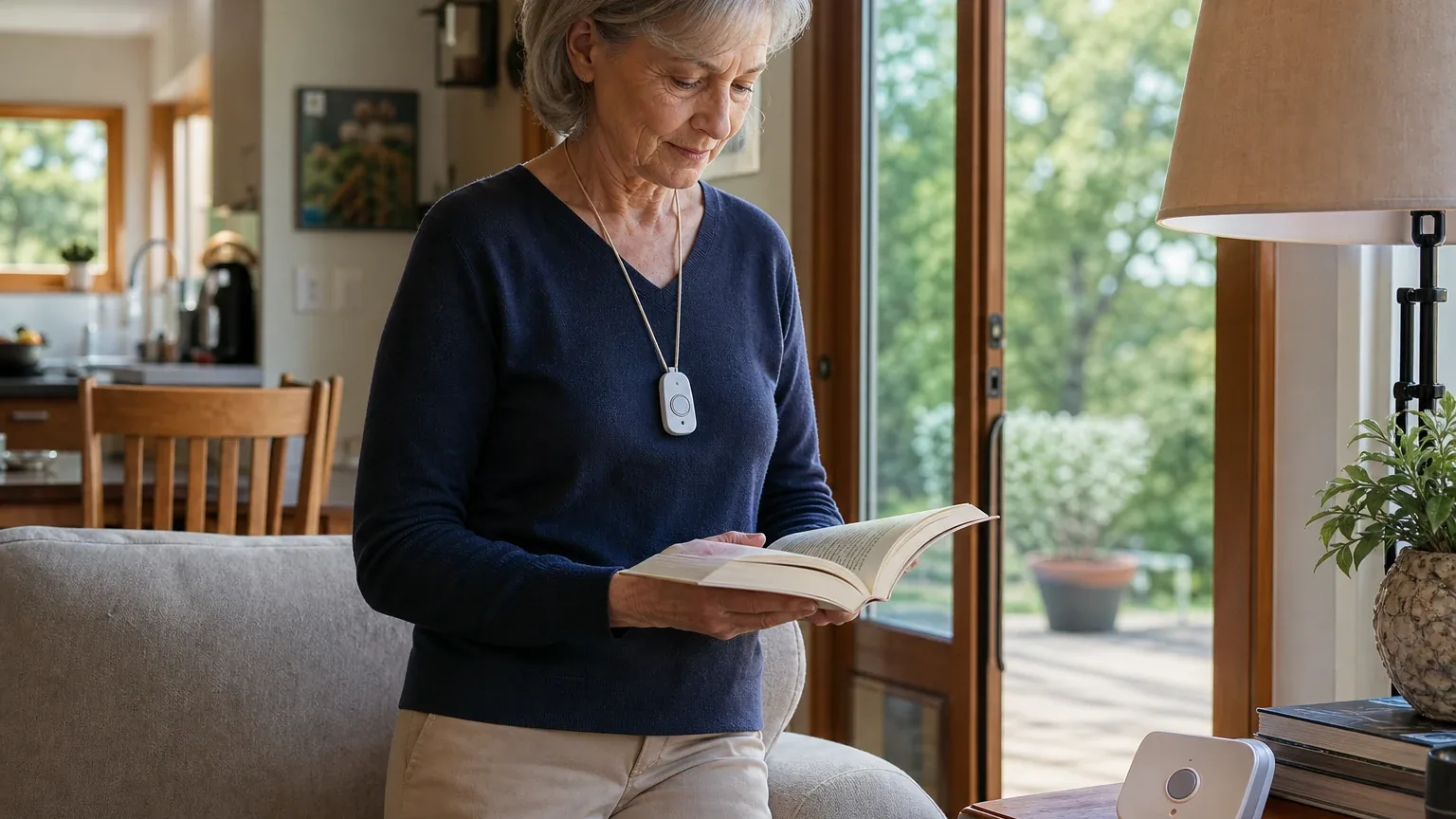
The most relevant products are the At-Home Landline and At-Home Cellular systems. Both are base-station units with a wearable pendant or wristband help button. The At-Home Cellular version operates on AT&T's cellular network and requires no landline; the At-Home Landline version connects through a traditional phone line but does not guarantee compatibility with all landline or VoIP services [8]. Both systems advertise up to 1,300 feet of range from the base unit, a 32-hour backup battery, and a hands-free speaker and microphone for two-way communication with the monitoring center [10].
What the AI Platforms Agreed About
Strong agreement existed on range, connectivity options, and backup battery. All platforms that provided detailed findings cited the 1,300-foot advertised range as a major advantage for covering large homes and yards [14]. The 32-hour backup battery was cited by openai, deepseek, and google as favorable for power outages [15]. Both landline and cellular configurations were confirmed by openai, deepseek, grok, and google [20].
Moderate agreement existed on monitoring center quality. LifeFone states its U.S.-based monitoring centers operate 24/7/365 with a primary center in White Plains, New York, and backup facilities [22]. Deepseek noted the center is UL-listed with over 30 years of service [16]. Google cited U.S.-based monitoring and a 30-day money-back guarantee [23]. However, no platform located independent response-time or dispatch-outcome data.
Moderate agreement existed on fall detection as an add-on. Openai and google both cited $5 per month for optional fall detection [14]. Deepseek estimated $10–$11 per month [24]. All agreed fall detection is not included in the base price.
Where the AI Platforms Disagreed or Were Uncertain
Pricing conflicts were significant. Openai's company-sourced comparison page lists At-Home Landline at $24.95/month and At-Home Cellular at $30.95/month on annual billing, while a separate order page shows $29.95 monthly for At-Home Landline [25]. Deepseek's independent sources list landline at $19.95/month and cellular at $29.95/month [27]. Kimi estimated $24.95–$29.95/month with fall detection at $5–$10 [28]. Google reported $24.95/month landline and $30.95/month cellular [29]. These discrepancies mean buyers must confirm current pricing directly.
Verification status conflicted. Openai, deepseek, and google treated LifeFone's specifications as directly sourced from company pages. Perplexity and kimi reported that the official website was inaccessible during research, leaving the 1,300-foot range and other claims unverified [30]. This is a methodology limitation, not evidence that the claims are false.
Fall detection pricing conflicted. Openai and google cited $5/month [25]; deepseek cited approximately $10–$11/month [27]; kimi estimated $5–$10 [28]. The company's own materials support the $5 figure, but buyers should confirm.
Contract terms conflicted. Openai and google reported cancel-any-time terms with a 30-day money-back guarantee [32]. Deepseek reported a typical 12-month contract with early cancellation fees up to $75 [27]. Kimi noted LifeFone historically advertised no long-term contract but could not verify 2026 terms [28].
Use-Case-Specific Features and Capabilities
Base station and pendant range. LifeFone advertises up to 1,300 feet of range from the base unit in any direction for both At-Home systems [34]. The company cautions that actual range depends on home configuration and base-unit placement [36]. Kimi noted this figure exceeds typical industry ranges of 400–1,000 feet but could not independently verify it [37].
Landline and cellular setup options. The At-Home Landline connects through a traditional phone line; the At-Home Cellular operates on AT&T's network and requires no personal phone line [38]. Landline compatibility with all VoIP services is not guaranteed [40].
Two-way speaker clarity. Both At-Home manuals describe a hands-free speaker and microphone for two-way communication [41]. No platform located independent audio-quality testing. Deepseek noted speaker clarity is "generally reported as good" but without independent verification [43].
Backup battery life. Both systems include a base-unit backup battery lasting up to 32 hours, with power-failure notification to the response center [35]. Kimi could not verify this specification due to website access failure [37].
Fall-detection add-on cost. Optional fall detection costs $5 per month per openai and google sources [34]. LifeFone states the fall-detection pendant battery lasts approximately one year, reduced from up to three years for standard pendants, and warns no system detects every fall [34].
Monitoring center reliability. LifeFone states its U.S.-based centers operate 24/7/365 with a primary center in White Plains, New York, and backup facilities [44]. Deepseek cited UL listing and 30+ years of operation [45]. Independent response-time data was not located by any platform.
Water resistance. The help buttons are water-resistant, supporting bathroom and shower coverage [34]. Water resistance does not establish unlimited submersion protection.
Pricing, Fees, Contracts, and Ongoing Costs
Known costs vary by source. The table below summarizes the conflicting figures:
| Item | Openai (company) | Deepseek (independent) | Google (independent) | Kimi (unverified) |
|---|---|---|---|---|
| At-Home Landline | $24.95–$29.95/month | ~$19.95/month | $24.95/month | $24.95–$29.95/month |
| At-Home Cellular | $30.95/month | ~$29.95/month | $30.95/month | Not specified |
| Fall detection add-on | $5/month | ~$10–$11/month | $5/month | $5–$10/month |
| Protection plan | $5/month | Not specified | Not specified | Not specified |
Additional fees. Openai's company-sourced materials cite a $6 deductible for standard pendant replacement and a $29 deductible for base station or voice-in-pendant replacement under the optional protection plan. Accessories are one-time purchases and nonreturnable after 30 days. Additional standard pendants or wristbands cost $39.95 one-time; wall-mounted help buttons cost $39.95 [46]. Optional daily reminder service is $19/month; optional activity assurance is $6/month [46]. Deepseek cited a potential early cancellation fee up to $75 within the first year [48].
Contract and cancellation terms. Openai and google report cancel-any-time terms with a 30-day money-back guarantee and no long-term contract [51]. Deepseek reports a typical 12-month contract with early termination fees [48]. Kimi could not verify 2026 terms [50]. Quarterly and annual billing options may include promotional free months or shipping offers; exact promotions should be confirmed at purchase [46].
Pricing confidence is moderate to low. Openai rated pricing confidence "moderate"; deepseek "moderate"; google "high"; kimi "low"; perplexity "low" [53]. The conflicting figures across sources mean buyers should obtain a written quote before purchase.
Best Suited For
LifeFone's At-Home systems are best suited for:
- Seniors who want one base station and pendant coverage across a large house, garage, driveway, or nearby yard. The advertised 1,300-foot range is among the largest in the industry [54].
- Households without a traditional landline. The At-Home Cellular system operates on AT&T's network and requires no phone line [57].
- Couples living together. Google and openai both noted LifeFone's stated no-additional-fee second-person coverage on eligible At-Home plans, offering cost savings for spouses [58].
- Buyers prioritizing long advertised pendant range, backup power, and optional fall detection [54].
- Seniors who want water-resistant help buttons for bathroom coverage [54].
Probably Not Best Suited For
LifeFone's At-Home systems are probably not best for:
- Buyers who need coverage far beyond the home and yard or GPS-based mobile protection. The At-Home system provides no protection once the user leaves the 1,300-foot property zone [60].
- Homes with uncertain AT&T cellular reception. The At-Home Cellular system depends on AT&T's network; coverage should be verified at the specific address [63].
- Buyers requiring independently published monitoring-center response-time or two-way-audio performance data. No platform located such data [64].
- Budget-conscious buyers wanting the lowest possible monthly cost. Deepseek noted LifeFone's pricing is mid-to-high range [65].
- Buyers who want fall detection included in the base price without an add-on fee [65].
When Another Option May Be Better
- When fall detection is a must-have without extra fees, alternatives like Medical Guardian or Bay Alarm Medical may be better [66].
- When a short-term or no-contract option is preferred, consider providers with month-to-month plans [66].
- When the buyer needs GPS tracking for out-of-home mobility, a mobile device like MobileHelp is more appropriate [66].
- When budget is a top priority, lower-cost options like MobileHelp or SmartMonitor may be available [66].
- When independent third-party response-time or monitoring-center performance data is a purchase requirement, choose another provider [68].
- When coverage of a very large yard, detached buildings, or acreage is essential, choose a system with separately tested outdoor range [68].
- When verified base station range and backup battery life are critical decision factors, Bay Alarm Medical and Medical Guardian have more transparent current specifications per kimi [69].
Questions to Verify Before Buying
- Can LifeFone test or confirm AT&T cellular signal strength at the exact address? [70]
- What range should the buyer realistically expect through the home's walls and at the farthest yard, garage, driveway, or outbuilding? [70]
- Is the quoted price monthly, quarterly, or annual, and when does any promotional pricing expire? [70]
- Is there any equipment-return, shipping, prorating, or early-billing consequence after cancellation? [70]
- What exact model and network does the At-Home Cellular base station use, and what happens if cellular service is unavailable? [70]
- Can the buyer perform a supervised range and two-way-audio test from every required room and outdoor location during the return period? [70]
- What certifications, redundancy procedures, average answer times, and service-level information can LifeFone provide for its monitoring center? [70]
- How is fall detection activated, what are its false-alarm procedures, and what is the replacement process when the pendant battery reaches its low threshold? [70]
- What is the exact current fall-detection add-on cost—$5 or $10–$11 per month? [70]
- Is the plan landline, cellular, or both, and does the hardware include everything needed for the chosen setup? [74]
Final AI Consensus Verdict
LifeFone is a strong fit for in-home base station coverage, with four of six platforms rating it "strong" or "good" and two rating it "uncertain" due to verification gaps. The consensus strength is the advertised 1,300-foot range, which would cover most homes and nearby yards, plus the 32-hour backup battery and flexible landline/cellular options. The consensus limitation is verification: the range figure is company-reported, no independent range or audio testing was located, and two platforms could not access the official website during research. Pricing conflicts across sources mean buyers must obtain a written quote. For seniors who stay mostly at home and can test the system during the return period, LifeFone's At-Home Cellular system is a reasonable choice. For buyers requiring independently verified specifications or monitoring data, another provider may be better.
For a broader comparison of top-rated systems for this use case, see the In-Home Base Station Coverage consensus index. You can also browse other options in our medical alert systems directory.
How This Review Was Produced
This review was produced by aggregating fit-research responses from six AI platforms (openai, deepseek, grok, perplexity, kimi, google) that evaluated LifeFone specifically for in-home base station coverage. Each platform was asked to assess LifeFone against category criteria including base station range, pendant range, landline/cellular setup options, two-way speaker clarity, backup battery life, fall-detection add-on cost, and monitoring center reliability. The authoritative research date is 2026-08-07. Platform-reported research dates differ: deepseek reported 2026-04-01; all others reported 2026-08-07. This date discrepancy is a methodology limitation.
Methodology Limitations
- Company-owned citations outnumber independent citations. Of 17 deduplicated sources, 9 are company-owned (lifefone.com) and 8 are independent. Company claims should not be treated as independently verified.
- Official-site retrieval failed for some platforms. Perplexity and kimi reported that lifefone.com was inaccessible during their research windows, preventing verification of current specifications and pricing [75].
- The 1,300-foot range is a company claim. No platform located independent range testing. Kimi noted this figure exceeds typical industry ranges of 400–1,000 feet but could not verify it [76].
- Pricing conflicts were not resolved. Openai's company-sourced pages conflict with each other, and independent sources differ. Buyers must confirm current pricing directly.
- No independent monitoring-center performance data was located. Response times, uptime, and dispatch outcomes are company-reported only.
- The supplied URLs were collected from platform responses and were not independently validated by the writer stage.
- Platform agreement does not prove product quality. The consensus reflects what AI platforms found in available sources, not independent testing.
Sources
Company-Owned Sources
- LifeFone Official Site: https://lifefone.com/
- Comparing LifeFone’s Medical Alert Systems: https://www.lifefone.com/articles/comparing-lifefones-medical-alert-systems
- Medical Alert Device FAQs: https://www.lifefone.com/articles/medical-alert-device-faqs
- At-Home Landline | Medical Alert System | LifeFone: https://www.lifefone.com/at-home-landline
- FAQs | Medical Alert | LifeFone: https://www.lifefone.com/faq
- LifeFone At-Home Cellular User Guide: https://www.lifefone.com/media/pdf/manuals/At_Home_Cellular_user-guide_purple0823.pdf
- LifeFone At-Home Landline User Guide: https://www.lifefone.com/media/pdf/manuals/At_Home_Landline_user-guide_blue.pdf
- Medical Alert Service - At-Home Landline | LifeFone: https://www.lifefone.com/medical-alert-service/at-home-landline
- Order Now | Medical Alert | LifeFone: https://www.lifefone.com/order-now
Additional AI research evidence76 records
- AI research evidence record openai:c1
- AI research evidence record openai:c2
- AI research evidence record kimi:c1
- AI research evidence record perplexity:c1
- AI research evidence record openai:c1
- AI research evidence record deepseek:c1
- AI research evidence record grok:c1
- AI research evidence record openai:c3
- AI research evidence record openai:c4
- AI research evidence record openai:c1
- AI research evidence record openai:c2
- AI research evidence record openai:c5
- AI research evidence record openai:c6
- AI research evidence record openai:c1
- AI research evidence record openai:c2
- AI research evidence record deepseek:c1
- AI research evidence record grok:c1
- AI research evidence record google:1.1.1
- AI research evidence record openai:c7
- AI research evidence record openai:c3
- AI research evidence record grok:c8
- AI research evidence record openai:c8
- AI research evidence record google:1.1.6
- AI research evidence record deepseek:c2
- AI research evidence record openai:c1
- AI research evidence record openai:c2
- AI research evidence record deepseek:c2
- AI research evidence record kimi:c1
- AI research evidence record google:1.1.3
- AI research evidence record perplexity:c1
- AI research evidence record google:1.1.1
- AI research evidence record openai:c4
- AI research evidence record google:1.1.2
- AI research evidence record openai:c1
- AI research evidence record openai:c2
- AI research evidence record openai:c7
- AI research evidence record kimi:c1
- AI research evidence record openai:c3
- AI research evidence record google:1.1.1
- AI research evidence record openai:c4
- AI research evidence record openai:c5
- AI research evidence record openai:c6
- AI research evidence record deepseek:c2
- AI research evidence record openai:c8
- AI research evidence record deepseek:c1
- AI research evidence record openai:c1
- AI research evidence record openai:c2
- AI research evidence record deepseek:c2
- AI research evidence record google:1.1.3
- AI research evidence record kimi:c1
- AI research evidence record openai:c4
- AI research evidence record google:1.1.2
- AI research evidence record perplexity:c1
- AI research evidence record openai:c1
- AI research evidence record deepseek:c1
- AI research evidence record google:1.1.1
- AI research evidence record openai:c3
- AI research evidence record google:1.1.3
- AI research evidence record google:1.1.6
- AI research evidence record openai:c1
- AI research evidence record deepseek:c1
- AI research evidence record google:1.1.1
- AI research evidence record openai:c3
- AI research evidence record openai:c8
- AI research evidence record deepseek:c2
- AI research evidence record deepseek:c2
- AI research evidence record google:1.1.1
- AI research evidence record openai:c1
- AI research evidence record kimi:c1
- AI research evidence record openai:c1
- AI research evidence record deepseek:c1
- AI research evidence record kimi:c1
- AI research evidence record deepseek:c2
- AI research evidence record perplexity:c1
- AI research evidence record perplexity:c1
- AI research evidence record kimi:c1
Independent Sources
- LifeFone Medical Alert Systems Review: https://www.benzinga.com/money/lifefone-medical-alert-system-review
- LifeFone Medical Alert System Review 2026 - Caring.com: https://www.caring.com/
- LifeFone Medical Alert Device Review - Elder Guide: https://www.elderguide.com/
- LifeFone Medical Alert Review - MedicalAlert.org: https://www.medicalalert.org/
- LifeFone Review - Medical Alert Buyers Guide: https://www.medicalalertbuyersguide.org/
- Best Medical Alert Systems: https://www.ncoa.org/product-resources/medical-alert-systems/best-medical-alert-systems/
- LifeFone Medical Alert Review: https://www.safewise.com/senior-safety/medical-alerts/lifefone/
- LifeFone Medical Alert Review – The Senior List: https://www.theseniorlist.com/medical-alert/lifefone-review/
Additional AI research evidence76 records
- AI research evidence record openai:c1
- AI research evidence record openai:c2
- AI research evidence record kimi:c1
- AI research evidence record perplexity:c1
- AI research evidence record openai:c1
- AI research evidence record deepseek:c1
- AI research evidence record grok:c1
- AI research evidence record openai:c3
- AI research evidence record openai:c4
- AI research evidence record openai:c1
- AI research evidence record openai:c2
- AI research evidence record openai:c5
- AI research evidence record openai:c6
- AI research evidence record openai:c1
- AI research evidence record openai:c2
- AI research evidence record deepseek:c1
- AI research evidence record grok:c1
- AI research evidence record google:1.1.1
- AI research evidence record openai:c7
- AI research evidence record openai:c3
- AI research evidence record grok:c8
- AI research evidence record openai:c8
- AI research evidence record google:1.1.6
- AI research evidence record deepseek:c2
- AI research evidence record openai:c1
- AI research evidence record openai:c2
- AI research evidence record deepseek:c2
- AI research evidence record kimi:c1
- AI research evidence record google:1.1.3
- AI research evidence record perplexity:c1
- AI research evidence record google:1.1.1
- AI research evidence record openai:c4
- AI research evidence record google:1.1.2
- AI research evidence record openai:c1
- AI research evidence record openai:c2
- AI research evidence record openai:c7
- AI research evidence record kimi:c1
- AI research evidence record openai:c3
- AI research evidence record google:1.1.1
- AI research evidence record openai:c4
- AI research evidence record openai:c5
- AI research evidence record openai:c6
- AI research evidence record deepseek:c2
- AI research evidence record openai:c8
- AI research evidence record deepseek:c1
- AI research evidence record openai:c1
- AI research evidence record openai:c2
- AI research evidence record deepseek:c2
- AI research evidence record google:1.1.3
- AI research evidence record kimi:c1
- AI research evidence record openai:c4
- AI research evidence record google:1.1.2
- AI research evidence record perplexity:c1
- AI research evidence record openai:c1
- AI research evidence record deepseek:c1
- AI research evidence record google:1.1.1
- AI research evidence record openai:c3
- AI research evidence record google:1.1.3
- AI research evidence record google:1.1.6
- AI research evidence record openai:c1
- AI research evidence record deepseek:c1
- AI research evidence record google:1.1.1
- AI research evidence record openai:c3
- AI research evidence record openai:c8
- AI research evidence record deepseek:c2
- AI research evidence record deepseek:c2
- AI research evidence record google:1.1.1
- AI research evidence record openai:c1
- AI research evidence record kimi:c1
- AI research evidence record openai:c1
- AI research evidence record deepseek:c1
- AI research evidence record kimi:c1
- AI research evidence record deepseek:c2
- AI research evidence record perplexity:c1
- AI research evidence record perplexity:c1
- AI research evidence record kimi:c1
Verify this research
Review the study details behind this page or download the public machine-readable verification record.
- Study date
- Aug 7, 2026
- Platforms analyzed
- 7
- Source records
- 17
- Ranking mentions
- 3 of 7
- Platform share
- 50%
- Final consensus rank
- #3
Research trail and source mix
Platforms
openai, anthropic, deepseek, grok, perplexity, kimi, google
Source mix
8 independent · 9 company-owned
Evidence support
15 direct · 2 partial
Important limitation
Use the run research_date as the study date. Platform-reported dates are provenance metadata and do not independently prove freshness.
Source snapshot SHA-256 f14cea0ca44d7950b52d8375f5e63e54f55481c8b8a283c67e08e59c3e4c86a8