
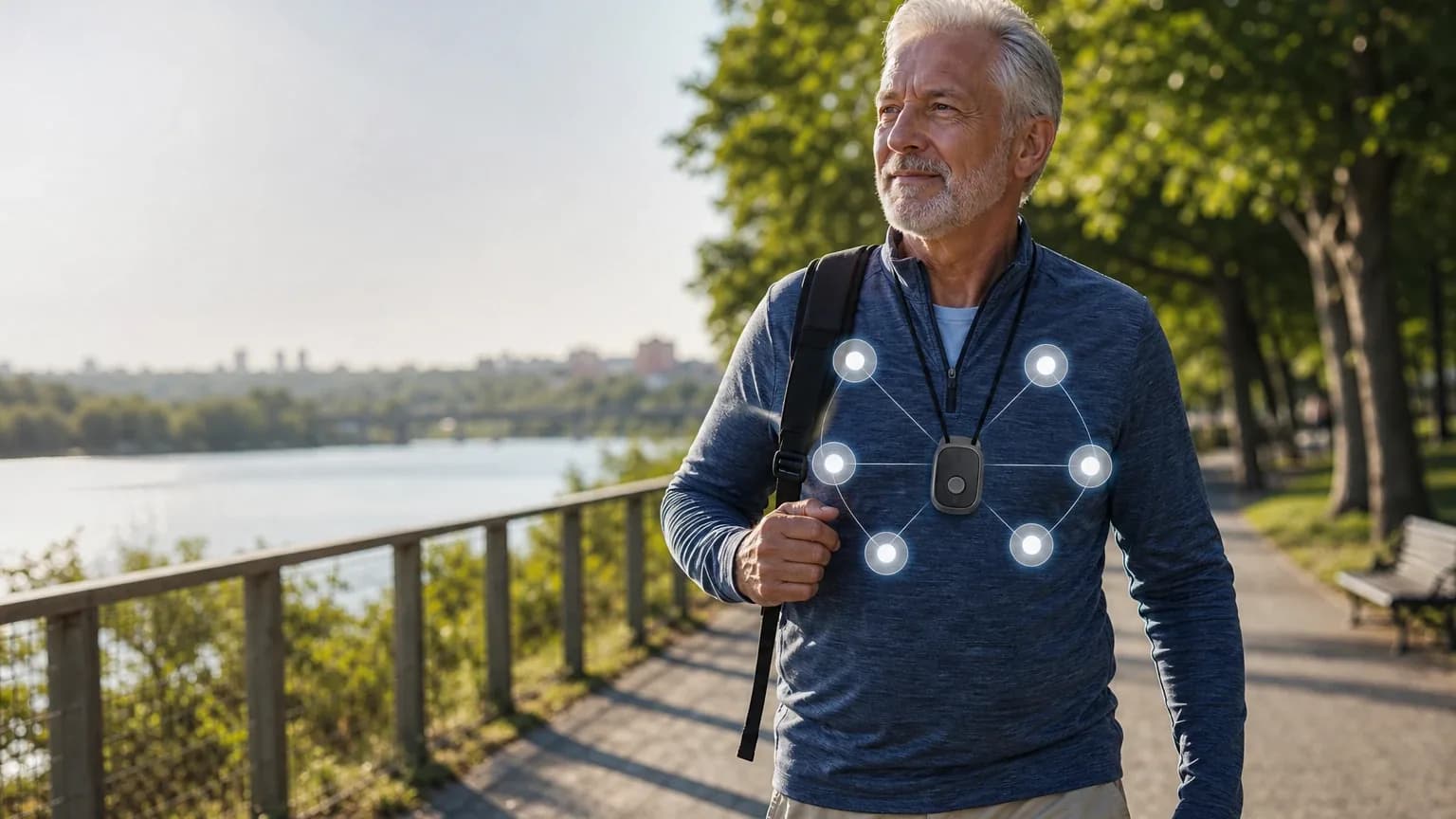
Answer Capsule
Bay Alarm Medical is a good-to-strong fit for active older adults who need a standalone cellular medical alert device with GPS, two-way communication, and optional fall detection. Six of seven AI platforms named Bay Alarm Medical in the ranking stage, with an average listed rank of 1.83 and a best rank of 1. The strongest reason to consider it is the dedicated mobile product lineup—SOS Micro, SOS All-In-One 2, and SOS Smartwatch—that works independently of a smartphone with 4G LTE connectivity and caregiver location tracking. The main limitation is battery life: the SOS Smartwatch requires daily charging (6–18 hours per independent reviews), and all mobile devices need recurring charging routines. Water resistance is IP67 (splash-proof, not waterproof), and automatic fall detection costs an extra $10/month on most plans.
Research Snapshot
| Metric | Value |
|---|---|
| Platform mentions in ranking stage | 6 of 7 platforms |
| Share of included platform responses | 85.7% |
| Average listed rank | 1.83 |
| Best listed rank | 1 (Anthropic, DeepSeek) |
| Relevant product/model/plan | SOS Micro, SOS All-In-One 2, SOS Smartwatch, SOS Mobile |
| Overall use-case fit | Good to strong (4 platforms: good; 3 platforms: strong; 1 platform: uncertain) |
| Research date | 2026-08-05 |
Why Bay Alarm Medical Qualified for This Study
Bay Alarm Medical qualified because six of seven AI platforms named it during the ranking stage for Best medical alert systems for Active Seniors. The platforms that named it were Anthropic, DeepSeek, Google, Kimi, OpenAI, and Perplexity. Grok did not name it in the ranking stage but did provide a fit assessment. The entity received an average listed rank of 1.83 across six platforms, with Anthropic and DeepSeek ranking it first.
The Product, Model, Plan, or Service Most Relevant to On-the-Go & Active Mobility
The most relevant products are the SOS Micro, SOS All-In-One 2, and SOS Smartwatch, all with optional fall detection. Platform recommendations varied:
- OpenAI recommended the SOS Micro as the strongest portability-focused choice, with SOS All-In-One 2 for combined home-and-mobile coverage and SOS Smartwatch for discreet wearability.
- Anthropic recommended SOS All-In-One 2 as the best balance of battery life (up to 72 hours), portability, and dual in-home/mobile protection.
- Google highlighted SOS All-In-One 2, SOS Mobile, and SOS Smartwatch as the primary mobile options.
- Kimi listed SOS Mobile, SOS Smartwatch, and SOS All-in-One 2 as the relevant devices.
- DeepSeek focused on the SOS Smartwatch with GPS, fall detection, and 24/7 monitoring, plus the On-The-Go GPS Button.
- Grok recommended SOS All-In-One 2 or SOS Micro with GPS and optional fall detection.
- Perplexity noted the exact best-fit model was unclear from verified sources.
What the AI Platforms Agreed About
Strong agreement: Bay Alarm Medical offers multiple standalone mobile devices that work without a smartphone. All seven platforms confirmed that the mobile lineup operates independently with built-in 4G LTE cellular connectivity. Anthropic cited company materials stating all mobile systems are standalone with built-in 4G LTE and no smartphone required [1]. Kimi noted the devices work independently from smartphones [2]. Google confirmed standalone operation independent of a personal smartphone [3].
Strong agreement: GPS and caregiver tracking are core features. Six platforms (all except Perplexity, which marked it unclear) confirmed GPS location services and caregiver tracking. OpenAI cited company pages describing GPS/Wi-Fi location services and caregiver tracking for SOS Mobile [4]. Anthropic cited independent testing confirming GPS accurately pinpointed location within seconds of button activation [5]. Google noted integrated GPS and Wi-Fi positioning services for outdoor and indoor location [6]. Grok confirmed GPS + Cellular & WiFi tracking with caregiver app [7].
Strong agreement: Two-way audio is included on all mobile devices. Six platforms confirmed built-in speakers and microphones for two-way communication with monitoring operators. Anthropic cited independent testers reporting clear two-way communication indoors and a high-fidelity speaker [8]. Google noted high-fidelity internal speakers and clear two-way microphones [9]. Kimi reported generally clear audio, though some users noted wind noise during outdoor use [10].
Strong agreement: No long-term contracts are required. Six platforms confirmed month-to-month monitoring without long-term contracts. OpenAI cited company materials describing month-to-month monitoring [12]. Anthropic confirmed no long-term contracts with month-to-month cancellation available (anthropic pricing section). Grok stated no long-term contracts with cancel-anytime terms. Google confirmed standard month-to-month subscription without multi-year contracts.
Majority agreement: Fall detection is optional and costs extra. Six platforms noted fall detection is an optional add-on, typically $10/month. OpenAI cited company pricing pages showing $44.95/month with fall detection versus $34.95/month base for SOS Micro and SOS All-In-One 2 [12]. Anthropic confirmed fall detection adds $10/month on any system. Google confirmed the automatic fall detection upgrade at +$10.00 per month.
Majority agreement: Devices are water-resistant but not waterproof. Six platforms confirmed IP67 ratings suitable for showers and rain but not submersion. Anthropic cited SafeHome.org stating mobile systems are water-resistant, not waterproof [13]. Kimi noted SOS Mobile is IPX6 water-resistant (safe for showers) while SOS Smartwatch has IP67 rating (submersible to 1 meter) [2]. Google confirmed IP67 water-resistant ratings for mobile pendants [14].
Where the AI Platforms Disagreed or Were Uncertain
Battery life for the SOS Smartwatch showed significant conflict. Anthropic reported 6–18 hours with independent reviews citing 6–8 hours, 16 hours, or up to 18–24 hours depending on usage [15]. Google reported up to 16 hours [16]. Kimi reported up to 24 hours with typical use, shorter with active GPS tracking [17]. OpenAI cited company materials stating the Smartwatch requires daily charging [18]. The company itself acknowledges actual performance depends on GPS polling frequency and cellular signal strength.
SOS Micro battery life claims conflicted. OpenAI cited company materials stating up to 36 hours for SOS Micro [19], while Anthropic cited AgingInPlace.org reporting 48–72 hours [20]. Grok cited NCOA reporting up to 36 hours [21]. The discrepancy may reflect different usage patterns or model revisions.
Pricing showed material conflicts across sources. OpenAI cited company pricing pages showing SOS Micro at $34.95/month and SOS Smartwatch at $39.95/month [19]. Kimi reported SOS Mobile at $24.95/month base and SOS Smartwatch at $37.95/month (kimi pricing section). Anthropic noted one source listing SOS Micro at $29.95/month with $149 equipment fee versus most sources citing $34.95/month (anthropic factual conflicts). Google reported SOS All-In-One 2 at approximately $34.95/month and SOS Smartwatch at approximately $39.95/month (google pricing section).
Equipment fees varied by source. Anthropic cited Forbes noting $89.40 promotional versus $149 regular for SOS All-In-One 2 [22]. OpenAI cited company pricing pages showing promotional device prices of approximately $89.40 for SOS All-In-One 2, $104.30 for SOS Micro, and $159.20 for SOS Smartwatch [19]. Kimi suggested equipment may be provided at no upfront cost with subscription, conflicting with other sources.
Carrier assignments were inconsistent. OpenAI noted the SOS Micro is available on AT&T and Verizon, while the SOS Smartwatch is AT&T-based [23]. Anthropic stated the Smartwatch uses AT&T and SOS Micro/Mobile uses Verizon (anthropic limitations). Kimi claimed dual-carrier coverage (AT&T/Verizon) across mobile devices [24]. Google noted devices utilize AT&T and Verizon 4G LTE depending on regional coverage optimization [25]. Buyers must verify which carrier serves their specific device and travel routes.
Perplexity rated the fit as uncertain. Perplexity was the only platform that could not verify product-specific evidence for GPS accuracy, cellular reliability, two-way audio quality, battery life, water resistance, or current pricing from the available source set [26]. This platform's assessment relied on ranking-stage product labels rather than verified public details.
Use-Case-Specific Features and Capabilities
Cellular Network Reliability
Conclusion: Mobile devices use 4G LTE on major U.S. carriers, but coverage depends on the specific carrier assigned to each device. OpenAI confirmed SOS Micro is available on AT&T or Verizon, while SOS Smartwatch is AT&T-based [27]. Google confirmed devices utilize AT&T and Verizon 4G LTE networks [28]. Kimi described dual-carrier redundancy for broader coverage [29]. Anthropic noted no independent field testing of nationwide coverage reliability was cited [30]. DeepSeek flagged that Bay Alarm Medical does not clearly disclose a single carrier for all models [31].
GPS Location Precision
Conclusion: GPS tracking is a core feature with independent verification of outdoor accuracy, but indoor precision degrades. Anthropic cited independent testing confirming GPS accurately pinpointed location within seconds of button activation, with tracking verified across grocery stores and parks [33]. Google confirmed integrated GPS and Wi-Fi positioning services for outdoor and indoor location [36]. DeepSeek noted GPS is generally reliable outdoors but degrades indoors, in deep buildings, or urban canyons [37]. OpenAI flagged that "pinpoint" claims are company claims, not independently verified accuracy guarantees (openai factual conflicts).
Two-Way Audio Clarity
Conclusion: Two-way audio is included on all mobile devices with generally clear performance, though outdoor volume may be limited in wind. Anthropic cited independent testers reporting clear two-way communication indoors and a high-fidelity speaker, with one review noting outdoor volume "somewhat low" in windy conditions but "manageable" [38]. Kimi reported generally clear audio with some wind noise during outdoor use [40]. OpenAI noted independent testing cited on the company's site found excellent two-way communication for its in-home system, but that evidence does not establish equivalent performance for each mobile device [42].
Water Resistance
Conclusion: Devices are IP67 water-resistant (splash-proof) but not waterproof; submersion is not supported. Anthropic cited SafeHome.org confirming IP67 ratings and noting mobile systems should not be submerged and require towel drying if exposed to water [43]. Kimi noted SOS Mobile is IPX6 water-resistant (safe for showers) while SOS Smartwatch has IP67 rating (submersible to 1 meter) [29]. Google confirmed IP67 ratings for rain or splashes, not prolonged underwater immersion (google limitations). OpenAI cited company materials confirming IP67 for SOS Mobile [45].
Device Portability
Conclusion: Multiple lightweight form factors are available, with SOS Micro the smallest and SOS Smartwatch the most discreet. Anthropic cited AgingInPlace.org reporting SOS Smartwatch weighs less than 2 ounces and SOS Micro weighs less than 1.2 ounces [46]. Kimi reported SOS Mobile weighs 1.7 oz and SOS Smartwatch weighs 2.3 oz [41]. OpenAI confirmed SOS Micro includes wrist strap, lanyard, and belt clip options [47]. Anthropic noted the Smartwatch is rated "bulkier" than standard watches [48].
Battery Life
Conclusion: Battery life varies significantly by model; SOS All-In-One 2 offers the longest duration (up to 72 hours), while SOS Smartwatch requires daily charging. OpenAI cited company materials stating the mobile GPS help button lasts up to three days per charge and SOS All-In-One 2 up to 72 hours [49]. Anthropic cited NCOA reporting SOS All-In-One 2 lasts up to 72 hours and SOS Smartwatch 6–18 hours [51]. Google reported SOS Mobile and All-In-One 2 offer up to 5–6 days of battery life, while the Smartwatch lasts up to 16 hours [52]. Kimi reported SOS Mobile up to 72 hours standby and SOS Smartwatch up to 24 hours with typical use [41].
Monthly Subscription Cost
Conclusion: Mobile plans range from approximately $34.95 to $39.95 per month base, with fall detection adding $10/month. OpenAI cited company pricing pages showing SOS All-In-One 2 at $34.95/month, SOS Micro at $34.95/month, and SOS Smartwatch at $39.95/month [55]. Google confirmed similar pricing [56]. Kimi reported lower figures of $24.95–$37.95/month depending on device (kimi pricing section). Anthropic noted conflicting data with one source listing SOS Micro at $29.95/month (anthropic factual conflicts).
Pricing, Fees, Contracts, and Ongoing Costs
Conclusion: Bay Alarm Medical mobile plans are competitively priced with no long-term contracts, but upfront equipment purchase is required and fall detection adds $10/month. Pricing conflicts exist across sources and should be verified at checkout.
Known Monthly Costs
| Device | Base Monthly | With Fall Detection | Bundle |
|---|---|---|---|
| SOS All-In-One 2 | $34.95 | $44.95 | $54.95 (360°) |
| SOS Micro | $34.95 | $44.95 | $59.95 (360°) |
| SOS Smartwatch | $39.95 | $49.95 | $64.95 (360°) |
Source: OpenAI citing company pricing pages [57]; Anthropic citing Forbes and other independent reviews.
Equipment Fees
- SOS All-In-One 2: Approximately $89.40 promotional, $149 regular [58]
- SOS Micro: Approximately $104.30 promotional [57]; $149 per one source (anthropic factual conflicts)
- SOS Smartwatch: Approximately $159.20 promotional [57]; $199 per Anthropic (anthropic pricing section)
Contract and Cancellation Terms
- No long-term contracts; month-to-month cancellation available [57]
- 30-day money-back guarantee (minus shipping) stated by Forbes (anthropic pricing section)
- Quarterly and annual plans offer modest discounts and free shipping (anthropic pricing section)
- Annual subscribers receive one free month of service (anthropic pricing section)
- Current mobile-product cancellation, refund, return, and prorating policies were not fully verified from retrieved pages (openai pricing section)
Additional Fees
- Automatic fall detection: +$10/month [57]
- Upfront device purchase required for mobile products [57]
- Possible activation, shipping, or restocking fees (deepseek pricing section; kimi pricing section)
- Optional Premier Protection Plan warranty available, cost not specified (anthropic pricing section)
Pricing confidence is moderate. OpenAI rated pricing confidence as moderate, Anthropic as moderate, Grok as moderate, Google as high, Kimi as moderate, DeepSeek as low, and Perplexity as low. The conflicts between sources suggest buyers should confirm current pricing directly with Bay Alarm Medical before ordering.
Best Suited For
Bay Alarm Medical is best suited for:
- Active older adults who walk, drive, travel, or spend substantial time away from home without carrying a smartphone (openai fit assessment; anthropic fit assessment)
- Users wanting GPS-enabled emergency response and caregiver location tracking (openai fit assessment; anthropic strengths)
- Buyers who prefer month-to-month monitoring rather than a long-term contract (openai fit assessment; grok pricing section)
- Users who want optional fall detection as a backup to manual SOS activation (openai fit assessment; anthropic strengths)
- Seniors wanting a discreet wearable that looks like a regular watch (anthropic fit assessment; kimi strengths)
- Users who want bundled at-home and on-the-go protection (anthropic fit assessment)
- Caregivers who want real-time visibility into a senior's location and device status via a companion app [59]
Probably Not Best Suited For
Bay Alarm Medical is probably not best suited for:
- Users who require verified nationwide coverage independent of carrier availability (openai fit assessment)
- Users who may not reliably charge a device every day or every few days (openai fit assessment; anthropic fit assessment)
- Buyers seeking the lowest total cost with no upfront device purchase (openai fit assessment)
- Users who require independently documented GPS accuracy, fall-detection sensitivity, or emergency-response testing for the specific mobile model (openai fit assessment)
- Users who swim, snorkel, or expect full waterproof submersion (anthropic fit assessment; deepseek fit assessment)
- Users needing 3+ days of battery life without charging when using the Smartwatch (anthropic fit assessment)
- Buyers with severe cognitive impairment who cannot remember daily device charging (anthropic fit assessment)
- Users requiring fall detection as a built-in standard feature rather than a paid add-on (anthropic fit assessment)
- Seniors without reliable cellular coverage in their travel areas (anthropic fit assessment; deepseek fit assessment)
- Users who want a full smartwatch experience with apps, music, payments, or fitness tracking (anthropic better_alternative_when; kimi probably_not_best_for)
When Another Option May Be Better
- When the buyer needs independently tested mobile GPS accuracy or documented performance on the buyer's specific carrier and travel routes (openai better_alternative_when)
- When daily or multi-day charging is impractical (openai better_alternative_when)
- When upfront device purchase and $35–$50 monthly monitoring are outside budget (openai better_alternative_when)
- When the buyer wants broader health, fitness, or smartphone functionality rather than primarily emergency monitoring (openai better_alternative_when; anthropic better_alternative_when)
- When the buyer prioritizes contractual transparency with explicitly published cancellation, warranty, and device-return terms (openai better_alternative_when)
- When the buyer needs 5+ days of battery life without charging (anthropic better_alternative_when)
- When the buyer plans swimming, snorkeling, or water sports requiring full waterproof submersion (anthropic better_alternative_when)
- When the buyer requires multiple cellular carrier options or carrier switching flexibility (anthropic better_alternative_when)
- When the buyer operates primarily in rural or remote areas with uncertain 4G LTE coverage (anthropic better_alternative_when; kimi better_alternative_when)
- When the buyer wants a satellite option for areas with poor AT&T/Verizon coverage (kimi better_alternative_when)
Questions to Verify Before Buying
- Which exact device will be shipped: SOS Micro, SOS All-In-One 2, SOS Mobile, or another revised model? (openai questions; perplexity questions)
- Which cellular carrier will the device use (AT&T, Verizon, or carrier selected by Bay Alarm Medical), and is coverage adequate at the buyer's home, workplace, driving routes, and frequent travel destinations? (openai questions; anthropic questions; google questions)
- What is the expected battery life under continuous GPS, frequent two-way calls, caregiver tracking, and fall-detection use? (openai questions; anthropic questions)
- Can the device be worn or carried during showering, swimming, heavy rain, and other water exposure, and what does the IP67 rating specifically cover? (openai questions; anthropic questions)
- How accurate is location reporting in buildings, garages, rural areas, dense urban areas, and areas with weak GPS or cellular signals? (openai questions; deepseek questions)
- Does fall detection work on the selected device, and what falls or movements may not be detected? (openai questions; anthropic questions)
- What are the total first-year and recurring costs after the introductory month, device discount, taxes, shipping, and fall-detection add-on? (openai questions; kimi questions)
- Are there activation, replacement, restocking, cancellation, return-shipping, or early-termination fees? (openai questions; deepseek questions)
- What is the refund or return window for a purchased mobile device? (openai questions; anthropic questions)
- How are caregivers notified, and can they access real-time location, location history, and battery status without a paid app subscription? (openai questions; anthropic questions)
- What happens if the device loses cellular service, GPS signal, battery power, or contact with the monitoring center? (openai questions)
- Can the monitoring center access GPS location even if the user cannot speak? (kimi questions)
- Are there any annual price increases built into the service agreement? (kimi questions)
Final AI Consensus Verdict
Bay Alarm Medical is a good-to-strong fit for On-the-Go & Active Mobility, with four platforms rating it "good" (Anthropic, DeepSeek, OpenAI, Perplexity—though Perplexity's rating was "uncertain"), and three platforms rating it "strong" (Google, Grok, Kimi). The consensus is that the company offers a purpose-built mobile product lineup with GPS tracking, two-way communication, caregiver location sharing, and optional fall detection at competitive prices with no long-term contracts.
The strongest recommendation is the SOS All-In-One 2 for users who want one device for both home and travel, with up to 72 hours of battery life. The SOS Micro is the most portable option at under 1.2 ounces. The SOS Smartwatch offers the most discreet form factor but requires daily charging, making it less suitable for multi-day trips without power access.
The main tradeoffs are: battery life requires a charging routine (especially for the Smartwatch), devices are water-resistant but not waterproof, fall detection costs an extra $10/month, upfront equipment purchase is required, and carrier-specific coverage must be verified for the buyer's travel routes. Pricing conflicts across sources and inconsistent model naming on company pages mean buyers should confirm the exact device, carrier, and total cost at checkout.
For active older adults who can commit to a charging routine and have adequate 4G LTE coverage in their travel areas, Bay Alarm Medical offers solid core functionality at a reasonable price point.
How This Review Was Produced
This review was produced by aggregating fit-research responses from seven AI platforms: Anthropic, DeepSeek, Google, Grok, Kimi, OpenAI, and Perplexity. Each platform evaluated Bay Alarm Medical against seven criteria for On-the-Go & Active Mobility: cellular network reliability, GPS location precision, two-way audio clarity, water resistance, device portability, battery life, and monthly subscription cost.
The research date for this study is August 5, 2026. Six platforms conducted their research on this date; DeepSeek's research date was April 27, 2026, which is disclosed as a methodology limitation.
The evidence base includes 33 deduplicated citations: 21 from independent sources (reviews from AgingInPlace.org, MedGrade, U.S. News, SeniorsList, SafeHome.org, NCOA, Forbes, The Senior List, and others), 11 from company-owned sources (bayalarmmedical.com), and 1 from an unclear source. Company-owned evidence is labeled as such throughout; independent evidence is distinguished from company claims.
Platform-reported research dates differ from the authoritative run date and are disclosed as provenance metadata, not independent proof of freshness. The supplied URLs were collected from platform responses and were not independently validated by the writer stage.
Methodology Limitations
- Platform-reported research dates differ from the authoritative run date. DeepSeek's research date is April 27, 2026, while the study date is August 5, 2026. This may affect pricing and product availability information from that platform.
- Pricing conflicts exist across sources. Monthly costs ranged from $24.95 to $39.95 depending on the source and device. Equipment fees ranged from $89.40 to $199. These conflicts were not resolved by guessing; buyers should verify current pricing directly.
- Product naming is inconsistent. Company pages use multiple names including SOS Mobile, GPS Help Button, SOS Micro, and SOS All-In-One 2. The buyer should confirm which current model is being quoted.
- Independent testing evidence was stronger for the in-home system than for each mobile model. OpenAI noted that independent testing cited on the company's site found excellent two-way communication for its in-home system, but that evidence does not establish equivalent performance for each mobile device [61].
- Official-site retrieval failed for one or more mentions. No failed fetch was used as a verified domain key.
- A product-labeled company mention was merged using matching company-name and supplied-domain signatures.
- The supplied URLs were collected from platform responses and were not independently validated by the writer stage.
- AI-platform agreement does not prove product quality. This review reports what the platforms found and cited; it does not constitute independent verification of product performance.
- No personal testing, customer experience, medical benefit, or guaranteed performance is claimed in this review.
Sources
Company-Owned Sources
- Bay Alarm Medical – Home: https://www.bayalarmmedical.com/
- Bay Alarm Medical – Mobile Products: https://www.bayalarmmedical.com/mobile-products/
- Bay Alarm Medical – Medical Alert System: https://www.bayalarmmedical.com/medical-alert-system/
- Bay Alarm Medical – SOS All-In-One: https://www.bayalarmmedical.com/medical-alert-system/sos-all-in-one/
- Bay Alarm Medical – SOS Mobile: https://www.bayalarmmedical.com/medical-alert-system/sos-mobile/
- Bay Alarm Medical – SOS Smartwatch: https://www.bayalarmmedical.com/medical-alert-system/sos-smartwatch/
- Bay Alarm Medical – Automatic Fall Detection: https://www.bayalarmmedical.com/medical-alert-system/automatic-fall-detection/
- Bay Alarm Medical – Pricing: https://www.bayalarmmedical.com/pricing/
- Bay Alarm Medical – Free Quote: https://www.bayalarmmedical.com/free-quote/
- Bay Alarm Medical – On-The-Go GPS: https://www.bayalarmmedical.com/on-the-go-gps/
- Bay Alarm Medical – SOS Smartwatch (marketing page): https://www.bayalarmmedical.com/sos-smartwatch/
- Bay Alarm Medical – SOS Mobile vs SOS Smartwatch: https://www.bayalarmmedical.com/senior-resource-guide/sos-mobile-vs-sos-smartwatch-which-is-best-for-you/
Additional AI research evidence61 records
- AI research evidence record anthropic:c17
- AI research evidence record kimi:c1
- AI research evidence record google:1.2.3
- AI research evidence record openai:c4
- AI research evidence record anthropic:c2
- AI research evidence record google:1.1.4
- AI research evidence record grok:c1
- AI research evidence record anthropic:c3
- AI research evidence record google:1.1.2
- AI research evidence record kimi:c2
- AI research evidence record kimi:c3
- AI research evidence record openai:c10
- AI research evidence record anthropic:c11
- AI research evidence record google:1.1.1
- AI research evidence record anthropic:c9
- AI research evidence record google:1.2.5
- AI research evidence record kimi:c3
- AI research evidence record openai:c9
- AI research evidence record openai:c10
- AI research evidence record anthropic:c10
- AI research evidence record grok:c2
- AI research evidence record anthropic:c18
- AI research evidence record openai:c2
- AI research evidence record kimi:c1
- AI research evidence record google:1.1.1
- AI research evidence record perplexity:c1
- AI research evidence record openai:c2
- AI research evidence record google:1.1.1
- AI research evidence record kimi:c1
- AI research evidence record anthropic:c4
- AI research evidence record deepseek:c2
- AI research evidence record deepseek:c3
- AI research evidence record anthropic:c1
- AI research evidence record anthropic:c2
- AI research evidence record anthropic:c5
- AI research evidence record google:1.1.4
- AI research evidence record deepseek:c4
- AI research evidence record anthropic:c3
- AI research evidence record anthropic:c6
- AI research evidence record kimi:c2
- AI research evidence record kimi:c3
- AI research evidence record openai:c5
- AI research evidence record anthropic:c11
- AI research evidence record anthropic:c12
- AI research evidence record openai:c7
- AI research evidence record anthropic:c7
- AI research evidence record openai:c8
- AI research evidence record anthropic:c8
- AI research evidence record openai:c3
- AI research evidence record openai:c6
- AI research evidence record anthropic:c9
- AI research evidence record google:1.1.5
- AI research evidence record google:1.2.4
- AI research evidence record google:1.2.5
- AI research evidence record openai:c10
- AI research evidence record google:1.1.2
- AI research evidence record openai:c10
- AI research evidence record anthropic:c18
- AI research evidence record anthropic:c18
- AI research evidence record anthropic:c19
- AI research evidence record openai:c5
Independent Sources
- AgingInPlace.org – Bay Alarm Medical Review: https://aginginplace.org/medical-alert-systems/bay-alarm-medical-review/
- MedGrade – SOS Smartwatch Review: https://medgrade.org/reviews/bay-alarm-medical-sos-smartwatch-review/
- U.S. News – Bay Alarm Medical Review: https://realestate.usnews.com/home-services/medical-alert-system/bay-alarm-medical
- SeniorsSite – Bay Alarm Medical Review 2026: https://seniorsite.org/resource/bay-alarm-medical-review-2026-hidden-costs-and-real-response-times/
- SeniorsList – Bay Alarm Medical Review 2026: https://www.seniorslist.com/medical-alert-systems/bay-alarm-medical-reviews/
- SafeHome.org – Bay Alarm Medical Review 2026: https://www.safehome.org/medical-alert-systems/bay-alarm-medical/reviews/
- NCOA – Bay Alarm Medical Review in 2026: https://www.ncoa.org/product-resources/medical-alert-systems/bay-alarm-medical-review/
- Forbes – SOS All-In-One 2 Review: https://www.forbes.com/health/medical-alert-systems/bay-alarm-medical-sos-all-in-one-review/
- The Senior List – SOS All-In-One 2 Review: https://www.theseniorlist.com/medical-alert-systems/bay-alarm-medical/sos-all-in-one/
- The Senior List – Bay Alarm Medical Review: https://www.theseniorlist.com/medical-alert-systems/bay-alarm-medical-review/
- MedicalAlertBuyersGuide – Bay Alarm Medical Review: https://www.medicalalertbuyersguide.org/medical-alert-system/bay-alarm-medical-review/
- Caring.com – Bay Alarm Medical Review 2026: https://www.caring.com/senior-products/best-medical-alert-systems/bay-alarm-medical
- SeniorLiving.org – Bay Alarm Medical Review 2026: https://www.seniorliving.org/medical-alert-systems/bay-alarm-medical/reviews/
- Safety.com – Bay Alarm Medical Review: https://www.safety.com/medical-alert-systems/bay-alarm-medical/
- MedicalAlertAdvice – Bay Alarm Medical Review: https://www.medicalalertadvice.com/bay-alarm-medical-review/
- RetirementLiving – Bay Alarm Medical Review 2026: https://www.retirementliving.com/medical-alert-systems/bay-alarm-medical-review/
- PCMag – Bay Alarm Medical 4G LTE GPS Help Button Review: https://www.pcmag.com/
Additional AI research evidence61 records
- AI research evidence record anthropic:c17
- AI research evidence record kimi:c1
- AI research evidence record google:1.2.3
- AI research evidence record openai:c4
- AI research evidence record anthropic:c2
- AI research evidence record google:1.1.4
- AI research evidence record grok:c1
- AI research evidence record anthropic:c3
- AI research evidence record google:1.1.2
- AI research evidence record kimi:c2
- AI research evidence record kimi:c3
- AI research evidence record openai:c10
- AI research evidence record anthropic:c11
- AI research evidence record google:1.1.1
- AI research evidence record anthropic:c9
- AI research evidence record google:1.2.5
- AI research evidence record kimi:c3
- AI research evidence record openai:c9
- AI research evidence record openai:c10
- AI research evidence record anthropic:c10
- AI research evidence record grok:c2
- AI research evidence record anthropic:c18
- AI research evidence record openai:c2
- AI research evidence record kimi:c1
- AI research evidence record google:1.1.1
- AI research evidence record perplexity:c1
- AI research evidence record openai:c2
- AI research evidence record google:1.1.1
- AI research evidence record kimi:c1
- AI research evidence record anthropic:c4
- AI research evidence record deepseek:c2
- AI research evidence record deepseek:c3
- AI research evidence record anthropic:c1
- AI research evidence record anthropic:c2
- AI research evidence record anthropic:c5
- AI research evidence record google:1.1.4
- AI research evidence record deepseek:c4
- AI research evidence record anthropic:c3
- AI research evidence record anthropic:c6
- AI research evidence record kimi:c2
- AI research evidence record kimi:c3
- AI research evidence record openai:c5
- AI research evidence record anthropic:c11
- AI research evidence record anthropic:c12
- AI research evidence record openai:c7
- AI research evidence record anthropic:c7
- AI research evidence record openai:c8
- AI research evidence record anthropic:c8
- AI research evidence record openai:c3
- AI research evidence record openai:c6
- AI research evidence record anthropic:c9
- AI research evidence record google:1.1.5
- AI research evidence record google:1.2.4
- AI research evidence record google:1.2.5
- AI research evidence record openai:c10
- AI research evidence record google:1.1.2
- AI research evidence record openai:c10
- AI research evidence record anthropic:c18
- AI research evidence record anthropic:c18
- AI research evidence record anthropic:c19
- AI research evidence record openai:c5
For the full consensus index of all medical alert systems evaluated for active seniors, see the On-the-Go & Active Mobility index. To compare Bay Alarm Medical against other providers in this category, visit the medical alert systems directory.
Verify this research
Review the study details behind this page or download the public machine-readable verification record.
- Study date
- Aug 5, 2026
- Platforms analyzed
- 7
- Source records
- 33
- Ranking mentions
- 6 of 7
- Platform share
- 86%
- Final consensus rank
- #2
Research trail and source mix
Platforms
openai, anthropic, deepseek, grok, perplexity, kimi, google
Source mix
21 independent · 11 company-owned · 1 unclear
Evidence support
26 direct · 7 partial
Important limitation
Use the run research_date as the study date. Platform-reported dates are provenance metadata and do not independently prove freshness.
Source snapshot SHA-256 dd68d9dbf8543a1fdd7ffc3fc51a586836f1ef59e3e7085036b19fd41ccdbb7a