
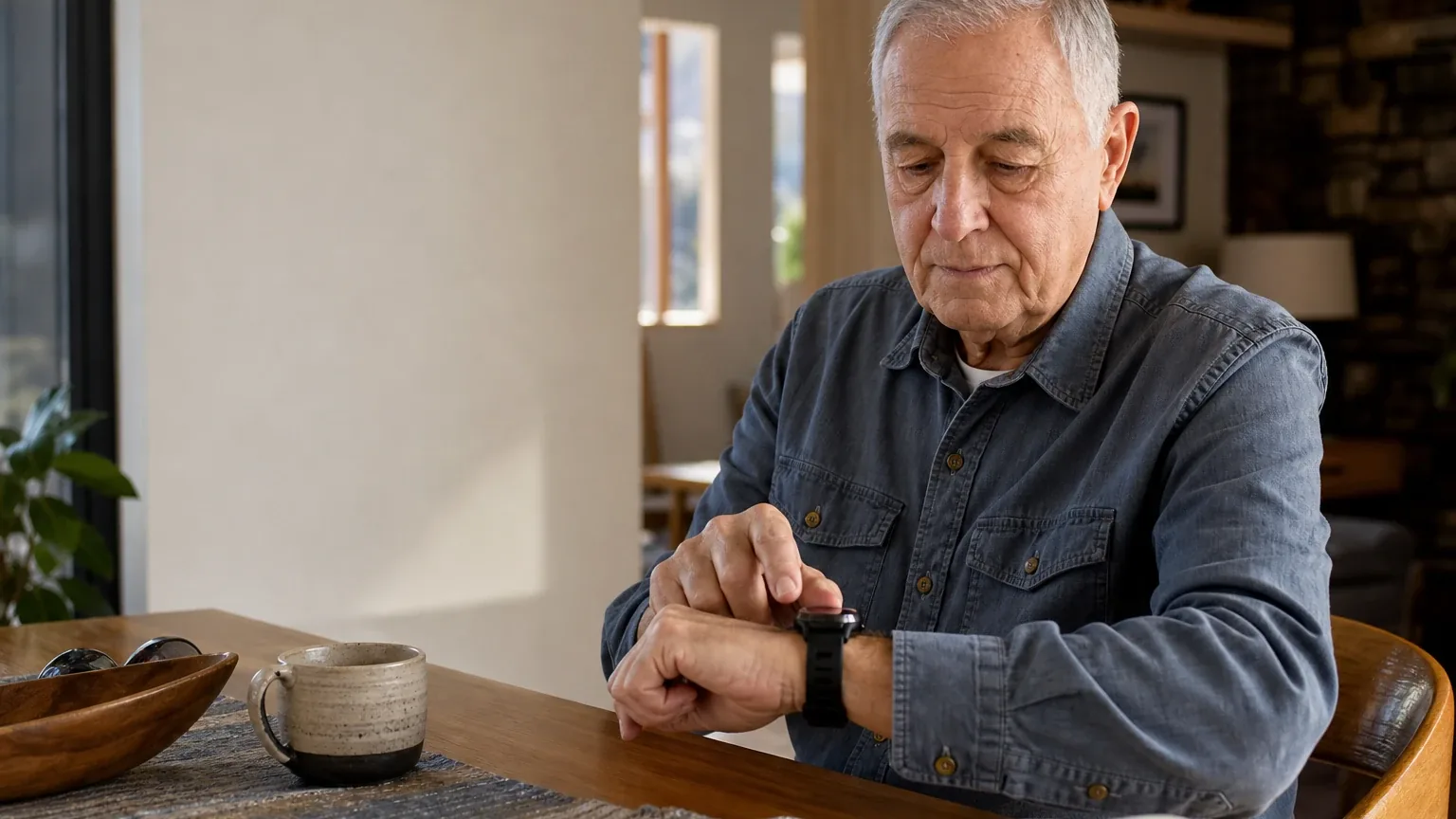
Answer Capsule
Bay Alarm Medical SOS Smartwatch is a good, though not unequivocally strong, fit for Watch-Style Emergency Response. Six of the seven platforms that evaluated fit named it during the ranking stage, and it finished second overall with an average listed rank of 2.0. Its strongest case is a discreet, standalone wrist device with a physical SOS button, GPS location support, two-way monitoring-center voice communication, and optional automatic fall detection. The main limitation is short battery life—company materials state up to 18–24 hours while independent testing reported roughly 14–16 hours—so daily charging is effectively required [17]. Buyers should also resolve conflicting public descriptions of the speaker, fall detection, and return terms before purchasing.
Research Snapshot
| Field | Detail |
|---|---|
| Platform mentions in ranking stage | 6 of 7 platforms (anthropic, deepseek, google, grok, kimi, openai) |
| Share of included platform responses | 85.7% |
| Average listed rank | 2.0 |
| Best listed rank | 1 (grok) |
| Relevant product/model/plan | SOS Smartwatch with 24/7 monitoring; optional fall-detection package |
| Overall use-case fit | Good (rated "good" by five platforms, "strong" by two) |
| Research date | 2026-11-10 |
What Changed Since September 2026
Bay Alarm Medical SOS Smartwatch remained at No. 2, and platform mentions were unchanged at 6. The November 2026 review reshapes the Bay Alarm Medical SOS Smartwatch assessment around battery endurance and cost rather than changing the device description itself. Battery expectation is now stated as roughly 14–16 hours in independent testing, against a company claim of up to 18–24 hours, keeping daily charging a practical requirement. Estimated first-year monitoring cost is newly reported at $478.80 without fall detection or $599.40 with it, excluding the device charge; the earlier $10 per month fall-detection figure is no longer repeated. The recommended configuration is unchanged. Overall buyer fit stays good rather than strong, with the same strengths and the same charging limitation. Differences between the two editions reflect what each article reports; they do not by themselves prove that the product, service, or price changed.
The September 2026 review preserves the earlier article for reference.
Why Bay Alarm Medical SOS Smartwatch Qualified for This Study
Questions This Section Answers
- Why did Bay Alarm Medical SOS Smartwatch qualify for a watch-style emergency response ranking when it is primarily a medical alert device?
- How consistently did AI platforms rank Bay Alarm Medical SOS Smartwatch for watch-style emergency response?
Bay Alarm Medical SOS Smartwatch qualified because it is a wrist-worn, standalone medical alert device built specifically for the watch-style use case, not a general-purpose smartwatch adapted for emergencies. It combines a physical SOS button, built-in GPS, 4G LTE connectivity without a smartphone, two-way voice with a monitoring center, and optional automatic fall detection [10].
Six of the seven platforms that evaluated fit named it during ranking discovery, and it appeared at or near the top of every list that included it: first on grok, second on deepseek, google, kimi, and openai, and third on anthropic. That consistency—an average rank of 2.0 across six lists—is why it advanced to the final comparison rather than being treated as a marginal candidate.
The qualification is about category fit, not proven superiority. Platform agreement reflects how well the device matches the stated buyer profile—older adults who prefer a discreet wearable with GPS and calling features—not independently verified product quality.
The Product, Model, Plan, or Service Most Relevant to Watch-Style Emergency Response
Questions This Section Answers
- Which Bay Alarm Medical SOS Smartwatch plan should a senior choose for watch-style emergency response with fall detection?
- Does the Bay Alarm Medical SOS Smartwatch work without a smartphone for emergency calls?
The relevant configuration is the SOS Smartwatch with 24/7 monitoring service, plus the optional fall-detection package. The base monitoring plan is listed at $39.95 per month, and the package with fall detection is listed at $49.95 per month, alongside a $199 device purchase shown discounted to $159.20 on the current pricing page [14].
The device operates as a standalone unit on 4G LTE and does not require a smartphone, pairing, apps, or a base station for basic emergency calls [13]. That standalone design is central to the watch-style use case: the wearer can press the SOS button away from home and reach a monitoring center without carrying a phone.
Platforms described the plan slightly differently—"SOS Smartwatch Plus," "SOS Smartwatch with monitoring plan," and "SOS Smartwatch with optional Auto Fall Detection Plan"—but all point to the same core product and monitoring service. The naming variation is a presentation difference, not evidence of separate hardware tiers, though buyers should confirm the exact SKU at checkout.
What the AI Platforms Agreed About
Questions This Section Answers
- What did AI platforms agree the Bay Alarm Medical SOS Smartwatch does well for watch-style emergency response?
- Do AI platforms agree the Bay Alarm Medical SOS Smartwatch has a physical SOS button and standalone GPS?
Platforms were unanimous on several core strengths. All seven described a dedicated physical SOS button on the side of the watch that connects to the monitoring center, and independent reviewers described the button as large and easy to press [28].
They also agreed on standalone operation. Multiple platforms confirmed the watch runs on built-in 4G LTE without a smartphone, base station, or separate cellular plan [13].
GPS support drew broad agreement. Bay Alarm states the watch sends location data to the monitoring center when the SOS button is pressed, and independent testing reported that GPS consistently relayed an exact street address or nearby landmark during test calls [13]. No platform claimed a guaranteed accuracy range.
Two-way calling was supported by most platforms. Bay Alarm states the watch includes a built-in speaker and microphone for two-way communication with dispatchers, and independent testing reported clear communication and successful monitoring-center calls [13].
Fall detection drew agreement on availability, not accuracy. Current Bay Alarm materials list automatic fall detection as an optional add-on using AI-enhanced algorithms, and independent testing detected 15 of 20 simulated falls—about 75% [13]. Platforms consistently framed this as useful but incomplete protection.
Where the AI Platforms Disagreed or Were Uncertain
Questions This Section Answers
- Why do sources disagree about Bay Alarm Medical SOS Smartwatch battery life and fall detection accuracy?
- Is the Bay Alarm Medical SOS Smartwatch caregiver app available for independent location tracking?
Battery life produced the widest spread. Bay Alarm's product sheet states up to 18–24 hours, while an independent reviewer reported approximately 14–16 hours [17]. Other platforms cited ranges from 6–8 hours to 6–18 hours depending on GPS polling and signal strength [21]. The disagreement is partly definitional—company figures assume favorable conditions—but the practical conclusion is consistent: the watch requires daily charging.
Two-way calling carried a direct contradiction. One independent review section reported successful monitoring-center calls, while another displayed passage in the same review said the device lacked a speaker or microphone [28]. Kimi characterized this as an apparent editing error rather than a variant hardware configuration, but the conflict should be resolved with the seller before purchase.
Fall detection descriptions varied by source vintage. Bay Alarm's current materials describe automatic fall detection for the SOS Smartwatch, while older or third-party listings have described it as unavailable or optional [10]. The current package and device eligibility should be confirmed in writing.
Caregiver app status was uncertain. Bay Alarm states caregiver tracking is included with SOS Mobile packages, but independent reviews reported that the SOS Smartwatch does not offer a caregiver tracking app, and one platform noted a caregiver app was described as "in development" [13]. Buyers who need proactive caregiver location monitoring should verify current capability.
Pricing presentation was inconsistent. One Bay Alarm article says no contracts and no upfront fees, while pricing pages show a device purchase fee [14]. The $199 list price and $159.20 promotional price both appear in public sources.
Use-Case-Specific Features and Capabilities
Questions This Section Answers
- How does the Bay Alarm Medical SOS Smartwatch perform on SOS button access, GPS, calling clarity, fall detection, battery, and display for seniors?
- Is the Bay Alarm Medical SOS Smartwatch display readable for older adults with vision limitations?
The table below summarizes platform findings against the seven criteria used in this study. Assessments reflect platform-reported evidence and independent reviews, not hands-on testing by this report.
| Criterion | Assessment | Key evidence |
|---|---|---|
| SOS button accessibility | Advantage | Dedicated physical side button; press and hold about five seconds; described as large and easy to press [17] |
| GPS accuracy | Advantage | Built-in GPS relays location to monitoring center; independent tests reported exact addresses or landmarks; no guaranteed accuracy range published [13] |
| Two-way calling clarity | Mixed | Company states built-in speaker and microphone; independent tests reported clear calls, but one review passage contradicts this [13] |
| Fall-detection capability | Advantage with caveat | Optional AI add-on; 15 of 20 simulated falls detected (~75%); not complete protection [29] |
| Battery life | Limitation | Company states up to 18–24 hours; independent testing reported ~14–16 hours; other sources cite 6–18 hours [17] |
| Display readability | Advantage | 1.25-inch touchscreen; independent reviewers described large icons and high-contrast text [1] |
| Subscription pricing | Neutral | $39.95/month base; $49.95/month with fall detection; $199 device (discounted to $159.20) [14] |
On SOS button accessibility, the physical button is the device's clearest strength for the use case. It avoids touchscreen-only activation and reduces accidental triggers [1].
On GPS, independent testing supported location relay during calls, but no source established indoor performance or a guaranteed accuracy range [28].
On calling clarity, the weight of evidence supports functional two-way voice, but the contradiction in one review means buyers should confirm the current hardware revision includes a working speaker and microphone.
On fall detection, the ~75% detection rate in independent testing is roughly average for the category and should not be treated as complete protection [29].
On battery, the practical takeaway is daily charging. The watch charges in about two to three hours and provides audible low-battery notifications [28].
On display, the 1.25-inch touchscreen with large icons and high-contrast text was described as accommodating declining visual acuity, though no source established readability for significant visual impairment [1].
Pricing, Fees, Contracts, and Ongoing Costs
Questions This Section Answers
- What does the Bay Alarm Medical SOS Smartwatch cost per month and per year with and without fall detection?
- Does Bay Alarm Medical require a contract or charge cancellation fees for the SOS Smartwatch?
The published structure is a one-time device purchase plus a monthly monitoring subscription. The device is listed at $199, shown discounted to $159.20 on the current pricing page. Monitoring is $39.95 per month, or $49.95 per month with fall detection [14].
Estimated first-year recurring cost before taxes or undisclosed fees is $478.80 without fall detection or $599.40 with fall detection, plus the device charge [14]. Quarterly and annual prepayment options are listed at $119.85 per quarter or $479.40 annually for standard monitoring, and $149.85 per quarter or $599.40 annually with fall detection [6].
On contracts, Bay Alarm states it does not require a long-term contract and that customers can cancel anytime without cancellation fees [11]. The company also describes a 15-day refund policy beginning when the device is received, with a full refund less shipping costs [11].
Trial and refund terms conflict across sources. One independent source reports a 30-day trial and states that after the trial the watch purchase may not be refundable even if monitoring is canceled [28]. Another notes the device must be returned in working condition before cancellation takes effect [11]. The exact refund, cancellation, renewal, and replacement terms were not fully confirmed from official materials reviewed.
Additional fees are inconsistently documented. One platform lists an optional protection plan at $4.95 per month, medication reminders at $30 one-time, and return shipping costs during the trial period (anthropic). Another lists an optional lockbox at $30 and wall buttons at $35 each (deepseek). These add-ons are platform-reported and should be confirmed at checkout.
Best Suited For
Questions This Section Answers
- Who is the Bay Alarm Medical SOS Smartwatch best suited for in watch-style emergency response?
- Is the Bay Alarm Medical SOS Smartwatch a good choice for an active senior who wants a discreet wearable without a smartphone?
The SOS Smartwatch best suits older adults who want a discreet, watch-style device they will actually wear, who spend time away from home, and who can maintain a nightly charging routine. Platforms consistently identified active, independent Seniors as the core fit (anthropic, deepseek, google, kimi, openai).
It also suits buyers who want optional rather than mandatory fall detection, since the add-on is priced separately at $10 per month and can be declined [14].
Families who want monitoring-center location relay and low-battery visibility, without requiring a smartphone for the wearer, are a reasonable fit [10].
Buyers who prefer month-to-month flexibility over long-term contracts are also well matched, given the stated no-contract policy [11].
Probably Not Best Suited For
Questions This Section Answers
- Who should avoid the Bay Alarm Medical SOS Smartwatch because of battery life or caregiver messaging limits?
- Is the Bay Alarm Medical SOS Smartwatch a poor choice for a senior with cognitive decline who may forget to charge a watch?
The SOS Smartwatch is probably not the best fit for users who cannot reliably charge a device daily or overnight. Every platform flagged battery life as the primary limitation, and one specifically recommended against it for seniors with advanced cognitive decline who forget daily charging (anthropic, openai, kimi).
It is also a weaker fit for buyers seeking full consumer-smartwatch functionality—texting, voice assistants, broad health monitoring, or integration with Apple Health or Google Fit (openai, anthropic).
Users who require highly validated fall detection without false negatives should look elsewhere, since independent testing detected 15 of 20 simulated falls and no standardized clinical validation is published [29].
Buyers who need proactive caregiver location tracking or caregiver-to-wearer messaging will find the SOS Smartwatch limited compared with competitors such as the Medical Guardian MGMove [25].
Buyers who need clear, favorable long-term return or cancellation terms before purchasing should resolve the trial-period conflict first (openai, deepseek).
When Another Option May Be Better
Questions This Section Answers
- When is another medical alert watch or system a better choice than the Bay Alarm Medical SOS Smartwatch for watch-style emergency response?
- Which alternative should a buyer consider if multi-day battery life matters more than the Bay Alarm Medical SOS Smartwatch watch form factor?
Another option may be better in several specific situations. When multi-day battery life matters most, platforms pointed to the Kanega Watch (up to 32 hours) or Bay Alarm's own SOS All-In-One 2 (up to 72 hours) and SOS Micro (36 hours) (anthropic, deepseek, kimi).
When caregiver messaging or a richer caregiver portal is required, the Medical Guardian MGMove was the most frequently named alternative (anthropic, deepseek, kimi).
When the user is sedentary or primarily homebound, the SOS Home system was described as more appropriate and less expensive at $27.95–$34.95 per month (anthropic).
When advanced health features such as ECG, SpO2, or sleep apnea detection matter, consumer smartwatches like the Apple Watch Series 10 or Samsung Galaxy Watch 7 were suggested (anthropic).
When budget is extremely tight and no device fee is acceptable, the SOS Home leased free with no upfront cost was named (anthropic).
When independently benchmarked GPS, battery, or voice performance is a priority, one platform recommended comparing broader third-party review coverage before purchase (perplexity).
Questions to Verify Before Buying
Questions This Section Answers
- What should a buyer confirm with Bay Alarm Medical about the SOS Smartwatch speaker, fall detection, and battery before purchasing?
- What return, cancellation, and fee terms should be confirmed before buying the Bay Alarm Medical SOS Smartwatch?
Buyers should confirm the exact device revision includes a working speaker and microphone for two-way calls, given the contradiction in one independent review [28].
They should confirm whether automatic fall detection is included in the selected plan and whether it functions on the watch itself rather than only on another mobile device [16].
They should ask for realistic battery life with GPS and cellular active, and what happens when the battery reaches a critically low level (openai, anthropic).
They should verify cellular coverage at home and regular travel locations, and how the device performs indoors and in weak-signal areas (openai, anthropic).
They should confirm the precise trial, return, cancellation, renewal, and refund terms, including whether the trial is 15 or 30 days and whether the device purchase is refundable after the trial [11].
They should ask whether taxes, activation, replacement, shipping, or early-cancellation fees apply, and whether the current 20% device discount is permanent or promotional (openai, kimi).
They should confirm current caregiver app capabilities—live location, location history, battery status, and whether caregivers can send messages to the watch [25].
They should verify the current water-resistance rating and whether showering or accidental water damage is covered [28].
Final AI Consensus Verdict
Bay Alarm Medical SOS Smartwatch earns a good, not unequivocally strong, fit rating for Watch-Style Emergency Response. Five platforms rated it "good" and two rated it "strong," and it placed second overall with an average rank of 2.0 across six naming platforms.
Its case rests on a discreet wrist form factor, a physical SOS button, standalone 4G LTE operation, GPS location relay, two-way monitoring-center voice, and optional AI fall detection at a competitive $39.95–$49.95 monthly price with no long-term contract [14].
Its weaknesses are consistent across platforms: short battery life requiring daily charging, fall detection that missed 5 of 20 simulated falls, limited smartwatch and caregiver-communication features, and unresolved inconsistencies in public descriptions of the speaker, fall detection availability, and return terms [29].
For an active senior who will wear a watch daily and charge it nightly, and who values discretion and simplicity over multi-day battery or advanced caregiver connectivity, it is a reasonable choice. For buyers prioritizing battery endurance, verified fall-detection accuracy, or caregiver messaging, alternatives deserve equal consideration.
How This Review Was Produced
This report evaluates Bay Alarm Medical SOS Smartwatch only for the Watch-Style Emergency Response use case. It draws on fit-research responses from seven AI platforms—anthropic, deepseek, google, grok, kimi, openai, and perplexity—each of which searched the web and reported findings with citations. The research date is 2026-11-10.
Platform mentions in the ranking stage count only platforms that named the entity during ranking discovery. All seven platforms evaluated fit, but six named the entity in their rankings. Fit ratings reflect each platform's own assessment, not a pooled score.
Company-owned sources include Bay Alarm Medical's product pages, pricing page, product information sheet, user guide, and FAQ. Independent sources include reviews and testing from The Senior List, NCOA, SafeHome, SeniorLiving, MedicalAlertBuyersGuide, MedGrade, SeniorSite, Caring.com, SteadyAge, and U.S. News. The distinction matters: company materials describe intended performance, while independent reviews report observed performance.
For the broader category comparison, see the Watch-Style Emergency Response consensus index.
Buyers comparing device categories can also browse the full medical alert systems directory.
Methodology Limitations
All citations are platform-reported evidence, not independently verified facts. The supplied URLs were collected from platform responses and were not independently validated by the writer stage. No hands-on testing, customer experience, medical benefit, or guaranteed performance is claimed in this report.
Several material conflicts remain unresolved. Battery life figures range from 6–8 hours to 18–24 hours depending on source and usage assumptions. Fall detection accuracy varies by test methodology (15/20, 8/10, and 75% appear across sources) with no standardized clinical validation published. The speaker and microphone contradiction in one independent review was not resolved. Trial periods are described as both 15 and 30 days. Caregiver app availability is disputed between company marketing and independent reviews.
Pricing presentation is inconsistent across pages, including the $199 list price versus $159.20 promotional price and conflicting statements about upfront fees. The exact refund, cancellation, renewal, and replacement terms were not fully confirmed from official materials.
Platform agreement on category fit does not prove product quality. Missing research on a given criterion is not evidence of disagreement. Where a platform supplied no citation for a factual claim, that claim is labeled platform-reported or unverified rather than presented as independently established.
Sources
Company-Owned Sources
- SOS Smartwatch Plus - Bay Alarm Medical Shop: https://shop.bayalarmmedical.com/shop/sos-smartwatch-plus-38
- Bay Alarm Medical Official Site: https://www.bayalarmmedical.com/
- Smartwatch vs. Mobile Medical Alert: What's the Difference?: https://www.bayalarmmedical.com/caregiver-support/smartwatch-vs-mobile-medical-alert-whats-the-difference/
- SOS Micro, Mobile or Smartwatch - How to Choose: https://www.bayalarmmedical.com/caregiver-support/sos-micro-mobile-or-smartwatch-how-to-choose/
- Frequently Asked Questions: https://www.bayalarmmedical.com/frequently-asked-questions/
- Award-Winning Medical Alert Systems for Seniors: https://www.bayalarmmedical.com/medical-alert-system/
- SOS Smartwatch: Life-Saving Medical Alert Watch: https://www.bayalarmmedical.com/medical-alert-system/sos-smartwatch/
- Medical Alert Costs | Compare Us to Life Alert: https://www.bayalarmmedical.com/pricing/
- SOS Micro, Mobile or Smartwatch - How to Choose - Bay Alarm Medical: https://www.bayalarmmedical.com/resources/sos-micro-mobile-or-smartwatch-how-to-choose/
- Smartwatch Bay Al - bayalarmmedical.com: https://www.bayalarmmedical.com/wp-content/uploads/2025_BAM_SOS_Smartwatch_UserGuide.pdf
- Watch Product Info Sheet: https://www.bayalarmmedical.com/wp-content/uploads/Watch-Product-Info-Sheet.pdf
Independent Sources
- Bay Alarm Medical SOS Smartwatch: https://medgrade.org/devices/bay-alarm-medical-sos-smartwatch/
- Bay Alarm Medical SOS Smartwatch Review: The Gold Standard for Ease of Use: https://medgrade.org/reviews/bay-alarm-medical-sos-smartwatch-review-2/
- Bay Alarm Medical SOS Smartwatch Review: High-Value Wearable with Verbal Guidance: https://medgrade.org/reviews/bay-alarm-medical-sos-smartwatch-review/
- Best Medical Alert Systems With Fall Detection: https://realestate.usnews.com/home-services/medical-alert-system/fall-detection?preview=true&site_id=1506
- Bay Alarm Medical Review 2026: Hidden Costs and Real Response Times: https://seniorsite.org/resource/bay-alarm-medical-review-2026-hidden-costs-and-real-response-times/
- Medical Guardian vs Bay Alarm Medical (2026: https://steadyage.com/medical-guardian-vs-bay-alarm-medical/
- Bay Alarm Medical Medical Alert System Review 2026: https://www.caring.com/senior-products/best-medical-alert-systems/bay-alarm-medical
- Bay Alarm Medical SOS Smartwatch Our Pick for Best Value Watch: https://www.medicalalertbuyersguide.org/smartwatch-medical-alert-system/bay-alarm-medical-sos-smartwatch-medical-alert-review/
- Bay Alarm Medical Review - The National Council on Aging (NCOA: https://www.ncoa.org/adviser/medical-alerts/bay-alarm-medical-review/
- Bay Alarm Medical: Our Take on This Popular Brand: https://www.ncoa.org/product-resources/medical-alert-systems/bay-alarm-medical-review/
- The Best Medical Alert Watches of 2026: Expert Reviewed: https://www.ncoa.org/product-resources/medical-alert-systems/best-medical-alert-watches/
- Bay Alarm Medical Alert Systems Cost & Packages: https://www.safehome.org/medical-alert-systems/bay-alarm-medical/
- Bay Alarm Medical Review 2026: https://www.safehome.org/medical-alert-systems/bay-alarm-medical/reviews/
- Best Medical Alert Watches of 2026: Expert Tested: https://www.safehome.org/medical-alert-systems/best/watches/
- Best Medical Alert Systems of 2026: https://www.seniorliving.org/medical-alert-systems/best/
- Best Medical Alert Watches of 2026, Tested and Reviewed: https://www.seniorliving.org/medical-alert-systems/best/watch/
- Bay Alarm Medical SOS Smartwatch Review: https://www.theseniorlist.com/medical-alert-systems/bay-alarm-medical/sos-smartwatch/
- The 4 Best Medical Alert Watches of 2026, Tested by Caregivers: https://www.theseniorlist.com/medical-alert-systems/best/watches/
- Bay Alarm Medical SOS Smartwatch Review - The Senior List: https://www.theseniorlist.com/medical-alerts/bay-alarm-medical/sos-smartwatch/
Verify This Research
Review the study details behind this page or download the public machine-readable verification record.
- Study date
- November 10, 2026
- Platforms analyzed
- 7
- Source records
- 30
- Ranking mentions
- 6 of 7
- Platform share
- 86%
- Final consensus rank
- #2
Research trail and source mix
Configured platforms
openai, anthropic, deepseek, grok, perplexity, kimi, google
Source mix
19 independent · 11 company-owned
Evidence support
29 direct · 1 partial
Important limitation
Use the run research_date as the study date. Platform-reported dates are provenance metadata and do not independently prove freshness.
Source snapshot SHA-256 8405029b59533686058f40d81a034c5fe5785ecfcf43013d87a811cbcaab29f6
Archived editions
Browse earlier published research snapshots for this article. The latest edition remains at the current URL.