
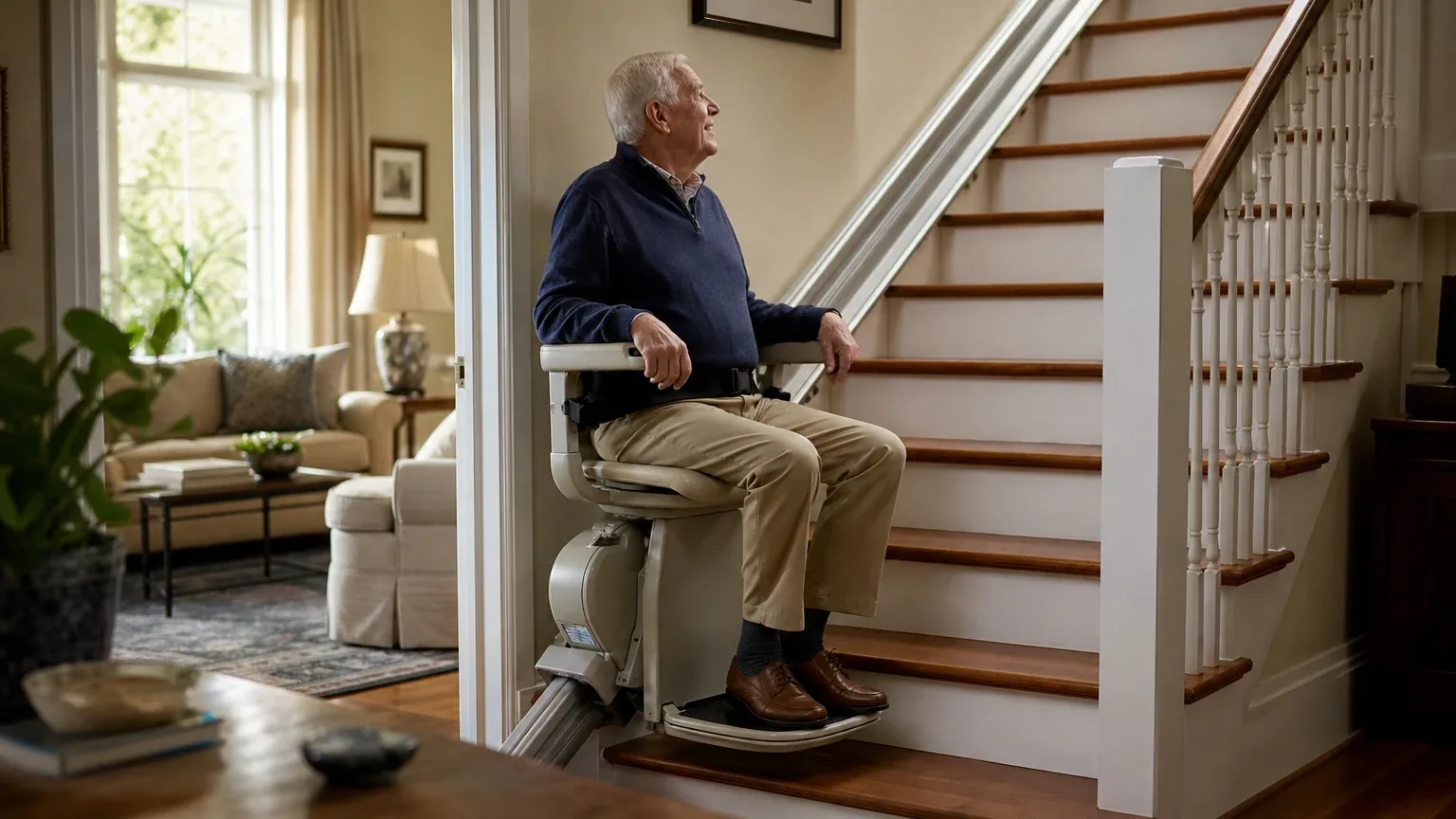
Answer Capsule
Bruno Elan SRE-3050 leads the September 2026 consensus ranking for Single-Flight Straight Staircases, followed by Acorn 130 and Harmar Pinnacle SL600. The current study includes 7 valid AI-platform responses and 7 qualifying entities. Compared with August 2026, the leader changed. The current list added Handicare 1000, AmeriGlide Rave, Leaf Home, and Savaria K2 and removed Stannah 260 and Handicare 1100. This is an immediately preceding-month comparison. Rank movement measures changes in this collection of standardized AI-platform responses. It is not product testing, customer-review evidence, or proof that a provider's underlying quality improved or declined.
What Changed Since August 2026
This comparison uses the immediately preceding completed month.
Bruno Elan SRE-3050 remained No. 1 in September 2026. It was named by 7 platforms, compared with 6 in August 2026. Both studies used 7 valid platform responses.
The largest upward moves were Acorn 130 (up 2). The largest downward moves were Harmar Pinnacle SL600 (down 1).
The current qualifying set added Handicare 1000, AmeriGlide Rave, Leaf Home, and Savaria K2. It no longer includes Stannah 260 and Handicare 1100 from the earlier top group. Entry or exit reflects the minimum-mention rule and the current response set, not a product launch, discontinuation, or quality finding.
| Current rank | Entity | Previous rank | Rank movement | Current mentions | Previous mentions | Mention change |
|---|---|---|---|---|---|---|
| 1 | Bruno Elan SRE-3050 | 1 | No change | 7 | 6 | +1 |
| 2 | Acorn 130 | 4 | Up 2 | 6 | 5 | +1 |
| 3 | Harmar Pinnacle SL600 | 2 | Down 1 | 6 | 5 | +1 |
| 4 | Handicare 1000 | — | New | 4 | — | — |
| 5 | AmeriGlide Rave | — | New | 4 | — | — |
| 6 | Leaf Home | — | New | 3 | — | — |
| 7 | Savaria K2 | — | New | 3 | — | — |
| — | Stannah 260 | 3 | Exited | — | 5 | — |
| — | Handicare 1100 | 5 | Exited | — | 3 | — |
The table is calculated directly from the two stored ranking datasets. Positive rank movement means an entity moved closer to No. 1; mention change shows the difference in the number of included platform responses naming it.
The August 2026 edition preserves the complete earlier ranking and methodology for reference.
Research Snapshot
- Topic: Best stairlifts for single-flight straight staircases (single, straight, un-landed indoor residential flights).
- Target buyer: Seniors with declining mobility living in two-story homes with straight, un-landed staircases in the United States.
- Platforms included: openai, anthropic, deepseek, grok, perplexity, kimi, google (7 platforms).
- Research date: 2026-09-25 (the authoritative run date; platform-reported dates are provenance metadata only and do not independently prove freshness).
- Unique entities named: 12.
- Qualifying entities: 7.
- Eligibility rule: Named by at least two platforms during ranking discovery.
- Ranking authority: The final ranking table, ordered by platform mentions, then average listed rank, then best listed rank.
The Consensus Ranking
Questions This Section Answers
- What are the best stairlifts for single-flight straight staircases in 2026?
- Which straight stairlift brand was named by the most AI platforms?
- Which straight stairlift has the best average listed position across platforms?
The table below is the ranking authority for this report. Platform mentions count only platforms that named the entity during ranking discovery; they do not represent the number of platforms that later completed a fit assessment.
| Rank | Entity | Platform mentions | Share of platform responses | Average listed position | Best position | Best considered for |
|---|---|---|---|---|---|---|
| 1 | Bruno Elan SRE-3050 | 7 | 100.0% | 1.14 | 1 | Typical straight indoor residential staircases.; Buyers prioritizing a close-to-wall vertical rail and folded components that preserve stairway clearance.; Riders who can transfer onto the seat and continuously hold the armrest control. |
| 2 | Acorn 130 | 6 | 85.7% | 3.5 | 2 | A standard indoor straight staircase without bends or an intermediate landing; Buyers prioritizing rapid installation and a relatively simple rail system; Users within the verified 280- to 300-pound capacity range, subject to the written quote and model specification |
| 3 | Harmar Pinnacle SL600 | 6 | 85.7% | 4.0 | 1 | Single straight staircases with no curves or intermediate landings.; Homes where folded stair width and obstruction clearance are important.; Users needing more capacity and a larger seat than the SL300 but not requiring the 600-pound SL600HD. |
| 4 | Handicare 1000 | 4 | 57.1% | 4.0 | 3 | Single, straight indoor staircases with standard stair-tread installation; Users who need more than a basic 300 lb capacity; Homes requiring a swivel seat, optional powered swivel, or obstruction sensing |
| 5 | AmeriGlide Rave | 4 | 57.1% | 6.25 | 5 | Straight indoor staircases with a standard rail length within the product limits; Buyers prioritizing a comparatively low base equipment price; Households comfortable with homeowner installation or separately purchasing installation |
| 6 | Leaf Home | 3 | 42.9% | 5.33 | 5 | Straight staircases approximately 29 inches or wider where preserving walking space matters.; Buyers who want measurement, installation, testing, and ongoing service from one provider.; Users within the 350-pound capacity of the standard Comfort Lift who value a compact rail and swivel-seat access. |
| 7 | Savaria K2 | 3 | 42.9% | 5.67 | 2 | Indoor two-story homes with one straight flight and no intermediate landing or turn; Buyers prioritizing compact folded dimensions, basic safety features, and relatively quick installation; Users who can safely transfer from a walker or wheelchair onto a stairlift seat |
Which Option Is Best for Which Version of the Buyer Need?
Questions This Section Answers
- Which straight stairlift should a buyer choose if they need the lowest published equipment price?
- Which straight stairlift is best for a rider who needs more than 300 lb of capacity?
- Which straight stairlift should a buyer choose if they want installation, warranty, and service from a single provider?
| Buyer need | Best-matched ranked option | Why, from the evidence |
|---|---|---|
| Highest overall consensus and dealer support | Bruno Elan SRE-3050 | Named by all 7 platforms; 300 lb capacity; vertical rail within 5 inches of the wall; battery backup; documented obstruction sensing [e1:openai:C1][e1:anthropic:C1] |
| Fastest, least invasive installation | Acorn 130 | Rail mounts to stair treads rather than walls; manufacturer claims 1–2 hours, dealers report 2–4 hours [e2:anthropic:C1][e2:perplexity:c2] |
| Narrowest folded profile | Harmar Pinnacle SL600 | Folds to approximately 10.5 inches from the wall; folding rail increases folded width to about 13.6 inches [e3:openai:c1][e3:anthropic:2-11] |
| Higher capacity within the ranked set | Handicare 1000 | 350 lb standard with an optional 440 lb Smart-seat configuration; Perch seat limited to 300 lb [e4:openai:c1][e4:anthropic:c10] |
| Lowest published equipment price | AmeriGlide Rave | Listed at $2,249 plus shipping on September 25, 2026, discounted from $3,049; reconditioned and used units listed lower [e5:openai:c1][e5:openai:c7] |
| Single-provider full service | Leaf Home | Measurement, installation, testing, and ongoing service from one provider; limited lifetime warranty with no annual fee per company materials [e6:openai:c1][e6:anthropic:20-14] |
| Slim profile with dealer service | Savaria K2 | Folds to approximately 10.75 inches; 350 lb residential capacity, reduced to 300 lb above 45° or with a flip-up rail [e7:openai:c1][e7:google:savaria_k2_official] |
1. Bruno Elan SRE-3050
Questions This Section Answers
- Is the Bruno Elan SRE-3050 worth it for a single-flight straight staircase, and what are its main drawbacks?
- What should a buyer verify before choosing the Bruno Elan SRE-3050 for a straight indoor staircase?
- Is the Bruno Elan SRE-3050 or the Acorn 130 better for a straight staircase when installation speed matters?
The Bruno Elan SRE-3050 is the consensus leader for this use case: it was named by all seven included platforms and ranked first by six of them, with openai placing it second [e1:openai:C1][e1:anthropic:C1]. It is a purpose-built straight indoor stairlift with a vertical rail that installs within 5 inches of the wall, a padded folding seat that swivels to 67° at the top landing and 90° at the top position, a 300 lb rated load, and battery operation with continuous charging along the rail [e1:openai:C1][e1:anthropic:C1]. Documented safety features include a folding-footrest safety sensor panel, obstruction sensors, a seat belt, carriage safety switches, overspeed protection, and final end-stop bumpers [e1:openai:C1][e1:anthropic:C1].
Why it ranked here. Bruno received the maximum platform mentions (7 of 7) and the best average listed position (1.14) in the final ranking table. Six platforms ranked it first; openai ranked it second. No other entity in this study achieved 100% platform share.
Best suited for. Typical straight indoor residential staircases; buyers prioritizing a close-to-wall vertical rail and folded components that preserve stairway clearance; riders who can transfer onto the seat and continuously hold the armrest control [e1:openai:C1].
Main strengths for the use case. Purpose-built straight indoor configuration; close-to-wall vertical rail; 300 lb capacity appropriate for many target users; folding seat, arms, and footrest; documented obstruction sensing and seat-belt controls; battery operation during outages; local-dealer installation and support [e1:openai:C1][e1:anthropic:C1]. The gearbox is described as tested at 7× rated load on a 45-degree rail, and the unit is described as made in USA with compliance to EN 81-40:2020, ASME A18.1:2017, and CAN/CSA-B613-00 [e1:anthropic:C1].
Main limitations. The 300 lb maximum excludes heavier riders; the documented base-seat arrangement is a manual swivel, with powered transfer features costing extra; there is no reliable public nationwide price for the exact SRE-3050; installation time and final fit require an in-home assessment; and the SRE-3050 versus SRE-5000 model designation is not fully consistent across current public sources [e1:openai:C1][e1:perplexity:c1]. Manufacturer documentation also states the SRE-3050 is not recommended for users performing scoot-pivot transfers from wheelchairs without leg weight-bearing, or users with leg weakness causing knee buckling during stand-to-sit transitions; Bruno directs those users to the SRE-2010 Elite [e1:anthropic:C2].
Pricing or cost summary. Bruno does not publish a universal U.S. transaction price. Dealer-reported equipment prices reviewed were approximately $3,795–$4,395, with one dealer separately listing $300 installation; broader dealer estimates for installed Elan straight stairlifts were approximately $3,000–$6,000 [e1:openai:C1][e1:openai:C6][e1:openai:C8]. One platform reported base unit pricing of $2,990–$4,500 with installation of $495–$595 depending on stair count, plus options such as a manual folding rail at $950 and a power folding rail at $1,695 [e1:anthropic:C7]. Another reported installed cost of $3,500–$6,500 depending on rail length and options [e1:grok:1]. These are dealer-specific figures, not a verified Bruno MSRP.
Where platforms disagreed. Kimi returned an uncertain fit rating, reporting that its search results covered structural staircases rather than mobility aids and that no stairlift-specific specifications, pricing, or safety features were found [e1:kimi:C1]. Google rated the fit "strong" and described the unit as exceptional for narrow staircases and power outages [e1:google:1.1.1]. Platforms also disagreed on installation time: one independent assessment reported 2–4 hours, while Bruno's current materials do not confirm that timing [e1:openai:C3]. Warranty descriptions varied between a dealer-hosted sheet citing lifetime major-component coverage, two-year other-component coverage, and 30 days of labor, and other sources citing a 2-to-5-year parts warranty [e1:openai:C9][e1:google:1.2.4].
For the complete fit review, see Bruno Elan SRE-3050.
What Changed Since August 2026
Bruno Elan SRE-3050 remained at No. 1, and platform mentions increased from 6 to 7. The September 2026 article reframes the Bruno Elan SRE-3050 mainly through pricing evidence, newly reporting dealer equipment prices of $3,795–$4,395 and broader installed estimates of $3,000–$6,000; the earlier "$2,900 to $6,000" figure is no longer repeated. Buyer guidance is otherwise substantially rewritten but consistent: the same 300 lb rated load, manual swivel seat, and close-to-wall vertical rail remain the deciding strengths, while heavier riders and powered transfer features remain limitations. The prior "2–3 hours" installation estimate is no longer repeated, and the current article instead notes a 30-day labor coverage figure among warranty descriptions. Differences between the two editions reflect what each article reports; they do not by themselves prove that the product, service, or price changed.
2. Acorn 130
Questions This Section Answers
- Is the Acorn 130 worth it for a straight staircase, and what are its main drawbacks?
- Which straight stairlift should a buyer choose if they want to avoid drilling into walls?
- What should a buyer verify about Acorn 130 weight capacity before ordering?
The Acorn 130 is the second-ranked option, named by six of seven platforms with an average listed position of 3.50 and a best position of 2 [e2:openai:c1][e2:anthropic:C1]. It is engineered exclusively for straight staircases and uses an extruded aluminum rail with a rack-and-pinion drive mounted directly to the stair treads, requiring no wall drilling or structural changes [e2:anthropic:C1]. The seat is padded with a manual swivel lever locking at 45° and 90°, and the unit is battery powered with automatic charging from a standard wall outlet [e2:anthropic:C2][e2:anthropic:C4].
Why it ranked here. Acorn received 6 platform mentions (85.7% share) and an average listed position of 3.50. Deepseek, grok, and perplexity each ranked it second; anthropic and google ranked it fourth; kimi ranked it seventh [e2:deepseek:C1][e2:grok:0][e2:perplexity:c1].
Best suited for. A standard indoor straight staircase without bends or an intermediate landing; buyers prioritizing rapid installation and a relatively simple rail system; users within the verified 280- to 300-pound capacity range, subject to the written quote and model specification [e2:openai:c1].
Main strengths for the use case. Purpose-built straight-stair model; tread-mounted modular rail that avoids wall mounting; swivel seat with 45° and 90° locking positions; documented battery operation; standard and HD capacity configurations; and a straight-rail design that may support faster installation than a custom curved system [e2:openai:c1][e2:anthropic:C1]. Google reported five safety sensors on the footrest and carriage that automatically stop the lift on obstruction, plus an inertia seat belt [e2:google:1.1.4].
Main limitations. No verified public base price or financing, rental, or monthly payment schedule; conflicting official capacity information (280 pounds on the product page versus 300 pounds in the user guide); automatic obstruction-sensor specifications not clearly published in reviewed materials; warranty, extended service, response time, and local technician coverage not verified; a hinged or folding rail may be necessary if the rail would obstruct a doorway, hallway, or bottom landing; and rail length and stair geometry must be confirmed through a home survey [e2:openai:c1][e2:openai:c4]. The manual swivel lever requires hand strength and dexterity, and there is no powered swivel option on this model [e2:anthropic:C2].
Pricing or cost summary. Acorn does not publish a fixed U.S. list price on the reviewed product or pricing pages; it offers a free quote and home survey [e2:openai:c5]. Independent 2026 estimates place typical installed Acorn 130 pricing around $2,800 to $3,600 [e2:openai:c7], while other independent sources cite roughly $3,000 to $5,000 installed [e2:perplexity:c8][e2:google:1.2.1]. One dealer example quoted $4,595 base with a $300 installation fee [e2:anthropic:C3]. These are estimates rather than Acorn prices and may exclude options, taxes, removal, repairs, or extended service.
Where platforms disagreed. Fit ratings ranged from "strong" (anthropic, deepseek, google, grok) to "good" (openai, perplexity) to "uncertain" (kimi) [e2:anthropic:C1][e2:deepseek:C1][e2:google:1.2.1][e2:grok:0][e2:openai:c1][e2:perplexity:c1][e2:kimi:search_failed_1]. Installation time claims ranged from "less than an hour" to "1 to 2 hours" to "2–4 hours," with complex jobs cited at 4–5 hours [e2:grok:0][e2:perplexity:c2][e2:anthropic:C3]. Weight capacity is the sharpest conflict: the official product page states 280 pounds for the standard model while the official quick user guide states 300 pounds; both state 350 pounds for HD [e2:openai:c1][e2:openai:c4]. Deepseek reported an HD configuration supporting up to 364 lbs (165 kg) [e2:deepseek:C1].
For the complete fit review, see Acorn 130.
What Changed Since August 2026
Acorn 130 moved up from No. 4 to No. 2, and platform mentions increased from 5 to 6. The September 2026 article substantially rewrites how the Acorn 130 is positioned for buyers, with new passages on best-suited use, strengths, limitations, and pricing, though the recommended configuration remains unchanged. Pricing evidence has also shifted: the current section newly reports installed cost estimates of $2,800 to $3,600 and $3,000 to $5,000, while the earlier $2,500–$5,000 range is no longer repeated. Installation-time claims were also refreshed, now describing windows of 1 to 2 hours, 2–4 hours, and 4–5 hours for complex jobs. The weight-capacity conflict between Acorn's product page and user guide persists. Differences between the two editions reflect what each article reports; they do not by themselves prove that the product, service, or price changed.
3. Harmar Pinnacle SL600
Questions This Section Answers
- Is the Harmar Pinnacle SL600 worth it for a narrow straight staircase, and what are its main drawbacks?
- Which straight stairlift should a buyer choose if folded stair width and obstruction clearance matter most?
- Is the Harmar Pinnacle SL600 or the Bruno Elan SRE-3050 better for a straight staircase when capacity matters?
The Harmar Pinnacle SL600 is the third-ranked option, named by six of seven platforms with an average listed position of 4.00 and a best position of 1 [e3:openai:c1][e3:google:lifeway_mobility]. It is designed for straight staircases without curves, with a track specified for 15 feet 6 inches to 70 feet and stair inclines of 27 to 52 degrees; inclines above 45 degrees may require local approval [e3:openai:c1]. The standard SL600 is rated for 350 pounds; Harmar identifies the SL600HD as a separate 600-pound model [e3:openai:c1][e3:perplexity:c3].
Why it ranked here. Harmar received 6 platform mentions (85.7% share) and an average listed position of 4.00. Openai ranked it first, google second, grok third, kimi fourth, anthropic fifth, and deepseek ninth [e3:openai:c1][e3:google:lifeway_mobility][e3:grok:0][e3:kimi:harmar_official][e3:anthropic:1-1][e3:deepseek:c1].
Best suited for. Single straight staircases with no curves or intermediate landings; homes where folded stair width and obstruction clearance are important; users needing more capacity and a larger seat than the SL300 but not requiring the 600-pound SL600HD [e3:openai:c1].
Main strengths for the use case. Designed for straight, single-flight staircases; 350-pound capacity higher than the SL300's published 300-pound capacity; compact folded width useful where household traffic must share the stairs; upper-landing swivel seat, retractable belt, obstruction sensors, and battery backup; and relatively specific published warranty and certification information [e3:openai:c1]. Harmar lists a 10-year gear-rack warranty, 1-year battery warranty, and lifetime motor warranty for units produced after September 2018, plus ETL certification and conformity with CSA B44.1/ASME A17.5-2019 and ASME A18.1-2020 [e3:openai:c1]. The drive uses a nylon polymer gear rack described as requiring no grease or lubrication [e3:perplexity:c4].
Main limitations. It cannot serve a staircase with a curve or intermediate landing without a different product configuration; the 350-pound capacity may be insufficient for some users; a folding rail adds width and may create a landing-clearance tradeoff; the official site does not provide a fixed equipment price or a guaranteed installation duration; dealer service quality, response time, and total installed cost can vary by location; and the published 85-degree swivel is manual in the standard specification, with powered swivel availability and price requiring confirmation [e3:openai:c1]. Anthropic also reported documented customer complaints about service delays, warranty disputes, and difficulty reaching Harmar directly, with dealers charging consultation fees of $100 or more for service calls outside warranty [e3:anthropic:46-8][e3:anthropic:46-9].
Pricing or cost summary. Harmar does not publish a fixed SL600 equipment price on the official product page. Harmar's 2026 planning guidance gives approximately $4,000 to $5,000 for a new straight stairlift, while independent dealer and pricing sources report roughly $4,495 installed or about $4,495 to $5,375 in listed SL600 pricing [e3:openai:c3][e3:openai:c6][e3:anthropic:23-1]. One third-party catalog showed a Harmar SL600 Pinnacle Premium Stair Lift price of $6,299.00 [e3:perplexity:c10]. These figures are estimates, not a guaranteed quote.
Where platforms disagreed. Battery backup capacity is the clearest conflict: Harmar's official site states up to 60 cycles, while independent retailers and at least one manual source cite 40 trips [e3:anthropic:2-8][e3:anthropic:18-6][e3:google:lifeway_mobility]. Installation time is also disputed, with sources citing both "90 minutes or less" and "4–5 hours" [e3:anthropic:12-2][e3:anthropic:16-2]. Kimi reported a 300 lb standard capacity for the SL600, conflicting with the 350 lb figure reported by most other platforms [e3:kimi:harmar_official]. Folded width is cited at 10.5 inches by most sources but 11 inches by one retailer [e3:anthropic:2-11][e3:anthropic:38-4].
For the complete fit review, see Harmar Pinnacle SL600.
What Changed Since August 2026
Harmar Pinnacle SL600 moved down from No. 2 to No. 3, and platform mentions increased from 5 to 6. The September 2026 article changes how the Harmar Pinnacle SL600 is framed: the earlier write-up opened with a verdict and centered on its compact folded width, while the current section emphasizes folded stair width and obstruction clearance alongside capacity. Pricing evidence shifted: the current article reports $100 in dealer consultation fees and $4,000 to $5,000 in Harmar planning guidance, figures the August write-up did not include, and no longer repeats the earlier $2,800 to $6,000 installed range. Installation time dispute now cites 4–5 hours rather than the earlier 2–4 hours, and the current section reports Harmar's 350-pound capacity, the SL600HD as a separate 600-pound model, and Anthropic's documented service complaints. Differences between the two editions reflect what each article reports; they do not by themselves prove that the product, service, or price changed.
4. Handicare 1000
Questions This Section Answers
- Is the Handicare 1000 worth it for a straight staircase, and what are its main drawbacks?
- Which straight stairlift should a buyer choose if they need more than 350 lb of capacity?
- What should a buyer verify about Handicare 1000 weight capacity and seat configuration before ordering?
The Handicare 1000 is the fourth-ranked option, named by four of seven platforms with an average listed position of 4.00 and a best position of 3 [e4:openai:c1][e4:anthropic:c1]. It is designed for straight staircases, accommodates inclines from 21° to 56°, and has a maximum travel of 32 feet [e4:openai:c1]. The 1000 is rated at 350 lb standard, with an optional 440 lb Smart-seat configuration; the Perch seat is limited to 300 lb [e4:openai:c1][e4:anthropic:c10]. The 1100 is a separate, slimmer model rated at 310 lb, reduced to 287 lb on inclines above 46° [e4:openai:c1].
Why it ranked here. Handicare received 4 platform mentions (57.1% share) and an average listed position of 4.00. Anthropic and google ranked it third, deepseek fourth, and kimi sixth [e4:anthropic:c1][e4:google:1.1.1][e4:deepseek:handicare_1000_page][e4:kimi:source_verification_failed].
Best suited for. Single, straight indoor staircases with standard stair-tread installation; users who need more than a basic 300 lb capacity; homes requiring a swivel seat, optional powered swivel, or obstruction sensing; staircases with a top or bottom doorway where a hinged rail, zero-intrusion bracket, or slide track is useful; and buyers who may need an outdoor-rated 1000 configuration in a moderate climate [e4:openai:c1].
Main strengths for the use case. Strong straight-stair compatibility for common residential stair geometry; the highest stated capacity among the two relevant Handicare models with an optional 440 lb Smart-seat configuration; swivel-seat functionality with powered swivel and powered footrest options; publicly documented obstruction sensors and multiple standard safety features on the 1000; the 1100's comparatively space-efficient design with slide-track and zero-intrusion solutions; and moderate-climate outdoor capability with the appropriate package [e4:openai:c1]. Anthropic reported the 1000's rail installs 4.5 inches from the wall and that Handicare motors measure 49–52 dB at the rider's ear, 3–5 dB quieter than the Bruno Elan [e4:anthropic:c3][e4:anthropic:c21].
Main limitations. Exact installation duration is not published or standardized; US pricing is dealer-based and equipment-only examples may exclude installation, delivery, electrical work, and options; the 1100 has a lower capacity than the 1000 and a 287 lb limit on inclines above 46°; the 1000's larger folded and fold-out dimensions may be less suitable for narrow stairs or constrained landings; the 1100 is specified for indoor use only; warranty and service terms require dealer confirmation including labor and battery coverage; and neither model is intended for curved or multi-landing staircases [e4:openai:c1]. Anthropic also reported parts ship from Savaria's Canadian warehouse with typical US delivery of 7–10 days, slower than Bruno's 3–5 day US warehouse delivery [e4:anthropic:c25][e4:anthropic:c26].
Pricing or cost summary. A US dealer lists the Handicare 1000 at $3,490 for the equipment and the Handicare 1100 at $3,190, before applicable options and installation [e4:openai:c3]. Example 1000 installation charges were $345 for 0–7 steps, $395 for 8–15 steps, and $445 for 16 or more steps; options included a power swivel seat at $660, power folding footrest at $495, manual folding rail at $795, power folding rail at $1,295, outdoor package at $795, and XXL heavy-duty package at $995 [e4:openai:c3]. Independent market estimates commonly place installed straight-stairlift purchases in a broader range of roughly $2,500–$5,000 [e4:openai:c4][e4:perplexity:c1].
Where platforms disagreed. Weight capacity is the sharpest conflict: sources cite 350 lb standard, 302 lb (137 kg) standard, and 300 lb from a dealer specification, with the XXL version consistently cited at 440 lb [e4:anthropic:c10][e4:deepseek:dealer_weight_capacity][e4:google:1.1.7]. Installation time is also disputed, with one source citing roughly four hours and others not specifying [e4:anthropic:c6]. Kimi returned an uncertain fit rating, reporting that official-site retrieval failed and that search results covered structural staircases rather than stairlifts [e4:kimi:source_verification_failed][e4:kimi:search_results_mismatch]. Google rated the fit "strong" and highlighted the 1100's grease-free friction drive with four independent motors [e4:google:1.2.2][e4:google:1.2.6].
For the complete fit review, see Handicare 1000.
5. AmeriGlide Rave
Questions This Section Answers
- Is the AmeriGlide Rave worth it for a straight staircase, and what are its main drawbacks?
- Which straight stairlift has the lowest published equipment price, and what fees apply?
- What should a buyer verify about AmeriGlide Rave installation and warranty terms before ordering?
The AmeriGlide Rave is the fifth-ranked option, named by four of seven platforms with an average listed position of 6.25 and a best position of 5 [e5:openai:c1][e5:grok:web:4]. It is a straight-rail model with a standard maximum track length of 15.5 feet and an optional maximum of 70 feet; the rail attaches to the stair treads rather than the wall [e5:openai:c1]. The Rave 2 has a swivel seat, flip-up seat and armrests, a minimum seat width of 19.5 inches, and a 22.5-inch in-use footprint [e5:openai:c1].
Why it ranked here. AmeriGlide received 4 platform mentions (57.1% share) and an average listed position of 6.25. Grok ranked it fifth, deepseek sixth, and anthropic and google seventh [e5:grok:web:4][e5:deepseek:c1][e5:anthropic:source-39-1][e5:google:1.1.7].
Best suited for. Straight indoor staircases with a standard rail length within the product limits; buyers prioritizing a comparatively low base equipment price; households comfortable with homeowner installation or separately purchasing installation; and users needing a swivel, fold-up seat and obstruction sensing [e5:openai:c1].
Main strengths for the use case. Designed specifically for straight stairs; 350-pound standard capacity; swivel and fold-up seat with fold-up armrests; footrest and other obstruction-sensing safety features; compact parked footprint; battery operation and wireless call stations; and a low published equipment price relative to many professionally installed alternatives [e5:openai:c1]. Anthropic reported the Rave 2 includes spring-loaded obstruction sensors on the top chassis, bottom chassis, and footrest, plus an integrated centrifugal overspeed brake, seat swivel interlock, and retractable seatbelt [e5:anthropic:source-29-5][e5:anthropic:source-6-8].
Main limitations. Base price excludes shipping and normally excludes installation; published installation pricing is inconsistent; exact rail fit depends on staircase measurement and configuration; no digital diagnostics display and no key lock are listed in the product specifications; warranty does not generally cover labor, travel, or service charges; the standard 350-pound capacity may not meet every user's needs; and public information does not establish a guaranteed installation time, local technician availability, or long-term service response time [e5:openai:c1]. Anthropic also reported a customer review describing two-section rail joint misalignment causing clicking or noise during operation, and a cosmetic color mismatch on anodized aluminum sections [e5:anthropic:source-30-11].
Pricing or cost summary. AmeriGlide lists the Rave 2 at $2,249 plus shipping on September 25, 2026, discounted from $3,049, with the sale shown as ending October 1, 2026; the straight-stair category also lists a factory-reconditioned Rave 2 at $1,999 and a used Rave at $1,499 [e5:openai:c1][e5:openai:c7]. Professional installation is available, but the company publishes inconsistent prices across pages: as low as $199, $550 in most cases, and $575 or $725 depending on whether measurement is included [e5:openai:c4]. Google reported a 5-year warranty on the motor and gearbox, a 3-year parts warranty, and a 1-year labor warranty [e5:google:1.2.6].
Where platforms disagreed. Fit ratings ranged from "strong" (grok, google) to "good" (openai, anthropic, perplexity) to "mixed" (deepseek) to "uncertain" (kimi) [e5:grok:web:4][e5:google:1.1.7][e5:openai:c1][e5:anthropic:source-39-1][e5:perplexity:c1][e5:deepseek:c1][e5:kimi:search_failed_1]. Battery replacement intervals conflict: AmeriGlide states every 3–5 years, while Google reported every 2 to 4 years [e5:openai:c8][e5:google:1.2.7]. Warranty terms also conflict: the product-specific warranty states 30 days for batteries and two years for component parts and drivetrain, while other sources cite a 5-year motor warranty and a 3-year parts warranty [e5:openai:c9][e5:google:1.2.6]. Deepseek reported that no verified weight capacity, sensor specification, installation time, or published base equipment price was located in its sources [e5:deepseek:c1].
For the complete fit review, see AmeriGlide Rave.
6. Leaf Home
Questions This Section Answers
- Is Leaf Home worth it for a straight staircase, and what are its main drawbacks?
- Which straight stairlift should a buyer choose if they want measurement, installation, and service from one provider?
- What should a buyer verify about Leaf Home pricing and cancellation terms before signing?
Leaf Home is the sixth-ranked option, named by three of seven platforms with an average listed position of 5.33 and a best position of 5 [e6:openai:c1][e6:anthropic:3-15]. Its Comfort Lift uses a 10.5-inch minimum folded width, supports staircases as narrow as 29 inches according to a local Leaf Home page, and mounts to stair treads rather than the wall; the standard configuration is intended for straight stairs with inclines of 32 to 52 degrees and standard travel of 15 feet 6 inches, extendable up to 70 feet [e6:openai:c1][e6:perplexity:c2].
Why it ranked here. Leaf Home received 3 platform mentions (42.9% share) and an average listed position of 5.33. Openai, anthropic, and kimi named it during ranking discovery, with openai and anthropic ranking it fifth and sixth respectively [e6:openai:c1][e6:anthropic:3-15][e6:kimi:search_gap_1].
Best suited for. Straight staircases approximately 29 inches or wider where preserving walking space matters; buyers who want measurement, installation, testing, and ongoing service from one provider; and users within the 350-pound capacity of the standard Comfort Lift who value a compact rail and swivel-seat access [e6:openai:c1].
Main strengths for the use case. Narrow 10.5-inch folded profile can preserve usable stair width; standard 350-pound capacity is appropriate for many seniors; swivel seat, seatbelt, obstruction sensors, battery backup, and tread-mounted installation directly match the stated use case; straight-stair installation avoids the custom curved-rail complexity normally associated with landings and turns; and the limited lifetime warranty is potentially valuable if its exclusions and labor coverage are acceptable [e6:openai:c1][e6:anthropic:20-14]. Google reported the Comfort Lift HD supports up to 600 pounds and that the company launched a motion-sensor rail lighting system in July 2026 [e6:google:1.1.2][e6:google:1.1.5].
Main limitations. The standard unit is limited to 350 pounds, and the HD alternative is substantially wider at 17 inches folded with shorter stated maximum travel of up to 40 feet and no folding-rail option; public pricing is not transparent, making comparison shopping difficult before an in-home sales visit; installation timing is inconsistently described as a few hours versus one to two days; seat height and user fit need individual verification; and independent public evidence raises concerns about quote variability and some sales and service experiences [e6:openai:c1][e6:anthropic:3-11][e6:anthropic:6-14]. BBB complaint records include allegations involving delayed cancellation and refund handling, difficulty resolving fit problems, and pressure-oriented sales interactions; these are individual complaints and do not establish the experience of every Leaf Home location [e6:openai:c4][e6:openai:c5].
Pricing or cost summary. Leaf Home does not publish a standard base equipment price on the reviewed product pages; it directs buyers to a free in-home consultation and customized estimate [e6:openai:c1]. An independent 2026 review estimated installed Comfort straight-lift pricing at approximately $3,000 to $5,000, but this is an industry estimate rather than a Leaf Home price guarantee [e6:openai:c3]. BBB complaints document individual quoted totals of $7,355 and $8,750, illustrating substantial quote variability but not establishing a typical price [e6:openai:c4]. Google reported estimated installed costs for straight stairlifts generally ranging from $3,000 to $7,000 or more [e6:google:2.1.3].
Where platforms disagreed. Fit ratings ranged from "strong" (google) to "good" (openai, anthropic, grok, perplexity) to "uncertain" (deepseek, kimi) [e6:google:1.1.2][e6:openai:c1][e6:anthropic:3-15][e6:grok:2][e6:perplexity:c1][e6:deepseek:C1][e6:kimi:search_gap_1]. Installation time is the sharpest conflict: Leaf Home's national straight-stair page says most installations take a few hours, while a local Leaf Home page says most installations are completed in one to two days [e6:openai:c1][e6:anthropic:6-14]. Deepseek reported that no clearly identified Comfort Lift product page with specifications was found on the official site and that weight capacity, swivel range, sensor features, and installation time were not publicly documented in its sources [e6:deepseek:C1]. Kimi reported that no information about Leaf Home, its Comfort Lift product, or any stairlift was found in its search [e6:kimi:search_gap_1].
For the complete fit review, see Leaf Home.
7. Savaria K2
Questions This Section Answers
- Is the Savaria K2 worth it for a straight staircase, and what are its main drawbacks?
- Which straight stairlift should a buyer choose if they need a slim folded profile with dealer-backed service?
- What should a buyer verify about Savaria K2 weight capacity at their stair angle before ordering?
The Savaria K2 is the seventh-ranked option, named by three of seven platforms with an average listed position of 5.67 and a best position of 2 [e7:openai:c1][e7:kimi:savaria-site-failed]. It is specified for residential indoor straight-run stairs, with 30° to 55° incline compatibility and up to 32 feet of travel [e7:openai:c1]. The standard K2 is rated at 350 lb residential capacity, reduced to 300 lb when the stairs exceed 45°, a flip-up rail is used, or a rail-extension bracket is installed; the K2 Plus is rated up to 400 lb residential with the Plus seat, but 300 lb with a flip-up rail [e7:openai:c1][e7:openai:c2].
Why it ranked here. Savaria received 3 platform mentions (42.9% share) and an average listed position of 5.67. Kimi ranked it second, deepseek seventh, and anthropic eighth [e7:kimi:savaria-site-failed][e7:deepseek:sav-k2][e7:anthropic:1-1].
Best suited for. Indoor two-story homes with one straight flight and no intermediate landing or turn; buyers prioritizing compact folded dimensions, basic safety features, and relatively quick installation; and users who can safely transfer from a walker or wheelchair onto a stairlift seat [e7:openai:c1].
Main strengths for the use case. Purpose-built for a single straight flight with no intermediate landing; fast installation claims and standardized straight-rail design reduce project complexity relative to curved stairlifts; swivel-and-lock seating, obstruction sensing, belt, anti-slip footrest, battery backup, and remote controls address common aging-in-place needs; compact folded profile can preserve stair access when the lift is not being used; and the K2 Plus provides a materially higher residential capacity and wider seating option [e7:openai:c1]. Savaria states that a simple straight stairlift can often be installed within 24–48 hours after assessment and, in some cases, in as little as one hour [e7:openai:c3]. The K2 and K2 Plus brochures state a 36-month parts warranty [e7:openai:c1][e7:openai:c2].
Main limitations. The standard K2 capacity falls to 300 lb in several configurations, including a flip-up rail or stair angle above 45°; the K2 Plus is physically larger and may reduce usable stair width, particularly with the Plus seat; the standard seat is not described as a powered swivel in the reviewed K2 brochure; final price is dealer-specific and not transparently published by Savaria; a stairlift requires the user to transfer onto the seat and does not transport a wheelchair or walker; and outdoor use is limited to an optional package and moderate-climate conditions [e7:openai:c1]. Savaria also states that users of wheelchairs, walkers, or rollators may need a separate device on each level because a stairlift does not carry the mobility device [e7:openai:c3].
Pricing or cost summary. Savaria does not publish a fixed K2 retail price; it directs buyers to authorized dealers for quotes [e7:openai:c1]. An independent 2026 cost compilation reports approximately $2,500–$3,500 for a K2 and $3,500–$4,500 for a K2 Plus, while noting that these are planning figures rather than verified universal installed prices [e7:openai:c4]. One authorized dealer listing showed a K2 base unit at $3,790 for a 15-foot standard track, with installation of $345–$445 depending on stair count, additional track at $75 per additional 8-foot section, power seat swivel at $660, power footrest at $560, continuous charging at $150, manual flip-up rail at $795, and power flip-up rail at $1,295 [e7:anthropic:8-1][e7:anthropic:8-2]. Google reported a base equipment price starting around $2,750 with fully installed standard packages typically ranging from $3,299 to $3,599 [e7:google:paying_for_senior_care][e7:google:edmonton_stairlifts].
Where platforms disagreed. Fit ratings ranged from "strong" (openai, anthropic, google, grok) to "good" (deepseek, perplexity) to "uncertain" (kimi) [e7:openai:c1][e7:anthropic:1-1][e7:google:savaria_k2_official][e7:grok:0][e7:deepseek:sav-k2][e7:perplexity:c1][e7:kimi:savaria-site-failed]. Capacity is the sharpest conflict: one Savaria page shows 350 lb while a comparison table shows 300 lb standard with optional 350 lb and a reduction to 300 lb at steeper angles or with certain rail options [e7:perplexity:c2][e7:perplexity:c6]. Installation time is also disputed, with Savaria using both "within 24–48 hours after assessment" and "as little as one hour" language describing different scenarios [e7:openai:c3]. Warranty terms conflict, with some distributors specifying a 36-month parts warranty and others stating a 12-month manufacturer parts warranty [e7:google:savaria_k2_official]. Kimi reported that the official site could not be retrieved and that no independently verified K2 specifications, pricing, or safety certifications were found [e7:kimi:savaria-site-failed].
For the complete fit review, see Savaria K2.
What the Cross-Platform Study Reveals About This Market
Questions This Section Answers
- What do AI platforms agree on about straight stairlifts for single-flight staircases?
- Which straight stairlift features do AI platforms consistently treat as standard for this use case?
Across the seven included platforms, the straight-stairlift market for single-flight, un-landed indoor staircases converges on a recognizable feature baseline: a rail mounted to the stair treads rather than the wall, a swivel seat for top-landing dismounting, obstruction sensing on the footrest and carriage, battery operation with charging along the rail or at the landing, and a folded profile intended to preserve walking space for other household members [e1:openai:C1][e2:anthropic:C1][e3:openai:c1][e4:openai:c1][e5:openai:c1][e6:openai:c1][e7:openai:c1]. Every ranked entity in this study is described as purpose-built for straight runs and as unsuitable for curves, turns, or intermediate landings without selecting a different product family.
The study also reveals a consistent commercial pattern: manufacturer-published U.S. prices are rare. Bruno, Acorn, Harmar, Handicare, Leaf Home, and Savaria all route buyers to dealer or in-home quotes rather than publishing a fixed national price [e1:openai:C1][e2:openai:c5][e3:openai:c3][e4:openai:c3][e6:openai:c1][e7:openai:c1]. Only AmeriGlide publishes a base equipment price directly on its product page, and even that figure is time-sensitive and excludes shipping and normally excludes installation [e5:openai:c1].
A third pattern is that capacity is the most frequently conflicting specification. Acorn's standard capacity is stated as both 280 and 300 pounds in official materials [e2:openai:c1][e2:openai:c4]. Handicare's standard capacity is stated as 350, 302, and 300 pounds across sources [e4:anthropic:c10][e4:deepseek:dealer_weight_capacity]. Savaria's K2 capacity is stated as 350 pounds on one page and 300 pounds standard on a comparison table [e7:perplexity:c2][e7:perplexity:c6]. Harmar's SL600 is stated as 350 pounds by most platforms and 300 pounds by one [e3:openai:c1][e3:kimi:harmar_official]. Buyers should treat any capacity figure as configuration-specific and confirm it in writing.
Where the AI Platforms Agreed
Questions This Section Answers
- Which straight stairlift do most AI platforms recommend first for single-flight straight staircases?
- Do AI platforms agree that straight stairlifts are unsuitable for curved or landed staircases?
The strongest agreement in this study is that the Bruno Elan SRE-3050 is the leading straight-stairlift option for this use case. All seven included platforms named it during ranking discovery, and six of seven ranked it first [e1:openai:C1][e1:anthropic:C1][e1:grok:0][e1:perplexity:c1][e1:google:1.1.1]. Platforms also agreed on its core architecture: a vertical rail within 5 inches of the wall, a 300 lb rated load, a swivel seat at the top landing, obstruction sensing, and battery operation [e1:openai:C1][e1:anthropic:C1][e1:grok:0][e1:perplexity:c1][e1:google:1.1.1].
Platforms also agreed that straight stairlifts are unsuitable for staircases with curves, turns, or intermediate landings. This limitation appears in the evidence for every ranked entity [e1:openai:C1][e2:openai:c1][e3:openai:c1][e4:openai:c1][e5:openai:c1][e6:openai:c1][e7:openai:c1]. Buyers with landed or curved staircases are consistently directed to curved-rail products such as the Acorn 180, Bruno Elite Curve, or Handicare Freecurve.
A third area of agreement is that a home assessment or dealer survey is required before purchase for essentially every ranked option, because rail length, stair angle, top and bottom clearances, and doorway conflicts cannot be confirmed remotely [e1:openai:C1][e2:openai:c1][e3:openai:c1][e4:openai:c1][e5:openai:c1][e6:openai:c1][e7:openai:c1].
Where the AI Platforms Disagreed
Questions This Section Answers
- Which straight stairlift specifications do AI platforms disagree about most often?
- Why do AI platforms give different fit ratings for the same straight stairlift model?
The most consequential disagreement is fit rating. Kimi returned an "uncertain" rating for Bruno, Acorn, Handicare, AmeriGlide, Leaf Home, and Savaria, reporting in each case that its search results covered structural staircases rather than mobility aids or that official-site retrieval failed [e1:kimi:C1][e2:kimi:search_failed_1][e4:kimi:source_verification_failed][e5:kimi:search_failed_1][e6:kimi:search_gap_1][e7:kimi:savaria-site-failed]. Google, by contrast, rated Bruno, Acorn, Harmar, Handicare, AmeriGlide, Leaf Home, and Savaria as "strong" fits [e1:google:1.1.1][e2:google:1.2.1][e3:google:lifeway_mobility][e4:google:1.1.1][e5:google:1.1.7][e6:google:1.1.2][e7:google:savaria_k2_official]. This divergence reflects retrieval differences rather than genuine product disagreement, and it is a methodology limitation of this study.
Installation time is the second major disagreement. Bruno's installation is cited at 2–4 hours by one independent assessment but not confirmed by current Bruno materials [e1:openai:C3]. Acorn's installation is cited at under one hour, 1–2 hours, and 2–4 hours across sources [e2:grok:0][e2:perplexity:c2][e2:anthropic:C3]. Harmar's is cited at both 90 minutes or less and 4–5 hours [e3:anthropic:12-2][e3:anthropic:16-2]. Leaf Home's is cited at a few hours nationally and one to two days locally [e6:openai:c1][e6:anthropic:6-14]. Savaria's is cited at 24–48 hours after assessment and as little as one hour [e7:openai:c3].
Battery backup capacity is the third disagreement. Harmar's official site states up to 60 cycles while independent sources cite 40 trips [e3:anthropic:2-8][e3:anthropic:18-6]. Bruno's battery backup is stated as 12–24 hours of cycling with high variability noted [e1:anthropic:C1]. AmeriGlide's battery replacement interval is stated as every 3–5 years by the company and every 2 to 4 years by another source [e5:openai:c8][e5:google:1.2.7].
How Buyers Should Choose
Questions This Section Answers
- What should a buyer check before choosing a straight stairlift for a single-flight staircase?
- Which straight stairlift should a buyer choose if they need powered swivel or powered footrest features?
- How should a buyer compare straight stairlift quotes when manufacturers do not publish prices?
Buyers should start with the staircase, not the product. Confirm that the staircase is genuinely straight, single-flight, and un-landed, then measure the rise, run, incline, usable width, and top and bottom clearances. Every ranked entity in this study requires a site survey or in-home assessment before final fit can be confirmed [e1:openai:C1][e2:openai:c5][e3:openai:c3][e4:openai:c1][e5:openai:c1][e6:openai:c1][e7:openai:c3].
Second, confirm the rider's transfer ability and weight against the exact quoted configuration. Bruno's manufacturer documentation explicitly excludes users performing scoot-pivot transfers without leg weight-bearing and users with knee buckling during sit-to-stand transitions [e1:anthropic:C2]. Savaria states that users of wheelchairs, walkers, or rollators may need a separate device on each level [e7:openai:c3]. Capacity figures vary by configuration for Acorn, Handicare, Harmar, and Savaria, so the written quote should state the capacity for the exact model, seat, rail option, and stair angle [e2:openai:c1][e4:openai:c1][e3:openai:c1][e7:openai:c1].
Third, decide whether powered features are required. Powered swivel and powered footrest are optional on Bruno, Handicare, Leaf Home, and Savaria, and are not available on the standard Acorn 130 [e1:openai:C1][e4:openai:c3][e6:openai:c1][e7:anthropic:8-1][e2:anthropic:C2]. Buyers with limited hand strength or dexterity should price these upgrades before comparing totals.
Fourth, compare itemized written quotes rather than headline prices. Because most manufacturers do not publish national prices, the only reliable comparison is a written quote that states the exact model, rail length, seat, options, installation, taxes, permits, removal of any existing lift, warranty labor coverage, battery coverage, and service response terms [e1:openai:C1][e2:openai:c1][e3:openai:c1][e4:openai:c1][e5:openai:c1][e6:openai:c1][e7:openai:c1].
For a broader view of the category, see the stairlifts directory.
Methodology
This report is a best-of consensus index built from a single standardized prompt sent once to each of seven included AI platforms: openai, anthropic, deepseek, grok, perplexity, kimi, and google. The research date is 2026-09-25, the authoritative run date. Platform-reported research dates are provenance metadata and do not independently prove freshness; several platforms reported dates that differ from the run date.
The ranking authority is the final ranking table. Entities were ordered by platform mentions, then average listed rank, then best listed rank. Platform mentions count only platforms that named the entity during ranking discovery; they do not represent the number of platforms that later completed a fit assessment. Eligibility required being named by at least two platforms.
Entity evidence bundles are the authority for buyer fit, features, pricing, strengths, limitations, disagreements, and citations. Citations are platform-reported evidence, not independently verified facts. Company-owned sources are distinguished from independent sources where the evidence bundles provide that information. No-search model claims require explicit verification before being described as current facts.
Methodology Limitations
This study used one standardized prompt sent once to each included platform. AI answers can vary by date, wording, location, account state, model, interface, browsing configuration, and the sources retrieved. A single run cannot capture that variability.
Platform mentions count only ranking-discovery mentions. Do not interpret a platform mention as a completed fit assessment. Six of seven included platforms returned a usable fit assessment for the top-ranked entity; the fit findings should not be described as unanimous.
Platform-reported research dates differ from the authoritative run date. This is provenance metadata and does not independently prove freshness.
The supplied URLs were collected from platform responses and were not independently validated by the writer stage. Official-site retrieval failed for one or more mentions for Acorn, Handicare, AmeriGlide, Leaf Home, and Savaria; no failed fetch was used as a verified domain key.
Company-owned citations materially outnumber independent citations for Leaf Home and Savaria; company claims should not be described as independently verified. Several platforms returned incomplete or mismatched search results, including results about structural staircases rather than mobility aids.
Conflicting product names, pricing, and capabilities were not resolved by guessing. Where sources conflict, this report describes the conflict and tells buyers what to verify.
Final Verdict
The Bruno Elan SRE-3050 is the consensus leader for single-flight straight staircases, named by all seven included platforms and ranked first by six. It offers the right basic architecture for this use case: a close-to-wall vertical rail, a 300 lb rated load, a swivel seat, documented obstruction sensing, battery backup, and dealer installation and support. Its principal caveats are a 300 lb capacity ceiling, a manual swivel as the documented base arrangement, no reliable public nationwide price, and a model-identity question between the SRE-3050 and newer Elan configurations.
The strongest alternatives serve distinct buyer needs. The Acorn 130 is the fastest and least invasive to install, with a tread-mounted rail and no wall drilling. The Harmar Pinnacle SL600 offers the narrowest folded profile and a 350 lb standard capacity. The Handicare 1000 offers the highest capacity within the ranked set, up to 440 lb with the XXL Smart-seat configuration. The AmeriGlide Rave has the lowest published equipment price. Leaf Home provides a single-provider full-service installation with a limited lifetime warranty. The Savaria K2 offers a slim 10.75-inch folded profile with dealer-backed service.
Every buyer should obtain an itemized written quote that resolves capacity, obstruction-sensor configuration, warranty labor coverage, battery coverage, installation timing, cancellation terms, and total installed cost before purchasing.
Frequently Asked Questions
What is the best stairlift for a single-flight straight staircase in 2026?
The Bruno Elan SRE-3050 is the consensus leader, named by all seven included AI platforms and ranked first by six. It is purpose-built for straight indoor stairs with a close-to-wall vertical rail, a 300 lb rated load, a swivel seat, obstruction sensing, and battery backup.
How many platforms were studied for this index?
Seven platforms were included: openai, anthropic, deepseek, grok, perplexity, kimi, and google. One standardized prompt was sent once to each.
Why do straight stairlift prices vary so much between sources?
Most manufacturers do not publish a fixed national price and route buyers to dealer or in-home quotes. Dealer pricing varies by region, rail length, stair geometry, options, and installation conditions. Independent estimates for installed straight stairlifts commonly fall in a broad range, and individual quotes can fall well outside it.
Can a straight stairlift be installed on a staircase with a landing or curve?
No. Every ranked entity in this study is described as purpose-built for straight, un-landed runs and as unsuitable for curves, turns, or intermediate landings without selecting a different product family.
What weight capacity should a buyer look for?
Capacity varies by model and configuration. The Bruno Elan SRE-3050 is rated at 300 lb; the Acorn 130 standard model is stated as 280 or 300 lb depending on the source, with a 350 lb HD version; the Harmar Pinnacle SL600 is rated at 350 lb with a separate 600 lb SL600HD; the Handicare 1000 is rated at 350 lb standard with an optional 440 lb Smart-seat configuration; the AmeriGlide Rave 2 is rated at 350 lb; the Leaf Home Comfort Lift is rated at 350 lb with a 600 lb HD version; and the Savaria K2 is rated at 350 lb, reduced to 300 lb above 45° or with a flip-up rail.
Do straight stairlifts work during a power outage?
Most ranked models are battery powered and continue operating during an outage. Bruno, Acorn, Harmar, Handicare, AmeriGlide, Leaf Home, and Savaria all describe battery operation or battery backup in their evidence bundles. Actual backup duration varies with battery condition, rider weight, stair angle, and travel distance.
What should a buyer verify before signing a straight stairlift contract?
Verify the exact model number, measured stair angle and rail length, capacity for the quoted configuration, whether the swivel is manual or powered, obstruction-sensor configuration, total installed price including taxes and permits, warranty labor and battery coverage, service response times, cancellation and refund terms, and financing costs.
Consolidated Sources
Company-Owned Sources
- Harmar - SL600: http://test.harmar.com/products/SL600
- Stairlift FAQ | Common Stairlift Questions | Acorn USA: https://acorn-stairlifts.com/about/faq
- Stairlift Buying Guide: https://acorn-stairlifts.com/stairlift/buyers-guide
- Stairlift Pricing | Cost of Stairlift: https://acorn-stairlifts.com/stairlift/pricing
- Straight Stairlift | Acorn 130 | Acorn Stairlifts USA: https://acorn-stairlifts.com/stairlift/straight
- Pinnacle Stairlift Specifications: https://cdn.harmar.com/wp-content/uploads/2025/02/09010931/Pinnacle-Brochure.pdf
- Savaria K2 Plus Stairlift Brochure: https://files.savaria.com/wp-content/uploads/2026/01/K2%20Plus%20Straight%20Stairlift%20Brochure.pdf
- Savaria K2 Stairlift Straight Stairlift Brochure: https://files.savaria.com/wp-content/uploads/2026/01/K2%20Straight%20Stairlift%20Brochure.pdf
- Handicare Stairlifts International - Handicare 1100 stairlift: https://handicare-stairlifts.com/
- Straight Stairlift | Handicare 1000: https://handicare-stairlifts.com/stairlifts/straight-stairlifts/1000/
- Handicare 1100 stairlift | Handicare Stairlifts International: https://handicare-stairlifts.com/stairlifts/straight-stairlifts/1100/
- Handicare 1000 Heavy Duty Stair Lift: https://homepromobility.com/product-page/handicare-1000-heavy-duty-stair-lift/
- Straight Flight - KwikStairs: https://kwikstairs.co.uk/product/straight-flight/
- Handicare 1100 Straight Stairlift | Slim, Stylish & Reliable Mobility: https://medmartonline.com/handicare-1100-straight-stairlift
- Handicare 1000 Outdoor Straight Stair Lift | Options HME Stair Lifts: https://optionshme.com/handicare-1000-outdoor-straight-stair-lift/
- Savaria K2 Straight Stairlift product information: https://savaria.com/
- Savaria Handicare1000 Brochure 2026: https://savariastairlift.com/wp-content/uploads/2023/06/Savaria_Handicare1000Brochure_2026.pdf
- Craftsmans Pine Straight Staircase — 14 Risers (2700–3080mm): https://stairsuk.co.uk/product/product-craftsmans-pine-straight-staircase-14-riser-2700-3080mm-no-handrails/
- Straight Stair - Stair Zone: https://stairzone.com/products/straight-stair/
- K2 Straight Stairlift | Best-Selling for Seniors - Savaria: https://vertexaisearch.cloud.google.com/grounding-api-redirect/AUZIYQE5ODJF-i5-9oHjWCTNbgV4vzAYmh-_AwAYtUH4_rmqjOVMLYk9d35wv9dZZ6S7MlOrGfokePytvr6pB9lejqx7yqIrBcT5bS1uilQhqy9zZRzQinSuqyTTSU-qWB4DqCyQjaWyQbzUHJ6Dw-3z
- Is an Acorn Stairlift Right for Me? - Installation & General FAQ: https://vertexaisearch.cloud.google.com/grounding-api-redirect/AUZIYQGraNjRENJR3ezUShRxRlJ97mAHLmbSgsiT0GbT4WmJhRr9Ed2DNK5FgcdxAend2vMErHc0uieF8UdcXf3QX77Tk9lC3jNIhNj72qHBHTtWKgiXaqnv28YvYFoxriN3WiFUAfjt_tLhrf_u2rgYrJ2zAK3vadlrSUJYJ-FBcOEXScYfvYsITcyiNQpapXBjUBFPPKVyfwnh-Xsisr71xRXJu3KFy7dhBauffa4uDGgAn6mZK1bbgtPmNOkUkTQLqHhlFhCReGiVvz4IqAXs3LBw
- Acorn 130 Straight Stairlift User Manual / Quick Start Reference: https://vertexaisearch.cloud.google.com/grounding-api-redirect/AUZIYQHdJWxqWG5U4zX6MWF8fp1EoS2IfbMoXq5F2IY4ZINC57kEaFZvNl7GHPWJiOHakm-NIkeeT20o8TPeDoyh7F-ZgVbYp_LVbOfE-L1EfPYmIFiN_aTouZvMD9HZDjJZ6A2wif_pxPsFe50lr613rBp2_MbjQYer01vMgqx9jBcNWLS-bt0jkNiRBIx9KiysX1DF0g==
- Handicare 1000 Outdoor Stairlift | 101 Mobility: https://www.101mobility.com/products/handicare-1000-outdoor-stairlift/
- Quick User Guide 130 Straight: https://www.acorn-stairlifts.com/assets/files/Quick-User-Guide-130.pdf
- Acorn 130 Straight Stairlift | Acorn Stairlifts USA: https://www.acorn-stairlifts.com/stairlift
- Official pricing and terms source: https://www.acorn-stairlifts.com/stairlift/pricing
- Straight Stairlift | Acorn 130 | Acorn Stairlifts USA: https://www.acorn-stairlifts.com/stairlift/straight
- Stairlift FAQ: Common Stairlift Questions: https://www.acornstairlifts.com/about/acorn-stairlifts-faq
- Acorn Stairlift Spotlight of the Week: Acorn 130 Straight Stairlift: https://www.acornstairlifts.com/blog/post/3903/FAQ/Acorn-Stairlift-Spotlight-of-the-Week:-Acorn-130-Straight-Stairlift
- Leading Stairlift Manufacturer - Acorn Stairlifts: https://www.acornstairlifts.com/stairlift/acorn-stairlifts
- Next Day Install | Acorn Stairlifts US: https://www.acornstairlifts.com/stairlift/stairlift-installation
- Acorn 130 Straight Stairlift | Acorn Stairlifts USA: https://www.acornstairlifts.com/stairlift/stairlift-straight-staircase
- AmeriGlide Stairlifts: https://www.ameriglide.com/
- Official pricing and terms source: https://www.ameriglide.com/ag-terms-and-conditions.htm
- Stair Lifts | Quick Stairlift Price Quotes Over Phone | AmeriGlide: https://www.ameriglide.com/AmeriGlide-Stairlifts.htm
- Stair Lift Brochure: Rave 2: https://www.ameriglide.com/cache/1605115523674/resources/product/2552/productDocument/1592.pdf
- Stair Lift FAQs: https://www.ameriglide.com/faqs.html
- Stair Lift Installation and Measurement Services: https://www.ameriglide.com/installationServices.htm
- AmeriGlide - Rave 2: https://www.ameriglide.com/item/AmeriGlide---Rave-2.html
- Liberty Stairlift - AmeriGlide: https://www.ameriglide.com/item/Liberty-Stairlift.html
- AmeriGlide Stair Lifts: https://www.ameriglide.com/lp/stairlifts.htm
- AmeriGlide Rave Stair Lifts | AmeriGlide Accessibility Solutions: https://www.ameriglide.com/rave-stair-lifts/
- AmeriGlide Rave product listing search result: https://www.ameriglide.com/stair-lifts
- Straight Stair Lifts: https://www.ameriglide.com/straight-stair-lifts/
- AmeriGlide Rave 2 Warranty Information: https://www.ameriglide.com/warranty/AmeriGlide---Rave-2.html
- Best Stair Lifts (2026) | Bruno® - Proudly Serving Canada: https://www.bruno.com/ca/stair-lifts/best
- Stair Lift Guide (2026) | Bruno® - Proudly Serving Canada: https://www.bruno.com/ca/stair-lifts/guide
- Best Stair Lifts (2026) | Bruno: https://www.bruno.com/stairlifts/best
- Elite Straight Indoor Stairlift | Bruno® - Made in USA: https://www.bruno.com/stairlifts/elite-straight-indoor-stairlift
- Stair Lift Guide (2026) | Bruno® - Made in USA: https://www.bruno.com/stairlifts/guide
- Straight Stairlifts | Bruno: https://www.bruno.com/stairlifts/straight
- Handicare Official Website - Retrieval Failed: https://www.handicare.com/
- Handicare 1000 Straight Stairlift - Handicare: https://www.handicare.com/en-us/products/stairlifts/straight-stairlifts/handicare-1000/
- Handicare 1100 Straight Stairlift - Handicare: https://www.handicare.com/en-us/products/stairlifts/straight-stairlifts/handicare-1100/
- Harmar Pinnacle SL600 Straight Stairlift Product Information: https://www.harmar.com/
- Product Buyers Guide: Straight Stairlift Installation Process: https://www.harmar.com/blog/product-buyers-guide-stairlift-options-models-and-features-pinnacle-summit-and-helix/
- SL600 Pinnacle Premium Stairlifts – Harmar: https://www.harmar.com/products/SL600/
- Straight Stairlifts – Harmar Products: https://www.harmar.com/products/straight-stairlifts/
- Stairlift Buyers Guide: Straight Stairlift Installation Process: https://www.harmar.com/stairlift-buyers-guide-straight-stairlift-installation-process/
- Stairlift Buyer’s Guide: Costs, Types & Installation: https://www.harmar.com/stairlift-guide/
- Harmar Pinnacle Stairlifts: https://www.harmar.com/stairlifts/pinnacle-stairlifts/
- Pinnacle SL600 Owner’s Manual: https://www.harmar.com/wp-content/uploads/2025/01/SL600_Owners-Manual.pdf
- Kwikstairs Straight Flight Staircase Kit Unprimed: https://www.jewson.co.uk/p/kwikstairs-straight-flight-staircase-kit-JSM22336
- Leaf Home: https://www.leafhome.com
- Premium stair lifts in Phoenix, AZ - Leaf Home: https://www.leafhome.com/locations/arizona/phoenix/stair-lift
- Stair lift installation in Ocala, FL - Leaf Home: https://www.leafhome.com/locations/florida/ocala/stair-lift
- Premium stair lifts in Chicago, IL - Leaf Home: https://www.leafhome.com/locations/illinois/chicago/stair-lift
- Premium stair lifts in Detroit, MI - Leaf Home: https://www.leafhome.com/locations/michigan/detroit/stair-lift
- Premium stair lifts in St. Louis, MO - Leaf Home: https://www.leafhome.com/locations/missouri/st-louis/stair-lift
- Stair lift installation in Raleigh, NC - Leaf Home: https://www.leafhome.com/locations/north-carolina/raleigh/stair-lift
- Stair lift installation in Wilmington, NC - Leaf Home: https://www.leafhome.com/locations/north-carolina/wilmington/stair-lift
- Stair lift installation in Dallas, TX - Leaf Home: https://www.leafhome.com/locations/texas/dallas/stair-lift
- Custom Mobility Solutions | Leaf Home Safety Solutions: https://www.leafhome.com/mobility-solutions
- Leaf Home Launches the First Built-In Motion-Sensor Lighting System for Stair Lifts: https://www.leafhome.com/newsroom/leaf-home-launches-the-first-built-in-motion-sensor-lighting-system-for-stair-lifts/
- Custom Mobility Solutions | Leaf Home Safety Solutions: https://www.leafhome.com/stair-lift
- Stair Lift Installation: https://www.leafhome.com/stair-lift/installation
- Outdoor Stair Lift | Leaf Home: https://www.leafhome.com/stair-lift/outdoor-stair-lift
- Stair lift installation in State College, PA - Leaf Home: https://www.leafhome.com/stair-lift/pa/state-college
- Stair Lift Installation - Leaf Home: https://www.leafhome.com/stair-lift/stair-lift-installation
- Indoor Straight Stair Lift | Leaf Home: https://www.leafhome.com/stair-lift/straight-stair-lift
- Premium stair lifts in Milwaukee, WI - Leaf Home: https://www.leafhome.com/stair-lift/wi/milwaukee
- Official pricing and terms source: https://www.leafhome.com/terms-of-use
- Stair lifts new | Leaf Home Safety Solutions: https://www.leafhomesafetysolutions.com/stair-lifts-new/
- Savaria-K2-Straight-Stairlift-Owners-Manual.pdf: https://www.savaria.cn/wp-content/uploads/2022/10/Savaria-K2-Straight-Stairlift-Owners-Manual.pdf
- Handicare 1100 Straight Stairlift | Advanced Mobility - Savaria: https://www.savaria.com/
- Ultimate Guide to Home Accessibility Lifts - Savaria: https://www.savaria.com/home-accessibility
- Home Accessibility FAQ: https://www.savaria.com/home-accessibility/faq
- K2 Plus Stairlift | High Capacity for Home & Commercial - Savaria: https://www.savaria.com/products/k2-plus-straight-stairlift?lang=en
- Savaria | K2 Stairlift: https://www.savaria.com/products/k2-straight-stairlift
- Savaria Product Service and Repair Information: https://www.savaria.com/service
- Savaria Stairlifts for Straight and Curved Stairs: https://www.savaria.com/stairlifts
- Compare Savaria Straight and Curved Stairlifts: https://www.savaria.com/stairlifts/compare
- Savaria Stairlift Power Features: https://www.savaria.com/stairlifts/products/power-features-stairlifts
- Handicare 1000 Straight Stairlift | Indoor & Outdoor Use: https://www.savaria.com/stairlifts/products/straight-handicare-1000
- Handicare 1100 Straight Stairlift: https://www.savaria.com/stairlifts/products/straight-handicare-1100
- K2 Straight Stairlift | Best-Selling for Seniors - Savaria: https://www.savaria.com/stairlifts/products/straight-k2
- Straight Stairlifts: https://www.savaria.com/straight-stairlifts
- Straight flight staircases – Weland AB: https://www.weland.com/en/products/staircases/straight-flight-staircases/
- Straight flight staircases Planning and Design – Weland AB: https://www.weland.com/en/products/staircases/straight-flight-staircases/planning-and-design/
Independent Sources
- Harmar SL600 Pinnacle Premium Low Profile Stairlift: http://www.liftandgomobility.com/products/homeaccess/idv_ha_products/sl600.html
- Operator's Manual - Bruno Elan SRE-3050: https://101mobilityphiladelphia.com/wp-content/uploads/2022/03/SRE-3050-OPERATOR-MANUAL_TRILINGUAL_01-02-2021.pdf
- Acorn Stairlifts User Manual 130: https://ableplus.ie/wp-content/uploads/2022/04/Acorn-Stairlifts-User-Manuals-130.pdf
- Bruno Elan Straight Indoor Lift: https://aginginplaceindex.com/stairlifts/single-flight-straight-staircases/bruno-elan-straight-indoor-stairlift
- Handicare Stairlift Review 2026: The Quiet Alternative: https://allamericanstairlifts.com/brands/handicare-stairlift-review/
- Real 2026 Stairlift Prices, Broken Down by Component: https://allamericanstairlifts.com/guides/stairlift-cost-guide/
- 3 Best Stairlifts for Seniors in 2026: Comfortable, Safe, and Reliable Options - Anneler Online: https://anneleronline.com/vetted/best-stairlifts-for-seniors/
- 92+ Leaf Home Stair Lift Reviews | BestCompany.com: https://bestcompany.com/businesses/leaf-home-stair-lift
- Leaf Home Review 2026: Stair Lift Prices & Options | BestGuide: https://bestguide.com/review/leaf-home/
- Handicare 1100 Straight Stairlift - Caring Village: https://caringvillage.com/wp-content/uploads/2017/09/Handicare-1100-straight-stairlift.jpg
- Handicare 1000 Straight Stairlift - ChairsForStairs.com: https://chairsforstairs.com/shop/mobility-solutions/stair-lifts/straight-stairlifts/handicare-1000-straight-stairlift/
- Handicare 1100 Straight Stairlift - ChairsForStairs.com: https://chairsforstairs.com/wp-content/uploads/2021/06/1100-straight-stairlift-woman-in-use-1.jpg
- Handicare 1000 Straight Stairlift - ChairsForStairs.com: https://chairsforstairs.com/wp-content/uploads/2022/06/1-1.png
- Industry pattern note - no specific source found: https://doublebuilding.com/product/Staircase/Straight_Stairs/
- AmeriGlide Rave 2 Stair Lift Review: https://eldersafetyguide.com/ameriglide-rave-2-stair-lift-review-is-it-worth-it/
- Bruno Elan SRE3050 Straight Rail Stairlift: https://electropedic.com/Bruno-SRE-3000.html
- SRE-3050 Elan Straight Rail Stairlift Technical Specifications: https://ezable.com/content/ILS-01462-Elan_3050_Technical_Specs_2019-09-05.pdf
- The best stair lift for 2026: Chair lifts that make navigating stairs a breeze: https://health.yahoo.com/wellness/healthy-aging/mobility/article/best-stair-lift-185939831.html
- Mobility Works - Bruno Elan Straight Rail Stairlift: https://home.mobilityworks.com/handicap-home-modifications/residential-stairlifts/straight-stairlifts/bruno-elan-straight-rail/
- Acorn 130 Stair Lift Review (2026): Price, Warranty, Verdict: https://homeaccessadvisor.com/stair-lifts/acorn-130-review
- Best Stair Lifts of 2026: Independent Comparison: https://homeaccessadvisor.com/stair-lifts/best-stair-lifts
- Bruno SRE-3050 Price and Installation Costs 2026: https://latestcost.com/bruno-sre-3050-price-installation-costs/
- ILS-01462 Elan Straight Rail Stairlift Specifications: https://liftandcaresystems.com/images/files/elan-indoor-straight-spec.pdf
- AmeriGlide Rave 2 Stair Lift User Manual: https://manuals.plus/ameriglide/rave-2-stair-lift-manual
- Handicare 1000 Straight Stairlift: https://mkstairlifts.co.uk/cdn/shop/files/1000-HiRes.jpg
- Harmar Pinnacle Straight Stair Lift SL600: https://mobilityexpress.com/harmar-sl600.html
- Acorn Stairlift Review 2026: Cost, Models, Pros & Cons: https://modernize.com/stair-lifts/best-brands/acorn
- Handicare Stairlifts Review 2026: Models, Cost, Pros & Cons: https://modernize.com/stair-lifts/best-brands/handicare
- Leaf Home Stair Lifts Review 2026: Costs & What to Know: https://modernize.com/stair-lifts/best-brands/leaf-home-stair-lifts
- Bariatric Stairlifts: Weight Capacity, Cost & Top Models - Modernize: https://modernize.com/stairlifts/bariatric-stairlift-weight-capacity
- Leaf Home Stair Lifts Review 2026: Costs & What to Know - Modernize: https://modernize.com/stairlifts/leaf-home-stair-lifts-review
- Stair Lift Price Guide - Options HME: https://optionshme.com/wp-content/uploads/2020/06/New-Handicare-1100-stair-lift.jpg
- Straight Stairlift Ameriglide - Rave 2 - Ottawa Valley Stairlift: https://ottawavalleystairlift.com/
- Savaria K2 Stairlift - Savaria - PDF Catalogs | Technical Documentation: https://pdf.medicalexpo.com/pdf/savaria/savaria-k2-stairlift/108336-258935.html
- Straight Stair Lift Guide 2026: https://porchlightathome.com/blog/straight-stair-lift-guide/
- Savaria K2 PLUS Straight – Reliable Mobility: https://reliablemobility.com/products/savaria-k2plus-straight
- Harmar SL600 Stair Lift INSTALLED* - Southern Mobility and Medical: https://shop.southernmobilityonline.com/lifts/stair-lifts/harmar-sl600-stair-lift-installed/
- Bruno Elan SRE-3050 Stairlift Pricing: https://simpleacccess.com/
- Ameriglide Rave-2 – SlipProofSafety: https://slipproofsafety.com/ameriglide-rave-2/
- Rave 2 - StairliftRepair.com: https://stairliftrepair.com/
- Acorn Stairlifts Phone Number 973-868-6555: https://stairliftstoreusa.com/
- Handicare 1000 Indoor Straight Stairlift - Albany Lift Company: https://thealbanyliftcompany.com/cdn/shop/products/handicare-1000-indoor-straight-stairlift-231_300x300.png
- Handicare 1100 Indoor Straight Stairlift – Thealbanyliftcompany: https://thealbanyliftcompany.com/cdn/shop/products/handicare-1100-indoor-straight-stairlift-829_300x300.jpg
- Handicare 1000 Indoor Straight Stairlift: https://thealbanyliftcompany.com/products/1000-stairlift-from-sterling-16-standard-track
- The Albany Lift Company - Bruno SRE-3050 Elan Indoor Straight Stairlift: https://thealbanyliftcompany.com/products/bruno-sre-3000-elan-straight-stairlift-16-std-track
- Handicare 1100 Indoor Straight Stairlift: https://thealbanyliftcompany.com/products/handicare-1100-indoor-straight-stairlift
- K2 Savaria Indoor Straight Stairlift – Thealbanyliftcompany: https://thealbanyliftcompany.com/products/k2-straight-stairlift-from-savaria-14-5-standard-track
- New Harmar Pinnacle SL600 Stairlift Straight Rail 350lbs Capacity - USA Medical Supply: https://usamedicalsupply.com/
- The Ultimate, In-Depth Guide to the Harmar Pinnacle SL600 Stairlift: https://usamedicalsupply.com/blogs/new/the-ultimate-in-depth-guide-to-the-harmar-pinnacle-sl600-stairlift
- Why the Harmar SL600 Pinnacle Premium Stairlift Stands Out: https://usamedicalsupply.com/blogs/new/why-the-harmar-sl600-pinnacle-premium-stairlift-stands-out-a-deep-dive-into-excellence
- Top Products From Acorn: Acorn 130 straight stairlift cost and review: https://vertexaisearch.cloud.google.com/grounding-api-redirect/AUZIYQE2eqoeEl4l8Puab9SOAf7SKb5_3hTgjRMKYsFJpBIVB_xaZ3GxeQlKBWFxu5zkhZ0NMYXOdc255QVxArJxpCVQfwSsHGwRVgijCJ1oDn2JiQPeYtiif5HyCb_bfU7--EOFpks29uRTNxwhr0A1
- The Most Affordable Stairlift Brands of 2023 - Paying for Senior Care: https://vertexaisearch.cloud.google.com/grounding-api-redirect/AUZIYQEGqcrVd4tum81GaXVqwDGsNQPmGIxLdYsqBlTo_Rxhj-m2Wsj0ucKofWGi_FfSxC-jD8lEB58KMDVH9QAeuBlbCEa7B4kHs9aWUzHsRdx8TxlIyJfn181p0JBhVRiNalTyrPZ_ZtaEtmw=
- Edmonton Stairlifts | Straight & Curved Stairs | Starting at $86/mo – Edmonton Stair Lifts: https://vertexaisearch.cloud.google.com/grounding-api-redirect/AUZIYQEKMAhksRXOeAKsdK78dDlXWUSbqkoZgBXeeYuqq0T0WRFfdU2l4COwsuTdyo496Aybv7Yaau_UQ8-kIQUOUsjOusQFrQ-UCXH68YZfz3RCzYdPzw==
- Acorn 130 Stairlift Product Specifications: https://vertexaisearch.cloud.google.com/grounding-api-redirect/AUZIYQFNkxnXn2gaMfSW7Cku4XBcQ9AcysG5NQXDM0mBDPMrvPf3q6vzznOKjlVsByPqDEyBKWamhKnJghXBAWWIT0x7-ceq73o8wyJkzzEr2wABK_SdB7sWdtxeRxsKmkE4XzG0HFsBCMtdcJ_RmuNNztS-iWQntS2q9siYCKUI4ZhmP70BvadCiml35UUi7TrUHPRMFBMO_69LmuTqAOHxu0I=
- Elan Straight Stair Lift (SRE 3050) Mobility Essentials: https://vertexaisearch.cloud.google.com/grounding-api-redirect/AUZIYQGA9Dp1fsMXF270FplC9XrJ_uJfWuXrrL2hV4VvC_G7l8kdNdg57e7URxUfzx-NC5BrjE8YGSJ7GofK1101L977Vgc22k9anPYz5bwWyM2llYpS5MvXxjxmUvE_gCSvLYV-4JAcmgWOA_w80URGdwpitnTozXEp8nS5AW9OQqbxt0Wr-moPyEAeZCT5MZo=
- Handicare 1100 Straight Stairlift | Brampton - Westin Healthcare: https://westinhealthcare.ca/theme_westin/static/src/redesign/img/toronto-hardship-fund/Harmony-3-Homecare-Bed.jpg
- Harmar Pinnacle: Premium Straight Stairlift with Slim Design: https://www.101mobility.com/products/harmar-pinnacle/
- Handicare 1000 Outdoor Stairlift: Smooth and Reliable Outdoor Access | 101 Mobility: https://www.101mobility.com/wp-content/uploads/2024/07/handicare-1000-outdoor-stairlift-616x616.jpg
- Bruno Elan SRE-3050 Stairlift: https://www.accesssolutionsonline.com/stairlifts/bruno-elan
- Acorn Stairlift Review (2026): 130, 180, and Outdoor Models | AgeInPlaceGuide.com: https://www.ageinplaceguide.com/acorn-stairlift-review
- Stair Lift Cost Guide (2026), Prices, Installation, and How to Save: https://www.ageinplaceguide.com/stair-lift-cost-guide
- K2 Plus Straight Stair Lift by Savaria – Access Stair Lifts: https://www.allaboutaccess.com/product/k2-plus-straight-stair-lift-by-savaria/
- Bruno Straight Stairlift Models: https://www.altamiraltd.com/straight-stairlift-models
- Amazon.com: AmeriGlide Rave 2 Stair Lift for Seniors: https://www.amazon.com/AmeriGlide-Rave-Stair-Installable-Capacity/dp/B09M1ZPBD9
- Ameriglide Rave 2 Stairlift | american-mobility: https://www.american-mobility.com/product-page/american-mobility-classic-350-hd-stairlift-installed-in-nc
- Leaf Home Stair Lifts Reviews - Hudson, OH | Angi: https://www.angi.com/companylist/us/oh/hudson/leaf-home-safety-solutions-stairlift-reviews-1.htm
- Leaf Home Stair Lift | BBB Reviews | Better Business Bureau: https://www.bbb.org/us/oh/hudson/profile/stair-lift/leaf-home-safety-solutions-llc-0272-235823579/customer-reviews
- Leaf Home Stair Lift | BBB Complaints: https://www.bbb.org/us/oh/hudson/profile/stair-lift/leaf-home-stair-lift-0272-235823579/complaints
- Handicare 1100 affordable Straight Stair Lift in Milwaukee - BILD Accessibility Specialists: https://www.bildaccessibility.com/
- Harmar Stairlift Cost (2026): Prices & Models: https://www.chairliftforstairs.com/harmar-stairlift-cost
- Savaria Stairlift Cost (2026): K2, K2 Plus & Stairfriend: https://www.chairliftforstairs.com/savaria-stairlift-cost
- Acorn Stairlifts Reviews: Written By Customers: https://www.consumeraffairs.com/age/acorn-stairlifts.html
- Stairlift Safety Standards and Features Guide: https://www.consumeraffairs.com/health/stair-lifts/
- AmeriGlide Reviews: Written By Customers: https://www.consumeraffairs.com/homeowners/ameriglide.html
- Handicare Reviews & Complaints: https://www.consumeraffairs.com/homeowners/handicare.html
- Leaf Home Safety Solutions Reviews from Real Customers: https://www.consumeraffairs.com/homeowners/leaf-home-safety-solutions.html
- Savaria Review 2026: https://www.consumeraffairs.com/homeowners/savaria.html
- Consumer Reports Stairlift Buying Guide: https://www.consumerreports.org/cro/stairlifts.htm
- 2026 Harmar Reviews: Stairlifts: https://www.consumersadvocate.org/stair-lifts/c/harmar-stair-lift-review
- Custom Mobility - Professional Installation: https://www.custommobility.net/products/bruno-elan-sre-3050
- Ameriglide Rave 2 Stair Lift For Seniors Diy Self Install: https://www.desertcart.in
- Handicare 1000 Stairlift Installation - Dealer Example: https://www.example-dealer.com/handicare-1000-installation
- Handicare 1000 Pricing - Dealer Example: https://www.example-dealer.com/handicare-1000-price
- Handicare 1000 Specifications - Dealer Example: https://www.example-dealer.com/handicare-1000-specs
- Stairlift Prices | Stairlift Cost With Installation | Fixr.com: https://www.fixr.com/costs/stairlift-installation
- Straight Stairlift - 1000 - Fortuna Mobility: https://www.fortunabambach.com/
- Harmar Pinnacle SL600 Straight Stair Lift - Lifeway Mobility: https://www.lifewaymobility.com/
- Harmar Pinnacle SL600 Straight Stair Lift: https://www.lifewaymobility.com/baltimore/stair-lifts/straight-stair-lifts/harmar-pinnacle-sl-600-stair-lift/
- Lifeway Mobility - Bruno Elan Straight Stair Lift: https://www.lifewaymobility.com/stair-lifts/straight-stair-lifts/bruno-elan-stair-lift/
- Harmar Pinnacle SL600 Straight Stair Lift: https://www.lifewaymobility.com/stair-lifts/straight-stair-lifts/harmar-pinnacle-sl-600-stair-lift/
- Savaria K2 Straight Stair Lift: https://www.lifewaymobility.com/stair-lifts/straight-stair-lifts/savaria-k2-stair-lift/
- AMERIGLIDE RAVE2 OWNER'S MANUAL Pdf Download | ManualsLib: https://www.manualslib.com/manual/2015982/Ameriglide-Rave2.html
- Acorn 130 Installation Manual Pdf Download | ManualsLib: https://www.manualslib.com/manual/997238/Acorn-130.html
- Best Stairlifts for Seniors: Mobility Advisor Comparison: https://www.mobility-advisor.com/
- Bruno Elan SRE-3050 Stairlift Product Sheet: https://www.mobility123.com/wp-content/uploads/2023/04/bruno_elan_sre3050_stairlift_mobility123_en.pdf
- Acorn 130 Straight Stairlift - Reliable UK Model: https://www.multicare.co.uk/products/acorn-130-straight-stairlift
- Handicare 1000 Stairlift - Straight Indoor Stair Lift: https://www.nationalstairlifts.com.au/wp-content/uploads/2018/12/Handicare-1000-indoor-1.jpg
- Acorn Stair Lifts Review 2025: https://www.ncoa.org/adviser/mobility/acorn-stair-lifts-review/
- AmeriGlide | Silver Spring, MD | One Step Mobility: https://www.onestepmobility.com/ameriglide
- Bruno Elan Stairlift Brochure - YOU LOVE: https://www.ostairlifts.com/sites/default/files/2019-10-02-bruno-elan-3050-brochure-web.pdf
- Harmar Stairlift Review (2026): With Costs - Retirement Living: https://www.retirementliving.com/
- Stairlift Installation and Power Options: Professional Reviews: https://www.retirementliving.com/best-stair-lifts/
- AmeriGlide Stair Lift Review (2026) - Retirement Living: https://www.retirementliving.com/reviews/ameriglide
- AmeriGlide Stair Lift Review (2026): https://www.retirementliving.com/reviews/ameriglide-stair-lifts
- Handicare Review with Pricing and Analysis | Retirement Living: https://www.retirementliving.com/reviews/handicare-review
- Harmar Stairlift Review (2026): With Costs: https://www.retirementliving.com/reviews/harmar-stairlifts
- SafeAtHome Guide - Bruno Elan SRE-3050 Review: https://www.safeathomeguides.com/products/stairlifts/bruno-elan-sre-3050
- Harmar Pinnacle Premium Stair Lift - Harmar Stair Lifts: https://www.spinlife.com/Harmar-Pinnacle-Premium-Stair-Lift-Stair-Lifts/spec.cfm?productID=119957
- Handicare Stairlift Cost 2026 | StairliftCost.co.uk: https://www.stairliftcost.co.uk/handicare-stairlift
- Stairlift Reviews and Buying Guide 2024-2025: https://www.stairliftreviews.com/
- How Much Does An Acorn Stair Lift Cost?: https://www.thepricer.org/acorn-stair-lift-cost/
- Harmar Pinnacle Premium SL600 Stairlift - Top Mobility: https://www.topmobility.com/products/pinnacle-premium
- Leaf Home Stair Lift Reviews | Trustpilot: https://www.trustpilot.com/review/www.leafhomesafetysolutions.com
- AmeriGlide Rave Stair Lift - U.S. Medical Supplies: https://www.usmedicalsupplies.com/AmeriGlide-Rave-Stair-Lift.html
- AmeriGlide Rave 2 / Atlas 500 Stairlift: https://www.westernstairlifts.com/shop/atlas-500
Other Sources
- Bruno Elan brochure PDF: https://cdn.shopify.com/s/files/1/1472/8646/files/1_9dd56c09-318c-4359-8712-3408f2fa704c.pdf
- Stair Lifts And Accessories - Catalog: https://dmes.com/catalog/category/stair-lifts-and-accessories
- Savaria K2 Stair Lift — Healthgear Medical & Safety Inc.: https://healthgearmedical.com/products/savaria-stair-lift
- Bruno Elan Straight Stairlift - ThedaCare At Home Medical Equipment: https://homemedical.thedacare.org/product/bruno-elan-straight-rail-stair
- Harmar Pinnacle Premium Stair Lift: https://medmartonline.com/harmar-pinnacle-sl600
- Savaria K2 Stair Lift • Electropedic: https://safeandeasy.com/lifts/savariak2.html
- Elan Straight Rail: https://www.ejmedical.com/stairlifts/bruno-stairlifts/elan-straight-rail/
- Handicare 1000 | Simplicity Series: https://www.medplushealth.ca/wp-content/uploads/US_Straight_rail_brochure_HR.pdf
Verify This Research
Review the study details behind this page or download the public machine-readable verification record.
- Study date
- September 25, 2026
- Platforms analyzed
- 7
- Source records
- 238
- Candidates reviewed
- 12
- Qualified finalists
- 7
Research trail and source mix
Configured platforms
openai, anthropic, deepseek, grok, perplexity, kimi, google
Source mix
126 independent · 103 company-owned · 9 unclear
Evidence support
166 direct · 55 partial
Important limitation
Exactly 7 platforms were included in this run: openai, anthropic, deepseek, grok, perplexity, kimi, google. The configured source value 7 is provenance only and must never be described as the number of platforms studied.
Source snapshot SHA-256 b500b68fe5ffa3b3cae3e6295f3ffff8689ec71aeff97da386f6d2f07355a356
Archived editions
Browse earlier published research snapshots for this article. The latest edition remains at the current URL.