
Answer Capsule
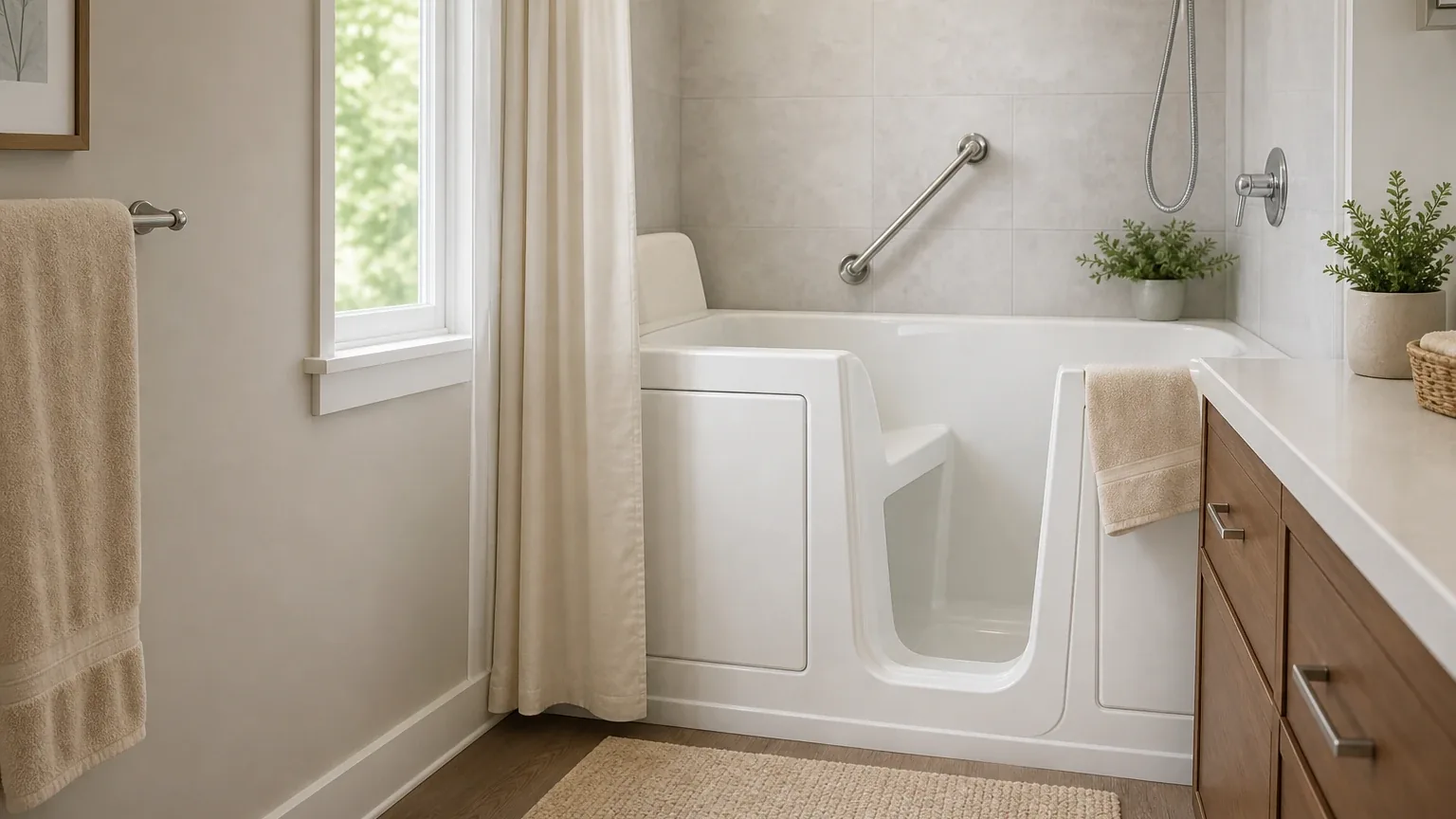
Quick Tub Walk-Thru Insert is a strong fit for single-bathroom households whose priority is keeping shower access while avoiding a full tub replacement, but it is a tub cut-out conversion rather than a purpose-built walk-in bathtub. Two of the six platforms that produced fit research named it during the ranking stage (grok and openai), with an average listed rank of 2.0 and a best rank of 1. The strongest reason to consider it is that it modifies the existing tub instead of removing it, which the company says can take as little as a few hours and preserves the existing footprint and plumbing [15]. The main limitation is that exact installation downtime, sealant curing time, local installer availability, and total installed cost are not publicly fixed and must be verified locally [15].
Research Snapshot
| Field | Detail |
|---|---|
| Platform mentions in ranking stage | 2 of 6 platforms (grok, openai) |
| Share of included platform responses | 33.3% |
| Average listed rank | 2.0 |
| Best listed rank | 1 (openai) |
| Relevant product/model/plan | Quick Tub Walk-Thru Insert conversion kit, with optional Quick Tub Cap |
| Overall use-case fit | Strong (openai, grok, google); Good (kimi); Mixed (perplexity, deepseek) |
| Research date | 2026-11-10 |
Why Quick Tub Walk-Thru Insert Qualified for This Study
Questions This Section Answers
- Why did only two of six AI platforms name Quick Tub Walk-Thru Insert during ranking for one-bathroom homes?
- Does Quick Tub Walk-Thru Insert qualify for a single-bathroom household study even though some platforms rated its fit as mixed?
Quick Tub Walk-Thru Insert qualified because it was named during ranking discovery by two of the six platforms that produced fit research, and because every platform that evaluated it treated it as a candidate for the single-bathroom use case. The ranking-stage count is deliberately narrow: platform_mentions counts only platforms that named the entity during ranking discovery, not platforms that later assessed fit. Grok listed it at rank 3 and openai at rank 1, producing an average listed rank of 2.0 and a best rank of 1 [15].
The fit ratings were not unanimous. Openai, grok, and google rated it a strong fit; kimi rated it good; perplexity and deepseek rated it mixed [15]. Qualification for this study reflects that the product was surfaced and evaluated for this buyer, not that every platform endorsed it. Deepseek's research was conducted without search enabled and is dated 2026-06-15, so its mixed rating rests on thinner evidence than the search-enabled platforms.
The Product, Model, Plan, or Service Most Relevant to Single-Bathroom Households
Questions This Section Answers
- Which Quick Tub configuration should a one-bathroom homeowner buy to keep both shower and bath access?
- Is the Quick Tub Walk-Thru Insert alone enough for a single-bathroom home, or is the Quick Tub Cap needed?
The configuration most relevant to a one-bathroom household is the Quick Tub Walk-Thru Insert Kit plus the optional Quick Tub Cap, because the insert alone converts the tub to a step-in shower while the Cap is what restores bathing function. The insert is a conversion kit installed into an existing bathtub rather than a replacement tub, and the company describes it as lowering the step-through height by up to 12 inches [17]. The Cap is designed to be placed over the insert without permanent installation and is marketed as restoring a functional bathtub in seconds [14].
The company sells the components separately and as a bundle. The full convertible kit combines the insert and the Cap and works with the existing tub rather than replacing it [16]. Retail listings describe the full kit as including the insert, cutting template, adhesive, nozzle extension, and instructions, with the cap dropping in place without fasteners [3]. The insert is offered in three size profiles — Narrow, Wide, and Xtra Deep — and compatibility depends on matching the buyer's tub dimensions to one of them [9].
For a household that only showers, the insert alone addresses the core need. For a household that must retain occasional bathing in its only bathroom, the Cap is the component that prevents the conversion from permanently removing bath access.
What the AI Platforms Agreed About
Questions This Section Answers
- Do the AI platforms agree that Quick Tub Walk-Thru Insert preserves shower access in a one-bathroom home?
- Which Quick Tub Walk-Thru Insert claims do all six platforms treat as established?
The platforms agreed, with strong but not unanimous consistency, that Quick Tub Walk-Thru Insert is conceptually well matched to a one-bathroom home because it modifies the existing tub rather than removing it. All six platform responses describe the product as a conversion insert that keeps the existing tub in place, and none describes it as a full walk-in tub replacement [15].
They also agreed on the mechanism: the insert requires cutting the existing tub sidewall, and the optional Cap restores bath function. Openai, perplexity, kimi, and google all describe the Cap as a drop-in component that returns the fixture to bathtub use [14]. Grok and openai both note the conversion retains the existing plumbing arrangement and bathroom footprint [8].
On fill and drain time, the platforms converged on a neutral finding rather than a benefit: because the kit uses the home's original tub plumbing, standard fill and drain performance applies, and no platform found a verified product-specific fill or drain specification [17]. Google framed unchanged fill and drain as an advantage over slow-filling dedicated walk-in tubs; openai and kimi framed it as neutral [1].
Agreement among platforms reflects shared reading of largely company-owned sources, not independent proof of product quality.
Where the AI Platforms Disagreed or Were Uncertain
Questions This Section Answers
- Why do the AI platforms disagree on whether Quick Tub Walk-Thru Insert is a strong or mixed fit for a one-bathroom home?
- Is Quick Tub Walk-Thru Insert's installation downtime for a one-bathroom home actually verified?
The sharpest disagreement was the overall fit rating. Openai, grok, and google rated it strong; kimi rated it good; perplexity and deepseek rated it mixed [15]. The split tracks evidence depth rather than product differences: deepseek ran without search enabled and reported that installation time, shower usability, pricing, warranty, and certifications were not verifiable from the pages it reviewed [7]. Perplexity, despite search, flagged inconsistent public pricing and the absence of independent confirmation of installation duration [7].
Installation downtime was the most consequential uncertainty. Quick Tub states installation can take as little as a few hours [15], and google reported a 2-to-4-hour window [17]. Grok stated a 24-hour adhesive cure before shower use, or 48 hours with the Cap [7]. Openai cautioned that actual duration depends on tub material, installer skill, site conditions, sealing, and corrective work, and that no public, product-specific evidence exists for exact shower downtime or sealant curing time [15]. No platform supplied independent verification of any downtime figure.
Pricing was also contested. Openai reported the Insert and Cap at $415 each [15]. Perplexity reported $360 for Narrow/Wide and $415 for Xtra Deep, with the Cap at $415 and the full kit at $625–$725 [9]. Grok cited $360 from an Amazon listing and roughly $415 for the Cap [2]. Google reported the Cap at roughly $550 and the full kit at roughly $900–$975 [14]. Kimi found only the $360 insert price and could not locate a Cap price [15]. These figures conflict and should be treated as unresolved.
Use-Case-Specific Features and Capabilities
Questions This Section Answers
- Does Quick Tub Walk-Thru Insert reduce the step-over height enough for a one-bathroom household that needs safer shower entry?
- How does Quick Tub Walk-Thru Insert handle fill and drain time compared with a dedicated walk-in tub in a single-bathroom home?
Quick Tub Walk-Thru Insert's use-case advantages are footprint preservation, retained plumbing, and dual shower/bath function; its use-case limits are a partial rather than zero-threshold entry and no therapy features. The insert lowers the step-through height by up to 12 inches but does not create a flush, zero-threshold roll-in entry [17]. Kimi and google both note it is not wheelchair accessible [15].
On footprint, the system uses the existing bathtub and publishes insert outside dimensions of approximately 27.75 to 33.625 inches in length and 6.25 to 9.625 inches in width, depending on model [15]. No platform reported that the bathroom layout, flooring, or wall clearances must change [17].
On fill and drain, the product is an insert for an existing tub, not a sealed-door walk-in bathtub with a dedicated seat, pump, or rapid-fill/rapid-drain system, and Quick Tub does not publish a product-specific fill or drain time [15]. Ordinary existing-tub plumbing and fixture performance remain relevant [17].
On therapy and comfort features, the platforms agreed the product does not include water jets, air jets, or heated backrests, which distinguishes it from hydrotherapy walk-in tubs [17]. On materials, Quick Tub says the inserts work with most conventional tubs, including fiberglass, acrylic, steel, and cast iron, but requires sizing templates and cutting the tub sidewall [10]. Kimi noted uncertainty about clawfoot, freestanding, or corner tubs [15].
Pricing, Fees, Contracts, and Ongoing Costs
Questions This Section Answers
- What does Quick Tub Walk-Thru Insert actually cost for a one-bathroom home once installation and the Quick Tub Cap are included?
- Can a single-bathroom homeowner return a Quick Tub Walk-Thru Insert after the tub has been cut?
Published component prices are inconsistent across platforms and pages, and no platform supplied a generally applicable installed price. The most consistent figure is the insert at $360 for Narrow/Wide profiles, with $415 reported for Xtra Deep and, separately, for the insert generally [9]. The Cap was reported at $415 by openai and perplexity, and at roughly $550 by google [14]. The full convertible kit was reported at $625–$725 by perplexity and roughly $900–$975 by google [16]. Buying the Insert and Cap at the $415-each listed prices would total $830 before tax [15].
Installation labor is the largest unresolved cost. Grok reported professional installation at $900–$1,500, producing a total conversion estimate of $1,000–$1,800 [7]. Google reported turnkey professional installation at roughly $1,500–$3,500 [14]. Quick Tub's own site states that a bathtub-to-shower conversion kit can cost between $1,000 and $1,800 depending on location [7]. Perplexity noted professional installation costs vary by location and project and are not publicly fixed [16]. Openai noted the Cap page describes professional installation as having no extra costs in selected areas but does not identify the covered locations [15].
On shipping and fees, Quick Tub states free U.S. shipping on orders of $150 or more [7]. Perplexity reported shipping calculated at checkout [7]. Applicable sales taxes may be added, and tools, preparation, and third-party labor may create additional costs [15].
On contracts and returns, orders require full payment before acceptance, and undamaged products may be returned within 14 days only if unused and in original packaging, with an RMA; refunds exclude original shipping and handling where applicable [13]. That return window is a material risk in a one-bathroom home, because a cut tub cannot be returned as unused. No subscription or recurring service fee is stated [15]. Kimi flagged the return window as needing verification and noted a possible medical-expense tax deduction requiring local confirmation [15].
On warranty, Quick Tub states five years for the insert, three years for the Cap, and lifetime coverage for the Cap seal [12]. The warranty excludes problems associated with installation, alteration, misuse, inadequate maintenance including failures to maintain caulking, cleaning, harsh chemicals, and normal wear, and labor and installation costs are not covered [13].
Best Suited For
Questions This Section Answers
- Is Quick Tub Walk-Thru Insert a good choice for a one-bathroom homeowner who mainly showers and wants a lower step-in entry?
- Which one-bathroom households get the most value from adding the Quick Tub Cap to the insert?
Quick Tub Walk-Thru Insert is best suited to one-bathroom homeowners who primarily shower, want a lower step-in entry, and can accept a short window without bathroom use. Openai's best-considered-for list centers on homeowners who primarily shower and need a lower step-in entry with minimal remodeling disruption, and on One-Bathroom Homes where removing the tub or relocating plumbing would create unacceptable downtime or cost [15]. Kimi adds renters or owners wanting a reversible modification and budget-conscious buyers avoiding full renovation costs [15].
Households that want to keep occasional bathing in their only bathroom are also a fit, because the optional Cap restores bath function without permanent installation [14]. Google specifically framed the Cap as serving multi-user households that need to alternate between an accessible step-in shower and a full soaking tub [14].
Budget-sensitive buyers are a reasonable fit relative to full replacement, since the component prices are far below the $3,000–$10,000 range kimi associated with full walk-in tub replacement with professional install [15]. Buyers with standard tub configurations matching the Narrow, Wide, or Xtra Deep profiles are the cleanest candidates [15].
Probably Not Best Suited For
Questions This Section Answers
- Who should avoid Quick Tub Walk-Thru Insert in a one-bathroom home because the remaining step is still too high?
- Is Quick Tub Walk-Thru Insert a poor choice for a one-bathroom household that cannot tolerate any loss of bathroom access during installation?
Quick Tub Walk-Thru Insert is probably not best suited to households needing zero-threshold or wheelchair-level access, buyers who want a seated soaking walk-in tub with an integrated watertight door, or households that cannot tolerate any loss of bathroom access during installation. The insert reduces step-over height by up to 12 inches but does not create a flush entry and is not wheelchair accessible [17].
Buyers seeking a conventional walk-in bathtub are a poor match. Openai states the product is not a conventional walk-in bathtub and may not meet buyers seeking a seated soaking tub [15]. Google notes it does not include water jets, air jets, or heated backrests [17].
Households that cannot accept any period without a usable bathroom are also a poor match. Deepseek listed this as a disqualifier, and openai noted the bathroom may be unusable during installation and sealant curing, with exact downtime not publicly specified [7]. Grok's reported 24-to-48-hour cure window before full water use is directly relevant here [7].
Buyers unwilling to cut the existing tub, or whose tub is structurally unsuitable, unusually shaped, damaged, or impossible to cut safely, should not proceed [15]. Households needing manufacturer-managed installation with install-warranty coverage are also a weaker fit, since Quick Tub does not provide installation or schedule installers and the warranty excludes installation problems [15].
When Another Option May Be Better
Questions This Section Answers
- When is a full walk-in tub or shower conversion better than Quick Tub Walk-Thru Insert for a one-bathroom home?
- When should a one-bathroom homeowner choose a different product because their tub is damaged or an unusual shape?
Another option may be better when the household needs zero-threshold or wheelchair access, wants hydrotherapy features, needs manufacturer-managed installation with install-warranty coverage, or has a tub that is damaged or outside the insert's size profiles. Openai lists a full low-threshold shower conversion as preferable for wheelchair transfer, a larger showering area, built-in seating, or extensive grab-bar customization, and a conventional walk-in bathtub as preferable when seated soaking is required [15].
Kimi's better-alternative list points to Ella's Bubbles wheelchair-accessible models or Bestbath accessibility products for zero-threshold needs, and to Ella's Bubbles or other full-service walk-in tub companies when the buyer wants manufacturer-managed installation with install-warranty coverage [6]. Kimi also suggests hydrotherapy walk-in tubs with fast-drain systems when rapid fill and drain is critical, and full walk-in tub replacement in the $3,000–$10,000 range when budget allows a full feature set with professional install [15].
Google lists three triggers for another option: a severely cracked, rusted, or structurally damaged tub; a need for hydrotherapy jets or integrated seat heaters; and a need for full ADA wheelchair roll-in capability rather than a lowered curb entry [17]. Grok adds that a full walk-in tub or full bathroom remodel is preferable when the household needs a fully integrated, professionally managed solution with clearly documented local installation and support [7]. Perplexity suggests considering non-invasive grab bars or portable solutions when no tub modification is acceptable [7].
Questions to Verify Before Buying
Questions This Section Answers
- What should a one-bathroom homeowner confirm about Quick Tub Walk-Thru Insert fit and cure time before cutting the tub?
- What should a buyer confirm about Quick Tub Walk-Thru Insert installer availability and total installed cost before ordering?
Before buying, a one-bathroom homeowner should confirm exact tub fit, cure time, local installer availability and price, and what happens if the cut tub does not accept the insert. Openai's verification list covers which insert size fits the exact tub including wall thickness, height, sidewall profile, material, and surrounding clearance; how long the household must avoid using the shower including adhesive or sealant curing time; whether professional installation is available at the buyer's ZIP code and at what all-in labor price; whether the installer provides a separate workmanship warranty; whether existing shower curtain, door, fixtures, drain, and tub surround will work without modification; whether the tub material and condition are approved in writing before purchase; what happens if the tub is cut and the insert does not fit or hidden damage appears; whether both components are in stock in the required size; the required maintenance and caulking schedule to preserve warranty coverage; and whether a later-purchased Cap will remain available and compatible [15].
Perplexity adds whether shower access remains available during the entire installation, which of the three profiles applies, the installed price including labor, travel, shipping, tax, and any demolition or repair, the U.S. warranty terms and exclusions and who handles claims, real-world fill and drain time, whether the Cap restores full tub use without leaks in the specific tub model, local installer lead time and coverage, and any required permits or plumbing changes [7].
Kimi adds the exact return policy window and condition requirements, the Cap price and any bundle pricing, whether Quick Tub will recommend a local installer in the buyer's ZIP code, whether the warranty covers anything if a self-install leaks or misfits, eligibility for state or local medical-expense or home-modification programs, typical DIY installation time, and the actual post-install step-in height versus the buyer's mobility needs [15]. Grok's shorter list covers tub model and dimension matching, exact cure time, local installer availability and quoted price, and whether the Cap can be added later [7].
Final AI Consensus Verdict
The consensus verdict is a conditional strong fit: Quick Tub Walk-Thru Insert is a reasonable choice for a one-bathroom household that mainly showers, wants a lower step-in entry, and can absorb a short installation window, but it is not a substitute for a purpose-built walk-in bathtub and its downtime and installed cost are not publicly fixed. Three of six platforms rated it strong, one good, and two mixed [15].
The strongest supported case is footprint and plumbing preservation with dual shower/bath function via the optional Cap [15]. The strongest caveats are the permanent tub cut, the partial rather than zero-threshold entry, the absence of verified fill and drain data, conflicting published prices, and a warranty that excludes installation and labor [13]. Buyers should treat the platform agreement as shared reading of mostly company-owned sources, not independent verification. For the broader field, see the Single-Bathroom Households consensus index, and browse the full walk in tubs directory for alternatives.
How This Review Was Produced
This review was produced from six platform fit-research responses (openai, deepseek, grok, perplexity, kimi, google) collected for the single-bathroom use case, using the run research date of 2026-11-10 as the study date. Ranking-stage mentions were counted only from platforms that named the entity during ranking discovery, which produced the 2-of-6 figure. Fit ratings, pricing, and feature findings were taken from each platform's supplied response and citations. Company-owned citations materially outnumber independent citations in the supplied material, and company claims were not treated as independently verified. No personal testing, customer experience, or independent verification was performed.
Methodology Limitations
Platform-reported research dates differ from the authoritative run date: deepseek reported 2026-06-15 while the other five platforms reported 2026-11-10, and platform-reported dates are provenance metadata that do not independently prove freshness. Deepseek ran without search enabled, so its mixed rating rests on thinner evidence. The supplied URLs were collected from platform responses and were not independently validated by the writer stage. Citations are platform-reported evidence, not independently verified facts. Company-owned sources dominate the citation base, so agreement among platforms largely reflects shared reading of Quick Tub's own pages. Published prices conflict across platforms and pages, and no platform supplied a generally applicable installed price. No platform supplied verified product-specific fill or drain times, exact shower downtime, sealant curing time, or long-term leak rates. Missing research was not interpreted as disagreement.
Sources
Company-Owned Sources
- Quick Tub Walk-Thru Insert — official product website: https://www.quicktub.com/
- How a Shower Conversion from a Tub Really Works: https://www.quicktub.com/blogs/news/how-a-tub-to-shower-conversion-really-works-start-to-finish
- Quick Tub® Walk-Thru Insert: https://www.quicktub.com/collections/frontpage/products/quick-tub-insert
- Frequently Asked Questions | Quick Tub: https://www.quicktub.com/pages/faq
- Bathtub Accessibility - Tub Cutting: https://www.quicktub.com/pages/home
- Support: How-To Install a Walk-In Tub | Quick Tub: https://www.quicktub.com/pages/support
- Terms of Service | Quick Tub: https://www.quicktub.com/policies/terms-of-service
- Tub Cap - Bathtub Cap for Walk-In Shower | Quick Tub: https://www.quicktub.com/products/quick-tub-cap
- Bathtub Insert for Shower & Walk-In Tub Insert | Quick Tub: https://www.quicktub.com/products/quick-tub-insert
- Quick Tub® Full Bathtub Conversion Kit: https://www.quicktub.com/products/quick-tub-kit
- Quick Tub Walk-Thru Insert: https://www.quicktub.com/products/quick-tub-walk-thru-insert
- Official pricing and terms source: https://www.quicktub.com/blogs/news/how-home-health-agencies-can-add-bathroom-safety-recommendations-to-care-plans
Independent Sources
- Quick Tub to Shower Conversion: Timeline, Kits & Cost - Bathroom Brad: https://bathroombrad.com/quick-tub-to-shower-conversion/
- Quick Tub Walk-Thru Insert Accessibility Kit: https://www.amazon.com/Quick-Tub-Walk-Thru-Insert-Accessibility/dp/B0CVS9B5LF
- www.homedepot.ca · product · quick-tub-wide-full Quick Tub Wide Full Convertible Bathtub Conversion Kit in: https://www.homedepot.ca/product/quick-tub-wide-full-convertible-bathtub-conversion-kit-in-white/1001713223
- Quick Tub Wide Walk-Thru Insert Bathtub Conversion System in White - Home Depot: https://www.homedepot.ca/product/quick-tub-wide-walk-thru-insert-bathtub-conversion-system-in-white/1001713218
- Quick Tub Wide / Xtra Deep Cap (Door) in White with Easy Close Chrome Handles | The Home Depot Canada: https://www.homedepot.ca/product/quick-tub-wide-xtra-deep-cap-door-in-white-with-easy-close-chrome-handles/1001713221
- Ella's Bubbles Walk-in Tubs Review 2026: https://www.ncoa.org/product-resources/mobility/ellas-bubbles-walk-in-tub-review/
Verify This Research
Review the study details behind this page or download the public machine-readable verification record.
- Study date
- November 10, 2026
- Platforms analyzed
- 6
- Source records
- 18
- Ranking mentions
- 2 of 6
- Platform share
- 33%
- Final consensus rank
- #6
Research trail and source mix
Configured platforms
openai, anthropic, deepseek, grok, perplexity, kimi, google
Source mix
6 independent · 12 company-owned
Evidence support
13 direct · 5 partial
Important limitation
Use the run research_date as the study date. Platform-reported dates are provenance metadata and do not independently prove freshness.
Source snapshot SHA-256 239ba29bd22760d3f953626caf3790f2cd3562bbb7da4a106f14df677f4be11e