
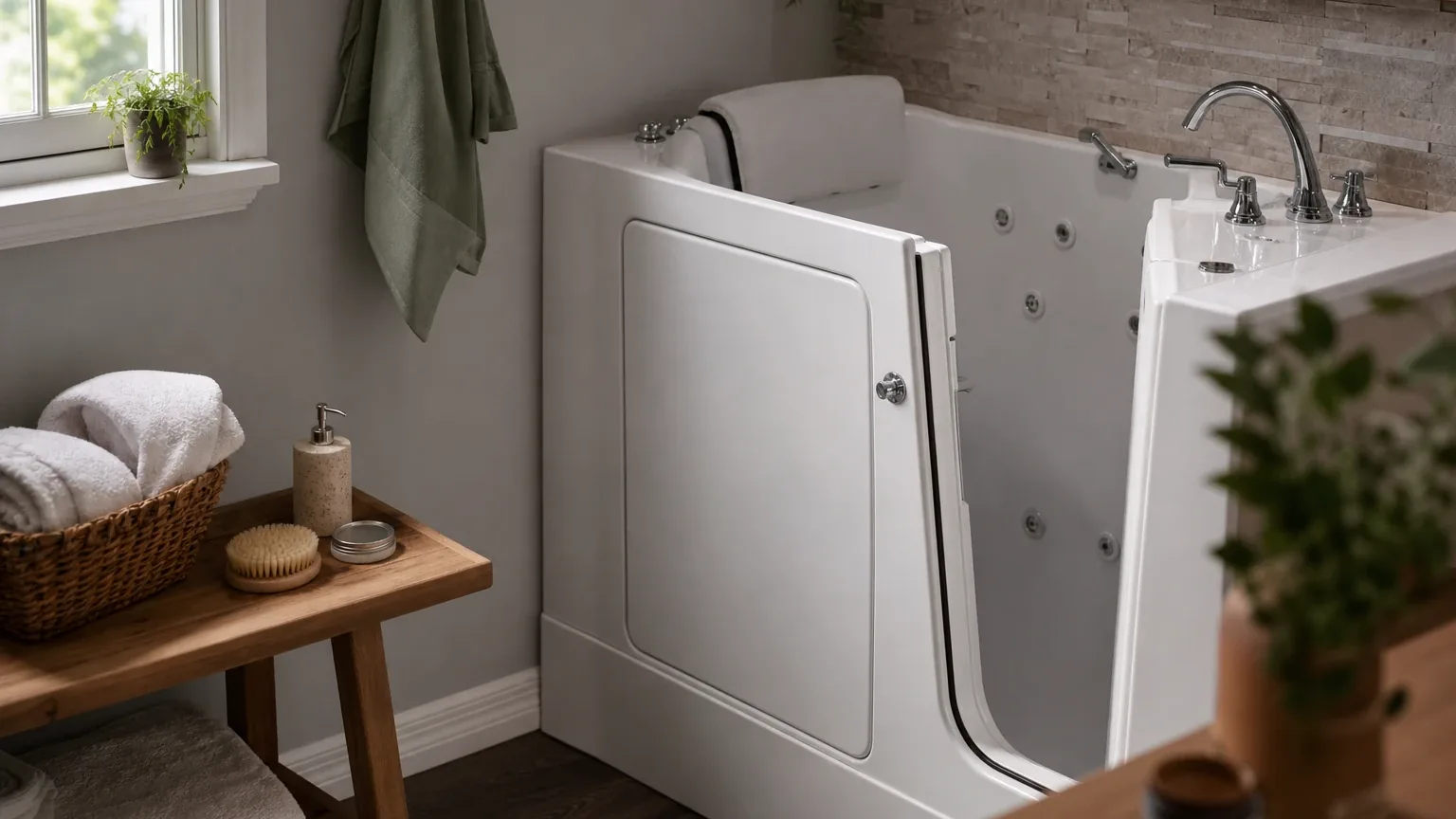
Jetted vs. Soaking Walk-In Tubs (2026)
Answer Capsule
For most walk-in tub buyers deciding whether hydrotherapy jets are worth the added cost, the basic soaking walk-in tub is the better fit. All seven AI platforms studied ranked it first, and the reasons converge: it keeps the core accessibility features (low-threshold door, built-in seat, grab bars, non-slip floor) while avoiding the pump, jet plumbing, dedicated electrical circuit, monthly flushing, and pump noise that jetted models add. The buyer who should choose the jetted hydrotherapy walk-in tub instead is one with a clear, recurring therapeutic need — arthritis, chronic joint or muscle pain, or a physician-recommended hydrotherapy routine — who expects to use the jets regularly and can absorb higher cost and upkeep. The decision turns on use pattern and symptom severity, not on which tub is "better." This guide reports what 7 AI platforms stated across 2 approaches; the principal limitation is that the platforms' pricing figures are planning ranges and quote-dependent, and the underlying source URLs were not independently validated.
Research Snapshot
- Topic: Jetted vs. soaking walk-in tubs — whether hydrotherapy jets are worth the added cost.
- Target buyer: Walk-in tub buyers deciding whether hydrotherapy jets are worth the added cost.
- The two approaches compared: (1) Basic soaking walk-in tub; (2) Jetted hydrotherapy walk-in tub.
- Platforms included (7): openai, anthropic, deepseek, grok, perplexity, kimi, google.
- Research date: 2026-11-10.
- Geography: United States.
- What the platforms were asked to decide: Which walk-in tub configuration — basic soaking or jetted hydrotherapy — best fits a buyer weighing hydrotherapy benefits against installed price, upkeep, noise, comfort, accessibility, and service requirements.
Both approaches were named by all 7 platforms (100% platform share). The basic soaking walk-in tub ranked 1st (average rank 1.0); the jetted hydrotherapy walk-in tub ranked 2nd (average rank 2.0). This guide does not rank companies and does not recommend any manufacturer.
The Two Options Compared
Questions This Section Answers
- Should a buyer install a basic soaking walk-in tub or a jetted hydrotherapy walk-in tub for safer seated bathing?
- Is a jetted hydrotherapy walk-in tub or a basic soaking walk-in tub better when noise and upkeep matter most?
- Why does a jetted hydrotherapy walk-in tub cost more to install than a basic soaking walk-in tub?
The clearest split between the two approaches is mechanical complexity: the soaking tub has no pump, jet plumbing, or controls, while the jetted tub adds all three plus, in most platform accounts, a dedicated electrical circuit. On accessibility, the platforms do not separate them — both retain the walk-in door, seat, and grab-bar options.
| Decision dimension | Basic soaking walk-in tub | Jetted hydrotherapy walk-in tub | Which the supplied evidence favours |
|---|---|---|---|
| Installed price | Lower. Published ranges cluster around $3,000–$10,000 installed (openai), $3,000–$7,000 (anthropic), $1,500–$6,500 (kimi), $5,000–$10,000 (google). | Higher. Published ranges cluster around $6,000–$13,000 installed (openai, anthropic), $5,000–$14,000+ (kimi), $9,000–$17,000+ (google). | Soaking — every platform that gave a range placed soaking below jetted. |
| Upkeep | Routine cleaning only; no jet lines to flush (anthropic, deepseek, grok, kimi, google). | Monthly flush/purge routine; annual maintenance reported at $100–$500 (anthropic, perplexity) or $100–$200 (kimi). | Soaking — unanimous. |
| Noise | Silent or near-silent; no motor (anthropic, deepseek, grok, google). | Pump and motor noise; anthropic cites 55–67 dB, google cites 50–60 dB plus purge-cycle sound. | Soaking — unanimous, though jetted decibel figures differ by platform. |
| Comfort | Warm-water soaking and heat retention; water cools during long soaks without an optional heater (google, kimi). | Targeted water or air massage; inline heaters on many models maintain temperature (anthropic, deepseek, grok, google). | Jetted — for buyers who want active massage; the platforms split on whether that is "comfort" or "therapy." |
| Accessibility | Low-threshold door, built-in seat, grab bars, non-slip flooring (kimi, google). | Same walk-in features when bought as a complete walk-in configuration (openai, kimi). | Does not separate them — both retain core accessibility. |
| Service requirements | Fewer mechanical parts; simpler troubleshooting; less dependence on specialized service (openai, deepseek). | Pump, heater, and jet plumbing are serviceable components; repair can be specialized and dealer-dependent (openai, deepseek, google). | Soaking — lower service burden. |
| Electrical work | No dedicated circuit required in most installations (anthropic, grok, kimi). | Dedicated GFCI circuit required; platforms cite 20-amp (anthropic), 20–30 amp (kimi), and 50–60A (google). | Soaking — avoids electrical upgrade. |
| Future flexibility | Jets generally cannot be added later; factory-installed only (grok, deepseek). | Can be used as a soaker with jets off (grok). | Jetted — more optionality at time of use, but soaking buyers lose the retrofit path. |
Which Buyer Should Choose Each Option
Questions This Section Answers
- Which buyer should choose a basic soaking walk-in tub over a jetted hydrotherapy walk-in tub?
- For a buyer with arthritis who wants pain relief, is a jetted hydrotherapy walk-in tub worth the extra upkeep over a soaking tub?
The buyer-fit line is use pattern: a buyer whose main goal is safe, accessible bathing fits the soaking tub; a buyer whose main goal is recurring therapeutic massage fits the jetted tub. The platforms converge on this split even where their pricing differs.
| Buyer situation | Better-fit approach | Why, per the supplied evidence |
|---|---|---|
| Primary need is fall prevention and safe seated bathing | Basic soaking | Core accessibility met without added cost or maintenance (anthropic, deepseek, google). |
| Occasional bather; hydrotherapy is a nice-to-have | Basic soaking | "If it's occasional, the premium rarely pays back" (deepseek); better when hydrotherapy is nice-to-have (perplexity). |
| Fixed income or tight budget | Basic soaking | Lowest upfront and lifecycle cost (anthropic); lower installed price leaves budget for door seal, seat, grab bars, professional install (deepseek). |
| Noise-sensitive household | Basic soaking | Silent operation, no motor (anthropic, deepseek, grok, google). |
| Limited caregiver support or compromised immune system | Basic soaking | Avoids jet-line bacterial growth risk and monthly flush burden (kimi). |
| Wants to use bath oils and salts freely | Basic soaking | No restrictions on bath products (grok); oils/salts rinse freely without damaging pumps (kimi). |
| Diagnosed arthritis, fibromyalgia, or chronic muscle pain with frequent use | Jetted hydrotherapy | Targeted massage delivers relief soaking alone does not (anthropic, kimi, google). |
| Physician-recommended hydrotherapy; pain management co-equal with safety | Jetted hydrotherapy | Combines accessibility with therapy in one fixture (kimi). |
| Wants a spa-like amenity and values resale/luxury perception | Jetted hydrotherapy | Higher-end feature set some buyers value for resale or perceived luxury (deepseek). |
| Has a pacemaker, open wounds, peripheral neuropathy, or DVT history | Basic soaking (or air-jet, per kimi) | Water jets may be contraindicated (kimi). |
| Wants the option to soak plainly but keep jets available | Jetted hydrotherapy | Can be used as a soaker with jets off (grok). |
1. Basic soaking walk-in tub
Questions This Section Answers
- Why is a basic soaking walk-in tub the lower-maintenance choice for safe seated bathing?
- What should a buyer check about their bathroom before choosing a basic soaking walk-in tub?
Verdict: The Basic soaking walk-in tub is the default recommendation for most buyers because it delivers the category's core safety benefit — accessible seated bathing — without the pump, jet plumbing, electrical work, noise, and cleaning regimen that jetted models add. All seven platforms ranked it first, and none argued it was the wrong choice for a safety-first buyer. Its trade-off is real but narrow: it offers no active massage and, without an optional heater, water cools during long soaks.
See the Basic soaking walk-in tub fit review for the full platform-by-platform assessment.
Who should choose it: Buyers whose primary need is safer seated bathing rather than massage (openai); occasional users, noise-sensitive buyers, people on fixed incomes, and anyone whose main goal is fall prevention rather than pain management (anthropic); cost- and upkeep-conscious older adults or people with mobility or balance limits (deepseek); buyers prioritizing simplicity and minimal maintenance over powered massage (grok); buyers wanting the lowest installed cost and simplest ownership (perplexity); buyers without diagnosed arthritis, fibromyalgia, or other conditions where hydrotherapy has documented benefit, and those with limited caregiver support or compromised immune systems (kimi); buyers whose primary goal is safe home accessibility, injury prevention, and easy daily hygiene (google).
What it does well for this use case:
- Lower installed cost. Every platform that gave a range placed soaking below jetted (openai, anthropic, deepseek, grok, perplexity, kimi, google).
- Simpler upkeep. No pump, jet manifold, or internal lines to purge; routine cleaning only (anthropic, deepseek, grok, kimi, google).
- Quieter operation. No motor or water-circulation noise (anthropic, deepseek, grok, google).
- Retains accessibility. Low-threshold door, built-in seat, grab bars, non-slip flooring, ADA-compliant seating height (kimi, google).
- Fewer service dependencies. Simpler troubleshooting; less reliance on specialized service (openai, deepseek).
- No electrical upgrade in most installations (anthropic, grok, kimi).
- No bath-product restrictions — oils and salts rinse freely (grok, kimi).
What it costs the buyer:
- No active hydrotherapy. No targeted massage or water circulation (anthropic, deepseek, grok, perplexity, kimi, google).
- Heat loss. Water cools from fill temperature; longer soaks may need top-ups unless an optional inline heater is added (google, kimi).
- No retrofit path. Jets are generally factory-installed and cannot be added later (grok, deepseek); less future flexibility if the buyer later decides hydrotherapy matters (perplexity).
- Same installation disruption. It may still require the same major bathroom remodeling, door-threshold, filling/draining considerations, and potential floor reinforcement as a jetted model (perplexity, kimi).
- Narrower resale appeal for some buyers versus a jetted model (deepseek).
Where platforms disagreed about it: The platforms agreed on the direction of every major point but diverged on price. Published installed ranges ran from $1,500–$6,500 (kimi) to $5,000–$10,000 (google), with openai at $3,000–$10,000, anthropic at $3,000–$7,000, and perplexity citing equipment of $2,000–$5,000 plus installation of $1,000–$5,000. Deepseek declined to give a soaking figure and instead framed the jetted premium as quote-only. On maintenance, anthropic described "zero maintenance beyond routine cleaning," while kimi and grok specifically noted the absence of a monthly vinegar flush — consistent, but stated with different emphasis. On electrical requirements, anthropic and grok said no dedicated circuit is required "in most installations," while kimi stated it flatly; none of the three addressed edge cases.
2. Jetted hydrotherapy walk-in tub
Questions This Section Answers
- Should a buyer with chronic joint pain choose a jetted hydrotherapy walk-in tub over a basic soaking tub?
- Is a jetted hydrotherapy walk-in tub noisier or harder to maintain than a basic soaking walk-in tub?
- What electrical and service requirements should a buyer confirm before installing a jetted hydrotherapy walk-in tub?
Verdict: The Jetted hydrotherapy walk-in tub is the right choice for a narrower but real buyer: someone with a recurring therapeutic need who will use the jets regularly and accepts higher cost, monthly flushing, pump noise, and specialized service. It adds powered massage and, on many models, inline heat that soaking cannot match. For occasional users, the platforms agree the premium rarely pays back.
See the Jetted hydrotherapy walk-in tub fit review for the full platform-by-platform assessment.
Who should choose it: Buyers with a clear, recurring hydrotherapy objective who expect regular jet use and can accommodate electrical work, pump noise, cleaning, and qualified service (openai); buyers who use the tub multiple times per week for pain relief and can afford higher upkeep (anthropic); buyers whose primary motivation is therapeutic relief — arthritis, muscle tension, circulation — with regular use and service access (deepseek); buyers with arthritis, chronic joint/muscle pain, or a desire for targeted massage willing to accept higher cost and maintenance (grok); buyers who value hydrotherapy enough to justify extra cost and maintenance, especially for frequent use (perplexity); buyers with diagnosed conditions where clinical evidence supports hydrotherapy benefit and who can commit to the cleaning regimen (kimi); buyers managing chronic severe arthritis, poor circulation, or persistent muscle stiffness (google).
What it does well for this use case:
- Targeted massage. Water jets deliver deep-tissue pressure; air jets provide gentler full-body stimulation (anthropic, deepseek, grok, google).
- Maintained water temperature. Inline heaters on many models keep water warm during longer sessions (anthropic, deepseek, grok, kimi, google).
- Therapeutic positioning. Platforms describe benefits for pain relief, circulation, and muscle relaxation (anthropic, kimi, google).
- Dual options. Water, air, or combination systems allow customization (anthropic, deepseek, google).
- Retains accessibility when bought as a complete walk-in configuration (openai, kimi).
- Optionality at use. Can be used as a soaker with jets off (grok).
What it costs the buyer:
- Higher installed price. Several thousand dollars above soaking (openai, anthropic, deepseek, grok, perplexity, kimi, google).
- Upkeep. Monthly jet-system flushing (anthropic, grok, kimi, google); annual maintenance $100–$500 (anthropic, perplexity) or $100–$200 (kimi).
- Noise. Pump and motor noise; anthropic cites 55–67 dB, google 50–60 dB plus purge-cycle sound.
- Electrical work. Dedicated GFCI circuit required; anthropic cites 20-amp and $500–$1,500 added wiring, kimi cites 20–30 amp, google cites 50–60A.
- Service and failure points. Pump failure, seal leaks, and controls can require professional repair ($200–$500+ per call, per anthropic); service networks vary by brand (deepseek).
- Cleaning care and restrictions. Jet lines can retain residue; some manuals restrict additives (openai, grok).
- Possible contraindications. Water jets may be contraindicated for neuropathy, open wounds, pacemakers, recent surgery, or DVT history (kimi).
- Higher operating cost. Kimi cites $5–$15/month additional electricity.
Where platforms disagreed about it: Price varied widely — openai and anthropic at $6,000–$13,000 installed, kimi at $5,000–$14,000+, google at $9,000–$17,000+, while deepseek and grok gave only a premium ($1,500–$4,000+ and $2,000–$5,000+ respectively) and called it quote-only. Electrical requirements were the sharpest split: anthropic said 20-amp GFCI, kimi said 20–30 amp, and google said 50–60A — a range wide enough that a buyer must confirm against the specific model. Noise figures also differed (anthropic 55–67 dB; google 50–60 dB), and openai noted manufacturers generally do not publish a standardized decibel comparison. Maintenance cost split between $100–$500/year (anthropic, perplexity) and $100–$200/year (kimi). On therapeutic benefit, anthropic and kimi described documented relief, while deepseek cautioned the premium "rarely pays back" for occasional use — a difference in framing rather than in the underlying recommendation.
What the Cost Difference Looks Like
Questions This Section Answers
- How much more does a jetted hydrotherapy walk-in tub cost than a basic soaking walk-in tub installed?
- Why do AI platforms give different installed-price ranges for jetted versus soaking walk-in tubs?
The all-in premium for jetted over soaking is consistently positive across every platform, but the size of that premium is not settled: published estimates range from roughly $1,500 to $8,000+, and several platforms call the figure quote-only. The table below marks each figure by how the platform presented it.
| Figure | Value | Status |
|---|---|---|
| Soaking installed (openai) | ~$3,000–$10,000 | Published planning range |
| Jetted installed (openai) | ~$6,000–$13,000 | Published planning range |
| Implied premium (openai) | ~$3,000 | Published planning range |
| Soaking installed (anthropic) | $3,000–$7,000 | Reported (Fixr, This Old House, NCOA, Kohler) |
| Jetted installed (anthropic) | $6,000–$13,000 | Reported |
| Premium (anthropic) | $3,000–$6,000 | Reported |
| Premium (deepseek) | ~$1,500–$4,000+ | Quote-only |
| Premium (grok) | $2,000–$5,000+ | Reported ranges; quote-only |
| Soaking equipment (perplexity) | $2,000–$5,000 | Published |
| Jetted equipment (perplexity) | $5,000–$8,000 | Published |
| Installation, either (perplexity) | $1,000–$5,000 | Published |
| Premium (perplexity) | ~$3,000 or more | Published/reported |
| Soaking installed (kimi) | $1,500–$6,500 | Published |
| Jetted installed (kimi) | $5,000–$14,000+ | Published |
| Premium (kimi) | $2,500–$8,000+ | Published |
| Soaking installed (google) | $5,000–$10,000 | Quote-only for turnkey; published for equipment |
| Jetted installed (google) | $9,000–$17,000+ | Quote-only |
| Annual jetted maintenance (anthropic, perplexity) | $100–$500 | Reported |
| Annual jetted maintenance (kimi) | $100–$200 | Reported |
| Added electrical wiring (anthropic) | $500–$1,500 | Reported |
| Additional electricity (kimi) | $5–$15/month | Reported |
Where no figure is verifiable: Deepseek states plainly that "no single published national price differential exists" and that specific figures are quote-only. Openai, grok, and google likewise describe final installed pricing as quote-dependent. The platforms' ranges overlap but do not reconcile — a buyer should treat every number here as a planning input, not a quote, and obtain itemized quotes for both configurations of the same tub shell (deepseek's explicit recommendation).
Where the AI Platforms Agreed
Questions This Section Answers
- Do AI platforms agree that a basic soaking walk-in tub is cheaper to own than a jetted hydrotherapy walk-in tub?
All seven platforms agreed on the following, without exception:
- Soaking is the lower-cost configuration. Every platform placed soaking below jetted on installed price.
- Soaking is quieter. No motor or pump noise (anthropic, deepseek, grok, google, and implied by openai and perplexity).
- Soaking is simpler to maintain. No jet lines to flush; routine cleaning only (anthropic, deepseek, grok, kimi, google).
- Jetted adds upkeep. Monthly flushing and periodic service (anthropic, grok, kimi, google).
- Jetted adds mechanical failure points. Pump, heater, controls (openai, deepseek, google).
- Accessibility is shared. Both retain the walk-in door, seat, and grab bars (openai, kimi, google).
- The decision turns on use pattern. Every platform framed the choice around how often the buyer will use hydrotherapy and whether therapeutic need is central (openai, anthropic, deepseek, grok, perplexity, kimi, google).
- Soaking is the default for most buyers. All seven ranked it first.
Where the AI Platforms Disagreed
Questions This Section Answers
- Why do AI platforms disagree on the electrical circuit a jetted hydrotherapy walk-in tub requires?
- Which platform's installed-price range should a buyer trust for a jetted versus soaking walk-in tub?
The disagreements are about magnitude and specification, not direction. No platform argued jetted is cheaper, quieter, or lower-maintenance than soaking.
- Electrical circuit amperage. Anthropic said 20-amp GFCI; kimi said 20–30 amp; google said 50–60A. This is the widest specification gap and the one most likely to affect installation cost.
- Installed price ranges. Soaking ranged from $1,500–$6,500 (kimi) to $5,000–$10,000 (google); jetted from $5,000–$14,000+ (kimi) to $9,000–$17,000+ (google). Openai and anthropic clustered at $6,000–$13,000 for jetted.
- Premium size. Deepseek ($1,500–$4,000+), grok ($2,000–$5,000+), openai (
$3,000), perplexity ($3,000+), anthropic ($3,000–$6,000), kimi ($2,500–$8,000+). - Noise level. Anthropic cited 55–67 dB; google cited 50–60 dB; openai noted no standardized decibel comparison is published.
- Annual maintenance cost. $100–$500 (anthropic, perplexity) versus $100–$200 (kimi).
- Therapeutic framing. Anthropic and kimi described documented hydrotherapy benefit; deepseek cautioned the premium rarely pays back for occasional use. This is a difference in emphasis, not a contradiction.
- Whether soaking needs electrical work. Anthropic and grok said no dedicated circuit "in most installations"; kimi stated it without qualification.
How to Decide
Questions This Section Answers
- How often would a buyer need to use hydrotherapy jets to justify a jetted hydrotherapy walk-in tub over a soaking tub?
- What should a buyer confirm about electrical capacity and service access before choosing a jetted hydrotherapy walk-in tub?
Answer these in order; the first two usually settle it.
- Is there a diagnosed, recurring therapeutic need? If arthritis, fibromyalgia, chronic muscle pain, or a physician-recommended hydrotherapy routine is central, jetted is on the table (anthropic, kimi, google). If the goal is fall prevention and safe bathing, soaking fits (anthropic, deepseek, google).
- How often will the jets actually run? Platforms frame the premium as paying back only with regular use (anthropic, deepseek, grok). Occasional use points to soaking.
- Can the bathroom support the electrical work? Jetted requires a dedicated GFCI circuit — confirm the amperage against the specific model, since platforms cite 20-amp, 20–30 amp, and 50–60A (anthropic, kimi, google).
- Is anyone in the household noise-sensitive? Soaking is silent; jetted adds pump and purge-cycle sound (anthropic, google).
- Who will do the monthly flush and annual service? Jetted needs a committed cleaning routine and access to qualified service (anthropic, kimi, deepseek).
- Are there contraindications? Water jets may be contraindicated for neuropathy, open wounds, pacemakers, recent surgery, or DVT history (kimi).
- Is the budget fixed? Soaking leaves more headroom for door seal, seat, grab bars, and professional installation (deepseek).
- Might the buyer want jets later? Jets are generally factory-installed and cannot be retrofitted (grok, deepseek) — so the choice is effectively permanent.
Methodology
This guide reports what 7 AI platforms (openai, anthropic, deepseek, grok, perplexity, kimi, google) stated when asked to decide between a basic soaking walk-in tub and a jetted hydrotherapy walk-in tub for a U.S. buyer weighing hydrotherapy benefits against installed price, upkeep, noise, comfort, accessibility, and service requirements. Research date: 2026-11-10. Both approaches were named by all 7 platforms. The final ranking placed the basic soaking walk-in tub 1st (average rank 1.0) and the jetted hydrotherapy walk-in tub 2nd (average rank 2.0). The study did not install, test, measure, or inspect any tub; it consolidates platform statements and the sources they cited. Pricing figures are reproduced as the platforms presented them and marked published, reported, or quote-only in the cost section.
Methodology Limitations
- Pricing is planning-grade. Ranges vary widely and several platforms call final installed pricing quote-only; deepseek states no single published national differential exists.
- Specifications conflict. Electrical amperage and noise figures differ across platforms and were not independently verified.
- Source URLs were not validated. The URLs were collected from platform responses and were not independently validated by either writer stage.
- No company-owned evidence. Neither approach's source set contained verified company-owned evidence or a verified official domain, so brand-level claims are not corroborated here.
- No physical testing. No tub was installed, tested, measured, or inspected.
- Snapshot in time. Figures reflect platform statements as of the research date and may change.
Final Verdict
The basic soaking walk-in tub is the better fit for most buyers deciding whether hydrotherapy jets are worth the added cost: it preserves the accessibility that defines the category while avoiding the pump, jet plumbing, electrical work, noise, and monthly flushing that jetted models add, and all seven platforms ranked it first. The jetted hydrotherapy walk-in tub remains the better choice for a specific buyer — one with a recurring, diagnosed therapeutic need who will use the jets regularly and can absorb higher cost, upkeep, and service requirements. The decision turns on use pattern and symptom severity, not on which tub is superior. Buyers should confirm electrical capacity and service access against the specific model before committing, and should obtain itemized quotes for both configurations of the same tub shell. Browse the full walk in tubs category to compare configurations.
Frequently Asked Questions
Is a jetted walk-in tub worth the extra cost?
Only if the buyer has a recurring therapeutic need and will use the jets regularly; platforms agree the premium rarely pays back for occasional use (deepseek, anthropic).
Are jetted walk-in tubs louder than soaking tubs?
Yes. Soaking tubs are silent; jetted models add pump and motor noise, cited at 55–67 dB (anthropic) or 50–60 dB (google), plus purge-cycle sound.
Do jetted walk-in tubs need special electrical work?
Yes — a dedicated GFCI circuit. Platforms cite 20-amp (anthropic), 20–30 amp (kimi), and 50–60A (google), so confirm against the specific model.
How much more does a jetted walk-in tub cost installed?
Published premiums range from about $1,500 to $8,000+, with several platforms calling the figure quote-only.
Can jets be added to a soaking tub later?
Generally no — jets are factory-installed (grok, deepseek).
Do soaking tubs keep water warm during long baths?
Not without an optional inline heater; water cools from fill temperature (google, kimi).
Are jetted tubs safe for everyone?
Water jets may be contraindicated for neuropathy, open wounds, pacemakers, recent surgery, or DVT history (kimi).
Do jetted tubs require more cleaning?
Yes — monthly jet-line flushing and periodic service (anthropic, grok, kimi, google).
Consolidated Sources
Company-owned sources
Independent sources
Verify This Research
Review the study details behind this page or download the public machine-readable verification record.
- Study date
- November 10, 2026
- Platforms analyzed
- 7
- Source records
- 33
- Candidates reviewed
- 2
- Qualified finalists
- 2
Research trail and source mix
Configured platforms
openai, anthropic, deepseek, grok, perplexity, kimi, google
Source mix
0 independent · 0 company-owned · 33 unclear
Evidence support
0 direct · 0 partial
Important limitation
Exactly 7 platforms were included in this run: openai, anthropic, deepseek, grok, perplexity, kimi, google. The configured source value 7 is provenance only and must never be described as the number of platforms studied.
Source snapshot SHA-256 f5076dfa03265b188245aa851a8e23b4839dbf636534584b7d7c134c2344c54f