
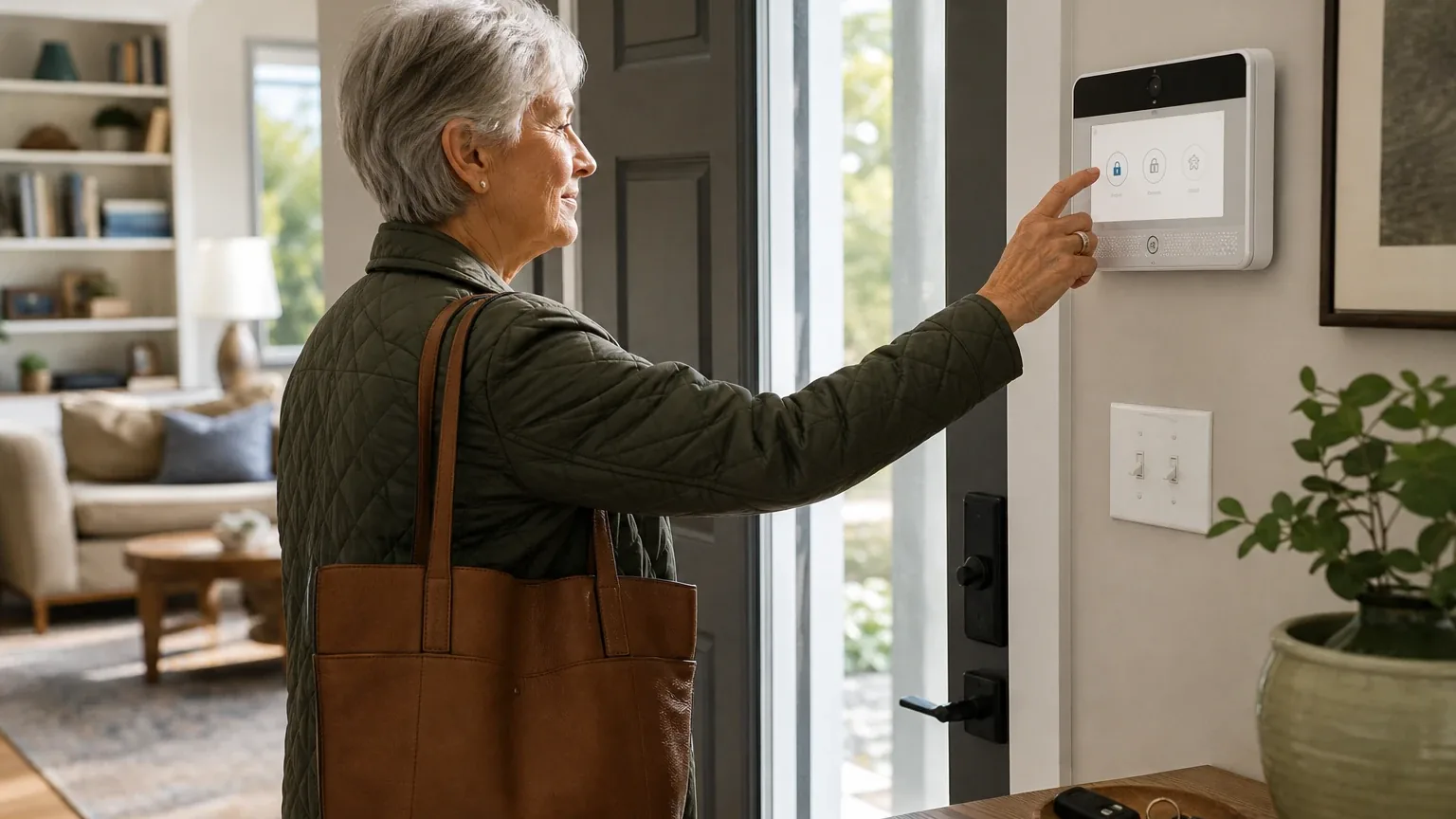
Answer Capsule
Vivint is a mixed-to-good fit for Flexible Month-to-Month Home Security, not a clean win. Three of seven platforms named Vivint during the ranking stage (anthropic, deepseek, perplexity), with an average listed rank of 8.3 and a best rank of 8. The strongest reason to consider it: Vivint publicly offers a genuine month-to-month monitoring path when HomeProtect equipment is purchased upfront, paired with professional installation and 24/7 monitoring. The main limitation: that path costs more upfront ($349.99 equipment plus roughly $199 installation) and the no-contract monthly rate ($29.99) is higher than the contract rate ($24.99), while cancellation mechanics, false-alarm fees, and post-cancellation equipment functionality remain unclear in public materials.
Research Snapshot
| Field | Finding |
|---|---|
| Platform mentions in ranking stage | 3 of 7 platforms (anthropic, deepseek, perplexity) |
| Share of included platform responses | 42.9% |
| Average listed rank | 8.33 |
| Best listed rank | 8 |
| Relevant product/model/plan | Vivint HomeProtect with upfront equipment purchase and month-to-month professional monitoring |
| Overall use-case fit | Mixed across platforms: two "good" (openai, anthropic), three "mixed" (google, grok, perplexity), two "weak" (deepseek, kimi) |
| Research date | 2026-09-27 |
What Changed Since August 2026
Vivint moved down from No. 6 to No. 8, and platform mentions increased from 2 to 3. The September 2026 review keeps Vivint as a conditional fit, but the buyer-facing emphasis shifts toward cost and cancellation opacity rather than the previously highlighted equipment lock-in. The month-to-month path is now described around a $29.99 monthly monitoring rate newly reported for the no-contract configuration, while the previously cited $549–$999 upfront equipment range is no longer repeated. Older buyer guidance was largely rewritten: the review now stresses that cancellation mechanics, false-alarm fees, and post-cancellation equipment functionality remain unclear in public materials. Buyers who can absorb the upfront cost and want professionally installed, professionally monitored protection still have a legitimate candidate, but the description of that trade-off changed more than the underlying offer. Differences between the two editions reflect what each article reports; they do not by themselves prove that the product, service, or price changed.
The August 2026 review preserves the earlier article for reference.
Why Vivint Qualified for This Study
Questions This Section Answers
- Is Vivint a good choice for Flexible Month-to-Month Home Security for seniors?
- How many AI platforms named Vivint when ranking no-contract home security systems?
Vivint qualified because it was named by three of the seven platforms during ranking discovery and because it publicly advertises a no-contract path, which is the exact criterion this study screens for. The platforms that named it were anthropic (rank 8), deepseek (rank 8), and perplexity (rank 9), producing an average listed rank of 8.33 and a platform share of 42.9%.
Qualification does not equal endorsement. The seven platforms split sharply on fit: openai and anthropic rated Vivint "good," google, grok, and perplexity rated it "mixed," and deepseek and kimi rated it "weak." That spread is itself the finding — Vivint's eligibility for a no-contract shortlist is real, but its suitability depends heavily on how much weight a buyer places on upfront cost and cancellation simplicity.
Vivint's own materials support the qualification. The company states that month-to-month service agreements are available when equipment is purchased upfront [1], and its HomeProtect offer terms list a $349.99 equipment package, $199 professional installation, and $29.99/month monitoring "unless otherwise advertised" (official:C1). Those are company-owned claims, not independent verification.
The Product, Model, Plan, or Service Most Relevant to Flexible Month-to-Month Home Security
Questions This Section Answers
- Which Vivint plan should a senior choose if they want month-to-month monitoring with no long-term contract?
- What equipment does the Vivint HomeProtect no-contract package include, and is professional installation required?
The relevant offering is Vivint HomeProtect purchased with equipment paid upfront, which unlocks month-to-month professional monitoring. The standard HomeProtect package includes 1 Vivint Security Hub, 3 Door & Window Sensors, 1 Motion Sensor, 1 Keypad, and 1 yard sign, with the equipment package regularly priced at $349.99, professional installation at $199, and monitoring at $29.99/month [2].
Platforms described the same product with slightly different framing. Anthropic called it "Vivint HomeProtect with Month-to-Month Professional Monitoring (No-Contract Option)." Grok specified "equipment paid upfront." Perplexity added the caveat "verify current availability and terms at purchase." Deepseek hedged further, describing "no-contract option where offered," reflecting that platform's lower confidence in whether the option is standard.
The setup model is professionally installed, not DIY. Vivint's terms acknowledge that self-installation is possible but places responsibility for correct installation on the customer, and states that improperly installed devices may cause false alarms or detection failures that Vivint is not responsible for (official:C2, official:C3). For Seniors who want managed setup, that is a feature; for buyers who want to avoid the $199 fee, it is a cost.
What the AI Platforms Agreed About
Questions This Section Answers
- Do all AI platforms agree that Vivint offers true month-to-month monitoring for seniors?
- What do the platforms agree the Vivint no-contract option costs?
The strongest area of agreement was that a no-contract path exists when equipment is paid in full. OpenAI, anthropic, grok, perplexity, and kimi all described a month-to-month structure tied to upfront equipment purchase [5]. Google reached the same conclusion while adding senior-specific policy detail [8].
Platforms also converged on the core price points. The $349.99 equipment figure, the roughly $199 installation fee, and the $29.99/month no-contract monitoring rate appear across openai, anthropic, grok, perplexity, kimi, and google [9]. Vivint's own offer terms state the same figures (official:C1).
A third point of agreement: the no-contract option is the more expensive path. Multiple platforms noted that the lower $24.99/month rate and $199.99 equipment price are tied to a 36-month agreement [11]. This is a consistent, cross-platform observation rather than a single-source claim.
Agreement here reflects shared reading of Vivint's public materials, not independent proof of product quality or real-world performance.
Where the AI Platforms Disagreed or Were Uncertain
Questions This Section Answers
- Why do AI platforms disagree about whether Vivint is a good fit for month-to-month home security?
- Is Vivint's no-contract monitoring price actually $29.99 per month, or does it vary?
Fit ratings diverged more than the underlying facts. OpenAI and anthropic rated Vivint "good," emphasizing the genuine no-contract structure and professional monitoring. Deepseek and kimi rated it "weak," emphasizing that Vivint's core business model remains contract-oriented and that the no-contract tier is priced above purpose-built competitors. Google, grok, and perplexity landed in between.
Pricing disclosures conflict. Vivint's HomeProtect page lists $29.99/month without a contract, while broader Vivint pages advertise monitoring starting at $24.99 or $44.99 per month [13]. OpenAI flagged this directly as a factual conflict, noting the applicable price depends on the exact system and service configuration. Perplexity reached the same conclusion, describing the difference as offer-specific.
Equipment rights after cancellation are unresolved. OpenAI stated the reviewed pages do not clearly state whether purchased equipment remains fully usable, transferable, or reusable after monitoring cancellation. Anthropic cited independent reviews indicating equipment loses most functionality without an active subscription — only arm/disarm, local recording viewing, and siren activation remain [15]. Vivint's own terms confirm that devices and services "may lose features and functionality" and that customers "will lose access to the Vivint app" upon cancellation (official:C2, official:C3). The precise feature-by-feature degradation is not published.
Cancellation mechanics are inconsistently described. Anthropic cited a Vivint support page stating plans may be cancelled anytime by notifying Vivint via email, phone, or mail [17]. Grok cited a 30-day notice norm with possible exceptions for seniors moving to assisted living (grok:16). Google cited a written Notice of Cancellation requirement via mail, email, or fax, plus a 60-day trial window for customers age 65 and older [18]. Vivint's terms of service state cancellation is initiated by calling customer service and that the subscription is cancelled within 30 days of receiving the request (official:C2, official:C3). These accounts are not fully reconcilable from public materials.
Deepseek's research ran without search enabled, so its claims are platform-reported rather than retrieved. Its "weak" rating should be weighted accordingly.
Use-Case-Specific Features and Capabilities
Questions This Section Answers
- What monitoring features does Vivint HomeProtect include for a senior living alone?
- Does Vivint HomeProtect include fall detection or a medical alert pendant for seniors?
Vivint's relevant capabilities center on monitored intrusion detection, not senior-specific emergency response. Vivint states HomeProtect includes 24/7 professional monitoring, cellular connectivity, and a four-hour backup battery, and that monitoring personnel verify alarms and coordinate emergency response when appropriate [20].
False-alarm handling is described but not priced. Vivint says its monitoring team contacts the customer to verify an accidental alarm before dispatch and allows cancellation through the Smart Hub or app [21]. Vivint's terms state that if an emergency responder is contacted, the customer is responsible for the cost of their response, and that costs associated with private responders, false alarm fines, and related administration may be passed on (official:C2, official:C3). No platform located a published false-alarm fee schedule.
Senior-specific protection is a gap. OpenAI stated the reviewed HomeProtect materials do not establish that the system includes a wearable medical-alert pendant, fall detection, or dedicated medical monitoring, and that those features require separate verification or a different service. Google, by contrast, described "dedicated professional panic/alert pendants" as a Vivint strength for aging-in-place seniors [23]. That is a direct conflict between platforms, and buyers should treat the pendant claim as unverified until confirmed in writing.
Senior-specific policy terms are the clearest documented advantage. Google cited a Vivint press release announcing a 60-day cancellation/trial window for customers age 65 and older [23], and a Vivint support page describing early-termination-fee waivers for seniors over 65 moving to a medical or care facility, handled case-by-case [24]. These are company-owned claims.
Pricing, Fees, Contracts, and Ongoing Costs
Questions This Section Answers
- How much does Vivint HomeProtect cost per month, and what are the upfront equipment and installation fees?
- Are there cancellation fees or early-termination penalties on Vivint's month-to-month plan?
- What happens to Vivint equipment and app access if a senior cancels monitoring?
The no-contract HomeProtect configuration is publicly listed at $349.99 for equipment, approximately $199 for professional installation, and $29.99 per month for monitoring [25]. Anthropic calculated a first-year total of approximately $848.86 for that configuration, versus roughly $499.87 for the contract alternative [26].
The contract alternative is cheaper but locks a term. Vivint's offer terms and multiple platforms describe $199.99 equipment with free installation and $24.99/month monitoring under a 36-month agreement [28]. Kimi framed this as an inversion of the usual no-contract value proposition: the flexible path costs more, not less (kimi:homesecurity-systems-alarms).
Financing changes the structure. Vivint states that financing for equipment is subject to third-party credit approval, may run 0% APR for up to 60 months, and requires a separate agreement with the financing partner (official:C1). Google cited 42- to 60-month financing contracts [30], and grok cited 36- to 60-month terms (grok:0, grok:1). If equipment is financed rather than paid upfront, the month-to-month monitoring option is not the structure in play.
Additional fees are disclosed in general terms. Vivint's terms state that taxes and additional fees may apply, that late fees apply after 10 days (15 days in Maine, Massachusetts, Nebraska, and Mississippi; $10 in California), that paper statements may carry a fee, and that Vivint may pass on third-party costs including utility and government fees (official:C1, official:C2, official:C3). Google cited a $1.48/month cellular network maintenance fee and local permit fees [30].
Cancellation terms remain the least transparent element. Vivint's terms state that cancelling a service means losing promotional pricing, potentially owing an early termination fee on a multi-month subscription, losing features and functionality, and losing app and possibly account access (official:C2, official:C3). The terms also state that merely unpairing a device does not cancel a subscription. No platform located a published notice period, final-billing rule, or refund policy for the month-to-month path.
Best Suited For
Questions This Section Answers
- Who is Vivint HomeProtect actually best for among seniors wanting no long-term contract?
- Is Vivint worth the higher upfront cost for professionally installed month-to-month monitoring?
Vivint fits seniors who can pay several hundred dollars upfront and who value professional installation and human alarm verification over minimum cost. OpenAI described the best fit as seniors who prefer professional installation and human alarm verification rather than DIY setup or self-monitoring, and families wanting a simple starter system with cellular backup, battery backup, app control, and month-to-month monitoring.
Anthropic added buyers comfortable with $349–$549 upfront for peace of mind, families prioritizing U.S.-based emergency dispatch, and homeowners who value equipment ownership after purchase. Grok narrowed it to seniors able to pay $500+ upfront who prioritize professional monitoring and support.
Google identified a distinct subgroup: seniors over 65 who want the extended 60-day trial window and the documented assisted-living contract exception [31]. For that buyer, the senior-specific policy terms may offset some of the upfront cost concern.
Probably Not Best Suited For
Questions This Section Answers
- Who should not choose Vivint for Flexible Month-to-Month Home Security?
- Is Vivint a bad choice for a senior on a fixed income who needs low upfront costs?
Vivint is a poor fit for buyers whose primary constraint is upfront cost. OpenAI listed buyers seeking the lowest total cost or no upfront installation expense, and buyers wanting fully transparent online pricing for larger systems. Anthropic listed seniors seeking minimal upfront costs, buyers needing DIY installation without professional fees, and those seeking self-monitoring options.
It is also a poor fit for buyers who want cancellation to be simple and consequence-free. Anthropic noted that equipment loses most functionality without an active monitoring subscription, making cancellation functionally difficult despite contractual freedom. Kimi made the same point more bluntly, describing the no-contract monthly rate as exceeding purpose-built no-contract competitors and the upfront cost as punitive.
Deepseek's "probably not best for" list included seniors who want simple month-to-month monitoring with no cancellation friction, budget-focused buyers who want to own equipment outright, and households that move frequently or may cancel within one to two years.
Buyers who need a documented senior emergency-response or medical-alert service should look elsewhere. OpenAI stated HomeProtect provides ordinary intrusion monitoring and app-based alerts, and that a wearable medical-alert pendant, fall detection, or dedicated medical monitoring requires separate verification or a different service.
When Another Option May Be Better
Questions This Section Answers
- What is a better alternative to Vivint for a senior who needs low upfront cost and easy cancellation?
- Which no-contract provider beats Vivint on monthly monitoring price?
Several platforms named specific alternatives. Kimi cited Wyze at $99 equipment and $9.99/month, Ring at $199–$305 equipment and roughly $19.99/month, SimpliSafe with frequent promotions, Cove at roughly $23.42–$43.50/month, and Abode at $8.49–$26.99/month depending on tier (kimi:homesecurity-systems-alarms, kimi:homesecurity-systems-alarms-2). Kimi also cited SECUTER as offering certified technician installation within 48 hours with month-to-month monitoring and no long-term contract (kimi:secuter).
SimpliSafe was the most frequently named alternative for cancellation simplicity. Kimi cited a 1/5 Contract Risk Index score, no monitoring contract at any tier, no early-termination fee, and a 60-day money-back guarantee (kimi:securitycompasshq). Google named SimpliSafe as a safer, more flexible choice for fixed-income seniors.
OpenAI's alternative guidance was conditional rather than brand-specific: choose a different provider when the buyer prioritizes the lowest upfront cost and a clearly published month-to-month price, when the senior needs a dedicated medical-alert or fall-detection service, when family members can install and manage the system, or when written cancellation and post-cancellation terms matter more than Vivint's integrated installation model.
Perplexity's guidance was similar: choose another provider if the buyer wants the lowest possible month-to-month price, simple self-install with very low upfront costs, or the easiest cancellation process with the least pricing complexity.
Questions to Verify Before Buying
Questions This Section Answers
- What should a senior confirm in writing with Vivint before signing a no-contract agreement?
- Does Vivint's month-to-month plan have hidden fees or a required monitoring subscription?
Platforms converged on a similar verification list. OpenAI recommended confirming the exact quoted monitoring price for the specific address and equipment configuration, whether the written agreement explicitly says month-to-month with no equipment, financing, or service term commitment, the exact cancellation method and notice period, who owns each device after purchase, and which features continue to work if monitoring is cancelled.
Anthropic recommended confirming that month-to-month monitoring remains cancellable at any time with no penalties beyond the current billing cycle, the explicit false-alarm fee schedule, whether any hidden fees or regulatory surcharges apply, exactly which features remain functional after cancellation, whether senior-specific pricing or simplified billing exists, and whether professional installation is truly required.
Grok recommended confirming the exact total upfront cost and monthly rate for the specific address, written confirmation that paying equipment upfront allows cancellation at any time with no further obligation, and what documentation is needed for senior-specific cancellation exceptions such as moving to assisted living.
Kimi recommended confirming whether equipment is purchased outright or financed, whether the no-contract rate auto-renews or can convert to a contract structure, the exact cancellation process, and whether senior-specific support resources exist.
Google recommended confirming that the 60-day trial period is written into the contract and applies to both equipment and monitoring, the exact upfront equipment cost to avoid a 42- to 60-month financing contract, and what documentation the Exceptions Review Team requires for an assisted-living transition.
Final AI Consensus Verdict
Vivint is a conditional fit for Flexible Month-to-Month Home Security, not a consensus winner. Three of seven platforms named it during ranking, with an average listed rank of 8.33 and a best rank of 8. Fit ratings split three ways: two "good," three "mixed," two "weak."
The case for Vivint rests on a real, publicly documented no-contract path: $349.99 equipment, roughly $199 installation, and $29.99/month monitoring, with professional installation and 24/7 monitoring included [33]. The case against rests on cost and opacity: the no-contract path is the more expensive option, the monthly rate exceeds several purpose-built no-contract competitors, equipment functionality degrades without an active subscription, and cancellation mechanics, false-alarm fees, and post-cancellation equipment rights are not clearly published.
Buyers who can absorb the upfront cost and who value professionally installed, professionally monitored protection should treat Vivint as a legitimate candidate — after confirming every term in writing. Buyers whose priority is the lowest upfront cost, the simplest cancellation, or a documented senior medical-alert service should look at the alternatives named above. For the broader field, see the Flexible Month-to-Month Home Security consensus index and the home safety category directory.
How This Review Was Produced
This review synthesizes fit-research responses from seven AI platforms — openai, anthropic, deepseek, google, grok, kimi, and perplexity — each asked to evaluate Vivint against the Flexible Month-to-Month Home Security use case for seniors and families. Three platforms named Vivint during ranking discovery; all seven produced fit assessments. Platform research dates ranged from 2026-01-08 to 2026-09-27, with the authoritative run research date of 2026-09-27 used as the study date. Company-owned sources were distinguished from independent sources throughout. No hands-on testing, customer interviews, or independent verification was performed.
Methodology Limitations
Platform-reported research dates differ from the authoritative run date and do not independently prove freshness. Deepseek's research ran without search enabled, so its claims are platform-reported rather than retrieved. The supplied URLs were collected from platform responses and were not independently validated by the writer stage. Citations are platform-reported evidence, not independently verified facts.
Vivint's public pages list conflicting monitoring prices ($24.99, $29.99, and $44.99 per month), and the applicable price depends on the exact system and service configuration. Public materials do not clearly state cancellation notice periods, final-billing rules, refund policies, false-alarm fee schedules, or post-cancellation equipment rights. Customer-support quality and actual alarm-response performance are not independently established by the reviewed sources. Availability and pricing may vary by state, ZIP code, promotion, and customer eligibility. Platform agreement on a fact reflects shared reading of public materials, not proof of product quality.
Sources
Company-Owned Sources
- Policy - Cancellation: https://support.vivint.com/article/Policy-Cancellation
- Policy - Cancellation - Vivint Support: https://support.vivint.com/s/article/Policy-Cancellation
- Home Security Companies Compared: 2025 Guide: https://www.secuter.net/home-security-companies-comparison/
- No Contract Home Security | Month-to-Month Monitoring | SECUTER: https://www.secuter.net/no-contract-home-security/
- Vivint Home Security and Smart Home: https://www.vivint.com
- Vivint Terms and Conditions / Monitoring Agreement: https://www.vivint.com/company/legal/terms-conditions
- Vivint Smart Home Celebrates National Senior Citizens Day with New Policy Updates for Customers Age 65 and Up: https://www.vivint.com/company/newsroom/press-releases/vivint-smart-home-celebrates-national-senior-citizens-day
- Flexible Home Security Financing | Vivint: https://www.vivint.com/financing
- Vivint Home Security Cost & Packages: https://www.vivint.com/how-to-buy
- Vivint Pricing and Packages: https://www.vivint.com/packages
- Best Home Security Systems | Vivint: https://www.vivint.com/packages/home-security
- HomeProtect | Affordable Home Security Systems - No-Contract: https://www.vivint.com/packages/home-security-homeprotect
- 24/7 Alarm & Home Security Monitoring Services: https://www.vivint.com/products/monitoring
- Home Security Contracts vs. No-Contract Systems: https://www.vivint.com/resources/article/no-contract-home-security-vs-contract
- Vivint Monthly Pricing: Real System Costs Broken Down: https://www.vivint.com/resources/article/vivint-monthly-pricing
- How Much Do Home Security System Devices Cost? - Vivint: https://www.vivint.com/resources/security/home-security-system-device-costs
- Vivint Monthly Pricing: Real System Costs Broken Down: https://www.vivint.com/resources/security/how-much-is-vivint-monthly
- Official pricing and terms source: https://www.vivint.com/legal/terms-of-services
Additional AI research evidence34 records
- AI research evidence record openai:c2
- AI research evidence record openai:c1
- AI research evidence record anthropic:c2
- AI research evidence record perplexity:c2
- AI research evidence record openai:c2
- AI research evidence record anthropic:c1
- AI research evidence record perplexity:c5
- AI research evidence record google:1.1.1
- AI research evidence record openai:c1
- AI research evidence record perplexity:c2
- AI research evidence record anthropic:c3
- AI research evidence record perplexity:c3
- AI research evidence record openai:c1
- AI research evidence record openai:c3
- AI research evidence record anthropic:c5
- AI research evidence record anthropic:c6
- AI research evidence record anthropic:c7
- AI research evidence record google:2.3.2
- AI research evidence record google:2.2.1
- AI research evidence record openai:c1
- AI research evidence record openai:c3
- AI research evidence record anthropic:c8
- AI research evidence record google:2.2.1
- AI research evidence record google:2.3.1
- AI research evidence record openai:c1
- AI research evidence record anthropic:c1
- AI research evidence record perplexity:c2
- AI research evidence record anthropic:c3
- AI research evidence record perplexity:c3
- AI research evidence record google:1.1.5
- AI research evidence record google:2.2.1
- AI research evidence record google:2.3.1
- AI research evidence record openai:c1
- AI research evidence record anthropic:c1
Independent Sources
- How Much Does Vivint Cost Per Month? Real 2026 Prices: https://compareyoursecurity.com/blog/how-much-does-vivint-cost-per-month.html
- 5 Ways to Cancel Your Vivint Contract Easily 2026 Guide - DoNotPay: https://donotpay.com/learn/cancel-vivint/
- How to Cancel Vivint Home Security - Consumer Info Network - FairShake: https://fairshake.com/vivint/how-to-cancel-vivint-home-security/
- No-Contract Home Security Systems, Compared (2026: https://homesecurity-systems-alarms.com/choose/no-contract-security-systems/
- Best Smart Home Security Systems With No Contract 2026: https://matterhomelabs.com/best-smart-home-security-systems-with-no-contract-2026/
- Best Home Security Systems Without a Contract (2026: https://top-home-security.com/best-home-security-without-contract/
- Better Business Bureau: Vivint Profile and Complaints: https://www.bbb.org/us/ut/provo/profile/security-system-monitoring/vivint-1166-22003610
- Consumer Reports: Home Security Systems Buying Guide: https://www.consumerreports.org/home-security-systems/buying-guide/
- Vivint Monthly Cost & Plans Explained - Home Security Life: https://www.homesecuritylife.com/vivint-monthly-cost/
- Vivint Home Security System 2026: Tested and Reviewed - NerdWallet: https://www.nerdwallet.com/home-ownership/home-security/reviews/vivint
- Do I Really Have 30 Days to Cancel? : r/VivintSmartHome - Reddit: https://www.reddit.com/r/VivintSmartHome/comments/1dfun3h/do_i_really_have_30_days_to_cancel/
- Vivint Contract Length, Cancellation Policy, Terms & Renewals - SafeHome.org: https://www.safehome.org/home-security-systems/vivint/contract/
- Vivint Home Security Prices, Packages, Equipment & Plan Costs - SafeHome.org: https://www.safehome.org/home-security-systems/vivint/pricing/
- Home Security System Cancellation Policies: https://www.safewise.com/home-security-systems/cancellation/
- Vivint Review 2026: Is It Worth It? Pros, Cons & Costs: https://www.safewise.com/home-security-systems/vivint/
- Vivint Deals & Discounts | 2026 Vivint Promotional Sales: https://www.security.org/home-security-systems/vivint/deals/
- Vivint Home Security FAQs | Security.org: https://www.security.org/home-security-systems/vivint/faqs/
- SimpliSafe Review 2026: Best No-Contract DIY System in 2026?: https://www.securitycompasshq.com/reviews/simplisafe
Additional AI research evidence34 records
- AI research evidence record openai:c2
- AI research evidence record openai:c1
- AI research evidence record anthropic:c2
- AI research evidence record perplexity:c2
- AI research evidence record openai:c2
- AI research evidence record anthropic:c1
- AI research evidence record perplexity:c5
- AI research evidence record google:1.1.1
- AI research evidence record openai:c1
- AI research evidence record perplexity:c2
- AI research evidence record anthropic:c3
- AI research evidence record perplexity:c3
- AI research evidence record openai:c1
- AI research evidence record openai:c3
- AI research evidence record anthropic:c5
- AI research evidence record anthropic:c6
- AI research evidence record anthropic:c7
- AI research evidence record google:2.3.2
- AI research evidence record google:2.2.1
- AI research evidence record openai:c1
- AI research evidence record openai:c3
- AI research evidence record anthropic:c8
- AI research evidence record google:2.2.1
- AI research evidence record google:2.3.1
- AI research evidence record openai:c1
- AI research evidence record anthropic:c1
- AI research evidence record perplexity:c2
- AI research evidence record anthropic:c3
- AI research evidence record perplexity:c3
- AI research evidence record google:1.1.5
- AI research evidence record google:2.2.1
- AI research evidence record google:2.3.1
- AI research evidence record openai:c1
- AI research evidence record anthropic:c1
Verify This Research
Review the study details behind this page or download the public machine-readable verification record.
- Study date
- September 27, 2026
- Platforms analyzed
- 7
- Source records
- 36
- Ranking mentions
- 3 of 7
- Platform share
- 43%
- Final consensus rank
- #9
Research trail and source mix
Configured platforms
openai, anthropic, deepseek, grok, perplexity, kimi, google
Source mix
18 independent · 18 company-owned
Evidence support
25 direct · 10 partial
Important limitation
Use the run research_date as the study date. Platform-reported dates are provenance metadata and do not independently prove freshness.
Source snapshot SHA-256 f2f710c0cdd2466973119d81e15e1e078e54d6b006aeb1440d5e5b3c74c4414f
Archived editions
Browse earlier published research snapshots for this article. The latest edition remains at the current URL.