
Answer Capsule
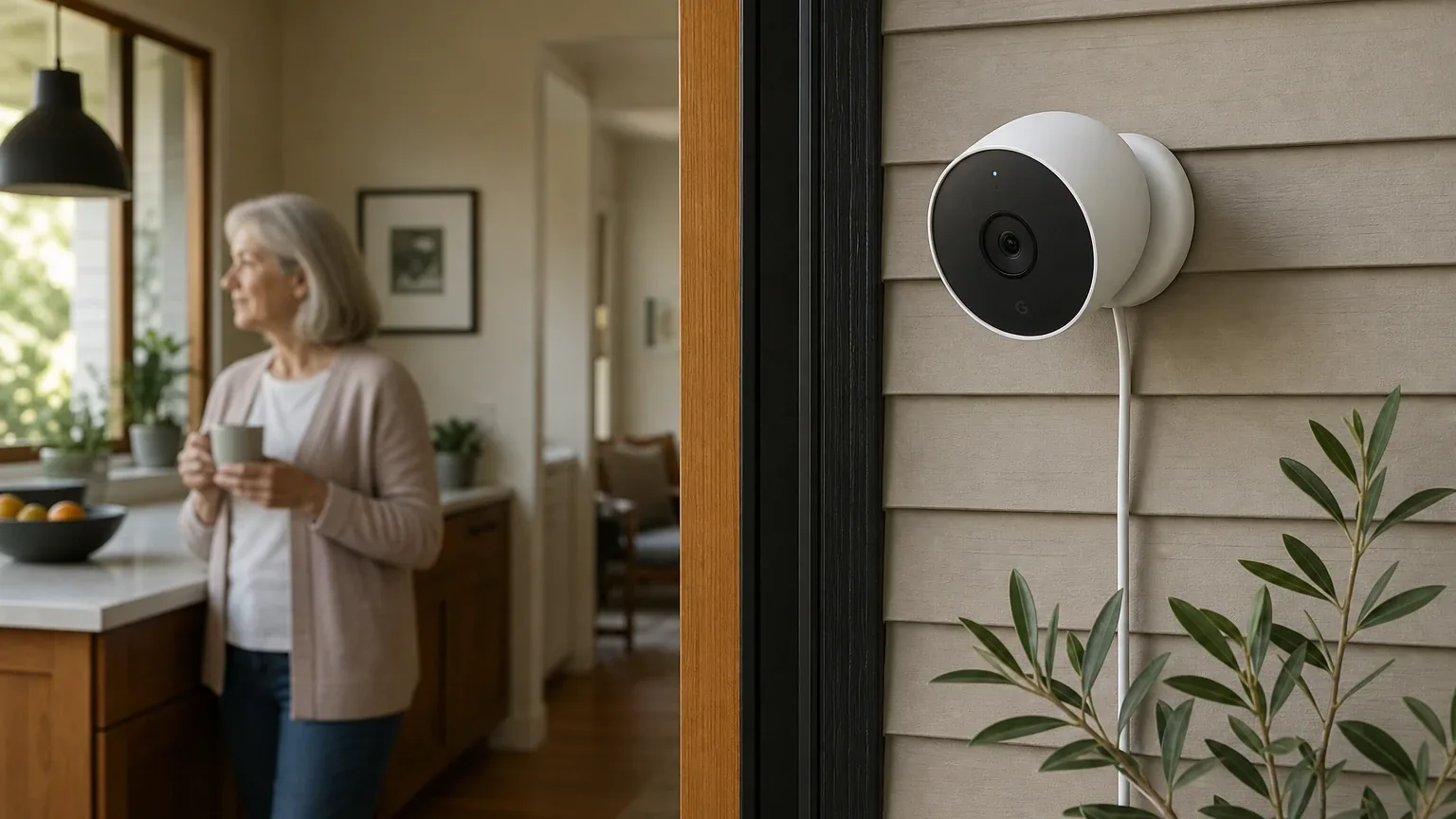
Google Nest is a good but not universally best fit for Indoor/Outdoor Camera Monitoring for seniors living alone and their caregivers. Five of seven AI platforms named Google Nest during the ranking stage, with an average listed rank of 3.8 and a best rank of 2. The strongest reason to consider it is the combination of flexible battery-powered indoor/outdoor placement, on-device person/animal/vehicle detection, and caregiver sharing through the Google Home app. The main limitation is the recurring subscription requirement: meaningful video history and intelligent alerts require Google Home Premium at $10–$20 per month, and there is no local storage option. Platform fit ratings were split: two platforms rated it "strong" or "good," three rated it "good," and three rated it "mixed."
Research Snapshot
| Metric | Value |
|---|---|
| Platform mentions in ranking stage | 5 of 7 platforms |
| Share of included platform responses | 71.4% |
| Average listed rank | 3.8 |
| Best listed rank | 2 (openai) |
| Relevant product/model/plan | Nest Cam (Battery) or Nest Cam Indoor (wired, 3rd gen) + Google Home Premium Standard ($10/mo) or Advanced ($20/mo) |
| Overall use-case fit | Good (2 platforms: strong/good; 3 platforms: good; 3 platforms: mixed) |
| Research date | 2026-08-14 |
Why Google Nest Qualified for This Study
Google Nest qualified because five of the seven AI platforms (anthropic, deepseek, kimi, openai, perplexity) named it during the ranking stage for the topic "Best Home Security Cameras for Seniors Living Alone." Google's own platform response also evaluated it, bringing the total to six platform evaluations. The entity ranked as high as 2 (openai) and as low as 7 (kimi), with an average rank of 3.8 across five ranking platforms. The relevant products are the Nest Cam (Battery) for flexible indoor/outdoor placement and the Nest Cam Indoor (wired, 3rd gen) for higher stated video quality, both paired with a Google Home Premium subscription [1].
The Product, Model, Plan, or Service Most Relevant to Indoor/Outdoor Camera Monitoring
The most relevant configuration is the Nest Cam (Battery) for indoor/outdoor use, or the Nest Cam Indoor (wired, 3rd gen) for indoor-only monitoring, paired with Google Home Premium Standard ($10/month or $100/year) or Advanced ($20/month or $200/year) [4]. The battery model is weather-resistant and designed for flexible placement indoors or outdoors, while the wired 3rd-gen indoor model offers up to 2K video with HDR and a 152-degree diagonal field of view [4]. Google Home Premium Standard provides 30 days of event history and intelligent alerts; Advanced provides 60 days of event history plus up to 10 days of 24/7 recording for wired cameras [6].
What the AI Platforms Agreed About
Strong agreement: Subscription required for meaningful functionality
All seven platforms agreed that the free tier is severely limited. The free tier provides only 3 hours of event video history [9]. Deepseek described the free tier as limited to 6 hours of event previews (10-second clips) [12]. Kimi similarly noted only 6 hours of free cloud previews [14]. Without a subscription, intelligent alerts, familiar-face detection, package detection, and smoke/CO sound alerts are unavailable [14]. This was the most consistent finding across all platforms.
Strong agreement: No local storage option
All platforms that addressed storage agreed that Nest cameras have no local storage option. There is no microSD card slot and no local recording capability [17]. All video is stored in the cloud, making the system completely dependent on internet connectivity and a Google account [20].
Strong agreement: Easy installation for the battery model
Multiple platforms cited the battery model's installation as a key strength. Google describes installation as "as easy as hanging a picture frame" [21]. Reviewed.com confirmed the process: drop in the battery, drill two screws, and charge before installing (roughly 5 hours) [22]. The Home app provides guided setup with QR code scanning [23].
Strong agreement: On-device person/animal/vehicle detection included free
Google states that Nest Cam can distinguish people, animals, and vehicles without a subscription [25]. The Tensor Processing Unit chip helps differentiate event types and reduce false alerts [26]. Activity Zone customization is also included free [25].
Majority agreement: Caregiver sharing is a strength
Five platforms (anthropic, openai, google, grok, deepseek) highlighted caregiver sharing as a strength. Caregivers can be invited as Google Home members with Viewer or Manager roles [27]. Google Home app version 3.33 and newer allows customizable Member access, where admins can grant or restrict settings and activity access [29]. Caregivers can be removed instantly, revoking access to live and recorded video [30].
Majority agreement: Night vision is a limitation
Three platforms (anthropic, deepseek, kimi) independently cited night vision as below average. Consumer Reports rated night video as "below par"—"not very viewable, and not as bright or clear as the better models" [19]. Nest Cam uses infrared black-and-white night vision and lacks color night vision [31]. The wired 3rd-gen indoor model specifies infrared night vision with illumination up to 15 feet [33].
Where the AI Platforms Disagreed or Were Uncertain
Disagreement: Fit rating
Platform fit ratings were split: grok rated Google Nest "strong," while anthropic, openai, and google rated it "good," and deepseek, kimi, and perplexity rated it "mixed." Grok's assessment was the most positive, describing it as a "strong fit for the use case with subscription". Perplexity was the most cautious, noting that "senior-specific usability, caregiver sharing, and privacy controls were not fully verifiable from the checked sources".
Disagreement: Video resolution
Platforms disagreed on whether the battery model supports 2K resolution. Anthropic noted that "2K vs. 1080p capability unclear for all current models; sources indicate wired 2nd/3rd gen outdoor models have 2K, but inconsistency on whether battery model supports 2K". Openai noted that the Nest Cam (Battery) product page "did not state its resolution in the available content". Grok stated that "Nest Cam models offer 1080p resolution with HDR; some outdoor wired models support 2K" [34]. The wired 3rd-gen indoor model is confirmed at 2K [35].
Disagreement: Pricing references
There is a documented conflict between legacy Nest Aware pricing and current Google Home Premium pricing. Some platform responses referenced Nest Aware at $8/month and $15/month, but Google's current U.S. store pages describe Google Home Premium Standard at $10/month and Advanced at $20/month [37]. The price increase took effect in August 2025, with Standard rising from $8 to $10/month and Advanced from $15 to $20/month [37]. This was the second price increase in five years [39].
Uncertainty: Caregiver camera-only sharing
Platforms disagreed on whether caregivers can be granted camera-only access. Anthropic stated that "password-protected sharing link option available for single-camera access without full home access" [40]. However, openai noted that "Google's documented password-protected link method is specifically associated with cameras managed through the older Nest app," and availability for newer Home-app-only cameras is unclear. Google's own platform response noted that "users still cannot easily share access to only a single specific camera within a multi-camera home".
Uncertainty: Battery life
No platform could verify battery runtime under typical use. Anthropic noted that "battery life duration not specified by Google; sources reference charge time (5 hours) but not operational runtime under typical or heavy use". The battery is a rechargeable 6 Ah, 3.65V lithium-ion unit [41].
Use-Case-Specific Features and Capabilities
Video clarity
The wired 3rd-gen indoor model offers up to 2K video, HDR, 6x digital zoom, and a 152-degree diagonal field of view [42]. The battery model supports HDR and night vision, but its resolution was not stated on the checked product page [43]. Independent reviews confirm 2K daytime sharpness for wired models [44]. Caregivers report that 2K HDR makes a significant difference in distinguishing normal activity from emergencies [46].
Motion detection accuracy
On-device person, animal, and vehicle detection is included free [47]. The Tensor Processing Unit chip reduces false notifications, with accuracy improved when the camera is plugged into power [48]. Familiar-face recognition, available with a subscription, correctly identified faces more than 9 out of 10 times in a TechHive review [49]. Alerts are sent within approximately 5 seconds on average [50]. The Advanced plan adds descriptive AI notifications such as "person walks up stairs" [52].
Night vision
The battery model provides HDR and night vision for low-light conditions [43]. The wired 3rd-gen indoor model specifies infrared night vision with illumination up to 15 feet [42]. However, Consumer Reports rated night video as "below par" [50]. The system uses infrared black-and-white night vision and lacks color night vision [53].
Privacy controls
Google documents on-device machine learning, secure boot, automatic security updates, encryption, and available 2-step verification for the wired 3rd-gen indoor camera [42]. Encryption is 128-bit AES with TLS/SSL [55]. However, Consumer Reports rated Google Nest privacy as "mediocre"—not doing as good a job as others regarding collecting only necessary data, giving user control, or limiting data sharing [51]. Familiar-face detection is excluded in Illinois.
Caregiver sharing options
Caregivers can be invited as Google Home members with Viewer or Manager roles [56]. Google Home app version 3.33 and newer allows customizable Member access [58]. Subscription benefits, including video history and familiar-face alerts, are shared with all invited members [59]. Caregivers can be removed instantly, revoking access to live and recorded video [60]. However, camera-only sharing without access to other Google Home devices is not clearly documented for newer Home-app-only cameras.
Installation ease
The battery model is wire-free and described as "as easy as hanging a picture frame" [61]. Installation involves dropping in the battery, drilling two screws, and charging for roughly 5 hours before installing [62]. The Home app provides guided setup with QR code scanning [63]. The wired indoor model requires continuous AC power and includes wall-mounting hardware [42]. The outdoor wired model requires a cable run [51].
Storage cost
The free tier provides 3 hours of event video history [43]. Google Home Premium Standard provides 30 days of event history at $10/month or $100/year [65]. Advanced provides 60 days of event history plus up to 10 days of 24/7 recording at $20/month or $200/year [65]. Continuous recording is not available for battery cameras [66]. There is no local storage option [67].
App usability
The Google Home app is required for all camera management and viewing [68]. It supports live viewing, camera history, two-way talk, and an immersive dashboard for multiple cameras [43]. The app supports Google Assistant and Alexa voice commands but does not work with Apple HomeKit or IFTTT [52]. Newer cameras are managed through the Home app rather than the older Nest app, which may add setup complexity for some seniors. There is no web dashboard for non-smartphone users [69].
Pricing, Fees, Contracts, and Ongoing Costs
Known hardware costs
| Product | Price |
|---|---|
| Nest Cam (Battery) | $179.99 [70] |
| Nest Cam Indoor (wired, 3rd gen) | $99.99 [71] |
| Nest Cam Outdoor (wired, 2nd gen) | $149.99 [73] |
Note: Anthropic reported a wider retail range of $99–$179 for the battery model and $99–$239 for the wired indoor model, citing retail variation.
Subscription costs
| Plan | Monthly | Annual |
|---|---|---|
| Google Home Premium Standard | $10 | $100 |
| Google Home Premium Advanced | $20 | $200 |
One subscription covers all Nest cameras and doorbells in one home [76]. The subscription was rebranded from Nest Aware to Google Home Premium, and pricing increased 25% in August 2025 [77]. This was the second price increase in five years [79].
Contract and cancellation terms
Subscriptions auto-renew unless cancelled. Plans can be cancelled anytime, but there are no refunds for partial billing periods except where required by law. Annual plans are available and may reduce the effective monthly cost. No long-term contract is required for the camera or subscription.
Additional fees
Internet service and Wi-Fi equipment are required but priced separately. Optional accessories include weatherproof cables (5m or 10m), a solar charging panel, a stand for shelf mounting, and an anti-theft mount [80]. Exact accessory prices were not disclosed in the checked sources.
Best Suited For
Google Nest is best suited for:
- Households already using Google Home, Nest displays, or Google accounts—the system integrates seamlessly with the existing ecosystem.
- Caregivers who want remote live viewing, person/vehicle/animal alerts, two-way talk, and broad Google Home integration.
- Multi-camera households where one subscription covers unlimited cameras, reducing cost per camera.
- Seniors with reliable broadband and willingness to use mobile apps for live monitoring and alerts.
- Caregivers wanting detailed, natural-language AI updates such as "person sitting in chair" or "person moving toward kitchen," which function as passive wellness checks [81].
- Buyers who value intelligent alerts, night vision, two-way communication, and simple battery installation.
Probably Not Best Suited For
Google Nest is probably not best suited for:
- Buyers requiring local storage or operation without Wi-Fi/internet—there is no microSD slot and no local recording [82].
- Seniors on a tight budget who want continuous video recording or history without paying ongoing subscription fees.
- Homes needing continuous recording from outdoor or battery-powered cameras—battery cameras do not provide 24/7 recording [83].
- Caregivers who need camera-only access with no ability to access or control other devices in the Google Home.
- Seniors who lack smartphone access or are uncomfortable with mobile app management.
- Buyers seeking 4K or higher resolution for facial identification beyond 20 feet.
- Outdoor installations in harsh weather without the weatherproof cable accessory—the battery model is rated IPX4, which may limit placement to sheltered areas [84].
- Buyers prioritizing data privacy—Consumer Reports rated Google Nest privacy as "mediocre" [86].
When Another Option May Be Better
Several platforms identified specific alternatives for specific needs:
- Local storage and no subscription: Aqara Camera Hub G5 Pro or G100 with microSD/NAS/HomeKit Secure Video, or Wyze Cam v4.
- 4K resolution and IP65 weatherproofing: Reolink PoE systems offer 4K and better weather resistance.
- Color night vision: Ring Outdoor Cam Pro offers better low-light color performance.
- Professional monitoring: Deep Sentinel or SimpliSafe offer live intervention.
- Simpler app experience for tech-hesitant seniors: Wyze or dedicated senior-focused systems.
- Web dashboard access: Legacy Ring or Wyze offer web portals.
Questions to Verify Before Buying
- Is the intended camera location covered by reliable Wi-Fi and sufficient upload bandwidth? Nest requires stable Wi-Fi; slow connections may degrade real-time monitoring.
- Does the caregiver need camera-only access, or is access to other Google Home devices acceptable? Camera-only sharing is not clearly documented for newer Home-app-only cameras.
- Will the buyer need continuous recording? If so, a wired camera and the Advanced plan are required.
- How often will the battery camera need charging at the chosen location and alert sensitivity? Battery runtime is not officially disclosed.
- Are the required Google Home Premium features available for the exact camera model and U.S. account? Availability may vary by device, account, region, language, and rollout status.
- Does the senior find the Google Home app accessible enough for live viewing, privacy controls, and responding to alerts?.
- What happens to stored history and caregiver access if the subscription is cancelled or payment fails?.
- Is familiar-face detection needed, and is the user in Illinois (where prohibited)?.
- Is 10 days of 24/7 history worth the $20/month Advanced plan, or is 30-day event-only sufficient?.
- Will the buyer accept ongoing subscription cost increases? Google increased pricing 25% in 2025; further hikes may occur.
Final AI Consensus Verdict
The AI consensus is that Google Nest is a good fit for indoor/outdoor camera monitoring for seniors living alone, but not the strongest overall option. The system's core strengths—flexible battery-powered placement, on-device person/animal/vehicle detection, easy installation, and caregiver sharing through the Google Home app—are well-documented across platforms. The Gemini AI-powered descriptive alerts on the Advanced plan function as passive wellness checks, which caregivers report as highly valuable [88].
However, the consensus also identifies material tradeoffs. The mandatory subscription for meaningful functionality, lack of local storage, below-par night vision, and mediocre privacy ratings are consistent limitations cited by multiple platforms. The subscription cost trajectory is also a concern: pricing increased 25% in August 2025, and this was the second increase in five years [89].
For the target buyer—seniors living independently and caregivers who want visibility into entries, yards, driveways, or selected indoor safety areas—Google Nest works best when the household is already in the Google ecosystem, has reliable broadband, and can absorb recurring subscription costs. For budget-conscious buyers, privacy-focused users, or those needing simple night monitoring without ongoing fees, alternatives with local storage or lower subscription costs may be better.
For a broader comparison of camera options for this use case, see the Indoor/Outdoor Camera Monitoring consensus index. You can also explore other options in the home safety category directory.
How This Review Was Produced
This review was produced on 2026-08-14 by aggregating fit-research responses from seven AI platforms: anthropic, deepseek, google, grok, kimi, openai, and perplexity. Each platform evaluated Google Nest against the use case of indoor/outdoor camera monitoring for seniors living alone, using category criteria including video clarity, motion detection accuracy, night vision, privacy controls, caregiver sharing options, installation ease, storage cost, and app usability. Platform responses were normalized, deduplicated, and cross-checked against the supplied citation catalog. Fit ratings were recorded as provided by each platform without adjustment.
Methodology Limitations
- Company-owned citations materially outnumber independent citations (24 owned vs. 18 independent). Company claims from Google's own product pages and support documentation should not be treated as independently verified.
- The supplied URLs were collected from platform responses and were not independently validated by the writer stage.
- Platform-reported dates are provenance metadata and do not independently prove freshness. All platforms reported a research date of 2026-08-14.
- Platform agreement does not prove product quality. The consensus described here reflects what AI platforms reported from their sources, not independent testing by this review.
- Pricing conflicts were not resolved by guessing. The transition from Nest Aware ($8/$15) to Google Home Premium ($10/$20) is documented, but buyers should verify current pricing directly.
- No personal testing, customer experience, or independent verification of detection accuracy, battery life, or real-world performance was conducted for this review.
- Some factors were marked "unclear" by platforms, including caregiver camera-only sharing, senior-specific app usability, and privacy controls for newer Home-app-only cameras.
Sources
Company-Owned Sources
- Google Home Premium, the new era of Nest Aware: https://home.google.com/get-inspired/welcome-to-google-home-premium-the-new-era-of-nest-aware/
- Google Nest camera and subscription information: https://home.google.com/welcome/
- Google Nest Security & Privacy Commitments: https://safety.google/intl/en_us/products/nest/
- We're introducing the new Google Home Premium subscription plus new benefits for AI Pro and Ultra subscribers: https://store.google.com/intl/en/ideas/articles/google-home-premium-subscription/
- Google Home Premium Subscription: https://store.google.com/product/google_home_premium?hl=en-US
- Nest Cam (Battery) for Indoor or Outdoor: https://store.google.com/product/nest_cam_battery?hl=en-US
- Nest Cam (Battery) Setup & Installation - Google Store: https://store.google.com/product/nest_cam_battery_setup?hl=en-US
- Tech Specs for Nest Cam (Battery) - Google Store: https://store.google.com/product/nest_cam_battery_specs?hl=en-US
- Google Home Premium Subscription: https://store.google.com/us/product/google_home_premium?hl=en-US
- Nest Cam (Battery) for Indoor or Outdoor: https://store.google.com/us/product/nest_cam_battery?hl=en-US
- Create a new account to use the Nest app: https://support.google.com/googlehome/answer/10503498?hl=en
- Install or mount your Nest Cam (battery) - Google Nest Help: https://support.google.com/googlehome/answer/10919314?hl=en&co=GENIE.Platform%3DAndroid
- Event and 24/7 video history: https://support.google.com/googlehome/answer/16593318?hl=en
- Share Nest camera live video - Android - Google Home and Nest Help: https://support.google.com/googlehome/answer/9227530?hl=en-CA&co=GENIE.Platform%3DAndroid
- Technical specs for Google Nest cameras and doorbells: https://support.google.com/googlehome/answer/9259110?hl=en
- Learn about Family Accounts and how to share access to your Nest home: https://support.google.com/googlehome/answer/9304271?hl=en
- Google Nest Help / Nest Aware features: https://support.google.com/googlenest/
- Install or mount your Nest Cam (battery) - Google Nest Help: https://support.google.com/googlenest/answer/10919314?hl=en&co=GENIE.Platform%3DiOS
- Share Nest camera live video: https://support.google.com/googlenest/answer/9227530?hl=en-NZ
- What you get with a Nest Aware subscription: https://support.google.com/googlenest/answer/9233159
- Manage people and permissions in the Google Home app: https://support.google.com/googlenest/answer/9294360
- Learn about Family Accounts and how to share access to your Nest home: https://support.google.com/googlenest/answer/9304271?hl=en&co=GENIE.Platform%3DAndroid
- Aqara Camera G100 | 2K Indoor/Outdoor Security Camera: https://us.aqara.com/products/camera-g100
- Wyze Cam v4 | Wired Indoor/Outdoor Security Camera: https://www.wyze.com/products/wyze-cam
Additional AI research evidence91 records
- AI research evidence record openai:c1
- AI research evidence record openai:c2
- AI research evidence record anthropic:c18
- AI research evidence record openai:c1
- AI research evidence record openai:c2
- AI research evidence record openai:c5
- AI research evidence record anthropic:c18
- AI research evidence record openai:c6
- AI research evidence record openai:c1
- AI research evidence record anthropic:c18
- AI research evidence record google:c5
- AI research evidence record deepseek:c1
- AI research evidence record deepseek:c3
- AI research evidence record kimi:c1
- AI research evidence record kimi:c2
- AI research evidence record deepseek:c4
- AI research evidence record anthropic:c20
- AI research evidence record kimi:c4
- AI research evidence record deepseek:c2
- AI research evidence record openai:c7
- AI research evidence record anthropic:c8
- AI research evidence record anthropic:c9
- AI research evidence record anthropic:c10
- AI research evidence record anthropic:c25
- AI research evidence record anthropic:c5
- AI research evidence record anthropic:c6
- AI research evidence record anthropic:c12
- AI research evidence record google:c4
- AI research evidence record google:c3
- AI research evidence record anthropic:c17
- AI research evidence record anthropic:c1
- AI research evidence record anthropic:c4
- AI research evidence record openai:c2
- AI research evidence record grok:c1
- AI research evidence record openai:c2
- AI research evidence record google:c1
- AI research evidence record anthropic:c26
- AI research evidence record anthropic:c27
- AI research evidence record anthropic:c28
- AI research evidence record anthropic:c13
- AI research evidence record anthropic:c23
- AI research evidence record openai:c2
- AI research evidence record openai:c1
- AI research evidence record deepseek:c1
- AI research evidence record kimi:c2
- AI research evidence record google:c1
- AI research evidence record anthropic:c5
- AI research evidence record anthropic:c6
- AI research evidence record anthropic:c7
- AI research evidence record deepseek:c2
- AI research evidence record kimi:c4
- AI research evidence record deepseek:c3
- AI research evidence record anthropic:c1
- AI research evidence record anthropic:c4
- AI research evidence record anthropic:c15
- AI research evidence record anthropic:c12
- AI research evidence record google:c4
- AI research evidence record google:c3
- AI research evidence record anthropic:c13
- AI research evidence record anthropic:c17
- AI research evidence record anthropic:c8
- AI research evidence record anthropic:c9
- AI research evidence record anthropic:c10
- AI research evidence record anthropic:c18
- AI research evidence record openai:c5
- AI research evidence record openai:c6
- AI research evidence record anthropic:c20
- AI research evidence record anthropic:c25
- AI research evidence record anthropic:c24
- AI research evidence record openai:c1
- AI research evidence record grok:c1
- AI research evidence record google:c5
- AI research evidence record deepseek:c3
- AI research evidence record openai:c5
- AI research evidence record anthropic:c18
- AI research evidence record anthropic:c11
- AI research evidence record anthropic:c26
- AI research evidence record anthropic:c27
- AI research evidence record anthropic:c28
- AI research evidence record anthropic:c21
- AI research evidence record google:c1
- AI research evidence record anthropic:c20
- AI research evidence record openai:c6
- AI research evidence record anthropic:c21
- AI research evidence record anthropic:c22
- AI research evidence record kimi:c4
- AI research evidence record deepseek:c2
- AI research evidence record google:c1
- AI research evidence record anthropic:c26
- AI research evidence record anthropic:c27
- AI research evidence record anthropic:c28
Independent Sources
- Nest Cam Outdoor (Wired, 2nd Gen) - Review 2025: https://ca.pcmag.com/home-security-cameras/3429/nest-cam-outdoor-wired-2nd-gen
- Google Nest Cam Battery Review (2026) | CCTV Info: https://cctvinfo.com/reviews/google-nest-cam-battery
- Share your Nest camera's video with other people: https://hvaclaboratory.com/how-to-use-the-nest-app-to-share-control-with-house-guests-or-caregivers/
- How to Share Google Nest Camera with Family: https://surveillanceguides.com/how-to-share-google-nest-camera-with-family/
- Google Raises Nest Aware Subscription Prices Again, Up to $5 More a Month: https://tech.yahoo.com/home/articles/google-raises-nest-aware-subscription-094604658.html
- Google's Nest Aware Subscription Is Going Up In Price: https://tech.yahoo.com/home/articles/googles-nest-aware-subscription-going-203110865.html
- Google is confusing Home users with Nest Aware and Google One plan changes: https://www.androidauthority.com/google-home-premium-subscription-nest-aware-3412589/
- Google Home makes smart home sharing a breeze: https://www.androidpolice.com/google-home-custom-member-access-rollout/
- Google Nest Cam Outdoor (Wired, 2nd Gen) Home Security Camera Review - Consumer Reports: https://www.consumerreports.org/home-garden/home-security-cameras/nest-cam-outdoor-wired-2nd-gen/m420503/
- Nest Cam Review: Honest Pros, Cons & Verdict 2026: https://www.elderlivinghub.com/nest-cam-review/
- Google Nest Aware (Now Google Home Premium): Plans & Pricing (2026: https://www.homecamcafe.com/subscribe-nest-aware-service/
- Deep Sentinel DS2 Review: https://www.pcmag.com/reviews/deep-sentinel-ds2
- Nest Cam (battery): Google's new wireless camera rocks - Reviewed: https://www.reviewed.com/smarthome/content/nest-cam-battery-review
- Google Nest Cam Review 2026: https://www.safehome.org/home-security-cameras/nest-camera/reviews/
- Nest Video Doorbell Battery Review for 2026 | Security.org: https://www.security.org/doorbell-camera/nest/review/battery/
- Read 2026 Nest Cam Reviews & Ratings: https://www.security.org/security-cameras/nest/review/
- Nest Cam (wired) review: This pricey camera offers people detection | TechHive: https://www.techhive.com/article/579771/nest-cam-wired-review.html
- Google Nest Cam Indoor and Outdoor 2K Review: Slick, Smart, and Secure: https://www.wired.com/review/google-nest-cam-indoor-outdoor-2k-2025/
Additional AI research evidence91 records
- AI research evidence record openai:c1
- AI research evidence record openai:c2
- AI research evidence record anthropic:c18
- AI research evidence record openai:c1
- AI research evidence record openai:c2
- AI research evidence record openai:c5
- AI research evidence record anthropic:c18
- AI research evidence record openai:c6
- AI research evidence record openai:c1
- AI research evidence record anthropic:c18
- AI research evidence record google:c5
- AI research evidence record deepseek:c1
- AI research evidence record deepseek:c3
- AI research evidence record kimi:c1
- AI research evidence record kimi:c2
- AI research evidence record deepseek:c4
- AI research evidence record anthropic:c20
- AI research evidence record kimi:c4
- AI research evidence record deepseek:c2
- AI research evidence record openai:c7
- AI research evidence record anthropic:c8
- AI research evidence record anthropic:c9
- AI research evidence record anthropic:c10
- AI research evidence record anthropic:c25
- AI research evidence record anthropic:c5
- AI research evidence record anthropic:c6
- AI research evidence record anthropic:c12
- AI research evidence record google:c4
- AI research evidence record google:c3
- AI research evidence record anthropic:c17
- AI research evidence record anthropic:c1
- AI research evidence record anthropic:c4
- AI research evidence record openai:c2
- AI research evidence record grok:c1
- AI research evidence record openai:c2
- AI research evidence record google:c1
- AI research evidence record anthropic:c26
- AI research evidence record anthropic:c27
- AI research evidence record anthropic:c28
- AI research evidence record anthropic:c13
- AI research evidence record anthropic:c23
- AI research evidence record openai:c2
- AI research evidence record openai:c1
- AI research evidence record deepseek:c1
- AI research evidence record kimi:c2
- AI research evidence record google:c1
- AI research evidence record anthropic:c5
- AI research evidence record anthropic:c6
- AI research evidence record anthropic:c7
- AI research evidence record deepseek:c2
- AI research evidence record kimi:c4
- AI research evidence record deepseek:c3
- AI research evidence record anthropic:c1
- AI research evidence record anthropic:c4
- AI research evidence record anthropic:c15
- AI research evidence record anthropic:c12
- AI research evidence record google:c4
- AI research evidence record google:c3
- AI research evidence record anthropic:c13
- AI research evidence record anthropic:c17
- AI research evidence record anthropic:c8
- AI research evidence record anthropic:c9
- AI research evidence record anthropic:c10
- AI research evidence record anthropic:c18
- AI research evidence record openai:c5
- AI research evidence record openai:c6
- AI research evidence record anthropic:c20
- AI research evidence record anthropic:c25
- AI research evidence record anthropic:c24
- AI research evidence record openai:c1
- AI research evidence record grok:c1
- AI research evidence record google:c5
- AI research evidence record deepseek:c3
- AI research evidence record openai:c5
- AI research evidence record anthropic:c18
- AI research evidence record anthropic:c11
- AI research evidence record anthropic:c26
- AI research evidence record anthropic:c27
- AI research evidence record anthropic:c28
- AI research evidence record anthropic:c21
- AI research evidence record google:c1
- AI research evidence record anthropic:c20
- AI research evidence record openai:c6
- AI research evidence record anthropic:c21
- AI research evidence record anthropic:c22
- AI research evidence record kimi:c4
- AI research evidence record deepseek:c2
- AI research evidence record google:c1
- AI research evidence record anthropic:c26
- AI research evidence record anthropic:c27
- AI research evidence record anthropic:c28
Verify this research
Review the study details behind this page or download the public machine-readable verification record.
- Study date
- Aug 14, 2026
- Platforms analyzed
- 7
- Source records
- 42
- Ranking mentions
- 5 of 7
- Platform share
- 71%
- Final consensus rank
- #3
Research trail and source mix
Platforms
openai, anthropic, deepseek, grok, perplexity, kimi, google
Source mix
18 independent · 24 company-owned
Evidence support
37 direct · 5 partial
Important limitation
Use the run research_date as the study date. Platform-reported dates are provenance metadata and do not independently prove freshness.
Source snapshot SHA-256 852da7d6c9b6421c4ed67b8682a96231e865247a68efbdadb6b4c25dbefd0d5c