
Answer Capsule
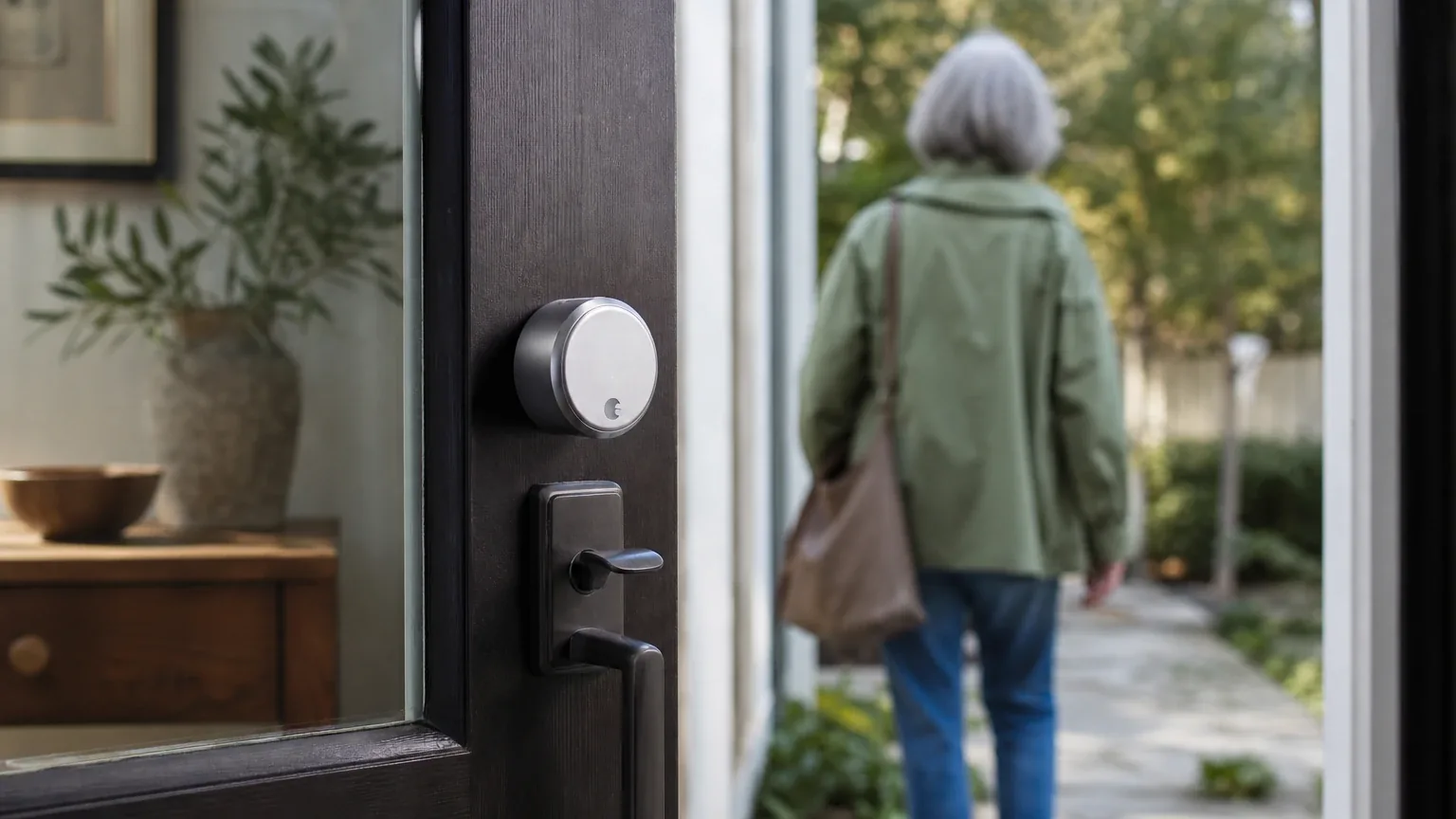
The August Wi-Fi Smart Lock (4th Gen) is a good but conditional fit for seniors and caregivers seeking keyless entry and remote caregiver access. Two of seven AI platforms named it during the ranking stage, with an average listed rank of 4.0 and a best rank of 4. The strongest reason to consider it: the retrofit design preserves the existing deadbolt and physical key while adding built-in Wi-Fi remote access, temporary virtual keys, and app-based activity monitoring—without requiring a separate bridge or hub. The main limitation: the lock has no built-in keypad, so caregiver code entry requires a separately purchased keypad accessory (roughly $60–$150 depending on source), and battery life is short at approximately 3 months with Wi-Fi enabled, creating ongoing maintenance burdens.
Research Snapshot
| Metric | Value |
|---|---|
| Platform mentions in ranking stage | 2 of 7 (deepseek, grok) |
| Share of included platform responses | 7 of 7 platforms evaluated fit (100%) |
| Average listed rank | 4.0 |
| Best listed rank | 4 |
| Relevant product/model/plan | August Wi-Fi Smart Lock (4th Gen) retrofit lock; optional August Keypad or Yale Keypad/Keypad Touch |
| Overall use-case fit | Good (5 platforms: good; 2 platforms: mixed; 1 platform: strong) |
| Research date | 2026-08-13 |
Fit ratings by platform: OpenAI (good), Anthropic (good), DeepSeek (good), Grok (strong), Perplexity (good), Google (mixed), Kimi (mixed).
Why August Wi-Fi Smart Lock Qualified for This Study
The August Wi-Fi Smart Lock qualified because it directly addresses the core criteria for keyless entry and caregiver access: remote lock management, temporary access codes, emergency key backup, and installation ease. Seven AI platforms evaluated its fit for this specific use case, even though only two named it during the ranking discovery phase (deepseek and grok, both at rank 4). The product is a retrofit smart lock that mounts on the interior side of an existing single-cylinder deadbolt, preserving the exterior hardware and physical key [1]. Built-in Wi-Fi (2.4GHz) enables remote access without a separate bridge [1]. The August app supports guest access, temporary and recurring codes, and activity monitoring [6].
What the AI Platforms Agreed About
Strong agreement: Retrofit design preserves physical key backup
All seven platforms agreed that the August Wi-Fi Smart Lock's defining advantage is its retrofit design. The lock attaches to the interior of an existing deadbolt, leaving the exterior key cylinder and original physical keys fully functional [10]. This means seniors can always use a traditional key if electronics fail, batteries die, or Wi-Fi is unavailable. Google's review noted the original exterior key cylinder remains fully functional even if the electronics fail or batteries die [13]. Kimi's review emphasized that existing physical keys continue to work because August attaches to the interior side of the deadbolt [15].
Strong agreement: No built-in keypad is a significant limitation
All seven platforms flagged the absence of a built-in keypad as the primary limitation for this use case. The lock itself has no physical keypad; code entry requires a separately purchased accessory [10]. This means seniors who are not comfortable with smartphone apps cannot use keyless entry without the add-on keypad. Anthropic noted the optional Yale Keypad or Yale Keypad Touch must be purchased separately for numeric or fingerprint entry [18]. Kimi's review stated the separate Smart Keypad costs $149.99, significantly increasing total cost [15].
Strong agreement: Built-in Wi-Fi enables remote caregiver access
All platforms confirmed the 4th Gen model has built-in Wi-Fi, eliminating the need for a separate Connect bridge or hub [10]. Caregivers can lock and unlock remotely via the August app from anywhere, view activity feeds showing who entered and exited, and manage guest access [22]. The lock requires a 2.4GHz Wi-Fi network (802.11 b/g/n) and does not work with 5GHz-only networks [27].
Strong agreement: Temporary and recurring access codes supported
All platforms confirmed the August app supports creating temporary, recurring, and permanent access codes that can be granted and revoked remotely [29]. Codes can be set for minutes, hours, days, or longer periods and automatically expire [30]. The lock can store up to 250 keypad codes according to official product information [32]. However, code entry requires the separate keypad accessory [18].
Strong agreement: Installation is relatively easy
All platforms described installation as straightforward, typically taking 10–20 minutes with basic hand tools and no power tools required [33]. The lock mounts over the existing deadbolt interior without replacing the exterior hardware or rekeying [15]. Compatibility with the existing single-cylinder deadbolt is a prerequisite [10].
Majority agreement: Battery life is short and a maintenance concern
Six of seven platforms identified battery life as a notable limitation. Official August information states up to 3 months of battery life under typical Wi-Fi-enabled conditions using two CR123 batteries [32]. Independent testing reported approximately 3–4 months with several daily operations [37]. Real-world user reports indicate actual battery life is often closer to 1.5–3 months [38]. Some sources cite 3–6 months [39], while Google noted some mesh Wi-Fi setups can cause critical battery drain in as little as 3–5 weeks [35]. The external Smart Keypad's AAA batteries can drain in 1–3 months, with cold weather significantly reducing keypad battery life [41].
Where the AI Platforms Disagreed or Were Uncertain
Battery life claims conflict
Official August pages show different battery life figures: the support FAQ states "up to 3 months" [43], while the product specs page claims 3–6 months [45], and Grok's review cited 3–6 months on 4 AA batteries [46]. Kimi's review also cited 3–6 months using 4x AA batteries [47]. Independent testing reported approximately 3–4 months [48], while real-world user reports suggest 1.5–3 months [49]. Google noted some users report battery drain in as little as 3–5 weeks with certain mesh Wi-Fi setups [50]. The battery type also conflicts: official sources state two CR123 batteries [43], while other sources cite 4 AA batteries [45].
Pricing is inconsistent across sources
Official August pages show different current prices: $199.99 for the lock alone, $249.99 for the lock with keypad, and a separate $229.99 starting-price display [51]. Grok reported the lock at $229.99 with keypad bundles from $210.99–$249.99 [46]. Kimi reported the lock at $149–$179 with the Smart Keypad add-on at $149.99 [47]. Google reported the lock at approximately $229.99–$249.99 MSRP with the Smart Keypad at $59.99 [54]. Anthropic reported the lock at $230 MSRP with promotional pricing of $110–$180 observed, and the Yale Keypad at $80–$120 [55]. DeepSeek reported approximately $150–$200 with the August Keypad at $79.99 [56]. Perplexity could not verify a stable current retail price [57].
Security rating is unclear
An independent 2026 review reports a BHMA AAA rating, but the current official product page reviewed did not clearly display that rating [59]. DeepSeek reported ANSI/BHMA Grade 2 certification [45]. Perplexity could not confirm an independently verified security certification for the exact current model [57]. Kimi noted no independent security rating or certification status was verified in available sources [53]. Anthropic cited Bluetooth LE encryption, AES 128-bit, and TLS encryption for all communications, plus mandatory two-factor authentication [61].
Keypad readability for seniors is undocumented
No platform found clear documentation of keypad font size, contrast, backlighting, tactile markings, or other senior-accessibility features [51]. The optional keypad is described as backlit [56], but button size, text clarity, and lighting for seniors with vision limitations were not detailed in available sources [55]. This remains an unverified aspect of the product for this use case.
Temporary code expiration controls are not fully documented
While official sources confirm temporary and recurring codes exist [63], the sources checked do not clearly specify whether all code types support configurable start and expiration times [43]. Perplexity noted that keypad-based temporary code functionality for the exact model remains unclear [57].
Use-Case-Specific Features and Capabilities
Keyless entry and caregiver access codes
The August Wi-Fi Smart Lock supports temporary, recurring, and permanent access codes via the August app [66]. Codes can be set for minutes, hours, days, or longer periods and automatically expire [67]. Up to 250 keypad codes can be stored [69]. However, code entry requires the separately purchased keypad—the lock itself has no built-in keypad [70]. Caregivers can also receive app-based virtual keys for remote access [75].
Remote access reliability
Built-in 2.4GHz Wi-Fi supports remote lock and unlock without a separate bridge [70]. Reliability depends on home Wi-Fi coverage, router configuration, internet service, and battery condition [78]. The lock requires 2.4GHz Wi-Fi (802.11 b/g/n) and does not work with 5GHz-only networks [79]. Independent testing found a stable connection, but this is not a guarantee for every home [78]. Some reviews noted occasional Wi-Fi connectivity issues [81].
Emergency key backup
Because the lock retrofits the interior of an existing deadbolt, the exterior key cylinder and existing physical key remain available [70]. This is a significant advantage for seniors who want a traditional key option as backup [83].
Installation ease
The lock installs on the interior of a compatible single-cylinder deadbolt in approximately 10–20 minutes using basic hand tools [87]. No power tools or locksmith required [86]. Compatibility with the existing deadbolt is a prerequisite; August provides a compatibility check on their website [83]. Installation requires 1⅝ inches of side clearance on the door and works with most single-cylinder deadbolts [88].
App simplicity and access management
The August app supports owner and guest management, activity notifications, remote control, and automatic locking or unlocking [70]. Auto-unlock via Bluetooth proximity and auto-lock timers are included [86]. Door Sense technology distinguishes between "lock triggered" and "door actually closed and locked," preventing false security when a door bounces open [86]. Two-factor authentication is mandatory during setup [92]. Voice control is supported via Alexa and Google Assistant [92]. No detailed usability testing specific to senior users was found in sources reviewed [92].
Smart home integration
The lock works with Alexa, Google Assistant, Apple HomeKit, and SmartThings [86]. This broad compatibility supports integration with existing smart home setups common in aging-in-place scenarios [86].
Pricing, Fees, Contracts, and Ongoing Costs
Known costs (conflicting across sources)
| Item | Price per source |
|---|---|
| August Wi-Fi Smart Lock (4th Gen) | $199.99 [94]; $229.99 [95]; $230 MSRP, promo $110–$180 [96]; $149–$179 [97]; $150–$200 [98]; $229.99–$249.99 [99] |
| Lock + keypad bundle | $249.99 [100]; $210.99–$249.99 [95] |
| August Smart Keypad (separate) | $79.99 [98]; $59.99 [99]; $149.99 [101] |
| Yale Keypad (numeric) | Approximately $80–$100 [96] |
| Yale Keypad Touch (fingerprint + numeric) | Approximately $100–$120 [96] |
| CR123 batteries (pair) | $5–$15 per set, every 2–3 months [102] |
| AAA batteries (keypad) | Ongoing cost, every 1–3 months [103] |
Fees and contracts
No required recurring subscription fee was identified for basic lock and app functionality [104]. No long-term contracts, cancellation, or account termination fees were identified [105]. The lock comes with a 1-year warranty covering parts only [94]. Grok noted a 30-day money-back guarantee [95]. Optional video doorbell features may require subscription, but this is not applicable to the lock alone [106].
Ongoing costs
Battery replacement is the primary ongoing cost: approximately $20–$60 annually for the lock's CR123 batteries [102], plus keypad battery costs [103]. Total system cost for keypad-based caregiver access can reach $300–$350 [96].
Best Suited For
- Seniors who want to keep their existing deadbolt and physical keys: The retrofit design preserves the exterior lock appearance and key backup [107].
- Caregivers who primarily use app-based remote access: Built-in Wi-Fi enables remote lock/unlock, activity monitoring, and virtual key sharing without a separate bridge [112].
- Households with a tech-comfortable person managing access: The app supports guest management, temporary codes, and activity feeds, but full functionality requires smartphone comfort [111].
- Renters or those who cannot replace exterior door hardware: The retrofit installs on the interior without changing the exterior appearance [111].
- Homes with reliable 2.4GHz Wi-Fi: The lock requires 2.4GHz Wi-Fi and does not work with 5GHz-only networks [118].
- Users prioritizing smart home integration: Works with Alexa, Google Assistant, Apple HomeKit, and SmartThings [111].
Probably Not Best Suited For
- Seniors who need a large, highly readable built-in keypad: The lock has no built-in keypad, and keypad readability for seniors is not documented [120].
- Households unwilling to replace batteries every 2–3 months: Battery life is short with Wi-Fi enabled, and real-world reports suggest 1.5–3 months [124].
- Seniors with limited smartphone proficiency: Without the keypad add-on, the lock requires app use for keyless entry [122].
- Homes with no Wi-Fi or 5GHz-only networks: The lock is incompatible with 5GHz-only networks [127].
- Buyers wanting a single integrated solution: The keypad is a separate purchase, increasing total cost [123].
- Homes in extremely cold climates: External keypad battery life is significantly shortened in freezing temperatures [130].
When Another Option May Be Better
- Integrated keypad preferred without extra cost: Consider Yale Approach or Level Lock for integrated solutions [131].
- Longer battery life is a priority: Competing locks (e.g., Schlage Encode Plus, Kwikset Halo) claim 6–12 months battery life [131]. Eufy C220 offers approximately 1 year on 8x AA batteries [133].
- Fingerprint access desired for users with tremors or limited hand strength: Consider AskSAMIE Smart Lock or DESLOC K140 Plus [134].
- Wi-Fi is unavailable or unreliable: Bluetooth-only locks may be more suitable [131].
- Apple Home Key or Matter compatibility required: Consider Level Lock or await verified Matter support [135].
- A senior lives alone without app-savvy support nearby: Consider Eufy C220 with built-in keypad/fingerprint at lower total cost [133].
Questions to Verify Before Buying
- Is the existing deadbolt a compatible single-cylinder model? Does it operate smoothly with minimal friction? [136]
- Does the keypad have sufficiently large, high-contrast, backlit, or tactile buttons for the intended senior user? [136]
- Can each caregiver code be assigned a start time, expiration time, recurring schedule, and immediate revocation? [141]
- What battery runtime should be expected with the household's number of daily lock operations and Wi-Fi signal strength? [141]
- What happens if the batteries die, Wi-Fi fails, the internet is down, or the caregiver's phone is unavailable? [141]
- Does the exterior physical key remain usable after installation, and is there any emergency power method? [136]
- Is the claimed BHMA AAA rating applicable to the August retrofit mechanism, the existing deadbolt, or both? [139]
- Are remote access and guest-code management available without a paid subscription? [141]
- What are the current retailer return terms and warranty support procedures? [136]
- Can a caregiver be granted limited permissions rather than full owner-level control? [141]
- Is Wi-Fi signal strength adequate at the door location? Poor signal directly impacts battery life and responsiveness [143].
- What is the current MSRP and any ongoing promotions? Pricing fluctuates significantly across sources ($110–$250) [140].
Final AI Consensus Verdict
The August Wi-Fi Smart Lock (4th Gen) is a good but conditional fit for keyless entry and caregiver access. Five of seven platforms rated it "good," one rated it "strong," and two rated it "mixed." The consensus is clear: this lock excels at remote caregiver access, temporary code management, preserving physical key backup, and straightforward retrofit installation. Its defining limitation is the absence of a built-in keypad, which forces a separate accessory purchase for code-based entry and creates a smartphone dependency that may exclude less tech-comfortable seniors. Battery life of approximately 3 months with Wi-Fi enabled is shorter than many competing locks and requires ongoing maintenance.
The lock is best suited for households where a tech-comfortable person manages app-based access, the senior values keeping their existing deadbolt and keys, and the household has reliable 2.4GHz Wi-Fi. It is less suitable for seniors who need a large, readable built-in keypad, households unwilling to replace batteries frequently, or homes with 5GHz-only networks. Buyers should verify deadbolt compatibility, keypad accessibility, temporary-code controls, battery expectations, and emergency-entry procedures before purchase.
For a broader comparison of smart locks for this use case, see the Keyless Entry & Caregiver Access consensus index. You can also explore other options in the home safety category directory.
How This Review Was Produced
This review was produced by aggregating fit-research responses from seven AI platforms (OpenAI, Anthropic, DeepSeek, Grok, Perplexity, Google, and Kimi), each of which evaluated the August Wi-Fi Smart Lock against the defined use case of Keyless Entry & Caregiver Access for seniors and caregivers. Each platform provided its own assessment based on its research, including company-owned sources (august.com, support.august.com) and independent sources (reviews, directories, and journalism). The authoritative research date for this study is 2026-08-13. Platform-reported research dates are provenance metadata and do not independently prove freshness; one platform (DeepSeek) reported a research date of 2026-04-10, which differs from the authoritative run date.
The entity ranking statistics reflect only platforms that named the August Wi-Fi Smart Lock during the ranking discovery stage (deepseek and grok, both at rank 4). All seven platforms evaluated fit, but platform mentions count only those that named the entity during ranking discovery.
Methodology Limitations
- Platform-reported research dates differ: DeepSeek reported a research date of 2026-04-10, while all other platforms and the authoritative run date are 2026-08-13. This means DeepSeek's findings may reflect older information.
- The supplied URLs were collected from platform responses and were not independently validated by the writer stage.
- Pricing conflicts were not resolved by guessing: Official August pages show different prices ($199.99, $229.99, $249.99), and independent sources vary widely ($110–$250). Buyers must verify current pricing at checkout.
- Battery life claims conflict across sources: Official claims range from "up to 3 months" to "3–6 months," and independent testing reports 3–4 months with real-world reports of 1.5–3 months. Battery type also conflicts (CR123 vs. AA).
- Security ratings are inconsistent: BHMA AAA is reported by one independent review, ANSI/BHMA Grade 2 by another, and the official product page does not clearly display either rating.
- Keypad readability for seniors is undocumented: No source provided clear information on button size, contrast, backlighting, or tactile markings.
- AI-platform agreement does not prove product quality: This review reports what the platforms found in their research; it does not constitute independent testing or verification.
- No personal testing, customer experience, or independent verification was performed for this review.
Explore more home safety guidance in the category directory.
Sources
Company-Owned Sources
- August Home | Smart Locks for Convenient, Keyless Entry: https://august.com/
- August App Features: https://august.com/app
- The Convenience of Customized Personal Entry Codes: https://august.com/blogs/home/the-convenience-of-personal-entry-codes
- August Wi-Fi Smart Lock - Specs: https://august.com/collections/frontdoor/products/august-wi-fi-smart-lock
- August Smart Lock Install & Compatibility: https://august.com/install
- Keyless Entry Lock & Keypads: https://august.com/pages/keyless-entry
- August Smart Lock + Connect | Products | August Home: https://august.com/products/august-smart-lock-connect
- August Wi-Fi Smart Lock: https://august.com/products/august-wi-fi-smart-lock
- August Wi-Fi Smart Lock: https://august.com/products/august-wifi-smart-lock
- August Wi-Fi Smart Lock FAQ: https://support.august.com/august-wi-fi-smart-lock-faq-rk6RzQ5YI
- How to Access Your Smart Lock Remotely - August Support: https://support.august.com/how-do-i-access-my-lock-remotely-BJlVv8JCOM
- How to Set Timed Access Codes - August Support: https://support.august.com/keypad-timed-access-codes-Hk1eyvU1A_f
- Smart Lock: https://www.asksamie.com/products/smart-lock
Additional AI research evidence147 records
- AI research evidence record openai:c1
- AI research evidence record anthropic:c10
- AI research evidence record deepseek:c2
- AI research evidence record anthropic:c4
- AI research evidence record grok:c1
- AI research evidence record anthropic:c1
- AI research evidence record anthropic:c2
- AI research evidence record anthropic:c3
- AI research evidence record deepseek:c3
- AI research evidence record openai:c1
- AI research evidence record anthropic:c10
- AI research evidence record deepseek:c2
- AI research evidence record google:c3
- AI research evidence record google:c4
- AI research evidence record kimi:c1
- AI research evidence record perplexity:c1
- AI research evidence record openai:c2
- AI research evidence record anthropic:c6
- AI research evidence record deepseek:c1
- AI research evidence record kimi:c3
- AI research evidence record google:c5
- AI research evidence record anthropic:c4
- AI research evidence record deepseek:c3
- AI research evidence record grok:c1
- AI research evidence record google:c2
- AI research evidence record anthropic:c5
- AI research evidence record anthropic:c16
- AI research evidence record anthropic:c17
- AI research evidence record anthropic:c1
- AI research evidence record anthropic:c2
- AI research evidence record anthropic:c3
- AI research evidence record openai:c4
- AI research evidence record anthropic:c11
- AI research evidence record anthropic:c12
- AI research evidence record google:c1
- AI research evidence record anthropic:c7
- AI research evidence record openai:c3
- AI research evidence record anthropic:c8
- AI research evidence record deepseek:c5
- AI research evidence record grok:c2
- AI research evidence record google:c6
- AI research evidence record google:c7
- AI research evidence record openai:c4
- AI research evidence record anthropic:c7
- AI research evidence record deepseek:c5
- AI research evidence record grok:c2
- AI research evidence record kimi:c1
- AI research evidence record openai:c3
- AI research evidence record anthropic:c8
- AI research evidence record google:c1
- AI research evidence record openai:c1
- AI research evidence record openai:c5
- AI research evidence record kimi:c3
- AI research evidence record google:c5
- AI research evidence record anthropic:c6
- AI research evidence record deepseek:c1
- AI research evidence record perplexity:c1
- AI research evidence record perplexity:c2
- AI research evidence record openai:c2
- AI research evidence record perplexity:c3
- AI research evidence record anthropic:c13
- AI research evidence record anthropic:c14
- AI research evidence record anthropic:c1
- AI research evidence record anthropic:c2
- AI research evidence record anthropic:c3
- AI research evidence record anthropic:c1
- AI research evidence record anthropic:c2
- AI research evidence record anthropic:c3
- AI research evidence record openai:c4
- AI research evidence record openai:c1
- AI research evidence record anthropic:c6
- AI research evidence record deepseek:c1
- AI research evidence record kimi:c3
- AI research evidence record google:c5
- AI research evidence record grok:c1
- AI research evidence record anthropic:c4
- AI research evidence record google:c2
- AI research evidence record openai:c3
- AI research evidence record anthropic:c16
- AI research evidence record anthropic:c17
- AI research evidence record deepseek:c4
- AI research evidence record anthropic:c10
- AI research evidence record deepseek:c2
- AI research evidence record google:c3
- AI research evidence record google:c4
- AI research evidence record kimi:c1
- AI research evidence record anthropic:c11
- AI research evidence record anthropic:c12
- AI research evidence record google:c1
- AI research evidence record anthropic:c5
- AI research evidence record deepseek:c3
- AI research evidence record anthropic:c13
- AI research evidence record deepseek:c6
- AI research evidence record openai:c1
- AI research evidence record grok:c2
- AI research evidence record anthropic:c6
- AI research evidence record kimi:c1
- AI research evidence record deepseek:c1
- AI research evidence record google:c5
- AI research evidence record openai:c5
- AI research evidence record kimi:c3
- AI research evidence record anthropic:c8
- AI research evidence record google:c6
- AI research evidence record openai:c4
- AI research evidence record anthropic:c18
- AI research evidence record deepseek:c3
- AI research evidence record openai:c1
- AI research evidence record anthropic:c10
- AI research evidence record deepseek:c2
- AI research evidence record google:c3
- AI research evidence record kimi:c1
- AI research evidence record anthropic:c4
- AI research evidence record anthropic:c5
- AI research evidence record grok:c1
- AI research evidence record deepseek:c6
- AI research evidence record google:c1
- AI research evidence record anthropic:c11
- AI research evidence record anthropic:c16
- AI research evidence record anthropic:c17
- AI research evidence record openai:c1
- AI research evidence record openai:c2
- AI research evidence record anthropic:c6
- AI research evidence record kimi:c3
- AI research evidence record anthropic:c8
- AI research evidence record openai:c3
- AI research evidence record deepseek:c1
- AI research evidence record anthropic:c16
- AI research evidence record anthropic:c17
- AI research evidence record google:c5
- AI research evidence record google:c7
- AI research evidence record anthropic:c6
- AI research evidence record deepseek:c1
- AI research evidence record kimi:c4
- AI research evidence record kimi:c2
- AI research evidence record kimi:c1
- AI research evidence record openai:c1
- AI research evidence record deepseek:c2
- AI research evidence record kimi:c1
- AI research evidence record openai:c2
- AI research evidence record anthropic:c6
- AI research evidence record openai:c4
- AI research evidence record anthropic:c3
- AI research evidence record anthropic:c9
- AI research evidence record anthropic:c10
- AI research evidence record anthropic:c18
- AI research evidence record google:c1
- AI research evidence record grok:c2
Independent Sources
- Expected August Smart Lock Battery Life (Real World Results!: https://goodhomeautomation.com/smart-home/august-smart-lock-battery-life/
- August Wi-Fi Smart Lock Review: Still Worth It in 2025?: https://smart-wired.com/smart-locks/august-smart-lock-review/
- Eufy Smart Lock C220 Review & Specs - Door Lock: https://smarthomecompared.com/door-locks/eufy-smart-lock-c220
- How to Install an August Smart Lock – Easy Setup Guide: https://smartlockadvice.com/how-to-install-a-august-smart-lock/
- Keypad battery in cold weather?? - Reddit: https://vertexaisearch.cloud.google.com/grounding-api-redirect/AUZIYQFChp-Uu_Q1_3b4NvK0whCObTz66QVxMkAZXmgEFiPunhlxqgEYalxbRrdG27RcZsrLWpk9FBp30LmViz36gTWPyWa4HPWqFYMKDNua-NKLGyc5ipCTnz_wlnlah_OYQ9xhAn76tsKta205bemdKL0Ttb5DhMhMtVOYe4y-rXy6SBPoBCfpRCHFf7ZNBktE
- August Smart Lock Specifications: https://www.adorama.com/augsl05m01s1.html
- August Smart Lock Review for Seniors: https://www.aginginplace.org/best-smart-locks-for-seniors/
- The top smart lock on the market just hit its lowest price ever: https://www.androidpolice.com/the-top-smart-lock-on-the-market-just-hit-its-lowest-price-ever/
- August Smart Lock review and feature coverage: https://www.cnet.com/home/smart-home/august-wifi-smart-lock-review/
- August Wi-Fi Smart Lock Review 2026 (4th Gen) Tested: https://www.home-securityguide.com/smart-locks/reviews/august-wifi-smart-lock/
- August Lock: A Complete Guide - iLockey: https://www.ilockey.com/august-lock-complete-guide/
- August Wi-Fi Smart Lock Review: https://www.pcmag.com/reviews/august-wi-fi-smart-lock
- August Wi-Fi Smart Lock (4th Gen) Review — August | SafeAtHome Guide: https://www.safeathomeguides.com/products/door-access/august-wifi-smart-lock-4th-gen
- August Wi-Fi Smart Lock review coverage: https://www.tomsguide.com/reviews/august-wifi-smart-lock
- August Smart Lock Wi-Fi (4th Gen) | Wellbots: https://www.wellbots.com/products/august-smart-lock-wi-fi-4th-gen
Additional AI research evidence147 records
- AI research evidence record openai:c1
- AI research evidence record anthropic:c10
- AI research evidence record deepseek:c2
- AI research evidence record anthropic:c4
- AI research evidence record grok:c1
- AI research evidence record anthropic:c1
- AI research evidence record anthropic:c2
- AI research evidence record anthropic:c3
- AI research evidence record deepseek:c3
- AI research evidence record openai:c1
- AI research evidence record anthropic:c10
- AI research evidence record deepseek:c2
- AI research evidence record google:c3
- AI research evidence record google:c4
- AI research evidence record kimi:c1
- AI research evidence record perplexity:c1
- AI research evidence record openai:c2
- AI research evidence record anthropic:c6
- AI research evidence record deepseek:c1
- AI research evidence record kimi:c3
- AI research evidence record google:c5
- AI research evidence record anthropic:c4
- AI research evidence record deepseek:c3
- AI research evidence record grok:c1
- AI research evidence record google:c2
- AI research evidence record anthropic:c5
- AI research evidence record anthropic:c16
- AI research evidence record anthropic:c17
- AI research evidence record anthropic:c1
- AI research evidence record anthropic:c2
- AI research evidence record anthropic:c3
- AI research evidence record openai:c4
- AI research evidence record anthropic:c11
- AI research evidence record anthropic:c12
- AI research evidence record google:c1
- AI research evidence record anthropic:c7
- AI research evidence record openai:c3
- AI research evidence record anthropic:c8
- AI research evidence record deepseek:c5
- AI research evidence record grok:c2
- AI research evidence record google:c6
- AI research evidence record google:c7
- AI research evidence record openai:c4
- AI research evidence record anthropic:c7
- AI research evidence record deepseek:c5
- AI research evidence record grok:c2
- AI research evidence record kimi:c1
- AI research evidence record openai:c3
- AI research evidence record anthropic:c8
- AI research evidence record google:c1
- AI research evidence record openai:c1
- AI research evidence record openai:c5
- AI research evidence record kimi:c3
- AI research evidence record google:c5
- AI research evidence record anthropic:c6
- AI research evidence record deepseek:c1
- AI research evidence record perplexity:c1
- AI research evidence record perplexity:c2
- AI research evidence record openai:c2
- AI research evidence record perplexity:c3
- AI research evidence record anthropic:c13
- AI research evidence record anthropic:c14
- AI research evidence record anthropic:c1
- AI research evidence record anthropic:c2
- AI research evidence record anthropic:c3
- AI research evidence record anthropic:c1
- AI research evidence record anthropic:c2
- AI research evidence record anthropic:c3
- AI research evidence record openai:c4
- AI research evidence record openai:c1
- AI research evidence record anthropic:c6
- AI research evidence record deepseek:c1
- AI research evidence record kimi:c3
- AI research evidence record google:c5
- AI research evidence record grok:c1
- AI research evidence record anthropic:c4
- AI research evidence record google:c2
- AI research evidence record openai:c3
- AI research evidence record anthropic:c16
- AI research evidence record anthropic:c17
- AI research evidence record deepseek:c4
- AI research evidence record anthropic:c10
- AI research evidence record deepseek:c2
- AI research evidence record google:c3
- AI research evidence record google:c4
- AI research evidence record kimi:c1
- AI research evidence record anthropic:c11
- AI research evidence record anthropic:c12
- AI research evidence record google:c1
- AI research evidence record anthropic:c5
- AI research evidence record deepseek:c3
- AI research evidence record anthropic:c13
- AI research evidence record deepseek:c6
- AI research evidence record openai:c1
- AI research evidence record grok:c2
- AI research evidence record anthropic:c6
- AI research evidence record kimi:c1
- AI research evidence record deepseek:c1
- AI research evidence record google:c5
- AI research evidence record openai:c5
- AI research evidence record kimi:c3
- AI research evidence record anthropic:c8
- AI research evidence record google:c6
- AI research evidence record openai:c4
- AI research evidence record anthropic:c18
- AI research evidence record deepseek:c3
- AI research evidence record openai:c1
- AI research evidence record anthropic:c10
- AI research evidence record deepseek:c2
- AI research evidence record google:c3
- AI research evidence record kimi:c1
- AI research evidence record anthropic:c4
- AI research evidence record anthropic:c5
- AI research evidence record grok:c1
- AI research evidence record deepseek:c6
- AI research evidence record google:c1
- AI research evidence record anthropic:c11
- AI research evidence record anthropic:c16
- AI research evidence record anthropic:c17
- AI research evidence record openai:c1
- AI research evidence record openai:c2
- AI research evidence record anthropic:c6
- AI research evidence record kimi:c3
- AI research evidence record anthropic:c8
- AI research evidence record openai:c3
- AI research evidence record deepseek:c1
- AI research evidence record anthropic:c16
- AI research evidence record anthropic:c17
- AI research evidence record google:c5
- AI research evidence record google:c7
- AI research evidence record anthropic:c6
- AI research evidence record deepseek:c1
- AI research evidence record kimi:c4
- AI research evidence record kimi:c2
- AI research evidence record kimi:c1
- AI research evidence record openai:c1
- AI research evidence record deepseek:c2
- AI research evidence record kimi:c1
- AI research evidence record openai:c2
- AI research evidence record anthropic:c6
- AI research evidence record openai:c4
- AI research evidence record anthropic:c3
- AI research evidence record anthropic:c9
- AI research evidence record anthropic:c10
- AI research evidence record anthropic:c18
- AI research evidence record google:c1
- AI research evidence record grok:c2
Verify this research
Review the study details behind this page or download the public machine-readable verification record.
- Study date
- Aug 13, 2026
- Platforms analyzed
- 7
- Source records
- 34
- Ranking mentions
- 2 of 7
- Platform share
- 29%
- Final consensus rank
- #5
Research trail and source mix
Platforms
openai, anthropic, deepseek, grok, perplexity, kimi, google
Source mix
19 independent · 15 company-owned
Evidence support
26 direct · 7 partial
Important limitation
Use the run research_date as the study date. Platform-reported dates are provenance metadata and do not independently prove freshness.
Source snapshot SHA-256 349d9ceb87310b04ad13c365a550e85218510470b3699c564d42d477d3d736f8