
Answer Capsule
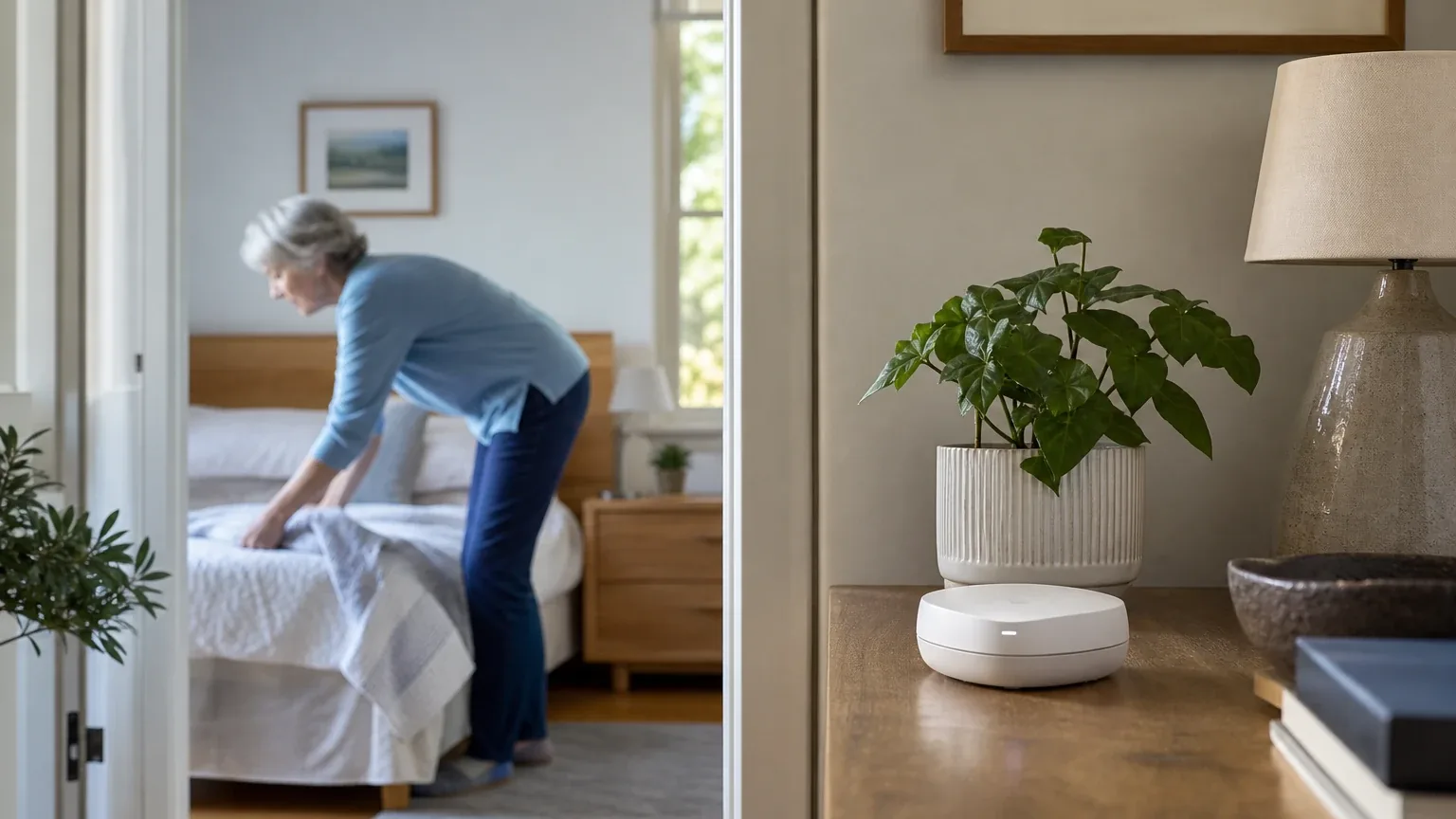
Aloe Care Health is a good — but not perfect — fit for senior-friendly home security, provided the buyer understands it is a medical alert and caregiver coordination platform rather than a burglar alarm system. Two of the seven platforms in this study named Aloe Care Health during the ranking stage: OpenAI ranked it first, while DeepSeek placed it ninth, producing an average listed rank of 5.0. The strongest reason to consider it is the combination of a voice-activated Smart Hub, wearable Care Button, 24/7 professional monitoring, and an unlimited-user caregiver app that works without home Wi-Fi. The main limitation is that it does not provide door/window sensors, cameras, or intrusion dispatch, and public pricing and plan names are inconsistent across sources.
Research Snapshot
| Field | Finding |
|---|---|
| Platform mentions in ranking stage | 2 of 7 platforms (OpenAI, DeepSeek) |
| Share of included platform responses | 28.6% |
| Average listed rank | 5.0 |
| Best listed rank | 1 (OpenAI) |
| Relevant product/model/plan | Aloe Care Essentials, Essentials Plus, and Mobile Companion 2; "Total Care" referenced by some platforms but not confirmed in current official materials |
| Overall use-case fit | Good for emergency alerting and caregiver-supported independent living; weak as a substitute for a full home-security system |
| Research date | 2026-09-26 |
Why Aloe Care Health Qualified for This Study
Questions This Section Answers
- Is Aloe Care Health a good choice for Senior-Friendly Home Security?
- How many AI platforms named Aloe Care Health in the ranking stage for senior-friendly home security?
Aloe Care Health qualified because it appeared in the ranking stage of two of the seven platforms studied, even though it was not a consensus pick. OpenAI listed it at rank 1 and DeepSeek at rank 9, giving an average listed rank of 5.0 and a platform share of 28.6%. The remaining five platforms — Anthropic, Google, Grok, Perplexity, and Kimi — evaluated Aloe Care Health's fit but did not name it during ranking discovery, so their fit ratings do not count toward the mention total.
The entity also met the study's category criteria on paper: it offers emergency pendant integration through the Care Button and Mobile Companion 2, 24/7 monitoring through a Five Diamond Emergency Response Center, voice-activated interface simplicity, caregiver access controls through a shared app, and self-installation rather than professional installation [1]. That last criterion is where the fit weakens, because no reviewed source confirmed a professional in-home installation option.
Fit ratings were not unanimous. Five platforms rated Aloe Care Health a "good" fit (OpenAI, Anthropic, Google, Grok, Perplexity), DeepSeek rated it "mixed," and Kimi rated it "uncertain" after reporting no 2026 search results mentioning the company. That spread is itself a finding: the product is well documented by some platforms and effectively invisible to others. This review sits inside the broader Senior-Friendly Home Security consensus index, which compares Aloe Care Health against other finalists on the same criteria.
The Product, Model, Plan, or Service Most Relevant to Senior-Friendly Home Security
Questions This Section Answers
- Which Aloe Care Health plan should a buyer choose if they need both in-home and on-the-go emergency coverage?
- Is the Aloe Care Health Total Care plan still available, or has it been replaced by Essentials Plus?
The most relevant offering for this use case is Essentials Plus, which combines the in-home Essentials system with the Mobile Companion 2 wearable (anthropic:31-8, anthropic:31-9). Essentials alone covers in-home emergency access through a 4G Hub and one Care Button; Essentials Plus adds 4G LTE mobile coverage, wearable fall detection, a belt clip, and a lanyard (anthropic:31-5, anthropic:31-10).
Plan naming is the single biggest source of confusion in the reviewed material. OpenAI reported that the requested "Total Care" name and plan details were not confirmed in current official materials, and Grok noted that Total Care does not appear on the official site or recent reviews [2]. Perplexity, by contrast, retrieved an official Total Care product page showing a sold-out status, $449.99 hardware, and $79.99 per month [3]. Google reported that in-home fall detection was formerly sold under a Total Care package that customer service said had been discontinued [4]. These accounts cannot all be simultaneously current, and buyers should treat Total Care as unverified until Aloe Care confirms it directly.
The current official product lineup reviewed shows Essentials at $39.99 per month with $199.99 hardware, Mobile Companion 2 at $44.99 per month with $149.99 hardware, and Essentials Plus at $59.99 per month with $349.99 hardware [5]. A promotional banner on the same page advertised devices for $1 plus monthly monitoring as a limited-time offer, which illustrates how quickly published prices can shift (official:C1).
What the AI Platforms Agreed About
Questions This Section Answers
- What do AI platforms agree Aloe Care Health does well for seniors living independently?
- Does Aloe Care Health require Wi-Fi or a landline for its emergency monitoring to work?
The clearest cross-platform agreement is that Aloe Care Health is a medical alert and caregiver coordination platform, not a traditional home security system. OpenAI, Anthropic, DeepSeek, Google, Grok, and Perplexity all reached that conclusion independently [6]. No platform described door/window sensors, glass-break detection, cameras, or intrusion dispatch as part of the offering.
Platforms also agreed on the core emergency workflow. The Smart Hub supports voice-activated help — saying "emergency" repeatedly connects the user to the monitoring center — and the Care Button provides a wearable alternative [10]. The response team can speak with the older adult, contact emergency services, and notify caregivers through the app or text [11]. Multiple platforms described the monitoring center as Five Diamond certified [12].
A third area of agreement is connectivity. Essentials and Essentials Plus use cellular connectivity and do not require Wi-Fi or a landline for core operation [6]. That matters for households with unreliable internet.
Caregiver access was described consistently as a strength. The app supports unlimited users, two-way conversations through the Smart Hub, check-ins, caregiver arrival tracking, temperature alerts, air quality alerts, and activity pattern updates [13]. One independent review noted that Aloe Care's caregiver-app functionality is strong but may feel more complex than a basic medical alert system [14].
Where the AI Platforms Disagreed or Were Uncertain
Questions This Section Answers
- How fast does Aloe Care Health respond to an emergency, and is that response time independently verified?
- Is professional installation available from Aloe Care Health, or is setup self-install only?
Response time is the sharpest disagreement. Anthropic cited a Five Diamond monitoring center with a 30-second average response time (anthropic:10-4), and Google reported response times around 30 seconds [15]. OpenAI, however, reported that independent testing found response time was not always as rapid as expected, and that no guaranteed maximum response time was established [17]. Perplexity and DeepSeek both stated that independent verification of response performance was not found in their checked sources [18]. The honest reading is that a 30-second average is platform-reported, not independently confirmed, and buyers should ask Aloe Care for measured performance data.
Professional installation is unresolved across every platform. OpenAI, Anthropic, DeepSeek, Grok, and Perplexity all reported that professional installation was not verified, with official materials emphasizing plug-and-play setup guided by voice prompts instead [20]. No reviewed source confirmed an in-home installation service, ZIP-code availability, or installation pricing.
Fall detection drew mixed treatment. Mobile Companion 2 includes wearable fall detection, but Aloe Care states it is not guaranteed to detect all falls [20]. Essentials does not include fall detection and it is not an add-on for that plan (anthropic:3-13). Anthropic also flagged that Mobile Companion 2 battery life was cited as both "up to five days" in a 2020 announcement and "three days" in 2023 product information, with the current specification unclear.
Kimi's response represents the most extreme uncertainty: it reported no 2026 search results mentioning Aloe Care Health in senior home security coverage and rated the entity "uncertain" [22]. That is a retrieval failure rather than evidence the company does not exist — other platforms retrieved current official pages on the same research date — but it is a real signal that Aloe Care Health has limited visibility in some independent 2026 comparison content.
Use-Case-Specific Features and Capabilities
Questions This Section Answers
- Does Aloe Care Health's Care Button work outside the home or in a large yard?
- What caregiver permissions and alerts does the Aloe Care Health app support?
Emergency pendant integration is a genuine strength. Essentials includes a wearable Care Button for in-home coverage, and the Smart Hub provides voice-activated access to professional response [23]. Mobile Companion 2 adds a wearable SOS button for emergency calls and can be used outside the home [25]. The Care Button's stated in-home range is up to approximately 200 feet, and buyers are told to test coverage in their own residence [23]. One independent review noted that 200 feet is shorter than competitors offering 1,000 feet or more, and that the pendant cannot be worn in the garden or on the porch [26].
24/7 monitoring responsiveness is included in the reviewed plans, with the response team able to communicate with the older adult, contact emergency services, and notify caregivers [27]. The caveat on measured speed is covered above.
Interface simplicity is mixed. The Smart Hub supports voice activation and clearly marked physical controls, and independent testing found Essentials Plus easy to set up and intuitive [28]. Voice activation is limited to roughly a 10-foot range from the Smart Hub, and one hands-on reviewer wished the feature were more sensitive, though the hub recognized the wake word from the same room (anthropic:11-10, anthropic:35-5). Another independent review noted the broader system can feel more complex than a basic medical-alert device [29].
Caregiver access controls are well documented at the feature level but not at the permission level. Public materials confirm caregiver app access, unlimited users, and collaboration features [30]. One review mentioned caregiver profiles with restricted access and an amplified speaker optimized for hearing loss (anthropic:15-6). The precise role-based permission model — who can see what, and how access is revoked — was not verified in any reviewed source.
Professional installation options were not verified. The reviewed products emphasize contactless or self-installation, with the Smart Hub set up by plugging it in and following voice prompts [23].
Home sensing goes beyond emergency response. The Smart Hub monitors air quality, temperature, and activity, and alerts caregivers when something is out of the ordinary [31]. A motion-activated nightlight is also described (anthropic:2-9). These features support aging in place but are not intrusion protection.
Pricing, Fees, Contracts, and Ongoing Costs
Questions This Section Answers
- How much does Aloe Care Health cost per month, and are there setup or cancellation fees?
- Is Aloe Care Health month-to-month, and what does the 30-day money-back guarantee actually cover?
Published pricing is inconsistent across sources, and buyers should confirm current figures before purchase. The most frequently repeated figures across platforms are Essentials at $199.99 hardware plus $39.99 per month, Essentials Plus at $349.99 hardware plus $59.99 per month, and Mobile Companion 2 at $149.99 hardware plus $44.99 per month [32]. Retirement Living also listed a Total Care package at $449.99 hardware plus $79.99 per month (anthropic:12-2), while Perplexity retrieved an official Total Care page showing the same $449.99 and $79.99 figures but marked sold out [33]. Perplexity separately noted an official page showing Essentials/Total Care pricing from $29.99 per month, and independent reviews reporting Total Care around $49.99–$59.99 per month [34].
Contract terms are more consistent. Multiple sources describe month-to-month service with no long-term contracts and cancel-anytime language [35]. The official cancellation process requires contacting Aloe Care support and authenticating the account [36]. A 30-day money-back guarantee was reported by independent testing and by multiple review sites, but current eligibility and return conditions should be confirmed [37]. Perplexity noted a 30-day trial and one-year warranty mentioned by an independent review but not verified on official pages [38].
Additional fees are only partially documented. No verified professional-installation fee was found because professional installation itself was not verified [35]. Shipping and device activation were described as free of charge by one source (anthropic:14-1), and shipping was reported as free in independent testing, but current terms should be confirmed [37]. Promotional pricing of $50–$100 off equipment and up to $10 per month off service was reported by one review site (anthropic:12-11). An Equipment Service Plan for repair or replacement exists and excludes accidental damage, negligence, and misuse (anthropic:12-14). Taxes, replacement-device costs, and promotion expiration dates were not verified.
Best Suited For
Questions This Section Answers
- Who gets the most value from Aloe Care Health for aging in place?
- Is Aloe Care Health a good fit for a senior who wants voice-activated emergency help without wearing a pendant?
Aloe Care Health fits older adults who prioritize emergency panic-button access and voice activation over intrusion-alarm features [39]. The voice-first design is particularly relevant for someone who does not want to wear a button constantly — one official testimonial describes exactly that preference (official:C1).
It also fits families who want caregiver notifications, shared care coordination, and remote device visibility. The app supports unlimited users and real-time updates on activity, temperature, and air quality [40].
Households without dependable Wi-Fi are a strong match, because the reviewed products use cellular connectivity for core operation (anthropic:2-8, anthropic:29-9). Buyers who want optional out-of-home coverage and fall detection should look at Essentials Plus or Mobile Companion 2 rather than base Essentials (anthropic:31-9, anthropic:31-10). Seniors with hearing loss may benefit from the amplified speaker option (anthropic:15-6), and multi-language support pages in Arabic, Hindi, and Vietnamese improve accessibility for some households (anthropic:3-15).
Probably Not Best Suited For
Questions This Section Answers
- Who should not choose Aloe Care Health for senior-friendly home security?
- Is Aloe Care Health a good choice for a senior who needs burglar, door, or window alarm protection?
Buyers specifically seeking door, window, glass-break, camera, or professionally monitored burglary protection should look elsewhere. Every platform that assessed this factor concluded Aloe Care Health does not provide standard intrusion protection [41].
Older adults who want only the simplest traditional pendant and base station with no app or connected-care features are also a poor match. One independent review noted the broader system can feel more complex than a basic medical-alert device [45], and another noted the Care Button should be worn consistently, which could be an issue for some older adults (anthropic:32-5).
Budget-focused buyers should compare carefully. Equipment costs of $199.99–$449.99 are substantially higher than some competitors, and one platform noted competitors starting at $36.95 and $29.95 per month (anthropic:12-1, anthropic:12-2). Buyers who require a documented, guaranteed emergency-response time should not purchase without written confirmation, because no reviewed source established one [46].
Seniors in very large homes may find coverage gaps. Voice activation is limited to roughly 10 feet from the Smart Hub, and the Care Button range is about 200 feet, which one review said is insufficient for outdoor use (anthropic:11-10, anthropic:29-12).
When Another Option May Be Better
Questions This Section Answers
- What is a better alternative to Aloe Care Health for a buyer who needs door and window sensors?
- When is a lower-cost medical alert provider a better choice than Aloe Care Health?
A traditional home security provider is better when the primary need is burglary, fire, door/window, camera, or alarm-system protection [47]. Kimi's research pointed to Vivint, SimpliSafe, and Cove as documented 2026 alternatives with verified monitoring plans, professional installation, and published pricing [50]. Vivint in particular was described as requiring professional installation with a technician walkthrough, which addresses the installation gap Aloe Care Health leaves open [50].
A simpler medical-alert provider is better when the buyer wants a traditional pendant and base-unit experience with fewer app features, or when caregiver collaboration and environmental sensing are not important [47]. Lower-cost medical-alert providers are also the better comparison when monthly service cost outweighs caregiver functionality (anthropic:12-1, grok:0).
A provider with published response-time testing or service-level information is better when response speed is a decisive requirement, since Aloe Care Health's response performance is platform-reported rather than independently verified [55]. Buyers who need smoke or carbon monoxide detection integrated with a medical alert system should also look elsewhere, because no reviewed source described that integration (anthropic:2-8).
Questions to Verify Before Buying
Questions This Section Answers
- What should a buyer confirm with Aloe Care Health before signing up?
- Which Aloe Care Health plan details are unverified and need direct confirmation?
Several items should be confirmed directly with Aloe Care before purchase, because the reviewed sources conflict or leave gaps.
Plan availability and naming: Is Total Care currently sold in the United States, and what exact hardware and monitoring features does it include [56]?
Pricing: What are the current hardware price, monthly fee, taxes, shipping charges, and promotion expiration dates [59]?
Contract mechanics: Is the service month-to-month, are there minimum terms, prorated refunds, or equipment-return charges, and what does "cancel anytime" mean in practice [60]?
Guarantee terms: What does the 30-day money-back policy cover, including return shipping and opened-device conditions [61]?
Response performance: What measured or typical time should the buyer expect from button press or voice activation to a live response agent [61]?
Coverage: Does the Care Button cover every room, basement, yard, and outdoor area of the residence, and what happens beyond the stated range [56]?
Installation: Is professional in-home installation available, and if so, in which ZIP codes and at what cost [56]?
Caregiver permissions: What caregiver roles and permissions are supported, and can access be removed or limited for individual caregivers [63]?
Connectivity: What cellular network is used at the residence, and is backup connectivity available during power outages (grok:0, official:C1)?
Fall detection: What fall-detection situations are excluded, and how are false alarms, missed falls, battery failures, and device replacement handled [56]?
Final AI Consensus Verdict
Aloe Care Health earns a good fit rating for senior-friendly home security when the buyer's priority is emergency alerting, voice-activated help, and caregiver coordination rather than intrusion protection. Five of seven platforms rated it good, one rated it mixed, and one rated it uncertain. The strongest case is Essentials Plus, which combines in-home coverage with the Mobile Companion 2 wearable and fall detection. The weakest points are the absence of any burglar-alarm functionality, unverified professional installation, inconsistent published pricing, and response-time claims that no reviewed source independently confirmed. Buyers who need door/window sensors, cameras, or guaranteed response times should compare dedicated home security providers before purchasing. Buyers who want a simple, cellular, caregiver-connected emergency system for an older adult living independently will find a well-documented fit — provided they verify current plan names, pricing, and cancellation terms directly with Aloe Care.
How This Review Was Produced
This review was produced from platform-reported fit research collected on 2026-09-26 across seven AI platforms: OpenAI, Anthropic, Google, Grok, Perplexity, DeepSeek, and Kimi. Each platform evaluated Aloe Care Health against the same use case — senior-friendly home security — and the same category criteria: emergency pendant integration, 24/7 monitoring responsiveness, interface simplicity, caregiver access controls, and professional installation options. Ranking statistics reflect only the platforms that named the entity during ranking discovery. Fit ratings reflect each platform's own assessment. No product was tested by the writer, and no claims of personal experience, medical benefit, or guaranteed performance are made. Citations are platform-reported evidence, not independently verified facts.
Methodology Limitations
Several limitations apply. Platform-reported research dates differ from the authoritative run date: DeepSeek's response is dated 2026-01-29, while the other six platforms and the study itself are dated 2026-09-26. That gap means DeepSeek's pricing and plan findings may be stale. The supplied URLs were collected from platform responses and were not independently validated by the writer stage. Kimi reported no 2026 search results mentioning Aloe Care Health, which is a retrieval outcome rather than proof of absence, and its "uncertain" rating should be read accordingly. Public pricing conflicts across official and independent pages, likely reflecting product updates, promotions, or different package generations; this review does not resolve those conflicts. No reviewed source established a guaranteed maximum response time, verified professional installation availability, or confirmed the precise caregiver permission model. The "Total Care" plan name appears in some platform responses but was not confirmed in current official materials checked by other platforms. Platform agreement on a finding does not prove product quality. Buyers should verify all pricing, plan names, contract terms, and installation availability directly with Aloe Care Health before purchase.
Explore more home safety guidance in the category directory.
Sources
Company-Owned Sources
- Aloe Care Health: Medical Alert System for Elder Care, Emergency and Communication: https://get.aloecare.com/specialoffer/
- How does two-way voice work?: https://support.aloecare.com/hc/en-us/articles/11100364346775-How-does-two-way-voice-work
- What do each of the buttons on the Mobile Companion do?: https://support.aloecare.com/hc/en-us/articles/22505933896855-What-do-each-of-the-buttons-on-the-Mobile-Companion-do
- How do I cancel my Aloe Care Health Account and Services?: https://support.aloecare.com/hc/en-us/articles/28084864008087-How-do-I-cancel-my-Aloe-Care-Health-Account-and-Services
- What is the Essentials package?: https://support.aloecare.com/hc/en-us/articles/360051558893-What-is-the-Essentials-package
- Aloe Care Health official website: https://www.aloecare.com
- Products | Aloe Care Health | Medical alert system for: https://www.aloecare.com/products
- Essentials Plus | Aloe Care Health: https://www.aloecare.com/products/essentials-plus
- Mobile Companion 2: https://www.aloecare.com/products/mobile-companion-2
- Total Care: https://www.aloecare.com/products/total-care
- Best Home Security Systems for Seniors and Aging in Place in 2026 | Vivint: https://www.vivint.com/resources/article/best-home-security-system-for-seniors
- Official pricing and terms source: https://www.aloecare.com#ach-plans
Additional AI research evidence63 records
- AI research evidence record openai:c1
- AI research evidence record openai:c1
- AI research evidence record perplexity:c2
- AI research evidence record google:2.2.1
- AI research evidence record google:1.2.2
- AI research evidence record openai:c1
- AI research evidence record deepseek:c1
- AI research evidence record google:1.1.2
- AI research evidence record perplexity:c4
- AI research evidence record openai:c3
- AI research evidence record openai:c4
- AI research evidence record google:2.1.7
- AI research evidence record perplexity:c9
- AI research evidence record openai:c6
- AI research evidence record google:1.2.8
- AI research evidence record google:2.1.7
- AI research evidence record openai:c5
- AI research evidence record perplexity:c4
- AI research evidence record deepseek:c1
- AI research evidence record openai:c1
- AI research evidence record deepseek:c3
- AI research evidence record kimi:c2
- AI research evidence record openai:c1
- AI research evidence record openai:c3
- AI research evidence record openai:c2
- AI research evidence record google:1.1.8
- AI research evidence record openai:c4
- AI research evidence record openai:c5
- AI research evidence record openai:c6
- AI research evidence record openai:c7
- AI research evidence record perplexity:c11
- AI research evidence record google:1.2.2
- AI research evidence record perplexity:c2
- AI research evidence record perplexity:c7
- AI research evidence record openai:c1
- AI research evidence record openai:c8
- AI research evidence record openai:c5
- AI research evidence record perplexity:c5
- AI research evidence record openai:c1
- AI research evidence record perplexity:c9
- AI research evidence record openai:c1
- AI research evidence record deepseek:c1
- AI research evidence record google:1.1.2
- AI research evidence record perplexity:c4
- AI research evidence record openai:c6
- AI research evidence record openai:c5
- AI research evidence record openai:c1
- AI research evidence record deepseek:c1
- AI research evidence record perplexity:c4
- AI research evidence record kimi:c1
- AI research evidence record kimi:c2
- AI research evidence record kimi:c4
- AI research evidence record kimi:c5
- AI research evidence record kimi:c6
- AI research evidence record openai:c5
- AI research evidence record openai:c1
- AI research evidence record perplexity:c2
- AI research evidence record google:2.2.1
- AI research evidence record perplexity:c7
- AI research evidence record openai:c8
- AI research evidence record openai:c5
- AI research evidence record perplexity:c4
- AI research evidence record openai:c7
Independent Sources
- Medical Alert vs Aloe Care Health - Elder Guide: https://elderguide.com/medical-alert-vs-aloe-care/
- Vivint Smart Home Security for Senior | Grandfolk Reviews: https://grandfolk.com/service/home-security/vivint/
- SimpliSafe Review for Seniors 2026 | Pros, Cons & Score: https://homesecurityforseniors.com/reviews/simplisafe/
- Aloe Care Medical Alert Review: Is It Worth Buying? | Millennial Hawk: https://millennialhawk.com/aloe-care-medical-alert-review/
- Aloe Care Health: Elder Safety - Apps on Google Play: https://play.google.com/store/apps/details?id=com.htec.aloecare&hl=en_US
- Cove Home Security System Review: A Responsive DIY Kit With a Catch - Review 2026 - PCMag UK: https://uk.pcmag.com/home-security/118881/cove-home-security-system
- Aloe Care Health Medical Alert System Review 2026: https://www.caring.com/senior-products/best-medical-alert-systems/aloe-care-health
- Aloe Care Health Medical Alert System Review 2026 - Caring.com: https://www.caring.com/senior-products/best-medical-alerts/aloe-care-health
- Aloe Care Health Reviews & Complaints: https://www.consumeraffairs.com/medical-alert-systems/aloe-care.html
- Aloe Care Essentials Plus Review: Tried and Tested: https://www.forbes.com/health/medical-alert-systems/aloe-care-health-essentials-plus-review/
- Aloe Care Health Review: Price, Features, & Comparison: https://www.healthline.com/health/aloe-care-health-review
- Security Software Company Arlo Acquires Aloe Care Health: https://www.homecaremag.com/news/security-software-company-arlo-acquires-aloe-care-health
- Aloe Care Health Medical Alert System Review: https://www.medicalalertadvice.com/reviews/aloe-care-health/
- Aloe Care Health Review 2025: Tested by Experts & Reviewers: https://www.ncoa.org/adviser/medical-alert-systems/aloe-care-health-review/
- Aloe Care Medical Alert: https://www.payingforseniorcare.com/best-medical-alert-systems/aloe-care
- Aloe Care Health Review - PCMag: https://www.pcmag.com/reviews/aloe-care-health
- Aloe Care Health Reviews (With Costs) | Retirement Living: https://www.retirementliving.com/reviews/aloe-care-health
- Best Medical Alert Systems of 2026 - SafeHome.org: https://www.safehome.org/medical-alert-systems/
- Aloe Care Health │ Hands-On Expert Review | SafeWise: https://www.safewise.com/senior-safety/medical-alerts/aloe-care-health/
- Aloe Care Health Medical Alert System Review 2026: https://www.seniorliving.org/medical-alert-systems/aloe-care-health/reviews/
- Aloe Care Health Medical Alert System Review 2026 - SeniorLiving.org: https://www.seniorliving.org/medical-alerts/aloe-care-health-review/
- Best Cellular Medical Alert Systems in 2026 - SeniorLiving.org: https://www.seniorliving.org/medical-alerts/best/cellular/
- The 3 Best Home Security Systems for Seniors (2026: https://www.theseniorlist.com/home-security/best/
- Vivint Home Security Systems for Seniors: https://www.theseniorlist.com/home-security/vivint/
- Aloe Care Health Review (2026) - Details, Pricing & Features: https://www.top10.com/medical-alerts/reviews/aloe-care-health
- Aloe Care Health Medical Alert System Review 2026 | U.S. News: https://www.usnews.com/360-reviews/services/medical-alert-system/aloe-care-health
- Aloe Care Health Medical Alert System Review - YouTube: https://www.youtube.com/watch?v=9YPMTFGm7HM
Additional AI research evidence63 records
- AI research evidence record openai:c1
- AI research evidence record openai:c1
- AI research evidence record perplexity:c2
- AI research evidence record google:2.2.1
- AI research evidence record google:1.2.2
- AI research evidence record openai:c1
- AI research evidence record deepseek:c1
- AI research evidence record google:1.1.2
- AI research evidence record perplexity:c4
- AI research evidence record openai:c3
- AI research evidence record openai:c4
- AI research evidence record google:2.1.7
- AI research evidence record perplexity:c9
- AI research evidence record openai:c6
- AI research evidence record google:1.2.8
- AI research evidence record google:2.1.7
- AI research evidence record openai:c5
- AI research evidence record perplexity:c4
- AI research evidence record deepseek:c1
- AI research evidence record openai:c1
- AI research evidence record deepseek:c3
- AI research evidence record kimi:c2
- AI research evidence record openai:c1
- AI research evidence record openai:c3
- AI research evidence record openai:c2
- AI research evidence record google:1.1.8
- AI research evidence record openai:c4
- AI research evidence record openai:c5
- AI research evidence record openai:c6
- AI research evidence record openai:c7
- AI research evidence record perplexity:c11
- AI research evidence record google:1.2.2
- AI research evidence record perplexity:c2
- AI research evidence record perplexity:c7
- AI research evidence record openai:c1
- AI research evidence record openai:c8
- AI research evidence record openai:c5
- AI research evidence record perplexity:c5
- AI research evidence record openai:c1
- AI research evidence record perplexity:c9
- AI research evidence record openai:c1
- AI research evidence record deepseek:c1
- AI research evidence record google:1.1.2
- AI research evidence record perplexity:c4
- AI research evidence record openai:c6
- AI research evidence record openai:c5
- AI research evidence record openai:c1
- AI research evidence record deepseek:c1
- AI research evidence record perplexity:c4
- AI research evidence record kimi:c1
- AI research evidence record kimi:c2
- AI research evidence record kimi:c4
- AI research evidence record kimi:c5
- AI research evidence record kimi:c6
- AI research evidence record openai:c5
- AI research evidence record openai:c1
- AI research evidence record perplexity:c2
- AI research evidence record google:2.2.1
- AI research evidence record perplexity:c7
- AI research evidence record openai:c8
- AI research evidence record openai:c5
- AI research evidence record perplexity:c4
- AI research evidence record openai:c7
Verify This Research
Review the study details behind this page or download the public machine-readable verification record.
- Study date
- September 26, 2026
- Platforms analyzed
- 7
- Source records
- 39
- Ranking mentions
- 2 of 7
- Platform share
- 29%
- Final consensus rank
- #9
Research trail and source mix
Configured platforms
openai, anthropic, deepseek, grok, perplexity, kimi, google
Source mix
27 independent · 12 company-owned
Evidence support
34 direct · 5 partial
Important limitation
Use the run research_date as the study date. Platform-reported dates are provenance metadata and do not independently prove freshness.
Source snapshot SHA-256 08b081ab10ba88fd5e850f4d08a33c51b43f8ad21b43d00c3f10353272d08c94