
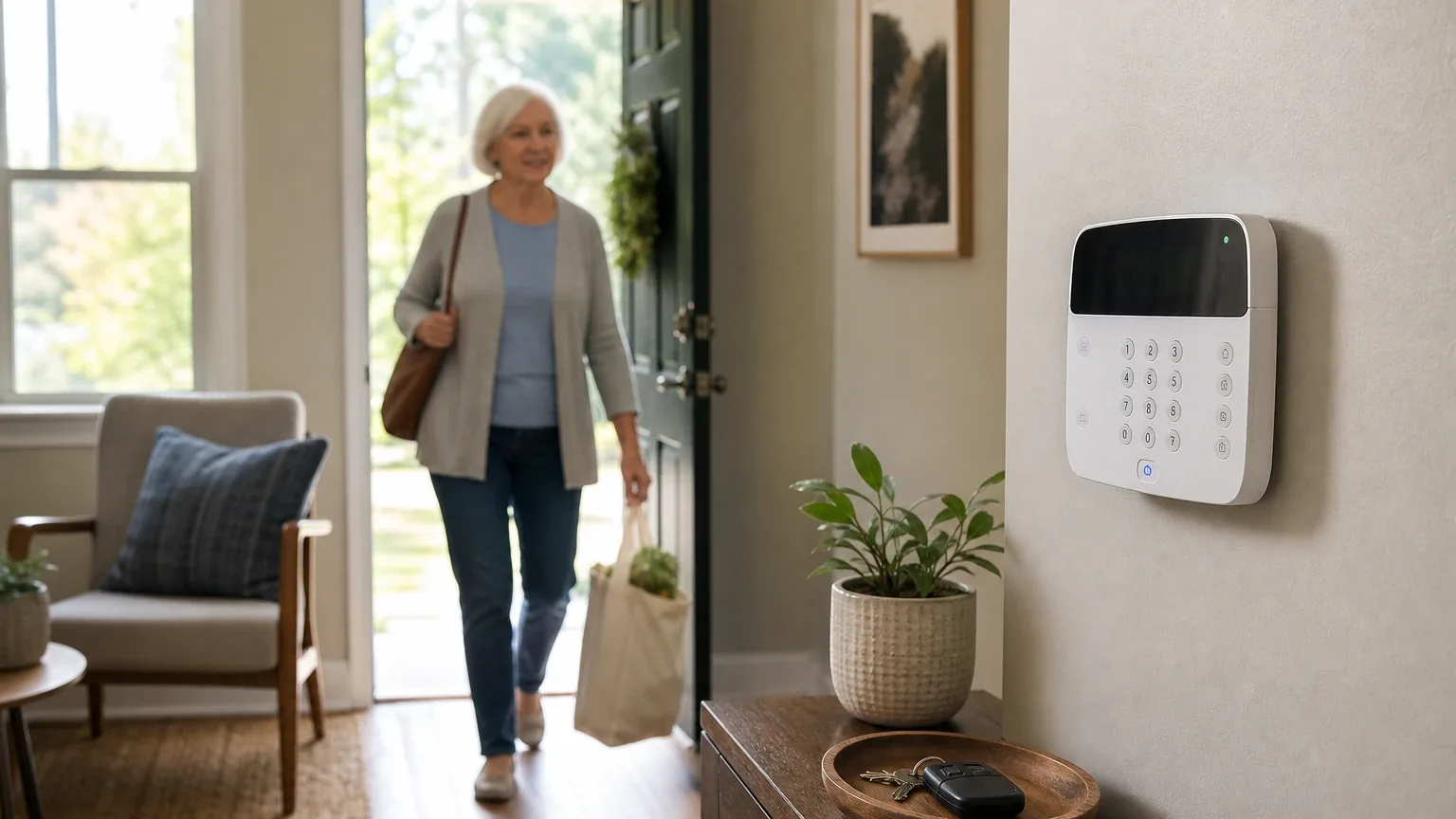
Answer Capsule
Frontpoint is a good, not strong, fit for Senior-Friendly Home Security. Three of the seven platforms in this study named it during the ranking stage, at an average listed rank of 5.67 and a best rank of 5. Its strongest case is a senior who wants conventional professionally monitored home protection plus a wearable Panic Pendant, app and panel panic controls, and caregiver access codes. The main limitation is that Frontpoint is a home-security platform, not a dedicated medical-alert service: the pendant is manually activated, no verified fall detection was found, and public materials do not establish coverage away from the home. Monitoring costs, contract terms, and pendant pricing are also inconsistent across sources.
Research Snapshot
| Field | Detail |
|---|---|
| Platform mentions in ranking stage | 3 of 7 platforms (anthropic, google, openai) |
| Share of included platform responses | 42.9% |
| Average listed rank | 5.67 |
| Best listed rank | 5 (google) |
| Relevant product/model/plan | Frontpoint home security system with professional monitoring, Panic Pendant, app/panel panic controls, and optional professional installation |
| Overall use-case fit | Good (five platforms rated good; two rated mixed) |
| Research date | 2026-11-10 |
What Changed Since September 2026
Frontpoint remained at No. 7, and platform mentions increased from 2 to 3. The November 2026 review still presents Frontpoint as a good but not strong fit, and the essentials of buyer fit and the recommended setup are unchanged. The description is now clearer about what the Panic Pendant is: a manually activated security accessory rather than a medical-alert device, with no verified fall detection. Responsibility for monitoring response is better supported, with one independent test reporting response within 30–45 seconds of an alarm. Reported pricing shifted: $129.99 for professional installation is newly reported, while the $19.99–$29.99 pendant range is no longer repeated. Conflict over installation, contract terms, and health monitoring limits remains unresolved. Differences between the two editions reflect what each article reports; they do not by themselves prove that the product, service, or price changed.
The September 2026 review preserves the earlier article for reference.
Why Frontpoint Qualified for This Study
Questions This Section Answers
- Why did only three of seven AI platforms name Frontpoint for senior-friendly home security?
- Does Frontpoint's ranking position among senior home security systems reflect a real capability gap or a category mismatch?
Frontpoint qualified because three platforms named it during ranking discovery, not because every platform endorsed it. Anthropic, Google, and OpenAI listed it at ranks 6, 5, and 6 respectively, producing the 5.67 average and 42.9% share shown above. The other four platforms — DeepSeek, Grok, Kimi, and Perplexity — produced fit research on Frontpoint but did not name it in the ranking stage, so they are excluded from the mention count.
The qualification rests on a specific capability rather than general brand strength. Independent reviewers describe Frontpoint as standing out for dedicated medical-panic hardware among senior-focused providers, with granular panic functions for fire, police, and medical response [21]. One review ranked it as the best hybrid system for Seniors with an overall score of 8.7 [47].
The ranking position also reflects a category mismatch that recurs throughout the evidence. Frontpoint is a home-security provider that added senior-relevant panic hardware, not a medical-alert company. Reviewers who weighted dedicated medical-alert features, fall detection, or low monthly cost placed it lower or rated it mixed. That tension is the central finding of this review and is explored in the disagreement section below.
The Product, Model, Plan, or Service Most Relevant to Senior-Friendly Home Security
Questions This Section Answers
- Which Frontpoint package should a senior buy if the priority is a wearable panic button with 24/7 monitoring?
- Is the Frontpoint Panic Pendant a medical alert device or a home security accessory?
The relevant configuration is a Frontpoint home security system with professional monitoring, the Panic Pendant, and app or panel panic controls. Frontpoint describes the Panic Pendant as a wireless wearable that sends customizable alerts to the hub and can be worn on the wrist or neck [39]. The pendant is pre-programmed, water-resistant, and has a recessed button designed to reduce false alarms [12].
It is a security accessory, not a certified medical-alert device. An independent senior-focused review states this directly and notes the pendant is manually activated [4]. Another independent review reports the pendant lacks verified fall detection and that senior accessibility remains limited [1]. Frontpoint's own senior-safety materials describe the pendant as a way to call for help by pressing a button, with calls routed to police if the homeowner cannot be reached by the monitoring service [40].
Monitoring runs through the Interactive or Ultimate plans. Frontpoint advertises 24/7 professional monitoring for intrusion, fire, carbon monoxide, and flood events [42]. One platform also describes a separate In-App Safety Button Plan for on-the-go personal safety with GPS location, though whether that plan fills the pendant gap for seniors is unverified [42].
What the AI Platforms Agreed About
Questions This Section Answers
- Do AI platforms agree that Frontpoint's panic pendant and caregiver codes make it suitable for a senior living alone?
- Is Frontpoint's 24/7 monitoring considered reliable across independent reviews?
Agreement was strong on three points and mixed on a fourth.
Panic hardware exists and is senior-relevant. Every platform that examined the pendant confirmed a wearable panic accessory. Frontpoint's help center describes the pendant as pre-programmed, water-resistant, and configurable for police or medical dispatch [12]. Google's research adds that it can be worn on the wrist or neck and triggers after holding the recessed button [30]. Perplexity found the same wearable description in Frontpoint's senior-safety blog [39].
Multiple panic trigger paths. Beyond the pendant, the app exposes panel panic options with a three-second cancellation countdown before transmission to the monitoring station [19]. Keypads include dedicated panic buttons [27]. Reviewers describe panic functions available through keypads, the mobile app, and the Panic Pendant [23].
Caregiver access controls are real. Frontpoint supports named user codes, temporary codes, restricted schedules, device-specific access, and activity visibility showing who used a code and when [18]. One review notes unique codes can be assigned to family members, home health aides, and dog walkers [59]. Another reports smart locks support unique codes for up to 50 users with alerts on who enters [40].
Monitoring responsiveness drew qualified agreement. One independent test reported Frontpoint consistently responded within 30–45 seconds of alarm activation [48]. Frontpoint's monitoring page describes direct calls and dispatch procedures [42]. However, no cited material establishes a binding emergency-response-time guarantee, and actual dispatch depends on local authorities.
Where the AI Platforms Disagreed or Were Uncertain
Questions This Section Answers
- Why do some AI platforms rate Frontpoint as mixed rather than good for senior-friendly home security?
- Does Frontpoint offer professional installation, and why do sources disagree on whether it exists?
The most consequential disagreement is whether Frontpoint offers professional installation at all. Multiple independent reviews describe Frontpoint as DIY-only with no professional option [60]. Frontpoint's own help center refers customers to HelloTech for professional installation starting at $99, with additional charges possible for certain equipment and locations, and notes installation is excluded from the 30-day equipment trial [20]. Google's research confirms the HelloTech partnership at a $99 starting price [34]. One review lists professional installation starting at approximately $129.99 [51]. The current official status is unclear and may depend on region or a recent policy change.
Contract terms conflict sharply. Frontpoint's cancellation help page says the customer's contract controls cancellation and early-termination fees and that a final payment may be required, without publishing a universal contract length or fee schedule [17]. Independent reviews report a 36-month initial term with an 80% early-termination fee [50]. Other sources describe month-to-month plans with no long-term commitment [56]. One platform notes plans range from month-to-month to 36-month contracts depending on equipment discounts and promotions [28].
Pendant activation timing is inconsistent. Frontpoint's official help pages state both a three-second and a five-second button-hold requirement [12]. Buyers should confirm the current interval.
Pendant pricing is unclear. One independent review reports the pendant at $39.99 [46]. Google's research cites approximately $19.99 [30]. The current official pages checked do not clearly publish the pendant equipment price.
Fall detection is unverified. One review questions whether Frontpoint offers fall detection "in the future" but found no confirmation of development or timeline [3]. Another states none of five providers compared offer fall detection as part of home security hardware [21]. Kimi's research states Frontpoint does not offer a panic pendant at all, contradicting the other six platforms [51]; that finding appears to reflect a comparison-table gap rather than the absence of the product, since Frontpoint's own help center documents the pendant.
Fit ratings split five good to two mixed. OpenAI, Anthropic, Google, Grok, and DeepSeek rated Frontpoint good; Perplexity and Kimi rated it mixed. The mixed ratings centered on unverified caregiver controls, unclear professional installation, and contract concerns.
Use-Case-Specific Features and Capabilities
Questions This Section Answers
- How does Frontpoint's Panic Pendant work for a senior who falls and cannot reach a phone?
- Can family caregivers receive alerts and control a senior's Frontpoint system remotely?
Emergency pendant integration. The pendant is a wearable, water-resistant device with a recessed button [12]. Dispatch is set to police by default and can be changed to medical through support [12]. One source reports a 100-foot connection range from the hub [40]; whether that range is line-of-sight or through walls is unclear. The pendant appears designed for in-home use, and public materials checked do not establish nationwide mobile coverage away from the residence.
24/7 monitoring responsiveness. Interactive and Ultimate plans advertise 24/7 professional monitoring [42]. Frontpoint works with the Rapid Response monitoring center [53]. One independent test measured 30–45 second response [48]. Cellular backup keeps monitoring active during power or internet outages [26], and the system includes up to 24 hours of battery backup [44].
Interface simplicity. The app supports remote arm/disarm, panic controls, adjustable panel volume and brightness, troubleshooting prompts, and a 90-day event history [15]. The Display Hub+ supports user codes, panel settings, and trouble-condition alerts [10]. One platform reports the Display Hub+ offers a touchscreen with adjustable font size [14]. The keypad has raised buttons but no braille [54]. Reviewers describe the app as easy to use with a layout that makes sense [50] and note large, clear prompts during setup [51]. One customer review describes an elderly mother able to understand and handle the system very easily [6]. These capabilities may still be more complex than a single-purpose medical-alert device.
Caregiver access controls. Named codes, temporary codes, restricted schedules, and activity visibility are documented [18]. Text and email notifications can go to unlimited recipients [23]. One platform describes AI-driven activity tracking that alerts caregivers about unexpected lapses in routine [25]. Whether caregivers can receive notifications without disarm authority is not clearly documented.
Professional installation options. Frontpoint refers customers to HelloTech, starting at $99, with additional charges possible and exclusion from the equipment trial [20]. DIY installation typically takes 30–90 minutes with peel-and-stick sensors [60]. One survey found 80% of customers found installation easy [37].
Pricing, Fees, Contracts, and Ongoing Costs
Questions This Section Answers
- How much does Frontpoint monitoring cost per month for a senior who needs 24/7 professional response?
- Is Frontpoint's 36-month contract with an 80% early-termination fee real, or can a senior get month-to-month service?
Published monitoring prices cluster around $44.99–$49.99 per month, but the final amount depends on the selected system, equipment, promotions, taxes, and other terms. Frontpoint advertises Interactive Monitoring from $1.48 per day and Ultimate Monitoring from $1.65 per day [42]. Independent reviews report Interactive at $44.99 and Ultimate at $49.99 monthly [56]. One review reports only the Ultimate plan is available online at $49.99 [50]. Another cites promotional rates around $24.99 for new telesales customers [28]. A lower self-monitored video-only plan around $4.99–$14.99 per month appears in some sources but does not include sensor monitoring [56].
Equipment costs vary widely by source. One review lists packages from $130.95 to $1,032.84 [46]. Another lists the Hub and Keypad at $182.99, door/window sensors at $19.79 each, motion sensors at $38.99, and glass-break sensors at $44.99 [61]. An optional touchscreen keypad costs $469.99 [52]. Frontpoint's own site advertises systems starting as low as $59 with a free indoor camera and 50% off equipment [38].
Professional installation through HelloTech starts at $99, with additional fees possible for smart locks, doorbell cameras, outdoor cameras, extra sensors, and location-specific services [20]. Installation is excluded from the equipment trial.
Contract terms are the least settled area. Frontpoint's cancellation page says the contract controls early-termination fees and a final payment may be required [17]. Independent reviews report a 36-month term with an 80% early-termination fee [50]. Other sources describe month-to-month service with no long-term commitment [56]. One platform notes a 30-day risk-free trial with full equipment refund and return shipping included [58]. Buyers should treat the written agreement as controlling.
Best Suited For
Questions This Section Answers
- Is Frontpoint a good choice for a senior who wants home intrusion monitoring plus a wearable panic button in one system?
- Which seniors benefit most from Frontpoint's caregiver access codes and activity history?
Frontpoint fits best when the senior wants conventional home protection and emergency assistance in one monitored system. The strongest case is a household where intrusion, fire, carbon-monoxide, and flood monitoring matter alongside a wearable panic pendant [42]. A senior living independently with adult children or aides who need separate access codes, activity visibility, and app notifications is also well served [18].
It also suits buyers comfortable with a DIY-first system who are willing to pay for third-party installation if needed [20]. One review describes Frontpoint as the best DIY system for non-technical buyers [58], and another notes older adults give it extra points for reliability and fast, friendly customer service [59].
Budget matters. Frontpoint is a reasonable fit for seniors with moderate to higher budgets who can absorb $44.99–$49.99 monthly monitoring for peace of mind [56].
Probably Not Best Suited For
Questions This Section Answers
- Is Frontpoint a poor choice for a senior who needs automatic fall detection?
- Should a cost-sensitive senior avoid Frontpoint because of its monthly monitoring fees?
Frontpoint is probably not the best fit when the primary need is a dedicated medical-alert service. The pendant requires a manual button press, and no verified public claim of fall detection exists [4]. Seniors who need guaranteed two-way voice from a pendant or emergency coverage away from the home should look elsewhere.
Cost-sensitive buyers should also look carefully. Monitoring at $44.99–$49.99 per month is roughly double SimpliSafe's $22.99 [56]. One review describes Frontpoint's monitoring as on the upper end of the industry [49]. Buyers who require fully transparent, no-contract pricing before speaking with sales will find the quote-based model frustrating [17].
Seniors who cannot manage app-based setup or multiple security modes may find the system unnecessarily complex. One platform notes the product combines many home-security and automation functions that may be more than a senior needing only emergency assistance requires [15]. The keypad lacks braille, which limits accessibility for visually impaired users [54].
When Another Option May Be Better
Questions This Section Answers
- When is a dedicated medical-alert provider a better choice than Frontpoint for a senior living alone?
- Is SimpliSafe a better senior home security option than Frontpoint when monthly cost is the deciding factor?
A dedicated medical-alert provider may be better when fall detection, cellular portability, two-way voice, or an emergency response center focused primarily on senior medical alerts matters more than intrusion protection. A simpler professionally installed alarm may be better when the senior cannot manage app-based setup, Wi-Fi-dependent features, or multiple security modes.
SimpliSafe and Ring may be better when monthly cost is the deciding factor. One review reports SimpliSafe professional monitoring at $22.99 versus Frontpoint at $44.99 [56]. Another reports Frontpoint costs $20–$30 more per month than SimpliSafe and Ring for comparable service [24].
A more transparent month-to-month provider may be better when avoiding possible contract obligations or early-termination fees is a priority [22]. Buyers who want white-glove, in-house professional installation included out of the box may prefer ADT or Vivint.
For a broader comparison across providers, see the Senior-Friendly Home Security consensus index.
Questions to Verify Before Buying
Questions This Section Answers
- What should a senior confirm about Frontpoint's Panic Pendant price and activation timing before signing?
- What contract and cancellation terms should a buyer get in writing from Frontpoint before committing?
Confirm the following before signing:
- Is the Panic Pendant currently available with the exact system package being quoted, and what is its one-time price? Sources conflict between $19.99 and $39.99 [30].
- Does the pendant work throughout the entire home, including bathrooms, basements, and yards, and what happens if it is outside hub range? One source cites a 100-foot range [40].
- What is the correct activation hold time: three seconds or five seconds [12]?
- Can dispatch be set to medical, police, or another response type, and is that setting available in the buyer's jurisdiction [12]?
- What monitoring response procedure applies after a pendant activation, including call order, passcodes, and caregiver contacts [42]?
- What is the exact monthly monitoring price after equipment, promotions, taxes, and fees [42]?
- Is the agreement month-to-month or term-based, and what are the exact early-termination charges [17]?
- What professional installation price applies to the complete package, and does the technician train the senior and caregiver [20]?
- Can caregivers receive notifications without receiving authority to disarm the system or unlock doors [18]?
- Does the system provide any fall detection, cellular backup, or emergency coverage outside the home [1]?
Final AI Consensus Verdict
Frontpoint is a good, not strong, fit for Senior-Friendly Home Security. Five of seven platforms rated it good and two rated it mixed. The consensus case is a senior who wants monitored home protection plus a wearable panic pendant and caregiver access controls in one system. The consensus limitation is that Frontpoint is not a dedicated medical-alert service: the pendant is manually activated, fall detection is unverified, and coverage away from the home is not established.
The unresolved issues are practical rather than conceptual. Contract length and early-termination fees conflict across sources. Pendant pricing is unclear. Professional installation availability is disputed. Monitoring costs sit at the upper end of the market. Buyers who can verify these terms in writing and who value integrated panic hardware over lowest cost will find a coherent fit. Buyers whose priority is fall detection, mobile medical alert coverage, or the lowest monthly fee should compare dedicated medical-alert providers and lower-cost security systems first.
How This Review Was Produced
This review draws on fit-research responses from seven AI platforms — OpenAI, Anthropic, Google, Grok, DeepSeek, Kimi, and Perplexity — each asked to evaluate Frontpoint for Senior-Friendly Home Security. Three platforms named Frontpoint during ranking discovery; all seven produced fit research. Platform responses were synthesized into the sections above, with company-owned sources distinguished from independent reviews. No personal testing, customer experience, or independent verification was performed. Citations reflect platform-reported evidence. The research date is 2026-11-10.
Methodology Limitations
Platform-reported research dates differ from the authoritative run date. DeepSeek's response is dated 2026-02-10, while the other six platforms and the run date are 2026-11-10. DeepSeek also ran without search enabled, so its claims require explicit verification before being treated as current facts.
The supplied URLs were collected from platform responses and were not independently validated. Citations are platform-reported evidence, not independently verified facts. Platform agreement does not prove product quality.
Several material conflicts remain unresolved: contract length and early-termination fees, pendant pricing, professional installation availability, and pendant activation timing. Missing research was not treated as disagreement. Where a platform supplied no citation for a factual claim, that claim is labeled platform-reported or unverified rather than presented as established.
Explore more home safety guidance in the category directory.
Sources
Company-Owned Sources
- Complete Guide to Frontpoint's Display Hub+ Gen 2: https://help.frontpointsecurity.com/en/display-hub-plusgen2complete-guide
- How do I trigger an alarm from my Panic Pendant?: https://help.frontpointsecurity.com/en/panic-pendant/How-do-I-trigger-an-alarm-from-my-Panic-Pendant-4222
- How does the Panic Pendant work?: https://help.frontpointsecurity.com/en/panic-pendant/How-does-the-Panic-Pendant-work-1025
- Panic Pendant Master Guide - the Frontpoint Help Center: https://help.frontpointsecurity.com/en/panic-pendant/Panic-Pendant-Master-Guide-461e
- Supporting your parents into their golden years and beyond: https://help.frontpointsecurity.com/en/supportingyourparents
- Frontpoint App Features: https://help.frontpointsecurity.com/en/system-and-account/Frontpoint-App-Features
- How can a user code only be given access at certain times?: https://help.frontpointsecurity.com/en/system-and-account/How-can-a-user-code-only-be-given-access-at-certain-times
- How do I cancel my Frontpoint service?: https://help.frontpointsecurity.com/en/system-and-account/How-do-I-cancel-my-Frontpoint-service-ae73
- How do I create new or temporary User Codes with the Frontpoint app?: https://help.frontpointsecurity.com/en/system-and-account/How-do-I-create-new-or-temporary-User-Codes-with-the-Frontpoint-app-8ea4
- How do I trigger a panic alarm from the app on my phone?: https://help.frontpointsecurity.com/en/system-and-account/How-do-I-trigger-a-panic-alarm-from-the-app-on-my-phone-ad5
- Professional Installation Services: https://help.frontpointsecurity.com/en/system-and-account/professional-installation-services
- Smart Home Security Systems for Senior Safety: https://vertexaisearch.cloud.google.com/grounding-api-redirect/AUZIYQEbsIoR3_kqcwEKX7JdMrVBWXVUTCE-EKBvLwWcsbPTstf6G40E1hHXl_aa3rd4BGZXbsBKde3Nd1au5HjnOlMhqk7OPQeP35xBsjfzwuhdXFb-KFJeUZkgqG1wQ7zUVT8vbvV5lURKKKY2it8CjYewnU7p5aPZPtSkoYk57-ShPsc3bxctOEy3uTLm
- 9 Really Cool Features - The Frontpoint Security App: https://vertexaisearch.cloud.google.com/grounding-api-redirect/AUZIYQFXer_I7AUNQjrMMhLBvKTJcIgxUGh7j-domkvPqzHKV9uQWyVEfAB-R9l1h5vwoadha6EPLRl6LfAAoHoG4qQYBT-F2AMgaHDvPxueH9T8XaQdOk9wDUriTkStu8OHwRosG-sJ8Kf6Gen6VETFpjaTYdWq6SjWytRu9gcFoW96-AMmKy0=
- How does the Panic Pendant work? - the Frontpoint Help Center: https://vertexaisearch.cloud.google.com/grounding-api-redirect/AUZIYQGJ7ZK9_6To1SxYyLjAV6yHrL8z3V7aNh_tVRgNqPOa-1ZtXcpcTNOk4_DhG1zJwjn0bTIpm4Nrh-gewuHSx-RCVDf3Q8T4VhkfkUkS1Q67RWQGvePODZmAZiq8FIHrcfnP3BIS4h56QyH8kZ-0eH1BHGQwTbgvg8hlQ7QEAqy2OrHtpMQUbGsqXXtg1BsB7g==
- Professional Installation Services - the Frontpoint Help Center: https://vertexaisearch.cloud.google.com/grounding-api-redirect/AUZIYQHSqZ2iCDL9SpuwCu0yTPcNJ0R2Fn7Fo-T50J0tFITHVQpXc8AsPpQT1RNURZIskhWeKtK4jvvZoJHbCgAgWWdGYrUD7yysuIZq6eSUOCtsn3VxofRrNcZZ9djJIJt0wxLzbvdE16vFjbYpr4I4t6LnVEa4f7OgqiihYKpOIFouW3QyMet7SfQFj-vfOeY6ofBXOg==
- Frontpoint Official Website: https://www.frontpointsecurity.com
- Home Automation for Seniors: Safety, Security & Convenience: https://www.frontpointsecurity.com/blog/home-automation-for-seniors-safety-security-convenience
- Security Systems for Senior Safety: https://www.frontpointsecurity.com/blog/senior-safety-and-smart-home-security-systems
- 5 Ways to Support Your Parents Aging In Place: https://www.frontpointsecurity.com/blog/supporting-your-parents-aging-in-place
- Frontpoint Monitoring Plans: https://www.frontpointsecurity.com/monitoring/
- Offer Details: https://www.frontpointsecurity.com/offer-details
- Shop Home and Smart Security Systems: https://www.frontpointsecurity.com/shop
- Official pricing and terms source: https://www.frontpointsecurity.com/terms-of-use
- Official pricing and terms source: https://www.frontpointsecurity.com/sms-terms-of-service
Independent Sources
- Frontpoint Security Review for Senior DIY Setup: https://aginginplaceindex.com/home-safety/diy-senior-friendly-security-setup/frontpoint-security
- Best No-Contract Home Security Systems for Seniors (2026: https://aginginplaceindex.com/home-safety/flexible-month-to-month-home-security
- Best Home Security Systems With Medical Alerts (2026: https://aginginplaceindex.com/home-safety/security-plus-emergency-response
- Frontpoint Review for Senior Home Security: https://aginginplaceindex.com/home-safety/senior-friendly-home-security/frontpoint
- Frontpoint: 2026 Expert Review: https://bestcompany.com/home-security/frontpoint
- Frontpoint: Read 3,203 User Reviews From Real Homeowners: https://bestcompany.com/home-security/frontpoint/reviews
- Best Home Security Systems for Seniors (2026): Simple, No Contract: https://circuitandchime.com/home-security-systems/seniors
- Frontpoint Home Security System Cost & Pricing in 2026: https://dev.security.org/home-security-systems/frontpoint/
- Frontpoint Home Security Review: https://dev.security.org/home-security-systems/frontpoint/review/
- Best Home Security Systems for Seniors in 2026: https://home-security-guide.systeme.io/best-home-security-systems-for-seniors
- Is Frontpoint Worth It? Cost, Contract and Equipment: https://homesecurityradar.com/guides/is-frontpoint-worth-it
- Frontpoint Home Security System Review 2026: Expert Tested: https://realestate.usnews.com/home-services/home-security-systems/frontpoint
- Frontpoint Review 2026: Is It Worth the Price?: https://top-home-security.com/frontpoint-review/
- Frontpoint Home Security System Cost & Pricing in 2026: https://vertexaisearch.cloud.google.com/grounding-api-redirect/AUZIYQEtrTN55tpRJ8RRtfKk_6JpLX-thj9ORDlKhDYrqSTrx9oeIPx5EbZejqwyv4L5FzwkrMsDXZtQdtiDsh5HqkLC65Di5gH7NpvVA75_KmYJzoXVEtPRtNJDnhlD9OF5PLmrCEt4t8tdHoaIcp8YUe9G
- Frontpoint Home Security - Review 2024 - PCMag Middle East: https://vertexaisearch.cloud.google.com/grounding-api-redirect/AUZIYQFGsD6Twa_SwBdJUBtsSy8EeNJVOAjwc5MXjPdHqiw9Ly09Vp1WYPLo0HQ2_jUOU6iEqEoT3EPKrRB7ioaH-Mfa-4C66Gng9-d_vYgw1WWJ5oMXr_RMKsjXaKt24uc7GwfCGFSNIi125pwNyQLtgtPg1xtTrF1zbZ4B9A==
- Front Point Security Review: The Simplest Home Security System for Newbies: https://vertexaisearch.cloud.google.com/grounding-api-redirect/AUZIYQGsAFRSXB2WToKR1uT2cgG9Z7Xjq8AVXDRE4EZ-ExdbZgtulgH1RU4qTksPg6lymq3ENzRWLzlkfb5YxYiA6DWd999U4YWBF_cL4O2N9SKKTWK4_4XbRdMjI_uq0-DtvD_krT1uS77PSF09BttVdcopg6oCPWw=
- Frontpoint Medical Alert System Review – 2022 | National Council For Home Safety and Security: https://vertexaisearch.cloud.google.com/grounding-api-redirect/AUZIYQHF4cpqB1O8dX0HSZyjDPysAAKhGuXeBnp0lOmlg7UAWF6NoywAbrkx6RESBVApR9ndkLjNcqVWkukzR157-CGpucSzXaQYU73r2L8xusqV-_GSJTOEbH7YMTwO8NiOBMSQqtowZD9lL6-07VHUqrGmiewGuQ==
- Frontpoint – Apps on Google Play: https://vertexaisearch.cloud.google.com/grounding-api-redirect/AUZIYQHNkUT3kv16l17j5E1sp0VZS3C5gAfI3NLyFzRZFwyks6DuG2BOYNtQPXuSAwzKOgi4N3E54Vay3ezF1LnPskQk3qkEOIuTBxEo81j3eLFPrho2xWxyOdFx9AcxWYjoNfZEwDK1vb2z-yWll6pbFnynIUtdo4oQg01cNOi9dpOxoj1qwpwDzEGK8HGJwz0Oj3FX-5BueJFzu_Fn78snhHdm
- Frontpoint Medical Alert System Review: https://www.alarms.org/frontpoint-medical-alert-system-review/
- Frontpoint Reviews from Real Customers: https://www.consumeraffairs.com/homeowners/frontpoint-security.html?page=9
- Frontpoint Home Security Review: https://www.forbes.com/home-improvement/home-security/frontpoint-home-security-review/
- Frontpoint Home Security Systems - 2025 Review: https://www.homeowner.com/home-security/frontpoint/
- Frontpoint Review (2026): With Costs: https://www.retirementliving.com/reviews/frontpoint-home-security-systems
- Best Home Security Systems for Seniors in 2026: https://www.safehome.org/security-systems/best/elderly/
- Best Home Security Companies With Fast Response Times in 2026: https://www.safehome.org/security-systems/best/response-times/
- Frontpoint Home Security Package Costs & Pricing Plans in 2026: https://www.safehome.org/security-systems/frontpoint/
- Frontpoint Security System: Our 2026 Hands-On Review: https://www.safehome.org/security-systems/frontpoint/reviews/
- 7 Best Home Security Systems of 2026 | Reviewed and Tested by Experts: https://www.safewise.com/home-security-systems/best/
- Frontpoint Home Security Review 2026: https://www.safewise.com/home-security-systems/frontpoint/
- Frontpoint Security Frequently Asked Questions: https://www.safewise.com/home-security-systems/frontpoint/faq/
- Frontpoint Installation Guide: https://www.safewise.com/home-security-systems/frontpoint/install/
- Best Home Security Systems for Seniors in 2026: https://www.security.org/home-security-systems/best/seniors/
- Frontpoint Home Security System Cost & Pricing in 2026: https://www.security.org/home-security-systems/frontpoint/
- Frontpoint Home Security 2026 Review: https://www.security.org/home-security-systems/frontpoint/review/
- Frontpoint Review 2026: Pricing, Features & Real-World Testing: https://www.securitysystemsreview.com/reviews/frontpoint/
- Best Home Security Systems for Seniors in 2026: https://www.seniorliving.org/home-security/best/
- Frontpoint Home Security Review: https://www.thisoldhouse.com/home-safety/frontpoint-home-security-review
- Frontpoint Home Security System Review 2026: Plans & Pricing: https://www.top10.com/home-security/reviews/frontpoint-security
Verify This Research
Review the study details behind this page or download the public machine-readable verification record.
- Study date
- November 10, 2026
- Platforms analyzed
- 7
- Source records
- 63
- Ranking mentions
- 3 of 7
- Platform share
- 43%
- Final consensus rank
- #7
Research trail and source mix
Configured platforms
openai, anthropic, deepseek, grok, perplexity, kimi, google
Source mix
38 independent · 25 company-owned
Evidence support
24 direct · 8 partial
Important limitation
Use the run research_date as the study date. Platform-reported dates are provenance metadata and do not independently prove freshness.
Source snapshot SHA-256 1025defe1cdc3400b2ef0e6d5b981f8ed588cdb1f995b726b875e7e8a7ca4cd9
Archived editions
Browse earlier published research snapshots for this article. The latest edition remains at the current URL.