
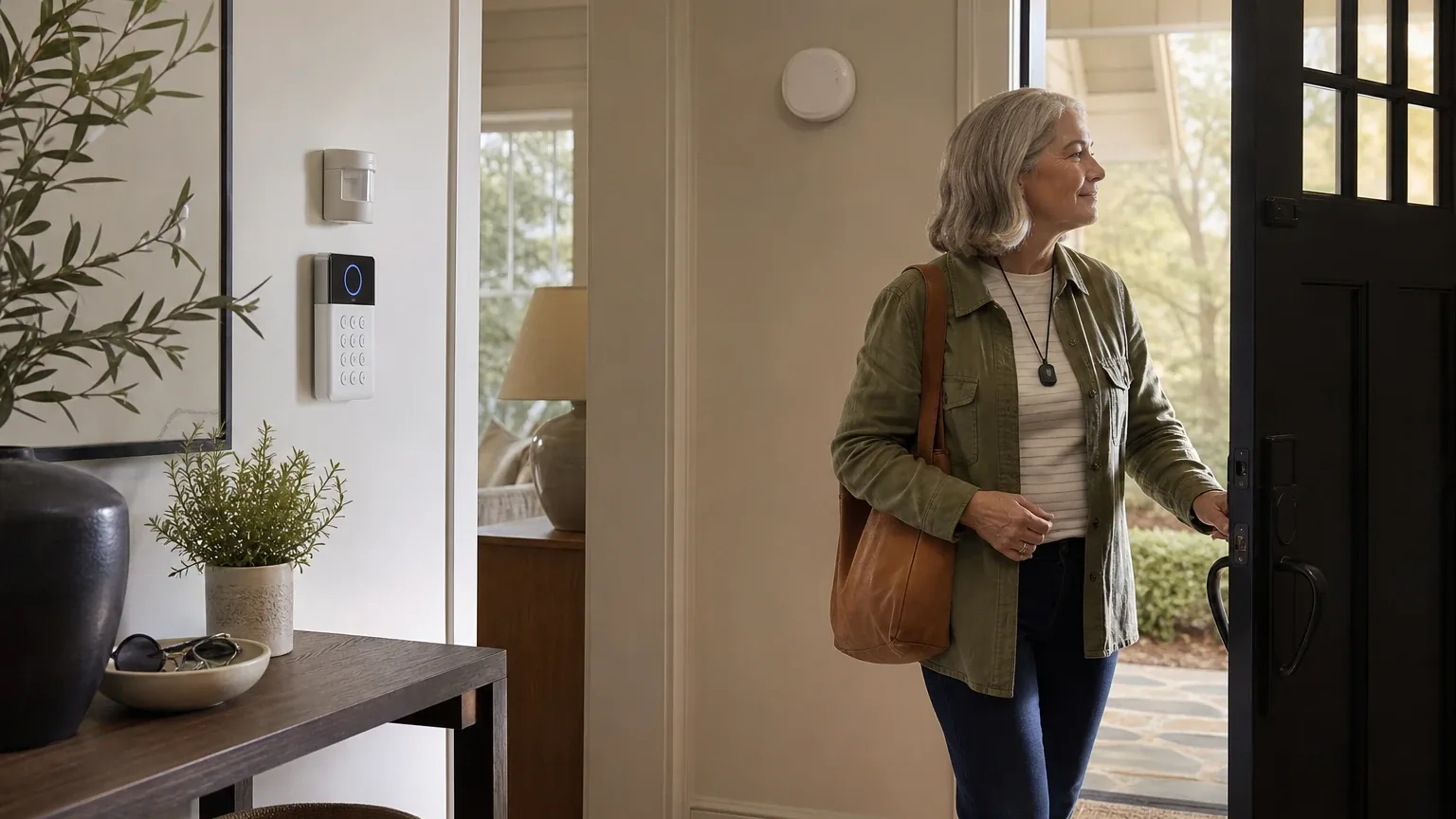
Answer Capsule
ADT Health leads the September 2026 consensus ranking for Security Plus Emergency Response, followed by Medical Guardian and Bay Alarm Medical. The current study includes 7 valid AI-platform responses and 10 qualifying entities. Compared with August 2026, the leader changed. The current list added ADT Health, Medical Guardian, Bay Alarm Medical, Medical Alert, MobileHelp, Lifeline HomeSafe Cellular Medical Alert System, and Frontpoint and removed ADT, Bay Alarm Company, SimplyHome, Roku Smart Home, and ecobee. This is an immediately preceding-month comparison. Rank movement measures changes in this collection of standardized AI-platform responses. It is not product testing, customer-review evidence, or proof that a provider's underlying quality improved or declined.
What Changed Since August 2026
This comparison uses the immediately preceding completed month.
ADT Health remained No. 1 in September 2026. It was named by 6 platforms, compared with not ranked in August 2026. Both studies used 7 valid platform responses.
The largest downward moves were Vivint (down 4), SimpliSafe (down 3), and Ring (down 3).
The current qualifying set added ADT Health, Medical Guardian, Bay Alarm Medical, Medical Alert, MobileHelp, Lifeline HomeSafe Cellular Medical Alert System, and Frontpoint. It no longer includes ADT, Bay Alarm Company, SimplyHome, Roku Smart Home, and ecobee from the earlier top group. Entry or exit reflects the minimum-mention rule and the current response set, not a product launch, discontinuation, or quality finding.
| Current rank | Entity | Previous rank | Rank movement | Current mentions | Previous mentions | Mention change |
|---|---|---|---|---|---|---|
| 1 | ADT Health | — | New | 6 | — | — |
| 2 | Medical Guardian | — | New | 5 | — | — |
| 3 | Bay Alarm Medical | — | New | 4 | — | — |
| 4 | SimpliSafe | 1 | Down 3 | 4 | 4 | +0 |
| 5 | Medical Alert | — | New | 3 | — | — |
| 6 | MobileHelp | — | New | 3 | — | — |
| 7 | Vivint | 3 | Down 4 | 2 | 3 | -1 |
| 8 | Lifeline HomeSafe Cellular Medical Alert System | — | New | 2 | — | — |
| 9 | Frontpoint | — | New | 2 | — | — |
| 10 | Ring | 7 | Down 3 | 2 | 2 | +0 |
| — | ADT | 2 | Exited | — | 3 | — |
| — | Bay Alarm Company | 4 | Exited | — | 3 | — |
| — | SimplyHome | 5 | Exited | — | 2 | — |
| — | Roku Smart Home | 6 | Exited | — | 2 | — |
| — | ecobee | 8 | Exited | — | 2 | — |
The table is calculated directly from the two stored ranking datasets. Positive rank movement means an entity moved closer to No. 1; mention change shows the difference in the number of included platform responses naming it.
The August 2026 edition preserves the complete earlier ranking and methodology for reference.
Research Snapshot
- Topic: Best home safety systems for Security Plus Emergency Response (burglary protection combined with panic buttons, emergency dispatch, or medical alert accessories)
- Target buyer: Aging-in-place households in the United States seeking one system that combines burglary protection with panic buttons, emergency dispatch, or medical alert accessories
- Platforms included (7): OpenAI, Anthropic, DeepSeek, Grok, Perplexity, Kimi, Google
- Research date: 2026-09-27 (authoritative run date)
- Unique entities named: 28
- Qualifying entities: 10
- Eligibility rule: Named by at least two platforms during ranking discovery
- Ranking unit: Security system package and service provider
Platform mentions count only ranking-discovery mentions. All 7 platforms completed fit assessments, but a platform that did not name an entity during ranking discovery does not add to that entity's mention count.
The Consensus Ranking
Questions This Section Answers
- What are the best home safety systems for Security Plus Emergency Response in 2026?
- Which security-plus-medical-alert provider was named by the most AI platforms?
- Which ranked provider has the best average listed position across platforms?
The order above is the supplied final ranking. It is based on platform mentions first, then average listed rank, then best listed rank. Bay Alarm Medical's 1.25 average is the lowest in the study, but it qualified on fewer platforms than ADT Health and Medical Guardian, which is why it ranks third rather than first.
| Rank | Entity | Platform mentions | Share of platform responses | Average listed position | Best position | Best considered for |
|---|---|---|---|---|---|---|
| 1 | ADT Health | 6 | 85.7% | 2.33 | 1 | Households wanting one established provider for professionally monitored burglary protection and a separately purchased medical-alert service.; Aging-in-place users needing an in-home cellular alert system with extended range or a mobile GPS alert device.; Buyers who prefer month-to-month medical-alert service and can verify local cellular coverage. |
| 2 | Medical Guardian | 5 | 71.4% | 4.2 | 2 | Aging-in-place households prioritizing 24/7 medical-alert monitoring and dispatch.; Households wanting wearable, water-resistant panic buttons, optional fall detection, and caregiver communication.; Users needing in-home cellular coverage or mobile GPS coverage without a traditional landline. |
| 3 | Bay Alarm Medical | 4 | 57.1% | 1.25 | 1 | Aging-in-place households prioritizing medical-alert response and simple wearable panic buttons; Homes needing cellular in-home monitoring without a landline; Households wanting optional fall detection and, with mobile products, caregiver location and battery notifications |
| 4 | SimpliSafe | 4 | 57.1% | 3.5 | 2 | Households needing one no-contract system for burglary, fire, environmental alerts, and a fixed-location medical panic button.; Users who can reliably reach a wall-mounted button and want professional monitoring to request EMS dispatch.; Buyers prioritizing integrated home security and relatively predictable monitoring costs over dedicated medical-alert wearables. |
| 5 | Medical Alert | 3 | 42.9% | 4.0 | 3 | Aging-in-place households primarily needing 24/7 personal emergency response at home; Households wanting a cellular base station, wearable help button, optional fall detection, and caregiver notifications; Buyers who do not need one provider to manage burglary detection and medical emergencies |
| 6 | MobileHelp | 3 | 42.9% | 6.0 | 4 | Aging-in-place households primarily seeking 24/7 medical alert monitoring and panic-button coverage.; Households needing optional fall detection, caregiver notifications, or GPS-enabled help outside the home.; Buyers who want no long-term contract and cellular operation without a landline. |
| 7 | Vivint | 2 | 28.6% | 4.0 | 2 | Households prioritizing integrated burglary, fire, environmental, and panic-alarm monitoring.; Older adults who can reach the Vivint Emergency Pendant and communicate through the in-home Smart Hub.; Families wanting monitoring personnel to contact designated account contacts after an emergency signal. |
| 8 | Lifeline HomeSafe Cellular Medical Alert System | 2 | 28.6% | 4.0 | 3 | Aging-in-place households prioritizing medical emergency response and in-home panic-button access; Households willing to pair medical alert with a separate burglar-alarm provider; Users who want cellular connectivity, two-way voice communication, and optional fall detection |
| 9 | Frontpoint | 2 | 28.6% | 4.5 | 1 | Households wanting one professionally monitored security system with a wearable emergency button.; Aging-in-place buyers who can use a pendant or keychain-style control and primarily need emergency dispatch rather than a dedicated medical-alert call-center experience.; Families that value app-based notifications to relatives or caregivers alongside burglary, fire, and panic monitoring. |
| 10 | Ring | 2 | 28.6% | 4.5 | 4 | Households wanting DIY burglary protection with a fixed panic button and app-based caregiver notifications.; Buyers who accept a subscription-based monitored alarm service and want one button configurable for panic, medical, or fire response.; Homes where residents can reliably access stationary panic buttons on nightstands or walls |
Which Option Is Best for Which Version of the Buyer Need?
Questions This Section Answers
- Which home safety system should a buyer choose for Security Plus Emergency Response if they need one provider for burglary and medical alerts?
- Is a dedicated medical-alert provider or an integrated security system better for an aging-in-place household that wants a wearable panic button?
- Which ranked option is best for a household that wants no long-term contract?
| Buyer need | Best-ranked fit | Why | Main tradeoff |
|---|---|---|---|
| One brand for monitored burglary plus medical alert | ADT Health (rank 1) | ADT sells Pro-Protect home-security monitoring and Medical Alert Plus/On-The-Go under one corporate provider [e1:openai:c5] | A unified security-plus-medical platform was not verified; the two lines are billed and monitored separately [e1:anthropic:adt-health-terms-conditions] |
| Medical-alert-first with caregiver coordination | Medical Guardian (rank 2) | Care Circle portal, optional fall detection, 24/7 U.S. |
1. ADT Health
Questions This Section Answers
- Is ADT Health worth it for Security Plus Emergency Response, and what are its main drawbacks?
- Does ADT Health integrate home security and medical alerts into one system or one app?
- What does ADT Health cost per month for Medical Alert Plus and On-The-Go?
ADT Health is the consensus leader because it is the only ranked entity that pairs a nationally monitored burglary system with a well-documented medical-alert line under one corporate provider. Six of seven platforms named it, and four of those placed it first or second. The verdict across platforms is consistently "mixed": strong on monitoring infrastructure and month-to-month medical-alert terms, unproven on true integration.
Why it ranked here. ADT Health earned the highest mention count (6 of 7 platforms) and a 2.33 average listed position. OpenAI, Grok, and Perplexity each placed it first; Kimi placed it second; DeepSeek third; Google sixth. No platform described it as a poor medical-alert product — the disagreement is about whether it satisfies the "one system" framing of this use case.
Best suited for. Households that want one established provider for professionally monitored burglary protection plus a separately purchased medical-alert service; aging-in-place users needing an in-home cellular alert system with extended range or a mobile GPS alert device; buyers who prefer month-to-month medical-alert service and can verify local cellular coverage.
Main strengths for the use case. Medical Alert Plus includes a waterproof personal help button with pendant or wristband options, waterproof wall buttons, and optional fall-detection pendants, with a stated 600-foot range from the base [e1:openai:c2]. On-The-Go adds GPS location and two-way voice for away-from-home use [e1:perplexity:C5]. ADT's Pro-Protect plan advertises 24/7 professional monitoring and emergency-service contact when an alarm triggers, displayed from $24.99 per month [e1:openai:c5]. Anthropic-reported evidence describes senior-sensitivity-trained monitoring staff and an average response time of 30 seconds or less, plus up to 7 additional paired accessories [e1:anthropic:adt-health-faqs]. Medical-alert service is described as month-to-month with no termination fee [e1:openai:c1].
Main limitations. The medical-alert service is expressly not an intrusion-detection system or a 911 medical response service [e1:anthropic:adt-health-terms-conditions]. A unified security-plus-medical-alert product, shared app workflow, or documented cross-system dispatch protocol was not verified [e1:openai:c1]. Google reported that ADT Health lacks a dedicated caregiver companion app and that security and medical-alert hardware use separate base stations, linked only at the MyADT portal level for billing [e1:google:1.1.3].
2. Medical Guardian
Questions This Section Answers
- Is Medical Guardian worth it for Security Plus Emergency Response if the household needs fall detection and caregiver alerts?
- Does Medical Guardian provide burglary protection or door and window sensors?
- What is the lowest published monthly cost for Medical Guardian, and what fees apply?
Medical Guardian is the strongest medical-alert-first option in the study and the second-most-named entity. Five platforms named it, with ranks ranging from second (DeepSeek) to eighth (Kimi). The consistent verdict is that it excels at the emergency-response half of this use case and does not supply the burglary half.
Why it ranked here. Medical Guardian earned 5 platform mentions (71.4%) and a 4.20 average listed position. DeepSeek placed it second, Grok third, Anthropic and OpenAI fourth, and Kimi eighth. The spread reflects a genuine split: platforms that weighted medical-alert capability ranked it high, while platforms that weighted integrated security ranked it low.
Best suited for. Aging-in-place households prioritizing 24/7 medical-alert monitoring and dispatch; households wanting wearable, water-resistant panic buttons, optional fall detection, and caregiver communication; users needing in-home cellular coverage or mobile GPS coverage without a traditional landline.
Main strengths for the use case. MGHome Cellular uses 4G LTE with a stated 1,400-foot wearable-to-base range and a backup battery rated up to 32 hours [e2:openai:c1]. The monitoring center is described as UL Certified, 100% U.S.-based, TMA Five Diamond and ESA Security certified, and able to dispatch EMTs, police, fire, mental-health services, or a designated Care Circle contact [e2:anthropic:c6]. The MyGuardian portal and app support Care Circle contacts, messaging, task coordination, and caregiver connection [e2:openai:c3]. Guardian Flex adds GPS, two-way voice, and a stated battery life of up to five days [e2:openai:c4]. Google reported average operator response times close to 10 seconds or less [e2:google:1.1.2].
Main limitations. The reviewed product pages document medical-alert buttons, monitoring, caregiver tools, fall detection, GPS, and cellular connectivity, but do not document door/window sensors, intrusion alarms, cameras, professional burglary monitoring, or a defined integration with a separately purchased home-security system [e2:openai:c6]. Anthropic found no documented API, integration standard, or pre-built partnerships with major security providers [e2:anthropic:c2]. Fall detection is an optional add-on, not a universal included feature [e2:openai:c2]. Grok and Kimi both rated the fit "weak" specifically because burglary protection is absent [e2:grok:0].
3. Bay Alarm Medical
Questions This Section Answers
- Is Bay Alarm Medical better than ADT Health for a household that only needs medical alert response?
- Does Bay Alarm Medical offer burglary protection or door and window sensors?
- Which Bay Alarm Medical plan has the lowest published monthly cost, and what does fall detection add?
Bay Alarm Medical holds the best average listed position in the entire study at 1.25, but it qualified on only 4 platforms, which places it third overall. Every platform that named it ranked it first or second. The verdict is that it is an excellent medical-alert provider and an incomplete answer to the "security plus" framing.
Why it ranked here. Bay Alarm Medical earned 4 platform mentions (57.1%) with ranks of 1 (Anthropic), 1 (DeepSeek), 1 (Kimi), and 2 (Perplexity). Its 1.25 average is the lowest in the study. It ranks below ADT Health and Medical Guardian only because fewer platforms named it during ranking discovery.
Best suited for. Aging-in-place households prioritizing medical-alert response and simple wearable panic buttons; homes needing cellular in-home monitoring without a landline; households wanting optional fall detection and, with mobile products, caregiver location and battery notifications.
Main strengths for the use case. SOS Home includes one wearable waterproof panic button with a stated 1,000-foot range, with additional buttons at $35 each and wall-mounted button packs at $6/month for two or $10/month for four [e3:anthropic:c2]. Monitoring is described as 24/7, USA-based, UL-Listed, and CSAA 5-Diamond Certified [e3:anthropic:c6]. Grok reported a sub-45-second response claim and medical-history sharing [e3:grok:0]. Caregiver Tracking on SOS All-In-One 2 includes location, device status, battery information, and low-battery notifications [e3:openai:c4]. A spouse or additional household member can receive complimentary monitoring when a second button is purchased [e3:perplexity:c2].
Main limitations. The evaluated Bay Alarm Medical pages describe medical-alert and personal-emergency-response functions, not door/window sensors, intrusion detection, burglary alarm dispatch, cameras, or a unified residential security panel [e3:openai:c6]. Bay Alarm separately advertises residential security services, but the sources do not verify that Bay Alarm Medical products integrate with them [e3:openai:c6]. Google reported that Bay Alarm Medical and Bay Alarm are separate entities and that the security arm is geographically restricted mainly to California, Arizona, and Washington [e3:google:1.1.1].
4. SimpliSafe
Questions This Section Answers
- Is SimpliSafe worth it for Security Plus Emergency Response if the resident can reach a wall-mounted button?
- Does the SimpliSafe Panic Button work as a medical alert device, and can it be set to Medical mode?
- What does SimpliSafe cost per month for monitoring that includes medical dispatch?
SimpliSafe is the highest-ranked option that genuinely combines burglary sensors with a configurable medical panic button on one no-contract platform. Four platforms named it, with ranks of 2 (Grok), 3 (OpenAI), 4 (DeepSeek), and 5 (Google). The verdict is "good" on three platforms and "mixed" on four.
Why it ranked here. SimpliSafe earned 4 platform mentions (57.1%) and a 3.50 average listed position. Grok placed it second, OpenAI third, DeepSeek fourth, and Google fifth. It ranks below Bay Alarm Medical because its average listed position is higher, despite matching on mention count.
Best suited for. Households needing one no-contract system for burglary, fire, environmental alerts, and a fixed-location medical panic button; users who can reliably reach a wall-mounted button and want professional monitoring to request EMS dispatch; buyers prioritizing integrated home security and relatively predictable monitoring costs over dedicated medical-alert wearables.
Main strengths for the use case. The dedicated Panic Button is listed at $19.99 and can be configured to Medical mode, in which the base station announces a Medical Alert and the monitoring operator requests EMS assistance if the user does not answer or requests dispatch [e4:openai:c4]. The button remains active whether the system is armed or disarmed [e4:openai:c1]. Residential Core, Pro, and Pro Plus plans include 24/7 emergency dispatch for break-ins and medical emergencies [e4:openai:c5]. Primary contacts can receive alarm texts on eligible professional plans [e4:openai:c7]. Anthropic reported that if Primary Contacts cannot be reached, the monitoring center contacts Secondary Contacts and escalates to emergency services, and that panic-button alarms cannot be cancelled via app or text. No long-term contract is advertised [e4:openai:c6].
Main limitations. The dedicated Panic Button is primarily a fixed indoor button, not a purpose-built wearable medical-alert device; no verified fall detection, GPS, out-of-home coverage, or two-way voice through a medical pendant was found [e4:openai:c11]. Silent Panic Button alarms suppress the normal alarm text and phone-call confirmation [e4:openai:c8]. The user must hold the button for two seconds, and the device requires periodic battery maintenance [e4:openai:c1].
What Changed Since August 2026
SimpliSafe moved down from No. 1 to No. 4, and platform mentions were unchanged at 4. The September 2026 article reframes SimpliSafe around the dedicated Panic Button rather than a broader panic-button range, describing a device listed at $19.99 that can be set to Medical mode, works whether the system is armed or disarmed, and must be held for two seconds. Buyers still get a no-contract, professionally monitored system covering burglary, fire, environmental alerts, and medical dispatch, but the fit is now explicitly fixed-indoor-button users rather than wearable seekers. The earlier write-up's monitoring prices of $79.99/month and $49.99/month are not repeated in the current section, and the key fob ranges of 30 feet and 50 feet no longer appear. Differences between the two editions reflect what each article reports; they do not by themselves prove that the product, service, or price changed.
5. Medical Alert
Questions This Section Answers
- Is Medical Alert worth it for Security Plus Emergency Response, and what are its main drawbacks?
- Does Medical Alert provide burglary protection or intrusion sensors?
- What is the exact monthly cost for the Medical Alert Home System Cellular with fall detection?
Medical Alert is a dedicated personal emergency response provider that qualified on 3 platforms. Perplexity rated it "good," Anthropic and DeepSeek rated it "mixed," and Google, Grok, Kimi, and OpenAI rated it "weak." The consistent finding is that it handles the medical half well and does not address burglary at all.
Why it ranked here. Medical Alert earned 3 platform mentions (42.9%) and a 4.00 average listed position, with ranks of 3 (Perplexity), 4 (Kimi), and 5 (Anthropic). It ranks below SimpliSafe because SimpliSafe combines burglary protection with a panic button while Medical Alert does not.
Best suited for. Aging-in-place households primarily needing 24/7 personal emergency response at home; households wanting a cellular base station, wearable help button, optional fall detection, and caregiver notifications; buyers who do not need one provider to manage burglary detection and medical emergencies.
Main strengths for the use case. The Home System includes a waterproof wearable help button usable as a pendant or wristband, with additional neck or wrist buttons available [e5:openai:c1]. The system uses cellular connectivity with up to 800 feet of button-to-base coverage and a stated backup battery of up to 30 hours [e5:openai:c1]. The Medical Alert Connect app provides real-time push notifications to subscribers and emergency contacts when calls connect to the response center, and can notify users about a home-system backup-battery condition [e5:openai:c3]. Google reported TMA Five Diamond-certified monitoring centers and a free caregiver app with real-time emergency push alerts [e5:google:3.2.5]. Optional fall detection is available at $10/month [e5:perplexity:c3].
Main limitations. The reviewed Home System materials describe medical-alert buttons, fall detection, monitoring, and a lockbox, but do not identify door/window sensors, intrusion detection, security alarms, security cameras, or burglary-response monitoring [e5:openai:c1]. Google stated that Medical Alert devices focus strictly on personal emergency response and do not include traditional home security components, and that the company recommends separate self-installed wireless home security systems [e5:google:1.3.8]. Kimi found no integration with home security systems or smart home platforms [e5:kimi:medicalalert-home].
6. MobileHelp
Questions This Section Answers
- Is MobileHelp worth it for Security Plus Emergency Response if the household needs mobile GPS coverage?
- Does MobileHelp offer burglary protection or integration with a home security system?
- What is the exact monthly cost for MobileHelp Classic and Elite, and does fall detection cost extra?
MobileHelp qualified on 3 platforms with a 6.00 average listed position, the highest (worst) average in the study. Perplexity, Anthropic, and DeepSeek rated it "mixed"; Google, Grok, Kimi, and OpenAI rated it "weak." The verdict is that it is a capable medical-alert service and not a security system.
Why it ranked here. MobileHelp earned 3 platform mentions (42.9%) with ranks of 4 (Perplexity), 5 (Kimi), and 9 (Anthropic). Its 6.00 average is the highest in the study, which places it sixth despite tying Medical Alert on mention count.
Best suited for. Aging-in-place households primarily seeking 24/7 medical alert monitoring and panic-button coverage; households needing optional fall detection, caregiver notifications, or GPS-enabled help outside the home; buyers who want no long-term contract and cellular operation without a landline.
Main strengths for the use case. Classic Cellular is intended for in-home use, requires no landline, uses AT&T cellular service, and advertises up to 1,400 feet of in-home coverage [e6:openai:c2]. Elite uses AT&T 4G LTE with GPS and Wi-Fi-assisted location [e6:official:C1]. MobileHelp advertises U.S.-based 24/7 monitoring with operator connection in as little as 10 seconds [e6:openai:c5]. MobileHelp Connect provides system-status, non-emergency, and emergency alerts, Care Circle management, caregiver collaboration, and location requests for supported mobile GPS systems [e6:openai:c6]. The optional Fall Button is compatible with Duo and Classic systems and can manually send an alert [e6:openai:c4].
Main limitations. The reviewed product materials describe medical-alert systems, help buttons, fall detection, GPS, and emergency operators; they do not document burglary sensors, intrusion detection, alarm sirens, or professional security-alarm monitoring [e6:openai:c1]. Google stated that MobileHelp has no door/window sensors, motion detectors, sirens, or video surveillance integration [e6:google:source_safehome_guide]. Kimi found no integration with smart home security devices or platforms [e6:kimi:mobilehelp-products-2026]. The terms state that MobileHelp is not an insurer and limit company liability to $1,000 in the circumstances described [e6:openai:c1]. Fall detection does not detect every fall and may send false alerts [e6:official:C2].
7. Vivint
Questions This Section Answers
- Is Vivint worth it for Security Plus Emergency Response if the household wants a wearable pendant on a monitored security system?
- Does the Vivint Emergency Pendant support fall detection or work in the shower?
- What is the exact contract length and early-termination cost for a Vivint system with the Emergency Pendant?
Vivint qualified on only 2 platforms but earned a 4.00 average listed position, with OpenAI placing it second and DeepSeek sixth. Grok rated the fit "strong," OpenAI, Anthropic, and Google rated it "good," and DeepSeek, Kimi, and Perplexity rated it "mixed." It is the highest-ranked option that combines professionally installed burglary protection with a wearable emergency pendant.
Why it ranked here. Vivint earned 2 platform mentions (28.6%) with ranks of 2 (OpenAI) and 6 (DeepSeek). It ranks seventh because it qualified on fewer platforms than the six entities above it, despite a competitive average position.
Best suited for. Households prioritizing integrated burglary, fire, environmental, and panic-alarm monitoring; older adults who can reach the Vivint Emergency Pendant and communicate through the in-home Smart Hub; families wanting monitoring personnel to contact designated account contacts after an emergency signal.
Main strengths for the use case. The Emergency Pendant triggers an emergency alarm when held for approximately 2–3 seconds, signals the Smart Hub, alerts the 24/7 monitoring team, and prompts two-way contact through the panel [e7:openai:c2]. HomeProtect includes a Smart Hub, door/window sensors, motion detection, keypad, and professional monitoring [e7:openai:c4]. Anthropic reported that monitoring is provided by U.S.-based in-house specialists rather than outsourced staff, with ASAP-to-PSAP protocols [e7:anthropic:c6]. Vivint advertises a complimentary Emergency Pendant for qualifying new customers aged 75 or older [e7:openai:c6]. The Smart Hub includes cellular connection and a 4-hour backup battery [e7:anthropic:c7].
Main limitations. Vivint support documentation states that the pendant operates within approximately 300 feet of the panel in open space and is water-resistant but should not be submerged or worn in the shower [e7:openai:c1]. The reviewed materials do not verify fall detection, automatic health-event detection, pendant-based two-way voice, or medical-alert functionality away from the Smart Hub [e7:openai:c2]. Google reported that the pendant does not feature automatic fall detection and cannot be worn in the tub or shower [e7:google:1.1.2]. Kimi reported that the pendant is not optimized as a wearable medical device and that battery and waterproofing specifications are unclear [e7:kimi:c2].
What Changed Since August 2026
Vivint moved down from No. 3 to No. 7, and platform mentions decreased from 3 to 2. The September 2026 article recasts Vivint as the highest-ranked option pairing professionally installed burglary protection with a wearable pendant, while the August write-up framed it more broadly as a full smart-home system for intrusion, fire, cameras, and panic alarms. The current strengths section emphasizes the pendant triggering an alarm when held for 2–3 seconds and signaling the Smart Hub; the earlier article instead highlighted its necklace, wristband, belt-clip, and wall-mount wearing options. The prior write-up cited monitoring at $24.99–$39.99/month, a $349.99 HomeProtect package, and a $34.99 pendant add-on; those figures are no longer repeated, and a 36–60 month contract length also disappears. Fall detection and shower use remain limitations. Differences between the two editions reflect what each article reports; they do not by themselves prove that the product, service, or price changed.
8. Lifeline HomeSafe Cellular Medical Alert System
Read the full Lifeline HomeSafe Cellular Medical Alert System fit review for supporting evidence and buying considerations.
Lifeline HomeSafe Cellular qualified on 2 platforms with a 4.00 average listed position, ranked third by Anthropic and fifth by OpenAI. Anthropic, DeepSeek, OpenAI, and Perplexity rated it "mixed"; Google, Grok, and Kimi rated it "weak." It is a clinically oriented medical-alert system with no security component.
Why it ranked here. Lifeline earned 2 platform mentions (28.6%) with ranks of 3 (Anthropic) and 5 (OpenAI). It ranks eighth because it qualified on fewer platforms than the seven entities above it.
Best suited for. Aging-in-place households prioritizing medical emergency response and in-home panic-button access; households willing to pair medical alert with a separate burglar-alarm provider; users who want cellular connectivity, two-way voice communication, and optional fall detection.
Main strengths for the use case. HomeSafe includes a waterproof wearable help button available as a pendant or wristband, with a stated 800-foot range from the in-home communicator and a 30-hour backup battery [e8:openai:c1]. Lifeline states that HomeSafe provides access to a professionally trained, multilingual response center 24/7/365 through a cellular communicator [e8:openai:c1]. The setup guide states that if the operator cannot get a response or cannot hear the user, help will be dispatched to the address on file [e8:openai:c6]. Google reported an average response time of approximately 12 seconds in independent testing and a My Lifeline caregiver app [e8:google:odecare_2026_fall]. Optional fall detection is available [e8:openai:c1].
Main limitations. The HomeSafe product page documents medical-alert functionality, a wearable help button, communicator, fall detection, and emergency response; it does not document door/window sensors, motion sensors, burglar-alarm arming, intrusion verification, or integrated security-system monitoring [e8:openai:c1]. Google stated that Lifeline provides no burglary protection, motion sensors, door/window sensors, or security camera integrations. Kimi found no evidence of integration with burglary alarm systems or environmental sensors [e8:kimi:securityplus-ug]. Fall detection is not guaranteed to detect every fall [e8:openai:c1]. The exact caregiver-app capabilities and alert-notification behavior for the selected plan are not fully specified on the reviewed product page [e8:openai:c1].
Pricing or cost summary. HomeSafe service starts at $34.95/month with an annual plan [e8:openai:c1].
9. Frontpoint
Questions This Section Answers
- Is Frontpoint worth it for Security Plus Emergency Response if the household wants a wearable panic pendant with medical dispatch?
- Does the Frontpoint Panic Pendant support fall detection or work outside the home?
- What is the exact early-termination cost on a Frontpoint 36-month monitoring contract?
Frontpoint qualified on 2 platforms but earned the best single position in the study: Google ranked it first, while DeepSeek ranked it eighth. Anthropic, Google, Grok, and OpenAI rated the fit "good"; DeepSeek, Kimi, and Perplexity rated it "mixed." It is the strongest security-first option with a wearable panic pendant.
Why it ranked here. Frontpoint earned 2 platform mentions (28.6%) with ranks of 1 (Google) and 8 (DeepSeek), producing a 4.50 average. It ranks ninth because it qualified on fewer platforms than the eight entities above it.
Best suited for. Households wanting one professionally monitored security system with a wearable emergency button; aging-in-place buyers who can use a pendant or keychain-style control and primarily need emergency dispatch rather than a dedicated medical-alert call-center experience; families that value app-based notifications to relatives or caregivers alongside burglary, fire, and panic monitoring.
Main strengths for the use case. The Panic Pendant is water-resistant, uses a recessed button intended to reduce false alarms, and activates after holding for three seconds; it is set to police dispatch by default but can be changed to medical dispatch through Frontpoint support [e9:openai:c1]. The system also supports panic functions through the keypad, keychain remote, and mobile app [e9:openai:c3]. Frontpoint states that its paid professional-monitoring plans use live, North America-based agents available 24/7/365 [e9:openai:c5]. Google reported that Frontpoint integrates with RapidSOS, which transmits pre-configured health profiles including allergies and medical conditions to first responders [e9:google:1.2.1]. Anthropic reported a Personalized Emergency Response feature added in February 2024 that stores medical information at no additional charge [e9:anthropic:c11]. Google also reported an AI Engine that tracks household routines and can alert caregivers to unusual activity or inactivity [e9:google:1.3.4].
Main limitations. Public documentation reviewed does not state that the Panic Pendant provides two-way voice communication, fall detection, GPS location, or automatic health-event detection [e9:openai:c1]. The Panic Pendant has a non-replaceable battery; Frontpoint recommends purchasing a replacement when the device reports low battery [e9:openai:c6]. Medical dispatch is not the default and must be requested [e9:openai:c1].
10. Ring
Questions This Section Answers
- Is Ring worth it for Security Plus Emergency Response if the household wants the lowest-cost monitored panic button?
- Does the Ring Panic Button support medical dispatch, and can it be worn as a pendant?
- What does Ring Protect Pro cost per month, and does Ring guarantee emergency dispatch?
Ring qualified on 2 platforms with a 4.50 average listed position, ranked fourth by Google and fifth by DeepSeek. Anthropic and Grok rated the fit "good"; DeepSeek, Google, Kimi, OpenAI, and Perplexity rated it "mixed." It is the lowest-cost monitored panic-button option in the study.
Why it ranked here. Ring earned 2 platform mentions (28.6%) with ranks of 4 (Google) and 5 (DeepSeek). It ranks tenth because it qualified on fewer platforms than the nine entities above it, despite a competitive average position.
Best suited for. Households wanting DIY burglary protection with a fixed panic button and app-based caregiver notifications; buyers who accept a subscription-based monitored alarm service and want one button configurable for panic, medical, or fire response; homes where residents can reliably access stationary panic buttons on nightstands or walls.
Main strengths for the use case. The Panic Button (2nd Gen) is listed at $29.99, requires a three-second press, and can be configured in the app for Panic, Medical, or Fire response [e10:openai:c2]. Ring Protect Pro is listed at $19.99/month or $199.99/year and includes 24/7 Professional Monitoring for compatible Ring Alarm systems [e10:openai:c3]. The button can notify shared users through the Ring app, and emergency contacts can be added for monitoring and SOS workflows [e10:openai:c1]. Google reported that when set to Medical, the button routes requests directly for medical dispatch and that the protective flip cover reduces accidental presses [e10:google:1.1.7]. Grok reported that the button works regardless of alarm armed state and that no long-term contract applies [e10:grok:6]. Ring states that compatible professional monitoring is available in all 50 U.S. states, excluding U.S. territories [e10:openai:c1].
Main limitations. The reviewed Ring materials do not document fall detection, a wearable medical-alert pendant, health monitoring, or automatic detection of a medical event; the button is a fixed Z-Wave accessory intended to be placed or mounted within range of the base station [e10:openai:c1]. Ring's terms state that Ring requests dispatch rather than directly dispatching emergency services, and dispatch is not guaranteed [e10:openai:c6].
What Changed Since August 2026
Ring moved down from No. 7 to No. 10, and platform mentions were unchanged at 2. The September 2026 article shifts the framing from Ring Alarm Pro as a combined alarm-and-response system to Ring as the lowest-cost monitored panic-button option in the study, aimed at households that accept a subscription service and can reach stationary buttons. It no longer recommends a specific configuration, so buyers must assemble one. The current article newly reports the Panic Button at $29.99 and Ring Protect Pro at $19.99/month; the earlier kit range of $209.99–$299 is not repeated. Subscription details, the three-second press, Medical routing, and the fixed-button limitation carry over, as does the caveat that dispatch is requested, not guaranteed. Differences between the two editions reflect what each article reports; they do not by themselves prove that the product, service, or price changed.
What the Cross-Platform Study Reveals About This Market
Questions This Section Answers
- What do AI platforms agree on about home safety systems that combine security with medical alert features?
- Why do so few home safety systems for Security Plus Emergency Response offer true burglary-plus-medical integration?
The single most consistent finding across all 7 platforms is that no ranked entity was verified as a true all-in-one security-plus-medical-alert platform. Every entity in this index is either a medical-alert provider that lacks burglary detection or a security provider whose medical capability is a configurable panic button rather than a purpose-built medical-alert service.
The second consistent finding is that the "security plus emergency response" framing is aspirational rather than descriptive. ADT Health, the consensus leader, was described by six of seven platforms as a mixed fit specifically because its security and medical-alert lines operate separately [e1:openai:c1][e1:anthropic:adt-health-terms-conditions][e1:kimi:adt-newsroom-1]. Medical Guardian, Bay Alarm Medical, Medical Alert, MobileHelp, and Lifeline HomeSafe Cellular were all described as medical-alert products that require a separately purchased security system [e2:openai:c6][e3:openai:c6][e5:openai:c1][e6:openai:c1][e8:openai:c1].
Where the AI Platforms Agreed
Questions This Section Answers
- Which home safety systems for Security Plus Emergency Response do all AI platforms agree are medical-alert-only?
- Do AI platforms agree that any ranked system provides verified burglary-plus-medical integration?
Platforms agreed on several points with unusual consistency.
Medical-alert-only entities. Medical Guardian, Bay Alarm Medical, Medical Alert, MobileHelp, and Lifeline HomeSafe Cellular were all described across platforms as medical-alert providers without native burglary detection [e2:openai:c6][e3:openai:c6][e5:openai:c1][e6:openai:c1][e8:openai:c1]. No platform claimed any of these five provides door/window sensors, intrusion monitoring, or professional burglary dispatch.
Security-first entities. SimpliSafe, Vivint, Frontpoint, and Ring were all described as security systems whose medical capability is a panic button rather than a dedicated medical-alert service [e4:openai:c11][e7:openai:c2][e9:openai:c1][e10:openai:c1]. No platform claimed any of these four provides fall detection, wearable medical pendants, or specialized senior-care monitoring.
No verified unified platform. No platform verified a single product that combines burglary sensors, professional intrusion monitoring, and a purpose-built medical-alert ecosystem with documented cross-system dispatch. This was stated explicitly for ADT Health by OpenAI, Anthropic, Kimi, and Perplexity [e1:openai:c1][e1:anthropic:adt-health-terms-conditions][e1:kimi:adt-newsroom-1][e1:perplexity:C15].
Where the AI Platforms Disagreed
Questions This Section Answers
- Why do AI platforms disagree about whether Bay Alarm Medical and Frontpoint are strong fits for Security Plus Emergency Response?
- Which ranked home safety system has the most conflicting pricing and contract information across AI platforms?
Disagreements in this study are substantive and worth understanding before purchase.
Bay Alarm Medical: strong versus weak. Grok rated the fit "strong" and described the system as covering "basic home protection via wearable buttons" [e3:grok:0]. Kimi rated it "weak" because it lacks integrated burglary protection, guard response, and smart-home controls [e3:kimi:no_bay_alarm_source]. The disagreement is about whether a wearable panic button that can summon police during a break-in counts as "home protection."
Frontpoint: first place versus eighth place. Google ranked Frontpoint first overall [e9:google:1.2.1], while DeepSeek ranked it eighth [e9:deepseek:FP-PRICING]. Google emphasized RapidSOS health-profile integration and AI caregiver alerts; DeepSeek emphasized quote-based pricing and unverified medical-specific escalation.
Contract terms. Kimi reported month-to-month monitoring with no long-term contract for Frontpoint [e9:kimi:frontpoint_contract_2026], while OpenAI, Anthropic, Google, Grok, and Perplexity all reported a 36-month contract with an 80% early-termination formula [e9:openai:c5][e9:anthropic:c8][e9:google:1.2.3].
How Buyers Should Choose
Questions This Section Answers
- What should a buyer check before choosing a home safety system for Security Plus Emergency Response?
- Which home safety system for Security Plus Emergency Response has the lowest published total cost?
Start by deciding which half of the use case is primary. If burglary protection is primary and medical response is secondary, the security-first options (SimpliSafe, Vivint, Frontpoint, Ring) put intrusion sensors and professional monitoring in one platform, with a panic button as the medical interface. If medical response is primary and burglary protection is secondary or already handled, the medical-alert-first options (Medical Guardian, Bay Alarm Medical, Medical Alert, MobileHelp, Lifeline) provide wearable buttons, fall detection, and caregiver tools that security systems do not.
If the buyer genuinely needs both in one contract, ADT Health is the consensus starting point because it is the only ranked entity that sells both lines under one corporate provider [e1:openai:c5]. But the buyer must verify in writing whether the two lines share an account, an app, a monitoring center, and a dispatch protocol, because no platform verified that they do [e1:openai:c1][e1:anthropic:adt-health-terms-conditions].
Methodology
This index was produced from a single standardized prompt sent once to each of 7 included AI platforms on the authoritative run date of 2026-09-27. The platforms were OpenAI, Anthropic, DeepSeek, Grok, Perplexity, Kimi, and Google. Each platform was asked to identify the best home safety systems for Security Plus Emergency Response for aging-in-place households in the United States.
Ranking discovery produced 28 unique entities. Entities named by at least two platforms qualified for the final index, producing 10 qualifying entities. The final ranking order is based on platform mentions first, then average listed position, then best listed position. The supplied final ranking table is the sole authority for rank, platform mentions, platform share, average rank, and best rank.
Each qualifying entity was then evaluated against seven configured criteria: panic button availability, medical alert accessory support, 24/7 monitoring, emergency escalation protocol, caregiver notifications, contract terms, and equipment cost. Fit assessments were collected from all 7 platforms for each qualifying entity where the platform produced one.
Platform mentions count only ranking-discovery mentions. A platform that completed a fit assessment but did not name an entity during ranking discovery does not add to that entity's mention count.
Citations are platform-reported evidence, not independently verified facts.
Methodology Limitations
This study used one standardized prompt sent once to each included platform. AI answers can vary by date, wording, location, account state, model, interface, browsing configuration, and the sources retrieved. A single run cannot capture that variance.
Platform-reported research dates differ from the authoritative run date. Anthropic reported 2026-01-09 for ADT Health and 2025-01-27 for SimpliSafe; DeepSeek reported 2026-05-11 for ADT Health and 2026-06-16 for Medical Guardian. These are provenance metadata and do not independently prove freshness.
Company-owned citations materially outnumber independent citations. Across the study, owned sources outnumbered independent sources for every ranked entity. Company claims should not be described as independently verified.
Official-site retrieval failed for one or more mentions of ADT Health, Medical Guardian, SimpliSafe, and Medical Alert. No failed fetch was used as a verified domain key, and affected findings are treated as to-verify.
The supplied URLs were collected from platform responses and were not independently validated by the writer stage.
Platform recommendations are market intelligence, not independent customer reviews or proof of quality. No platform's ranking should be read as a quality certification.
Several entities show direct conflicts between marketing pages and terms pages on contract length, cancellation fees, and pricing.
Final Verdict
ADT Health is the consensus leader for Security Plus Emergency Response, named by 6 of 7 platforms at an average listed position of 2.33. It is the only ranked entity that sells professionally monitored burglary protection and a well-documented medical-alert line under one corporate provider, and its medical-alert service carries month-to-month terms with no termination fee [e1:openai:c1][e1:openai:c5]. Its central weakness is that no platform verified a unified security-plus-medical platform, shared app workflow, or documented cross-system dispatch protocol [e1:openai:c1][e1:anthropic:adt-health-terms-conditions].
Medical Guardian is the strongest medical-alert-first alternative, with Care Circle caregiver coordination, optional fall detection, and 24/7 U.S.-based monitoring [e2:anthropic:c2][e2:anthropic:c6]. Bay Alarm Medical holds the best average listed position in the study at 1.25 and the lowest published entry price at $27.95/month for landline service [e3:perplexity:c4]. SimpliSafe is the best no-contract option that combines burglary sensors with a configurable medical panic button [e4:openai:c4][e4:openai:c6]. Vivint and Frontpoint are the strongest options for buyers who want a wearable pendant on a professionally installed or professionally monitored security system [e7:openai:c2][e9:openai:c1].
Frequently Asked Questions
Is there a single home safety system that combines burglary protection and medical alerts in one verified platform?
No ranked entity was verified as a true all-in-one platform. ADT Health sells both lines under one corporate provider but the two operate separately [e1:openai:c1][e1:anthropic:adt-health-terms-conditions]. SimpliSafe, Vivint, Frontpoint, and Ring combine burglary sensors with a panic button but not with a dedicated medical-alert ecosystem [e4:openai:c11][e7:openai:c2][e9:openai:c1][e10:openai:c1].
Which ranked system has the lowest published monthly cost?
Bay Alarm Medical SOS Home Landline at $27.95/month [e3:perplexity:c4], Medical Alert Home System at $29.95/month on annual billing [e5:openai:c1], and MobileHelp Classic Home at $29.95/month [e6:openai:c8] are the lowest medical-alert entry points. Ring Protect Pro at $19.99/month is the lowest monitored security entry point, but it requires a Ring Alarm base station [e10:openai:c3].
Do any ranked systems include fall detection at no extra cost?
No.
Consolidated Sources
Company-Owned Sources
- Alarm Monitoring and Emergency Response – Security Plus: http://securityplus.co.ug/alarm-monitoring-and-response/
- Why You Need Home Security...: https://blog.ring.com/home-security/why-alarm-monitoring-is-worth-it/
- ADT Medical Alert Support: https://help.adt.com/adt-medical-alert
- ADT Smart Home Security- Emergency and Duress: https://help.adt.com/article/adt-Smart-Home-Security-Panic-and-Duress
- ADT Medical Alert- On-The-Go MD5 Unit: https://help.adt.com/article/Medical-Alert-On-The-Go-MD5-Unit
- ADT Medical Alert- Plus System (4G Cellular): CBS5: https://help.adt.com/article/Medical-Alert-Plus-System-4G-Cellular-CBS5
- ADT Medical Alert- Service Billing FAQs: https://help.adt.com/article/Medical-Alert-Service-Billing-FAQs
- ADT Medical Alert- Health and Medical Alert FAQs: https://help.adt.com/s/article/Health-and-Medical-Alert-FAQs
- Linking ADT Medical Alert and ADT Home Security Accounts in MyADT: https://help.adt.com/s/article/Linking-ADT-Medical-Alert-and-ADT-Home-Security-Accounts-in-MyADT
- How to trigger a panic alarm from the Keychain Remote: https://help.frontpointsecurity.com/en/keychain-remote/How-to-trigger-a-panic-alarm-from-the-Keychain-Remote-ded
- How do I add medical information to my account? | Help Center: https://help.frontpointsecurity.com/en/my-frontpoint-account/addmedical
- How does the Panic Pendant work?: https://help.frontpointsecurity.com/en/panic-pendant/How-does-the-Panic-Pendant-work-1025
- My Panic Pendant is reporting low battery: https://help.frontpointsecurity.com/en/panic-pendant/low-battery
- Panic Pendant Master Guide | Help Center: https://help.frontpointsecurity.com/en/panic-pendant/Panic-Pendant-Master-Guide-461e
- Frontpoint's Personal Safety System | Help Center: https://help.frontpointsecurity.com/en/PersonalSafetySystem
- Frontpoint App Features: https://help.frontpointsecurity.com/en/system-and-account/Frontpoint-App-Features
- Adding medical information to your account | Help Center: https://help.frontpointsecurity.com/en/system-and-account/How-do-I-add-medical-information-to-my-account-486b
- How do I cancel my Frontpoint service? | System and Account: https://help.frontpointsecurity.com/en/system-and-account/How-do-I-cancel-my-Frontpoint-service-ae73
- How do I trigger a panic alarm from the app on my phone?: https://help.frontpointsecurity.com/en/system-and-account/How-do-I-trigger-a-panic-alarm-from-the-app-on-my-phone-ad5
- 24/7 Alarm Response Services | KeyPlus: https://keyplus.co.uk/services/alarm-response-services/
- Frontpoint Keypad - Shop: https://my.frontpointsecurity.com/shop/store1/control-panels/frontpoint-keypad-20
- ADT Health: Simple tools and 24/7 monitoring provide peace of mind for those aging in place — and their children - ADT: https://newsroom.adt.com/adt-health/how-adt-health-simple-tools-and-24-7-monitoring-provide-peace-of-mind-for-those-aging-in-place-and-their-children
- When Caregiving Gets Hard, ADT Technology Can Help Soften the Edges: https://newsroom.adt.com/adt-health/when-caregiving-gets-hard-adt-technology-can-help-soften-the-edges
- Medical Alert Call Systems by MobileHelp: https://offers.mobilehelp.com/medical-alert-call-systems/
- Panic Button (2nd Gen): https://pa.ring.com/products/panic-button-v2
- Emergency Event and Professional Monitoring Terms: https://partners.ring.com/alarm-terms
- Enrolling in 24/7 Professional Monitoring: https://partners.ring.com/support/articles/ls86j/enrolling-in-alarm-professional-monitoring?redirect=true
- Emergency Response Services - Reliable Security Plus: https://reliablesecurityplus.com/service/emergency-response-services/
- Official pricing and terms source: https://ring.com
- Ring and Alexa – Ring: https://ring.com/alexa
- Ring App | Ring: https://ring.com/app
- Alarm Panic Button | Smart Home Security: https://ring.com/ca/en/products/panic-button
- Ring Sensors and Alarms: https://ring.com/collections/home-security-systems
- Install and use your Ring Alarm Panic Button: https://ring.com/gb/en/support/articles/4hg0k/Installing-and-using-Ring-Alarm-Panic-Button-2nd-Gen
- Ring Protect Subscription Plans: https://ring.com/plans
- Ring Panic Button | Ring: https://ring.com/products/panic-button
- Panic Button (2nd Gen) | Ring: https://ring.com/products/panic-button-v2
- Panic Button (Newest Model) Ring Sensors: https://ring.com/products/panic-button-v3
- Ring Panic Button – Ring: https://ring.com/products/ring-alarm-panic-button
- Ring Alarm Security System | Ring: https://ring.com/products/ring-alarm-security-system
- Professional Installation for Ring – Ring: https://ring.com/professional-installation
- Ring Protect Plans | Ring: https://ring.com/protect-plans
- Ring Protect Pro Plan – Ring: https://ring.com/protect-pro
- Installing and using Panic Button (1st Gen): https://ring.com/support/articles/4c4mp/Installing-and-using-Panic-Button-1st-Gen
- Installing and using Ring Alarm Panic Button (2nd Gen): https://ring.com/support/articles/4hg0k/Installing-and-using-Ring-Alarm-Panic-Button-2nd-Gen
- Panic Button (2nd Gen) Customizable Settings and Options: https://ring.com/support/articles/f4ll3/Panic-Button-2nd-Generation-Customizable-Settings-and-Options
- Panic Button (2nd Gen) FAQ: https://ring.com/support/articles/td3zm/Ring-Alarm-Panic-Button-Gen-2-FAQ
- Using the SOS Button in the Ring app: https://ring.com/support/articles/x6hn2/Using-the-SOS-Button-in-the-Ring-App
- Showing results for cancel-for - Ring: https://ring.com/support/articles?query=cancel-for
- Ring Terms of Service: https://ring.com/terms
- Installing and using Ring Alarm Panic Button (2nd Gen): https://ring.com/us/en/support/articles/4hg0k/Panic-Button-Gen-2-Setup-and-Use
- SimpliSafe Official Website: https://simplisafe.com/
- SimpliSafe App Features and Controls: https://simplisafe.com/app/
- Change Monitoring: https://simplisafe.com/change-monitoring
- 24/7 Professional Security Alarm Monitoring: https://simplisafe.com/features-alarm-monitoring
- The Hearth - 9 Piece Wireless Security System: https://simplisafe.com/home-security-system-hearth?sku=SS3-35
- SimpliSafe Terms of Service: https://simplisafe.com/legal/terms-of-service
- SimpliSafe Monitoring Plans: https://simplisafe.com/monitoring
- SimpliSafe Panic Button: https://simplisafe.com/panic-button
- Ring subscription plan changes in 2026: https://support.ring.com/hc/en-us/articles/29107386616468-Ring-subscription-plan-changes-in-2026
- Adding Shared Users on Ring – Ring Help: https://support.ring.com/hc/en-us/articles/360024462332-Adding-Shared-Users-on-Ring
- Ring Alarm Professional Monitoring – Ring Help: https://support.ring.com/hc/en-us/articles/360024462452-Ring-Alarm-Professional-Monitoring
- Ring 24/7 Professional Monitoring Emergency Response: https://support.ring.com/hc/en-us/articles/360035859671-Professional-Monitoring-Emergency-Response-Protocols
- Using Your Ring Alarm Panic Button – Ring Help: https://support.ring.com/hc/en-us/articles/360038472332-Using-Your-Ring-Alarm-Panic-Button
- How do I Change my Monitoring Plan? - SimpliSafe Support: https://support.simplisafe.com/articles/account-billing/how-do-i-change-my-monitoring-plan
- Alarm Texts for your SimpliSafe System: https://support.simplisafe.com/articles/alarm-event-monitoring/alarm-texts-for-your-simplisafe-system
- What are the Residential Monitoring Plan Options?: https://support.simplisafe.com/articles/alarm-event-monitoring/what-are-the-service-plan-options
- What Happens During An Alarm: https://support.simplisafe.com/articles/alarm-event-monitoring/what-happens-during-an-alarm
- What are the Residential Monitoring Plan Options? - SimpliSafe Support: https://support.simplisafe.com/articles/alarm-events-monitoring/what-are-the-residential-monitoring-plan-options/63447edd9a8b404da76cc331
- What Happens During An Alarm? - SimpliSafe Support: https://support.simplisafe.com/articles/alarm-events-monitoring/what-happens-during-an-alarm/63447edd2b6d191afdb08be0
- Key Fob Overview and Installation Guide: https://support.simplisafe.com/articles/key-fob/key-fob-installation-guide
- What Is The Red Button On The Top Of The Keypad?: https://support.simplisafe.com/articles/keypad/what-is-the-red-button-on-the-top-of-the-keypad
- What are the Packages Offered for SimpliSafe Security Systems: https://support.simplisafe.com/articles/orders-warranty/what-are-the-packages-offered-for-simplisafe-security-systems
- How Does the Panic Button Respond During an Alarm: https://support.simplisafe.com/articles/panic-button/how-does-the-panic-button-respond-during-an-alarm
- How Does the Panic Button Respond During an Alarm - SimpliSafe Support: https://support.simplisafe.com/articles/panic-button/how-does-the-panic-button-respond-during-an-alarm/63447cee6eb5c704f0521e1d
- How Does the Panic Button Respond During an Alarm: https://support.simplisafe.com/articles/panic-button/how-does-the-panic-button-respond-during-an-alarm/65b407d146076f4da647aff8
- Panic Button Overview and Installation Guide: https://support.simplisafe.com/articles/panic-button/panic-button-installation-guide?lang=en_US
- Panic Button Offline: https://support.simplisafe.com/articles/panic-button/panic-button-offline
- SimpliSafe Panic Button Overview and Installation Guide: https://support.simplisafe.com/articles/panic-button/panic-button-overview-and-installation-guide/63447ceed9a8b404da76cc27
- Panic Button Settings & Customizations: https://support.simplisafe.com/articles/panic-button/panic-button-settings-customizations
- Panic Button Settings & Customizations - SimpliSafe Support Home: https://support.simplisafe.com/articles/panic-button/panic-button-settings-customizations/63447cde4a42432bbd44f8cd
- Panic Button Settings & Customizations - SimpliSafe Support: https://support.simplisafe.com/articles/panic-button/panic-button-settings-customizations/63447cee2b6d191afdb08b9e
- How SimpliSafe Products Respond During an Alarm: https://support.simplisafe.com/articles/product-support/how-simplisafe-products-respond-during-an-alarm
- Device and Sensor Settings: https://support.simplisafe.com/articles/using-your-system/device-and-sensor-settings/634572847c2ab96af9f1dbaa
- SimpliSafe Panic Button - SimpliSafe Support: https://support.simplisafe.com/hc/en-us/articles/225038168-Panic-Button
- How to Use and Test Your Panic Button - SimpliSafe Support: https://support.simplisafe.com/hc/en-us/articles/229570407-How-to-Use-and-Test-Your-Panic-Button
- Monitoring Plans: https://support.simplisafe.com/pages/monitoring-plans?lang=en_US
- Vivint Emergency Pendant - FAQs: https://support.vivint.com/article/Panic-Pendant-FrequentlyAskedQuestions
- Vivint Emergency Pendant - Use/Activate: https://support.vivint.com/article/Panic-Pendant-PANIC1-PANIC2-Activate
- Vivint Emergency Pendant (PANIC2) - General Info and Specifications: https://support.vivint.com/article/Products-General-Info-V-PANIC2-345-Panic-Button-Remote
- Vivint Emergency Pendant (PANIC3) - General Info and Specifications: https://support.vivint.com/article/Vivint-Emergency-Pendant-PANIC3-General-Info-and-Specifications
- What to Expect in an Alarm Situation: https://support.vivint.com/article/What-to-Expect-in-an-Alarm-Situation
- Vivint Emergency Pendant - FAQs: https://support.vivint.com/s/article/Panic-Pendant-FrequentlyAskedQuestions
- How to trigger the panic alarms | Hub Keypad - the Frontpoint Help Center: https://vertexaisearch.cloud.google.com/grounding-api-redirect/AUZIYQE2sW4KKOuAEDUYFY11sXOby0Pilb9GoKAGJLHCQxOlWdLLQLeSq-HHK-bGjvWZB0ddhiDSbgeM1C4dZ-9kWWNJmf0AzH4TtERTznvMrwK9QG29IfJkHWsLFMHp-tb2yKItzoquS_JGDry241VUWfDpHtsB6q_KlH-Pj5lm3LlNgZYML2iovAEvfmHuRw==
- 9 Really Cool Features - The Frontpoint Security App: https://vertexaisearch.cloud.google.com/grounding-api-redirect/AUZIYQEren5pBVF3oiv86uHobYRVV5pXTOtNdnrEr8KY58krIwzEdelMyP5qsXUahtLEWlWj6MZBPKTsGtPG9AHxLjL_GsPvhbm7LYW5eiDsIkY452N1WcE4Y-vM1dpoydNwM0yLP6E2GsutqOgm60SiSfg5popbE7T77VLAcWp9zXYX7-7bFVs=
- Custom Security Systems | Home Monitoring Packages - Frontpoint Security: https://vertexaisearch.cloud.google.com/grounding-api-redirect/AUZIYQEsEU3EDBAzzLuh6-5rL_mPPiwMnfoHkFqy4cLTWZI-dtpRKAnw--b8uBruq6yDQpCDgK3vslgqpLRZr8iwC0DH_6kI81hTAU36E6J_8maWV6TveqWSdeHx7vqH77IhXH-tsDA=
- How do I trigger a panic alarm from the app on my phone? | System and Account: https://vertexaisearch.cloud.google.com/grounding-api-redirect/AUZIYQF-BhWypNS1aLYJYpm68YznR1mkxEWdLzOn7yK00dsGN5lwhDDPKku2_R0FiGS0Eap2q2f_XGAq9s7dLH50FdHL52DkBQQB6U3EaOfyquHPfIkT1KnYXI_FK1s3DzzM-TjSvPofApxIAexRVLd1S2873KrhuSk5BJtXUo7KWBGIy91dlWhlvdc3MEWP6ichhblY9KX5Xz-06_2pOVsnDMBkHWWPEGJlG_ut-yw=
- Smart Home Security in the Face of Alzheimer's Disease and Dementia: https://vertexaisearch.cloud.google.com/grounding-api-redirect/AUZIYQF_WsDb3XT79JZ5CKkOF8rSjHIMEmthmTt5qvotA8VJfAaC7Ybsgdw3wBE1e-JpQMcDCvp8m29kyuRIfXtVmVeuebIZIT1C2THLggbG1W56YTsioCO3Z-MaCgFK3hhJBeZxiU9M_k79_2BdFIFiJq7-HnYVZmImwToPQczj5IPLO5VR_Dw7TredNJXcFQ4U
- Smart Home Security Systems for Senior Safety: https://vertexaisearch.cloud.google.com/grounding-api-redirect/AUZIYQFp_ALhqcJT-v2E9_sbk9QbryGGZGkO5HT_izHNTcRSY3FrVhNS31I9w_Gk5X6DoRrO18rGtzg9v_2J4PnD-f5V3KTuxXrBtY1wHEV8TrHAvAPb934v6OtMQa5uiRL7uFDH3Vn89u0SjtGYEiAfSZ5tl3gIotjtPLOZeRNaMxKPTP8fNBEIoN5l7KoJ
- How does the Panic Pendant work? - the Frontpoint Help Center: https://vertexaisearch.cloud.google.com/grounding-api-redirect/AUZIYQG2elMv8MXAmX0sL7UjOSx1IKHXzc2boY3X3FNjLodsmBxUIvACX-SnejH2yESkwtuICROwoYZwnXZ_z7DoWo2sOddTItt-xlhO2eVn2GEn1GbqyS5F7UTPsuvZmiJ-moj5PFMyF5SeM4AVR7ImfhPlozGcEdP02QNTyxvUkiQfoi0S53eOo8cVtE904w-Ogg==
- Home Security Alarm Notifications with Examples: https://vertexaisearch.cloud.google.com/grounding-api-redirect/AUZIYQHGC3ovx9g3HCP9fCxe1V3KGfEibyePnW3Vi5v-Gnmu67c7F5NGEJVsD1I4g3FX1a4hInh1M75zBz9qmi7s7JPLSglCS-8Z9kX-PFsyGTzDyktb_7IMZett8zmsYM3XjhtvRPLncl-qS3NAgoElb0MFRwA1cFXZMpMGoRBo-0_xN8-ebH6NL2KNYEMHADmSgGw-meoOE_vF1GCY7zA=
- How do I trigger a panic alarm from the Display Hub? - the Frontpoint Help Center: https://vertexaisearch.cloud.google.com/grounding-api-redirect/AUZIYQHXprOZgQt2sXFX8ktLTkLxsvRz6B1YnV-6lMBavYiSAvMpV82Ld4msWZhlZbSQLzsCMfIyVeWUhsspOUi9NZDupF359T_YtyO-h8RU38bmfvu96P5XsqJkirVMtjcuvUOd7qSKNJ17oTwQ2LDXWusu2Tow_3-GBcV6_VVYqGXVgJ-9sgSWphxIm6pgwAhxVK97e7qognYNF05J5S2HBLVDP9Frrh-J
- ADT Terms & Conditions for Medical Alert Systems: https://www.adt.com/about-adt/legal/home-health-term-and-conditions
- ADT Health Medical Alert Systems: https://www.adt.com/cf/bps/health/
- Medical Alert Systems | ADT Health: https://www.adt.com/Health
- ADT Medical Alert Options: Compare Safety Systems: https://www.adt.com/health/compare
- ADT Medical Alert Systems FAQs: https://www.adt.com/health/faqs
- ADT Medical Alert Products: https://www.adt.com/health/products
- ADT Terms & Conditions for Medical Alert Systems by ADT: https://www.adt.com/health/terms
- Why ADT: https://www.adt.com/health/why-adt
- Is a Medical Alert System Right for You?: https://www.adt.com/resources/medical-alert-system
- Medical Alert Plus Packages | ADT® Health & Senior Safety: https://www.adt.com/shop/health/medical-alert-plus.html?correlationId=null
- Medical On-The-Go Packages | ADT Health & Senior Safety: https://www.adt.com/shop/health/medical-on-the-go.html
- Bay Alarm Security & Fire: https://www.bayalarm.com/
- Bay Alarm Medical — Medical Alert Systems official site: https://www.bayalarmmedical.com/
- Bay Alarm Medical App for iPhone & Android: https://www.bayalarmmedical.com/app/
- Bay Alarm Medical — Caregiver App: https://www.bayalarmmedical.com/caregiver-app/
- Bay Alarm Medical — Fall Detection: https://www.bayalarmmedical.com/fall-detection/
- How do Medical Alert Systems Work? | FAQs: https://www.bayalarmmedical.com/faqs/
- Get a Free Quote | Bay Alarm Medical: https://www.bayalarmmedical.com/free-quote/
- How do Medical Alert Systems Work? | FAQs: https://www.bayalarmmedical.com/frequently-asked-questions/
- Award-Winning Medical Alert for In-Home Use: https://www.bayalarmmedical.com/in-home-medical-alert/
- Benefits of Bay Alarm Medical's SOS All-in-One 2 Medical Alert System: https://www.bayalarmmedical.com/medical-alert-blog/benefits-of-bay-alarm-medicals-sos-all-in-one-2-medical-alert-system/
- Bay Alarm Medical — MedicAlert Bundle: https://www.bayalarmmedical.com/medical-alert-bundle/
- Award-Winning Medical Alert Systems for Seniors: https://www.bayalarmmedical.com/medical-alert-system/
- Medical Alert Help Buttons & Necklaces for Seniors: https://www.bayalarmmedical.com/medical-alert-system/accessories/
- Automatic Fall Detection | Bay Alarm Medical: https://www.bayalarmmedical.com/medical-alert-system/automatic-fall-detection/
- Personal Emergency Response System - Bay Alarm Medical: https://www.bayalarmmedical.com/medical-alert-system/in-home/
- All-In-One Medical Alert System with Fall Detection: https://www.bayalarmmedical.com/medical-alert-system/sos-all-in-one-2/
- Medical Alert Costs | Compare Us to Life Alert and Other Providers: https://www.bayalarmmedical.com/pricing/
- Frontpoint Security Official Website - DIY Home Security: https://www.frontpointsecurity.com
- Smart Home Security Systems for Senior Safety: https://www.frontpointsecurity.com/blog/senior-safety-and-smart-home-security-systems
- Security Keychain Remote - A How To Guide: https://www.frontpointsecurity.com/blog/the-keychain-remote-in-depth
- Frontpoint Home Security Systems: https://www.frontpointsecurity.com/home-security
- Custom Security Systems | Home Monitoring Packages: https://www.frontpointsecurity.com/monitoring
- Offer Details: https://www.frontpointsecurity.com/offer-details
- Frontpoint Panic Button / Emergency Response: https://www.frontpointsecurity.com/panic-button
- Frontpoint Security Pricing: https://www.frontpointsecurity.com/pricing
- Shop Home and Smart Security Systems: https://www.frontpointsecurity.com/shop
- Official pricing and terms source: https://www.frontpointsecurity.com/sms-terms-of-service
- Official pricing and terms source: https://www.frontpointsecurity.com/terms-of-use
- Life Alert Systems with Fall Detection | HomeSafe: https://www.lifeline.ca/en/products/homesafe-with-fall-detection/
- Medical Alert Systems for Home, Mobile, and Smartwatch | Lifeline: https://www.lifeline.com/
- Medical Alert Lockbox: How Help Gets In: https://www.lifeline.com/blog/a-lock-box-and-the-front-door-how-help-actually-gets-in/
- How to Keep an Older Parent Safe at Home: The Right Tools: https://www.lifeline.com/blog/how-to-keep-an-older-parent-safe-at-home-the-right-tools/
- HomeSafe Medical Alert System | Lifeline: https://www.lifeline.com/business/products/homesafe/
- Frequently Asked Questions | Lifeline: https://www.lifeline.com/buyers-guide/faq/
- How Lifeline Medical Alert Monitoring Works: https://www.lifeline.com/how-it-works/
- Lifeline Medical Alert Systems and Accessories: https://www.lifeline.com/medical-alert-systems/
- Automatic Fall Detection - Medical Alert Systems - Lifeline: https://www.lifeline.com/medical-alert-systems/fall-detection/
- Medical Alert System - HomeSafe | Lifeline: https://www.lifeline.com/product/homesafe-cellular/
- Lifeline Products Overview: https://www.lifeline.com/products/
- Caregiver FAQs: https://www.lifeline.com/resources/faq/
- Customer Service Support - Lifeline: https://www.lifeline.com/support/
- HomeSafe Technical Support | Lifeline: https://www.lifeline.com/support/homesafe/
- Protection Plan Support | Lifeline: https://www.lifeline.com/support/protection-plan-support/
- Subscriber Terms and Conditions | Lifeline: https://www.lifeline.com/support/subscriber-terms-and-conditions/
- Lifeline Terms and Policies: https://www.lifeline.com/terms-and-conditions/
- Official pricing and terms source: https://www.lifeline.com/terms-of-use/
- Medical Alert | Help at the Push of a Button: https://www.medicalalert.com/
- 24/7 Monitoring - Medical Alert: https://www.medicalalert.com/247-monitoring/
- Medical Alert Connect Mobile App: https://www.medicalalert.com/app/
- 5 Tech Tips on How to Make Long-Distance Caregiving a Little Easier: https://www.medicalalert.com/blog/5-tech-tips-on-how-to-make-long-distance-caregiving-a-little-easier/
- Be Ready for Emergencies with a Medical Alert System: https://www.medicalalert.com/blog/be-ready-for-emergencies-with-a-medical-alert-system/
- 'I've Fallen and I Can't Get Up,' 40 Years Later: What Fall Detection Actually Does Today: https://www.medicalalert.com/blog/ive-fallen-and-i-cant-get-up-40-years-later-what-fall-detection-actually-does-today/
- Cellular Medical Alert Systems: https://www.medicalalert.com/cellular-medical-alert/
- Fall Detection - Medical Alert: https://www.medicalalert.com/fall-detection/
- FAQ | Frequently Asked Questions - Medical Alert: https://www.medicalalert.com/faq/
- FAQ | Frequently Asked Questions | Medical Alert: https://www.medicalalert.com/frequently-asked-questions/
- Medical Alert Home System: https://www.medicalalert.com/home-system/
- Medical Alert Connect Mobile App: https://www.medicalalert.com/mobile-app/
- Pricing and Guarantee - Medical Alert: https://www.medicalalert.com/pricing/
- Medical Alert Home System | No Landline Needed | 24/7 Help: https://www.medicalalert.com/product/home-system-cellular/
- Basic Protection Plan | Medical Alert: https://www.medicalalert.com/protection/
- Special Offers - Medical Alert: https://www.medicalalert.com/special-offers/
- Subscriber Terms and Conditions | Medical Alert: https://www.medicalalert.com/support/terms/
- Official pricing and terms source: https://www.medicalalert.com/terms-and-conditions/
- Support: Subscriber Terms and Conditions - Medical Alert: https://www.medicalalert.com/terms/
- Medical Guardian official website: https://www.medicalguardian.com/
- Official pricing and terms source: https://www.medicalguardian.com/alert-system-pricing
- The Best Fall Detection Devices in 2026: https://www.medicalguardian.com/blog/best-fall-detection-devices
- Caregivers: https://www.medicalguardian.com/caregivers
- Emergency Alarms: https://www.medicalguardian.com/emergency-alarms
- Medical Emergency Response Device FAQs: https://www.medicalguardian.com/faq
- How It Works: Award-Winning Medical Emergency Alert System: https://www.medicalguardian.com/how-it-works
- How It Works: Award-Winning Medical Emergency Alert System | Medical Guardian: https://www.medicalguardian.com/how-medical-alert-systems-work
- Legal Information About Medical Guardian Services: https://www.medicalguardian.com/legal/terms
- Medical Alarm Systems & Medical Alarm Devices for Seniors - Medical Guardian: https://www.medicalguardian.com/medical-alarm-systems
- Comparison of Medical Guardian's Alert Systems | Medical Guardian: https://www.medicalguardian.com/medical-alert-systems
- MGHome Cellular - Medical Alert System: https://www.medicalguardian.com/medical-alert-systems/cellular-home-alert
- Best Medical Alert Necklace | Fall Detection: https://www.medicalguardian.com/medical-alert-systems/classic-home-alert
- Guardian Flex Promotional Offer: https://www.medicalguardian.com/medical-alert-systems/guardian-flex-fall-detection/monthly-free-device
- MGClassic - Medical Alert Device With Necklace and Watch Button | Medical Guardian: https://www.medicalguardian.com/medical-alert-systems/landline-alert-button-2
- Best Medical Alert Smartwatch | MGMove: https://www.medicalguardian.com/medical-alert-systems/smartwatch-alert-device
- Medical Alerts: https://www.medicalguardian.com/medical-alerts
- Official pricing and terms source: https://www.medicalguardian.com/mobile-terms-and-conditions
- Medical Guardian Launches Next-Generation Health & Safety Wearable: https://www.medicalguardian.com/news/medical-guardian-launches-next-generation-wearable
- Mobile Guardian MD5 Support: https://www.medicalguardian.com/support/md5/
- MGHome Cellular Support: https://www.medicalguardian.com/support/mghomecellular/
- Unexpected Protection From Armed Home Invasion: https://www.medicalguardian.com/unexpected-protection-from-armed-home-invasion
- MobileHelp: https://www.mobilehelp.com/
- How MobileHelp Medical Alert Systems Work | 3 Steps to 24/7 Protection: https://www.mobilehelp.com/blogs/technology-simplified/how-mobilehelp-medical-alert-systems-work-3-simple-steps-to-24-7-protection
- MobileHelp - FAQs: https://www.mobilehelp.com/faq/
- MobileHelp - How It Works: https://www.mobilehelp.com/how-it-works/
- MobileHelp Connect - Caregiver Portal: https://www.mobilehelp.com/mobilehelp-connect/
- Compare Medical Alert Systems: https://www.mobilehelp.com/pages/compare-medical-alert-systems
- Fall Button: https://www.mobilehelp.com/pages/fall-button
- How They Work: https://www.mobilehelp.com/pages/how-they-work
- MobileHelp Connect: https://www.mobilehelp.com/pages/mobilehelp-connect
- Return Policy: https://www.mobilehelp.com/pages/return-policy
- Terms and Conditions: https://www.mobilehelp.com/pages/terms-and-conditions
- Official pricing and terms source: https://www.mobilehelp.com/pages/terms-of-use
- Classic Cellular Medical Alert System | No Landline: https://www.mobilehelp.com/products/in-home-medical-alert-system
- Classic Cellular - MobileHelp: https://www.mobilehelp.com/products/mobilehelp-classic
- Premium Guard Response in Toronto & GTA | Protection Plus: https://www.protectionplus.ca/business-security/premium-guard-response/
- What is Premium Guard Response? | PROTECTION PLUS: https://www.protectionplus.ca/resources/blog/what-is-premium-guard-response-home-security/
- Questions & Answers | Response Plus: https://www.responseplus.co.uk/information/q-and-as/
- Guardian Alert | Emergency Response Protocol | TracPlus: https://www.tracplus.com/product/software/guardian-alert/emergency-response-protocol
- Vivint Official Website: https://www.vivint.com
- About Us | What Is Vivint Smart Home: https://www.vivint.com/company/about-us
- Smart Home Security | Vivint: https://www.vivint.com/company/newsroom/press/vivint-introduces-homeprotect-and-homeprotect-pro-empowering-everyone-live
- Home Security | Vivint: https://www.vivint.com/display/ar/other/security
- Vivint Home Security Cost & Packages: https://www.vivint.com/how-to-buy
- Official pricing and terms source: https://www.vivint.com/legal/terms-of-services
- HomeProtect | Affordable Home Security Systems - No-Contract | Vivint: https://www.vivint.com/packages/home-security-homeprotect
- Vivint Emergency Pendant | (844) 883-1324: https://www.vivint.com/packages/senior-alert-system
- Vivint Emergency Pendant: https://www.vivint.com/products/emergency-pendant
- 24/7 Alarm & Home Security Monitoring Services: https://www.vivint.com/products/monitoring
- Vivint Smart Home Security: https://www.vivint.com/products/smart-home-security
- Smart Home Hub | Vivint: https://www.vivint.com/products/smart-hub
- How Much Does Alarm Monitoring Cost?: https://www.vivint.com/resources/article/how-much-does-alarm-monitoring-cost
- Vivint Emergency Pendant and Medical Alert Features: https://www.vivint.com/resources/article/medical-alert-devices
- Vivint Monthly Pricing: Real System Costs Broken Down | Vivint: https://www.vivint.com/resources/article/vivint-monthly-pricing
- Why All Seniors Need an Alert System: https://www.vivint.com/resources/article/why-all-seniors-need-an-alert-system
- How to Choose the Best Emergency Pendant - Vivint: https://www.vivint.com/resources/safety/emergency-pendant
- Senior Alert Systems & Monitoring: https://www.vivint.com/senior-alert-systems
- Vivint Emergency Pendant: https://www.vivint.com/shop/products/emergency-pendant
- Vivint Emergency Pendant - FAQs: https://www.vivint.com/support/products/Emergency-Pendant-FAQ
- Vivint Emergency Pendant - Use/Activate: https://www.vivint.com/support/products/Emergency-Pendant-Use
- Vivint Emergency Pendant (PANIC2) - General Info and Specifications: https://www.vivint.com/support/products/PANIC2-General-Info
- How Does Vivint Send Medical Alerts? | Vivint FAQ: https://www.vivintsource.com/faq/how-vivint-sends-medical-alerts
- What to Expect When Your Vivint Alarm Is Triggered: https://www.vivintsource.com/smart-home-academy/what-to-expect-when-your-vivint-alarm-is-triggered
Independent Sources
- Frontpoint Security Systems Alarms and Security: http://www.securitysystems.net/frontpoint-security.php
- MobileHelp Medical Alert System Review 2025 - AgingInPlace.org: https://aginginplace.org/medical-alert-systems/mobilehelp-review/
- How Much Does Vivint Cost Per Month? Real 2026 Prices: https://compareyoursecurity.com/blog/how-much-does-vivint-cost-per-month.html
- Bay Alarm: https://en.wikipedia.org/wiki/Bay_Alarm
- MobileHelp Review 2025: https://h.aginginplace.org/medical-alert-systems/mobilehelp-review/
- How Much Does Vivint Cost? (2026 Pricing) - HomeGuide: https://homeguide.com/costs/vivint-security-system-cost
- Vivint Monthly Cost & Plans Explained - Home Security Life: https://homesecuritylife.com/vivint-monthly-cost-plans-explained/
- How to Cancel Medical Guardian: Steps, Fees and Refunds - LegalClarity: https://legalclarity.org/how-to-cancel-medical-guardian-steps-fees-and-refunds/
- Bay Alarm Medical Review 2026: Cost, Plans & Verdict: https://medicalalertreview.com/bay-alarm-medical-review
- Medical Guardian Cost: $27.95–$46.95/mo, Checked Sept 2026: https://medicalalertreview.com/medical-guardian-cost
- Medical Guardian Review 2026: Cost, Plans & Verdict: https://medicalalertreview.com/medical-guardian-review
- Frontpoint Home Security System Review 2026: Expert Tested: https://realestate.usnews.com/home-services/home-security-systems/frontpoint
- ADT Medical Alert System Review 2026 | U.S. News: https://realestate.usnews.com/home-services/medical-alert-system/adt
- Bay Alarm Medical Medical Alert System Review 2026 | U.S. News: https://realestate.usnews.com/home-services/medical-alert-system/bay-alarm-medical
- Lifeline Medical Alert System Review 2026 | U.S. News: https://realestate.usnews.com/home-services/medical-alert-system/lifeline
- MobileHelp Review: https://realestate.usnews.com/home-services/medical-alert-system/mobilehelp
- Lifeline Medical Alert Systems: Pricing and Value in 2026 - SeniorLiving.org: https://vertexaisearch.cloud.google.com/grounding-api-redirect/AUZIYQEgIPB1PEN9FRxMfVFXErQZ_NXvLiJNCBrfbK9jFotgPc4vTZjfQzRJrDKdvGlNlHXCP2oO1cZNN0o0P6P-mwdEyXZofXz8sWBIjTZHkWNOfHNPaXrSeVX5gzBEv_ezGsd7AinP9LTVnROD5X99r2tQRg6gQtv6DNOp6g==
- Frontpoint Home Security Package Costs & Pricing Plans in 2026 - SafeHome.org: https://vertexaisearch.cloud.google.com/grounding-api-redirect/AUZIYQF1APNg9yYl8Pw0uHhTPhtus2EShFmKQFjvUK8FsOW2Dgtvva6WAOtFAt3Q3tcOOMDDoOdKfPeqvZCWpF9dQyg1-eUHwiA6jbAD7QM_KYspvjc69BQOnauMf3W20Ddx2-vkCKH0FvagPa_66A==
- Lifeline Medical Alert System Review 2026 - The National Council on Aging (NCOA): https://vertexaisearch.cloud.google.com/grounding-api-redirect/AUZIYQFctUzGNwuBJQB0jjyS4OzfqhHMM3Uu7eWW17StnvcDQrV8D4asul4y3ktTboY3JAikg3TAIANrwL-BGjY4H35uHP-P530aHzsv_3DQVFzPnUGnNh_bmBwmh-vfdPAWtFE2oKYyWjYOGxsbKE0Gy74OHxdDqE7r3I-YardHoYw9IASHBg==
- Frontpoint Medical Alert System Review – 2022 | National Council For Home Safety and Security - Alarms.org: https://vertexaisearch.cloud.google.com/grounding-api-redirect/AUZIYQFios3CYAPnvU20N9j176nCK10qSX0vPwIzoSHXaFVm3hPXFD26NqG1FxTqOsX3uoLRiyoARKTJellltIOpaJCY7J7HkPvkb_MLmfc7wjKQWQtGcFdkt8ca2hc826wH8FQfH_4ha43WivrGF8pRKjhantjEXg==
- Lifeline Medical Alert System Review | Hands-On Expert Insights - SafeWise: https://vertexaisearch.cloud.google.com/grounding-api-redirect/AUZIYQFsp1HYp1H_Nng1Ov-SXh-3_M6aa5yOxJgfEMoSVBRurxzHgVgdR0YhaOzAvOnhZWXfaIPWRcV7t_sOse8Kj58cjMFaPMAEdefv0wYdvwXlTYVjPWsx7KLwauWvb5CT-kgvSUcFiI5c97ZISUTGynz3BV0yWQ==
- Philips Lifeline Review 2026 — Still Worth It After the Rebrand?: https://vertexaisearch.cloud.google.com/grounding-api-redirect/AUZIYQG0D9Vuajbxq4q7SM0eHEg2VyHyfhHkiC0mQexW01HryHwiu3itSf8quUfFk6xC69uXxcTGgD2meGzDdi7WwhRkWz2XWXB6nldplIocolJjPOSX2jF3Ij2XphOUoXjhr1Xt0fDXTqdWFQ==
- Frontpoint vs Cheaper Alternatives | The Monitoring Center: https://vertexaisearch.cloud.google.com/grounding-api-redirect/AUZIYQGbH4nYOwPhbKPQtM7wCPQ6LyLlxhd5GR8-Cb9o1HrQ372O7cS8Vorw-KO09xxL6WTwuWp9DdK7iQioTxc9OkavVE2pDy0s1V2n3qTpnaSGSzXW1uUag3tLLbK8R_pokIgIdRYEpsHJ9nLu8HKxw01Xsyp5qc0=
- Lifeline Medical Alert System Cost & Pricing in 2026 - SafeHome.org: https://vertexaisearch.cloud.google.com/grounding-api-redirect/AUZIYQGn6s5MuRFF1BtAji-Jrh0NvBb6T0b9Vb3l4htNtVE-Tbr_NY9_CxWSnrOZuL1HyyztvgVAfqMAN7Yka_lW4Hvfm2EzyoGArEZAsLiaWAMOqR8FGkW0Cx48Ldyzt5bv9GL-NIWYiFPBeyHOyLofKLhJGQHoDJ2n
- Panic Switch, Emergency Panic Button, Security Panic Switch - Burglar Alarm: https://vertexaisearch.cloud.google.com/grounding-api-redirect/AUZIYQHJXVb-C1G0eXyxUhJd9j-FVyGlmFhDRCSUR25rYT2BryT5OUHKPcke6ZWUgAr6lOJy7pk_3BBikNqriziE48BMCAj9GpDs0iUSixK4Jl-wzA-JhS08tW9JLtrMY0ItY5E1n9g=
- Philips Lifeline Medical Alert System Review 2026 - Caring.com: https://vertexaisearch.cloud.google.com/grounding-api-redirect/AUZIYQHO8PDqjluHhX9xyoT8YrmmVArWEF6Yrt_nh5MhEH5fp19fzqOmHX8kJKljwy0fmepTPKb6bB6ldskW5Ylx3vWbLD2ilnvhY865kVYaR-P7Bob4VHrNBb_afLVOEgTYkbeOYKSaCZXidPhNd32xderFgqtp6H8AvTqZ_CQM0e1A_330xntN6wiq
- Bay Alarm Medical: Tested and Reviewed: https://www.aarp.org/caregiving/home-care/bay-alarm-medical-review/
- Medical Guardian vs. Medical Alert 2026: Who Wins?: https://www.aarp.org/caregiving/home-care/medical-guardian-medical-alert-comparison/
- Medical Guardian Alert System Review: Tested: https://www.aarp.org/caregiving/home-care/medical-guardian-review/
- SimpliSafe Medical Alert System Review – 2022 | National Council For Home Safety and Security: https://www.alarms.org/simplisafe-medical-alert-review/
- SimpliSafe Medical Alert System Review – 2022: https://www.alarms.org/simplisafe-medical-alert-system-review/
- Medical Guardian MGHome Cellular | Medical Alert System for Seniors at Home, Caregiver Call Button | Fast, Reliable 4G Coverage & 24/7 Emergency Operator Care | Monthly Subscription Required: https://www.amazon.com/Medical-Guardian-Alarm-System-Seniors/dp/B0BYTGR5V6
- SimpliSafe Panic Button - Built-in Silent Panic Feature: https://www.amazon.com/SimpliSafe-Panic-Button-Built-Compatible/dp/B08B32XNB6
- Philips Lifeline Medical Alert System Review 2026 - Caring.com: https://www.caring.com/senior-products/best-medical-alert-systems/philips-lifeline
- I Tested Ring's 2026 Panic Button. It's Refreshingly All-Purpose.: https://www.cnet.com/home/security/i-tested-rings-2026-panic-button-its-refreshingly-all-purpose/
- Vivint Smart Home Security System Review 2024: https://www.cnet.com/home/security/vivint-home-security-system-review/
- Bay Alarm Medical Review — pricing and features (third-party review): https://www.consumeraffairs.com/health/medical-alert-systems/bay-alarm-medical.html
- ADT Medical Alert Reviews (From First-hand Experiences): https://www.consumeraffairs.com/medical-alert-systems/adt.html
- Ring Alarm Panic Button: https://www.crutchfield.com/p_169PANIC/Ring-Alarm-Panic-Button.html
- Medical Guardian Review – Forbes Health: https://www.forbes.com/health/medical-alert-systems/medical-guardian-active-guardian-review/
- Bay Alarm SOS Home System Review: Tried And Tested: https://www.forbes.com/health/medical-alerts/bay-alarm-sos-home-review/
- MobileHelp Classic Review: Tried and Tested: https://www.forbes.com/health/medical-alerts/mobilehelp-classic-review/
- RING Panic Button GEN2: https://www.jeffliudesign.com/ring-panic-button-gen2
- How much does the subscription to the Ring service cost? - Lowe's Q&A: https://www.lowes.com
- Bay Alarm Medical: https://www.medicalalertbuyersguide.org/company-brands/bay-alarm-medical/
- ConnectAmerica MedicalAlert.com Mobile System Review: https://www.medicalalertbuyersguide.org/reviews/medicalalert-com-mobile/
- Medical Guardian launches Guardian Flex, its smallest wearable medical alert device: https://www.medicaleconomics.com/view/medical-guardian-launches-guardian-flex-its-smallest-wearable-medical-alert-device
- Lifeline Review 2025: Reliable Brand But Expensive Fall Detection: https://www.ncoa.org/adviser/medical-alert-systems/lifeline-review/
- Medical Alert Review in 2026 - The National Council on Aging (NCOA): https://www.ncoa.org/adviser/medical-alert-systems/medical-alert-review/
- MobileHelp Review in 2026: Is It a Good Value?: https://www.ncoa.org/adviser/medical-alert-systems/mobilehelp-review/
- Bay Alarm Medical: Our Take on This Popular Brand: https://www.ncoa.org/product-resources/medical-alert-systems/bay-alarm-medical-review/
- The Best Medical Alert Systems of 2026: We Put Them to The Test: https://www.ncoa.org/product-resources/medical-alert-systems/best-medical-alert-systems/
- Lifeline Medical Alert System Review: Costs, Features, Test Results: https://www.ncoa.org/product-resources/medical-alert-systems/lifeline-review/
- Medical Alert Review in 2026: https://www.ncoa.org/product-resources/medical-alert-systems/medical-alert-review/
- Medical Guardian Review in 2026: https://www.ncoa.org/product-resources/medical-alert-systems/medical-guardian-review/
- Your 2026 MobileHelp Review: https://www.ncoa.org/product-resources/medical-alert-systems/mobilehelp-review/
- SimpliSafe Review: https://www.pcmag.com/reviews/simplisafe-home-security-system
- Panic Button as Life Alert : r/Ring - Reddit: https://www.reddit.com/r/Ring/comments/15174it/panic_button_as_life_alert/
- Ring Camera Fall Detection: What Ring Actually Detects: https://www.remycamera.com/blog/ring-camera-fall-detection.html
- Philips Lifeline Reviews (with Pricing) | Retirement Living: https://www.retirementliving.com/reviews/philips-lifeline
- Bay Alarm Security Review: https://www.reviews.org/home-security/bay-alarm-security-review/
- Frontpoint Security Review: Is the Contract Worth It? - Reviews.org: https://www.reviews.org/home-security/frontpoint-security-review/
- Ring Alarm Security System Cost and Pricing - SafeHome.org: https://www.safehome.org/home-security-systems/ring/costs/
- Vivint Home Security Prices, Packages, Equipment & Plan Costs - SafeHome.org: https://www.safehome.org/home-security-systems/vivint/costs/
- Medical Alert Systems 2026 Buying Guide: https://www.safehome.org/medical-alert-systems/
- ADT Medical Alert Cost, Packages, Pricing & Monthly Plan: https://www.safehome.org/medical-alert-systems/adt/
- Bay Alarm Medical Review 2026: https://www.safehome.org/medical-alert-systems/bay-alarm-medical-review/
- Medical Alert Cost, Pricing, Packages and Monthly Plans: https://www.safehome.org/medical-alert-systems/medical-alert/
- Medical Guardian Cost, Pricing, Packages & Monthly Plans: https://www.safehome.org/medical-alert-systems/medical-guardian/cost/
- Cons Of Monitoring Contracts: https://www.safehome.org/security-systems/best/no-contract/
- Frontpoint Review for September 2026 | Best Home Security Systems: https://www.safehome.org/security-systems/frontpoint/reviews/
- Vivint Review - Security System Costs and Contracts: https://www.safehome.org/security-systems/vivint/
- ADT Medical Alert System Review - SafeWise: https://www.safewise.com/adt-medical-alert-review/
- Lifeline Medical Alert System Review | Hands-On Expert Insights | SafeWise: https://www.safewise.com/blog/philips-lifeline-medical-alert-system-review/
- How Much Does Frontpoint Cost? - SafeWise: https://www.safewise.com/home-security-systems/frontpoint/cost/
- Frontpoint Security Frequently Asked Questions | SafeWise: https://www.safewise.com/home-security-systems/frontpoint/faq/
- Ring Frequently Asked Questions: https://www.safewise.com/home-security-systems/ring/faq/
- Frontpoint Adds New Personalized Emergency Response Feature: https://www.safewise.com/news/frontpoint-adds-new-personalized-emergency-response-feature/
- Frontpoint Review: https://www.safewise.com/resources/frontpoint-review/
- Life Alert vs. Bay Alarm Medical: https://www.safewise.com/resources/life-alert-vs-bay-alarm-medical/
- ADT Medical Alert System Review - SafeWise: https://www.safewise.com/senior-safety/medical-alerts/adt/
- Bay Alarm Medical Review | SafeWise: https://www.safewise.com/senior-safety/medical-alerts/bay-alarm/
- Medical Guardian Review 2026 | SafeWise: https://www.safewise.com/senior-safety/medical-alerts/medical-guardian/
- How Much Does SimpliSafe Cost in 2026?: https://www.safewise.com/simplisafe-pricing-packages-cost/
- Vivint Equipment: Cameras, Smart Devices, & More: https://www.safewise.com/vivint/equipment-compatibility/
- Best Home Security Systems: https://www.security.org/home-security-systems/
- Frontpoint Home Security System Cost & Pricing in 2026: https://www.security.org/home-security-systems/frontpoint/
- Ring Alarm Security System Pricing: https://www.security.org/home-security-systems/ring-alarm/
- SimpliSafe Home Security FAQs: https://www.security.org/home-security-systems/simplisafe/faqs/
- SimpliSafe Security Review 2026: https://www.security.org/home-security-systems/simplisafe/review/
- Medical Alert by ConnectAmerica Review in 2026: https://www.seniorliving.org/medical-alert-systems/medical-alert/reviews/
- Medical Guardian Cost & Pricing in 2026: https://www.seniorliving.org/medical-alert-systems/medical-guardian/
- Medical Guardian Alert System Review for 2026: https://www.seniorliving.org/medical-alert-systems/medical-guardian/reviews/
- Lifeline Medical Alert Systems: Pricing and Value in 2026: https://www.seniorliving.org/medical-alert-systems/philips-lifeline/
- ADT Medical Alert System Reviews and Ratings in 2026 - SeniorLiving.org: https://www.seniorliving.org/medical-alert/adt/review/
- Medical Alert Cost, Pricing, Plans and Packages in 2026: https://www.seniorliving.org/medical-alerts/medical-alert-cost/
- MobileHelp Medical Alert System Cost & Pricing in 2026: https://www.seniorliving.org/medical-alerts/mobilehelp/pricing/
- Bay Alarm Medical Review: https://www.seniorsafetyreviews.com/medical-alert-systems/bay-alarm-medical-review/
- Comparing Top Medical Alert Systems: Which One Is Right for You?: https://www.techtimes.com/articles/comparing-top-medical-alert-systems-which-one-is-right-for-you
- Home Security for Seniors: Medical Alerts and Easy-to-Use Systems: https://www.theseniorlist.com/home-security/seniors/
- ADT Medical Alert Systems Review, Our Hands-On Test: https://www.theseniorlist.com/medical-alert-systems/adt/reviews/
- MobileHelp Medical Review 2026: https://www.theseniorlist.com/medical-alert-systems/mobilehelp/reviews/
- Lifeline Medical Alert: Costs, Systems, and Plans in 2026: https://www.theseniorlist.com/medical-alert-systems/philips-lifeline/
- Lifeline Medical Alert System Review 2026: https://www.theseniorlist.com/medical-alert-systems/philips-lifeline/reviews/
- MobileHelp Medical Alert: Costs, Systems, and Plans: https://www.theseniorlist.com/medical-alerts/mobilehelp/
- Frontpoint Home Security Review - This Old House: https://www.thisoldhouse.com/home-safety/frontpoint-home-security-review
- Vivint Home Security Review 2024: Pricing, Plans, and Features: https://www.usnews.com/360-reviews/services/home-security/vivint
- Medical Guardian Home Medical Alert Systems Review: https://www.youtube.com/watch?v=EqlhxD9DZvU
- Medical Guardian Review: A No-Contract Medical Alert Device?: https://www.youtube.com/watch?v=gnh1YAp_4ly
- Amazon unveils 2nd-gen Ring Panic Button for your most pressing matters: https://www.zdnet.com/home-and-office/smart-home/amazon-unveils-2nd-gen-ring-panic-button-for-your-most-pressing-matters/
Other Sources
- Frontpoint Booklet and Video Security System User Guide: https://manualspro.net/158081-frontpoint-booklet-and-video-security-system-user-guide
- Vivint Medical Panic Pendant: https://vivintsmarthomesystems.com/vivint-medical-panic-pendant/
- Amazon.com: Ring Home Safety Alarm Accessories with Alarm Panic Button (2nd gen)...: https://www.amazon.com/Ring-Safety-Accessories-Button-Listener/dp/B0B4BRN9H2
- Medical Guardian Customer Support Updates: https://www.facebook.com/MedicalGuardian
- How to Use ADT Emergency Features: Police, Fire, Medical & Duress Alarm: https://www.youtube.com/watch?v=tP8XZFmo6KI
Verify This Research
Review the study details behind this page or download the public machine-readable verification record.
- Study date
- September 27, 2026
- Platforms analyzed
- 7
- Source records
- 363
- Candidates reviewed
- 28
- Qualified finalists
- 10
Research trail and source mix
Configured platforms
openai, anthropic, deepseek, grok, perplexity, kimi, google
Source mix
110 independent · 248 company-owned · 5 unclear
Evidence support
272 direct · 79 partial
Important limitation
Exactly 7 platforms were included in this run: openai, anthropic, deepseek, grok, perplexity, kimi, google. The configured source value 7 is provenance only and must never be described as the number of platforms studied.
Source snapshot SHA-256 cac6750d5c4287808ebd5ffa40b63e93c57006624c3d331b2a35e309c5a8438f
Archived editions
Browse earlier published research snapshots for this article. The latest edition remains at the current URL.