
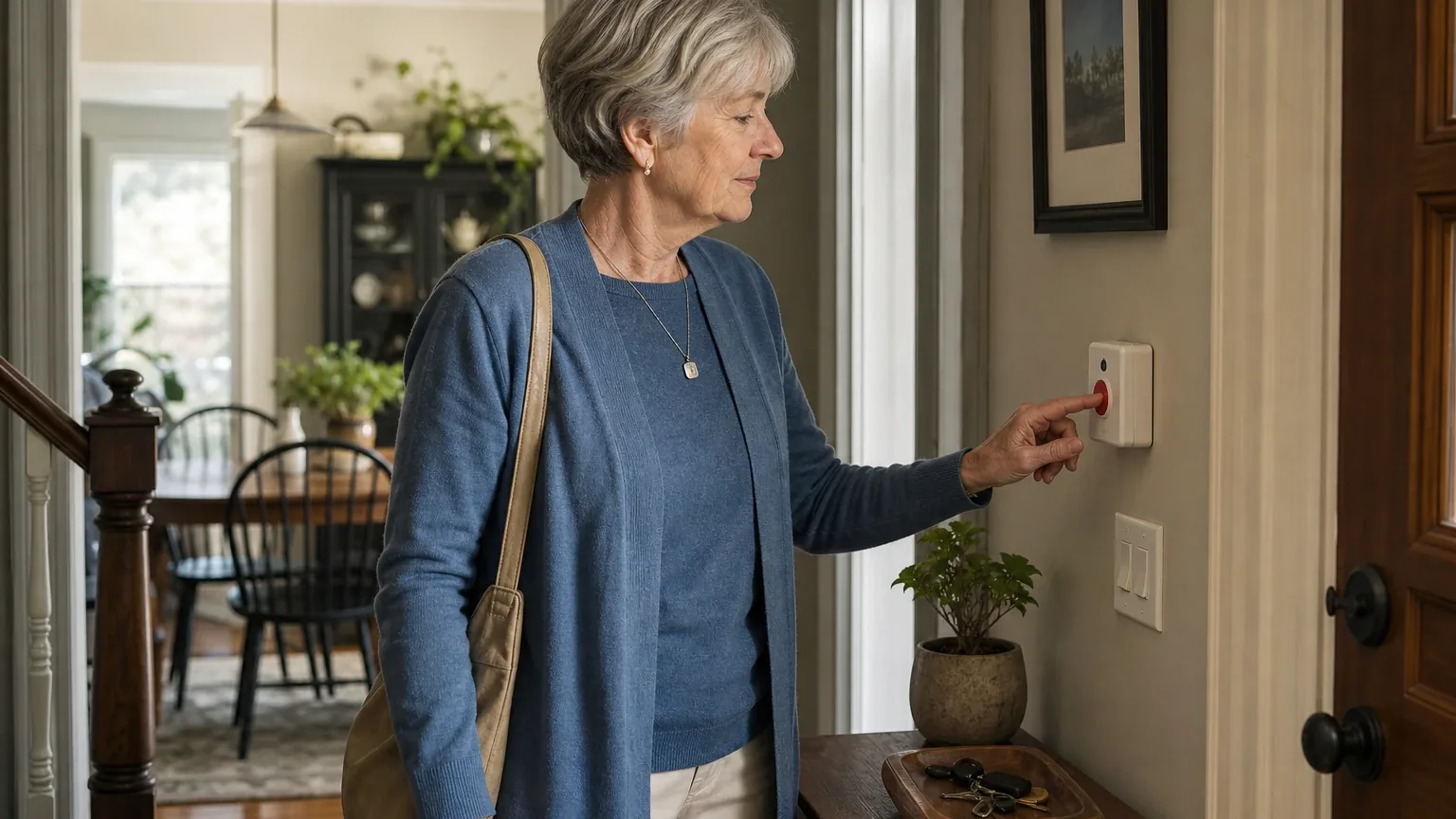
Answer Capsule
Bay Alarm Medical is a mixed fit for Security Plus Emergency Response. Five of the seven platforms named it during the ranking stage (71.4% of included platform responses), and it finished third overall with an average listed rank of 4.6 and a best rank of 1. Its strongest reason to consider it is the medical-alert half of the use case: SOS Home delivers wearable and base-unit panic buttons, 24/7 U.S.-based monitoring, two-way voice, optional fall detection, and no long-term contract at a comparatively low monthly price [23]. The main limitation is that the reviewed materials do not establish a single integrated burglary-plus-medical platform; Bay Alarm's residential security business is marketed separately, and integration between the two services is undocumented [13].
Research Snapshot
| Field | Finding |
|---|---|
| Platform mentions in ranking stage | 5 of 7 platforms (anthropic, deepseek, grok, kimi, perplexity) |
| Share of included platform responses | 71.4% |
| Average listed rank | 4.6 |
| Best listed rank | 1 (deepseek) |
| Relevant product/model/plan | SOS Home in-home medical alert (landline or cellular) with optional fall detection; pair with a separate burglary system if intrusion protection is required |
| Overall use-case fit | Mixed — strong for medical alert, unverified for integrated burglary protection |
| Research date | 2026-11-10 |
What Changed Since September 2026
Bay Alarm Medical remained at No. 3, and platform mentions increased from 4 to 5. The November 2026 review sharpens rather than reverses the picture. Bay Alarm Medical is still described as a mixed fit: capable medical alert, unverified as an integrated burglary-plus-medical system. The recommended setup now centers on SOS Home, preferably cellular with optional fall detection, paired with a separate burglary system. Reported monitoring response is roughly 20–45 seconds, and the advertised trial period is 15 days. Pricing is newly reported at $34.95 per month for SOS Home Cellular; the landline plan is listed at $27.95 per month, and the fall-detection add-on price is no longer repeated. Buyers should still confirm integration and current rates directly. Differences between the two editions reflect what each article reports; they do not by themselves prove that the product, service, or price changed.
The September 2026 review preserves the earlier article for reference.
Why Bay Alarm Medical Qualified for This Study
Questions This Section Answers
- Why did Bay Alarm Medical qualify for a Security Plus Emergency Response ranking when it is primarily a medical alert company?
- How much platform agreement did Bay Alarm Medical get in the Security Plus Emergency Response ranking stage?
Bay Alarm Medical qualified because it cleared the study's minimum-mention threshold and was named by a majority of the platforms that evaluated this use case. Five of the seven included platforms — anthropic, deepseek, grok, kimi, and perplexity — listed it during ranking discovery, giving it a 71.4% share of included platform responses. Its ranks ranged from 1 (deepseek) to 9 (anthropic), producing an average listed rank of 4.6 and a final rank of 3 [1].
Qualification reflects name recognition in the medical-alert category, not a finding that the product satisfies the full "security plus" requirement. The study's target buyer wants one system combining burglary protection with panic buttons, emergency dispatch, or medical alert accessories, and Bay Alarm Medical's documented strength sits on the medical-alert side of that definition [23]. One platform, google, rated the fit "weak" specifically because the company offers no integrated intrusion hardware [21]. Qualification and fit are separate questions, and this review treats them that way.
The Product, Model, Plan, or Service Most Relevant to Security Plus Emergency Response
Questions This Section Answers
- Which Bay Alarm Medical plan should an aging-in-place household buy for Security Plus Emergency Response?
- Is Bay Alarm Medical's SOS Home a complete burglary and medical alert system for Security Plus Emergency Response?
The most relevant offer is the SOS Home in-home medical alert system, preferably the cellular version with optional fall detection, paired with a separate burglary-security system if intrusion protection is required [23]. SOS Home is designed for people who are usually at home and includes an in-home base console, a wearable help button worn on the wrist or around the neck, a built-in base-unit help button, two-way voice communication, and professional monitoring [23].
SOS Home is not a complete burglary and medical alert system. The reviewed materials document medical-alert functions — not door/window sensors, motion detection, burglary alarm control, or a combined medical-and-burglar dispatch workflow [25]. Bay Alarm separately markets residential burglary-security services with door contacts, motion sensors, keypads, and security monitoring [13], and independent reference material describes the parent company as a separate business from Bay Alarm Medical [2]. Whether the two share equipment, accounts, monitoring centers, or dispatch protocols is not established in the reviewed sources.
Platforms named several adjacent products: the SOS All-In-One 2 hybrid, SOS Micro mobile GPS button, and SOS Smartwatch [24]. Kimi and deepseek also referenced a "Home Security + Medical Alert System" combination package, but neither supplied documentation of its capabilities, and the reviewed official pages do not describe it in detail [14]. Treat that bundle as unverified until confirmed directly with the company.
What the AI Platforms Agreed About
Questions This Section Answers
- What did the AI platforms agree on about Bay Alarm Medical's panic buttons and 24/7 monitoring for Security Plus Emergency Response?
- Do the platforms agree that Bay Alarm Medical offers no-contract medical alert monitoring for aging-in-place households?
Agreement was strong on the medical-alert fundamentals and unanimous on the integration gap. Every platform that discussed panic buttons described wearable and base-unit help buttons with two-way communication and 24/7 monitoring [23]. Every platform that addressed burglary protection concluded that Bay Alarm Medical does not document an integrated intrusion system [13].
On contract terms, the platforms converged on no long-term contract for medical-alert service, with month-to-month billing and cancellation permitted without a cancellation fee, subject to returning leased equipment in working condition [18]. Perplexity added that cancellation processing can take two to three weeks and that online cancellation is limited to death-related reasons [16].
On monitoring, platforms described U.S.-based, certified response centers. Grok cited UL-listed and Five Diamond certified centers with response times of roughly 20–45 seconds [23]; Google cited CSAA Five Diamond certification [28]; Anthropic cited a 45-second-or-less specification [23]. Independent reviews describe quick response times without publishing a guaranteed figure [9].
Where the AI Platforms Disagreed or Were Uncertain
Questions This Section Answers
- Why do the AI platforms disagree about whether Bay Alarm Medical fits Security Plus Emergency Response?
- Is Bay Alarm Medical's cellular plan $27.95 or $34.95 per month for Security Plus Emergency Response?
The platforms disagreed most on the overall fit rating, and the disagreement tracks how each weighted burglary protection. Grok rated the fit "mixed" but emphasized strong panic-button and dispatch performance [23]. Kimi rated it "mixed," noting the security side appears secondary and less mature than dedicated security platforms [4]. Google rated it "weak" because no intrusion hardware is offered [21]. Anthropic rated it "good," OpenAI, DeepSeek, and Perplexity rated it "mixed" [13]. The spread reflects differing definitions of the use case, not conflicting product facts.
Pricing is genuinely unresolved. The official pricing page lists SOS Home Landline at $27.95 per month and SOS Home Cellular at $34.95 per month, with fall detection adding $10.00 per month [25]. A separate official checkout page displayed $25.95 per month for a cellular in-home plan under a promotional or partner offer [5]. The ranking-stage description referenced $27.95 per month for a cellular plan, which conflicts with the current official cellular figure [14]. Independent reviews cite starting prices from $19.95 to $39.95 depending on device and date [33]. Buyers should confirm the applicable rate, eligibility, and duration before ordering.
Caregiver functionality is also uncertain. Platforms agreed that GPS tracking and caregiver app features are documented for mobile products such as SOS All-In-One 2, SOS Micro, and SOS Smartwatch [32]. Whether the basic SOS Home package includes comparable caregiver-app alerts is not clearly documented; one independent review states SOS Home includes no caregiver app, while another describes a free mobile app [32].
Two smaller conflicts are worth flagging. One third-party review mentions door/window contacts and motion detectors paired with SOS Home, but the official Bay Alarm Medical site does not describe this, and it may refer to the separate Bay Alarm residential product [7]. Fall-detection accuracy claims are also inconsistent: the company describes the add-on as effective, while independent testers describe it as less reliable than a manual button press, with no published false-alarm rate [22].
Use-Case-Specific Features and Capabilities
Questions This Section Answers
- Does Bay Alarm Medical's SOS Home include a waterproof wearable panic button with in-home range for aging-in-place users?
- How does Bay Alarm Medical escalate a medical alert to 911 versus family contacts for Security Plus Emergency Response?
Panic-button coverage is a clear strength. SOS Home includes a wearable help button in pendant or wristband form, a base-unit help button, and support for additional buttons; the standard button is described as water resistant or waterproof and suitable for shower use, with a reported in-home range of roughly 800 to 1,000 feet [23]. Wall buttons and a lockbox are available as accessories [32].
Medical alert accessories are well supported. Optional automatic fall detection uses accelerometer sensors to detect a sudden downward motion followed by stillness, and is available as an add-on rather than part of the base package [22]. A Vial of Life information kit is also documented [23]. Fall detection should not be treated as guaranteed emergency detection; the company and independent testers both note limits [24].
Monitoring and escalation follow a documented pattern: when the button is pressed or a fall is registered, the system connects to a 24/7 emergency response center, an operator assesses the situation through two-way voice, and then contacts designated friends, family, neighbors, or local 911 according to the customer's instructions [23]. The default protocol is stated to contact local emergency medical services, but buyers should confirm the exact order for their account [18].
Caregiver notifications are the weakest capability for this use case. GPS location tracking, battery alerts, and account management through a caregiver app are documented for mobile and smartwatch plans [32]. Comparable caregiver-app functionality is not clearly documented for the basic SOS Home package, and at-home users are not GPS-locatable [1].
Connectivity is neutral. SOS Home is offered in landline and cellular versions; the cellular system uses LTE connectivity and is easier to relocate, but suitability depends on coverage at the residence [23]. Burglary protection is absent from the medical-alert product line, which is the defining limitation for this use case [1].
Pricing, Fees, Contracts, and Ongoing Costs
Questions This Section Answers
- Is Bay Alarm Medical's SOS Home worth the monthly cost for Security Plus Emergency Response compared with a combined security-and-medical system?
- What equipment must a buyer return to Bay Alarm Medical to cancel SOS Home without a fee?
Published medical-alert pricing is comparatively transparent and low. SOS Home Landline is listed at $27.95 per month and SOS Home Cellular at $34.95 per month on the current official pricing page, with optional automatic fall detection at $10.00 per month [25]. The SOS Home console carries no upfront equipment charge and is leased, requiring return after cancellation [25]. Mobile products carry one-time device fees of roughly $149 to $199 depending on model [32].
Whether that price is worth it depends on what the buyer is comparing against. For medical alert alone, independent reviews describe the pricing as among the lowest starting costs tested [9]. For a true combined security-and-medical system, the total cost is unknown because separate burglary equipment, installation, monitoring, permits, and possible false-alarm charges are not published in the reviewed materials [13]. Buyers comparing against an integrated platform should price both subscriptions together rather than comparing the medical-alert line alone.
Contract terms are favorable on paper. Bay Alarm Medical states no long-term contract and no cancellation fee, with monthly, quarterly, and annual payment options [18]. A 15-day risk-free trial is advertised, with a full refund less shipping if the buyer is dissatisfied within that window; after 15 days, cancellations receive a prorated refund for unused months minus shipping [18].
Cancellation requires returning leased equipment in working condition, and the account is not fully canceled until the device is returned and processed [18]. Perplexity reports the process averages two to three weeks and that online cancellation is limited to death-related reasons [16]. The company states it does not charge for false alarms, emergency calls, or test calls, while noting that local authorities may impose separate false-alarm fees [18]. Shipping costs may reduce refunds [25]. Exact prices for additional wearable buttons, wall buttons, and lockboxes vary across sources and should be confirmed [32].
Best Suited For
Questions This Section Answers
- Is Bay Alarm Medical a good choice for an aging-in-place household that already has a separate home security system?
- Which Bay Alarm Medical plan best fits a senior who wants cellular monitoring without a landline?
Bay Alarm Medical is best suited to aging-in-place households that prioritize reliable in-home medical-alert coverage and are willing to use a separate burglary-security system [13]. It fits users who want a simple wearable panic button, two-way voice communication, 24/7 professional monitoring, and optional fall detection without a long-term contract [23].
It also fits households needing cellular connectivity rather than a traditional landline, and budget-conscious buyers seeking relatively low recurring monitoring costs [23]. For a senior who wants cellular monitoring without a landline, SOS Home Cellular at the published $34.95 per month is the plan the official pricing page supports, subject to confirming the promotional $25.95 rate does not apply [25]. Households that also want mobile GPS coverage should look at the SOS All-In-One 2 or SOS Micro rather than SOS Home [32].
Probably Not Best Suited For
Questions This Section Answers
- Is Bay Alarm Medical a poor choice for a household that needs door sensors and medical alerts on one monitored account?
- Does Bay Alarm Medical offer advanced caregiver analytics or medication reminders for Security Plus Emergency Response?
Bay Alarm Medical is probably not best suited to buyers requiring a single natively integrated platform for door sensors, burglary alarms, cameras, panic buttons, and medical-alert dispatch [13]. It is also a poor fit for households needing documented interoperability between Bay Alarm Medical and a Bay Alarm residential security installation, because that integration is not established in the reviewed sources [13].
Users requiring extensive smart-home automation, medication reminders, wellness monitoring, or advanced caregiver analytics should look elsewhere; the reviewed materials do not document these features [22]. Households that prioritize burglary or intrusion detection as the primary need, with medical alert secondary, are also a mismatch [1]. Finally, buyers who need at-home GPS location tracking for an unconscious user will not find it in the basic SOS Home package [1].
When Another Option May Be Better
Questions This Section Answers
- When is a dedicated home security provider a better choice than Bay Alarm Medical for Security Plus Emergency Response?
- When should a buyer choose a mobile medical alert plan instead of Bay Alarm Medical's SOS Home?
Another option may be better when the buyer requires one documented platform and one monitoring account covering intrusion sensors, medical pendants, cameras, emergency contacts, and dispatch rules [13]. In that case, a dedicated residential security provider with a medical or panic accessory, or an integrated security-and-medical platform, is the more direct fit [1].
A mobile-focused medical-alert plan such as SOS All-In-One 2 may be better when the user regularly leaves home and needs GPS and caregiver location tracking, since SOS Home is designed for at-home use [22]. Buyers who need robust caregiver notifications, medication reminders, wellness checks, or broader app-based oversight in the base plan should compare other medical-alert providers [22]. Households needing video verification, smart-home integration, or advanced automation should compare dedicated security platforms [4].
Questions to Verify Before Buying
Questions This Section Answers
- What should a buyer confirm with Bay Alarm Medical about combining SOS Home with a Bay Alarm residential security system?
- Which Bay Alarm Medical price should a buyer confirm before ordering the SOS Home cellular plan?
Before buying, confirm whether the SOS Home panic button and a Bay Alarm residential burglary system can share one account, base station, monitoring center, emergency-contact list, and dispatch protocol, and whether medical-alert and burglar-alarm activations are differentiated for operators and responders [13]. Confirm the total monthly and upfront cost for any required burglary sensors, keypad, installation, monitoring, permits, and medical-alert service [13].
Confirm which SOS Home cellular price applies — $34.95, $27.95, or the promotional $25.95 — and how long the rate remains valid [25]. Confirm the exact price of additional wearable buttons, wall buttons, lockboxes, and fall-detection buttons [32]. Confirm whether SOS Home provides caregiver app alerts, low-battery alerts, and account-level notifications, or whether those are limited to mobile products [32].
Also confirm which cellular network serves the residence and whether coverage can be tested before commitment [23], the exact emergency escalation order and whether 911 can be required before family or neighbors [18], what happens if the user cannot speak or the base unit loses power [23], what equipment must be returned at cancellation and who pays return shipping [16], and whether local false-alarm permit or responder fees apply to a separate burglary installation [18].
Final AI Consensus Verdict
The consensus verdict is mixed fit. Bay Alarm Medical is a good-to-strong choice for the medical-alert portion of Security Plus Emergency Response, especially SOS Home with cellular connectivity and optional fall detection, but it is not a verified one-system solution for combined burglary protection and medical response [13].
The platforms split on rating — one "good," four "mixed," one "weak" — and the split is explained by how each weighted integration rather than by conflicting product facts [1]. Buy it when medical alert is the priority and a separate security system is acceptable. Prefer a documented unified security-and-medical platform when integration is mandatory. This verdict reflects platform-reported evidence and does not establish product quality or independent verification.
How This Review Was Produced
This review was produced from a seven-platform ranking study of Security Plus Emergency Response conducted on 2026-11-10. Platforms evaluated fit and named candidates during ranking discovery; Bay Alarm Medical was named by five of the seven platforms and finished third overall with an average listed rank of 4.6 and a best rank of 1. The report evaluates Bay Alarm Medical only for this use case and is not a broad company review.
Body citations use the supplied citation IDs and connect claims to the source block. Company-owned sources materially outnumber independent sources in the supplied evidence, so company claims are not described as independently verified. Platform-reported research dates differ from the authoritative run date; DeepSeek's response is dated 2026-06-15, and that date is provenance metadata rather than proof of freshness. The supplied URLs were collected from platform responses and were not independently validated at the writing stage. For broader context on this category, see the Security Plus Emergency Response consensus index.
Readers comparing other home-safety options can browse the home safety category directory.
Methodology Limitations
Several limitations apply. Platform mentions count only platforms that named the entity during ranking discovery, not every platform that evaluated fit. One platform, DeepSeek, ran without search enabled, so its claims are platform-reported and require verification before being treated as current facts [14]. Pricing conflicts were not resolved by guessing; the $25.95, $27.95, and $34.95 figures are all reported and flagged for buyer confirmation [25].
The relationship and technical integration between Bay Alarm Medical and Bay Alarm residential security are not clearly documented in the reviewed materials [13]. Caregiver tracking is documented for mobile products but not clearly for SOS Home [32]. Exact pricing for additional buttons, wall buttons, lockboxes, installation, and separate burglary-security service was not verified [32]. Fall-detection accuracy has no published false-alarm rate [22]. AI-platform agreement does not prove product quality, and no personal testing, customer experience, medical benefit, or guaranteed performance is claimed here.
Sources
Company-Owned Sources
- Professional Protection - Monitoring and Emergency Response Services | Ring: https://ring.com/professional-protection
- CSA - SOS In-Home Cellular: https://shop.bayalarmmedical.com/csa-in-home-cellular-advantage
- Security Plus of Northeast Ohio - Alarm.com Business Solutions: https://www.alarm.com/us/securityplusneo?business=1
- Bay Alarm — Official Site: https://www.bayalarm.com/
- Residential - Home Security Services: https://www.bayalarm.com/residential-home-security-services/
- Bay Alarm Medical — Official Site: https://www.bayalarmmedical.com/
- How to Cancel Your Bay Alarm Medical Medical Alert Subscription: https://www.bayalarmmedical.com/cancellations/
- Get Your 15 Day Risk-Free Trial: https://www.bayalarmmedical.com/free-quote/
- How do Medical Alert Systems Work? | FAQs: https://www.bayalarmmedical.com/frequently-asked-questions/
- America's #1 Rated Medical Alert Systems: https://www.bayalarmmedical.com/home-2/
- Benefits of Bay Alarm Medical SOS All-in-One 2 - Bay Alarm Medical: https://www.bayalarmmedical.com/medical-alert-blog/benefits-of-bay-alarm-medicals-sos-all-in-one-2-medical-alert-system/
- How to Choose a Medical Alert System - Bay Alarm Medical: https://www.bayalarmmedical.com/medical-alert-blog/how-to-choose-a-medical-alert-system-6-key-topics-to-research/
- Award-Winning Medical Alert Systems for Seniors: https://www.bayalarmmedical.com/medical-alert-system/
- Personal Emergency Response System - Bay Alarm Medical: https://www.bayalarmmedical.com/medical-alert-system/in-home/
- SOS Smartwatch: Life-Saving Medical Alert Watch: https://www.bayalarmmedical.com/medical-alert-system/sos-smartwatch/
- Medical Alert Costs | Compare Us to Life Alert and Other Providers: https://www.bayalarmmedical.com/pricing/
Independent Sources
- Best Home Security Systems With Medical Alerts (2026: https://aginginplaceindex.com/home-safety/security-plus-emergency-response
- Bay Alarm: https://en.wikipedia.org/wiki/Bay_Alarm
- Bay Alarm Medical Review 2026: Is It Worth It? Our Verdict: https://medicalalertreview.com/bay-alarm-medical-review
- Medical Guardian vs Bay Alarm Medical (2026): Prices & Features Compared: https://steadyage.com/medical-guardian-vs-bay-alarm-medical/
- Best Home Security Systems with Medical Alert Features (2026: https://top-home-security.com/best-home-security-with-medical-alert/
- Bay Alarm Medical: Tested and Reviewed: https://www.aarp.org/caregiving/home-care/bay-alarm-medical-review.html
- Bay Alarm Medical Review (2026): Tested & Approved: https://www.aarp.org/caregiving/home-care/bay-alarm-medical-review/
- Bay Alarm Medical Review 2026 — Plans, Hardware, and Response Times: https://www.ageinplaceguide.com/blog/bay-alarm-medical-review
- Bay Alarm Medical Medical Alert System Review 2026 - Caring.com: https://www.caring.com/senior-products/best-medical-alert-systems/bay-alarm-medical
- Bay Alarm Medical Review — Medical Alert Comparison: https://www.medicalalertadvice.org/reviews/bay-alarm-medical/
- Bay Alarm Medical: Our Take on This Popular Brand: https://www.ncoa.org/product-resources/medical-alert-systems/bay-alarm-medical-review/
- The Best Medical Alert Systems with Fall Detection (2026: https://www.ncoa.org/product-resources/medical-alert-systems/best-medical-alert-systems-with-fall-detection/
- The Best Medical Alert Systems We've Tested for 2026: https://www.pcmag.com/picks/the-best-medical-alert-systems
- Bay Alarm Medical SOS Home Review - PCMag: https://www.pcmag.com/reviews/bay-alarm-medical-sos-home
- Bay Alarm Medical Alert Systems Cost & Packages: https://www.safehome.org/medical-alert-systems/bay-alarm-medical/
- Cheapest & Most Affordable Medical Alert Systems of 2026: https://www.safehome.org/medical-alert-systems/best/affordable/
Verify This Research
Review the study details behind this page or download the public machine-readable verification record.
- Study date
- November 10, 2026
- Platforms analyzed
- 7
- Source records
- 33
- Ranking mentions
- 5 of 7
- Platform share
- 71%
- Final consensus rank
- #3
Research trail and source mix
Configured platforms
openai, anthropic, deepseek, grok, perplexity, kimi, google
Source mix
16 independent · 17 company-owned
Evidence support
25 direct · 7 partial
Important limitation
Use the run research_date as the study date. Platform-reported dates are provenance metadata and do not independently prove freshness.
Source snapshot SHA-256 031520afd724279d220369b5ad313475f2faa9b0388e66e9c9f0e982c07d768f
Archived editions
Browse earlier published research snapshots for this article. The latest edition remains at the current URL.