
Answer Capsule
SimpliSafe is a mixed fit for Security Plus Emergency Response. Four of seven platforms named it during the ranking stage (57.1% of included platform responses), with an average listed rank of 3.5 and a best rank of 2. The strongest reason to consider it is the combination of a $19.99 dedicated Panic Button configurable to Medical mode, 24/7 professional monitoring with EMS-dispatch requests, and no long-term contract. The main limitation is that the verified medical interface is a fixed indoor button: the supplied evidence does not confirm a SimpliSafe-branded wearable pendant, wristband, fall detection, GPS, or out-of-home coverage. Silent Alarm also suppresses caregiver alarm texts and calls.
Research Snapshot
| Field | Finding |
|---|---|
| Platform mentions in ranking stage | 4 of 7 platforms (deepseek, google, grok, openai) |
| Share of included platform responses | 57.1% |
| Average listed rank | 3.5 |
| Best listed rank | 2 (grok) |
| Relevant product/model/plan | SimpliSafe Gen 3 security system with dedicated Panic Button configured to Medical, paired with a residential professional monitoring plan that includes 24/7 emergency dispatch |
| Overall use-case fit | Mixed |
| Research date | 2026-09-27 |
What Changed Since August 2026
SimpliSafe moved down from No. 1 to No. 4, and platform mentions were unchanged at 4. The September 2026 review shifts SimpliSafe's fit from good to mixed, mainly because the verified medical interface is now a fixed indoor Panic Button rather than any wearable. Buyers still get Medical-mode monitoring with EMS-dispatch requests and no long-term contract, but the review no longer supports a confirmed SimpliSafe-branded pendant, wristband, fall detection, or out-of-home coverage. Recommended configuration is unchanged. Pricing evidence moved: $0.83 per month for the Panic Button is newly reported, while the $21.99–$22.99/month monitoring figure is no longer repeated. Battery reporting also narrowed to an advertised 5–10 year life. Otherwise, the buyer-facing strengths and limitations are largely consistent. Differences between the two editions reflect what each article reports; they do not by themselves prove that the product, service, or price changed.
The August 2026 review preserves the earlier article for reference.
Why SimpliSafe Qualified for This Study
Questions This Section Answers
- Why did SimpliSafe qualify for a Security Plus Emergency Response fit review?
- How many AI platforms named SimpliSafe for Security Plus Emergency Response?
SimpliSafe qualified because it cleared the study's minimum-mentions threshold and was named by four of the seven included platforms during ranking discovery: deepseek, google, grok, and openai. Its platform share was 57.1%, its average listed rank was 3.5, and its best listed rank was 2 (grok). The remaining three platforms — anthropic, perplexity, and kimi — supplied fit research but did not name SimpliSafe in the ranking stage, so they are excluded from the mention count.
The entity was normalized to the canonical name SimpliSafe, with company-name variants collapsed onto one brand before qualification. One normalization note states that official-site retrieval failed for one or more mentions and that no failed fetch was used as a verified domain key; identity used an unverified reported-domain evidence, and the matching reported domain was retained for downstream research but remains unverified. The supplied official-page excerpt for simplisafe.com is marked unavailable because the HTML exceeded the retrieval size limit, so no official homepage excerpt was used as verified fact in this review.
This is a niche fit review. It evaluates SimpliSafe only for Security Plus Emergency Response — the aging-in-place use case combining burglary protection with panic buttons, emergency dispatch, or medical alert accessories. It is not a broad company review, and platform agreement is not evidence of product quality.
The Product, Model, Plan, or Service Most Relevant to Security Plus Emergency Response
Questions This Section Answers
- Which SimpliSafe system and monitoring plan should a buyer choose for Security Plus Emergency Response?
- Is the SimpliSafe Panic Button set to Medical the right configuration for emergency dispatch?
The relevant configuration is a SimpliSafe Gen 3 security system with a dedicated Panic Button configured to Medical, paired with a residential professional monitoring plan that includes 24/7 emergency dispatch. Platforms described this configuration with minor wording differences: openai and anthropic specified the Gen 3 system with a Panic Button set to Medical plus professional monitoring; google specified Standard or Core monitoring; grok specified Core or higher; deepseek and perplexity referenced an "optional Medical Alert add-on" whose existence is not clearly verified in the checked sources.
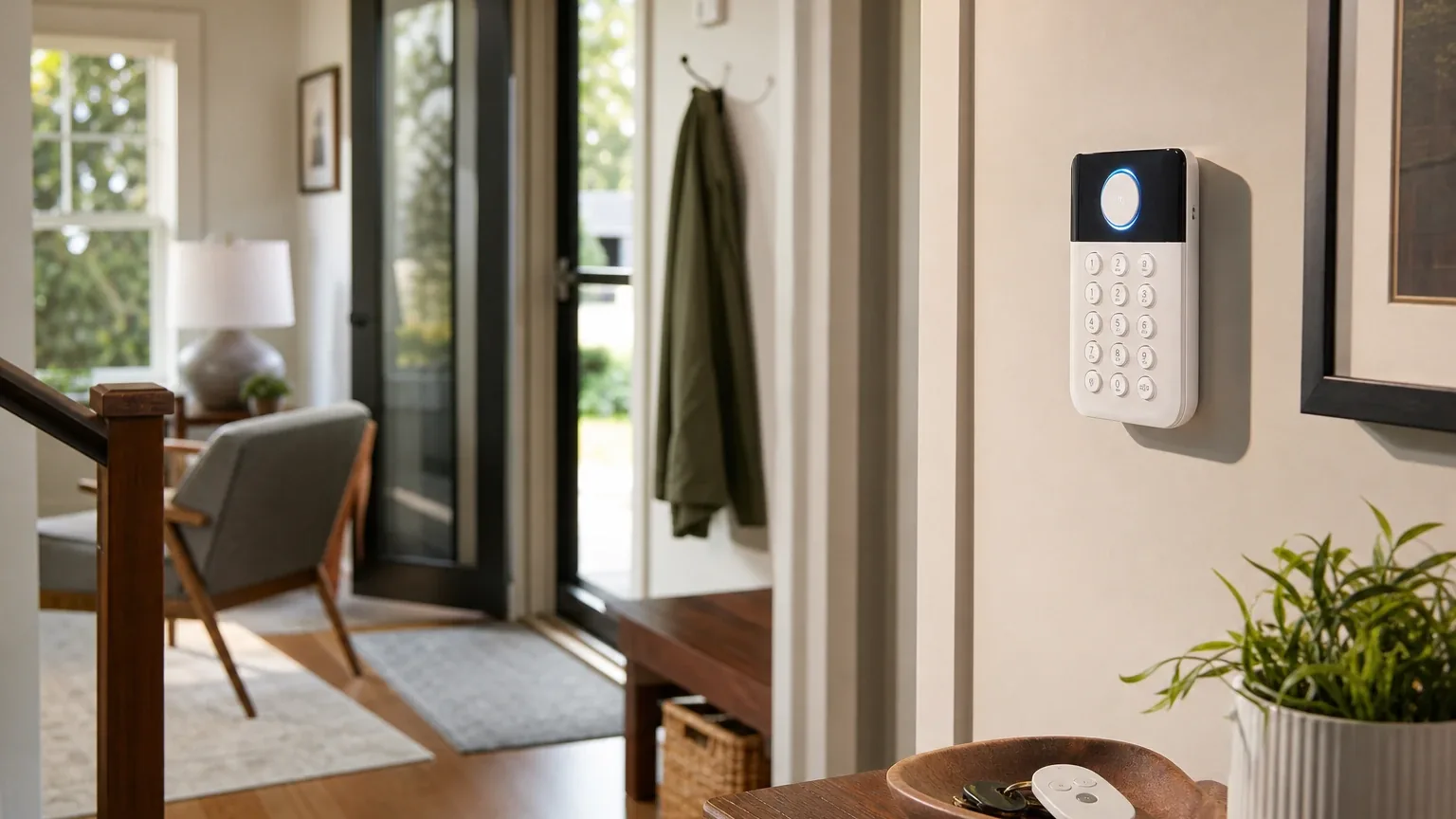
The dedicated Panic Button is a mounted indoor device that requires a two-second press and is active regardless of whether the system is armed [1]. The keypad also carries a red panic button that signals the monitoring center when held for two seconds on select plans [2]. The Panic Button's Panic Alarm setting options include Audible, Fire, Silent, and Medical, and the Medical setting requests an ambulance when pressed [3]. In Medical mode, the base station announces a Medical Alert and the monitoring operator requests EMS assistance if the user does not answer or requests dispatch [4].
A factual conflict should be flagged here. The ranking-stage recommended wording refers to a "Medical Alert add-on," but current official materials reviewed describe Medical as a Panic Button setting within eligible professional monitoring rather than a separately priced medical-alert add-on. Perplexity's own uncertainty note states that the existence and details of a separate medical alert add-on are not clearly verified in the checked sources. Buyers should treat "Medical Alert add-on" as unverified terminology.
What the AI Platforms Agreed About
Questions This Section Answers
- What do AI platforms agree SimpliSafe does well for Security Plus Emergency Response?
- Does SimpliSafe's Panic Button work when the system is disarmed?
Agreement was strong but not unanimous on four points. First, the dedicated Panic Button exists, is inexpensive, and can be configured to Medical. The button is listed at $19.99, or $0.83 per month on the product page's financing display [5]. Anthropic cited a Model PAN301 listing at $19.99 on Amazon (anthropic:2), and google reported the hardware typically around $19.99 per sensor (google:safewise_pricing). Second, the button is always active regardless of armed state [6]. Third, Medical mode produces a Medical Alert voice prompt and a monitoring-center call that can lead to EMS dispatch [7]. Fourth, monitoring is advertised as month-to-month with no long-term contract and no cancellation fees [9].
Platforms also agreed that the system covers conventional burglary protection alongside the panic function. SimpliSafe categorizes panic, entry, motion, and glassbreak alarms as burglary alarms and describes monitoring responses [11]. The system supports entry, motion, glassbreak, keypad, key-fob, and panic alarms with professional dispatch on eligible plans [12].
One point of near-consensus is a limitation rather than a strength: no platform verified a SimpliSafe-branded wearable medical pendant, wristband, or fall detector. Google stated directly that SimpliSafe does not offer wearable medical alert pendants or wristbands and that the panic buttons are stationary (google:national_council_review). Openai's independent review evidence characterizes the main button as stationary and the key-fob medical-alert capability as limited [13].
Where the AI Platforms Disagreed or Were Uncertain
Questions This Section Answers
- Do AI platforms disagree about whether SimpliSafe is a good fit for Security Plus Emergency Response?
- Is SimpliSafe's medical dispatch capability verified or uncertain?
Fit ratings split. Anthropic, google, grok, and perplexity rated SimpliSafe a "good" fit. Deepseek, kimi, and openai rated it "mixed." That is a four-to-three split, not consensus, and the disagreement centers on how much weight to give the missing wearable and caregiver capabilities.
Pricing is the sharpest conflict. Grok reported Standard $22.99/month, Core $32.99/month, Pro $49.99/month, and Pro Plus $79.99/month, all including medical dispatch, with high pricing confidence (grok:11). Openai reported per-day equivalents: Core $1.10/day, Pro $1.66/day, and Pro Plus $2.66/day [14]. Google reported Standard at 76¢/day (about $22.99/month) and Core at $1.10/day (about $32.99/month) (google:safewise_pricing). Perplexity reported a range from about $9.99/month self-monitoring up to $79.99/month for higher professional tiers, and noted that public sources disagree on exact tier names and prices across pages and resellers [15]. Kimi reported Standard about $29.99/month and Interactive about $49.99/month (kimi:simplisafe-monitoring-2024). These figures do not reconcile, and the plan names themselves differ across platforms.
Caregiver notification is uncertain. Openai found that eligible professional plans provide alarm texts to primary contacts, including the ability to request dispatch by reply [16], but also that Silent Panic Button alarms do not generate the normal alarm text or phone call [17]. Anthropic found a Primary and Secondary Contact structure in which the monitoring center contacts Secondary Contacts and requests emergency dispatch if Primary Contacts cannot be reached (anthropic:6). Perplexity found no verified caregiver-notification feature in the sources checked. Deepseek found no documented caregiver-notification features for the medical/panic use case. The supplied evidence does not establish a dedicated caregiver dashboard, caregiver escalation tree, or guaranteed notification sequence for medical events.
Dispatch routing is also uncertain. Kimi's uncertainty note states that whether the panic button's Medical setting dispatches EMS directly or routes through police dispatch is unverified, and that monitoring-center staff training for medical versus security emergencies is not publicly documented. SimpliSafe's public materials describe dispatch requests but do not establish guaranteed EMS arrival times, priority treatment in every jurisdiction, or universal local-agency handling.
Use-Case-Specific Features and Capabilities
Questions This Section Answers
- Does SimpliSafe support medical alert accessories like a wearable pendant or fall detection?
- How does SimpliSafe's emergency escalation protocol work for a Medical panic alarm?
Panic button availability is an advantage. The dedicated Panic Button is installed on a mounting plate and must be held for two seconds; it remains active whether the system is armed or disarmed [18]. The keypad's red button signals the monitoring center when held for two seconds on select plans [19]. The Panic Button uses a CR-2032 battery with an advertised life expectancy of up to five years depending on use and placement [20]. Anthropic reported 5–10 year battery life (anthropic:2), which conflicts with openai's up-to-five-years figure.
Medical-alert configuration is an advantage. In Medical mode, the base station announces a Medical Alert and the monitoring operator requests EMS assistance if the user does not answer or requests dispatch [21]. Panic button alarms cannot be cancelled via text or app, which the sources frame as a safety feature under duress (anthropic:4).
24/7 professional monitoring is an advantage. Residential Core, Pro, and Pro Plus plans include 24/7 emergency dispatch for break-ins and medical emergencies [22]. Grok reported that Core, Pro, Pro Plus, and Standard plans include 24/7 Emergency Dispatch for police, fire, and medical (grok:11).
Emergency escalation protocol is neutral, not a guarantee. For Medical mode, SimpliSafe states that the monitoring center calls the location and requests EMS if the user does not answer or asks for help [21]. This is a monitored alarm workflow, not a direct medical-alert service guarantee; actual response depends on monitoring, communications, location, and local emergency services.
Caregiver notifications are a limitation. Primary contacts can receive alarm texts on eligible professional plans [24], but alarms triggered with the Panic Button's Silent Alarm setting do not generate an alarm text or phone call [25]. The available sources do not establish a dedicated caregiver dashboard, caregiver escalation tree, or guaranteed notification sequence for medical events.
Medical-alert accessories are a limitation. The verified current accessory is a fixed dedicated Panic Button. The sources checked do not verify a SimpliSafe-branded medical pendant, wristband, fall detector, or out-of-home medical-alert device [26]. The key fob is portable within the home but is not verified as a dedicated medical-alert wearable; google stated the Key Fob panic button triggers a general burglary alarm and cannot be customized specifically for medical dispatch (google:national_council_review).
Independent evidence is limited and mixed. An independent security review reported that the panic button worked in testing and that key fobs could be carried around the home, but characterized SimpliSafe's medical-alert implementation as weaker than dedicated medical-alert systems because the main panic button is stationary and the key-fob alert does not clearly identify a medical emergency [28]. A 2022 independent review characterized the main button as stationary and the key-fob medical-alert capability as limited [27].
Pricing, Fees, Contracts, and Ongoing Costs
Questions This Section Answers
- How much does SimpliSafe cost per month for Security Plus Emergency Response, and are there cancellation fees?
- What equipment costs should a buyer expect for a SimpliSafe Panic Button and Gen 3 system?
Published monitoring prices conflict across platforms and should be verified at checkout. The table below preserves each platform's reported figures rather than resolving them.
| Source | Reported monitoring pricing | Confidence |
|---|---|---|
| openai [29] | Core $1.10/day; Pro $1.66/day; Pro Plus $2.66/day | Moderate |
| grok (grok:11) | Standard $22.99/mo; Core $32.99/mo; Pro $49.99/mo; Pro Plus $79.99/mo | High |
| google (google:safewise_pricing) | Standard 76¢/day ( | High |
| perplexity [30] | ~$9.99/mo self-monitoring up to $79.99/mo professional tiers | Moderate |
| kimi (kimi:simplisafe-monitoring-2024) | Standard ~$29.99/mo; Interactive ~$49.99/mo | Moderate |
Equipment costs are more consistent. The dedicated Panic Button is listed at $19.99, or $0.83 per month when financed through the product page [31]. Anthropic cited approximately $19.99 standalone (anthropic:2). Kimi reported a wider range of roughly $19.99–$39.99 (kimi:simplisafe-monitoring-2024). Additional equipment such as sensors and panic buttons is purchased separately, and prices vary by device [32]. Kimi reported Gen 3 base station and sensors at roughly $244–$400+ depending on bundle (kimi:simplisafe-monitoring-2024). The Haven package (14-piece system) includes one Panic Button, Base Station, Keypad, and sensors, but the specific all-in price was not disclosed in the sources checked (anthropic:8).
Contract terms are the clearest area of agreement. SimpliSafe advertises no long-term contract and no cancellation fees, with cancellation at any time [33]. Grok reported month-to-month terms with no contracts and no cancellation fees (grok:11). Perplexity's terms-of-service citation states there are no termination fees and describes refund treatment for partial and full calendar months [35]. Cancellation can be initiated via chat, phone, and in some states online [36].
Additional fees are partially unverified. Openai listed potential professional-installation charges, optional equipment and camera charges, and potential financing costs, noting that the current sources checked do not establish one universal residential installation price [33]. Google reported optional professional installation starting at $124.99 and a 60-day money-back guarantee on equipment purchases (google:safewise_pricing). Perplexity noted a late-fee reference in the terms for unpaid invoices. Deepseek listed possible shipping, handling, and taxes as unverified.
One important cost note: monitoring is required for the Panic Button to communicate with the monitoring center [33]. Self-monitoring without a plan does not provide dispatch [37]. The current published plan page does not show a separate medical-dispatch surcharge [29].
Best Suited For
Questions This Section Answers
- Who is SimpliSafe best suited for in a Security Plus Emergency Response setup?
SimpliSafe is best suited for households needing one no-contract system for burglary, fire, environmental alerts, and a fixed-location medical panic button. It fits users who can reliably reach a wall-mounted button and want professional monitoring to request EMS dispatch. It also fits buyers prioritizing integrated home security and relatively predictable monitoring costs over dedicated medical-alert wearables.
Anthropic's fit assessment adds aging-in-place households with mobile, alert homeowners who can reliably reach and press a panic button, families seeking integrated burglary protection plus emergency dispatch without switching between separate systems, and owners who prefer no long-term contracts and month-to-month monitoring flexibility. Grok's assessment centers on aging-in-place US households wanting integrated burglary plus medical panic with no contract. Deepseek's assessment centers on households that already want a SimpliSafe DIY burglary system and want to add a panic button for emergency dispatch, and buyers comfortable self-installing equipment and self-managing monitoring configuration.
Probably Not Best Suited For
Questions This Section Answers
- Who should not choose SimpliSafe for Security Plus Emergency Response?
SimpliSafe is probably not best suited for people who need a wearable pendant or wristband, fall detection, GPS, two-way voice communication from the alert device, or coverage away from home. It is also a poor fit for households requiring guaranteed caregiver notification before or alongside emergency dispatch, and for users unable to reach a fixed button during a medical event.
Platforms converged on this limitation set. Anthropic listed elderly residents requiring fall detection or automatic alerting without manual button press, households needing wearable medical alert devices for out-of-home protection, users seeking a primary medical alert system rather than a security-first hybrid, residents with mobility limitations who cannot reliably press a button in under two seconds, and families requiring GPS tracking or wandering alerts for cognitive decline. Google listed individuals who require wearable wristbands or pendants, seniors who need automatic fall detection, and users needing out-of-home mobile GPS medical emergency coverage. Kimi listed buyers needing guaranteed medical-only dispatch distinct from police dispatch, households requiring fall detection or wearable medical pendants as integrated native features, and those wanting caregivers automatically notified through dedicated medical alert channels separate from security alerts.
When Another Option May Be Better
Questions This Section Answers
- What is a better alternative to SimpliSafe when a wearable medical alert pendant or fall detection is required?
- When should a buyer choose a dedicated medical alert provider instead of SimpliSafe?
Another option may be better when the older adult may be unable to reach a wall-mounted button, or when fall detection, GPS, cellular away-from-home coverage, two-way voice, or a formal caregiver escalation workflow is essential. Openai's alternative guidance recommends a dedicated medical-alert provider or a security provider with an integrated wearable medical pendant in those cases, and recommends choosing a system with more explicit medical-alert certifications, response policies, or wearable accessories if those requirements are mandatory rather than optional.
Anthropic's alternative guidance names Life Alert and Medical Guardian wearables for fall detection or automatic alert mechanisms, and recommends dedicated medical alert systems or hybrid systems with documented fall detection when comprehensive medical protection is the priority. Kimi's guidance names dedicated medical alert services such as Life Alert, Medical Guardian, and Bay Alarm Medical for fall-detection wearables and guaranteed EMS dispatch without a police intermediary, traditional security companies with verified medical response partnerships such as ADT with integrated medical alert, and mobile personal emergency response systems with GPS tracking for active seniors who leave home frequently. Google's guidance points to alternatives when the senior has high fall risk requiring automatic fall detection, needs a wearable that can be worn in the shower, or needs on-the-go coverage via mobile cellular and GPS networks.
Questions to Verify Before Buying
Questions This Section Answers
- What should a buyer confirm with SimpliSafe before signing up for Security Plus Emergency Response?
Verify these points directly with SimpliSafe before purchase, because the supplied evidence does not resolve them:
- Does the selected residential monitoring plan specifically include Medical-mode EMS dispatch at the buyer's address and in the buyer's locality?
- What exactly happens after a Medical Panic Button activation if the resident does not answer, and how many times will the monitoring center call?
- Can multiple caregivers be designated as primary contacts, and are they notified for Medical-mode alarms as well as ordinary burglary alarms?
- Does Medical mode send caregiver texts, app notifications, or only a monitoring-center call, especially if Silent Alarm is selected?
- Is there any currently sold wearable pendant, wristband, fall detector, or cellular/out-of-home accessory compatible with the system?
- What are the complete equipment, installation, shipping, tax, financing, warranty, and return costs for the selected kit?
- What cellular backup and battery-backup capabilities apply to the base station and monitoring connection at the buyer's address?
- What are the cancellation, prorating, refund, and equipment-return rules after canceling monitoring?
- Can the buyer test the panic-button and EMS-dispatch workflow without generating a false emergency, and what local emergency-agency limitations apply?
- Does the buyer's local municipality require a special alarm permit for systems that include medical dispatch, and are there associated fees?
- Is the wireless range of the Panic Button sufficient to cover all corners of the home and yard relative to the Base Station?
- Does pressing the panic button configured to Medical dispatch EMS directly, or does it still route through police dispatch?
Final AI Consensus Verdict
Mixed fit. SimpliSafe is a credible integrated home-security choice with a low-cost dedicated panic button, Medical mode, 24/7 professional monitoring, EMS-dispatch requests, and no long-term contract. It is not equivalent to a full-featured dedicated medical-alert system because the verified medical interface is mainly a fixed indoor button, and the public materials do not verify wearable, fall-detection, GPS, or robust caregiver-escalation capabilities.
Four of seven platforms rated the fit "good" and three rated it "mixed." That split reflects a real tradeoff rather than a settled answer. The strongest verified advantages are the $19.99 Panic Button, its always-active behavior regardless of armed state, Medical-mode EMS dispatch requests, and no-contract monitoring. The strongest verified limitations are the absence of a confirmed wearable or fall-detection accessory, the suppression of caregiver alarm texts and calls under Silent Alarm, and unresolved questions about dispatch routing and monitoring-center medical training.
Buyers whose primary need is a wearable medical alert with fall detection should verify SimpliSafe's current accessory lineup or compare dedicated medical alert providers before purchase. Buyers who want one no-contract system for burglary protection plus a fixed-location medical panic button have a defensible option, provided they confirm the plan-level dispatch details in writing.
How This Review Was Produced
This review was produced from supplied platform research responses collected for the Security Plus Emergency Response use case under the topic "Best Home Security Systems With Medical Alert Features." Seven platforms supplied fit research: openai, anthropic, deepseek, grok, perplexity, kimi, and google. Four of those seven named SimpliSafe during ranking discovery, which is the basis for the 57.1% platform share and the 3.5 average listed rank.
The review evaluates SimpliSafe only against the configured category criteria: panic button availability, medical alert accessory support, 24/7 monitoring, emergency escalation protocol, caregiver notifications, contract terms, and equipment cost. Fit ratings, strengths, limitations, pricing, and verification questions are drawn from the platform responses and their cited sources. Where platforms conflicted, the conflict is preserved rather than resolved. No personal testing, customer experience, or independent verification was performed.
Methodology Limitations
- The authoritative run research date is 2026-09-27. Platform-reported research dates differ: anthropic reported 2025-01-27 and deepseek reported 2026-02-14. Platform-reported dates are provenance metadata and do not independently prove freshness.
- All seven included platforms evaluated fit, but the platform-mentions count includes only platforms that named SimpliSafe during ranking discovery.
- Company-owned citations materially outnumber independent citations in the supplied evidence. Company claims are not described here as independently verified.
- The supplied URLs were collected from platform responses and were not independently validated by the writer stage.
- Citations are platform-reported evidence, not independently verified facts. No-search model claims require explicit verification before being described as current facts; deepseek's research ran with search disabled.
- Official-site retrieval failed for one or more mentions, that no failed fetch was used as a verified domain key, and that identity used an unverified reported-domain evidence with an unverified reported domain.
- The supplied official-page excerpt for simplisafe.com is marked unavailable because the HTML exceeded the retrieval size limit, so no homepage excerpt was used as verified fact.
- Conflicting product names, pricing, and capabilities were not resolved by guessing. Buyers should verify current terms directly.
- The evidence does not verify a current SimpliSafe-branded wearable medical pendant, wristband, fall detector, or out-of-home alert service.
- SimpliSafe's public materials describe dispatch requests but do not establish guaranteed EMS arrival times, priority treatment in every jurisdiction, or universal local-agency handling.
- Platform agreement on a finding does not prove product quality.
Explore more home safety guidance in the category directory.
Sources
Company-Owned Sources
- Alarm Monitoring and Emergency Response – Security Plus: http://securityplus.co.ug/alarm-monitoring-and-response/
- SimpliSafe Official Website: https://simplisafe.com/
- SimpliSafe App Features and Controls: https://simplisafe.com/app/
- Change Monitoring: https://simplisafe.com/change-monitoring
- 24/7 Professional Security Alarm Monitoring: https://simplisafe.com/features-alarm-monitoring
- The Hearth - 9 Piece Wireless Security System: https://simplisafe.com/home-security-system-hearth?sku=SS3-35
- SimpliSafe Terms of Service: https://simplisafe.com/legal/terms-of-service
- SimpliSafe Monitoring Plans: https://simplisafe.com/monitoring
- SimpliSafe Panic Button: https://simplisafe.com/panic-button
- How do I Change my Monitoring Plan? - SimpliSafe Support: https://support.simplisafe.com/articles/account-billing/how-do-i-change-my-monitoring-plan
- Alarm Texts for your SimpliSafe System: https://support.simplisafe.com/articles/alarm-event-monitoring/alarm-texts-for-your-simplisafe-system
- What are the Residential Monitoring Plan Options?: https://support.simplisafe.com/articles/alarm-event-monitoring/what-are-the-service-plan-options
- What Happens During An Alarm: https://support.simplisafe.com/articles/alarm-event-monitoring/what-happens-during-an-alarm
- What are the Residential Monitoring Plan Options? - SimpliSafe Support: https://support.simplisafe.com/articles/alarm-events-monitoring/what-are-the-residential-monitoring-plan-options/63447edd9a8b404da76cc331
- What Happens During An Alarm? - SimpliSafe Support: https://support.simplisafe.com/articles/alarm-events-monitoring/what-happens-during-an-alarm/63447edd2b6d191afdb08be0
- Key Fob Overview and Installation Guide: https://support.simplisafe.com/articles/key-fob/key-fob-installation-guide
- What Is The Red Button On The Top Of The Keypad?: https://support.simplisafe.com/articles/keypad/what-is-the-red-button-on-the-top-of-the-keypad
- What are the Packages Offered for SimpliSafe Security Systems: https://support.simplisafe.com/articles/orders-warranty/what-are-the-packages-offered-for-simplisafe-security-systems
- How Does the Panic Button Respond During an Alarm: https://support.simplisafe.com/articles/panic-button/how-does-the-panic-button-respond-during-an-alarm
- How Does the Panic Button Respond During an Alarm - SimpliSafe Support: https://support.simplisafe.com/articles/panic-button/how-does-the-panic-button-respond-during-an-alarm/63447cee6eb5c704f0521e1d
- How Does the Panic Button Respond During an Alarm: https://support.simplisafe.com/articles/panic-button/how-does-the-panic-button-respond-during-an-alarm/65b407d146076f4da647aff8
- Panic Button Overview and Installation Guide: https://support.simplisafe.com/articles/panic-button/panic-button-installation-guide?lang=en_US
- Panic Button Offline: https://support.simplisafe.com/articles/panic-button/panic-button-offline
- SimpliSafe Panic Button Overview and Installation Guide: https://support.simplisafe.com/articles/panic-button/panic-button-overview-and-installation-guide/63447ceed9a8b404da76cc27
- Panic Button Settings & Customizations: https://support.simplisafe.com/articles/panic-button/panic-button-settings-customizations
- Panic Button Settings & Customizations - SimpliSafe Support Home: https://support.simplisafe.com/articles/panic-button/panic-button-settings-customizations/63447cde4a42432bbd44f8cd
- Panic Button Settings & Customizations - SimpliSafe Support: https://support.simplisafe.com/articles/panic-button/panic-button-settings-customizations/63447cee2b6d191afdb08b9e
- How SimpliSafe Products Respond During an Alarm: https://support.simplisafe.com/articles/product-support/how-simplisafe-products-respond-during-an-alarm
- Device and Sensor Settings: https://support.simplisafe.com/articles/using-your-system/device-and-sensor-settings/634572847c2ab96af9f1dbaa
- SimpliSafe Panic Button - SimpliSafe Support: https://support.simplisafe.com/hc/en-us/articles/225038168-Panic-Button
- How to Use and Test Your Panic Button - SimpliSafe Support: https://support.simplisafe.com/hc/en-us/articles/229570407-How-to-Use-and-Test-Your-Panic-Button
- Monitoring Plans: https://support.simplisafe.com/pages/monitoring-plans?lang=en_US
- Premium Guard Response in Toronto & GTA | Protection Plus: https://www.protectionplus.ca/business-security/premium-guard-response/
- Guardian Alert | Emergency Response Protocol | TracPlus: https://www.tracplus.com/product/software/guardian-alert/emergency-response-protocol
Additional AI research evidence37 records
- AI research evidence record openai:c1
- AI research evidence record openai:c3
- AI research evidence record perplexity:c15
- AI research evidence record openai:c4
- AI research evidence record openai:c2
- AI research evidence record openai:c1
- AI research evidence record openai:c4
- AI research evidence record perplexity:c2
- AI research evidence record openai:c6
- AI research evidence record perplexity:c3
- AI research evidence record openai:c9
- AI research evidence record openai:c10
- AI research evidence record openai:c12
- AI research evidence record openai:c5
- AI research evidence record perplexity:c11
- AI research evidence record openai:c7
- AI research evidence record openai:c8
- AI research evidence record openai:c1
- AI research evidence record openai:c3
- AI research evidence record openai:c14
- AI research evidence record openai:c4
- AI research evidence record openai:c5
- AI research evidence record openai:c6
- AI research evidence record openai:c7
- AI research evidence record openai:c8
- AI research evidence record openai:c11
- AI research evidence record openai:c12
- AI research evidence record openai:c15
- AI research evidence record openai:c5
- AI research evidence record perplexity:c11
- AI research evidence record openai:c2
- AI research evidence record openai:c13
- AI research evidence record openai:c6
- AI research evidence record perplexity:c3
- AI research evidence record perplexity:c7
- AI research evidence record perplexity:c8
- AI research evidence record deepseek:c2
Independent Sources
- SimpliSafe Medical Alert System Review – 2022 | National Council For Home Safety and Security: https://www.alarms.org/simplisafe-medical-alert-review/
- SimpliSafe Medical Alert System Review – 2022: https://www.alarms.org/simplisafe-medical-alert-system-review/
- SimpliSafe Panic Button - Built-in Silent Panic Feature: https://www.amazon.com/SimpliSafe-Panic-Button-Built-Compatible/dp/B08B32XNB6
- SimpliSafe Review: https://www.pcmag.com/reviews/simplisafe-home-security-system
- How Much Does SimpliSafe Cost in 2026?: https://www.safewise.com/simplisafe-pricing-packages-cost/
- SimpliSafe Home Security FAQs: https://www.security.org/home-security-systems/simplisafe/faqs/
- SimpliSafe Security Review 2026: https://www.security.org/home-security-systems/simplisafe/review/
Additional AI research evidence37 records
- AI research evidence record openai:c1
- AI research evidence record openai:c3
- AI research evidence record perplexity:c15
- AI research evidence record openai:c4
- AI research evidence record openai:c2
- AI research evidence record openai:c1
- AI research evidence record openai:c4
- AI research evidence record perplexity:c2
- AI research evidence record openai:c6
- AI research evidence record perplexity:c3
- AI research evidence record openai:c9
- AI research evidence record openai:c10
- AI research evidence record openai:c12
- AI research evidence record openai:c5
- AI research evidence record perplexity:c11
- AI research evidence record openai:c7
- AI research evidence record openai:c8
- AI research evidence record openai:c1
- AI research evidence record openai:c3
- AI research evidence record openai:c14
- AI research evidence record openai:c4
- AI research evidence record openai:c5
- AI research evidence record openai:c6
- AI research evidence record openai:c7
- AI research evidence record openai:c8
- AI research evidence record openai:c11
- AI research evidence record openai:c12
- AI research evidence record openai:c15
- AI research evidence record openai:c5
- AI research evidence record perplexity:c11
- AI research evidence record openai:c2
- AI research evidence record openai:c13
- AI research evidence record openai:c6
- AI research evidence record perplexity:c3
- AI research evidence record perplexity:c7
- AI research evidence record perplexity:c8
- AI research evidence record deepseek:c2
Verify This Research
Review the study details behind this page or download the public machine-readable verification record.
- Study date
- September 27, 2026
- Platforms analyzed
- 7
- Source records
- 42
- Ranking mentions
- 4 of 7
- Platform share
- 57%
- Final consensus rank
- #4
Research trail and source mix
Configured platforms
openai, anthropic, deepseek, grok, perplexity, kimi, google
Source mix
7 independent · 35 company-owned
Evidence support
33 direct · 9 partial
Important limitation
Use the run research_date as the study date. Platform-reported dates are provenance metadata and do not independently prove freshness.
Source snapshot SHA-256 97538eeecb7b5de62a5ec64f4f6c1f8947bdf8c235ee49f1e222f57985c9169b
Archived editions
Browse earlier published research snapshots for this article. The latest edition remains at the current URL.