
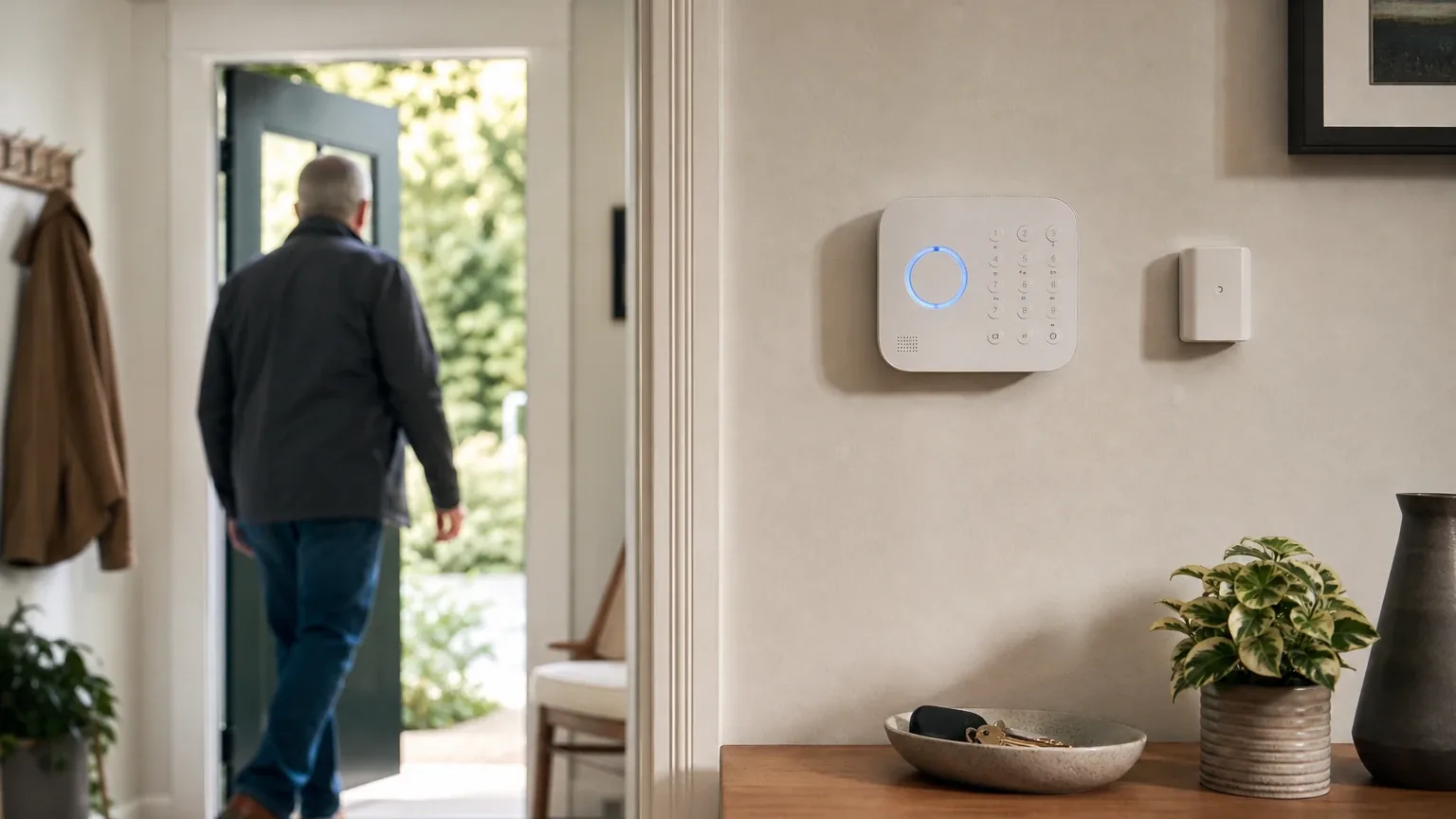
Answer Capsule
Ring is a mixed fit for Security Plus Emergency Response. Two of seven platforms named Ring during the ranking stage, and it finished with an average listed rank of 4.5 and a best rank of 4. Its strongest case is a low-cost, contract-free DIY alarm system with a $29.99 Panic Button (2nd Gen) that can be configured for Medical response and paired with Ring Protect Pro 24/7 professional monitoring at $19.99/month or $199.99/year [1]. The main limitation is that Ring is not a documented dedicated medical-alert system: reviewed materials do not establish fall detection, a wearable pendant, two-way voice at the button, or a medical-specific escalation protocol [1].
Research Snapshot
| Field | Finding |
|---|---|
| Platform mentions in ranking stage | 2 of 7 platforms (deepseek, google) |
| Share of included platform responses | 28.6% |
| Average listed rank | 4.5 |
| Best listed rank | 4 |
| Relevant product/model/plan | Ring Alarm with Panic Button (2nd Gen) and Ring Protect Pro professional monitoring |
| Overall use-case fit | Mixed |
| Research date | 2026-09-27 |
What Changed Since August 2026
Ring moved down from No. 7 to No. 10, and platform mentions were unchanged at 2. The September 2026 review shifts the focus from the Ring Alarm Pro system to Ring's broader alarm-and-panic-button offering, and the fit language is now more cautious about medical response. The described configuration remains a base station, panic button, and professional monitoring, with no change to the recommended setup. The Panic Button (2nd Gen) is newly reported at $29.99, while $20/mo is no longer repeated. A newly reported detail gives the button's base-station range as up to 250 feet in open air, which matters for where residents can place it. The core buyer-facing substance, strengths, and limitations are largely unchanged. Differences between the two editions reflect what each article reports; they do not by themselves prove that the product, service, or price changed.
The August 2026 review preserves the earlier article for reference.
Why Ring Qualified for This Study
Questions This Section Answers
- Why did Ring qualify for a Security Plus Emergency Response ranking with only two platform mentions?
- Is Ring a good choice for aging-in-place households that want burglary protection plus a panic button?
Ring qualified because it is one of the few mainstream DIY security providers that sells a dedicated physical panic button and pairs it with optional 24/7 professional monitoring. Two of seven platforms named Ring during ranking discovery — deepseek at rank 5 and google at rank 4 — producing a 28.6% mention share and an average listed rank of 4.5. That is a narrow base of support, and the ranking-stage count should not be read as broad platform endorsement.
The qualifying evidence is concrete. Ring sells a Panic Button (2nd Gen) that requires Ring Alarm or Alarm Pro, uses a three-second press, and can be configured in the app for Panic, Medical, or Fire response [5]. Ring Protect Pro is listed at $19.99 per month or $199.99 per year and includes 24/7 professional monitoring for compatible Ring Alarm systems [7]. Professional monitoring requires a Ring Alarm or Alarm Pro base station plus a compatible subscription, and enrollment requires a registered address, emergency contacts, and a verbal password [8].
Ring also fits the topic's geography. Ring states that compatible professional monitoring is available in all 50 U.S. states, excluding U.S. territories, and that Ring does not own its monitoring center [7]. That last point matters for a medical-adjacent use case, because it means the dispatch workflow runs through a third party whose medical training and protocols are not disclosed in the reviewed materials.
The Product, Model, Plan, or Service Most Relevant to Security Plus Emergency Response
Questions This Section Answers
- Which Ring product and plan should a buyer choose for Security Plus Emergency Response?
- Does the Ring Panic Button work without a Ring Alarm base station and a Ring Protect Pro subscription?
The relevant configuration is Ring Alarm with the Panic Button (2nd Gen) plus Ring Protect Pro monitoring. The button alone does not deliver the use case: it requires Ring Alarm or Alarm Pro, and professional monitoring requires a compatible subscription [9].
Platforms described the same bundle with inconsistent naming. Most listed it as "Ring Alarm with Panic Button (2nd Gen / 2026 Release)" with Ring Protect Pro monitoring. Google described it as "Ring Alarm with Ring Panic Button (2026 Model) and Ring Pro Plan," reflecting Ring's 2026 subscription renaming [11]. OpenAI described it as "Ring Alarm with Panic Button (2nd Gen) and Ring Protect Pro professional monitoring."
That naming conflict is unresolved in the supplied evidence. Ring's current materials identify the product as Panic Button (2nd Gen), while product pages also use "Newest Model," and a separate Panic Button (Newest Model) listing exists with Amazon Sidewalk or Z-Wave options [12]. The requested label "2nd Gen / 2026 Release" is not independently established by the reviewed sources. Buyers should confirm the exact generation and connectivity option at the point of sale rather than assuming a 2026 refresh.
What the AI Platforms Agreed About
Questions This Section Answers
- What do AI platforms agree the Ring Panic Button and Ring Protect Pro actually do for emergency response?
- Is Ring Protect Pro monitoring available nationwide for a Ring Alarm panic button?
Platforms agreed on the core mechanics. Ring sells a dedicated Panic Button accessory for Ring Alarm that can trigger an alarm event, and the button can be configured for a Medical response type in the Ring app [13]. Agreement here was strong across the platforms that addressed the feature directly.
Platforms also agreed that professional monitoring is optional and subscription-gated. Ring Protect Pro is listed at $19.99 per month or $199.99 per year, includes 24/7 professional monitoring for compatible Ring Alarm systems, and is available in all 50 U.S. states excluding territories [17]. Ring does not own its monitoring center [17].
A third area of agreement was the escalation shape. For SOS requests, Ring's documented process can call the first emergency contact, allow that contact to confirm or cancel the emergency, and request dispatch if the contact does not answer [19]. Ring's terms state that Ring may request dispatch but cannot directly dispatch emergency services, and that dispatch is not guaranteed [20]. Multiple platforms repeated the verification-first pattern [16].
Finally, platforms agreed on the absence of automatic detection. No reviewed source established fall detection, automatic health-event detection, or a wearable medical-alert pendant in the Ring Alarm ecosystem [13].
Where the AI Platforms Disagreed or Were Uncertain
Questions This Section Answers
- Do AI platforms agree on whether Ring Protect Pro handles medical emergencies differently from burglary alarms?
- Is the Ring Panic Button a wearable medical alert pendant or a fixed button?
The largest disagreement was the overall fit rating. Anthropic and grok rated Ring a "good" fit; openai, deepseek, google, kimi, and perplexity rated it "mixed." That split is not a factual conflict about hardware — it reflects different weightings of the same gap between burglary protection and dedicated medical alerting.
Medical escalation is the sharpest unresolved question. Ring's product page says the button can be configured for Medical response [22], but the reviewed documentation does not define the exact medical escalation workflow separately from panic or SOS handling. Anthropic found that the monitoring center "will follow the response plan" without disclosing protocol details, medical-specific training, or escalation steps [23]. Kimi reported that police dispatch is the default and that the user must verbally request medical help if able to speak with the monitoring center (kimi:ring-support-panic). OpenAI flagged that the reviewed public sources do not clearly state whether Ring Protect Pro monitoring includes every Panic Button medical-response scenario under identical dispatch rules [24]. These are platform-reported readings of incomplete documentation, not confirmed contradictions.
Pricing was also inconsistent. OpenAI listed Ring Protect Pro at $19.99/month or $199.99/year [25]; grok and google reported the same figures [26]; perplexity reported approximately $20/month or $200/year from a third-party FAQ [27]; anthropic and deepseek could not confirm monitoring pricing at all [28]. Kimi listed the Panic Button at roughly $34.99 single and $69.99 for a two-pack, while openai, anthropic, and google listed $29.99 [22].
Contract terms were reported as no-contract by several platforms [26], while Ring's own terms state that subscription plans auto-renew until canceled and that subscription fees are non-refundable [30]. Perplexity noted third-party claims that unused months may be refunded but could not confirm them against a primary Ring policy page [31].
Use-Case-Specific Features and Capabilities
Questions This Section Answers
- Does the Ring Panic Button support medical response, caregiver notifications, and 24/7 monitoring for aging-in-place households?
- How far can a Ring Panic Button be from the base station, and what happens if it is out of range?
The table below maps the topic's seven criteria to what the reviewed evidence supports.
| Criterion | Ring finding | Assessment |
|---|---|---|
| Panic button availability | Panic Button (2nd Gen) requires Ring Alarm or Alarm Pro, uses a three-second press, and can be configured for Panic, Medical, or Fire [32] | Advantage |
| Medical alert accessory support | Medical response setting exists, but no fall detection, wearable pendant, health monitoring, or automatic event detection was found [32] | Limitation |
| 24/7 monitoring | Ring Protect Pro at $19.99/month or $199.99/year includes 24/7 professional monitoring for compatible Ring Alarm systems [35] | Advantage |
| Emergency escalation protocol | SOS workflow can call the first emergency contact, allow confirmation or cancellation, and request dispatch if unanswered; Ring requests dispatch rather than directly dispatching, and dispatch is not guaranteed [36] | Neutral |
| Caregiver notifications | The button can notify shared users through the Ring app; emergency contacts can be added for monitoring and SOS workflows; no dedicated caregiver dashboard was established [32] | Advantage |
| Contract terms | Plans auto-renew until canceled; no long-term equipment contract or early-termination fee was identified in reviewed public sources [35] | Neutral |
| Equipment cost | Panic Button (2nd Gen) $29.99; Alarm Base Station (2nd Generation) $119.99; Alarm Pro Base Station $249.99 [33] | Advantage |
Two hardware details matter for placement. The button is a fixed Z-Wave accessory intended to be placed or mounted within range of the base station, with a reported range up to 250 feet in open air and line-of-sight, and it uses replaceable coin-cell batteries with an expected life up to three years [40]. It is not a wearable pendant, and the reviewed sources do not establish two-way voice communication through the button itself [42].
Ring's terms also limit what the system promises. Ring states that non-monitored offerings do not dispatch emergency authorities, and that Ring does not guarantee detection, availability, accuracy, or timely alerts [38]. Ring's professional-monitoring terms state that dispatch depends on local policies and responder resources [37].
Pricing, Fees, Contracts, and Ongoing Costs
Questions This Section Answers
- How much does Ring Alarm with a Panic Button and Ring Protect Pro cost per month, and are there setup or cancellation fees?
- Are there local permit or false-alarm fees that make Ring more expensive than the listed subscription price?
Known public pricing is comparatively transparent, but a complete deployment costs more than the headline numbers. The Panic Button (2nd Gen) is listed at $29.99, the Alarm Base Station (2nd Generation) at $119.99, and the Alarm Pro Base Station at $249.99 [43]. Ring Protect Pro is listed at $19.99 per month or $199.99 per year, plus applicable tax [45]. A 5-piece Alarm Security Kit is listed at $199.99 (official:C1).
Additional costs are documented. Ring warns that local permit, false-alarm, or Alarm Verified Guard Response fees may apply depending on jurisdiction, and that taxes are additional to listed subscription prices [45]. Professional installation starts at $129.99 per device, billed separately (official:C1, kimi:ring-installation). Sensors, keypads, range extenders, and replacement batteries add further cost.
Contract terms are the area with the most conflict. Ring's terms state that subscription plans auto-renew until canceled and that subscription fees are non-refundable [46]. Several platforms reported no long-term contract, month-to-month billing, and no early-termination fee [47]. Perplexity found third-party claims that unused months may be refunded but could not verify them against a primary Ring policy page [48]. The reviewed sources do not identify a long-term equipment contract or an early-termination fee, but buyers should confirm current cancellation, refund, and trial terms directly before ordering.
Best Suited For
Questions This Section Answers
- Who is Ring Alarm with a Panic Button actually best for in an aging-in-place household?
- Is Ring worth it for a household that wants one app for burglary protection and a fixed emergency button?
Ring is best suited to households that want DIY burglary protection first and a fixed panic button second. The strongest fit is a home where the resident can reliably reach a mounted or tabletop button, wants app-based notifications to family members, and is comfortable managing response types and emergency contacts in the Ring app [49].
It also suits buyers who want one integrated interface. Ring Alarm, the Panic Button, and Ring Protect Pro are designed to work together in the Ring app, providing a single interface for alarms and monitoring (deepseek:ring_alarm_page, deepseek:ring_protect_pro_page). Households already using Ring cameras or doorbells get additional integration value (deepseek:ring_alarm_page).
Cost-conscious buyers who want monitoring without a multi-year commitment are another fit, given the $19.99 monthly option and the absence of an identified early-termination fee [51]. Multiple buttons can be deployed across rooms for accessibility, and the protective cover plus three-second hold reduces accidental activation [52].
Probably Not Best Suited For
Questions This Section Answers
- Who should not choose Ring for Security Plus Emergency Response?
- Is Ring a poor choice for a senior with high fall risk who needs automatic detection?
Ring is probably not the best choice when medical alerting is the primary need rather than a secondary layer on top of burglary protection. Households needing a purpose-built medical-alert service with fall detection, wearable or mobile operation, two-way voice communication, or specialized senior-care workflows should look elsewhere [54].
Residents with severe mobility limitations who cannot reliably reach and operate a wall-mounted or tabletop button are a poor fit, because the button requires a conscious, deliberate three-second press [56]. The button is not waterproof and cannot be worn in the shower, and its physical size makes it unsuitable as a wearable pendant [57].
Buyers who require guaranteed direct emergency dispatch are also a poor fit. Ring's terms state that Ring requests dispatch rather than directly dispatching emergency services, and that dispatch is not guaranteed [58]. Households without reliable internet or without comfort using a smartphone app face additional friction, since monitoring and escalation depend on correct setup, address verification, communications availability, and configured emergency contacts [59].
When Another Option May Be Better
Questions This Section Answers
- What is a better alternative to Ring for a buyer who needs fall detection or a wearable medical alert pendant?
- When should a buyer choose a dedicated medical alert provider instead of Ring Alarm?
A dedicated medical-alert provider may be better when fall detection, wearable pendants, two-way voice, or senior-care monitoring matter more than integrated burglary protection. Multiple platforms named this scenario explicitly, pointing to dedicated medical-alert services as the stronger primary choice for those requirements (openai, anthropic, grok, kimi, perplexity).
Another monitored alarm provider may be better when the buyer requires a clearly documented direct-dispatch protocol, transparent cellular-backup details for the exact package, or stronger local installer support (openai). Buyers who want simpler bundled pricing or more explicit medical-alert documentation should compare other monitored security brands (perplexity).
A cellular-based medical alert system may be better when the household lacks reliable high-speed internet, since Ring Alarm depends on internet connectivity for monitoring communication (kimi:ring-alarm-specs). Buyers who want paramedic or ambulance dispatch as the default without police involvement should compare dedicated medical alert monitoring, which typically costs more per month than Ring's $19.99 (kimi:ring-protect-pro).
Questions to Verify Before Buying
Questions This Section Answers
- What should a buyer confirm with Ring before signing up for Panic Button medical response and Ring Protect Pro?
- Does a Ring medical button press receive the same monitoring treatment as a burglary alarm?
The reviewed platforms converged on a similar verification list. Buyers should confirm the following directly with Ring before purchase:
- When the Panic Button is configured for Medical, exactly who is contacted first, what information is shared, and under what conditions emergency dispatch is requested (openai).
- Whether a Medical button press receives the same 24/7 professional-monitoring treatment as an in-app SOS request and a burglary alarm (openai).
- Whether the monitoring center is trained and certified for medical emergencies or provides general emergency dispatch (anthropic).
- Whether the monitoring center calls 911 directly or attempts to reach the resident first, and what the default dispatch is if the resident cannot speak (kimi).
- Whether the Panic Button can be carried as a wearable pendant or must remain within range of the base station (openai, anthropic).
- Whether two-way voice communication is available during a medical event, and through which device (openai, google).
- What cellular, internet, and power-backup capabilities apply to the exact Ring Alarm package and location (openai, kimi).
- What local permit, false-alarm, guard-response, installation, tax, and equipment-replacement fees apply at the buyer's address (openai, grok).
- Whether current trial, refund, cancellation, or prorated-billing rules apply to Ring Protect Pro (openai, perplexity).
- Whether multiple caregivers can receive alerts with limited permissions rather than full account access (openai).
- Whether professional monitoring is licensed and available for the buyer's exact municipality and address (openai).
Final AI Consensus Verdict
Ring is a mixed fit for Security Plus Emergency Response. It is a reasonable choice for an aging-in-place household that primarily wants DIY burglary protection plus a low-cost fixed panic button, shared-user alerts, and optional professional monitoring. It is not the strongest choice when the central requirement is a comprehensive medical-alert service with wearable operation, fall detection, two-way voice, or specialized senior-care response.
The consensus is not unanimous. Two of seven platforms rated Ring a good fit; five rated it mixed. Two of seven platforms named Ring during ranking discovery, with an average listed rank of 4.5 and a best rank of 4. That level of platform agreement reflects consistent reading of the same public documentation, not proof of product quality or medical suitability.
The buyer should treat Ring's medical capability as an alarm-triggered emergency workflow, not as a substitute for a dedicated medical-alert system. The documented strengths are real: a $29.99 configurable panic button, $19.99/month monitoring, nationwide availability, and no identified long-term contract. The documented gaps are equally real: no established fall detection, no wearable pendant, no two-way voice at the button, and no disclosed medical-specific escalation protocol.
How This Review Was Produced
This review was produced from seven platform fit-research responses collected for the Security Plus Emergency Response use case, plus entity ranking statistics from the ranking stage. The study date is 2026-09-27. Each platform independently assessed Ring against the topic's seven criteria: panic button availability, medical alert accessory support, 24/7 monitoring, emergency escalation protocol, caregiver notifications, contract terms, and equipment cost.
Platform fit ratings were: anthropic good; grok good; openai, deepseek, google, kimi, and perplexity mixed. Ranking-stage mentions came from deepseek (rank 5) and google (rank 4). All included platforms evaluated fit, but the platform mention count reflects only platforms that named Ring during ranking discovery.
For broader context on how Ring compares with other providers evaluated for this use case, see the Security Plus Emergency Response consensus index. Related buying guides are organized in the home safety category directory.
Methodology Limitations
Several limitations apply. Company-owned citations materially outnumber independent citations in the supplied evidence, so company claims should not be described as independently verified. Citations are platform-reported evidence, not independently verified facts.
Platform-reported research dates differ from the authoritative run date: anthropic reported 2026-01-17 and deepseek reported 2026-06-01, while the remaining platforms reported 2026-09-27. These dates are provenance metadata and do not independently prove freshness. Deepseek's response was produced with search disabled, so its claims require explicit verification before being described as current facts.
The supplied URLs were collected from platform responses and were not independently validated by the writer stage. Conflicting product names, pricing, and capabilities were not resolved by guessing; where sources conflicted, this review describes the conflict and identifies what buyers should verify. Missing research was not interpreted as disagreement.
The reviewed sources do not provide a complete installed-system price for a typical aging-in-place home, and they do not establish fall detection, wearable operation, two-way audio at the button, or automatic medical-event detection. The requested label "2nd Gen / 2026 Release" is not independently established by the reviewed sources.
Sources
Company-Owned Sources
- Alarm Monitoring and Emergency Response – Security Plus: http://securityplus.co.ug/alarm-monitoring-and-response/
- Why You Need Home Security: https://blog.ring.com/home-security/why-alarm-monitoring-is-worth-it/
- Panic Button (2nd Gen: https://pa.ring.com/products/panic-button-v2
- Emergency Event and Professional Monitoring Terms: https://partners.ring.com/alarm-terms
- Enrolling in 24/7 Professional Monitoring: https://partners.ring.com/support/articles/ls86j/enrolling-in-alarm-professional-monitoring?redirect=true
- Ring and Alexa – Ring: https://ring.com/alexa
- Ring App | Ring: https://ring.com/app
- Alarm Panic Button | Smart Home Security: https://ring.com/ca/en/products/panic-button
- Ring Sensors and Alarms: https://ring.com/collections/home-security-systems
- Install and use your Ring Alarm Panic Button: https://ring.com/gb/en/support/articles/4hg0k/Installing-and-using-Ring-Alarm-Panic-Button-2nd-Gen
- Ring Protect Subscription Plans: https://ring.com/plans
- Ring Panic Button | Ring: https://ring.com/products/panic-button
- Panic Button (2nd Gen) | Ring: https://ring.com/products/panic-button-v2
- Panic Button (Newest Model) Ring Sensors: https://ring.com/products/panic-button-v3
- Ring Panic Button – Ring: https://ring.com/products/ring-alarm-panic-button
- Ring Alarm Security System | Ring: https://ring.com/products/ring-alarm-security-system
- Professional Installation for Ring – Ring: https://ring.com/professional-installation
- Ring Protect Plans | Ring: https://ring.com/protect-plans
- Ring Protect Pro Plan – Ring: https://ring.com/protect-pro
- Installing and using Panic Button (1st Gen: https://ring.com/support/articles/4c4mp/Installing-and-using-Panic-Button-1st-Gen
- Installing and using Ring Alarm Panic Button (2nd Gen: https://ring.com/support/articles/4hg0k/Installing-and-using-Ring-Alarm-Panic-Button-2nd-Gen
- Panic Button (2nd Gen) Customizable Settings and Options: https://ring.com/support/articles/f4ll3/Panic-Button-2nd-Generation-Customizable-Settings-and-Options
- Panic Button (2nd Gen) FAQ: https://ring.com/support/articles/td3zm/Ring-Alarm-Panic-Button-Gen-2-FAQ
- Using the SOS Button in the Ring app: https://ring.com/support/articles/x6hn2/Using-the-SOS-Button-in-the-Ring-App
- Showing results for cancel-for - Ring: https://ring.com/support/articles?query=cancel-for
- Ring Terms of Service: https://ring.com/terms
- Installing and using Ring Alarm Panic Button (2nd Gen: https://ring.com/us/en/support/articles/4hg0k/Panic-Button-Gen-2-Setup-and-Use
- Ring subscription plan changes in 2026: https://support.ring.com/hc/en-us/articles/29107386616468-Ring-subscription-plan-changes-in-2026
- Adding Shared Users on Ring – Ring Help: https://support.ring.com/hc/en-us/articles/360024462332-Adding-Shared-Users-on-Ring
- Ring Alarm Professional Monitoring – Ring Help: https://support.ring.com/hc/en-us/articles/360024462452-Ring-Alarm-Professional-Monitoring
- Ring 24/7 Professional Monitoring Emergency Response: https://support.ring.com/hc/en-us/articles/360035859671-Professional-Monitoring-Emergency-Response-Protocols
- Using Your Ring Alarm Panic Button – Ring Help: https://support.ring.com/hc/en-us/articles/360038472332-Using-Your-Ring-Alarm-Panic-Button
- Premium Guard Response in Toronto & GTA – Protection Plus: https://www.protectionplus.ca/business-security/premium-guard-response/
- Questions & Answers – Response Plus: https://www.responseplus.co.uk/information/q-and-as/
- Official pricing and terms source: https://ring.com
Additional AI research evidence59 records
- AI research evidence record openai:c1
- AI research evidence record openai:c2
- AI research evidence record openai:c3
- AI research evidence record anthropic:c5
- AI research evidence record openai:c1
- AI research evidence record openai:c2
- AI research evidence record openai:c3
- AI research evidence record openai:c4
- AI research evidence record openai:c1
- AI research evidence record openai:c4
- AI research evidence record google:1.2.1
- AI research evidence record anthropic:c5
- AI research evidence record openai:c1
- AI research evidence record openai:c2
- AI research evidence record anthropic:c3
- AI research evidence record perplexity:c6
- AI research evidence record openai:c3
- AI research evidence record perplexity:c15
- AI research evidence record openai:c5
- AI research evidence record openai:c6
- AI research evidence record anthropic:c5
- AI research evidence record openai:c2
- AI research evidence record anthropic:c4
- AI research evidence record openai:c6
- AI research evidence record openai:c3
- AI research evidence record google:2.1.4
- AI research evidence record perplexity:c15
- AI research evidence record anthropic:c1
- AI research evidence record google:1.1.3
- AI research evidence record openai:c8
- AI research evidence record perplexity:c12
- AI research evidence record openai:c1
- AI research evidence record openai:c2
- AI research evidence record anthropic:c5
- AI research evidence record openai:c3
- AI research evidence record openai:c5
- AI research evidence record openai:c6
- AI research evidence record openai:c8
- AI research evidence record openai:c7
- AI research evidence record anthropic:c2
- AI research evidence record perplexity:c8
- AI research evidence record google:1.3.5
- AI research evidence record openai:c2
- AI research evidence record openai:c7
- AI research evidence record openai:c3
- AI research evidence record openai:c8
- AI research evidence record google:2.1.4
- AI research evidence record perplexity:c12
- AI research evidence record openai:c1
- AI research evidence record anthropic:c3
- AI research evidence record openai:c3
- AI research evidence record anthropic:c2
- AI research evidence record anthropic:c4
- AI research evidence record openai:c1
- AI research evidence record anthropic:c5
- AI research evidence record anthropic:c2
- AI research evidence record google:1.3.5
- AI research evidence record openai:c6
- AI research evidence record openai:c4
Independent Sources
- I Tested Ring's 2026 Panic Button. It's Refreshingly All-Purpose: https://www.cnet.com/home/security/i-tested-rings-2026-panic-button-its-refreshingly-all-purpose/
- Ring Alarm Panic Button: https://www.crutchfield.com/p_169PANIC/Ring-Alarm-Panic-Button.html
- RING Panic Button GEN2: https://www.jeffliudesign.com/ring-panic-button-gen2
- How much does the subscription to the Ring service cost? - Lowe's Q&A: https://www.lowes.com
- Panic Button as Life Alert : r/Ring - Reddit: https://www.reddit.com/r/Ring/comments/15174it/panic_button_as_life_alert/
- Ring Camera Fall Detection: What Ring Actually Detects: https://www.remycamera.com/blog/ring-camera-fall-detection.html
- Ring Alarm Security System Cost and Pricing - SafeHome.org: https://www.safehome.org/home-security-systems/ring/costs/
- Cons Of Monitoring Contracts: https://www.safehome.org/security-systems/best/no-contract/
- Ring Frequently Asked Questions: https://www.safewise.com/home-security-systems/ring/faq/
- Ring Alarm Security System Pricing: https://www.security.org/home-security-systems/ring-alarm/
- Amazon unveils 2nd-gen Ring Panic Button for your most pressing matters: https://www.zdnet.com/home-and-office/smart-home/amazon-unveils-2nd-gen-ring-panic-button-for-your-most-pressing-matters/
Additional AI research evidence59 records
- AI research evidence record openai:c1
- AI research evidence record openai:c2
- AI research evidence record openai:c3
- AI research evidence record anthropic:c5
- AI research evidence record openai:c1
- AI research evidence record openai:c2
- AI research evidence record openai:c3
- AI research evidence record openai:c4
- AI research evidence record openai:c1
- AI research evidence record openai:c4
- AI research evidence record google:1.2.1
- AI research evidence record anthropic:c5
- AI research evidence record openai:c1
- AI research evidence record openai:c2
- AI research evidence record anthropic:c3
- AI research evidence record perplexity:c6
- AI research evidence record openai:c3
- AI research evidence record perplexity:c15
- AI research evidence record openai:c5
- AI research evidence record openai:c6
- AI research evidence record anthropic:c5
- AI research evidence record openai:c2
- AI research evidence record anthropic:c4
- AI research evidence record openai:c6
- AI research evidence record openai:c3
- AI research evidence record google:2.1.4
- AI research evidence record perplexity:c15
- AI research evidence record anthropic:c1
- AI research evidence record google:1.1.3
- AI research evidence record openai:c8
- AI research evidence record perplexity:c12
- AI research evidence record openai:c1
- AI research evidence record openai:c2
- AI research evidence record anthropic:c5
- AI research evidence record openai:c3
- AI research evidence record openai:c5
- AI research evidence record openai:c6
- AI research evidence record openai:c8
- AI research evidence record openai:c7
- AI research evidence record anthropic:c2
- AI research evidence record perplexity:c8
- AI research evidence record google:1.3.5
- AI research evidence record openai:c2
- AI research evidence record openai:c7
- AI research evidence record openai:c3
- AI research evidence record openai:c8
- AI research evidence record google:2.1.4
- AI research evidence record perplexity:c12
- AI research evidence record openai:c1
- AI research evidence record anthropic:c3
- AI research evidence record openai:c3
- AI research evidence record anthropic:c2
- AI research evidence record anthropic:c4
- AI research evidence record openai:c1
- AI research evidence record anthropic:c5
- AI research evidence record anthropic:c2
- AI research evidence record google:1.3.5
- AI research evidence record openai:c6
- AI research evidence record openai:c4
Other Sources
- Amazon.com: Ring Home Safety Alarm Accessories with Alarm Panic Button (2nd gen: https://www.amazon.com/Ring-Safety-Accessories-Button-Listener/dp/B0B4BRN9H2
Additional AI research evidence59 records
- AI research evidence record openai:c1
- AI research evidence record openai:c2
- AI research evidence record openai:c3
- AI research evidence record anthropic:c5
- AI research evidence record openai:c1
- AI research evidence record openai:c2
- AI research evidence record openai:c3
- AI research evidence record openai:c4
- AI research evidence record openai:c1
- AI research evidence record openai:c4
- AI research evidence record google:1.2.1
- AI research evidence record anthropic:c5
- AI research evidence record openai:c1
- AI research evidence record openai:c2
- AI research evidence record anthropic:c3
- AI research evidence record perplexity:c6
- AI research evidence record openai:c3
- AI research evidence record perplexity:c15
- AI research evidence record openai:c5
- AI research evidence record openai:c6
- AI research evidence record anthropic:c5
- AI research evidence record openai:c2
- AI research evidence record anthropic:c4
- AI research evidence record openai:c6
- AI research evidence record openai:c3
- AI research evidence record google:2.1.4
- AI research evidence record perplexity:c15
- AI research evidence record anthropic:c1
- AI research evidence record google:1.1.3
- AI research evidence record openai:c8
- AI research evidence record perplexity:c12
- AI research evidence record openai:c1
- AI research evidence record openai:c2
- AI research evidence record anthropic:c5
- AI research evidence record openai:c3
- AI research evidence record openai:c5
- AI research evidence record openai:c6
- AI research evidence record openai:c8
- AI research evidence record openai:c7
- AI research evidence record anthropic:c2
- AI research evidence record perplexity:c8
- AI research evidence record google:1.3.5
- AI research evidence record openai:c2
- AI research evidence record openai:c7
- AI research evidence record openai:c3
- AI research evidence record openai:c8
- AI research evidence record google:2.1.4
- AI research evidence record perplexity:c12
- AI research evidence record openai:c1
- AI research evidence record anthropic:c3
- AI research evidence record openai:c3
- AI research evidence record anthropic:c2
- AI research evidence record anthropic:c4
- AI research evidence record openai:c1
- AI research evidence record anthropic:c5
- AI research evidence record anthropic:c2
- AI research evidence record google:1.3.5
- AI research evidence record openai:c6
- AI research evidence record openai:c4
Verify This Research
Review the study details behind this page or download the public machine-readable verification record.
- Study date
- September 27, 2026
- Platforms analyzed
- 7
- Source records
- 47
- Ranking mentions
- 2 of 7
- Platform share
- 29%
- Final consensus rank
- #10
Research trail and source mix
Configured platforms
openai, anthropic, deepseek, grok, perplexity, kimi, google
Source mix
11 independent · 35 company-owned · 1 unclear
Evidence support
35 direct · 12 partial
Important limitation
Use the run research_date as the study date. Platform-reported dates are provenance metadata and do not independently prove freshness.
Source snapshot SHA-256 8b8d6ec50e6dc98569f6b9f43cea2e054fe042d013c3fbab1fdd44537275cfd9