
Answer Capsule
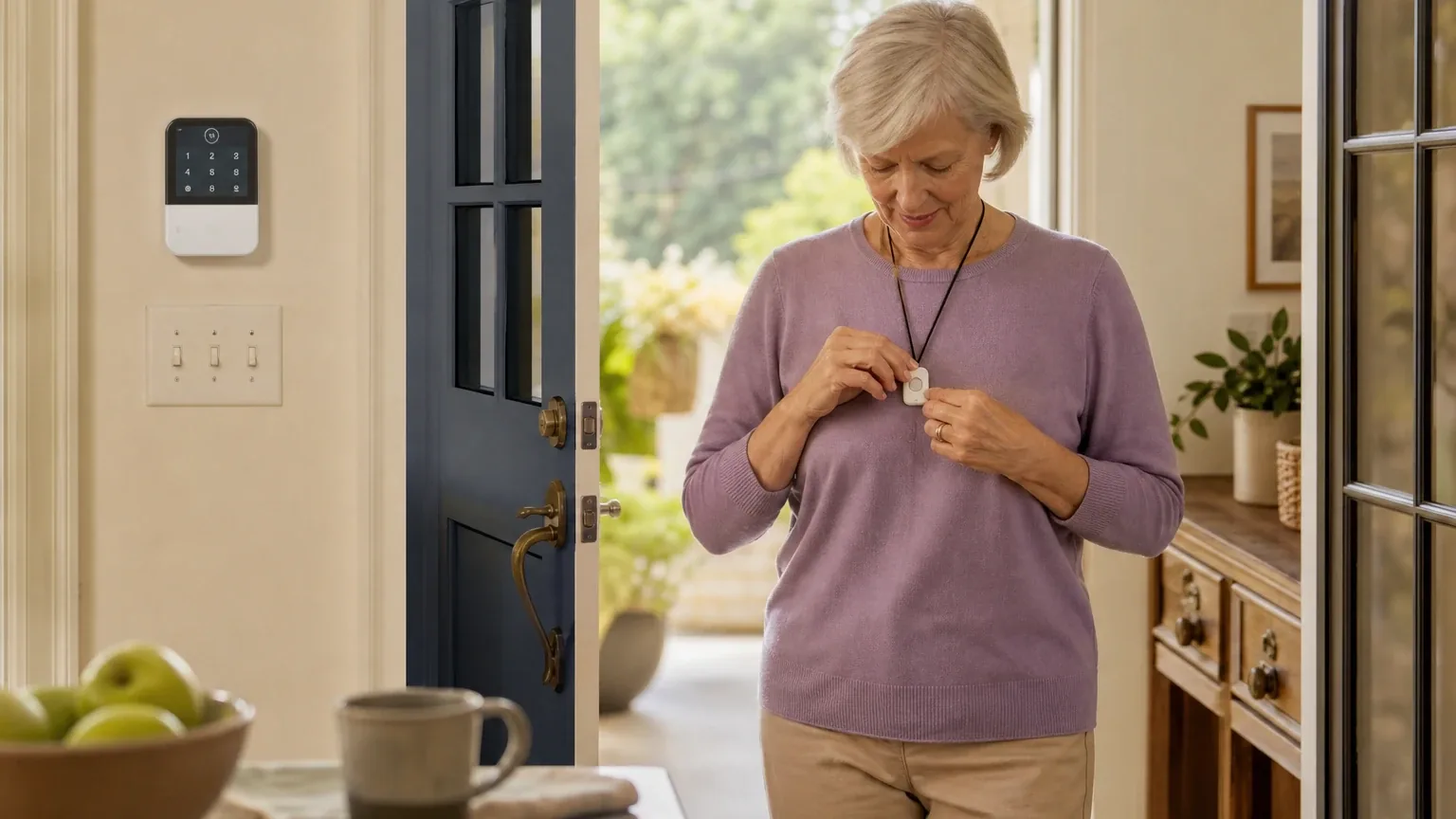
Vivint is a good, but not best-in-class, fit for Security Plus Emergency Response. Two of the seven platforms in this study named Vivint during the ranking stage, at an average listed rank of 4.0 and a best rank of 2. Its strongest value is a professionally installed burglary system combined with a manually activated Emergency Pendant and 24/7 monitoring escalation on one platform. The main limitation is that the pendant is a panic button, not a dedicated medical-alert device: no reviewed source verifies fall detection, pendant-based two-way voice, shower-safe wearability, or operation away from the Smart Hub. Buyers needing health-specific alerting should compare dedicated medical-alert providers.
Research Snapshot
| Field | Finding |
|---|---|
| Platform mentions in ranking stage | 2 of 7 platforms (deepseek, openai) |
| Share of included platform responses | 28.6% |
| Average listed rank | 4.0 |
| Best listed rank | 2 |
| Relevant product/model/plan | Vivint HomeProtect or HomeProtect Pro with Vivint Emergency Pendant and 24/7 Professional Monitoring |
| Overall use-case fit | Good (openai, anthropic, google); strong (grok); mixed (deepseek, kimi, perplexity) |
| Research date | 2026-09-27 |
What Changed Since August 2026
Vivint moved down from No. 3 to No. 7, and platform mentions decreased from 3 to 2. The September 2026 review keeps Vivint as a good but not best-in-class fit, and the recommended configuration is unchanged. The buyer-facing substance shifts mainly in emphasis: the description now presents the Emergency Pendant more squarely as a manual panic button rather than a medical-alert device, which is the most consequential difference for shoppers who need fall detection or shower use. Pricing evidence also moved: $44.99/month is newly reported, while $39.99/month is no longer repeated. Newer pendant specifications include 350 feet of open-air range and a 42 to 60 month contract range. Elsewhere, the fit guidance is largely a restatement. Differences between the two editions reflect what each article reports; they do not by themselves prove that the product, service, or price changed.
The August 2026 review preserves the earlier article for reference.
Why Vivint Qualified for This Study
Questions This Section Answers
- Is Vivint a good choice for Security Plus Emergency Response in an aging-in-place household?
- How many AI platforms ranked Vivint for home security with medical alert features?
Vivint qualified because it sells a wearable emergency pendant that connects to a professionally monitored security system, which is the exact combination this use case requires. Two of the seven platforms named Vivint during ranking discovery, giving it a 28.6% share of included platform responses, an average listed rank of 4.0, and a best rank of 2 (openai). All seven platforms evaluated Vivint's fit even though only two surfaced it in the ranking stage.
The fit ratings split: openai, anthropic, and google rated Vivint a good fit; grok rated it strong; deepseek, kimi, and perplexity rated it mixed. That spread reflects a real product tension rather than platform error. Vivint is a security company that added a panic pendant, not a medical-alert company that added a security panel, and the platforms weighted those two framings differently.
Vivint's own materials support the qualification. The company markets an Emergency Pendant as a senior-alert accessory and advertises a complimentary pendant for qualifying new customers aged 75 or older [1]. It also publishes 24/7 professional monitoring with emergency response coordination [4]. This report evaluates Vivint only for Security Plus Emergency Response; it is not a broad company review. For the wider field, see the Security Plus Emergency Response consensus index.
The Product, Model, Plan, or Service Most Relevant to Security Plus Emergency Response
Questions This Section Answers
- Which Vivint plan should a buyer choose if they need a panic pendant plus 24/7 monitoring?
- Does the Vivint Emergency Pendant work as a standalone medical alert device?
The relevant configuration is Vivint HomeProtect or HomeProtect Pro paired with the Vivint Emergency Pendant and 24/7 Professional Monitoring. The pendant is an add-on to a monitored Vivint system, not a standalone medical-alert service.
HomeProtect is the entry package: a Security Hub, keypad with Police, Fire, and Medical buttons, motion sensor, three door/window sensors, app access, and 24/7 monitoring [6]. HomeProtect Pro adds a Smart Hub with Emergency Two-Way Talk, four door/window sensors, one motion sensor, professional installation, cellular and battery backup, and monitoring, with a starting equipment price of $599.99 in one platform's account [7]. Google's research describes the pendant as the PANIC2 model, worn on a lanyard, wristband, belt clip, or wall mount, connecting wirelessly to the Smart Hub [8]. Anthropic describes a PANIC3 generation with up to 350 feet of open-air range, a CR2032 battery rated three to five years, and a silent alarm mode [10]. Grok cites PANIC2 specifications (grok:4). The naming differs across sources and generations, so buyers should confirm which pendant model is current before ordering.
The pendant's role is narrow and clearly documented. Pressing and holding the button for roughly two to three seconds signals the panel, which alerts the monitoring team [11]. Vivint support states that no response can result in authority dispatch and that designated contacts may be notified [13]. The monitoring specialist communicates through the home panel, not through the pendant itself [14]. No reviewed source establishes that the pendant includes fall detection, automatic health-event detection, or medical-alert function away from the Smart Hub [11].
What the AI Platforms Agreed About
Questions This Section Answers
- What do AI platforms agree the Vivint Emergency Pendant does when pressed?
- Is Vivint's 24/7 monitoring included with HomeProtect and HomeProtect Pro?
Agreement was strong on four points. First, Vivint offers a wearable one-button emergency pendant that triggers an alarm through the panel [15]. Second, activation requires a deliberate press of about two to three seconds, which reduces accidental triggers [15]. Third, the pendant signals the Smart Hub, the monitoring team attempts contact through the panel's two-way voice, and if the user does not respond or the emergency is confirmed, the specialist may dispatch emergency services and notify account contacts [23]. Fourth, 24/7 professional monitoring is included with the monitored plans and is required for the pendant to function [25].
Platforms also agreed on the core limitation. The pendant depends on proximity to the panel, with roughly 300 feet of open-space range that decreases with walls and obstructions [15]. It is water-resistant but not waterproof and should not be worn in the shower [15]. No platform verified fall detection. Agreement here reflects consistent reading of largely Vivint-owned documentation, not independent proof of real-world performance.
Where the AI Platforms Disagreed or Were Uncertain
Questions This Section Answers
- How long is the Vivint monitoring contract, and what early termination fee applies?
- Does Vivint provide dedicated caregiver notifications when the pendant is pressed?
Contract length is the sharpest disagreement. Grok states a 36-month agreement for discounted monitoring (grok:11, grok:14). Google reports contracts ranging from 42 to 60 months when equipment is financed [30]. Kimi describes contracts of roughly 3.5 to 5 years [32]. Deepseek says agreements are commonly multi-year with early-termination fees but treats specifics as unconfirmed [33]. Vivint's own terms state that subscriptions may be month-to-month or multi-month and that an active multi-month subscription may carry an early termination fee (official:C2). The exact term and fee formula are quote-specific and must be confirmed in writing.
Monitoring price is the second conflict. Published figures across platforms include $24.99/month, $29.99/month, and $44.99/month depending on package and offer [34]. Vivint's own offer terms list HomeProtect monitoring at $29.99/month and 24/7 monitoring starting at $24.99/month and $44.99/month on different pages (official:C1). These are not contradictions so much as offer-dependent tiers, but they make comparison difficult.
Caregiver notification is the third uncertainty. Grok states that monitoring agents call designated primary, secondary, and emergency contacts after dispatch or verification (grok:8, grok:16). Openai and anthropic say designated contacts can be notified but do not specify the number of contacts, channels, or whether caregivers can be configured separately [37]. Perplexity and deepseek found no clearly published caregiver-app workflow [39]. Kimi characterizes app notifications as general system alerts rather than elder-care-specific updates [41].
Two further gaps: no platform verified that monitoring specialists hold medical training beyond standard alarm handling [38], and no platform verified the pendant's universal retail price, since Vivint advertises a free pendant for qualifying customers 75+ but does not publish a standard price in the reviewed sources [42].
Use-Case-Specific Features and Capabilities
Questions This Section Answers
- Does the Vivint Emergency Pendant support fall detection or shower use?
- Can Vivint notify family caregivers when a medical alert is triggered?
Vivint covers the panic-button and monitoring criteria well and the medical-alert criteria only partially. The table below maps each category criterion to the evidence.
| Criterion | Finding | Assessment |
|---|---|---|
| Panic button availability | Emergency Pendant with 2–3 second press, multiple wear options [45] | Advantage |
| Medical alert accessory support | Pendant marketed as senior-alert accessory; no verified fall detection or clinical features [45] | Partial |
| 24/7 monitoring | Included with monitored plans; required for pendant function [49] | Advantage |
| Emergency escalation protocol | Panel two-way voice, monitoring contact, dispatch if no response, contact notification [51] | Advantage |
| Caregiver notifications | Contacts can be notified; channels and configuration unclear [52] | Unclear |
| Contract terms | Month-to-month available with upfront equipment; financed equipment ties to multi-month terms [54] | Limitation |
| Equipment cost | HomeProtect $349.99 plus $199 installation; HomeProtect Pro minimum $749.99 after discounts (official:C1) | Neutral |
Range and water resistance are the practical constraints. The pendant operates within roughly 300 feet of the panel in open space, less through walls, so multi-story homes and detached structures may have coverage gaps [45]. It is water-resistant but not submersible, which matters because bathrooms are a common fall location [45]. The pendant also requires a deliberate press, which may be difficult for users with limited dexterity [55]. Battery replacement is a CR2032 rated three to five years, and one source lists a $60 replacement pendant cost [57].
On the security side, the integration is genuine. HomeProtect and HomeProtect Pro combine door/window sensors, motion detection, and keypad controls with the pendant on one monitored platform [58]. The Smart Hub includes cellular connection and battery backup, which Vivint states keeps the system running during power and internet interruptions [61]. Vivint also states its monitoring is handled by U.S.-based in-house specialists and cites ASAP-to-PSAP dispatch protocols, though that claim was not independently verified in the reviewed sources [50].
Pricing, Fees, Contracts, and Ongoing Costs
Questions This Section Answers
- How much does Vivint HomeProtect cost per month, and what does the equipment cost upfront?
- Are there cancellation fees or equipment return requirements if a buyer ends Vivint service early?
Vivint pricing is offer-dependent, and no reviewed source establishes a single total cost for a pendant-equipped household. The published figures are starting or regular prices, not a guaranteed quote.
Vivint's offer terms list the standard HomeProtect package at $349.99 for equipment, $199 for professional installation, and $29.99/month for monitoring unless otherwise advertised (official:C1). The same page lists 24/7 professional monitoring starting at $24.99/month and, separately, $44.99/month (official:C1). HomeProtect Pro requires a minimum $749.99 equipment spend after discounts, professional installation, and execution of a Vivint services agreement (official:C1). Platform research adds equipment figures from $199.99 to $349.99 and installation from $0 to $199 depending on promotion [62]. One senior-alert offer states a $1.48/month cellular network maintenance fee [63]. Google's research lists optional cloud storage at $5/month per camera and a relocation fee of $129 to $149 [64].
Contract structure matters more than the headline price. Month-to-month service is available when equipment is purchased upfront, while financed equipment requires a separate agreement with a third-party financing partner, with 0% APR available for up to 60 months subject to credit approval (official:C1). Vivint's terms state that canceling a multi-month subscription may trigger an early termination fee, that the customer loses promotional pricing, and that devices may lose functionality and app access (official:C2). Vivint also states that cancellation may require a fee and equipment return when equipment is not fully owned [66]. One senior-alert page references a 60-day cancellation period for new customers 75+, but other pages describe cancellation fees, and the interaction with the signed agreement is unclear [63].
Additional fees are disclosed but open-ended. Vivint's terms state it may pass on third-party costs, private responder fees, false alarm fines, and related administration costs, and that the customer is responsible for the cost of emergency responder dispatch (official:C2). Taxes and local permit fees may also apply [68]. The exact monthly total for a pendant-equipped system, including the pendant charge, cellular fee, taxes, and any financing cost, cannot be established from the reviewed public materials.
Best Suited For
Questions This Section Answers
- Who gets the most value from Vivint HomeProtect with an Emergency Pendant?
- Is Vivint worth it for a household that wants burglary protection and a panic button on one system?
Vivint fits households that want one professionally installed system for burglary protection and manual emergency signaling. The clearest beneficiaries are aging-in-place households where the resident can reach and press the pendant and speak through the in-home panel, and where family members want monitoring personnel to contact designated account contacts after an emergency signal [69].
It also suits buyers who value professional installation and in-house monitoring over DIY flexibility, and who are comfortable with a services agreement or upfront equipment purchase [71]. Qualifying customers aged 75 or older who receive the complimentary pendant have a lower entry cost for the alert function [72]. Households already planning a Vivint smart-home installation can add the pendant without adding a second monitoring relationship [75].
Probably Not Best Suited For
Questions This Section Answers
- Who should not choose Vivint for Security Plus Emergency Response?
- Is Vivint a poor fit for a senior who needs fall detection or a waterproof wearable?
Vivint is a poor fit when the medical-alert function is the primary requirement rather than a supplement. Buyers who need automatic fall detection, a pendant with two-way voice, or a device worn in the shower should look elsewhere, because no reviewed source verifies those capabilities [76].
It is also a weak fit for large or multi-story homes where the pendant may fall outside its roughly 300-foot range, and for households that need the alert device to work away from the home, since the pendant depends on the panel [76]. Buyers unwilling to accept professional installation, required monitoring, equipment financing, or a multi-month commitment should treat the contract structure as disqualifying [81]. Budget-focused buyers comparing low-cost self-monitoring or DIY systems will find Vivint's total cost materially higher [81].
When Another Option May Be Better
Questions This Section Answers
- What is a better alternative to Vivint for a buyer who needs fall detection or a waterproof pendant?
- When is a dedicated medical alert provider better than Vivint's bundled security system?
Choose a dedicated medical-alert provider when fall detection, shower-safe wearability, cellular independence, GPS, or pendant-based two-way communication matters more than integrated burglary automation (openai, anthropic, kimi, google). Platforms named Life Alert, Medical Guardian, and Bay Alarm Medical as examples for that profile (anthropic, kimi). Choose a more transparent month-to-month security provider when avoiding professional installation, long commitments, or equipment financing is the priority (openai, deepseek, perplexity). Choose a system with broader caregiver-management tools when multiple family members need configurable alerts, escalation rules, or activity notifications, since Vivint's caregiver workflow is not clearly published (openai, perplexity, kimi). Buyers who want a low-cost standalone pendant without full home automation should compare dedicated personal emergency response devices before committing to a bundled system (deepseek, kimi).
Questions to Verify Before Buying
- Is the Emergency Pendant included, discounted, or billed separately for this exact quote and ZIP code?
- Does the quoted monitoring price include the pendant, the cellular maintenance fee, taxes, permits, and all required services?
- What is the exact contract length, early-cancellation charge, equipment ownership status, and equipment-return requirement?
- Is month-to-month service available for the proposed configuration, and what is the upfront purchase price?
- What happens if the pendant is pressed but the user cannot speak, the Smart Hub is unreachable, or the pendant is outside its effective range?
- How many caregiver or family contacts can be configured, and are notifications sent by call, text, app, or another method?
- Does Vivint offer fall detection, shower-safe wearability, cellular operation away from home, or pendant-based two-way audio?
- What backup battery duration and cellular coverage apply at the buyer's address?
- Are there installation, activation, moving, service-call, replacement, or lost-device fees?
- Does the 60-day cancellation statement apply to this exact offer and signed agreement?
Final AI Consensus Verdict
Vivint is a good, but not best-in-class, medical-alert fit for Security Plus Emergency Response. Its strongest value is integrated home security plus a manually activated Emergency Pendant with 24/7 professional escalation on one platform. Two of seven platforms named it in the ranking stage, at an average rank of 4.0 and a best rank of 2. Fit ratings ranged from strong (grok) to good (openai, anthropic, google) to mixed (deepseek, kimi, perplexity), and that spread tracks a real limitation: the pendant is a panic button, not a dedicated medical-alert device. Buyers should select Vivint when whole-home security and one-platform monitoring matter most, and should prefer a dedicated medical-alert provider when fall detection, shower use, independent cellular operation, or transparent flexible terms are essential.
How This Review Was Produced
This report synthesizes seven platform fit-research responses collected for the Security Plus Emergency Response use case under the topic "Best Home Security Systems With Medical Alert Features." Each platform evaluated Vivint against seven category criteria: panic button availability, medical alert accessory support, 24/7 monitoring, emergency escalation protocol, caregiver notifications, contract terms, and equipment cost. Two platforms named Vivint during ranking discovery; all seven produced fit assessments. The study date is 2026-09-27. Platform-reported research dates differ: anthropic reported 2026-01-10 and deepseek reported 2026-01-15, while the remaining platforms align with the run date. Those dates are provenance metadata and do not independently prove freshness. Citations are platform-reported evidence, not independently verified facts. Company-owned citations materially outnumber independent citations in the supplied catalog, so Vivint's own claims should not be read as independently confirmed. The supplied URLs were collected from platform responses and were not independently validated at the writing stage. For related coverage across the category, see the home safety directory.
Methodology Limitations
Several constraints limit this review. First, the evidence base is skewed: 30 of 39 deduplicated citations are company-owned, 8 are independent, and 1 is unclear, so most product claims trace to Vivint's own pages. Second, platform research dates diverge from the authoritative run date, and deepseek ran without search enabled, meaning its claims rest on model knowledge rather than retrieved sources. Third, pricing conflicts were not resolved: monitoring is listed at $24.99, $29.99, and $44.99 per month across sources, and the pendant's standard retail price is not published in the reviewed materials. Fourth, contract length is disputed, with platform estimates ranging from 36 to 60 months. Fifth, no reviewed source verifies fall detection, pendant-based two-way voice, shower-safe wearability, medical training for monitoring specialists, or real-world response performance. Sixth, caregiver notification mechanics are not clearly documented. Seventh, platform agreement reflects consistent reading of largely company-owned documentation and does not prove product quality. Buyers should confirm all pricing, contract terms, and alert workflows in writing before signing.
Sources
Company-Owned Sources
- Vivint Emergency Pendant - FAQs: https://support.vivint.com/article/Panic-Pendant-FrequentlyAskedQuestions
- Vivint Emergency Pendant - Use/Activate: https://support.vivint.com/article/Panic-Pendant-PANIC1-PANIC2-Activate
- Vivint Emergency Pendant (PANIC2) - General Info and Specifications: https://support.vivint.com/article/Products-General-Info-V-PANIC2-345-Panic-Button-Remote
- Vivint Emergency Pendant (PANIC3) - General Info and Specifications: https://support.vivint.com/article/Vivint-Emergency-Pendant-PANIC3-General-Info-and-Specifications
- What to Expect in an Alarm Situation: https://support.vivint.com/article/What-to-Expect-in-an-Alarm-Situation
- Vivint Emergency Pendant - FAQs: https://support.vivint.com/s/article/Panic-Pendant-FrequentlyAskedQuestions
- Vivint Official Website: https://www.vivint.com
- About Us | What Is Vivint Smart Home: https://www.vivint.com/company/about-us
- Smart Home Security | Vivint: https://www.vivint.com/company/newsroom/press/vivint-introduces-homeprotect-and-homeprotect-pro-empowering-everyone-live
- Home Security | Vivint: https://www.vivint.com/display/ar/other/security
- Vivint Home Security Cost & Packages: https://www.vivint.com/how-to-buy
- HomeProtect | Affordable Home Security Systems - No-Contract | Vivint: https://www.vivint.com/packages/home-security-homeprotect
- Vivint Emergency Pendant | (844) 883-1324: https://www.vivint.com/packages/senior-alert-system
- Vivint Emergency Pendant: https://www.vivint.com/products/emergency-pendant
- 24/7 Alarm & Home Security Monitoring Services: https://www.vivint.com/products/monitoring
- Vivint Smart Home Security: https://www.vivint.com/products/smart-home-security
- Smart Home Hub | Vivint: https://www.vivint.com/products/smart-hub
- How Much Does Alarm Monitoring Cost?: https://www.vivint.com/resources/article/how-much-does-alarm-monitoring-cost
- Vivint Emergency Pendant and Medical Alert Features: https://www.vivint.com/resources/article/medical-alert-devices
- Vivint Monthly Pricing: Real System Costs Broken Down | Vivint: https://www.vivint.com/resources/article/vivint-monthly-pricing
- Why All Seniors Need an Alert System: https://www.vivint.com/resources/article/why-all-seniors-need-an-alert-system
- How to Choose the Best Emergency Pendant - Vivint: https://www.vivint.com/resources/safety/emergency-pendant
- Senior Alert Systems & Monitoring: https://www.vivint.com/senior-alert-systems
- Vivint Emergency Pendant: https://www.vivint.com/shop/products/emergency-pendant
- Vivint Emergency Pendant - FAQs: https://www.vivint.com/support/products/Emergency-Pendant-FAQ
- Vivint Emergency Pendant - Use/Activate: https://www.vivint.com/support/products/Emergency-Pendant-Use
- Vivint Emergency Pendant (PANIC2) - General Info and Specifications: https://www.vivint.com/support/products/PANIC2-General-Info
- How Does Vivint Send Medical Alerts? | Vivint FAQ: https://www.vivintsource.com/faq/how-vivint-sends-medical-alerts
- What to Expect When Your Vivint Alarm Is Triggered: https://www.vivintsource.com/smart-home-academy/what-to-expect-when-your-vivint-alarm-is-triggered
- Official pricing and terms source: https://www.vivint.com/legal/terms-of-services
Additional AI research evidence82 records
- AI research evidence record openai:c6
- AI research evidence record anthropic:c8
- AI research evidence record perplexity:c2
- AI research evidence record openai:c4
- AI research evidence record anthropic:c6
- AI research evidence record anthropic:c4
- AI research evidence record anthropic:c5
- AI research evidence record google:1.1.3
- AI research evidence record google:1.1.8
- AI research evidence record anthropic:c2
- AI research evidence record openai:c1
- AI research evidence record anthropic:c3
- AI research evidence record openai:c3
- AI research evidence record openai:c2
- AI research evidence record openai:c1
- AI research evidence record anthropic:c1
- AI research evidence record google:1.1.2
- AI research evidence record perplexity:c1
- AI research evidence record kimi:c1
- AI research evidence record deepseek:c1
- AI research evidence record anthropic:c3
- AI research evidence record google:1.1.7
- AI research evidence record openai:c2
- AI research evidence record openai:c3
- AI research evidence record openai:c4
- AI research evidence record anthropic:c6
- AI research evidence record perplexity:c5
- AI research evidence record anthropic:c2
- AI research evidence record google:1.1.3
- AI research evidence record google:1.2.7
- AI research evidence record google:1.2.9
- AI research evidence record kimi:c3
- AI research evidence record deepseek:c3
- AI research evidence record openai:c4
- AI research evidence record anthropic:c4
- AI research evidence record perplexity:c5
- AI research evidence record openai:c3
- AI research evidence record anthropic:c1
- AI research evidence record perplexity:c3
- AI research evidence record deepseek:c1
- AI research evidence record kimi:c2
- AI research evidence record openai:c6
- AI research evidence record anthropic:c8
- AI research evidence record perplexity:c2
- AI research evidence record openai:c1
- AI research evidence record anthropic:c1
- AI research evidence record google:1.1.3
- AI research evidence record kimi:c2
- AI research evidence record openai:c4
- AI research evidence record anthropic:c6
- AI research evidence record openai:c2
- AI research evidence record openai:c3
- AI research evidence record perplexity:c3
- AI research evidence record google:1.2.7
- AI research evidence record anthropic:c3
- AI research evidence record google:1.1.2
- AI research evidence record anthropic:c2
- AI research evidence record anthropic:c4
- AI research evidence record anthropic:c5
- AI research evidence record deepseek:c1
- AI research evidence record anthropic:c7
- AI research evidence record perplexity:c4
- AI research evidence record openai:c7
- AI research evidence record google:1.2.7
- AI research evidence record google:1.2.9
- AI research evidence record openai:c8
- AI research evidence record anthropic:c8
- AI research evidence record openai:c4
- AI research evidence record openai:c2
- AI research evidence record openai:c3
- AI research evidence record anthropic:c6
- AI research evidence record openai:c6
- AI research evidence record anthropic:c8
- AI research evidence record perplexity:c2
- AI research evidence record deepseek:c1
- AI research evidence record openai:c1
- AI research evidence record anthropic:c2
- AI research evidence record kimi:c2
- AI research evidence record anthropic:c3
- AI research evidence record google:1.1.2
- AI research evidence record deepseek:c3
- AI research evidence record kimi:c3
Independent Sources
- How Much Does Vivint Cost Per Month? Real 2026 Prices: https://compareyoursecurity.com/blog/how-much-does-vivint-cost-per-month.html
- How Much Does Vivint Cost? (2026 Pricing) - HomeGuide: https://homeguide.com/costs/vivint-security-system-cost
- Vivint Monthly Cost & Plans Explained - Home Security Life: https://homesecuritylife.com/vivint-monthly-cost-plans-explained/
- Vivint Smart Home Security System Review 2024: https://www.cnet.com/home/security/vivint-home-security-system-review/
- Vivint Home Security Prices, Packages, Equipment & Plan Costs - SafeHome.org: https://www.safehome.org/home-security-systems/vivint/costs/
- Vivint Review - Security System Costs and Contracts: https://www.safehome.org/security-systems/vivint/
- Vivint Equipment: Cameras, Smart Devices, & More: https://www.safewise.com/vivint/equipment-compatibility/
- Vivint Home Security Review 2024: Pricing, Plans, and Features: https://www.usnews.com/360-reviews/services/home-security/vivint
Additional AI research evidence82 records
- AI research evidence record openai:c6
- AI research evidence record anthropic:c8
- AI research evidence record perplexity:c2
- AI research evidence record openai:c4
- AI research evidence record anthropic:c6
- AI research evidence record anthropic:c4
- AI research evidence record anthropic:c5
- AI research evidence record google:1.1.3
- AI research evidence record google:1.1.8
- AI research evidence record anthropic:c2
- AI research evidence record openai:c1
- AI research evidence record anthropic:c3
- AI research evidence record openai:c3
- AI research evidence record openai:c2
- AI research evidence record openai:c1
- AI research evidence record anthropic:c1
- AI research evidence record google:1.1.2
- AI research evidence record perplexity:c1
- AI research evidence record kimi:c1
- AI research evidence record deepseek:c1
- AI research evidence record anthropic:c3
- AI research evidence record google:1.1.7
- AI research evidence record openai:c2
- AI research evidence record openai:c3
- AI research evidence record openai:c4
- AI research evidence record anthropic:c6
- AI research evidence record perplexity:c5
- AI research evidence record anthropic:c2
- AI research evidence record google:1.1.3
- AI research evidence record google:1.2.7
- AI research evidence record google:1.2.9
- AI research evidence record kimi:c3
- AI research evidence record deepseek:c3
- AI research evidence record openai:c4
- AI research evidence record anthropic:c4
- AI research evidence record perplexity:c5
- AI research evidence record openai:c3
- AI research evidence record anthropic:c1
- AI research evidence record perplexity:c3
- AI research evidence record deepseek:c1
- AI research evidence record kimi:c2
- AI research evidence record openai:c6
- AI research evidence record anthropic:c8
- AI research evidence record perplexity:c2
- AI research evidence record openai:c1
- AI research evidence record anthropic:c1
- AI research evidence record google:1.1.3
- AI research evidence record kimi:c2
- AI research evidence record openai:c4
- AI research evidence record anthropic:c6
- AI research evidence record openai:c2
- AI research evidence record openai:c3
- AI research evidence record perplexity:c3
- AI research evidence record google:1.2.7
- AI research evidence record anthropic:c3
- AI research evidence record google:1.1.2
- AI research evidence record anthropic:c2
- AI research evidence record anthropic:c4
- AI research evidence record anthropic:c5
- AI research evidence record deepseek:c1
- AI research evidence record anthropic:c7
- AI research evidence record perplexity:c4
- AI research evidence record openai:c7
- AI research evidence record google:1.2.7
- AI research evidence record google:1.2.9
- AI research evidence record openai:c8
- AI research evidence record anthropic:c8
- AI research evidence record openai:c4
- AI research evidence record openai:c2
- AI research evidence record openai:c3
- AI research evidence record anthropic:c6
- AI research evidence record openai:c6
- AI research evidence record anthropic:c8
- AI research evidence record perplexity:c2
- AI research evidence record deepseek:c1
- AI research evidence record openai:c1
- AI research evidence record anthropic:c2
- AI research evidence record kimi:c2
- AI research evidence record anthropic:c3
- AI research evidence record google:1.1.2
- AI research evidence record deepseek:c3
- AI research evidence record kimi:c3
Other Sources
- Vivint Medical Panic Pendant: https://vivintsmarthomesystems.com/vivint-medical-panic-pendant/
Additional AI research evidence82 records
- AI research evidence record openai:c6
- AI research evidence record anthropic:c8
- AI research evidence record perplexity:c2
- AI research evidence record openai:c4
- AI research evidence record anthropic:c6
- AI research evidence record anthropic:c4
- AI research evidence record anthropic:c5
- AI research evidence record google:1.1.3
- AI research evidence record google:1.1.8
- AI research evidence record anthropic:c2
- AI research evidence record openai:c1
- AI research evidence record anthropic:c3
- AI research evidence record openai:c3
- AI research evidence record openai:c2
- AI research evidence record openai:c1
- AI research evidence record anthropic:c1
- AI research evidence record google:1.1.2
- AI research evidence record perplexity:c1
- AI research evidence record kimi:c1
- AI research evidence record deepseek:c1
- AI research evidence record anthropic:c3
- AI research evidence record google:1.1.7
- AI research evidence record openai:c2
- AI research evidence record openai:c3
- AI research evidence record openai:c4
- AI research evidence record anthropic:c6
- AI research evidence record perplexity:c5
- AI research evidence record anthropic:c2
- AI research evidence record google:1.1.3
- AI research evidence record google:1.2.7
- AI research evidence record google:1.2.9
- AI research evidence record kimi:c3
- AI research evidence record deepseek:c3
- AI research evidence record openai:c4
- AI research evidence record anthropic:c4
- AI research evidence record perplexity:c5
- AI research evidence record openai:c3
- AI research evidence record anthropic:c1
- AI research evidence record perplexity:c3
- AI research evidence record deepseek:c1
- AI research evidence record kimi:c2
- AI research evidence record openai:c6
- AI research evidence record anthropic:c8
- AI research evidence record perplexity:c2
- AI research evidence record openai:c1
- AI research evidence record anthropic:c1
- AI research evidence record google:1.1.3
- AI research evidence record kimi:c2
- AI research evidence record openai:c4
- AI research evidence record anthropic:c6
- AI research evidence record openai:c2
- AI research evidence record openai:c3
- AI research evidence record perplexity:c3
- AI research evidence record google:1.2.7
- AI research evidence record anthropic:c3
- AI research evidence record google:1.1.2
- AI research evidence record anthropic:c2
- AI research evidence record anthropic:c4
- AI research evidence record anthropic:c5
- AI research evidence record deepseek:c1
- AI research evidence record anthropic:c7
- AI research evidence record perplexity:c4
- AI research evidence record openai:c7
- AI research evidence record google:1.2.7
- AI research evidence record google:1.2.9
- AI research evidence record openai:c8
- AI research evidence record anthropic:c8
- AI research evidence record openai:c4
- AI research evidence record openai:c2
- AI research evidence record openai:c3
- AI research evidence record anthropic:c6
- AI research evidence record openai:c6
- AI research evidence record anthropic:c8
- AI research evidence record perplexity:c2
- AI research evidence record deepseek:c1
- AI research evidence record openai:c1
- AI research evidence record anthropic:c2
- AI research evidence record kimi:c2
- AI research evidence record anthropic:c3
- AI research evidence record google:1.1.2
- AI research evidence record deepseek:c3
- AI research evidence record kimi:c3
Verify This Research
Review the study details behind this page or download the public machine-readable verification record.
- Study date
- September 27, 2026
- Platforms analyzed
- 7
- Source records
- 39
- Ranking mentions
- 2 of 7
- Platform share
- 29%
- Final consensus rank
- #7
Research trail and source mix
Configured platforms
openai, anthropic, deepseek, grok, perplexity, kimi, google
Source mix
8 independent · 30 company-owned · 1 unclear
Evidence support
34 direct · 5 partial
Important limitation
Use the run research_date as the study date. Platform-reported dates are provenance metadata and do not independently prove freshness.
Source snapshot SHA-256 dff2bd53443cdbe415c29e6c8d7b519c1af1b910caca0b45d2ff274e202b195d
Archived editions
Browse earlier published research snapshots for this article. The latest edition remains at the current URL.