
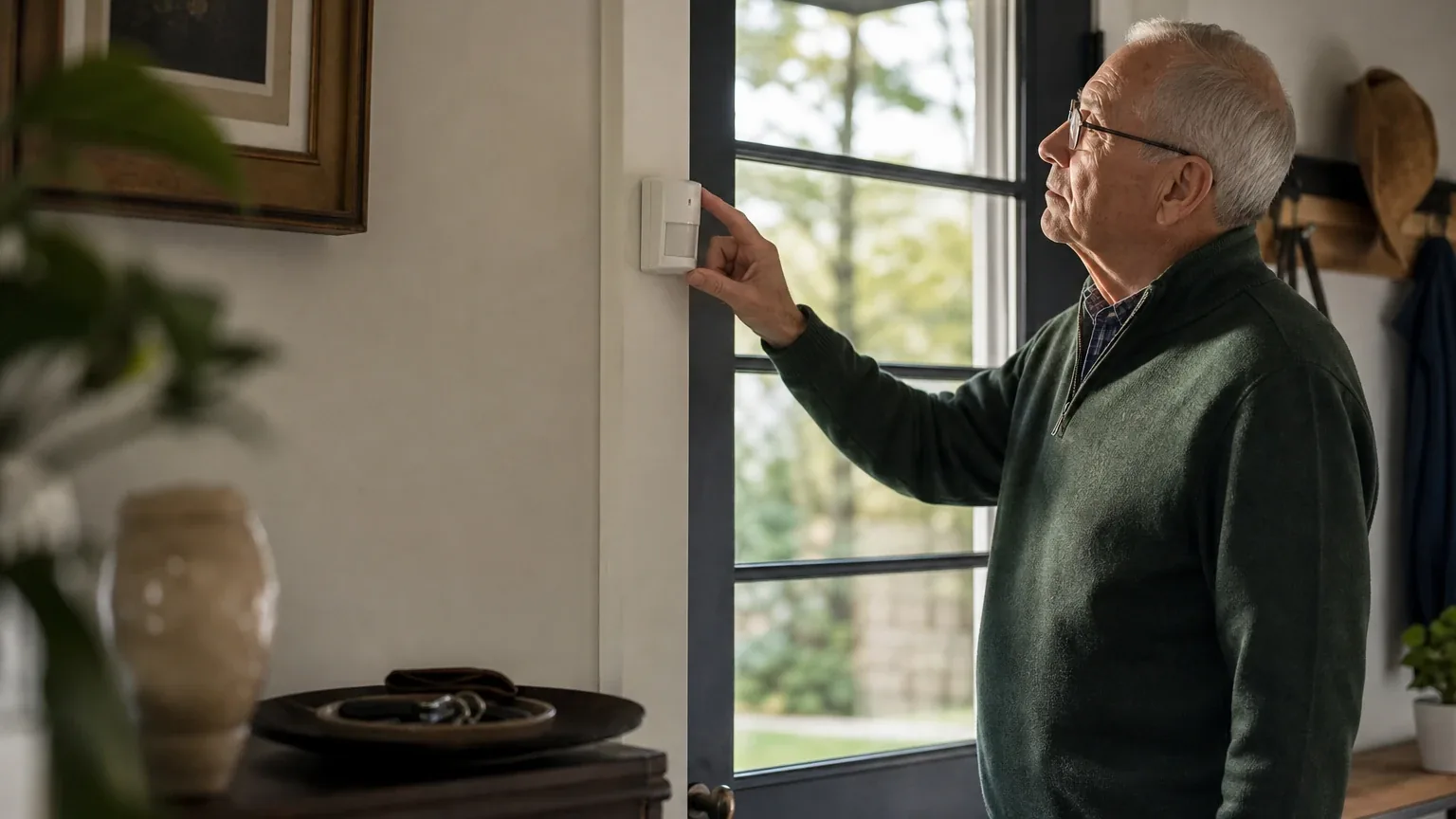
Answer Capsule
Abode is a good but conditional fit for senior-friendly home security, not a universal one. Two of the seven platforms that produced fit research named Abode during the ranking stage, and both placed it fifth; the other five evaluated it only after it was surfaced. The strongest reason to consider it is the combination of a dedicated wireless Panic Button, 24/7 professional monitoring with cellular backup on the Pro plan, and no long-term contract. The main limitation is that Abode is a DIY security system, not a medical-alert service: there is no purpose-built wearable pendant, no fall detection, medical routing for the Panic Button requires a support request, and professional installation is not clearly available.
Research Snapshot
| Field | Detail |
|---|---|
| Platform mentions in ranking stage | 2 of 7 platforms (anthropic, kimi) |
| Share of included platform responses | 28.6% |
| Average listed rank | 5.0 |
| Best listed rank | 5 |
| Relevant product/model/plan | Abode Smart Security Kit with Abode Pro Monitoring, plus Abode Panic Button |
| Overall use-case fit | Good (openai, grok); Mixed (anthropic, deepseek, google, kimi, perplexity) |
| Research date | 2026-11-10 |
Why Abode Qualified for This Study
Questions This Section Answers
- Did Abode make the ranking stage for senior-friendly home security on more than one AI platform?
- Why did Abode qualify for a senior home security ranking when most platforms rated its senior fit as mixed?
Abode qualified because two platforms independently named it among the best home security systems for Seniors during ranking discovery, and all seven platforms that produced fit research returned an assessment of it. Qualification was driven by the ranking stage, not by unanimous enthusiasm: only anthropic and kimi listed Abode in their rankings, both at fifth place, which is why its average listed rank is 5.0 and its share of included platform responses is 28.6% [22].
The five platforms that did not name Abode in the ranking stage still evaluated it for this use case, and their verdicts split. OpenAI and Grok rated Abode a good fit; Anthropic, DeepSeek, Google, Kimi, and Perplexity rated it mixed [16]. That split is the central fact of this review: Abode qualified on the strength of a real, documented panic-button and monitoring capability, but no platform treated it as a best-in-class senior medical-alert substitute.
Abode's own senior-focused marketing page is part of the record and should be read as company-owned evidence, not independent verification [18]. Independent senior-focused coverage exists but is thinner and sometimes partial in support strength [6].
The Product, Model, Plan, or Service Most Relevant to Senior-Friendly Home Security
Questions This Section Answers
- Which Abode kit and monitoring plan should a senior household buy for panic-button protection?
- Does the Abode Panic Button work as a medical alert without the Pro monitoring plan?
The configuration that matters for this use case is the Abode Smart Security Kit paired with the Abode Panic Button and the Pro monitoring plan. That is the combination OpenAI named directly and the one the other platforms describe in substance when they discuss panic signaling plus 24/7 dispatch [16].
The Panic Button is a separate wireless accessory that can be carried or placed in rooms such as bedrooms and bathrooms; it requires an Abode hub and, with professional monitoring enabled, its signal can be forwarded to the monitoring center [16]. Google's research adds that the button is described with a battery life of up to seven years and LED signal confirmation [16].
The Pro plan is what turns a panic press into a dispatched response. Abode's plans page describes Pro as including 24/7 professional monitoring from a U.S.-based monitoring center, 4G cellular backup, and automatic emergency dispatch for break-ins, fires, and medical emergencies [12]. Without Pro, the system does not automatically forward alarms to a monitoring center; Standard-plan users can only refer an active alarm themselves through user-initiated monitoring [19].
A critical qualifier: medical-emergency routing is not automatic from the product description alone. Abode's support documentation states that the Panic Button must be paired, the Pro plan must be active, and the customer must email support to request that Panic Button signals trigger a medical emergency alert [24]. Buyers should treat that support request as a required setup step, not an optional one.
What the AI Platforms Agreed About
Questions This Section Answers
- What do the AI platforms agree Abode does well for an older adult living independently?
- Do the platforms agree that Abode's panic button can reach a professional monitoring center?
The platforms agreed, with strong consistency, on four points: Abode offers a real panic-signaling path to professional monitoring, the Pro plan provides 24/7 monitoring with cellular backup, the system is contract-free, and the setup model is DIY.
On panic signaling, OpenAI, Anthropic, Google, Grok, and Kimi all describe a documented path from a panic press to a monitoring center or emergency contacts [22]. On monitoring, OpenAI, Anthropic, Perplexity, Grok, and Kimi all describe 24/7 professional monitoring with dispatch and cellular backup on the Pro tier [12]. On contracts, Abode's own no-contract page and multiple platform summaries agree that plans are month-to-month or annual with no long-term commitment [11].
The platforms also agreed on the structural limitation: Abode is a DIY system. Abode's support documentation says the owner is responsible for installation, maintenance, connectivity, permits, and possible false-alarm fines, and a separate support page states Abode does not offer installation services [26]. Grok, Kimi, DeepSeek, and Google all describe the system as DIY-first [1].
Agreement among platforms is not proof of product quality. Several of these findings trace back to the same company-owned pages, so the consensus reflects consistent reading of Abode's documentation more than independent verification.
Where the AI Platforms Disagreed or Were Uncertain
Questions This Section Answers
- Is professional installation currently available for an Abode system bought for a senior, and at what price?
- Can a caregiver get a separate Abode login with limited permissions rather than full owner control?
The sharpest unresolved conflict is professional installation. Abode published a 2019 announcement describing HelloTech installation beginning at $99 [8]. Forbes, per Anthropic's research, reported that the third-party installation option was discontinued in September 2025 [33]. Security.org's August 2026 review, also cited by Anthropic, still describes installation as available starting at $99 [39]. Abode's current support material says Abode itself does not offer installation services [23]. The status is genuinely unresolved and must be confirmed at checkout for the buyer's address.
Pricing shows smaller but real inconsistencies. Most 2026 sources converge on Pro at $26.99 per month or $245.99 per year [12]. Perplexity also found an official page listing Pro from $25 per month [14], and Anthropic's research notes older figures of $21.99, $22.99, and $25.99 per month in circulation [12]. Equipment pricing varies widely by promotion: OpenAI lists the Smart Security Kit at $300 [12], Anthropic cites $199 as a 50% promotional price from $399 [29], Grok cites $240 list with $99–$120 with Pro [39], and Kimi cites a 6-piece kit at $165.96 [5]. These are different kits and different promotions, not necessarily contradictions, but the buyer should price the exact configuration in cart.
Caregiver access is the second uncertainty. Abode documents that additional users can be invited with separate logins and notification preferences [20]. Anthropic's research found that role-based access is indicated but that specific caregiver-tier permissions, activity auditing, and monitoring-only modes are not published [40]. Perplexity's independent source likewise says whether a caregiver can manage the account without taking it over is undocumented [3]. Kimi raises a related open question about whether shared users receive the same priority alerts as the primary account holder [5].
Wearability is a third gap. The Panic Button is wireless and portable, but no platform found documentation of a purpose-built wearable pendant, fall detection, or two-way voice communication [16]. Google notes the button is not officially rated as a waterproof wearable medical-alert pendant [16].
Finally, monitoring performance is company-described. No platform identified independent response-time evidence, so dispatch speed and outcomes remain unverified [25].
Use-Case-Specific Features and Capabilities
Questions This Section Answers
- Can a senior arm and disarm Abode without using a smartphone?
- How does Abode's panic button compare with a wearable medical alert pendant for fall detection?
Abode covers the emergency-signaling criterion reasonably well and the wearable-pendant criterion poorly. The table below maps the five study criteria to what the evidence actually shows.
| Criterion | What the evidence shows | Assessment |
|---|---|---|
| Emergency pendant integration | Wireless Panic Button, key fob panic function, and Keypad 2 Panic/Fire/Medical keys; no purpose-built wearable pendant or fall detection [16] | Partial |
| 24/7 monitoring responsiveness | Pro plan: U.S.-based 24/7 monitoring, automatic dispatch, 4G cellular backup; response times not independently verified [12] | Strong on paper |
| Interface simplicity | Keypad 2 arms/disarms without a phone and supports 3-second emergency key holds; app required for setup and alerts [21] | Mixed |
| Caregiver access controls | Separate user invitations with individual notification preferences; granular caregiver roles undocumented [20] | Partial |
| Professional installation options | DIY by default; third-party installation status contradictory [23] | Unresolved |
On interface simplicity, the Keypad 2 is the most senior-relevant piece of hardware. It supports phone-free arming and dedicated Panic, Fire, and Medical emergency controls, with Google specifying a three-second press [21]. Anthropic's research notes the key fob panic requires a five-second hold and the keypad requires a three-second hold on a button combination, both slower than a dedicated medical-alert pendant [31]. Kimi's research adds that the 6-piece kit ships with a key fob rather than a wall keypad, so the Keypad 2 may be an extra purchase depending on the bundle [5].
On connectivity resilience, the Pro plan's 4G cellular backup keeps the system online during internet outages [12]. Kimi's research rates the hub battery at up to 12 hours, shorter than some competitors' 24 hours, which matters in outage-prone areas [5]. Local keypad control can arm and disarm offline, but alerting the monitoring center requires connectivity [41].
On smart-home integration, Abode supports Apple HomeKit, Alexa, and Google Home, which can let a senior arm the system by voice [4]. Kimi cautions that the newer Security Hub in the 6-piece kit drops HomeKit, Z-Wave, and Zigbee, which remain on the iota and Smart Security Hub models [5].
Pricing, Fees, Contracts, and Ongoing Costs
Questions This Section Answers
- What does an Abode senior setup cost in the first year with Pro monitoring?
- Are there cancellation fees or a long-term contract on Abode's Pro monitoring plan?
Abode's published costs are moderate and contract-free, but the exact equipment price depends heavily on which kit and promotion the buyer lands on. The most consistently reported figures are Pro monitoring at $26.99 per month or $245.99 per year, the Panic Button at $21.99 promotional or $24.99 regular, and the Smart Security Kit at $300 on Abode's plans page [12].
| Item | Reported cost | Source basis |
|---|---|---|
| Smart Security Kit | $300 (openai); $199 promo from $399 (anthropic); $240 list/$99–$120 with Pro (grok); $165.96 6-piece (kimi) | Conflicting by kit and promotion |
| Abode Panic Button | $21.99 promo / $24.99 regular | [12] |
| Pro monitoring | $26.99/mo or $245.99/yr | [12], [12], [12] |
| Standard monitoring | $8.49/mo or $79.99/yr | [40], [12] |
| Free tier | $0 self-monitoring | [12] |
| Video storage add-on | $9.99/mo per camera | [12], [12] |
On contracts, Abode's plans page states plans can be changed or canceled through the app without cancellation fees, and annual-plan switches are prorated [12]. Buyers should still confirm renewal and refund terms at checkout, since the Pro plan may renew automatically unless canceled.
Additional costs the platforms flagged: local alarm-permit fees, false-alarm fines that are not assumed to be covered by Abode, third-party installation fees if an installer is used, extra sensors and cameras, replacement batteries, and applicable taxes [26]. Anthropic also notes equipment financing through Bread and on-demand monitoring at $8 for three days or $15 for seven days [12].
A first-year estimate using the most consistently reported figures—Smart Security Kit at $300, Panic Button at $24.99, and Pro at $245.99 annually—lands near $571 before permits, taxes, and any Keypad 2. Anthropic's own estimate ranges $500–$650 depending on promotions [29]. Treat these as planning figures, not quotes.
Best Suited For
Questions This Section Answers
- Is Abode a good choice for an older adult who wants home security plus an in-home panic button and has family nearby to help?
Abode is best suited to an older adult living independently who wants home-intrusion protection supplemented by an in-home panic button, and who has a family member or caregiver able to handle setup, app configuration, and testing. OpenAI's fit assessment names exactly this profile, and Grok's does as well [16].
Within that profile, the strongest sub-cases are households that want a dedicated panic button in the bedroom or bathroom alongside door, window, fire, and water sensors [16]; families that need shared app access and remote notifications so adult children can check status and receive alerts [20]; and buyers who want professional monitoring without a long-term contract [11].
It also suits households that value smart-home integration, since Abode supports HomeKit, Alexa, and Google Home and can be armed by voice [4]. Kimi's research frames the contract-free model as especially useful for seasonal or travel-only monitoring [5].
Probably Not Best Suited For
Questions This Section Answers
- Is Abode a poor fit for a senior who lives alone and needs a wearable pendant with fall detection?
Abode is probably not the right choice when the core requirement is a purpose-built medical-alert device rather than home security. Every platform that addressed the question flagged the absence of a wearable pendant, fall detection, and two-way voice communication as a limitation for that buyer [16].
It is also a weak fit for an older adult who cannot manage a hub, app account, batteries, connectivity, and alarm-permit responsibilities without help [26]. Buyers who require turnkey professional installation directly from the provider should not assume Abode offers it, given the unresolved installation conflict [23].
Households needing granular caregiver roles—monitoring-only access, activity auditing, differentiated permissions—should treat Abode as unproven on that point until Abode confirms what its user management supports [30]. And seniors in areas with unreliable internet who do not want to pay for the Pro plan's cellular backup face a real gap, since alerting to the monitoring center depends on connectivity [40].
When Another Option May Be Better
Questions This Section Answers
- When is a dedicated medical alert service a better buy than Abode for a senior living alone?
- When is a professionally installed security system a better choice than Abode for an older adult?
A dedicated medical-alert provider is likely the better buy when the primary need is a wearable pendant, fall detection, two-way voice communication, or senior-specific emergency response rather than intrusion protection [16]. OpenAI, Anthropic, Google, Grok, and DeepSeek all name this alternative explicitly.
A professionally installed alarm provider is likely better when the older adult cannot safely or reliably perform setup, testing, maintenance, or alarm-permit tasks [16]. This is the criterion where Abode's DIY model and unresolved installation status create the most friction.
A system with more explicit caregiver roles and senior-focused usability testing may be better when multiple family members need differentiated access or the user has substantial technology limitations [16]. Kimi adds that buyers who want one-touch keypad arming out of the box should compare against systems that include a keypad in the base kit [5].
For readers still comparing across the category, the Senior-Friendly Home Security consensus index ranks the full field, and the home safety directory covers adjacent categories such as fall prevention and emergency response.
Questions to Verify Before Buying
Questions This Section Answers
- What should a buyer confirm with Abode about medical-emergency routing before relying on the Panic Button?
- What should a buyer confirm about installation, permits, and cancellation terms before ordering an Abode system?
Before relying on the system, confirm that Abode has enabled the specific Panic Button as a medical-emergency signal for the account, since the Plans FAQ requires an email request to support [24]. Confirm the exact monitoring procedure for Panic, Medical, Fire, and burglary signals, including call order, verification, and dispatch rules [25].
Confirm whether the Panic Button works reliably throughout the home, including bathrooms and bedrooms, and what happens if the hub loses power, internet, or cellular coverage [16]. Ask whether a wearable attachment or lanyard is supported and appropriate for continuous carrying [16].
Confirm whether a caregiver can receive alerts and control the system without full owner-level permissions, and whether activity logs exist [20]. Confirm whether professional installation is currently available at the buyer's address through Abode or an approved third party, and at what total price [23].
Confirm local alarm-permit, registration, false-alarm, and emergency-contact requirements [26]. Confirm current monthly and annual prices, renewal terms, taxes, equipment warranty, return period, and cancellation or refund rules [12]. Confirm cellular backup is available at the specific address and supported by the chosen hub [12]. Finally, assign who will test the Panic Button, batteries, cellular backup, and monitoring workflow regularly [26].
Final AI Consensus Verdict
The consensus verdict is a conditional yes. Abode is a good fit for an older adult living independently when family or a caregiver can assist with installation, configuration, testing, and app access, and when the buyer wants home-security monitoring plus an in-home panic button [16]. It is not the strongest fit when the core requirement is a purpose-built senior medical-alert pendant, fall detection, two-way voice communication, or turnkey professional installation [16].
The split is real: two platforms rated Abode good and five rated it mixed, and only two named it during ranking discovery, both at fifth place. The strongest documented capability is the panic-button-plus-Pro-monitoring path with cellular backup and no contract. The weakest documented areas are wearability, caregiver role granularity, and installation availability. Buyers should verify medical routing, installation, and caregiver permissions before purchase rather than assuming them.
How This Review Was Produced
This review was produced from fit-research responses submitted by seven AI platforms for the topic "Best Home Security Systems for Seniors" under the use case Senior-Friendly Home Security, with a research date of 2026-11-10. Each platform returned a fit rating, use-case findings, pricing and terms, limitations, and questions to verify, along with citations. Abode qualified for inclusion because at least two platforms named it during ranking discovery, meeting the study's minimum-mentions threshold of two.
The review evaluates Abode only for this use case. It is not a broad company review. Platform fit ratings were tallied as reported: good from OpenAI and Grok, mixed from Anthropic, DeepSeek, Google, Kimi, and Perplexity. Citations are reproduced as platform-reported evidence and were not independently verified at the writing stage.
Methodology Limitations
Several limitations apply. Platform mentions count only platforms that named Abode during ranking discovery, not all platforms that evaluated it, so the 28.6% share understates how many platforms actually assessed Abode. Platform-reported research dates differ from the authoritative run date: DeepSeek's response is dated 2026-06-15 while the others are dated 2026-11-10, and those dates are provenance metadata that do not independently prove freshness.
Company-owned citations materially outnumber independent citations in the supplied catalog, so company claims should not be read as independently verified. DeepSeek's research ran without search enabled, so its findings are platform-reported rather than retrieved. The supplied URLs were collected from platform responses and were not independently validated by the writing stage. Conflicting product names, pricing, and capabilities were described rather than resolved. No platform supplied independent monitoring response-time evidence, and no personal testing or customer experience was conducted for this review.
Sources
Company-Owned Sources
- Abode — Official Website: https://goabode.com/
- abode Partners with HelloTech to Add Do it For Me Installation Services: https://goabode.com/blog/abode-partners-with-hellotech-to-add-do-it-for-me-installation-services/
- Home Security for Elderly Parents 2026: Safer Aging-in-Place Without Over-Monitoring: https://goabode.com/blog/home-security-for-elderly-parents-2026/
- HomeKit Security System 2026: Why Abode Is the Only Option: https://goabode.com/blog/homekit-security-system-2/
- No-Contract Home Security System 2026: https://goabode.com/no-contract-home-security/
- Abode Plans & Pricing 2026: https://goabode.com/plans/
- Abode Security Kit - DIY Home Security System | No Contract: https://goabode.com/product/abode-security-kit/
- Pro Plan - Monthly - Abode: https://goabode.com/product/free-month-pro-monitoring/
- Keypad 2 | Abode Home Security Support: https://goabode.com/product/keypad-2
- Panic Button - Abode - Call For Help With The Press Of A Button: https://goabode.com/product/panic-button/
- Smart Security Kit: https://goabode.com/product/smart-security-kit/
- Best Security System for Seniors and Aging Parents - Abode: https://goabode.com/security-system-for-seniors-aging-parents/
- User-Initiated Monitoring: https://goabode.com/user-initiated-monitoring/
- How to Add a User to an Existing Account: https://help.goabode.com/en/articles/12604985-how-to-add-a-user-to-an-existing-account
- Video Doorbell FAQ: https://help.goabode.com/en/articles/8914337-video-doorbell-faq
- Understanding the Professional Monitoring Service: https://help.goabode.com/en/articles/8940919-understanding-the-professional-monitoring-service
- Alarm Permits: https://help.goabode.com/en/articles/8940963-alarm-permits
- Abode App Overview: https://help.goabode.com/en/articles/8942333-abode-app-overview
- User Initiated Professional Monitoring | Abode Home Security Support: https://help.goabode.com/en/articles/9554974-user-initiated-professional-monitoring
- Meet AT&T Connected Life℠ + Google Home: https://www.att.com/connected-life/buy/
Independent Sources
- Best DIY Home Security Systems for Seniors (2026: https://aginginplaceindex.com/home-safety/diy-senior-friendly-security-setup
- Abode iota Security Kit Review for Senior Homes: https://aginginplaceindex.com/home-safety/door-window-motion-safety-alerts/abode-iota-security-kit
- Abode Review for Seniors: Month-to-Month Security: https://aginginplaceindex.com/home-safety/flexible-month-to-month-home-security/abode
- Abode Home Security Review 2026: Hubs, Sensors, Cameras, Monitoring, Smart-Home Support, and Cost: https://alarm-reviews.net/abode-home-security-system-review/
- Best Home Security Systems for Seniors (2026): Simple, No Contract: https://circuitandchime.com/home-security-systems/seniors
- Top 5 Best Security Systems for Seniors in 2026: https://cybernews.com/best-home-security-systems/for-seniors/
- Abode Review 2026 Update: Equipment, Monitoring, Cameras, and Cost: https://home-security-reviews.com/abode-review/
- Home Security for Seniors 2026: Simple Controls, Alerts, Monitoring, and Caregiver Access: https://home-security-reviews.com/best-home-security-systems-seniors/
- Abode Security Kit review: An affordable home security system: https://news.yahoo.com/abode-security-kit-review-affordable-191309554.html
- Abode Home Security Review - Forbes: https://www.forbes.com/home-improvement/home-security/abode-home-security-review/
- Abode Cost and Pricing: https://www.home-security.com/systems/abode/pricing
- Abode Home Security Review 2021: https://www.reviews.com/home/security-systems/abode-review/
- SafeWise Abode Home Security Review: https://www.safewise.com/home-security-systems/abode/
- Abode Security Systems Comparison: Which Should You Pick?: https://www.safewise.com/home-security-systems/abode/compare/
- Abode Review: https://www.safewise.com/resources/abode-review/
- abode Security System Plans & Pricing 2026: https://www.security.org/home-security-systems/abode/
- abode Security Review 2026: https://www.security.org/home-security-systems/abode/review/
- abode Home Security System Review 2026: Expert Tested: https://www.usnews.com/360-reviews/services/home-security/abode
Verify This Research
Review the study details behind this page or download the public machine-readable verification record.
- Study date
- November 10, 2026
- Platforms analyzed
- 7
- Source records
- 41
- Ranking mentions
- 2 of 7
- Platform share
- 29%
- Final consensus rank
- #9
Research trail and source mix
Configured platforms
openai, anthropic, deepseek, grok, perplexity, kimi, google
Source mix
18 independent · 23 company-owned
Evidence support
28 direct · 11 partial
Important limitation
Use the run research_date as the study date. Platform-reported dates are provenance metadata and do not independently prove freshness.
Source snapshot SHA-256 3da8918de466fb29e3830a5c531fd9c9a404a680502f7bb54247e383bec252f1