
Answer Capsule
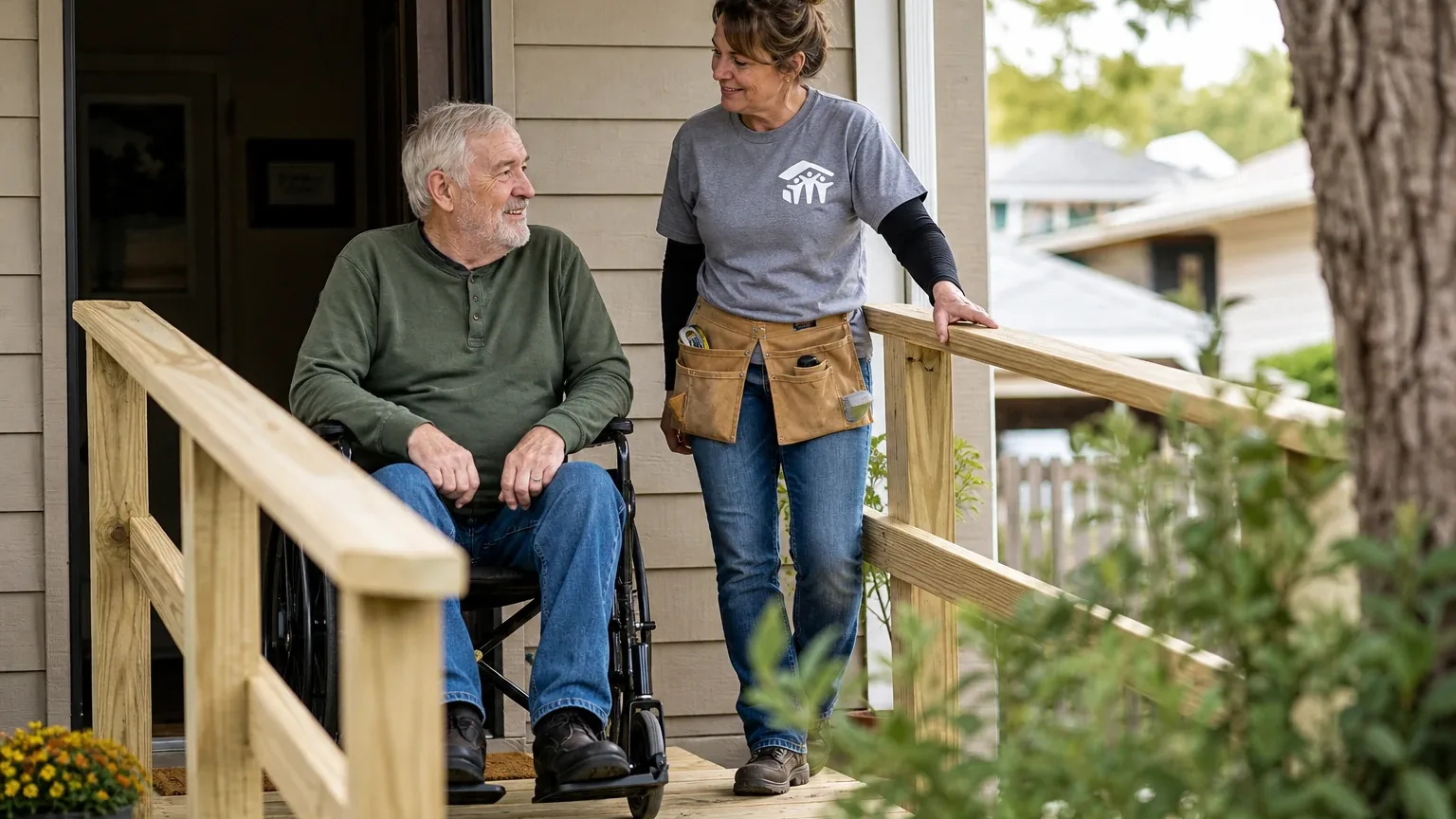
Habitat for Humanity is a mixed fit for senior home accessibility renovations. Three of seven AI platforms (43%) named Habitat for Humanity during the ranking stage, with an average listed rank of 4.33 and a best rank of 2. The strongest reason to consider Habitat is its affordability model: income-qualified seniors can receive subsidized or fully forgivable modifications, with some affiliates offering 0% interest loans deferred 30 years or until home sale [1]. The main limitation is extreme local variability: there is no national pricing, no standardized warranty, no verified CAPS credential requirement, and service scope depends entirely on the local affiliate [3]. Habitat is best suited for low-income homeowners needing modest safety modifications like ramps, grab bars, and grab-bar installations—not for comprehensive structural remodels requiring certified expertise and guaranteed timelines.
Research Snapshot
| Metric | Value |
|---|---|
| Platform mentions in ranking stage | 3 of 7 platforms (anthropic, google, grok) |
| Share of included platform responses | 42.9% |
| Average listed rank | 4.33 |
| Best listed rank | 2 (grok) |
| Relevant product/model/plan | Aging in Place Program / Home Preservation via local affiliates |
| Overall use-case fit | Mixed (2 good, 3 mixed, 3 weak across 7 platforms) |
| Research date | 2026-08-13 |
Why Habitat for Humanity Qualified for This Study
Habitat for Humanity qualified because three of seven AI platforms—Anthropic, Google, and Grok—named it during the ranking discovery stage for senior home accessibility renovations. The entity received a final rank of 3 overall, with platform-specific ranks of 3 (Anthropic), 8 (Google), and 2 (Grok). The relevant product is the Aging in Place Program, also described as Home Preservation or Housing Plus, delivered through local Habitat affiliates [5].
The Product, Model, Plan, or Service Most Relevant to Senior Home Accessibility Renovations
The most relevant offering is the Aging in Place Program, also referred to as Home Preservation or Housing Plus, delivered through local Habitat for Humanity affiliates. Seven platforms identified this program as the relevant product, with variations in naming: "Aging in Place Program" (Anthropic), "Aging in Place Program / Home Preservation" (Grok), and "Aging in Place Program / Housing Plus" (OpenAI).
The program uses a dual-assessment model: a home repair evaluation by a Habitat construction specialist combined with a functional assessment by a health or human services professional addressing activities of daily living [8]. Some affiliates, such as Douglas County and Summit County, explicitly employ Certified Aging-in-Place Specialists (CAPS) or occupational therapists for assessments [10].
What the AI Platforms Agreed About
Strong agreement: Habitat is an affordability-focused program for income-qualified seniors. All seven platforms agreed that Habitat's services target low-income older adults, typically with income caps around 80% of Area Median Income [13]. The program uses volunteer labor and donated materials to keep costs low [16].
Strong agreement: No national pricing is published. All seven platforms reported low pricing confidence, noting that costs vary by affiliate and are determined on a sliding scale based on income [18].
Strong agreement: Service scope includes common safety modifications. Platforms consistently cited ramps, grab bars, handrails, improved lighting, non-slip flooring, accessible toilets, and walk-in showers as typical modifications [18].
Majority agreement: No standardized national warranty exists. Five of seven platforms (OpenAI, DeepSeek, Grok, Perplexity, Kimi) found no published warranty terms, while Anthropic noted that one affiliate reviews receipts and warranties at completion but no systematic policy is documented [25].
Majority agreement: Local affiliate variability is the defining characteristic. All platforms noted that eligibility, scope, pricing, and quality vary significantly by geography, making national comparison difficult [18].
Where the AI Platforms Disagreed or Were Uncertain
CAPS credential requirement: Unresolved. Anthropic found that Douglas County and Summit County affiliates explicitly use CAPS specialists, and directory listings attribute CAPS status to Habitat Central Arizona and International [27]. However, OpenAI, DeepSeek, Grok, Perplexity, and Kimi found no national policy mandating CAPS credentials. Google noted that Douglas County offers free assessments by a CAPS specialist [30]. This conflict should be verified locally.
Fit rating: Split across platforms. Anthropic rated Habitat a "good" fit, while OpenAI, Google, and Perplexity rated it "mixed," and DeepSeek, Grok, and Kimi rated it "weak." The divergence reflects differing emphasis on affordability versus professional contracting standards.
Maximum project cost: Conflicting figures. Douglas County cites a $7,500 maximum per project [31], while Google reports funding caps ranging from $7,500 to $20,000 depending on the affiliate [30]. A historical CAPABLE report references a typical modification budget cap of about $1,300, but this is not current [32].
Assessment quality: Variable. Google and Anthropic describe a robust two-step assessment involving occupational therapists and CAPS professionals [30]. DeepSeek and Kimi characterize the process as eligibility-driven need screening rather than a comprehensive clinical home safety audit [35].
Pricing structure: Multiple models. Google reports forgivable grants with deed restrictions and 5-year forgiveness terms [37]. Anthropic documents 0% interest loans with 30-year deferral at San Gabriel Valley [38]. Hillsborough County requires monthly donations [39]. Some affiliates charge a $50 application fee [40].
Use-Case-Specific Features and Capabilities
Dual assessment model. Habitat's Aging in Place program uses two assessments: a functional assessment by a health or human services professional addressing activities of daily living (bathing, dressing, meal prep, medication management), and a home repair evaluation by a Habitat construction specialist [41].
Evidence-based CAPABLE model. Habitat implemented the CAPABLE model, developed by Johns Hopkins University researchers, at five pilot affiliates [44]. This is an evidence-based intervention, though rollout is limited and unclear which affiliates participate [46].
Modification scope. Documented modifications include wheelchair ramps, grab bars, non-slip flooring, bathroom accessibility, accessible doorknobs, improved lighting, kitchen counter and cabinet upgrades, fall hazard removal, doorway and hallway widening, low-profile bathtubs, roof repairs, and landscaping [47].
Community services integration. Local affiliates collaborate with human services organizations to address health, isolation, hunger, and transportation issues beyond construction [49]. The Housing Plus model incorporates a network of resources beyond repairs [51].
Volunteer-based execution. Construction is completed by Habitat staff, trained volunteers, and/or licensed subcontractors supervised by construction superintendents [52]. Larger or complex projects may use licensed subcontractors [53].
Pricing, Fees, Contracts, and Ongoing Costs
Pricing confidence is low across all platforms. No national price schedule exists. Costs are determined by local affiliates based on income and project scope.
Documented cost structures:
| Affiliate | Cost Structure | Source |
|---|---|---|
| San Gabriel Valley | 0% interest loan, payments deferred 30 years or until home sold/transferred | [54] |
| Douglas County (NE) | Maximum project cost $7,500 | [55] |
| South Central Minnesota | Sliding-scale fees capped at 30% of household income | [56] |
| Lakeway (TX) | 5-year forgivable grants with deed restrictions; zero cost if homeowner remains | [57] |
| Hillsborough County (FL) | Monthly donations for portion of project cost | [58] |
| BuyHabitat.org | $50 application fee; 2-8 hours sweat equity | [59] |
Additional fees: Potential homeowner contributions, permit charges, materials outside program limits, deed restriction recording fees ($12-$35), and costs for excluded work are unclear [60].
Contract terms: No standard national contract exists. Homeowners typically must own and occupy the home, have homeowners insurance, not be delinquent on taxes or mortgage, and have no liens [61]. Prior service recipients typically must wait 5 years before re-applying [62]. Some affiliates require sweat equity hours, which can be fulfilled by family or friends for seniors with physical limitations [59].
Warranty: No standardized national warranty was identified. One affiliate references receipt and warranty review at completion, but systematic policies are not documented [63].
Best Suited For
- Income-qualified seniors (typically age 55-62+, income at or below 80% of Area Median Income) who own and occupy single-family homes [64]
- Homeowners needing modest safety modifications such as ramps, grab bars, handrails, improved lighting, non-slip flooring, and accessible toilets [66]
- Seniors who value holistic assessment involving occupational therapists and functional evaluations addressing activities of daily living [68]
- Buyers who can tolerate volunteer-driven timelines and extended wait times [70]
- Homeowners seeking community service integration beyond construction, including referrals for health, isolation, hunger, and transportation issues [72]
Probably Not Best Suited For
- Moderate- to high-income homeowners whose income exceeds 80% of Area Median Income [74]
- Owners of condos, townhouses, or mobile homes, which most affiliates exclude [74]
- Buyers requiring CAPS-certified professionals as a contractual condition, since no national policy mandates this [76]
- Homeowners needing rapid project completion or guaranteed timelines, given volunteer dependence and documented wait lists [79]
- Those seeking comprehensive structural remodels such as major bathroom reconfiguration, elevator installation, or whole-home redesign [76]
- Buyers requiring transparent fixed pricing and published warranty terms [81]
When Another Option May Be Better
- Income exceeds 80% of Area Median Income: Seek market-rate aging-in-place contractors or private home modification companies [82].
- CAPS credential is mandatory: Verify the local Habitat affiliate employs CAPS staff, or hire an independent CAPS consultant [84].
- Rapid project completion is essential: Contract with private licensed contractors instead of relying on volunteer-dependent scheduling [86].
- Complex structural changes required: Choose a CAPS-verified design-build remodeler or accessibility contractor for major structural work and universal-design planning [88].
- Clinical functional assessment is the primary need: Choose an occupational-therapy-led home modification provider [88].
- Grant coordination or broader funding search needed: Contact local government, Area Agency on Aging, or specialized nonprofit programs [88].
- Homeowner owns a condo, townhouse, or mobile home: Market contractors or condo-specific specialists are more flexible [82].
Questions to Verify Before Buying
- Does the local Habitat affiliate currently offer the Aging in Place or CAPABLE program in your ZIP code? [90]
- What are the exact age, income, ownership, occupancy, and property-condition requirements? [91]
- Will the assessment include an occupational therapist, nurse, CAPS professional, or another qualified accessibility specialist? [93]
- Does anyone assigned to the project hold current CAPS credentials, and can credentials be verified? [90]
- What modifications are included, excluded, or subject to a funding cap? [90]
- Can the affiliate complete required structural work, bathroom remodeling, doorway widening, ramp construction, or electrical changes? [90]
- Who obtains permits and performs engineering or code review where required? [90]
- What is the homeowner's maximum out-of-pocket cost, including permits, materials, subcontractors, and change orders? [90]
- Will you receive a written scope of work, itemized estimate, schedule, and change-order process? [90]
- What workmanship warranty applies, for how long, and who handles callbacks after completion? [90]
- Are volunteers used, and if so, which work is performed only by licensed or insured professionals? [100]
- What is the expected wait time from application to assessment and from approval to completion? [90]
- Is the project structured as a sliding-scale loan, fully forgivable grant, or deed-restricted subsidy? [103]
- Are sweat equity hours required, and can they be waived or completed by family members? [104]
Final AI Consensus Verdict
Habitat for Humanity is a mixed fit for senior home accessibility renovations. The AI consensus is that Habitat can be an excellent, highly affordable option for income-qualified seniors needing modest safety modifications, particularly where the local affiliate offers a mature Housing Plus or CAPABLE implementation with occupational therapist involvement [105]. The dual-assessment model and community services integration are genuine strengths not commonly found in commercial contracting [107].
However, Habitat is not a consistently documented national provider of full-service structural accessibility remodeling. The defining limitation is local variability: eligibility, scope, pricing, credentials, execution standards, and warranty terms all depend on the specific affiliate [109]. No national price schedule, standardized warranty, or verified CAPS requirement exists [111]. For homeowners who do not meet income qualifications, need rapid execution, require certified expertise, or seek comprehensive structural remodels, specialized aging-in-place contractors are the better choice [113].
The practical takeaway: if you are a low-income senior homeowner with a single-family home and modest accessibility needs, contact your local Habitat affiliate to verify program availability, eligibility, and scope. If you need guaranteed timelines, published warranties, or certified CAPS design, hire a commercial accessibility contractor instead.
How This Review Was Produced
This review was produced by aggregating fit-research responses from seven AI platforms—OpenAI, Anthropic, DeepSeek, Grok, Perplexity, Kimi, and Google—each evaluating Habitat for Humanity against five criteria: CAPS credentials, assessment quality, project execution, pricing transparency, and warranty coverage. The authoritative research date is 2026-08-13. Platform responses were analyzed for agreement, conflict, and uncertainty, then synthesized into this report. The ranking statistics reflect only platforms that named Habitat during the ranking discovery stage (3 of 7).
Methodology Limitations
- Company-owned sources dominate: Of 34 deduplicated citations, 24 are company-owned (Habitat or affiliate websites) and 10 are independent. Company claims should not be treated as independently verified.
- Platform-reported dates differ: DeepSeek reported a research date of 2026-02-13, while all other platforms and the authoritative run used 2026-08-13. This discrepancy is disclosed as provenance metadata and does not independently prove freshness.
- URLs not independently validated: Supplied URLs were collected from platform responses and were not independently validated by the writer stage.
- Platform mentions vs. evaluations: All seven platforms evaluated fit, but only three named Habitat during ranking discovery. The ranking statistics reflect only those three.
- Conflicting product names: Platforms used varying names (Aging in Place Program, Home Preservation, Housing Plus). These were not resolved by guessing; the conflict is described and buyers should verify locally.
- No personal testing: This review does not reflect personal testing, customer experience, or independent verification of Habitat's services.
- AI agreement does not prove quality: Platform agreement reflects analysis of available sources, not independent validation of service outcomes.
See the broader Humanity for Senior Home Accessibility Renovations consensus index for comparisons across qualified options.
Sources
Company-Owned Sources
- Aging In Place: https://buyhabitat.org/home-repairs-internal/aging-in-place/
- Home Preservation Program - Habitat for Humanity SLO County: https://habitatslo.org/homepreservation/
- Aging in Place - Habitat for Humanity of Douglas County: https://hfhdouglascounty.org/aging-in-place.html
- Aging in Place Program Information - Habitat for Humanity of Douglas County: https://hfhdouglascounty.org/aging-in-place/program-information.html
- Aging in Place Program - Habitat for Humanity of Summit County: https://hfhsummitcounty.org/aginginplace/
- Affordable home preservation - San Gabriel Valley Habitat for Humanity: https://sgvhabitat.org/programs/home-preservation/
- Program Information : Aging In Place - Habitat for Humanity of Douglas County: https://vertexaisearch.cloud.google.com/grounding-api-redirect/AUZIYQFkOwsOWrv0gB2bI8RHRrUTwvE-bzq5b4JxzFmjd4X5HtM2KA3GjwyAim9aIP-losypCxgD7PSAQ8MkqTPeEmdr0Patw55jxzoI76Z8rm8v7Pz2X5yJJpZ7-aFP9vcEXF7qtU38P4xoDotRIp35jZ9krf9X_I4gTPkO
- Aging in Place - Habitat for Humanity South Central Minnesota: https://vertexaisearch.cloud.google.com/grounding-api-redirect/AUZIYQGnbQ_ZlCnngu-hKnot7dHkgMjmOTRinimkzHDQXgIkLIrgXLiHQ3pHSualSw_SjoFiybg9XX9s9OiWQIoVIwx1_UIk8O-j6xwa60GynWHtgBqY3NavxfxKq8z9_gib
- Aging In Place - Habitat for Humanity - BuyHabitat.org: https://vertexaisearch.cloud.google.com/grounding-api-redirect/AUZIYQGRCJpzRA3RPRk-KFwwxlmQ03XMuCfg7Hhog2qnulMbBEZVBvai4XXSAjxaLTO5wQp2lnzm5NLgz7FMPTSGAJBH-1h5uGCZZfrGIY-2bDFBvNb7E3uWrbua1uk753NLn3Ib0yIc57XTbYSkCtw-gld7dQ==
- Habitat for Humanity official website main domain: https://www.habitat.org/
- Construction Manager: https://www.habitat.org/careers/ot/75781/construction-manager
- Aging in Place with Habitat for Humanity: https://www.habitat.org/our-work/aging-in-place
- Aging in Place Impact - Habitat for Humanity: https://www.habitat.org/our-work/aging-in-place/aging-in-place-impact
- Aging in Place FAQ: https://www.habitat.org/our-work/aging-in-place/faq
- Habitat for Humanity Aging in Place and Home Preservation Local Services: https://www.habitat.org/our-work/home-preservation
- CAPABLE Habitat Report: https://www.habitat.org/sites/default/files/documents/CAPABLE_model_Habitat_report_2022.pdf
- Habitat for Humanity Home Preservation Pricing Models: https://www.habitat.org/volunteer/near-you/home-preservation
- Home Repair - Habitat for Humanity D.C. & Northern Virginia: https://www.habitatdcnova.org/what-we-do/home-repair/
- Home Preservation - Habitat for Humanity of Hillsborough County, FL: https://www.habitathillsborough.org/homeowner-services/home-preservation/
- Home Preservation - Habitat for Humanity Greater Raleigh: https://www.habitatraleigh.org/home-preservation
- Aging in Place Program Requirements - Habitat for Humanity of Greater Memphis: https://www.memphishabitat.com/aging-in-place-program
- Home Preservation Services - San Diego Habitat for Humanity: https://www.sandiegohabitat.org/what-we-do/home-preservation/
Additional AI research evidence113 records
- AI research evidence record anthropic:c14
- AI research evidence record google:c4
- AI research evidence record openai:c2
- AI research evidence record anthropic:c17
- AI research evidence record openai:c1
- AI research evidence record anthropic:c1
- AI research evidence record google:c2
- AI research evidence record openai:c1
- AI research evidence record anthropic:c1
- AI research evidence record anthropic:c2
- AI research evidence record anthropic:c3
- AI research evidence record google:c1
- AI research evidence record anthropic:c17
- AI research evidence record google:c3
- AI research evidence record google:c5
- AI research evidence record anthropic:c22
- AI research evidence record grok:c1
- AI research evidence record openai:c2
- AI research evidence record anthropic:c15
- AI research evidence record deepseek:c1
- AI research evidence record perplexity:c1
- AI research evidence record kimi:c1
- AI research evidence record anthropic:c11
- AI research evidence record google:c1
- AI research evidence record anthropic:c21
- AI research evidence record kimi:c2
- AI research evidence record anthropic:c2
- AI research evidence record anthropic:c5
- AI research evidence record anthropic:c6
- AI research evidence record google:c1
- AI research evidence record anthropic:c13
- AI research evidence record openai:c5
- AI research evidence record google:c2
- AI research evidence record anthropic:c3
- AI research evidence record deepseek:c1
- AI research evidence record kimi:c1
- AI research evidence record google:c4
- AI research evidence record anthropic:c14
- AI research evidence record anthropic:c16
- AI research evidence record google:c5
- AI research evidence record openai:c1
- AI research evidence record anthropic:c1
- AI research evidence record anthropic:c8
- AI research evidence record anthropic:c9
- AI research evidence record anthropic:c26
- AI research evidence record openai:c5
- AI research evidence record anthropic:c11
- AI research evidence record anthropic:c12
- AI research evidence record anthropic:c27
- AI research evidence record anthropic:c28
- AI research evidence record google:c2
- AI research evidence record anthropic:c20
- AI research evidence record anthropic:c24
- AI research evidence record anthropic:c14
- AI research evidence record anthropic:c13
- AI research evidence record google:c3
- AI research evidence record google:c4
- AI research evidence record anthropic:c16
- AI research evidence record google:c5
- AI research evidence record openai:c2
- AI research evidence record anthropic:c18
- AI research evidence record anthropic:c19
- AI research evidence record anthropic:c21
- AI research evidence record anthropic:c17
- AI research evidence record google:c3
- AI research evidence record openai:c2
- AI research evidence record anthropic:c11
- AI research evidence record google:c1
- AI research evidence record anthropic:c3
- AI research evidence record anthropic:c23
- AI research evidence record kimi:c1
- AI research evidence record anthropic:c27
- AI research evidence record anthropic:c28
- AI research evidence record anthropic:c17
- AI research evidence record google:c3
- AI research evidence record openai:c2
- AI research evidence record deepseek:c1
- AI research evidence record grok:c1
- AI research evidence record anthropic:c23
- AI research evidence record kimi:c1
- AI research evidence record perplexity:c1
- AI research evidence record anthropic:c17
- AI research evidence record google:c3
- AI research evidence record anthropic:c2
- AI research evidence record deepseek:c1
- AI research evidence record anthropic:c23
- AI research evidence record kimi:c1
- AI research evidence record openai:c1
- AI research evidence record kimi:c4
- AI research evidence record openai:c2
- AI research evidence record anthropic:c17
- AI research evidence record anthropic:c18
- AI research evidence record openai:c1
- AI research evidence record google:c1
- AI research evidence record anthropic:c2
- AI research evidence record anthropic:c13
- AI research evidence record google:c3
- AI research evidence record kimi:c1
- AI research evidence record anthropic:c21
- AI research evidence record anthropic:c20
- AI research evidence record anthropic:c24
- AI research evidence record anthropic:c23
- AI research evidence record google:c4
- AI research evidence record google:c5
- AI research evidence record google:c1
- AI research evidence record anthropic:c3
- AI research evidence record openai:c1
- AI research evidence record anthropic:c27
- AI research evidence record openai:c2
- AI research evidence record anthropic:c17
- AI research evidence record perplexity:c1
- AI research evidence record deepseek:c1
- AI research evidence record kimi:c1
Independent Sources
- Ace Access Homes | Aging-in-Place & Accessibility Contractors: https://aceaccesshomes.com/
- Whole-Home Aging-in-Place Retrofit | AgeProofPros: https://ageproofpros.com/services/whole-home-retrofit
- Clearpath Home Solutions | Aging-in-Place Specialists: https://cphomesolutions.com/
- Home Accessibility Modifications & Renovations - HME Home Medical: https://hmehomemedical.com/home-accessibility-modifications-renovations/
- Managed Home Accessibility - Aging in Place: https://www.managedhomeaccessibility.com/aging-in-place
- Aging in Place program brings hope to families - MultiCare Vitals: https://www.multicare.org/vitals/habitat-for-humanity-aging-in-place/
- Certified Aging-in-Place Specialist (CAPS) - NAHB: https://www.nahb.org/education-and-events/credentials/certified-aging-in-place-specialist-caps
- Habitat for Humanity Aging in Place Program Assessment and Services: https://www.programsforelderly.com/housing-habitat-for-humanity-aging-in-place-home-repair-assistance-program.php
- Habitat For Humanity Central AZ Aging In Place Phoenix Arizona: https://www.seniorresource.com/aging_in_place/habitat-for-humanity-central-arizona/
- Habitat For Humanity International Aging In Place Atlanta Georgia: https://www.seniorresource.com/aging_in_place/habitat-for-humanity-international/
Additional AI research evidence113 records
- AI research evidence record anthropic:c14
- AI research evidence record google:c4
- AI research evidence record openai:c2
- AI research evidence record anthropic:c17
- AI research evidence record openai:c1
- AI research evidence record anthropic:c1
- AI research evidence record google:c2
- AI research evidence record openai:c1
- AI research evidence record anthropic:c1
- AI research evidence record anthropic:c2
- AI research evidence record anthropic:c3
- AI research evidence record google:c1
- AI research evidence record anthropic:c17
- AI research evidence record google:c3
- AI research evidence record google:c5
- AI research evidence record anthropic:c22
- AI research evidence record grok:c1
- AI research evidence record openai:c2
- AI research evidence record anthropic:c15
- AI research evidence record deepseek:c1
- AI research evidence record perplexity:c1
- AI research evidence record kimi:c1
- AI research evidence record anthropic:c11
- AI research evidence record google:c1
- AI research evidence record anthropic:c21
- AI research evidence record kimi:c2
- AI research evidence record anthropic:c2
- AI research evidence record anthropic:c5
- AI research evidence record anthropic:c6
- AI research evidence record google:c1
- AI research evidence record anthropic:c13
- AI research evidence record openai:c5
- AI research evidence record google:c2
- AI research evidence record anthropic:c3
- AI research evidence record deepseek:c1
- AI research evidence record kimi:c1
- AI research evidence record google:c4
- AI research evidence record anthropic:c14
- AI research evidence record anthropic:c16
- AI research evidence record google:c5
- AI research evidence record openai:c1
- AI research evidence record anthropic:c1
- AI research evidence record anthropic:c8
- AI research evidence record anthropic:c9
- AI research evidence record anthropic:c26
- AI research evidence record openai:c5
- AI research evidence record anthropic:c11
- AI research evidence record anthropic:c12
- AI research evidence record anthropic:c27
- AI research evidence record anthropic:c28
- AI research evidence record google:c2
- AI research evidence record anthropic:c20
- AI research evidence record anthropic:c24
- AI research evidence record anthropic:c14
- AI research evidence record anthropic:c13
- AI research evidence record google:c3
- AI research evidence record google:c4
- AI research evidence record anthropic:c16
- AI research evidence record google:c5
- AI research evidence record openai:c2
- AI research evidence record anthropic:c18
- AI research evidence record anthropic:c19
- AI research evidence record anthropic:c21
- AI research evidence record anthropic:c17
- AI research evidence record google:c3
- AI research evidence record openai:c2
- AI research evidence record anthropic:c11
- AI research evidence record google:c1
- AI research evidence record anthropic:c3
- AI research evidence record anthropic:c23
- AI research evidence record kimi:c1
- AI research evidence record anthropic:c27
- AI research evidence record anthropic:c28
- AI research evidence record anthropic:c17
- AI research evidence record google:c3
- AI research evidence record openai:c2
- AI research evidence record deepseek:c1
- AI research evidence record grok:c1
- AI research evidence record anthropic:c23
- AI research evidence record kimi:c1
- AI research evidence record perplexity:c1
- AI research evidence record anthropic:c17
- AI research evidence record google:c3
- AI research evidence record anthropic:c2
- AI research evidence record deepseek:c1
- AI research evidence record anthropic:c23
- AI research evidence record kimi:c1
- AI research evidence record openai:c1
- AI research evidence record kimi:c4
- AI research evidence record openai:c2
- AI research evidence record anthropic:c17
- AI research evidence record anthropic:c18
- AI research evidence record openai:c1
- AI research evidence record google:c1
- AI research evidence record anthropic:c2
- AI research evidence record anthropic:c13
- AI research evidence record google:c3
- AI research evidence record kimi:c1
- AI research evidence record anthropic:c21
- AI research evidence record anthropic:c20
- AI research evidence record anthropic:c24
- AI research evidence record anthropic:c23
- AI research evidence record google:c4
- AI research evidence record google:c5
- AI research evidence record google:c1
- AI research evidence record anthropic:c3
- AI research evidence record openai:c1
- AI research evidence record anthropic:c27
- AI research evidence record openai:c2
- AI research evidence record anthropic:c17
- AI research evidence record perplexity:c1
- AI research evidence record deepseek:c1
- AI research evidence record kimi:c1
Verify this research
Review the study details behind this page or download the public machine-readable verification record.
- Study date
- Aug 13, 2026
- Platforms analyzed
- 7
- Source records
- 34
- Ranking mentions
- 3 of 7
- Platform share
- 43%
- Final consensus rank
- #3
Research trail and source mix
Platforms
openai, anthropic, deepseek, grok, perplexity, kimi, google
Source mix
10 independent · 24 company-owned
Evidence support
22 direct · 4 partial
Important limitation
Use the run research_date as the study date. Platform-reported dates are provenance metadata and do not independently prove freshness.
Source snapshot SHA-256 5a6a0b38d3eccf9ee8968bbbf22421dd329855d1f53db9ccdd2537e23f6f5467