
Answer Capsule
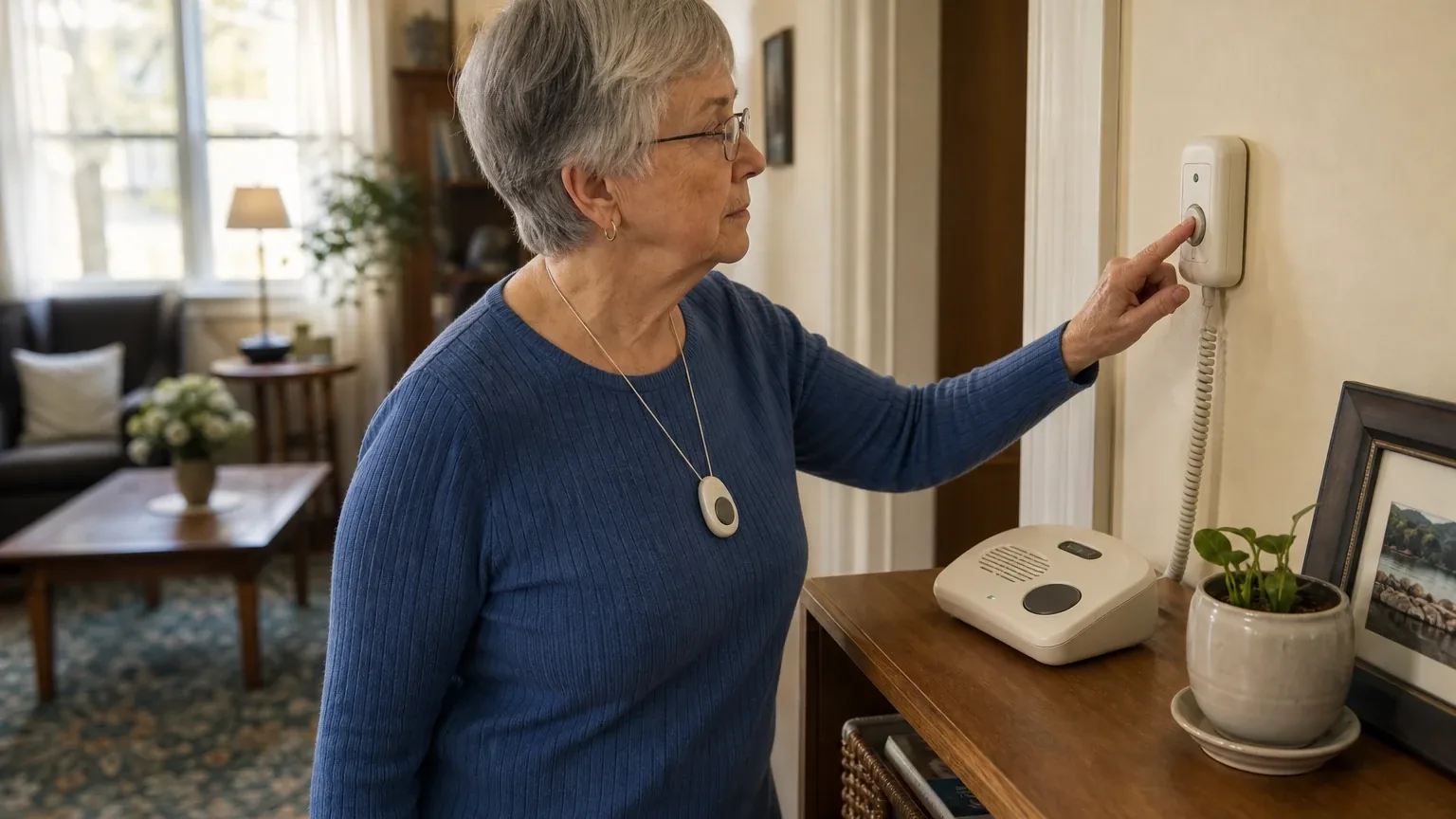
LifeFone is a good, not unequivocally strong, fit for Bathroom & Shower Emergency Protection. Three of the seven research platforms named LifeFone during the ranking stage (deepseek, google, kimi), and it finished fifth overall with an average listed rank of 4.67. The strongest reason to consider it is that LifeFone explicitly markets its standard pendant and wristband as wearable in the bath or shower, pairs that with optional fall detection at a low published add-on price, and requires no long-term contract. The main limitation is water-resistance ambiguity: LifeFone uses "waterproof" and "water-resistant" interchangeably, its VIPx manual prohibits submersion, and no verified IP rating was confirmed for the standard pendant.
Research Snapshot
| Field | Detail |
|---|---|
| Platform mentions in ranking stage | 3 of 7 platforms (deepseek, google, kimi) |
| Share of included platform responses | 42.9% |
| Average listed rank | 4.67 |
| Best listed rank | 3 (deepseek) |
| Relevant product/model/plan | LifeFone At-Home Cellular system with water-resistant pendant and optional fall detection; VIPx2 for at-home plus on-the-go use |
| Overall use-case fit | Good (openai, anthropic, deepseek, perplexity); strong (google, grok); mixed (kimi) |
| Research date | 2026-11-10 |
What Changed Since September 2026
LifeFone moved up from No. 8 to No. 5, and platform mentions increased from 2 to 3. The November 2026 review reframes LifeFone from a single At-Home product to the broader LifeFone brand, with the At-Home Cellular system plus water-resistant pendant and optional fall detection as the primary shower-use offering and the VIPx2 as the alternative. Buyer fit, recommended configuration, and core strengths and limitations carry over: shower-wearable help buttons, low-cost fall detection, no long-term contract, and unresolved water-rating ambiguity. Reported pricing now newly cites $43.95 for VIPx2 on monthly billing; the $39.95 per month figure is no longer repeated as a separate monthly listing. Response-time testing is now reported for the At-Home Cellular and VIPx2 systems individually. Differences between the two editions reflect what each article reports; they do not by themselves prove that the product, service, or price changed.
The September 2026 review preserves the earlier article for reference.
Why LifeFone Qualified for This Study
Questions This Section Answers
- Why did only three of seven platforms name LifeFone for shower emergency protection?
- What does LifeFone's fifth-place finish in the shower-use ranking mean for a buyer comparing waterproof medical alert systems?
LifeFone qualified because three platforms named it during ranking discovery and all seven platforms that produced fit research returned a usable assessment of its shower suitability. The ranking stage counted only platforms that named the entity; the fit stage included every platform response. That distinction matters: LifeFone's 42.9% share reflects discovery-stage mentions, not a rejection by the other four platforms.
Its placement was uneven. DeepSeek ranked it third, Google fourth, and Kimi seventh, producing an average listed rank of 4.67 and a final rank of 5 [30]. The platforms that did name it consistently treated it as a mainstream monitored medical alert provider with a wearable help button marketed for bath and shower wear, which is the exact use case this study evaluates.
LifeFone's fit ratings split across the panel: google and grok rated it strong, openai, anthropic, deepseek, and perplexity rated it good, and kimi rated it mixed. No platform rated it poor. That spread, rather than a single verdict, is the honest starting point for a shower-specific buyer. This review sits inside the broader Bathroom & Shower Emergency Protection comparison, which ranks all finalists on the same criteria.
The Product, Model, Plan, or Service Most Relevant to Bathroom & Shower Emergency Protection
Questions This Section Answers
- Which LifeFone system should a senior buy if the main goal is a help button that works in the shower?
- Is the LifeFone VIPx2 or the At-Home Cellular system the better LifeFone choice for bathroom fall protection?
The most directly relevant LifeFone product for shower protection is the At-Home Cellular system with the water-resistant pendant and optional fall detection. LifeFone's at-home fall-detection pendant is described in its manual as waterproof, usable within up to 600 feet of the base unit, and recommended at chest level with the button facing outward [21]. The At-Home Cellular system lists up to 1,300 feet of range and a 32-hour base-unit backup battery [30].
The second relevant option is the At-Home & On-the-Go VIPx2, which adds mobile coverage for users who leave home. LifeFone describes the VIPx2 pendant as water resistant and wearable in the shower, with cellular, Wi-Fi, and GPS location [16]. The VIPx user guide is more specific and more restrictive: it rates the device IP67 water-resistant, states it should never be submerged, and instructs users to towel-dry it after water exposure [26].
That IP67 disclosure is the clearest water rating any platform located for a LifeFone wearable, and it applies to the mobile VIPx line, not necessarily to the standard at-home pendant. Buyers should confirm which pendant ships with the plan they select before assuming a submersion rating.
What the AI Platforms Agreed About
Questions This Section Answers
- Do the AI platforms agree that LifeFone pendants are safe to wear in the shower?
- What do the platforms agree about LifeFone's fall detection cost and contract terms for shower-use buyers?
The panel agreed unanimously on four points. First, LifeFone markets a wearable help button intended for bath or shower wear. LifeFone's FAQ states that its wristband or pendant is water resistant and designed to be worn in the bath or shower [19]. Second, fall detection is optional and priced at $5 per month in LifeFone's own comparison material [12]. Third, LifeFone advertises no long-term contract, with month-to-month, quarterly, and annual billing [31]. Fourth, fall detection is not a substitute for pressing the button; LifeFone itself states no system detects 100% of falls [19].
All seven platforms also treated the wearable as the primary shower-protection mechanism. None identified a LifeFone wall-mounted shower pull cord or in-shower mounted button; kimi explicitly flagged the absence of a dedicated in-shower mounting option as a gap [32].
Where the AI Platforms Disagreed or Were Uncertain
Questions This Section Answers
- Why do the platforms disagree about whether LifeFone's pendant is waterproof or only water resistant?
- How reliable is LifeFone's fall detection in a bathroom, according to independent testing?
The sharpest disagreement concerns water terminology. Google and grok characterized LifeFone's at-home pendants and wristbands as waterproof and suitable for bathing [37]. Anthropic and perplexity emphasized that voice-in-pendant models are water-resistant only and must not be submerged [37]. OpenAI noted LifeFone uses both terms and that no IP rating was verified for the standard pendant [19]. These positions are reconcilable only if the standard at-home pendant and the mobile voice-in-pendant are different products with different ratings, which no single source confirmed.
Fall detection accuracy is a second fault line. NCOA testing reported LifeFone detected two of three deliberate falls, with a 22-second average fall-detection response [32]. SafeWatch testing reported all six falls detected but one call dropped before reaching the monitoring center [35]. LifeFone's own FAQ cites an approximate 95% detection figure while acknowledging subtle falls may be missed [19]. These results are not directly comparable.
Response time is a third uncertainty. NCOA measured 14 seconds for At-Home Cellular and 30 seconds for VIPx [33]; ElderGuide reports about 15 seconds [3]; The Senior List measured a 25-second average across ten test calls [37]. LifeFone's terms disclaim guarantees about responder promptness [31].
Battery figures also conflict. LifeFone's VIPx2 page states up to 10 days [16], while NCOA testing found 18 days [32] and other sources cite 5 to 10 days depending on model [33]. Pricing shows similar tier confusion: the VIPx2 page advertises "as low as $39.95/mo" on annual billing while monthly billing is $43.95 [16].
Use-Case-Specific Features and Capabilities
Questions This Section Answers
- How does LifeFone's pendant hold up for a senior with arthritis who needs to press the button with wet hands in the shower?
- Does LifeFone's fall detection work for the slow slides that are common bathroom falls?
Water resistance is the central capability and the central caveat. LifeFone's FAQ says the standard wristband or pendant is water resistant and designed for bath or Shower Use, and that the voice-in-pendant can be worn in the bath or shower but should not be submerged [19]. The VIPx guide adds IP67 and a towel-dry instruction [26]. No platform located a published IP rating for the standard at-home pendant.
Comfort and button access are only partly documented. LifeFone offers silicone wristbands and nylon neck cords [19], and describes the VIPx as small and lightweight [16]. Kimi's testers found the VIPx2 lanyard magnet "almost too strong" and potentially difficult for users with arthritis, and described the device as bulky despite company claims of a small, lightweight design [32]. No source tested button operability with wet or soapy hands; perplexity and kimi both flagged this as unverified [22].
Fall detection is available as an add-on across the lineup [9]. It requires a necklace pendant worn at chest level with the button facing outward, and wearing it under clothing can reduce performance [21]. Industry sources note fall detection can miss slow slides to the floor, a common bathroom fall pattern [6].
Battery life varies by model and configuration. The at-home fall-detection pendant battery may last about a year and is monitored and replaced when charge falls below 20% at no cost [19]. The base unit carries a 32-hour backup [30]. Mobile models range from roughly 5 to 18 days depending on source and whether fall detection is enabled [32]. Fall detection shortens battery life [2].
Pricing, Fees, Contracts, and Ongoing Costs
Questions This Section Answers
- What does LifeFone actually cost per month for a shower-use plan with fall detection added?
- What fees and return obligations should a LifeFone buyer expect if they cancel?
LifeFone's published annual-billing prices are $24.95 per month for At-Home Landline, $30.95 for At-Home Cellular, and $39.95 for VIPx2 [30]. Monthly billing runs higher; kimi reports $43.95 for VIPx2 on the monthly tier [16]. Fall detection adds $5 per month, which independent reviewers describe as roughly half the industry average [33].
Additional costs include $39.95 per extra pendant or wristband plus shipping [27], an optional caregiver app at $8 per month on some plans [16], and a protection plan with a $29 deductible for a base unit or voice-in-pendant and $6 for up to two help buttons in a 12-month period [30]. Without a protection plan, replacement of a damaged system can cost up to $295 [19].
Contract terms are favorable on paper. LifeFone states no long-term commitment, no activation or equipment fee, a 30-day money-back guarantee, and cancellation at any time [31]. Equipment is loaned and must be returned at termination, return shipping is paid by the customer, and refunds generally cover full unused prepaid months but not partial months [31]. The 30-day guarantee begins three business days after shipment [19].
Pricing confidence varies by platform: high for anthropic and grok, moderate for openai, perplexity, and kimi, and low for deepseek, which could not reliably confirm current prices [4]. Buyers comparing across the medical alert systems category should treat the $5 fall-detection figure as well corroborated and the exact plan total as something to confirm at checkout.
Best Suited For
Questions This Section Answers
- Who gets the most value from LifeFone for shower and bathroom fall protection?
- Is LifeFone a good choice for a couple who both want shower-safe help buttons?
LifeFone suits a senior who wants a monitored wearable help button they can keep on in the shower, prefers a pendant or wristband over a wall-mounted device, and values low-cost fall detection and no long-term contract. The At-Home Cellular system is the cleanest match for someone who stays home and wants up to 1,300 feet of range without a landline [30].
It also suits couples: LifeFone includes a free second pendant for a spouse on at-home plans [9]. Budget-conscious buyers benefit from the $5 fall-detection add-on relative to competitors charging $8 or more [33]. Users who want coverage outside the home can step up to VIPx2, which adds cellular, Wi-Fi, and GPS location [16].
Probably Not Best Suited For
Questions This Section Answers
- Why might a LifeFone pendant be a poor choice for a senior who may be submerged in a bathtub?
- Is LifeFone a weak option for a buyer who needs documented fall-detection accuracy above 67%?
LifeFone is probably not the best fit for buyers who need a documented submersion rating. The VIPx manual prohibits submersion and requires towel-drying [26], and no platform verified an IP rating for the standard at-home pendant [19]. A user who might lie in a filled tub or remain submerged should look elsewhere.
It is also weaker for buyers who treat fall-detection accuracy as decisive. NCOA testing found two of three falls detected, versus full detection by competitors in the same test [32]. Buyers who need guaranteed detection of every fall, or who cannot reliably press the button, should weigh that result heavily. Kimi rated the overall fit mixed for these reasons [32].
When Another Option May Be Better
Questions This Section Answers
- When should a shower-safety buyer choose a competitor instead of LifeFone?
- Is a purpose-built shower alert a better buy than a LifeFone pendant for someone who wants an in-shower mounted button?
Another option may be better in four situations. First, when a clearly published IP67/IP68 or explicit submersion rating is mandatory; openai and deepseek both recommended comparing alternatives in that case [30]. Second, when independently benchmarked response times matter more than LifeFone's lower starting price [30]. Third, when the user wants a dedicated in-shower wall-mounted pull cord or voice-activated shower unit, which LifeFone does not offer [32]. Fourth, when the buyer wants fall detection bundled rather than added monthly [22].
Buyers who rarely leave home and do not need mobile coverage can also save by choosing a simpler at-home system rather than VIPx2 [30].
Questions to Verify Before Buying
Questions This Section Answers
- What should a buyer confirm with LifeFone about water rating before signing up for shower protection?
- Which LifeFone details should be verified in writing before relying on the pendant in a bathroom?
Confirm the exact pendant supplied with the chosen plan and whether it is rated for incidental shower exposure only or can tolerate accidental tub submersion [19]. Ask for the IP rating in writing. Confirm the current monthly and annual price, the exact fall-detection surcharge, taxes, shipping, and any promotional expiration [30]. Ask which cellular network serves the buyer's address and what happens if coverage is weak inside the bathroom [24].
Also confirm expected battery life with fall detection enabled and how low-battery replacement is handled [19], what response-time target LifeFone can provide [31], whether the pendant is comfortable for a user with arthritis or limited dexterity [32], and what equipment must be returned at cancellation along with any return-shipping or replacement charges [31].
Final AI Consensus Verdict
LifeFone earns a good, qualified fit for Bathroom & Shower Emergency Protection. The panel was unanimous that its standard pendant and wristband are marketed for shower wear, that fall detection is a low-cost optional add-on, and that no long-term contract applies. It was also unanimous that fall detection is not guaranteed and that water terminology is inconsistent.
The unresolved issues are material for this use case: no verified IP rating for the standard at-home pendant, an explicit no-submersion rule for VIPx, conflicting battery figures, and fall-detection testing that detected two of three falls. A buyer whose priority is a monitored, shower-wearable button with affordable fall detection and flexible billing will find LifeFone a reasonable choice. A buyer whose priority is documented submersion protection or benchmarked fall-detection accuracy should compare alternatives first.
How This Review Was Produced
This review used the supplied platform fit-research responses from seven platforms (openai, anthropic, deepseek, google, grok, kimi, perplexity) and the supplied ranking statistics. Each platform's fit rating, use-case findings, pricing, and verification questions were preserved as reported. Company-owned sources were distinguished from independent reviews. No product was tested by the writer, and no claim of personal testing, medical benefit, or guaranteed performance is made.
Methodology Limitations
Platform-reported research dates differ from the authoritative run date of 2026-11-10; deepseek reported 2026-06-01, and that response ran without search enabled, so its pricing and terms are the least current. The supplied URLs were collected from platform responses and were not independently validated. Company-owned citations materially outnumber independent citations, so company claims should not be read as independently verified. One official-site retrieval failed with an HTTP 403, and identity details were resolved by unverified reported-domain evidence rather than a verified domain fetch. Platform agreement reflects shared source material, not proof of product quality. Where sources conflicted on water rating, battery life, or pricing tiers, this review describes the conflict rather than resolving it.
Sources
Company-Owned Sources
- LifeFone Official Site – Medical Alert Systems: https://lifefone.com/
- Comparing LifeFone's Medical Alert Systems: https://www.lifefone.com/articles/comparing-lifefones-medical-alert-systems
- How Fall Detection Works: https://www.lifefone.com/articles/how-fall-detection-works
- VIPx ® | Medical Alert System | LifeFone: https://www.lifefone.com/at-home-and-on-the-go-vipx
- At-Home & On-the-Go VIPx2: https://www.lifefone.com/at-home-and-on-the-go-vipx2
- At-Home Landline | Medical Alert System | LifeFone: https://www.lifefone.com/at-home-landline
- Comparing LifeFone's Medical Alert Systems: https://www.lifefone.com/compare-medical-alert-systems
- FAQ's | Medical Alert | LifeFone: https://www.lifefone.com/faq
- At-Home Cellular user guide PDF: https://www.lifefone.com/media/pdf/manuals/At_Home_Cellular_user-guide_purple.pdf
- LifeFone At-Home Cellular User Guide: https://www.lifefone.com/media/pdf/manuals/At_Home_Cellular_user-guide_purple0823.pdf
- LifeFone At-Home & On-The-Go GPS User Guide: https://www.lifefone.com/media/pdf/manuals/VIP_black-plus_user-guide_orange.pdf
- LifeFone At-Home & On-The-Go GPS User Guide: https://www.lifefone.com/media/pdf/manuals/VIP_White_user-guide_gold.pdf
- LifeFone At-Home & On-The-Go VIP Flex User Guide: https://www.lifefone.com/media/pdf/manuals/VIPflex_user-guide_1123D.pdf
- LifeFone VIPx User Guide: https://www.lifefone.com/media/pdf/manuals/VIPx_user-guide_orange081321.pdf
- Additional Help Buttons: https://www.lifefone.com/medical-alert-service/at-home-landline/additional-help-buttons
- VIP Active | Medical Alert System - LifeFone: https://www.lifefone.com/medical-alert-systems/vip-active
- VIP flex | Medical Alert System - LifeFone: https://www.lifefone.com/medical-alert-systems/vip-flex
- Order Now | Medical Alert | LifeFone: https://www.lifefone.com/order-now
- Terms & Conditions | Medical Alert | LifeFone: https://www.lifefone.com/terms-and-conditions
Independent Sources
- 108+ LifeFone Reviews - Medical Alert Systems: https://bestcompany.com/medical-alert-systems/lifefone
- LifeFone Review 2026: Analyzing Cost and Fall Detection: https://bestguide.com/review/lifefone/
- LifeFone Medical Alert Device Review: https://elderguide.com/medical-alert-devices/lifefone-review/
- Best Medical Alert Systems (2026): 6 Options Compared on Real Cost: https://steadyage.com/best-medical-alert-systems/
- Emergency Call & Safety Button Options for a Walk-In Shower: https://uniquebathseattle.com/learn/shower-emergency-call-button-options/
- LifeFone Alert System Review (2026): Our Test Results: https://www.aarp.org/caregiving/home-care/lifefone-review/
- LifeFone Medical Alert System Review 2026 - Caring.com: https://www.caring.com/best-medical-alert-systems/lifefone/
- LifeFone Medical Alert System Review 2026 - Caring.com: https://www.caring.com/senior-products/best-medical-alert-systems/lifefone
- LifeFone VIPx2 Hands-On Test (2026: https://www.consumeraffairs.com/medical-alert-systems/lifefone-vipx2-hands-on-test.html
- LifeFone Review – Medical Alert Systems (third-party review: https://www.consumeraffairs.com/medical-alert/lifefone.html
- The Best Medical Alert Systems with Fall Detection of 2026: https://www.ncoa.org/product-resources/medical-alert-systems/best-medical-alert-systems-with-fall-detection/
- LifeFone Review 2026: We Tested the Medical Alert System: https://www.ncoa.org/product-resources/medical-alert-systems/lifefone-review/
- LifeFone Review (2026): With Costs & Models: https://www.retirementliving.com/reviews/lifefone-medical-alert-services
- LifeFone Medical Alerts │ Hands-On Expert Review: https://www.safewise.com/senior-safety/medical-alerts/lifefone/
- LifeFone Medical Alert System Review 2026: https://www.seniorliving.org/medical-alert-systems/lifefone/reviews/
- LifeFone Medical Alert Review, Hands-On Test: https://www.theseniorlist.com/medical-alert-systems/lifefone/reviews/
- LifeFone Review: https://www.top10.com/medical-alerts/reviews/lifefone
- The 11 Best Medical Alert Systems for 2026 | Free Buyers Guide: https://www.topconsumerreviews.com/best-medical-alert-systems/detailed-reviews.php
Verify This Research
Review the study details behind this page or download the public machine-readable verification record.
- Study date
- November 10, 2026
- Platforms analyzed
- 7
- Source records
- 39
- Ranking mentions
- 3 of 7
- Platform share
- 43%
- Final consensus rank
- #5
Research trail and source mix
Configured platforms
openai, anthropic, deepseek, grok, perplexity, kimi, google
Source mix
18 independent · 21 company-owned
Evidence support
35 direct · 4 partial
Important limitation
Use the run research_date as the study date. Platform-reported dates are provenance metadata and do not independently prove freshness.
Source snapshot SHA-256 6713d149aec98789b9115d12aee9ec04abc8b652b0859e0f4342ae3794285b12