
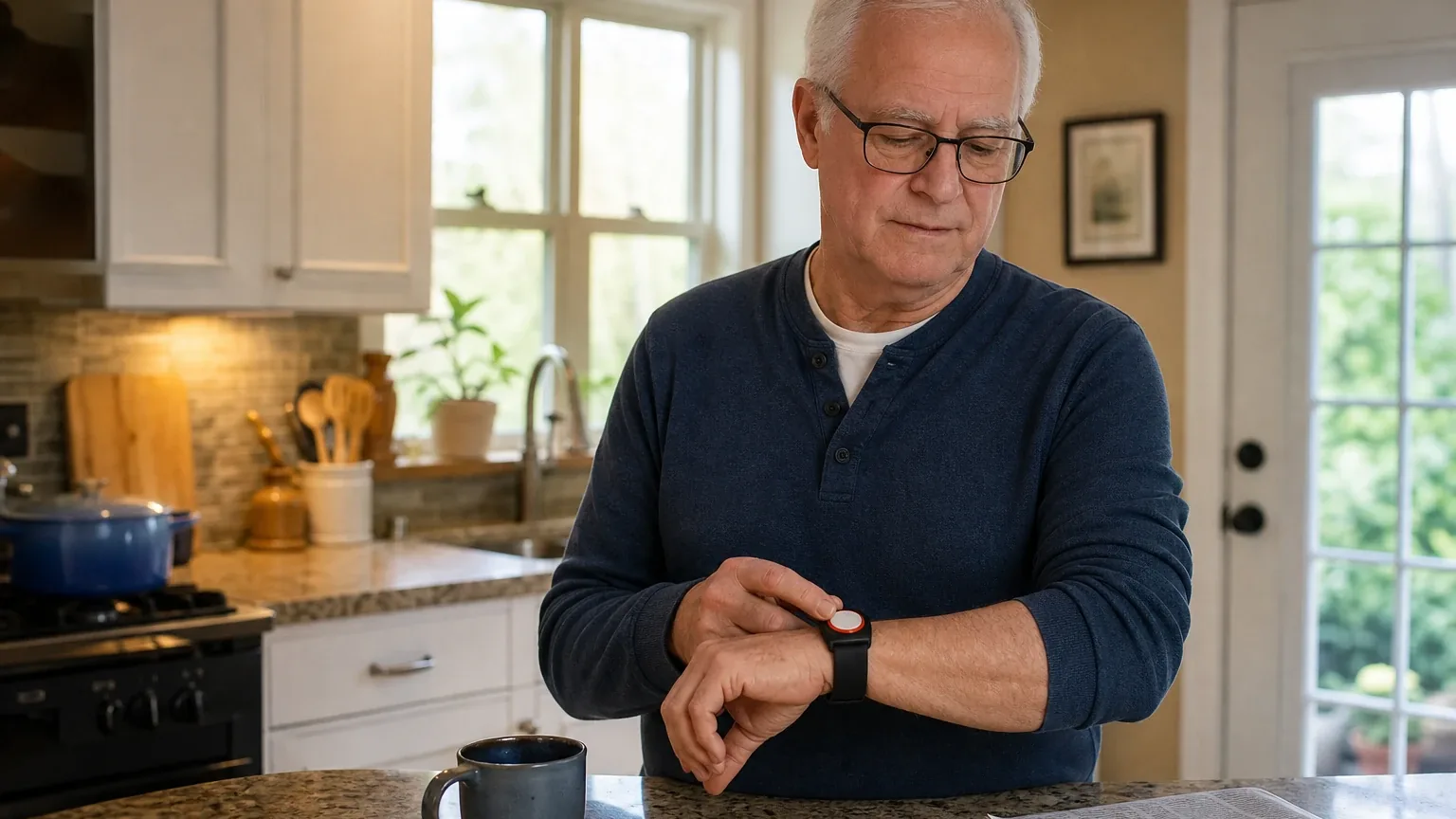
Answer Capsule
Bay Alarm Medical leads the September 2026 consensus ranking for Contract-Free Emergency Monitoring, followed by MobileHelp and Lively. The current study includes 7 valid AI-platform responses and 10 qualifying entities. Compared with August 2026, the leader changed. The current list added Bay Alarm Medical, MobileHelp, Medical Guardian, Medical Alert, LifeFone, GetSafe, and Medical Care Alert HOME-LTE and removed LifeStation and Rescue Alert. This is an immediately preceding-month comparison. Rank movement measures changes in this collection of standardized AI-platform responses. It is not product testing, customer-review evidence, or proof that a provider's underlying quality improved or declined.
What Changed Since August 2026
This comparison uses the immediately preceding completed month.
Bay Alarm Medical remained No. 1 in September 2026. It was named by 7 platforms, compared with not ranked in August 2026. Both studies used 7 valid platform responses.
The largest downward moves were Alert1 (down 5) and Aloe Care Health (down 3).
The current qualifying set added Bay Alarm Medical, MobileHelp, Medical Guardian, Medical Alert, LifeFone, GetSafe, and Medical Care Alert HOME-LTE. It no longer includes LifeStation and Rescue Alert from the earlier top group. Entry or exit reflects the minimum-mention rule and the current response set, not a product launch, discontinuation, or quality finding.
| Current rank | Entity | Previous rank | Rank movement | Current mentions | Previous mentions | Mention change |
|---|---|---|---|---|---|---|
| 1 | Bay Alarm Medical | — | New | 7 | — | — |
| 2 | MobileHelp | — | New | 6 | — | — |
| 3 | Lively | 3 | No change | 6 | 2 | +4 |
| 4 | Medical Guardian | — | New | 4 | — | — |
| 5 | Medical Alert | — | New | 4 | — | — |
| 6 | LifeFone | — | New | 3 | — | — |
| 7 | Alert1 | 2 | Down 5 | 3 | 3 | +0 |
| 8 | Aloe Care Health | 5 | Down 3 | 3 | 2 | +1 |
| 9 | GetSafe | — | New | 3 | — | — |
| 10 | Medical Care Alert HOME-LTE | — | New | 2 | — | — |
| — | LifeStation | 1 | Exited | — | 3 | — |
| — | Rescue Alert | 4 | Exited | — | 2 | — |
The table is calculated directly from the two stored ranking datasets. Positive rank movement means an entity moved closer to No. 1; mention change shows the difference in the number of included platform responses naming it.
The August 2026 edition preserves the complete earlier ranking and methodology for reference.
Research Snapshot
- Topic: Best medical alert systems for contract-free emergency monitoring
- Target buyer: Seniors and families who want monitored emergency response without multi-year contracts, cancellation penalties, or hidden fees
- Use case: Contract-Free Emergency Monitoring (United States, 2026)
- Platforms included (7): openai, anthropic, deepseek, grok, perplexity, kimi, google
- Research date: 2026-09-27
- Unique entities named: 20
- Qualifying entities: 10
- Eligibility rule: Named by at least two platforms during ranking discovery
- Ranking unit: System model and service provider
Platform mentions count only ranking-discovery mentions. All seven platforms later completed a fit assessment, but that is a separate step from the mention count used for ranking.
The Consensus Ranking
Questions This Section Answers
- What are the best medical alert systems for contract-free emergency monitoring in 2026?
- Which medical alert providers were named by the most AI platforms for no-long-term-contract monitoring?
The table below is the study's sole ranking authority. Order is based on platform mentions, then average listed rank, then best listed rank.
| Rank | Entity | Platform mentions | Share of platform responses | Average listed position | Best position | Best considered for |
|---|---|---|---|---|---|---|
| 1 | Bay Alarm Medical | 7 | 100.0% | 1.0 | 1 | A senior who primarily needs in-home monitoring.; Families wanting a cellular option without maintaining a landline.; Buyers who want optional fall detection and a published monthly price. |
| 2 | MobileHelp | 6 | 85.7% | 3.33 | 2 | Seniors who primarily need in-home cellular monitoring.; Families wanting month-to-month monitoring without a multi-year commitment.; Buyers who want optional fall detection and a relatively large advertised in-home range. |
| 3 | Lively | 6 | 85.7% | 6.33 | 4 | Buyers wanting a portable cellular medical alert device usable at home and away from home; Families wanting month-to-month service with no stated long-term contract or cancellation fee; Users who want optional fall detection and family alerts through Lively Link |
| 4 | Medical Guardian | 4 | 57.1% | 4.25 | 2 | Seniors who want monitored in-home or mobile emergency response and prefer monthly billing after an initial minimum period.; Families prioritizing U.S.-based, 24/7 monitoring, cellular coverage, caregiver contacts, and optional fall detection.; Buyers willing to manage equipment returns carefully and verify the final order terms in writing. |
| 5 | Medical Alert | 4 | 57.1% | 5.75 | 2 | Seniors who want professionally monitored emergency response at home without an annual commitment; Users needing a cellular home system without a landline; Users who need a mobile GPS system for travel within the United States |
| 6 | LifeFone | 3 | 42.9% | 3.33 | 2 | Home-based monitoring where the buyer wants landline or cellular connectivity.; Families that want optional automatic fall detection without purchasing equipment.; Buyers who may need to cancel or change systems without a long-term contract. |
| 7 | Alert1 | 3 | 42.9% | 5.33 | 3 | Seniors who primarily need in-home monitored response.; Families seeking cellular or landline-compatible equipment without a long-term contract.; Buyers willing to verify the total first-month cost and cancellation/refund terms before ordering. |
| 8 | Aloe Care Health | 3 | 42.9% | 6.67 | 5 | Seniors who want in-home monitoring without a multi-year contract.; Families that value a caregiver app, voice activation, motion sensing, and two-way communication.; Buyers willing to pay an upfront equipment fee for month-to-month service. |
| 9 | GetSafe | 3 | 42.9% | 7.0 | 6 | Seniors who want in-home monitoring without relying primarily on a wristband or lanyard; Two- to three-bedroom homes needing voice-activated wall buttons and a cellular base console; Buyers comfortable paying an upfront equipment charge plus monthly monitoring |
| 10 | Medical Care Alert HOME-LTE | 2 | 28.6% | 3.5 | 2 | Seniors who are usually at home and want a cellular connection without a landline.; Families prioritizing month-to-month monitoring and a 14-day trial.; Buyers who want optional automatic fall detection and U.S.-based emergency monitoring. |
Which Option Is Best for Which Version of the Buyer Need?
Questions This Section Answers
- Which medical alert system should a senior choose for contract-free monitoring if they need fall detection included in the monthly price?
- Is Bay Alarm Medical or MobileHelp better for contract-free in-home monitoring when a large in-home range matters?
- Which contract-free medical alert provider has the lowest published monthly price for a landline home system?
| Buyer need | Best-fit option | Why, from the evidence |
|---|---|---|
| Lowest published in-home starting price | Bay Alarm Medical | SOS Home Landline listed at $27.95/mo; no activation fee advertised [e1:openai:c2] |
| In-home cellular without a landline | Bay Alarm Medical, MobileHelp, Medical Care Alert HOME-LTE | Cellular base units; MobileHelp advertises up to 1,400 ft range [e2:official:C1] |
| Portable device usable away from home | Lively | Mobile2 is a cellular wearable with GPS and nationwide service [e3:openai:c5] |
| Widest device variety | Medical Guardian | In-home, mobile, and smartwatch options reported [e4:kimi:carealertnow-2026] |
| Lowest-cost fall-detection add-on | LifeFone | Fall detection listed at $5/mo for at-home plans [e6:google:1.2.1] |
| Voice-activated wall buttons instead of a wearable | GetSafe | Standard kit includes two voice-activated buttons and a wall button [e9:official:C2] |
| Caregiver app and motion sensing | Aloe Care Health | Essentials includes caregiver app, motion sensing, environmental monitoring [e8:openai:c2] |
| Short trial before committing | Medical Care Alert HOME-LTE | 14-day trial advertised [e10:openai:c2] |
| Published pricing without a phone quote | Bay Alarm Medical, Alert1 | Both publish plan prices online [e1:openai:c2][e7:perplexity:c1] |
1. Bay Alarm Medical
Questions This Section Answers
- Is Bay Alarm Medical worth it for contract-free emergency monitoring, and what are its main drawbacks?
- What should a buyer check before choosing Bay Alarm Medical for no-contract in-home monitoring?
Bay Alarm Medical is the consensus leader: it was named by all seven platforms, ranked first by every one of them, and is the only entity in this study with a 100.0% platform share. Its fit is rated strong by anthropic, google, grok, and kimi, and good by openai, deepseek, and perplexity. The core contract-free claim is consistent across platforms: no long-term contract, cancel anytime, no cancellation fee, and no activation fee advertised [e1:openai:c1][e1:anthropic:2][e1:google:cit_faq].
Why it ranked here. Bay Alarm Medical combines the three things this buyer segment weighs most: a published monthly price, an explicit no-contract statement, and a low-friction entry. It was the only entity every platform placed first, which is why its average listed position is 1.0.
Best suited for. A senior who primarily needs in-home monitoring; families wanting a cellular option without maintaining a landline; buyers who want optional fall detection and a published monthly price [e1:openai:c2].
Main strengths for the use case. Current listed prices are $27.95/mo for SOS Home Landline, $34.95/mo for SOS Home Cellular, and $44.95/mo for SOS Home Cellular with fall detection, implying a $10 monthly fall-detection premium [e1:openai:c2][e1:openai:c3]. Consoles are described as free leases that must be returned when the subscription ends [e1:openai:c2]. Independent 2026 testing by NCOA reported an average response time of 31 seconds, and another independent test reported a 16-second average across 10 calls for the SOS All-In-One 2 [e1:openai:c6][e1:openai:c7]. AARP testing reported clear audio, easy setup, and quick operator response [e1:openai:c8]. Kimi notes a UL-listed, CSAA 5-Diamond certified monitoring center and free second-person monitoring for a second household member [e1:kimi:bay-alarm-review-1].
Main limitations. Cancellation requires calling Bay Alarm Medical, and the account is not fully cancelled until returned equipment is received in working condition and processed [e1:openai:c4][e1:anthropic:3]. The company says it does not provide return boxes or shipping labels, so the customer pays return shipping and should retain tracking information [e1:openai:c4]. Unused months may be refunded on a prorated basis less shipping costs, and quarterly or annual promotions may require a minimum paid period [e1:anthropic:2]. Fall detection is an optional aid, not a guarantee that every fall will be detected [e1:openai:c2]. Deepseek rated pricing confidence low because it could not verify a complete current fee schedule from the pages it checked [e1:deepseek:bayalarm_plans].
Pricing or cost summary. SOS Home Landline $27.95/mo; SOS Home Cellular $34.95/mo; SOS Home Cellular with fall detection $44.95/mo; optional fall detection listed as a $10 monthly increment; no activation fee advertised; one-time shipping charge applies; return shipping is the customer's responsibility [e1:openai:c2][e1:anthropic:4][e1:google:cit_seniorliving].
Where platforms disagreed. Deepseek could not verify cancellation mechanics, equipment-return terms, activation fees, or fall-detection pricing and rated the entity "good" rather than strong [e1:deepseek:bayalarm_plans]. Perplexity flagged that public pricing is not fully uniform across sources and devices [e1:perplexity:c4]. Google noted older review summaries claim fall detection is $15.00/month while current official pricing lists $10.00/month [e1:google:cit_seniorliving]. Independent response-time results also differ: NCOA reported approximately 31 seconds, while another tester reported approximately 16 seconds for a different device and protocol [e1:openai:c6][e1:openai:c7].
Read the complete Bay Alarm Medical fit review for the full evidence trail.
2. MobileHelp
Questions This Section Answers
- Is MobileHelp worth it for contract-free emergency monitoring, and what are its main drawbacks?
- Does MobileHelp require a minimum commitment even though it markets month-to-month service?
MobileHelp was named by six platforms (85.7%) and ranked second overall, but it carries the study's most consequential documented conflict. Its marketing and FAQ state no long-term contract and month-to-month cancellation, while its published Terms and Conditions state a three-month minimum commitment for service [e2:official:C1][e2:official:C2]. Fit ratings split accordingly: strong from grok and kimi, good from openai and deepseek, mixed from anthropic, google, and perplexity.
Why it ranked here. Six platforms named it, and four placed it at position 2 or better. Its in-home cellular Classic system with a large advertised range and no stated equipment or activation fee made it a frequent second choice behind Bay Alarm Medical.
Best suited for. Seniors who primarily need in-home cellular monitoring; families wanting month-to-month monitoring without a multi-year commitment; buyers who want optional fall detection and a relatively large advertised in-home range [e2:openai:c1].
Main strengths for the use case. The current official Classic page lists subscriptions starting at $29.95/mo with free activation and no equipment fee, and automatic fall detection at $10/mo [e2:openai:c1]. The Classic base station advertises in-home coverage up to 1,400 feet [e2:official:C1]. Monitoring is described as U.S.-based and 24/7 [e2:openai:c1]. Kimi reports a 30-day money-back guarantee and $0 activation on all plans [e2:kimi:MAR-MobileHelp-2026].
Main limitations. The Terms and Conditions state a three-month minimum commitment, a $50 restocking fee on returns, and a $350 charge if equipment is not returned within 30 days of termination [e2:official:C2]. Anthropic, google, and perplexity all treat this as a material contradiction with the no-contract marketing [e2:anthropic:C3][e2:google:1.2.9][e2:perplexity:c2]. Equipment must be returned at the customer's expense, and billing continues until MobileHelp physically receives the device [e2:anthropic:C5][e2:google:2.2.9]. Fall detection pricing is reported as both $10 and $11 per month across sources [e2:openai:c1][e2:perplexity:c3].
Pricing or cost summary. Classic listed at $29.95/mo on the current official page; older and third-party sources report $24.95, $25.95, or promotional pricing [e2:openai:c1][e2:perplexity:c9]. Fall detection reported at $10–$11/mo. Restocking fee up to $50; possible $350 non-return charge; customer-paid return shipping [e2:official:C2].
Where platforms disagreed. Kimi rated the entity strong and stated there are no equipment return obligations, while anthropic, google, and perplexity described a three-month minimum and return penalties [e2:kimi:MAR-MobileHelp-2026][e2:anthropic:C3][e2:google:1.2.9]. Grok reported no long-term contracts and prorated refunds without noting the minimum [e2:grok:0]. Published monthly pricing varies materially across sources.
Read the complete MobileHelp fit review for the full evidence trail.
3. Lively
Questions This Section Answers
- Is Lively worth it for contract-free emergency monitoring, and what are its main drawbacks?
- Which contract-free medical alert device works away from home as well as at home?
Lively was named by six platforms (85.7%) and ranked third. It is the strongest option in this study for buyers who want a portable cellular device rather than a home base station. Fit ratings range from strong (grok) to good (openai, anthropic, google, kimi, perplexity) to mixed (deepseek).
Why it ranked here. Six platforms named it, but its average listed position of 6.33 is the weakest among the top three, reflecting that platforms often placed it behind in-home-focused competitors for a home-monitoring buyer.
Best suited for. Buyers wanting a portable cellular medical alert device usable at home and away from home; families wanting month-to-month service with no stated long-term contract or cancellation fee; users who want optional fall detection and family alerts through Lively Link [e3:openai:c1].
Main strengths for the use case. Lively states Mobile2 service can be changed or canceled at any time with no long-term contract or cancellation fee [e3:openai:c1]. Current listed service prices are $24.99/mo for Basic and $34.99/mo for Premium, with Fall Detection at $9.99/mo [e3:openai:c3][e3:openai:c7]. The device provides one-button access to Urgent Response agents, two-way communication, enhanced GPS, and nationwide mobile service [e3:openai:c5]. Google reports prorated refunds for unused prepaid monthly charges if canceled after the first 30 days [e3:google:1.2.5].
Main limitations. Cancellation during a billing cycle takes effect at the end of that cycle, and Lively states it will not refund a partial monthly service charge [e3:openai:c2]. A $35 one-time activation fee may apply, and promotional pages may advertise free activation [e3:openai:c5]. Direct purchases have a 30-day return window, with return shipping paid by the customer, nonrefundable original shipping, and a possible $10 activation restocking fee [e3:openai:c6]. Device pricing appears inconsistent across storefront pages, including $79.99 and $119.99 [e3:openai:c4]. Fall detection requires wearing the Mobile2 on the supplied lanyard and does not detect 100% of falls [e3:openai:c8].
Pricing or cost summary. Basic $24.99/mo; Premium $34.99/mo; Fall Detection $9.99/mo; device listed at $79.99 on the reviewed product page with other storefront views showing $119.99; possible $35 activation fee; variable USF, surcharges, and taxes [e3:openai:c3][e3:openai:c4][e3:openai:c5].
Where platforms disagreed. Deepseek rated the entity mixed and could not verify exact pricing, cancellation procedures, equipment-return terms, or activation fees [e3:deepseek:c1]. Kimi reported base pricing near $24/month and could not confirm monitoring-center certifications [e3:kimi:medicalalertreview-best]. Anthropic and perplexity both flagged inconsistent device pricing and unclear refund processing timelines [e3:anthropic:cite_4][e3:perplexity:c8].
Read the complete Lively fit review for the full evidence trail.
What Changed Since August 2026
Lively remained at No. 3, and platform mentions increased from 2 to 6. The September 2026 article reframes Lively around the Mobile2's portability, presenting it as the strongest choice for buyers who want a cellular device rather than a home base station. The recommended setup is unchanged, but the cost picture is clearer: the current article newly reports $24.99/mo for Basic and $34.99/mo for Premium, while the earlier $9.99/month fall-detection figure is no longer repeated. The prior write-up's reported response times of 13–26 seconds are also dropped. Lively's stated strengths still include month-to-month service with no long-term contract or cancellation fee, while limitations now emphasize end-of-cycle cancellation timing, return-shipping costs, and inconsistent device pricing. Differences between the two editions reflect what each article reports; they do not by themselves prove that the product, service, or price changed.
4. Medical Guardian
Questions This Section Answers
- Is Medical Guardian worth it for contract-free emergency monitoring, and what are its main drawbacks?
- Does Medical Guardian charge a restocking fee or enforce a minimum service period on monthly plans?
Medical Guardian was named by four platforms (57.1%) and ranked fourth, with a best position of 2. It is the clearest example in this study of a provider whose marketing and legal terms diverge. Fit ratings are mixed from five platforms (anthropic, deepseek, google, kimi, openai) and good from grok and perplexity.
Why it ranked here. Four platforms named it, and two placed it at position 2 or 3. Its device variety and U.S.-based monitoring kept it in the shortlist, but the documented 90-day minimum and restocking fee pulled its average listed position to 4.25.
Best suited for. Seniors who want monitored in-home or mobile emergency response and prefer monthly billing after an initial minimum period; families prioritizing U.S.-based, 24/7 monitoring, cellular coverage, caregiver contacts, and optional fall detection; buyers willing to manage equipment returns carefully and verify the final order terms in writing [e4:openai:c1].
Main strengths for the use case. Monthly billing is available, and no multi-year contract is advertised [e4:openai:c1]. The current buyer guide lists MGHome Cellular at $38.95/mo with a $149.95 device price, MGMini at $39.95/mo plus $149.95, and MGMove at $42.95/mo plus $199.95 [e4:openai:c3]. Monitoring is described as 24/7 from U.S.-based centers with up to four Care Circle contacts [e4:openai:c1]. Fall detection is an optional add-on commonly cited at $10/mo [e4:perplexity:c10].
Main limitations. The current legal terms state a minimum three-month/90-day service commitment, a possible restocking fee of up to $50, and a $350 charge if leased equipment and accessories are not returned within 30 days [e4:openai:c2][e4:google:1.2.2]. Leased devices must be returned at the customer's expense, and billing may continue until the device is received and processed [e4:openai:c2]. The FAQ's statement that cancellation fees do not apply conflicts with the legal terms [e4:openai:c1][e4:openai:c2]. Anthropic reported that an independent review called the 3-month minimum "sneaky" and noted call-center representatives were not initially forthright about it [e4:anthropic:source_5].
Pricing or cost summary. Monthly service reported at $27.95–$46.95 depending on device and billing frequency; equipment fees of $149.95–$199.95 on some models; fall detection $10/mo; possible $50 restocking fee; $350 non-return charge; customer-paid return shipping [e4:google:1.3.7][e4:google:1.2.2][e4:google:1.2.5].
Where platforms disagreed. Grok rated the entity good and described no cancellation penalty, while anthropic, google, perplexity, and openai described a 90-day minimum and restocking exposure [e4:grok:5][e4:anthropic:source_2][e4:google:1.1.9][e4:perplexity:c2]. Kimi could not verify pricing from company sources and relied on third-party estimates [e4:kimi:imalive-2026]. Deepseek could not corroborate no-contract terms on Medical Guardian's own pages [e4:deepseek:c1].
Read the complete Medical Guardian fit review for the full evidence trail.
5. Medical Alert
Questions This Section Answers
- Is Medical Alert worth it for contract-free emergency monitoring, and what are its main drawbacks?
- Does Medical Alert charge a programming fee or enforce a three-month minimum on monthly plans?
Medical Alert was named by four platforms (57.1%) and ranked fifth, with a best position of 2. Fit ratings are mixed from five platforms (anthropic, deepseek, google, grok, openai), good from perplexity, and uncertain from kimi.
Why it ranked here. Four platforms named it, but its average listed position of 5.75 reflects that platforms repeatedly flagged a gap between its contract-friendly marketing and its subscriber terms.
Best suited for. Seniors who want professionally monitored emergency response at home without an annual commitment; users needing a cellular home system without a landline; users who need a mobile GPS system for travel within the United States [e5:openai:c_home][e5:openai:c_mobile].
Main strengths for the use case. The Home System and Mobile System pages state monthly plans are flexible, month-to-month options with no long-term commitment [e5:openai:c_home][e5:openai:c_mobile]. Advertised starting prices are $29.95/mo for the cellular Home System and $34.95/mo for the Mobile System [e5:openai:c_homepage]. The cellular Home System advertises up to 800 feet of coverage and up to 30 hours of backup battery [e5:openai:c_home]. Fall detection is published at $10/mo [e5:openai:c_fall].
Main limitations. The March 2026 subscriber terms state a three-month minimum non-refundable monitoring charge paid at order, a one-time non-refundable programming fee, a possible $35 restocking fee, and a lost-unit fee of up to $400 [e5:openai:c_terms][e5:google:3.1.1][e5:google:2.2.2]. Monitoring charges continue until the company receives the equipment [e5:openai:c_terms]. Google reported the upfront programming/activation fee at $99.99 for standard systems and $159.99 for the Smartwatch [e5:google:2.2.2]. Promotional pricing ends after the first billing cycle [e5:openai:c_homepage].
Pricing or cost summary. Home System Cellular from $29.95/mo; Mobile System from $34.95/mo; fall detection $10/mo; Premium Protection Plan $10/mo for cellular and mobile systems; one-time programming fee; possible $35 restocking fee; up to $400 lost-unit fee [e5:openai:c_homepage][e5:openai:c_fall][e5:openai:c_protection_pdf][e5:openai:c_terms].
Where platforms disagreed. Perplexity rated the entity good and emphasized cancel-anytime language, while anthropic, google, and openai emphasized the three-month minimum and non-refundable fees [e5:perplexity:c2][e5:anthropic:c2][e5:google:3.1.9][e5:openai:c_terms]. Kimi rated the entity uncertain because it could not verify pricing, activation fees, fall-detection costs, or cancellation procedures from available sources [e5:kimi:linkedin-medical-alert]. Deepseek could not confirm month-to-month billing terms from the official site [e5:deepseek:c1].
Read the complete Medical Alert fit review for the full evidence trail.
6. LifeFone
Questions This Section Answers
- Is LifeFone worth it for contract-free emergency monitoring, and what are its main drawbacks?
- Which contract-free medical alert provider has the lowest published fall-detection add-on price?
LifeFone was named by three platforms (42.9%) but has the second-best average listed position in the study at 3.33, tied with MobileHelp. Fit ratings are strong from anthropic, google, and grok; good from openai and perplexity; mixed from deepseek; and uncertain from kimi.
Why it ranked here. Only three platforms named it, which caps its rank under the study's mention-first ordering, but those platforms placed it high — grok and anthropic both put it at position 4 or better.
Best suited for. Home-based monitoring where the buyer wants landline or cellular connectivity; families that want optional automatic fall detection without purchasing equipment; buyers who may need to cancel or change systems without a long-term contract [e6:openai:c1].
Main strengths for the use case. LifeFone states that subscribers make no time commitment and that service can be canceled at any time [e6:openai:c2]. The official site lists At-Home Landline at $24.95/mo and At-Home Cellular at $30.95/mo when billed annually [e6:openai:c1]. Automatic Fall Detection is listed at $5/mo for the At-Home plans, well below the $10/mo commonly cited for competitors [e6:openai:c4][e6:google:1.2.1]. No equipment or activation fees are stated, and no switching or restocking fees are stated [e6:openai:c2]. A 30-day risk-free trial is advertised [e6:openai:c2]. Google reports free spouse monitoring on at-home plans [e6:google:1.2.3].
Main limitations. Cancellation requires notice and return of the complete system, with the customer paying return shipping [e6:openai:c2]. Billing stops when the equipment is received, and only full unused prepaid months are refundable — partial months are not [e6:openai:c2]. Equipment must be returned within 30 days after termination or the subscriber may owe fair-market value [e6:openai:c5]. Google reports a $14.95 one-time shipping fee for month-to-month subscribers [e6:google:1.1.9]. No independently verified response-time or monitoring-performance metrics were located [e6:openai:c9].
Pricing or cost summary. At-Home Landline $24.95/mo on annual billing; At-Home Cellular $30.95/mo on annual billing; month-to-month pricing reported independently at approximately $30 landline and $35 cellular; fall detection generally $5/mo; $14.95 shipping on month-to-month plans; no activation or equipment fee stated [e6:openai:c1][e6:openai:c3][e6:google:1.1.9].
Where platforms disagreed. Deepseek rated the entity mixed and noted that the lowest advertised rate is tied to annual billing rather than true month-to-month [e6:deepseek:C1]. Kimi rated it uncertain because it could not verify pricing, equipment fees, activation fees, or fall-detection costs from retrieved sources [e6:kimi:safeathome]. Perplexity flagged that LifeFone's FAQ says no additional fees while its shipping/returns policy and third-party reviews identify return shipping and possible device-charge exposure [e6:perplexity:c1][e6:perplexity:c14].
Read the complete LifeFone fit review for the full evidence trail.
7. Alert1
Questions This Section Answers
- Is Alert1 worth it for contract-free emergency monitoring, and what are its main drawbacks?
- Does Alert1 refund prepaid annual plans if a buyer cancels early?
Alert1 was named by three platforms (42.9%) and ranked seventh, with a best position of 3. Fit ratings span strong (anthropic), good (grok, perplexity), mixed (deepseek, google, openai), and uncertain (kimi).
Why it ranked here. Three platforms named it, and perplexity placed it at position 3, but the study's mention-first ordering and its average listed position of 5.33 place it seventh.
Best suited for. Seniors who primarily need in-home monitored response; families seeking cellular or landline-compatible equipment without a long-term contract; buyers willing to verify the total first-month cost and cancellation/refund terms before ordering [e7:openai:C1].
Main strengths for the use case. Alert1 is marketed as having no long-term contract, and independent review information says service can be canceled at any time [e7:openai:C1]. Google reports a true month-to-month option where seniors can cancel at any time without an early termination fee, provided they return the leased equipment [e7:google:1.1.1]. Anthropic reports free activation and no equipment fees across standard models [e7:anthropic:alert1_pricing_page]. Google reports TMA 5 Diamond certified U.S.-based command centers with multilingual support [e7:google:1.2.6].
Main limitations. Google reports that prepaid quarterly, semi-annual, or annual plans do not offer prorated refunds for early cancellation unless the user passes away or transitions into a certified nursing home or assisted living facility [e7:google:2.1.2]. Return shipping is at the customer's expense [e7:google:1.1.5]. Openai reports a $19.95 activation fee on monthly billing and customer-paid return shipping [e7:openai:C1]. Fall-detection pricing is reported inconsistently, at both $5/mo and $10/mo [e7:perplexity:c4][e7:google:2.2.4]. Grok noted BBB reviews describing difficulties with cancellations and refunds [e7:grok:web:11].
Pricing or cost summary. Monthly in-home monitoring reported at approximately $28.95–$29 with a $19.95 activation fee; prepaid pricing reported at approximately $19.95/mo when 10 months are paid upfront; in-home plus fall detection reported at $39/mo in one comparison; fall detection reported at $5–$11/mo depending on source [e7:openai:C1][e7:google:2.2.4].
Where platforms disagreed. Anthropic rated the entity strong and described free activation and no equipment fees, while openai reported a $19.95 activation fee on monthly billing [e7:anthropic:alert1_pricing_page][e7:openai:C1]. Google and perplexity both flagged conflicting fall-detection pricing across pages [e7:google:2.2.4][e7:perplexity:c4]. Kimi rated the entity uncertain because it could not independently verify contract terms, fee structure, or monitoring certifications [e7:kimi:unclear-alert1-contract].
Read the complete Alert1 fit review for the full evidence trail.
What Changed Since August 2026
Alert1 moved down from No. 2 to No. 7, and platform mentions were unchanged at 3. The September 2026 article reframes Alert1 around contract-free in-home monitoring and cancellation terms, dropping the named EZ Care Plus and LifeBeacon configurations that shaped the August write-up. It now reports $5/mo and $10/mo for fall detection, while the earlier $5 per month figure is no longer repeated. The current section also notes that prepaid plans of 10 months are paid upfront, carrying no prorated refunds for early cancellation except for death or a move into a certified care facility. Buyers should now weigh refund and return-shipping limits alongside month-to-month flexibility. Differences between the two editions reflect what each article reports; they do not by themselves prove that the product, service, or price changed.
8. Aloe Care Health
Questions This Section Answers
- Is Aloe Care Health worth it for contract-free emergency monitoring, and what are its main drawbacks?
- Does Aloe Care Health include automatic fall detection in its base in-home plan?
Aloe Care Health was named by three platforms (42.9%) and ranked eighth, with a best position of 5. Fit ratings are strong from anthropic, good from openai, google, grok, and perplexity, and uncertain from deepseek and kimi.
Why it ranked here. Three platforms named it, but its average listed position of 6.67 is the second-weakest in the study, reflecting that platforms often placed it behind lower-cost in-home options.
Best suited for. Seniors who want in-home monitoring without a multi-year contract; families that value a caregiver app, voice activation, motion sensing, and two-way communication; buyers willing to pay an upfront equipment fee for month-to-month service [e8:openai:c1].
Main strengths for the use case. Aloe Care's terms state the default agreement is month-to-month and may be terminated with 30 days' written notice, and the Essentials Plus product page states "Cancel Anytime" [e8:openai:c1]. Essentials is listed at $39.99/mo plus a one-time $199.99 hardware cost, including a 4G Smart Hub, Care Button, 24/7 emergency call center, caregiver app, motion sensing, and environmental monitoring [e8:openai:c2]. SafeWise reported no known cancellation, restocking, or activation fees [e8:openai:c3]. A 30-day money-back guarantee is advertised [e8:openai:c2].
Main limitations. Essentials does not include automatic fall detection; Mobile Companion 2 includes wearable fall detection at $44.99/mo and $149.99 hardware, and Essentials Plus includes both at $59.99/mo and $349.99 hardware [e8:openai:c2]. Company-owned equipment must be returned immediately after termination, undamaged, using tracked and insured shipping at the customer's expense, and unreturned or damaged equipment may be charged at the then-current replacement rate [e8:openai:c1]. SafeWise reported that monthly rates may increase and that late charges may apply [e8:openai:c3]. Google reported that returning purchased equipment after 30 days yields only a 50% refund of the upfront hardware fee [e8:google:seniorliving_review].
Pricing or cost summary. Essentials $39.99/mo plus $199.99 hardware; Mobile Companion 2 $44.99/mo plus $149.99 hardware; Essentials Plus $59.99/mo plus $349.99 hardware; optional at-home fall sensor reported by SafeWise at $99.99 plus $10/mo, subject to confirmation; no separate activation fee identified [e8:openai:c2][e8:openai:c3].
Where platforms disagreed. Deepseek and kimi both rated the entity uncertain because they could not verify contract terms, pricing, or monitoring certifications from available sources [e8:deepseek:cite_missing_info][e8:kimi:aloecare_site_unverified]. Perplexity flagged that public sources conflict on whether fall detection is included, optional, or only available on certain products [e8:perplexity:c2]. Anthropic reported Essentials base pricing showing variance, with Healthline citing $29.99/mo in some contexts while the current website shows $39.99/mo [e8:anthropic:c2].
Read the complete Aloe Care Health fit review for the full evidence trail.
What Changed Since August 2026
Aloe Care Health moved down from No. 5 to No. 8, and platform mentions increased from 2 to 3. The September 2026 article reframes Aloe Care Health around cost comparisons, noting platforms often placed it behind cheaper in-home options, while the August write-up led with contract-free terms and voice-activated features. The current article newly reports $39.99/mo and $44.99/mo, and no longer repeats the earlier $10/month sensor fee. It now names Mobile Companion 2 and Essentials Plus, tying fall detection to the higher $44.99/mo tier rather than the $39.99/mo base plan. The earlier response-time dispute is dropped, replaced by conflicting reports on whether fall detection is included at all. Buyers wanting the cheapest contract-free in-home monitoring still fit, but fall detection now clearly costs more. Differences between the two editions reflect what each article reports; they do not by themselves prove that the product, service, or price changed.
9. GetSafe
Questions This Section Answers
- Is GetSafe worth it for contract-free emergency monitoring, and what are its main drawbacks?
- Does GetSafe require the base console to be returned after cancellation even though the buyer purchased the equipment?
GetSafe was named by three platforms (42.9%) and ranked ninth, with a best position of 6. Fit ratings are strong from anthropic, good from google, grok, kimi, and perplexity, mixed from openai, and uncertain from deepseek.
Why it ranked here. Three platforms named it, and its average listed position of 7.0 is the weakest in the study. Its in-home-only design and upfront equipment purchase put it behind providers with leased equipment.
Best suited for. Seniors who want in-home monitoring without relying primarily on a wristband or lanyard; two- to three-bedroom homes needing voice-activated wall buttons and a cellular base console; buyers comfortable paying an upfront equipment charge plus monthly monitoring [e9:openai:c1].
Main strengths for the use case. GetSafe publicly lists monitoring at $29.95/mo across its Starter, Standard, and Select packages, and the reviewed pricing page does not state a multi-year contract term [e9:openai:c1]. The Standard package is designed for two- to three-bedroom homes and includes a 4G LTE base unit, two voice-activated wall buttons, and one standard wall button, with 24/7 U.S. monitoring [e9:openai:c1]. The system supports voice activation, button activation, and pull-cord activation, and does not require a landline [e9:openai:c1]. Automatic fall detection is listed at $10/mo [e9:openai:c1]. Google reports no cancellation fees and a 30-day trial with full refund minus shipping [e9:google:1.2.1].
Main limitations. GetSafe explicitly states the main base console must be returned upon cancellation, but the public pricing page does not specify the return deadline, return shipping responsibility, condition requirements, or whether other equipment must be returned [e9:openai:c1]. GetSafe's general website terms state that prices may not be confirmed until after an order is placed [e9:openai:c6]. Google reports no prorated refunds for mid-cycle cancellations [e9:google:4.1.1]. Anthropic reported that the service does not support temporary suspension, so customers must either cancel or continue paying during extended absences [e9:anthropic:C11]. Deepseek could not verify month-to-month terms, cancellation policy, equipment return rules, or fall-detection pricing from available sources [e9:deepseek:c1].
Pricing or cost summary. $29.95/mo monitoring across packages; Starter equipment displayed at $39.50 promotional (regular $79); Standard at $96.50 promotional (regular $193); Select at $153.50 promotional (regular $307); automatic fall-detection button $10/mo; wearable button listed at $25; no activation fee stated [e9:openai:c1].
Where platforms disagreed. Anthropic rated the entity strong and described no cancellation fees or restocking fees, while openai rated it mixed and noted that the public materials do not conclusively establish month-to-month cancellation mechanics [e9:anthropic:C2][e9:openai:c1]. Perplexity flagged that current monthly price varies across sources, commonly $29.95 but sometimes $24.95 [e9:perplexity:c11]. Kimi noted that GetSafe does not explicitly state "no contract" on its product pages, unlike competitors [e9:kimi:getsafe-official].
Read the complete GetSafe fit review for the full evidence trail.
10. Medical Care Alert HOME-LTE
Questions This Section Answers
- Is Medical Care Alert HOME-LTE worth it for contract-free emergency monitoring, and what are its main drawbacks?
- Does Medical Care Alert HOME-LTE charge a restocking fee if the system is returned untested?
Medical Care Alert HOME-LTE was named by two platforms (28.6%) — the minimum for eligibility — but has the third-best average listed position in the study at 3.5, with a best position of 2. Fit ratings are good from five platforms (anthropic, google, grok, openai, perplexity), mixed from deepseek, and uncertain from kimi.
Why it ranked here. Only two platforms named it, which places it last under the study's mention-first ordering, despite strong positional placement from those two platforms.
Best suited for. Seniors who are usually at home and want a cellular connection without a landline; families prioritizing month-to-month monitoring and a 14-day trial; buyers who want optional automatic fall detection and U.S.-based emergency monitoring [e10:openai:c2].
Main strengths for the use case. The monitoring agreement runs month-to-month, and either party may cancel at any time [e10:openai:c1]. The company states there are no cancellation fees [e10:openai:c2]. Public materials list the HOME system at $29.95/mo and identify cellular service at $34.95/mo [e10:openai:c3]. Automatic fall detection is listed at an additional $10/mo [e10:openai:c2]. Independent NCOA testing reported an average response time of 17 seconds for the brand [e10:openai:c6]. Google reports no activation or upfront equipment purchase fees for the HOME-LTE console and button [e10:google:1.1.4].
Main limitations. HOME equipment is rented and must be returned when service ends, and service generally stops when rented equipment is received by the company [e10:openai:c1]. Within the 14-day trial, a full refund is available subject to shipping deductions, and unused or untested returns may incur a $50 restocking/reprogramming fee [e10:openai:c1][e10:google:2.1.3]. Refunds may be reduced by shipping expenses or charges for unreturned or damaged equipment [e10:openai:c2]. The exact current cellular monthly price is not consistently presented across public sources [e10:openai:c3][e10:perplexity:c12]. Google reports the cellular console's backup battery is limited to 24 hours [e10:google:2.2.5].
Pricing or cost summary. HOME system listed at $29.95/mo; cellular version listed at $34.95/mo in company and independent materials; automatic fall detection $10/mo; possible $50 restocking/reprogramming fee; customer-paid return shipping; standard shipping reported at $12.00–$12.95 unless paying annually or semi-annually [e10:openai:c3][e10:openai:c1][e10:google:1.1.4].
Where platforms disagreed. Kimi rated the entity uncertain because exact 2026 pricing, cancellation terms, and fee disclosures were not available in its searched sources [e10:kimi:MCA-website]. Deepseek rated it mixed and could not confirm the exact monthly price, fall-detection surcharge, or activation fee [e10:deepseek:c1]. Perplexity flagged that public pricing is not perfectly consistent across pages, with one page showing HOME at $29.95/mo and another indicating the no-landline subscription can equate to $34.95 or less [e10:perplexity:c9][e10:perplexity:c12].
Read the complete Medical Care Alert HOME-LTE fit review for the full evidence trail.
What the Cross-Platform Study Reveals About This Market
Questions This Section Answers
- What do AI platforms consistently say about contract-free medical alert systems in 2026?
- Which contract-free medical alert providers publish the clearest cancellation and equipment-return terms?
Three patterns dominate this study. First, "no long-term contract" is a marketing claim that frequently coexists with a minimum service period, a restocking fee, or a non-return charge buried in legal terms. MobileHelp, Medical Guardian, and Medical Alert all show this pattern in their own published terms [e2:official:C2][e4:openai:c2][e5:openai:c_terms]. Bay Alarm Medical and LifeFone are the two entities where platforms found the no-contract claim and the cancellation mechanics broadly consistent [e1:openai:c1][e6:openai:c2].
Second, equipment return is the real exit cost in this category. Every qualifying entity except Lively and Aloe Care Health requires leased or rented equipment to be returned, and most require the customer to pay return shipping [e1:openai:c4][e2:anthropic:C5][e4:openai:c2][e5:openai:c_terms][e6:openai:c2][e7:google:1.1.5][e9:openai:c1][e10:openai:c1]. Billing often continues until the returned device is received, not when cancellation is requested.
Third, fall detection is almost never included in a base price. Bay Alarm Medical, MobileHelp, Lively, Medical Guardian, Medical Alert, LifeFone, Alert1, and GetSafe all price it as an add-on, typically at $5–$11 per month [e1:openai:c2][e2:openai:c1][e3:openai:c7][e4:perplexity:c10][e5:openai:c_fall][e6:openai:c4][e7:google:2.2.4][e9:openai:c1]. Aloe Care Health's base Essentials plan does not include it at all [e8:openai:c2].
Where the AI Platforms Agreed
Questions This Section Answers
- Which contract-free medical alert providers do all seven AI platforms agree on?
All seven platforms named Bay Alarm Medical, and all seven placed it first. Platforms agreed that it advertises no long-term contract, no cancellation fee, no activation fee, and published monthly pricing [e1:openai:c1][e1:anthropic:2][e1:google:cit_faq][e1:grok:web:0][e1:kimi:bay-alarm-review-1][e1:perplexity:c3][e1:deepseek:bayalarm_plans].
Platforms also broadly agreed that equipment return is required to complete cancellation across the category, and that fall detection is an optional paid add-on rather than a standard feature. Six platforms named MobileHelp and Lively, and both were consistently described as offering month-to-month structures with optional fall detection [e2:openai:c1][e3:openai:c1].
Where the AI Platforms Disagreed
Questions This Section Answers
- Why do AI platforms disagree about whether MobileHelp and Medical Guardian are truly contract-free?
The largest disagreement concerns whether a provider with a stated minimum service period can be called contract-free. For MobileHelp, anthropic, google, and perplexity treated the three-month minimum in the Terms and Conditions as disqualifying or materially limiting, while grok and kimi rated the entity strong and described no long-term contract [e2:anthropic:C3][e2:google:1.2.9][e2:perplexity:c2][e2:grok:0][e2:kimi:MAR-MobileHelp-2026].
A second disagreement concerns pricing transparency. Deepseek rated Bay Alarm Medical's pricing confidence low and could not verify a complete fee schedule, while anthropic, google, grok, and kimi rated pricing confidence high [e1:deepseek:bayalarm_plans][e1:anthropic:4][e1:google:cit_seniorliving][e1:grok:web:2][e1:kimi:bay-alarm-review-1].
A third disagreement concerns fall-detection pricing. Alert1's add-on is reported at both $5/mo and $10/mo across sources, and MobileHelp's is reported at both $10/mo and $11/mo [e7:perplexity:c4][e7:google:2.2.4][e2:openai:c1][e2:perplexity:c3].
How Buyers Should Choose
Questions This Section Answers
- What should a buyer check before choosing a contract-free medical alert system?
- Which contract-free medical alert provider should a buyer choose if they need to cancel within the first three months?
Start with the exit terms, not the monthly price. Ask for the written cancellation policy, the equipment-return deadline, who pays return shipping, and whether billing stops on the cancellation date or when the device is received. For MobileHelp, Medical Guardian, and Medical Alert, the published terms include a minimum service period, so a buyer who may cancel within three months should confirm the exact amount still owed [e2:official:C2][e4:openai:c2][e5:openai:c_terms].
Then confirm the total first-month cost. Activation fees, programming fees, shipping, and fall-detection add-ons change the effective price. Bay Alarm Medical advertises no activation fee; Alert1 and Medical Alert report activation or programming fees on monthly billing; Lively reports a possible $35 activation fee [e1:openai:c2][e7:openai:C1][e5:google:2.2.2][e3:openai:c5].
Finally, match the device to the living pattern. A buyer who stays home is best served by an in-home system with a base station; a buyer who leaves home regularly needs a portable cellular device. The full medical alert systems directory covers the broader category.
Methodology
This study sent one standardized prompt once to each of seven AI platforms: openai, anthropic, deepseek, grok, perplexity, kimi, and google. The prompt asked which medical alert systems best fit contract-free emergency monitoring for U.S. seniors and families. Each platform returned a ranked list of named entities. Entities named by at least two platforms qualified for the final ranking.
The final ranking order is based on platform mentions, then average listed rank, then best listed rank. The ranking table is the sole authority for rank, platform mentions, platform share, average listed position, and best position. Platform mentions count only ranking-discovery mentions; they do not count platforms that later completed a fit assessment.
Each qualifying entity was then assessed against seven criteria: month-to-month pricing, cancellation policy, equipment return terms, activation fees, fall-detection add-on cost, response reliability, and pricing transparency. Fit ratings and evidence come from the entity evidence bundles, which consolidate platform-reported claims and citations.
Methodology Limitations
This study used one standardized prompt sent once to each included platform. AI answers can vary by date, wording, location, account state, model, interface, browsing configuration, and the sources retrieved. A single run cannot capture that variation.
Platform-reported research dates differ from the authoritative run date of 2026-09-27. Those dates are provenance metadata and do not independently prove freshness. Deepseek ran without search enabled, so its claims require explicit verification before being treated as current facts.
Company-owned citations materially outnumber independent citations in several entity bundles. Company claims are not independently verified. The supplied URLs were collected from platform responses and were not independently validated by the writer stage. Platform recommendations are market intelligence, not independent customer reviews or proof of quality.
Where sources conflicted on pricing, product names, or capabilities, this report describes the conflict and tells buyers what to verify rather than resolving it by guessing.
Final Verdict
Bay Alarm Medical is the consensus leader for contract-free emergency monitoring, named by all seven platforms and ranked first by every one of them. MobileHelp and Lively are the strongest alternatives for distinct needs: MobileHelp for in-home cellular monitoring with a wide advertised range, and Lively for a portable device usable away from home. Medical Guardian and Medical Alert offer broad device selection but carry documented minimum service periods and non-refundable fees. LifeFone offers the lowest published fall-detection add-on at $5/mo. Alert1, Aloe Care Health, GetSafe, and Medical Care Alert HOME-LTE round out the qualifying set with narrower fits. No entity in this study is a clean, penalty-free contract-free choice without verification of written cancellation and return terms.
Frequently Asked Questions
Which medical alert system is best for contract-free emergency monitoring?
Bay Alarm Medical ranked first, named by all seven platforms at an average listed position of 1.0.
Do any of these providers require a minimum service period?
Yes. MobileHelp's Terms and Conditions state a three-month minimum, Medical Guardian's legal terms state a 90-day minimum, and Medical Alert's subscriber terms state a three-month minimum non-refundable monitoring charge [e2:official:C2][e4:openai:c2][e5:openai:c_terms].
Which provider has the lowest published fall-detection add-on?
LifeFone lists automatic fall detection at $5/mo for its At-Home plans [e6:google:1.2.1].
Which provider is best for a senior who leaves home regularly?
Lively, whose Mobile2 is a cellular wearable with GPS and nationwide service [e3:openai:c5].
Do these systems require a landline?
No. Bay Alarm Medical, MobileHelp, Medical Alert, LifeFone, Alert1, GetSafe, and Medical Care Alert HOME-LTE all offer cellular options [e1:openai:c2][e2:official:C1][e5:openai:c_home][e6:openai:c1][e7:google:1.1.1][e9:openai:c1][e10:openai:c3].
How many platforms were studied?
Seven: openai, anthropic, deepseek, grok, perplexity, kimi, and google.
Consolidated Sources
Company-Owned Sources
- SOS Home Quick Start Guide: https://bayalarmmedical.com/wp-content/uploads/Quick-Start-Guide-In-Home-6.12.pdf
- Is Care Alert Now a Good Medical Alert System? An Honest 2026 Review | Care Alert Now: https://carealertnow.com/blog/is-care-alert-now-a-good-medical-alert-system
- On-the-Go Devices and Medical Guardian Buyer Guide With Pricing: https://cdn.medicalguardian.com/assets/downloads/pdf/2025-Buyers-Guide-With-Pricing-updated-compressed.pdf
- Lively Plans Brochure (Best Buy Static): https://files.bbystatic.com/sl0rPhIkvY%2FoMD35dHiV3Q%3D%3D/Lively%2BPlans%2BBrochure
- Thank you | Aloe Care Health: Medical Alert System for Elder Care, Emergency and Communication: https://get.aloecare.com/custom-quote/thank-you/
- Digital Assistant for Elder Care, Emergency and Medical Alerts | Aloe Care Health: https://get.aloecare.com/mutual/
- LifeFone Official Website: https://lifefone.com/
- Medical Alert - LinkedIn Company Page: https://linkedin.com/company/medical-alert
- Medical Guardian 2025 Buyers Guide with Pricing: https://mgstaging-1f8dc.kxcdn.com/wp-content/uploads/2025/08/2025-Buyers-Guide-With-Pricing-updated.pdf
- Medical Alert Call Systems by MobileHelp: https://offers.mobilehelp.com/medical-alert-call-systems/
- Products Overview | Medical Alert Systems | MobileHelp: https://offers.mobilehelp.com/products-overview/
- My Free Ambulance | Piscataway | ResponseNow Medical Alert: https://responsenow.com/my-free-ambulance-piscataway/
- In-Home Landline - Login | Bay Alarm Medical: https://shop.bayalarmmedical.com/in-home-landline
- Lively storefront: https://shop.lively.com/
- Fall Detection help article: https://shop.lively.com/blogs/help-center/fall-detection
- Lively Mobile2: https://shop.lively.com/blogs/help-center/lively-mobile2
- Orders and returns: https://shop.lively.com/blogs/help-center/orders-and-returns
- Lively Mobile2 and Safety Devices Terms & Conditions: https://shop.lively.com/blogs/legal-pages/lively-mobile2-and-safety-devices-terms-conditions
- Official pricing and terms source: https://shop.lively.com/blogs/legal-pages/terms-of-use
- With any of our plans, our kind and knowledgeable team is just a call away.: https://shop.lively.com/documents/Lively_RateCard.pdf
- Fall Detection for Seniors: https://shop.lively.com/pages/fall-detection
- Medical Alert Plans – Lively from Best Buy Health: https://shop.lively.com/pages/medical-alert-compare-plan
- Personal Emergency Response: https://shop.lively.com/pages/personal-emergency-response
- Why Select Lively?: https://shop.lively.com/pages/why-select-lively
- Official pricing and terms source: https://shop.lively.com/policies/terms-of-service
- Lively Mobile2 All-in-One Medical Alert: https://shop.lively.com/products/lively-mobile2-all-in-one-medical-alert
- Lively Mobile2 All-in-One Medical Alert: https://shop.lively.com/products/lively-mobile2-all-in-one-medical-alert?_pos=2&_sid=2286eda37&_ss=r&bvstate=pg%3A4%2Fct%3Ar
- Lively Mobile2 All-in-One Medical Alert: https://shop.lively.com/products/lively-mobile2-all-in-one-medical-alert?abtr=true&bvstate=pg%3A3%2Fct%3Ar&view=eab-7nJlxr1rtA
- Medical Emergency Response Device FAQs | Medical Guardian: https://vertexaisearch.cloud.google.com/grounding-api-redirect/AUZIYQF6ZxgLDxRlIr-LesP5sy-w8V8dmJiEQjwiFp2wx4vR015ngPwKg_jAHinZ6WrScHNXioDtcxBP9FepVAbWIBii_yj6fjuaKEpzGQSn7zs8ZLumR4EuxtmZ
- Legal Information About Medical Guardian Services: https://vertexaisearch.cloud.google.com/grounding-api-redirect/AUZIYQG5LY5zdBojukPG6nluMYfm8cGemAsD6ECUddQ24M1ZUULdTfRjSSHC2KfM2d_HPKjplBrq1cbfMOMYOmTHfNlIkNsxSEeIFYb3g9z7fC5WWbA95r3LD0INm1b4hiC77oXD
- How do Medical Alert Systems Work? | FAQs - Bay Alarm Medical: https://vertexaisearch.cloud.google.com/grounding-api-redirect/AUZIYQG8Kg0uK36vW3wnVIeUt-uTEl8gvHyA3FIUPMOYjUtnPW6gd4zu_RScKp1JxwSZzn-lK9S8-DIFPUTkXyrlNvQHbOtHEVl4jmq4V1oOaoRv-IhMt8G1c13X6jDRUDztySz3hdJWgMjJQU_tpJx5n5D9
- Legal Information About Medical Guardian Services: https://vertexaisearch.cloud.google.com/grounding-api-redirect/AUZIYQGPhdo2OLdVC5J7jPiU-5ZV6sxoRAh0Op4UcF75PIo9DZi_0y_-X7FBoT8pyDJm9UcLFEyy_3e9AGdEJ0lAwHVOsT5NluOaTVL2ZeNZPviBSQgt4bIyjsxQoIEnFiVF3y0=
- service agreement - Medical Guardian: https://vertexaisearch.cloud.google.com/grounding-api-redirect/AUZIYQGPxGn7Atdu-95FVIZs_uvLFhV9nlqGFjwTjfz33gdhAhPZ1D8BXDjhOK59ivzh7w26TtNYgDXJP7DGpX82pG_4FIckVFGtowqPyLXrbeFc7QkvkqjekAdN2cAoEyaluHqHeRvrSdKf5_DsV0OHzxo7j0SWQUp14kfnaDmS6pzHijVWekVJSgpJcMfkjTkAWf5Ffw_GLiqRqQ==
- service agreement - Medical Guardian: https://vertexaisearch.cloud.google.com/grounding-api-redirect/AUZIYQGUR-pXhIEeJc0sDUr3fS_h6LJSgEzmnC7qosRIzePrZhsbILyHBStYjsILdoq3s2g-keWqHRhRoGyr1zeClZYyOOolt8Sngx7Dn0a1WPLRaER7ijuuQ6ZXzILejoUm5DcVziynMhGUIa22qiyttjeb4EFq9XKetxxfrhYdKt-dTZtrg5kvzySogAgJEfH-gcM03PVIYVgmrkw=
- Lively Mobile2 product page: https://www-staging.lively.com/medical-alerts/lively-mobile2
- Alert1 Medical Alert Systems - Homepage: https://www.alert-1.com/
- Alert1 vs Life Alert Cost: https://www.alert-1.com/compare
- Shipping and Returns: Frequently Asked Questions: https://www.alert-1.com/faq
- Life Alert Compared to Alert1: https://www.alert-1.com/life-alert-compared-to-alert1
- Medical Alert Systems - Call for Lowest Price - Alert1: https://www.alert-1.com/medical-alerts
- Low Cost Medical Alert Systems - Alert1 Pricing Page: https://www.alert-1.com/pricing
- Compare Alert1 to Medical Guardian: https://www.alert-1.com/pricing/compare-alert1-to-medical-guardian
- Alert1 Pricing Plans and Refund Policy: https://www.alert-1.com/pricing/plans/225
- Alert1 Products and Monitoring: https://www.alert-1.com/products
- EZ Care In-Home Medical Alert - Alert1: https://www.alert-1.com/products/ez-care
- Medical Alert With Fall Detection Pendant - Alert1: https://www.alert-1.com/system/fall-detection-technology/1390
- Shipping and Returns FAQ: https://www.alert-1.com/system/shipping-and-returns/5168
- Where Alert1 Works - Alert1: https://www.alert-1.com/where-it-works
- Life Alert Alternatives - Alert1: https://www.alert-1.com/why-alert1/life-alert-alternatives/791
- Official pricing and terms source: https://www.aloecare.com#ach-plans
- Aloe Care Health: Medical Alert for Seniors, Caregivers. Fall detection options.: https://www.aloecare.com/
- Fall Detection | Aloe Care Health: https://www.aloecare.com/features/fall-detection
- Terms of Service | Aloe Care Health: https://www.aloecare.com/legal/terms-of-service
- Products | Aloe Care Health: https://www.aloecare.com/products
- Essentials | Aloe Care Health: https://www.aloecare.com/products/essentials
- #1 Rated Medical Alert Systems: Life-Saving Alert Buttons From $27.95/mo: https://www.bayalarmmedical.com/
- How to Cancel Bay Alarm Medical Service: https://www.bayalarmmedical.com/cancellations/
- Bay Alarm Medical FAQ: https://www.bayalarmmedical.com/faq/
- How Do Medical Alert Systems Work? FAQs: https://www.bayalarmmedical.com/frequently-asked-questions/
- Award-Winning Medical Alert Systems for Seniors: https://www.bayalarmmedical.com/medical-alert-system/
- Automatic Fall Detection - Bay Alarm Medical: https://www.bayalarmmedical.com/medical-alert-system/automatic-fall-detection/
- Personal Emergency Response System - Bay Alarm Medical: https://www.bayalarmmedical.com/medical-alert-system/in-home/
- All-In-One Medical Alert System with Fall Detection: https://www.bayalarmmedical.com/medical-alert-system/sos-all-in-one-2/
- Bay Alarm Medical Plans and Pricing: https://www.bayalarmmedical.com/plans/
- Medical Alert Costs and Pricing: https://www.bayalarmmedical.com/pricing/
- GetSafe Official Website: https://www.getsafe.com/
- Customer Support - GetSafe: https://www.getsafe.com/customer-support/
- Medical Alert System Product Overview - GetSafe: https://www.getsafe.com/medical-alert-systems/
- Multi Dimensional Fall Detector: https://www.getsafe.com/medical-alert-systems/auto-fall-detector/
- Medical Alert Help Button - GetSafe: https://www.getsafe.com/medical-alert-systems/medical-alert-help-button/
- Life Saving Medical Alert Costs - GetSafe: https://www.getsafe.com/medical-alert-systems/pricing/
- Terms of Use - GetSafe: https://www.getsafe.com/terms-of-use/
- Comparing LifeFone's Medical Alert Systems: https://www.lifefone.com/articles/comparing-lifefones-medical-alert-systems
- Medical Alert Device FAQs: https://www.lifefone.com/articles/medical-alert-device-faqs
- Medical Alert Overview | LifeFone: https://www.lifefone.com/articles/medical-alert-overview
- At-Home Landline and At-Home Cellular product pages: https://www.lifefone.com/at-home-landline
- FAQs | Medical Alert | LifeFone: https://www.lifefone.com/faq
- FAQ's | Medical Alert - LifeFone: https://www.lifefone.com/faqs
- Emergency Care Plan Agreement (ECPA): https://www.lifefone.com/media/pdf/ECPA_LF.pdf
- VIP User Guide | LifeFone: https://www.lifefone.com/media/pdf/manuals/VIP_black_user-guide_orange.pdf
- Medical Alert Device FAQs - LifeFone: https://www.lifefone.com/medical-alert-device-faqs
- Order Now | Medical Alert | LifeFone: https://www.lifefone.com/order-now
- At-Home Landline - Medical Alert Service - LifeFone: https://www.lifefone.com/products/at-home-landline
- Shipping & Returns | Medical Alert | LifeFone: https://www.lifefone.com/shipping-returns
- Terms & Conditions | Medical Alert | LifeFone: https://www.lifefone.com/terms-and-conditions
- VIP flex ® | Medical Alert System | LifeFone: https://www.lifefone.com/vip-flex
- Why Choose LifeFone | Medical Alert: https://www.lifefone.com/why-choose-lifefone
- Urgent Response Terms and Conditions: https://www.lively.com/legal/urgent-response-terms-conditions/
- Contact Us - Lively Direct: https://www.livelydirect.com/contact-us/
- Lively Mobile2 Medical Alert System For Seniors - Lively Direct: https://www.livelydirect.com/lively-mobile2/
- Lively Mobile2 Medical Alert System For Seniors - Lively Direct: https://www.livelydirect.com/mobile2/
- Medical Alert | Help at the Push of a Button: https://www.medicalalert.com/
- Mobile vs. In-Home Medical Alert Systems: Which Is Right for You?: https://www.medicalalert.com/blog/
- How Does Fall Detection Work? Then vs. Now: https://www.medicalalert.com/blog/fall-detection-technology-then-and-now/
- FAQ | Frequently Asked Questions - Medical Alert: https://www.medicalalert.com/faq/
- FAQ | Frequently Asked Questions | Medical Alert: https://www.medicalalert.com/frequently-asked-questions/
- Medical Alert Home System | No Landline Needed | 24/7 Help: https://www.medicalalert.com/product/home-system-cellular/
- Mobile Medical Alert System | GPS & 24/7 Help: https://www.medicalalert.com/product/mobile-system/
- Support: General Information - Medical Alert: https://www.medicalalert.com/support/
- Support: General Information: https://www.medicalalert.com/support/general/
- Subscriber Terms and Conditions | Medical Alert: https://www.medicalalert.com/support/terms/
- Official pricing and terms source: https://www.medicalalert.com/terms-and-conditions/
- Support: Subscriber Terms and Conditions - Medical Alert: https://www.medicalalert.com/terms/
- Premium Protection Plan: https://www.medicalalert.com/wp-content/uploads/2025/02/MA-Protection-Plan-Premium.pdf
- Mobile LTE Setup Guide: https://www.medicalalert.com/wp-content/uploads/2025/02/Mobile-LTE-Setup-Guide.pdf
- Medical Care Alert | Medical Alert Systems for Seniors: https://www.medicalcarealert.com/
- Medical Alert System With No Landline Required | MCA: https://www.medicalcarealert.com/cellular-medical-alert-systems/
- Medical Care Alert Overview: https://www.medicalcarealert.com/content/Medical%20Care%20Alert%20Overview%201-888-995-1730%2010-24.pdf
- Automatic Fall Detection Devices for Seniors - Medical Care Alert: https://www.medicalcarealert.com/fall-detection-systems/
- Fall Detection | FAQ | Medical Alert Systems: https://www.medicalcarealert.com/faq-fall-detection-medical-alert-systems/
- Medical Alert Systems FAQ's | Medical Care Alert: https://www.medicalcarealert.com/faq/
- All-In-One Medical Alert System with GPS & Fall Detection: https://www.medicalcarealert.com/home-away-system-with-gps/
- HOME Fall Detection Pendant for HOME-MXD or HOME-LTE: https://www.medicalcarealert.com/home-fall-detection-pendant-for-home-mxd-or-home-lte/
- HOME Emergency Medical Alert System: https://www.medicalcarealert.com/home-medical-alert-system-2/
- HOME Emergency Medical Alert System: https://www.medicalcarealert.com/home-medical-alert-system-landline-or-cellular/
- HOME & YARD Medical Care Alert System: https://www.medicalcarealert.com/home-yard-medical-care-alert-system/
- Monitoring Agreement | Medical Care Alert: https://www.medicalcarealert.com/monitoring-agreement/
- HOME-LTE No Land Line Medical Alert System: https://www.medicalcarealert.com/No-Landline-Medical-Alert-System/
- Returns, RMA, Return Policy - Medical Care Alert: https://www.medicalcarealert.com/returns/
- Returns, RMA, Return Policy: https://www.medicalcarealert.com/shipping-returns/
- Medical Guardian Official Website: https://www.medicalguardian.com/
- Medical Guardian Pricing and Features: https://www.medicalguardian.com/alert-system-pricing
- Medical Guardian Service Agreement: https://www.medicalguardian.com/assets/downloads/pdf/medical_guardian_general_service_agreement.pdf
- Caregivers: https://www.medicalguardian.com/caregivers
- Fall Detection | Medical Guardian: https://www.medicalguardian.com/fall-detection
- Medical Emergency Response Device FAQs | Medical Guardian: https://www.medicalguardian.com/faq
- Hsa Store | Medical Guardian: https://www.medicalguardian.com/hsa-store
- Legal Information About Medical Guardian Services: https://www.medicalguardian.com/legal/terms
- MGHome Cellular - Medical Alert System | Medical Guardian: https://www.medicalguardian.com/medical-alert-systems/cellular-home-alert
- Best Medical Alert Necklace | Fall Detection: https://www.medicalguardian.com/medical-alert-systems/gps-button-fall-detection
- Medical Alerts: https://www.medicalguardian.com/medical-alerts
- Official pricing and terms source: https://www.medicalguardian.com/mobile-terms-and-conditions
- Medical Guardian Support - Cancellation and Returns: https://www.medicalguardian.com/support/faqs/
- Official pricing and terms source: https://www.mobilehelp.com/
- MobileHelp Product Features: https://www.mobilehelp.com/features
- Return Policy: https://www.mobilehelp.com/pages/return-policy
- Terms and Conditions: https://www.mobilehelp.com/pages/terms-and-conditions
- Terms and Conditions - MobileHelp: https://www.mobilehelp.com/pages/terms-of-service
- Official pricing and terms source: https://www.mobilehelp.com/pages/terms-of-use
- Classic Cellular Medical Alert System | No Landline | MobileHelp: https://www.mobilehelp.com/products/in-home-medical-alert-system
- Classic Cellular: https://www.mobilehelp.com/products/mobilehelp-classic
- MobileHelp Solo: https://www.mobilehelp.com/products/mobilehelp-solo
- MobileHelp Official Website - Pricing and Plans: https://www.mobilehelp.com/shop
- MobileHelp Terms and Conditions: https://www.mobilehelp.com/terms
Independent Sources
- How Much Does a Medical Alert System Cost? - BestCompany.com: https://bestcompany.com/medical-alert-systems/
- 108+ LifeFone Reviews - Medical Alert Systems - BestCompany.com: https://bestcompany.com/medical-alert-systems/company/lifefone
- How To Cancel Your Medical Alert System - Best Reviews: https://bestreviews.com/home/security-safety/how-to-cancel-your-medical-alert-system
- How To Cancel Your Medical Alert System - Best Reviews: https://bestreviews.com/home/security/how-to-cancel-your-medical-alert-system
- GetSafe Reviews, Consumer Reviews 2026 - Best Reviews: https://bestreviews.net/getsafe-reviews/
- LifeFone Medical Alert Device Review - Elder Guide: https://elderguide.com/lifefone-review
- No-Contract Medical Alert Prices 2026: $25.95+ | I'm Alive: https://imalive.co/data/medical-alert-no-contract-2026
- GetSafe Standard Review: Multi-Room Voice-Activated Home Safety – MedGrade: https://medgrade.org/reviews/getsafe-standard-review/
- Bay Alarm Medical Review 2026: Cost, Plans & Verdict: https://medicalalertreview.com/bay-alarm-medical-review
- Best Medical Alert Systems 2026: Top 5 Compared: https://medicalalertreview.com/best-medical-alert-systems
- LogicMark Review 2026: The $299 No-Monthly-Fee Medical Alert: https://medicalalertreview.com/logicmark-review
- Medical Alert Cancellation Policies (2026): What Four Providers Publish: https://medicalalertreview.com/medical-alert-cancellation-policies/
- Medical Guardian Cost: $27.95–$46.95/mo, Checked Sept 2026: https://medicalalertreview.com/medical-guardian-cost
- Medical Guardian Review 2026: Cost, Plans & Verdict: https://medicalalertreview.com/medical-guardian-review
- MobileHelp Review 2026: Cost, Plans & Verdict: https://medicalalertreview.com/mobilehelp-review
- GetSafe Medical Alert Review: Is It Worth the Cost?: https://millennialhawk.com/getsafe-medical-alert-review/
- Medical Guardian Alert System Review - Money: https://money.com/medical-guardian-medical-alerts-review/
- Lively Plans: All 6 Compared, True Monthly Cost | PhoneCompass: https://phonecompass.com/carriers/lively/
- Aloe Care Health Medical Alert System Review 2026 | U.S. News: https://realestate.usnews.com/home-services/medical-alert-system/aloe-care-health
- Bay Alarm Medical Medical Alert System Review 2026 | U.S. News: https://realestate.usnews.com/home-services/medical-alert-system/bay-alarm-medical
- GetSafe Medical Alert System Review 2026: https://realestate.usnews.com/home-services/medical-alert-system/getsafe
- LifeFone Review 2026: Real Pricing & Reliability: https://safeeldercare.com/lifefone-review/
- Medical Alert Systems With No Monthly Fee (2026): https://safeeldercare.com/medical-alert-systems-for-seniors-no-monthly-fee/
- Medical Guardian Costs & Plans 2026 - SeniorsList: https://seniorslist.com/medical-alert-systems/medical-guardian/
- MobileHelp Review (2026): Lowest Base Price, Examined: https://theirsafety.com/mobilehelp-review/
- GetSafe Medical Alert Reviews (Cost, Problems, Pros & Cons): https://trustedcompanyreviews.com/brand/getsafe-medical-alert-reviews/
- LifeFone At Home Landline Medical Alert System - Review 2017 - PCMag UK: https://uk.pcmag.com/lifefone-at-home-landline-medical-alert-system
- Medical Guardian Alert System Review for 2026 - SeniorLiving.org: https://vertexaisearch.cloud.google.com/grounding-api-redirect/AUZIYQFYJzknOeTNpFw3aY1gwVnZ-RHlbiDhyYeGaVANqg6AYMwetvkd47DW8NN3Sko3SAGiHoWE9-F8HhCKiaPrYRQw7lRKNNQJJtRdMUDK6FkDOKrs0bmw1NKQyVtHUqpSr9SCNMnUzEdYJPReyxil4xWNYycKBeIMMV-3jRQaHSZYFRA=
- Medical Guardian vs. Medical Alert 2026: Who Wins? - AARP: https://vertexaisearch.cloud.google.com/grounding-api-redirect/AUZIYQGClGsWqdOZ-EVdaDw3tFHP1mkAMH1aGnUUzYvCCj1doKzlxupRP14jyNzr0mdBEUKstl41AXycukyIoEsYAFOsNtfhKg8j0bDZ5pc5OJvBlvJWhArv2EE7use3yg1ChTUzsbj6IPNVK_YaPW3Db7ZHyNw8zTC8YVOkFOngga8lzP01E0UkduZDuA==
- Bay Alarm Medical Cost and Monthly Pricing in 2026 - SeniorLiving.org: https://vertexaisearch.cloud.google.com/grounding-api-redirect/AUZIYQGr5p0hP2yx_qkufRMFquL7A02s8_fpYaiOqA-kVHsfHFvL93pyn350trlrJWmDtCTAZnqNvqyGWKTt4dliPOfM3FRzxf0j9u--i-QdocXGrdR8ePgBJiAFxwgiGXc2EwD_uVu7nKM5h8ephWmN4M9RC_XsZ0kR54eGhg==
- Medical Guardian Cost & Pricing in 2026 - SeniorLiving.org: https://vertexaisearch.cloud.google.com/grounding-api-redirect/AUZIYQHBjYtDpIn0zdZB3EoTXsML-N740Q0CN2pMl_kRRDKOs19SRhOAMbxRUvas5G4DB5X2Bd9ULYd8fF7EaohyWJG889BEHpc_Oo1V1jctmKlCDSPvCGkhfeQGYwto7Aj-y8PjigB64PekInVewM8UuM7I8E613KAkbUSj-Q==
- Medical Guardian Costs, Our Hands-On Analysis - The Senior List: https://vertexaisearch.cloud.google.com/grounding-api-redirect/AUZIYQHDdUwfeD-Hy0cDuXasjPNPaKXx6a3sP-FEOnbCw2GZ8A0ZaYbgO5NT5GQfDnhJzu50OK2xvnjqBZahA0D6cONcXwj8xSypHl66hHWNAktNfu8uY8MhAW187RYxBWpsrbrlWjGqJ2vPsgrQ5RzOdgpydLW_ZTPspcTXqA==
- Medical Guardian Cost: $27.95–$46.95/mo, Checked Sept 2026 - Medical Alert Review: https://vertexaisearch.cloud.google.com/grounding-api-redirect/AUZIYQHokEWLn5dLRUFyQMoDPWjOo5HHw8OXtfIqPzsSQPjBlnkeXEbV9_o4B7YPlIEashm1IOlkaIgwys8gMjeKCThPvEUBYPqyBVyPg2dGZY0p4qfAjECbvE_XjOISHv2wzYTgtp8Qi4jNdsU=
- Bay Alarm Medical Reviews from Real Customers - Consumer Affairs: https://vertexaisearch.cloud.google.com/grounding-api-redirect/AUZIYQHyVs6ZM4sDxtKMkj8dZa8_NLpRTavFzgEdaS-kkPU7Jn7M7LmUuqtGkBO3nFRlXIEMI1G7qqMkxNUqJcudwKEXsgzOQP-3KRmPWfmKvYTEP59k9_4uACsDSuWQzoSmwJtUxHpJ12Q6KdtrQvFZoHk=
- Bay Alarm Medical Review 2026: Tested and Approved: https://www.aarp.org/caregiving/home-care/bay-alarm-medical-review/
- Medical Guardian vs. Medical Alert 2026: Who Wins? - AARP: https://www.aarp.org/caregiving/home-care/info-2023/medical-guardian-vs-medical-alert.html
- LifeFone Alert System Review 2026: https://www.aarp.org/caregiving/home-care/lifefone-review/
- Medical Guardian Alert System Review: Tested: https://www.aarp.org/caregiving/home-care/medical-guardian-review/
- Alert1 Medical Alert Systems | BBB Complaints | Better Business Bureau: https://www.bbb.org
- Alert1 Reviews, Consumer Reviews 2026 - Best Reviews: https://www.bestreviews.com
- The Best Medical Alert Systems of 2026: We Put Them to The Test: https://www.caring.com/best-medical-alert-systems/
- GetSafe Medical Alert System Review 2026 - Caring.com: https://www.caring.com/best-medical-alert-systems/getsafe-review/
- LifeFone Medical Alert System Review 2026 - Caring.com: https://www.caring.com/medical-alert-systems/lifefone-review
- GetSafe Medical Alert System Review 2026 - Caring.com: https://www.caring.com/senior-products/best-medical-alert-systems/getsafe
- Medical Care Alert Medical Alert System Review 2026 - Caring.com: https://www.caring.com/senior-products/best-medical-alert-systems/medical-care-alert
- Medical Care Alert System Review: https://www.caring.com/senior-products/best-medical-alert-systems/medical-care-alert-system
- MobileHelp Classic Cellular Medical Alert System Review: https://www.caring.com/senior-products/best-medical-alert-systems/mobilehelp-classic
- Alert1 Reviews - Consumer Affairs: https://www.consumeraffairs.com/age/alert1.html
- Bay Alarm Medical Reviews: Written By Customers: https://www.consumeraffairs.com/age/bay-alarm-medical.html
- Medical Alert Systems Reviews and Pricing Comparison: https://www.consumeraffairs.com/health/medical-alert-systems/
- Medical Care Alert Review - Costs and Fees: https://www.consumeraffairs.com/health/medical-care-alert.html
- GetSafe Medical Alert - ConsumerAffairs: https://www.consumeraffairs.com/medical-alert-systems/getsafe-medical-alert.html
- LifeFone Reviews & Complaints: https://www.consumeraffairs.com/medical-alert-systems/lifefone.html
- Medical Alert Reviews from Real Customers - Consumer Affairs: https://www.consumeraffairs.com/medical-alert-systems/medical-alert.html
- Medical Guardian Medical Alerts Review - ConsumerAffairs: https://www.consumeraffairs.com/medical-alert-systems/medical-guardian.html
- GetSafe Medical Alert - Consumer Affairs: https://www.consumeraffairs.com/medical-alerts/getsafe.html
- Lively Mobile2 Reviews & Complaints - Consumer Affairs: https://www.consumeraffairs.com/medical-alerts/greatcall.html
- MobileHelp Reviews (From First-hand Experiences) - Consumer Affairs: https://www.consumeraffairs.com/medical-alerts/mobilehelp.html
- How to Choose a Medical Alert System - Consumer Reports: https://www.consumerreports.org/health/medical-alert-systems/how-to-choose-a-medical-alert-system-a1228040748/
- Best Medical Alert Systems: https://www.consumerreports.org/medical-alert-systems/best-medical-alert-systems-a1093349497/
- Aloe Care Medical Alerts Review: https://www.consumersadvocate.org/medical-alerts/c/aloe-care-medical-alerts-review
- GetSafe Medical Alert Review | Rating & Price: https://www.consumersadvocate.org/medical-alerts/c/getsafe-medical-alert-review
- Medical Guardian: How It Works, Plans, and Pricing: https://www.consumervoice.org/articles/medical-guardian-how-it-works
- The 5 Best Medical Alert Systems We Tested in 2024: https://www.everydayhealth.com/senior-health/best-medical-alert-systems/
- Aloe Care Essentials Plus Review: Tried And Tested: https://www.forbes.com/health/healthy-aging/aloe-care-health-essentials-plus-review/
- Alert1 Medical Alert System Review – Forbes Health: https://www.forbes.com/health/medical-alert-systems/alert1-review/
- Bay Alarm Medical Alert Systems Review: https://www.forbes.com/health/medical-alert-systems/bay-alarm-medical-review/
- Bay Alarm SOS All-In-One 2: Tested & Reviewed - Forbes: https://www.forbes.com/health/medical-alert-systems/bay-alarm-medical-sos-all-in-one-review/
- Best Medical Alert Systems of 2025: https://www.forbes.com/health/medical-alert-systems/best-medical-alert-systems/
- LifeFone Medical Alert System Review (Forbes Health): https://www.forbes.com/health/medical-alert-systems/lifefone-at-home-cellular-system-review/
- LifeFone Medical Alert System Review: What Experts Say: https://www.forbes.com/health/medical-alert-systems/lifefone-review/
- Medical Care Alert HOME System Review: https://www.forbes.com/health/medical-alert-systems/medical-care-alert-home-system-review/
- Medical Guardian: How It Works, Plans, and Pricing: https://www.forbes.com/health/medical-alert-systems/medical-guardian-active-guardian-review/
- MobileHelp Classic Review: Tried and Tested: https://www.forbes.com/health/medical-alert-systems/mobile-help-classic-review/
- GetSafe Medical Alert Starter Review – Forbes Health: https://www.forbes.com/health/medical-alerts/getsafe-starter-review/
- Medical Care Alert HOME Medical Alert System Review: Tried And Tested - Forbes: https://www.forbes.com/health/medical-alerts/medical-care-alert-home-review/
- Aloe Care Health Review: Price, Features, & Comparison: https://www.healthline.com/health/aloe-care-health-review
- 11 Best Fall Detection Services - Healthline: https://www.healthline.com/health/best-fall-detection-services
- Medical Care Alert Review - MedicalAlert.org: https://www.medicalalert.org/best-medical-alert-systems/medical-care-alert-review/
- LifeFone Medical Alert Review - MedicalAlert.org: https://www.medicalalert.org/lifefone-review
- Medical Care Alert Review - Pricing and Plans: https://www.medicalalertadvice.com/medical-care-alert-review/
- MobileHelp Review 2026 - Medical Alert Systems: https://www.medicalalertadvice.com/mobilehelp-review/
- Alert1 Medical Alert Systems Reviews | Info & Comparison: https://www.medicalalertadvice.com/reviews/alert1-review/
- GetSafe Reviews | Complaints, Cost & Pricing Info: https://www.medicalalertadvice.com/reviews/getsafe/
- Medical Care Alert Reviews | Complaints, Cost & Pricing Info: https://www.medicalalertadvice.com/reviews/medical-care-alert/
- Medical Guardian Review - MedicalAlertAdvice: https://www.medicalalertadvice.com/reviews/medical-guardian-review/
- Alert1 Medical Alert Review - MedicalAlertBuyersGuide: https://www.medicalalertbuyersguide.org
- GetSafe Medical Alert Review - Medical Alert Buyer's Guide: https://www.medicalalertbuyersguide.org/medical-alert-system/getsafe-medical-alert-review/
- Lively Mobile+ Review - Medical Alert Buyer's Guide: https://www.medicalalertbuyersguide.org/mobile-medical-alert-system/lively-mobile-review/
- Lively Medical Alerts 2024 | Top Medical Alerts for seniors 2026: https://www.medicalalertscompared.com/bracelets/reviews/lively_review
- LifeFone Review - Medical Alert Systems: https://www.ncoa.org/adviser/medical-alert-systems/lifefone-review/
- Lively Medical Alert Review 2025: We Tried & Tested High-Tech and User-Friendly Features: https://www.ncoa.org/adviser/medical-alert-systems/lively-medical-alert-review/
- Medical Alert Review in 2026 - The National Council on Aging (NCOA): https://www.ncoa.org/adviser/medical-alert-systems/medical-alert-review/
- Medical Guardian Review: https://www.ncoa.org/adviser/medical-alert-systems/medical-guardian-review/
- Alert1 Medical Alert Review 2026: Expert Tested: https://www.ncoa.org/product-resources/medical-alert-systems/alert1-review/
- Bay Alarm Medical Review 2026: https://www.ncoa.org/product-resources/medical-alert-systems/bay-alarm-medical-review/
- Getsafe Medical Alert Systems Review 2026: https://www.ncoa.org/product-resources/medical-alert-systems/getsafe-review/
- LifeFone Review 2026: We Tested the Medical Alert System: https://www.ncoa.org/product-resources/medical-alert-systems/lifefone-review/
- How Much Do Medical Alert Systems Cost?: https://www.ncoa.org/product-resources/medical-alert-systems/medical-alert-systems-cost/
- Medical Care Alert Review in 2026: Lower Prices and Fast Response Times: https://www.ncoa.org/product-resources/medical-alert-systems/medical-care-alert-review/
- MobileHelp Review in 2026: Is It a Good Value?: https://www.ncoa.org/product-resources/medical-alert-systems/mobilehelp-review/
- The Best Medical Alert Systems: https://www.nytimes.com/wirecutter/reviews/the-best-medical-alert-systems/
- GetSafe Medical Alert Systems Review: https://www.payingforseniorcare.com/best-medical-alert-systems/getsafe
- The Best Medical Alert Systems for Seniors: https://www.payingforseniorcare.com/medical-alert-systems
- Best Medical Alert Systems Without Contracts: https://www.retireguide.com/medical-alert-systems/no-contract/
- GetSafe Medical Alert System Review 2026 | Retirement Living: https://www.retirementliving.com/reviews/getsafe-medical-alert
- LifeFone Review (2026): With Costs & Models: https://www.retirementliving.com/reviews/lifefone-medical-alert-services
- Medical Care Alert Review (2026): With Costs: https://www.retirementliving.com/reviews/medical-care-alert
- Medical Alert Systems Without Monthly Fees: Are They Worth It? (2026): https://www.safeathomeguides.com/guides/no-monthly-fee-medical-alert
- MobileHelp Review 2026: Cost, Plans & Verdict: https://www.safehome.org/medical-alert-systems/mobilehelp-review/
- Mobilehelp Vs. Medical...: https://www.safehome.org/medical-alert-systems/mobilehelp/
- Lively Senior Phones & Medical Alert Systems Pricing 2026 - SafeHome.org: https://www.safehome.org/medical-alerts/lively/pricing/
- Lively Medical Alert Device 2026 Review | SafeWise.com: https://www.safewise.com/greatcall-review/
- MobileHelp Medical Alert System Review - SafeWise: https://www.safewise.com/mobilehelp-medical-alert-review/
- Most Affordable Medical Alert Systems: https://www.safewise.com/senior-safety/medical-alerts/affordable/
- Aloe Care Health: Hands-On Expert Review: https://www.safewise.com/senior-safety/medical-alerts/aloe-care-health/
- GetSafe Medical Alert Review | SafeWise: https://www.safewise.com/senior-safety/medical-alerts/getsafe/
- LifeFone Medical Alerts | Hands-On Expert Review: https://www.safewise.com/senior-safety/medical-alerts/lifefone/
- Medical Alert Review: https://www.safewise.com/senior-safety/medical-alerts/medical-alert/
- MobileHelp Medical Alert System Review: https://www.safewise.com/senior-safety/medical-alerts/mobile-help/
- Aloe Care Health Medical Alert System Cost & Pricing: https://www.seniorliving.org/medical-alert-systems/aloe-care-health/
- Aloe Care Health Medical Alert System Review in 2026: https://www.seniorliving.org/medical-alert-systems/aloe-care-health/reviews/
- Best Medical Alert Systems of 2026: Tested and Ranked: https://www.seniorliving.org/medical-alert-systems/best/
- LifeFone Medical Alert System Review 2026 - SeniorLiving.org: https://www.seniorliving.org/medical-alert-systems/lifefone-review
- Medical Alert Cost, Pricing, Plans and Packages in 2026: https://www.seniorliving.org/medical-alert-systems/medical-alert/
- Medical Care Alert vs. Medical Guardian, Compared and Tested by Tech Experts: https://www.seniorliving.org/medical-alert-systems/medical-care-alert-vs-medical-guardian/
- MobileHelp Medical Alert System Cost & Pricing in 2026: https://www.seniorliving.org/medical-alert-systems/mobilehelp/
- MobileHelp Medical Alert System Cost & Pricing in 2026 - SeniorLiving.org: https://www.seniorliving.org/medical-alert-systems/mobilehelp/cost/
- MobileHelp Medical Alert System Review 2026: https://www.seniorliving.org/medical-alert-systems/mobilehelp/reviews/
- Aloe Care Health Medical Alert System Review 2026: https://www.seniorliving.org/medical-alert/aloe-care-health-review/
- Lively Medical Alert System Cost & Pricing in 2026 - SeniorLiving.org: https://www.seniorliving.org/medical-alerts/lively/pricing/
- Hidden Fees and Terms of Medical Alert Companies - SeniorSafetyReviews: https://www.seniorsafetyreviews.com/hidden-fees-and-terms-of-medical-alert-companies/
- LifeFone Medical Alert Review 2026 - SeniorSafetyReviews.com: https://www.seniorsafetyreviews.com/lifefone-medical-alert-review
- Bay Alarm SOS All-In-One 2 Review, Hands-On Test: https://www.theseniorlist.com/medical-alert-systems/bay-alarm-medical/sos-all-in-one/
- The 5 Most Affordable Medical Alert Systems of 2026 - The Senior List: https://www.theseniorlist.com/medical-alert-systems/best/affordable/
- Lively Medical Alert: Costs and Plans │The Senior List: https://www.theseniorlist.com/medical-alert-systems/greatcall/
- Lifefone Vipx® Caregiver...: https://www.theseniorlist.com/medical-alert-systems/lifefone/reviews/
- Medical Guardian Costs, Our Hands-On Analysis: https://www.theseniorlist.com/medical-alert-systems/medical-guardian/
- MobileHelp Costs, Our In-Depth Analysis: https://www.theseniorlist.com/medical-alert-systems/mobilehelp/
- Lively Medical Alert: Costs, Systems and Plans - The Senior List: https://www.theseniorlist.com/medical-alerts/lively/costs/
- GetSafe Medical Alert Review (2025): https://www.top10.com/medical-alerts/reviews/getsafe
- LifeFone - Medical Alert Systems: https://www.usnews.com/360-reviews/services/medical-alert-systems/lifefone
Verify This Research
Review the study details behind this page or download the public machine-readable verification record.
- Study date
- September 27, 2026
- Platforms analyzed
- 7
- Source records
- 294
- Candidates reviewed
- 20
- Qualified finalists
- 10
Research trail and source mix
Configured platforms
openai, anthropic, deepseek, grok, perplexity, kimi, google
Source mix
143 independent · 151 company-owned
Evidence support
228 direct · 65 partial
Important limitation
Exactly 7 platforms were included in this run: openai, anthropic, deepseek, grok, perplexity, kimi, google. The configured source value 7 is provenance only and must never be described as the number of platforms studied.
Source snapshot SHA-256 099d1000e3e9056f7a822b55927a52f93dd1ad558ee91eb6dacd1a96e619196b
Archived editions
Browse earlier published research snapshots for this article. The latest edition remains at the current URL.