
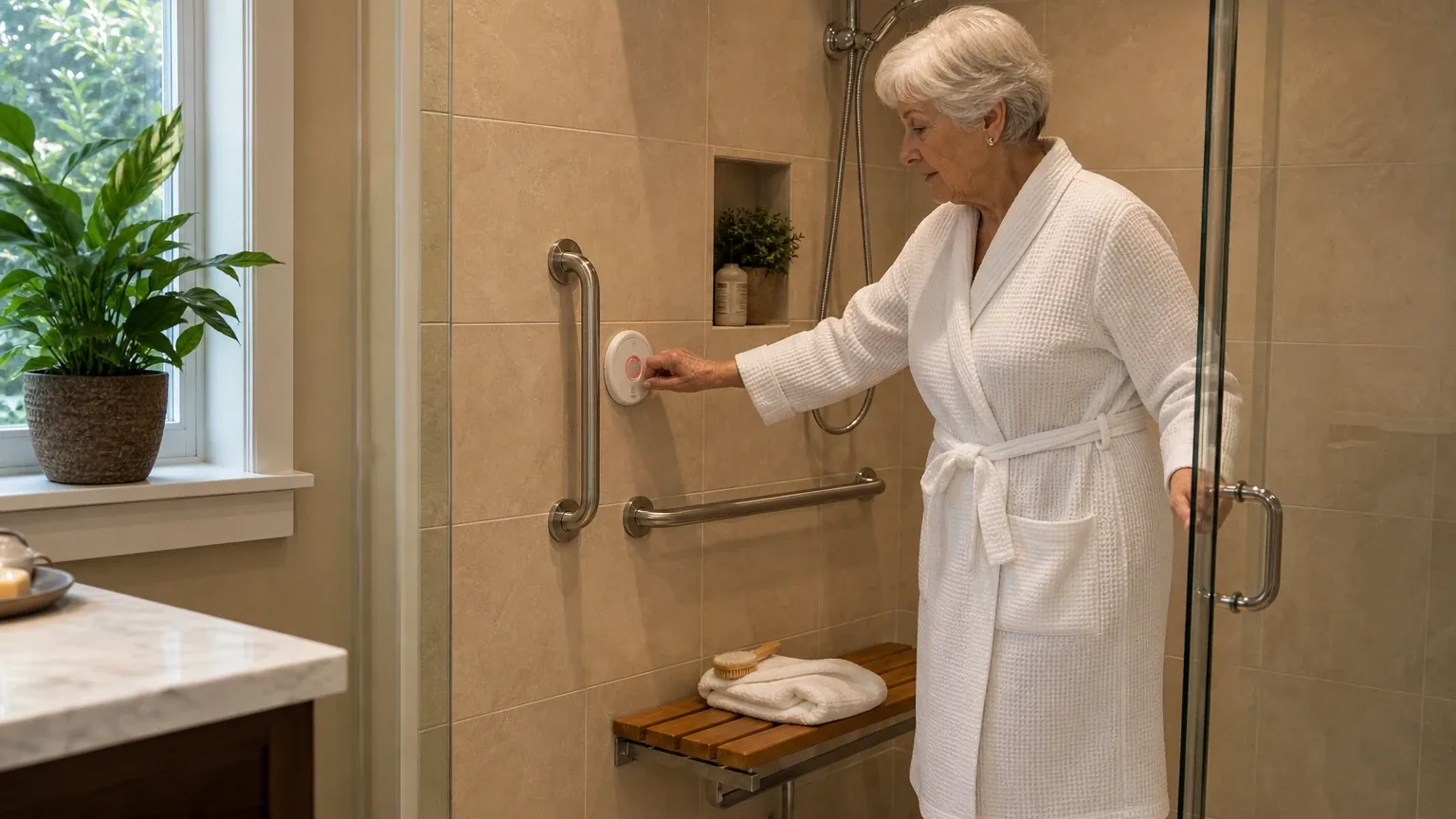
Answer Capsule
ADT Health is a good fit for Contract-Free Emergency Monitoring, with qualifications. Two of the seven platforms in this study named ADT Health during the ranking stage, and both placed it in their top six. The strongest reason to consider it is a genuine month-to-month structure: ADT states there are no long-term contracts and no termination fees, and independent reviews agree. The main limitation is cost structure rather than commitment. A $99.99 activation fee applies on standard monthly billing, fall detection adds $11 per month and is unavailable on the landline-only Basic plan, and the current equipment-return obligation is not clearly published. Buyers who want flexibility without upfront fees should compare carefully.
Research Snapshot
| Field | Detail |
|---|---|
| Platform mentions in ranking stage | 2 of 7 platforms (openai, perplexity) |
| Share of included platform responses | 28.6% |
| Average listed rank | 5.0 |
| Best listed rank | 4 (perplexity) |
| Relevant product/model/plan | Medical Alert Plus (in-home cellular with optional fall detection); On-The-Go Emergency Response (mobile); Medical Alert Basic (landline) |
| Overall use-case fit | Good |
| Research date | 2026-11-10 |
Why ADT Health Qualified for This Study
Questions This Section Answers
- Did enough AI platforms name ADT Health for contract-free emergency monitoring to justify including it in this ranking?
- Which ADT Health plans did the platforms evaluate for contract-free emergency monitoring?
ADT Health qualified because two of the seven platforms in this study named it during ranking discovery, meeting the two-mention threshold. OpenAI listed it at rank 6 and Perplexity at rank 4, producing an average listed rank of 5.0 and a 28.6% share of included platform responses. That is a modest footprint: five platforms did not name ADT Health in the ranking stage, even though several of them later produced fit research on it.
The platforms that did name it converged on the same plan set. OpenAI pointed to Medical Alert Plus for in-home use with optional fall detection, On-The-Go Emergency Response for mobile coverage, and Medical Alert Basic for landline-only homes [28]. Perplexity named the same three plans and emphasized Medical Alert Plus and On-The-Go as the relevant options for this use case [25]. The other platforms' fit research also centered on these plans, with Kimi focusing on Medical Alert Plus and On-The-Go while noting Basic as referenced [23].
Qualification carries a disclosure. The available source evidence notes that official-site retrieval failed for at least one mention and that identity was resolved through an unverified reported-domain evidence, with the matching reported domain retained but unverified. Buyers should treat the adt.com association as reported rather than independently confirmed by this study.
The Product, Model, Plan, or Service Most Relevant to Contract-Free Emergency Monitoring
Questions This Section Answers
- Which ADT Health plan is the best fit for a senior who wants in-home monitoring without a long-term contract?
- Is ADT Health On-The-Go a reasonable choice for contract-free emergency monitoring away from home?
Medical Alert Plus is the most relevant ADT Health plan for contract-free in-home monitoring. It uses cellular service, works without a landline, lists at $39.99 per month on standard monthly billing, and supports optional fall detection at $11 per month [28]. ADT lists an in-home range of up to 600 feet in its comparison material [24].
On-The-Go Emergency Response is the mobile option. It lists at $41.99 per month, includes a wearable mobile unit with GPS capability, requires no landline, and also supports the $11 monthly fall-detection add-on [28]. Perplexity's review of ADT product pages describes On-The-Go as positioned for use at home and away from home with built-in GPS [26]. Operation depends on cellular coverage and GPS availability, and ADT's own monitoring terms state that cellular service is not available everywhere or at all times [17].
Medical Alert Basic is the entry plan at $31.99 per month, but it requires a landline and does not support fall-detection monitoring [28]. For a buyer whose priority is contract-free monitoring with fall detection, Basic is the weakest of the three.
One availability question remains open. Anthropic's research notes that June 2026 sources list Medical Alert Basic while a September 2026 ADT health page appeared to show only Plus and On-The-Go, leaving it uncertain whether Basic is still actively sold [7]. Buyers who want the landline plan should confirm it is orderable before building a decision around it.
What the AI Platforms Agreed About
Questions This Section Answers
- Do the AI platforms agree that ADT Health has no long-term contract or termination fee for medical alert service?
- Which ADT Health features did the platforms consistently describe the same way?
The platforms agreed unanimously on the core contract finding: ADT Health medical alert service is month-to-month with no long-term contract and no termination fee. All seven platforms reached this conclusion, drawing on ADT's terms and FAQ pages plus independent reviews [16]. This is the single strongest point of consensus in the study and the reason ADT Health fits the use case at all.
The platforms also agreed, with strong consistency, on the plan structure. Medical Alert Plus is the cellular in-home option, On-The-Go is the mobile GPS option, and fall detection is an optional add-on available only on those two plans, not on Basic [28]. Most platforms put the fall-detection add-on at $11 per month [28], though Perplexity found one ADT guide listing $10 per month [22].
There was also broad agreement that equipment is leased rather than owned. ADT states that systems remain its property [16], and independent reviews describe the hardware as leased with no upfront equipment purchase [35]. Several platforms noted that ADT does not charge an equipment fee, which offsets part of the activation cost relative to competitors that charge up to $200 for equipment [36].
Finally, the platforms agreed that ADT Health lacks a caregiver mobile app for remote monitoring or location tracking [37]. Buyers who expect app-based family visibility should treat this as a settled limitation rather than an open question.
Where the AI Platforms Disagreed or Were Uncertain
Questions This Section Answers
- How fast does ADT Health actually answer medical alert calls, and why do the platforms report different response times?
- Is ADT Health's $99 activation fee avoidable, and do the platforms agree on the amount?
- What are ADT Health's equipment-return obligations if a buyer cancels contract-free monitoring?
Response time is the clearest disagreement. ADT's own FAQ claims an average response time of 30 seconds or less [25], and one independent review repeats a 30-second figure attributed to ADT [3]. But ElderGuide reports a 10-second average and calls it the fastest among reviewed companies [5], while TechRadar measured 52 seconds during its first round of daily testing, which it described as slightly above average [38]. US News reported quick response times in testing and fall-detection alerts triggered within five seconds across six simulated falls, but did not specify the alert-answer time [14]. These figures are not reconcilable from the supplied evidence. The 30-second figure is a company claim, not an independently audited guarantee.
Activation fee amounts varied across platforms. OpenAI, Grok, and Google describe a $99.99 or $99 activation fee [28], while Anthropic and Kimi describe $99 with frequent promotional waivers, including a 50% discount reducing it to $49.50 [10]. Google states the fee is waived with quarterly or annual prepayment [2]. The platforms agree a fee exists on standard monthly billing; they do not agree on how often it is waived or whether a waiver survives the promotional period.
Equipment return is the most consequential uncertainty for a contract-free buyer. ADT states systems remain its property and must be returned [16]. An older ADT health subscriber agreement requires return within 30 days or a $250 charge per system [18], and one independent review describes a 30-day window for a full refund excluding shipping [35]. But OpenAI explicitly flags that the current public product page does not clearly state a return deadline or non-return charge, making the older document's applicability to a 2026 order unclear [28]. Perplexity and Kimi both report that return and cancellation-cost details are not clearly public [25]. Anthropic adds a further conflict: some sources say ADT provides a prepaid return label, others say the buyer arranges return.
Pricing itself is inconsistent across ADT's own pages. Perplexity found Medical Alert Plus listed at $39.99 per month on one terms page and $41.99 on a product page, activation shown as either $99.00 or $99.99, and fall detection at $10 or $11 depending on the page [23]. Google's research cites a $29.99 to $39.99 monthly range from an independent source [4], which sits below the $31.99 to $41.99 range most other platforms report [28]. DeepSeek, which ran without search enabled, could not confirm current prices at all and rated its pricing confidence low [27].
Use-Case-Specific Features and Capabilities
Questions This Section Answers
- Does ADT Health Medical Alert Plus provide enough in-home range and battery backup for a senior living alone?
- Can ADT Health fall detection be added to the landline Basic plan for contract-free monitoring?
Medical Alert Plus is the strongest capability match for in-home contract-free monitoring. It runs on cellular without a landline, offers up to 600 feet of in-home range, and includes 12 to 24 hours of backup battery life according to independent review [24]. Anthropic's research also notes temperature monitoring on Plus [36]. Fall detection is available as an $11 monthly add-on pendant, and ADT states plainly that it does not detect 100% of falls [28].
On-The-Go covers the away-from-home case. It includes GPS, two-way voice communication, and optional fall detection, and one independent review describes a portable base unit with roughly 40 hours of battery life [30]. Its performance depends on cellular and GPS availability, which ADT discloses in its monitoring terms [17].
Medical Alert Basic is the capability floor. It requires a landline, offers roughly 300 feet of range per independent review, and cannot support fall detection [28]. For a buyer who needs fall detection, Basic is not a viable contract-free option regardless of price.
Add-ons are priced individually. An additional standard wearable costs $14.99 one-time plus $3 per month, a wall-mount button costs $2.99 per month, and a lockbox costs $29.99 one-time [28]. Spouse or secondary-user monitoring is described at $3 per month plus a one-time fee [39]. None of these are required, but each raises the effective monthly cost of the contract-free plan.
The capability gap most platforms flagged is the absence of a caregiver app. ADT Health does not offer a mobile app for family location tracking or alert notifications [37]. Buyers who want remote visibility into a parent's status will not find it here.
Pricing, Fees, Contracts, and Ongoing Costs
Questions This Section Answers
- What does ADT Health cost per month for contract-free emergency monitoring, including the activation fee and fall detection?
- Does prepaying quarterly or annually make ADT Health cheaper, and does that undermine the contract-free benefit?
- Is ADT Health worth the $99.99 activation fee compared with competitors that charge none?
Standard monthly pricing is published and consistent across most platforms: Medical Alert Basic at $31.99, Medical Alert Plus at $39.99, and On-The-Go at $41.99, each with a $99.99 activation fee on monthly billing [28]. Fall detection adds $11 per month on Plus and On-The-Go [28]. Taxes are excluded, and professional installation, if requested, may cost extra [28].
Prepayment changes the math. Quarterly or annual billing lowers the listed monitoring rate by $2 per month and may waive activation and shipping under a promotion available through December 31, 2026 [16]. Perplexity found quarterly billing listed at $113.97 per quarter and annual at $455.88 per year on one ADT terms page [16]. OpenAI notes the tradeoff directly: prepayment increases the amount paid before cancellation and should be weighed against the buyer's contract-free objective [16]. Kimi reports that the first three months of monitoring are due at purchase under the terms it reviewed [29].
The activation fee is the main cost objection. Independent reviewers note that Medical Guardian and Bay Alarm Medical have dropped activation fees entirely, making ADT's upfront charge stand out [10]. The counterpoint is that ADT does not charge an equipment fee, while some competitors charge up to $200 for equipment [36]. Whether the activation fee is refundable if service is canceled shortly after activation is not clearly stated on current public pages [28].
Other potential charges to budget for include taxes, shipping outside promotional or prepaid offers, full replacement cost for lost devices, and deductible or discounted replacement charges for accidental damage under the Premium Protection terms [28]. A lifetime warranty covering damage and normal wear is described by independent reviews, with per-incident limits of $75 per base unit and $15 per accessory [35].
Best Suited For
Questions This Section Answers
- Is ADT Health a good choice for a family that wants monitored emergency response without a multi-year contract?
- Which buyers get the most value from ADT Health Medical Alert Plus with fall detection?
ADT Health suits buyers who prioritize flexibility and brand familiarity over the lowest possible upfront cost. The best-matched buyer wants monitored emergency response on a genuine month-to-month basis, is willing to pay a $99.99 activation fee or wait for a promotion that waives it, and values an established monitoring brand.
Three buyer profiles fit best. First, seniors who want in-home cellular monitoring without a landline and may add fall detection later, using Medical Alert Plus [28]. Second, active users who need a mobile device with GPS for coverage away from home, using On-The-Go [24]. Third, existing ADT customers who may qualify for bundle discounts and already trust the brand [15].
Buyers who can prepay quarterly or annually and capture the activation waiver get a materially better deal than those on standard monthly billing [16]. That said, prepaying reduces the practical flexibility that made ADT attractive in the first place, so the buyer should decide which matters more before choosing a billing cadence.
Probably Not Best Suited For
Questions This Section Answers
- Is ADT Health a poor fit for a budget-conscious buyer who wants contract-free monitoring with no upfront fee?
- Should a family that needs a caregiver app for remote monitoring look past ADT Health?
ADT Health is a weak fit for three buyer types. The first is the budget-conscious buyer who cannot absorb a $99.99 activation charge on monthly billing and does not want to prepay to avoid it [28]. Competitors without activation fees may deliver a lower first-year cost with equally flexible terms [36].
The second is the family that needs a caregiver app. ADT Health does not offer one, so remote location tracking and alert notifications are unavailable [37]. Buyers who consider app-based visibility essential should look elsewhere.
The third is the buyer in an area with unreliable cellular coverage. Medical Alert Plus and On-The-Go depend on cellular service, and ADT states that cellular service is not available everywhere or at all times [17]. Anthropic's research specifically flags poor AT&T LTE coverage as a disqualifier for the cellular plans [36]. A landline-based alternative may be safer only where cellular is unreliable and fall detection is not required [28].
A fourth, softer caution applies to buyers who need a clearly documented current equipment-return process before signing. Because the return deadline and non-return charge are not clearly published on current pages, buyers who require that certainty upfront may prefer a provider with explicit terms [28].
When Another Option May Be Better
Questions This Section Answers
- When is a competitor without an activation fee a better choice than ADT Health for contract-free emergency monitoring?
- Is ADT Health or a lower-priced competitor better when fall detection must be included at a known price?
Another option may be better in five specific situations. When the buyer prioritizes zero activation fees, Medical Guardian or Bay Alarm Medical eliminate upfront costs that ADT charges [10]. When the buyer needs fall detection on a landline-based system, competitors offer it on entry-level plans while ADT does not [10].
When the buyer wants the lowest possible entry pricing, MobileHelp or Bay Alarm offer sub-$30 monthly entry plans, and Kimi cites Bay Alarm at $27.95 per month with no activation fee and MobileHelp at $29.95 [36]. When the buyer values a caregiver mobile app, Medical Guardian includes one that ADT lacks [37]. When the buyer has poor AT&T coverage, the cellular ADT plans may not serve the address reliably [36].
A longer return or satisfaction window is another differentiator. ADT's 30-day window is shorter than some competitors, and Medical Care Alert is described as offering a 14-day full refund, which is shorter still, so buyers should compare the specific terms rather than assume ADT is the outlier [35]. The broader point is that ADT's contract-free structure is not unique; its differentiators are brand, monitoring infrastructure, and the absence of an equipment fee.
Questions to Verify Before Buying
Questions This Section Answers
- What should a buyer confirm with ADT Health about cancellation and billing cutoff before starting contract-free monitoring?
- What equipment-return deadline and non-return charge apply to a new ADT Health order in 2026?
Confirm the cancellation mechanics first. Ask what exact cancellation method is required, whether it is phone or written, and on what date monitoring and billing stop [28]. Ask whether the $99.99 activation fee is refunded if the device is returned shortly after activation or cannot obtain adequate signal [28].
Confirm the equipment-return terms in writing. Ask for the current return deadline, shipping method, and non-return charge for the specific order, since the older $250-per-system figure may or may not still apply [18]. Ask whether return shipping is prepaid [35].
Confirm coverage and hardware. Ask whether the exact address has adequate cellular coverage for Medical Alert Plus or On-The-Go, which network the device uses, and whether ADT can verify signal strength at the home and common outdoor locations [17]. Ask whether fall detection is included or added at $11 per month and whether any separate activation or replacement fee applies [28].
Confirm the billing details. Ask whether quarterly or annual payments are refundable on a prorated basis after cancellation, whether professional installation, shipping, taxes, lockbox, and replacement-device charges apply to the order, and whether Medical Alert Basic is still available if the landline plan is preferred [28]. Finally, ask for the current subscriber agreement and all promotion terms before payment [16].
Final AI Consensus Verdict
ADT Health is a good fit for contract-free emergency monitoring, with real tradeoffs. The platforms were unanimous that ADT Health offers genuine month-to-month service with no long-term contract and no termination fee, which is the defining requirement of this use case [16]. Medical Alert Plus and On-The-Go are the relevant plans, and both support optional fall detection at $11 per month [28].
The fit is not clean. The $99.99 activation fee, the $11 monthly fall-detection add-on, the absence of a caregiver app, and the unclear current equipment-return obligation are all meaningful limitations [28]. Response-time evidence is contradictory, ranging from a company-claimed 30 seconds to a measured 52 seconds in one independent test [25]. Platform fit ratings split: Grok rated ADT Health strong, OpenAI, Anthropic, Google, and Perplexity rated it good, and DeepSeek and Kimi rated it mixed [16].
The consensus verdict: ADT Health is a reasonable contract-free choice for buyers who value brand and monitoring infrastructure and can absorb the upfront fee, but it is not the lowest-cost or most transparent option in this category. Buyers should verify the activation fee, return terms, and cellular coverage before ordering. For the full field of options, see the Contract-Free Emergency Monitoring index, and browse the broader medical alert systems directory for category context.
How This Review Was Produced
This review was produced from a seven-platform AI research run dated 2026-11-10. Each platform independently researched ADT Health for the contract-free emergency monitoring use case and returned fit findings, pricing details, limitations, and citations. Two platforms, OpenAI and Perplexity, named ADT Health during the ranking discovery stage, meeting the two-mention threshold for inclusion. The remaining platforms contributed fit research without naming it in ranking.
The writer stage used only the supplied platform responses and the citation source catalog. No independent testing, customer interviews, or direct verification of ADT's current pages was performed. Company-owned citations outnumber independent citations in the supplied evidence, and company claims are labeled as such throughout. Where platforms disagreed, the conflict is preserved rather than resolved.
Methodology Limitations
Several limitations apply. First, platform mentions count only platforms that named ADT Health during ranking discovery, not all platforms that produced fit research, so the 28.6% share understates how many platforms actually evaluated it. Second, platform-reported research dates differ from the authoritative run date: DeepSeek's research is dated 2026-06-15 while the run date is 2026-11-10, and platform-reported dates are provenance metadata that do not independently prove freshness.
Third, DeepSeek ran without search enabled and could not confirm current pricing, rating its pricing confidence low [27]. Fourth, official-site retrieval failed for at least one mention, and identity was resolved through an unverified reported-domain evidence, so the adt.com association is reported but unverified. Fifth, the supplied URLs were collected from platform responses and were not independently validated by the writer stage.
Sixth, company-owned citations materially outnumber independent citations, so company claims should not be read as independently verified. Seventh, response-time, pricing, and equipment-return evidence conflicts across sources and is preserved rather than resolved. Eighth, AI-platform agreement does not prove product quality; it reflects the sources the platforms retrieved and how they weighed them.
Sources
Company-Owned Sources
- ADT Terms & Conditions for Medical Alert Systems by ADT: https://adt.com/
- ADT Med Alert Terms and Offers: https://adtmedalert.com/
- ADT Medical Alert- Service Billing FAQs: https://help.adt.com/
- ADT Medical Alert- Service Billing FAQs: https://help.adt.com/s/article/Medical-Alert-Service-Billing-FAQs
- A safer tomorrow starts with what you do today - ADT: https://newsroom.adt.com/adt-health/a-safer-tomorrow-starts-with-what-you-do-today
- When caregiving gets hard, ADT technology can help soften the edges: https://newsroom.adt.com/adt-health/when-caregiving-gets-hard-adt-technology-can-help-soften-the-edges
- ADT Health Terms and Conditions: https://www.adt.com/about-adt/legal/home-health-term-and-conditions
- ADT Monitoring Terms and Conditions: https://www.adt.com/about-adt/legal/monitoring-terms-and-conditions
- ADT Health Subscriber Agreement for Medical Alert System: https://www.adt.com/content/dam/adt-core/pdf/5406UE06_Health_Subscriber_Agreement_for_Medcial_Alert_System.pdf
- IMPORTANT TERMS AND CONDITIONS: https://www.adt.com/content/dam/adt/downloads/legal/5406UE06_Health_Contract.pdf
- Fall Detection Pendant User Guide - ADT Security: https://www.adt.com/content/dam/adt/downloads/manuals/ADT_Fall_Detection_Pendant_User_Guide.pdf
- On-The-Go Personal Emergency Response System: https://www.adt.com/content/dam/adt/downloads/manuals/ADT_MedAlert_OnTheGo_User_Guide.pdf
- INDEPENDENT LIVING: https://www.adt.com/content/dam/adt/search/faq/ADT_Independent_Living_Guide.pdf
- Medical Alert Systems | ADT Health: https://www.adt.com/health
- ADT Medical Alert Options Comparison: https://www.adt.com/health/compare
- ADT Medical Alert FAQs: https://www.adt.com/health/faqs
- Products: https://www.adt.com/health/products
- ADT Medical Alert Systems: https://www.adt.com/medical-alert
- ADT Medical Alert Basic Packages and Package Disclaimers: https://www.adt.com/shop/health/medical-alert-basic.html
- Medical Alert Plus Packages | ADT® Health & Senior Safety: https://www.adt.com/shop/health/medical-alert-plus.html?correlationId=null
- Medical On-The-Go Packages: https://www.adt.com/shop/health/medical-on-the-go.html
- ADT Med Alert: https://www.adtmedalert.com/
- PERS Unit | Personal Emergency Response System | Medical Alert: https://www.towne.services/towne-monitoring/personal-emergency-response/
Independent Sources
- ADT Medical Alert Review 2026: https://bestguide.com/review/adt-medical-alert-review/
- ADT Medical Alert FAQs - Caring.com: https://caring.com/
- ADT Medical Alert Device Review: https://elderguide.com/medical-alert-devices/adt-review/
- ADT Medical Alert Review 2026 — Price Lock and Honest Verdict: https://elderlivinghub.com/
- ADT Medical Alert Review: Honest Pros, Cons & Verdict 2026: https://elderlivinghub.com/reviews/adt-medical-alert-review/
- ADT Medical Alert Review 2026: https://medicalalertreview.com/adt-medical-alert-review
- Medical Alert System Cost & Fall-Detection Comparison (2026 Data: https://medicalalertreview.com/medical-alert-cost-comparison
- ADT Health Medical Alert Review 2026: https://realestate.usnews.com/home-services/medical-alert-system/adt
- ADT Medical Alert System Review - SafeWise: https://safewise.com/
- ADT Medical Alert Reviews: https://www.consumeraffairs.com/medical-alert-systems/adt.html
- 2026 ADT Reviews: Medical Alerts: https://www.consumersadvocate.org/medical-alerts/c/adt-medical-alerts-review
- ADT Medical Alert Systems Review: https://www.forbes.com/health/medical-alert-systems/adt-medical-alert-review/
- ADT Medical Alert System Review (2026: https://www.retirementliving.com/reviews/adt-medical-alert-systems
- ADT Medical Alert Cost, Packages, Pricing & Monthly Plan: https://www.safehome.org/medical-alert-systems/adt/
- ADT Medical Alert System Review, Tested by Tech Experts in 2026: https://www.seniorliving.org/medical-alert-systems/adt/reviews/
- ADT Health medical alert system review: https://www.techradar.com/reviews/adt-health-medical-alert-system-review
- ADT Medical Alert Costs: Our Analysis 2026: https://www.theseniorlist.com/medical-alert-systems/adt/
Verify This Research
Review the study details behind this page or download the public machine-readable verification record.
- Study date
- November 10, 2026
- Platforms analyzed
- 7
- Source records
- 40
- Ranking mentions
- 2 of 7
- Platform share
- 29%
- Final consensus rank
- #9
Research trail and source mix
Configured platforms
openai, anthropic, deepseek, grok, perplexity, kimi, google
Source mix
17 independent · 23 company-owned
Evidence support
32 direct · 8 partial
Important limitation
Use the run research_date as the study date. Platform-reported dates are provenance metadata and do not independently prove freshness.
Source snapshot SHA-256 ba60427f00bd12d34aeb5225de7f429107c0ce3f76813573d32b68812ebf4ce8