
Answer Capsule
LifeFone is a good fit for Contract-Free Emergency Monitoring, not an unequivocal one. Three of the seven platforms in this study named LifeFone during the ranking stage, placing it at an average listed rank of 3.3 and a best listed rank of 2. The strongest reason to consider it is documented contract flexibility: month-to-month service, cancellation at any time, no stated activation or equipment fees, a 30-day trial, and optional fall detection at a comparatively low add-on price. The main limitation is that cancellation is not cost-free — return shipping is the customer's expense, partial prepaid months are not refunded, and no independently verified response-time or monitoring-performance data was located.
Research Snapshot
| Field | Finding |
|---|---|
| Platform mentions in ranking stage | 3 of 7 platforms (anthropic, grok, openai) |
| Share of included platform responses | 42.9% |
| Average listed rank | 3.3 |
| Best listed rank | 2 |
| Relevant product/model/plan | At-Home Landline or At-Home Cellular emergency response service with optional Automatic Fall Detection |
| Overall use-case fit | Good |
| Research date | 2026-09-27 |
Why LifeFone Qualified for This Study
Questions This Section Answers
- Why did LifeFone qualify for this contract-free emergency monitoring study?
- How many AI platforms named LifeFone during the ranking stage?
LifeFone qualified because it cleared the study's minimum-mention threshold and because its published terms address the exact criteria this category screens for: month-to-month pricing, cancellation policy, equipment return terms, activation fees, fall-detection add-on cost, response reliability, and pricing transparency.
Three of the seven included platforms — anthropic, grok, and openai — named LifeFone during ranking discovery, a 42.9% share of included platform responses. Its average listed rank was 3.3, with a best listed rank of 2 (grok) and ranks of 4 from both anthropic and openai. The platforms that named it converged on the same product family: the At-Home Landline and At-Home Cellular plans, with optional Automatic Fall Detection [1].
Qualification is not the same as endorsement. The available source evidence notes that official-site retrieval failed for at least one mention and that the matching domain was retained as unverified, and that company-name variants were collapsed onto one canonical brand before the minimum-mentions threshold was applied. Buyers should treat the qualification as a screening result, not a quality finding.
The Product, Model, Plan, or Service Most Relevant to Contract-Free Emergency Monitoring
Questions This Section Answers
- Which LifeFone plan is most relevant for a buyer who wants contract-free emergency monitoring?
- Does LifeFone's At-Home Cellular plan include automatic fall detection at no extra cost?
The relevant offering is LifeFone's At-Home service — either the At-Home Landline or At-Home Cellular base-station system — with optional Automatic Fall Detection. This is an in-home monitored emergency response product, not a mobile GPS system.
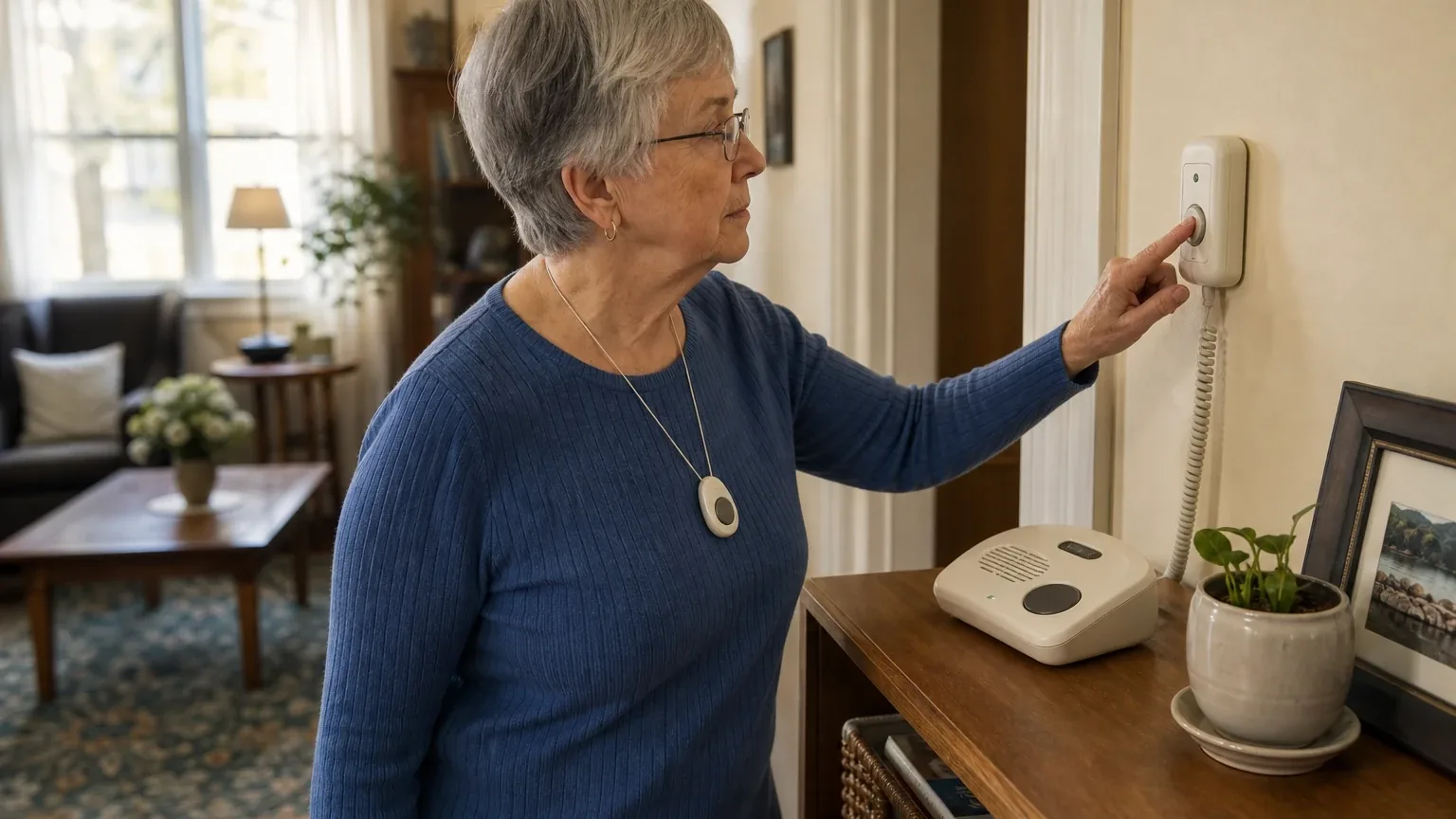
The At-Home systems provide a wearable help button, two-way communication through the base unit, water resistance, a personalized emergency care profile, and optional fall detection [2]. LifeFone lists a range of up to 1,300 feet and a 32-hour backup battery on the base station [3]. Landline service depends on the home telephone connection; cellular service depends on available network coverage, and LifeFone materials state that poor coverage or low battery can prevent an emergency call or location [4].
Fall detection is an add-on, not a baseline feature. LifeFone lists an additional $5 per month for the At-Home plans, while its FAQ describes the add-on as generally costing $5–$10 per month depending on the system [5]. With fall detection enabled, one platform reports pendant battery life of approximately one year, versus one to five years for a standard help button (anthropic:citation_7). That battery figure is platform-reported and was not independently tested.
What the AI Platforms Agreed About
Questions This Section Answers
- Do the AI platforms agree that LifeFone has no long-term contract?
- What do the platforms agree about LifeFone's activation and equipment fees?
The platforms agreed most strongly on contract structure and fee structure. This is the area where the evidence is most consistent across platforms and most directly relevant to the use case.
On contract terms, multiple platforms reported that LifeFone states no minimum time commitment and allows cancellation at any time by phone, email, or written notice [7]. LifeFone's terms describe service continuing month-to-month until terminated by either party [8].
On fees, the platforms agreed that LifeFone states no activation fees and no equipment fees, and that equipment is loaned rather than sold [7]. Independent reviews also reported no setup or cancellation fees [11].
On the trial, platforms agreed that LifeFone offers a 30-day money-back guarantee beginning three business days after shipment, with the customer paying return shipping and enrollment shipping charges potentially deducted from the refund [7].
On fall detection, platforms agreed the feature is optional and priced separately, with $5 per month the most commonly reported figure for At-Home plans [13].
Agreement among AI platforms reflects consistent source reporting, not verified product quality. Several of these findings trace back to LifeFone's own published pages, which are company-owned evidence.
Where the AI Platforms Disagreed or Were Uncertain
Questions This Section Answers
- Why do AI platforms disagree about LifeFone's month-to-month price versus its annual price?
- Is LifeFone's response reliability independently verified by any platform?
The platforms disagreed or were uncertain on pricing presentation, cancellation costs, and response reliability. These are the areas where a buyer should verify directly rather than rely on any single summary.
Month-to-month versus annual pricing. The official order page emphasizes annual-billing prices — $24.95 per month for At-Home Landline and $30.95 per month for At-Home Cellular — while independent sources report higher month-to-month rates of approximately $30 landline and $35 cellular [16]. One platform reported the opposite framing, listing $29.95 per month as the month-to-month At-Home Landline rate with $24.95 as the annual promotional rate, plus a $14.95 one-time shipping fee on month-to-month plans [18]. Another platform reported that the lowest advertised rate depends on annual prepayment and that true month-to-month rates are less consistently published [20]. These are genuine conflicts, not rounding differences, and the exact current rate should be confirmed at checkout.
Fall-detection price. LifeFone's FAQ says $5–$10 per month depending on system, while at-home product information specifies $5 [21]. One independent review listed $34.95 per month for At-Home Cellular with fall detection, which does not reconcile cleanly with $30.95 base plus $5 add-on (anthropic:citation_9).
Cancellation cost. Platforms agreed cancellation requires returning the equipment, but characterized the consequence differently. Some framed return shipping as a minor administrative cost; others described it as converting "contract-free" into "pay-to-cancel" [23]. One platform reported a $295 charge for At-Home systems and $195 for On-the-Go systems if equipment is not returned within 30 days (anthropic:citation_5). Another platform could not verify cancellation-notice, equipment-return, or activation-fee terms from its retrieved sources at all [20].
Response reliability. No platform located independently verified response times, answer rates, false-alarm rates, outage history, or dispatch outcomes for LifeFone [24]. One platform reported that LifeFone operates UL-listed monitoring centers, but that claim was not corroborated by the other platforms reviewed [20]. LifeFone claims U.S.-based monitoring centers operating 24/7, 365 days per year [26]. That is a company claim.
Use-Case-Specific Features and Capabilities
Questions This Section Answers
- What features does LifeFone's At-Home system include for in-home emergency monitoring?
- Does LifeFone's at-home system work if the user leaves the house?
For contract-free emergency monitoring specifically, LifeFone's relevant capabilities are in-home monitored response, optional fall detection, and a documented cancellation path. Its relevant limitation is that at-home systems are not designed for protection away from the base station.
LifeFone's described emergency workflow is that a care agent receives the alarm, assesses the situation, and may contact family or dispatch local emergency responders according to the emergency care plan [27]. The company claims its U.S.-based monitoring centers operate 24/7, 365 days per year [28]. Both are company-reported.
The At-Home systems include a wearable help button, two-way communication through the base unit, water resistance, and a personalized emergency care profile [29]. Range is listed at up to 1,300 feet with a 32-hour backup battery [30].
Fall detection is automatic but not fully reliable; LifeFone advises users to still press the help button when able (anthropic:citation_7). This is a meaningful operational caveat for buyers who assume fall detection replaces the button.
One platform noted that LifeFone offers free spouse coverage on At-Home plans, meaning a second standard button at no additional monthly cost, though a fall-detection pendant for the spouse still incurs an extra fee [31]. Another platform listed optional add-ons including Daily Check-In at $19 per month, a Protection Plan at $5 per month, and Activity Assurance at $6 per month (anthropic:citation_6). These add-ons are optional but compound total monthly cost.
For buyers comparing this use case across providers, the broader medical alert systems category directory covers alternatives outside this single-brand review.
Pricing, Fees, Contracts, and Ongoing Costs
Questions This Section Answers
- How much does LifeFone cost per month for At-Home Landline and At-Home Cellular?
- Are there cancellation or equipment-return fees if a buyer leaves LifeFone?
- What is the cheapest LifeFone option for a buyer who wants no long-term contract?
LifeFone's headline prices are low, but the cheapest advertised rate is tied to annual billing, and cancellation carries real costs. Buyers should treat the month-to-month rate, not the annual rate, as the contract-free price.
| Cost item | Reported amount | Source type |
|---|---|---|
| At-Home Landline (annual billing) | $24.95/mo | Company [33] |
| At-Home Cellular (annual billing) | $30.95/mo | Company [33] |
| At-Home Landline (month-to-month) | ~$30/mo reported independently; $29.95/mo reported by one platform | Independent [34]; platform-reported [35] |
| At-Home Cellular (month-to-month) | ~$35/mo reported independently | Independent [34] |
| Automatic Fall Detection | $5/mo for At-Home plans; FAQ says $5–$10 depending on system | Company [36] |
| Activation fee | None stated | Company [37] |
| Equipment fee | None stated; equipment is loaned | Company [37] |
| Switching/restocking fee | None stated | Company [37] |
| Return shipping after cancellation | Customer's expense | Company [38] |
| Non-returned equipment | $295 At-Home / $195 On-the-Go reported | Platform-reported (anthropic:citation_5) |
| Month-to-month shipping | $14.95 one-time reported | Platform-reported [39] |
| Optional add-ons | Daily Check-In $19/mo; Protection Plan $5/mo; Activity Assurance $6/mo | Platform-reported (anthropic:citation_6) |
On contract terms, LifeFone states no minimum time commitment and cancellation at any time by phone, email, or written notice [37]. Billing stops when returned equipment is received [37]. Only full unused prepaid months are refundable; partial months are not [37]. Equipment generally must be returned within 30 days after termination to avoid a fair-market-value charge [40].
One platform reported a "Lifetime Subscriber Price Guarantee" under which the monthly price will never increase for the enrolled service (anthropic:citation_7, grok:0). The same platform flagged uncertainty about whether that guarantee survives a plan discontinuation or a forced migration to a differently priced service (anthropic:citation_7).
Pricing confidence varies by platform: high for anthropic, grok, and google; moderate for openai and perplexity; low for deepseek and kimi. That spread is itself a finding — the contract-free price is less consistently documented than the annual price.
Best Suited For
Questions This Section Answers
- Who is LifeFone best suited for in contract-free emergency monitoring?
- Is LifeFone a good choice for a couple who both want monitored coverage at home?
LifeFone is best suited to home-based buyers who want monitored emergency response without a multi-year commitment and who accept that cancellation involves returning equipment at their own expense.
The clearest fits are: seniors and families who want landline or cellular in-home monitoring on a month-to-month basis [41]; families who want optional automatic fall detection without buying equipment [42]; buyers who may need to cancel or change systems without a long-term contract [43]; couples in the same home, since one platform reported free spouse coverage on At-Home plans [44]; and households willing to return loaned equipment at their own expense after cancellation [43].
Buyers who value price predictability once enrolled may also find the reported lifetime price guarantee relevant, though its scope is not fully clear (anthropic:citation_7).
Probably Not Best Suited For
Questions This Section Answers
- Who should not choose LifeFone for contract-free emergency monitoring?
- Is LifeFone a poor fit for a buyer who needs protection outside the home?
LifeFone is probably not the best fit for buyers whose definition of "contract-free" includes a cost-free exit, or who need protection away from home.
The platforms identified several groups that should look elsewhere: buyers who require independently published response-time testing or monitoring-center performance metrics [45]; users needing reliable protection outside the home, since an at-home plan has a limited base-station range [47]; buyers who want fully refundable partial months after cancellation [48]; homes with unreliable landline or AT&T/Verizon cellular coverage [49]; buyers who cannot afford return shipping costs associated with cancellation (anthropic:citation_5); buyers who want equipment ownership rather than an indefinite loan (anthropic:citation_5); and buyers who need fall detection as a mandatory baseline feature at no additional cost (grok:0).
One platform also flagged that false-alarm fines may be passed to the subscriber by local authorities where applicable (anthropic:citation_5). That is platform-reported and jurisdiction-dependent.
When Another Option May Be Better
Questions This Section Answers
- When is a different medical alert provider a better choice than LifeFone for contract-free monitoring?
- What should a buyer compare before choosing LifeFone over a competitor?
Another option may be better when the buyer's priority is a frictionless exit, verified performance data, or mobile coverage rather than in-home monitoring.
The platforms named several specific triggers. Choose another provider if independently tested response times, uptime, or monitoring-center certifications are a purchase requirement [50]. Choose a mobile GPS system if the user regularly leaves home and needs protection outside the at-home range [51]. Choose a provider with simpler month-to-month pricing if avoiding annual prepayment and comparing total first-year cost matters more than the lowest advertised rate [52]. Choose a provider that covers return shipping if cancellation cost is decisive [53]. Choose a provider with published response metrics if objective proof of monitoring dependability is required [54].
One platform benchmarked competitors directly, citing MobileHelp at $29.95–$37.95 per month with no equipment or activation fees and fall detection at $11 per month, and Care Alert Now with no disclosed fees and a reported ~20-second response time (kimi:carealertnow). Those competitor figures are platform-reported and were not independently verified in this study. Another platform noted that LifeFone charges an extra $8 per month for a caregiver smartphone app on VIPx plans, while some competitors include a caregiver app at no extra cost [53].
For buyers weighing LifeFone against other providers on this specific use case, the Contract-Free Emergency Monitoring consensus index compares the full field.
Questions to Verify Before Buying
Questions This Section Answers
- What should a buyer confirm with LifeFone before signing up for a contract-free plan?
- Which LifeFone terms are not clearly documented in public sources?
The platforms converged on a set of questions that public sources do not answer consistently. Buyers should get written answers before enrolling.
Confirm the exact month-to-month price today for the selected At-Home Landline or At-Home Cellular plan, separate from any annual-billing rate [55]. Confirm whether automatic fall detection is exactly $5 per month for the specific device, and whether taxes or other recurring charges apply [57]. Confirm whether the 30-day trial refund includes all monitoring payments and what shipping charges will be deducted [57]. Confirm the return-shipping method and deadline after cancellation, and who pays [59]. Confirm the fair-market-value charge if equipment is late, lost, or damaged [60]. Confirm whether refunds are prorated or limited to full unused months [57]. Confirm which cellular network serves the exact home address and whether a coverage test is available [61]. Confirm the device's effective range through the home's walls and layout [55]. Confirm who operates the monitoring center for the selected plan and what current certifications or redundancy controls apply [62]. Confirm typical call-answer and dispatch procedures when the subscriber cannot speak [63]. Confirm how often the system should be tested and whether testing carries a fee [57]. Confirm whether the lifetime price guarantee survives a plan discontinuation or forced migration (anthropic:citation_7).
Final AI Consensus Verdict
LifeFone is a good, not unequivocally strong, fit for contract-free emergency monitoring. Three of seven platforms named it during ranking, at an average listed rank of 3.3 and a best listed rank of 2. Platform fit ratings ranged from "strong" (anthropic, google, grok) through "good" (openai, perplexity) and "mixed" (deepseek) to "uncertain" (kimi) — a spread that reflects differing evidence access rather than a settled consensus.
The case for LifeFone rests on documented contract flexibility: month-to-month service, cancellation at any time, no stated activation or equipment fees, a 30-day trial, and optional fall detection at a comparatively low add-on price. The case against treating it as a clear winner rests on return-shipping and refund limitations, billing-price differences between annual and monthly options, connectivity dependencies, and the absence of independently verified response-performance data across every platform reviewed.
Buyers whose only requirement is avoiding a multi-year contract will find LifeFone delivers on that specific promise. Buyers who also care about total cancellation cost or objective proof of monitoring reliability should verify return costs and monitoring terms in writing before enrolling.
How This Review Was Produced
This review was produced from seven AI platform research responses collected for the Contract-Free Emergency Monitoring use case under the topic "Best Medical Alert Systems With No Long-Term Contracts." The authoritative run research date is 2026-09-27.
Each platform independently researched LifeFone's fit for contract-free emergency monitoring and returned structured findings covering contract terms, pricing, fees, cancellation policy, equipment return, fall detection, and response reliability. Three of the seven platforms named LifeFone during the ranking stage; all seven produced fit assessments. Platform fit ratings were: anthropic strong, deepseek mixed, google strong, grok strong, kimi uncertain, openai good, perplexity good.
Findings were aggregated by factor, and agreement was characterized as unanimous, strong, majority, mixed, or limited based on the supplied responses. Company-owned sources and independent sources were tracked separately. No product testing, customer interviews, or independent verification was performed at the writing stage.
Methodology Limitations
Several limitations apply to this review and should be weighed before acting on it.
Platform-reported research dates differ from the run date. Anthropic's research is dated 2026-01-15 and deepseek's 2026-02-05, while the authoritative run date and the remaining platforms are dated 2026-09-27. Platform-reported dates are provenance metadata and do not independently prove freshness. Pricing and terms reported by the earlier-dated platforms may be stale.
One platform ran without search. Deepseek's research capability shows search disabled, and its pricing confidence is low. Its findings should be treated as model-reported rather than retrieved.
Official-site retrieval failed. The available source evidence records that official-site retrieval failed for at least one mention, with the matching domain retained as unverified. Company-name variants were collapsed onto one canonical brand before the minimum-mentions threshold was applied.
Citations are platform-reported evidence. The supplied URLs were collected from platform responses and were not independently validated at the writing stage. No-search model claims require explicit verification before being described as current facts.
Pricing conflicts were not resolved. Where platforms reported different month-to-month rates, different fall-detection prices, or different cancellation-cost characterizations, this review describes the conflict rather than picking a winner. Missing research was not treated as disagreement.
No independent performance verification exists. No platform located independently audited response times, answer rates, outage history, or dispatch outcomes for LifeFone. Claims about 24/7 monitoring, U.S.-based centers, and UL-listed monitoring centers are company-reported or platform-reported and were not independently verified.
Platform agreement is not a quality finding. That multiple platforms reported the same contract terms reflects consistent source reporting, much of it tracing to LifeFone's own published pages. It does not establish that the service performs as described.
Sources
Company-Owned Sources
- Is Care Alert Now a Good Medical Alert System? An Honest 2026 Review: https://carealertnow.com/blog/is-care-alert-now-a-good-medical-alert-system
- LifeFone Official Website: https://lifefone.com/
- Comparing LifeFone's Medical Alert Systems: https://www.lifefone.com/articles/comparing-lifefones-medical-alert-systems
- Medical Alert Device FAQs: https://www.lifefone.com/articles/medical-alert-device-faqs
- Medical Alert Overview | LifeFone: https://www.lifefone.com/articles/medical-alert-overview
- At-Home Landline and At-Home Cellular product pages: https://www.lifefone.com/at-home-landline
- FAQs | Medical Alert | LifeFone: https://www.lifefone.com/faq
- FAQ's | Medical Alert - LifeFone: https://www.lifefone.com/faqs
- Emergency Care Plan Agreement (ECPA: https://www.lifefone.com/media/pdf/ECPA_LF.pdf
- VIP User Guide | LifeFone: https://www.lifefone.com/media/pdf/manuals/VIP_black_user-guide_orange.pdf
- Medical Alert Device FAQs - LifeFone: https://www.lifefone.com/medical-alert-device-faqs
- Order Now | Medical Alert | LifeFone: https://www.lifefone.com/order-now
- At-Home Landline - Medical Alert Service - LifeFone: https://www.lifefone.com/products/at-home-landline
- Shipping & Returns | Medical Alert | LifeFone: https://www.lifefone.com/shipping-returns
- Terms & Conditions | Medical Alert | LifeFone: https://www.lifefone.com/terms-and-conditions
- VIP flex ® | Medical Alert System | LifeFone: https://www.lifefone.com/vip-flex
- Why Choose LifeFone | Medical Alert: https://www.lifefone.com/why-choose-lifefone
Additional AI research evidence63 records
- AI research evidence record openai:c1
- AI research evidence record openai:c11
- AI research evidence record openai:c1
- AI research evidence record openai:c10
- AI research evidence record openai:c4
- AI research evidence record openai:c2
- AI research evidence record openai:c2
- AI research evidence record perplexity:c9
- AI research evidence record google:1.1.3
- AI research evidence record google:1.1.9
- AI research evidence record perplexity:c8
- AI research evidence record google:1.1.7
- AI research evidence record openai:c4
- AI research evidence record google:1.2.1
- AI research evidence record perplexity:c7
- AI research evidence record openai:c1
- AI research evidence record openai:c3
- AI research evidence record google:1.2.5
- AI research evidence record google:1.1.9
- AI research evidence record deepseek:c2
- AI research evidence record openai:c2
- AI research evidence record openai:c4
- AI research evidence record perplexity:c14
- AI research evidence record openai:c9
- AI research evidence record perplexity:c11
- AI research evidence record openai:c7
- AI research evidence record openai:c8
- AI research evidence record openai:c7
- AI research evidence record openai:c11
- AI research evidence record openai:c1
- AI research evidence record google:1.1.8
- AI research evidence record google:1.2.3
- AI research evidence record openai:c1
- AI research evidence record openai:c3
- AI research evidence record google:1.2.5
- AI research evidence record openai:c4
- AI research evidence record openai:c2
- AI research evidence record perplexity:c14
- AI research evidence record google:1.1.9
- AI research evidence record openai:c5
- AI research evidence record openai:c1
- AI research evidence record openai:c4
- AI research evidence record openai:c2
- AI research evidence record google:1.1.8
- AI research evidence record openai:c9
- AI research evidence record perplexity:c11
- AI research evidence record openai:c1
- AI research evidence record openai:c2
- AI research evidence record openai:c10
- AI research evidence record openai:c9
- AI research evidence record openai:c1
- AI research evidence record deepseek:c2
- AI research evidence record google:1.1.9
- AI research evidence record perplexity:c11
- AI research evidence record openai:c1
- AI research evidence record deepseek:c2
- AI research evidence record openai:c2
- AI research evidence record openai:c4
- AI research evidence record perplexity:c14
- AI research evidence record openai:c5
- AI research evidence record openai:c10
- AI research evidence record openai:c7
- AI research evidence record openai:c8
Independent Sources
- 108+ LifeFone Reviews - Medical Alert Systems - BestCompany.com: https://bestcompany.com/medical-alert-systems/company/lifefone
- LifeFone Medical Alert Device Review - Elder Guide: https://elderguide.com/lifefone-review
- No-Contract Medical Alert Prices 2026: https://imalive.co/data/medical-alert-no-contract-2026
- LifeFone Review 2026: Real Pricing & Reliability: https://safeeldercare.com/lifefone-review/
- LifeFone At Home Landline Medical Alert System - Review 2017 - PCMag UK: https://uk.pcmag.com/lifefone-at-home-landline-medical-alert-system
- LifeFone Alert System Review 2026: https://www.aarp.org/caregiving/home-care/lifefone-review/
- LifeFone Medical Alert System Review 2026 - Caring.com: https://www.caring.com/medical-alert-systems/lifefone-review
- LifeFone Reviews & Complaints: https://www.consumeraffairs.com/medical-alert-systems/lifefone.html
- Best Medical Alert Systems of 2025: https://www.forbes.com/health/medical-alert-systems/best-medical-alert-systems/
- LifeFone Medical Alert System Review (Forbes Health: https://www.forbes.com/health/medical-alert-systems/lifefone-at-home-cellular-system-review/
- LifeFone Medical Alert System Review: What Experts Say: https://www.forbes.com/health/medical-alert-systems/lifefone-review/
- 11 Best Fall Detection Services - Healthline: https://www.healthline.com/health/best-fall-detection-services
- LifeFone Medical Alert Review - MedicalAlert.org: https://www.medicalalert.org/lifefone-review
- LifeFone Review - Medical Alert Systems: https://www.ncoa.org/adviser/medical-alert-systems/lifefone-review/
- LifeFone Review 2026: We Tested the Medical Alert System: https://www.ncoa.org/product-resources/medical-alert-systems/lifefone-review/
- The Best Medical Alert Systems: https://www.nytimes.com/wirecutter/reviews/the-best-medical-alert-systems/
- LifeFone Review (2026): With Costs & Models: https://www.retirementliving.com/reviews/lifefone-medical-alert-services
- Medical Alert Systems Without Monthly Fees: Are They Worth It? (2026: https://www.safeathomeguides.com/guides/no-monthly-fee-medical-alert
- LifeFone Medical Alerts | Hands-On Expert Review: https://www.safewise.com/senior-safety/medical-alerts/lifefone/
- LifeFone Medical Alert System Review 2026 - SeniorLiving.org: https://www.seniorliving.org/medical-alert-systems/lifefone-review
- LifeFone Medical Alert Review 2026 - SeniorSafetyReviews.com: https://www.seniorsafetyreviews.com/lifefone-medical-alert-review
- Lifefone Vipx® Caregiver: https://www.theseniorlist.com/medical-alert-systems/lifefone/reviews/
- LifeFone - Medical Alert Systems: https://www.usnews.com/360-reviews/services/medical-alert-systems/lifefone
Additional AI research evidence63 records
- AI research evidence record openai:c1
- AI research evidence record openai:c11
- AI research evidence record openai:c1
- AI research evidence record openai:c10
- AI research evidence record openai:c4
- AI research evidence record openai:c2
- AI research evidence record openai:c2
- AI research evidence record perplexity:c9
- AI research evidence record google:1.1.3
- AI research evidence record google:1.1.9
- AI research evidence record perplexity:c8
- AI research evidence record google:1.1.7
- AI research evidence record openai:c4
- AI research evidence record google:1.2.1
- AI research evidence record perplexity:c7
- AI research evidence record openai:c1
- AI research evidence record openai:c3
- AI research evidence record google:1.2.5
- AI research evidence record google:1.1.9
- AI research evidence record deepseek:c2
- AI research evidence record openai:c2
- AI research evidence record openai:c4
- AI research evidence record perplexity:c14
- AI research evidence record openai:c9
- AI research evidence record perplexity:c11
- AI research evidence record openai:c7
- AI research evidence record openai:c8
- AI research evidence record openai:c7
- AI research evidence record openai:c11
- AI research evidence record openai:c1
- AI research evidence record google:1.1.8
- AI research evidence record google:1.2.3
- AI research evidence record openai:c1
- AI research evidence record openai:c3
- AI research evidence record google:1.2.5
- AI research evidence record openai:c4
- AI research evidence record openai:c2
- AI research evidence record perplexity:c14
- AI research evidence record google:1.1.9
- AI research evidence record openai:c5
- AI research evidence record openai:c1
- AI research evidence record openai:c4
- AI research evidence record openai:c2
- AI research evidence record google:1.1.8
- AI research evidence record openai:c9
- AI research evidence record perplexity:c11
- AI research evidence record openai:c1
- AI research evidence record openai:c2
- AI research evidence record openai:c10
- AI research evidence record openai:c9
- AI research evidence record openai:c1
- AI research evidence record deepseek:c2
- AI research evidence record google:1.1.9
- AI research evidence record perplexity:c11
- AI research evidence record openai:c1
- AI research evidence record deepseek:c2
- AI research evidence record openai:c2
- AI research evidence record openai:c4
- AI research evidence record perplexity:c14
- AI research evidence record openai:c5
- AI research evidence record openai:c10
- AI research evidence record openai:c7
- AI research evidence record openai:c8
Verify This Research
Review the study details behind this page or download the public machine-readable verification record.
- Study date
- September 27, 2026
- Platforms analyzed
- 7
- Source records
- 40
- Ranking mentions
- 3 of 7
- Platform share
- 43%
- Final consensus rank
- #6
Research trail and source mix
Configured platforms
openai, anthropic, deepseek, grok, perplexity, kimi, google
Source mix
23 independent · 17 company-owned
Evidence support
25 direct · 13 partial
Important limitation
Use the run research_date as the study date. Platform-reported dates are provenance metadata and do not independently prove freshness.
Source snapshot SHA-256 0d6147fadd8ca1e9633e010d9acfffc16dfc331b93438fa0ca73e3d5be0e0c24