
Answer Capsule
Medical Guardian is a good but not clearly best-in-class fit for Budget-Friendly Emergency Response. Five of the seven included platforms named Medical Guardian during the ranking stage, with an average listed rank of 5.8 and a best listed rank of 4. The strongest reason to consider it is the MGHome Cellular in-home system: cellular connectivity, a wearable help button, backup battery, and no reported long-term contract, with annual prepayment lowering the effective monthly rate. The main limitation is cost opacity. Medical Guardian's own pages show conflicting MGHome Cellular starting prices, fall detection adds roughly $10 per month, and possible equipment charges can raise first-year cost well above the advertised monthly figure.
Research Snapshot
| Field | Finding |
|---|---|
| Platform mentions in ranking stage | 5 of 7 included platforms (deepseek, grok, kimi, openai, perplexity) |
| Share of included platform responses | 71.4% |
| Average listed rank | 5.8 |
| Best listed rank | 4 (openai) |
| Relevant product/model/plan | MGHome Cellular in-home medical alert system, preferably with annual-plan pricing where available |
| Overall use-case fit | Good (openai, anthropic); mixed (deepseek, google, grok, perplexity); weak (kimi) |
| Research date | 2026-09-27 |
What Changed Since August 2026
Medical Guardian moved down from No. 3 to No. 6, and platform mentions increased from 4 to 5. The September 2026 review keeps Medical Guardian as a good but not best-in-class fit for budget-friendly emergency response, but the buyer-facing substance shifts more than the verdict. The evaluation now centers on MGHome Cellular rather than the landline option, and cost opacity replaces response reliability as the headline strength. Reported pricing evidence changed: $27.95 per month is newly reported as an annual-equivalent rate, while the earlier $27.95–$31.95 per month range is no longer repeated. Measured details were also refreshed, including a backup battery rated at 32 hours. Buyers should still confirm pricing in writing, since the review continues to flag conflicting figures and equipment charges. Differences between the two editions reflect what each article reports; they do not by themselves prove that the product, service, or price changed.
The August 2026 review preserves the earlier article for reference.
Why Medical Guardian Qualified for This Study
Questions This Section Answers
- Is Medical Guardian a good choice for budget-friendly emergency response in 2026?
- How many AI platforms named Medical Guardian for affordable medical alert systems?
Medical Guardian qualified because it was named by five of the seven included platforms during the ranking stage, clearing the two-mention threshold used for this study. Its listed ranks ranged from 4 (openai) to 8 (kimi), producing an average of 5.8 and a final rank of 6 among the finalists.
Qualification reflects visibility in platform answers, not verified product superiority. The platforms that named Medical Guardian generally did so for the same reason: it is a mainstream, widely reviewed provider with an at-home cellular option and no reported long-term contract. That combination is directly relevant to the budget-friendly emergency response use case, where cancellation flexibility and predictable recurring cost matter as much as the headline monthly fee.
The fit ratings were not uniform. Two platforms rated Medical Guardian a good fit for this use case, four rated it mixed, and one rated it weak. That spread is itself a finding: the case for Medical Guardian here depends heavily on which cost assumptions a buyer accepts.
The Product, Model, Plan, or Service Most Relevant to Budget-Friendly Emergency Response
Questions This Section Answers
- Which Medical Guardian plan is most relevant for a budget-conscious senior who needs in-home coverage?
- Is MGHome Cellular or MGHome Landline the cheaper Medical Guardian option for budget buyers?
MGHome Cellular is the plan most platforms tied to this use case, and it is the plan this review evaluates. It is an in-home cellular system with a wearable necklace or wristband, approximately 1,400 feet of advertised range, 4G connectivity, Voice Assist, and up to 32 hours of backup battery [1]. Because it uses cellular rather than a landline, it does not require a phone line purchased solely for the system [2].
MGHome Landline is the lower-priced at-home alternative. One platform reported it at $31.95 per month monthly or $27.95 per month annually, against $38.95 monthly or $34.95 annually for MGHome Cellular, both with a $149.95 equipment fee [3]. Another described MGHome Landline as Medical Guardian's lowest-priced monthly package at $31.95 [4].
The two plans differ mainly in connection method and price, not in the core monitoring relationship. A buyer without reliable cellular signal at the residence may need the landline option; a buyer without a landline may need the cellular option. Neither choice resolves the pricing inconsistencies described below.
What the AI Platforms Agreed About
Questions This Section Answers
- What do AI platforms agree on about Medical Guardian for budget-friendly emergency response?
- Does Medical Guardian require a long-term contract for its at-home medical alert system?
Agreement was strong on four points and limited on everything else.
No long-term contract. This was the most consistent finding. Medical Guardian states its plans are billed monthly with no long-term contracts [5], and independent reviews generally report no long-term contract or cancellation fee [6]. One platform summarized the terms as month-to-month or annual with prorated refunds on cancellation (grok:10).
Fall detection is a paid add-on, not a base feature. Multiple platforms reported automatic fall detection at an additional $10 per month [8]. Medical Guardian's own fall detection page also advertises pricing from $39.95 per month [10].
Annual prepayment lowers the effective monthly rate. Platforms agreed that paying annually reduces cost versus month-to-month, with one reporting savings up to about 16% plus prorated refunds (anthropic:27-14) and another noting annual plans may include free shipping, extra equipment, or a free monitoring month depending on the promotion (anthropic:26-15).
Equipment cost is a real budget factor. Independent reporting commonly describes a one-time equipment fee around $149.95 for in-home and standard mobile devices, and $199.95 for the MGMove smartwatch (anthropic:6-13, anthropic:6-14). One comparison framed the $150 fee as breaking even after roughly seven months against a no-equipment-fee competitor (anthropic:24-8).
Where the AI Platforms Disagreed or Were Uncertain
Questions This Section Answers
- Why do AI platforms disagree about Medical Guardian's monthly price for budget buyers?
- Is Medical Guardian's three-month minimum commitment enforced, and does it affect cancellation?
Disagreement centered on price and contract enforcement, and it was substantial.
Monthly price is inconsistent, including on Medical Guardian's own pages. Reported MGHome Cellular figures include $34.95 per month [11], $38.95 per month monthly or $34.95 annually [12], and $39.95 per month on a comparison page [13]. One platform reported a starting price of $31.95 per month sourced from a competitor comparison rather than a Medical Guardian page (kimi:bayalarmmedical-1). Another stated Medical Guardian does not publish a fixed rate card (anthropic:9-5), and a third described pricing as opaque and requiring company contact (anthropic:38-5).
Equipment charges are disputed. Independent 2026 reporting commonly describes $149.95–$199.95 in equipment charges [14], while some comparison sources report no equipment charge for certain offers [15]. One platform reported that annual plans include free equipment, shipping, and a lockbox (anthropic:20-1), which conflicts with the flat equipment-fee reporting.
Minimum commitment enforcement is unclear. Medical Guardian's legal terms state a three-month minimum and that early cancellation within that period does not relieve the obligation to pay for all three months [16]. However, U.S. News testers reported being able to cancel early and receive prorated refunds despite the 90-day minimum (anthropic:41-12). One platform also reported a $350 non-return fee if equipment is not returned within 30 days and a possible restocking fee up to $50 [16].
Fee claims conflict within Medical Guardian's own materials. The company FAQ and pricing pages state it does not charge activation or cancellation fees [18], while legal and support pages describe a minimum commitment, refund adjustments, and a $350 non-return fee [16]. One platform flagged this as an unresolved conflict [16].
Response reliability lacks independent verification. One platform reported test calls answered in an average of eight seconds (anthropic:32-1), and another described response times under 30 seconds (anthropic:38-5). But multiple platforms stated that no independently verified response-time audits or outcome studies were found in the reviewed materials [20]. Medical Guardian's own materials describe connection features without establishing a universal response-time guarantee [22].
Free trial status conflicts. One source reported a 15-day free trial period while others indicated no free trial is offered (anthropic:2-2 context; see also the platform's stated conflict). This should be verified directly.
Use-Case-Specific Features and Capabilities
Questions This Section Answers
- What features does MGHome Cellular include for a budget-conscious senior aging in place?
- Does Medical Guardian's fall detection work reliably enough to justify the monthly add-on cost?
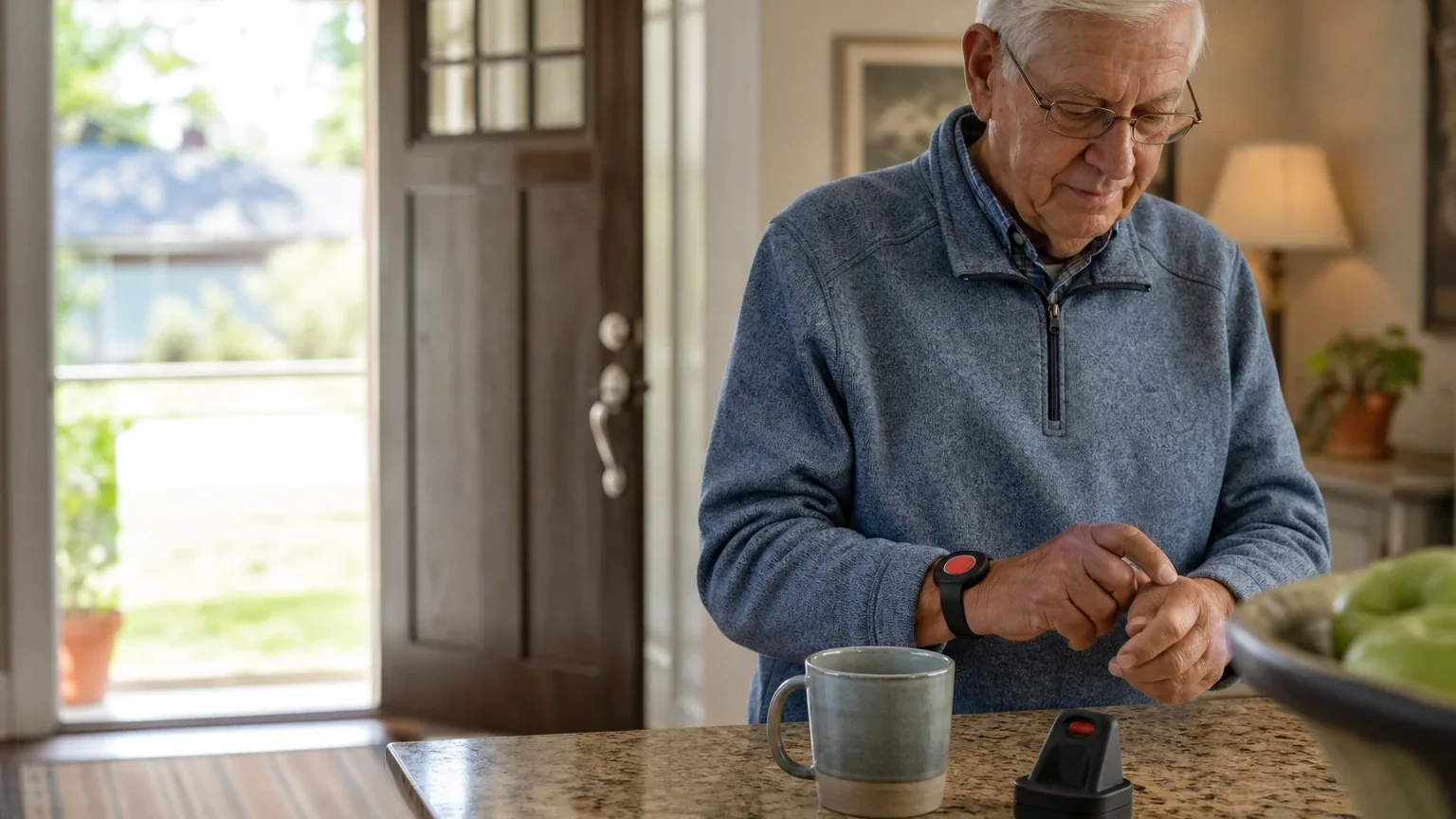
MGHome Cellular covers the basics of in-home emergency response. The system includes a wearable help button intended for use throughout the home and advertised as water resistant, a base station with backup battery, and two-way communication through a live monitoring center [23]. Advertised range is approximately 1,400 feet, which one platform described as among the longest in the industry [24].
Fall detection is optional and priced separately. Medical Guardian states fall detection can be added for $10 extra per month [25]. Accuracy is explicitly limited: Medical Guardian's own legal terms state fall detection is not designed to and does not detect 100% of falls (anthropic:28-1), and one independent test reported the Guardian Flex recognizing eight of ten simulated falls (anthropic:25-24). No source supports treating fall detection as guaranteed.
Caregiver support is included through the member portal and app, which one platform described as supporting caregiver connection and account management [23]. Additional paid options reported by one platform include a $6.99 per month Protection Plan, $5 per month for MGMove Support Circle apps, and per-button charges for extra wall buttons (anthropic:2-2 context).
Pricing, Fees, Contracts, and Ongoing Costs
Questions This Section Answers
- How much does Medical Guardian cost per month, and are there setup or cancellation fees?
- What is the total first-year cost of Medical Guardian MGHome Cellular for a budget buyer?
Pricing confidence across platforms was low to moderate, and the honest answer is that the exact MGHome Cellular price depends on the quote.
| Cost element | Reported figure | Source |
|---|---|---|
| MGHome Cellular monthly | $34.95–$39.95 per month (conflicting) | [26], [27], (anthropic:17-1) |
| MGHome Cellular annual | ~$34.95 per month equivalent | (anthropic:17-1), [28] |
| MGHome Landline annual | ~$27.95 per month equivalent | [28], [29] |
| Equipment fee | $149.95 commonly reported; $199.95 for MGMove | (anthropic:6-13), (anthropic:6-14) |
| Fall detection | +$10 per month | [30], (anthropic:2-2), [31] |
| Shipping | $12.50, waived on annual plans | [32] |
| Protection Plan | $6.99 per month | (anthropic:2-2) context |
| Non-return fee | Up to $350 if equipment not returned | [33], [34] |
| Restocking fee | Up to $50 | [34] |
Contract terms are the clearest part of the picture. Medical Guardian publicly describes monthly, quarterly, and annual payment options [35], and independent sources generally report no long-term contract and no cancellation fee [36]. Annual plans are reported as prorated and refundable if cancelled (anthropic:27-14). The three-month minimum in the legal terms is the main caveat, and its enforcement is disputed (anthropic:44-9, anthropic:41-12).
First-year cost estimates vary accordingly. One platform estimated roughly $500–$620 for equipment plus twelve months of monitoring without fall detection (anthropic final verdict), while another put first-year totals at $500–$800+ depending on add-ons and billing (grok final verdict). Both figures are platform-reported estimates, not verified quotes.
Best Suited For
Questions This Section Answers
- Who is Medical Guardian MGHome Cellular actually best for among budget-conscious buyers?
Medical Guardian fits buyers who want professional in-home monitoring with cellular connectivity and are willing to prepay annually to reduce the effective monthly rate. Platforms consistently identified this group: seniors who primarily need protection at home, caregivers who value portal access and optional fall detection, and buyers who can absorb a one-time equipment charge in exchange for no long-term contract (openai, anthropic, google, grok).
It also fits buyers who want a mainstream, widely reviewed brand and are willing to contact sales for a written quote rather than rely on published pricing. One platform noted the company maintains an A+ BBB rating and a 4.0-star Trustpilot average, reflecting generally positive feedback on service and reliability (anthropic:1-13).
Finally, it fits households without a landline, since MGHome Cellular does not require one [38].
Probably Not Best Suited For
Questions This Section Answers
- Who should not choose Medical Guardian for budget-friendly emergency response?
Buyers whose top priority is the lowest possible total cost should look elsewhere. One platform rated Medical Guardian a weak fit for this use case specifically because its starting price exceeds better-validated lower-cost alternatives (kimi final verdict). Another noted Medical Guardian is generally positioned as a premium or mid-tier brand rather than the lowest-cost provider [39].
Buyers who cannot absorb a $149.95–$199.95 upfront equipment charge are also poorly served, particularly when competitors lease hardware with no upfront fee [40]. Buyers who need fall detection included in base pricing rather than as a $10 per month add-on are likewise mismatched (anthropic:2-2).
Buyers who need protection away from home should not choose MGHome Cellular, which is primarily an at-home solution (openai limitations). Buyers who require published, transparent pricing without contacting sales should also look elsewhere, since one platform described the pricing as opaque and requiring company contact (anthropic:38-5) and another noted pushy sales tactics as a drawback (anthropic:38-3).
When Another Option May Be Better
Questions This Section Answers
- What is a better alternative to Medical Guardian for a buyer who needs zero upfront equipment cost?
- When should a budget buyer choose a mobile or app-based alert system instead of Medical Guardian?
Another option may be better in four specific situations.
When upfront cost must be zero. Competitors that lease hardware charge no equipment fee, while Medical Guardian charges $149–$199 upfront [41]. One platform specifically recommended choosing a provider with free-leased equipment when lowest upfront cost is critical (anthropic better_alternative_when).
When the lowest monthly bill is the deciding factor. One platform cited Bay Alarm Medical at $27.95 per month with a $0 lease and no contract, and Rescu at $10 per month or $99 per year for emergency dispatch with no equipment (kimi:bayalarmmedical-1, kimi:rescu-1). Another cited MobileHelp and Bay Alarm Medical starting around $25 per month (anthropic better_alternative_when). These are competitor-owned claims and should be verified independently.
When the senior leaves home regularly. A mobile or GPS-based system is the appropriate category, not MGHome Cellular (openai better_alternative_when).
When fall detection must be bundled. A provider including fall detection in base pricing offers better value for that specific need (anthropic better_alternative_when, kimi better_alternative_when).
Buyers who want to compare Medical Guardian against the full field can review the Budget-Friendly Emergency Response consensus index, which aggregates the platform rankings behind this review.
Questions to Verify Before Buying
Questions This Section Answers
- What should a buyer confirm with Medical Guardian before signing a contract?
Platforms converged on a similar verification list. Confirm each item in writing before purchase.
- The exact MGHome Cellular monthly, quarterly, and annual price for the buyer's ZIP code (openai, deepseek, perplexity).
- Whether an equipment charge, activation charge, shipping charge, protection-plan charge, or restocking fee applies (openai, anthropic, perplexity).
- Whether the quoted price includes the wearable button and whether a wristband is included or extra (openai).
- The exact monthly price with automatic fall detection added (openai, anthropic).
- Whether the agreement is month-to-month and whether any minimum billing period applies (openai, anthropic).
- How an annual or quarterly payment is refunded after cancellation and when billing stops (openai, anthropic).
- The equipment-return deadline and any charges if return is late or missing (perplexity).
- Which cellular network the unit uses and whether signal strength is adequate at the residence (openai, deepseek).
- The stated monitoring-center response process and typical response-time range (openai).
- Whether a setup test and recurring monthly test can be conducted without charge (openai).
- What happens if the device fails, the battery degrades, or the unit must be replaced (openai).
- Whether any insurance, Medicare Advantage, Medicaid, or HSA/FSA coverage applies (anthropic, google).
- Whether a free trial period is currently offered, since sources conflict (anthropic).
Final AI Consensus Verdict
Medical Guardian is a good but not clearly best-in-class fit for budget-friendly emergency response. Five of seven included platforms named it during ranking, with an average listed rank of 5.8. Fit ratings split: two good, four mixed, one weak.
The case for it rests on MGHome Cellular's cellular in-home coverage, wearable button, backup battery, optional fall detection, and no reported long-term contract, with annual prepayment lowering the effective monthly rate. The case against it rests on cost opacity. Medical Guardian's own pages show conflicting MGHome Cellular starting prices, fall detection adds roughly $10 per month, equipment charges of $149.95–$199.95 are commonly reported, and the three-month minimum commitment's enforcement is disputed.
Buyers who can absorb the upfront equipment cost, prepay annually, and obtain a written all-in quote may find Medical Guardian a reasonable choice. Buyers whose priority is the lowest possible first-year cost should compare against providers that lease equipment at no upfront charge. Platform agreement here reflects consistent reporting, not verified product superiority.
How This Review Was Produced
This review evaluates Medical Guardian only for the budget-friendly emergency response use case. It is not a broad company review. Seven AI platforms were queried with the same topic and use case, and their fit-research responses were compiled. Five of the seven named Medical Guardian during the ranking stage, clearing the two-mention threshold. Platform fit ratings, pricing findings, limitations, and verification questions were aggregated without resolving conflicts between them. All pricing figures are platform-reported and were not independently validated at the writer stage. Buyers comparing providers across the category can browse the medical alert systems directory.
Methodology Limitations
- The authoritative research date is 2026-09-27. Platform-reported research dates differ: deepseek reported 2026-04-27, while the other six platforms reported 2026-09-27. Platform dates are provenance metadata and do not independently prove freshness.
- All included platforms evaluated fit, but platform_mentions counts only platforms that named the entity during ranking discovery.
- Conflicting product names, pricing, and capabilities were not resolved by guessing. Where sources conflict, this review describes the conflict and tells buyers what to verify.
- Supplied URLs were collected from platform responses and were not independently validated by the writer stage.
- Citations are platform-reported evidence, not independently verified facts. Claims from platforms without search enabled require explicit verification before being described as current facts.
- No personal testing, customer experience, medical benefit, or guaranteed performance is claimed in this review.
- Platform agreement does not prove product quality.
Sources
Company-Owned Sources
- Pricing - Try It, Stay Connected, Protect Me & Protect Me On The Move Plans | I'm Alive: https://imalive.co/pricing
- SOS & Emergency Escalation — How I'm Alive Responds | I'm Alive: https://imalive.co/sos
- My Free Ambulance | Piscataway | ResponseNow Medical Alert: https://responsenow.com/my-free-ambulance-piscataway/
- Award-Winning Medical Alert Systems for Seniors: https://www.bayalarmmedical.com/medical-alert-system/
- On the Go | Mobile Medical Alert for Seniors: https://www.lifeline.com/product/on-the-go/
- Medical Guardian Official Website: https://www.medicalguardian.com/
- Buying Advice for Medical Alert Systems: https://www.medicalguardian.com/alert-system-pricing
- Medical Guardian Buyers Guide: https://www.medicalguardian.com/assets/pdf/medical-guardian-buyers-guide.pdf
- Emergency Alarms: https://www.medicalguardian.com/emergency-alarms
- Fall Detection | Medical Guardian: https://www.medicalguardian.com/fall-detection
- Medical Emergency Response Device FAQs: https://www.medicalguardian.com/faq
- Legal Information About Medical Guardian Services: https://www.medicalguardian.com/legal/terms
- MGHome Cellular - Medical Alert System: https://www.medicalguardian.com/medical-alert-systems/cellular-home-alert
- Buyer's Guide | Medical Guardian: https://www.medicalguardian.com/pdf/Medical-Guardian-Buyers-Guide.pdf
- FAQs | Medical Guardian Support: https://www.medicalguardian.com/support/faqs/
- Help & FAQ: https://www.rescue.co/faq
- Is the Rescu App the Best Personal Alarm for You? - FAQs | Rescu: https://www.rescusaveslives.com/faq/
- Official pricing and terms source: https://www.medicalguardian.com/mobile-terms-and-conditions
Additional AI research evidence41 records
- AI research evidence record openai:c1
- AI research evidence record deepseek:c1
- AI research evidence record google:1.2.4
- AI research evidence record google:1.3.1
- AI research evidence record deepseek:c1
- AI research evidence record openai:c4
- AI research evidence record openai:c5
- AI research evidence record openai:c7
- AI research evidence record perplexity:c2
- AI research evidence record perplexity:c8
- AI research evidence record openai:c1
- AI research evidence record google:1.2.4
- AI research evidence record openai:c2
- AI research evidence record openai:c4
- AI research evidence record openai:c6
- AI research evidence record perplexity:c1
- AI research evidence record perplexity:c5
- AI research evidence record perplexity:c4
- AI research evidence record perplexity:c11
- AI research evidence record perplexity:c13
- AI research evidence record deepseek:c1
- AI research evidence record openai:c8
- AI research evidence record openai:c1
- AI research evidence record google:1.2.3
- AI research evidence record perplexity:c2
- AI research evidence record openai:c1
- AI research evidence record openai:c2
- AI research evidence record google:1.2.4
- AI research evidence record google:1.3.1
- AI research evidence record openai:c7
- AI research evidence record perplexity:c2
- AI research evidence record google:1.2.6
- AI research evidence record perplexity:c1
- AI research evidence record perplexity:c5
- AI research evidence record openai:c3
- AI research evidence record openai:c4
- AI research evidence record openai:c5
- AI research evidence record deepseek:c1
- AI research evidence record deepseek:c2
- AI research evidence record google:1.3.9
- AI research evidence record google:1.3.9
Independent Sources
- Medical Guardian Cost 2026: $27.95–$46.95/mo + Fees, Explained: https://medicalalertreview.com/medical-guardian-cost
- Medical Guardian Review 2026: Cost, Plans & Verdict: https://medicalalertreview.com/medical-guardian-review
- Medical Guardian Medical Alert System Review 2026 | U.S. News: https://realestate.usnews.com/home-services/medical-alert-system/medical-guardian
- Medical Guardian Review 2026: Devices, Prices and Fees: https://steadyhomeguide.com/guides/medical-guardian-review/
- Medical Guardian Review (2026): Tested: https://www.aarp.org/caregiving/home-care/medical-guardian-review.html
- Medical Guardian Review (2026): Tested - AARP: https://www.aarp.org/home-family/personal-technology/info-2021/medical-guardian-review.html
- Medical Guardian Medical Alert System Review 2026: https://www.caring.com/senior-products/best-medical-alert-systems/medical-guardian
- Medical Guardian Review 2026: Cost, Plans, and Features: https://www.consumeraffairs.com/health/medical-alert-systems/medical-guardian.html
- Medical Guardian Reviews: https://www.consumeraffairs.com/medical-alert-systems/medical-guardian.html
- Best Medical Alert Systems of 2026 - ElderLife Financial Services: https://www.elderlifefinancial.com/best-medical-alert-systems/
- Medical Guardian Cost: $27.95–$46.95/mo, Checked Sept 2026 - Medical Alert Review: https://www.medicalalertadvice.com/reviews/medical-guardian/cost/
- Medical Guardian Review (2026): With Costs: https://www.retirementliving.com/reviews/medical-guardian-alert-systems
- Medical Guardian vs Life Alert Comparison - Which is Best?: https://www.safehome.org/compare/medical-guardian-vs-life-alert/
- Medical Guardian Cost, Pricing, Packages & Monthly Plans: https://www.safehome.org/medical-alert-systems/medical-guardian/
- Medical Guardian Cost, Pricing, Packages & Monthly Plans - SafeHome.org: https://www.safehome.org/medical-alert-systems/medical-guardian/cost/
- Medical Guardian Review 2026: https://www.safewise.com/senior-safety/medical-alerts/medical-guardian/
- Medical Guardian Cost & Pricing in 2026: https://www.seniorliving.org/medical-alert-systems/medical-guardian/
- Medical Guardian Alert System Review for 2026: https://www.seniorliving.org/medical-alert-systems/medical-guardian/reviews/
- Medical Guardian Cost & Pricing in 2026 - SeniorLiving.org: https://www.seniorliving.org/medical-alerts/medical-guardian/cost/
- Medical Guardian review: https://www.techradar.com/reviews/medical-guardian-review
- Medical Guardian Costs, Our Hands-On Analysis: https://www.theseniorlist.com/medical-alert-systems/medical-guardian/
- Medical Guardian Reviews: Our Hands-On Test: https://www.theseniorlist.com/medical-alert-systems/medical-guardian/reviews/
- Medical Guardian Costs, Our Hands-On Analysis - The Senior List: https://www.theseniorlist.com/medical-alert/medical-guardian/cost/
Additional AI research evidence41 records
- AI research evidence record openai:c1
- AI research evidence record deepseek:c1
- AI research evidence record google:1.2.4
- AI research evidence record google:1.3.1
- AI research evidence record deepseek:c1
- AI research evidence record openai:c4
- AI research evidence record openai:c5
- AI research evidence record openai:c7
- AI research evidence record perplexity:c2
- AI research evidence record perplexity:c8
- AI research evidence record openai:c1
- AI research evidence record google:1.2.4
- AI research evidence record openai:c2
- AI research evidence record openai:c4
- AI research evidence record openai:c6
- AI research evidence record perplexity:c1
- AI research evidence record perplexity:c5
- AI research evidence record perplexity:c4
- AI research evidence record perplexity:c11
- AI research evidence record perplexity:c13
- AI research evidence record deepseek:c1
- AI research evidence record openai:c8
- AI research evidence record openai:c1
- AI research evidence record google:1.2.3
- AI research evidence record perplexity:c2
- AI research evidence record openai:c1
- AI research evidence record openai:c2
- AI research evidence record google:1.2.4
- AI research evidence record google:1.3.1
- AI research evidence record openai:c7
- AI research evidence record perplexity:c2
- AI research evidence record google:1.2.6
- AI research evidence record perplexity:c1
- AI research evidence record perplexity:c5
- AI research evidence record openai:c3
- AI research evidence record openai:c4
- AI research evidence record openai:c5
- AI research evidence record deepseek:c1
- AI research evidence record deepseek:c2
- AI research evidence record google:1.3.9
- AI research evidence record google:1.3.9
Other Sources
- Medical Guardian MGHome Cellular– Home Medical Assistant & Alert Systems for Seniors: https://www.amazon.com/Medical-Guardian-Alarm-System-Seniors/dp/B0BYTGR5V6
Additional AI research evidence41 records
- AI research evidence record openai:c1
- AI research evidence record deepseek:c1
- AI research evidence record google:1.2.4
- AI research evidence record google:1.3.1
- AI research evidence record deepseek:c1
- AI research evidence record openai:c4
- AI research evidence record openai:c5
- AI research evidence record openai:c7
- AI research evidence record perplexity:c2
- AI research evidence record perplexity:c8
- AI research evidence record openai:c1
- AI research evidence record google:1.2.4
- AI research evidence record openai:c2
- AI research evidence record openai:c4
- AI research evidence record openai:c6
- AI research evidence record perplexity:c1
- AI research evidence record perplexity:c5
- AI research evidence record perplexity:c4
- AI research evidence record perplexity:c11
- AI research evidence record perplexity:c13
- AI research evidence record deepseek:c1
- AI research evidence record openai:c8
- AI research evidence record openai:c1
- AI research evidence record google:1.2.3
- AI research evidence record perplexity:c2
- AI research evidence record openai:c1
- AI research evidence record openai:c2
- AI research evidence record google:1.2.4
- AI research evidence record google:1.3.1
- AI research evidence record openai:c7
- AI research evidence record perplexity:c2
- AI research evidence record google:1.2.6
- AI research evidence record perplexity:c1
- AI research evidence record perplexity:c5
- AI research evidence record openai:c3
- AI research evidence record openai:c4
- AI research evidence record openai:c5
- AI research evidence record deepseek:c1
- AI research evidence record deepseek:c2
- AI research evidence record google:1.3.9
- AI research evidence record google:1.3.9
Verify This Research
Review the study details behind this page or download the public machine-readable verification record.
- Study date
- September 27, 2026
- Platforms analyzed
- 7
- Source records
- 42
- Ranking mentions
- 5 of 7
- Platform share
- 71%
- Final consensus rank
- #6
Research trail and source mix
Configured platforms
openai, anthropic, deepseek, grok, perplexity, kimi, google
Source mix
23 independent · 18 company-owned · 1 unclear
Evidence support
33 direct · 9 partial
Important limitation
Use the run research_date as the study date. Platform-reported dates are provenance metadata and do not independently prove freshness.
Source snapshot SHA-256 5e3dbc3fc2ee85cbc3e1ce7670a6cab81ce94c96b0d1f4b4ccde93b74532f03f
Archived editions
Browse earlier published research snapshots for this article. The latest edition remains at the current URL.