
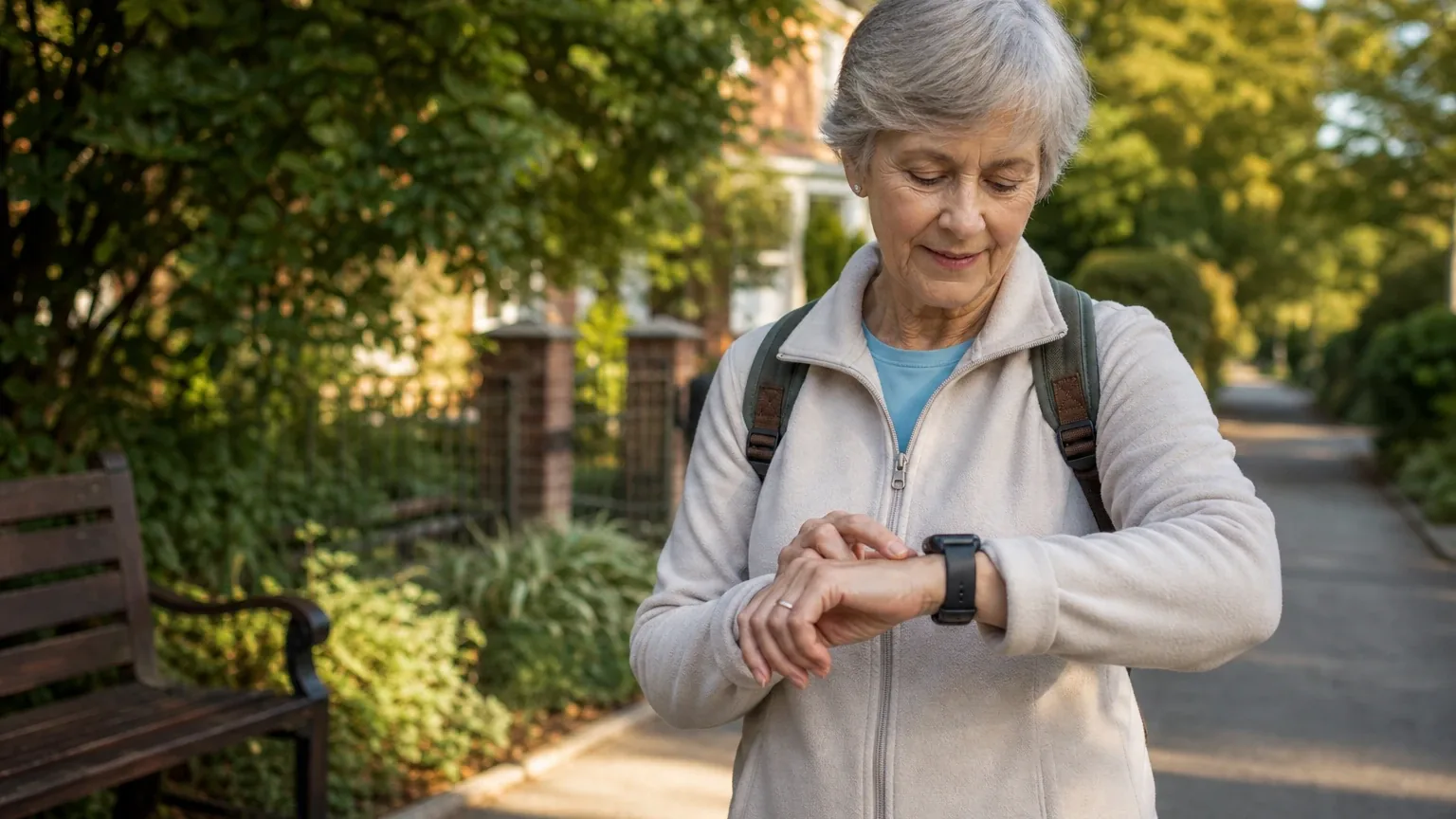
Answer Capsule
Theora Connect is a good fit for caregiver-managed Dementia and Wandering risk when the wearer will reliably wear a watch, caregivers can charge it daily, and the household accepts approximate GPS with 15-minute standard location updates. Four of seven platforms named Theora Connect during the ranking stage (google, grok, kimi, openai), and six of seven platforms rated it a "good" fit for this use case; deepseek rated it "uncertain" because it could not locate independent verification. The strongest reason to consider it is a purpose-built dementia workflow: Safe Zone geofencing, caregiver auto-answer calling, an optional locking clasp, and an optional proximity beacon. The main limitation is that it does not call 911 or provide professional monitoring escalation.
Research Snapshot
| Field | Finding |
|---|---|
| Platform mentions in ranking stage | 4 of 7 platforms (google, grok, kimi, openai) |
| Share of included platform responses | 57.1% (4 of 7) |
| Average listed rank | 3.5 |
| Best listed rank | 3 |
| Relevant product/model/plan | Theora Connect wearable with Theora Link Pro app and Standard Service; Smart Fall Detection optional |
| Overall use-case fit | Good (6 platforms); Uncertain (1 platform) — 7 platforms analyzed |
| Research date | 2026-09-27 |
Why Theora Connect Qualified for This Study
Questions This Section Answers
- Is Theora Connect a good choice for Dementia & Wandering Risk Management?
- How many AI platforms named Theora Connect in the 2026 dementia and wandering ranking?
Theora Connect qualified because four of seven platforms named it during ranking discovery, with an average listed rank of 3.5 and a best rank of 3. That is a majority of included platforms, not unanimity, and platform mentions count only platforms that named the entity during ranking discovery — all seven platforms evaluated fit, but only four surfaced Theora Connect by name in the ranking stage.
Six of seven platforms rated the fit "good" for dementia and wandering risk management; deepseek rated it "uncertain" and explicitly stated that public, independently verifiable information on Theora Connect's dementia-specific capabilities was too thin to rate confidently [1]. Deepseek also ran without search enabled, which limits what it could retrieve.
The platforms converged on the same product configuration: the Theora Connect wearable paired with the Theora Link Pro caregiver app and Theora Standard Service, with Smart Fall Detection as an optional add-on [3]. This review evaluates that configuration only, for the dementia and wandering use case.
The Product, Model, Plan, or Service Most Relevant to Dementia & Wandering Risk Management
Questions This Section Answers
- Which Theora Connect product and plan should a caregiver buy for dementia and wandering risk management?
- Does Theora Connect require a monthly service plan, and what does the Standard Service include?
The relevant configuration is the Theora Connect watch-style wearable running on Theora Standard Service, managed through the free Theora Link Pro caregiver app, with Smart Fall Detection sold as an optional monthly add-on [6]. Theora markets the device as a GPS smartwatch for older adults, co-designed with older adults and people with dementia [9].
The wearable weighs approximately 2 ounces and is offered with analog or digital watch faces and short or long bands [10]. Theora states the watch is certified on AT&T and T-Mobile networks and works in the United States, Canada, and Mexico [11].
Theora Link Pro is the caregiver interface. Platform-reported descriptions say it supports Safe Zone management, location viewing, location history, battery and system status, notifications, and multiple care-team members [12]. The app requires a compatible caregiver smartphone or tablet; no standalone web interface was mentioned in the reviewed sources (anthropic:source_0).
Theora's official pricing page separates individual and business customers and directs individual buyers to a "Buy Now" flow rather than publishing a single price table, while business pricing is quoted on request (official:C3). That page was retrieved but not verified, so treat it as context rather than a confirmed price list.
What the AI Platforms Agreed About
Questions This Section Answers
- What do AI platforms agree Theora Connect does well for dementia wandering alerts?
- Is Theora Connect's geofencing and caregiver calling considered a strength for wandering risk?
The clearest agreement is on the caregiver workflow. Platforms consistently described Safe Zone geofencing with entry and exit alerts, caregiver location viewing, and auto-answer calling that lets a caregiver speak through the watch speaker without the wearer pressing a button [14].
A second area of agreement is the dementia-oriented physical design: a lightweight watch form factor, an optional locking clasp intended to resist removal, and restricted calling lists that filter unknown numbers [19].
A third is the service model. Multiple platforms reported no long-term contract, month-to-month service, and cancellation at any time, with a 30-day money-back guarantee stated on the official product page [19].
Platforms also agreed on the core limitations: standard location updates every 15 minutes, a minimum standard Safe Zone radius of 300 feet, 18-24 hour battery life requiring daily charging, IP67 water resistance rather than full waterproofing, and no direct 911 calling or professional monitoring center [14].
Agreement among AI platforms reflects shared source material, much of it company-owned. It is not evidence of product quality or independent verification.
Where the AI Platforms Disagreed or Were Uncertain
Questions This Section Answers
- How accurate is Theora Connect's GPS in real-world dementia wandering situations?
- Does Theora Connect work without a professional monitoring center, and is that a problem for wandering emergencies?
GPS precision is the sharpest conflict. Theora's marketing claims location within approximately 15 feet [23], while an independent hands-on review found locations generally useful but sometimes off by several houses [25]. Theora's own FAQ language and the independent test do not reconcile, and real-world accuracy will vary by environment.
Battery reporting is close but not identical. Theora states 18-24 hours and recommends daily charging [27], while independent testing observed about 20 hours and shorter life when a proximity beacon was used [29]. One platform-reported user thread described battery depletion in as little as 12 hours depending on signal strength and tracking frequency [30]. Google's summary also described a 4-hour charging routine [31], which conflicts with the 1-2 hour charge time reported elsewhere [27].
Geofence sizing is inconsistent across sources. One description states a 300-foot minimum Safe Zone radius [27], while another describes zones configurable from 650 to 1,968 square feet [33]. These may describe different contexts, but the conflict is unresolved.
Pricing conflicts materially. Theora's reseller service page lists $29.97 per month [34]. Independent and retailer sources list device prices from $247.97 to $425.00 depending on vendor, activation fees of $39.97, fall detection at $10 to $15 per month, and subscription tiers up to $49.95 per month through some distributors [35]. One platform noted a bundle price discrepancy between two Theora product pages, $387.91 versus a $297.97 base [38].
Deepseek's uncertainty is a distinct signal rather than a disagreement: it could not confirm GPS precision, geofence latency, waterproofing, battery, escalation workflow, or pricing from independent sources and rated the fit uncertain [39]. Deepseek ran without search enabled.
Fall detection accuracy is company-claimed. Theora states that fall detection is not 100% accurate and is not a substitute for emergency services [27]. No platform located published clinical validation, peer-reviewed studies, or FDA clearance for the fall detection or GPS claims [41].
Use-Case-Specific Features and Capabilities
Questions This Section Answers
- Does Theora Connect provide geofencing alerts fast enough to catch a wandering incident?
- Can a caregiver talk to a disoriented wearer through Theora Connect without the wearer pressing a button?
Safe Zones are the primary wandering control. Caregivers draw virtual boundaries in Theora Link Pro and receive alerts when the wearer exits or re-enters; the wearer cannot change Safe Zones from the watch [42]. A home Wi-Fi-linked Safe Zone can be smaller than the 300-foot GPS minimum and can alert when the watch connects to or disconnects from that network [43].
Location refresh is the key constraint. Standard updates occur every 15 minutes, so Safe Zone alerts can be delayed. Live Location mode provides updates every 3 minutes for up to 30 minutes during an active search [43]. Google's summary described an accelerated "Turbo Mode" for active elopement emergencies [45]. This is not continuous real-time tracking.
Communication is hands-free by design. Quik Connect lets a caregiver open a two-way audio line through the watch speaker without the wearer pressing anything, and the SOS button calls the primary caregiver and notifies the care team [45]. Theora states the watch does not call 911, and the service does not include a professional emergency-response center [43].
Fall detection is optional. When enabled, the watch asks "Have you fallen?" and escalates to a programmed caregiver number if the wearer answers yes or does not respond [46]. Theora acknowledges the feature is not fully accurate [43].
Indoor departure detection is available through an optional proximity beacon. Independent testing reported alerts when the watch moves roughly 75-100 feet from the beacon, which can detect a home exit faster than GPS and works indoors, though it may reduce battery life and the cited test was limited [47].
Removal resistance is partial. The optional locking clasp is designed to prevent removal without help, but platforms noted it is not tamper-proof and a determined wearer can still remove it [49]. Independent sources describe wearable removal as a general challenge with GPS watches for people with dementia [50].
Connectivity depends on Theora-provided cellular service rather than the buyer's SIM, and Theora warns the watch may lose connectivity where a phone still has service because of its smaller antenna [43].
Pricing, Fees, Contracts, and Ongoing Costs
Questions This Section Answers
- How much does Theora Connect cost per month, and what upfront fees apply for dementia wandering monitoring?
- Are there activation, shipping, or fall detection fees that change the first-year cost of Theora Connect?
Pricing is the least settled part of this review. Theora's official reseller service page lists Theora Service at $29.97 per month [51]. The official pricing page reviewed does not publish a single consumer price table and routes individual buyers to a purchase flow (official:C3).
Platform-reported and independent figures cluster as follows, and buyers should treat the official checkout as authoritative:
| Cost item | Reported amount | Source type |
|---|---|---|
| Device hardware | $247.97 to $425.00 depending on vendor | Independent and retailer listings [52] |
| Device hardware | $297.97 listed on product pages | Company product pages [55] |
| One-time activation | $39.97, described as non-refundable | Company and independent [55] |
| Standard Service | $29.97 per month | Company reseller page [51] |
| Higher subscription tier | Up to $49.95 per month through some distributors | Retailer listing [54] |
| Smart Fall Detection | $10 per month (one source lists $15) | Company and independent [54] |
| Locking clasp | $49.97 | Company (anthropic:source_3) |
| Extended warranty | $69.97 for 12 months; one source lists $99.99 | Company and independent [53] |
| Door alarm | $29.97 | Company (anthropic:source_3) |
| Band extender / replacement band key | $19.97 each | Company (anthropic:source_3) |
| Replacement charging kit | $49.97 | Company (anthropic:source_3) |
One platform reported a bundle price discrepancy between two Theora product pages, listing $387.91 on one and a $297.97 base on another [56]. Another reported that activation fees are sometimes waived by specific distributors such as The Alzheimer's Store [53].
Contract terms are more consistent. The official product page states no contract and cancellation at any time, and the FAQ states cancellation requires contacting customer support or emailing Theora [57]. Service charges begin when the SIM is activated, which may occur before delivery [58]. A 30-day money-back guarantee is stated on the official product page, and one platform reported a 30-day refund policy from the date of delivery [57]. Eligibility, return shipping, and exclusions were not confirmed.
Anthropic's research, dated 2026-01-15, estimated roughly $359 in the first month and about $360 annually ongoing for the baseline configuration (anthropic:source_3). That figure predates the authoritative run date and should be re-verified.
Best Suited For
Questions This Section Answers
- Who gets the most value from Theora Connect for dementia and wandering risk management?
- Is Theora Connect a good fit for a caregiver who can charge the watch daily and respond to alerts?
Theora Connect suits caregivers who will actively monitor alerts and can respond quickly. The platforms' best-fit descriptions converge on a person with dementia who will reliably wear a watch, lives with family or caregivers, and has a household willing to manage daily charging [59].
It also suits buyers who value hands-free communication. Auto-answer calling removes the need for a disoriented wearer to press a button, which multiple platforms identified as a meaningful advantage for cognitive decline [61].
Buyers who want no long-term contract and a trial window are a reasonable fit, given the stated month-to-month service and 30-day guarantee [59].
Households where a Wi-Fi-linked Safe Zone or an optional door or proximity beacon can provide faster departure detection are also a stated fit [59].
Probably Not Best Suited For
Questions This Section Answers
- Who should not choose Theora Connect for dementia and wandering risk management?
- Is Theora Connect unsuitable if the wearer removes watches or cannot keep a device charged?
Theora Connect is probably not the best choice when the wearer frequently removes wearables or cannot be depended on to keep the watch charged. Daily charging creates a recurring coverage gap, and the locking clasp is not tamper-proof [65].
It is also a poor fit for caregivers who need continuous real-time location or sub-15-minute standard updates, since standard refresh is every 15 minutes and Live Location is a temporary 3-minute mode [68].
Buyers who require professional monitoring or automatic 911 escalation should look elsewhere. Theora states the watch does not call 911 and the service does not provide a professional emergency-response center [68].
Swimming and prolonged water exposure are out of scope. The watch is IP67 water-resistant, not waterproof, and water damage is excluded from warranty coverage [68].
Weak-cellular-signal environments are a risk, because GPS, calls, and alerts depend on Theora-provided cellular connectivity and the watch may lose service where a phone still works [68].
Buyers who require FDA clearance, published clinical validation, or peer-reviewed efficacy evidence will not find it in the reviewed sources [73].
When Another Option May Be Better
Questions This Section Answers
- What is a better alternative to Theora Connect if a caregiver needs professional monitoring or 911 escalation?
- When should a buyer choose a longer-battery or fully waterproof tracker instead of Theora Connect?
Platforms named several alternative directions, and these are platform-reported comparisons rather than tested conclusions.
Choose a professionally monitored medical-alert service when automatic escalation to a monitoring center or 911 matters more than caregiver-managed response [74]. Grok specifically named Medical Guardian or AngelSense for professional monitoring [76].
Choose a longer-battery or non-wearable tracker when daily charging is unlikely to be reliable. Kimi cited Zembro as an alternative with 2+ day battery life, a 45-minute recharge, and BLE beacon indoor tracking [77]. Google cited the Tranquil GPS Watch for up to 7 days of battery and full waterproofing [78].
Choose a non-removable or non-wrist form factor when the person routinely removes watches or has advanced dementia. Google named GPS SmartSole for people who refuse wrist-worn devices [78], and kimi named AngelSense for more frequent updates during active wandering events [79].
Choose a device with continuous or more frequent location refresh when a 15-minute standard interval is unacceptable [74].
Choose a smaller geofence when a 300-foot minimum radius is too large for an apartment or condo setting [80].
Questions to Verify Before Buying
Questions This Section Answers
- What should a buyer confirm with Theora Connect about pricing and fees before signing up?
- What should a caregiver test about GPS accuracy and cellular coverage before the return window closes?
Confirm the exact current upfront price for the Theora Connect wearable and charger, since reported device prices range from $247.97 to $425.00 depending on vendor [81].
Confirm whether Smart Fall Detection is included or separately billed, and at what current amount, since sources list $10 and $15 per month [83].
Confirm whether activation, shipping, taxes, beacon, locking-clasp, and extended-warranty charges are mandatory or optional [84].
Confirm the precise refund, return-window, restocking, and money-back-guarantee conditions, including whether the activation fee is refundable [85].
Confirm what happens if the watch loses cellular service, the battery dies, or a caregiver misses a Safe Zone alert [84].
Test GPS accuracy and cellular coverage at the person's home and usual walking routes before the return period expires [86].
Confirm whether the caregiver's phone or tablet supports Theora Link Pro and whether all intended caregivers can receive alerts [84].
Confirm the current battery performance with Live Location, weak signal, frequent calls, and any proximity beacon [88].
Confirm whether the optional locking clasp is appropriate for the wearer's skin, dexterity, and tolerance, and how difficult emergency removal is [90].
Confirm whether a separate professionally monitored medical-alert service is needed in addition to Theora Connect [84].
Final AI Consensus Verdict
Theora Connect earns a good, not best-in-class, fit rating for dementia and wandering risk management. Six of seven platforms rated it good; deepseek rated it uncertain because it could not verify buyer-critical specifications from independent sources. Four of seven platforms named it during ranking discovery, with an average listed rank of 3.5.
The consensus case for buying is a caregiver-managed wandering workflow: Safe Zone geofencing, caregiver auto-answer calling, a lightweight watch with an optional locking clasp, an optional proximity beacon for faster indoor departure detection, and no long-term contract. The consensus case against is operational: 15-minute standard location refresh, a 300-foot minimum standard Safe Zone, 18-24 hour battery life requiring daily charging, IP67 rather than waterproofing, cellular dependence, and no direct 911 or professional monitoring escalation.
Buyers should treat GPS precision, battery endurance, and pricing as unresolved. Theora claims roughly 15-foot accuracy while independent testing found locations occasionally off by several houses, and reported device prices vary widely by vendor. Verify current pricing, coverage, and return terms directly with Theora before purchase.
How This Review Was Produced
This review was produced from a structured multi-platform research run dated 2026-09-27 covering seven AI platforms: openai, anthropic, google, grok, kimi, perplexity, and deepseek. Each platform independently evaluated Theora Connect against the dementia and wandering use case across eight criteria: GPS precision, geofencing alerts, caregiver app quality, wearable comfort, emergency call escalation, battery life, waterproofing, and location refresh rate.
Platform mentions in the ranking stage count only platforms that named Theora Connect during ranking discovery. All seven platforms evaluated fit, but only four surfaced the entity by name in the ranking stage. Fit ratings were tallied separately from ranking mentions.
Citations in this review are platform-reported evidence, not independently verified facts. Company-owned sources are identified as such in the Sources section. Where a platform supplied no citation for a claim, the claim is labeled platform-reported or unverified.
Methodology Limitations
Platform-reported research dates differ from the authoritative run date of 2026-09-27. Anthropic's research is dated 2026-01-15 and deepseek's is dated 2026-06-11; the remaining five platforms are dated 2026-09-27. Platform-reported dates are provenance metadata and do not independently prove freshness.
Deepseek ran without search enabled, which limits what it could retrieve and likely explains its uncertain rating. Its uncertainty should not be read as evidence that Theora Connect lacks the features in question.
The supplied URLs were collected from platform responses and were not independently validated by the writer stage. Theora's official pricing page and health-plan page were retrieved but not verified, and their excerpts do not publish a consumer price table.
Conflicting product names, pricing, and capabilities were not resolved by guessing. Where sources conflict — GPS precision, geofence sizing, battery endurance, charging time, and device price — this review describes the conflict and directs buyers to verify.
No platform located published clinical validation, peer-reviewed studies, or FDA clearance for Theora Connect's GPS or fall detection claims. Company marketing claims about accuracy and fall detection performance remain company claims.
This review reflects AI-platform research synthesis only. It does not include personal testing, hands-on evaluation, or independent verification of device performance.
Explore more medical alert systems guidance in the category directory.
Sources
Company-Owned Sources
- Theora Care official website: https://theoracare.com/
- Theora Care FAQs | Setup, Features & Support: https://theoracare.com/faqs/
- Theora Connect Wearable + Charger: https://theoracare.com/product/single-product-theora-connect-wearable-charger/
- The Most Popular Bundle: Theora Connect Wearable + Smart Fall Detection - Theora Care: https://theoracare.com/product/the-most-popular-bundle-theora-connect-wearable-smart-fall-detection/
- The Most Popular Bundle: Theora Connect Wearable - Theora Care: https://theoracare.com/product/the-most-popular-bundle-theora-connect-wearable/
- Theora Connect Wearable + Smart Fall Detection: https://theoracare.com/product/theora-connect-wearable-smart-fall-detection/
- Theora Connect Wearable - Theora Care: https://theoracare.com/product/theora-connect-wearable/
- Theora Service (monthly recurring for resellers: https://theoracare.com/product/theora-service-monthly-recurring-for-resellers/
- Smartwatch for Older Adults: https://theoracare.com/theora-connect/
- Theora Link Pro Smartphone App for Caregivers: https://theoracare.com/theora-link-pro/
- Wandering Safety Technology | Theora Care: https://theoracare.com/wandering-safety-technology/
- Alzheimers Bracelet | Dementia Tracking Device - Theora Care: https://theoracare.com/wearable-device-for-alzheimers-and-dementia-care/
- Wander Alert with 4 BLE Beacons: https://www.zembro.com/products/wander-alert
- Official pricing and terms source: https://theoracare.com/ai-fall-prevention-technology-for-health-plans/
- Official pricing and terms source: https://theoracare.com/pricing/
Additional AI research evidence91 records
- AI research evidence record deepseek:c1
- AI research evidence record deepseek:c2
- AI research evidence record openai:c1
- AI research evidence record kimi:c2
- AI research evidence record perplexity:c2
- AI research evidence record openai:c1
- AI research evidence record kimi:c2
- AI research evidence record perplexity:c2
- AI research evidence record kimi:c3
- AI research evidence record google:1.1.2
- AI research evidence record perplexity:c3
- AI research evidence record openai:c3
- AI research evidence record grok:web:1
- AI research evidence record openai:c3
- AI research evidence record grok:web:1
- AI research evidence record perplexity:c3
- AI research evidence record kimi:c2
- AI research evidence record google:1.1.1
- AI research evidence record openai:c1
- AI research evidence record google:1.1.2
- AI research evidence record perplexity:c1
- AI research evidence record grok:web:11
- AI research evidence record grok:web:3
- AI research evidence record perplexity:c4
- AI research evidence record openai:c2
- AI research evidence record grok:web:2
- AI research evidence record openai:c3
- AI research evidence record grok:web:11
- AI research evidence record openai:c4
- AI research evidence record google:2.4.3
- AI research evidence record google:2.2.3
- AI research evidence record perplexity:c3
- AI research evidence record google:1.1.1
- AI research evidence record openai:c6
- AI research evidence record grok:web:1
- AI research evidence record google:2.3.1
- AI research evidence record google:2.4.2
- AI research evidence record kimi:c2
- AI research evidence record deepseek:c1
- AI research evidence record deepseek:c2
- AI research evidence record kimi:c1
- AI research evidence record perplexity:c4
- AI research evidence record openai:c3
- AI research evidence record perplexity:c3
- AI research evidence record google:1.1.1
- AI research evidence record kimi:c2
- AI research evidence record openai:c4
- AI research evidence record grok:web:2
- AI research evidence record openai:c1
- AI research evidence record kimi:c5
- AI research evidence record openai:c6
- AI research evidence record grok:web:1
- AI research evidence record google:2.3.1
- AI research evidence record google:2.4.2
- AI research evidence record perplexity:c1
- AI research evidence record kimi:c2
- AI research evidence record openai:c1
- AI research evidence record openai:c3
- AI research evidence record openai:c1
- AI research evidence record kimi:c2
- AI research evidence record google:1.1.1
- AI research evidence record perplexity:c1
- AI research evidence record openai:c4
- AI research evidence record grok:web:2
- AI research evidence record openai:c1
- AI research evidence record kimi:c2
- AI research evidence record google:1.1.3
- AI research evidence record openai:c3
- AI research evidence record perplexity:c3
- AI research evidence record perplexity:c2
- AI research evidence record perplexity:c7
- AI research evidence record grok:web:13
- AI research evidence record kimi:c1
- AI research evidence record openai:c1
- AI research evidence record perplexity:c2
- AI research evidence record grok:web:1
- AI research evidence record kimi:c4
- AI research evidence record google:1.1.3
- AI research evidence record kimi:c6
- AI research evidence record perplexity:c3
- AI research evidence record grok:web:1
- AI research evidence record google:2.3.1
- AI research evidence record google:2.4.2
- AI research evidence record openai:c3
- AI research evidence record perplexity:c1
- AI research evidence record openai:c2
- AI research evidence record grok:web:2
- AI research evidence record openai:c4
- AI research evidence record kimi:c2
- AI research evidence record openai:c1
- AI research evidence record perplexity:c2
Independent Sources
- Theora Connect Cellular Requirements and Plan Costs: https://caringvillage.com/best-gps-trackers-elderly/
- Dementia Safety and Cellular Tracking Hardware Reviews: https://guardianhome.eu/theora-connect-vs-alternatives
- GPS Watch vs Medical Alert Device for Dementia Wandering: https://helpdementia.com/gps-watch-vs-medical-alert-device-for-dementia-wandering/
- What's the Best Wandering Alert Device for Alzheimer's Care?: https://helpdementia.com/whats-the-best-wandering-alert-device-for-alzheimers-care/
- Theora Connect Wearable Product Description: https://projectlifesaver.org/locating-technology/theora/
- Theora Connect Smartwatch Product Details: https://safetracksgpsshop.ca/products/theora-connect-smartwatch
- SafeTracks GPS Theora Connect Pricing and Accessories: https://safetracksgpsshop.ca/products/theora-connect-smartwatch-plan
- Theora Connect - GPS Tracker Watch For the Elderly Review: https://spacehawkgps.com/theora-connect-gps-tracker-watch/
- Theora Connect Review: Location Devices for Dementia: https://techenhancedlife.com/reviews/theora-connect
- The Best GPS Trackers for Elderly Parents: https://theshadowgps.com/best-gps-trackers-elderly/
- Best GPS Tracking Devices for Seniors with Dementia: https://www.caring.com/best-gps-tracking-devices/
- Search for independent Theora Connect specifications and reviews (none located: https://www.consumerreports.org/
- Theora Connect Smartwatch Specifications on eBay Marketplace: https://www.ebay.com/itm/Theora-Connect-Smartwatch-Listing
- User Feedback on Dementia Watch Tracking Realities: https://www.reddit.com/r/dementia/comments/theora_connect_experience/
- Best GPS Trackers for People with Dementia: https://www.safewise.com/best-gps-dementia-trackers/
- Theora Connect Battery and Trial Limitations: https://www.safewise.com/best-gps-dementia-trackers/theora-connect/
- 4 Best GPS Trackers for Dementia Patients (2026 Review: https://www.safewise.com/best-gps-trackers-dementia-patients/
- 4 Best GPS Trackers for Dementia Patients (2026 Review: https://www.safewise.com/senior-safety/gps-trackers-dementia/
- Theora Care, Theora Connect: https://www.techenhancedlife.com/reviews/theora-care-theora-connect
- Theora Connect GPS Tracker Watch Video Review: https://www.youtube.com/watch?v=TheoraConnectOverview
Additional AI research evidence91 records
- AI research evidence record deepseek:c1
- AI research evidence record deepseek:c2
- AI research evidence record openai:c1
- AI research evidence record kimi:c2
- AI research evidence record perplexity:c2
- AI research evidence record openai:c1
- AI research evidence record kimi:c2
- AI research evidence record perplexity:c2
- AI research evidence record kimi:c3
- AI research evidence record google:1.1.2
- AI research evidence record perplexity:c3
- AI research evidence record openai:c3
- AI research evidence record grok:web:1
- AI research evidence record openai:c3
- AI research evidence record grok:web:1
- AI research evidence record perplexity:c3
- AI research evidence record kimi:c2
- AI research evidence record google:1.1.1
- AI research evidence record openai:c1
- AI research evidence record google:1.1.2
- AI research evidence record perplexity:c1
- AI research evidence record grok:web:11
- AI research evidence record grok:web:3
- AI research evidence record perplexity:c4
- AI research evidence record openai:c2
- AI research evidence record grok:web:2
- AI research evidence record openai:c3
- AI research evidence record grok:web:11
- AI research evidence record openai:c4
- AI research evidence record google:2.4.3
- AI research evidence record google:2.2.3
- AI research evidence record perplexity:c3
- AI research evidence record google:1.1.1
- AI research evidence record openai:c6
- AI research evidence record grok:web:1
- AI research evidence record google:2.3.1
- AI research evidence record google:2.4.2
- AI research evidence record kimi:c2
- AI research evidence record deepseek:c1
- AI research evidence record deepseek:c2
- AI research evidence record kimi:c1
- AI research evidence record perplexity:c4
- AI research evidence record openai:c3
- AI research evidence record perplexity:c3
- AI research evidence record google:1.1.1
- AI research evidence record kimi:c2
- AI research evidence record openai:c4
- AI research evidence record grok:web:2
- AI research evidence record openai:c1
- AI research evidence record kimi:c5
- AI research evidence record openai:c6
- AI research evidence record grok:web:1
- AI research evidence record google:2.3.1
- AI research evidence record google:2.4.2
- AI research evidence record perplexity:c1
- AI research evidence record kimi:c2
- AI research evidence record openai:c1
- AI research evidence record openai:c3
- AI research evidence record openai:c1
- AI research evidence record kimi:c2
- AI research evidence record google:1.1.1
- AI research evidence record perplexity:c1
- AI research evidence record openai:c4
- AI research evidence record grok:web:2
- AI research evidence record openai:c1
- AI research evidence record kimi:c2
- AI research evidence record google:1.1.3
- AI research evidence record openai:c3
- AI research evidence record perplexity:c3
- AI research evidence record perplexity:c2
- AI research evidence record perplexity:c7
- AI research evidence record grok:web:13
- AI research evidence record kimi:c1
- AI research evidence record openai:c1
- AI research evidence record perplexity:c2
- AI research evidence record grok:web:1
- AI research evidence record kimi:c4
- AI research evidence record google:1.1.3
- AI research evidence record kimi:c6
- AI research evidence record perplexity:c3
- AI research evidence record grok:web:1
- AI research evidence record google:2.3.1
- AI research evidence record google:2.4.2
- AI research evidence record openai:c3
- AI research evidence record perplexity:c1
- AI research evidence record openai:c2
- AI research evidence record grok:web:2
- AI research evidence record openai:c4
- AI research evidence record kimi:c2
- AI research evidence record openai:c1
- AI research evidence record perplexity:c2
Verify This Research
Review the study details behind this page or download the public machine-readable verification record.
- Study date
- September 27, 2026
- Platforms analyzed
- 7
- Source records
- 36
- Ranking mentions
- 4 of 7
- Platform share
- 57%
- Final consensus rank
- #4
Research trail and source mix
Configured platforms
openai, anthropic, deepseek, grok, perplexity, kimi, google
Source mix
20 independent · 16 company-owned
Evidence support
25 direct · 10 partial
Important limitation
Use the run research_date as the study date. Platform-reported dates are provenance metadata and do not independently prove freshness.
Source snapshot SHA-256 5711653a1122ce03389a6f04fb3e99113d5f597a3bab2169022632a9d4a3d560