
Answer Capsule
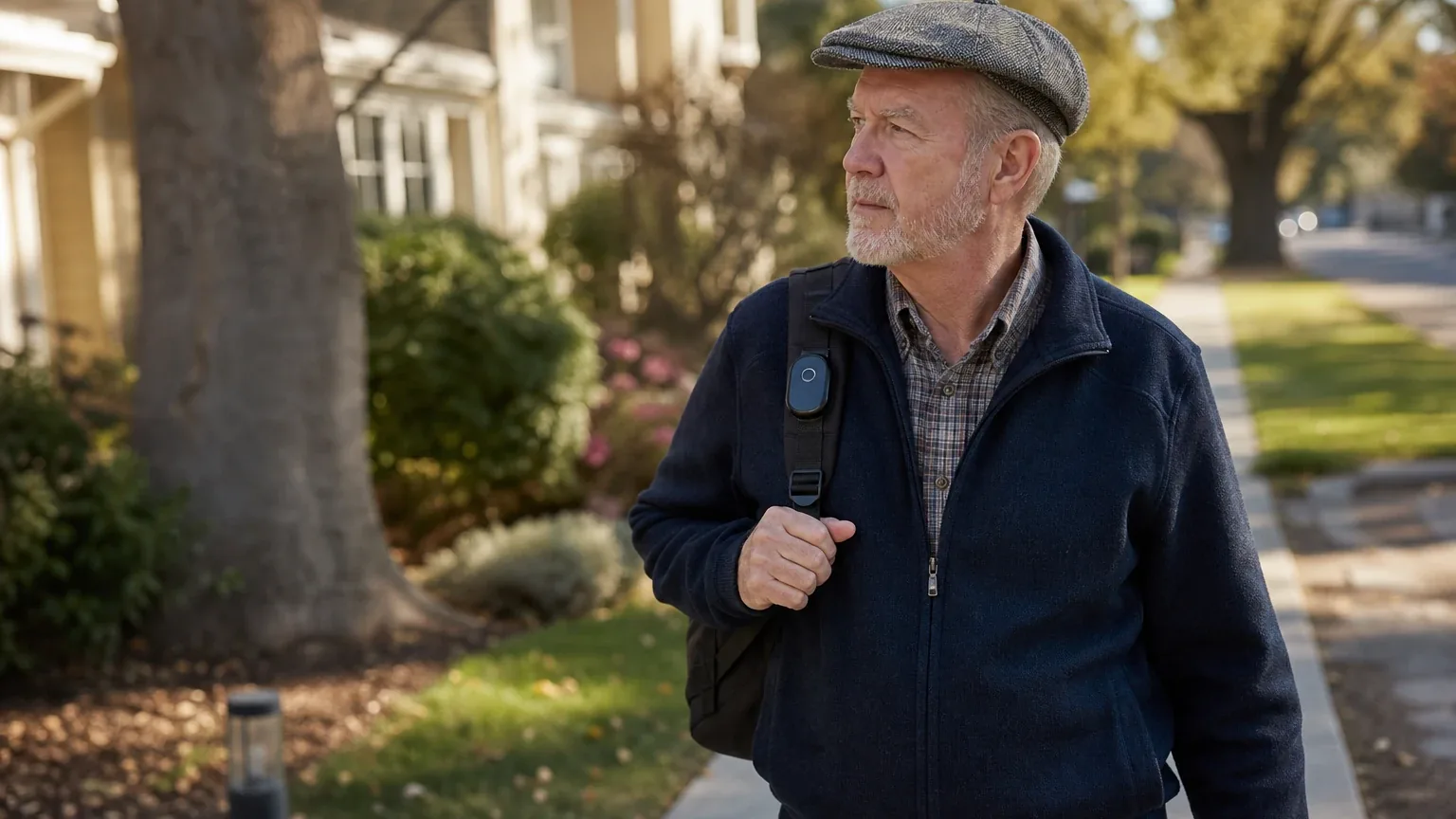
AngelSense is a good fit for Dementia and Wandering risk management when the primary need is caregiver-led GPS tracking, geofencing, location history, and remote voice communication rather than professionally monitored emergency response. Three of seven platforms named AngelSense during the ranking stage (google, grok, openai), and it ranked first on Google and Grok and second on OpenAI, with an average listed rank of 1.33. The strongest reason to consider it is its combination of non-removable wearing options, unlimited geofences, and auto-answer voice features designed for people who cannot reliably operate a button. The main limitation is that it is not a monitored medical alert system: no reviewed material establishes automatic 911 dispatch or guaranteed response times, and battery life requires daily charging.
Research Snapshot
| Field | Detail |
|---|---|
| Platform mentions in ranking stage | 3 of 7 platforms (google, grok, openai) |
| Share of included platform responses | 42.9% |
| Average listed rank | 1.33 |
| Best listed rank | 1 (google, grok) |
| Relevant product/model/plan | AngelSense GPS 4 or AngelSense Watch with caregiver app and an active service plan; Guardian Kit with annual or monthly service plan |
| Overall use-case fit | Good (platform fit ratings: strong from google, grok, kimi; good from openai, anthropic, deepseek, perplexity) |
| Research date | 2026-09-27 |
What Changed Since August 2026
AngelSense moved down from No. 1 to No. 5, and platform mentions decreased from 6 to 3. The September 2026 review still frames AngelSense as a good fit for caregiver-led dementia and wandering tracking, with no change to the recommended configuration, but its supporting evidence was largely rewritten. Battery and location-refresh figures shifted toward longer intervals, including a 26-hour tested battery result and updates reaching 30 minutes at named places, while geofence and wearable measurements were also replaced. Pricing evidence changed: $419.88/year is newly reported, and the $7.50–$9.00/month fall-detection add-on is no longer repeated. The practical trade-offs remain similar, so buyer fit rests mostly on updated supporting detail. Differences between the two editions reflect what each article reports; they do not by themselves prove that the product, service, or price changed.
The August 2026 review preserves the earlier article for reference.
Why AngelSense Qualified for This Study
Questions This Section Answers
- Is AngelSense a good choice for Dementia & Wandering Risk Management?
- How many AI platforms named AngelSense when ranking medical alert systems for dementia and wandering?
AngelSense qualified because it was named during the ranking stage by three of the seven platforms whose responses were included, and it placed at or near the top of every list that named it. Google and Grok both ranked it first; OpenAI ranked it second [1]. Its average listed rank of 1.33 is the strongest positional result in this entity's ranking data.
Qualification was not unanimous. Four included platforms — anthropic, deepseek, kimi, and perplexity — produced fit research on AngelSense without naming it in their ranking-stage output, so the 42.9% platform share reflects ranking discovery only, not the total volume of research. All seven platforms evaluated fit, and all seven rated it either "good" or "strong" for this use case.
The entity is a company-level subject here: AngelSense sells a GPS tracker or watch bundled with a caregiver app and a required service subscription, not a standalone device (deepseek:s1). This review evaluates that bundle only for dementia and wandering risk management, not as a general company assessment. The broader category context is covered in the Dementia & Wandering Risk Management consensus index.
The Product, Model, Plan, or Service Most Relevant to Dementia & Wandering Risk Management
Questions This Section Answers
- Which AngelSense device and plan should a buyer choose for a parent with dementia who wanders?
- Is the AngelSense GPS 4 or the AngelSense Watch better for dementia wandering risk?
The most relevant configuration is the AngelSense GPS 4 tracker or the AngelSense Watch, paired with the caregiver app and an active service plan; the Guardian Kit is the bundled hardware-and-plan package [4]. Buyers should confirm at checkout which exact hardware and plan they are receiving, because platform responses used inconsistent names.
Platform responses named several overlapping products: GPS 4, Guardian Kit, AngelSense Watch, and a newer Premium Watch offering [4]. One platform reported that AngelSense markets GPS 4 and GPS 4 Pro with differing prices and feature tiers, and that which features apply to each plan needs confirmation (deepseek:s5). Another reported that whether the Watch exists as a distinct product or as an accessory variation of the tracker is unclear from available sources (kimi:neurolaunch-2026).
Hardware differences matter for this use case. The GPS 4 is described as small (1.87 x 1.39 x 0.66 inches, 1.4 oz) with a non-removable design, while the Watch is bulkier at 1.6 oz and is described by the company as designed for people who will tolerate wearing a watch [5]. The GPS 4 kit includes a protective sleeve, non-removable fasteners, and a magnetic key; the Watch has optional straps including a lockable strap [8].
What the AI Platforms Agreed About
Questions This Section Answers
- What do AI platforms agree AngelSense does well for dementia wandering?
- Does AngelSense provide real-time GPS tracking and geofencing alerts for dementia patients?
Platforms agreed on four points: real-time location tracking, unlimited geofencing, multi-caregiver app access, and voice communication that does not require the wearer to press a button.
On tracking, platforms consistently described continuous location visibility through iOS, Android, and web apps with an embedded 4G SIM [9]. One platform cited a company accuracy claim of about 10 feet or less outdoors [12]. Geofencing was described as unlimited and automated, with alerts for late arrivals, early departures, unexpected locations, and routine deviations [13].
On caregiver collaboration, platforms agreed the plan includes unlimited guardians, live-location sharing, timeline history, and emergency tools such as first-responder alerts [9]. On voice, platforms agreed the device supports one-way listen-in, two-way voice, and auto-answer speakerphone, which matters when a disoriented person cannot operate a button [17].
Agreement here reflects consistent reading of largely company-owned material. It does not establish that the product performs as described.
Where the AI Platforms Disagreed or Were Uncertain
Questions This Section Answers
- Does AngelSense have professional 24/7 monitoring or automatic 911 dispatch for dementia emergencies?
- How long does the AngelSense battery actually last, and is the device fully waterproof?
Platforms diverged on emergency escalation, battery figures, waterproofing, and pricing.
On escalation, the reviewed materials describe caregiver and search-support tools, not a professionally staffed monitoring center or automatic dispatch of emergency services [19]. One platform reported that 911 calling is available on certain configurations but that independent verification of monitoring-center escalation with the base plan was not found (deepseek:s5). Another stated plainly that SOS and fall alerts notify caregiver contacts directly, with no professional 24/7 monitoring center [21]. This is a material gap for buyers expecting a traditional medical alert service.
On battery, company material states up to 24 hours for GPS 4 and up to 16 hours for the Watch [22]. Independent reviews cited 18–24 hours in some cases and 16 hours in others, and one platform flagged the discrepancy as unresolved for the GPS 4 model [24]. PCMag testing reportedly measured 26 hours [26].
On waterproofing, platforms agreed the devices are water-resistant rather than fully immersion-proof, with IPX7 cited for the Watch and an optional waterproof pouch sold separately [27]. One platform noted the IP rating is not specified in some sources it reviewed (kimi:neurolaunch-2026).
On pricing, figures conflict across sources and are detailed in the next section.
Use-Case-Specific Features and Capabilities
Questions This Section Answers
- How often does AngelSense update location, and does it work indoors for dementia wandering?
- Can a dementia patient remove the AngelSense tracker, and what happens if they do?
Location refresh is variable, not a fixed 10-second rate. Company documentation describes Runner Mode updates every 10 seconds, in-transit updates about every 30 seconds, unnamed-place updates every 30 seconds initially then every 15 minutes, and named-place updates up to every 30 minutes or more frequently depending on movement [30]. Platforms that described "continuous" tracking were generally repeating marketing language; the frequency page is the more specific source.
Geofencing has documented constraints. Minimum geofence size is 100 feet, indoor GPS error requires multiple readings to prevent false alerts, and notifications may take a few minutes to process to reduce false positives [31]. One platform noted this delay could matter during rapid wandering [31].
Removal resistance is a core design feature. The GPS 4 is described as meant to be non-removable, with a protective sleeve, non-removable fasteners, and a magnetic key; the Watch offers a lockable strap option [32]. One platform reported tamper alerts and over 95% daily wear success for sensitive users, a figure that appears in an independent review and is not independently benchmarked [34].
Voice and emergency tools include SOS calling, two-way and one-way voice, voice messages, remote alarm activation, and live-location sharing [35]. Fall detection is described as in beta testing, with accuracy and false-alarm rates unclear [32].
Coverage depends on an active subscription and cellular/GPS availability; tracking may degrade indoors, in dense buildings, underground, or in poor-service areas [33]. One platform reported the device uses AT&T and T-Mobile bands and advised verifying local coverage before purchase [38].
Pricing, Fees, Contracts, and Ongoing Costs
Questions This Section Answers
- How much does AngelSense cost per month, and are there setup or cancellation fees?
- What early termination fee applies if a buyer cancels an AngelSense annual contract early?
Pricing is subscription-based and the published figures conflict across sources. Buyers should treat every number below as requiring confirmation at checkout.
| Cost item | Reported figure | Source |
|---|---|---|
| Guardian Kit / GPS 4 device | $229, subject to promotions | [39] |
| U.S. service, help-center figure | $39.99/month or $419.88/year | [39] |
| Annual plan, paid yearly upfront | $44.99/month | [42] |
| Monthly plan with one-year contract | $49.99/month | [42] |
| Month-to-month, no contract | $64.99/month | [42] |
| Activation fee | $59 month-to-month; $19 contract plans | [40] |
| Waterproof protective pouch | $29.99 | [45] |
| Voice minutes | 60 combined minutes/month included | [46] |
The $39.99 figure from company help pages and the $44.99–$64.99 tier range from independent reviews may represent different plan levels, outdated company pricing, or regional variation; this is unresolved [48]. One platform reported store-page figures around $99/month and about $144/month for a GPS 4 Pro, which does not match any other source and should be verified directly (deepseek:s5).
Contract terms carry real exposure. Month-to-month service is described as having no contract and allowing cancellation anytime, while annual and monthly-with-one-year-contract plans involve an annual contract that automatically renews unless properly terminated [49]. The terms state that early termination of a yearly contract may result in charges equal to the remaining plan payments, and that written notice at least 30 days before term end is required unless the order specifies otherwise [49]. One platform reported that early termination penalties and prorated refunds are not transparently disclosed in public materials [40]. A money-back trial period is referenced, with the help center separately stating a 30-day guarantee; accessories are non-refundable [49]. One platform reported a pattern of Better Business Bureau complaints about being charged after cancellation (kimi:neurolaunch-2026).
Each device requires its own active service subscription, though multi-device discounts may be available [39].
Best Suited For
Questions This Section Answers
- Who gets the most value from AngelSense for dementia and wandering risk management?
AngelSense is best suited to caregivers who can charge a device daily and actively monitor alerts through the app [51]. It fits people with dementia or cognitive decline who may leave home, become disoriented, or need location sharing during a search [51].
It also fits buyers who prioritize continuous GPS tracking, geofence alerts, multiple caregiver accounts, and remote two-way voice over professional monitoring [54]. Situations where a non-removable sleeve, fastener, or lockable watch strap may reduce device removal are a particularly strong match [51]. Families able to commit to a monthly service plan and a linked device contract should also weigh it favorably (deepseek:s5).
Probably Not Best Suited For
Questions This Section Answers
- Who should not choose AngelSense for dementia and wandering risk management?
Buyers seeking 24/7 professional emergency-response monitoring rather than caregiver-led response should look elsewhere [58]. People likely to remove, lose, or refuse a wearable device, or who require a very small and unobtrusive tracker, are poor candidates [58].
Users needing multi-day battery life or device immersion protection without additional accessories will find the daily charging requirement and water-resistance limits a poor match [58]. Care settings requiring independently validated clinical outcomes, medical-device certification, or guaranteed indoor GPS performance are also outside what the reviewed evidence supports [58]. Budget-constrained families and remote-only caregivers who cannot ensure daily charging face the most friction (kimi:elderlivinghub-2026).
When Another Option May Be Better
Questions This Section Answers
- What is a better alternative to AngelSense for a buyer who needs professional 911 dispatch or multi-day battery life?
Choose a professionally monitored medical alert provider when automatic emergency-center response or fall-response escalation is the primary requirement [63]. One platform specifically named Life Alert or Medical Guardian for integrated emergency response, and another named Medical Guardian for longer battery life or professional monitoring [65].
Choose a purpose-built dementia wandering service or local care-program solution when indoor locating, facility integration, or clinical workflow support matters more than general GPS tracking [63]. Consider a cellular smartwatch or medical alert watch when the person can reliably operate a call button and needs direct emergency calling, subject to verifying dementia usability [63].
Consider hybrid systems with Bluetooth or Wi-Fi fallback in poor-coverage environments, and clip-on, shoe-insert, or no-touch solutions for people with extreme resistance to wearables [65]. For early-stage dementia with only driving concerns, a vehicle GPS tracker may be more cost-effective (kimi:elderlivinghub-2026). Buyers comparing across the wider medical alert systems category should weigh monitoring-center access as the primary differentiator.
Questions to Verify Before Buying
Questions This Section Answers
- What should a buyer confirm with AngelSense before signing a contract?
Confirm the exact device being supplied — GPS 4, standard Watch, or Premium Watch — and which accessories are included [67]. Confirm the exact total first-year cost, including device, service, shipping, taxes, accessories, and any promotional expiration [68].
Confirm whether the selected plan is month-to-month, annual upfront, or monthly payment with a one-year contract, and what early-termination fee applies to that specific order [68]. Confirm what notice is required to prevent automatic renewal [68].
Confirm whether the service provides any professionally staffed emergency monitoring or automatic emergency-service escalation, or whether caregivers must respond themselves [67]. Confirm expected location refresh behavior at home, in assisted living, indoors, in vehicles, and after leaving a geofenced area [72].
Confirm GPS and cellular coverage at the senior's home, neighborhood, common destinations, and travel areas [67]. Confirm whether the wearer tolerates the sleeve, fasteners, watch strap, or lockable strap, and who will charge the device daily [75]. Confirm what waterproof accessory is required for bathing or incontinence exposure and how that affects warranty coverage [77]. Confirm how additional voice minutes are priced beyond the included 60 [79]. Confirm whether the device can be tested during the money-back period and refunded under the specific purchase terms [68].
Final AI Consensus Verdict
AngelSense is a good fit for caregiver-led dementia and wandering risk management where GPS tracking, geofencing, location history, remote voice, and rapid caregiver sharing matter more than professional emergency monitoring. All seven included platforms rated it good or strong for this use case, and three named it during ranking with an average listed rank of 1.33.
The decision risks are concrete: daily charging, variable refresh rates that reach 30 minutes at named places, water resistance rather than full waterproofing, subscription and contract obligations with early-termination exposure, and no independently verified dementia-specific performance evidence. The reviewed public evidence is predominantly company-owned, and no independent clinical study, government evaluation, or independent benchmark verifying wandering-alert sensitivity, GPS accuracy, caregiver outcomes, or emergency response performance was identified in the reviewed sources [81]. Platform agreement reflects consistent reading of that material, not proof of product quality.
How This Review Was Produced
This review was produced from seven AI platform responses collected for the topic "Best Medical Alert Systems for Dementia and Wandering," evaluated only for the Dementia & Wandering Risk Management use case. The authoritative research date is 2026-09-27. Platform fit ratings were: strong from google, grok, and kimi; good from openai, anthropic, deepseek, and perplexity. Ranking-stage mentions counted only platforms that named AngelSense during ranking discovery; all seven platforms evaluated fit. Citations are platform-reported evidence, not independently verified facts.
Methodology Limitations
Platform-reported research dates differ from the authoritative run date: anthropic reported 2026-01-15 and deepseek reported 2026-02-14, while the remaining platforms reported 2026-09-27. These are provenance metadata and do not independently prove freshness.
Company-owned citations materially outnumber independent citations in the supplied evidence, so company claims should not be described as independently verified. The supplied URLs were collected from platform responses and were not independently validated by the writer stage. DeepSeek's response was produced with search disabled, so its claims require explicit verification before being treated as current facts. Conflicting product names, pricing, and capabilities were left unresolved rather than guessed; buyers should verify each conflict directly with AngelSense. No personal testing, customer experience, medical benefit, or guaranteed performance is claimed in this review.
Sources
Company-Owned Sources
- AngelSense official site: https://www.angelsense.com/
- Angelsense Review: https://www.angelsense.com/angelsense-review/
- AngelSense GPS Tracker Review Overview | PCMag: https://www.angelsense.com/blog/angelsense-gps-tracker-review-overview-pcmag/
- AngelSense - Alerts: https://www.angelsense.com/features/
- AngelSense - Wearable GPS tracker: https://www.angelsense.com/gps-tracker/
- AngelSense Help Center: https://www.angelsense.com/help/
- AngelSense Watch FAQ: https://www.angelsense.com/help/angelsense-gps-tracker-watch/
- AngelSense Caregiver App Key Features Overview: https://www.angelsense.com/help/app-key-features/
- AngelSense Battery Life and Power Management: https://www.angelsense.com/help/battery-life/
- AngelSense Product Specifications and Features - Device Options: https://www.angelsense.com/help/device-options/
- AngelSense GPS 4 FAQs and Help Center - Battery, Watch Design, SOS Button: https://www.angelsense.com/help/gps-4-faqs/
- GPS Tracker Accuracy – AngelSense: https://www.angelsense.com/help/gps-accuracy/
- Location Update Frequency: https://www.angelsense.com/help/location-update-frequency/
- Ordering Accessories and Minutes: https://www.angelsense.com/help/ordering-accessories-minutes/
- Ordering Multiple Subscriptions: https://www.angelsense.com/help/ordering-multiple-subscriptions/
- AngelSense Geofencing (Places) and GPS Error Documentation: https://www.angelsense.com/help/places-geofences/
- Voice Minutes: https://www.angelsense.com/help/voice-minutes/
- Waterproof Your AngelSense GPS Tracker: https://www.angelsense.com/help/waterproof/
- AngelSense - How it Works: https://www.angelsense.com/how-it-works/
- AngelSense What Is AngelSense - Product Overview: https://www.angelsense.com/lp/what-is-angelsense/
- AngelSense Pricing & Plans: https://www.angelsense.com/pricing/
- Real Reviews & Testimonials by Parents – AngelSense GPS Tracker: https://www.angelsense.com/reviews/
- Service Plans Explained - AngelSense: https://www.angelsense.com/service-plans/
- AngelSense - Store / plans: https://www.angelsense.com/store/
- Help Center - AngelSense: https://www.angelsense.com/support/
- AngelSense Watch FAQ: https://www.angelsense.com/support/angelsense-watch-faq/
- Wearing Accessories Overview - AngelSense: https://www.angelsense.com/support/wearing-accessories-overview/
- AngelSense GPS Tracker Terms and Conditions: https://www.angelsense.com/term-and-conditions/
- Trial Terms - AngelSense: https://www.angelsense.com/trial-terms/
- Official pricing and terms source: https://www.angelsense.com/es/pricing/
Additional AI research evidence82 records
- AI research evidence record openai:c1
- AI research evidence record grok:web:5
- AI research evidence record google:1.2.1
- AI research evidence record openai:c1
- AI research evidence record anthropic:c1
- AI research evidence record perplexity:c2
- AI research evidence record anthropic:c3
- AI research evidence record openai:c2
- AI research evidence record openai:c1
- AI research evidence record anthropic:c4
- AI research evidence record perplexity:c3
- AI research evidence record grok:web:11
- AI research evidence record openai:c2
- AI research evidence record anthropic:c5
- AI research evidence record grok:web:2
- AI research evidence record perplexity:c1
- AI research evidence record openai:c7
- AI research evidence record google:1.1.1
- AI research evidence record openai:c2
- AI research evidence record anthropic:c3
- AI research evidence record grok:web:2
- AI research evidence record anthropic:c6
- AI research evidence record google:2.1.3
- AI research evidence record grok:web:1
- AI research evidence record google:1.2.6
- AI research evidence record google:1.1.5
- AI research evidence record openai:c8
- AI research evidence record google:2.1.4
- AI research evidence record google:2.1.5
- AI research evidence record openai:c3
- AI research evidence record anthropic:c5
- AI research evidence record anthropic:c1
- AI research evidence record openai:c2
- AI research evidence record grok:web:1
- AI research evidence record openai:c7
- AI research evidence record anthropic:c4
- AI research evidence record anthropic:c3
- AI research evidence record google:1.1.1
- AI research evidence record openai:c5
- AI research evidence record anthropic:c2
- AI research evidence record perplexity:c2
- AI research evidence record google:1.2.1
- AI research evidence record grok:web:5
- AI research evidence record grok:web:1
- AI research evidence record google:2.1.5
- AI research evidence record openai:c6
- AI research evidence record anthropic:c7
- AI research evidence record perplexity:c7
- AI research evidence record openai:c4
- AI research evidence record google:1.2.4
- AI research evidence record openai:c2
- AI research evidence record anthropic:c6
- AI research evidence record google:1.1.1
- AI research evidence record openai:c1
- AI research evidence record perplexity:c1
- AI research evidence record anthropic:c1
- AI research evidence record google:1.1.3
- AI research evidence record openai:c2
- AI research evidence record grok:web:2
- AI research evidence record anthropic:c1
- AI research evidence record anthropic:c6
- AI research evidence record google:2.1.4
- AI research evidence record openai:c2
- AI research evidence record grok:web:2
- AI research evidence record anthropic:c2
- AI research evidence record grok:web:1
- AI research evidence record openai:c2
- AI research evidence record openai:c4
- AI research evidence record anthropic:c2
- AI research evidence record anthropic:c7
- AI research evidence record anthropic:c3
- AI research evidence record openai:c3
- AI research evidence record anthropic:c5
- AI research evidence record google:1.1.1
- AI research evidence record anthropic:c1
- AI research evidence record anthropic:c6
- AI research evidence record openai:c8
- AI research evidence record google:2.1.5
- AI research evidence record openai:c6
- AI research evidence record google:1.2.4
- AI research evidence record openai:c2
- AI research evidence record anthropic:c1
Independent Sources
- AngelSense GPS Tracker Review: Eye Opening Verdict 2026: https://elderlivinghub.com/reviews/angelsense-gps-tracker-review/
- What's the Best Wandering Alert Device for Alzheimer's Care?: https://helpdementia.com/whats-the-best-wandering-alert-device-for-alzheimers-care/
- AngelSense Review: $39.99/Month GPS Tracker: https://neurolaunch.com/angelsense-review/
- AngelSense Wearable Review - PCMag: https://www.pcmag.com/reviews/angelsense-wearable
- I'm just looking for honest reviews on the angel sense tracker : r/Autism_Parenting - Reddit: https://www.reddit.com/r/Autism_Parenting/comments/y4uoz0/im_just_looking_for_honest_reviews_on_the_angel/
- AngelSense Watch Review | SafeWise: https://www.safewise.com/angelsense-watch-review/
- SafeWise GPS Tracker Reviews - AngelSense Review: https://www.safewise.com/kids-safety/gps-trackers/angelsense/
- 4 Best GPS Trackers for Dementia Patients (2026 Review: https://www.safewise.com/senior-safety/gps-trackers-dementia/
Additional AI research evidence82 records
- AI research evidence record openai:c1
- AI research evidence record grok:web:5
- AI research evidence record google:1.2.1
- AI research evidence record openai:c1
- AI research evidence record anthropic:c1
- AI research evidence record perplexity:c2
- AI research evidence record anthropic:c3
- AI research evidence record openai:c2
- AI research evidence record openai:c1
- AI research evidence record anthropic:c4
- AI research evidence record perplexity:c3
- AI research evidence record grok:web:11
- AI research evidence record openai:c2
- AI research evidence record anthropic:c5
- AI research evidence record grok:web:2
- AI research evidence record perplexity:c1
- AI research evidence record openai:c7
- AI research evidence record google:1.1.1
- AI research evidence record openai:c2
- AI research evidence record anthropic:c3
- AI research evidence record grok:web:2
- AI research evidence record anthropic:c6
- AI research evidence record google:2.1.3
- AI research evidence record grok:web:1
- AI research evidence record google:1.2.6
- AI research evidence record google:1.1.5
- AI research evidence record openai:c8
- AI research evidence record google:2.1.4
- AI research evidence record google:2.1.5
- AI research evidence record openai:c3
- AI research evidence record anthropic:c5
- AI research evidence record anthropic:c1
- AI research evidence record openai:c2
- AI research evidence record grok:web:1
- AI research evidence record openai:c7
- AI research evidence record anthropic:c4
- AI research evidence record anthropic:c3
- AI research evidence record google:1.1.1
- AI research evidence record openai:c5
- AI research evidence record anthropic:c2
- AI research evidence record perplexity:c2
- AI research evidence record google:1.2.1
- AI research evidence record grok:web:5
- AI research evidence record grok:web:1
- AI research evidence record google:2.1.5
- AI research evidence record openai:c6
- AI research evidence record anthropic:c7
- AI research evidence record perplexity:c7
- AI research evidence record openai:c4
- AI research evidence record google:1.2.4
- AI research evidence record openai:c2
- AI research evidence record anthropic:c6
- AI research evidence record google:1.1.1
- AI research evidence record openai:c1
- AI research evidence record perplexity:c1
- AI research evidence record anthropic:c1
- AI research evidence record google:1.1.3
- AI research evidence record openai:c2
- AI research evidence record grok:web:2
- AI research evidence record anthropic:c1
- AI research evidence record anthropic:c6
- AI research evidence record google:2.1.4
- AI research evidence record openai:c2
- AI research evidence record grok:web:2
- AI research evidence record anthropic:c2
- AI research evidence record grok:web:1
- AI research evidence record openai:c2
- AI research evidence record openai:c4
- AI research evidence record anthropic:c2
- AI research evidence record anthropic:c7
- AI research evidence record anthropic:c3
- AI research evidence record openai:c3
- AI research evidence record anthropic:c5
- AI research evidence record google:1.1.1
- AI research evidence record anthropic:c1
- AI research evidence record anthropic:c6
- AI research evidence record openai:c8
- AI research evidence record google:2.1.5
- AI research evidence record openai:c6
- AI research evidence record google:1.2.4
- AI research evidence record openai:c2
- AI research evidence record anthropic:c1
Verify This Research
Review the study details behind this page or download the public machine-readable verification record.
- Study date
- September 27, 2026
- Platforms analyzed
- 7
- Source records
- 38
- Ranking mentions
- 3 of 7
- Platform share
- 43%
- Final consensus rank
- #5
Research trail and source mix
Configured platforms
openai, anthropic, deepseek, grok, perplexity, kimi, google
Source mix
8 independent · 30 company-owned
Evidence support
33 direct · 5 partial
Important limitation
Use the run research_date as the study date. Platform-reported dates are provenance metadata and do not independently prove freshness.
Source snapshot SHA-256 9cb9c1f692746524f69e989765d9177e6e883d81e330e5353982ede535ba6989
Archived editions
Browse earlier published research snapshots for this article. The latest edition remains at the current URL.