
Answer Capsule
Medical Guardian is a mixed fit for Dementia & Wandering Risk Management. Five of the seven platforms in this study named Medical Guardian during the ranking stage — roughly 71% of included platform responses — with an average listed rank of 3.2 and a best rank of 1. The strongest reason to consider it is monitored, two-way emergency response paired with GPS location support and the MyGuardian caregiver app. The main limitation is that publicly reviewed materials do not clearly document configurable geofencing, automated wandering alerts, or a location refresh rate fast enough for active elopement interception.
Research Snapshot
| Field | Value |
|---|---|
| Platform mentions in ranking stage | 5 of 7 platforms (deepseek, google, kimi, openai, perplexity) |
| Share of included platform responses | 71.4% |
| Average listed rank | 3.2 |
| Best listed rank | 1 (deepseek, perplexity) |
| Relevant product/model/plan | MGMini / MGMini Lite mobile medical alert with MyGuardian caregiver app; Guardian Flex and MGMove are portfolio alternatives |
| Overall use-case fit | Mixed |
| Research date | 2026-09-27 |
What Changed Since August 2026
Medical Guardian moved up from No. 3 to No. 2, and platform mentions increased from 3 to 5. The September 2026 review reframes Medical Guardian around the MGMini and MGMini Lite with the MyGuardian caregiver app, replacing the earlier Active Guardian emphasis. Buyer fit stays mixed, and no recommended configuration is named. The geofencing dispute remains the decisive limitation, while emergency response is now supported by faster reported figures: about 8 seconds in one test and 10 to 34 seconds in another. Monitoring is newly reported at $39.95 per month. The $2.99/month caregiver-tracking charge is no longer repeated, and reported battery life now centers on roughly 3 days. Differences between the two editions reflect what each article reports; they do not by themselves prove that the product, service, or price changed.
The August 2026 review preserves the earlier article for reference.
Why Medical Guardian Qualified for This Study
Questions This Section Answers
- Is Medical Guardian a good choice for Dementia & Wandering Risk Management?
- How many AI platforms named Medical Guardian for dementia and wandering risk?
Medical Guardian qualified because it cleared the study's minimum-mention threshold and was named by five of the seven included platforms during ranking discovery: deepseek, google, kimi, openai, and perplexity. Its best rank was 1 (deepseek and perplexity), and its average listed rank was 3.2. Platform fit ratings were split: anthropic and grok rated it a good fit, while deepseek, google, kimi, openai, and perplexity rated it mixed.
The entity is a company-level medical alert provider, and the ranking unit for this study was a GPS-enabled system model and service provider. Platforms consistently pointed to the MGMini and MGMini Lite mobile systems, with Guardian Flex, MGMove, and Mobile 2.0 (On-the-Go) appearing as portfolio alternatives (deepseek:MG_MINISYS, deepseek:MG_FLEX, deepseek:MG_MOVE, deepseek:MG_MOBILE2).
Qualification does not equal endorsement. Inclusion reflects that multiple platforms surfaced Medical Guardian for this use case, not that the product has been independently verified for wandering prevention. This review is part of a broader Dementia & Wandering Risk Management consensus study covering multiple providers.
The Product, Model, Plan, or Service Most Relevant to Dementia & Wandering Risk Management
Questions This Section Answers
- Which Medical Guardian plan should a caregiver choose for a senior who may wander?
- Is the MGMini or MGMini Lite better for dementia wandering risk?
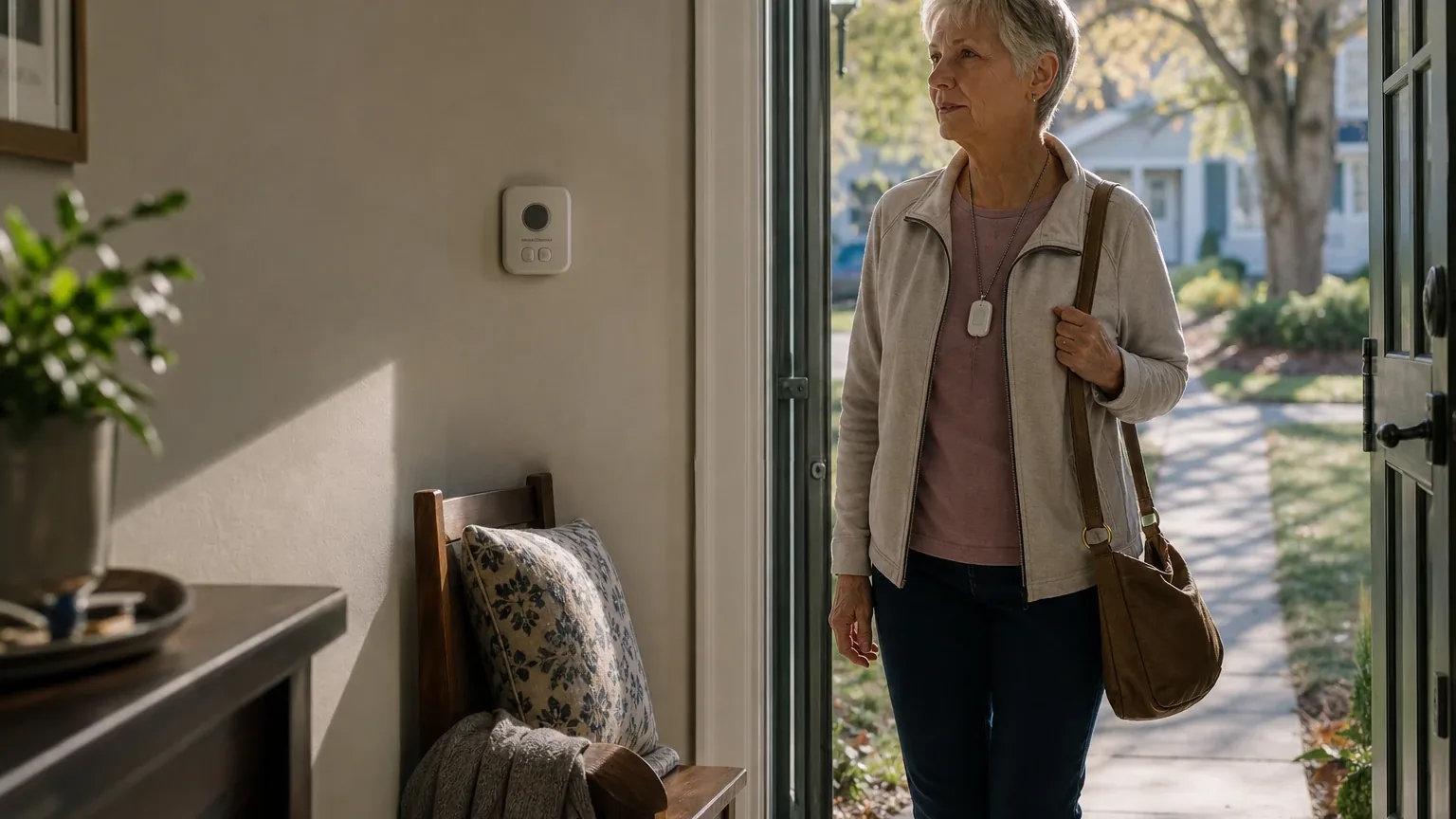
The MGMini mobile medical alert system with the MyGuardian caregiver app is the most relevant Medical Guardian product for this use case, based on how platforms described the portfolio. MGMini is a compact pendant worn around the neck or clipped to clothing, and MGMini Lite offers a wrist-worn form factor [1].
Platforms also named Guardian Flex, MGMove, and Mobile 2.0 (On-the-Go) as relevant alternatives within the same portfolio [4]. Guardian Flex is described in company materials as a wearable with three wearing options — wrist, belt, or lanyard — weighing 1.4 oz with an IP67 water-resistance rating and up to 5 days of battery (anthropic:c4_medicalguardian_flex). A company press release describes Guardian Flex as 30% smaller than the previous Medical Guardian wearable (anthropic:c8_prnewswire_guardian_flex).
The relevant plan structure is a device plus a monitoring subscription. The reviewed official MGMini product page listed a $149.95 device price and a $39.95 per month monitoring price on the displayed annual plan [1]. Independent 2026 testing reported total monitoring pricing of approximately $39.95–$43.95 per month, with fall detection commonly adding about $10 per month [5].
What the AI Platforms Agreed About
Questions This Section Answers
- What do AI platforms agree Medical Guardian does well for dementia caregivers?
- Does Medical Guardian provide 24/7 monitored emergency response for a disoriented senior?
Platforms broadly agreed on four points: monitored emergency escalation, caregiver app access, wearable comfort, and water resistance.
On emergency escalation, platforms described 24/7 two-way communication with monitoring operators. Medical Guardian's terms summarize an escalation sequence in which the monitoring center contacts the wearer, then emergency contacts, then 911 if needed [7]. Independent testing reported an average emergency response time of about 8 seconds for MGMini Lite, faster than 11 other tested devices (anthropic:c2_theseniorlist_mgmini, anthropic:c9_theseniorlist_dementia_best). Google's platform reported response times averaging 10 to 34 seconds [8]. These figures come from different reviewers using different methods and should not be treated as a single verified benchmark.
On the caregiver app, platforms agreed that MyGuardian provides caregiver-oriented functions including device status, battery information, location viewing, emergency-call history, activity information, and multi-caregiver access [9]. Independent reviewers generally rated the app as easy to use and comparatively capable [10].
On wearable comfort, platforms agreed the MGMini is small, lightweight, and discreet, with multiple wearing options that may improve daily compliance [11]. Forbes Health described MGMini as the smallest and lightest mobile device on the market in its review (anthropic:c7_forbes_mgmini_review).
On water resistance, platforms agreed the devices are water-resistant and shower-safe but not fully waterproof. Medical Guardian support guidance says the device should not be submerged and should be towel-dried after water exposure [9].
Where the AI Platforms Disagreed or Were Uncertain
Questions This Section Answers
- Does Medical Guardian offer geofencing alerts for a senior who leaves a safe zone?
- How often does Medical Guardian update location for a wandering senior?
The largest disagreement concerns geofencing. Google's platform reported that the MyGuardian app supports customizable "Safe Zones" and geofencing alerts, but also noted that hourly update frequency means a wandering senior could travel a significant distance before a caregiver receives an alert [13]. Every other platform that addressed the question said geofencing is not clearly documented. OpenAI stated that reviewed Medical Guardian materials do not clearly document configurable caregiver geofences or boundary alerts [15]. Anthropic, deepseek, perplexity, kimi, and grok reached similar conclusions [18]. This is a genuine unresolved conflict, not a consensus.
Location refresh rate is also disputed. Medical Guardian's MGMini product page states hourly GPS location updates [15]. Independent coverage describes location as updating when the caregiver refreshes the view, while other materials describe emergency-location determination rather than continuous tracking [19]. Google's platform reported that background location updates hourly in the portal or app under normal conditions, with real-time GPS sent only during an SOS trigger [14]. The practical refresh interval during movement is therefore not clearly established.
Battery life conflicts in official materials. The MGMini product page states up to 3 days, while the current support page states up to 5 days [15]. Anthropic reported MGMini base model at 3 days and MGMini Lite at 5 days, suggesting a possible model-variant explanation, but this is not confirmed (anthropic:c1_medicalguardian_support). Google reported the opposite assignment — MGMini up to 5 days and MGMini Lite up to 3 days [24]. Buyers should verify the exact model generation and expected runtime.
Fall detection results conflict sharply. Google's platform reported that MGMini Lite detected 80% of simulated falls while the standard MGMini detected only 1 of 10 test falls [24]. OpenAI reported weak MGMini automatic fall-detection results in 2026 testing [26]. Anthropic reported 80% accuracy for MGMini Lite (anthropic:c3_theseniorlist_myguardian). Medical Guardian itself states that no fall-detection technology works 100% of the time [16].
Contract and cancellation wording also conflicts. OpenAI reported a 90-day minimum service commitment with auto-renewal [27]. Google reported no long-term contracts required and no cancellation fees [28]. Perplexity reported a minimum three-month commitment with cancellation allowed after that [30]. Official page footnotes state that cancellation fees may apply (official:C3). The checkout agreement should control.
Use-Case-Specific Features and Capabilities
Questions This Section Answers
- Does Medical Guardian's GPS work well enough to locate a disoriented senior outdoors?
- Can a caregiver track a Medical Guardian wearer's location in real time?
GPS and location accuracy is a relative strength for emergency location assistance, but not a guarantee of precision. MGMini uses GPS with cellular and Wi-Fi positioning support, and Medical Guardian states nationwide 4G LTE coverage [31]. Independent testing reported that monitoring agents accurately identified outdoor locations by cross streets [32]. Another review found wearable location could be at least approximately 100 feet from the exact position [33]. Google's platform reported dual-carrier connectivity via OmniSIM technology using both AT&T and Verizon networks [34]. Independent analysis notes GPS degrades indoors, in tall buildings, parking garages, and dense terrain (anthropic:c5_helpdementia_gps_limitations).
Geofencing and wandering alerts are the central gap. Reviewed Medical Guardian materials describe GPS and location viewing, activity information, and emergency response, but do not clearly document configurable caregiver geofences, boundary-entry or boundary-exit alerts, or an automated wandering-alert workflow [31]. Independent analysis identifies geofencing with instant alerts as one of five core dementia wandering features, alongside GPS capability, battery life over 24 hours, discrete design, and two-way voice (anthropic:c5_helpdementia_features_matter).
Caregiver app quality is a strength. MyGuardian provides device status, battery information, location viewing, emergency-call history, activity information, emergency contacts, and care-circle features [35]. Multiple caregivers can monitor a single device with shared access (anthropic:c3_theseniorlist_myguardian, anthropic:c6_seniorliving_myguardian). Reviewers noted that location-update speed and accuracy may vary [36].
Wearable comfort and dementia usability is person-dependent. MGMini is marketed as a small, lightweight pendant worn around the neck or clipped to clothing, and MGMini Lite offers a wrist-worn form factor [31]. Independent testing found MGMini comfortable and discreet [37]. However, a person with cognitive decline may remove, misplace, or forget the device, and no reviewed source documents a locking clasp or tamper-resistant design [38].
Emergency call escalation is a clear advantage. The service provides 24/7 two-way communication with monitoring operators, and the terms summarize an escalation sequence of wearer contact, then emergency contacts, then 911 [31]. This depends on the device being worn, powered, connected, and usable.
Battery life is useful but conflicted. Official materials state both up to 3 days and up to 5 days for MGMini [31]. Guardian Flex is listed at up to 5 days (anthropic:c4_medicalguardian_flex). Independent analysis notes that people with dementia may be unable to charge devices or report low battery, and that a device dying at the wrong moment creates a false sense of security (anthropic:c5_helpdementia_battery_life).
Water resistance is adequate for daily wear. Medical Guardian describes MGMini as water-resistant and shower-safe, but support guidance says the device should not be submerged and should be towel-dried after exposure [35]. Guardian Flex carries an IP67 rating (anthropic:c4_medicalguardian_flex).
Location refresh rate is the second major limitation. The product page states hourly GPS updates [31]. Independent analysis recommends 10-second updates for active wandering interception, noting standard trackers may refresh every few minutes to hourly (anthropic:c5_helpdementia_gps_tracking_real_world). Hourly updates may be too infrequent for an active elopement event.
Pricing, Fees, Contracts, and Ongoing Costs
Questions This Section Answers
- How much does Medical Guardian cost per month, and are there setup or cancellation fees?
- What fees apply if a caregiver cancels Medical Guardian or fails to return the device?
Pricing is moderately documented but inconsistent across sources. The reviewed official MGMini product page listed a $149.95 device price and a $39.95 per month monitoring price on the displayed annual plan [42]. Independent 2026 testing reported approximately $149.95 plus $39.95 to $43.95 monthly, with fall detection commonly reported as an additional $10 per month [43]. Google's platform reported MGMini Lite monitoring at $42.95–$46.95 per month and an MGMove device fee of $199.95 [45]. Kimi reported standard monitoring at $34.95 per month and a fall-detection plan at $44.95 per month (kimi:caringvillage-2026). Grok reported $39.95–$46.95 per month (grok:2). These figures do not reconcile cleanly and should be confirmed at checkout.
A secondary pendant for use while MGMini is charging is listed at $2.99 per month according to Medical Guardian support [46]. Google's platform reported standard shipping of $12.50, waived on annual prepay plans, and optional OnGuard Alerts at $2.99 per month [45].
Contract terms conflict across sources. OpenAI reported a 90-day minimum service commitment with automatic renewal monthly, quarterly, or annually until canceled [47]. Perplexity reported a minimum three-month commitment with cancellation allowed after that [48]. Google reported no long-term contracts and no cancellation fees [49]. Official page footnotes state that cancellation fees may apply and that certain promotions exclude Mini Guardian, Mobile 2.0, Home 2.0, and MGMove (official:C1, official:C3).
Return and non-return fees are the largest documented financial risk. A leased device not returned within 30 days may incur a $350 fee, and annual prepaid plans may receive a prorated refund after the minimum period, potentially less a restocking fee of up to $50 [47]. Perplexity also reported a three-day cancellation window for protection-plan enrollment [52]. The official terms and FAQ contain different return-window wording in places, so the purchase confirmation should control.
Best Suited For
Questions This Section Answers
- Who gets the most value from Medical Guardian for dementia and wandering risk?
- Is Medical Guardian worth it for a senior in early-stage dementia who will wear a pendant?
Medical Guardian is best suited to caregivers who primarily need a wearable emergency-call device with location assistance when the wearer presses the button. The strongest fit is a senior in early-to-moderate cognitive decline who will reliably wear and recharge a small pendant or wrist device and who retains some ability to press a help button (anthropic:c3_theseniorlist_myguardian, anthropic:c5_helpdementia_stages_alzheimers).
It also fits care situations where two-way monitoring-center communication matters more than autonomous wandering detection [53]. Families who want multi-caregiver oversight through a cloud app are a reasonable match, since MyGuardian supports shared access and device-status visibility (anthropic:c3_theseniorlist_myguardian, anthropic:c6_seniorliving_myguardian).
Buyers who value a compact, discreet form factor to reduce wear resistance are also a reasonable match, given independent descriptions of MGMini as small and lightweight [55]. This review sits within a wider set of medical alert systems evaluations for the same buyer profile.
Probably Not Best Suited For
Questions This Section Answers
- Who should not choose Medical Guardian for dementia and wandering risk?
- Is Medical Guardian suitable for advanced dementia where the wearer removes devices?
Medical Guardian is probably not the best choice for caregivers who require verified geofence-entry or geofence-exit alerts. No reviewed source clearly confirms configurable geofencing as a standard, plan-specific feature, and platforms disagreed on whether Safe Zones exist at all [56].
It is also a weak fit for people who need continuous, high-frequency location tracking or a dedicated dementia wandering-monitoring workflow. Hourly location updates stated on the product page may be too infrequent for an active elopement event [59].
Users who depend heavily on automatic fall detection should look elsewhere. Independent 2026 testing reported poor MGMini fall-detection performance, and Medical Guardian states no fall-detection technology works 100% of the time [60].
Advanced dementia with device-removal behavior is a poor match. No reviewed source documents a locking clasp or tamper-resistant design, and independent analysis notes that people with dementia may remove clip-on or watch devices they do not recognize [62].
When Another Option May Be Better
Questions This Section Answers
- What is a better alternative to Medical Guardian for a caregiver who needs automatic geofence breach alerts?
- When should a buyer choose a dedicated dementia GPS tracker instead of Medical Guardian?
A dedicated dementia GPS tracker or location-management service may be better when geofences, frequent refreshes, location history, tamper alerts, and wandering-specific notifications are essential [63]. Independent analysis specifically names AngelSense with AI routine learning and Runner Mode 10-second updates as offering automatic wandering detection that Medical Guardian does not document (anthropic:c5_helpdementia_features_matter, anthropic:c5_helpdementia_gps_tracking_real_world).
Another medical-alert provider may be better when independently tested automatic fall detection is a primary requirement. Independent 2026 reviews reported only 1 detected fall in 10 simulated falls for MGMini, and Google's platform reported the same result [64].
A longer-battery GPS device may be better when caregivers cannot reliably supervise daily charging. Independent analysis notes that device death at the wrong moment creates a false sense of security (anthropic:c5_helpdementia_battery_life).
A simpler wrist-worn device such as MGMini Lite may be better when the person refuses pendants, but its location technology, battery life, and alert behavior should be verified first [63]. Rural or low-cellular-coverage areas are also a reason to consider alternatives, since all Medical Guardian mobile devices require Verizon or AT&T 4G LTE connectivity (anthropic:c5_helpdementia_gps_limitations, anthropic:c1_medicalguardian_support).
Questions to Verify Before Buying
Questions This Section Answers
- What should a buyer confirm with Medical Guardian before signing a contract?
- Can a caregiver test Medical Guardian GPS accuracy and app alerts before the return window closes?
Buyers should confirm the following directly with Medical Guardian before committing, because the reviewed public evidence does not resolve these points:
- Can the MyGuardian app create geofences and send automatic entry, exit, or prolonged-stop alerts? If yes, what are the minimum and maximum boundary sizes? [67]
- What is the actual location-refresh interval when the wearer is moving, indoors, or outside cellular coverage? [67]
- Does caregiver tracking show live location, last-known location, location history, or only locations requested during emergency calls? [70]
- What accuracy should be expected indoors, in apartment buildings, and across multiple floors? [70]
- Which exact MGMini, MGMini Lite, or Guardian Flex model generation will be supplied, and what is its tested battery life? [67]
- How are low-battery, device-offline, device-removed, and charging alerts delivered to caregivers? [73]
- What happens if the wearer presses the button but cannot speak, is outside cellular coverage, or is not near the registered home address? [74]
- What are the exact monthly monitoring price, fall-detection price, equipment price, shipping, taxes, and any protection-plan charges? [67]
- Is the device purchased or leased, and what return, replacement, non-return, and cancellation charges apply to this order? [74]
- Can the caregiver test GPS accuracy, app notifications, emergency escalation, and charging alerts before the return window expires? [74]
Final AI Consensus Verdict
Medical Guardian is a mixed fit for Dementia & Wandering Risk Management. Five of seven platforms named it during ranking discovery, with an average listed rank of 3.2 and a best rank of 1. Two platforms rated it a good fit and five rated it mixed.
The consensus case for Medical Guardian rests on monitored emergency response, two-way voice, GPS location support, a capable caregiver app, compact wearable design, and multi-day battery life. The consensus case against it rests on undocumented geofencing, an hourly location refresh that may be too slow for active wandering, reliance on the wearer pressing a button, weak independent fall-detection results for the standard MGMini, and conflicting contract and pricing information across sources.
Medical Guardian is a reasonable choice when the primary need is a monitored emergency-call device with location assistance for a cooperative wearer in early-to-moderate cognitive decline. It is not a clearly established best choice when the core requirement is proactive wandering prevention through verified geofences, frequent live tracking, tamper detection, or automated caregiver alerts. Platform agreement on these points reflects shared source material, not independent proof of product quality.
How This Review Was Produced
This review was produced from seven AI platform fit-research responses covering Medical Guardian for the Dementia & Wandering Risk Management use case. Each platform independently evaluated the entity against eight category criteria: GPS precision, geofencing alerts, caregiver app quality, wearable comfort, emergency call escalation, battery life, waterproofing, and location refresh rate.
Platform mentions in the ranking stage count only platforms that named Medical Guardian during ranking discovery. All seven included platforms evaluated fit, but only five named the entity during ranking. The authoritative study date is 2026-09-27. Platform-reported research dates differ: anthropic reported 2026-01-15 and deepseek reported 2026-03-20, while google, grok, kimi, openai, and perplexity reported 2026-09-27. These platform dates are provenance metadata and do not independently prove freshness.
Citations in this review are platform-reported evidence, not independently verified facts. The supplied source URLs were collected from platform responses and were not independently validated by the writer stage. No reviewed source establishes guaranteed GPS precision, uninterrupted connectivity, guaranteed emergency response, or complete wandering detection.
Methodology Limitations
Several limitations apply to this review.
Platform-reported research dates differ from the authoritative run date, and two platforms reported substantially earlier research dates. Findings attributed to those platforms may not reflect current product or pricing conditions.
Deepseek's platform response was produced with search disabled, so its claims are model-reported rather than retrieved from live sources. Those claims require explicit verification before being treated as current facts.
Conflicting product names, pricing, and capabilities were not resolved by guessing. Where sources disagreed — geofencing availability, battery life, location refresh rate, fall-detection accuracy, and contract terms — the conflict is described and buyers are directed to verify.
No reviewed source establishes guaranteed GPS precision, uninterrupted connectivity, guaranteed emergency response, or complete wandering detection. Missing research was not interpreted as disagreement.
This review does not include personal testing, customer experience, medical benefit, or guaranteed performance claims. No reviewed source provides independent clinical or peer-reviewed evidence on Medical Guardian specifically for dementia wandering outcomes.
See the broader Dementia and Wandering consensus index for comparisons across qualified options.
Sources
Company-Owned Sources
- MEDICAL ALERT DEVICE Buyer Guide With Pricing: https://cdn.medicalguardian.com/assets/downloads/pdf/2025-Buyers-Guide-With-Pricing-updated-compressed.pdf
- Medical Guardian - Medical Alert Systems: https://www.medicalguardian.com/
- Comparison of Medical Guardian's Alert Systems: https://www.medicalguardian.com/comparison
- Guardian Flex Medical Alert System: https://www.medicalguardian.com/guardian-flex-medical-alert-system
- Shipping + Returns: https://www.medicalguardian.com/legal/policies
- Shipping and Returns Policy - Legal Information About Medical Guardian Services: https://www.medicalguardian.com/legal/shipping-returns
- Legal Information About Medical Guardian Services: Terms and Conditions: https://www.medicalguardian.com/legal/terms
- General Warranty Information: https://www.medicalguardian.com/legal/warranties
- Best Medical Alert Necklace | Fall Detection: https://www.medicalguardian.com/medical-alert-systems/gps-button-fall-detection
- MGMini Guardian: GPS Fall Detection: https://www.medicalguardian.com/medical-alert-systems/gps-button-fall-detection/annual
- Guardian Flex | Medical Guardian: https://www.medicalguardian.com/medical-alert-systems/guardian-flex-fall-detection/monthly-free-device
- Which System Is Right For: https://www.medicalguardian.com/medical-alerts
- MGMini and MGMini Lite Medical Alert Systems: https://www.medicalguardian.com/mgmini-medical-alert-system
- MGMove Smartwatch Medical Alert System: https://www.medicalguardian.com/mgmove-smartwatch
- Mobile 2.0 On-the-Go Medical Alert System: https://www.medicalguardian.com/mobile-2-0-on-the-go-medical-alert-system
- Medical Guardian Pricing and Plans: https://www.medicalguardian.com/pricing
- Medical Guardian FAQs: https://www.medicalguardian.com/support/faqs/
- MGMini Support: https://www.medicalguardian.com/support/mgmini/
- Official pricing and terms source: https://www.medicalguardian.com/alert-system-pricing
- Official pricing and terms source: https://www.medicalguardian.com/mobile-terms-and-conditions
Additional AI research evidence78 records
- AI research evidence record openai:c1
- AI research evidence record openai:c5
- AI research evidence record openai:c7
- AI research evidence record perplexity:c3
- AI research evidence record openai:c11
- AI research evidence record google:1.3.9
- AI research evidence record openai:c6
- AI research evidence record google:1.2.2
- AI research evidence record openai:c4
- AI research evidence record openai:c5
- AI research evidence record openai:c7
- AI research evidence record openai:c9
- AI research evidence record google:2.1.3
- AI research evidence record google:3.2.8
- AI research evidence record openai:c1
- AI research evidence record openai:c4
- AI research evidence record openai:c5
- AI research evidence record perplexity:c6
- AI research evidence record openai:c2
- AI research evidence record openai:c3
- AI research evidence record perplexity:c5
- AI research evidence record google:3.1.6
- AI research evidence record openai:c8
- AI research evidence record google:1.2.2
- AI research evidence record google:3.3.5
- AI research evidence record openai:c10
- AI research evidence record openai:c6
- AI research evidence record google:1.3.1
- AI research evidence record google:1.4.1
- AI research evidence record perplexity:c1
- AI research evidence record openai:c1
- AI research evidence record openai:c3
- AI research evidence record openai:c2
- AI research evidence record google:3.1.6
- AI research evidence record openai:c4
- AI research evidence record openai:c5
- AI research evidence record openai:c7
- AI research evidence record google:1.1.2
- AI research evidence record openai:c6
- AI research evidence record openai:c8
- AI research evidence record openai:c9
- AI research evidence record openai:c1
- AI research evidence record openai:c11
- AI research evidence record google:1.3.9
- AI research evidence record google:1.3.2
- AI research evidence record openai:c9
- AI research evidence record openai:c6
- AI research evidence record perplexity:c1
- AI research evidence record google:1.3.1
- AI research evidence record perplexity:c7
- AI research evidence record perplexity:c8
- AI research evidence record perplexity:c11
- AI research evidence record openai:c6
- AI research evidence record perplexity:c1
- AI research evidence record openai:c7
- AI research evidence record openai:c4
- AI research evidence record google:2.1.3
- AI research evidence record perplexity:c6
- AI research evidence record openai:c1
- AI research evidence record openai:c10
- AI research evidence record google:1.2.2
- AI research evidence record google:1.1.2
- AI research evidence record openai:c1
- AI research evidence record openai:c10
- AI research evidence record google:1.2.2
- AI research evidence record openai:c5
- AI research evidence record openai:c1
- AI research evidence record google:2.1.3
- AI research evidence record google:3.2.8
- AI research evidence record openai:c2
- AI research evidence record openai:c8
- AI research evidence record google:1.2.2
- AI research evidence record openai:c4
- AI research evidence record openai:c6
- AI research evidence record openai:c11
- AI research evidence record google:1.3.2
- AI research evidence record perplexity:c7
- AI research evidence record perplexity:c8
Independent Sources
- Shelvas Halo vs MGMove Smartwatch: Which Medical Alert Watch Is Worth It?: https://aginginplaceindex.com/medical-alert-systems/shelvas-halo-vs-mgmove
- 8 Best GPS Trackers for Elderly Parents and Dementia Patients in 2026: https://caringvillage.com/product-reviews/gps-trackers/
- GPS Watch vs Medical Alert Device for Dementia Wandering: https://helpdementia.com/gps-watch-vs-medical-alert-device-for-dementia-wandering/
- What's the Best Wandering Alert Device for Alzheimer's Care? - HelpDementia.com: https://helpdementia.com/whats-the-best-wandering-alert-device-for-alzheimers-care/
- Medical Guardian MGMini Review 2026 | SeniorsList: https://seniorslist.com/medical-alert-systems/medical-guardian-mgmini/
- Medical Guardian MGMini Review 2025: Tried And Tested: https://www.forbes.com/health/medical-alert-systems/medical-guardian-mgmini-review/
- GPS Trackers for Dementia Safety: Best Options to Consider in 2026: https://www.ltcnews.com/articles/gps-trackers-for-dementia
- Medical Guardian MGMini Review: https://www.medicalalertbuyersguide.org/mobile-medical-alert-system/medical-guardian-mobile-2-0-review/
- Medical Guardian Review in 2026: https://www.ncoa.org/product-resources/medical-alert-systems/medical-guardian-review/
- Medical Guardian Launches Guardian Flex, a Health & Safety Wearable Designed For The Next Generation Of Aging Adults: https://www.prnewswire.com/news-releases/medical-guardian-launches-guardian-flex-a-health--safety-wearable-designed-for-the-next-generation-of-aging-adults-302857612.html
- Medical Guardian Cost, Pricing, Packages & Monthly Plans: https://www.safehome.org/medical-alert-systems/medical-guardian-cost/
- Medical Guardian MGMini Review 2026: https://www.safehome.org/medical-alert-systems/medical-guardian-mgmini-review/
- Medical Guardian MGMini Review 2026: https://www.safehome.org/medical-alert-systems/medical-guardian/mgmini/
- 4 Best GPS Trackers for Dementia Patients (2026 Review: https://www.safewise.com/best-gps-trackers-dementia/
- 4 Best GPS Trackers for Dementia Patients (2026 Review: https://www.safewise.com/senior-safety/gps-trackers-dementia/
- Medical Guardian Review 2026: https://www.safewise.com/senior-safety/medical-alerts/medical-guardian/
- Best Medical Alert Systems for Seniors with Dementia: https://www.seniorliving.org/medical-alert-systems/best/dementia/
- 2026 MGMini Lite and MGMini Review: https://www.seniorliving.org/medical-alert-systems/medical-guardian/mgmini/
- Best Medical Alert Systems With Fall Detection for Seniors: https://www.seniorliving.org/medical-alert/best-fall-detection/
- Medical Guardian MGMini Review 2026: https://www.seniorslist.com/medical-alert-systems/medical-guardian/mgmini/
- The Best Medical Alert Systems for Dementia (2026: https://www.theseniorlist.com/medical-alert-systems/best/dementia/
- Medical Guardian MGMini Lite Review │The Senior List: https://www.theseniorlist.com/medical-alert-systems/medical-guardian/mgmini-lite/
- MGMini Medical Alert Review, Tested by Caregivers (2026: https://www.theseniorlist.com/medical-alert-systems/medical-guardian/mgmini/
- Medical Guardian MGMini Lite Review: https://www.theseniorlist.com/medical-alert/medical-guardian/mgmini-lite-review/
- MGMini Medical Alert Review, Tested by Caregivers (2026: https://www.theseniorlist.com/medical-alert/medical-guardian/mgmini-review/
Additional AI research evidence78 records
- AI research evidence record openai:c1
- AI research evidence record openai:c5
- AI research evidence record openai:c7
- AI research evidence record perplexity:c3
- AI research evidence record openai:c11
- AI research evidence record google:1.3.9
- AI research evidence record openai:c6
- AI research evidence record google:1.2.2
- AI research evidence record openai:c4
- AI research evidence record openai:c5
- AI research evidence record openai:c7
- AI research evidence record openai:c9
- AI research evidence record google:2.1.3
- AI research evidence record google:3.2.8
- AI research evidence record openai:c1
- AI research evidence record openai:c4
- AI research evidence record openai:c5
- AI research evidence record perplexity:c6
- AI research evidence record openai:c2
- AI research evidence record openai:c3
- AI research evidence record perplexity:c5
- AI research evidence record google:3.1.6
- AI research evidence record openai:c8
- AI research evidence record google:1.2.2
- AI research evidence record google:3.3.5
- AI research evidence record openai:c10
- AI research evidence record openai:c6
- AI research evidence record google:1.3.1
- AI research evidence record google:1.4.1
- AI research evidence record perplexity:c1
- AI research evidence record openai:c1
- AI research evidence record openai:c3
- AI research evidence record openai:c2
- AI research evidence record google:3.1.6
- AI research evidence record openai:c4
- AI research evidence record openai:c5
- AI research evidence record openai:c7
- AI research evidence record google:1.1.2
- AI research evidence record openai:c6
- AI research evidence record openai:c8
- AI research evidence record openai:c9
- AI research evidence record openai:c1
- AI research evidence record openai:c11
- AI research evidence record google:1.3.9
- AI research evidence record google:1.3.2
- AI research evidence record openai:c9
- AI research evidence record openai:c6
- AI research evidence record perplexity:c1
- AI research evidence record google:1.3.1
- AI research evidence record perplexity:c7
- AI research evidence record perplexity:c8
- AI research evidence record perplexity:c11
- AI research evidence record openai:c6
- AI research evidence record perplexity:c1
- AI research evidence record openai:c7
- AI research evidence record openai:c4
- AI research evidence record google:2.1.3
- AI research evidence record perplexity:c6
- AI research evidence record openai:c1
- AI research evidence record openai:c10
- AI research evidence record google:1.2.2
- AI research evidence record google:1.1.2
- AI research evidence record openai:c1
- AI research evidence record openai:c10
- AI research evidence record google:1.2.2
- AI research evidence record openai:c5
- AI research evidence record openai:c1
- AI research evidence record google:2.1.3
- AI research evidence record google:3.2.8
- AI research evidence record openai:c2
- AI research evidence record openai:c8
- AI research evidence record google:1.2.2
- AI research evidence record openai:c4
- AI research evidence record openai:c6
- AI research evidence record openai:c11
- AI research evidence record google:1.3.2
- AI research evidence record perplexity:c7
- AI research evidence record perplexity:c8
Other Sources
- Medical Guardian MGMini Medical Alert Device User Manual: https://manuals.plus/medical-guardian/mgmini-medical-alert-device-manual
Additional AI research evidence78 records
- AI research evidence record openai:c1
- AI research evidence record openai:c5
- AI research evidence record openai:c7
- AI research evidence record perplexity:c3
- AI research evidence record openai:c11
- AI research evidence record google:1.3.9
- AI research evidence record openai:c6
- AI research evidence record google:1.2.2
- AI research evidence record openai:c4
- AI research evidence record openai:c5
- AI research evidence record openai:c7
- AI research evidence record openai:c9
- AI research evidence record google:2.1.3
- AI research evidence record google:3.2.8
- AI research evidence record openai:c1
- AI research evidence record openai:c4
- AI research evidence record openai:c5
- AI research evidence record perplexity:c6
- AI research evidence record openai:c2
- AI research evidence record openai:c3
- AI research evidence record perplexity:c5
- AI research evidence record google:3.1.6
- AI research evidence record openai:c8
- AI research evidence record google:1.2.2
- AI research evidence record google:3.3.5
- AI research evidence record openai:c10
- AI research evidence record openai:c6
- AI research evidence record google:1.3.1
- AI research evidence record google:1.4.1
- AI research evidence record perplexity:c1
- AI research evidence record openai:c1
- AI research evidence record openai:c3
- AI research evidence record openai:c2
- AI research evidence record google:3.1.6
- AI research evidence record openai:c4
- AI research evidence record openai:c5
- AI research evidence record openai:c7
- AI research evidence record google:1.1.2
- AI research evidence record openai:c6
- AI research evidence record openai:c8
- AI research evidence record openai:c9
- AI research evidence record openai:c1
- AI research evidence record openai:c11
- AI research evidence record google:1.3.9
- AI research evidence record google:1.3.2
- AI research evidence record openai:c9
- AI research evidence record openai:c6
- AI research evidence record perplexity:c1
- AI research evidence record google:1.3.1
- AI research evidence record perplexity:c7
- AI research evidence record perplexity:c8
- AI research evidence record perplexity:c11
- AI research evidence record openai:c6
- AI research evidence record perplexity:c1
- AI research evidence record openai:c7
- AI research evidence record openai:c4
- AI research evidence record google:2.1.3
- AI research evidence record perplexity:c6
- AI research evidence record openai:c1
- AI research evidence record openai:c10
- AI research evidence record google:1.2.2
- AI research evidence record google:1.1.2
- AI research evidence record openai:c1
- AI research evidence record openai:c10
- AI research evidence record google:1.2.2
- AI research evidence record openai:c5
- AI research evidence record openai:c1
- AI research evidence record google:2.1.3
- AI research evidence record google:3.2.8
- AI research evidence record openai:c2
- AI research evidence record openai:c8
- AI research evidence record google:1.2.2
- AI research evidence record openai:c4
- AI research evidence record openai:c6
- AI research evidence record openai:c11
- AI research evidence record google:1.3.2
- AI research evidence record perplexity:c7
- AI research evidence record perplexity:c8
Verify This Research
Review the study details behind this page or download the public machine-readable verification record.
- Study date
- September 27, 2026
- Platforms analyzed
- 7
- Source records
- 46
- Ranking mentions
- 5 of 7
- Platform share
- 71%
- Final consensus rank
- #2
Research trail and source mix
Configured platforms
openai, anthropic, deepseek, grok, perplexity, kimi, google
Source mix
25 independent · 20 company-owned · 1 unclear
Evidence support
35 direct · 11 partial
Important limitation
Use the run research_date as the study date. Platform-reported dates are provenance metadata and do not independently prove freshness.
Source snapshot SHA-256 dece55dab85bde2e783700c539cb13a14f229953bc5fc672c8bc101c2a382582
Archived editions
Browse earlier published research snapshots for this article. The latest edition remains at the current URL.