
Answer Capsule
LifeFone At-Home is a good, not best-in-class, fit for In-Home Base Station Coverage. Five of the six platforms that produced fit research named it during the ranking stage, and all six rated it at least "good," with one calling it "strong." The strongest reason to consider it is the company's stated 1,300-foot pendant-to-base range paired with a 32-hour base-station backup battery and both landline and cellular configurations. The main limitation is that the range figure is a company claim that independent testing has contradicted sharply, and fall-detection reliability, speaker clarity, and monitoring response times are disputed across sources.
Research Snapshot
| Field | Detail |
|---|---|
| Platform mentions in ranking stage | 5 of 6 platforms producing fit research (anthropic, deepseek, google, grok, perplexity) |
| Share of included platform responses | 83.3% |
| Average listed rank | 3.4 |
| Best listed rank | 2 (google) |
| Relevant product/model/plan | LifeFone At-Home Cellular or At-Home Landline System with optional fall-detection pendant |
| Overall use-case fit | Good (five platforms "good," one "strong") |
| Research date | 2026-11-10 |
What Changed Since September 2026
LifeFone At-Home remained at No. 3, and platform mentions decreased from 7 to 5. The November 2026 review reframes LifeFone At-Home from a single cellular-plus-fall-detection model into the broader At-Home family, covering both landline and cellular base stations with optional fall detection. Buyer fit softened accordingly: the earlier version was rated mixed, while the current edition calls it good but not best-in-class. The strengths and limitations themselves carry over largely intact—advertised long range, outage backup, and disputed real-world range and fall-detection reliability—so this is mainly a description refresh rather than evidence of a product change. On price, fall detection is newly reported at $10, while $32.95 is no longer repeated. Differences between the two editions reflect what each article reports; they do not by themselves prove that the product, service, or price changed.
The September 2026 review preserves the earlier article for reference.
Why LifeFone At-Home Qualified for This Study
Questions This Section Answers
- Why did LifeFone At-Home qualify for a 2026 in-home base station coverage ranking when only five of six platforms named it?
- Is LifeFone At-Home a legitimate contender for in-home base station coverage, or did it qualify on thin evidence?
LifeFone At-Home qualified because it cleared the study's minimum-mention threshold and every platform that evaluated it rated it a viable fit for home-based coverage. Five of the six platforms that produced fit research named it during ranking discovery, giving it an 83.3% share of included platform responses and an average listed rank of 3.4 (best rank 2, from google). The sixth platform, deepseek, still produced a full fit assessment even though it did not appear in the ranking-stage mention list.
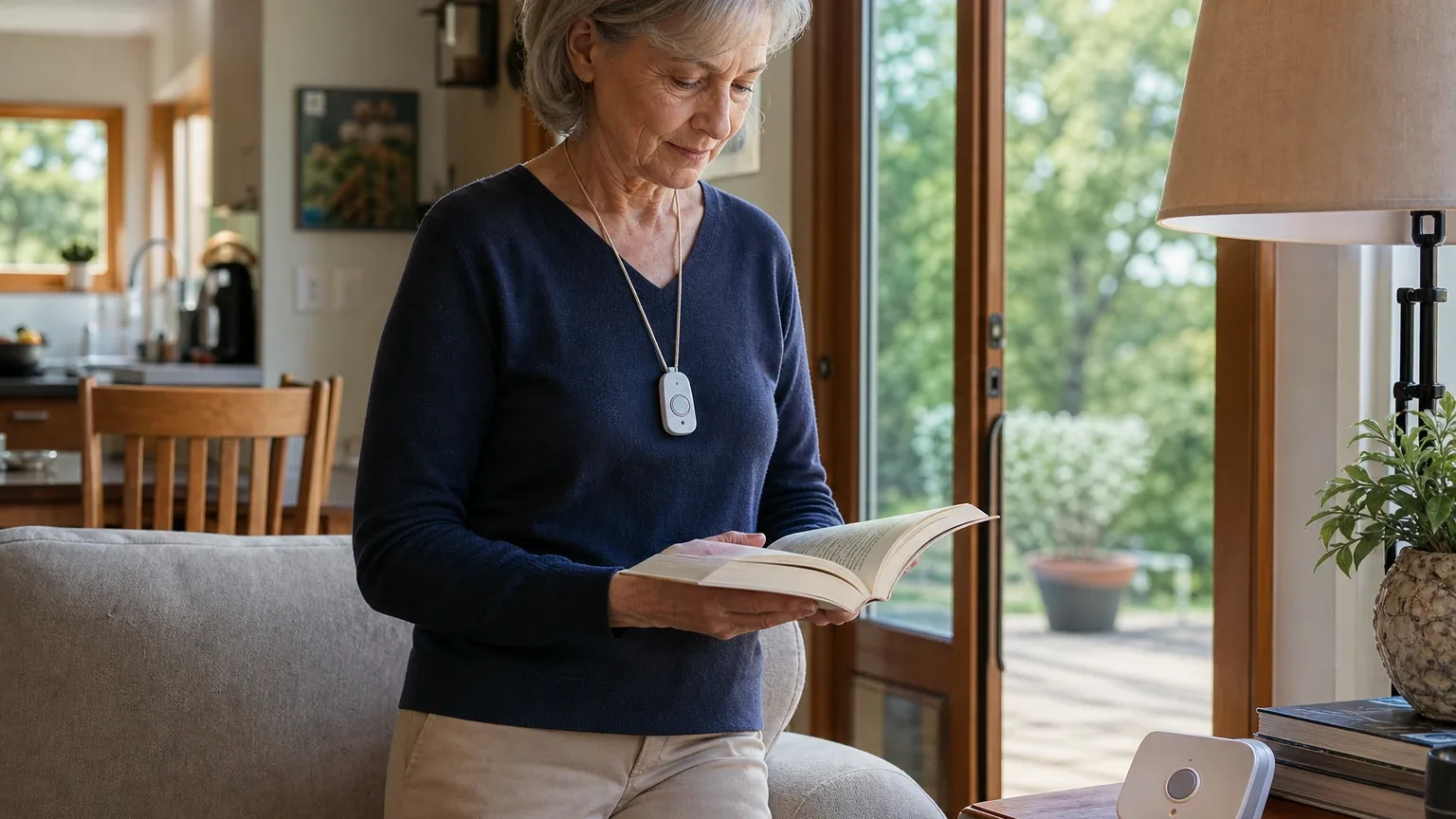
The entity is a company-level identity, and the relevant product is the At-Home family: the At-Home Landline and At-Home Cellular base-station systems, each available with an optional fall-detection pendant. Platforms described it as a monitored base station with two-way voice, a supervised backup battery, and in-home and yard coverage [22].
Qualification carries caveats. The available source evidence notes that official-site retrieval failed for one or more earlier mentions and that the matching domain remained unverified at that stage; the official homepage fetch returned an HTTP 403 and was marked not checked. The current assessment nevertheless located and used LifeFone pages at the supplied domain. Buyers should treat domain-level verification as incomplete.
The Product, Model, Plan, or Service Most Relevant to In-Home Base Station Coverage
Questions This Section Answers
- Which LifeFone At-Home configuration should a senior who stays home most of the day choose for whole-house and yard coverage?
- Does LifeFone At-Home Cellular provide the same pendant range as the landline version for in-home base station coverage?
The most relevant configuration is the At-Home Cellular system with the optional fall-detection pendant, because it removes the landline dependency while keeping the same stated range and backup as the landline model. LifeFone sells two versions of its in-home system, At-Home Landline and At-Home Cellular, and both carry a 32-hour base-unit backup battery [7]. The cellular version uses LifeFone's cellular service rather than the customer's landline, and independent reviewers report it runs on AT&T's network, with one source also naming Verizon [19]. Otherwise it has the same features and components as the standard At-Home unit [28].
Range is described as identical across both versions [38]. LifeFone states up to 1,300 feet from the base unit, and its FAQ describes the system as designed for a home up to 3,500 square feet while noting that actual range depends on home configuration and base-unit placement [22]. One independent review cites 1,400 feet and calls that two to three times the in-home coverage of many competitors [38].
The base unit includes a high-output speaker and sensitive microphone for two-way communication, an extra-large SOS button, and an integrated room-temperature sensor that alarms when home temperature crosses customized thresholds [22]. The standard help button is described as lasting up to two or three years depending on the page, while the fall-detection pendant lasts roughly one year [22].
What the AI Platforms Agreed About
Questions This Section Answers
- What do AI platforms agree LifeFone At-Home gets right for in-home base station coverage?
- Do AI platforms agree that LifeFone At-Home's 1,300-foot range and 32-hour backup make it a strong choice for house and yard coverage?
Platforms agreed unanimously on four points: the stated 1,300-foot range, the 32-hour base-station backup battery, the availability of both landline and cellular configurations, and the presence of two-way voice through the base station. All six platforms referenced the range figure, and five cited it directly from LifeFone pages or independent reviews [22].
Backup power drew the same unanimous treatment. LifeFone states up to 32 hours of base-station backup with automatic notification to the response center, and independent reviewers repeat the figure [21].
Platforms also converged on pricing structure. The current order page lists annual-plan prices of $24.95 per month for At-Home Landline and $30.95 per month for At-Home Cellular with optional fall detection, with quarterly and monthly billing available [25]. Independent reviews consistently report fall detection at $5 per month, described as roughly half the cost charged by competitors such as Medical Guardian and Bay Alarm Medical [13].
On monitoring, LifeFone states U.S.-based redundant centers operating 24/7/365 with English and Spanish agents and an average call answer time of 15 seconds [27]. Independent reviewers describe a company-owned primary call center in New York with two contracted backup facilities and a TMA Five-Diamond certified center [31]. These remain company-reported claims; no independent performance audit was located.
Where the AI Platforms Disagreed or Were Uncertain
Questions This Section Answers
- Why do AI platforms disagree about whether LifeFone At-Home's advertised 1,300-foot range holds up in real homes?
- Is LifeFone At-Home's fall detection reliable enough to trust for a senior with high fall risk at home?
The sharpest disagreement is range performance. LifeFone advertises up to 1,300 feet, but one hands-on evaluation measured roughly 65 feet of actual connection, and the platform reporting it could not determine whether that was typical or an outlier [36]. No other platform supplied a measured range figure, so the conflict is unresolved rather than settled in either direction.
Fall detection produced the most serious split. U.S. News testing reported that the At-Home Cellular system with fall detection failed to detect any falls across four attempts, two on carpet and two on hardwood [7]. LifeFone itself states that no fall detection system detects 100% of falls and that subscribers should press the button if able [22]. Other platforms treated fall detection as a straightforward low-cost add-on without addressing reliability [18].
Speaker clarity is contested. LifeFone claims a high-output speaker and sensitive microphone, and one reviewer describes a high-fidelity two-way speaker [22]. U.S. News reported the operator's voice breaking up with heavy static and the speaker difficult to hear [7]. Another source lists "no 2-way talk" as a con for the At-Home system, which conflicts with the base-station two-way voice described elsewhere [33].
Response times vary widely by source and device. Reported figures include approximately 14 seconds in one performance test, 22 seconds in landline testing, 60 seconds in a separate hands-on review, and a company claim of 15 seconds average [5]. SafeWise named the At-Home Cellular variant the slowest of all devices it tested [36].
Fall-detection pricing is inconsistent. Most sources cite $5 per month, but the ranking-stage description said $10, and the order page's displayed plan prices imply a $6 difference; $10 was not verified for the At-Home systems [22]. Pendant battery life is stated as up to two years on one page and up to three on another, and a retrieved user-guide search result mentions up to 600 feet for an optional fall-detection pendant [22].
Use-Case-Specific Features and Capabilities
Questions This Section Answers
- How does LifeFone At-Home's base station range and backup battery compare with what a senior needs for coverage across a house and yard?
- What happens to LifeFone At-Home coverage during a power outage or when the landline is in use?
LifeFone At-Home covers the core in-home requirements on paper: long stated range, dual connectivity paths, two-way voice at the base, supervised batteries, and 32-hour outage backup. Each capability carries a verification caveat.
| Criterion | LifeFone At-Home evidence | Status |
|---|---|---|
| Base station range | Up to 1,300 feet stated; FAQ describes a home up to 3,500 sq ft; one review cites 1,400 feet [22] | Company claim; one test measured ~65 feet [36] |
| Pendant range | Same as base range for both versions [38]; a user-guide result mentions 600 feet for the fall pendant [22] | Unresolved for fall pendant |
| Landline/cellular setup | Separate At-Home Landline and At-Home Cellular; cellular uses LifeFone service, reported on AT&T and Verizon [19] | Confirmed by multiple sources |
| Two-way speaker clarity | High-output speaker claimed; one test reported static and breakup [22] | Disputed |
| Backup battery life | Up to 32 hours with automatic center notification [21] | Company claim, repeated by reviewers |
| Fall-detection add-on cost | $5/month most commonly; $6 implied by order page; $10 unverified [13] | Conflicting |
| Monitoring center reliability | U.S.-based, redundant, 24/7/365, 15-second average answer claimed; TMA Five-Diamond reported [27] | Company-reported; no independent audit |
Two operational limits matter for this use case. Under published terms, when the wired base station uses the primary telephone line to reach the response center, the subscriber may be unable to make other calls, including 911, during that connection; LifeFone recommends an RJ31X or equivalent setup and says a second line may be used [26]. And the At-Home cellular system is described as working in and around the home, not as a nationwide mobile system, so it is the wrong product for coverage away from the residence [19].
Pricing, Fees, Contracts, and Ongoing Costs
Questions This Section Answers
- Is LifeFone At-Home worth its published monthly price for in-home base station coverage compared with paying extra for fall detection?
- What fees and return charges should a buyer confirm before canceling LifeFone At-Home service?
LifeFone At-Home is competitively priced on the base plan, but the all-in cost depends on billing term, fall-detection pricing, and return obligations that are not fully consistent across sources. The current order page shows annual-plan pricing of $24.95 per month for At-Home Landline and $30.95 per month for At-Home Cellular with optional fall detection, and states that plans can be canceled anytime with quarterly and monthly billing available [25]. Independent reviews report monthly-billing rates of about $29.95 for landline and $34.95 for cellular, with one source listing cellular annual as low as $28.14 [34].
Fall detection is the main pricing ambiguity. Most sources say $5 per month, one newer source reports $10 generally, and the order page's displayed prices imply $6 [13]. The optional Protection Plan adds $5 per month for expedited repair or replacement, limited to one base unit and two help buttons per 12-month period [25]. Activity assurance is reported at $6 per month and daily check-in calls at $19 per month [11].
Contract terms are favorable but not fully documented. Multiple sources state there is no long-term contract, no activation or equipment fee, and no restocking fee, with a 30-day money-back guarantee that starts three business days after shipment [14]. A lifetime price guarantee is reported to lock in the signup rate [29]. Return obligations are where sources split: one review reports a $295 reimbursement fee for an in-home system if equipment is not returned within 30 days, and LifeFone's FAQ states returning equipment is at the customer's expense [36]. Sources also conflict on prorated refunds, with the company FAQ describing a prorated refund based on the non-discounted monthly rate and one review stating no prorated refunds for partial months [23].
Best Suited For
Questions This Section Answers
- Is LifeFone At-Home a good choice for a senior with a large house and yard who wants one base station to cover the property?
- Is LifeFone At-Home a good fit for a couple who both want monitored coverage at home?
LifeFone At-Home best suits a senior who stays home most of the day, wants a monitored base station with two-way voice, and values a long stated range plus outage backup over independently verified performance data. Platforms repeatedly named large homes and yards as the fit: seniors with properties needing up to 1,300 feet of coverage, households without a dependable landline where cellular signal is adequate, and buyers who want predictable pricing with no long-term contract [22].
It also fits cost-conscious buyers who want an inexpensive fall-detection add-on and a price-lock guarantee on a fixed income [37]. Couples are a reported fit because one source describes free spousal monitoring and a second help button on one account [12]. Buyers who want room-temperature monitoring as a supplementary hazard alert are also a match [38].
Probably Not Best Suited For
Questions This Section Answers
- Is LifeFone At-Home a poor choice for a senior with high fall risk who needs automatic detection they can rely on?
- Is LifeFone At-Home unsuitable for someone who leaves the house regularly and needs coverage away from home?
LifeFone At-Home is probably not the right pick for a senior with high fall risk who needs dependable automatic detection, or for anyone who needs protection away from the residence. The documented 0-for-4 fall-detection result in independent testing is the strongest reason to look elsewhere for that specific need [7]. Buyers who cannot tolerate any fall-detection failure should weigh mobile or smartwatch options, which one platform reports performed better in the same testing [7].
It is also a poor fit for very large, heavily obstructed, or multi-building properties where a stated maximum range may not reach the whole premises, and for homes with weak cellular signal if the landline version is not an option [22]. Buyers who require independently verified response-time testing, transparent and consistently stated fall-detection pricing, or verified speaker performance should treat those as unresolved [27]. Anyone who needs automatic two-way voice initiated by the monitoring center, rather than a button press, is outside this product's design [33].
When Another Option May Be Better
Questions This Section Answers
- When is a mobile or GPS medical alert system a better choice than LifeFone At-Home for a senior who mostly stays home?
- When should a buyer pick a different in-home provider over LifeFone At-Home because of range or response-time concerns?
Another option may be better in four situations. First, when the senior regularly leaves the property: a mobile or hybrid system is the appropriate category, since the At-Home cellular unit is described as working in and around the home rather than as a nationwide mobile device [19]. Second, when fall detection must be dependable: one platform reports that mobile smartwatch versions succeeded where the at-home pendant failed [7].
Third, when verified range matters more than advertised range: a buyer who needs documented multi-floor or outbuilding coverage should consider a system with consistent independent range testing, given the 65-foot measurement reported against the 1,300-foot claim [36]. Fourth, when response speed is the top priority: the At-Home Cellular variant was named the slowest device in one hands-on test, so a buyer for whom seconds matter should compare documented response times across providers [36].
Buyers who need fully transparent all-in pricing without add-on ambiguity, or who want GPS location for outdoor wandering beyond the yard, are also better served elsewhere [1].
Questions to Verify Before Buying
Questions This Section Answers
- What should a buyer confirm with LifeFone before signing up for At-Home coverage about fall-detection pricing and pendant range?
- What landline installation details should a buyer confirm before choosing LifeFone At-Home Landline?
Confirm these items in writing before ordering, because the supplied evidence conflicts or leaves them unresolved. Ask for the exact monthly fall-detection price for the selected plan and whether it is $5, $6, or another amount [22]. Ask which pendant model is supplied and its current published range and battery life, especially with fall detection, given the 600-foot mention in a user-guide result [22].
For the cellular version, ask whether the base station receives adequate signal inside the home and which network serves the address [19]. For the landline version, ask whether installation requires an RJ31X jack or a second line and whether the household can still call 911 during an alarm connection [26]. Ask for the exact monthly and quarterly prices, taxes, shipping charges, equipment-return requirements, and refund rules, since sources conflict on proration and return fees [36]. Finally, ask how the system will be tested after installation and whether LifeFone will verify coverage at the property's outdoor boundaries [21].
Final AI Consensus Verdict
The consensus verdict is a qualified yes: LifeFone At-Home is a good fit for in-home base station coverage, with one platform calling it strong and five calling it good. The case rests on a long stated range, a 32-hour backup battery, landline and cellular options, two-way base voice, and low-cost fall detection, all at competitive published prices with no long-term contract [22].
The verdict is qualified because the evidence does not close three gaps. Range is a company maximum that one test contradicted by a wide margin [36]. Fall detection failed every attempt in one independent test [7]. Speaker clarity and response times are disputed across sources [7]. Agreement among AI platforms reflects shared source material, not proof of product quality. A buyer who needs verified performance in any of those areas should confirm it directly before committing.
How This Review Was Produced
This review used the supplied platform fit-research responses for LifeFone At-Home, the entity ranking statistics, and the citation source catalog. Six platforms produced fit research: anthropic, deepseek, google, grok, openai, and perplexity. Five named the entity during ranking discovery. Each platform's stated fit rating, use-case findings, pricing summary, and verification questions were read against the others, and conflicts were preserved rather than resolved.
Company-owned LifeFone pages were used for product specifications, pricing, terms, and monitoring claims, and are labeled as company evidence. Independent reviews and journalism from outlets including ConsumerAffairs, NCOA, SafeWise, U.S. News, Forbes, PCMag, Caring.com, SeniorLiving.org, MedicalAlert.org, and others supplied third-party testing and commentary. Where a platform supplied no citation for a claim, the claim is labeled platform-reported or unverified. The study date is 2026-11-10.
Methodology Limitations
Several limits apply. Platform-reported research dates differ from the authoritative run date: deepseek reported 2026-02-14 while the other five reported 2026-11-10, so deepseek's findings may be less current. Deepseek also ran without search enabled, and its pricing confidence was low, with exact monthly rates unconfirmed.
The official homepage fetch returned an HTTP 403 and was marked not checked, and the source evidence notes that the matching domain remained unverified at an earlier stage. The supplied URLs were collected from platform responses and were not independently validated by the writer stage. Citations are platform-reported evidence, not independently verified facts.
Platform mentions count only platforms that named the entity during ranking discovery; all six platforms evaluated fit, but deepseek did not appear in the ranking-stage mention list. Monitoring-center reliability, speaker clarity, real-world range, and outage performance lack independent verification. Fall-detection pricing, pendant battery life, and pendant range remain inconsistent across sources and were not resolved here.
Explore more medical alert systems guidance in the category directory.
Sources
Company-Owned Sources
- LifeFone At-Home Medical Alert System: https://lifefone.com/at-home-medical-alert-system
- LifeFone Pricing: https://lifefone.com/pricing
- At-Home Cellular Medical Alert Device - LifeFone: https://www.lifefone.com
- Comparing LifeFone’s Medical Alert Systems: https://www.lifefone.com/articles/comparing-lifefones-medical-alert-systems
- What If I Have An Emergency?: https://www.lifefone.com/articles/how-will-anyone-know-if-i-have-an-emergency
- Medical Alert Device FAQs | LifeFone: https://www.lifefone.com/articles/medical-alert-device-faqs
- At-Home Landline | Medical Alert System | LifeFone: https://www.lifefone.com/at-home-landline
- FAQ's | LifeFone: https://www.lifefone.com/faq
- At-Home Cellular User Guide: https://www.lifefone.com/media/pdf/manuals/At_Home_Cellular_user-guide_purple0823.pdf
- Order Now | Medical Alert | LifeFone: https://www.lifefone.com/order-now
- Terms & Conditions | LifeFone: https://www.lifefone.com/terms-and-conditions
- Emergency Response Centers | LifeFone: https://www.lifefone.com/us-response-centers
Independent Sources
- LifeFone Medical Alert System Review 2026: https://medalertguide.com/lifefone-medical-alert-review/
- LifeFone At-Home Cellular: https://medgrade.org/devices/lifefone-at-home-cellular/
- LifeFone At-Home Cellular Review: Exceptional Range and Thermal Monitoring: https://medgrade.org/reviews/lifefone-at-home-cellular-review/
- LifeFone Reviews: https://medicalalertsystemshq.com/reviews/lifefone-review.html
- LifeFone Medical Alert System Review 2026: https://realestate.usnews.com/home-services/medical-alert-system/lifefone
- Best Medical Alert Systems (2026: https://steadyage.com/best-medical-alert-systems/
- LifeFone | BBB Business Profile | Better Business Bureau: https://www.bbb.org/us/ny/white-plains/profile/medical-alarm/lifefone-0121-25805
- LifeFone | BBB Reviews | Better Business Bureau: https://www.bbb.org/us/ny/white-plains/profile/medical-alarm/lifefone-0121-25805/customer-reviews
- LifeFone At Home Landline Review 2026: https://www.bestreviewguide.com/en/reviews/health/best-medical-alert-systems/lifefone-at-home-landline-review/
- LifeFone Medical Alert System Review 2026 - Caring.com: https://www.caring.com/medical-alert-systems/lifefone-reviews/
- LifeFone Medical Alert System Review 2026 - Caring.com: https://www.caring.com/senior-products/best-medical-alert-systems/lifefone
- LifeFone Reviews & Complaints: https://www.consumeraffairs.com/medical-alert-systems/lifefone.html
- LifeFone Medical Alert System Review – Forbes Health: https://www.forbes.com/health/healthy-aging/lifefone-review/
- Best Medical Alert Systems With Fall Detection Of 2026: https://www.forbes.com/health/medical-alert-systems/best-medical-alert-systems-with-fall-detection/
- LifeFone At-Home Cellular System Review: https://www.forbes.com/health/medical-alert-systems/lifefone-at-home-cellular-system-review/
- LifeFone Medical Alert Review - MedicalAlert.org: https://www.medicalalert.org/best-medical-alert-systems/lifefone/
- LifeFone Review: https://www.medicalalertadvice.com/reviews/lifefone-review/
- LifeFone Review: https://www.medicalalertadvice.com/reviews/lifefone/
- LifeFone Medical Alert Review - Medical Alert Buyers Guide: https://www.medicalalertbuyersguide.org/medical-alert-system/lifefone-review/
- The Best Medical Alert Systems in 2026: https://www.ncoa.org/product-resources/medical-alert-systems/best-medical-alert-systems/
- LifeFone Review 2026: We Tested the Medical Alert System: https://www.ncoa.org/product-resources/medical-alert-systems/lifefone-review/
- LifeFone At Home Landline Medical Alert System Review: https://www.pcmag.com/reviews/lifefone-at-home-landline-medical-alert-system
- LifeFone Review (2026): With Costs & Models: https://www.retirementliving.com/reviews/lifefone-medical-alert-services
- LifeFone Medical Alerts | Hands-On Expert Review: https://www.safewise.com/senior-safety/medical-alerts/lifefone/
- Best Cellular Medical Alert Systems in 2026: https://www.seniorliving.org/medical-alert-systems/best/without-landline/
- LifeFone Medical Alert System Review 2026: https://www.seniorliving.org/medical-alert-systems/lifefone/reviews/
Verify This Research
Review the study details behind this page or download the public machine-readable verification record.
- Study date
- November 10, 2026
- Platforms analyzed
- 6
- Source records
- 38
- Ranking mentions
- 5 of 6
- Platform share
- 83%
- Final consensus rank
- #3
Research trail and source mix
Configured platforms
openai, anthropic, deepseek, grok, perplexity, kimi, google
Source mix
26 independent · 12 company-owned
Evidence support
28 direct · 10 partial
Important limitation
Use the run research_date as the study date. Platform-reported dates are provenance metadata and do not independently prove freshness.
Source snapshot SHA-256 a163efb79f6e4ccd9128ef837cc6c6deca613872fb00c2ef6ae1f2404f715ecc