
Answer Capsule
Bay Alarm Medical is a strong fit for seniors with reliable, compatible landline service who want a traditional in-home medical alert system with lower ongoing costs. Six of seven AI platforms named Bay Alarm Medical during the ranking stage, and it achieved the best rank of #1 on five platforms, with an average listed rank of 2.17. The strongest reason to consider it is the combination of a low monthly monitoring fee ($27.95 per month per current official pricing), no upfront equipment purchase, and no long-term contract. The main limitation is that automatic fall detection is not available on the landline configuration, and the system depends on both household power and a compatible telephone line, creating two potential points of failure.
Research Snapshot
| Metric | Value |
|---|---|
| Platform mentions in ranking stage | 6 of 7 platforms |
| Share of included platform responses | 85.7% |
| Average listed rank | 2.17 |
| Best listed rank | 1 (five platforms) |
| Relevant product/model/plan | SOS Home Landline (also called In-Home Landline) |
| Overall use-case fit | Strong (4 platforms), Good (2), Uncertain (2) |
| Research date | 2026-08-07 |
Why Bay Alarm Medical Qualified for This Study
Bay Alarm Medical qualified for this study because it offers a dedicated landline-compatible medical alert system, the SOS Home Landline, which connects through a telephone wall jack or compatible modem [1]. The company was named by six of the seven configured AI platforms during the ranking stage for Landline-Based Emergency Monitoring: Anthropic, DeepSeek, Google, Grok, Kimi, and OpenAI (platform_mentions: 6). Five platforms ranked it #1, one ranked it #8, and the average listed rank was 2.17.
The product is directly relevant to the study's category criteria, which include landline compatibility, base station range, pendant durability, response center speed, backup battery life, monthly monitoring fee, equipment cost, and contract terms. Bay Alarm Medical's SOS Home Landline addresses each of these criteria, though with varying levels of verification across sources.
The Product, Model, Plan, or Service Most Relevant to Landline-Based Emergency Monitoring
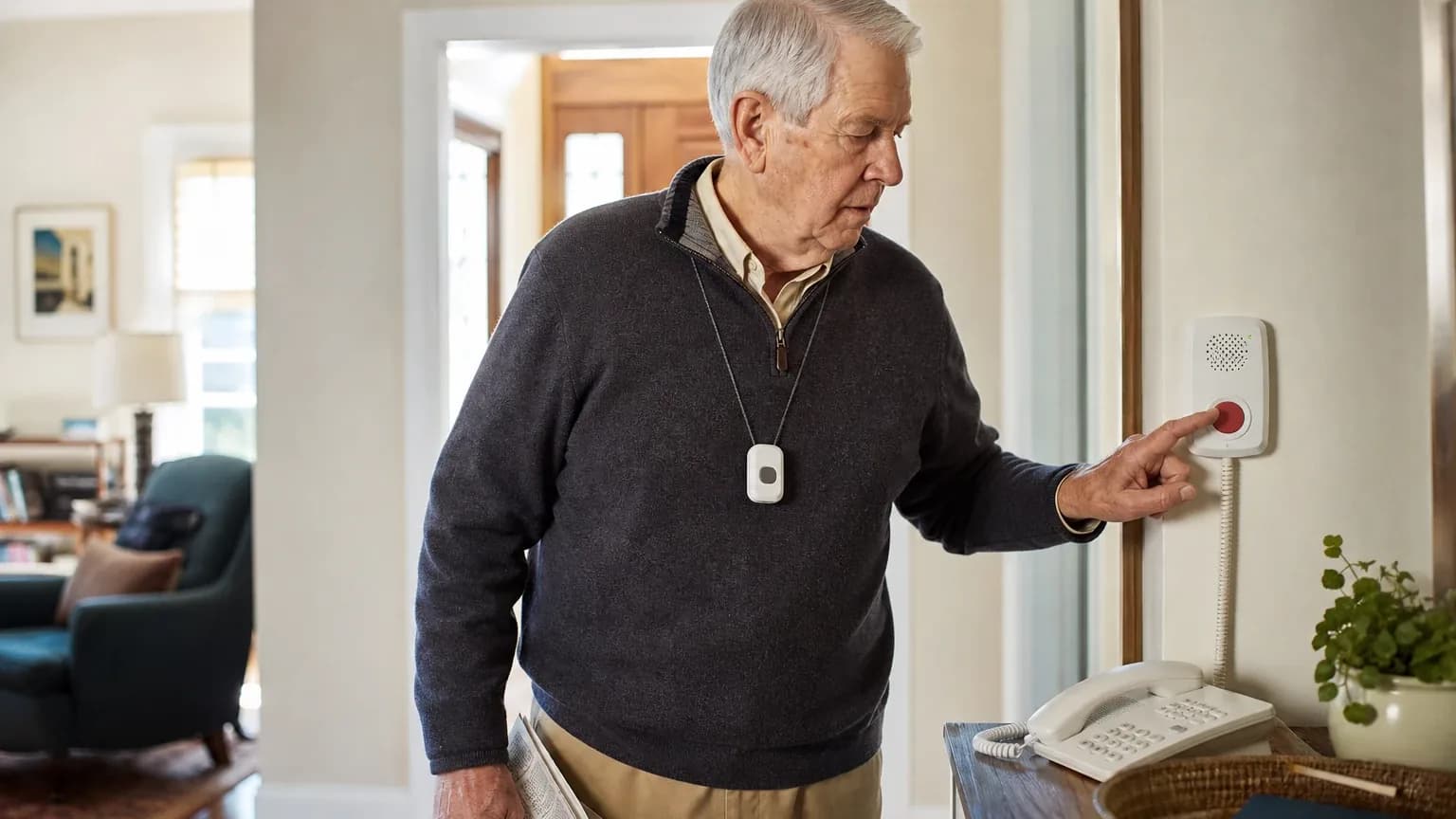
The most relevant product is the SOS Home Landline system, also referred to as the In-Home Landline plan. The system consists of a base station that connects to a telephone wall jack or compatible modem, plus a wearable help button that can be worn on a neck lanyard or wristband [3]. The base station provides two-way voice communication with a monitoring center.
Platforms used slightly different names for the same product: Anthropic, Grok, and OpenAI called it "SOS Home Landline," while DeepSeek called it "In-Home Landline," and Google and Kimi used "SOS Home Landline System" (relevant_product_or_plan_by_platform). These naming differences are cosmetic; the underlying product is the same landline-connected home system.
The system is designed for home-only use. It does not include GPS or mobile tracking, and it operates within the base station's coverage range [4].
What the AI Platforms Agreed About
Strong agreement: Low monthly cost and no equipment purchase
Four platforms with verified pricing data agreed that the SOS Home Landline is priced at $27.95 per month according to current official pricing [6]. The official Bay Alarm Medical pricing page lists this rate, and the console is leased at no equipment charge [6]. The official page also advertises no activation fees [6].
Strong agreement: No long-term contract required
Multiple platforms reported that Bay Alarm Medical does not require a long-term contract. Independent testing reports month-to-month billing with cancellation available at any time [11]. The official FAQ states that quarterly or annual plans may be prorated on cancellation, subject to shipping and promotional conditions [10].
Strong agreement: 1,000-foot wearable range
The wearable help button is advertised and independently described as operating up to 1,000 feet from the base unit [14]. The official user guide recommends testing the range throughout the residence and yard before relying on the system [17].
Strong agreement: USA-based 24/7 monitoring
Bay Alarm Medical states that monitoring is provided 24/7 from USA-based centers [6]. Independent sources describe operators as CSAA 5-Diamond certified [20].
Majority agreement: Water-resistant wearable button
Independent testing describes the help button as water-resistant and suitable for shower use, but not for submersion [21]. The pendant battery is rated for 2-5 years without recharging [22].
Majority agreement: No fall detection on the landline version
The standard SOS Home Landline package does not include automatic fall detection [6]. Independent reviewers confirm that fall detection is explicitly not available for the landline version and requires a cellular or mobile system [23].
Where the AI Platforms Disagreed or Were Uncertain
Pricing conflicts
Published pricing varies across sources. The current official pricing page lists $27.95 per month [25]. However, older independent reviews cite $24.95 per month [29], and one source cites $19.95 per month [31]. The most recent sources favor $27.95, and the official checkout price should be treated as controlling.
Trial period length
Sources conflict on the trial period. The official Bay Alarm Medical website and recent company documentation indicate a 15-day trial period [33], while several third-party reviewers state 30 days [35]. Buyers should confirm the current trial length directly with the company.
Backup battery duration
Independent coverage reports approximately 32 hours of base-station backup battery life [36]. However, this figure was not located in the current official pricing page or the reviewed official user guide [40]. One source reports 24-30 hours [42]. The current specification should be verified before purchase.
Response time measurements
Response-time reports vary because reviewers used different test designs. Independent testing reported average response times ranging from approximately 16 seconds to 31 seconds, with a broader range of 15-50 seconds across tests [41]. These are not guaranteed service levels.
Fit ratings
Four platforms rated Bay Alarm Medical a "strong" fit (OpenAI, Google, Grok) or "good" fit (Anthropic, DeepSeek), while two platforms (Perplexity, Kimi) rated the fit "uncertain" because their official-site retrievals failed and they could not verify current product details [45]. The uncertain ratings reflect verification gaps, not negative findings about the product.
Landline compatibility scope
The official page confirms landline compatibility is conditional on telco compatibility but does not provide a complete public list of supported telephone technologies or providers [25]. One platform reported the system is only compatible with analog landlines, not VoIP or fiber [42], while another reported it connects to standard landline phone jacks or VoIP modems [47]. Buyers with VoIP, DSL, cable, or fiber phone service should verify compatibility before ordering.
Use-Case-Specific Features and Capabilities
Landline compatibility
The SOS Home Landline connects through a telephone wall jack or compatible modem [48]. Bay Alarm Medical specifically instructs prospective buyers to call to confirm telco compatibility [50]. The system requires both a working telephone connection and household power to operate [51].
Base station range
The wearable help button operates up to 1,000 feet from the base unit, subject to the home's construction [52]. The official user guide recommends testing throughout the residence and yard [48].
Pendant durability and wearability
The package includes a personal help button with both a neck lanyard and wristband [48]. Independent testing describes the button as water-resistant and suitable for shower use, but not for submersion [55]. The pendant battery is rated for 2-5 years [56]. Exact current ingress-protection or drop-durability specifications are unclear.
Response center speed
Bay Alarm Medical states that monitoring is provided 24/7 from USA-based centers [50]. Independent testing reported average response times ranging from approximately 16 seconds to 31 seconds, with a broader range of 15-50 seconds across tests [55]. Operators are described as CSAA 5-Diamond certified [60].
Backup battery life
Independent coverage reports approximately 32 hours of base-station backup battery life [54]. One source reports 24-30 hours [64]. This figure was not verified in the current official materials reviewed [48].
Automatic fall detection
Automatic fall detection is not part of the standard landline package [50]. Independent reviewers confirm it is explicitly not available for the landline version and requires a cellular or mobile system [65]. The current official pricing page presents fall detection with the cellular SOS Home configuration and lists a separate $30 device fee for the fall-detection wearable [50].
Pricing, Fees, Contracts, and Ongoing Costs
Monthly monitoring fee
The current official pricing page lists SOS Home Landline at $27.95 per month [67]. Older independent reviews list $24.95 or $19.95, indicating that published rates have changed over time [71]. The official checkout price should be treated as controlling.
Equipment cost
The SOS Home console is leased at no equipment charge, with return required when the subscription ends [67]. The official page also advertises no activation fees [67]. The included wearable button is part of the home package [67]. Additional wearable buttons and accessories may cost extra; an independent review lists an additional help button at $39 [67].
Contract and cancellation terms
Independent testing reports no long-term contract and month-to-month cancellation [76]. The official FAQ states that quarterly or annual plans may be prorated on cancellation, subject to shipping and promotional free-month conditions [75]. Equipment must be returned after cancellation, and return shipping is buyer-paid [77]. Cancellation processing may take up to three weeks [77].
Additional fees
- Return shipping: Required and buyer-paid if cancelling after the trial period [77]
- Optional equipment warranty (Premier Protection Plan): $2.95-$4.95 per month
- Optional wall-mounted emergency buttons: $35 each
- Automatic fall detection: Not available on the landline version [79]
- Free-shipping promotions may require three months of paid service; free-month promotions may require eleven months of paid service [75]
Annual prepayment option
Annual prepayment of 12 months at $27.95 per month totals $335.40, with free shipping and one free month. Quarterly prepayment is also available at discounted rates.
Best Suited For
Bay Alarm Medical's SOS Home Landline is best suited for:
- Homebound or mostly home-based seniors with a functioning compatible landline
- Budget-conscious buyers prioritizing low monthly monitoring cost and no upfront equipment purchase
- Users who want a conventional pendant or wrist button connected to a two-way base station
- Buyers who prefer month-to-month terms without cancellation penalties
- Seniors in single-story homes or those who stay within 1,000 feet of home
- Buyers who value USA-based monitoring centers and quick response times
- Seniors who prefer simple, durable equipment over modern design
Probably Not Best Suited For
Bay Alarm Medical's SOS Home Landline is probably not best suited for:
- Seniors who regularly leave home and need GPS or mobile coverage
- Homes with uncertain telephone-line, modem, or power reliability
- Buyers requiring automatic fall detection specifically on the landline configuration
- Homes without established landline service
- Seniors experiencing frequent power outages requiring mobile backup
- Buyers seeking modern, sleek device aesthetics
- Buyers who want to own their equipment rather than lease it
When Another Option May Be Better
Consider another option in these situations:
- Cellular in-home system: Choose when the home has no reliable landline, uses an incompatible modem or phone service, or needs simpler installation without telephone-line integration.
- Mobile or GPS-enabled system: Choose when the senior spends meaningful time away from home.
- Medical Guardian or similar providers: Compare when independently tested response speed is the overriding priority and a higher equipment or monthly cost is acceptable.
- Automatic fall detection required: Choose a provider or configuration that includes fall detection without switching away from the landline-oriented setup, or upgrade to the cellular SOS Home configuration at $34.95 per month or higher.
- Cellular reliability during power outages: Choose a cellular system when the buyer is willing to pay $5-10 more monthly for cellular reliability during power outages.
- Areas with planned landline discontinuation: Choose a cellular or dual-connectivity system.
Questions to Verify Before Buying
Before purchasing the SOS Home Landline, verify the following with Bay Alarm Medical directly:
- Is the buyer's exact telephone service compatible? Confirm whether the specific modem, DSL, VoIP, cable, or fiber configuration works with SOS Home Landline.
- What is the current base-station backup battery duration? Confirm whether it is 32 hours and whether the system alerts the monitoring center when backup power is low.
- Does the current landline package support the buyer's preferred pendant, wristband, wall button, or additional-user configuration?
- What is the exact current monthly price, billing frequency, tax, shipping charge, and promotional eligibility at checkout?
- What is the exact trial period—15 days or 30 days? Confirm with the company directly, not marketing materials.
- What happens if the buyer cancels during a quarterly or annual term? Confirm prorated refunds, return shipping costs, and unreturned-equipment charges.
- Is automatic fall detection available with the landline system itself? Independent sources confirm it cannot be added to the landline version.
- What level of water resistance applies to the current wearable button? Confirm the current ingress-protection rating and warranty coverage.
- Can the buyer complete a range test in all required rooms, bathrooms, basement areas, yard areas, and outdoor paths before the trial ends?
- What is the procedure if the landline or household power fails during an emergency?
- What response protocol is followed if the user cannot speak through the base station? Confirm how caregivers or emergency contacts are notified.
- How long does equipment return processing take after shipping back? Clarify the three-week processing window and cancellation finalization timeline.
Final AI Consensus Verdict
Bay Alarm Medical's SOS Home Landline is a strong fit for the narrowly defined buyer: a senior who reliably stays at home, has compatible landline service, and wants a low-cost traditional monitored alert with no equipment purchase and flexible cancellation. The system delivers competitive pricing at $27.95 per month, no long-term contracts, a 1,000-foot wearable range, durable water-resistant equipment, and USA-based 24/7 monitoring.
The principal tradeoffs are significant. The landline version does not support automatic fall detection, requires both working telephone connectivity and household power, and has no cellular backup or GPS. The equipment is leased, not owned, and must be returned at the buyer's expense upon cancellation.
For this specific use case, Bay Alarm Medical ranks as a strong value option with clear trade-offs: maximum affordability and simplicity in exchange for limited features and equipment flexibility. Buyers without fall detection needs and with confirmed landline service should seriously consider this system. Buyers requiring fall detection or lacking reliable landlines should evaluate the cellular version or competing providers.
For a broader comparison of landline-based options, see the Landline-Based Emergency Monitoring consensus index. You can also browse other medical alert systems in the category directory.
How This Review Was Produced
This review was produced by aggregating fit-research responses from seven AI platforms: Anthropic, DeepSeek, Google, Grok, Kimi, OpenAI, and Perplexity. Each platform evaluated Bay Alarm Medical's SOS Home Landline against the category criteria for landline-based emergency monitoring, which include landline compatibility, base station range, pendant durability, response center speed, backup battery life, monthly monitoring fee, equipment cost, and contract terms.
The research date for this study is 2026-08-07. Six platforms conducted their research on this date; one platform (DeepSeek) reported a research date of 2025-01-30, which is disclosed as a methodology limitation.
Each platform supplied citations to company-owned and independent sources. The evidence audit identified 20 deduplicated sources: 14 independent and 6 company-owned. Company-owned sources include Bay Alarm Medical's official pricing page, user guide, and product pages. Independent sources include Forbes Health, The Senior List, NCOA, PCMag, SafeHome.org, SeniorLiving.org, SeniorSite.org, SeniorsList.com, and others.
Methodology Limitations
- Platform-reported dates differ: DeepSeek reported a research date of 2025-01-30, while the authoritative run date is 2026-08-07. Pricing and product details from DeepSeek may be stale (required_disclosures).
- Official-site retrieval failures: Perplexity and Kimi reported that their official-site retrievals failed, preventing verification of current product details. Their "uncertain" fit ratings reflect verification gaps, not negative findings [81].
- Pricing conflicts unresolved: Published prices range from $19.95 to $27.95 per month. The most recent sources favor $27.95, but buyers should confirm the current checkout price.
- Battery backup unverified in official materials: The 32-hour backup battery figure appears in independent coverage but was not located in the current official pricing page or the reviewed official user guide.
- User guide dated 2024: The reviewed official user guide is dated 2024, so hardware and battery specifications may have changed by 2026.
- URLs not independently validated: The supplied URLs were collected from platform responses and were not independently validated by the writer stage (required_disclosures).
- AI agreement does not prove quality: Agreement among AI platforms reflects consistency in their assessments, not independent verification of product performance.
- No personal testing: This review does not include personal testing of the equipment, customer experience, or guaranteed performance claims.
Sources
Company-Owned Sources
- Medical Alert Systems for Seniors: https://www.bayalarmmedical.com/
- Fall Detection Devices for Seniors: https://www.bayalarmmedical.com/medical-alert-system/automatic-fall-detection/
- In-Home Landline Medical Alert System: https://www.bayalarmmedical.com/medical-alert-systems/in-home/landline/
- Medical Alert Costs | Compare Us to Life Alert and Other Providers: https://www.bayalarmmedical.com/pricing/
- Dashboard Cancellation Instructions: https://www.bayalarmmedical.com/senior-resource-guide/dashboard-cancellation-instructions/
- Bay Alarm Medical SOS Home User Guide: https://www.bayalarmmedical.com/wp-content/uploads/Web_2024_0220_BAM_SOS_Home_User_Guide.pdf
Additional AI research evidence82 records
- AI research evidence record openai:c2
- AI research evidence record google:c2
- AI research evidence record openai:c2
- AI research evidence record openai:c3
- AI research evidence record openai:c4
- AI research evidence record openai:c1
- AI research evidence record anthropic:c3
- AI research evidence record grok:c2
- AI research evidence record google:c1
- AI research evidence record openai:c8
- AI research evidence record openai:c6
- AI research evidence record anthropic:c9
- AI research evidence record anthropic:c10
- AI research evidence record openai:c3
- AI research evidence record openai:c4
- AI research evidence record anthropic:c4
- AI research evidence record openai:c2
- AI research evidence record deepseek:c2
- AI research evidence record grok:c1
- AI research evidence record anthropic:c6
- AI research evidence record openai:c5
- AI research evidence record anthropic:c5
- AI research evidence record anthropic:c11
- AI research evidence record anthropic:c12
- AI research evidence record openai:c1
- AI research evidence record anthropic:c3
- AI research evidence record grok:c2
- AI research evidence record google:c1
- AI research evidence record openai:c7
- AI research evidence record anthropic:c2
- AI research evidence record deepseek:c3
- AI research evidence record google:c4
- AI research evidence record openai:c8
- AI research evidence record anthropic:c10
- AI research evidence record anthropic:c9
- AI research evidence record anthropic:c4
- AI research evidence record anthropic:c5
- AI research evidence record google:c5
- AI research evidence record grok:c4
- AI research evidence record openai:c2
- AI research evidence record openai:c5
- AI research evidence record deepseek:c1
- AI research evidence record openai:c6
- AI research evidence record google:c3
- AI research evidence record perplexity:c1
- AI research evidence record kimi:c1
- AI research evidence record google:c2
- AI research evidence record openai:c2
- AI research evidence record google:c2
- AI research evidence record openai:c1
- AI research evidence record anthropic:c13
- AI research evidence record openai:c3
- AI research evidence record openai:c4
- AI research evidence record anthropic:c4
- AI research evidence record openai:c5
- AI research evidence record anthropic:c5
- AI research evidence record deepseek:c2
- AI research evidence record openai:c6
- AI research evidence record google:c3
- AI research evidence record anthropic:c6
- AI research evidence record grok:c1
- AI research evidence record google:c5
- AI research evidence record grok:c4
- AI research evidence record deepseek:c1
- AI research evidence record anthropic:c11
- AI research evidence record anthropic:c12
- AI research evidence record openai:c1
- AI research evidence record anthropic:c3
- AI research evidence record grok:c2
- AI research evidence record google:c1
- AI research evidence record openai:c7
- AI research evidence record anthropic:c2
- AI research evidence record deepseek:c3
- AI research evidence record anthropic:c8
- AI research evidence record openai:c8
- AI research evidence record openai:c6
- AI research evidence record anthropic:c9
- AI research evidence record anthropic:c10
- AI research evidence record anthropic:c11
- AI research evidence record anthropic:c12
- AI research evidence record perplexity:c1
- AI research evidence record kimi:c1
Independent Sources
- How To Cancel Your Medical Alert System: https://bestreviews.net/how-to-cancel-your-medical-alert-system/
- Bay Alarm Medical Review 2026 | Pricing Plans & Cost Breakdown: https://medicalalertreview.com/bay-alarm-medical-review
- Bay Alarm Medical Review 2026: Hidden Costs and Real Response Times: https://seniorsite.org/resource/bay-alarm-medical-review-2026-hidden-costs-and-real-response-times/
- Bay Alarm SOS Home System Review: Tried And Tested: https://www.forbes.com/health/medical-alert-systems/bay-alarm-sos-home-medical-alert-review/
- Bay Alarm Medical Reviews & Pricing 2026: https://www.medicalalertadvice.com/bay-alarm-medical-reviews/
- Bay Alarm Medical Review: 8 Pros + 2 Cons for this Top-Rated System: https://www.medicalalertbuyersguide.org/medical-alert-system/bay-alarm-medical-review/
- Bay Alarm Medical: Our Take on This Popular Brand: https://www.ncoa.org/product-resources/medical-alert-systems/bay-alarm-medical-review/
- Bay Alarm Medical SOS Home - Review 2026: https://www.pcmag.com/
- Bay Alarm Medical vs. Medical Guardian 2026: https://www.safehome.org/compare/medical-guardian-vs-bay-alarm-medical/
- Bay Alarm Medical Alert Systems Cost & Packages: https://www.safehome.org/medical-alert-systems/bay-alarm-medical/
- Bay Alarm Medical Cost and Monthly Pricing in 2026: https://www.seniorliving.org/medical-alert-systems/bay-alarm-medical/
- Bay Alarm Medical Alert System Review 2026: https://www.seniorliving.org/medical-alert-systems/bay-alarm-medical/reviews/
- Bay Alarm Medical Alert System Review 2026: https://www.seniorslist.com/medical-alert-systems/bay-alarm-medical/
- Bay Alarm Medical Review, Tested by Caregivers: https://www.theseniorlist.com/medical-alert-systems/bay-alarm-medical/reviews/
Additional AI research evidence82 records
- AI research evidence record openai:c2
- AI research evidence record google:c2
- AI research evidence record openai:c2
- AI research evidence record openai:c3
- AI research evidence record openai:c4
- AI research evidence record openai:c1
- AI research evidence record anthropic:c3
- AI research evidence record grok:c2
- AI research evidence record google:c1
- AI research evidence record openai:c8
- AI research evidence record openai:c6
- AI research evidence record anthropic:c9
- AI research evidence record anthropic:c10
- AI research evidence record openai:c3
- AI research evidence record openai:c4
- AI research evidence record anthropic:c4
- AI research evidence record openai:c2
- AI research evidence record deepseek:c2
- AI research evidence record grok:c1
- AI research evidence record anthropic:c6
- AI research evidence record openai:c5
- AI research evidence record anthropic:c5
- AI research evidence record anthropic:c11
- AI research evidence record anthropic:c12
- AI research evidence record openai:c1
- AI research evidence record anthropic:c3
- AI research evidence record grok:c2
- AI research evidence record google:c1
- AI research evidence record openai:c7
- AI research evidence record anthropic:c2
- AI research evidence record deepseek:c3
- AI research evidence record google:c4
- AI research evidence record openai:c8
- AI research evidence record anthropic:c10
- AI research evidence record anthropic:c9
- AI research evidence record anthropic:c4
- AI research evidence record anthropic:c5
- AI research evidence record google:c5
- AI research evidence record grok:c4
- AI research evidence record openai:c2
- AI research evidence record openai:c5
- AI research evidence record deepseek:c1
- AI research evidence record openai:c6
- AI research evidence record google:c3
- AI research evidence record perplexity:c1
- AI research evidence record kimi:c1
- AI research evidence record google:c2
- AI research evidence record openai:c2
- AI research evidence record google:c2
- AI research evidence record openai:c1
- AI research evidence record anthropic:c13
- AI research evidence record openai:c3
- AI research evidence record openai:c4
- AI research evidence record anthropic:c4
- AI research evidence record openai:c5
- AI research evidence record anthropic:c5
- AI research evidence record deepseek:c2
- AI research evidence record openai:c6
- AI research evidence record google:c3
- AI research evidence record anthropic:c6
- AI research evidence record grok:c1
- AI research evidence record google:c5
- AI research evidence record grok:c4
- AI research evidence record deepseek:c1
- AI research evidence record anthropic:c11
- AI research evidence record anthropic:c12
- AI research evidence record openai:c1
- AI research evidence record anthropic:c3
- AI research evidence record grok:c2
- AI research evidence record google:c1
- AI research evidence record openai:c7
- AI research evidence record anthropic:c2
- AI research evidence record deepseek:c3
- AI research evidence record anthropic:c8
- AI research evidence record openai:c8
- AI research evidence record openai:c6
- AI research evidence record anthropic:c9
- AI research evidence record anthropic:c10
- AI research evidence record anthropic:c11
- AI research evidence record anthropic:c12
- AI research evidence record perplexity:c1
- AI research evidence record kimi:c1
Verify this research
Review the study details behind this page or download the public machine-readable verification record.
- Study date
- Aug 7, 2026
- Platforms analyzed
- 7
- Source records
- 20
- Ranking mentions
- 6 of 7
- Platform share
- 86%
- Final consensus rank
- #1
Research trail and source mix
Platforms
openai, anthropic, deepseek, grok, perplexity, kimi, google
Source mix
14 independent · 6 company-owned
Evidence support
18 direct · 2 partial
Important limitation
Use the run research_date as the study date. Platform-reported dates are provenance metadata and do not independently prove freshness.
Source snapshot SHA-256 9d74210d867d5b600cfec2ad0a71afe1fa8f489ac71162efd504bac9832fe083