
Answer Capsule
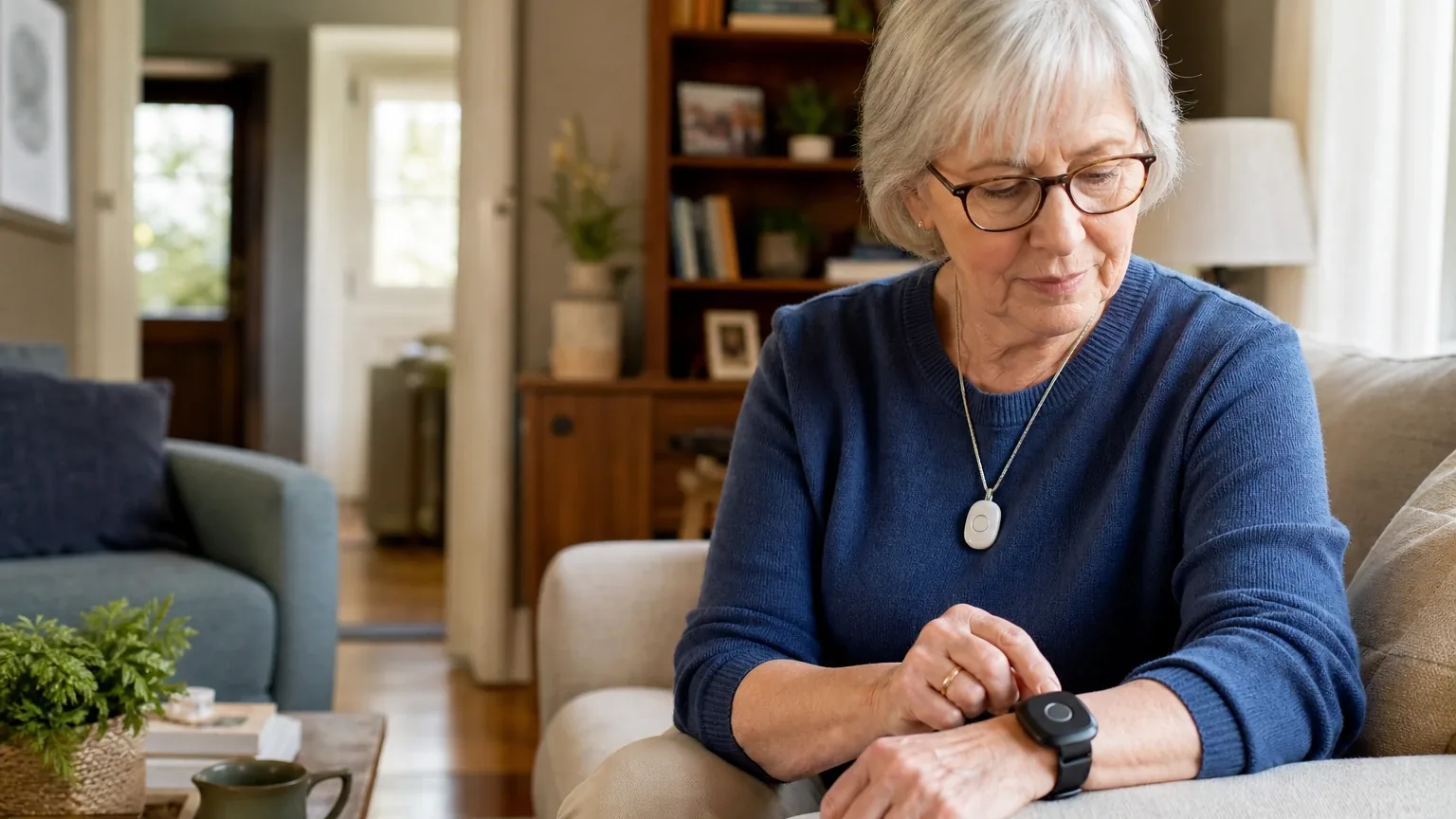
Medical Guardian is a good fit for older adults living alone who want professional 24/7 monitoring, a wearable with GPS and cellular coverage, caregiver visibility through the MyGuardian app, and optional fall detection. All 7 platforms that named it in the ranking stage included it, a 100% share of included platform responses, at an average listed rank of 1.57 and a best rank of 1. The strongest reason to consider it is the combination of fast independently reported response times, a small convertible wearable, and remote caregiver monitoring. The main limitation is that fall detection is an optional add-on with accuracy that varies widely by model in independent testing, and public pricing is inconsistent across pages.
Research Snapshot
| Field | Finding |
|---|---|
| Platform mentions in ranking stage | 7 of 7 included platforms (anthropic, deepseek, google, grok, kimi, openai, perplexity) |
| Share of included platform responses | 100% |
| Average listed rank | 1.57 |
| Best listed rank | 1 |
| Relevant product/model/plan | Guardian Flex wearable with optional fall detection and MyGuardian caregiver app; MGMini Lite is a lower-profile mobile alternative |
| Overall use-case fit | Good (platform fit ratings: strong from google and grok; good from anthropic, deepseek, openai, and perplexity; mixed from kimi) |
| Research date | 2026-09-24 |
What Changed Since July 2026
The company remained at No. 1, and platform mentions increased from 6 to 7. Between July 2026 and September 2026, the buyer-facing substance of this Medical Guardian fit review changed materially, mainly through a substantially rewritten and expanded evidence base. The description now centers on the Guardian Flex wearable with optional fall detection and the MyGuardian caregiver app, and a new passage identifying the most relevant product for living alone and solo aging was added. Reported pricing and measurements shifted noticeably: figures such as $39.95 per month and a 22-second response time are newly reported, while several earlier prices and measurements are no longer repeated here. Buyer fit, limitations, and the absence of a recommended configuration remain broadly consistent with the prior review, so the practical guidance is similar even though the supporting evidence has been refreshed. Article differences do not by themselves prove that the company changed its offering or price.
The July 2026 review preserves the earlier article for reference.
Why Medical Guardian Qualified for This Study
Questions This Section Answers
- Why did Medical Guardian qualify for the Living Alone & Solo Aging medical alert ranking?
- How many AI platforms named Medical Guardian for solo-aging buyers, and at what rank?
Medical Guardian qualified because every platform that named a medical alert provider for this use case named it. It appeared in 7 of 7 included platform responses, a 100% share, with an average listed rank of 1.57 and a best rank of 1 [1]. The study required at least 2 platform mentions; Medical Guardian exceeded that threshold by a wide margin.
The qualification is not evidence of product quality. It reflects that platforms repeatedly surfaced the same company when asked about medical alert systems for people living alone. Independent reviewers cited in the platform responses also ranked it highly: NCOA placed it first overall with a 9.9/10 score (anthropic:1-15, anthropic:27-9), and SeniorLiving ranked it second (anthropic:3-12).
Official-site retrieval failed for one or more mentions and that company-name variants were collapsed onto one canonical brand before the minimum-mentions threshold was applied. Those normalization steps affect how mentions were counted, not how the product performs.
The Product, Model, Plan, or Service Most Relevant to Living Alone & Solo Aging
Questions This Section Answers
- Which Medical Guardian device is best for a senior who lives alone and leaves home regularly?
- Is Guardian Flex or MGMini Lite the better Medical Guardian choice for solo aging?
Guardian Flex is the most directly relevant Medical Guardian option for solo aging. It is a mobile wearable with GPS, two-way voice communication, cellular connectivity, water resistance, step tracking, and optional automatic fall detection, with up to 5 days of battery life claimed [5]. It is described as smaller than a key fob at 1.5 ounces and 1.5 by 1.8 inches, available in black, gold, and silver, and wearable as a necklace, wristband, or belt/purse clip (anthropic:5-2, anthropic:30-14). Google's response described it as 30% smaller than prior-generation wearables with tool-free convertible wearing options [7].
MGMini Lite is the lower-profile alternative. It is a smaller mobile device with fall detection available as an add-on, and Medical Guardian support recommends daily charging for it [8]. Fall detection on MGMini Lite is listed at $10 per month, with other add-ons including OnGuard Alerts at $2.99 per month, a lockbox at $2.99 per month, a protection plan at $6.99 per month, and calendar reminders at $3.99 per month [8].
Platforms also named Mobile 2.0 and Home 2.0 with optional fall detection and caregiver app access [5]. The checked public sources did not establish current pricing and specifications for every listed variant, so buyers should treat the specific model quoted at checkout as controlling.
What the AI Platforms Agreed About
Questions This Section Answers
- What do AI platforms agree Medical Guardian does well for seniors living alone?
- Is Medical Guardian's response time actually fast for solo-aging emergencies?
The clearest agreement is on emergency response speed. Independent testing cited across platforms reported averages well under the 45-second industry standard: SafeHome reported 22 seconds (anthropic:21-2), NCOA reported 29 seconds across all devices and 20 seconds for MGMove (anthropic:19-1), Senior List reported 8-second average operator answer time (anthropic:22-1), and SeniorLiving reported 15 seconds for Guardian Flex [11]. Medical Guardian itself advertises responses as fast as 8 to 10 seconds [12].
Platforms also agreed on device breadth and caregiver visibility. The MyGuardian portal is described as giving caregivers access to activity levels, location, reminders, battery status, cellular signal, and step count, plus a device locator that makes a misplaced Guardian Flex announce "I'm over here" [13]. Multiple platforms described the app as designed for seniors with large text and straightforward navigation (anthropic:43-4).
A third area of agreement is monitoring-center certification. Medical Guardian states its monitoring centers operate 24/7 and that operators hold TMA Five Diamond and ESA Security certifications [12]; independent reviewers also list TMA Five Diamond, ESA Security, FM Approved, and UL Listed certifications (anthropic:10-8). These are company and reviewer statements, not independent performance guarantees for any individual emergency.
Where the AI Platforms Disagreed or Were Uncertain
Questions This Section Answers
- How accurate is Medical Guardian fall detection, and do the platforms agree?
- Does Medical Guardian have a contract or minimum commitment for solo-aging buyers?
Fall detection accuracy is the sharpest disagreement. SeniorLiving testing found Guardian Flex correctly recognized 8 of 10 simulated falls, or 80% (anthropic:42-6, grok:4). SeniorsList testing found the MGMini detected only 1 of 10 (anthropic:46-1). Medical Guardian states fall detection may miss falls or create false alerts and recommends pressing the help button whenever possible [15]. No independently verified, model-specific sensitivity or false-alarm rate was located in the checked sources.
Contract terms are also contested. Medical Guardian's current terms state automatic renewal and a 90-day minimum service commitment [16]. U.S. News reported that all three of its testers were able to cancel and return equipment for prorated refunds, suggesting the minimum may not be enforced in practice (anthropic:13-12, anthropic:13-13). SafeHome states Medical Guardian does not require contracts (anthropic:12-6), while DeepSeek reported that some promotional rates may require a 6-month commitment [18]. Buyers should get written confirmation of the term attached to their specific offer.
Caregiver alert behavior is a third uncertainty. U.S. News testing found that when fall detection activated, the alarm logged into the app for caregiver viewing but the caregiver did not receive an immediate alert notification (anthropic:38-6). The same tester reported the app's location tracking failed to load at a park and a big-box store, though previously visited locations loaded once the user returned home (anthropic:38-7). Other reviewers described location tracking as accurate and impressive (anthropic:39-7).
Pricing is inconsistent across public pages. Guardian Flex was displayed at $39.95 per month on an annual plan and $44.95 per month on a separate promotional page, with device pricing of $37.49 on one page and a free-device offer on another [19]. Independent sources cite ranges from $27.95 to $49.95 per month depending on device and billing cycle [21]. DeepSeek's research date was 2026-01-27, months earlier than the other platforms, so its pricing figures may be stale.
Use-Case-Specific Features and Capabilities
Questions This Section Answers
- Does Medical Guardian's MyGuardian app give adult children enough remote monitoring for a parent living alone?
- What is Medical Guardian's in-home range and mobile coverage for a solo-aging user?
For a solo-aging adult who leaves home, the mobile feature set matters most. Guardian Flex uses Verizon 4G LTE with GPS and Wi-Fi-assisted location, and Medical Guardian claims the widest GPS coverage of any medical alert (anthropic:3-2, anthropic:6-5). Google's response described cellular fallback through OmniSIM using both AT&T and Verizon networks [22]. DeepSeek reported Mobile 2.0 operates on AT&T 4G LTE with GPS and Wi-Fi backup [23].
For in-home coverage, Medical Guardian states at-home systems provide up to 1,400 feet of protection, and an NCOA-based company summary repeats the 1,400-foot figure for MGHome [24]. DeepSeek reported Home 2.0 range at approximately 600 feet from the base station [23], and a Mobile 2.0 owner's manual lists 500 feet of range from the device (anthropic:31-16). These figures conflict and should be verified for the specific system quoted.
Battery life varies by model. Guardian Flex is advertised at up to 5 days [26]. MGMini Lite support recommends daily charging [27]. MGMove smartwatch battery is reported at 24 hours with daily charging required (anthropic:1-15). DeepSeek reported Mobile 2.0 at up to 30 days standby [23]. A solo-aging user who forgets to charge loses protection, so the charging routine is a real operational factor.
Caregiver app capabilities include location, battery, cellular signal, step count, activity reports, alert history, contact management, and medication or appointment reminders [28]. Location updates for mobile devices are described as hourly rather than continuous real-time tracking (anthropic:3-4).
Pricing, Fees, Contracts, and Ongoing Costs
Questions This Section Answers
- How much does Medical Guardian cost per month for a solo-aging buyer, and what add-on fees apply?
- What cancellation, return, and non-return fees apply to a Medical Guardian plan?
Medical Guardian is priced in the mid-to-high tier of the medical alert market. Independent sources cite monthly monitoring from $31.95 to $49.95 depending on device, with at-home systems starting lower than mobile systems and the MGMove smartwatch at the top (anthropic:14-3). DeepSeek reported Home 2.0 from $29.95 per month, Mobile 2.0 from $39.95, and Guardian Flex from $44.95 [30]. Perplexity reported Guardian Flex listed from $39.95 per month on Medical Guardian's fall-detection page [31].
One-time equipment fees are reported at approximately $149.95 for most devices and $199.95 for the MGMove watch as of July 2026 (anthropic:17-6). Google reported hardware fees of $149.95 to $199.95 with promotions occasionally waiving them [32]. Guardian Flex device pricing was displayed at $37.49 on one page and as free with a qualifying monitoring plan on another [33].
Add-ons raise the effective monthly cost. Fall detection is $10 per month on eligible plans [35]. Caregiver location tracking is reported at $2.99 per month on most systems but free with MGMini (anthropic:12-11). The optional protection plan is $6.99 per month and covers accidental damage, loss, theft, and unlimited battery replacements (anthropic:12-11). A lockbox and wall button are each listed at $2.99 per month [35].
Contract and cancellation terms carry real financial exposure. Current terms state automatic renewal, a 90-day minimum service commitment, and prepaid-plan refund conditions [36]. Leased devices must be returned, cancellation processing can take up to 30 days, a $350 non-return charge may apply, and prepaid refunds may be reduced by a restocking fee of up to $50 [38]. The current terms page states a 15-day return window for qualifying unactivated purchases [36]. Independent testers reported prorated refunds on cancellation despite the stated minimum (anthropic:13-13, anthropic:11-20).
Medical Guardian systems are typically not covered by standard health insurance, though some Medicare Advantage, long-term care, or state Medicaid programs may reimburse (anthropic:2-11).
Best Suited For
Questions This Section Answers
- Who is Medical Guardian best suited for among older adults living alone?
- Is Medical Guardian worth it for an active senior who wants caregiver location tracking?
Medical Guardian is best suited for solo-aging adults who regularly leave home and want one wearable with cellular connectivity, GPS, two-way voice, and optional fall detection [39]. It also fits adult children who need MyGuardian visibility into a parent's location, activity, reminders, and emergency alerts [40].
Buyers who prioritize independently reported fast monitoring response and broad in-home range are a third fit group [41]. Users who value month-to-month flexibility and no activation fees also align with the reported terms (anthropic:12-6, anthropic:13-12). Google rated the fit strong specifically because the Guardian Flex form factor addresses senior resistance to bulky, clinical-looking buttons [42].
Probably Not Best Suited For
Questions This Section Answers
- Who should not choose Medical Guardian for Living Alone & Solo Aging?
- Is Medical Guardian a poor choice for a senior with high fall risk who needs guaranteed detection?
Medical Guardian is probably not the best choice for buyers seeking the lowest total cost or no minimum commitment. Baseline monitoring starts around $31.95 per month, fall detection adds $10 per month, and the protection plan adds $6.99 per month, with equipment fees of $149.95 to $199.95 upfront (anthropic:14-3, anthropic:17-6, anthropic:10-3, anthropic:12-11).
It is also a weaker fit for users with high fall risk who need guaranteed automatic detection. Independent tests show accuracy ranging from 10% to 80% depending on model, and the company acknowledges fall detection does not work 100% of the time (anthropic:46-1, anthropic:42-6, anthropic:45-9). Kimi rated the overall fit mixed, citing a cited 97% non-use rate for pendant alarms in emergencies and the wearable-adherence problem that affects the whole category (kimi:imalive-living-alone).
Other poor-fit situations include unreliable cellular coverage at the user's home and travel locations, unwillingness to charge a mobile wearable regularly, and a need for guaranteed real-time caregiver push notifications on fall detection [43].
When Another Option May Be Better
Questions This Section Answers
- What is a better alternative to Medical Guardian for a budget-conscious solo-aging buyer?
- When should a solo-aging buyer choose a check-in app or landline system instead of Medical Guardian?
A competing provider may be better when the buyer prioritizes a shorter or absent minimum commitment, simpler cancellation, or lower all-in monthly cost [44]. Bay Alarm Medical is cited as better for budget-conscious buyers at $27.95 per month versus Medical Guardian's $31.95 baseline, with lower equipment costs (anthropic:16-5, anthropic:14-3). SafeWise also recommends Bay Alarm Medical for simpler, more affordable systems (anthropic:16-5).
A home-focused system from another provider may be better when the user rarely leaves home and wants a simpler base-station-and-pendant setup [45]. A landline-compatible provider may be better when cellular coverage is unreliable or a landline-based home system is specifically required [45].
App-based check-in services may be better for solo agers who resist wearing medical jewelry or want proactive daily wellness confirmation rather than emergency-only monitoring. Kimi's response cited I'm Alive, Snug Safety, Iamfine, and AloneAssist as lower-cost or check-in-oriented alternatives, with category benchmarks of $30 to $50 per month for monitored hardware versus free to $14.99 per month for app-only services (kimi:imalive-living-alone, kimi:imalive-co). These alternatives alert personal contacts rather than a staffed monitoring center, which is a meaningful tradeoff.
Questions to Verify Before Buying
Questions This Section Answers
- What should a buyer confirm with Medical Guardian before signing a contract for a solo-aging parent?
- Which Medical Guardian details are inconsistent across public sources and need written confirmation?
The exact monthly, quarterly, or annual total for the selected device, including fall detection, taxes, shipping, and all promotions, should be confirmed in writing [46]. Whether fall detection is included or billed separately for the exact Guardian Flex or MGMini Lite configuration should also be confirmed [48].
Buyers should ask what cellular networks and coverage checks apply at the older adult's home, usual travel locations, and outdoor areas [49]. They should confirm the device's expected battery life under normal use with GPS, cellular connectivity, and fall detection enabled [50].
Caregiver notification behavior needs direct verification: whether the caregiver receives automatic location, low-battery, missed-charge, fall, and emergency notifications, and which of those require OnGuard Alerts [51]. Buyers should also confirm whether the device is purchased or leased and what return, restocking, shipping, and non-return charges apply [52].
Finally, buyers should confirm whether the 90-day minimum applies to their specific promotion and purchase channel, how false fall alerts are canceled, what happens if the user cannot speak with the monitoring center, and what independent testing supports the exact device's fall-detection performance [53].
Final AI Consensus Verdict
Medical Guardian is a good fit for solo-aging buyers who value professional 24/7 monitoring, a wearable mobile device, caregiver visibility, and optional fall detection. All 7 platforms that named it in the ranking stage included it, at an average listed rank of 1.57 and a best rank of 1. Guardian Flex with fall detection is the strongest match among the named options.
It is not the clearest best choice for buyers focused on minimum cost, no commitment, maximum pricing simplicity, or independently verified fall-detection performance. The main tradeoffs are equipment and recurring fees, a 90-day minimum commitment under current terms, device-return obligations for leased equipment, and fall detection that is not guaranteed to detect every fall. Buyers should confirm the final price, cellular coverage, battery routine, and cancellation obligations before purchasing.
How This Review Was Produced
This review evaluates Medical Guardian only for the Living Alone & Solo Aging use case in the United States. It draws on fit-research responses from 7 AI platforms: anthropic, deepseek, google, grok, kimi, openai, and perplexity. Each platform was asked to assess fit, name relevant products or plans, describe pricing and terms, and identify limitations and alternatives.
The ranking stage counted how many platforms named Medical Guardian when identifying medical alert providers for this use case. Fit ratings were recorded per platform: strong from google and grok; good from anthropic, deepseek, openai, and perplexity; mixed from kimi. All platform responses are platform-reported and were not independently verified by the writer stage.
Methodology Limitations
Platform-reported research dates differ from the authoritative run date of 2026-09-24. DeepSeek's response is dated 2026-01-27, roughly eight months earlier, so its pricing and product details may be stale. Platform-reported dates are provenance metadata and do not independently prove freshness.
All included platforms evaluated fit, but the platform-mentions count reflects only platforms that named the entity during ranking discovery. The supplied URLs were collected from platform responses and were not independently validated by the writer stage. Citations are platform-reported evidence, not independently verified facts.
Several material conflicts remain unresolved and were not guessed at: Guardian Flex pricing varies across pages, response-time metrics are not directly comparable, battery-life statements vary by model, and current pricing and specifications were not established for every listed variant. No independently verified, model-specific fall-detection sensitivity or false-alarm rate was located. Official-site retrieval failed for one or more mentions and that company-name variants were collapsed onto one canonical brand before the minimum-mentions threshold was applied.
For the broader category context behind this fit assessment, see the Living Alone & Solo Aging consensus index, which aggregates the full ranking across providers.
Buyers comparing this result against the wider market can also review the medical alert systems category directory for related provider evaluations.
Sources
Company-Owned Sources
- I'm Alive — Personal Safety & Fall Detection App for People Who Live Independently: https://imalive.co/
- Medical Alert Systems & Monitoring Devices | Medical Guardian: https://www.medicalguardian.com/
- Caregivers: https://www.medicalguardian.com/caregivers
- Fall Detection | Medical Guardian: https://www.medicalguardian.com/fall-detection
- How It Works: Award-Winning Medical Emergency Alert System: https://www.medicalguardian.com/how-medical-alert-systems-work
- Legal Information About Medical Guardian Services: https://www.medicalguardian.com/legal/terms
- Best Medical Alert Systems and Medicare Coverage in 2026: https://www.medicalguardian.com/medical-alert-blog/health-wellness/best-medical-alert-systems-covered-by-medicare
- Medical Guardian Fall Detection: https://www.medicalguardian.com/medical-alert-systems/fall-detection
- Paid Media Guardian Flex LP: https://www.medicalguardian.com/medical-alert-systems/guardian-flex-fall-detection/monthly-free-device
- Medical Guardian Home 2.0 and Mobile 2.0: https://www.medicalguardian.com/medical-alert-systems/home-2-0
- Medical Alerts Compared: https://www.medicalguardian.com/medical-alerts-compared
- Medical Guardian Pricing: https://www.medicalguardian.com/pricing
- Guardian Flex Support: https://www.medicalguardian.com/support/guardian-flex/
- MGMini Lite Gen. 2 - MG Support: https://www.medicalguardian.com/support/mgmini-lite-gen2/
- Medical Guardian Terms and Conditions: https://www.medicalguardian.com/terms-and-conditions
Additional AI research evidence53 records
- AI research evidence record openai:c1
- AI research evidence record google:1.1.2
- AI research evidence record perplexity:c2
- AI research evidence record deepseek:c1
- AI research evidence record openai:c1
- AI research evidence record openai:c2
- AI research evidence record google:2.1.5
- AI research evidence record openai:c5
- AI research evidence record deepseek:c4
- AI research evidence record perplexity:c5
- AI research evidence record google:1.1.2
- AI research evidence record openai:c3
- AI research evidence record openai:c6
- AI research evidence record google:2.1.1
- AI research evidence record openai:c3
- AI research evidence record openai:c8
- AI research evidence record perplexity:c1
- AI research evidence record deepseek:c7
- AI research evidence record openai:c1
- AI research evidence record openai:c7
- AI research evidence record perplexity:c8
- AI research evidence record google:1.1.3
- AI research evidence record deepseek:c4
- AI research evidence record openai:c3
- AI research evidence record openai:c4
- AI research evidence record openai:c2
- AI research evidence record openai:c5
- AI research evidence record openai:c6
- AI research evidence record perplexity:c5
- AI research evidence record deepseek:c6
- AI research evidence record perplexity:c2
- AI research evidence record google:1.2.4
- AI research evidence record openai:c1
- AI research evidence record openai:c7
- AI research evidence record openai:c5
- AI research evidence record openai:c8
- AI research evidence record perplexity:c1
- AI research evidence record openai:c9
- AI research evidence record openai:c1
- AI research evidence record openai:c6
- AI research evidence record openai:c3
- AI research evidence record google:2.1.5
- AI research evidence record openai:c2
- AI research evidence record openai:c8
- AI research evidence record openai:c3
- AI research evidence record openai:c1
- AI research evidence record openai:c7
- AI research evidence record openai:c5
- AI research evidence record openai:c3
- AI research evidence record openai:c2
- AI research evidence record openai:c6
- AI research evidence record openai:c9
- AI research evidence record openai:c8
Independent Sources
- Living Alone Safely: Tips, Stats & Check-In Guide (2026: https://imalive.co/living-alone
- MEDICAL GURDIAN Mobile 2.0 Powerful Sleek Fastest Connection Speed Ever Owner's Manual - Manuals+: https://manuals.plus/medical-gurdian/mobile-2-0-powerful-sleek-fastest-connection-speed-ever-manual
- Medical Guardian Cost 2026: $27.95–$46.95/mo + Fees, Explained: https://medicalalertreview.com/medical-guardian-cost
- Medical Guardian Medical Alert System Review 2026 | U.S. News: https://realestate.usnews.com/home-services/medical-alert-system/medical-guardian
- Medical Guardian Alert System Review: Tested: https://www.aarp.org/caregiving/home-care/medical-guardian-review/
- Medical Guardian, LLC | BBB Complaints: https://www.bbb.org/us/pa/philadelphia/profile/medical-alarm/medical-guardian-llc-0241-194803929/complaints
- Medical Guardian Review 2025: https://www.consumeraffairs.com/health/medical-guardian.html
- How to Choose a Medical Alert System: https://www.consumerreports.org/health/medical-alert-systems/how-to-choose-a-medical-alert-system-a1228040748/
- Medical Guardian launches Guardian Flex: https://www.medicaldevice-network.com/
- The Best Medical Alert Systems in 2026: https://www.ncoa.org/product-resources/medical-alert-systems/best-medical-alert-systems/
- Medical Care Alert vs. Medical Guardian Review: https://www.ncoa.org/product-resources/medical-alert-systems/medical-care-alert-vs-medical-guardian-review/
- Medical Guardian Review in 2026: https://www.ncoa.org/product-resources/medical-alert-systems/medical-guardian-review/
- Medical Guardian Cost, Pricing, Packages & Monthly Plans: https://www.safehome.org/medical-alert-systems/medical-guardian/
- Medical Guardian MGMini Review 2026 | SafeHome.org: https://www.safehome.org/medical-alert-systems/medical-guardian/mgmini/
- Medical Guardian Reviews 2026 | SafeHome: https://www.safehome.org/medical-alert-systems/medical-guardian/reviews/
- Medical Guardian Review 2026 | SafeWise: https://www.safewise.com/senior-safety/medical-alerts/medical-guardian/
- Best Medical Alert Systems of 2026: Tested and Ranked: https://www.seniorliving.org/medical-alert-systems/best/
- Best Medical Alert Systems for Seniors with Dementia: https://www.seniorliving.org/medical-alert-systems/best/dementia/
- Medical Guardian Cost & Pricing in 2026: https://www.seniorliving.org/medical-alert-systems/medical-guardian/
- Medical Guardian Cost & Pricing in 2026: https://www.seniorliving.org/medical-alert-systems/medical-guardian/cost/
- Medical Guardian Alert System Review for 2026: https://www.seniorliving.org/medical-alert-systems/medical-guardian/reviews/
- Medical Guardian Review 2026: Tested Hands-On | SeniorsList: https://www.seniorslist.com/medical-alert-systems/medical-guardian-reviews/
- The 8 best medical alert systems for 2023: https://www.sfgate.com/market-exclusives/article/best-medical-alert-systems-17384462.php
- Medical Guardian vs. Bay Alarm Medical, Hands-On: https://www.theseniorlist.com/medical-alert-systems/medical-guardian-vs-bay-alarm-medical/
- Medical Guardian Costs, Our Hands-On Analysis: https://www.theseniorlist.com/medical-alert-systems/medical-guardian/
- Medical Guardian Reviews: Our Hands-On Test (2026: https://www.theseniorlist.com/medical-alert-systems/medical-guardian/reviews/
- Medical Guardian Review 2025 | Trustpilot: https://www.trustpilot.com/review/www.medicalguardian.com
- Introducing Guardian Flex | Medical Guardian's Most Advanced Wearable Ever: https://www.youtube.com/watch?v=ahj-Uyubi5B
Additional AI research evidence53 records
- AI research evidence record openai:c1
- AI research evidence record google:1.1.2
- AI research evidence record perplexity:c2
- AI research evidence record deepseek:c1
- AI research evidence record openai:c1
- AI research evidence record openai:c2
- AI research evidence record google:2.1.5
- AI research evidence record openai:c5
- AI research evidence record deepseek:c4
- AI research evidence record perplexity:c5
- AI research evidence record google:1.1.2
- AI research evidence record openai:c3
- AI research evidence record openai:c6
- AI research evidence record google:2.1.1
- AI research evidence record openai:c3
- AI research evidence record openai:c8
- AI research evidence record perplexity:c1
- AI research evidence record deepseek:c7
- AI research evidence record openai:c1
- AI research evidence record openai:c7
- AI research evidence record perplexity:c8
- AI research evidence record google:1.1.3
- AI research evidence record deepseek:c4
- AI research evidence record openai:c3
- AI research evidence record openai:c4
- AI research evidence record openai:c2
- AI research evidence record openai:c5
- AI research evidence record openai:c6
- AI research evidence record perplexity:c5
- AI research evidence record deepseek:c6
- AI research evidence record perplexity:c2
- AI research evidence record google:1.2.4
- AI research evidence record openai:c1
- AI research evidence record openai:c7
- AI research evidence record openai:c5
- AI research evidence record openai:c8
- AI research evidence record perplexity:c1
- AI research evidence record openai:c9
- AI research evidence record openai:c1
- AI research evidence record openai:c6
- AI research evidence record openai:c3
- AI research evidence record google:2.1.5
- AI research evidence record openai:c2
- AI research evidence record openai:c8
- AI research evidence record openai:c3
- AI research evidence record openai:c1
- AI research evidence record openai:c7
- AI research evidence record openai:c5
- AI research evidence record openai:c3
- AI research evidence record openai:c2
- AI research evidence record openai:c6
- AI research evidence record openai:c9
- AI research evidence record openai:c8
Verify This Research
Review the study details behind this page or download the public machine-readable verification record.
- Study date
- September 24, 2026
- Platforms analyzed
- 7
- Source records
- 46
- Ranking mentions
- 7 of 7
- Platform share
- 100%
- Final consensus rank
- #1
Research trail and source mix
Configured platforms
openai, anthropic, deepseek, grok, perplexity, kimi, google
Source mix
29 independent · 17 company-owned
Evidence support
26 direct · 5 partial
Important limitation
Use the run research_date as the study date. Platform-reported dates are provenance metadata and do not independently prove freshness.
Source snapshot SHA-256 390c9ffdd66b5c0f1c31a5d950cd2276cfc1aab90922c655634fbcfc271360bd
Archived editions
Browse earlier published research snapshots for this article. The latest edition remains at the current URL.