
Answer Capsule
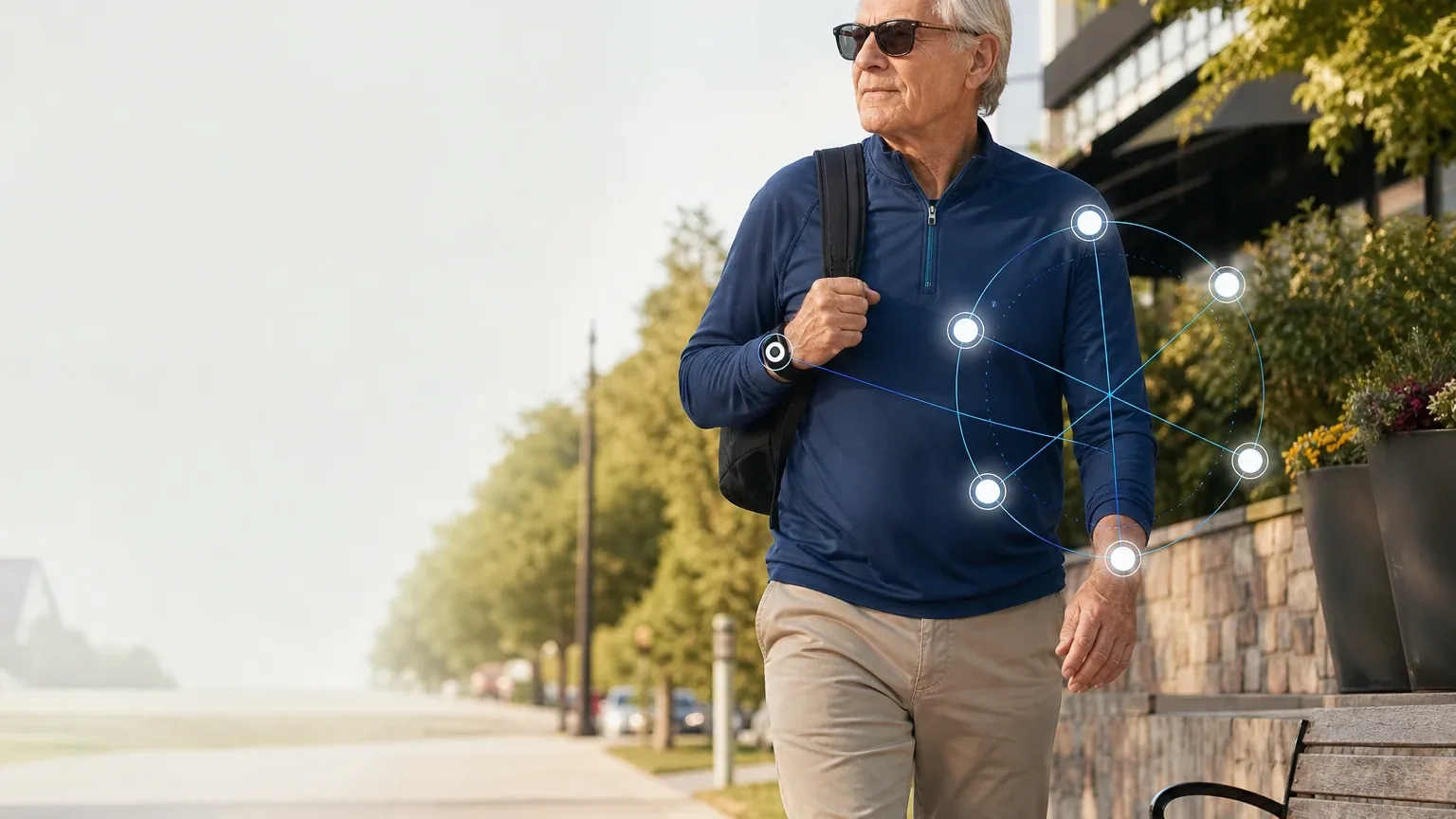
Medical Alert Mobile System is a good fit for active older adults who want a dedicated, portable emergency communicator for walking, driving, errands, and domestic travel within the United States, provided they stay in areas with adequate cellular coverage and can charge the device frequently. Three of seven platforms named it during the ranking stage (deepseek, kimi, perplexity), an average listed rank of 8.7 and best rank of 7. Its strongest case rests on GPS-assisted response, integrated two-way voice, and a stated battery life of up to four days. The main limitation is unverified performance: no independent testing of GPS precision, audio clarity, or cellular reliability was located, and battery claims conflict with independent testing.
Research Snapshot
| Field | Finding |
|---|---|
| Platform mentions in ranking stage | 3 of 7 platforms (deepseek, kimi, perplexity) |
| Share of included platform responses | 42.9% |
| Average listed rank | 8.67 |
| Best listed rank | 7 |
| Relevant product/model/plan | Medical Alert Mobile System; standard or mini device with monthly, semi-annual, or annual monitoring plan |
| Overall use-case fit | Good per openai, google, perplexity; mixed per anthropic, grok; uncertain per deepseek, kimi |
| Research date | 2026-09-26 |
What Changed Since August 2026
Medical Alert Mobile System moved down from No. 4 to No. 6, and platform mentions increased from 2 to 3. The September 2026 review shifts the recommendation from Medical Alert's Smartwatch to its dedicated Mobile System, now described with standard and mini hardware, plan options, and a stated battery life of up to four days. Buyer fit and limitations largely carry over: coverage dependence, charging demands, and unverified GPS precision persist, though the earlier one-to-two-day and eight-minute measured findings are no longer repeated. Pricing evidence also shifted: $39.95–$47.95 is newly reported, while the $159 equipment fee is no longer repeated. The recommended configuration itself is unchanged. Differences between the two editions reflect what each article reports; they do not by themselves prove that the product, service, or price changed.
The August 2026 review preserves the earlier article for reference.
Why Medical Alert Mobile System Qualified for This Study
Questions This Section Answers
- Is Medical Alert Mobile System a good choice for On-the-Go & Active Mobility?
- How many platforms ranked Medical Alert Mobile System for active seniors, and where did it place?
Medical Alert Mobile System qualified because it is explicitly marketed as a GPS and 24/7 help device for use away from home, which matches the on-the-go use case rather than a home-only system [1]. Three of seven platforms named it during ranking discovery — deepseek at rank 9, kimi at rank 10, and perplexity at rank 7 — giving an average listed rank of 8.67 and a best rank of 7. That is a modest showing: it was included, not championed. All seven platforms evaluated its fit, but only three surfaced it in the ranking stage, so the consensus here is thinner than the fit ratings alone suggest. Fit ratings split across platforms: openai, google, and perplexity rated it good; anthropic and grok rated it mixed; deepseek and kimi rated it uncertain.
The Product, Model, Plan, or Service Most Relevant to On-the-Go & Active Mobility
Questions This Section Answers
- Which Medical Alert Mobile System device and plan should a buyer choose for walking, driving, and travel away from home?
- Does the Medical Alert Mobile System standard or mini device matter for active seniors who leave home often?
The relevant product is the Medical Alert Mobile System, a compact communicator worn on the hip or around the neck, offered in standard and mini versions with monthly, semi-annual, or annual monitoring plans [3]. It includes a mobile communicator, charging cradle, and manual, and the company describes it as compact, lightweight, and wearable [3]. The mini version is positioned as the company's smallest and lightest wearable, while the standard unit is slightly bulkier and can be worn with a belt clip or neck lanyard [4]. The system is a dedicated emergency communicator, not a smartphone app or a general-purpose smartwatch; the included Medical Alert Connect app provides notifications, battery status, account management, and GPS-location viewing but does not replace the device [3]. For buyers comparing this device against the wider field, the On-the-Go & Active Mobility index covers the full set of finalists.
What the AI Platforms Agreed About
Questions This Section Answers
- What do AI platforms agree the Medical Alert Mobile System does well for active seniors who travel?
- Is the Medical Alert Mobile System waterproof and does it include two-way voice for on-the-go use?
Platforms broadly agreed on the core feature set. The Mobile System is GPS-enabled, uses cellular service included with the subscription, and provides two-way voice communication with a live response specialist, with 24/7/365 access to help [6]. Multiple platforms described the device as portable and wearable for active use, with the company stating it can be used at home or while traveling within the United States wherever adequate cellular coverage exists [6]. Battery life was consistently reported by the company at up to four days on one charge, with a charging cradle included [6]. Monitoring quality drew favorable independent commentary: Medical Alert's monitoring centers are described as TMA Five Diamond-certified with response times characterized as among the best in independent reviews (anthropic:10). Water resistance was also widely repeated, though with a caveat covered below.
Where the AI Platforms Disagreed or Were Uncertain
Questions This Section Answers
- How long does the Medical Alert Mobile System battery actually last, and why do sources disagree?
- Which cellular carrier does the Medical Alert Mobile System use, and can a buyer verify coverage before purchase?
Battery life is the sharpest conflict. The company claims up to four days [9], and one platform reported a five-day figure from an independent source [11]. But independent testing by NCOA found Medical Alert had the shortest maximum battery life on its comparison list at two days — roughly half the company claim (anthropic:2). That discrepancy is material for extended outings and travel, and it was not resolved by any supplied source.
Cellular carrier disclosure is a second gap. One platform stated the system operates on AT&T's 4G LTE network [13], and another said it uses AT&T [14], but the company does not identify the carrier, coverage map, or device-network redundancy in the reviewed materials, and its terms state third-party cellular availability can be disrupted, degraded, or unavailable [15]. Competitors explicitly disclose carrier partnerships, which makes this omission harder to work around (anthropic:1).
Water resistance is a third conflict. The product page describes the Mobile System as waterproof [10], and a company FAQ says mobile systems can be worn in the tub or shower [16]. The site's disclaimer is narrower: help buttons are waterproof up to one meter for 30 minutes, but mobile system speaker units are water-resistant [17]. The exact rating for the current standard and mini devices is unclear.
GPS precision drew the most divergent independent finding. One platform cited independent testing showing roughly a 50/50 success rate for GPS lock [18], while the company's terms expressly warn GPS data may be imprecise, delayed, unavailable, or inaccurate due to terrain, buildings, atmospheric conditions, interference, device limitations, or network limitations [15]. No independent benchmark of GPS accuracy was located.
Finally, kimi reported that its searches for "On the Go" returned Lifeline's product rather than Medical Alert's, creating attribution uncertainty, and stated that medicalalert.com content was not retrieved in its results (kimi:lifeline_on_the_go_2024). That platform's uncertain rating reflects a research failure, not a product finding.
Use-Case-Specific Features and Capabilities
Questions This Section Answers
- Does the Medical Alert Mobile System have GPS, fall detection, and a caregiver app for active seniors?
- How portable is the Medical Alert Mobile System for walking and travel, and what does the app track?
The table below summarizes the seven criteria this study used, with platform assessments and the conflicts preserved.
| Criterion | Assessment | Key evidence |
|---|---|---|
| Cellular network reliability | Limitation | Cellular service included; carrier undisclosed; terms warn of disruption [19] |
| GPS location precision | Limitation / unclear | GPS-assisted locating; terms warn of imprecision; one independent test reported ~50/50 lock success [20] |
| Two-way audio clarity | Advantage / unverified | Integrated two-way speaker; no measurable volume or noise specs published [19] |
| Water resistance | Conflict | Product page says waterproof; disclaimer says mobile speaker units are water-resistant [23] |
| Device portability | Advantage | Compact, lightweight, neck- or hip-worn; standard and mini versions [19] |
| Battery life | Conflict | Company claims up to 4 days; independent testing found 2 days [19] |
| Monthly subscription cost | Conflict | Company advertises from $34.95/month; independent sources list $39.95–$47.95 [19] |
Fall detection is optional and not guaranteed: the company warns it does not detect 100% of falls and users should press the button when able [23]. One platform noted that on some model versions fall detection may require wearing a separate pendant alongside the mobile communicator, while promotional material for the Mini suggests it may be integrated — buyers should clarify this for the exact hardware version received [26]. The Medical Alert Connect app supports notifications, battery-status information, account management, and GPS-location viewing, but the materials do not establish continuous location tracking independent of an alert [19]. Emergency-service dispatch costs are not covered by Medical Alert [22].
Pricing, Fees, Contracts, and Ongoing Costs
Questions This Section Answers
- How much does the Medical Alert Mobile System cost per month, and are there activation or shipping fees?
- What are the Medical Alert Mobile System cancellation terms, and does the three-month minimum apply to annual plans?
Pricing is the least settled part of this review. The company advertises the Mobile System from $34.95 per month, with annual plans including free ground shipping and a free key lockbox, and its disclaimer references semi-annual plans [27]. Independent sources report higher figures: $39.95/month for the mobile plan with semi-annual and annual plans saving over $35 per year (anthropic:9), $42.95/month standard and $47.95/month mini on month-to-month billing, dropping to $34.95 and $39.95 with annual or semi-annual plans [29], and a range of roughly $39.95–$47.95 depending on plan and model [30]. One platform reported a $99.95 programming/activation fee, $24.95 shipping, and $10/month fall detection [31]. Another reported a $5/month protection plan figure from a 2025 company document, with applicability to the current checkout offer unconfirmed [27].
Contract terms also conflict. The product page advertises no long-term contract and a month-to-month option [27]. The subscriber terms state that after activation, cancellation before the initial three-month period may involve a non-refundable three-month minimum, a $35 restocking fee, a programming fee, and shipping and handling charges [33]. The terms permit price increases with 30 days' written notice unless a price-lock guarantee was purchased, and a $5 monthly late charge may apply to overdue monitoring fees [33]. One platform described a 30-day money-back guarantee minus shipping costs [32]. The company's disclaimer also states promotional pricing applies only to new customers, with the regular monthly fee charged after the promotional period [28]. Pricing confidence was rated moderate by openai, anthropic, grok, and google, and low by deepseek and perplexity.
Best Suited For
Questions This Section Answers
- Who is the Medical Alert Mobile System best suited for among active older adults?
- Is the Medical Alert Mobile System worth it for a senior who walks, drives, and travels within the U.S.?
It best suits active older adults who regularly leave home and want GPS-assisted access to a live response center without carrying a smartphone [34]. It fits users who prefer a compact pendant-style device with integrated two-way voice and who are comfortable with a recurring monitoring subscription plus optional add-on charges [34]. It also suits buyers who value a waterproof wearable and multi-day battery life and who are willing to commit to an annual or semi-annual plan to lower the monthly cost [35]. Buyers who want a simple, lightweight, single-device mobile alert, and caregivers who want GPS location and battery alerts through a dedicated app, are also reasonable matches [36]. The device is intended for use within the United States; international coverage is not established by the reviewed materials [34].
Probably Not Best Suited For
Questions This Section Answers
- Who should not choose the Medical Alert Mobile System for on-the-go and active mobility?
- Is the Medical Alert Mobile System a poor fit for seniors in weak-cellular or rural areas?
It is probably not the best choice for users who need guaranteed coverage in rural, mountainous, underground, or otherwise weak-cellular areas [38]. It is a poor fit for buyers who require independently verified GPS accuracy or a published cellular-carrier specification, since neither was located [38]. It does not suit users wanting a general-purpose smartwatch, extensive health tracking, or smartphone-level communication features [38]. Seniors on extended trips where daily charging access is limited, or those who want battery life exceeding four to five days between charges, should look elsewhere (anthropic:2). Buyers prioritizing the lowest monthly price, or a clearly documented no-contract, no-fee, fully transparent pricing structure before calling sales, are also mismatched [39]. Those seeking a fully submersible device for swimming should not assume this one qualifies [40].
When Another Option May Be Better
Questions This Section Answers
- What is a better alternative to the Medical Alert Mobile System for a buyer who needs longer battery life?
- When should a buyer choose a competing mobile alert provider over the Medical Alert Mobile System?
Another option may be better when battery life of five or more days is essential: Bay Alarm Medical's SOS Mobile is listed at six days, LifeStation at five days, and LifeFone at up to 18 days (anthropic:4, anthropic:13, anthropic:15). Another option may be better when the buyer will spend time in weak or intermittent cellular coverage and wants WiFi-assisted location, which Bay Alarm Medical and LifeStation offer (anthropic:4, anthropic:13). Another option may be better when advanced fall detection performance is a priority, since one independent review reported 90% detection accuracy for Medical Guardian's systems versus unspecified rates for Medical Alert (anthropic:14). Another option may be better when caregiver app features and real-time location tracking matter most, where Medical Guardian's MyGuardian app and Bay Alarm's app offer more robust caregiver dashboards (anthropic:14, anthropic:4). Another option may be better when the buyer wants a smartwatch-style device instead of a pendant or clip (anthropic:14). Finally, another option may be better when the lowest verified monthly price is the deciding factor, since Lively Mobile2 starts at $24.99/month [41]. Buyers comparing across the broader medical alert systems category should weigh these trade-offs against the Mobile System's dedicated-communicator design.
Questions to Verify Before Buying
Questions This Section Answers
- What should a buyer confirm with Medical Alert before signing up for the Mobile System?
- Which coverage, pricing, and cancellation details must be verified before buying the Medical Alert Mobile System?
The platforms converged on a similar verification list. Confirm which cellular carrier or carriers the exact Mobile System uses and whether the buyer's usual travel area has reliable coverage [42]. Confirm total upfront and recurring prices for the standard and mini devices on monthly, semi-annual, and annual billing, including equipment, activation, programming, shipping, return, and restocking charges [42]. Confirm whether the initial three-month minimum applies to the selected annual or semi-annual plan and what the exact cancellation and refund calculation is [44]. Confirm the exact water-resistance rating for the current mobile speaker unit and whether shower, pool, rain, or submersion use is permitted [45]. Confirm what location technologies are used besides GPS and what accuracy or delay to expect indoors, in vehicles, or near tall buildings [44]. Confirm expected battery life with frequent alerts, weak signal, GPS use, and standby, and clarify the conditions behind the four-day claim versus the two-day independent finding (anthropic:2). Confirm current pricing and cancellation policy for fall detection and the Protection Plan, and whether fall detection requires a separate pendant on the model being purchased [42]. Confirm whether the buyer can test the device on their most-used routes before the return period expires, and what happens if the device cannot obtain a signal or location fix during an emergency [48].
Final AI Consensus Verdict
The consensus is a qualified good fit, not an endorsement. Three of seven platforms named Medical Alert Mobile System during ranking, at an average rank of 8.67, and fit ratings split between good (openai, google, perplexity), mixed (anthropic, grok), and uncertain (deepseek, kimi). The feature set matches the on-the-go use case: GPS-assisted response, integrated two-way voice, 24/7/365 monitoring, compact wearability, and a stated four-day battery. The unresolved problems are verification gaps rather than confirmed defects: no independent testing of GPS precision, audio clarity, or cellular reliability was located; battery claims conflict by roughly half; carrier identity is undisclosed; water-resistance language is inconsistent between the product page and the disclaimer; and public pricing varies by source. Platform agreement here reflects shared source material, not proven product quality. Buyers who stay in strong-coverage areas, can charge frequently, and verify pricing and cancellation terms directly with the company are the best-matched segment.
How This Review Was Produced
This review was generated from structured platform responses collected for the On-the-Go & Active Mobility use case within the Best Medical Alert Systems for Active Seniors study. Seven platforms supplied fit research: openai, anthropic, google, grok, deepseek, kimi, and perplexity. Three of those platforms — deepseek, kimi, and perplexity — named Medical Alert Mobile System during ranking discovery, which is the basis for the mention count and rank statistics in the Research Snapshot. All seven platform outputs were used for the fit analysis, feature findings, pricing findings, and verification questions. Company-owned sources were used for product specifications, terms, and disclaimers; independent review sources were used for battery testing, pricing comparisons, and competitor specifications. Where platforms disagreed, both positions are reported rather than reconciled.
Methodology Limitations
Several limitations apply. Citations are platform-reported evidence, not independently verified facts, and the supplied URLs were collected from platform responses without independent validation at the writing stage. Platform-reported research dates differ from the authoritative run date of 2026-09-26: deepseek reported 2026-06-11, while the other six platforms reported 2026-09-26. Those platform dates are provenance metadata and do not independently prove freshness. Deepseek ran with search disabled, so its findings are model-reported rather than retrieved, and its uncertain rating should be read accordingly. Kimi reported that its searches returned Lifeline's product rather than Medical Alert's and that medicalalert.com content was not retrieved in its results, which means its uncertain rating reflects a research gap rather than a product finding. No independent testing was located for GPS precision, two-way audio clarity, cellular reliability, or real-world battery duration, and no independent verification of the device's cellular carrier was found. Public pricing is inconsistent across sources, and several fees — fall detection, Protection Plan, activation, and equipment — are not clearly published. Platform agreement on a feature does not establish that the feature performs as described.
Sources
Company-Owned Sources
- SOS Mobile: GPS Mobile Medical Alert System: https://www.bayalarmmedical.com/medical-alert-system/sos-mobile/
- On the Go | Mobile Medical Alert for Seniors - Lifeline: https://www.lifeline.com/product/on-the-go/
- Mobile GPS Medical Alert System | LifeStation.com: https://www.lifestation.com/mobile-gps/
- Medical Alert Official Website Disclaimer and Product Information: https://www.medicalalert.com/
- FAQ | Frequently Asked Questions: https://www.medicalalert.com/frequently-asked-questions/
- Medical Alert Mobile System | Medical Alert: https://www.medicalalert.com/mobile-system/
- Medical Alert Pricing | Medical Alert: https://www.medicalalert.com/pricing/
- Mini Mobile System - Medical Alert: https://www.medicalalert.com/product/mini-mobile-system/
- Mobile Medical Alert System | GPS & 24/7 Help | Medical Alert: https://www.medicalalert.com/product/mobile-system/
- Emergency Response Experience | Medical Alert: https://www.medicalalert.com/support/emergency-experience/
- Subscriber Terms and Conditions: https://www.medicalalert.com/support/terms/
- Mobile LTE Setup Guide: https://www.medicalalert.com/wp-content/uploads/2025/02/Mobile-LTE-Setup-Guide.pdf
- Official pricing and terms source: https://www.medicalalert.com/terms-and-conditions/
Additional AI research evidence48 records
- AI research evidence record openai:c1
- AI research evidence record perplexity:c1
- AI research evidence record openai:c1
- AI research evidence record google:1.1.9
- AI research evidence record google:2.3.6
- AI research evidence record openai:c1
- AI research evidence record openai:c3
- AI research evidence record perplexity:c1
- AI research evidence record openai:c1
- AI research evidence record perplexity:c1
- AI research evidence record grok:web:2
- AI research evidence record perplexity:c3
- AI research evidence record google:1.1.2
- AI research evidence record grok:web:11
- AI research evidence record openai:c2
- AI research evidence record perplexity:c2
- AI research evidence record openai:c5
- AI research evidence record grok:web:3
- AI research evidence record openai:c1
- AI research evidence record openai:c2
- AI research evidence record grok:web:3
- AI research evidence record openai:c3
- AI research evidence record openai:c5
- AI research evidence record google:1.1.9
- AI research evidence record google:2.1.4
- AI research evidence record google:2.3.4
- AI research evidence record openai:c1
- AI research evidence record openai:c5
- AI research evidence record google:2.1.4
- AI research evidence record perplexity:c4
- AI research evidence record grok:web:2
- AI research evidence record google:2.3.3
- AI research evidence record openai:c2
- AI research evidence record openai:c1
- AI research evidence record perplexity:c1
- AI research evidence record google:1.1.2
- AI research evidence record google:2.3.6
- AI research evidence record openai:c1
- AI research evidence record perplexity:c1
- AI research evidence record google:2.1.3
- AI research evidence record google:1.1.2
- AI research evidence record openai:c1
- AI research evidence record google:2.3.3
- AI research evidence record openai:c2
- AI research evidence record openai:c5
- AI research evidence record google:2.1.3
- AI research evidence record google:2.3.4
- AI research evidence record openai:c4
Independent Sources
- Medical Alert Systems: What Gets Worn & Why It Matters: https://www.grayingwithgrace.com/medical-alert-systems-what-gets-worn/
- ConnectAmerica MedicalAlert.com Mobile System Review: https://www.medicalalertbuyersguide.org/mobile-medical-alert-system/medical-alert-mobile-system-review/
- ConnectAmerica MedicalAlert.com Mobile System Review: https://www.medicalalertbuyersguide.org/reviews/connectamerica-medicalalert-com-mobile-system-review/
- Medical Alert System Features: Which Do You Need?: https://www.ncoa.org/article/medical-alert-features/
- The Best Medical Alert Systems in 2026: https://www.ncoa.org/product-resources/medical-alert-systems/best-medical-alert-systems/
- Medical Alert Review in 2026: https://www.ncoa.org/product-resources/medical-alert-systems/medical-alert-review/
- 4 Best Medical Alert Systems for Active Seniors of 2026 (with Reviews & Costs: https://www.retirementliving.com/best-medical-alert-systems/best-medical-alert-systems-for-active-seniors
- Medical Alert Cost, Pricing, Packages and Monthly Plans: https://www.safehome.org/medical-alert-systems/medical-alert/
- Medical Alert Cost, Pricing, Packages and Monthly Plans: https://www.safehome.org/medical-alert-systems/medical-alert/pricing/
- Best Medical Alert Systems of 2026: Tested and Ranked: https://www.seniorliving.org/medical-alert-systems/best/
- Average Medical Alert System Costs in 2026: https://www.seniorliving.org/medical-alert-systems/cost/
- Medical Alert Cost, Pricing, Plans and Packages in 2026: https://www.seniorliving.org/medical-alert-systems/medical-alert/
- Medical Alert Cost, Pricing, Plans and Packages in 2026: https://www.seniorliving.org/medical-alert-systems/medical-alert/pricing/
Additional AI research evidence48 records
- AI research evidence record openai:c1
- AI research evidence record perplexity:c1
- AI research evidence record openai:c1
- AI research evidence record google:1.1.9
- AI research evidence record google:2.3.6
- AI research evidence record openai:c1
- AI research evidence record openai:c3
- AI research evidence record perplexity:c1
- AI research evidence record openai:c1
- AI research evidence record perplexity:c1
- AI research evidence record grok:web:2
- AI research evidence record perplexity:c3
- AI research evidence record google:1.1.2
- AI research evidence record grok:web:11
- AI research evidence record openai:c2
- AI research evidence record perplexity:c2
- AI research evidence record openai:c5
- AI research evidence record grok:web:3
- AI research evidence record openai:c1
- AI research evidence record openai:c2
- AI research evidence record grok:web:3
- AI research evidence record openai:c3
- AI research evidence record openai:c5
- AI research evidence record google:1.1.9
- AI research evidence record google:2.1.4
- AI research evidence record google:2.3.4
- AI research evidence record openai:c1
- AI research evidence record openai:c5
- AI research evidence record google:2.1.4
- AI research evidence record perplexity:c4
- AI research evidence record grok:web:2
- AI research evidence record google:2.3.3
- AI research evidence record openai:c2
- AI research evidence record openai:c1
- AI research evidence record perplexity:c1
- AI research evidence record google:1.1.2
- AI research evidence record google:2.3.6
- AI research evidence record openai:c1
- AI research evidence record perplexity:c1
- AI research evidence record google:2.1.3
- AI research evidence record google:1.1.2
- AI research evidence record openai:c1
- AI research evidence record google:2.3.3
- AI research evidence record openai:c2
- AI research evidence record openai:c5
- AI research evidence record google:2.1.3
- AI research evidence record google:2.3.4
- AI research evidence record openai:c4
Verify This Research
Review the study details behind this page or download the public machine-readable verification record.
- Study date
- September 26, 2026
- Platforms analyzed
- 7
- Source records
- 26
- Ranking mentions
- 3 of 7
- Platform share
- 43%
- Final consensus rank
- #6
Research trail and source mix
Configured platforms
openai, anthropic, deepseek, grok, perplexity, kimi, google
Source mix
13 independent · 13 company-owned
Evidence support
21 direct · 5 partial
Important limitation
Use the run research_date as the study date. Platform-reported dates are provenance metadata and do not independently prove freshness.
Source snapshot SHA-256 7af554f2f03a3fab830a5fe468ef5bf22c1b73e7725cc3cc819a753aca5f7038