
Answer Capsule
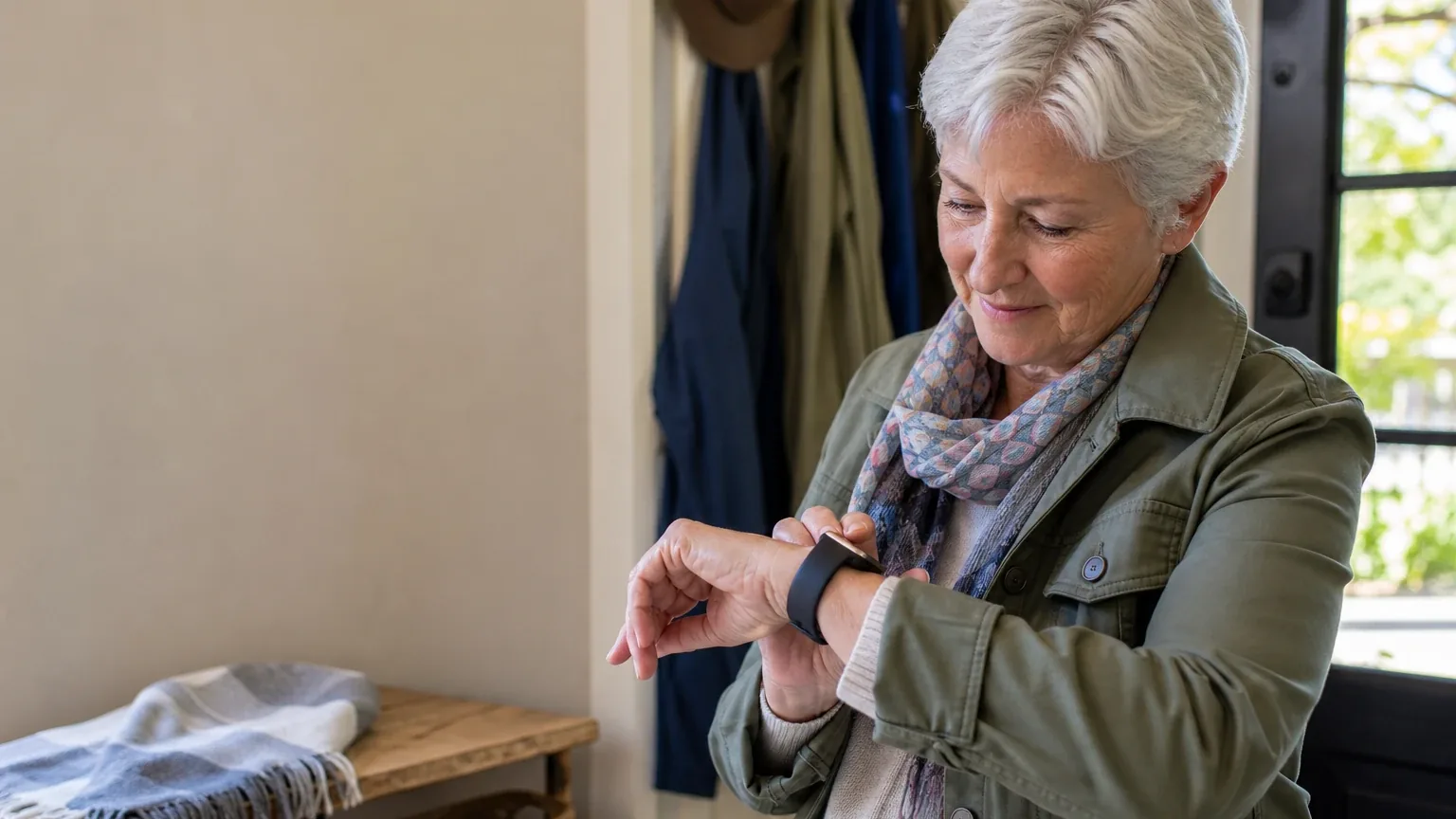
Medical Guardian MGMove is a good fit for watch-style emergency response, but not an unqualified one. All seven platforms that reached the ranking stage named it, and it finished first overall with an average listed rank of 2.29 and a best rank of 1. Its strongest case is the combination of a discreet smartwatch form factor, GPS location support, two-way calling through the watch, and fast monitored response. The main limitation is daily charging: published battery estimates cluster around 20–24 hours, and fall detection is a paid add-on rather than a standard feature. Buyers who cannot reliably charge a watch every day should look elsewhere.
Research Snapshot
| Field | Finding |
|---|---|
| Platform mentions in ranking stage | 7 of 7 included platforms (anthropic, deepseek, google, grok, kimi, openai, perplexity) |
| Share of included platform responses | 100% |
| Average listed rank | 2.29 |
| Best listed rank | 1 |
| Relevant product/model/plan | MGMove Medical Alert Smartwatch with an active 24/7 monitoring plan and optional fall-detection add-on |
| Overall use-case fit | Strong (2 platforms); Good (4 platforms); Mixed (1 platform) — 7 platforms analyzed |
| Research date | 2026-09-27 |
What Changed Since August 2026
Medical Guardian MGMove remained at No. 1, and platform mentions increased from 6 to 7. The September 2026 review keeps Medical Guardian MGMove as a good fit for watch-style emergency response, but describes it more cautiously than the August 2026 edition. Buyer fit is reframed around the MGMove smartwatch itself, with daily charging and fall detection as a paid add-on still the chief limitations, so the recommended configuration did not change. The pricing evidence was refreshed: $37.95/month is newly reported as a plan price, while $10/month for fall detection is no longer repeated at that figure. Battery estimates remain about one day. Otherwise, the buyer-facing substance is largely unchanged. Differences between the two editions reflect what each article reports; they do not by themselves prove that the product, service, or price changed.
The August 2026 review preserves the earlier article for reference.
Why Medical Guardian MGMove Qualified for This Study
Questions This Section Answers
- Why did Medical Guardian MGMove qualify for a watch-style emergency response ranking?
- How many AI platforms named Medical Guardian MGMove in the ranking stage?
MGMove qualified because it was named by every platform that reached the ranking stage, not because any platform proved it performs well. Seven platforms — anthropic, deepseek, google, grok, kimi, openai, and perplexity — listed it, giving it a 100% mention share among included platform responses. Its average listed rank was 2.29, its best listed rank was 1, and it finished first in the final ordering. Four platforms placed it at rank 1 or 2, while openai placed it 5th and perplexity 4th, so the consensus was strong but not unanimous at the top.
Qualification also required a genuine watch-style product, not a pendant. Medical Guardian describes MGMove as a GPS-enabled medical-alert smartwatch intended for on-the-go use with 24/7 monitoring [1]. One ranking-stage response referenced "Freedom Guardian," which is a different Medical Guardian product; this review applies only to MGMove.
The Product, Model, Plan, or Service Most Relevant to Watch-Style Emergency Response
Questions This Section Answers
- Which Medical Guardian MGMove plan and add-ons matter most for watch-style emergency response?
- Does Medical Guardian MGMove work without a paired smartphone for emergency calls?
The relevant configuration is the MGMove Medical Alert Smartwatch paired with an active 24/7 monitoring plan and the optional fall-detection add-on. Platforms described the plan differently — openai and grok referenced an active monitoring plan with optional fall detection, kimi named an "Active" plan at $37.95/month and an "Active & Social" plan at $43.95/month, and perplexity referenced monthly plans starting around $38.95–$49.95 depending on term [3].
Hardware details are more consistent. MGMove has a 1.25-inch round touchscreen, a physical red SOS button requiring a 5-second sustained press, a cancel window during the countdown, a magnetic charging cradle, a non-changeable TPU wristband, and IP67 water resistance [5]. It operates on 4G LTE and does not require a paired smartphone for basic monitored calling, according to company and platform-reported specifications [6]. Kimi's response, however, flagged smartphone-app dependency for setup and some features as an open question, so buyers who lack a smartphone should confirm this directly (kimi:aginginplace).
What the AI Platforms Agreed About
Questions This Section Answers
- What do AI platforms agree on about Medical Guardian MGMove for watch-style emergency response?
- Is Medical Guardian MGMove's GPS accuracy verified by independent testing?
Agreement was strongest on four points. First, every platform treated MGMove as a genuine watch-style medical alert with 24/7 monitoring, two-way voice, and GPS location support [7]. Second, platforms consistently described fall detection as an optional add-on rather than a standard inclusion, commonly reported at $10 per month [11].
Third, battery life was described as roughly one day across most sources, requiring daily charging [14]. Fourth, GPS performance drew positive independent commentary: AARP's hands-on testing reported MGMove correctly identified the tester's location at three separate outdoor and indoor-area test locations [17], and SafeHome reported the location tracker was consistently accurate in its testing (anthropic:citation_5). These are platform-reported review findings, not verification performed for this study.
Where the AI Platforms Disagreed or Were Uncertain
Questions This Section Answers
- Why do AI platforms disagree about Medical Guardian MGMove's monthly price and battery life?
- Is Medical Guardian MGMove's fall detection accuracy independently verified?
Pricing is the largest conflict. Medical Guardian's buyer guide lists a $199.95 device fee with service at $43.95 monthly, $125.85 quarterly, or $439.45 annually, while the current product page advertises service as low as $44.95 monthly [18]. Independent sources report other figures: $38.95/month (anthropic:citation_5), $42.95/month (anthropic:citation_6, grok:1), $39.95/month [20], $37.95–$43.95/month by plan (kimi:medicalguardian1), and a range of roughly $38.95–$49.95 [21]. One independent cost tracker listed Medical Guardian pricing from $27.95 to $46.95 per month (grok:0). These figures cannot all be current for the same configuration.
Battery life is the second conflict. Most sources say up to 24 hours or approximately one day [18], one independent test reported 18–24 hours [22], one reported 20 hours (grok:1), and SafeHome reported 7 days — a figure that conflicts with every other source and may reference a different product or outdated specifications (anthropic:citation_5). Perplexity's response noted sources claiming 7 days, 3 days, and 24 hours [21].
Fall-detection accuracy is uncertain rather than disputed. MedGrade's clinical evaluation reported 6-axis sensors reliably identified high-impact falls from chest height, but wrist-worn detection has inherent limits and may miss slower falls or trigger false alarms (anthropic:citation_4, anthropic:citation_7). Medical Guardian itself states fall detection does not detect 100% of falls [19]. No platform supplied false-alarm rates or real-world accuracy statistics.
Response time also varies by source: NCOA testing reported a 29-second average (anthropic:citation_3), MedGrade recorded 20–29 seconds (anthropic:citation_4), The Senior List reported an average of about 10 seconds [23], and grok's response cited 8–10 seconds (grok:6). These are platform-reported figures with no shared test protocol.
Use-Case-Specific Features and Capabilities
Questions This Section Answers
- How accessible is the Medical Guardian MGMove SOS button for someone with arthritis or limited dexterity?
- What are Medical Guardian MGMove's battery life and water-resistance limits for daily wear?
SOS activation requires a 5-second sustained press on the physical red button, with a cancel window during the countdown and a touchscreen SOS app as a second path (anthropic:citation_1, anthropic:citation_2). Google's response described a one-touch SOS screen button as intuitive for Seniors [24], which conflicts with the 5-second hold described in the manual. Anthropic flagged the sustained press as potentially difficult for users with dexterity issues or under stress (anthropic:citation_2). Deepseek found no independent measurement of button size, required force, or accidental-press rate [25].
GPS uses multi-constellation positioning combining GPS, Wi-Fi, and LTE according to MedGrade, though SafeHome reported no Wi-Fi location tracking on MGMove — another unresolved conflict (anthropic:citation_4, anthropic:citation_5). Real-time location is shared when SOS is pressed, and historical location updates hourly in the member portal (anthropic:citation_5).
Two-way calling runs through the watch speaker and microphone over 4G LTE, routed to U.S.-based monitoring centers [25]. AARP characterized sound quality as only fair [27]. No platform supplied microphone or speaker measurements in noisy conditions.
Battery life is approximately 20–24 hours with daily charging and 1–2 hours to recharge via magnetic cradle [28]. AARP testers noted the home screen does not display exact battery status, which complicates charging management [27]. Water resistance is IP67 — shower-safe but not for swimming or submersion [29]. The device weighs about 2 ounces and offers standard and XL wristband sizes (anthropic:citation_2).
Caregiver features run through the MyGuardian app and portal, providing location and battery information. AARP reported Care Circle messaging for up to four contacts at an additional $5 per month, while other sources describe Social Circle apps at $2.99–$5.00 per month [27].
Pricing, Fees, Contracts, and Ongoing Costs
Questions This Section Answers
- How much does Medical Guardian MGMove cost per month, and what is the device fee?
- Are there cancellation fees or a minimum commitment with Medical Guardian MGMove?
Published pricing is inconsistent and should be treated as low-confidence until confirmed in a written order quote. The most directly published figures found were a $199.95 device fee and monitoring at $43.95 monthly, $125.85 quarterly, or $439.45 annually in the buyer guide, with the current product page advertising service as low as $44.95 monthly [32]. Independent sources report $38.95, $39.95, $42.95, $37.95–$43.95 by plan, and a $38.95–$49.95 range [34].
Fall detection is commonly reported at $10 per month, but the official pages checked confirm availability without clearly displaying the current MGMove-specific fee [36]. Other reported add-ons include a protection plan at $6.99/month, OnGuard Alerts at $2.99/month, Social Circle or Support Circle apps at $2.99–$5.00/month, and optional wall buttons at $2.99–$4.99/month [38].
Contract terms conflict between company pages and terms documents. Medical Guardian's pricing page states no long-term contracts, no activation fees, and no cancellation fees, with month-to-month, quarterly, or annual billing [39]. The legal terms, however, describe a minimum 90-day service commitment, automatic renewal, and cancellation requirements [40]. A $350 non-return charge may apply to leased equipment not returned within 30 days, and prepaid refunds may carry a restocking fee of up to $50 [42]. Independent sources describe a 14-day return window with a 50% restocking fee after that period (anthropic:citation_5, anthropic:citation_6). Buyers should reconcile these before signing.
Best Suited For
Questions This Section Answers
- Who is Medical Guardian MGMove best suited for in watch-style emergency response?
- Is Medical Guardian MGMove a good choice for a senior who travels outside the home?
MGMove best suits older adults who will wear a watch more consistently than a pendant and who can charge it daily. Platforms consistently identified the discreet smartwatch form factor as the core advantage for buyers who dislike pendant-style devices [43]. It also suits users who travel outside the home and need GPS-enabled emergency response with two-way calling from the wrist [44].
It fits buyers who want smartwatch-style extras — step tracking, weather, reminders, activity features, and caregiver-app location sharing — alongside SOS monitoring [46]. It also suits buyers in areas with strong AT&T 4G LTE coverage, since MGMove operates on that network with no alternative carrier option reported (anthropic:citation_1, anthropic:citation_5). Buyers who value flexible month-to-month billing and no activation fee will find company materials supportive, though the 90-day minimum in the legal terms should be confirmed [48].
Probably Not Best Suited For
Questions This Section Answers
- Who should not choose Medical Guardian MGMove for watch-style emergency response?
- Is Medical Guardian MGMove a poor choice for someone who cannot charge a device daily?
MGMove is probably not the best choice for users who cannot reliably charge a device every day. Battery life of roughly 20–24 hours means the watch is unprotected during charging, and AARP testers noted the home screen does not show exact battery status [49]. Buyers who need multi-day battery life should compare pendant-style mobile alerts instead (anthropic:citation_7).
It is also a weaker fit for buyers who require fall detection included in the base price, since it is an add-on commonly reported at $10 per month [52]. Users with significant dexterity limitations may struggle with a 5-second sustained SOS press (anthropic:citation_2). Buyers who need highly transparent all-in pricing, no minimum commitment, or the longest available battery life should look at other providers [54]. Users wanting full smartwatch features such as third-party apps, texting, or rich notifications will find MGMove limited [56]. Those in weak AT&T coverage areas have no alternative carrier option with this device (anthropic:citation_5).
When Another Option May Be Better
Questions This Section Answers
- What is a better alternative to Medical Guardian MGMove if daily charging is unrealistic?
- When should a buyer choose a pendant or consumer smartwatch instead of Medical Guardian MGMove?
Choose a longer-battery GPS pendant such as Medical Guardian MGMini or MGMini Lite when charging every day is unrealistic; platforms cited 5-day battery life and a lower $149.95 equipment cost for those devices (anthropic:citation_7, anthropic:citation_5). Choose a simpler wrist-worn alert with a large physical SOS control when touchscreen operation is a barrier [57].
Consider a consumer smartwatch with emergency calling when the user can manage smartphone-style setup, charging, and subscriptions and does not need a dedicated medical-alert monitoring service [57]. Consider a pendant-based fall-detection system when reliable automatic fall detection is critical, since wrist-worn detection may miss slower falls (anthropic:citation_7). Consider another medical-alert provider when the buyer requires clearly published all-in pricing, included fall detection, or a shorter or no minimum commitment [58]. Kimi's response also named the Lifeline Smartwatch and Bay Alarm Medical SOS Smartwatch as comparison points, though those are platform-reported alternatives rather than tested recommendations here (kimi:lifeline, kimi:aginginplace).
Questions to Verify Before Buying
- What exact MGMove model, device ownership status, monitoring plan, and monthly, quarterly, or annual price will appear on the written order? [60]
- Is fall detection currently available for MGMove in your state, and is the exact fee $10 per month? [61]
- Is the service subject to the 90-day minimum for this order, and what is the precise cancellation and return procedure? [63]
- Is the device purchased or leased, and does the $350 non-return fee apply? [65]
- What is the expected real-world battery life with GPS, calls, and fall detection enabled, and what battery-low alerts are provided? [66]
- What cellular network does the device use, and is coverage adequate at home, regular travel locations, and indoor destinations? (anthropic:citation_5)
- Can the user answer, end, or place calls without navigating the touchscreen, and how loud is the speaker in a noisy environment? [67]
- What exact caregiver features are included in the selected plan, and does Care Circle or Social Circle cost an additional $5 per month? [67]
- What water-resistance rating applies to the current MGMove model, and is shower use explicitly covered? (anthropic:citation_1)
- What happens if the user presses SOS accidentally, loses cellular service, or the watch battery dies during an emergency? [63]
Final AI Consensus Verdict
Medical Guardian MGMove is a good fit for watch-style emergency response, with two platforms rating it strong, four rating it good, and one rating it mixed. All seven platforms that reached the ranking stage named it, and it finished first overall. The consensus case rests on a discreet smartwatch form factor, GPS location support, two-way calling from the wrist, and fast monitored response. The consensus limitations are equally clear: roughly one-day battery life requiring daily charging, fall detection as a paid add-on that does not detect every fall, conflicting published pricing, and a 90-day minimum commitment in the legal terms despite marketing language about no long-term contracts. Buyers who can charge daily and confirm the written quote should find it a reasonable fit; buyers who cannot should compare pendant alternatives.
How This Review Was Produced
This review evaluates Medical Guardian MGMove only for the watch-style emergency response use case. It draws on fit-research responses from seven AI platforms — anthropic, deepseek, google, grok, kimi, openai, and perplexity — collected for a study dated 2026-09-27. Each platform was asked to assess fit, identify strengths and limitations, report pricing and terms, and name better alternatives. Platform fit ratings were tallied as supplied. Ranking statistics reflect how many platforms named MGMove during ranking discovery and where they placed it. All factual claims are cited to the platform that supplied them, using the parenthetical citation IDs shown throughout. No product testing, customer interviews, or independent verification was performed for this review.
Methodology Limitations
Platform-reported research dates differ from the authoritative run date: anthropic reported 2026-01-16 and deepseek reported 2026-03-27, while the remaining platforms reported 2026-09-27. These dates are provenance metadata and do not independently prove freshness. All included platforms evaluated fit, but the platform mention count reflects only platforms that named the entity during ranking discovery. The supplied URLs were collected from platform responses and were not independently validated by the writer stage. Citations are platform-reported evidence, not independently verified facts. Deepseek's response was produced with search disabled, so its claims require explicit verification before being described as current facts. Conflicting product names, pricing, and capabilities were described rather than resolved. AI-platform agreement does not prove product quality. Pricing, availability, network coverage, and terms should be confirmed directly with Medical Guardian before purchase.
Explore more medical alert systems guidance in the category directory.
Sources
Company-Owned Sources
- Medical Alert Smartwatch | Fall Detection & GPS | Lifeline: https://www.lifeline.com/product/smartwatch/
- About Medical Guardian - Medical Guardian: https://www.medicalguardian.com/about-us
- Buying Advice for Medical Alert Systems: https://www.medicalguardian.com/alert-system-pricing
- On-the-Go Devices Buyer Guide: https://www.medicalguardian.com/assets/pdf/medical-guardian-buyers-guide.pdf
- The Best Medical Alert Watches in 2026 (Top Picks for Safety & Independence: https://www.medicalguardian.com/blog/best-medical-alert-watches-for-seniors
- Legal Information About Medical Guardian Services: https://www.medicalguardian.com/legal/terms
- The Best Smartwatches With Fall Detection in 2026: https://www.medicalguardian.com/medical-alert-blog/health-wellness/best-smartwatches-with-fall-detection
- Comparison of Medical Guardian's Alert Systems: https://www.medicalguardian.com/medical-alert-systems
- MGMove Medical Alert Smartwatch - Medical Guardian: https://www.medicalguardian.com/medical-alert-systems/mgmove-medical-alert-smartwatch
- Best Medical Alert Smartwatch | MGMove | Medical Guardian: https://www.medicalguardian.com/medical-alert-systems/smart-watch-alert-app
- Medical Guardian Pricing and Plans - Medical Guardian: https://www.medicalguardian.com/pricing
- MGMove Medical Alert Smartwatch | Medical Guardian: https://www.medicalguardian.com/products/mgmove
- Medical Guardian FAQs: https://www.medicalguardian.com/support/faqs/
- Official pricing and terms source: https://www.medicalguardian.com/
- Official pricing and terms source: https://www.medicalguardian.com/mobile-terms-and-conditions
Additional AI research evidence68 records
- AI research evidence record openai:c1
- AI research evidence record deepseek:c1
- AI research evidence record openai:c1
- AI research evidence record perplexity:c5
- AI research evidence record google:1.1.3
- AI research evidence record google:1.1.7
- AI research evidence record openai:c1
- AI research evidence record deepseek:c1
- AI research evidence record google:1.1.3
- AI research evidence record perplexity:c4
- AI research evidence record openai:c4
- AI research evidence record google:3.1.2
- AI research evidence record perplexity:c6
- AI research evidence record openai:c5
- AI research evidence record openai:c6
- AI research evidence record google:1.1.6
- AI research evidence record openai:c2
- AI research evidence record openai:c5
- AI research evidence record openai:c1
- AI research evidence record google:1.1.7
- AI research evidence record perplexity:c5
- AI research evidence record google:1.1.6
- AI research evidence record google:1.1.9
- AI research evidence record google:1.1.7
- AI research evidence record deepseek:c1
- AI research evidence record deepseek:c2
- AI research evidence record openai:c2
- AI research evidence record google:1.1.6
- AI research evidence record google:1.1.3
- AI research evidence record google:3.2.3
- AI research evidence record google:3.2.6
- AI research evidence record openai:c5
- AI research evidence record openai:c1
- AI research evidence record google:1.1.7
- AI research evidence record perplexity:c5
- AI research evidence record openai:c4
- AI research evidence record google:3.1.2
- AI research evidence record google:3.2.6
- AI research evidence record deepseek:c3
- AI research evidence record openai:c8
- AI research evidence record perplexity:c1
- AI research evidence record openai:c9
- AI research evidence record perplexity:c2
- AI research evidence record openai:c1
- AI research evidence record google:1.1.7
- AI research evidence record openai:c2
- AI research evidence record google:1.1.3
- AI research evidence record openai:c8
- AI research evidence record openai:c6
- AI research evidence record google:1.1.6
- AI research evidence record openai:c2
- AI research evidence record openai:c4
- AI research evidence record google:3.1.2
- AI research evidence record openai:c8
- AI research evidence record perplexity:c1
- AI research evidence record deepseek:c1
- AI research evidence record openai:c1
- AI research evidence record openai:c8
- AI research evidence record perplexity:c1
- AI research evidence record openai:c1
- AI research evidence record openai:c4
- AI research evidence record google:3.1.2
- AI research evidence record openai:c8
- AI research evidence record perplexity:c1
- AI research evidence record openai:c9
- AI research evidence record openai:c6
- AI research evidence record openai:c2
- AI research evidence record google:3.2.3
Independent Sources
- Medical Guardian MGMove Review 2024: Smartwatch Medical Alert: https://aginginplace.org/medical-alert-systems/medical-guardian/mgmove/
- MGMove SmartWatch: The Newest Medical Alert Product | BestCompany.com: https://bestcompany.com/medical-alert-systems/blog/mgmove-smartwatch-medical-alert
- The Top Three Most Affordable Medical Alert Systems for Seniors - MedCity News: https://medcitynews.com/2025/07/the-top-three-most-affordable-medical-alert-systems-for-seniors/
- Medical Guardian MGMove – MedGrade: https://medgrade.org/devices/medical-guardian-mgmove/
- Medical Guardian MGMove Review: The Best Overall Medical Alert Smartwatch – MedGrade: https://medgrade.org/reviews/medical-guardian-mgmove-review-2/
- Medical Guardian MGMove Review: A Sophisticated Smartwatch with Rapid Emergency Response – MedGrade: https://medgrade.org/reviews/medical-guardian-mgmove-review/
- Medical Guardian Cost: $27.95–$46.95/mo, Checked Sept 2026: https://medicalalertreview.com/medical-guardian-cost
- Medical Guardian Review (2026): The Fall-Detection Pick: https://theirsafety.com/medical-guardian-review/
- 3 Best Medical Alert Watches of 2026: Tested and Approved: https://www.aarp.org/caregiving/home-care/best-medical-alert-watches/
- Medical Guardian Review (2026): Tested - AARP: https://www.aarp.org/caregiving/home-care/info-2024/medical-guardian-review.html
- Medical Guardian Review 2026: Our Testing Experience: https://www.aarp.org/caregiving/home-care/medical-guardian-review.html
- Amazon.com: Medical Guardian MGMove – Medical Alert Smartwatch for Seniors: https://www.amazon.com/Medical-Guardian-MGMove-Smartwatch-Activate/dp/B0BYTGVP4G
- Medical Guardian MG Move: Great System Marred By Glitches: https://www.medicalalertbuyersguide.org/smartwatch-medical-alert-system/medical-guardian-mg-move-review/
- Medical Guardian Review in 2026 - The National Council on Aging (NCOA: https://www.ncoa.org/adviser/medical-alert-systems/medical-guardian-review/
- The Best Medical Alert Watches of 2026: Expert Reviewed: https://www.ncoa.org/product-resources/medical-alert-systems/best-medical-alert-watches/
- Medical Guardian MGMove Review 2026: https://www.safehome.org/medical-alert-systems/medical-guardian/mgmove/
- Medical Guardian Cost & Pricing in 2026 - SeniorLiving.org: https://www.seniorliving.org/medical-alert-systems/medical-guardian/cost/
- MGMove Medical Alert Smartwatch Cost & Review 2026 - SeniorLiving.org: https://www.seniorliving.org/medical-alert-systems/medical-guardian/mgmove/
- Medical Guardian Alert System Review for 2026: https://www.seniorliving.org/medical-alert-systems/medical-guardian/reviews/
- Medical Guardian MGMove Review - TechRadar: https://www.techradar.com/health-fitness/medical-guardian-mgmove-review
- Medical Guardian Costs, Our Hands-On Analysis - The Senior List: https://www.theseniorlist.com/medical-alert-systems/medical-guardian/
- Medical Guardian MGMove Watch Review: https://www.theseniorlist.com/medical-alert-systems/medical-guardian/mgmove/
Additional AI research evidence68 records
- AI research evidence record openai:c1
- AI research evidence record deepseek:c1
- AI research evidence record openai:c1
- AI research evidence record perplexity:c5
- AI research evidence record google:1.1.3
- AI research evidence record google:1.1.7
- AI research evidence record openai:c1
- AI research evidence record deepseek:c1
- AI research evidence record google:1.1.3
- AI research evidence record perplexity:c4
- AI research evidence record openai:c4
- AI research evidence record google:3.1.2
- AI research evidence record perplexity:c6
- AI research evidence record openai:c5
- AI research evidence record openai:c6
- AI research evidence record google:1.1.6
- AI research evidence record openai:c2
- AI research evidence record openai:c5
- AI research evidence record openai:c1
- AI research evidence record google:1.1.7
- AI research evidence record perplexity:c5
- AI research evidence record google:1.1.6
- AI research evidence record google:1.1.9
- AI research evidence record google:1.1.7
- AI research evidence record deepseek:c1
- AI research evidence record deepseek:c2
- AI research evidence record openai:c2
- AI research evidence record google:1.1.6
- AI research evidence record google:1.1.3
- AI research evidence record google:3.2.3
- AI research evidence record google:3.2.6
- AI research evidence record openai:c5
- AI research evidence record openai:c1
- AI research evidence record google:1.1.7
- AI research evidence record perplexity:c5
- AI research evidence record openai:c4
- AI research evidence record google:3.1.2
- AI research evidence record google:3.2.6
- AI research evidence record deepseek:c3
- AI research evidence record openai:c8
- AI research evidence record perplexity:c1
- AI research evidence record openai:c9
- AI research evidence record perplexity:c2
- AI research evidence record openai:c1
- AI research evidence record google:1.1.7
- AI research evidence record openai:c2
- AI research evidence record google:1.1.3
- AI research evidence record openai:c8
- AI research evidence record openai:c6
- AI research evidence record google:1.1.6
- AI research evidence record openai:c2
- AI research evidence record openai:c4
- AI research evidence record google:3.1.2
- AI research evidence record openai:c8
- AI research evidence record perplexity:c1
- AI research evidence record deepseek:c1
- AI research evidence record openai:c1
- AI research evidence record openai:c8
- AI research evidence record perplexity:c1
- AI research evidence record openai:c1
- AI research evidence record openai:c4
- AI research evidence record google:3.1.2
- AI research evidence record openai:c8
- AI research evidence record perplexity:c1
- AI research evidence record openai:c9
- AI research evidence record openai:c6
- AI research evidence record openai:c2
- AI research evidence record google:3.2.3
Verify This Research
Review the study details behind this page or download the public machine-readable verification record.
- Study date
- September 27, 2026
- Platforms analyzed
- 7
- Source records
- 38
- Ranking mentions
- 7 of 7
- Platform share
- 100%
- Final consensus rank
- #1
Research trail and source mix
Configured platforms
openai, anthropic, deepseek, grok, perplexity, kimi, google
Source mix
22 independent · 16 company-owned
Evidence support
27 direct · 11 partial
Important limitation
Use the run research_date as the study date. Platform-reported dates are provenance metadata and do not independently prove freshness.
Source snapshot SHA-256 7dd3f7593564577325267a7cae3146924db8a641495c47df2c4b481db8ec182f