
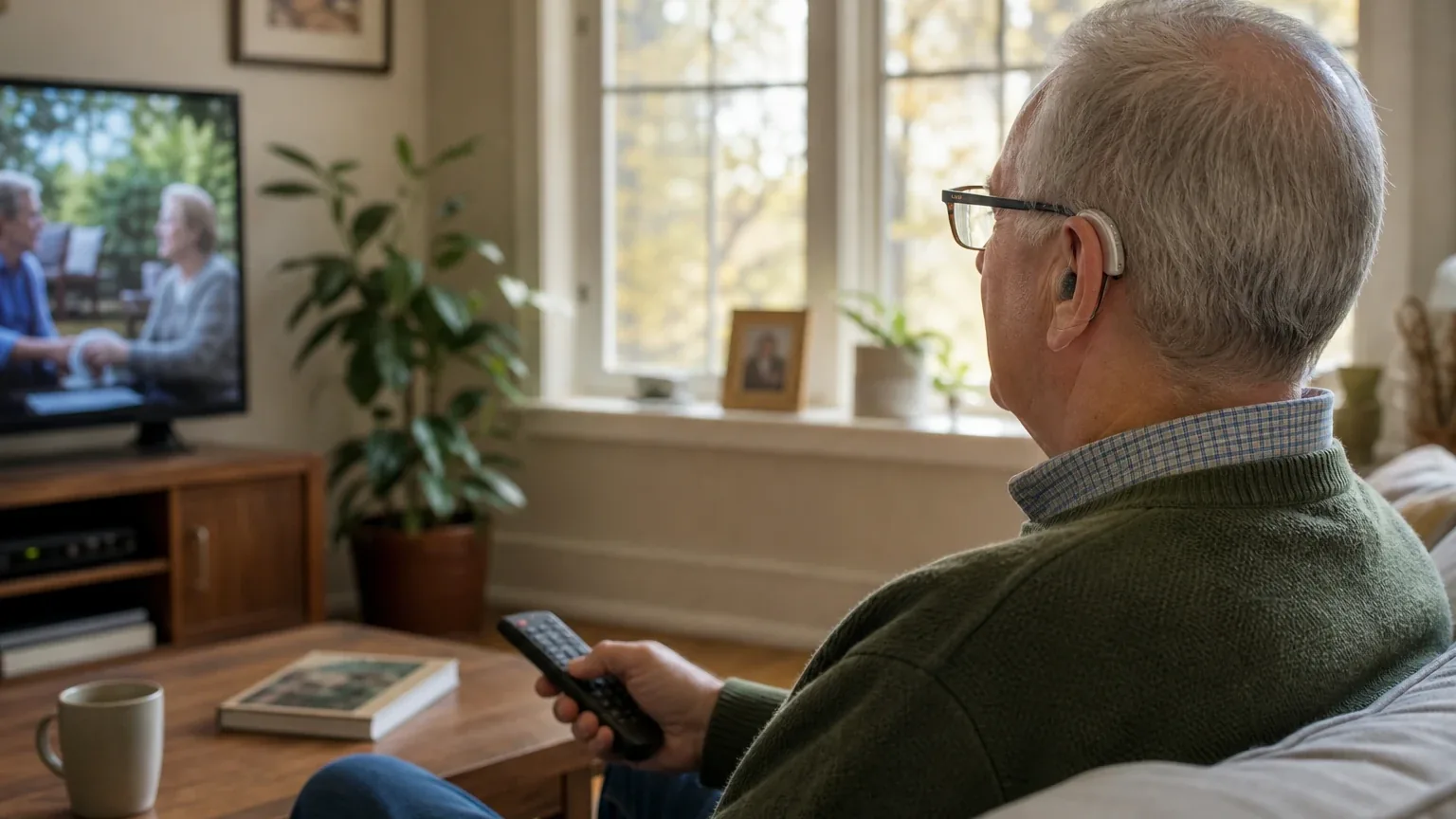
Answer Capsule
Oticon Intent is a good fit for older adults who want premium prescription hearing support for everyday conversation, television, and public settings, provided a reputable local professional supplies a written all-in price and a meaningful trial. Four of seven platforms named Oticon Intent during the ranking stage (57% of included platform responses), with an average listed rank of 6.25 and a best rank of 4. Its strongest case rests on independent laboratory speech results, adaptive noise processing, and professional fitting with optional remote care. The main limitation is seller-dependent premium pricing with no universal manufacturer-published U.S. price, plus unverified trial, warranty, and return terms.
Research Snapshot
| Field | Finding |
|---|---|
| Platform mentions in ranking stage | 4 of 7 platforms (anthropic, deepseek, google, perplexity) |
| Share of included platform responses | 57.1% |
| Average listed rank | 6.25 |
| Best listed rank | 4 |
| Relevant product/model/plan | Oticon Intent prescription hearing aids, especially the rechargeable miniRITE model fitted and programmed by a licensed hearing-care professional |
| Overall use-case fit | Good |
| Research date | 2026-09-27 |
What Changed Since August 2026
Oticon Intent moved up from No. 6 to No. 5, and platform mentions increased from 2 to 4. The September 2026 review keeps Oticon Intent as a good fit for seniors seeking premium prescription hearing support, with no change to the recommended configuration. The tenor shifted from good-to-strong to plainly good, reflecting a more measured verdict rather than any reported product change. Pricing evidence was refreshed: $2,898 to $4,598 per pair is newly reported, while the $3,700 pair figure is no longer repeated. The trial-length range is no longer repeated as 7 to 60 days, and the earlier 3-year warranty claim is gone, leaving trial and warranty terms described as uncertain. Buyers should still expect seller-dependent pricing and professional fitting. Differences between the two editions reflect what each article reports; they do not by themselves prove that the product, service, or price changed.
The August 2026 review preserves the earlier article for reference.
Why Oticon Intent Qualified for This Study
Questions This Section Answers
- Is Oticon Intent a good choice for General Hearing Support for seniors?
- How many AI platforms named Oticon Intent in the 2026 hearing aid ranking stage?
Oticon Intent qualified because four of seven included platforms named it during ranking discovery, and every platform that evaluated it rated the fit as good, strong, or uncertain rather than poor [1]. The entity cleared the study's minimum-mention threshold of two, appearing on anthropic (rank 4), deepseek (rank 8), google (rank 4), and perplexity (rank 9), for an average listed rank of 6.25 and a best rank of 4.
Qualification reflects repeated naming across independent platform searches, not proof of product quality. Three platforms (grok, kimi, and one additional platform) did not name Oticon Intent in the ranking stage, so its 57.1% share of included platform responses is a majority but not a consensus.
The platforms that did name it converged on the same reason: Oticon Intent is a prescription hearing aid built around speech understanding in noise, professional fitting, and rechargeable connectivity, which maps directly onto the General Hearing Support use case of conversation, television, and public settings [1].
The Product, Model, Plan, or Service Most Relevant to General Hearing Support
Questions This Section Answers
- Which Oticon Intent model and technology level should a senior buyer choose for everyday conversation and television?
- Does Oticon Intent require a licensed professional to fit and program it?
The relevant product is Oticon Intent prescription hearing aids, especially the rechargeable miniRITE model fitted and programmed by a licensed hearing-care professional [7]. Oticon Intent is a prescription device, not an over-the-counter product, and it is normally obtained through a hearing-care professional who programs listening programs and provides adjustments [9].
Oticon Intent is available in four technology levels (Intent 1, 2, 3, and 4) across miniRITE R and miniBTE R styles, is rechargeable only, and fits mild to severe hearing loss [11]. Technology level, not the model name, determines the final price [12]. Buyers should confirm which exact Intent model and technology level is being quoted, and whether the price is per ear or per pair [13].
Platforms also named Oticon Real and Oticon Reveal 1 alongside Intent, but no comparative technical or pricing data was found for Reveal 1, and one platform flagged the dual recommendation as a possible data-quality issue that should be clarified before purchase [14]. This review centers on Oticon Intent.
What the AI Platforms Agreed About
Questions This Section Answers
- Do independent lab tests support Oticon Intent speech clarity for seniors in noisy places?
- Is Oticon Intent rechargeable, and does it stream television and phone audio?
Platforms broadly agreed that Oticon Intent is a premium prescription hearing aid with strong speech-in-noise positioning, professional fitting requirements, and rechargeable connectivity. Independent HearAdvisor testing reported above-average speech-in-noise and speech-in-quiet results, and HearAdvisor ranked Intent third among 36 prescription hearing aids tested, a top-6% placement [16].
Platforms also agreed on the core technology story: 4D user-intent sensors, MoreSound Intelligence 3.0, Deep Neural Network 2.0, and neural noise suppression of up to 12 dB at the Intent 1 level [18]. Oticon reports up to 12 dB of unwanted-sound suppression in complex environments, a manufacturer claim based on cited technical evaluation rather than an individualized clinical outcome [20].
On connectivity, platforms agreed that Intent supports Bluetooth streaming, hands-free calls on selected Apple devices, selected Android and Windows streaming, app-based volume and program control, and optional television and remote-microphone accessories [21]. Oticon lists Bluetooth LE Audio and Auracast support, with compatibility depending on phone, computer, operating-system version, firmware, and hearing-aid model [22].
Platforms also agreed that Intent is rechargeable only, with roughly 20 hours of battery life and fast charging [24]. One platform reported a 30-minute charge yielding about 8 hours of use [26].
Where the AI Platforms Disagreed or Were Uncertain
Questions This Section Answers
- Why do Oticon Intent prices differ so much between sellers and clinics?
- What trial period and warranty does Oticon Intent actually include in the United States?
Pricing is the clearest disagreement. Independent 2026 comparison data listed approximately $2,898 to $4,598 per pair across Intent technology levels, while HearAdvisor listed $4,898 for the tested premium configuration [27]. MeritHearing listed per-device pricing of $2,320 for Intent 1 down to $1,440 for Intent 4 [29]. One platform reported online direct-to-consumer pricing as low as $1,899 to $3,499 per pair, with limitations versus traditional clinic models [30]. These figures likely reflect different sellers, technology levels, care bundles, and publication dates, and Oticon does not appear to publish one universal U.S. consumer price [27].
Trial and warranty terms are uncertain rather than agreed. One platform reported a 60-day trial with unlimited follow-up visits and a 3-year manufacturer warranty through Soundly, and a 45-day risk-free trial with no restocking fees through ZipHearing [31]. Another reported that a product-specific Oticon Intent trial length, refund policy, and nonrefundable fees were not verified from reviewed official sources [33]. Under U.S. rules, hearing aids sold with a professional fitting must include a 30-day return period, but restocking fees and exact terms vary by state and clinic [34].
Own-voice comfort is a repeated limitation. HearAdvisor found low own-voice comfort in its testing and noted that "own voice sounds unnatural," though it did not clarify whether this is consistent across all Intent levels or adjustable in fitting software [28]. HearingTracker described the fit as somewhat bulkier [27].
One platform, kimi, rated the fit uncertain and reported that no verified 2026 U.S. pricing, trial terms, or specific Intent model specifications could be confirmed in its retrieved sources (kimi:SRC1). That is a research-coverage gap, not evidence that the product underperforms.
Use-Case-Specific Features and Capabilities
Questions This Section Answers
- How well does Oticon Intent handle speech in restaurants and group conversations for older adults?
- Can Oticon Intent stream television audio and support remote adjustments from a hearing professional?
Oticon Intent's feature set maps well onto conversation, television, and public settings. Oticon claims MoreSound Intelligence 3.0, DNN 2.0, and 4D sensors improve speech access and comprehension in complex environments, and independent HearAdvisor testing reported above-average speech-in-noise and speech-in-quiet results, though these are laboratory measurements that do not guarantee the same result for every wearer [36].
For background noise, the product includes adaptive sound processing, neural noise suppression, SuddenSound Stabilizer, and Wind & Handling Stabilizer, with Oticon reporting up to 12 dB of unwanted-sound suppression in complex environments [36]. One platform described Oticon's BrainHearing philosophy as preserving a 360-degree soundscape rather than aggressively muting background noise, which some users find more natural and others find overwhelming in crowds [39].
For television and public settings, Intent supports automatic environmental adaptation, direct Bluetooth streaming, and optional TV Adapter and EduMic accessories, with public-setting benefits depending on phone compatibility, accessories, and availability of compatible Auracast broadcasts [40]. HearAdvisor lab scoring for music streaming was 4.0/5, compared with 3.3/5 for Oticon Zeal [43].
For audiology support, Intent is a prescription product programmed by a hearing-care professional, and the Oticon Companion app supports remote assistance through a professional [40]. The quality, availability, and cost of that care depend on the selected clinic or seller [40].
Comfort and fit are the main capability limitation. Intent is a rechargeable behind-the-ear/receiver-in-the-ear product rather than an invisible in-canal aid, and individual comfort varies with ear anatomy, dome or earmold choice, and programming [46]. Intent is appropriate for mild to severe hearing loss; Oticon recommends the Xceed model for profound loss [43].
Pricing, Fees, Contracts, and Ongoing Costs
Questions This Section Answers
- How much does Oticon Intent cost per pair in 2026, and what does the quoted price include?
- What ongoing Oticon Intent costs apply after the initial trial period ends?
Oticon Intent pricing is seller-dependent and generally premium, and no single manufacturer-published U.S. retail price was verified. Independent 2026 comparison data listed approximately $2,898 to $4,598 per pair across Intent technology levels, while HearAdvisor listed $4,898 for the tested premium configuration [47]. MeritHearing listed Intent 1 at $2,320 per device ($4,445 per pair), Intent 2 at $1,900 per device ($3,605 per pair), Intent 3 at $1,630 per device ($3,065 per pair), and Intent 4 at $1,440 per device ($2,685 per pair) [49].
Bundled-service pricing through ZipHearing was reported at $2,898 to $4,598 per pair including one year of unlimited local care, and Soundly bundled pricing was reported at $4,098 per pair for the premium level with a 60-day trial [51]. One platform reported traditional audiology clinics charging $6,000 to $8,000 or more per pair [51].
Ongoing costs are the least transparent part of the purchase. Reported post-trial options include a 1-year service package at $500, a 3-year service package at $1,250, or pay-per-visit fees of $65 to $100 per appointment [52]. A loss-and-damage deductible of $350 per hearing aid was reported under the manufacturer warranty [52]. Consumables and accessories reported separately include wax guards at about $9.95 per month, domes or tips at about $10.49 per month, a $19.99 cleaning kit, and a SmartCharger with drying function at $325 [52].
Oticon's own terms of sale state that posted prices exclude taxes and shipping, that prices may change without notice, that returns are accepted within 90 days of invoice date in original condition subject to an $8 restocking fee, and that refunds exclude original shipping and handling (official:C2). Those terms govern Oticon's direct sales channel and may not match a local clinic's contract, so buyers should treat them as one data point rather than the whole picture.
Best Suited For
Questions This Section Answers
- Who gets the most value from Oticon Intent for everyday conversation and television?
- Is Oticon Intent worth it for a senior who wants professional fitting and remote support?
Oticon Intent is best suited to older adults with mild-to-severe hearing loss who want professional audiology support and who regularly move between quiet conversation, television, restaurants, meetings, and other noisy environments [54]. It also suits buyers who value wireless streaming, remote support, and a rechargeable behind-the-ear design [56].
It is a reasonable fit for buyers comparing mid-to-premium prescription options who are willing to pay roughly $2,685 to $4,598 per pair for current-generation technology and who accept rechargeable-only operation with about 20 hours per charge [58]. It is strongest when a reputable local professional provides a written all-in price, a meaningful trial period, and continuing adjustment support [60].
Probably Not Best Suited For
Questions This Section Answers
- Who should not choose Oticon Intent for General Hearing Support?
- Is Oticon Intent a poor choice for a senior who wants an invisible in-canal hearing aid?
Oticon Intent is probably not the best choice for buyers seeking an OTC product without professional fitting, strict budget shoppers who need a clearly published all-in price, and people highly sensitive to own-voice sound or who strongly prefer an invisible in-canal device [61].
It is also a weaker fit for users who need disposable batteries, since Intent is rechargeable only with roughly 20 hours of battery life while some competitors offer 28 to 56 hours per charge [63]. Buyers with profound hearing loss should look elsewhere, as Oticon recommends the Xceed model for profound loss [63]. Users who need CROS for single-sided deafness are also outside Intent's scope [63].
When Another Option May Be Better
Questions This Section Answers
- What is a better alternative to Oticon Intent for a senior with mild hearing loss who wants lower cost?
- When is an OTC hearing aid a better choice than Oticon Intent for General Hearing Support?
An OTC hearing aid may be better for an adult with perceived mild-to-moderate hearing loss who prioritizes lower cost and self-directed purchase over professional fitting, since FDA OTC hearing aids can be bought without professional involvement [64]. A lower-tier or previous-generation prescription model may be better when the buyer mainly needs quiet-home conversation and television and wants to reduce cost [66].
Another prescription brand may be better after an in-person comparison if own-voice comfort, severe noisy-environment difficulty, telephone compatibility, or a different physical style is the priority [66]. An invisible or in-canal model may be better for buyers who reject a behind-the-ear design, subject to hearing-loss and power limitations [66]. Buyers who need extended battery life or a disposable-battery option should compare models offering 28 to 56 hours per charge or dual power options [67].
Questions to Verify Before Buying
Questions This Section Answers
- What should a buyer confirm with the Oticon Intent provider before signing a contract?
- Which Oticon Intent costs are excluded from the quoted bundle price?
Before purchase, buyers should confirm which exact Intent model and technology level is being quoted and whether the price is per ear or per pair [68]. They should ask what is included in the quoted price: hearing evaluation, fitting, follow-up visits, remote care, cleanings, repairs, accessories, and replacement parts [68].
Buyers should obtain in writing the trial period, return deadline, refund amount, and any nonrefundable fitting or restocking fee, plus the warranty duration and what it covers for defects, moisture, loss, accidental damage, receivers, chargers, and repairs [68]. They should confirm how many in-person adjustments are included and what follow-up care costs after the included period [68].
Compatibility questions matter too: whether the specific model works with the buyer's phone, television, computer, and preferred accessibility features, and whether the buyer's hearing loss is within the model's fitting range [68]. Buyers should also ask whether insurance, Medicare Advantage, veterans' benefits, employer benefits, or financing are available and what remains out of pocket [68].
Final AI Consensus Verdict
Oticon Intent is a good fit for General Hearing Support for older adults who want premium prescription hearing support for conversation, television, streaming, and varied public settings, particularly when professional fitting and ongoing adjustments are valued [72]. Four of seven platforms named it in the ranking stage, and platform fit ratings ranged from good to strong, with one platform rating the fit uncertain because it could not verify U.S. pricing or trial terms (kimi:SRC1).
The strongest reason to consider it is the combination of independent laboratory speech results, adaptive noise processing, professional fitting, and optional remote care [75]. The main limitation is premium, provider-dependent pricing with no universal manufacturer-published U.S. price, alongside trial, warranty, and return terms that are not standardized publicly across sellers [78].
Purchase is strongest when a reputable local professional provides a written all-in price, a meaningful trial period, and continuing adjustment support [79]. Buyers prioritizing low cost, transparent manufacturer-set pricing, self-fitting, or an in-canal design should compare OTC and alternative prescription options first [72].
How This Review Was Produced
This review evaluates Oticon Intent only for the General Hearing Support use case, using platform-reported research collected for the Best Hearing Aids for Seniors topic on 2026-09-27. Seven platforms contributed fit research: openai, anthropic, deepseek, google, grok, kimi, and perplexity. Four of those platforms named Oticon Intent during ranking discovery, which is the basis for the 57.1% share of included platform responses.
Platform fit ratings were good for openai, anthropic, deepseek, and perplexity; strong for google and grok; and uncertain for kimi. Ranking positions were anthropic 4, deepseek 8, google 4, and perplexity 9. Citations in this article are platform-reported evidence and were not independently verified by the writer stage.
Methodology Limitations
Platform-reported research dates differ from the authoritative run date of 2026-09-27: anthropic reported 2026-01-15 and deepseek reported 2026-04-25, while google, grok, kimi, openai, and perplexity reported 2026-09-27. Those dates are provenance metadata and do not independently prove freshness.
Platform mentions count only platforms that named the entity during ranking discovery; all included platforms evaluated fit, but not all named Oticon Intent in ranking. Conflicting product names, pricing, and capabilities were not resolved by guessing, and buyers should verify them directly. The supplied URLs were collected from platform responses and were not independently validated by the writer stage.
Oticon's technical claims and independent lab results are not equivalent to individualized clinical outcomes, and independent testing is laboratory-based rather than a guarantee of personal benefit [81]. One platform ran without search enabled, so its claims are platform-reported rather than retrieved [83]. The requested alternatives Oticon Real and Oticon Reveal 1 were not separately assessed in depth [84].
Explore more senior technology guidance in the category directory.
Sources
Company-Owned Sources
- Oticon Intent Product Guide 2024 - User-Intent Sensors and MoreSound Intelligence 3.0: https://assets-ue.cas.dgs.com/-/media/oticon-us/main/download-center---myoticon---product-literature/intent/pi/155000264--rm--h1-2024--intent-product-guide--dc-0224v1.pdf?rev=7A1A&la=en
- Oticon Intent - Clinical Evidence and User Benefits Whitepaper: https://assets-ue.cas.dgs.com/-/media/oticon-us/main/download-center---myoticon---product-literature/intent/whitepapers/15500-0267-intent-sensor-technology-whitepaper.pdf?hash=2F965838C29E26A7B7B1614F13357B18&la=en&rev=1831
- HBS Navigation - Pricing and Packages: https://hearingbenefitservices.com/pricingandpackages
- Oticon Intent™ hearing aids: https://oticonindia.com
- 4D Sensor Technology and Deep Neural Network 2.0 in Oticon Intent - Technical Whitepaper: https://wdh02.azureedge.net/-/media/oticon-us/main/download-center---myoticon---product-literature/intent/whitepapers/15500-0299---4d-sensor-technology-and-dnn-2-0-whitepaper.pdf?la=en&rev=8DD6
- Hearing Care | AARP Member | AARP Hearing Solutions by UHC: https://www.aarphearingsolutions.com/explore
- Hearing support package options & care plans | AARP Hearing Solutions: https://www.aarphearingsolutions.com/resources/articles/discounts/your-support-package-options-aarp-hearing-solutions-explained
- Oticon Bluetooth hearing aids: https://www.oticon.com/en-us/hearing-loss/life-with-a-hearing-loss/your-first-visit-to-a-hearing-clinic/connectivity
- Oticon Intent Hearing Aids: https://www.oticon.com/hearing-aids/oticon-intent
- Oticon Intent – Features: https://www.oticon.com/hearing-aids/oticon-intent/features
- Oticon Intent – Styles: https://www.oticon.com/hearing-aids/oticon-intent/styles
- Oticon Intent – Technology: https://www.oticon.com/hearing-aids/oticon-intent/technology
- The World's First Hearing Aid with User-Intent Sensors - Oticon: https://www.oticon.com/inside-oticon/press/2024/2024-1
- Oticon Companion App: https://www.oticon.com/products/app
- Oticon Intent | Quality hearing aids: https://www.oticon.com/products/hearing-aids/family/intent
- Oticon Intent – Hearing Aid with 4D Sensor Technology: https://www.oticon.com/professionals/brainhearing-technology/intent-technology
- Clinical studies say Oticon Intent offers more benefits than ever: https://www.oticon.com/professionals/campaigns-b2b/intent/intent-evidence
- Oticon Intent: https://www.oticon.com/professionals/hearing-devices/intent
- Oticon Support: https://www.oticon.com/support
- Solving problems with RemoteCare: https://www.oticon.com/support/troubleshooting/oticon-app/solving-problems-with-remote-care
- Official pricing and terms source: https://www.oticon.com/about-us/terms-and-conditions-of-sale
Additional AI research evidence84 records
- AI research evidence record openai:c1
- AI research evidence record anthropic:c001
- AI research evidence record deepseek:c1
- AI research evidence record perplexity:c4
- AI research evidence record anthropic:c002
- AI research evidence record perplexity:c5
- AI research evidence record openai:c5
- AI research evidence record anthropic:c001
- AI research evidence record deepseek:c1
- AI research evidence record deepseek:c4
- AI research evidence record anthropic:c005
- AI research evidence record anthropic:c006
- AI research evidence record openai:c10
- AI research evidence record anthropic:c009
- AI research evidence record google:1.1.4
- AI research evidence record openai:c3
- AI research evidence record anthropic:c008
- AI research evidence record anthropic:c001
- AI research evidence record openai:c1
- AI research evidence record openai:c4
- AI research evidence record openai:c5
- AI research evidence record openai:c6
- AI research evidence record openai:c8
- AI research evidence record anthropic:c005
- AI research evidence record perplexity:c4
- AI research evidence record google:2.2.9
- AI research evidence record openai:c2
- AI research evidence record openai:c3
- AI research evidence record anthropic:c007
- AI research evidence record google:2.2.8
- AI research evidence record anthropic:c004
- AI research evidence record anthropic:c006
- AI research evidence record openai:c10
- AI research evidence record deepseek:c6
- AI research evidence record anthropic:c008
- AI research evidence record openai:c1
- AI research evidence record openai:c3
- AI research evidence record openai:c4
- AI research evidence record google:1.1.9
- AI research evidence record openai:c5
- AI research evidence record openai:c6
- AI research evidence record openai:c7
- AI research evidence record anthropic:c005
- AI research evidence record openai:c8
- AI research evidence record openai:c9
- AI research evidence record openai:c2
- AI research evidence record openai:c2
- AI research evidence record openai:c3
- AI research evidence record anthropic:c007
- AI research evidence record google:1.3.5
- AI research evidence record anthropic:c005
- AI research evidence record anthropic:c006
- AI research evidence record google:1.3.7
- AI research evidence record openai:c1
- AI research evidence record anthropic:c001
- AI research evidence record openai:c5
- AI research evidence record openai:c8
- AI research evidence record anthropic:c005
- AI research evidence record anthropic:c007
- AI research evidence record openai:c10
- AI research evidence record openai:c1
- AI research evidence record openai:c3
- AI research evidence record anthropic:c005
- AI research evidence record openai:c10
- AI research evidence record deepseek:c9
- AI research evidence record openai:c1
- AI research evidence record anthropic:c005
- AI research evidence record openai:c10
- AI research evidence record deepseek:c6
- AI research evidence record anthropic:c006
- AI research evidence record openai:c6
- AI research evidence record openai:c1
- AI research evidence record anthropic:c001
- AI research evidence record perplexity:c5
- AI research evidence record openai:c3
- AI research evidence record anthropic:c008
- AI research evidence record openai:c9
- AI research evidence record openai:c2
- AI research evidence record openai:c10
- AI research evidence record deepseek:c9
- AI research evidence record openai:c4
- AI research evidence record openai:c3
- AI research evidence record deepseek:c1
- AI research evidence record anthropic:c009
Independent Sources
- Oticon's Intent hearing aid ... what is its Auracast like?: https://aurahear.com/2026/08/oticons-intent-hearing-aid-what-is-its-auracast-like/
- Oticon Intent - Free Trial - EarAid Hearing Centre: https://earaid.ca
- Oticon Intent 1 Price (2026) | HearClear: https://hearclear.in
- Oticon Intent 1 Hearing Aids with Local Care - Hear Florida: https://hearflorida.com/product/oticon-intent-1-hearing-aids-pair/
- Oticon Intent Review 2026: Price, Specs & Alternatives - Hearing Buddy: https://hearingbuddyapp.com/hearing-aids/oticon-intent
- Oticon Hearing Aid Prices & Costs (2026: https://merithearing.com/oticon-hearing-aid-prices-costs
- Oticon Hearing Aid Prices & Costs (2026) - MeritHearing: https://merithearing.com/oticon-hearing-aid-pricing/
- Oticon Hearing Aid Prices: https://merithearing.com/oticon-hearing-aid-pricing/?amp
- Oticon Hearing Aids India: Models, Reviews & Price: https://prudenthearingsolutions.com
- Oticon Intent 1 miniRITE Rechargeable Hearing Aids: https://usahearingexperts.com
- Hearing Solutions - Access HEARS: https://www.accesshears.com/hearing-solutions/
- Oticon Oticon Intent 1 Price India 2026 - Digital Hearing Aids for Clear Sound: https://www.clearsound.in
- Oticon Intent 1 miniRITE Hearing Aids - Price | Review: https://www.crystalhearinguk.co.uk
- Hearing Aids – Types of Hearing Aids: https://www.fda.gov/medical-devices/hearing-aids/types-hearing-aids
- FDA Finalizes Rule to Improve Access to Hearing Aids: https://www.fda.gov/news-events/press-announcements/fda-finalizes-rule-improve-access-hearing-aids
- Hearing Aid Return Policies: https://www.ftc.gov/business-guidance/resources/hearing-aid-return-policies
- Hearing Aid Prices and Audiology Fees | Good Ears North Strathfield: https://www.goodears.com.au/pricing
- Oticon Intent Expert Review: https://www.hearadvisor.com/products/oticon-intent
- Hearing Aids – Prices and Costs: https://www.hearingloss.org/hearing-help/hearing-aids/prices-costs/
- Oticon Hearing Aids: Models, Features, Prices, and Reviews - HearingTracker: https://www.hearingtracker.com/hearing-aids/oticon
- Oticon Intent Hearing Aids Review: https://www.hearingtracker.com/hearing-aids/oticon-intent
- Oticon Intent 1 Rechargeable RIC Digital Hearing Aids | AI-Powered Sound - HearUpUSA: https://www.hearupusa.com
- Cost of Oticon Intent : r/HearingAids - Reddit: https://www.reddit.com/r/HearingAids/comments/1cb9g00/cost_of_oticon_intent
- Oticon Intent Hearing Aid: Review & Prices - Soundly: https://www.soundly.com/product/oticon-intent
- Oticon Hearing Aids Models & Prices 2026 Version: https://www.youtube.com/watch?v=LApDP9uNPYg
- NEW Oticon Reveal Detailed Hearing Aid Review!: https://www.youtube.com/watch?v=upvKGxgWSig
- Buy Oticon Intent Hearing Aids - ZipHearing: https://www.ziphearing.com/oticon-intent
Additional AI research evidence84 records
- AI research evidence record openai:c1
- AI research evidence record anthropic:c001
- AI research evidence record deepseek:c1
- AI research evidence record perplexity:c4
- AI research evidence record anthropic:c002
- AI research evidence record perplexity:c5
- AI research evidence record openai:c5
- AI research evidence record anthropic:c001
- AI research evidence record deepseek:c1
- AI research evidence record deepseek:c4
- AI research evidence record anthropic:c005
- AI research evidence record anthropic:c006
- AI research evidence record openai:c10
- AI research evidence record anthropic:c009
- AI research evidence record google:1.1.4
- AI research evidence record openai:c3
- AI research evidence record anthropic:c008
- AI research evidence record anthropic:c001
- AI research evidence record openai:c1
- AI research evidence record openai:c4
- AI research evidence record openai:c5
- AI research evidence record openai:c6
- AI research evidence record openai:c8
- AI research evidence record anthropic:c005
- AI research evidence record perplexity:c4
- AI research evidence record google:2.2.9
- AI research evidence record openai:c2
- AI research evidence record openai:c3
- AI research evidence record anthropic:c007
- AI research evidence record google:2.2.8
- AI research evidence record anthropic:c004
- AI research evidence record anthropic:c006
- AI research evidence record openai:c10
- AI research evidence record deepseek:c6
- AI research evidence record anthropic:c008
- AI research evidence record openai:c1
- AI research evidence record openai:c3
- AI research evidence record openai:c4
- AI research evidence record google:1.1.9
- AI research evidence record openai:c5
- AI research evidence record openai:c6
- AI research evidence record openai:c7
- AI research evidence record anthropic:c005
- AI research evidence record openai:c8
- AI research evidence record openai:c9
- AI research evidence record openai:c2
- AI research evidence record openai:c2
- AI research evidence record openai:c3
- AI research evidence record anthropic:c007
- AI research evidence record google:1.3.5
- AI research evidence record anthropic:c005
- AI research evidence record anthropic:c006
- AI research evidence record google:1.3.7
- AI research evidence record openai:c1
- AI research evidence record anthropic:c001
- AI research evidence record openai:c5
- AI research evidence record openai:c8
- AI research evidence record anthropic:c005
- AI research evidence record anthropic:c007
- AI research evidence record openai:c10
- AI research evidence record openai:c1
- AI research evidence record openai:c3
- AI research evidence record anthropic:c005
- AI research evidence record openai:c10
- AI research evidence record deepseek:c9
- AI research evidence record openai:c1
- AI research evidence record anthropic:c005
- AI research evidence record openai:c10
- AI research evidence record deepseek:c6
- AI research evidence record anthropic:c006
- AI research evidence record openai:c6
- AI research evidence record openai:c1
- AI research evidence record anthropic:c001
- AI research evidence record perplexity:c5
- AI research evidence record openai:c3
- AI research evidence record anthropic:c008
- AI research evidence record openai:c9
- AI research evidence record openai:c2
- AI research evidence record openai:c10
- AI research evidence record deepseek:c9
- AI research evidence record openai:c4
- AI research evidence record openai:c3
- AI research evidence record deepseek:c1
- AI research evidence record anthropic:c009
Other Sources
- Financial Assistance for Hearing Aids and Cochlear Implants | Getting Care Guide: https://ears.ucsf.edu/en/getting-care-guide/financial-assistance
- How to Get Hearing Aids: https://www.fda.gov/medical-devices/hearing-aids/how-get-hearing-aids
Additional AI research evidence84 records
- AI research evidence record openai:c1
- AI research evidence record anthropic:c001
- AI research evidence record deepseek:c1
- AI research evidence record perplexity:c4
- AI research evidence record anthropic:c002
- AI research evidence record perplexity:c5
- AI research evidence record openai:c5
- AI research evidence record anthropic:c001
- AI research evidence record deepseek:c1
- AI research evidence record deepseek:c4
- AI research evidence record anthropic:c005
- AI research evidence record anthropic:c006
- AI research evidence record openai:c10
- AI research evidence record anthropic:c009
- AI research evidence record google:1.1.4
- AI research evidence record openai:c3
- AI research evidence record anthropic:c008
- AI research evidence record anthropic:c001
- AI research evidence record openai:c1
- AI research evidence record openai:c4
- AI research evidence record openai:c5
- AI research evidence record openai:c6
- AI research evidence record openai:c8
- AI research evidence record anthropic:c005
- AI research evidence record perplexity:c4
- AI research evidence record google:2.2.9
- AI research evidence record openai:c2
- AI research evidence record openai:c3
- AI research evidence record anthropic:c007
- AI research evidence record google:2.2.8
- AI research evidence record anthropic:c004
- AI research evidence record anthropic:c006
- AI research evidence record openai:c10
- AI research evidence record deepseek:c6
- AI research evidence record anthropic:c008
- AI research evidence record openai:c1
- AI research evidence record openai:c3
- AI research evidence record openai:c4
- AI research evidence record google:1.1.9
- AI research evidence record openai:c5
- AI research evidence record openai:c6
- AI research evidence record openai:c7
- AI research evidence record anthropic:c005
- AI research evidence record openai:c8
- AI research evidence record openai:c9
- AI research evidence record openai:c2
- AI research evidence record openai:c2
- AI research evidence record openai:c3
- AI research evidence record anthropic:c007
- AI research evidence record google:1.3.5
- AI research evidence record anthropic:c005
- AI research evidence record anthropic:c006
- AI research evidence record google:1.3.7
- AI research evidence record openai:c1
- AI research evidence record anthropic:c001
- AI research evidence record openai:c5
- AI research evidence record openai:c8
- AI research evidence record anthropic:c005
- AI research evidence record anthropic:c007
- AI research evidence record openai:c10
- AI research evidence record openai:c1
- AI research evidence record openai:c3
- AI research evidence record anthropic:c005
- AI research evidence record openai:c10
- AI research evidence record deepseek:c9
- AI research evidence record openai:c1
- AI research evidence record anthropic:c005
- AI research evidence record openai:c10
- AI research evidence record deepseek:c6
- AI research evidence record anthropic:c006
- AI research evidence record openai:c6
- AI research evidence record openai:c1
- AI research evidence record anthropic:c001
- AI research evidence record perplexity:c5
- AI research evidence record openai:c3
- AI research evidence record anthropic:c008
- AI research evidence record openai:c9
- AI research evidence record openai:c2
- AI research evidence record openai:c10
- AI research evidence record deepseek:c9
- AI research evidence record openai:c4
- AI research evidence record openai:c3
- AI research evidence record deepseek:c1
- AI research evidence record anthropic:c009
Verify This Research
Review the study details behind this page or download the public machine-readable verification record.
- Study date
- September 27, 2026
- Platforms analyzed
- 7
- Source records
- 51
- Ranking mentions
- 4 of 7
- Platform share
- 57%
- Final consensus rank
- #5
Research trail and source mix
Configured platforms
openai, anthropic, deepseek, grok, perplexity, kimi, google
Source mix
27 independent · 22 company-owned · 2 unclear
Evidence support
39 direct · 12 partial
Important limitation
Use the run research_date as the study date. Platform-reported dates are provenance metadata and do not independently prove freshness.
Source snapshot SHA-256 9937bd2954184a70141ccd98a97489dee2d2abb86ebdce26a18b9e074c345c08
Archived editions
Browse earlier published research snapshots for this article. The latest edition remains at the current URL.