
Answer Capsule
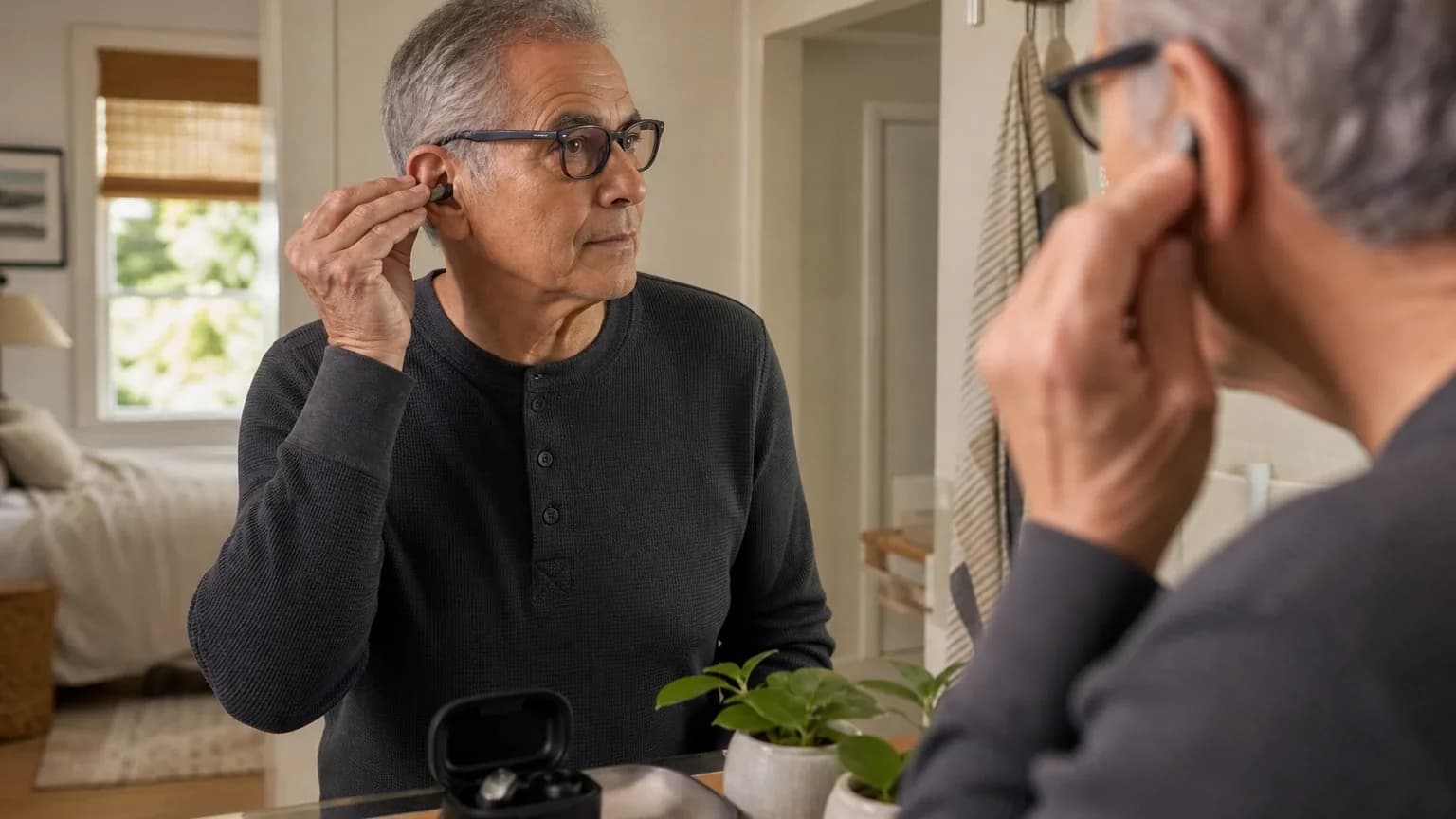
The Jabra Enhance Select 700 is a mixed-to-good fit for Over-the-Counter Hearing Assistance. All 7 platforms named it during ranking discovery, with an average listed rank of 1.43 and a best rank of 1. Its strongest case: bundled remote audiology support, a 100-day trial, and a discreet rechargeable design. The main limitation is that Jabra's current pages present the Select M3 as the next generation of the 700, and reported pricing ranges from $1,695 to $1,995 per pair across sources, so buyers must confirm which model and package they are actually ordering.
Research Snapshot
| Field | Finding |
|---|---|
| Platform mentions in ranking stage | 7 of 7 included platforms |
| Share of included platform responses | 100% |
| Average listed rank | 1.43 |
| Best listed rank | 1 |
| Relevant product/model/plan | Jabra Enhance Select 700 OTC package with included professional support plan; successor appears to be Jabra Enhance Select M3 |
| Overall use-case fit | Mixed (openai), good (anthropic, deepseek, google, perplexity), strong (grok, kimi) |
| Research date | 2026-09-27 |
What Changed Since August 2026
Jabra Enhance Select 700 moved up from No. 2 to No. 1, and platform mentions increased from 5 to 7. The September 2026 review keeps the Jabra Enhance Select 700 as a mixed-to-good fit, with the same buyer profile and no change to the recommended configuration. The most consequential shift is how the offering is framed: model identity and successor status are now the central concern, since Jabra presents the Select M3 as the next generation of the 700, alongside a stated three-year audiology, warranty, and loss-and-damage term. Reported pricing remains unsettled; financing of $55–$65 per month is newly reported. A 14-day return window and roughly 100-foot streaming range are now reported, while the 100-day period is no longer repeated. Differences between the two editions reflect what each article reports; they do not by themselves prove that the product, service, or price changed.
The August 2026 review preserves the earlier article for reference.
Why Jabra Enhance Select 700 Qualified for This Study
Questions This Section Answers
- Why did Jabra Enhance Select 700 qualify for a 2026 OTC hearing aid ranking for seniors?
- How many AI platforms named Jabra Enhance Select 700 in the ranking stage?
The Jabra Enhance Select 700 qualified because it was named by all 7 included platforms during ranking discovery, giving it a 100% platform share and an average listed rank of 1.43. Ranks by platform were: deepseek 1, google 1, kimi 1, perplexity 1, anthropic 2, grok 2, and openai 2. The study's minimum threshold was 2 mentions, so the 700 cleared qualification by a wide margin.
Qualification reflects ranking visibility, not verified product quality. The 700 sits inside the FDA's OTC hearing aid category, which covers adults 18 and older with perceived mild-to-moderate hearing loss and requires no prescription or professional fitting [1]. Jabra lists the Select 700 among its OTC models [3], and the company markets the Select line with app-based setup, sound customization, and included professional support [4].
This is one report within a broader Over-the-Counter Hearing Assistance comparison.
The Product, Model, Plan, or Service Most Relevant to Over-the-Counter Hearing Assistance
Questions This Section Answers
- Which Jabra Enhance Select 700 package should a senior buyer choose for OTC hearing assistance?
- Is the Jabra Enhance Select 700 or the newer Select M3 the right OTC hearing aid to buy in 2026?
The most relevant offering is the Jabra Enhance Select 700 OTC package with an included professional support plan, sold direct with a 100-day trial, US-based support, and 3 years of audiology services, warranty, and loss-and-damage coverage [5]. Platforms described the plan in similar terms but not identically: anthropic cited an "Enhance Select 700 OTC hearing aid package with included 3-year professional support plan," kimi cited an "Enhance Select 700 OTC package with Premium Care Package," and google framed the relevant unit as "Jabra Enhance Select 700 / Select M3 Premium Package."
Model identity is the central ambiguity. Jabra's current product page calls the M3 the next generation of the Select 700 [7], and one independent review states Jabra replaced its Select lineup with the M-Series (Select M1, M2, M3) in August 2026 [8]. Another independent review says the Select M3 replaced the Select 700 as the flagship at the same $1,995 price point [9]. No explicit Select 700 discontinuation notice was found in the checked sources.
The supplied recommendation list also included other Jabra models — Select 300 (Premium Package), Select 500, Select 50R, and Select M3 — which means a buyer searching for "Select 700" may land on a different current model. Jabra's current direct-sale pages prominently market M1, M2, and M3 [10].
What the AI Platforms Agreed About
Questions This Section Answers
- What do AI platforms agree the Jabra Enhance Select 700 includes for OTC hearing aid buyers?
- Does the Jabra Enhance Select 700 include a 100-day trial and professional audiology support?
Agreement was strong on the commercial bundle. Multiple platforms independently reported a 100-day trial, a multi-year warranty with loss-and-damage protection, and included remote audiology support [11]. Jabra's own return policy documents a 100-day return period from delivery for direct purchases, with return initiation by the deadline and products received within 14 days after the period ends; Jabra says it pays return shipping [14].
Platforms also agreed on the core hardware profile: a rechargeable receiver-in-canal design, app-based control, Bluetooth streaming, and IP68 water and dust resistance [11]. Reported battery life clustered at 24 hours or more per charge, with a charging case holding roughly 3 additional charges [11].
Agreement on the support model was also consistent. Jabra advertises US-based customer support, lifetime technical support, and remote licensed-hearing-specialist adjustments, though availability of professional audiology services can vary by product, channel, package, price, and state [18].
Where the AI Platforms Disagreed or Were Uncertain
Questions This Section Answers
- How much does the Jabra Enhance Select 700 cost per pair, and why do reported prices differ?
- Is the Jabra Enhance Select 700 self-fitting, or does it require remote programming?
Pricing is the largest documented conflict. Reported figures include $1,695 and $1,995 [21], $1,795 [23], and a range of $1,695–$1,995 [24]. Perplexity's summary states publicly listed pricing is inconsistent across sources, with $1,995 common, $1,695 on some company listings, and $1,795 cited by HearAdvisor [26]. OpenAI reported low pricing confidence and could not verify a current Select 700 price at all [28].
Self-fitting is the second uncertainty. Jabra's FDA-cleared self-tuning test is documented for M-series self-fitting hearing aids [29], and one independent review describes an in-app 8-frequency self-tuning test or audiogram upload [30]. OpenAI states that whether the 700 has an equivalent workflow is unclear [29]. Deepseek could not independently verify the step-by-step fitting flow for older adults [32].
Performance evidence is mixed and thin. HearAdvisor lab testing reported an overall SoundScore of 3.8/5 (Grade B), excellent feedback handling at 5.0/5, own-voice comfort at 3.7/5, but speech-in-noise at 1.0/5 against a 1.48 category average [23]. That speech-in-noise figure comes from a single independent lab; no second published lab score was found for direct comparison. Music streaming was rated 2.5/5 in the same testing, and one reviewer called media playback quality "terrible" [35].
Battery runtime and comfort were not independently verified in the checked sources [28]. Deepseek found no independently verified runtime figure at all [32].
Use-Case-Specific Features and Capabilities
Questions This Section Answers
- Is the Jabra Enhance Select 700 easy enough for a senior to self-fit without an in-person appointment?
- Does the Jabra Enhance Select 700 work with Bluetooth LE Audio and Auracast for hands-free calling?
Setup and app quality drew the most favorable independent commentary. One reviewer described the setup as the simplest OTC setup tested, with app installation that completed "flawlessly, without unnecessary bugs," step-by-step instructions, and four environmental presets — All-Around, Restaurant, Outdoor, and Music [36]. The app supports per-ear volume adjustment and a three-level frequency adjustment via a Sound Equalizer, plus remote adjustments by a licensed audiology team without office visits [37].
Connectivity is a documented strength. Platforms reported Bluetooth LE Audio and Auracast readiness, hands-free calling with TapControl, and streaming for calls and media on iOS and Android [38]. Kimi reported Bluetooth LE streaming range of about 100 feet and tap controls for streaming (kimi:ncoa-hearing-aids).
Form factor and durability were described consistently: a micro receiver-in-ear design, IP68 water and dust rating with weatherproof nano-coating, and a portable charging case [38]. Anthropic reported a weight of 2.12 grams and dimensions of 1.04"L x 0.30"W x 0.47"H [40].
Documented gaps: no telecoil, no CROS option for single-sided hearing loss, and no disposable-battery variant [41]. Setup also requires a compatible smartphone or tablet, and compatibility is not guaranteed for every device model [44].
Pricing, Fees, Contracts, and Ongoing Costs
Questions This Section Answers
- How much does the Jabra Enhance Select 700 cost per pair, and is financing available?
- What fees apply beyond the Jabra Enhance Select 700 purchase price, such as loss-and-damage deductibles?
The verified conclusion is that no single Select 700 price can be confirmed from the supplied evidence. Reported figures span $1,695 to $1,995 per pair, with $1,795 also appearing [46]. Anthropic reported financing at roughly $55–$65 per month [46]; grok reported financing as low as $39–$65 per month (grok:0). Google reported that financing interest may apply through Bread Pay with APRs up to 34.99% [49].
Additional costs reported by platforms include a possible $195 loss-and-damage replacement deductible under Jabra's stated coverage terms, and replacement supplies such as domes, receiver wires, chargers, or accessories [51]. Optional accessories were listed at a TV Streamer+ for $299, a Multi Mic+ for $275, and an Upkeep Kit for $39 [52]. Kimi separately listed the Multi Mic+ at $275 (kimi:ncoa-hearing-aids).
Contract terms were reported as buyer-friendly but channel-dependent. The 100-day return policy applies to direct Jabra purchases and carries condition, deadline, and completeness requirements; coverage differs by purchase date, package, product, and purchase channel, and retail purchases may not include the same audiology services, warranty, trial, or loss-and-damage protection [53]. Anthropic reported no known setup, activation, app, or remote-adjustment fees during the 3-year audiology access period, and noted FSA/HSA eligibility [46]. What happens after the included 3-year audiology period ends is not established in the supplied evidence.
Best Suited For
Questions This Section Answers
- Who is the Jabra Enhance Select 700 best suited for among seniors with mild-to-moderate hearing loss?
- Is the Jabra Enhance Select 700 worth it for a senior who wants remote audiology support instead of clinic visits?
The 700 is best suited to adults with perceived mild-to-moderate hearing loss who are comfortable using a smartphone and want remote professional support rather than in-person fitting [55]. Platforms converged on four buyer profiles: Seniors seeking the simplest self-setup without office visits, users prioritizing a small discreet form factor, buyers wanting extended audiology support and remote adjustments included, and users with own-voice sensitivity who need feedback stability [57].
It also fits buyers who value a long trial window and future connectivity. The 100-day trial exceeds the 45-day minimum typical of competitors, and testers gave Jabra 10/10 for customer service, tied for the highest rating in that review (kimi:ncoa-hearing-aids). Bluetooth LE Audio and Auracast support appeal to buyers who want hands-free calling and public-broadcast compatibility on modern devices [58].
Buyers who want more customization than basic volume amplification provides are also a reasonable fit, given app-based sound controls, environmental programs, and remote licensed-specialist adjustments [59].
Probably Not Best Suited For
Questions This Section Answers
- Who should not choose the Jabra Enhance Select 700 for OTC hearing assistance?
- Is the Jabra Enhance Select 700 a bad choice for a senior with severe hearing loss or single-sided deafness?
Budget-first buyers should look elsewhere. Multiple platforms flagged the 700 as premium-priced for the OTC category, with lower-cost alternatives available in the $200–$1,000 range [61]. Kimi noted the reviewed OTC price range spanned $99–$2,699 and placed the 700 well above budget options (kimi:ncoa-hearing-aids).
Buyers whose priority is speech in noise should be cautious. Independent lab testing scored speech-in-noise at 1.0/5 against a 1.48 category average, and one comparison reported alternatives such as Lucid Tala (4.61/5) and Audicus Omni 2 (4.59/5) scoring higher overall [64]. The 700 ranked #26 of 65 OTC hearing aids tested, in the top 38% [64].
People without a compatible smartphone or tablet are a poor fit, because setup, customization, and remote adjustments depend on the app [65]. Buyers needing telecoil for loop systems, CROS for single-sided hearing loss, or a disposable-battery option should also look elsewhere [62]. Anyone with severe or profound loss, sudden or one-sided hearing change, dizziness, ear pain, or drainage should seek medical or audiologic evaluation instead of an OTC device [69].
When Another Option May Be Better
Questions This Section Answers
- What is a better alternative to the Jabra Enhance Select 700 for a senior who needs top speech-in-noise performance?
- Should a senior buy the Jabra Enhance Select M3 instead of the Select 700 in 2026?
Choose the Jabra Enhance Select M3 when the buyer wants the current successor model, current direct pricing, FDA-cleared self-fitting, and newer speech-in-noise features [71]. One independent review states the M3 replaced the 700 as flagship at the same $1,995 price point while adding Advanced Adaptive Listening [73]. Structured lab grades for the M3 were still emerging at the time of that review [72].
Choose a lower-cost current Jabra model such as the M1 when price matters more than advanced noise handling [74]. Choose the Select 300 when Bluetooth LE Audio and Auracast are not needed, or the Select 50R for simpler use in quiet spaces (kimi:ncoa-hearing-aids).
Choose a different brand when speech-in-noise performance is the deciding factor, since lab-tested competitors scored higher overall [75]. For buyers under $600, platforms pointed to options such as Elehear Beyond Pro at $599 or Audien ION Pro 2 (kimi:hearingtracker-elehear, kimi:ncoa-hearing-aids). For tinnitus management specifically, Elehear Beyond Pro was marketed for that use case (kimi:hearingtracker-elehear). For the simplest setup without app dependence, JLab Hear or MDHearing NEO with instant-fit presets were suggested, though JLab Hear has a reported 10-hour battery and lacks audiologic assistance (kimi:hearingtracker-jlab).
Choose an audiologist-fitted prescription device when hearing loss may be severe, asymmetric, medically complicated, or difficult to self-fit, or when the buyer requires documented in-person fitting and real-ear verification [76].
Questions to Verify Before Buying
Questions This Section Answers
- What should a senior confirm with Jabra before buying the Select 700 for OTC hearing assistance?
- Does the Jabra Enhance Select 700 100-day trial apply if purchased through a retailer?
Confirm the model first: whether the order is a Select 700 or the newer Select M3, and whether the price reflects that [78]. Confirm the complete out-the-door price, including shipping, sales tax, financing charges, and any audiology or Premium Care fee [80].
Confirm whether the specific package includes professional programming, remote audiology, warranty, and loss-and-damage protection, and whether self-fitting is available on the 700 or whether programming must be remote or from an audiogram [82]. Confirm the exact iOS and Android devices compatible with the current app and Bluetooth functions [85].
Confirm the manufacturer-stated battery runtime for streaming and non-streaming use, since no verified Select 700 runtime figure was located [80]. Confirm warranty duration, loss-and-damage deductible, replacement limits, and exclusions, and whether the 100-day return policy applies to the exact seller and package, including retailer purchases [87]. Confirm whether replacement domes, receiver wires, chargers, and maintenance supplies are readily available and at what prices, and whether in-person fittings or local support exist in the buyer's area if remote setup fails [80].
Final AI Consensus Verdict
The Jabra Enhance Select 700 is a mixed-to-good fit for Over-the-Counter Hearing Assistance. Seven of 7 platforms named it, at an average rank of 1.43 and a best rank of 1. Fit ratings split: grok and kimi rated it strong, anthropic, deepseek, google, and perplexity rated it good, and openai rated it mixed.
The strongest reason to consider it is the bundled support-and-trial proposition: a 100-day direct-purchase return window, multi-year warranty with loss-and-damage protection, included remote audiology support, app-based customization, and a discreet rechargeable design [88]. The main limitation is unresolved model and price ambiguity: Jabra presents the M3 as the next generation of the 700, reported prices range from $1,695 to $1,995, and self-fitting documentation is clearest for M-series devices [90].
For a 2026 purchase, compare the current Select M3 directly before choosing an older or ambiguously packaged Select 700. Platform agreement on ranking does not establish product quality; the performance evidence here rests largely on one independent lab's scores.
How This Review Was Produced
This report was generated from supplied platform research responses collected for the topic "Best OTC Hearing Aids for Seniors" under the use case Over-the-Counter Hearing Assistance, with a research date of 2026-09-27. Seven platforms were included: anthropic, deepseek, google, grok, kimi, openai, and perplexity. Each platform evaluated fit for the same target buyer — US adults with perceived mild-to-moderate hearing loss who want a lower-cost hearing aid option without an in-person prescription fitting.
Ranking statistics reflect how often and how highly each platform named the Jabra Enhance Select 700 during ranking discovery. Fit ratings and findings reflect each platform's own assessment. Citations are platform-reported evidence, not independently verified facts. Company-owned sources are labeled as such in the Sources section.
Methodology Limitations
Platform-reported research dates differ from the authoritative run date of 2026-09-27. Anthropic reported 2026-01-15 and deepseek reported 2026-06-30; the remaining platforms reported 2026-09-27. These dates are provenance metadata and do not independently prove freshness.
Deepseek's research was conducted with search disabled, so its claims are model-reported rather than retrieved. The supplied URLs were collected from platform responses and were not independently validated at the writing stage. No-search model claims require explicit verification before being treated as current facts.
Several material conflicts remain unresolved and were not resolved by guessing: reported pricing ($1,695, $1,795, $1,995), model lineup naming (Select 300/500/700 versus M1/M2/M3), whether the 700 has a documented self-fitting workflow, and whether the included support plan is staffed by licensed hearing professionals with stated response times. Battery runtime and comfort claims for the Select 700 were not independently verified in the checked sources. The speech-in-noise score of 1.0/5 comes from a single independent lab, with no second published lab score found for direct comparison.
Platform mentions count only platforms that named the entity during ranking discovery; all included platforms evaluated fit. Agreement among AI platforms does not prove product quality. This report is not medical advice, and OTC suitability is limited to perceived mild-to-moderate hearing loss.
Explore more senior technology guidance in the category directory.
Sources
Company-Owned Sources
- Troubleshooting the self-tuning test: https://help.jabraenhance.com/app-phone-connectivity/troubleshooting-the-self-tuning-test
- What to do if your hearing aids aren't connecting to the app: https://help.jabraenhance.com/app-phone-connectivity/troubleshooting-your-connection-to-the-jabra-enhance-select-app
- Jabra Enhance return policy: https://help.jabraenhance.com/returnpolicy
- Getting started with your retail purchase: https://help.jabraenhance.com/setup/getting-started-with-your-retail-purchase
- Jabra Enhance Select User Guides: https://help.jabraenhance.com/user-guides/userguides
- OTC Hearing Aids: What You Should Know: https://www.fda.gov/medical-devices/hearing-aids/otc-hearing-aids-what-you-should-know
- Jabra Enhance Select Hearing Aids - Buy Online: https://www.jabraenhance.com/
- Compare Jabra Enhance Select M3 vs. 200: https://www.jabraenhance.com/cdn-cgi/image/width=640,quality=90,format=auto/_next/static/media/plp-grid.ba3a3cd8.png
- Frequently Asked Questions: https://www.jabraenhance.com/faq
- Frequently Asked Questions - Jabra Enhance: https://www.jabraenhance.com/faq?bk=1
- Frequently Asked Questions - Jabra Enhance: https://www.jabraenhance.com/faq?redirect=true
- Jabra Enhance Select Hearing Aids - Buy Online: https://www.jabraenhance.com/product
- Jabra Enhance Select 700 Product Page: https://www.jabraenhance.com/product/enhanceselect700
- Jabra Enhance Select 700: https://www.jabraenhance.com/product/enhanceselect700?color=bronze
- Jabra Enhance Select M3: https://www.jabraenhance.com/product/enhanceselectm3
- Terms and Conditions: https://www.jabraenhance.com/terms-and-conditions
Additional AI research evidence92 records
- AI research evidence record openai:c1
- AI research evidence record deepseek:c1
- AI research evidence record openai:c2
- AI research evidence record deepseek:c2
- AI research evidence record perplexity:c1
- AI research evidence record perplexity:c2
- AI research evidence record openai:c8
- AI research evidence record google:1.1.4
- AI research evidence record google:2.1.8
- AI research evidence record openai:c7
- AI research evidence record anthropic:c1
- AI research evidence record anthropic:c3
- AI research evidence record perplexity:c1
- AI research evidence record openai:c9
- AI research evidence record openai:c10
- AI research evidence record anthropic:c7
- AI research evidence record google:1.1.7
- AI research evidence record openai:c4
- AI research evidence record openai:c7
- AI research evidence record openai:c11
- AI research evidence record anthropic:c1
- AI research evidence record anthropic:c4
- AI research evidence record anthropic:c5
- AI research evidence record google:1.1.2
- AI research evidence record perplexity:c3
- AI research evidence record perplexity:c4
- AI research evidence record perplexity:c5
- AI research evidence record openai:c7
- AI research evidence record openai:c3
- AI research evidence record google:1.1.4
- AI research evidence record openai:c5
- AI research evidence record deepseek:c2
- AI research evidence record google:1.1.8
- AI research evidence record google:1.2.9
- AI research evidence record anthropic:c2
- AI research evidence record anthropic:c7
- AI research evidence record anthropic:c8
- AI research evidence record anthropic:c1
- AI research evidence record anthropic:c3
- AI research evidence record anthropic:c5
- AI research evidence record anthropic:c4
- AI research evidence record anthropic:c6
- AI research evidence record google:1.1.2
- AI research evidence record openai:c5
- AI research evidence record openai:c6
- AI research evidence record anthropic:c1
- AI research evidence record anthropic:c4
- AI research evidence record anthropic:c5
- AI research evidence record google:1.1.2
- AI research evidence record perplexity:c3
- AI research evidence record openai:c11
- AI research evidence record openai:c7
- AI research evidence record openai:c9
- AI research evidence record anthropic:c7
- AI research evidence record openai:c1
- AI research evidence record deepseek:c1
- AI research evidence record anthropic:c5
- AI research evidence record anthropic:c1
- AI research evidence record openai:c4
- AI research evidence record anthropic:c8
- AI research evidence record anthropic:c1
- AI research evidence record anthropic:c4
- AI research evidence record perplexity:c3
- AI research evidence record anthropic:c5
- AI research evidence record openai:c5
- AI research evidence record openai:c6
- AI research evidence record anthropic:c6
- AI research evidence record google:1.1.2
- AI research evidence record openai:c1
- AI research evidence record deepseek:c1
- AI research evidence record openai:c8
- AI research evidence record google:1.1.4
- AI research evidence record google:2.1.8
- AI research evidence record openai:c7
- AI research evidence record anthropic:c5
- AI research evidence record openai:c1
- AI research evidence record deepseek:c1
- AI research evidence record google:1.1.4
- AI research evidence record google:2.1.8
- AI research evidence record openai:c7
- AI research evidence record perplexity:c3
- AI research evidence record openai:c3
- AI research evidence record openai:c5
- AI research evidence record openai:c11
- AI research evidence record openai:c6
- AI research evidence record deepseek:c2
- AI research evidence record openai:c9
- AI research evidence record anthropic:c1
- AI research evidence record perplexity:c1
- AI research evidence record openai:c3
- AI research evidence record openai:c8
- AI research evidence record perplexity:c3
Independent Sources
- Jabra Enhance Select App | Apple App Store: https://apps.apple.com/us/app/jabra-enhance-select/id1502033340
- Jabra Hearing Aids Review (2026) - audiologists.org: https://audiologists.org/wp-content/uploads/2023/05/Jabra-300-1024x768.jpg
- Jabra Enhance Select Prices - Premium Vs. Basic Explained - Soundly: https://cdn.prod.website-files.com/624b677d2850dddf85a6a3a8/6439580d7b9c76a473e3216f_Premium%20Vs%20Basic%20Care%20Levels%20Jabra%20Enhance%20Select.jpg
- Jabra Enhance Select 700 Review 2026: Price, Specs & Alternatives | Hearing Buddy: https://hearingbuddyapp.com/hearing-aids/jabra-enhance-select-700
- Jabra Enhance Select 700 Review 2026: Price, Specs & Alternatives | Hearing Buddy: https://hearingbuddyapp.com/images/icon.png
- Jabra Enhance Select 700 Review: https://hearinggearguide.com/reviews/jabra-enhance-select-700/
- Jabra Enhance Launches Enhance Select 700 Rechargeable OTC RIE: https://hearingreview.com/wp-content/uploads/2025/09/Jabra_Enhance-Select-700_web-1280x640.jpg
- Jabra Enhance Select 700 vs Sennheiser All-Day Clear Slim | HearAdvisor: https://plkuyfnyvbmjzqfvchst.supabase.co/storage/v1/object/public/media/sennheiser-all-day-clear-slim-hero.png
- The Audiologist's Guide to Hearing Aids, Personal Sound Amplification Products, Hearables, and Over-the-Counter Devices: https://www.audiology.org/wp-content/uploads/2022/03/Audiologists-Guide-to-OTCs_Updated-March-2022.pdf
- FDA Final Rule: Over-the-Counter (OTC) Hearing Aids: https://www.fda.gov/medical-devices/hearing-aids/over-counter-otc-hearing-aids-what-you-should-know
- Jabra Enhance Select 700 Hearing Aid Review - HearAdvisor: https://www.hearadvisor.com/_next/image?url=https%3A%2F%2Fplkuyfnyvbmjzqfvchst.supabase.co%2Fstorage%2Fv1%2Fobject%2Fpublic%2Fmedia%2Fproducts%2F1773676162266-jc1dpg66waj.jpg&w=640&q=75
- Jabra Hearing Aids Reviews: Comprehensive Acoustic Lab: https://www.hearadvisor.com/brands/jabra
- Jabra Enhance Select 700 Expert Review | HearAdvisor: https://www.hearadvisor.com/products/jabra-enhance-select-700
- Jabra Enhance Select 700 vs. Yeasound RIC700: https://www.hearingtracker.com/hearing-aids/compare/jabra-enhance-select-700-vs-yeasound-ric700
- Elehear Beyond Pro Review: Top OTC Hearing Aid, Lab Tested: https://www.hearingtracker.com/hearing-aids/elehear-beyond-pro
- Jabra Enhance Select 700 Review 2026: Premium OTC Sound | HearTracker: https://www.hearingtracker.com/hearing-aids/jabra-enhance-select-700
- JLab Hear OTC Hearing Aids | Reviews, Prices & Sound Samples: https://www.hearingtracker.com/hearing-aids/jlab-hear-otc
- The 4 Best Over-the-Counter (OTC) Hearing Aids in 2026: https://www.ncoa.org/product-resources/hearing-aids/best-over-the-counter-hearing-aids/
- Jabra Enhance Select 700 Review: Awesome hearing aids with a cost | Reviewed (USA Today: https://www.reviewed.com/accessibility/content/jabra-enhance-select-500-review
- Best Hearing Aids: https://www.seniorliving.org/hearing-aids/best/
- Jabra Enhance Select 700 w/Premium Care | UnitedHealthcare Hearing: https://www.uhchearing.com/PDT-51857.html
- Jabra Enhance Select 700 Review: Still Great Hearing Aids | WIRED: https://www.wired.com/review/jabra-enhance-select-700/
Additional AI research evidence92 records
- AI research evidence record openai:c1
- AI research evidence record deepseek:c1
- AI research evidence record openai:c2
- AI research evidence record deepseek:c2
- AI research evidence record perplexity:c1
- AI research evidence record perplexity:c2
- AI research evidence record openai:c8
- AI research evidence record google:1.1.4
- AI research evidence record google:2.1.8
- AI research evidence record openai:c7
- AI research evidence record anthropic:c1
- AI research evidence record anthropic:c3
- AI research evidence record perplexity:c1
- AI research evidence record openai:c9
- AI research evidence record openai:c10
- AI research evidence record anthropic:c7
- AI research evidence record google:1.1.7
- AI research evidence record openai:c4
- AI research evidence record openai:c7
- AI research evidence record openai:c11
- AI research evidence record anthropic:c1
- AI research evidence record anthropic:c4
- AI research evidence record anthropic:c5
- AI research evidence record google:1.1.2
- AI research evidence record perplexity:c3
- AI research evidence record perplexity:c4
- AI research evidence record perplexity:c5
- AI research evidence record openai:c7
- AI research evidence record openai:c3
- AI research evidence record google:1.1.4
- AI research evidence record openai:c5
- AI research evidence record deepseek:c2
- AI research evidence record google:1.1.8
- AI research evidence record google:1.2.9
- AI research evidence record anthropic:c2
- AI research evidence record anthropic:c7
- AI research evidence record anthropic:c8
- AI research evidence record anthropic:c1
- AI research evidence record anthropic:c3
- AI research evidence record anthropic:c5
- AI research evidence record anthropic:c4
- AI research evidence record anthropic:c6
- AI research evidence record google:1.1.2
- AI research evidence record openai:c5
- AI research evidence record openai:c6
- AI research evidence record anthropic:c1
- AI research evidence record anthropic:c4
- AI research evidence record anthropic:c5
- AI research evidence record google:1.1.2
- AI research evidence record perplexity:c3
- AI research evidence record openai:c11
- AI research evidence record openai:c7
- AI research evidence record openai:c9
- AI research evidence record anthropic:c7
- AI research evidence record openai:c1
- AI research evidence record deepseek:c1
- AI research evidence record anthropic:c5
- AI research evidence record anthropic:c1
- AI research evidence record openai:c4
- AI research evidence record anthropic:c8
- AI research evidence record anthropic:c1
- AI research evidence record anthropic:c4
- AI research evidence record perplexity:c3
- AI research evidence record anthropic:c5
- AI research evidence record openai:c5
- AI research evidence record openai:c6
- AI research evidence record anthropic:c6
- AI research evidence record google:1.1.2
- AI research evidence record openai:c1
- AI research evidence record deepseek:c1
- AI research evidence record openai:c8
- AI research evidence record google:1.1.4
- AI research evidence record google:2.1.8
- AI research evidence record openai:c7
- AI research evidence record anthropic:c5
- AI research evidence record openai:c1
- AI research evidence record deepseek:c1
- AI research evidence record google:1.1.4
- AI research evidence record google:2.1.8
- AI research evidence record openai:c7
- AI research evidence record perplexity:c3
- AI research evidence record openai:c3
- AI research evidence record openai:c5
- AI research evidence record openai:c11
- AI research evidence record openai:c6
- AI research evidence record deepseek:c2
- AI research evidence record openai:c9
- AI research evidence record anthropic:c1
- AI research evidence record perplexity:c1
- AI research evidence record openai:c3
- AI research evidence record openai:c8
- AI research evidence record perplexity:c3
Verify This Research
Review the study details behind this page or download the public machine-readable verification record.
- Study date
- September 27, 2026
- Platforms analyzed
- 7
- Source records
- 39
- Ranking mentions
- 7 of 7
- Platform share
- 100%
- Final consensus rank
- #1
Research trail and source mix
Configured platforms
openai, anthropic, deepseek, grok, perplexity, kimi, google
Source mix
22 independent · 17 company-owned
Evidence support
33 direct · 6 partial
Important limitation
Use the run research_date as the study date. Platform-reported dates are provenance metadata and do not independently prove freshness.
Source snapshot SHA-256 0837cfa2588feba7c3b24cc0326f615ae962c6a76b918048836a6208c6690d75
Archived editions
Browse earlier published research snapshots for this article. The latest edition remains at the current URL.