
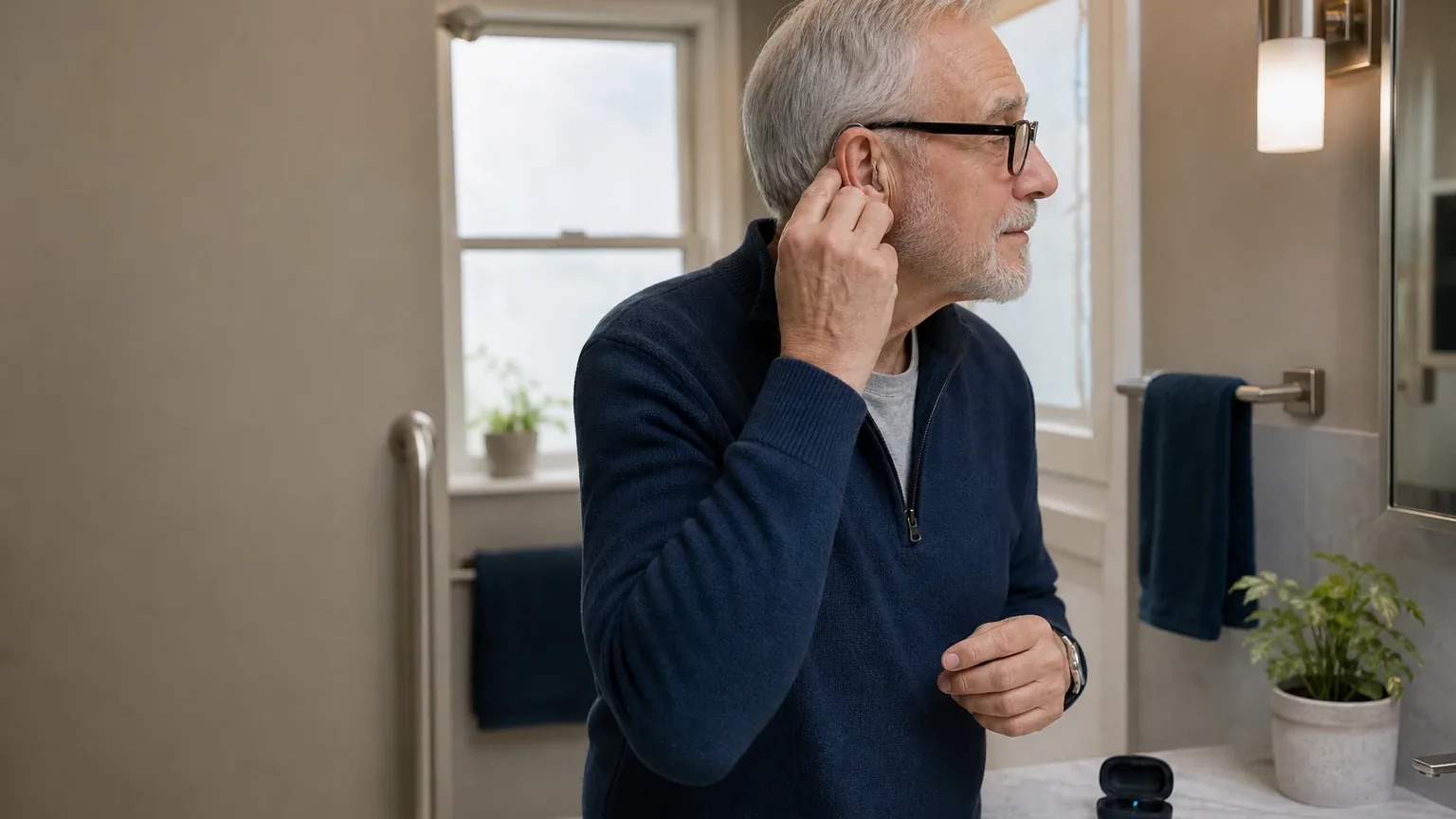
Answer Capsule
Oticon Intent is a good fit for Seniors who want rechargeable hearing convenience. Five of the seven platforms in this study named it during the ranking stage, with an average listed rank of 3.4 and a best rank of 1. The strongest reason to consider it is the combination of a stated up-to-20-hour daily battery, unusually fast quick-charge claims, and an optional portable SmartCharger with a built-in power bank. The main limitation is that U.S. pricing, warranty duration, and rechargeable-battery replacement terms are not published in a standardized form, so total cost and long-term service obligations must be confirmed in writing with an authorized hearing-care professional.
Research Snapshot
| Field | Finding |
|---|---|
| Platform mentions in ranking stage | 5 of 7 platforms (anthropic, deepseek, google, openai, perplexity) |
| Share of included platform responses | 71.4% |
| Average listed rank | 3.4 |
| Best listed rank | 1 |
| Relevant product/model/plan | Oticon Intent miniRITE rechargeable prescription hearing aids, purchased through a U.S. hearing-care professional, with the Oticon Intent Desktop Charger or Intent SmartCharger |
| Overall use-case fit | Good |
| Research date | 2026-09-27 |
What Changed Since August 2026
Oticon Intent moved down from No. 3 to No. 4, and platform mentions increased from 3 to 5. The September 2026 review still frames Oticon Intent as a good, not strong, fit for rechargeable hearing convenience, and the recommended configuration is unchanged: the Intent miniRITE with either the Desktop Charger or the portable SmartCharger. The description has been rewritten throughout, but the buyer-facing substance is largely the same set of strengths (up-to-20-hour daily battery, fast quick charging) and limitations (unverified U.S. pricing, warranty, and battery-service terms). Reported pricing evidence shifted: a pairing range of $2,649 to $3,700 is newly reported, while the $500–$1,000 figure for battery replacement is no longer repeated. Several previously cited battery-life and service-life measurements also no longer appear. Differences between the two editions reflect what each article reports; they do not by themselves prove that the product, service, or price changed.
The August 2026 review preserves the earlier article for reference.
Why Oticon Intent Qualified for This Study
Questions This Section Answers
- Is Oticon Intent a good choice for Rechargeable Hearing Convenience for a senior who wants to stop changing tiny batteries?
- How many AI platforms named Oticon Intent in the ranking stage for rechargeable hearing aids for seniors?
Oticon Intent qualified because it was named by five of the seven platforms in the ranking stage, which is a majority, and because every platform that evaluated it rated the fit as good or strong for rechargeable convenience (openai, anthropic, deepseek, google, grok, kimi, perplexity). Its average listed rank was 3.4, and it reached the top position on at least one platform (openai).
The entity is a company-level record, but the product that carried the ranking is the Oticon Intent miniRITE rechargeable prescription hearing aid, sold in the United States through authorized hearing-care professionals rather than direct-to-consumer retail [1]. Platform fit ratings split between "good" (anthropic, deepseek, kimi, openai, perplexity) and "strong" (google, grok), so the consensus is positive but not unanimous in intensity.
Ranking-stage mentions also included other Oticon models — Oticon Real, Oticon Reveal miniRITE R, and Oticon Zeal — which are not treated as equivalent to Intent in this review. Their availability, positioning, and compatibility should be verified separately (openai).
The Product, Model, Plan, or Service Most Relevant to Rechargeable Hearing Convenience
Questions This Section Answers
- Which exact Oticon Intent model and charger should a senior buy for rechargeable hearing convenience?
- Is the Oticon Intent SmartCharger included with the hearing aids or sold as a separate accessory?
The relevant configuration is the Oticon Intent miniRITE rechargeable prescription hearing aid, fitted and purchased through a U.S. authorized hearing-care professional, paired with either the Oticon Intent Desktop Charger or the Oticon Intent SmartCharger (openai, anthropic, deepseek, perplexity). Oticon also offers a miniBTE R variant, which one platform described as the smallest rechargeable miniBTE in the line with two fitting levels in a single model [3].
The two chargers are not interchangeable in convenience terms. The Desktop Charger is the standard overnight option, while the SmartCharger adds a protective lid and an integrated power bank that Oticon says can deliver multiple charges away from an outlet [4]. One reseller listing states the SmartCharger is compatible with the Intent miniRITE R only, so accessory compatibility should be confirmed by exact model before purchase [6].
Whether the SmartCharger is bundled or sold separately varies by seller and was not verified as a single national package [7]. Buyers should treat charger inclusion as a line item to confirm in the written quote.
What the AI Platforms Agreed About
Questions This Section Answers
- What do AI platforms agree on about Oticon Intent battery life and quick charging for seniors?
- Do the AI platforms agree that Oticon Intent is a good fit for rechargeable hearing convenience?
The platforms agreed on four points. First, Oticon Intent is a rechargeable prescription hearing aid that removes routine handling of tiny disposable batteries [8]. Second, Oticon states up to 20 hours of use per full charge, with actual time varying by streaming, hearing loss, sound environment, battery age, and wireless accessories [8].
Third, quick charging is a genuine strength. Oticon materials describe roughly four hours of use after 15 minutes, eight hours after 30 minutes, and a full day after about one hour, with a full charge in about two hours [13]. Fourth, the SmartCharger functions as a portable power bank with a protective lid, and Oticon describes contact charging with magnetic retention and color-coded ports intended to make correct placement easier [16].
The platforms also agreed that purchase runs through a hearing-care professional, which adds fitting and follow-up value but removes the option of a simple online checkout [20].
Where the AI Platforms Disagreed or Were Uncertain
Questions This Section Answers
- How much does Oticon Intent cost per pair in the U.S., and why do AI platforms disagree on the price?
- Does Oticon Intent give an audible low-battery alert, or only visual LED indicators?
Pricing is the largest disagreement. One provider listing shows roughly $2,649 to $3,700 per pair by Intent tier, HearingTracker reports from about $4,598 per pair, a 2026 third-party review reports a starting figure of $2,898 per pair, and another source gives a $2,898 to $4,598 range [23]. These are provider-specific figures, not an official U.S. manufacturer list price, and no official MSRP was verified (openai).
Low-battery alerting is unresolved. One platform reported audible warning beeps for a low-battery state [27], while another platform reported that a distinct hearing-aid low-battery alert mechanism and its customization were not clearly documented in reviewed U.S. materials [28]. A third platform stated that Intent supports audible low-battery and charger-status notifications through the app and fittings but did not document the alert threshold [29]. Buyers who depend on an audible warning should verify this directly.
Battery-life figures also conflict at the edges. Most sources state up to 20 hours, while one platform reported an expected operating time of 24 hours for the miniRITE style in the same documentation set (anthropic). Charging time is temperature-sensitive: Oticon's SmartCharger technical data sheet gives a maximum two-hour full charge at +15°C to +35°C but up to six hours at +5°C to +15°C or +35°C to +40°C [30].
Warranty and battery-service terms were not verified from an authoritative U.S. source by any platform. One platform reported that the international warranty excludes batteries, tubing, speakers, earpieces, and filters, and that the device must not be opened for battery replacement [31]. Another reported out-of-warranty professional battery replacement at roughly $50 to $135 per device depending on the clinic [32]. Neither figure was confirmed by Oticon in the reviewed materials.
Use-Case-Specific Features and Capabilities
Questions This Section Answers
- How long does the Oticon Intent battery last per charge, and how much use does a 15-minute quick charge provide?
- Does Oticon Intent support Bluetooth streaming and hands-free calls for a senior with a smartphone?
Battery life per charge is the headline claim: up to 20 hours, conditional on use pattern, active features, hearing loss, sound environment, battery age, and wireless accessories [33]. Quick-charge performance is the strongest differentiator, with 15 minutes yielding about four hours and 30 minutes yielding about eight hours [37].
Charging-case reliability rests on contact charging rather than inductive charging. Oticon describes magnetic retention, color-coded charging ports, and contact charging that the company says is faster than inductive charging [40]. The SmartCharger's power bank is specified to provide a minimum of three full hearing-aid charges, and its three LEDs show status from 0 to 100 percent when disconnected from power [42]. The power bank must be charged every 12 months during storage or it may need replacement [43].
Bluetooth support covers Bluetooth LE Audio, hands-free calling, and Auracast, with Made for iPhone streaming; compatible Android devices and computers may require the Oticon Easy LE Adapter unless they support the relevant LE Audio capability [44]. One platform noted that Bluetooth details were verified more clearly for the miniBTE R than for the exact miniRITE R configuration in its retrieved set [46].
Comfort and handling are neutral rather than settled. Oticon describes Intent as discreet with a single push-button control, and the miniRITE is stated to be 1.7 mm shorter than the previous Oticon miniRITE rechargeable [47]. Independent review coverage describes the device as slightly bulkier for some users, so fit and dexterity should be checked in an in-person trial [48].
Durability is rated IP68 for dust and moisture resistance [45]. Contact ports must be cleaned with a dry cloth only, and water or cleaning fluids are prohibited [43].
Pricing, Fees, Contracts, and Ongoing Costs
Questions This Section Answers
- How much does Oticon Intent cost per pair, and what fitting or service fees are added on top?
- What ongoing costs should a senior expect after buying Oticon Intent, including battery replacement and charger replacement?
Oticon does not publish a standardized U.S. consumer price on the reviewed official product pages, and pricing confidence is low across every platform that examined it (openai, anthropic, deepseek, grok, perplexity). Reported figures range from about $2,649 to $4,598 per pair depending on tier, provider, and bundled services [49]. One platform placed premium prescription rechargeable hearing aids generally in the $2,998 to $7,000 per pair range and OTC rechargeable options in the $300 to $1,500 range (kimi:soundly_2026, kimi:hearusa_2026).
Known cost components include the devices, professional fitting and programming, follow-up visits, and the charger. One source lists a replacement Desktop Charger at approximately $219.99 and the SmartCharger at $249.99 [53]. Whether a charger is included in the quoted price should be confirmed, because provider listings show bundled services and accessories vary by seller rather than following one standardized package [50].
Ongoing costs include supplies, receivers, domes, repairs, and post-warranty battery service. One platform reported out-of-warranty professional battery replacement at roughly $50 to $135 per device [54], and another reported a 4-to-6-year lithium-ion replacement cycle requiring clinic service (kimi:directhearing_2026). Oticon's own terms of sale state that posted prices exclude taxes and shipping, that prices may change without notice, and that returns are accepted within 90 days of invoice with an $8 restocking fee, subject to final-sale exclusions (official:C2). Those terms govern Oticon's direct sales channel and may not match a clinic's contract.
Contract, trial, and cancellation terms are provider-specific. One platform reported a typical 30-to-45-day trial period with return policies dictated by local provider law and a manufacturer warranty covering repair and loss or damage with a deductible for up to three years (google). Other platforms reported that warranty duration and battery-service terms were not verified from an official U.S. source (openai, deepseek, perplexity).
Best Suited For
Questions This Section Answers
- Who gets the most value from Oticon Intent for rechargeable hearing convenience?
- Is Oticon Intent a good choice for a senior who wants a portable charging case for travel?
Oticon Intent is best suited to seniors who can charge hearing aids nightly and want to stop handling disposable batteries (openai, anthropic, deepseek, perplexity). It fits users who want a portable charging case for travel or backup charging, since the SmartCharger carries an internal power bank rated for at least three full hearing-aid charges [55].
It also suits buyers who value Bluetooth streaming, hands-free calls, and professional fitting in the same purchase [57]. Users in humid or dusty environments benefit from the IP68 rating [60]. Buyers who want a discreet receiver-in-the-canal design with telecoil support for loop-equipped venues such as churches and theaters are also a reasonable match [60].
Probably Not Best Suited For
Questions This Section Answers
- Who should not choose Oticon Intent for rechargeable hearing convenience?
- Is Oticon Intent a poor fit for a senior who needs published pricing or a user-replaceable battery?
Buyers who need a verified published U.S. price, fixed warranty terms, and a written replacement-battery policy before committing are not well served, because none of those were verified from an authoritative U.S. source (openai, deepseek, perplexity). Seniors whose dexterity or vision limits make inserting a receiver-in-canal device or seating it in a charger difficult without caregiver help should evaluate other form factors (openai, deepseek).
Users who need a user-replaceable battery should look elsewhere. The Intent uses a sealed internal lithium-ion battery, and Oticon's instructions state the battery must not be replaced by the user [61]. Buyers who want the lowest total cost, or who prefer over-the-counter self-fitting options, will find the prescription channel and clinic-set pricing a poor match (openai, perplexity, kimi).
One platform also flagged the absence of a Find My Hearing Aids feature as a gap for seniors concerned about misplacing devices (kimi:soundly_2026). That claim is platform-reported and was not confirmed by Oticon in the reviewed materials.
When Another Option May Be Better
Questions This Section Answers
- What is a better alternative to Oticon Intent for a senior who needs longer battery life or lower cost?
- When should a senior choose an over-the-counter rechargeable hearing aid instead of Oticon Intent?
Another option may be better in five situations. If longest battery life is the priority, one platform cited Phonak Audéo Infinio Ultra at 56 hours and Starkey Omega AI at 51 hours against Intent's 20 hours (kimi:directhearing_2026). That comparison is platform-reported and was not independently verified here.
If budget is the constraint, one platform cited OTC rechargeable options in the $300 to $1,500 range, including Lucid Hearing Engage, versus premium prescription pricing (kimi:soundly_2026, kimi:lucidhearing_engage). If the buyer wants to avoid clinic visits entirely, an over-the-counter or self-fitting rechargeable option removes the fitting requirement (openai, perplexity).
If the buyer needs non-proprietary charging, one platform suggested evaluating brands offering USB-C direct charging or universal wireless pads (anthropic). If the buyer needs a clearly documented battery-replacement and warranty policy, choosing a provider that puts those terms in writing matters more than the brand (openai, deepseek).
Questions to Verify Before Buying
Questions This Section Answers
- What should a senior confirm with an Oticon Intent provider before signing a contract?
- Which Oticon Intent charger and firmware version is included in the quoted price?
Confirm the exact Intent tier and miniRITE configuration being quoted, and whether it is new, current stock, or discontinued inventory (openai). Confirm whether the price includes the Desktop Charger, the SmartCharger, fitting, real-ear verification, follow-up visits, supplies, and repairs (openai, perplexity).
Ask what battery life this specific user should expect given their hearing loss, streaming pattern, Bluetooth use, and wireless accessories (openai, deepseek). Ask whether the quoted quick-charge performance is based on the Desktop Charger or the SmartCharger and what firmware version is installed (openai).
Ask how low-battery warnings are delivered and whether alert volume or behavior can be customized (openai, anthropic). Ask for the written warranty duration for the hearing aids, the charger, and the internal rechargeable battery, and for the post-warranty battery replacement cost and turnaround time (openai, anthropic, deepseek).
Ask whether loss, theft, moisture damage, charger failure, and accidental damage are covered and whether deductibles apply (openai). Ask about trial, return, restocking, financing, cancellation, and transfer-of-care terms (openai, deepseek, official:C2). Ask whether the buyer's specific phone, tablet, or computer streams directly or requires the Easy LE Adapter [63]. Finally, ask whether an in-person trial long enough to assess comfort, insertion, charging behavior, and a full day of use is available (openai).
Final AI Consensus Verdict
Oticon Intent is a good fit for rechargeable hearing convenience, not a strong unconditional one. Five of seven platforms named it in the ranking stage, and every platform that evaluated it rated the fit as good or strong. The rechargeable case is built on a stated up-to-20-hour daily battery, quick-charge claims of roughly four hours from 15 minutes and eight hours from 30 minutes, contact charging with magnetic retention, and an optional SmartCharger with a power bank rated for at least three full charges.
The case is limited by what was not verified. U.S. pricing varies widely by provider and tier, no official MSRP was confirmed, warranty duration and battery-replacement terms were not established from an authoritative U.S. source, low-battery alert behavior is disputed across platforms, and the internal battery is not user-replaceable. Purchase is most defensible when the buyer receives a written total-cost, warranty, battery-service, and charger-inclusion statement from an authorized hearing-care professional.
How This Review Was Produced
This review evaluates Oticon Intent only for the Rechargeable Hearing Convenience use case within the broader Rechargeable Hearing Convenience study. Seven AI platforms were queried on 2026-09-27: anthropic, deepseek, google, grok, kimi, openai, and perplexity. Five named Oticon Intent during ranking discovery, and all seven produced fit-research responses that were analyzed for this report.
Platform fit ratings were good for anthropic, deepseek, kimi, openai, and perplexity, and strong for google and grok. Ranking statistics, fit assessments, pricing summaries, and verification questions were taken from the supplied platform responses. Citations are platform-reported evidence and were not independently validated by the writer stage. Company-owned citations materially outnumber independent citations in this evidence set, so Oticon's own claims should not be read as independently verified.
This report sits within the wider senior technology category, which covers rechargeable hearing convenience and adjacent senior-focused product research.
Methodology Limitations
Platform-reported research dates differ from the authoritative run date of 2026-09-27. Anthropic reported 2026-01-15 and deepseek reported 2026-01-08; the remaining platforms reported 2026-09-27. Those dates are provenance metadata and do not independently prove freshness.
Deepseek ran with search disabled, so its claims are model-reported rather than retrieved. One platform noted that official-site retrieval failed during its ranking stage, so identity and specification details from that stage should be re-verified. The supplied URLs were collected from platform responses and were not independently validated by the writer stage.
Company-owned citations materially outnumber independent citations, so Oticon's battery, charging, and durability claims should be treated as manufacturer statements rather than verified performance. No platform reported personal testing, and no platform reported independently measured real-world battery endurance for Intent. Pricing figures conflict across sources and none was confirmed as an official U.S. MSRP. Warranty duration, loss-and-damage coverage, and rechargeable-battery replacement policy were not verified from an authoritative U.S. source by any platform. Ranking-stage mentions of Oticon Real, Oticon Reveal miniRITE R, and Oticon Zeal are not treated as equivalent to Intent.
Sources
Company-Owned Sources
- Oticon Intent SmartCharger Technical Data Sheet: https://assets-ue.cas.dgs.com/-/media/oticon-us/main/download-center/intent/272323-intent-smartcharger-technical-data-sheet.pdf?rev=D320&la=en
- Oticon SmartCharger Instructions for Use: https://assets-ue.cas.dgs.com/-/media/oticon-us/main/download-center/intent/272476-ifu-smartcharger-intent.pdf?la=en&rev=BB45
- Oticon Intent Charger User Guide: https://i1uaylxk.photoncache.com/wp-content/uploads/2024/04/272398-Oticon-Intent-Charger-User-Guide.pdf
- Engage Rechargeable | Lucid Hearing: https://lucidhearing.com/product/engage-rechargeable/
- Oticon SmartCharger Technical Data Sheet: https://wdh02.azureedge.net/-/media/oticon-us/main/download-center/intent/272323-intent-smartcharger-technical-data-sheet.pdf?la=en&rev=D320
- How to charge your rechargeable hearing aids: https://www.oticon.ca/support/batteries-and-charging/rechargeable-batteries/how-to-charge-rechargeable-hearing-aids
- Oticon Intent: https://www.oticon.com/campaigns-b2c/intent
- Oticon Intent™ | Engage in life like never before: https://www.oticon.com/en-us/campaigns-b2c/intent
- Oticon SmartCharger miniRITE R or miniBTE R: https://www.oticon.com/en-us/products/accessories/844218/oticon-smartcharger
- Oticon Intent Government Services: https://www.oticon.com/government-services/for-professionals/intent
- Oticon Intent hearing aids: https://www.oticon.com/hearing-aids/oticon-intent
- The World's First Hearing Aid with User-Intent Sensors: https://www.oticon.com/inside-oticon/press/2024/2024-1
- Oticon Intent miniRITE: https://www.oticon.com/products/663063/oticon-intent--minirite
- Oticon Intent™ miniRITE: https://www.oticon.com/products/663063/oticon-intent-minirite
- Oticon SmartCharger miniRITE or miniBTE R: https://www.oticon.com/products/accessories/904471
- Oticon Intent | Quality hearing aids | Engage in life like: https://www.oticon.com/products/hearing-aids/family/intent
- Oticon Product Guide and Charging Information: https://www.oticon.com/support/batteries-and-charging/rechargeable-batteries/how-to-charge-rechargeable-hearing-aids
- Oticon Intent™ miniBTE R with two fitting levels: https://www.oticon.global/about-us/press/2025/2025-2
- Official pricing and terms source: https://www.oticon.com/about-us/terms-and-conditions-of-sale
Additional AI research evidence63 records
- AI research evidence record openai:c10
- AI research evidence record deepseek:c2
- AI research evidence record anthropic:c7
- AI research evidence record openai:c4
- AI research evidence record perplexity:c2
- AI research evidence record perplexity:c5
- AI research evidence record openai:c10
- AI research evidence record openai:c1
- AI research evidence record anthropic:c2
- AI research evidence record deepseek:c1
- AI research evidence record perplexity:c3
- AI research evidence record anthropic:c1
- AI research evidence record openai:c2
- AI research evidence record anthropic:c5
- AI research evidence record google:1.3.5
- AI research evidence record openai:c4
- AI research evidence record openai:c5
- AI research evidence record anthropic:c6
- AI research evidence record perplexity:c2
- AI research evidence record openai:c10
- AI research evidence record deepseek:c2
- AI research evidence record perplexity:c4
- AI research evidence record openai:c8
- AI research evidence record openai:c10
- AI research evidence record perplexity:c7
- AI research evidence record google:1.2.3
- AI research evidence record google:1.1.4
- AI research evidence record openai:c6
- AI research evidence record deepseek:c1
- AI research evidence record anthropic:c6
- AI research evidence record anthropic:c4
- AI research evidence record google:1.1.2
- AI research evidence record openai:c1
- AI research evidence record anthropic:c1
- AI research evidence record deepseek:c1
- AI research evidence record perplexity:c3
- AI research evidence record openai:c2
- AI research evidence record anthropic:c5
- AI research evidence record google:1.3.2
- AI research evidence record openai:c5
- AI research evidence record anthropic:c6
- AI research evidence record anthropic:c3
- AI research evidence record anthropic:c4
- AI research evidence record openai:c7
- AI research evidence record anthropic:c2
- AI research evidence record perplexity:c6
- AI research evidence record openai:c9
- AI research evidence record openai:c8
- AI research evidence record openai:c8
- AI research evidence record openai:c10
- AI research evidence record perplexity:c7
- AI research evidence record google:1.2.3
- AI research evidence record google:1.3.1
- AI research evidence record google:1.1.2
- AI research evidence record anthropic:c6
- AI research evidence record openai:c4
- AI research evidence record openai:c1
- AI research evidence record deepseek:c1
- AI research evidence record perplexity:c4
- AI research evidence record anthropic:c2
- AI research evidence record anthropic:c4
- AI research evidence record deepseek:c3
- AI research evidence record openai:c7
Independent Sources
- News - Rechargeable Hearing Aid Batteries: Cost and Models We Carry: https://directhearing.com/blogs/news/rechargeable-hearing-aid-batteries
- Oticon Battery Life Guide 2026: https://vertexaisearch.cloud.google.com/grounding-api-redirect/AUZIYQEiI_tUE-tgmyMbrfjQcdn-evP281xYj84z-6T--kHZw1I_KeDylZpGeHUs7_qj4BqeVWJeUNHjTW1FThrCqdtPJYVgHqsecqPGj3TUwJQRdDacEXObkS1sKCLH7p_O4G42Amj_PRNJwdeSRYd6r-4z5rZE-wC59aemo5mrUedy1LUTC_cKCmuR8wvO-bF1emjq7wkfUlQhKySQXD4x-uApJ12U
- Oticon Intent SmartCharger Compatibility Guide: https://vertexaisearch.cloud.google.com/grounding-api-redirect/AUZIYQEm-9nWF9Z0rMPB8ZLrRdk38l5waGVn70rQVBt4pJhHRmDbVlZQxiU_oFw_QQzOS4p4kBf7ZZ9BLxAAcYDV4hN0lcrWUFjmOnfTlu8G8bDc83IZYGx-7wXVNhDY5zqgvv1IikkX8sy5MkPWLCVVRW6rWPsbMAi8wfWZAH7INOmXCBx3AWQcVpMdw00iGXdq3pc=
- Oticon Intent Desktop Charger Accessories: https://vertexaisearch.cloud.google.com/grounding-api-redirect/AUZIYQEo-RZd1TnHKZsgnJrfwzXYtlzCmBBJor0Okphx6YLdUbjwqoWqXf5vG3d5WFmOjF-yhX9DBNWxK-5Ei2IZFmkwdrbV7QLHbWgOtZRYNJvlDS2jTz6_tb1_7cljv6S45-j7IrwlV9M5oqeTGNLe1Xiy1oshARfD9d3GRhTKSTMh2wSGSwE51PedUAEhozMrjYczf1u2D8qbSATT7xCsnQLCfRuhgrk2lApUMr9LGcb9
- Oticon Intent Desktop Charger Manual & Technical Specifications: https://vertexaisearch.cloud.google.com/grounding-api-redirect/AUZIYQFf9IOwrpstjiTdvMmw6_xLY0bTXrO08ibbSU4AQHjupoamFt9WhYsjf30i1Rkxb9jON1Mh6SJVEGHzQQEPPqn93kgCUQSTywojAAzR3K3Llu7sJY9B98m6j7r4xA_9lE35LlOGph-7UQpsYvOqTUHTyzdx3Y8aiedrE_NBV-T1fw==
- Audiologic Solutions: Hearing Aid Battery Performance Guide: https://vertexaisearch.cloud.google.com/grounding-api-redirect/AUZIYQG05xb2DWbZNkSKAtUs9c5wPHSNF4pKpDUlf1Ow5BX69ZrLL2TP-0IuNkO6E3Sg5sBldzI42oMu-4nwwMQfPhQm_sihp1lyHPxgVheXu67nrGsFKx6nrY-g0gmJJZ-7hzvrjqU13JnOcxK7YZ3sHZNIJgpv9PTmMsUXgZuTRO-eZCL63m_u
- Best Rechargeable Hearing Aids Of 2026, According To Audiologists: https://www.forbes.com/health/hearing-aids/best-rechargeable-hearing-aids/
- Rechargeable hearing aids: https://www.hearingloss.org/hearing-help/hearing-aids/rechargeable-hearing-aids/
- Oticon Hearing Aids: Models, Features, Prices, and Reviews: https://www.hearingtracker.com/hearing-aids/oticon
- Oticon Intent Hearing Aids Review: https://www.hearingtracker.com/hearing-aids/oticon-intent
- Oticon Hearing Aid Price List: https://www.hearupusa.com/pages/oticon-hearing-aid-price
- Rechargeable Hearing Aids: Features, Benefits & Cost: https://www.hearusa.com/hearing-aids/rechargeable-hearing-aids/
- Hearing aids: How to choose them: https://www.nidcd.nih.gov/health/hearing-aids
- 5 Best Rechargeable Hearing Aids In 2026 - Side by Side: https://www.soundly.com/blog/rechargeable-hearing-aids
- Rechargeable Hearing Aids vs Disposable Batteries: Which suits your life?: https://www.theaudiologyplace.com.au/rechargeable-hearing-aids-vs-disposable-batteries/
- Buy Oticon Intent Hearing Aids | Reviews & Prices: https://www.ziphearing.com/oticon-intent
Additional AI research evidence63 records
- AI research evidence record openai:c10
- AI research evidence record deepseek:c2
- AI research evidence record anthropic:c7
- AI research evidence record openai:c4
- AI research evidence record perplexity:c2
- AI research evidence record perplexity:c5
- AI research evidence record openai:c10
- AI research evidence record openai:c1
- AI research evidence record anthropic:c2
- AI research evidence record deepseek:c1
- AI research evidence record perplexity:c3
- AI research evidence record anthropic:c1
- AI research evidence record openai:c2
- AI research evidence record anthropic:c5
- AI research evidence record google:1.3.5
- AI research evidence record openai:c4
- AI research evidence record openai:c5
- AI research evidence record anthropic:c6
- AI research evidence record perplexity:c2
- AI research evidence record openai:c10
- AI research evidence record deepseek:c2
- AI research evidence record perplexity:c4
- AI research evidence record openai:c8
- AI research evidence record openai:c10
- AI research evidence record perplexity:c7
- AI research evidence record google:1.2.3
- AI research evidence record google:1.1.4
- AI research evidence record openai:c6
- AI research evidence record deepseek:c1
- AI research evidence record anthropic:c6
- AI research evidence record anthropic:c4
- AI research evidence record google:1.1.2
- AI research evidence record openai:c1
- AI research evidence record anthropic:c1
- AI research evidence record deepseek:c1
- AI research evidence record perplexity:c3
- AI research evidence record openai:c2
- AI research evidence record anthropic:c5
- AI research evidence record google:1.3.2
- AI research evidence record openai:c5
- AI research evidence record anthropic:c6
- AI research evidence record anthropic:c3
- AI research evidence record anthropic:c4
- AI research evidence record openai:c7
- AI research evidence record anthropic:c2
- AI research evidence record perplexity:c6
- AI research evidence record openai:c9
- AI research evidence record openai:c8
- AI research evidence record openai:c8
- AI research evidence record openai:c10
- AI research evidence record perplexity:c7
- AI research evidence record google:1.2.3
- AI research evidence record google:1.3.1
- AI research evidence record google:1.1.2
- AI research evidence record anthropic:c6
- AI research evidence record openai:c4
- AI research evidence record openai:c1
- AI research evidence record deepseek:c1
- AI research evidence record perplexity:c4
- AI research evidence record anthropic:c2
- AI research evidence record anthropic:c4
- AI research evidence record deepseek:c3
- AI research evidence record openai:c7
Other Sources
- Oticon Intent Product Guide: https://audiohearing.com.au/wp-content/uploads/2024/11/Oticon-Intent-Product-Guide-2024-.pdf
- Oticon Intent Smart Charger: https://www.hearcaredirect.com/product/oticon-intent-smart-charger/
Additional AI research evidence63 records
- AI research evidence record openai:c10
- AI research evidence record deepseek:c2
- AI research evidence record anthropic:c7
- AI research evidence record openai:c4
- AI research evidence record perplexity:c2
- AI research evidence record perplexity:c5
- AI research evidence record openai:c10
- AI research evidence record openai:c1
- AI research evidence record anthropic:c2
- AI research evidence record deepseek:c1
- AI research evidence record perplexity:c3
- AI research evidence record anthropic:c1
- AI research evidence record openai:c2
- AI research evidence record anthropic:c5
- AI research evidence record google:1.3.5
- AI research evidence record openai:c4
- AI research evidence record openai:c5
- AI research evidence record anthropic:c6
- AI research evidence record perplexity:c2
- AI research evidence record openai:c10
- AI research evidence record deepseek:c2
- AI research evidence record perplexity:c4
- AI research evidence record openai:c8
- AI research evidence record openai:c10
- AI research evidence record perplexity:c7
- AI research evidence record google:1.2.3
- AI research evidence record google:1.1.4
- AI research evidence record openai:c6
- AI research evidence record deepseek:c1
- AI research evidence record anthropic:c6
- AI research evidence record anthropic:c4
- AI research evidence record google:1.1.2
- AI research evidence record openai:c1
- AI research evidence record anthropic:c1
- AI research evidence record deepseek:c1
- AI research evidence record perplexity:c3
- AI research evidence record openai:c2
- AI research evidence record anthropic:c5
- AI research evidence record google:1.3.2
- AI research evidence record openai:c5
- AI research evidence record anthropic:c6
- AI research evidence record anthropic:c3
- AI research evidence record anthropic:c4
- AI research evidence record openai:c7
- AI research evidence record anthropic:c2
- AI research evidence record perplexity:c6
- AI research evidence record openai:c9
- AI research evidence record openai:c8
- AI research evidence record openai:c8
- AI research evidence record openai:c10
- AI research evidence record perplexity:c7
- AI research evidence record google:1.2.3
- AI research evidence record google:1.3.1
- AI research evidence record google:1.1.2
- AI research evidence record anthropic:c6
- AI research evidence record openai:c4
- AI research evidence record openai:c1
- AI research evidence record deepseek:c1
- AI research evidence record perplexity:c4
- AI research evidence record anthropic:c2
- AI research evidence record anthropic:c4
- AI research evidence record deepseek:c3
- AI research evidence record openai:c7
Verify This Research
Review the study details behind this page or download the public machine-readable verification record.
- Study date
- September 27, 2026
- Platforms analyzed
- 7
- Source records
- 46
- Ranking mentions
- 5 of 7
- Platform share
- 71%
- Final consensus rank
- #4
Research trail and source mix
Configured platforms
openai, anthropic, deepseek, grok, perplexity, kimi, google
Source mix
19 independent · 24 company-owned · 3 unclear
Evidence support
37 direct · 9 partial
Important limitation
Use the run research_date as the study date. Platform-reported dates are provenance metadata and do not independently prove freshness.
Source snapshot SHA-256 e31c77aa9936eada84762763ceb4bc6ee075d1b25447b03d92fee2eaba032e70
Archived editions
Browse earlier published research snapshots for this article. The latest edition remains at the current URL.