
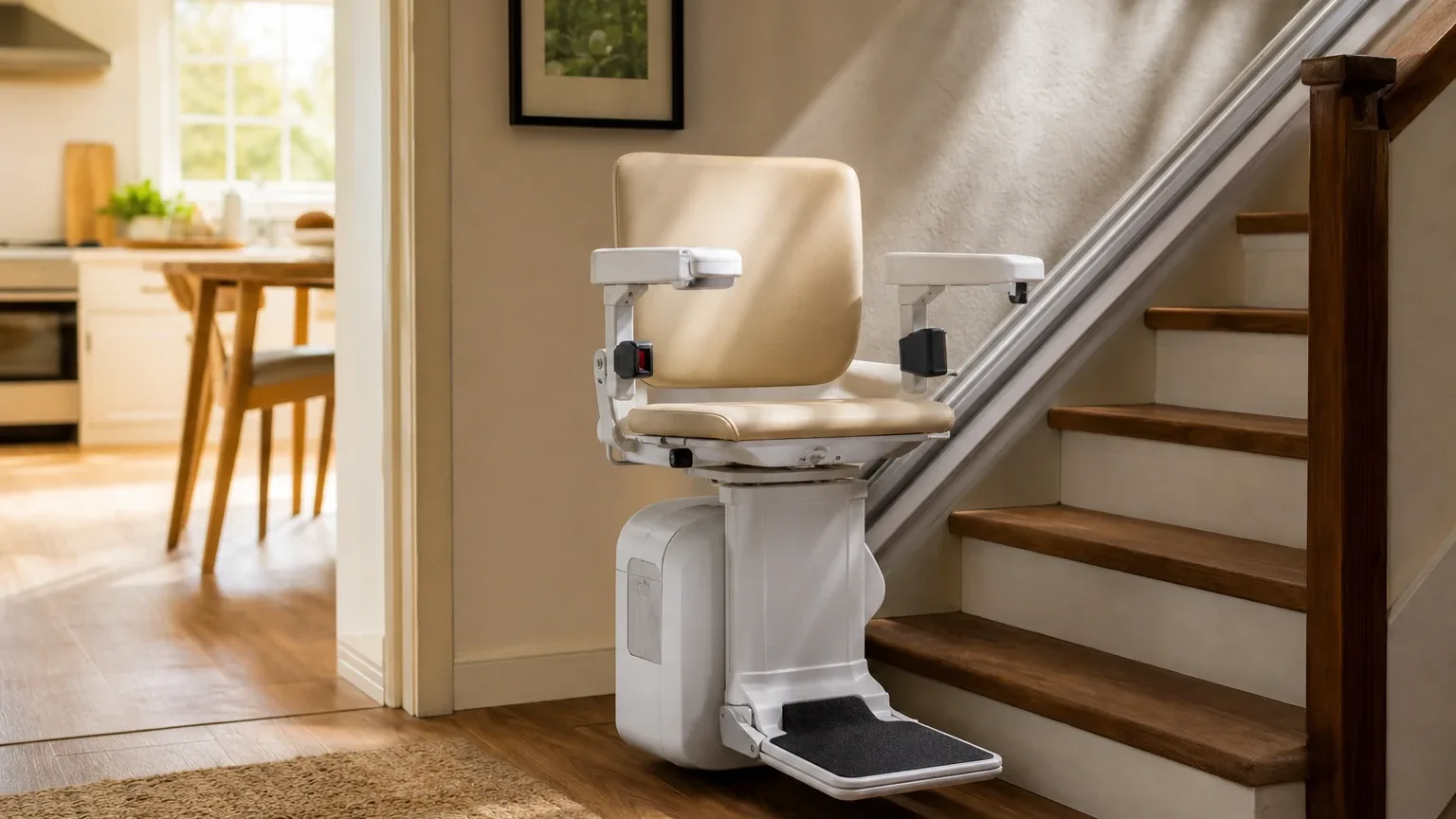
Answer Capsule
Harmar leads the November 2026 consensus ranking for Bariatric & High-Weight Capacity, followed by Bruno and Handicare 1000 XXL. The current study includes 7 valid AI-platform responses and 7 qualifying entities. Compared with September 2026, the leader changed. The current list added Leaf Home Comfort Lift HD and AmeriGlide 500 lb Heavy Duty Lift (proprietary) and removed Savaria K2 Heavy-Duty and AmeriGlide Heavy Duty Stair Lift. The last available completed baseline is September 2026; this is not an immediately preceding-month comparison with November 2026. Rank movement measures changes in this collection of standardized AI-platform responses. It is not product testing, customer-review evidence, or proof that a provider's underlying quality improved or declined.
What Changed Since September 2026
The last available completed baseline is September 2026; this is not an immediately preceding-month comparison with November 2026.
Harmar remained No. 1 in November 2026. It was named by 7 platforms, compared with 7 in September 2026. Both studies used 7 valid platform responses.
The largest upward moves were Handicare 1000 XXL (up 1) and Acorn Stairlifts (up 1). The largest downward moves were Stannah 420 Heavy-Duty Stairlift (down 1).
The current qualifying set added Leaf Home Comfort Lift HD and AmeriGlide 500 lb Heavy Duty Lift (proprietary). It no longer includes Savaria K2 Heavy-Duty and AmeriGlide Heavy Duty Stair Lift from the earlier top group. Entry or exit reflects the minimum-mention rule and the current response set, not a product launch, discontinuation, or quality finding.
| Current rank | Entity | Previous rank | Rank movement | Current mentions | Previous mentions | Mention change |
|---|---|---|---|---|---|---|
| 1 | Harmar | 1 | No change | 7 | 7 | +0 |
| 2 | Bruno | 2 | No change | 7 | 7 | +0 |
| 3 | Handicare 1000 XXL | 4 | Up 1 | 6 | 3 | +3 |
| 4 | Leaf Home Comfort Lift HD | — | New | 2 | — | — |
| 5 | AmeriGlide 500 lb Heavy Duty Lift (proprietary) | — | New | 2 | — | — |
| 6 | Acorn Stairlifts | 7 | Up 1 | 2 | 2 | +0 |
| 7 | Stannah 420 Heavy-Duty Stairlift | 6 | Down 1 | 2 | 3 | -1 |
| — | Savaria K2 Heavy-Duty | 3 | Exited | — | 5 | — |
| — | AmeriGlide Heavy Duty Stair Lift | 5 | Exited | — | 3 | — |
The table is calculated directly from the two stored ranking datasets. Positive rank movement means an entity moved closer to No. 1; mention change shows the difference in the number of included platform responses naming it.
The September 2026 edition preserves the complete earlier ranking and methodology for reference.
Research Snapshot
- Topic: Best stairlifts for heavy users — the bariatric and high-weight-capacity use case (400+ lb threshold, heavy-duty motor, seat width, adjustable armrests, reinforced track, warranty).
- Target buyer: Bariatric individuals or heavier adults requiring higher weight thresholds and wider seating dimensions, in the United States.
- Platforms included (7): OpenAI, Anthropic, DeepSeek, Grok, Perplexity, Kimi, Google.
- Research date: 2026-11-10 (authoritative run date). Platform-reported dates are provenance metadata only; DeepSeek reported 2026-06-15 for Harmar and Handicare, 2026-01-15 for Leaf Home, 2026-06-01 for AmeriGlide, 2026-02-10 for Acorn, and 2026-02-14 for Stannah.
- Unique entities named: 9.
- Qualifying entities: 7.
- Eligibility rule: named by at least two platforms during ranking discovery.
- Ranking rule: platform mentions, then average listed rank, then best listed rank.
- Study design: one standardized prompt sent once to each included platform. Platform mentions count only ranking-discovery mentions, not the number of platforms that later completed a fit assessment.
The Consensus Ranking
Questions This Section Answers
- Which heavy-duty stairlift brand do the most AI platforms name first for bariatric users needing 400+ lb capacity?
- Is Harmar or Bruno the better-documented choice for a buyer who needs a 600 lb rating rather than a 400 lb rating?
- Which high-capacity stairlift brands were named by only two of the seven platforms studied?
Harmar leads because every platform named it and six of seven placed it first; only Perplexity ranked it third [156]. Bruno is the only other entity named by all seven platforms, and Perplexity actually placed Bruno first [132]. The remaining five entities were each named by only two platforms, which is why their share of platform responses is 28.6% despite strong fit ratings from the platforms that did evaluate them.
| Rank | Entity | Platform mentions | Share of platform responses | Average listed position | Best position | Best considered for |
|---|---|---|---|---|---|---|
| 1 | Harmar | 7 | 100.0% | 1.29 | 1 | Users needing a straight indoor stairlift with a rated capacity substantially above 400 lb; Buyers prioritizing a heavy-duty frame, reinforced footrest, high back, seat belt, obstruction sensing, and commercial/residential certification; Homes where a 16.5-inch folded width and maximum 40-foot rail are workable |
| 2 | Bruno | 7 | 100.0% | 2.0 | 1 | Adults weighing up to 400 lb who have straight indoor stairs.; Buyers needing adjustable armrests, a larger seat, swivel entry/exit, battery backup, and dealer-installed service.; Curved or outdoor stair configurations where the Elite product family is available and the dealer confirms the applicable model and capacity. |
| 3 | Handicare 1000 XXL | 6 | 85.7% | 2.83 | 2 | Users weighing up to the documented 440 lb maximum; Straight indoor staircases with adequate landing and turning space; Buyers who value a higher-capacity configuration and adjustable armrest-spacing options |
| 4 | Leaf Home Comfort Lift HD | 2 | 28.6% | 3.0 | 3 | Users weighing more than 350 lb and up to the stated 600 lb limit; Straight indoor staircases with adequate width for the 17-inch folded lift; Buyers prioritizing maximum published capacity, a wider seat, professional installation, and a limited lifetime warranty |
| 5 | AmeriGlide 500 lb Heavy Duty Lift (proprietary) | 2 | 28.6% | 5.0 | 5 | Users needing a straight-stair lift rated above 400 lb, especially where the 600 lb Harmar Pinnacle SL600HD is confirmed available.; Buyers who can accommodate a 24-inch minimum seat width and do not require adjustable armrests.; Buyers willing to obtain a product-specific quote and verify installation, warranty, and service terms. |
| 6 | Acorn Stairlifts | 2 | 28.6% | 6.5 | 5 | Users below 350 lb with a straight residential staircase, subject to a site survey and confirmation of seating fit.; Users needing a manufacturer-direct installation and service arrangement, provided the published capacity is adequate for the specific user.; Standard-weight users under 265 lbs seeking fast installation and direct-to-consumer pricing |
| 7 | Stannah 420 Heavy-Duty Stairlift | 2 | 28.6% | 6.5 | 6 | A heavier adult at or below the manufacturer-confirmed capacity; Straight staircases without turns or landings; Buyers willing to obtain an in-home survey and individualized quotation |
Which Option Is Best for Which Version of the Buyer Need?
Questions This Section Answers
- Which heavy-duty stairlift should a buyer choose if they weigh 500 lb or more and have a straight indoor staircase?
- Is Bruno or Handicare 1000 XXL better for a 400 lb user who needs adjustable armrests and a wider seat?
- Which stairlift brand should a buyer avoid if they need a verified 400+ lb rating on a curved staircase?
The ranking answers "which brand platforms name most," not "which brand fits your body." The table below maps buyer situations to the ranked entities using only the supplied evidence.
| Buyer situation | Best-ranked fit | Why | What to verify first |
|---|---|---|---|
| 450–600 lb, straight indoor stairs | Harmar (Pinnacle SL600HD) | Only entity with a widely reported 600 lb rating; 18.75 in seat, 16.5 in folded width, 27–48° incline [156] | Usable seat width, armrest type (stationary), installed price, warranty labor coverage |
| 375–400 lb, wants adjustable armrests and a larger seat | Bruno (Elite SRE-2010) | 400 lb rating, adjustable armrests 15.75–21.75 in, optional 21.5–22.5 in seat [179] | Whether 400 lb leaves enough margin; warranty document (lifetime vs. five-year conflict) |
| Up to 440 lb, narrow staircase | Handicare 1000 XXL | 440 lb documented, slim track with about 4.5 in intrusion, armrest spacers to roughly 22.1 in [39] | That the quote is the XXL, not the 300 lb or 350 lb version; no hinged rail or perch seat on XXL |
| 400–600 lb, wants a 24-inch seat and lifetime warranty claim | Leaf Home Comfort Lift HD | Stated 600 lb, 24 in × 17 in seat, limited lifetime warranty, no annual fees [174] | That the model is the HD/SL600HD; 17 in folded width; quote-based pricing |
| Wants the lowest documented price path to 500–600 lb | AmeriGlide | Sells a proprietary 500 lb unit and lists the 600 lb Harmar Pinnacle SL600HD [114] | Exact model identity, all-in installed price, warranty terms |
| Under 350 lb, straight stairs, fast installation | Acorn Stairlifts | 130 HD documented at 350 lb; curved 180 at about 264–265 lb [6] | Written capacity for the exact configuration |
| Under 350 lb, wants manufacturer-direct service and lifetime motor/gearbox language | Stannah 420 | Current U.S. materials show straight models up to 350 lb; 420 identity unclear [223] | Whether a 400 lb 420 configuration exists in the U.S. at all |
| Curved staircase above 400 lb | None of the seven | No ranked entity documents a verified 400+ lb curved configuration; Harmar's curved Helix is reported at 350 lb [156] | Whether a custom curved solution exists outside this set |
1. Harmar
Questions This Section Answers
- Which Harmar stairlift model should a 500 lb buyer request, and what seat width does it actually provide?
- Does the Harmar Pinnacle SL600HD have adjustable armrests for a bariatric user who needs lateral transfer clearance?
- What should a buyer confirm about Harmar's installed price and warranty before ordering the SL600HD?
Verdict. Harmar is the consensus leader and the only entity in this study with a widely reported 600 lb residential rating, delivered through the Pinnacle SL600HD straight indoor stairlift. It is a strong fit for a bariatric buyer on a straight staircase who weighs up to 600 lb and can live with stationary armrests, an 18.75-inch seat, a 16.5-inch folded width, and dealer-set pricing [156].
Why it ranked here. All seven platforms named Harmar, and six placed it first; Perplexity placed it third [156]. No other entity combined universal mention with a near-perfect average position.
Best suited for. Straight indoor staircases with a 27–48° incline and 15 ft 6 in to 40 ft of track; users prioritizing maximum published capacity, a high-backed chair, reinforced footrest, retractable seat belt, 85-degree swivel interlock, overspeed brake, and obstruction sensors [156].
Main strengths for the use case. The 600 lb rating is materially above the 400 lb threshold and above Harmar's own standard SL600 at 350 lb [160]. The drive is a nylon-polymer gear rack with helical worm gear, grease-free, at 14 ft/min [36]. Battery backup is reported at up to 60 cycles during an outage, well above the 20-cycle figure reported for Leaf Home's HD model [242]. Published warranty is 3 years parts, 10 years gear rack, 1 year battery [59].
Main limitations. Armrests are documented as stationary, not adjustable — a direct miss against the adjustable-armrest criterion [156]. The seat is 18.75 in wide by 14 in deep, which some bariatric users will find narrow despite marketing language about a 25-inch span between armrests [156]. It is indoor and straight-stair only, with no folding rail listed, and the 16.5-inch folded profile can obstruct narrow stairs [156]. Harmar's curved Helix is reported at 350 lb, so there is no bariatric curved option [156].
Pricing or cost summary. Dealer listings observed in 2026 showed roughly $7,250–$7,505 for SL600HD equipment, one dealer adding a $725 installation charge, and a $9,310 MSRP reference [242]. Another platform reported installed ranges of $5,000–$8,000 with options such as a power swivel seat at about $860. These are dealer-specific, not a national price.
Where platforms disagreed. Perplexity rated fit "good" rather than "strong," citing dealer-dependent labor costs and unverified performance claims [156]. DeepSeek rated it "good" and flagged that public documentation of seat width and warranty was thin in its pass [151]. Anthropic and Kimi reported lifetime motor/gearbox coverage from some sources while others cited 3-year parts coverage — a conflict buyers must resolve in writing [209].
Complete fit review: Harmar
What Changed Since September 2026
Harmar remained at No. 1, and platform mentions were unchanged at 7. The November 2026 article recasts Harmar as a broad company entry rather than a single model, while keeping the Pinnacle SL600HD as the named product carrying the 600 lb residential rating. Buyer fit is now tighter: straight indoor stairs with a 27–48° incline and 15 ft 6 in to 40 ft of track, with stationary armrests, an 18.75-inch seat, a 16.5-inch folded width and dealer-set pricing stated up front. Pricing evidence is refreshed: the current article newly reports roughly $7,250–$7,505 for SL600HD equipment and installed ranges of $5,000–$8,000, while the earlier $7,505 unit figure is no longer repeated. The prior 14 ft/min drive speed and 10-day warranty registration window are not repeated. Differences between the two editions reflect what each article reports; they do not by themselves prove that the product, service, or price changed.
2. Bruno
Questions This Section Answers
- Is the Bruno Elite SRE-2010 a good choice for a 390 lb buyer who needs adjustable armrests and a wider seat option?
- What is the real warranty on the Bruno Elite — lifetime major components or five years?
- Can a bariatric buyer get a Bruno stairlift for a curved staircase at 400 lb?
Verdict. Bruno is the strongest alternative to Harmar and the only other entity named by all seven platforms. Its Elite SRE-2010 is rated at 400 lb, offers adjustable armrests and an optional larger seat, and is available in straight, curved, and outdoor Elite configurations — but it does not exceed 400 lb, so it is not a fit for buyers above that line [179].
Why it ranked here. Seven mentions and an average position of 2.00; Perplexity placed Bruno first, while the other six placed it second or third [132].
Best suited for. Adults up to 400 lb on straight indoor stairs who want adjustable armrests (reported 15.75–21.75 in between arms), a larger optional seat (about 21.5–22.5 in wide), offset swivel seat, continuous charging along the rail, and dealer-installed service [179].
Main strengths for the use case. Adjustable armrests are the clearest advantage over Harmar for the stated criteria [179]. The direct-drive gear motor, rack-and-pinion suspension, self-locking gearbox, and obstruction sensors support heavy-duty daily operation [180]. Curved and outdoor Elite variants broaden staircase applicability, subject to dealer confirmation [132].
Main limitations. The 400 lb ceiling leaves little margin for a user near that weight, and no Bruno model above 400 lb was verified [179]. Even the larger seat is narrower than Harmar's claimed 25-inch armrest span [18]. Warranty documentation conflicts materially: one brochure states lifetime major-component coverage plus two years on all components, while dealer materials state five years on major components [150]. Pricing is dealer-specific.
Pricing or cost summary. One dealer listed a Bruno heavy-duty SRE-2010 at $5,495 with standard installation, plus $490 for an XL seat pad, $815 for a power swivel seat, $545 for a power folding footrest, $810 for a manual folding rail, and $1,500 for a power folding rail [192]. Other platforms reported installed ranges of roughly $4,500–$5,500 for straight indoor and $9,000–$15,000+ for curved [14].
Where platforms disagreed. Google and Grok rated Bruno "strong"; OpenAI, Anthropic, DeepSeek, Kimi, and Perplexity rated it "good" [5]. Perplexity noted an unverified third-party claim of a 700 lb Bruno model that did not appear on official U.S. pages [102]. Kimi reported fixed, non-width-adjustable armrests, contradicting the adjustable-armrest finding from other platforms [126].
Complete fit review: Bruno
What Changed Since September 2026
Bruno remained at No. 2, and platform mentions were unchanged at 7. The November 2026 article recasts Bruno as the strongest alternative to Harmar and broadens its scope beyond the straight-rail indoor Elite SRE-2010 to straight, curved, and outdoor Elite configurations, while keeping the 400 lb rating as the ceiling. The earlier write-up centered on seating adjustability and a vertical rail that installs within about 5–6 inches of the wall; the current article leads with adjustable armrests as Bruno's clearest edge over Harmar and treats warranty documentation as materially conflicting. The current section newly reports installed ranges of roughly $4,500–$5,500 for straight indoor and $9,000–$15,000 for curved installations. Differences between the two editions reflect what each article reports; they do not by themselves prove that the product, service, or price changed.
3. Handicare 1000 XXL
Questions This Section Answers
- Which stairlift should a 430 lb buyer with a narrow staircase choose if folded width and track intrusion matter most?
- Is the Handicare 1000 XXL available with a hinged rail or a perch seat for a tight landing?
- Why do some sources list the Handicare 1000 XXL at 350 lb instead of 440 lb?
Verdict. The Handicare 1000 XXL is a good fit for buyers up to a documented 440 lb on straight indoor stairs, and it is the best-ranked option for narrow staircases because of its slim track. It is not a universal bariatric answer: the XXL configuration is documented as unavailable with a hinged rail or a perch seat, and one 2026 source disputed the capacity outright [39].
Why it ranked here. Six of seven platforms named it, with an average position of 2.83 and a best position of 2 on Google and Perplexity [78]. It was the highest-ranked entity not named by every platform.
Best suited for. Users up to 440 lb on straight indoor staircases with adequate landing and turning space, especially where track intrusion of about 4.5 inches matters [194]. Armrest spacers can widen internal armrest distance to roughly 22.1 inches [39].
Main strengths for the use case. A documented 440 lb maximum exceeds the 400 lb screening threshold [39]. The Smart seat is described as adjustable for height, width, and depth, with extended seat depth and armrest spacers on the XXL [3]. Warranty is reported as two years on parts with limited lifetime coverage on the motor and gearbox [65].
Main limitations. The 440 lb figure is a maximum, not evidence of comfort for every body shape, and documented internal armrest width tops out near 22.1 inches [39]. XXL capacity is documented as incompatible with a hinged rail and with the perch seat, which can matter for doorway clearance and transfer needs [78]. No independent bariatric durability testing was located.
Pricing or cost summary. No manufacturer-posted U.S. retail price was verified. Dealer listings showed about $4,000 for an indoor 1000 XXL and about $4,050 for a 1000 package including survey, delivery, and installation [105]. Other platforms reported a base price near $3,490 with an XXL upgrade near $995, plus installation tiers by step count [137].
Where platforms disagreed. DeepSeek and Kimi rated fit "uncertain" because official-site retrieval failed and the ranking stage conflated the 1000 XXL with a Savaria K2 Plus [33]. Anthropic cited a 2026 source claiming the XXL carries 350 lb, directly contradicting the 440 lb figure from Handicare materials and other retailers [15]. Grok rated it "strong" [32].
Complete fit review: Handicare 1000 XXL
What Changed Since September 2026
Handicare 1000 XXL moved up from No. 4 to No. 3, and platform mentions increased from 3 to 6. The November 2026 article reframes the Handicare 1000 XXL around narrow staircases rather than general bariatric capacity: it now calls the slim track the reason it ranks above other heavy-duty options, while still noting the XXL is documented as unavailable with a hinged rail or perch seat. The earlier write-up detailed standard, spacer, and extended-spacer armrest widths; the current section instead states that armrest spacers can widen internal distance to roughly 22.1 inches and that track intrusion is about 4.5 inches. The current article newly reports about $4,000 for an indoor 1000 XXL and about $4,050 for a package including survey, delivery, and installation; the prior $330–$1,500 service repair cost range is no longer repeated. Differences between the two editions reflect what each article reports; they do not by themselves prove that the product, service, or price changed.
4. Leaf Home Comfort Lift HD
Questions This Section Answers
- Is the Leaf Home Comfort Lift HD a genuine 600 lb stairlift, and how wide is its seat compared with the Harmar Pinnacle SL600HD?
- What folded width and travel speed tradeoffs come with the Leaf Home Comfort Lift HD's higher weight rating?
- Why did some AI platforms rate the Leaf Home Comfort Lift HD as unverifiable?
Verdict. Leaf Home's Comfort Lift HD is a good fit on paper for a bariatric buyer on a straight indoor staircase: a stated 600 lb capacity, a 24-inch seat, and a limited lifetime warranty with no annual fees [174]. It ranks fourth because only two platforms named it, and its evidence base is heavily company-owned, with two platforms unable to verify the product at all.
Why it ranked here. Two mentions (Anthropic and Grok), both at position 3, giving an average of 3.00 [174]. Its high average position reflects strong fit ratings from the platforms that did evaluate it.
Best suited for. Users above 350 lb and up to the stated 600 lb limit on straight indoor staircases with adequate width for a 17-inch folded profile [174]. The 24 in × 17 in × 17.5 in seat is the widest published seat dimension among the ranked entities [174].
Main strengths for the use case. The 600 lb rating matches the highest capacity in the set [174]. The aluminum-grade track with six contact points per gear and direct mounting to stair treads is described as reinforced for heavy loads [42]. A limited lifetime warranty with no annual fees is a meaningful long-term cost advantage [174].
Main limitations. The HD model folds to 17 inches versus 10.5 inches for the standard Comfort Lift, travels at 14 ft/min, and has no folding-rail option [174]. Adjustable armrests are not verified in official specifications [174]. Pricing is quote-only, and independent installed-price estimates conflict, ranging from about $4,000–$7,000+ to $7,000–$12,000+ [47]. Customer-service complaints about repair scheduling appear in review sources [140].
Pricing or cost summary. No published price. Leaf Home uses in-home consultation quotes, and its terms of use reserve the right to change prices without notice [177]. Treat any figure as an estimate until a written quote is issued.
Where platforms disagreed. Anthropic, Google, and Grok rated it "strong"; OpenAI and Perplexity rated it "good"; DeepSeek and Kimi rated it "uncertain" because they could not confirm the model's specifications from Leaf Home's official site [164]. Battery cycle claims also conflict: Leaf Home lists up to 20 cycles for the HD, while Google reported up to 60 trips per charge [174].
Complete fit review: Leaf Home Comfort Lift HD
5. AmeriGlide 500 lb Heavy Duty Lift (proprietary)
Questions This Section Answers
- Is AmeriGlide's proprietary 500 lb heavy-duty stairlift the same product as the Harmar Pinnacle SL600HD it also sells?
- What warranty and labor coverage does AmeriGlide offer on its heavy-duty stairlift compared with Harmar's three-year parts warranty?
- Which AmeriGlide model should a 480 lb buyer request a written quote for?
Verdict. AmeriGlide is a mixed fit. It sells a proprietary 500 lb heavy-duty straight stairlift and also lists the 600 lb Harmar Pinnacle SL600HD, so it can serve a bariatric buyer — but the proprietary model's seat width, armrest type, motor specifications, and warranty terms are not clearly published, and the two product lines are easy to confuse [112].
Why it ranked here. Two mentions (DeepSeek and Kimi), both at position 5, for an average of 5.00 [119].
Best suited for. Buyers who will confirm in writing that the quoted unit is either the proprietary 500 lb model or the 600 lb Harmar Pinnacle SL600HD, and who can accommodate a 24-inch minimum seat width without adjustable armrests [114].
Main strengths for the use case. A documented 500 lb proprietary rating meets the threshold, and the listed Pinnacle SL600HD reaches 600 lb [112]. AmeriGlide's factory-direct model and price-match positioning can produce lower equipment pricing than dealer-only brands [107]. The Pinnacle listing carries the 3-year parts, 10-year rack, 1-year battery warranty [114].
Main limitations. The proprietary 500 lb model lacks a dedicated public specification page, so seat width and armrest adjustability are unverified [11]. Warranty terms conflict across AmeriGlide pages: some state two years parts and drivetrain, while the Pinnacle page shows three years parts and ten years rack [112]. Labor coverage is reported as short, with a 90-day labor window cited by one platform [193]. The Pinnacle's armrests are stationary [11].
Pricing or cost summary. The Pinnacle SL600HD is listed at $6,999 on AmeriGlide's site, with shipping separate [114]. One regional dealer listed the proprietary 500 lb model near $3,399, while other platforms found no verified public price [11]. AmeriGlide advertises straight stairlift installation as low as $199 and stairlifts starting at $1,499 [121].
Where platforms disagreed. Grok and Google rated it "strong"; DeepSeek and Perplexity rated it "good"; OpenAI and Anthropic rated it "mixed"; Kimi rated it "uncertain" [110]. The core disagreement is whether the proprietary 500 lb product is a distinct engineered model or a rebranded unit.
Complete fit review: AmeriGlide 500 lb Heavy Duty Lift (proprietary)
6. Acorn Stairlifts
Questions This Section Answers
- Does Acorn make a stairlift rated for 400 lb, and which model comes closest?
- What is the weight limit on the Acorn 180 curved stairlift for a bariatric user with a curved staircase?
- Why do some sources claim a 400 lb Acorn 180 when Acorn's own documentation says otherwise?
Verdict. Acorn is a weak fit for the 400+ lb use case. Its highest documented straight model, the 130 HD, is rated at 350 lb, and the 180 curved model is documented at roughly 264–265 lb [6]. It may work for a straight-staircase user below 350 lb, but it does not meet the stated threshold.
Why it ranked here. Two mentions (Anthropic and DeepSeek), with an average position of 6.50 and a best position of 5 [24].
Best suited for. Users below 350 lb with a straight residential staircase, subject to a site survey and confirmation of seating fit, and buyers who value manufacturer-direct installation and service [6].
Main strengths for the use case. The 130 HD's 350 lb rating is higher than Acorn's standard straight model [6]. Acorn offers a 12-month manufacturer warranty covering callouts, parts, and labor, plus conditional lifetime motor and gearbox coverage tied to annual servicing [98]. Manufacturer-direct installation avoids subcontractor variability [148].
Main limitations. No checked Acorn model meets a verified 400+ lb requirement [6]. The 180 curved model's 264–265 lb limit rules out most heavier users on curved stairs [96]. Published armrest widths of roughly 17.5–19.5 inches are narrower than the 21–22 inch range cited for 400 lb models [210]. Bariatric seat width and reinforced-track specifications are not verified in official documentation.
Pricing or cost summary. No fixed U.S. price is published; quotes follow a home survey [91]. Independent estimates place the 130 straight at roughly $2,500–$5,000 installed and the 180 curved at roughly $8,000–$15,000+ [13]. Annual servicing is required to maintain lifetime motor and gearbox coverage, and plan prices are not published [202].
Where platforms disagreed. Six of seven platforms rated Acorn "weak" or "mixed"; Kimi rated it "weak" while acknowledging a 400 lb bariatric configuration claim [86]. One independent guide listed the Acorn 180 at 400 lb, which conflicts with Acorn's own product page and manual [64]. Anthropic also cited a 440 lb heavy-duty upgrade for the 130 that other platforms did not confirm [101].
Complete fit review: Acorn Stairlifts
What Changed Since September 2026
Acorn Stairlifts moved up from No. 7 to No. 6, and platform mentions were unchanged at 2. The November 2026 article gives buyers a notably different description of Acorn than the September 2026 write-up did. The earlier section framed Acorn around a 350 lb heavy-duty straight option and a 12-month warranty without ever stating the threshold verdict outright; the current section leads with a blunt assessment that Acorn is a weak fit for the 400+ lb use case, and it adds armrest widths of roughly 17.5–19.5 inches, narrower than the 21–22 inch range cited for 400 lb models, as a limitation. Pricing evidence shifted too: the current article newly reports $2,500–$5,000 for the 130 straight installed, while the earlier $3,000–$5,000 straight figure and $9,000–$15,000 curved figure are no longer repeated. The prior 1–4 hour straight-model installation window is also not repeated. Differences between the two editions reflect what each article reports; they do not by themselves prove that the product, service, or price changed.
7. Stannah 420 Heavy-Duty Stairlift
Questions This Section Answers
- Is the Stannah 420 Heavy-Duty Stairlift actually rated for 400 lb in the United States?
- What is the maximum weight capacity of Stannah's current straight stairlifts for a heavier adult?
- Should a 380 lb buyer choose the Stannah 420 or a higher-capacity alternative?
Verdict. Stannah's 420 is an uncertain fit. Independent listings describe a 400 lb heavy-duty straight model, but Stannah's current U.S. materials state that most straight stairlifts support up to 350 lb and do not clearly document a current U.S. "420 Heavy-Duty" product [223]. It should not be selected above 350 lb without written confirmation.
Why it ranked here. Two mentions (Anthropic and DeepSeek), with an average position of 6.50 and a best position of 6 [56].
Best suited for. A heavier adult at or below the manufacturer-confirmed capacity on a straight staircase, after an in-home survey, and buyers who value manufacturer-installed equipment and a stated U.S. warranty [220].
Main strengths for the use case. Stannah documents straight-stair architecture, obstruction sensors, battery backup, and stair-mounted rails [230]. For new units bought directly in the U.S. or Canada, Stannah states lifetime coverage on the carriage motor and gearbox plus one year of parts and labor [220]. Published straight-stair chair width is about 20.5 inches inside the armrests [221].
Main limitations. The central 400 lb claim is unconfirmed by current Stannah U.S. materials, which show straight models up to 350 lb [223]. One dealer identifies the 420 as the Saxon at 350 lb [161]. No verified model-specific evidence was found for reinforced track stability, heavy-duty motor performance, or adjustable armrest width on the 420. The product may be an older, reconditioned, distributor-specific, or non-U.S. model.
Pricing or cost summary. No exact 420 price is published. Stannah's U.S. site states stairlifts start at $4,700, with quotes customized after a survey and including professional installation and warranty coverage [227]. Reconditioned 420 units appear in U.K. secondary markets at roughly £845–£1,395 [69].
Where platforms disagreed. Grok rated it "good" on the strength of an independent 400 lb listing [64]. Anthropic and Google rated it "weak," with Google describing the 420 as a discontinued legacy model capped at 160 kg (about 352 lb) [56]. OpenAI, DeepSeek, Perplexity, and Kimi rated it "uncertain" or "mixed" pending written confirmation [223].
Complete fit review: Stannah 420 Heavy-Duty Stairlift
What Changed Since September 2026
Stannah 420 Heavy-Duty Stairlift moved down from No. 6 to No. 7, and platform mentions decreased from 3 to 2. The November 2026 article turns this entry from a brand-level Stannah assessment into a product-specific look at the 420 Heavy-Duty, and that shift matters most to buyers: it now warns that most U.S. straight stairlifts are documented up to 350 lb, so the 420 should not be chosen above that without written confirmation. The earlier write-up described a 600 Heavy-Duty model rated to 18 stone, whereas the current section focuses on the 420 and reports no newly verified capacity. Pricing evidence is also gone: the earlier article's $10,800 curved, $6,300 outdoor, and $3,400–$5,500 installed straight figures are no longer repeated, and the current section cites only non-U.S. secondary-market units at roughly £845–£1,395. Differences between the two editions reflect what each article reports; they do not by themselves prove that the product, service, or price changed.
What the Cross-Platform Study Reveals About This Market
Questions This Section Answers
- Why do AI platforms converge on Harmar for bariatric stairlifts but disagree on almost everything else?
- What does the gap between 600 lb and 400 lb rated stairlifts mean for a buyer who weighs 450 lb?
- How much of the bariatric stairlift market's published specification data comes from manufacturers rather than independent testing?
The market splits into three tiers. Above 400 lb, only Harmar's Pinnacle SL600HD and Leaf Home's Comfort Lift HD carry a 600 lb claim, and only Harmar was named by every platform [156]. At 400–440 lb, Bruno and Handicare 1000 XXL compete on armrest adjustability and seat width rather than raw capacity [179]. Below 400 lb, Acorn and Stannah remain mainstream brands but do not meet the bariatric threshold [6].
A second pattern is documentation asymmetry. The highest-capacity claims come from company-owned sources, while independent reviews tend to confirm capacity but dispute seat dimensions, warranty length, and installed pricing. Harmar's 600 lb rating is corroborated across official brochures, owner manuals, and dealer listings [160]. Leaf Home's 600 lb rating is corroborated mainly by Leaf Home's own pages, with two platforms unable to verify it [164].
A third pattern is that no ranked entity documents a verified 400+ lb curved configuration. Harmar's curved Helix is reported at 350 lb, and Acorn's 180 curved is reported at roughly 264–265 lb [156]. Buyers with curved stairs above 400 lb face a genuine gap in this evidence set.
Where the AI Platforms Agreed
Questions This Section Answers
- Which heavy-duty stairlift facts did all seven AI platforms agree on?
- Do the platforms agree that Harmar's Pinnacle SL600HD is rated for 600 lb?
Platforms agreed on several material points. All seven named Harmar and Bruno, and all seven that evaluated Harmar's capacity cited 600 lb for the Pinnacle SL600HD [156]. Platforms also agreed that Harmar's SL600HD is a straight indoor model, not suitable for curved or outdoor installations [156].
Platforms agreed that Bruno's Elite line is rated at 400 lb and that Bruno does not offer a higher-capacity residential model in the U.S. [179]. They agreed that Acorn's curved 180 model is well below 400 lb [96]. And they agreed that installed pricing for every ranked entity is dealer- or quote-based rather than published nationally [143].
Where the AI Platforms Disagreed
Questions This Section Answers
- Why do AI platforms disagree about whether the Handicare 1000 XXL is rated for 440 lb or 350 lb?
- Why do platforms disagree about whether the Leaf Home Comfort Lift HD is a verifiable product?
- Which stairlift brand produced the widest split between "strong" and "uncertain" fit ratings across platforms?
The largest disagreement concerns Handicare 1000 XXL capacity. Handicare materials and several retailers document 440 lb, while one 2026 source cited by Anthropic claims the XXL carries 350 lb and that Handicare makes no 400+ lb unit [39]. DeepSeek and Kimi could not verify the model at all because official-site retrieval failed and the ranking stage conflated it with a Savaria K2 Plus [33].
Leaf Home produced the widest fit-rating spread: three platforms rated it "strong," two "good," and two "uncertain" [174]. The disagreement tracks search capability: platforms with working retrieval found Leaf Home's specification pages, while platforms without it could not confirm the product existed.
Stannah produced a similar split on the 420's capacity, with Grok accepting a 400 lb independent listing and Google describing the model as discontinued at about 352 lb [64]. Warranty terms for Harmar and Bruno also drew conflicting reports across platforms, with lifetime, five-year, and three-year figures all appearing [209].
How Buyers Should Choose
Questions This Section Answers
- What should a 420 lb buyer confirm in writing before signing a contract for any heavy-duty stairlift?
- Is it worth paying more for a 600 lb stairlift if the buyer weighs 380 lb?
- Which measurements should a bariatric buyer take before choosing between the Harmar Pinnacle SL600HD and the Bruno Elite?
Start with the weight margin, not the brand. A 400 lb rating gives a 380 lb user almost no headroom; a 600 lb rating gives the same user a substantial margin, which is why several platforms recommended Harmar for anyone near or above 375 lb [16]. Buyers at or below 350 lb can reasonably consider Acorn or Stannah, provided the exact configuration's capacity is confirmed in writing [6].
Second, measure the body, not just the weight. Seat width, armrest span, seat depth, and transfer clearance determine daily comfort more than the capacity number. Harmar's seat is 18.75 in wide with stationary armrests; Bruno's is 17.5–18 in standard with adjustable armrests to 21.75 in and an optional 21.5–22.5 in seat; Handicare's XXL widens to about 22.1 in with spacers; Leaf Home publishes a 24 in seat [156].
Third, get the warranty and the installed price in writing. Every ranked entity has at least one documented conflict between published warranty terms, dealer terms, or installed pricing. Ask specifically whether labor, batteries, service calls, and nonstandard mounting hardware are covered, and whether the warranty transfers if the home is sold [59].
Fourth, confirm the staircase. Every ranked entity is a straight-stair product at its bariatric capacity. Curved, multi-landing, and outdoor installations fall outside the verified 400+ lb evidence in this study.
For the broader category beyond this use case, see the stairlifts directory.
Methodology
This report is a best-of consensus index built from a single standardized prompt sent once to each of seven AI platforms on 2026-11-10: OpenAI, Anthropic, DeepSeek, Grok, Perplexity, Kimi, and Google. Each platform returned a ranked list of stairlift models and manufacturers relevant to bariatric and high-weight-capacity buyers in the United States.
Entities were counted only if named by at least two platforms during ranking discovery. Nine unique entities were named; seven qualified. The final order is determined by platform mentions first, then average listed position, then best listed position. The ranking table is the sole authority for rank, mentions, share, average position, and best position.
Each qualifying entity was then assessed against the topic criteria: maximum weight capacity of 400+ lb, heavy-duty motor performance, seat width, adjustable armrests, reinforced track stability, and warranty coverage. Fit ratings, pricing, strengths, limitations, and disagreements come from the entity evidence bundles, which include company-owned pages, dealer listings, independent reviews, and government or nonprofit directories. Citations are platform-reported and were not independently verified by the writer stage. Company-owned sources are identified as such in the consolidated source list.
Methodology Limitations
This study used one prompt, sent once, to each platform. AI answers can vary by date, wording, location, account state, model version, interface, browsing configuration, and the sources retrieved. A different prompt or a different day could produce a different list.
Platform mentions count only ranking-discovery mentions. They do not measure how many platforms completed a fit assessment, and they are not a measure of product quality, market share, or customer satisfaction.
Platform-reported research dates differ from the authoritative run date. DeepSeek reported dates ranging from 2026-01-15 to 2026-06-15 across entities, while the other six platforms reported 2026-11-10. These are provenance metadata and do not independently prove freshness.
Official-site retrieval failed for several entities, including Handicare and, in some passes, Leaf Home and Bruno. Missing research is not evidence of absence, and it is not treated here as disagreement.
Several entities show material conflicts that this report preserves rather than resolves: Handicare 1000 XXL capacity (440 lb vs. 350 lb), Bruno warranty length (lifetime vs. five years), Harmar warranty length (3-year parts vs. lifetime motor), AmeriGlide warranty terms (2-year vs. 3-year parts), Leaf Home battery cycles (20 vs. 60), and Stannah 420 capacity and availability (400 lb vs. 350 lb vs. discontinued).
Company-owned citations materially outnumber independent citations for Leaf Home, AmeriGlide, and Stannah. Company claims are described as company claims, not as independently verified facts.
The supplied URLs were collected from platform responses and were not independently validated by the writer stage. The ranking-stage normalization also conflated some product names, notably Handicare 1000 XXL with Savaria K2 Plus and AmeriGlide's proprietary 500 lb model with the Harmar Pinnacle SL600HD it resells.
Final Verdict
Harmar is the consensus leader for bariatric and high-weight-capacity stairlifts in 2026, and the Pinnacle SL600HD is the only entity in this study with a widely corroborated 600 lb residential rating on a straight indoor staircase. Bruno is the strongest alternative for buyers at or below 400 lb who need adjustable armrests and a larger seat option, and it is the only ranked entity with documented curved and outdoor Elite configurations at 400 lb. Handicare 1000 XXL is the narrow-staircase choice at 440 lb. Leaf Home Comfort Lift HD matches Harmar's 600 lb claim and publishes a wider 24-inch seat, but its evidence base is thinner and two platforms could not verify it. AmeriGlide, Acorn, and Stannah are conditional fits at best: AmeriGlide because its proprietary model's specifications are unclear, Acorn because its highest documented straight model is 350 lb, and Stannah because its 400 lb 420 configuration is not confirmed in current U.S. materials. No ranked entity documents a verified 400+ lb curved solution.
Frequently Asked Questions
What is the highest weight capacity stairlift for home use in 2026?
Two ranked entities claim 600 lb: Harmar's Pinnacle SL600HD and Leaf Home's Comfort Lift HD [156]. Harmar's rating is corroborated across official brochures, owner manuals, and multiple dealer listings; Leaf Home's is corroborated mainly by company pages.
Is a 400 lb stairlift enough for a 380 lb person?
It meets the rating but leaves little margin. Several platforms recommended a 600 lb model for users near or above 375 lb to preserve a safety margin [16].
Can I get a bariatric stairlift for a curved staircase?
Not from the entities in this study at 400+ lb. Harmar's curved Helix is reported at 350 lb, and Acorn's 180 curved is reported at roughly 264–265 lb [156].
Do any of these stairlifts have adjustable armrests?
How much does a heavy-duty stairlift cost?
Published and dealer-reported figures range from roughly $3,400 for a proprietary AmeriGlide unit to $7,250–$9,310 for a Harmar SL600HD, with Bruno straight models around $4,500–$5,500 and Handicare 1000 XXL around $4,000 [11]. All figures are dealer- or quote-specific.
Why do AI platforms disagree so much about these products?
Because the underlying sources disagree. Manufacturer pages, dealer listings, and independent reviews report different capacities, seat dimensions, warranty lengths, and prices for the same models, and some platforms could not retrieve official pages at all.
Consolidated Sources
Company-Owned Sources
- Stairlift Buyer’s Guide: Costs, Types & Installation | Harmar: http://www.harmar.com/stairlift-guide/
- ELITE STRAIGHT STAIRLIFT: Bring Home Comfort & Access: http://www.missouristairwaylift.com/wp-content/uploads/2021/10/bruno-elite-straight-cc.pdf
- Quick User Guide 130 Straight: https://acornstairlifts.com/F509.0.1-Quick-User-Guide.pdf
- Is there a weight limit for stairlifts?: https://acornstairlifts.com/faqs/is-there-a-weight-limit-for-stairlifts
- Harmar SL600HD PDF spec sheet: https://cdn.prod.website-files.com/63973d03fc464c01cc3ee709/63978b42d2c7562a247f141e_Harmar-SL600HD.pdf
- Straight Stairlift | 1000XXL: https://handicare-stairlifts.com/stairlifts/straight-stairlifts/1000xxl/
- Handicare USA — official website (HANDICARE): https://handicareusa.com/
- ELITE STRAIGHT STAIRLIFT: Restore Peace-of-Mind and Access in Your Home: https://home.mobilityworks.com/wp-content/uploads/2019/09/2019-03-22-Elite-6-PageV4.pdf
- Bruno Elite Outdoor Straight Stair Lift: https://mobilityexpress.com/bruno-electra-ride-elite.html
- Model: 420 Saxon Looking after your stairlift: https://resources.stannah.com/hubfs/UK%20Consumer/Stairlift/420%20Saxon.pdf
- OUTDOOR ELECTRA-RIDE™ ELITE STRAIGHT-RAIL STAIRLIF: https://shop.frontieraccess.com/bruno-independent-living-aids-outdoor-electra-ride-elite-straight-rail-stairlif-detail.htm?productid=2016530
- SRE-2010 ELECTRA-RIDE™ ELITE STAIRWAY ELEVATOR Operator Manual: https://stairliftrepair.com/wp-content/uploads/2016/09/Bruno-sre-2010_operators_manual-Stairlift-repairs.pdf
- Handicare 1000 (XL + XXL) - Home Mobility Stairlifts: https://vertexaisearch.cloud.google.com/grounding-api-redirect/AUZIYQEjAF_Z2JmxddsGYiXbMH2wdfvX1ZuwtA7w0c2pBa0dVGxx0VuQ2a0-QUFeQReHb3lKvsnc_k2G1bMiefE2wbweS8DHPiM3kR4r9pXvH8cB8qqxfB9-QM5UlCjTGHtvHj3UkCCM4oCx13-3BLibSvH5ZSd9z_ct41C_zcNySFrQbaozLhYH17SELvh5gO_09ts=
- Acorn Stairlifts official website: https://www.acornstairlifts.com/
- Stairlift FAQs: https://www.acornstairlifts.com/about/acorn-stairlifts-faq
- Acorn 180 User Manual: https://www.acornstairlifts.com/assets/180/22-078_AC_TC_180%20user%20manual_0225_ENG.pdf
- How Long Do Acorn Stairlifts Last? 2026 Guide: https://www.acornstairlifts.com/blog/post/5630/Tips-and-Advice/How-Long-Does-a-Stairlift-Last
- Acorn Stairlifts: Costs, Types & How They Work: https://www.acornstairlifts.com/blog/post/6794/Tips-and-Advice/Acorn-Stairlifts:-America
- How Much Does a Curved Stairlift Cost?: https://www.acornstairlifts.com/faqs/how-much-does-a-curved-stairlift-cost
- How Wide Do Stairs Need to Be For a Stairlift?: https://www.acornstairlifts.com/faqs/how-wide-do-stairs-need-to-be-for-a-stairlift
- Is There a Weight Limit For Stairlifts?: https://www.acornstairlifts.com/faqs/is-there-a-weight-limit-for-stairlifts
- Stairlifts | Leading Stairlift Manufacturer | Acorn Stairlift: https://www.acornstairlifts.com/stairlift/acorn-stairlifts/
- Curved Stairlift | Acorn 180: https://www.acornstairlifts.com/stairlift/curved
- Curved Stairlifts | Acorn 180 Curved Stairlift: https://www.acornstairlifts.com/stairlift/stairlift-curved-staircase
- Curved Stairlifts | Acorn 180 Curved Stairlift | Acorn...: https://www.acornstairlifts.com/stairlift/stairlift-curved-staircase/scid
- Stairlift Warranties & Guarantees: https://www.acornstairlifts.com/stairlift/stairlift-extended-warranties/
- Stairlift Service & Repairs: https://www.acornstairlifts.com/stairlift/stairlift-servicing
- Acorn 130 Straight Stairlift: https://www.acornstairlifts.com/stairlift/stairlift-straight-staircase
- AmeriGlide | Stair Lifts, Lift Chairs, Wheelchair Lifts & VPLs |: https://www.ameriglide.com/
- Official pricing and terms source: https://www.ameriglide.com/ag-terms-and-conditions.htm
- Stair Lifts | Quick Stairlift Price Quotes Over Phone | AmeriGlide: https://www.ameriglide.com/AmeriGlide-Stairlifts.htm
- Stair Lifts: Frequently Asked Questions - AmeriGlide Blog: https://www.ameriglide.com/blog/frequently-asked-questions-stair-lifts/
- HORIZON Accessibility Solutions: https://www.ameriglide.com/cache/1499254369000/resources/product/1116/productDocument/663.pdf
- Stair Lift FAQs | AmeriGlide: https://www.ameriglide.com/faqs.html
- AmeriGlide Heavy Duty Stair Lift: https://www.ameriglide.com/heavy-duty-stair-lift.html
- Harmar Pinnacle Stair Lift-HD: https://www.ameriglide.com/item/pinnacle-stair-lift-hd.html
- AmeriGlide Stair Lifts - Canada: https://www.ameriglide.com/landing/stairlift/ca.html
- AmeriGlide Stair Lifts - Pricing and Specs: https://www.ameriglide.com/lp/stairlifts.htm
- No better choice than the Horizon Plus: https://www.ameriglide.com/resources/product/947/productDocument/469.pdf
- Stair Lift Options - Making Your Stairs Aging in Place Friendly: https://www.ameriglide.com/stair-lift-options.htm
- AmeriGlide Stairlifts: https://www.ameriglide.com/stairlifts
- AmeriGlide Straight Stair Lifts: https://www.ameriglide.com/stairLiftStraight.htm
- Stair Lift Support: https://www.ameriglide.com/support/stairlifts/
- Sorrento Bariatric - Plus size bariatric recliner: https://www.arjo.com/en-us/products/medical-beds/wellness--relaxation/sorrento-bariatric/
- Stair Lift Cost (2026) | Bruno® - Proudly Serving Canada: https://www.bruno.com/ca/stair-lifts/cost
- Bruno Heavy-Duty Stairlifts | Elite SRE-2010 HD: https://www.bruno.com/elite-sre-2010-hd-heavy-duty-stairlift
- Find a Bruno Dealer Near You: https://www.bruno.com/en_us/find-dealer
- Elite Heavy-Duty Straight Stairlift | Bruno: https://www.bruno.com/en_us/stair-lifts/elite-heavy-duty-straight-stair-lift
- Elite Outdoor Straight Stairlift | Bruno: https://www.bruno.com/en_us/stair-lifts/elite-outdoor-straight-stair-lift
- Elite Straight Stairlift | Bruno: https://www.bruno.com/en_us/stair-lifts/elite-straight-stair-lift
- Bruno Warranty Information: https://www.bruno.com/en_us/support/warranty
- Stair Lifts | Bruno®: https://www.bruno.com/stair-lifts
- Stair Lifts: https://www.bruno.com/stairlifts
- Stair Lift Basics | Bruno®: https://www.bruno.com/stairlifts/basics
- Best Stair Lifts (2026) | Bruno®: https://www.bruno.com/stairlifts/best
- Stair Lift Cost (2026) | Bruno® - Made in USA: https://www.bruno.com/stairlifts/cost
- Elite Straight Indoor Stairlift | Bruno® - Made in USA: https://www.bruno.com/stairlifts/elite-straight-indoor-stairlift
- Stair Lift Guide (2026): https://www.bruno.com/stairlifts/guide
- Bariatric Patient Transfer Device | EZ Way, Inc.: https://www.ezlifts.com/products/1000-lb.-smart-lift-
- Harmar official website: https://www.harmar.com/
- Stairlift Buyers Guide: Pinnacle, Summit, and Helix: https://www.harmar.com/blog/product-buyers-guide-stairlift-options-models-and-features-pinnacle-summit-and-helix/
- Harmar dealer locator / where to buy: https://www.harmar.com/dealer-locator/
- SL350OD Summit Outdoor Stairlifts: https://www.harmar.com/products/sl350od/
- SL600 Pinnacle Premium Stairlifts - Harmar: https://www.harmar.com/products/SL600/
- SL600HD Pinnacle Heavy-Duty Stairlift: https://www.harmar.com/products/sl600hd/
- Straight Stairlifts – Harmar Products: https://www.harmar.com/products/straight-stairlifts/
- SL600HD Pinnacle Heavy-Duty Stairlift - Harmar: https://www.harmar.com/stairlifts/sl600hd-pinnacle-heavy-duty-stairlift/
- Pinnacle HD Stairlift Owner's Manual: https://www.harmar.com/wp-content/uploads/2025/01/SL600HD_Owners-Manual.pdf
- Pinnacle Stairlift Specifications: https://www.harmar.com/wp-content/uploads/2025/02/Pinnacle-Brochure.pdf
- Leaf Home official website: https://www.leafhome.com
- Stair lift installation in Portland, ME - Leaf Home: https://www.leafhome.com/locations/maine/portland/stair-lift
- Premium stair lifts in Detroit, MI - Leaf Home: https://www.leafhome.com/locations/michigan/detroit/stair-lift
- Premium stair lifts in St. Louis, MO - Leaf Home: https://www.leafhome.com/locations/missouri/st-louis/stair-lift
- Stair lift installation in Buffalo, NY: https://www.leafhome.com/locations/new-york/buffalo/stair-lift
- Stair lift installation in Raleigh, NC - Leaf Home: https://www.leafhome.com/locations/north-carolina/raleigh/stair-lift
- Stair lift installation in Columbus, OH - Leaf Home: https://www.leafhome.com/locations/ohio/columbus/stair-lift
- Stair lift installation in Oklahoma City, OK - Leaf Home: https://www.leafhome.com/locations/oklahoma/oklahoma-city/stair-lift
- Stair lift installation in Knoxville, TN - Leaf Home: https://www.leafhome.com/locations/tennessee/knoxville/stair-lift
- Stair lift installation in Dallas, TX - Leaf Home: https://www.leafhome.com/locations/texas/dallas/stair-lift
- Indoor Straight Stair Lift | Leaf Home: https://www.leafhome.com/stair-lift/straight-stair-lift
- Stair lift installation in Columbus, OH - Leaf Home: https://www.leafhome.com/stair-lifts/columbus-oh/
- Indoor Straight Stair Lift | Leaf Home: https://www.leafhome.com/stair-lifts/indoor-straight/
- Official pricing and terms source: https://www.leafhome.com/terms-of-use
- Stair lifts new - Leaf Home Safety Solutions: https://www.leafhomesafetysolutions.com/stair-lifts-new/
- ELITE INDOOR STAIRLIFT SRE-2010 Operator Manual: https://www.lifewaymobility.com/Customer-Content/www/CMS/files/Bruno_Elite_New_Color_2020/SRE-2010-Bruno-Elite-Operator-Manual-9-15-2021.pdf
- Discover Quality Indoor & Outdoor Stair Lifts For Your Home: https://www.mitsofva.com/stair-lifts
- Stairlift weight limits: What is the weight capacity of a stairlift?: https://www.stannah.com.mt/resources/stairlift-weight-limits-what-is-the-weight-capacity-of-a-stairlift/
- Stannah Stairlifts - Heavy Duty Stairlifts: https://www.stannah.com/
- Stairlifts: buy or rent chair lift for stairs online - Stannah: https://www.stannah.com/en-us
- Contact Stannah Stairlifts USA: https://www.stannah.com/en-us/contact-us
- Free Stairlift Quote: https://www.stannah.com/en-us/free-quote
- Stairlifts & Chair Lifts | Columbus, OH: https://www.stannah.com/en-us/locations/ohio/columbus
- Warranty: Register Your Stairlift for Full Coverage: https://www.stannah.com/en-us/register
- Stairlift Dimensions: Perfect Fit Guide for Your Home: https://www.stannah.com/en-us/resources/stairlift-dimensions
- Stairlift Options, Models, Features and Extras: https://www.stannah.com/en-us/resources/stairlift-options
- Stairlift Weight Limits: Capacity, Safety, and Heavy-Duty Options Explained: https://www.stannah.com/en-us/resources/stairlift-weight-limits
- Stairlift Guide: Types of Stair Lifts & Installation: https://www.stannah.com/en-us/resources/stairlifts-complete-guide
- Stairlift Dimensions: Perfect Fit Guide for Your Home: https://www.stannah.com/en-us/resources/stairlifts-dimensions
- Stairlift Solutions for Home Accessibility and Comfort: https://www.stannah.com/en-us/stairlifts
- How Much Does a Stair Lift Cost?: https://www.stannah.com/en-us/stairlifts/stairlift-prices-and-cost
- Stannah Siena - Compact Stairlift for Narrow Staircases: https://www.stannah.com/en-us/stairlifts/stannah-siena
- The Starla Stairlift: Refined Comfort: https://www.stannah.com/en-us/stairlifts/starla-chair
- Straight Stairlift: https://www.stannah.com/en-us/stairlifts/straight-stairlifts
- Stairlift Warranty: Protection for Your...: https://www.stannah.com/en-us/warranty
- Frequently Asked Questions About Stannah Stairlifts: https://www.stannah.com/our-stairlifts/faqs
- What is the weight capacity of a stairlift? - Stannah: https://www.stannah.com/resources/stairlift-weight-capacity
- Stairlift warranty and extended warranty information | Stannah: https://www.stannah.com/servicing-aftercare/warranty
- Stannah Stairlift Features: https://www.stannah.com/stairlifts/
- Stannah Siena Dimensions and Specifications: https://www.stannah.com/stairlifts/siena/
- Stannah Straight Stairlifts: https://www.stannah.com/straight-stairlifts
- Stannah Stairlifts USA: https://www.stannah.com/us/
Independent Sources
- Handicare 1000 XXL Bariatric Stairlift: https://24-7healthcare.co.uk/product/handicare-1000-xxl-straight-stairlift/
- Stannah Straight Stairlift (Model 420): https://abledata.acl.gov/product/stannah-straight-stairlift-model-420
- Bruno Elite Straight Indoor Stair Lift - Access 2 Mobility: https://access2mobility.com/wp-content/uploads/2019/09/bruno-elite-straight-stair-lift-360x270-1-e1719889431240.jpg
- Boulder.co Assistive Devices: https://aging.networkofcare.org/Boulder-co/AssistiveDevices/ProductDetail?productId=112262
- Stannah Straight Stairlift (Model 420): https://aging.networkofcare.org/solano/AssistiveDevices/ProductDetail?productId=112897
- Acorn Stairlifts Review for Heavy Users: https://aginginplaceindex.com/stairlifts/bariatric-high-weight-capacity/acorn-stairlifts
- AmeriGlide Heavy Duty Stair Lift Review for Heavy Users: https://aginginplaceindex.com/stairlifts/bariatric-high-weight-capacity/ameriglide-heavy-duty-stair-lift
- Leaf Home Stair Lift Review for Straight Stairs: https://aginginplaceindex.com/stairlifts/single-flight-straight-staircases/leaf-home
- Acorn Stairlift Review 2026: Honest Pros, Cons & Pricing: https://allamericanstairlifts.com/brands/acorn-stairlift-review/
- Bruno Stairlift Review 2026: Models, Prices & Installer Data: https://allamericanstairlifts.com/brands/bruno-stairlift-review/
- Handicare Stairlift Review 2026: The Quiet Alternative: https://allamericanstairlifts.com/brands/handicare-stairlift-review/
- Harmar Stairlift Review (2026): Heavy-Duty & Outdoor Specialist: https://allamericanstairlifts.com/brands/harmar-stairlift-review/
- Heavy-Duty Stairlifts: 400 lb & 600 lb Models & Prices (2026): https://allamericanstairlifts.com/guides/heavy-duty-stairlifts/
- Bariatric Stairlifts: Heavy-Duty Options Up to 600 lbs: https://allamericanstairlifts.com/guides/stairlift-bariatric/
- Stairlift Warranty Guide: What Is Actually Covered (2026): https://allamericanstairlifts.com/guides/stairlift-warranty-guide/
- Heavy-Duty Stairlifts: 400 lb & 600 lb Models: https://allamericanstairlifts.com/stairlifts/heavy-duty/
- 9000 Topaz Bariatric Wheelchair (Configurable): https://aracent.com/9000-topaz-bariatric-wheelchair-configurable/
- Bruno Stairlifts Portland OR | Made in USA | Bearson: https://bearsonlifts.com/stairlifts/bruno/
- Leaf Home Stair Lift Reviews: https://ca.trustpilot.com/review/www.leafhomesafetysolutions.com
- 10 Best Stair Lift Companies of 2026, Compared: https://caringvillage.com/product-reviews/stair-lifts/
- Bruno Elite CRE-2110 Curved Stairlift - Access Solutions Inc.: https://cdn.prod.website-files.com/5c3162887569f51c33fc6fa0/5de7ed39aca50c149f666570_Bruno%20Elite%20CRE-2110%20Preview%20Image.jpg
- Harmar SL600HD Pinnacle Heavy Duty Stair Lift: https://discountmobilityonline.com/products/harmar-sl600hd-pinnacle-heavy-duty-stair-lift
- Pinnacle SL600HD Hevey Duty Bariatric Stairway Lift By Harmar: https://discovermymobility.com/store/stairwaylifts/harmar/PINNACLE-SL600HD/index.html
- Best Stair Lifts of 2026 (Honest Comparison & Buying Guide): https://elderhearth.com/posts/best-stair-lifts-2026
- Bruno Stairlift Review: Is It the Best Stairlift for Your Parent?: https://elderlivinghub.com/reviews/bruno-stairlift-review/
- Harmar Pinnacle Heavy Duty Stairlifts SL600HD Installation: https://homepromobility.com/product-page/harmar-heavy-duty-stairlifts-sl600hd/
- Acorn 180 Curved Stairlift - Independent Mobility Guide: https://independentmobilityguide.com/product-guidance/acorn-180-curved-stairlift/
- Acorn Stair Lift Cost and Price Guide 2026: https://latestcost.com/acorn-stair-lift-cost-price/
- Elite Straight Rail Stair Lift: https://lincolnmobility.com/product/bru-sre-2010/
- Leaf Home Stairlift Review: Is It Worth the Price?: https://millennialhawk.com/leaf-home-stairlift-review/
- Bariatric Transport Wheelchair | Mobility Hire: https://mobilityhire.com/hire/wheelchair/bariatric-transportable-wheelchair-hire/
- User Manual: Handicare 1000 Stairlift: https://mobilitymasters.com/content/1000-stairlift-user-manual-handicare.pdf
- Bariatric Stairlifts: Weight Capacity, Cost & Top Models: https://modernize.com/stair-lifts/bariatric-heavy-duty
- Leaf Home Stairlift Review 2026: Costs & What to Know: https://modernize.com/stair-lifts/best-brands/leaf-home-stair-lifts
- Stannah Stairlift Review 2026: Warranty, Cost & Models: https://modernize.com/stair-lifts/best-brands/stannah
- Leaf Home Stair Lifts Review 2026: Costs & What to Know - Modernize: https://modernize.com/stair-lifts/leaf-home-review
- Bruno Elite SRE-2010 Straight Stairlift: https://nvmobility.com/bruno-elite-2010-straight/
- Harmar Pinnacle SL600HD Heavy Duty Stair Lift: https://optionshme.com/harmar-pinnacle-sl600hd-heavy-duty-stairlift/
- Harmar Pinnacle SL600HD - Options HME Stair Lifts: https://optionshme.com/harmar-pinnacle-sl600hd-stair-lift/
- Residential Stairlift Warranty Comparison Guide 2026: https://porchlightathome.com/blog/stairlift-warranty-comparison-guide/
- Harmar Pinnacle Heavy-duty Stairlift SL600HD: https://rampdr.com/products/pinnacle-heavy-duty-stairlift-sl600hd
- Acorn Stairlift Review: True Prices & Money-Saving Tips: https://seniorsite.org/resource/acorn-stairlift-review-true-prices-money-saving-tips
- Harmar SL600HD Stair Lift: https://shop.southernmobilityonline.com/lifts/stair-lifts/
- Heavy Duty Stair Lifts - Top Hat Elevator: https://shop.tophatelevator.com/heavy-duty-sl.htm
- Handicare Stairlifts Review 2026 (Inc. Companion): https://stairliftcosts.co.uk/stairlift-companies/handicare-stairlift-review/
- Stairlifts for Larger Users - StairliftResource.com: https://stairliftresource.com/guides/stairlift-for-obesity/
- Handicare 1000 Indoor Straight Stairlift: https://thealbanyliftcompany.com/products/1000-stairlift-from-sterling-16-standard-track
- Harmar Stair Lift Reviews: (Compare Bruno vs. Harmar Cost): https://trustedcompanyreviews.com/brand/harmar-stair-lift-reviews/
- Before Purchasing Stannah Stair Lifts, Review Cost & Complaints!: https://trustedcompanyreviews.com/brand/stannah-stair-lift-reviews/
- Stannah Saxon Stairlift 420 Model Reconditioned: https://unicornstairlifts.co.uk/stannah-saxon-420-stairlift/
- Harmar SL600 Pinnacle HD: Your Ultimate Guide to Stairlift Safety, Independence, and Comfort: https://usamedicalsupply.com/blogs/new/harmar-sl600-pinnacle-hd-your-ultimate-guide-to-stairlift-safety-independence-and-comfort
- TECHNICAL SPECIFICATIONS - Stairlifts Made Simple: https://vertexaisearch.cloud.google.com/grounding-api-redirect/AUZIYQE9_QF6C8SpzhPYlj9NwiQ8_xiW2Wj8tiCsIvNv86JnIvIb35Cnd2kRT6ZR2t2YZTJOpApAlIuR9FtwcYWqLXluDCO4mPrqnszpBF6dyWKIqRIAtY5tUxIuBN6XzVH0IrU5wlCDzDs1llur4uj8oEgfn_on_jowQ8wNwVzYVRJwE7yDuTqbZvzcdNmlVpjgkNiG_Ry2vKMaKw==
- Acorn Superglide 130 Straight Stairlift User Manual: https://vertexaisearch.cloud.google.com/grounding-api-redirect/AUZIYQEZ_ecZlS9biNBtjgrN1sP6Yn0mpnIkertlCNYgla6tIaEVcTE681u5vCeYWUGek_zEBesBAe3N5a0ca5KWa9udXSZMLyH-tshoWzvzD_IX5NrrxlfeRv5BGn8Ju2KL1KmlYiPmyLCEhYnvCqiel3Wv5N4-X3WvlwvuviORYeTuPd6WJyE3Fmxjxi8_C3iNyXuuHq5E3HDHfWX0h_GJ9CJD
- Acorn Stairlifts Bariatric Review: https://vertexaisearch.cloud.google.com/grounding-api-redirect/AUZIYQGne1GhxOZ4ygyfNFSJ6cxo7sLVcSk_ZMTsuygnN0-LdtNjv0_gtE8u7I6nVwEyrmF4_VPmTTzSJYR8DSW4JhDUYqKZ0HXirM0k-gc1Ki4O0bihzUWtjYY7OmEMRzCeaANy27jjXcEqK5tJoE-yEgTezManGHow7tlqJuNjE9F_lFErSB6JrnVHDeVX9VFiR_RdsJc=
- Handicare 1000 (XL + XXL) - Lifeway Mobility: https://vertexaisearch.cloud.google.com/grounding-api-redirect/AUZIYQGuKyLCH_pBDjLVi3u_d2_-FnARyvzYQSqUDR1Y-sBFuWogWXXsXc2GKGQg6oMtK9fXOY53cb0s80cKvze8kOeYEXAW88I9ef_zv-sBp6MnbEbr4SO4wSyd_2yD8vqFwqRKDrBZ1AD1c9VabaY44_8ieecmC-e4CXTqvfr56Gl4uMLFB8c-u-lHRWAhYv7HTdW3eYPrxv6Cs2gsm9zp_mPMkmoeLCFcs6n0L3irsxvm-jAWt4aj5-o3yUGAF2kwWnHI4z-_
- Manufacturer's Warranty | Handicare Stairlifts: https://vivamobilityusa.com/pages/manufacturers-warranty-handicare-stairlifts
- Bruno Elite Straight Commercial Stairlift Specs - 101 Mobility: https://www.101mobility.com/wp-content/uploads/2024/07/101-mobility-bruno-elite-straight-stairlift-commercial-264x264.jpg.webp
- Stair Lifts - AmeriGlide Stair Lifts: https://www.4-stair-lifts.com/ameriglide-stair-lifts/
- SRE-2010E Outdoor Electra-Ride Elite Technical Specifications: https://www.accessibilitysystems.com/Downloads/Stairlift%20Downloads/Bruno/Elite%20Outdoor%20Specs.pdf
- Acorn Stairlift Review (2026): 130, 180, and Outdoor Models: https://www.ageinplaceguide.com/acorn-stairlift-review
- Best Stair Lifts for Home (2026): Acorn, Bruno, Stannah...: https://www.ageinplaceguide.com/best-stair-lift-for-home
- Bruno Stair Lift Review (2026): Elite, Curved, and Heavy-Duty...: https://www.ageinplaceguide.com/bruno-stair-lift-review
- Leaf Home Stairlift Review for Straight Stairs - AI Consensus Rankings for Aging in Place: https://www.aginginplace.org/leaf-home-stairlift-review-straight-stairs/
- Stairlift Prices: https://www.alleghenyaccessibility.com/book-online
- Handicare Stairlift Cost (2026): 1000, 1100 & Freecurve Prices: https://www.chairliftforstairs.com/handicare-stairlift-cost
- AmeriGlide Stair Lift - Chair Lift for Stairs: https://www.chairliftforstairsreview.dwilsonmusic.com/ameriglide_stair_lift.html
- Handicare Reviews & Complaints: https://www.consumeraffairs.com/homeowners/handicare.html
- Leaf Home Safety Solutions Reviews: https://www.consumeraffairs.com/homeowners/leaf-home-safety-solutions.html
- Stannah Stairlifts Reviews (From First-hand Experiences): https://www.consumeraffairs.com/homeowners/stannah-stairlifts.html
- Harmar Pinnacle Heavy Duty Stairlift, 600 lb: https://www.discountramps.com/mobility/aids/stair-lifts/p/SL600HD/
- Handicare 1000 Stairlift - Easy Mobility Services: https://www.easymobilityservices.co.uk/product/handicare-1000/
- STANNAH 420 STAIRLIFT POWERED HINGE RAIL WITH 12 MTHS GUAR: MOBILITY EQUIPMENT: https://www.ebay.co.uk/itm/130700463934
- Acorn Stairlift Costs, Factors & Financing: https://www.evercontractor.com/articles/understanding-how-much-does-an-acorn-stairlift-cost-a-comprehensive-breakdown
- Acorn Stairlifts Review (2024): https://www.forbes.com/health/accessibility/acorn-stairlifts-review/
- Bruno Elite SRE-2010 Alabama: https://www.griffinmobility.com/in-home-products/stair-lifts/bruno-elite-stair-lift
- Bruno Elite Straight Stairlift Brochure: https://www.lifewaymobility.com/Customer-Content/www/CMS/files/2022_9_Lifeway_Bruno_Elite_New_Seat_Brochures/Bruno-Elite-Straight-Stairlift-Brochure-2022.pdf
- Bruno Elite SRE-2010 Drawings and Specifications: https://www.lifewaymobility.com/Customer-Content/www/CMS/files/Bruno_Drawings_Specs/Elite_SRE_Drawings_with_Specifications.pdf
- Harmar SL600HD Pinnacle Owners Manual: https://www.lifewaymobility.com/Customer-Content/www/CMS/files/stair-lifts/Harmar-SL600HD-Pinnacle-Owners-Manual.pdf
- Harmar vs. Acorn Stair Lift Comparison Guide: https://www.lifewaymobility.com/erie/resources/product-guides/harmar-vs-acorn-stair-lift-comparison-guide/
- Bruno vs. Acorn Stair Lifts – Which is the Better Stair Lift?: https://www.lifewaymobility.com/resources/product-guides/bruno-vs-acorn-stair-lifts/
- Bruno Stair Lifts | Heavy-Duty Stairlift | Lifeway Mobility: https://www.lifewaymobility.com/stair-lifts/bruno
- Harmar Pinnacle SL600HD Straight Stair Lift: https://www.lifewaymobility.com/stair-lifts/straight-stair-lifts/harmar-pinnacle-sl600hd-straight-stairlift/
- User manual Stannah 420 (English - 24 pages): https://www.manua.ls/stannah/420/manual
- Golden Cloud PR-510 Extra Wide Up to 600lb Capacity: https://www.medicaldepartmentstore.com/products/golden-cloud-pr-510-extra-wide-up-to-600lb-capacity
- Heavy Duty Stair Lift SL600HD Specifications - Harmar Technical Documentation: https://www.medicalexpo.com/prod/harmar/product-88959-865063.html
- Bruno Elite Heavy Duty Straight Stairlift - Millercare: https://www.millercare.co.uk/cdn/shop/files/bruno-elite-heavy-duty-straight-stairlift-729819.jpg?v=1733407912
- Bruno Heavy Duty SRE 2010 Stair Lift: https://www.mobility-connection.com/product-page/bruno-heavy-duty-sre-2010-stair-lift
- Best Stairlift Brands 2026: Bruno vs Acorn vs Access BDD Comparison Guide: https://www.mobility123.com/blog/best-stairlift-brands-comparison-guide/
- Handicare 1000 Outdoor Stairlift: Commercial Accessibility: https://www.mobility123.com/blog/handicare-1000-commercial-outdoor-stairlift/
- Premium Bruno Elite SRE-2010 Straight Rail Stairlift (Commercial): https://www.mobility123.com/products/bruno-elite-sre-2010-straight-rail-stairlift-commercial/
- Bruno Stair Lifts | Heavy-Duty Elite | MobilityWorks: https://www.mobilityworks.com/stair-lifts/bruno
- Consumer stairlift buying information (independent): https://www.ncoa.org/
- Bruno Stair Lift Review 2026: Expert Tested: https://www.ncoa.org/product-resources/mobility/bruno-stair-lift-review/
- Stannah Stair Lifts Review 2026: Tested: https://www.ncoa.org/product-resources/mobility/stannah-stair-lift-review/
- Handicare 1000 XXL - Northcoast Mobility: https://www.northcoastmobility.com/stairlifts-2/handicare-1000-xxl/
- Handicare 1000: https://www.northcoastmobility.com/stairlifts-2/handicare-1000/
- Acorn Stair Lifts Reviews (with Cost): https://www.retirementliving.com/reviews/acorn-stair-lifts
- AmeriGlide Stair Lift Reviews with Costs: https://www.retirementliving.com/reviews/ameriglide-stair-lifts
- Bruno Independent Living Aids Review (2026): With Costs: https://www.retirementliving.com/reviews/bruno-stair-lifts/4
- Handicare Stairlifts Review (2026): https://www.retirementliving.com/reviews/handicare-review
- Harmar Stairlift Review (2026): With Costs: https://www.retirementliving.com/reviews/harmar-stairlifts
- Stannah Stairlifts Review (2026): With Costs: https://www.retirementliving.com/reviews/stannah-stair-lifts
- Best Heavy-Duty Stair Lifts of 2026 (with Reviews & Costs): https://www.retirementliving.com/stair-lifts/heavy-duty-stairlifts
- Harmar Pinnacle Premium Stair Lift: https://www.spinlife.com/Harmar-Pinnacle-Premium-Stair-Lift-Stair-Lifts/spec.cfm?productID=119957
- Acorn Stairlifts Review by Stairlift Experts: https://www.stairliftexperts.co.uk/companies/acorn/
- Heavy Duty Stairlifts: https://www.stairliftexperts.co.uk/heavy-duty-stairlifts-max-weight-increased/
- Bruno Stairlifts vs Acorn Stairlifts: https://www.stairliftmedics.com/bruno-stairlifts-vs-acorn-stairlifts/
- Stairlifts for Larger Users: https://www.stairliftresource.com/guides/stairlift-for-obesity/
- Bruno Stairlift Installation and Model Comparison: https://www.sunshinestairlifts.com/stairlift-installation
- Stannah Stairlifts: https://www.techradar.com/news/stannah-stairlifts
- Best Stair Lifts for Seniors in 2026: https://www.theseniorlist.com/stair-lifts/best/
- Harmar Pinnacle Heavy-Duty SL600HD Stairlift: https://www.topmobility.com/products/pinnacle-heavyduty
- Leaf Home Stair Lift Reviews: https://www.trustpilot.com/review/www.leafhomesafetysolutions.com?page=3
- Heavy Duty Stair Lift SL600HD Industry-Leading 600 lbs. Capacity: https://www.westernstairlifts.com/brochures/harmar-sl600hd-pinnacle.pdf
Other Sources
- Harmar SL600HD product listing: https://dmes.com/catalog/product/51025/harmar-sl600hd-pinnacle-heavy-duty-stair-lift.html
- H1000_SalesManual_US_230226.indd: https://homeaccessibilitysolutions.com/wp-content/uploads/2026/08/handicare-1000-sales-manual.pdf
- Handicare 1000 (XL + XXL) Smart Seat Dimensions: https://lifewaymobility.com/Customer-Content/www/CMS/files/Savaria/Handicare_SLs/Handicare-1000-Smart-Seat_Dimensions-Lifeway-Mobility.pdf
- PINNACLE STAIR LIFTS: https://media.ameriglide-tulsa-ok.com/blobs/05/05461ee8bb62342d50dc7bce21c0a65f.pdf
- Handicare 950 / 1000 / 1100 - Obam Stairlifts: https://obam.co.uk/wp-content/uploads/2020/07/Handicare-Straight-Stairlift-Brochure.pdf
- Harmar SL600HD Stair Lift INSTALLED: https://shop.southernmobilityonline.com/lifts/stair-lifts/harmar-sl600hd-stair-lift-installed/
- Technical Specifications: 1000/1000XXL Straight Stairlift: https://stairlifts-made-simple.com/wp-content/uploads/2022/02/1000-1000XXL_TechSheet.compressed.pdf
- Handicare 1000 brochure: https://www.101mobility.com/wp-content/uploads/2024/07/Handicare_1000_brochure_US_HR.pdf
- AmeriGlide HD Stair Lift: https://www.ameriglide-phoenix-az.com/products/AMERIGLIDE-HD.html
- Pinnacle SL600HD product page: https://www.freedommobilitysolutions.com/documents/content/tYP1CikgRJeCc4eg30xOSgo9b
- Smart seat – Handicare 1000 (XL + XXL) spec sheet: https://www.hoveround.com/media/wysiwyg/pdf/1000XXL-stair-lift-spec-sheet.pdf
- Handicare 1000 Straight Stairlift: https://www.hudsonsurgical.com/product/handicare-1000-1
Verify This Research
Review the study details behind this page or download the public machine-readable verification record.
- Study date
- November 10, 2026
- Platforms analyzed
- 7
- Source records
- 244
- Candidates reviewed
- 9
- Qualified finalists
- 7
Research trail and source mix
Configured platforms
openai, anthropic, deepseek, grok, perplexity, kimi, google
Source mix
119 independent · 113 company-owned · 12 unclear
Evidence support
178 direct · 49 partial
Important limitation
Exactly 7 platforms were included in this run: openai, anthropic, deepseek, grok, perplexity, kimi, google. The configured source value 7 is provenance only and must never be described as the number of platforms studied.
Source snapshot SHA-256 8c1c273fb4d0659217ad6e7b354f4e72cfb81f42f356f898e435b37b3117aeb8
Archived editions
Browse earlier published research snapshots for this article. The latest edition remains at the current URL.