
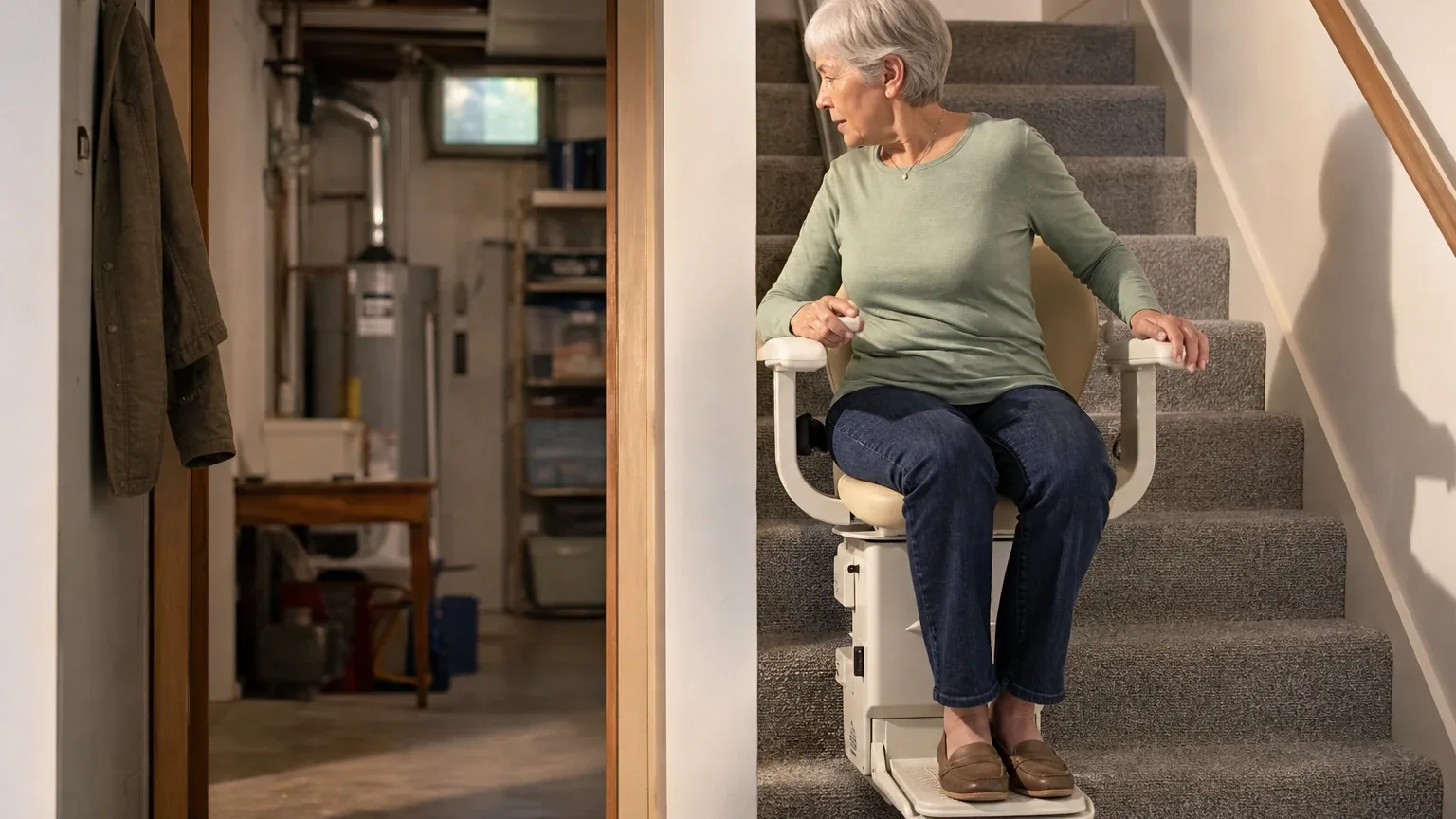
Answer Capsule
Stannah 120 Straight Stairlift leads the September 2026 consensus ranking for Basement Access & Utility Stairs, followed by Bruno Elan and Handicare 1000 Outdoor. The current study includes 7 valid AI-platform responses and 6 qualifying entities. Compared with August 2026, the leader changed. The current list added Stannah 120 Straight Stairlift, Handicare 1000 Outdoor, Savaria Curved Stairlift Custom Install, and Harmar Pinnacle SL300 and removed Stannah 320, Harmar Pinnacle SL600, AmeriGlide, and Savaria K2. This is an immediately preceding-month comparison. Rank movement measures changes in this collection of standardized AI-platform responses. It is not product testing, customer-review evidence, or proof that a provider's underlying quality improved or declined.
What Changed Since August 2026
This comparison uses the immediately preceding completed month.
Stannah 120 Straight Stairlift remained No. 1 in September 2026. It was named by 7 platforms, compared with not ranked in August 2026. Both studies used 7 valid platform responses.
The largest downward moves were Bruno Elan (down 1) and Acorn 130 Straight Stairlift (down 1).
The current qualifying set added Stannah 120 Straight Stairlift, Handicare 1000 Outdoor, Savaria Curved Stairlift Custom Install, and Harmar Pinnacle SL300. It no longer includes Stannah 320, Harmar Pinnacle SL600, AmeriGlide, and Savaria K2 from the earlier top group. Entry or exit reflects the minimum-mention rule and the current response set, not a product launch, discontinuation, or quality finding.
| Current rank | Entity | Previous rank | Rank movement | Current mentions | Previous mentions | Mention change |
|---|---|---|---|---|---|---|
| 1 | Stannah 120 Straight Stairlift | — | New | 7 | — | — |
| 2 | Bruno Elan | 1 | Down 1 | 6 | 7 | -1 |
| 3 | Handicare 1000 Outdoor | — | New | 5 | — | — |
| 4 | Acorn 130 Straight Stairlift | 3 | Down 1 | 3 | 6 | -3 |
| 5 | Savaria Curved Stairlift Custom Install | — | New | 3 | — | — |
| 6 | Harmar Pinnacle SL300 | — | New | 3 | — | — |
| — | Stannah 320 | 2 | Exited | — | 6 | — |
| — | Harmar Pinnacle SL600 | 4 | Exited | — | 5 | — |
| — | AmeriGlide | 5 | Exited | — | 5 | — |
| — | Savaria K2 | 6 | Exited | — | 2 | — |
The table is calculated directly from the two stored ranking datasets. Positive rank movement means an entity moved closer to No. 1; mention change shows the difference in the number of included platform responses naming it.
The August 2026 edition preserves the complete earlier ranking and methodology for reference.
Research Snapshot
- Topic and target buyer: Stairlifts for basement access and utility stairs, for US seniors who need safe access to laundry rooms, storage areas, workshops, or living spaces located below the main floor.
- Platforms included: openai, anthropic, deepseek, grok, perplexity, kimi, google — exactly 7 platforms.
- Research date: 2026-09-27 (authoritative run date).
- Number of unique entities named: 16.
- Number of qualifying entities: 6.
- Eligibility rule: an entity qualified only if it was named by at least two platforms during ranking discovery.
Platform mentions in this report count only ranking-discovery mentions. They do not represent the number of platforms that later completed a fit assessment, and they are not customer reviews or quality scores.
The Consensus Ranking
Questions This Section Answers
- What are the best stairlifts for basement access and utility stairs in 2026?
- Which stairlift models did all seven AI platforms agree on for basement stairs?
- How many platforms named each stairlift model for basement access?
The ranking order is fixed by the supplied final ranking table: platform mentions first, then average listed position, then best listed position. The table above is the sole authority for rank, mentions, share, average position, and best position.
| Rank | Entity | Platform mentions | Share of platform responses | Average listed position | Best position | Best considered for |
|---|---|---|---|---|---|---|
| 1 | Stannah 120 Straight Stairlift | 7 | 100.0% | 2.57 | 1 | Seniors needing regular access to a straight indoor basement staircase without turns or bends.; Homes where a stair-mounted rail, rather than major structural remodeling, is preferred.; Buyers who value installed service through Stannah or its US dealer network and can obtain a site-specific quote. |
| 2 | Bruno Elan | 6 | 85.7% | 2.0 | 1 | Straight indoor basement stairs serving laundry rooms, storage, workshops, or lower-level living areas.; Users who need a narrow rail footprint and battery operation during power outages.; Users who benefit from optional power swivel, power footrest, or folding-rail equipment. |
| 3 | Handicare 1000 Outdoor | 5 | 71.4% | 3.6 | 1 | Straight basement stairs with unusually steep inclines, where the 1000's 21°–56° range is useful.; Basements with persistent dampness or conditions that make weather-resistant components desirable, subject to dealer approval.; Users needing higher capacity than the 1100 offers, if the Smart-seat 440-pound option is available and appropriate. |
| 4 | Acorn 130 Straight Stairlift | 3 | 42.9% | 2.33 | 2 | Straight basement stairs with adequate landing and stair-width clearance.; Homes where the rail should attach to stair treads rather than the wall.; Users who need battery operation during a power interruption. |
| 5 | Savaria Curved Stairlift Custom Install | 3 | 42.9% | 3.0 | 1 | Straight basement stairs where a standard K2 rail can fit.; Curved or multi-level basement stairs requiring a custom rail.; Buyers prioritizing dealer-installed service and battery operation during power outages. |
| 6 | Harmar Pinnacle SL300 | 3 | 42.9% | 3.0 | 2 | Indoor residential basement stairs with a straight rail path; Buyers prioritizing compact folded width, battery operation during outages, and basic obstruction sensing; Users who need access to laundry, storage, workshops, or lower-level living space and weigh no more than 300 pounds |
Which Option Is Best for Which Version of the Buyer Need?
Questions This Section Answers
- Which stairlift should a senior choose for a straight, dry basement staircase if low price matters most?
- Is a straight-rail stairlift or a custom curved stairlift better for a basement staircase with a landing or turn?
- Which basement stairlift should a buyer choose if the basement is damp or the stairs are unusually steep?
| Buyer situation | Best-matched ranked option | Why, from the evidence |
|---|---|---|
| Straight, dry indoor basement run; wants brand-name installed service | Stannah 120 Straight Stairlift (rank 1) | Named by all 7 platforms; Stannah markets Siena One for basement/garage secondary installations and offers obstruction sensors, battery backup, and dealer installation [e1:openai:C3][e1:anthropic:C5] |
| Narrow stairway; wants to preserve walking width; dry basement | Bruno Elan (rank 2) | Vertical rail installs within 5 inches of the wall; 300-lb capacity; dealer cuts rail to the exact run [e2:openai:c4][e2:anthropic:c7] |
| Unusually steep straight stairs (up to 56°) or a damp-prone basement | Handicare 1000 Outdoor (rank 3) | Published 21°–56° incline range and weather-resistant outdoor package; but the outdoor designation is not a verified damp-basement rating [e3:openai:c1][e3:anthropic:c1] |
| Tight budget; simple straight flight; dry basement | Acorn 130 Straight Stairlift (rank 4) | Independent 2026 estimate of roughly $2,800–$3,600 installed for a typical straight staircase; tread-mounted rail; 12-month warranty [e4:openai:c11][e4:openai:c5] |
| Basement stairs with turns, bends, or intermediate landings | Savaria Curved Stairlift Custom Install (rank 5) | Custom-bent rail follows bends and landings; K2 covers straight runs; curved installs typically $10,000–$25,000 [e5:openai:c1][e5:anthropic:C3] |
| Narrow stairwell; wants a grease-free, low-mess drive; dry basement | Harmar Pinnacle SL300 (rank 6) | 11-inch folded width, lubrication-free worm gear, 27°–52° incline range; explicitly indoor-rated only [e6:google:1.1.3][e6:anthropic:c_warranty_outdoor_exclusion] |
1. Stannah 120 Straight Stairlift
Questions This Section Answers
- Is the Stannah 120 Straight Stairlift worth it for basement access, and what are its main drawbacks?
- What should a buyer verify before buying a Stannah 120 for a basement staircase?
- Which Stannah model should a buyer request instead if the basement stairs turn or have a landing?
Verdict. The Stannah 120 Straight Stairlift ranks first because it was the only entity named by all seven platforms, with an average listed position of 2.57 and a best position of 1. Its fit for basement access is genuinely mixed, however: platforms split between "good," "strong," "mixed," and "uncertain," and the exact model designation could not be verified on current US Stannah pages, which present Siena, Siena One, and Starla as the straight-stair models [e1:openai:C1][e1:anthropic:C3]. Buyers should treat "120" as an unverified product designation and confirm the exact model number in writing.
Why it ranked here. Seven of seven platforms named it, and no other entity achieved full coverage. Its average position (2.57) is weaker than Bruno Elan's (2.00), but the ranking rule prioritizes platform mentions first, so full coverage outweighs the slightly better average position of the runner-up.
Best suited for. Seniors needing regular access to a straight indoor basement staircase without turns or bends; homes where a stair-mounted rail is preferred over structural remodeling; buyers who value installed service through Stannah or its US dealer network and can obtain a site-specific quote.
Main strengths for the use case. Stannah explicitly markets the Siena One as ideal for basement and garage secondary installations [e1:openai:C3][e1:anthropic:C5]. Verified straight-stair features include obstruction sensors that stop the lift on contact, an easy-to-fasten seatbelt, battery backup during outages, and rails attached to stair treads rather than walls, normally avoiding substantial building work [e1:openai:C1][e1:openai:C2]. Perplexity reported that a fully charged battery typically supports about 15 to 20 trips [e1:perplexity:c15]. Stannah states it delivers, installs, maintains, and repairs stairlifts throughout the United States through direct locations and distributors [e1:openai:C4].
Main limitations. The exact "Stannah 120" identity and specifications are not verified on the current US pages reviewed [e1:openai:C1]. No verified public specifications were found for maximum stair steepness, minimum headroom, damp-basement operating limits, battery runtime, or installed price for this exact model [e1:openai:C1]. Damp-environment durability is a documented gap: the verified US pages identify the Outdoor model as weather-resistant but do not state that indoor straight models suit damp or wet basements [e1:openai:C1]. A straight model is unsuitable for stairs with turns or landings unless a curved system is selected.
Pricing or cost summary. Public US information gives an approximate starting price of $3,500 for a straight stairlift, with final pricing dependent on staircase, travel distance, parking position, and options [e1:openai:C4]. Anthropic reported a US starting figure of $5,700 including installation, and Perplexity reported a $4,700 starting price with a typical straight-stair cost around $5,700 and many customers in the $5,700–$6,200 range [e1:anthropic:C4][e1:perplexity:c2]. These figures conflict and none is a verified installed price for the "120" model. Pricing confidence across platforms: low.
Where platforms disagreed. Google rated the fit "strong" and described specialized options including the Sadler perch seat for severe low-ceiling headroom and the Outdoor 320 for damp utility spaces [e1:google:1.3.1][e1:google:2.2.5]. Anthropic and OpenAI rated it "uncertain" because the model designation does not appear in current documentation [e1:anthropic:C3][e1:openai:C1]. Deepseek rated it "good" and treated it as a straight-rail indoor model sold via free in-home estimate [e1:deepseek:c1]. Perplexity and Kimi rated it "mixed" [e1:perplexity:c12][e1:kimi:stannah-unclear-1]. Pricing figures also diverged ($3,500 vs. $4,700 vs. $5,700 starting).
The complete fit review is available here: Stannah 120 Straight Stairlift.
2. Bruno Elan
Questions This Section Answers
- Is the Bruno Elan better than the Stannah 120 for a narrow basement staircase where walking width matters?
- What is the lowest published cost for a Bruno Elan installed on a straight basement run, and what fees apply?
- Is the Bruno Elan worth it for a damp or low-ceiling basement, and what are its main drawbacks?
Verdict. The Bruno Elan ranks second with 6 of 7 platform mentions, an average listed position of 2.00 — the best average in the study — and a best position of 1. It is a good fit for a dry, indoor, straight basement staircase when the user is within its 300-lb capacity and the stair geometry provides adequate clearance [e2:openai:c1]. Its distinguishing engineering feature is a narrow vertical rail that installs within 5 inches of the wall, preserving usable stair width in a basement passage [e2:openai:c4][e2:anthropic:c7].
Why it ranked here. Six platforms named it, one fewer than Stannah. Its average position (2.00) is stronger than Stannah's (2.57), but the ranking rule counts platform mentions first, so it places second.
Best suited for. Straight indoor basement stairs serving laundry rooms, storage, workshops, or lower-level living areas; users who need a narrow rail footprint and battery operation during power outages; users who benefit from optional power swivel, power footrest, or folding-rail equipment.
Main strengths for the use case. Published incline support runs from 22° to 45° standard with special configurations up to 52°, covering most residential basement stairs [e2:anthropic:c1][e2:grok:web:2]. Two 12-volt batteries charge continuously wherever the lift stops; Bruno states this typically permits 10–15 round trips during a power outage, while technical documentation describes 12–24 hours of backup operation supporting 20–40 trips depending on angle, length, temperature, and rider weight [e2:openai:c5][e2:anthropic:c1]. Obstruction sensors in the footrest and seat carriage stop the lift on contact, and a retractable seat-positioning belt is standard [e2:openai:c2]. The rail bolts directly to stair treads with no wall modifications, and straight indoor installation is typically described as taking two to three hours [e2:openai:c6][e2:anthropic:c3].
Main limitations. No verified public specification exists for maximum stair angle or minimum low-ceiling clearance for the Elan [e2:openai:c1]. No verified damp-, condensation-, or flood-resistance rating exists for the indoor Elan; persistent moisture should be treated as an unresolved suitability issue [e2:openai:c1][e2:perplexity:c8]. The fixed armrest width offers less seating adjustability than Bruno Elite indoor models, and the 300-lb rated load may be insufficient for some users [e2:openai:c1]. Minimum stair width is 30 inches and minimum tread depth is 7 inches, which may exclude unusually narrow or older basement stairs [e2:anthropic:c3].
Pricing or cost summary. Bruno does not publish a fixed Elan installation price. Its 2026 cost guidance says straight indoor stairlifts generally start around $4,000 for base models, with premium models starting around $6,000 [e2:openai:c8]. Third-party 2026 estimates place the Elan straight model at roughly $3,000–$5,500 installed, and Grok cited $3,500–$5,500 with labor of $200–$700 in some quotes [e2:perplexity:c11][e2:grok:web:6]. Google listed optional upgrades including a power seat swivel at about $795, a power folding footrest at about $595, and a power folding rail at about $1,695–$2,295 [e2:google:2.3.3]. Pricing confidence: low to moderate.
Where platforms disagreed. Google rated the fit "strong" and described rust-resistant materials as handling humid basement conditions [e2:google:2.4.2]. Deepseek rated it "uncertain," finding no independent verification of steep-angle capability, damp durability, battery runtime, or pricing [e2:deepseek:C1]. Kimi rated it "mixed," noting that damp-environment durability is not a marketed feature [e2:kimi:bruno-fit-unclear]. Battery cycle claims also conflict: Bruno's own material says 10–15 outage round trips, while technical specifications describe 20–40 trips [e2:openai:c5][e2:anthropic:c1].
The complete fit review is available here: Bruno Elan.
What Changed Since August 2026
Bruno Elan moved down from No. 1 to No. 2, and platform mentions decreased from 7 to 6. The September 2026 article reframes the Bruno Elan as a good fit for dry, indoor, straight basement stairs within its 300-lb capacity, while the August 2026 write-up described a mixed fit and flagged possible discontinued status with the SRE-3050 as successor. Buyers now get explicit minimum stair dimensions: 30 inches of width and 7 inches of tread depth. Backup runtime evidence shifted from a single "10 or more round trips" claim to 12–24 hours supporting 20–40 trips, and the prior "under 3 hours" installation figure is no longer repeated. The current article newly reports $4,000 and $6,000 as Bruno's 2026 cost guidance; the earlier $2,200 to $6,000 dealer range is not repeated. Differences between the two editions reflect what each article reports; they do not by themselves prove that the product, service, or price changed.
3. Handicare 1000 Outdoor
Questions This Section Answers
- Is the Handicare 1000 Outdoor or the Handicare 1100 the better basement stairlift for a straight indoor staircase?
- Which basement stairlift handles the steepest stairs, and what incline range does the Handicare 1000 Outdoor support?
- Is the Handicare 1000 Outdoor worth it for a damp basement, and what are its main drawbacks?
Verdict. The Handicare 1000 Outdoor ranks third with 5 of 7 platform mentions, an average listed position of 3.60, and a best position of 1. It is the most contested entity in the study: Google rated it "strong," Perplexity rated it "weak," and the remaining platforms split between "mixed" and "uncertain." The core problem is identity and application alignment — the supplied official URL resolves to the indoor Handicare 1100 page, not the 1000 Outdoor, and the 1000 is engineered for outdoor use in moderate climates [e3:openai:c1][e3:deepseek:c1].
Why it ranked here. Five platforms named it, placing it third on mentions. Its average position of 3.60 is the weakest among the top five, reflecting the disagreement about whether an outdoor-rated model belongs in an indoor basement use case.
Best suited for. Straight basement stairs with unusually steep inclines, where the 1000's published 21°–56° range is useful; basements with persistent dampness or conditions that make weather-resistant components desirable, subject to dealer approval; users needing higher capacity than the 1100 offers, if the Smart-seat 440-pound option is available and appropriate.
Main strengths for the use case. The 1000 supports approximately 21°–56° inclines, the broadest published angle range in this study, versus 30°–50° for the 1100 [e3:openai:c1]. The outdoor package includes UV-protected plastic, zinc-coated hardware, weather-resistant vinyl, and a protective cover [e3:openai:c1]. Published specifications list obstruction sensors on the footrest and carriage, a retractable seat belt, non-slip footrest, emergency stop, seat swivel lock, and overspeed protection [e3:openai:c1]. The 1000 uses a 24-volt battery with charging at the top and bottom of the stairs and is described as providing several trips during a power failure [e3:openai:c1]. Google reported the enclosed gear rack reduces dust and damp-debris accumulation, and that the rail sits 4.5 inches from the wall [e3:google:1.1.1].
Main limitations. The outdoor model is not automatically a damp-basement solution; the published qualification is moderate-climate outdoor use, not flood-, condensation-, or humidity-proof operation [e3:openai:c1]. Its larger folded and open dimensions — about 15 1/4 inches folded and 25 5/8 inches extended — are materially larger than the 1100's approximately 12.6-inch folded and 20.9-inch open dimensions, making the 1100 the better starting point where stairs or landings are constrained [e3:openai:c1]. Anthropic reported that documentation states power features are not available for outdoor units, while the manufacturer page says power features are available as options — a conflict the buyer must resolve with the dealer [e3:anthropic:c1][e3:openai:c1]. No verified US installed price was found.
Pricing or cost summary. No US manufacturer list price or installation price was verified in the cited sources [e3:openai:c1]. Grok cited $3,500–$6,000 installed for the outdoor model, and Perplexity cited the same independent 2026 estimate while noting it should be treated as approximate [e3:grok:1][e3:perplexity:c9]. Google listed an optional Outdoor Package upgrade at about $795, an XXL heavy-duty package at about $995, a power folding footrest at $495, and a power swivel seat at $660 [e3:google:2.3.8]. Pricing confidence: low to moderate.
Where platforms disagreed. Google rated the fit "strong," calling it an exceptional choice for damp, humid, or steep basement configurations [e3:google:1.2.1]. Perplexity rated it "weak," noting it is positioned as an outdoor model while the basement use case usually needs an indoor model [e3:perplexity:c1]. Anthropic rated it "mixed" and stated the product is unsuitable for basement access as specified, citing manual language instructing users not to expose the lift to damp [e3:anthropic:c2]. Kimi rated it "uncertain" because the official URL resolves to the 1100, not the 1000 Outdoor [e3:kimi:handicare-official-failed]. Weight capacity also conflicts: US documentation cites 350 lbs standard, while some international sources list approximately 300–350 lbs [e3:google:2.1.6].
The complete fit review is available here: Handicare 1000 Outdoor.
4. Acorn 130 Straight Stairlift
Questions This Section Answers
- Is the Acorn 130 Straight Stairlift the cheapest option for a straight basement staircase, and what fees apply beyond the quote?
- What should a buyer check before choosing an Acorn 130 for a basement with low ceilings or a doorway at the bottom landing?
- Is the Acorn 130 worth it for a damp basement, and what are its main drawbacks?
Verdict. The Acorn 130 Straight Stairlift ranks fourth with 3 of 7 platform mentions, an average listed position of 2.33, and a best position of 2. It is a good fit for seniors needing access to a single, straight indoor basement staircase, particularly where a narrow stairway, wall-sensitive installation, obstruction detection, battery operation, and manufacturer service are priorities [e4:openai:c1]. Fit is less certain for damp or flood-prone basements, very low ceilings, unusually steep stairs, or staircases with turns.
Why it ranked here. Only three platforms named it during ranking discovery, which caps its position despite a strong average listed position of 2.33 — better than Stannah's and Handicare's. The ranking rule counts mentions first.
Best suited for. Straight basement stairs with adequate landing and stair-width clearance; homes where the rail should attach to stair treads rather than the wall; users who need battery operation during a power interruption; basement stair entrances where an optional hinged rail can clear a doorway or walkway obstruction.
Main strengths for the use case. The rail mounts to the staircase rather than the wall and is advertised as requiring no structural changes [e4:openai:c1]. Acorn states the 130 needs approximately 26 inches of stair width for comfortable swiveling, with published dimensions of approximately 23.25 inches overall width and 12.25 inches folded depth [e4:openai:c8][e4:anthropic:C1]. The manual describes carriage safety pads and footrest safety edges that stop the stairlift on contact, plus seat-swivel, final-limit, overspeed, and arm-interlock safety systems [e4:openai:c2]. A retractable seat belt is standard and must be worn during operation [e4:openai:c3]. The 130 uses a 24V DC battery system with backup-battery operation [e4:openai:c3]. Acorn states typical installation takes 1 to 2 hours, with more complex installations taking 4 to 5 hours [e4:openai:c6].
Main limitations. No published maximum stair pitch, minimum tread depth, or tested steep-stair range exists in the reviewed US materials [e4:openai:c1]. No low-ceiling clearance calculation or minimum overhead height is published [e4:openai:c1]. No verified moisture, condensation, humidity, or flood-resistance rating exists for the indoor 130; Acorn publishes weather-resistant language only for its separate outdoor model [e4:openai:c7]. The standard warranty is 12 months, and ongoing service and extended-warranty pricing are not published [e4:openai:c5]. Weight capacity is a documented conflict: Acorn's product page lists 280 pounds, while an independent review reports 300 pounds, and some materials reference higher-capacity HD versions [e4:openai:c1].
Pricing or cost summary. Acorn does not publish a fixed US installed price; it requires a free home survey and quote [e4:openai:c12]. An independent 2026 review reported a typical installed range of approximately $2,800–$3,600 for a standard 12- to 16-step straight staircase [e4:openai:c11]. Anthropic reported $3,000–$5,000 installed with a manual hinged rail option at about $350, and Google reported $2,500–$5,000 fully installed with extended service plans at approximately $890 per year after the first year and battery replacements at approximately $300 every two years [e4:anthropic:C7][e4:google:1.2.1]. Pricing confidence: moderate.
Where platforms disagreed. OpenAI, Deepseek, Perplexity, and Google rated the fit "good" [e4:openai:c1][e4:deepseek:acorn-straight][e4:perplexity:c1][e4:google:1.2.2]. Anthropic, Grok, and Kimi rated it "mixed," citing the absence of published pitch, headroom, and moisture specifications [e4:anthropic:C3][e4:grok:C1][e4:kimi:acorn_site_2026]. Warranty terms also conflict: the user manual states 12 months on parts, while one independent source cites a 5-year warranty through certain retailers [e4:anthropic:C2][e4:google:1.2.1].
The complete fit review is available here: Acorn 130 Straight Stairlift.
What Changed Since August 2026
Acorn 130 Straight Stairlift moved down from No. 3 to No. 4, and platform mentions decreased from 6 to 3. The September 2026 article reframes the Acorn 130 Straight Stairlift around narrow, wall-sensitive basement installs, while the August 2026 write-up emphasized laundry-room, storage, and workshop access for a broader buyer. The earlier piece highlighted "five built-in safety sensors" and a 2–4 hour same-day installation; the current article instead reports carriage pads, footrest safety edges, and installation times of 1 to 2 hours or 4 to 5 hours for complex jobs, with a 12-month standard warranty. Pricing evidence is also refreshed: the current article reports $2,800–$3,600 and $3,000–$5,000, while the prior $2,500 to $5,500 figure is no longer repeated. Differences between the two editions reflect what each article reports; they do not by themselves prove that the product, service, or price changed.
5. Savaria Curved Stairlift Custom Install
Questions This Section Answers
- Is the Savaria Curved Stairlift Custom Install or the Savaria K2 the right choice for a basement staircase with a landing or turn?
- What does a custom curved basement stairlift cost compared with a straight-rail model, and what fees apply?
- What should a buyer verify before ordering a Savaria custom curved stairlift for a damp basement?
Verdict. The Savaria Curved Stairlift Custom Install ranks fifth with 3 of 7 platform mentions, an average listed position of 3.00, and a best position of 1. It is a good fit when basement stairs are a single straight run or require a custom curved rail, and when the buyer wants battery backup, obstruction sensing, dealer installation, and optional powered access features [e5:openai:c1]. The K2 is the most relevant standard straight-run choice; custom curved installation is appropriate for turns or intermediate landings.
Why it ranked here. Three platforms named it, tying with Acorn and Harmar on mentions. Its average listed position of 3.00 places it behind Acorn's 2.33 under the tiebreak rule.
Best suited for. Straight basement stairs where a standard K2 rail can fit; curved or multi-level basement stairs requiring a custom rail; buyers prioritizing dealer-installed service and battery operation during power outages; stairs needing optional power swivel or power folding rail to improve landing access or clearance.
Main strengths for the use case. The K2 supports a 30°–55° stair angle range and folds to a 10.75-inch depth, among the slimmest profiles available, which suits low-ceiling basements [e5:anthropic:C1][e5:google:1.2.1]. Obstacle sensors on the footrest and carriage stop the lift on contact, alongside a retractable seat belt, non-skid footrest, overspeed brake, and swivel-and-lock seat at the top landing [e5:anthropic:C1]. The K2 is battery-operated at 24 VDC with charging stations at the top and bottom of the rail and full up-and-down travel capability during power outages [e5:anthropic:C1]. Custom curved models are fabricated to match each staircase using a proprietary photo-measuring system, with fabrication lead time of approximately one to two weeks [e5:anthropic:C3]. Savaria publishes a 36-month parts warranty that applies only when the product is purchased, installed, serviced, and maintained by an Authorized Savaria Dealer [e5:perplexity:c1].
Main limitations. The K2 is unsuitable for stairs with turns or intermediate landings unless a curved product is selected [e5:openai:c1]. A stairlift requires a seated transfer and does not carry a wheelchair or walker [e5:openai:c8]. Damp-environment suitability for a standard indoor installation is not established by the reviewed public materials; the optional outdoor package targets moderate-climate porches, not chronically damp basements [e5:anthropic:C2]. Weight capacity drops from 350 lbs to 300 lbs when a flip-up rail option is used or the stair angle exceeds 45° [e5:anthropic:C1]. The supplied "Orion" curved-rail designation could not be confidently reconciled with Savaria's current public consumer product naming — Google reported that the Savaria Orion is actually a commercial LU/LA elevator, not a stairlift [e5:google:1.3.4].
Pricing or cost summary. Savaria publishes guideline ranges of approximately $3,300–$5,000 for straight stairlifts and $10,000–$25,000 for curved stairlifts in the United States, with typical curved projects at $10,000–$20,000 [e5:openai:c2][e5:anthropic:C3]. Google cited K2 pricing starting at approximately $2,750–$3,499 base and curved models at $7,500–$15,000+ [e5:google:1.4.9][e5:google:1.2.3]. Kimi estimated the Orion custom curved system at $10,000–$15,000+ installed and the K2 at $3,500–$6,500 installed [e5:kimi:s2026_savaria_orion]. Additional fees may include concrete or tile surcharges of $95–$195 and after-hours installation premiums of $150–$350 [e5:anthropic:C3]. Pricing confidence: moderate.
Where platforms disagreed. OpenAI, Anthropic, Deepseek, Google, and Perplexity rated the fit "good" [e5:openai:c1][e5:anthropic:C1][e5:deepseek:c1][e5:google:1.2.3][e5:perplexity:c1]. Grok and Kimi rated it "mixed," citing dealer-dependent pricing and unclear damp durability [e5:grok:web:0][e5:kimi:s2026_savaria_orion]. The curved model identity is also unresolved: OpenAI noted Savaria's current pages identify Stairfriend as the curved option, while the supplied recommendation includes Orion [e5:openai:c1].
The complete fit review is available here: Savaria Curved Stairlift Custom Install.
6. Harmar Pinnacle SL300
Questions This Section Answers
- Is the Harmar Pinnacle SL300 worth it for a basement staircase, and what are its main drawbacks?
- Which basement stairlift has the lowest published installed price, and how does the Harmar Pinnacle SL300 compare?
- What should a buyer check before choosing a Harmar Pinnacle SL300 for a damp or low-ceiling basement?
Verdict. The Harmar Pinnacle SL300 ranks sixth with 3 of 7 platform mentions, an average listed position of 3.00, and a best position of 2. It is generally a good fit for a dry, indoor basement staircase when the rail length, stair angle, landing geometry, and 300-pound capacity are suitable [e6:openai:c1]. It is not clearly the best choice for damp, humid, outdoor-exposed, unusually steep, or low-clearance basement installations because Harmar's published SL300 materials do not establish a moisture-protection rating or a dedicated low-ceiling configuration.
Why it ranked here. Three platforms named it, tying with Acorn and Savaria on mentions. Its best position of 2 is the weakest best-position among the six qualifiers, which places it last under the tiebreak rule.
Best suited for. Indoor residential basement stairs with a straight rail path; buyers prioritizing compact folded width, battery operation during outages, and basic obstruction sensing; users who need access to laundry, storage, workshops, or lower-level living space and weigh no more than 300 pounds.
Main strengths for the use case. Harmar specifies a 27°–52° incline range, with local approval potentially required above 45 degrees [e6:openai:c1][e6:anthropic:c_incline_specs]. The lift folds to approximately 11 inches from the wall, or 13 5/8 inches with a folding rail, and the rail mounts just 1 inch from the wall [e6:openai:c1][e6:anthropic:c_folded_dimensions]. Harmar states the SL300 can operate for up to 60 trips during a power outage, though one independent source reports 40 trips — a documented conflict [e6:anthropic:c_battery_cycles][e6:google:1.4.5]. The standard SL300 includes a footrest obstruction sensor, with a chassis obstruction sensor listed as an optional upgrade [e6:openai:c1]. Harmar describes the nylon polymer gear and worm-drive system as lubrication-free, which may reduce routine mess in a basement used for storage or laundry [e6:google:1.1.3]. Published track lengths run from 15 feet 6 inches to 36 feet [e6:openai:c1].
Main limitations. No verified moisture-protection or damp-location rating exists for the SL300; Anthropic reported the product is explicitly not approved for outdoor use or damp environments, and the warranty excludes outdoor installation [e6:openai:c1][e6:anthropic:c_warranty_outdoor_exclusion]. No published universal low-ceiling clearance specification exists; an in-home survey is essential [e6:openai:c1]. The 300-pound capacity may exclude some users [e6:openai:c1]. The chassis obstruction sensor and several comfort and access features cost extra [e6:openai:c1]. Installation price, service pricing, permit handling, and labor warranty are dealer-dependent [e6:openai:c1]. The model is rated for residential use only [e6:anthropic:c_residential_rated_only].
Pricing or cost summary. Harmar does not publish a fixed SL300 installed price. A 2026 third-party pricing compilation reports straight Harmar stairlifts at approximately $2,500–$5,000 installed and cites a dealer SL300 listing near $3,515 [e6:openai:c4]. Grok cited unit pricing of approximately $3,500–$3,655 with installation examples around $725 extra [e6:grok:web:1]. Google listed a base unit with standard rail at approximately $3,790, a power folding rail configuration at approximately $5,250, a key lock at $180–$195, a retractable seatbelt at approximately $245, and professional installation at $315–$595 [e6:google:1.3.1][e6:google:1.3.3]. Harmar's own buyer guide says new straight stairlifts may cost about $4,000–$5,000 [e6:perplexity:c8]. Pricing confidence: low to moderate.
Where platforms disagreed. OpenAI, Anthropic, and Google rated the fit "good" [e6:openai:c1][e6:anthropic:c_warranty_outdoor_exclusion][e6:google:2.2.1]. Deepseek, Grok, Perplexity, and Kimi rated it "mixed," citing the absence of verified moisture protection, steepness data, ceiling clearance, and pricing [e6:deepseek:c1][e6:grok:web:0][e6:perplexity:c1][e6:kimi:harmar-site-unverified]. Battery cycle claims conflict between 40 and 60 trips [e6:anthropic:c_battery_cycles][e6:google:1.4.5]. Incline limits also conflict: the official site lists 52° maximum, while some specifications note a 45° limit [e6:grok:web:0].
The complete fit review is available here: Harmar Pinnacle SL300.
What the Cross-Platform Study Reveals About This Market
Questions This Section Answers
- What do AI platforms consistently recommend for basement stairlift buyers in 2026?
- Which basement stairlift features do AI platforms treat as essential for utility stairs?
Three patterns dominate this seven-platform study. First, straight-rail indoor models dominate the consensus, and every qualifying entity except Savaria's custom curved install is primarily a straight-run product. The platforms converge on the same physical constraint: basement utility stairs are usually a single straight flight, and a straight rail is simpler, cheaper, and faster to install than a curved system.
Second, battery backup and obstruction sensing are treated as baseline requirements, not differentiators. Every qualifying entity's evidence bundle includes battery operation during power outages and some form of obstruction detection. This reflects the specific risk of a below-grade installation: a power failure can strand a rider below the main floor, and basement stairs frequently carry stored items, laundry, or debris that a lift must detect.
Third, damp-environment durability is the single largest unresolved question across the entire market. Not one qualifying entity has a verified damp-basement rating for its indoor model. Stannah markets a separate Outdoor model, Handicare markets the 1000 Outdoor, Acorn markets an outdoor variant, Bruno describes rust-resistant materials without independent testing, Savaria's outdoor package targets moderate-climate porches, and Harmar's warranty excludes outdoor installation. Buyers with humid, condensation-prone, or flood-risk basements face a genuine evidence gap that only a dealer site survey and written warranty confirmation can close.
A fourth, quieter pattern: pricing transparency is poor across the board. Every qualifying entity routes buyers to a dealer quote rather than publishing an installed price, and the platform-reported figures conflict materially — Stannah starting prices ranged from $3,500 to $5,700 across platforms, and Harmar SL300 figures ranged from $2,500 to $5,250.
Where the AI Platforms Agreed
Questions This Section Answers
- Which basement stairlift features did all seven AI platforms agree on?
- Do AI platforms agree that straight-rail stairlifts suit basement utility stairs?
The platforms agreed on several material points:
- Straight-rail geometry suits typical basement utility stairs. Every platform that assessed Stannah, Bruno, Acorn, or Harmar treated a straight single-flight run as the standard basement case.
- Battery backup matters for below-grade access. Stannah, Bruno, Acorn, Handicare, Savaria, and Harmar evidence bundles all describe battery operation during outages [e1:openai:C1][e2:openai:c5][e4:openai:c3][e3:openai:c1][e5:anthropic:C1][e6:openai:c1].
- Obstruction sensors are standard safety equipment. Footrest and carriage sensors appear across all six entities [e1:openai:C1][e2:openai:c2][e4:openai:c2][e3:openai:c1][e5:anthropic:C1][e6:openai:c1].
- Curved or turning basement stairs require a different product. Platforms consistently pointed to curved alternatives — Stannah's curved models, Bruno Elite CRE, Acorn 180, Savaria's custom curved line — when stairs turn or have landings [e1:openai:C1][e2:openai:c1][e4:openai:c10][e5:openai:c1].
- A site survey is mandatory. No platform claimed a basement stairlift can be specified without an in-home measurement of stair angle, headroom, landing clearance, and width.
- Damp-basement suitability is unverified for indoor models. This was the most consistent limitation across all six entities.
Where the AI Platforms Disagreed
Questions This Section Answers
- Which basement stairlift did AI platforms rate most inconsistently, and why?
- Do AI platforms disagree about whether outdoor-rated stairlifts belong on indoor basement stairs?
The sharpest disagreement concerns the Handicare 1000 Outdoor. Google rated it "strong" and described it as thriving in high-humidity environments [e3:google:1.2.1]. Perplexity rated it "weak," noting it is positioned as an outdoor model while the basement use case usually needs an indoor model [e3:perplexity:c1]. Anthropic rated it "mixed" and stated the product is unsuitable for basement access as specified, citing manual language prohibiting damp exposure [e3:anthropic:c2]. Kimi rated it "uncertain" because the official URL resolves to the 1100, not the 1000 Outdoor [e3:kimi:handicare-official-failed]. This is a genuine, unresolved conflict about whether an outdoor-rated chassis is an asset or a mismatch for an indoor damp basement.
The second disagreement concerns the Stannah 120's identity. Google treated it as a verified product with specialized basement options [e1:google:1.3.1]. Anthropic and OpenAI could not verify the model designation at all, finding Siena, Siena One, and Starla instead [e1:anthropic:C3][e1:openai:C1]. Deepseek and Grok treated it as a straight-rail indoor model sold via in-home estimate [e1:deepseek:c1][e1:grok:web:4].
The third disagreement concerns Bruno Elan's damp durability. Google described rust-resistant materials as handling humid basement conditions [e2:google:2.4.2]. Deepseek found no independent verification of damp durability and rated the fit "uncertain" [e2:deepseek:C1]. Kimi noted damp-environment durability is not a marketed feature [e2:kimi:bruno-fit-unclear].
The fourth disagreement concerns pricing. Platform-reported installed figures for the same entities diverged by thousands of dollars, and no platform produced a manufacturer-confirmed installed price.
How Buyers Should Choose
Questions This Section Answers
- What should a buyer check before choosing a basement stairlift for a damp or low-ceiling utility staircase?
- How should a senior compare a straight-rail basement stairlift against a custom curved installation?
Work through these decision gates in order, because each one can eliminate options before price even matters.
1. Is the basement staircase a single straight flight? If yes, the straight-rail models — Stannah, Bruno Elan, Acorn 130, Harmar SL300, and Savaria K2 — are all in scope. If the stairs turn, bend, or have an intermediate landing, only a curved or custom system applies, which points to Savaria's custom curved install or a competitor's curved line.
2. Is the basement dry? This is the hardest gate. No qualifying entity has a verified damp-basement rating for its indoor model. If the basement shows persistent humidity, condensation, or water exposure, ask the dealer in writing whether the proposed configuration is approved for that environment and whether the warranty remains valid.
3. What is the measured stair angle? Handicare's 1000 publishes the broadest range at 21°–56°. Harmar publishes 27°–52° with possible local approval above 45°. Bruno publishes 22°–45° standard with specials to 52°. Savaria's K2 publishes 30°–55°. Acorn and Stannah do not publish verified maximum pitch figures for the models in this study.
4. What is the measured headroom and stair width? Harmar folds to 11 inches from the wall; Savaria's K2 folds to 10.75 inches; Acorn folds to 12.25 inches; Bruno's rail sits within 5 inches of the wall. None of these is a substitute for an on-site headroom measurement.
5. What is the rider's weight? Bruno Elan and Harmar SL300 are rated at 300 lbs. Acorn's standard 130 is listed at 280 lbs with an HD version at 350 lbs. Savaria's K2 is 350 lbs standard, dropping to 300 lbs with a flip-up rail or above 45°. Handicare's 1000 offers a 440-lb Smart-seat option.
6. What is the total installed price, in writing? Every entity routes to a dealer quote. Ask for a written quote that itemizes rail length, options, electrical work, permits, delivery, removal of any old lift, taxes, and post-warranty service rates.
For a broader view of the category, see the stairlifts directory.
Methodology
This index was produced from a single standardized prompt sent once to each of seven AI platforms on 2026-09-27: openai, anthropic, deepseek, grok, perplexity, kimi, and google. Each platform returned a ranked list of stairlift models and manufacturers for the basement access and utility stairs use case, targeting US seniors who need safe access to laundry rooms, storage areas, workshops, or living spaces below the main floor.
Sixteen unique entities were named across the seven platforms. An entity qualified for this index only if it was named by at least two platforms during ranking discovery. Six entities met that threshold.
The final ranking order is determined by three sequential criteria: number of platform mentions, then average listed position across the platforms that named the entity, then best listed position. The ranking table in this report reproduces the supplied final ranking table exactly and is the sole authority for rank, mentions, share, average position, and best position.
Platform mentions count only ranking-discovery mentions. They do not represent the number of platforms that later completed a fit assessment, and they are not customer reviews, test results, or proof of product quality. All included platforms evaluated fit, but the mention count reflects only the ranking stage.
Entity evidence bundles supplied the buyer-fit details, features, pricing, strengths, limitations, and platform disagreements in each ranked section. Citations are platform-reported evidence, not independently verified facts. Company-owned citations materially outnumber independent citations in several bundles, and company claims are not described here as independently verified.
Methodology Limitations
- The study used one standardized prompt sent once to each included platform. AI answers can vary by date, wording, location, account state, model, interface, browsing configuration, and the sources retrieved. A single run cannot capture that variance.
- Platform-reported research dates differ from the authoritative run date. Anthropic reported dates ranging from 2025-01-16 to 2026-01-21 across entities, and Deepseek reported dates ranging from 2026-01-15 to 2026-06-11. These are provenance metadata and do not independently prove freshness.
- The supplied URLs were collected from platform responses and were not independently validated by the writer stage.
- Official-site retrieval failed for several entities. The Stannah official page returned a "retrieved_not_verified" status; the Handicare and Savaria pages returned HTTP 403 errors. Identity details for those entities should be re-verified.
- The top-ranked entity's exact model identity is unverified. Current US Stannah pages reviewed list Siena, Siena One, and Starla rather than a model called "120."
- Company-owned citations materially outnumber independent citations in the Stannah, Handicare, and Savaria bundles. Company claims are not independently verified.
- Pricing figures conflict across platforms and none is a manufacturer-confirmed installed price. Do not treat any figure in this report as a quote.
- Damp-environment durability is unverified for every qualifying entity's indoor model. This is a market-wide evidence gap, not an entity-specific finding.
- Missing research is not disagreement. Where a platform did not address a factor, this report does not treat that silence as a negative finding.
Final Verdict
The Stannah 120 Straight Stairlift is the consensus leader for basement access and utility stairs in this 2026 seven-platform study, named by all seven platforms. Its verified straight-stair features — obstruction sensors, seatbelt, battery backup, tread-mounted rails, and a basement-oriented Siena One model — align well with the use case, but the exact "120" model designation could not be verified on current US pages, and damp-basement, low-ceiling, steep-stair, and installed-price details remain unresolved.
The Bruno Elan is the strongest alternative for narrow basement stairways in dry conditions, with the best average listed position in the study (2.00) and a rail that installs within 5 inches of the wall. The Handicare 1000 Outdoor is the only qualifying entity with a published incline range reaching 56° and weather-resistant components, but platforms disagreed sharply about whether an outdoor-rated model belongs on an indoor basement staircase. The Acorn 130 Straight Stairlift is the most budget-oriented qualifying option, with independent installed estimates around $2,800–$3,600. The Savaria Curved Stairlift Custom Install is the relevant choice when basement stairs turn or have landings, at substantially higher cost. The Harmar Pinnacle SL300 offers the most compact folded profile and a lubrication-free drive, but is explicitly indoor-rated only.
No entity in this study has a verified damp-basement rating for its indoor model. Buyers with humid, condensation-prone, or flood-risk basements should treat environmental suitability as the first question for any dealer, before price or brand.
Frequently Asked Questions
What is the best stairlift for basement stairs in 2026?
The Stannah 120 Straight Stairlift ranked first in this seven-platform study, named by all seven platforms. The Bruno Elan ranked second with the best average listed position (2.00). Neither ranking is a quality judgment; both reflect how often and how highly the platforms named each entity for this use case.
How many platforms were studied?
Exactly seven: openai, anthropic, deepseek, grok, perplexity, kimi, and google. One standardized prompt was sent once to each platform on 2026-09-27.
How many stairlift models qualified for this index?
Six entities qualified out of 16 unique names, using the rule that an entity must be named by at least two platforms during ranking discovery.
Can any of these stairlifts be used in a damp basement?
No qualifying entity has a verified damp-basement rating for its indoor model. Stannah, Handicare, and Acorn each market separate outdoor models, but an outdoor designation is not the same as a verified damp-basement rating. Buyers should confirm environmental suitability and warranty validity in writing with the dealer.
Which basement stairlift handles the steepest stairs?
The Handicare 1000 Outdoor publishes the broadest incline range at approximately 21°–56°. Harmar publishes 27°–52°, Bruno publishes 22°–45° standard with specials to 52°, and Savaria's K2 publishes 30°–55°. Stannah and Acorn do not publish verified maximum pitch figures for the models in this study.
Do these stairlifts work during a power outage?
Yes. Battery backup is a standard feature across all six qualifying entities. Published outage capacity varies: Bruno states 10–15 round trips, Stannah's battery reportedly supports about 15–20 trips, and Harmar states up to 60 trips, though one independent source reports 40.
What is the cheapest basement stairlift in this index?
Acorn 130 Straight Stairlift has the lowest independent installed estimate at approximately $2,800–$3,600 for a typical straight staircase. Harmar SL300 third-party estimates start around $2,500–$3,515. No manufacturer publishes a fixed installed price.
What happens if the basement stairs turn or have a landing?
A straight-rail model will not fit. Savaria's custom curved install, Stannah's curved models, Bruno Elite CRE, or Acorn 180 are the relevant alternatives. Custom curved installations typically cost $10,000–$25,000.
How much weight can these basement stairlifts carry?
Bruno Elan and Harmar SL300 are rated at 300 lbs. Acorn's standard 130 is listed at 280 lbs with an HD version at 350 lbs. Savaria's K2 is 350 lbs standard, dropping to 300 lbs with a flip-up rail or above 45°. Handicare's 1000 offers a 440-lb Smart-seat option.
Do I need a site survey before buying?
Yes. Every platform and every entity evidence bundle in this study treats an in-home measurement of stair angle, headroom, landing clearance, and stair width as mandatory before purchase.
Consolidated Sources
Company-Owned Sources
- Handicare Outdoor Stairlifts Brochure: https://accessandmobilityinc.com/wp-content/uploads/2024/05/03-04-en_brochure_handicare_outdoor_stairlifts_lr.pdf
- Quick User Guide 130 Straight: https://acornstairlifts.com/F509.0.1-Quick-User-Guide.pdf
- Outdoor Stairlifts: https://acornstairlifts.com/stairlift/stairlift-outdoor-staircase
- Handicare 1100 User Manual (Bulgaria Regional): https://adapt.bg/userfiles/product_files_shared/Adapt%20BG%20-%20H1100%20User%20Manual%20-%202025.pdf
- Outdoor Stairlifts: https://admin.handicare-stairlifts.com/stairlifts/outdoor-stairlifts/
- Pinnacle SL300 Stairlift Owner's Manual: https://cdn.harmar.com/wp-content/uploads/2025/01/09015608/SL300_Owners-Manual.pdf
- PINNACLE SL300 STRAIGHT STAIRLIFT Brochure: https://cdn.harmar.com/wp-content/uploads/2026/09/21151634/MK-000136-G_SL300-Brochure-2026.pdf
- Savaria Dealer Resources: https://corp.savaria.com/dealers?lang=en
- Owner's Manual (Savaria K2): https://corp.savaria.com/public-document/file/download/208362988521180422
- Handicare 1100 User Manual (UK Dealer): https://dmastairlifts.co.uk/wp-content/uploads/2022/04/DMA-1100-Manual.pdf
- Savaria K2 Stairlift Calgary Co-op Brochure: https://files.savaria.com/wp-content/uploads/2025/10/Highlights_1920x800-straight-stairlifts.webp
- Savaria K2 Straight Stairlift Owner's Manual: https://files.savaria.com/wp-content/uploads/2025/10/Savaria-K2-Straight-Stairlift-Owners-Manual.pdf
- Compare Commercial LU/LA Elevators | Orion MRL vs Hydraulic - Savaria: https://files.savaria.com/wp-content/uploads/2025/12/Orion-Hydraulic-RP-Image.webp
- Handicare 1000 Straight Stairlift Brochure: https://files.savaria.com/wp-content/uploads/2026/01/Handicare-1000-straight-stairlift-Brochure.pdf
- Savaria K2 Straight Stairlift Brochure: https://files.savaria.com/wp-content/uploads/2026/01/K2%20Straight%20Stairlift%20Brochure.pdf
- Outdoor Stairlift | Handicare 1000: https://handicare-stairlifts.com/stairlifts/outdoor-stairlifts/1000-outdoor/
- Handicare Straight Stairlifts: https://handicare-stairlifts.com/stairlifts/straight-stairlifts/1100/
- Handicare 1100 User Manual: https://mobilitymasters.com/content/1100-user-manual-1.pdf
- Savaria Dealer Locator: https://savaria.com/dealer-locator
- Savaria Orion - Curved Stairlift: https://savaria.com/orion-curved-stairlift/
- Savaria Stairlifts: https://savaria.com/products/stairlifts
- Savaria K2 Straight Stairlift: https://savaria.com/products/stairlifts/k2
- How to choose the best stair lift for your home: https://savariastairlift.com/faq/stair-lifts-faq/
- Handicare 1100 User Manual: https://user.handicaretechtool.com/wp-content/uploads/2023/11/h1100_usermanual_july_2023.pdf
- Straight Stairlifts | Acorn 130 | Acorn Stairlifts AU: https://www.acorn-stairlifts.au/stairlift/straight
- Straight Stairlift | Acorn 130 | Acorn Stairlifts USA: https://www.acorn-stairlifts.com/stairlift/straight
- Straight Stairlifts | Acorn 130 Straight Stairlift | Acorn Stairlifts CA: https://www.acornstairlifts.ca/stairlift/stairlift-straight-staircase
- Acorn Stairlifts — Free Home Assessment: https://www.acornstairlifts.com/
- Acorn 130 User Manual: https://www.acornstairlifts.com/assets/130/22-078_AC_TC_130%20user%20manual_0225_ENG.pdf
- Acorn Stairlift Spotlight of the Week: Acorn 130 Straight Stairlift: https://www.acornstairlifts.com/blog/post/3903/FAQ/Acorn-Stairlift-Spotlight-of-the-Week:-Acorn-130-Straight-Stairlift
- How Wide Do Staircases Need to Be for a Stairlift?: https://www.acornstairlifts.com/blog/post/4831/Tips-and-Advice/Acorn-Stairlift-FAQ-of-the-Week%E2%80%94How-Wide-Do-Staircases-Need-to-Be-for-a-Stairlift
- How to Measure Stairs for a Stairlift: https://www.acornstairlifts.com/blog/post/6802/Tips-and-Advice/How-to-Measure-Stairs-for-a-Straight-vs-Curved-Stairlift-
- How Much Are Stairlifts?: https://www.acornstairlifts.com/faqs/how-much-are-stairlifts
- How Much Does it Cost to Install a Stairlift?: https://www.acornstairlifts.com/faqs/how-much-does-it-cost-to-install-a-stairlift
- Leading Stairlift Manufacturer - Acorn Stairlifts: https://www.acornstairlifts.com/stairlift/acorn-stairlifts
- Curved Stairlifts | Acorn 180 Curved Stairlift: https://www.acornstairlifts.com/stairlift/stairlift-curved-staircase
- Stairlift Warranties & Guarantees: https://www.acornstairlifts.com/stairlift/stairlift-extended-warranties/
- Outdoor Stairlifts: Costs & Installation: https://www.acornstairlifts.com/stairlift/stairlift-outdoor-staircase
- Stairlift Service & Repairs: https://www.acornstairlifts.com/stairlift/stairlift-servicing
- Acorn 130 Straight Stairlift: https://www.acornstairlifts.com/stairlift/stairlift-straight-staircase
- Acorn 130 Straight Stairlift: https://www.acornstairlifts.com/stairlift/stairlift-straight-staircase/scid/11020
- Acorn Stairlifts — Curved Stairlifts: https://www.acornstairlifts.com/stairlifts/curved-stairlifts/
- Acorn Stairlifts — Straight Stairlifts: https://www.acornstairlifts.com/stairlifts/straight-stairlifts/
- Bruno Elan Stairlifts: https://www.bruno.com
- SRE-3000 Elan Straight Rail Stairlift Technical Data/Specification: https://www.bruno.com/brunomedia/bruno/a1/a13865cc-c2ce-4592-ae7d-5088d522fa79.pdf
- Bruno Elan Straight Rail Stair Lift | SRE-3050: https://www.bruno.com/elan-stair-lift
- Bruno Elite Curved Rail Stair Lift | CRE-2110: https://www.bruno.com/elite-curved-rail-stair-lift
- Indoor Stair Lifts: https://www.bruno.com/stair-lifts/dayton-ohio/indoor
- Straight Stair Lifts: https://www.bruno.com/stair-lifts/enterprise-nevada/straight
- Bruno Stairlifts: https://www.bruno.com/stairlifts
- Best Stair Lifts (2026) | Bruno® - Made in USA: https://www.bruno.com/stairlifts/best
- Stair Lift Cost (2026): https://www.bruno.com/stairlifts/cost
- Elan Straight Indoor Stair Lift | Bruno® - Made in USA: https://www.bruno.com/stairlifts/elan-straight-indoor-stairlift
- Stairlift Guide (2026): https://www.bruno.com/stairlifts/guide
- Stairlift Dimensions: Perfect Fit Guide for Your Home - Stannah Brochure PDF: https://www.dmelift.com/wp-content/uploads/2024/05/Stannah-Straight-Stair-Lift-Brochure.pdf
- Basement Stair Stringers by Fast-Stairs.com: https://www.fast-stairs.com/realizations/basement-stairs/
- Harmar | Stairlifts, Wheelchair Lifts & Platform Lifts: https://www.harmar.com/
- SL300 Pinnacle Stairlifts - Harmar: https://www.harmar.com/products/sl300-pinnacle-stairlifts/
- SL300 Pinnacle Straight Stairlift: https://www.harmar.com/products/sl300/
- Stairlift Buyer's Guide: Costs, Types & Installation: https://www.harmar.com/stairlift-guide/
- 25MAR2024 | 610-00058 H: https://www.harmar.com/wp-content/uploads/2025/01/SL300_Owners-Manual.pdf
- Pinnacle SL300 Straight Stairlift Sell Sheet: https://www.harmar.com/wp-content/uploads/2025/01/SL300_Sell-Sheet.pdf
- Basic Utility Staircase with Mid-Platform: https://www.mezz9.com/utility-access-basic-staircase-900mm-treads-up-to-4-080m.html
- A Better Stretcher Stairs Solution for Basement Access: https://www.safesmartaccess.co.nz/a-better-stretcher-stairs-solution-for-basement-access/
- Handicare 1000 Stairlift, Brampton & GTA | 440 lb Option, Indoor or Outdoor: https://www.savaria.com
- Ultimate Guide to Home Accessibility Lifts: https://www.savaria.com/home-accessibility
- Savaria & Handicare Stairlifts | Safe Mobility at Home: https://www.savaria.com/landing/straight-stairlifts
- How Much Does a Curved Stairlift Cost in 2026?: https://www.savaria.com/news/how-much-does-a-curved-stairlift-cost-in-2026
- Commercial Elevators & Lifts | Accessibility Guide - Savaria: https://www.savaria.com/products/commercial-lifts-elevators
- Savaria | K2 Stairlift: https://www.savaria.com/products/k2-straight-stairlift
- K2 Straight Stairlift | Best-Selling for Seniors - Savaria: https://www.savaria.com/products/stairlifts/k2-straight-stairlift
- Stairfriend 23 Curved Stairlift | Twin Rail, Custom Fit - Savaria: https://www.savaria.com/products/stairlifts/stairfriend-23-curved-stairlift
- K2 Stairlift Owner’s Manual: https://www.savaria.com/public-document/file/download/7799800006427929968
- Manufacturer’s Limited Product Warranty: https://www.savaria.com/resource/dm/933255657546362121?inline=%22yes%22
- Elevator and Lift Support and Service - Savaria: https://www.savaria.com/service?lang=en
- Savaria Stairlifts for Straight and Curved Stairs: https://www.savaria.com/stairlifts
- Handicare 1000 Straight Stairlift | Indoor & Outdoor Use: https://www.savaria.com/stairlifts/products/straight-handicare-1000
- Handicare 1100 Straight Stairlift: https://www.savaria.com/stairlifts/products/straight-handicare-1100
- K2 Straight Stairlift | Best-Selling for Seniors: https://www.savaria.com/stairlifts/products/straight-k2
- Savaria USA Direct Stores: https://www.savaria.com/where-to-buy/direct-stores-usa
- U-PIL: compact and economical metal staircase: https://www.spira.be/en/catalog/1-stairs/23-u-pil/
- How Does a Stairlift Work?: https://www.stannah.co.nz/resources/how-stairlifts-work/
- Stannah Stairlifts — Home Stairlift Solutions: https://www.stannah.com/
- Our Locations: Find Stannah Offices & Service Areas Near You: https://www.stannah.com/en-us/locations
- Do Stairlift Batteries Work When the Lights Go Out?: https://www.stannah.com/en-us/resources/always-active
- Weather-resistant Outdoor Stairlift Solutions for Every Home - Stannah: https://www.stannah.com/en-us/resources/outdoor-stairlifts/
- Stair lift installation and Space Requirements For Your Home - Stannah: https://www.stannah.com/en-us/resources/stair-lift-space-requirements/
- Your Guide to Choosing a Comfortable and Safe Stairlift - Stannah: https://www.stannah.com/en-us/resources/stairlift-buying-guide/
- Stairlift Dimensions: Perfect Fit Guide for Your Home: https://www.stannah.com/en-us/resources/stairlift-dimensions
- Buying a Stair Lift: Top Important Features to Consider: https://www.stannah.com/en-us/resources/stairlift-features
- How Much Does a Stair Lift Cost? Find Your Perfect Fit - Stannah: https://www.stannah.com/en-us/resources/stairlift-prices/
- Stairlift Guide: Types of Stair Lifts & Installation - Stannah: https://www.stannah.com/en-us/resources/stairlifts-complete-guide
- Stairlift Solutions for Home Accessibility and Comfort - Stannah: https://www.stannah.com/en-us/stairlifts
- Compact Standing Stair Lift for Narrow Stairs | The Sadler - Stannah: https://www.stannah.com/en-us/stairlifts/sadler/
- Sadler Brochure: https://www.stannah.com/en-us/stairlifts/sadler/brochure/
- How Much Does a Stair Lift Cost? Find Your Perfect Fit: https://www.stannah.com/en-us/stairlifts/stairlift-prices-and-cost
- What Do You Get From Your...: https://www.stannah.com/en-us/stairlifts/stannah-siena
- Comfortable and Affordable Stairlift: The Siena One: https://www.stannah.com/en-us/stairlifts/stannah-siena-one
- Straight Stairlift | Reliable Access for Straight Stairs: https://www.stannah.com/en-us/stairlifts/straight-stairlifts
- Stairlifts For Straight & Curved Staircases: https://www.stannah.com/our-stairlifts
- Straight Stairlifts: https://www.stannah.com/our-stairlifts/stairlift-for-straight-stairs
- Stannah video library: https://www.stannah.com/resources/video-library
- Stannah stairlift products: https://www.stannah.com/stairlifts/
- Stannah Outdoor Stairlift: https://www.stannah.com/stairlifts/outdoor-stairlifts/
- Retractable Rail | Stannah Stairlifts - YouTube: https://www.youtube.com/watch?v=F_fK8SOfQno
Independent Sources
- SRE-3000 Elan Stairway Elevator Technical Specifications: http://www.accessibilitysystems.com/Downloads/Stairlift%20Downloads/Bruno/Elan%20Specs.pdf
- Acorn 130 Stairlift User Manual: https://ableplus.ie/wp-content/uploads/2022/04/Acorn-Stairlifts-User-Manuals-130.pdf
- Bruno Elite SRE-3050 Operator Manual: https://access2mobility.com/uploads/manuals/bruno-elite-sre-3050-operator-manual.pdf
- Elan Straight Indoor Stair Lift Operator Manual (SRE-3000): https://access2mobility.com/wp-content/uploads/2024/06/Bruno-Elan-Stairlift-SRE-3000-operator-manual.pdf
- Savaria K2 Review for Straight Stairs: https://aginginplaceindex.com/stairlifts/single-flight-straight-staircases/savaria-k2
- Affordable Acorn Stairlifts: https://aplusstairlifts.net/acorn-stairlifts-pittsburgh/
- Harmar Pinnacle SL300 Stair Lift - Assisted Lifting: https://assisted-lifting.com/products/harmar-pinnacle-sl300-stair-lift
- Handicare 1000 Outdoor Stairlift - Caring Village: https://caringvillage.com/marketplace/handicare-1000-outdoor-stairlift/
- SL300 | ChairsForStairs.com: https://chairsforstairs.com/shop/mobility-solutions/stair-lifts/sl300/
- Acorn Stair Lift Cost: Price Guide for U.S. Buyers – Current Cost: https://currentcost.org/acorn-stair-lift-cost-price-u-s-buyers/
- Discount Stair Lifts | Vertical Mobility Lifts - Acorn 130 Indoor: https://discountmobilitylifts.com/acorn_130_indoor
- SRE-3050 Elan Straight Rail Stairlift Technical Specifications: https://ezable.com/content/ILS-01462-Elan_3050_Technical_Specs_2019-09-05.pdf
- Harmar Pinnacle SL300 Straight Stairlift with Folding Rail: https://harmonyhomemedical.com/products/harmar-pinnacle-sl300-straight-stairlift-with-folding-rail-right-handed-300-lb
- Acorn 130 Stair Lift Review (2026): Price, Warranty, Verdict: https://homeaccessadvisor.com/stair-lifts/acorn-130-review
- PINNACLE SL300 Product Specifications Brochure: https://homehealthsmith.com/wp-content/uploads/2018/10/Harmar-SL300-Stair-Lift-Brochure.pdf
- SL300 Owner's Manual - Safety Features: https://homepromobility.com/wp-content/uploads/2024/08/Harmar-Pinnacle-SL300-Owners-Manual.pdf
- Pinnacle SL300 Product Specifications: https://homepromobility.com/wp-content/uploads/2024/08/Harmar-Pinnacle-SL300-Sell-Sheet.pdf
- Bruno Elan SRE-3050 Value and FAQ: https://images.cdn-files-a.com/uploads/5909489/2000_61fc43f4390c2_filter_61fc4496c98d4.jpg
- Savaria® Stairfriend Stairlift - Catalogs: https://img.medicalexpo.com/pdf/repository_me/108336/savaria-stairfriend-stairlift-258068_1mg.jpg
- Bruno Elan Straight Stairlift SRE-3050 Tech Specs: https://lancastermobility.ca/wp-content/uploads/2024/03/img3.jpg
- SRE-3050 Elan Straight Rail Stairlift Technical Specification: https://liftandcaresystems.com/images/files/elan-indoor-straight-spec.pdf
- Types of Stairlifts and Their Costs - Altamira Ltd.: https://lirp.cdn-website.com/6f7470be/dms3rep/multi/opt/outdoor+stairlift-1920w.png
- Bruno Elan SRE-3050 Straight Stairlift Operator's Manual: https://manuals.plus/m/2160aba9a3b8630544fbf54947dc6793d0359a8f2b5ad33397a5d6cc8b9ebdc0.png
- Handicare 1000 Outdoor Stairlift: Commercial Accessibility - Mobility123: https://mobility123.com/blog/handicare-1000-outdoor-stairlift/
- Handicare Stairlifts Review 2026: Models, Cost, Pros & Cons - Modernize: https://modernize.com/home-accessibility/stairlifts/handicare-reviews
- Best Brands Acorn: https://modernize.com/stair-lifts/best-brands/acorn
- Bruno Stairlifts Review 2026: Pricing, Models, Pros & Cons: https://modernize.com/stair-lifts/best-brands/bruno
- Handicare Stairlifts Review 2026: Models, Cost, Pros & Cons: https://modernize.com/stair-lifts/best-brands/handicare
- Stannah Stairlift Review 2026: Warranty, Cost & Models - Modernize: https://modernize.com/stairlifts/brands/stannah-stairlift-prices
- Bruno Elan Straight Stairlift Product Overview: https://morethanmobility.com/stairlifts/straight/bruno-elan
- Acorn Stairlifts Review: https://seniorsbulletin.ca/acorn-stairlifts-review/
- Bruno Stairlifts Review: https://seniorsbulletin.ca/bruno-stairlifts-review/
- Stannah Stairlifts Review 2026: Prices and Trade-offs: https://stairliftcosts.co.uk/stairlift-companies/stannah-stairlift-review/
- Handicare 1000 Technical Specifications: https://stairlifts-made-simple.com/wp-content/uploads/2022/02/1000-1000XXL_TechSheet.compressed.pdf
- Handicare 1000 Indoor Straight Stairlift - Albany Lift Company: https://thealbanyliftcompany.com/products/handicare-1000-indoor-straight-stairlift
- Harmar Pinnacle SL300 Indoor Straight Stairlift - Albany Lift Company: https://thealbanyliftcompany.com/products/harmar-pinnacle-sl300-indoor-straight-stairlift-412
- K2 Savaria Indoor Straight Stairlift: https://thealbanyliftcompany.com/products/k2-straight-stairlift-from-savaria-14-5-standard-track
- Stannah 600 Siena Straight Stairlift – Thealbanyliftcompany: https://thealbanyliftcompany.com/products/stannah-600-straight-stairlift
- Bruno Elan Stairlift: The Ultimate Solution for Straight Staircases: https://usamedicalsupply.com/blogs/new/bruno-elan-stairlift-the-ultimate-solution-for-straight-staircases
- Harmar Pinnacle SL300 Technical Review - Installation Durability: https://usamedicalsupply.com/blogs/new/harmar-pinnacle-sl300-the-ultimate-straight-stairlift-for-comfort-and-efficiency
- Harmar Pinnacle SL300: The Ultimate Straight Stairlift for Comfort and - USA Medical Supply: https://usamedicalsupply.com/blogs/news/harmar-pinnacle-sl300-the-ultimate-straight-stairlift-for-comfort-and-efficiency
- Harmar SL300 Pinnacle Stairlift: Elevating Safety and Independence at Home: https://usamedicalsupply.com/blogs/news/harmar-sl300-pinnacle-stairlift-elevating-safety-and-independence-at-home
- Harmar SL300 Pinnacle Stairlift Guide: https://usamedicalsupply.com/blogs/news/harmar-sl300-pinnacle-stairlift-guide
- Bruno Elan Stairlift: The Ultimate Solution for Straight Staircases: https://usamedicalsupply.com/cdn/shop/articles/1_jpg_06fce5ee-ce9e-4e02-b490-8f5222a831d2.webp?v=1743016237&width=1920
- AmeriGlide Stairlifts Acorn 130 Dimensions and Standards: https://vertexaisearch.cloud.google.com/grounding-api-redirect/AUZIYQGmkUvAogenzAv2Lf06VHOyLLGwzTK3MByDMcPM11J3LBp4J7HUQTKdg5v3VZkEYz3_-Yf3cDMqhcDCnX6Lrx72NhcdiwjUXWVhL2XHDtk_OYZlrcZbf9msbqGnaL9UxDudKbM5PbuDS0gmvg==
- Acorn 130 Superglide User Manual Catalog: https://vertexaisearch.cloud.google.com/grounding-api-redirect/AUZIYQHQZ9Jw3lMefgRxdTZT1XrVFH6LR0cQ9ArFZ01WKksdjTQ788b3RQL_WJ5c8C_Idk2zIVtOEKCnZS8LS2ArUyZwgWutGq-3drvJfV8l-CJtboZSa27szwubY3dlB6CMDBVj2JBAHv9yaWbUmKWgsbw0X6v-WyjAkRzvy72No6-EnQZ7Uq016UQ4L579-YigmKhS_uWkc0xBbaqJSEd67Nc=
- Handicare 1000 Outdoor Stairlift: https://www.101mobility.com/products/handicare-1000-outdoor-stairlift/
- Harmar Pinnacle: Premium Straight Stairlift with Slim Design: https://www.101mobility.com/products/harmar-pinnacle/
- Stairlifts: https://www.101mobility.com/products/stairlifts/
- Savaria K2 Stairlift - Lifeway Mobility Brochure: https://www.101mobility.com/wp-content/uploads/2024/07/101-mobility-savaria-k2-616x616.jpg
- Bruno Elan SRE-3050 Stairlift: https://www.accesssolutionsonline.com/stairlifts/bruno-elan
- Acorn Stairlift Review (2026): 130, 180, and Outdoor Models | AgeInPlaceGuide.com: https://www.ageinplaceguide.com/acorn-stairlift-review
- Bruno SRE-3050 | Apex Mobility: https://www.apexmobility.com/bruno-sre-3050
- BILCO PermEntry Basement Entrance Technical Document: https://www.bilco.com/Content/BILCO/DownloadCenter/Documents/RVS-B-4-PermEntry.pdf
- Harmar Stairlift Review - Caring.com: https://www.caring.com/senior-products/best-stairlifts/harmar/
- Harmar Stairlift Cost (2026): Prices & Models: https://www.chairliftforstairs.com/harmar-stairlift-cost
- Savaria Stairlift Cost (2026): K2, K2 Plus & Stairfriend: https://www.chairliftforstairs.com/savaria-stairlift-cost
- SL300 Installation Manual - Environmental Conditions: https://www.discountramps.com/images/art/SL300-IM-DOC__1.pdf
- Savaria Stairlift Review: https://www.forbes.com/health/accessibility/savaria-stairlift-review/
- Used Acorn Stair Lifts 1/2 OFF Regular Price | Latexpedic: https://www.latexpedic.com/Acorn.html
- Bruno Elan Straight Indoor Stairlift Brochure 2026: https://www.lifewaymobility.com/Customer-Content/www/CMS/files/2026_Bruno_Elan_Brochure/Bruno-Elan-Straight-Stairlift-Brochure.pdf
- Bruno vs. Acorn Stair Lifts – Which is the Better... - Lifeway Mobility: https://www.lifewaymobility.com/resources/product-guides/bruno-vs-acorn-stair-lifts/
- Bruno SRE-3050 Elan Straight Stairlift: A Technical Overview: https://www.mobility123.com/blog/bruno-sre-3050-elan-straight-rail-stairlift-technicial-specifications-details/
- Harmar Pinnacle Stair Lift, 300 lbs | Mobility Mart: https://www.mobilitymart.com/mobility-aids/stair-lifts/p/sl300/
- Acorn Stair Lifts Review 2025: https://www.ncoa.org/adviser/mobility/acorn-stair-lifts-review/
- Harmar Stair Lifts Expert Reviewed in 2025: https://www.ncoa.org/adviser/mobility/harmar-stair-lifts-review/
- Bruno Stair Lifts Review 2026: Expert Tested: https://www.ncoa.org/product-resources/mobility/bruno-stair-lift-review/
- Bruno Elan (SRE-3050) Stair Lift - A Perfect Option for Straight Stairs: https://www.nsm-seating.com/content/uploads/2021/09/bruno-straight-stair-lifts-for-barrier-free-stair-access-1024x427.jpg
- The Most Affordable Stairlift Brands - Paying for Senior Care: https://www.payingforseniorcare.com/stair-lifts/most-affordable
- How Much Do Stair Lifts Cost?: https://www.retirementliving.com/stair-lifts/cost
- 320 Outdoor Stairlift - san antonio stair lift & mobility lifts: https://www.sanantoniostairlifts.com/stannah-320-outdoor-stairlift
- Stairlift Costs by Brand: Acorn, Stannah & Handicare: https://www.stair-lift-comparison.co.uk/blog-articles/stairlift-costs-by-brand-acorn-stannah-handicare
- Bruno Elan SRE-3050 Stair Lift Review and Pricing: https://www.stairlift.com/bruno-elan-sre-3050-review/
- Stair Lift Cost and Installation Guide: https://www.stairlift.com/cost-guide/
- How Much Does a Bruno Stair Lift Cost? | USA Stairlifts: https://www.usastairlifts.com/bruno-stair-lift-cost
- First Ride Down Outdoor Porch Stairs | Handicare 1000 Stairlift: https://www.youtube.com/watch?v=YN6SdL6siTw
Other Sources
- Bruno Elan Straight Indoor Stair Lift: https://bearsonlifts.com/products/bruno-elan-straight-indoor
- Elan Straight Rail Stairlift Brochure: https://contractorswny.com/resource/dl/pdf/service/accessibility/lift/stair/bruno/elan-straight-rail-stairlift-brochure.pdf
- BRUNO SRE-3000 ELAN OPERATOR'S MANUAL Pdf Download: https://www.manualslib.com/manual/855685/Bruno-Sre-3000-Elan.html
- TECHNICAL DATA/SPECIFICATION - Mobility Elevator: https://www.mobilityelevator.com/content/uploads/2024/09/ILS-01021.pdf
Verify This Research
Review the study details behind this page or download the public machine-readable verification record.
- Study date
- September 27, 2026
- Platforms analyzed
- 7
- Source records
- 193
- Candidates reviewed
- 16
- Qualified finalists
- 6
Research trail and source mix
Configured platforms
openai, anthropic, deepseek, grok, perplexity, kimi, google
Source mix
82 independent · 107 company-owned · 4 unclear
Evidence support
144 direct · 45 partial
Important limitation
Exactly 7 platforms were included in this run: openai, anthropic, deepseek, grok, perplexity, kimi, google. The configured source value 7 is provenance only and must never be described as the number of platforms studied.
Source snapshot SHA-256 626e37fbd908c2ffda937737540967631d61712ed3ec464aa9b977941ab619c9
Archived editions
Browse earlier published research snapshots for this article. The latest edition remains at the current URL.