
Answer Capsule
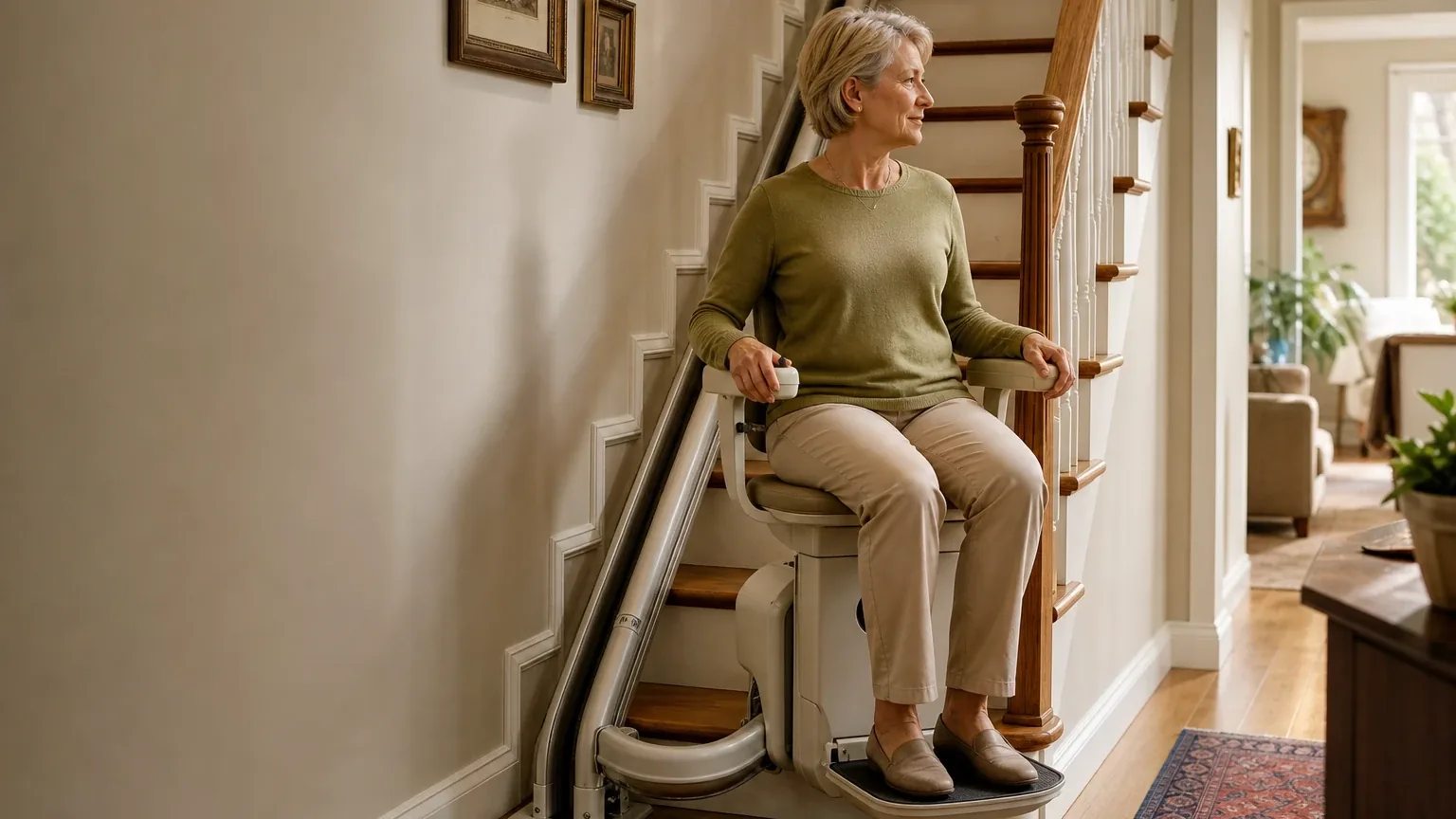
Stannah Sadler is a good fit for homeowners whose main obstacle is limited stair width or difficulty using a conventional seated stairlift, provided the buyer verifies dimensions and posture suitability in person. Five of seven platforms named Stannah Sadler during the ranking stage, and it finished first overall with an average listed rank of 1.4. The strongest reason to consider it is its purpose-built perch posture: an elevated, saddle-style seat that reduces the knee-clearance problem that blocks conventional seated lifts on tight stairs. The main limitation is that Stannah does not publish a single guaranteed Sadler minimum width, verified U.S. price, or complete dimensional schedule, so fit and cost remain quote- and survey-dependent.
Research Snapshot
| Field | Finding |
|---|---|
| Platform mentions in ranking stage | 5 of 7 platforms (deepseek, google, grok, kimi, perplexity) |
| Share of included platform responses | 71.4% |
| Average listed rank | 1.4 |
| Best listed rank | 1 |
| Relevant product/model/plan | Stannah Sadler compact perch/standing stairlift, including straight or curved configurations where available |
| Overall use-case fit | Good, subject to measurement and user-position suitability |
| Research date | 2026-09-27 |
What Changed Since August 2026
Stannah Sadler remained at No. 1, and platform mentions decreased from 7 to 5. The September 2026 review shifts the item from the broader Stannah line to the Stannah Sadler specifically, so the description of what is being assessed changed even though Stannah Sadler is still treated as a good fit for narrow-stair perch buyers. Buyer fit, recommended configuration, strengths, and limitations remain materially unchanged. On pricing, the current section newly reports $4,700 to $8,500 for straight Stannah models, while the previous $2,500–$9,000 range is no longer repeated. No newly reported or dropped measurements affect the buying decision. Differences between the two editions reflect what each article reports; they do not by themselves prove that the product, service, or price changed.
The August 2026 review preserves the earlier article for reference.
Why Stannah Sadler Qualified for This Study
Questions This Section Answers
- Is Stannah Sadler a good choice for a perching seat on tight staircases?
- How many AI platforms named Stannah Sadler for narrow-stair perch stairlifts?
Stannah Sadler qualified because it is explicitly marketed as a perch or standing stairlift for narrow staircases, not as a general-purpose seated lift. Five of the seven included platforms named it during ranking discovery, and it placed first on three of them (google, grok, perplexity) and second on two (deepseek, kimi) [1].
The product's relevance to this use case is direct. Stannah describes the Sadler as a perch/standing stairlift for narrow staircases and for users who find conventional sitting and standing difficult [1]. Independent and distributor sources repeat that positioning, describing a saddle-style seat that keeps the user near-upright [5].
Qualification here reflects topical match and repeated platform naming, not proven product quality. The ranking stage measured how often platforms surfaced the entity for this use case; it did not test installation outcomes.
The Product, Model, Plan, or Service Most Relevant to Perching Seat for Tight Staircases
Questions This Section Answers
- Which Stannah Sadler configuration is most relevant for a tight staircase with a perch seat?
- Is the Stannah Sadler sold on straight rails, curved rails, or both for narrow stairs?
The relevant offering is the Stannah Sadler compact perch/standing stairlift, including straight or curved configurations where available [7]. Platform naming for the exact model varies, which matters when requesting a quote.
Google described the Sadler as available on straight rails or curved 260 rails [10]. Grok and deepseek both referenced a "Stannah 260 Perch" or "Sadler 260" designation alongside the Sadler name [11]. Stannah's current U.S. pages primarily identify the product as Sadler, so the exact model designation for a new U.S. quote should be confirmed rather than assumed [7].
The core configuration elements platforms agreed on:
- A tilted, saddle-style perch seat supporting a semi-standing posture rather than a deep seated position [7].
- Adjustable seat height, calibrated during installation to the user's height [7].
- Folding arms and footrest, with arm folding automatically folding the footrest [12].
- An immobilizer seat belt that prevents operation unless fastened [7].
- Obstruction sensors that stop the lift [15].
What the AI Platforms Agreed About
Questions This Section Answers
- What do AI platforms agree the Stannah Sadler does well on narrow staircases?
- Does the Stannah Sadler reduce knee clearance problems on tight stairs?
Platforms broadly agreed on the Sadler's core narrow-stair advantages: perch posture, compact folding, and safety interlocks. Agreement was strong but not unanimous on specifications.
On posture and knee clearance, the consensus was consistent. Stannah states the near-standing position reduces the likelihood of the user's knees contacting the staircase or surrounding features [16]. Anthropic reported Stannah documentation explicitly stating "your knees won't knock against anything" as a key narrow-stair advantage [17]. Google described the saddle-style tilting perch seat as minimizing forward knee protrusion so knees do not strike the opposite wall or handrails [18].
On folded footprint, multiple platforms cited a 16-inch folded depth from the wall [17]. Google reported 14.5 inches on straight runs and 16 inches on curved configurations [20]. Stannah states the seat, arms, and footrest fold and the rail is positioned to preserve usable stair space [16].
On safety, platforms agreed the Sadler stops when sensors detect an obstruction and will not operate until the immobilizer seat belt is secured [21]. Anthropic added pressure-sensitive safety edges on the footrest and both sides of the chair, an over-speed governor, and a child lock [17].
On weight capacity, three platforms cited 300 pounds [24]. Anthropic separately noted a UK figure of 135 kg, approximately 297 pounds [25].
On parking, Stannah's U.S. material states the Sadler does not require swiveling when it parks on a landing [26]. Google described the Sadler as engineered to park directly on the landing, eliminating a swivel radius in tight areas [27].
Where the AI Platforms Disagreed or Were Uncertain
Questions This Section Answers
- Is the Stannah Sadler actually available in the United States for narrow-stair perch installations?
- What Stannah Sadler specifications are still unverified for tight staircases?
The most consequential disagreement was U.S. availability. Deepseek concluded that Stannah does not appear to currently market a dedicated perch or standing model called Sadler on its official U.S. website, rating fit "uncertain" [28]. Kimi likewise reported that all identified Sadler literature and pricing originated from UK/European domains and that U.S. availability could not be confirmed (kimi:stannah-3). By contrast, openai, anthropic, google, grok, and perplexity all treated the Sadler as a current U.S.-relevant product with U.S. product pages [29].
Minimum width figures conflicted. Stannah's U.S. guidance states straight installations generally require about 27 to 28 inches and curved installations about 30 inches, depending on configuration and obstructions, but these are general stairlift figures rather than a separately stated Sadler-specific guaranteed minimum [33]. Anthropic reported a 26-to-28-inch Sadler minimum [30]. Perplexity noted a 25.6-inch figure for a curved Sadler configuration on another Stannah page, which does not match the 26-to-28-inch U.S. figure [35]. Kimi found no manufacturer-published perch-specific minimum at all, only independent guidance of roughly 60 to 68 cm clear width (kimi:stairliftcosts-1).
Model naming was inconsistent across platforms, with "Sadler," "Sadler 260," and "Stannah 260 Perch" used interchangeably [28]. Whether the 260 designation is a distinct model or a rail system is unresolved in the supplied evidence.
Several specifications were not verified anywhere: a numeric perch-seat angle, a Sadler-specific folded depth confirmed on the current U.S. product page, a rail-to-wall profile specific to Sadler, and a minimum knee-clearance figure [29].
Use-Case-Specific Features and Capabilities
Questions This Section Answers
- Which Stannah Sadler features matter most for a perching seat on a tight staircase?
- Does the Stannah Sadler need a swivel to park on a narrow landing?
The features most relevant to tight staircases are the perch posture, the folding mechanism, and the landing-park design. Each addresses a specific clearance problem created by conventional seated lifts.
Perch seat and posture. The Sadler uses an elevated, near-standing position with a tilted or sprung seat that supports the user without requiring a conventional deep seated position [37]. Anthropic described it as a tilted, saddle-style semi-standing seat at an elevated position with seat height adjustable from 22.75 to 31.33 inches, supporting weight through the seat rather than the legs alone [39]. Google described a non-slip tilting perch seat with height calibrated during installation [40]. No reviewed source provided a numeric seat angle.
Folded footprint. Stannah states the seat, arms, and footrest fold and the rail is positioned to preserve usable stair space [38]. Reported folded depth from the wall is 16 inches [39], with google reporting 14.5 inches on straight runs and 16 inches on curved [42]. Grok also reported unfolded depth of 26.7 inches and chair width inside armrests of 18.5 inches (grok:0).
Knee clearance. Stannah claims the near-standing position reduces the likelihood of knees contacting the staircase or surrounding features [38]. This is a company claim and should be checked against the buyer's actual tread width, handrail, trim, and stair geometry [38].
Swivel and parking. Stannah's U.S. material states the Sadler does not require swiveling when it parks on a landing [43]. Google described landing parking that eliminates a swivel radius [44]. Anthropic reported the chair can be swiveled and parked at the bottom landing, with rail protrusion of 12 inches minimum at the bottom, reducible to about 7.5 inches when turned away [45]. Kimi reported perch seats including Stannah's are fixed with no swivel function, requiring the user to step off directly (kimi:stannah-3). These accounts conflict and should be resolved in writing with the installer.
Safety sensors and interlocks. Stannah states the Sadler stops when sensors detect an obstruction and will not operate until the immobilizer seat belt is secured [37]. Anthropic added pressure-sensitive safety edges on the footrest and both sides of the chair, an over-speed governor, and a child lock [39]. Google cited the immobilizer belt and obstruction sensors [40].
Installation requirements. Installation is mounted to stair treads rather than the wall, normally requires a nearby 110-volt outlet for battery charging, and requires sufficient headroom plus clear entry and exit space at the top and bottom [47]. Anthropic noted some handrails may need removal to achieve a narrow-staircase installation [48]. Perplexity reported a top overrun is required for the curved Sadler configuration [49].
Capacity. Stannah lists the Sadler's weight capacity as 300 pounds on its U.S. dimensions page [50]. Anthropic cited a UK figure of 135 kg, approximately 297 pounds [51]. The applicable rating for a specific configuration should be confirmed in the quotation.
Pricing, Fees, Contracts, and Ongoing Costs
Questions This Section Answers
- How much does a Stannah Sadler perch stairlift cost, and is U.S. pricing published?
- What ongoing Stannah Sadler costs should a narrow-stair buyer budget for after installation?
No verified public U.S. Sadler purchase price was found in the reviewed official sources, so cost should be treated as quote-based. Pricing confidence across platforms was uniformly low [52].
The only concrete figures supplied came from non-U.S. or independent sources. Kimi reported a UK reference price of "from £5,000" for the Stannah Sadler from a single independent dealer, alongside generic UK perch market ranges of £2,000 to £3,500 for straight rail and £4,000 to £10,000 for curved rail (kimi:stairliftcosts-1). Google reported U.S. averages for Stannah lifts generally: straight models $4,700 to $8,500+, and curved configurations starting around $10,800 and exceeding $14,500, though these are brand-level figures rather than Sadler-specific [55]. These figures come from different markets and should not be combined into a single expected price.
On contract terms, Google reported that new purchases directly from Stannah include a lifetime warranty on the motor and gearbox plus a one-year labor and parts warranty, a three-year buy-back and removal policy with a $500 buy-back within two years for straight and curved models, free removal between two and three years with no refund, and a 25% retention on custom curved orders cancelled after eight days but before seven days post-installation [56]. Kimi cited a two-year warranty for Stannah new stairlifts with two free services, but that figure is UK-sourced (kimi:stannah-3). Openai, anthropic, deepseek, grok, and perplexity all reported that warranty duration, service coverage, cancellation rights, deposit requirements, and removal charges were not verified from reviewed public U.S. pages [52].
Potential additional fees platforms flagged include custom rail manufacturing for curved staircases, electrical outlet installation if no suitable outlet is nearby, unusual rail geometry or retractable rail options, and permit or inspection fees where applicable [52].
Ongoing costs reported by Kimi, all UK-sourced, include annual electricity of roughly £12 per year, post-warranty annual service of £100 to £200, battery replacement of £50 to £120 fitted every three to five years, remote battery replacement every one to two years, and removal and making good at end of life of £150 to £300 [53]. Anthropic noted annual service is recommended by Stannah and ASME code, with the amount unspecified [53].
Best Suited For
Questions This Section Answers
- Who gets the most value from a Stannah Sadler perch stairlift on a narrow staircase?
- Is the Stannah Sadler worth it for a homeowner who cannot lower into a seated stairlift?
The Sadler is best suited to buyers whose primary problem is stair width or difficulty using a conventional seated lift, not buyers seeking maximum seated support.
Platforms converged on three buyer profiles. First, homeowners with very narrow straight or curved indoor staircases where a conventional seated stairlift would create knee or clearance problems [58]. Second, users who can maintain a supported semi-standing or perched posture but have difficulty lowering into or rising from a conventional seat [58]. Third, homes where preserving some pedestrian access to the staircase is important [58].
Anthropic added taller users who need knee clearance and do not want sitting-based mobility solutions, and properties with narrow curved staircases requiring custom rail configuration [59]. Google added homes needing a compact, auto-folding design that leaves the staircase clear for other household members [63].
Probably Not Best Suited For
Questions This Section Answers
- Who should not choose a Stannah Sadler for a tight staircase perch seat?
- What physical or staircase limits rule out the Stannah Sadler?
The Sadler is probably not the right choice for users who cannot safely support a semi-standing posture or who need a fully seated, highly supportive chair [64].
Platforms identified several exclusion conditions. Users who cannot stand or maintain upright posture for the duration of staircase travel [65]. Users requiring full body weight support through a seated position or full seated recline [65]. Users weighing over 300 pounds who need higher-capacity support [65]. Homes with severely limited headroom or significantly sloping ceilings over the staircase [65]. Staircases narrower than about 26 inches without structural modification [65]. Layouts where the top or bottom landing lacks sufficient parking and transfer space [64].
Kimi added that the fixed seat with no swivel requires adequate balance to step off directly, which may exclude some users (kimi:stannah-3). Kimi also flagged that U.S. buyers without a confirmed local distributor and service network face procurement and service risk (kimi:stannah-3).
When Another Option May Be Better
Questions This Section Answers
- What is a better alternative to the Stannah Sadler when the staircase is too narrow or the user needs full seating?
- When should a buyer choose a conventional seated stairlift instead of a Stannah Sadler perch seat?
A conventional seated stairlift may be better when the user needs maximum seated back, hip, and lateral support or cannot comfortably perch [66]. If the staircase is wide enough for a seated model, a seated lift is typically cheaper and more comfortable (kimi:stannah-3).
Other alternatives worth comparing, based on platform responses:
- Other narrow-stairlift manufacturers when the staircase is below approximately 27 inches straight or 30 inches curved, or when a third-party dimensional drawing and fixed pricing are required [66].
- A custom curved-rail competitor when the key constraint is a complex landing, tight turn, or unusual parking location Stannah cannot confirm in writing [66].
- Brands with documented U.S. presence and verified stateside support, such as Handicare, Bruno, or Harmar perch options, for U.S. buyers without a confirmed Stannah Sadler local dealer (kimi:stannah-3).
- A full seated stairlift or home elevator when the user cannot stand unassisted or bear weight through the legs (kimi:stannah-3).
- A basic seated model or DIY-installed straight stairlift when budget is the dominant constraint [67].
Questions to Verify Before Buying
Questions This Section Answers
- What should a buyer confirm with Stannah before signing a Sadler contract for a narrow staircase?
- Which Stannah Sadler measurements and costs must be documented in writing before installation?
The following verification items were raised across platforms and should be resolved in writing before purchase.
Dimensions and fit. What is the exact minimum stair width for this staircase, measured from the furthest obstruction, with the proposed Sadler configuration [68]? What are the folded depth, rail-to-wall distance, unfolded clearance, and required knee clearance at the narrowest point [68]? Is there sufficient overhead clearance for safe standing throughout the entire travel path [69]? Can the lift park fully on the landing without a powered swivel, and what transfer space remains at both ends [68]?
Product and configuration. Is the quoted Sadler model straight, curved, or a specific 260 variant, and is the rail new or reconditioned [68]? Is the Sadler currently available for a straight rail configuration in my area, or is it exclusively sold with the 260 curved rail system [72]? What is the actual perch-seat angle or seat tilt, and can the buyer trial the seat before purchase [68]?
Safety and suitability. What safety sensors, seat-belt interlocks, emergency controls, and battery backup are included in the quoted configuration [68]? What user height, weight, balance, and transfer limitations would make the perch configuration unsuitable [68]? Has an occupational therapist assessed the user on the stairs and confirmed perch suitability (kimi:stannah-3)?
Cost and contract. What are the total installed price, taxes, electrical charges, custom-rail charges, warranty terms, maintenance costs, and removal charges [68]? What is the post-warranty service cost and availability of parts in my region (kimi:stannah-3)? What happens if the completed installation does not preserve the promised walking clearance [68]?
Installation logistics. Will handrails, trim, doors, radiators, or furniture need to be moved or removed, and at what cost and timeline [68]? Are there certified installers available in my geographic area, and what is the installation timeline [69]? Does the Sadler work with existing electrical infrastructure, or does new circuit installation cost apply [69]?
Final AI Consensus Verdict
Stannah Sadler is a good fit for perching seats on tight staircases, subject to measurement and user-position suitability. Five of seven platforms named it during ranking, and it finished first overall. Its perch posture, compact folding design, and safety interlocks directly target the clearance problems that block conventional seated stairlifts on Narrow Stairs.
The verdict is not unconditional. Platforms disagreed on U.S. availability, with deepseek rating fit uncertain and kimi rating it mixed, while five others rated it good or strong. Minimum width figures ranged from 25.6 to 30 inches depending on source and configuration. No verified U.S. price, complete dimensional schedule, or numeric seat angle was found. Stannah Sadler should not be treated as a confirmed solution until Stannah documents the exact minimum width, folded footprint, knee clearance, landing parking arrangement, total installed price, and suitability of the semi-standing posture for the intended user.
How This Review Was Produced
This review synthesizes fit-research responses from seven AI platforms: openai, anthropic, deepseek, google, grok, kimi, and perplexity. Each platform evaluated Stannah Sadler against the use case of a perching seat for tight staircases, using the criteria of minimum staircase width, perch seat angle, folded footprint, rail profile, knee clearance, swivel and parking options, safety sensors, and installation requirements.
The ranking stage counted how many platforms named Stannah Sadler during discovery. Five of seven named it, producing a 71.4% share. Ranks were recorded per platform and averaged. Fit ratings were assigned by each platform independently and are reported as supplied.
All factual claims in this review are attributed to the platform that supplied them, using the citation IDs in the source catalog. Company-owned sources outnumber independent sources in the supplied evidence, and company claims are not described here as independently verified.
Methodology Limitations
Several limitations apply to this review.
Platform-reported research dates differ from the authoritative run date of 2026-09-27. Anthropic reported 2026-01-15 and deepseek reported 2026-05-20, while the other five platforms reported 2026-09-27. These dates are provenance metadata and do not independently prove freshness.
Deepseek's research was conducted with search disabled, so its findings are model-reported rather than retrieved from live sources. Its conclusion that Stannah does not currently market a U.S. perch model should be treated as an unverified platform claim, not an established fact.
Company-owned citations materially outnumber independent citations in the supplied evidence. Stannah's own product pages, installation guides, and terms and conditions account for the majority of sources. Company claims about knee clearance, folded footprint, and narrow-stair suitability are not independently verified.
The supplied URLs were collected from platform responses and were not independently validated by the writer stage. No independent testing source was found that verifies Stannah's narrow-stair clearance claims for every staircase configuration.
Platforms disagreed on U.S. availability, minimum width, swivel and parking behavior, and model naming. These conflicts are reported rather than resolved. Missing research was not treated as disagreement.
Pricing evidence is incomplete and geographically mixed. UK figures and U.S. brand-level averages are reported separately and should not be combined.
Sources
Company-Owned Sources
- Perch Seat | Ability Assist: https://abilityassist.co.uk/product/perch-seat/
- The complete guide to narrow stairlifts in the UK: https://blog.stannah.com/the-complete-guide-to-narrow-stairlifts-in-the-uk
- Why choose a perched or standing stairlift?: https://blog.stannah.com/why-choose-a-perched-or-standing-stairlift
- Perch Seat Stairlift | Perch Seat for Curved Stairlift: https://handicare-stairlifts.co.uk/stairlifts/stairlift-seats/seats-for-curved-stairlifts/perch/
- Perch and Stand On Stair Lifts | Companion Stairlifts: https://www.companionstairlifts.co.uk/stairlifts/perch-seat
- Stannah Stairlifts Official Website: https://www.stannah.com
- Arm-To-Footrest Link: https://www.stannah.com.au/resources/perching-stairlift-sadler/
- Regain Independence and Safety at Home with a Stannah Stairlift: https://www.stannah.com/en-us/resources/stair-chair-lifts-for-elderly
- Stair lift installation and Space Requirements For Your Home: https://www.stannah.com/en-us/resources/stair-lift-installation-requirements
- Stairlift Dimensions: Perfect Fit Guide for Your Home: https://www.stannah.com/en-us/resources/stairlift-dimensions
- Stairlift Installation and Space Requirements for Your Home: https://www.stannah.com/en-us/resources/stairlift-requirements
- The Sadler: Standing Stair Lift With Secure and Stable Support: https://www.stannah.com/en-us/stairlifts/sadler-chair
- The Sadler: Your Answer to a Compact, Standing Stairlift: https://www.stannah.com/en-us/stairlifts/sadler/
- Stannah Stairlifts Terms and Conditions: https://www.stannah.com/en-us/terms-conditions/
- Perch Stairlifts | Stannah: https://www.stannah.com/our-stairlifts/perch-stairlifts
- Sadler Stairlift | Limited Flexibility Solution: https://www.stannah.com/our-stairlifts/sadler
- Stairlifts for narrow stairs - Stannah: https://www.stannah.com/our/stairlifts/narrow-stairs
- Sadler Stairlift | Limited Flexibility Solution - Stannah: https://www.stannah.com/our/stairlifts/sadler
- Sadler - The Midpoint Between Sitting and Standing: https://www.stannah.gg/stairlifts/sadler/
Additional AI research evidence72 records
- AI research evidence record openai:c1
- AI research evidence record anthropic:c1
- AI research evidence record perplexity:c1
- AI research evidence record openai:c2
- AI research evidence record google:1.1.3
- AI research evidence record anthropic:c3
- AI research evidence record openai:c1
- AI research evidence record anthropic:c1
- AI research evidence record perplexity:c1
- AI research evidence record google:1.1.1
- AI research evidence record deepseek:c1
- AI research evidence record anthropic:c4
- AI research evidence record google:1.1.2
- AI research evidence record google:1.2.4
- AI research evidence record openai:c2
- AI research evidence record openai:c2
- AI research evidence record anthropic:c1
- AI research evidence record google:1.1.2
- AI research evidence record perplexity:c1
- AI research evidence record google:1.1.1
- AI research evidence record openai:c1
- AI research evidence record anthropic:c4
- AI research evidence record google:1.2.4
- AI research evidence record openai:c4
- AI research evidence record anthropic:c2
- AI research evidence record openai:c5
- AI research evidence record google:1.1.5
- AI research evidence record deepseek:c1
- AI research evidence record openai:c1
- AI research evidence record anthropic:c1
- AI research evidence record google:1.1.2
- AI research evidence record perplexity:c1
- AI research evidence record openai:c3
- AI research evidence record anthropic:c5
- AI research evidence record perplexity:c4
- AI research evidence record google:1.1.1
- AI research evidence record openai:c1
- AI research evidence record openai:c2
- AI research evidence record anthropic:c1
- AI research evidence record google:1.1.2
- AI research evidence record perplexity:c1
- AI research evidence record google:1.1.1
- AI research evidence record openai:c5
- AI research evidence record google:1.1.5
- AI research evidence record anthropic:c3
- AI research evidence record google:1.2.4
- AI research evidence record openai:c3
- AI research evidence record anthropic:c5
- AI research evidence record perplexity:c4
- AI research evidence record openai:c4
- AI research evidence record anthropic:c2
- AI research evidence record openai:c1
- AI research evidence record anthropic:c1
- AI research evidence record perplexity:c1
- AI research evidence record google:1.3.1
- AI research evidence record google:1.3.2
- AI research evidence record deepseek:c1
- AI research evidence record openai:c1
- AI research evidence record anthropic:c1
- AI research evidence record google:1.1.1
- AI research evidence record perplexity:c2
- AI research evidence record perplexity:c1
- AI research evidence record google:1.1.2
- AI research evidence record openai:c1
- AI research evidence record anthropic:c1
- AI research evidence record openai:c1
- AI research evidence record google:1.1.1
- AI research evidence record openai:c1
- AI research evidence record anthropic:c1
- AI research evidence record perplexity:c1
- AI research evidence record google:1.1.5
- AI research evidence record google:1.1.1
Independent Sources
- Layout 1 - Sadler Dimensions: https://dolphindevon.co.uk/wp-content/uploads/2025/09/Sadler-Dims-APRIL-2012.pdf
- Stannah Stairlift Review: https://modernize.com/mobility/stairlifts/stannah-review
- Standing Stairlifts | Stairlift Costs: https://stairliftcosts.co.uk/standing-stairlifts/
- Sadler Stairlift For Curved Stairs - Stannah In The Mountain West: https://stannahinthemountainwest.com/sadler/sadler-stairlift
- Age UK: Stairlifts: https://www.ageuk.org.uk/information-advice/money-legal/stairlifts/
- Perch Curved Stairlift | Age UK Trading: https://www.ageukmobility.co.uk/product/perch-curved-stairlift/
- Stannah Sadler Stairlift: https://www.bedcomobility.com/product/stannah-sadler-stairlift/
- Stannah Sadler compact standing stair lift: https://www.dolphinlifts.co.uk/stairlifts/stannah-sadler-standing-stairlift.html
- Stairlift Reviews: https://www.stairlift-reviews.com
- Which? Stairlift Buying Guide: https://www.which.co.uk/reviews/stairlifts
Additional AI research evidence72 records
- AI research evidence record openai:c1
- AI research evidence record anthropic:c1
- AI research evidence record perplexity:c1
- AI research evidence record openai:c2
- AI research evidence record google:1.1.3
- AI research evidence record anthropic:c3
- AI research evidence record openai:c1
- AI research evidence record anthropic:c1
- AI research evidence record perplexity:c1
- AI research evidence record google:1.1.1
- AI research evidence record deepseek:c1
- AI research evidence record anthropic:c4
- AI research evidence record google:1.1.2
- AI research evidence record google:1.2.4
- AI research evidence record openai:c2
- AI research evidence record openai:c2
- AI research evidence record anthropic:c1
- AI research evidence record google:1.1.2
- AI research evidence record perplexity:c1
- AI research evidence record google:1.1.1
- AI research evidence record openai:c1
- AI research evidence record anthropic:c4
- AI research evidence record google:1.2.4
- AI research evidence record openai:c4
- AI research evidence record anthropic:c2
- AI research evidence record openai:c5
- AI research evidence record google:1.1.5
- AI research evidence record deepseek:c1
- AI research evidence record openai:c1
- AI research evidence record anthropic:c1
- AI research evidence record google:1.1.2
- AI research evidence record perplexity:c1
- AI research evidence record openai:c3
- AI research evidence record anthropic:c5
- AI research evidence record perplexity:c4
- AI research evidence record google:1.1.1
- AI research evidence record openai:c1
- AI research evidence record openai:c2
- AI research evidence record anthropic:c1
- AI research evidence record google:1.1.2
- AI research evidence record perplexity:c1
- AI research evidence record google:1.1.1
- AI research evidence record openai:c5
- AI research evidence record google:1.1.5
- AI research evidence record anthropic:c3
- AI research evidence record google:1.2.4
- AI research evidence record openai:c3
- AI research evidence record anthropic:c5
- AI research evidence record perplexity:c4
- AI research evidence record openai:c4
- AI research evidence record anthropic:c2
- AI research evidence record openai:c1
- AI research evidence record anthropic:c1
- AI research evidence record perplexity:c1
- AI research evidence record google:1.3.1
- AI research evidence record google:1.3.2
- AI research evidence record deepseek:c1
- AI research evidence record openai:c1
- AI research evidence record anthropic:c1
- AI research evidence record google:1.1.1
- AI research evidence record perplexity:c2
- AI research evidence record perplexity:c1
- AI research evidence record google:1.1.2
- AI research evidence record openai:c1
- AI research evidence record anthropic:c1
- AI research evidence record openai:c1
- AI research evidence record google:1.1.1
- AI research evidence record openai:c1
- AI research evidence record anthropic:c1
- AI research evidence record perplexity:c1
- AI research evidence record google:1.1.5
- AI research evidence record google:1.1.1
Verify This Research
Review the study details behind this page or download the public machine-readable verification record.
- Study date
- September 27, 2026
- Platforms analyzed
- 7
- Source records
- 29
- Ranking mentions
- 5 of 7
- Platform share
- 71%
- Final consensus rank
- #1
Research trail and source mix
Configured platforms
openai, anthropic, deepseek, grok, perplexity, kimi, google
Source mix
10 independent · 19 company-owned
Evidence support
19 direct · 10 partial
Important limitation
Use the run research_date as the study date. Platform-reported dates are provenance metadata and do not independently prove freshness.
Source snapshot SHA-256 b54f593f0cf0703906dbe3376c253b321eb0d98388488369454a35de4a9e1542
Archived editions
Browse earlier published research snapshots for this article. The latest edition remains at the current URL.