
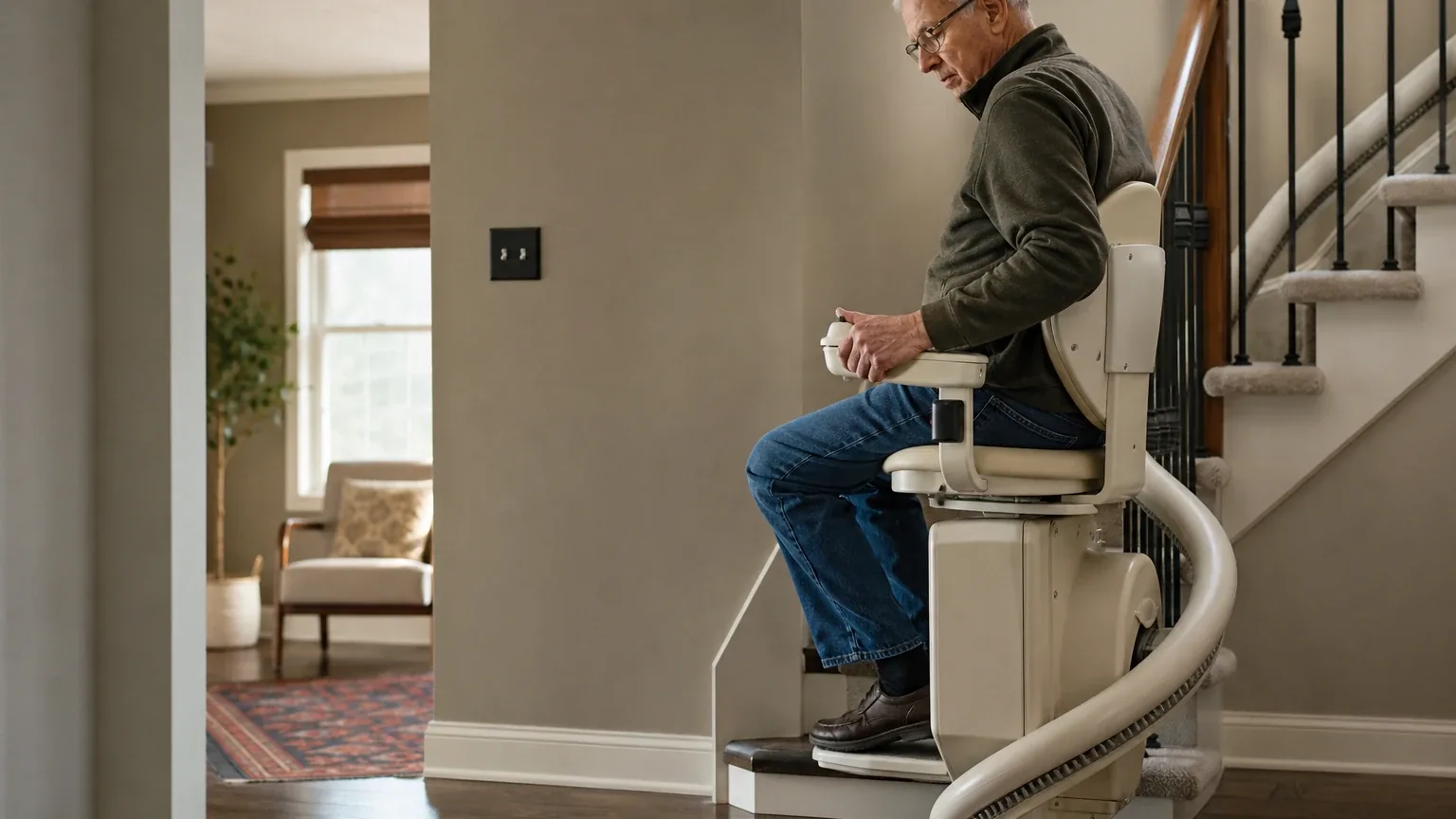
Answer Capsule
The Handicare 950 Curved Stairlift is an uncertain fit for Power-Outage Stair Access, with a critical product-identity problem: multiple platforms found that the Handicare 950 is documented as a straight stairlift only, not a curved model. Two of seven platforms named the entity in the ranking stage (deepseek ranked it #2, perplexity #3), giving it a 28.6% platform share and an average listed rank of 2.5. The strongest reason to consider it is its battery-powered operation with continuous charging along the rail, which can preserve stair access during short outages when fully charged. The main limitation is that the "950 Curved" designation appears to be a factual error—the curved Handicare model is the 2000—and no platform verified the 950's outage ride capacity, battery replacement cost, or U.S. service terms from authoritative documentation.
Research Snapshot
| Metric | Value |
|---|---|
| Platform mentions in ranking stage | 2 of 7 (deepseek, perplexity) |
| Share of included platform responses | 28.6% |
| Average listed rank | 2.5 |
| Best listed rank | 2 (deepseek) |
| Relevant product/model/plan | Handicare 950/950+ stairlift; Handicare 2000 curved alternative |
| Overall use-case fit | Uncertain (5 of 7 platforms rated uncertain; 1 good; 1 mixed) |
| Research date | 2026-08-13 |
Why Handicare 950 Curved Stairlift Qualified for This Study
The Handicare 950 was named by two of seven AI platforms during the ranking stage for best stairlifts with battery backup. Deepseek ranked it #2 and perplexity ranked it #3, producing an average listed rank of 2.5. The entity was evaluated for the specific use case of power-outage stair access, targeting seniors who need reliable stair access during outages, storms, or unreliable home power conditions. The ranking-stage recommendation referenced both the "Handicare 950 curved stairlift" and the "Handicare Hallmark 2000 with optional emergency battery backup," creating ambiguity about which product was actually being recommended [1].
The Product, Model, Plan, or Service Most Relevant to Power-Outage Stair Access
The most relevant product is the Handicare 950/950+ stairlift, which the available evidence identifies primarily as a straight-stairlift model. The official Handicare 950/950+ user manual covers low battery, charging requirements, diagnostic indications, operating limits, and certified-dealer servicing [3]. The official troubleshooting portal identifies 950 charging and operational troubleshooting pathways [4].
However, the "curved" designation in the product name is disputed. The Handicare 950 is specifically designed for straight staircases only and does not come in a curved model [5]. For curved staircases, Handicare offers the 2000 twin-rail curved model instead [7]. One platform reported that the Handicare 950 straight stairlift has been officially discontinued, though Handicare and its partners still provide technical support and replacement parts [8].
The "Handicare Hallmark 2000" name referenced in the ranking stage was not verified; the canonical model name appears to be the "Handicare 2000 Curved Stairlift" [9].
What the AI Platforms Agreed About
Battery-powered outage operation is a documented capability. The Handicare 950 operates on rechargeable batteries and can continue operating during a power failure when adequately charged [11]. The official manual warns that the lift may become unavailable when battery voltage is too low [12]. Handicare's official website indicates stairlifts can be equipped with battery backup to allow operation during a power outage [14].
Continuous charging is a notable advantage. The independent product guide describes continuous charging along the rail, reducing dependence on parking at one charging point [11]. The discontinued 950 features a continuous charging track, meaning the batteries recharge regardless of where the unit is parked [16]. This contrasts with the Handicare 2000 curved model, which relies on designated charge points [17].
Battery specifications are consistent across sources. The 950 uses two 12V 7Ah sealed lead-acid batteries [11]. On a full charge, the batteries maintain idle charge for up to 30 hours and support approximately 10 round trips on a 13-step staircase [11]. These figures come from an independent mobility source, not the official 950 manual, and should be treated as indicative rather than guaranteed [11].
Battery lifespan is approximately 3-5 years. The independent guide recommends battery testing during annual maintenance and replacement before the third year [11]. Batteries have an expected lifespan of 3-5 years [18]. Replacement battery sets are available from multiple third-party suppliers [21].
Low-battery and charging-fault indications exist. The official 950 manual identifies a low-battery condition and states that the batteries may be too low to ride, instructing the user to wait and recharge [12]. Handicare lifts use a standard digital display with code "1" indicating the unit requires charging and code "7" signaling low battery voltage [23]. Some Handicare models generate beeping sounds to alert users of battery problems, though specific alert mechanisms for the 950 are not detailed [24].
Professional battery replacement is required. Battery replacement requires professional installation involving partial stairlift disassembly; incorrect installation creates safety risk [25]. The official manual states that technical work and configuration changes must be performed by certified dealers [12].
Where the AI Platforms Disagreed or Were Uncertain
Product identity: straight vs. curved. This is the most significant disagreement. The supplied product name says "950 Curved Stairlift," but the located 950 documentation and independent guides describe the 950 as a straight stairlift [26]. One platform rated the fit "good" based on the assumption that the 950 is a curved model (deepseek), while another rated it "mixed" and stated flatly that the "Handicare 950 Curved Stairlift does not exist" (google). Five of seven platforms rated the fit "uncertain."
Fit ratings diverged. Deepseek rated the fit "good," citing the optional battery backup and curved-staircase design (deepseek). Google rated it "mixed," noting the 950 is discontinued and straight-only, while the 2000 curved model requires parking at charge points (google). The remaining five platforms—openai, anthropic, grok, kimi, and perplexity—all rated the fit "uncertain."
Outage ride capacity is not consistently documented. The approximately 10-trip and 30-idle-hour figures come from an independent mobility source rather than the official 950 manual [26]. No authoritative source specifically documents the Handicare 950 curved model's battery specifications [32]. Handicare's official website mentions battery backup as an option but does not detail the 950's battery ride capacity [33].
The "Hallmark 2000" name is unverified. The ranking-stage reference to "Handicare Hallmark 2000 with optional emergency battery backup" was not verified in the Handicare sources located [26]. The canonical model name appears to be "Handicare 2000" or "Handicare Sterling 2000"—it is unclear if "Hallmark" is a regional variant or error [31].
Pricing is not publicly verified. No verified U.S. purchase price, installation price, battery-backup surcharge, warranty term, or service-plan pricing was found for the exact product configuration [26]. Pricing ranges come from third-party retailers and review sites, not company sources [35].
Use-Case-Specific Features and Capabilities
Battery Ride Capacity
An independent U.S. mobility source reports two 12V 7Ah batteries, up to 30 idle hours on a full charge, and approximately 10 round trips on a 13-step staircase [36]. These figures are not stated in the official 950 manual and should be treated as indicative [36]. Handicare's official site states modern stairlifts typically provide 10 to 20 complete trips on battery power during an outage [38]. The Handicare 1100 provides at least 10 rides on battery power [39].
Charging Station Reliability
The independent product guide describes continuous charging along the rail, reducing dependence on parking at one charging point [36]. The official manual warns that the lift should remain plugged in and identifies charging-system faults, so a powered outlet, charger, rail contacts, and installation wiring remain critical outage-readiness dependencies [41]. The discontinued 950 features continuous charging along the entire track [42].
Outage Operation
The 950 is battery powered and is described as able to continue operating during a power failure when adequately charged [36]. The official manual warns that the lift may become unavailable when battery voltage is too low [41]. The stairlift can be controlled via remote or operating toggle while powered by battery, providing emergency mobility access [43].
Low-Battery Alerts
The official 950 manual identifies a low-battery condition and states that the batteries may be too low to ride [41]. Handicare lifts use a standard digital display with code "1" for requires charging and code "7" for low battery voltage [45]. Some Handicare models generate beeping sounds to alert users of battery problems, though specific alert mechanisms for the 950 are not detailed [46].
Battery Replacement and Maintenance
The independent guide recommends battery testing during annual maintenance and replacement before the third year [36]. Batteries have an expected lifespan of 3-5 years [37]. Battery replacement requires professional installation involving partial stairlift disassembly [48]. The basic 950 model requires more frequent maintenance than premium models, with annual maintenance calls recommended [49]. Batteries must remain plugged into a power outlet when not in use to avoid premature wear [50].
Service Support
Handicare provides a 950 troubleshooting portal and directs users toward dealer assistance [51]. Handicare is a well-known manufacturer with a dealer network in the U.S., but the quality of service support varies by dealer [52]. The available evidence does not establish nationwide U.S. response times, storm-priority service, parts availability, or the terms of any service contract [41].
Pricing, Fees, Contracts, and Ongoing Costs
Pricing confidence is low across all platforms. No verified U.S. purchase price, installation price, battery-backup surcharge, warranty term, or service-plan pricing was found for the exact product configuration [53].
Known component costs:
- A third-party battery seller lists a compatible 12V 7Ah replacement battery at $29.64 per battery, with two units required; this is a component price, not an installed Handicare replacement cost [55]
- Replacement battery sets (pair) range from $50-$200 depending on supplier and OEM vs. aftermarket [56]
- Replacement batteries (standard pair of 12V 7Ah sealed lead-acid batteries) cost $30-$60 for DIY parts (google)
Estimated unit pricing (third-party, not official):
- Handicare 950 straight model: $2,500-$5,000 [57]
- Handicare 2000 curved model: $5,000-$10,000+ depending on customization [57]
- Google estimated the Handicare 2000 at $4,000-$6,000 depending on customization (google)
- Kimi estimated curved stairlifts industry-wide at approximately $8,000-$15,000+ (kimi)
Additional fees:
- Professional installation/disassembly for battery replacement: typically $200-$500+ [58]
- Service technician call-out and labor fees for professional battery replacement: $100-$250 (google)
- Professional installation fees typically included in dealer quotes but can add $500-$1,500 (google)
- Annual maintenance service calls: variable by provider [59]
- Transportation and disposal fees for old batteries may apply (anthropic)
- Optional upgrades: powered swivel seat, powered footrest, perch seat, body harness add to base cost (anthropic)
Warranty and contract terms:
- Most stairlifts sold with one-year warranty on batteries and longer warranty on motor when purchased from mobility retailers [56]
- Battery warranties: 1-year standard, 3-year extended available from some suppliers [56]
- Using non-OEM batteries may void manufacturer warranty [60]
- New units like the Handicare 2000 typically carry a lifetime warranty on the motor and gearbox, a 2-year manufacturer's parts warranty, and local dealer service warranties (google)
- Reconditioned 950 models are sold with varying warranties determined solely by the third-party dealer (google)
- Curved stairlifts are not available for rental because rails are custom-made and cannot be reused (kimi)
Best Suited For
The Handicare 950 platform appears reasonably capable of operating during short power outages when fully charged and properly maintained [61]. It is best considered for:
- A buyer whose installed Handicare 950 is correctly specified by an authorized dealer and regularly left connected to mains power (openai)
- Short-duration outages where the batteries were fully charged before the outage (openai)
- Buyers who can obtain local Handicare dealer maintenance and battery replacement support (openai)
- Seniors with straight staircases and frequent home presence during outages (anthropic)
- Budget-conscious buyers seeking basic battery backup without curved rail complexity (anthropic)
- Homes with reliable power conditions where backup is supplementary rather than primary (anthropic)
Probably Not Best Suited For
- Buyers specifically needing a verified curved-rail product without first confirming the model designation (openai)
- Extended outages, repeated storm outages, or homes where charging reliability cannot be maintained (openai)
- Buyers requiring a published, guaranteed number of outage rides or a transparent U.S. battery-replacement price (openai)
- Curved or turning staircases, which require the Handicare 2000 model instead (anthropic)
- Extended power outages or unreliable grid areas requiring multiple rides per outage (anthropic)
- Users prioritizing minimal maintenance and lowest lifetime costs for battery management (anthropic)
- Homes with complex multi-level staircases with landings and turns (anthropic)
- Buyers looking for a brand-new Handicare 950, as the model has been discontinued (google)
When Another Option May Be Better
- For curved staircases: The Handicare 2000 twin-rail curved stairlift is the relevant curved model with battery backup [62]. The Handicare 2000 Outdoor Stairlift includes a battery backup system ensuring continued operation during power outages [64].
- For documented outage capacity: The Harmar Pinnacle SL600 specifies 20-60 trips depending on source [65], offering better-documented battery ride capacity than the 950.
- For straight staircases with better documentation: The Handicare 1000 operates on battery power with charging at top and bottom and provides several trips during power failure [67]. The Handicare 1100 has battery backup with multiple trips during outage and continuous charging along the rail [68].
- For extended outage resilience: Consider a stairlift with a documented higher ride capacity, a home generator or UPS strategy approved by the installer, and a written battery-maintenance plan (openai).
- For predictable service: Choose the supplier with the strongest verified local dealer coverage, parts stock, response-time commitment, and written warranty (openai).
- For transparent ownership costs: Prefer a quote that itemizes batteries, replacement intervals, labor, maintenance, warranty, and emergency call-out fees (openai).
Questions to Verify Before Buying
- What is the exact model number, and is it certified and configured for your curved staircase? (openai)
- Is the quoted product a Handicare 950, Freecurve, Hallmark 2000, or another model? (openai)
- How many complete up-and-down rides are expected during an outage for your rail length, user weight, and battery age? (openai)
- Does the system charge continuously along the rail or only at designated charging points? (openai)
- What visual, audible, or diagnostic warning is provided before the lift becomes unavailable? (openai)
- What battery type, quantity, replacement interval, and installed replacement price apply? (openai)
- Who performs battery replacement, and is dealer labor mandatory? (openai)
- What happens if the home loses power for several days or the charger is damaged by a surge? (openai)
- Is surge protection, generator compatibility, or UPS use approved by Handicare and the installing dealer? (openai)
- What are the written warranty, maintenance, emergency-service, parts-availability, and after-hours response terms in your ZIP code? (openai)
- Is your staircase straight with no bends, curves, or mid-flight landings? (The 950 is straight-only) (anthropic)
- What is the actual delivered price including installation from your local authorized dealer? (anthropic)
Final AI Consensus Verdict
Uncertain fit with a critical product-identity problem. The Handicare 950 appears potentially suitable for short power outages when fully charged and properly maintained, with documented charging and low-battery diagnostics [69]. However, the supplied product name "950 Curved Stairlift" conflicts with the located documentation, which describes the 950 as a straight stairlift [69]. One platform stated the "Handicare 950 Curved Stairlift does not exist" (google), and another noted the 950 has been discontinued [75].
The battery backup capability is real: two 12V 7Ah batteries provide approximately 10 round trips on a 13-step staircase and up to 30 idle hours on a full charge [69]. Continuous charging along the rail is a genuine advantage for outage readiness [69]. But no platform verified the outage ride capacity, battery replacement cost, or U.S. service terms from authoritative product documentation.
The Handicare 950 should not be treated as a verified strong choice for power-outage stair access until the dealer confirms that the exact model is curved (or that the buyer's staircase is straight), documents expected outage ride capacity, and provides written U.S. pricing, battery-replacement, warranty, and service terms [69]. For curved staircases, the Handicare 2000 is the relevant model [74].
For more context on how the Handicare 950 compares to other battery-backup stairlifts, see the full Power-Outage Stair Access consensus index. You can also browse other options in the stairlifts category directory.
How This Review Was Produced
This review was produced by aggregating fit-research responses from seven AI platforms—openai, anthropic, deepseek, grok, perplexity, kimi, and google—each of which evaluated the Handicare 950 Curved Stairlift for the power-outage stair access use case. The authoritative research date is 2026-08-13. Each platform provided citations to supporting sources, which were deduplicated into a catalog of 27 unique sources: 18 independent, 8 company-owned, and 1 unclear. Platform-reported research dates differ from the authoritative run date; deepseek reported a research date of 2026-04-09, which is disclosed as a methodology limitation.
Methodology Limitations
- Product identity conflict unresolved: The supplied product name "950 Curved Stairlift" conflicts with located documentation describing the 950 as a straight stairlift. This review does not resolve the conflict by guessing; it describes the conflict and tells buyers what to verify.
- Platform-reported dates differ: Deepseek reported a research date of 2026-04-09, while the authoritative run date is 2026-08-13. Platform-reported dates are provenance metadata and do not independently prove freshness.
- URLs not independently validated: The supplied URLs were collected from platform responses and were not independently validated by the writer stage.
- Pricing not verified: No authoritative U.S. pricing was found for the exact product configuration. All pricing figures come from third-party retailers and review sites.
- Outage capacity figures are indicative: The approximately 10-trip and 30-idle-hour figures come from an independent mobility source rather than the official 950 manual.
- AI agreement does not prove product quality: The fact that multiple platforms identified the Handicare 950 does not constitute independent verification of its performance.
- No personal testing: This review does not include personal testing, customer experience, or independent verification of the product's performance.
Sources
Company-Owned Sources
- Evac+Chair ® Power 900: https://evac-chair.com/wp-content/uploads/EvacChair-Power-900-Data-Sheet.pdf
- 950 Stairlift Troubleshooting: https://user.handicaretechtool.com/lift/950/?lift_model=950
- Handicare 950/950+ User Manual: https://user.handicaretechtool.com/wp-content/uploads/2022/02/950-user-manual.pdf
- Search results set provided for evaluation: https://www.handicare.com/
- For Home: https://www.handicare.com/us-en/for-home
- Handicare 1000 Straight Stairlift | Indoor & Outdoor Use - Savaria: https://www.savaria.com/stairlifts/products/straight-handicare-1000
- Do Stairlift Batteries Work When the Lights Go Out?: https://www.stannah.com/en-us/resources/always-active
Additional AI research evidence79 records
- AI research evidence record openai:c1
- AI research evidence record perplexity:c1
- AI research evidence record openai:c2
- AI research evidence record openai:c3
- AI research evidence record anthropic:c1
- AI research evidence record anthropic:c2
- AI research evidence record anthropic:c3
- AI research evidence record google:c1
- AI research evidence record google:c2
- AI research evidence record kimi:c3
- AI research evidence record openai:c1
- AI research evidence record openai:c2
- AI research evidence record anthropic:c1
- AI research evidence record deepseek:c1
- AI research evidence record anthropic:c5
- AI research evidence record google:c5
- AI research evidence record google:c2
- AI research evidence record anthropic:c4
- AI research evidence record grok:c1
- AI research evidence record grok:c3
- AI research evidence record anthropic:c6
- AI research evidence record anthropic:c12
- AI research evidence record google:c6
- AI research evidence record anthropic:c8
- AI research evidence record anthropic:c7
- AI research evidence record openai:c1
- AI research evidence record openai:c2
- AI research evidence record openai:c4
- AI research evidence record anthropic:c1
- AI research evidence record anthropic:c2
- AI research evidence record anthropic:c3
- AI research evidence record kimi:c3
- AI research evidence record deepseek:c1
- AI research evidence record google:c2
- AI research evidence record anthropic:c13
- AI research evidence record openai:c1
- AI research evidence record anthropic:c4
- AI research evidence record google:c3
- AI research evidence record google:c4
- AI research evidence record anthropic:c5
- AI research evidence record openai:c2
- AI research evidence record google:c5
- AI research evidence record anthropic:c1
- AI research evidence record anthropic:c14
- AI research evidence record google:c6
- AI research evidence record anthropic:c8
- AI research evidence record grok:c3
- AI research evidence record anthropic:c7
- AI research evidence record anthropic:c10
- AI research evidence record anthropic:c9
- AI research evidence record openai:c3
- AI research evidence record deepseek:c1
- AI research evidence record openai:c1
- AI research evidence record perplexity:c1
- AI research evidence record openai:c5
- AI research evidence record anthropic:c6
- AI research evidence record anthropic:c13
- AI research evidence record anthropic:c7
- AI research evidence record anthropic:c10
- AI research evidence record anthropic:c11
- AI research evidence record openai:c1
- AI research evidence record anthropic:c3
- AI research evidence record google:c2
- AI research evidence record anthropic:c14
- AI research evidence record kimi:c2
- AI research evidence record kimi:c4
- AI research evidence record kimi:c3
- AI research evidence record kimi:c5
- AI research evidence record openai:c1
- AI research evidence record openai:c2
- AI research evidence record openai:c4
- AI research evidence record anthropic:c1
- AI research evidence record anthropic:c2
- AI research evidence record anthropic:c3
- AI research evidence record google:c1
- AI research evidence record anthropic:c4
- AI research evidence record anthropic:c5
- AI research evidence record google:c5
- AI research evidence record google:c2
Independent Sources
- SL600 Pinnacle Premium Stair Lift - Access Elevators and Lifts: https://accesselevatorinc.com/products/sl600-pinnacle-premium-stair-lift/
- How to do the handicare stairlift battery replacement?: https://affordablestairlifts.co.uk/handicare-stairlift-battery-replacement/
- Handicare 950 Straight Stairlift - Caring Village: https://caringvillage.com/products/handicare-950-straight-stairlift/
- Handicare 950 Straight Stairlift Review: https://independentmobilityguide.com/product-guidance/handicare-950-straight-stairlift-2/
- EVAC+CHAIR Power 900 4-Speed Electric Battery Stair Climber – 560 lb Bariatric: https://medidepot.com/products/evac-chair-power-900-4-speed-electric-battery-powered-stair-climber
- Ultimate Guide: Handicare Simplicity 950 Stairlift: https://vivamobilityusa.com/blogs/viva-university/ultimate-guide-handicare-simplicity-950-stairlift
- Handicare 1000 Outdoor Stairlift: Smooth and Reliable Outdoor Access | 101 Mobility: https://www.101mobility.com/products/handicare-1000-outdoor-stairlift/
- Handicare 2000 Outdoor Stairlift: https://www.101mobility.com/products/handicare-2000-outdoor-stairlift/
- Handicare 1100 Stair Lift by Savaria – Access Stair Lifts: https://www.allaboutaccess.com/product/handicare-1100-straight-stair-lift-by-handicare/
- K2 Straight Stair Lift by Savaria – Access Stair Lifts: https://www.allaboutaccess.com/product/k2-straight-stair-lift-by-savaria/
- Blackburn's Physicians Pharmacy: https://www.blackburnsmed.com/product/handicare-950-straight-stairlift-stairlifts-stair-lifts
- Stairlift Battery Maintenance: A Complete Guide: https://www.mobilitypluscolorado.com/blog/stairlift-batteries-guide
- Harmar Pinnacle Premium Stair Lift (SL600) - Next Day Access: https://www.nextdayaccess.com/products/harmar-pinnacle-premium-stair-lift-sl600/
- Handicare 950 Straight Stairlift Battery 000172.52000: https://www.osibatteries.com/handicare-950-straight-stairlift-battery-000172-52000
- Handicare Review with Pricing and Analysis: https://www.retirementliving.com/reviews/handicare-review
- Handicare 2000 Curved Stair Lift Features - Somerset Stairlifts: https://www.somersetstairlifts.co.uk/product/handicare-2000-stairlift/
- Handicare Battery Replacement: https://www.techbatterysolutions.com/batteries-by-application/wheelchair-batteries/handicare-batteries/
- Handicare 950 Straight Stairlift Replacement Battery Set: https://www.upsbatterycenter.com/handicare-950-straight-stairlift-replacement-battery-set
Additional AI research evidence79 records
- AI research evidence record openai:c1
- AI research evidence record perplexity:c1
- AI research evidence record openai:c2
- AI research evidence record openai:c3
- AI research evidence record anthropic:c1
- AI research evidence record anthropic:c2
- AI research evidence record anthropic:c3
- AI research evidence record google:c1
- AI research evidence record google:c2
- AI research evidence record kimi:c3
- AI research evidence record openai:c1
- AI research evidence record openai:c2
- AI research evidence record anthropic:c1
- AI research evidence record deepseek:c1
- AI research evidence record anthropic:c5
- AI research evidence record google:c5
- AI research evidence record google:c2
- AI research evidence record anthropic:c4
- AI research evidence record grok:c1
- AI research evidence record grok:c3
- AI research evidence record anthropic:c6
- AI research evidence record anthropic:c12
- AI research evidence record google:c6
- AI research evidence record anthropic:c8
- AI research evidence record anthropic:c7
- AI research evidence record openai:c1
- AI research evidence record openai:c2
- AI research evidence record openai:c4
- AI research evidence record anthropic:c1
- AI research evidence record anthropic:c2
- AI research evidence record anthropic:c3
- AI research evidence record kimi:c3
- AI research evidence record deepseek:c1
- AI research evidence record google:c2
- AI research evidence record anthropic:c13
- AI research evidence record openai:c1
- AI research evidence record anthropic:c4
- AI research evidence record google:c3
- AI research evidence record google:c4
- AI research evidence record anthropic:c5
- AI research evidence record openai:c2
- AI research evidence record google:c5
- AI research evidence record anthropic:c1
- AI research evidence record anthropic:c14
- AI research evidence record google:c6
- AI research evidence record anthropic:c8
- AI research evidence record grok:c3
- AI research evidence record anthropic:c7
- AI research evidence record anthropic:c10
- AI research evidence record anthropic:c9
- AI research evidence record openai:c3
- AI research evidence record deepseek:c1
- AI research evidence record openai:c1
- AI research evidence record perplexity:c1
- AI research evidence record openai:c5
- AI research evidence record anthropic:c6
- AI research evidence record anthropic:c13
- AI research evidence record anthropic:c7
- AI research evidence record anthropic:c10
- AI research evidence record anthropic:c11
- AI research evidence record openai:c1
- AI research evidence record anthropic:c3
- AI research evidence record google:c2
- AI research evidence record anthropic:c14
- AI research evidence record kimi:c2
- AI research evidence record kimi:c4
- AI research evidence record kimi:c3
- AI research evidence record kimi:c5
- AI research evidence record openai:c1
- AI research evidence record openai:c2
- AI research evidence record openai:c4
- AI research evidence record anthropic:c1
- AI research evidence record anthropic:c2
- AI research evidence record anthropic:c3
- AI research evidence record google:c1
- AI research evidence record anthropic:c4
- AI research evidence record anthropic:c5
- AI research evidence record google:c5
- AI research evidence record google:c2
Other Sources
- Handicare 950, 950+ Stairlift Manual: https://manualzz.com/doc/64399902/handicare-950--straight-stairlift-user-manual
Additional AI research evidence79 records
- AI research evidence record openai:c1
- AI research evidence record perplexity:c1
- AI research evidence record openai:c2
- AI research evidence record openai:c3
- AI research evidence record anthropic:c1
- AI research evidence record anthropic:c2
- AI research evidence record anthropic:c3
- AI research evidence record google:c1
- AI research evidence record google:c2
- AI research evidence record kimi:c3
- AI research evidence record openai:c1
- AI research evidence record openai:c2
- AI research evidence record anthropic:c1
- AI research evidence record deepseek:c1
- AI research evidence record anthropic:c5
- AI research evidence record google:c5
- AI research evidence record google:c2
- AI research evidence record anthropic:c4
- AI research evidence record grok:c1
- AI research evidence record grok:c3
- AI research evidence record anthropic:c6
- AI research evidence record anthropic:c12
- AI research evidence record google:c6
- AI research evidence record anthropic:c8
- AI research evidence record anthropic:c7
- AI research evidence record openai:c1
- AI research evidence record openai:c2
- AI research evidence record openai:c4
- AI research evidence record anthropic:c1
- AI research evidence record anthropic:c2
- AI research evidence record anthropic:c3
- AI research evidence record kimi:c3
- AI research evidence record deepseek:c1
- AI research evidence record google:c2
- AI research evidence record anthropic:c13
- AI research evidence record openai:c1
- AI research evidence record anthropic:c4
- AI research evidence record google:c3
- AI research evidence record google:c4
- AI research evidence record anthropic:c5
- AI research evidence record openai:c2
- AI research evidence record google:c5
- AI research evidence record anthropic:c1
- AI research evidence record anthropic:c14
- AI research evidence record google:c6
- AI research evidence record anthropic:c8
- AI research evidence record grok:c3
- AI research evidence record anthropic:c7
- AI research evidence record anthropic:c10
- AI research evidence record anthropic:c9
- AI research evidence record openai:c3
- AI research evidence record deepseek:c1
- AI research evidence record openai:c1
- AI research evidence record perplexity:c1
- AI research evidence record openai:c5
- AI research evidence record anthropic:c6
- AI research evidence record anthropic:c13
- AI research evidence record anthropic:c7
- AI research evidence record anthropic:c10
- AI research evidence record anthropic:c11
- AI research evidence record openai:c1
- AI research evidence record anthropic:c3
- AI research evidence record google:c2
- AI research evidence record anthropic:c14
- AI research evidence record kimi:c2
- AI research evidence record kimi:c4
- AI research evidence record kimi:c3
- AI research evidence record kimi:c5
- AI research evidence record openai:c1
- AI research evidence record openai:c2
- AI research evidence record openai:c4
- AI research evidence record anthropic:c1
- AI research evidence record anthropic:c2
- AI research evidence record anthropic:c3
- AI research evidence record google:c1
- AI research evidence record anthropic:c4
- AI research evidence record anthropic:c5
- AI research evidence record google:c5
- AI research evidence record google:c2
Verify this research
Review the study details behind this page or download the public machine-readable verification record.
- Study date
- Aug 13, 2026
- Platforms analyzed
- 7
- Source records
- 27
- Ranking mentions
- 2 of 7
- Platform share
- 29%
- Final consensus rank
- #6
Research trail and source mix
Platforms
openai, anthropic, deepseek, grok, perplexity, kimi, google
Source mix
18 independent · 8 company-owned · 1 unclear
Evidence support
20 direct · 6 partial
Important limitation
Use the run research_date as the study date. Platform-reported dates are provenance metadata and do not independently prove freshness.
Source snapshot SHA-256 cb6b5c25c6af4454cb8371a640088137462ca3a7667609a4f5b70a45844293e2