
Answer Capsule
The Stannah 260 Series is a good fit for Power-Outage Stair Access, with one platform rating it strong and five rating it good, while one platform rated it uncertain. Six of seven platforms named it during the ranking stage, with an average listed rank of 2.0 and a best rank of 1. The strongest reason to consider it is Stannah's stated outage capacity of roughly 15–20 up-and-down trips from a full charge, backed by automatic charging at designated parking points. The main limitation is transparency: Stannah does not publish a Model 260 price, battery replacement cost, or detailed U.S. service terms, so buyers must confirm these in writing before purchase.
Research Snapshot
| Field | Finding |
|---|---|
| Platform mentions in ranking stage | 6 of 7 platforms (anthropic, deepseek, google, grok, kimi, perplexity) |
| Share of included platform responses | 85.7% |
| Average listed rank | 2.0 |
| Best listed rank | 1 (anthropic, grok, perplexity) |
| Relevant product/model/plan | Stannah Model 260 curved stairlift with rechargeable battery backup; standard 12V 7Ah/7.4Ah VRLA batteries or heavy-duty 12V 12Ah batteries for stairs over 39 feet |
| Overall use-case fit | Good (one platform: strong; five: good; one: uncertain) |
| Research date | 2026-09-27 |
What Changed Since August 2026
Stannah 260 Series remained at No. 3, and platform mentions increased from 5 to 6. The September 2026 review narrows the subject from Stannah Stairlifts generally to the Stannah 260 Series specifically, and buyer fit tightens to a good overall rating rather than good-to-strong. The description of the relevant unit is more concrete: the review now addresses the Model 260 curved stairlift and its battery options, including whether stairs roughly 39 feet or longer call for the heavy-duty 12V 12Ah batteries. Pricing remains the biggest gap. A general curved-stairlift starting figure of $7,800 is newly reported, while a third-party battery set price of $51.99–$52 is no longer repeated. Most other buyer-facing substance is a wording refresh. Differences between the two editions reflect what each article reports; they do not by themselves prove that the product, service, or price changed.
The August 2026 review preserves the earlier article for reference.
Why Stannah 260 Series Qualified for This Study
Questions This Section Answers
- Is Stannah 260 Series a good choice for Power-Outage Stair Access?
- How many AI platforms named Stannah 260 Series for battery backup stairlifts?
The Stannah 260 Series qualified because six of the seven included platforms named it during ranking discovery, and every platform that evaluated it rated the fit at least "good" except one, which rated it uncertain. Its average listed rank was 2.0, and three platforms placed it first (anthropic, grok, perplexity).
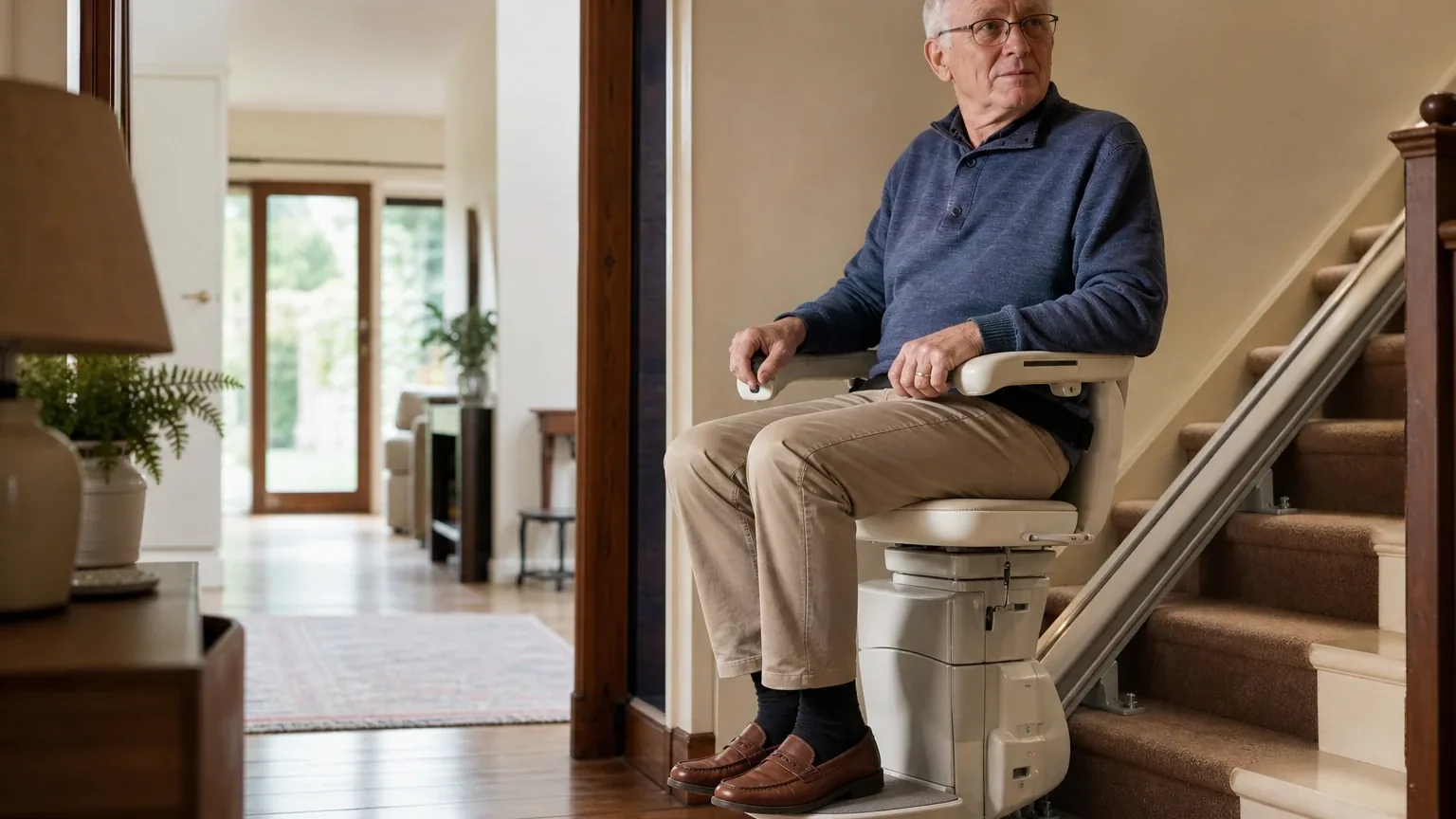
The 260 Series is a curved-stairlift family that Stannah sells with rechargeable battery operation, which is the core requirement for this use case. Stannah states that its stairlifts run on rechargeable batteries, continue to operate during a power cut, and charge at the parking point [1]. The ranking-stage product list mixed several Stannah models, including the Siena 600 Straight Stairlift, Siena Stairlift, Starla straight stairlift, and Outdoor Stairlift, so this review treats the Model 260 curved stairlift as the relevant unit and flags the naming conflict below.
The Product, Model, Plan, or Service Most Relevant to Power-Outage Stair Access
Questions This Section Answers
- Which Stannah 260 Series configuration should a buyer choose for a staircase longer than 39 feet?
- Does the Stannah 260 Series use standard or heavy-duty batteries for power-outage stair access?
The relevant configuration is the Stannah Model 260 curved stairlift with rechargeable battery backup, using either two standard 12V 7Ah/7.4Ah sealed VRLA batteries or two heavy-duty 12V 12Ah batteries for longer or heavier-duty installations.
Stannah describes standard stairlift batteries as two rechargeable 12V 7–7.4Ah sealed VRLA batteries wired in series [2]. For Model 260 installations on stairs approximately 12 meters (about 39 feet) or longer, or for heavy-duty configurations, Stannah states that two 12V 12Ah batteries may be used [3]. The available Model 260 manual lists a maximum user weight of 265 pounds and a charger input of 100–240V AC, 50/60Hz [6]. One independent dealer lists a 300-pound capacity and 22 feet per minute speed for the 260, which conflicts with the manual figure and should be treated as unverified [7].
Stannah's current U.S. manual page lists Model 260 Siena and Starla manuals, but the cited public pages do not provide a complete current U.S. specification sheet for every 260 configuration [8].
What the AI Platforms Agreed About
Questions This Section Answers
- Do all AI platforms agree that Stannah 260 Series works during a power outage?
- What outage ride capacity do the AI platforms attribute to Stannah 260 Series?
Agreement was strong, though not unanimous, on four points: battery operation during outages, automatic charging at parking points, a stated outage capacity in the mid-teens to low twenties of trips, and the existence of a higher-capacity battery option for longer stairs.
Stannah states that a fully charged stairlift battery typically supports approximately 15–20 trips up and down the stairs during a power outage [9]. This is a manufacturer estimate, not an independently verified performance guarantee. The batteries charge when the chair is parked at a charging point, and Stannah advises conserving battery power during an outage and returning the chair to a charging point after power is restored [9]. Stannah also states that parking the stairlift at its charging point keeps batteries topped up and that the user should keep the stairlift turned on [13].
On service support, Stannah advertises U.S. technical assistance, local branches, and a new-stairlift warranty that includes call-out service anywhere in the United States [16]. The cited page does not specify emergency response times, outage-priority service, or whether all service is included after the warranty period.
Where the AI Platforms Disagreed or Were Uncertain
Questions This Section Answers
- How many trips can the Stannah 260 Series complete on battery during an outage, and why do sources disagree?
- Is the Stannah 260 Series battery replacement cost published anywhere before purchase?
The platforms disagreed on outage trip counts, battery labeling, battery lifespan, and whether the 260 Series is a curved or straight product. Pricing and replacement costs were uncertain across every platform.
Trip capacity was listed as 15–20 on Stannah's site versus 20–25 in one independent review, and one platform reported a range of 10–20 round trips depending on user weight, staircase length, and rail bends [18]. One independent dealer lists "up to 30 hours battery time" for the 260, which likely reflects parked time rather than ride time and is not directly comparable to trip counts [19]. Battery lifespan estimates ranged from 2–5 years on Stannah pages to 3–5 years in other sources, with one platform noting estimates as low as 1 year under heavy use [21].
Battery chemistry labeling alternates between 12V 7Ah and 12V 7.4Ah for the standard set, and the exact rating for a buyer's U.S. Model 260 should be confirmed [24]. One platform could not verify 260 Series outage specifications from public U.S. sources at all and rated the fit uncertain (kimi:stannah_unverified). Another platform described the 260 Series as a straight-rail design, while the majority treated it as a curved-stairlift family [25].
A third-party comparison claims 20–25 trips, 4–8 hours of recharge time, 3–5 years of battery life, and $90–$130 replacement cost, but those figures were not corroborated by Stannah's official sources and should not be treated as verified (grok:1).
Use-Case-Specific Features and Capabilities
Questions This Section Answers
- Does the Stannah 260 Series warn the user when the main stairlift battery is low?
- Can the Stannah 260 Series charging point run on a generator or portable power station during an outage?
The 260 Series covers the core outage requirements — battery ride power, automatic charging, and a higher-capacity battery option — but the evidence on low-battery alerts for the main batteries is unclear, and generator compatibility is unaddressed in the supplied sources.
| Factor | Finding | Assessment |
|---|---|---|
| Battery ride capacity | Approximately 15–20 trips up and down from full charge, per Stannah; 20–25 per one independent review | Advantage |
| Battery configuration | Two 12V 7–7.4Ah VRLA in series standard; two 12V 12Ah for stairs ~12 m or longer | Advantage |
| Outage operation | Runs on battery power when household electricity fails; no manual intervention described | Advantage |
| Charging reliability | Charges when parked at a charging point; beeping commonly indicates a charging fault | Neutral |
| Low-battery alerts | Remote controls show a battery-status light; a dedicated main-battery warning is not clearly established | Unclear |
| Maintenance | Keep the chair parked at a charging point; battery replacement eventually required, no fixed interval published | Neutral |
| Service support | U.S. technical assistance, local branches, warranty call-out service advertised | Advantage |
| Weight and technical suitability | Manual lists 265 lb maximum user weight; 100–240V AC charger input | Neutral |
On alerts, Stannah's Model 260 support guidance says beeping commonly indicates that the battery is not charging correctly and recommends checking the wall switch, household power, and whether the chair is fully at the top or bottom charging position [27]. The remote controls provide a battery-status light; constant illumination indicates low remote-control battery power and no light indicates depleted remote batteries [29]. The cited material does not clearly establish a dedicated, user-facing warning for low power in the main stairlift batteries.
The lift cannot recharge from the grid while the home is without electricity unless the charging point is supplied by a generator or other backup power source [30]. The supplied sources do not state whether the charging point can be connected to a generator, UPS, or portable power station, or what electrical requirements would apply.
Pricing, Fees, Contracts, and Ongoing Costs
Questions This Section Answers
- How much does the Stannah 260 Series cost, and is a Model 260 price published in the U.S.?
- What does Stannah 260 Series battery replacement cost, and is it covered under warranty?
Stannah does not publish a fixed Model 260 price in the cited U.S. materials, and no platform found a verified battery replacement price, installation fee, or service-contract price. Pricing confidence was low across all seven platforms.
Stannah's U.S. location page gives a general starting figure of $7,800 for curved stairlifts, subject to site-specific variation [31]. One platform reported a U.S. curved-stairlift baseline of approximately $10,800 and a third-party compatible replacement battery set at roughly $85 hardware-only [32]. These figures are not Model 260-specific quotations and conflict with each other; buyers should treat both as platform-reported.
On warranty, Stannah says new stairlifts typically include a two-year warranty and free annual services, and that batteries generally last 2–5 years and are covered by a two-year warranty [33]. One platform reported a lifetime warranty on the motor and gearbox with a two-year warranty on other parts and one year of complimentary service, citing an independent dealer rather than Stannah directly [35]. Stannah also says batteries and fitting are typically covered on a warranty or 5-star service contract but may incur charges on lesser contracts [36]. Some warranty and service pages mix UK/global and U.S. content, so U.S. applicability is unclear [37].
Additional fees that were not itemized in the cited public sources include installation, staircase customization, travel, service, post-warranty repair, and battery replacement labor [31]. Warranty duration, exclusions, cancellation rights, and post-warranty service-plan terms were not established from the cited pages, and emergency or after-hours response commitments were not found [39].
Best Suited For
Questions This Section Answers
- Who is the Stannah 260 Series best suited for in a home with short power outages?
- Is Stannah 260 Series a good fit for a curved staircase with a reliable outlet near the stairs?
The 260 Series is best suited to curved-stair homes where outage access is a primary requirement, a reliable outlet and practical charging point exist at the top or bottom of the staircase, and the buyer values manufacturer-provided U.S. service and warranty support.
Stannah's own fit guidance lists curved indoor staircases where outage access is a primary requirement, homes with a reliable wall outlet and a practical charging point, and buyers who value manufacturer-provided U.S. service and warranty support [41]. One platform adds seniors in areas with short or intermittent outages who can access stairs multiple times per day, and users in homes with reliable power restoration within 24–48 hours [43]. Another adds longer stairs or higher-demand installs that may need the heavy-duty 12V 12Ah battery option [44].
Probably Not Best Suited For
Questions This Section Answers
- Who should not choose the Stannah 260 Series for power-outage stair access?
- Is the Stannah 260 Series a poor fit for a straight staircase or a multi-day outage home?
Buyers with straight staircases, homes expecting multi-day outages without generator or portable-power support, and buyers who need transparent fixed battery replacement and service pricing before purchase are probably not best suited to the 260 Series.
Stannah's own fit guidance lists straight staircases, where a current straight model may be simpler and less expensive, and homes expecting multi-day outages without generator or portable-power support [45]. One platform adds regions with extended or frequent multi-day outages without nearby generator support, users requiring more than 20 trips per day during outages, seniors living alone without emergency support for battery exhaustion, and budget-conscious buyers seeking the lowest-cost entry point [46]. Another adds buyers who want fully verified U.S. warranty and service terms and battery replacement coverage in writing before purchase [47].
When Another Option May Be Better
Questions This Section Answers
- What is a better alternative to the Stannah 260 Series for a buyer who needs verified outage trip counts?
- When should a buyer choose a straight stairlift instead of the Stannah 260 Series?
Another option may be better when the buyer needs published outage ride counts, fixed online pricing, or documented multi-day outage capacity, or when the staircase is straight and a simpler, lower-cost model would serve.
One platform recommends comparing manufacturers offering written battery-life, replacement-cost, service-response, and warranty commitments if long or frequent outages are expected, and considering a generator-compatible charging arrangement or portable power station when outages may exceed the battery's stated 15–20 round trips [48]. Another names Safe Step with a 20-trip specification and Mobile Stairlift Genesis with a 120-flight specification as alternatives with explicit published outage claims, and notes that direct-to-consumer sellers may fit buyers who want fixed online pricing without a dealer visit (kimi:safesteptub, kimi:mobilestairlift). One platform notes that straight stairlifts like the Stannah Siena 600 are significantly cheaper and simpler to install when the staircase is perfectly straight [49].
Questions to Verify Before Buying
Questions This Section Answers
- What should a buyer confirm with Stannah about battery configuration before signing a contract?
- What service-response commitments should a buyer get in writing for storm-season outages?
Before signing, buyers should get written answers on battery configuration, outage capacity for their exact staircase, charging-point placement, replacement cost, warranty coverage, and service response times.
- Will the quoted Model 260 use two 12V 7–7.4Ah batteries or two 12V 12Ah batteries [50]?
- What outage ride capacity does Stannah estimate for this exact staircase, user weight, and battery configuration [50]?
- Where are the charging points, and will the chair automatically charge at both ends of the rail [52]?
- What exact condition triggers a low-main-battery warning, and how is it displayed or sounded [52]?
- What is the installed price, including survey, rail customization, installation, taxes, and any travel charges [55]?
- What is the current installed cost of replacement batteries, and who may replace them [55]?
- What battery life and recharge time should be expected under normal use [57]?
- What warranty applies to batteries, charger, motor, controls, and labor [58]?
- What are the post-warranty service-call, labor, travel, and emergency-response charges [60]?
- What response time is available during storms, extended outages, weekends, and holidays [60]?
- Can the charging point be connected safely to the home's generator, UPS, or portable power station, and what electrical requirements apply [50]?
Final AI Consensus Verdict
The consensus verdict is a good fit with verification required. Six of seven platforms named the Stannah 260 Series during ranking, and six of seven rated the fit good or strong for power-outage stair access, with one rating it uncertain. The strongest supporting evidence is Stannah's stated 15–20 round trips from a full charge, automatic charging at parking points, and a heavy-duty 12V 12Ah battery option for longer stairs [62].
The verdict remains conditional. Stannah does not publish a Model 260 price, battery replacement cost, replacement interval, recharge time, or emergency repair response time in the cited U.S. materials [65]. One platform could not verify 260 Series outage specifications from public U.S. sources and rated the fit uncertain (kimi:stannah_unverified). Buyers should obtain written confirmation of the exact battery configuration, outage capacity, replacement cost, warranty, and service-response terms before committing.
How This Review Was Produced
This review was produced from seven AI platform responses collected for the "Best Stairlifts With Battery Backup" study, filtered to the Power-Outage Stair Access use case. Each platform evaluated the Stannah 260 Series against seven criteria: battery ride capacity, charging station reliability, outage operation, battery replacement cost, low-battery alerts, maintenance requirements, and service support. The study date is 2026-09-27. Platform-reported research dates differ from the run date: anthropic reported 2026-01-10 and deepseek reported 2026-01-15, while google, grok, kimi, openai, and perplexity reported 2026-09-27. Those platform dates are provenance metadata and do not independently prove freshness.
Platform mentions count only platforms that named the entity during ranking discovery. All included platforms evaluated fit, but not all named the entity during ranking. Citations are platform-reported evidence, not independently verified facts. Company-owned citations materially outnumber independent citations in the supplied catalog, so company claims in this review are not described as independently verified. No-search model claims require explicit verification before being described as current facts. The supplied URLs were collected from platform responses and were not independently validated by the writer stage. This review is part of the broader Power-Outage Stair Access consensus study, and additional context on the wider stairlifts category is available separately.
Methodology Limitations
- Battery capacity depends on charge state, staircase length, user weight, battery condition, and configuration, so the stated 15–20 trips is a manufacturer estimate rather than an independent test result [67].
- The lift cannot recharge from the grid while the home is without electricity unless the charging point is supplied by a generator or other backup power source [67].
- Public information does not establish exact battery replacement cost, replacement interval, recharge time, or emergency repair response time [68].
- A chair left away from a charging point, or an installation with a failed outlet, charger, or aging battery, may have reduced outage readiness [70].
- Stannah's public materials describe both 12V 7Ah and approximately 7.4Ah standard battery specifications; the exact rating for a buyer's U.S. Model 260 should be confirmed [67].
- The ranking-stage description mentions several Stannah products, but the Model 260 is a curved-stairlift family rather than the straight or outdoor models also listed [73].
- A third-party comparison claims 20–25 trips, 4–8 hours of recharge time, 3–5 years of battery life, and $90–$130 replacement cost, but those figures were not corroborated by Stannah's official sources and should not be treated as verified (grok:1).
- Current public U.S. pages do not clearly publish a complete Model 260 price, battery replacement schedule, or detailed service-plan terms [68].
- Platform-reported research dates differ from the authoritative run date, and platform-reported dates do not independently prove freshness.
- The supplied URLs were collected from platform responses and were not independently validated by the writer stage.
Sources
Company-Owned Sources
- Curved Stairs Model 260 User Guide: https://dealer.stannah.com/documents/User%20Manuals/Stannah%20260%20User%20Guide%20Nov%202010.pdf
- Terms and conditions of sale for stairlifts: https://resources.stannah.com/hubfs/UK%20Consumer/T%26Cs%20of%20Sale%20A4%20July%202025_web.pdf
- Stannah Model 260 Siena User Manual: https://us.stannah-stairlifts.com/hubfs/Stairlift%20User%20Manuals/US%20Siena%20260.pdf
- Stairlift Guide: Types of Stair Lifts & Installation - Stannah: https://vertexaisearch.cloud.google.com/grounding-api-redirect/AUZIYGPSBhruZUuiftrr5wnqgXlaLud2jMyXniNeqw9jc2Lm2IZqqWeOHrqtEJkyOEhAVbMt97WfTVtZahpgLNwcdsqZm-gq6PKr5IHJ0PHVWanm55tSXLrbzYqWu4YtwpD0iwiwUaKOr9DRegsyUimLhe0KZ53PbnuDw==
- How Much Does a Stair Lift Cost? Find Your Perfect Fit - Stannah: https://vertexaisearch.cloud.google.com/grounding-api-redirect/AUZIYQEw-gWso4RISeMxOSK-Ai-3N4FmB_3PWcItIcpVNldsair8S0XC_H1n5J0b_jlY3H7mzzkI2JMTPsCJrOqKAIFyTwhq_aXRIb7CZNrEPqI5YIATE6CfmoD72tBOn_9Xd2_1CeWbDpUcdN1I1l8T2rAMQhwj87ntjco=
- Frequently Asked Questions About Stannah Stairlifts: https://vertexaisearch.cloud.google.com/grounding-api-redirect/AUZIYQG_wdAVDyKXxpxArwch1Q5HD98uAZAKX513pbkA1XwpLki8Xb2ko95uV44pINUw8zQ_0kK1aKHULpNnt6K2SRRCtLbACC8bfg-PXxTgbwHNEevNQlrIxi53qB3vS9m8D4Ec
- Stairlift Batteries: Maintenance and Longevity Tips - Stannah: https://vertexaisearch.cloud.google.com/grounding-api-redirect/AUZIYQGB2SfN4qi6vfBDoOZRFR2Y8KMXywVSmJBa6NsKdbIQkmyn9FHqBIiH5qcsWKtN5A0ixov1JgKIbiYn4BRh610APzF2aBRyGDv6KO0n2gYdCLEXnfZdSK_jvRDZaI9hfxBZUX-SwSztXYYW0zStFCSMJw==
- Genesis Portable Mobile Stairlift | Battery Powered: https://www.mobilestairlift.com/products/genesis-battery-powered-mobile-stairlift
- Stairlift Backup Battery | Power Outage Safety Feature: https://www.safesteptub.com/products/stairlifts/battery-backup/
- Stannah Official Website - No specific 260 Series outage data found: https://www.stannah.com
- Customer Support & Stairlift Aftercare: https://www.stannah.com/en-us/customer-support
- Stannah U.S. Locations and Pricing Information: https://www.stannah.com/en-us/locations
- Do Stairlifts Work During a Power Outage?: https://www.stannah.com/en-us/resources/always-active
- Stairlift Batteries: Maintenance and Longevity Tips: https://www.stannah.com/en-us/resources/stairlift-batteries
- Stairlift User Guides and Manuals: https://www.stannah.com/en-us/resources/stairlift-user-manuals
- Stairlift Guide: Types of Stair Lifts & Installation - Stannah: https://www.stannah.com/en-us/resources/stairlifts-complete-guide
- Frequently Asked Questions About Stannah Stairlifts: https://www.stannah.com/our-stairlifts/faqs
- How much does it cost to run a Stannah stairlift?: https://www.stannah.com/resources/costs-to-run-a-stairlift
- Stairlift batteries: replacement, maintenance & longevity tips: https://www.stannah.com/resources/stairlift-batteries-types-replacement
- Stannah 260 Product Support: https://www.stannah.com/servicing-aftercare/260-product-support
- Our Repair Services Mean: https://www.stannah.com/servicing-aftercare/repairs
- Peace of mind home lift and stairlift service contracts: https://www.stannah.com/servicing-aftercare/service-contracts
- Everything you need to know about stairlift batteries: https://www.stannah.com/servicing-aftercare/stairlift-troubleshooting/troubleshooting-stairlift-batteries
- Repairs & Services: https://www.stannah.com/servicing-aftercare/warranty
- Stannah Stairlifts — Battery-powered stairlifts and power cuts: https://www.stannah.com/stairlifts
- Stairlift batteries: lifespan, maintenance and replacement: https://www.stannah.ie/resources/stairlift-batteries-replacement/
Additional AI research evidence73 records
- AI research evidence record deepseek:c1
- AI research evidence record openai:c1
- AI research evidence record openai:c2
- AI research evidence record perplexity:c2
- AI research evidence record google:1.1.1
- AI research evidence record openai:c6
- AI research evidence record anthropic:c3
- AI research evidence record openai:c7
- AI research evidence record openai:c1
- AI research evidence record anthropic:c1
- AI research evidence record perplexity:c14
- AI research evidence record openai:c3
- AI research evidence record perplexity:c5
- AI research evidence record perplexity:c12
- AI research evidence record perplexity:c13
- AI research evidence record openai:c5
- AI research evidence record perplexity:c9
- AI research evidence record google:1.1.2
- AI research evidence record anthropic:c3
- AI research evidence record anthropic:c7
- AI research evidence record perplexity:c11
- AI research evidence record anthropic:c2
- AI research evidence record google:1.2.5
- AI research evidence record openai:c1
- AI research evidence record deepseek:c1
- AI research evidence record openai:c7
- AI research evidence record openai:c3
- AI research evidence record anthropic:c5
- AI research evidence record openai:c4
- AI research evidence record openai:c1
- AI research evidence record openai:c8
- AI research evidence record google:2.2.1
- AI research evidence record perplexity:c1
- AI research evidence record perplexity:c11
- AI research evidence record anthropic:c3
- AI research evidence record perplexity:c12
- AI research evidence record perplexity:c8
- AI research evidence record perplexity:c10
- AI research evidence record openai:c5
- AI research evidence record deepseek:c1
- AI research evidence record openai:c1
- AI research evidence record openai:c5
- AI research evidence record anthropic:c1
- AI research evidence record perplexity:c2
- AI research evidence record openai:c1
- AI research evidence record anthropic:c1
- AI research evidence record perplexity:c1
- AI research evidence record openai:c1
- AI research evidence record google:1.1.2
- AI research evidence record openai:c1
- AI research evidence record openai:c2
- AI research evidence record openai:c3
- AI research evidence record anthropic:c6
- AI research evidence record openai:c4
- AI research evidence record openai:c8
- AI research evidence record anthropic:c2
- AI research evidence record perplexity:c11
- AI research evidence record perplexity:c1
- AI research evidence record perplexity:c8
- AI research evidence record openai:c5
- AI research evidence record deepseek:c1
- AI research evidence record openai:c1
- AI research evidence record openai:c2
- AI research evidence record perplexity:c2
- AI research evidence record openai:c8
- AI research evidence record perplexity:c11
- AI research evidence record openai:c1
- AI research evidence record openai:c8
- AI research evidence record perplexity:c11
- AI research evidence record openai:c3
- AI research evidence record anthropic:c1
- AI research evidence record anthropic:c2
- AI research evidence record openai:c7
Independent Sources
- Stairlifts with Battery Backup: Which Models Work During Power Outages?: https://porchlightathome.com/blog/stairlifts-battery-backup-power-outages/
- What Happens to My Stairlift When There is a Power Cut?: https://vertexaisearch.cloud.google.com/grounding-api-redirect/AUZIYQGpjvZPj1_vAwNgtLEerl8PDumURFF39oIlKp3h3xHypycSyQYgNwSYPDTTmoKtgvQcOFvGU43iEL_rlpdEYaBHOvYeqJa_vfeZD2-QiV_LOLLADT1tbpetq5P04EFv0bHhZLpwecmd7_zxygmZ6zht2Ho-zy6xoy3L9Vy5AljIHmTrGQRCdUA0gMgUsnq9frQhFhxbong4aoM=
- 10 Most Commonly Asked Technical Questions – Stannah Stairlifts: https://vivamobilityusa.com/blogs/viva-university/10-most-commonly-asked-technical-questions-stannah-stairlifts
- Stannah 260 | Stair Lift Chairs | Orlando, FL - VIVA Mobility USA: https://vivamobilityusa.com/pages/florida-stair-lifts-curved-stannah-260
Additional AI research evidence73 records
- AI research evidence record deepseek:c1
- AI research evidence record openai:c1
- AI research evidence record openai:c2
- AI research evidence record perplexity:c2
- AI research evidence record google:1.1.1
- AI research evidence record openai:c6
- AI research evidence record anthropic:c3
- AI research evidence record openai:c7
- AI research evidence record openai:c1
- AI research evidence record anthropic:c1
- AI research evidence record perplexity:c14
- AI research evidence record openai:c3
- AI research evidence record perplexity:c5
- AI research evidence record perplexity:c12
- AI research evidence record perplexity:c13
- AI research evidence record openai:c5
- AI research evidence record perplexity:c9
- AI research evidence record google:1.1.2
- AI research evidence record anthropic:c3
- AI research evidence record anthropic:c7
- AI research evidence record perplexity:c11
- AI research evidence record anthropic:c2
- AI research evidence record google:1.2.5
- AI research evidence record openai:c1
- AI research evidence record deepseek:c1
- AI research evidence record openai:c7
- AI research evidence record openai:c3
- AI research evidence record anthropic:c5
- AI research evidence record openai:c4
- AI research evidence record openai:c1
- AI research evidence record openai:c8
- AI research evidence record google:2.2.1
- AI research evidence record perplexity:c1
- AI research evidence record perplexity:c11
- AI research evidence record anthropic:c3
- AI research evidence record perplexity:c12
- AI research evidence record perplexity:c8
- AI research evidence record perplexity:c10
- AI research evidence record openai:c5
- AI research evidence record deepseek:c1
- AI research evidence record openai:c1
- AI research evidence record openai:c5
- AI research evidence record anthropic:c1
- AI research evidence record perplexity:c2
- AI research evidence record openai:c1
- AI research evidence record anthropic:c1
- AI research evidence record perplexity:c1
- AI research evidence record openai:c1
- AI research evidence record google:1.1.2
- AI research evidence record openai:c1
- AI research evidence record openai:c2
- AI research evidence record openai:c3
- AI research evidence record anthropic:c6
- AI research evidence record openai:c4
- AI research evidence record openai:c8
- AI research evidence record anthropic:c2
- AI research evidence record perplexity:c11
- AI research evidence record perplexity:c1
- AI research evidence record perplexity:c8
- AI research evidence record openai:c5
- AI research evidence record deepseek:c1
- AI research evidence record openai:c1
- AI research evidence record openai:c2
- AI research evidence record perplexity:c2
- AI research evidence record openai:c8
- AI research evidence record perplexity:c11
- AI research evidence record openai:c1
- AI research evidence record openai:c8
- AI research evidence record perplexity:c11
- AI research evidence record openai:c3
- AI research evidence record anthropic:c1
- AI research evidence record anthropic:c2
- AI research evidence record openai:c7
Other Sources
- Stannah 260 User Guide: https://siteassets.pagecloud.com/goodaccess/uploads/Stannah_260_User_Guide_Nov_2010-vdc67.pdf
- STANNAH 260 USER MANUAL: https://www.manualslib.com/manual/1332357/Stannah-260.html
Additional AI research evidence73 records
- AI research evidence record deepseek:c1
- AI research evidence record openai:c1
- AI research evidence record openai:c2
- AI research evidence record perplexity:c2
- AI research evidence record google:1.1.1
- AI research evidence record openai:c6
- AI research evidence record anthropic:c3
- AI research evidence record openai:c7
- AI research evidence record openai:c1
- AI research evidence record anthropic:c1
- AI research evidence record perplexity:c14
- AI research evidence record openai:c3
- AI research evidence record perplexity:c5
- AI research evidence record perplexity:c12
- AI research evidence record perplexity:c13
- AI research evidence record openai:c5
- AI research evidence record perplexity:c9
- AI research evidence record google:1.1.2
- AI research evidence record anthropic:c3
- AI research evidence record anthropic:c7
- AI research evidence record perplexity:c11
- AI research evidence record anthropic:c2
- AI research evidence record google:1.2.5
- AI research evidence record openai:c1
- AI research evidence record deepseek:c1
- AI research evidence record openai:c7
- AI research evidence record openai:c3
- AI research evidence record anthropic:c5
- AI research evidence record openai:c4
- AI research evidence record openai:c1
- AI research evidence record openai:c8
- AI research evidence record google:2.2.1
- AI research evidence record perplexity:c1
- AI research evidence record perplexity:c11
- AI research evidence record anthropic:c3
- AI research evidence record perplexity:c12
- AI research evidence record perplexity:c8
- AI research evidence record perplexity:c10
- AI research evidence record openai:c5
- AI research evidence record deepseek:c1
- AI research evidence record openai:c1
- AI research evidence record openai:c5
- AI research evidence record anthropic:c1
- AI research evidence record perplexity:c2
- AI research evidence record openai:c1
- AI research evidence record anthropic:c1
- AI research evidence record perplexity:c1
- AI research evidence record openai:c1
- AI research evidence record google:1.1.2
- AI research evidence record openai:c1
- AI research evidence record openai:c2
- AI research evidence record openai:c3
- AI research evidence record anthropic:c6
- AI research evidence record openai:c4
- AI research evidence record openai:c8
- AI research evidence record anthropic:c2
- AI research evidence record perplexity:c11
- AI research evidence record perplexity:c1
- AI research evidence record perplexity:c8
- AI research evidence record openai:c5
- AI research evidence record deepseek:c1
- AI research evidence record openai:c1
- AI research evidence record openai:c2
- AI research evidence record perplexity:c2
- AI research evidence record openai:c8
- AI research evidence record perplexity:c11
- AI research evidence record openai:c1
- AI research evidence record openai:c8
- AI research evidence record perplexity:c11
- AI research evidence record openai:c3
- AI research evidence record anthropic:c1
- AI research evidence record anthropic:c2
- AI research evidence record openai:c7
Verify This Research
Review the study details behind this page or download the public machine-readable verification record.
- Study date
- September 27, 2026
- Platforms analyzed
- 7
- Source records
- 35
- Ranking mentions
- 6 of 7
- Platform share
- 86%
- Final consensus rank
- #3
Research trail and source mix
Configured platforms
openai, anthropic, deepseek, grok, perplexity, kimi, google
Source mix
4 independent · 29 company-owned · 2 unclear
Evidence support
30 direct · 5 partial
Important limitation
Use the run research_date as the study date. Platform-reported dates are provenance metadata and do not independently prove freshness.
Source snapshot SHA-256 2108e041f2d34a6c31f788e27287f46be7f875aeb7e58d17977aa46cb82dd7e9