
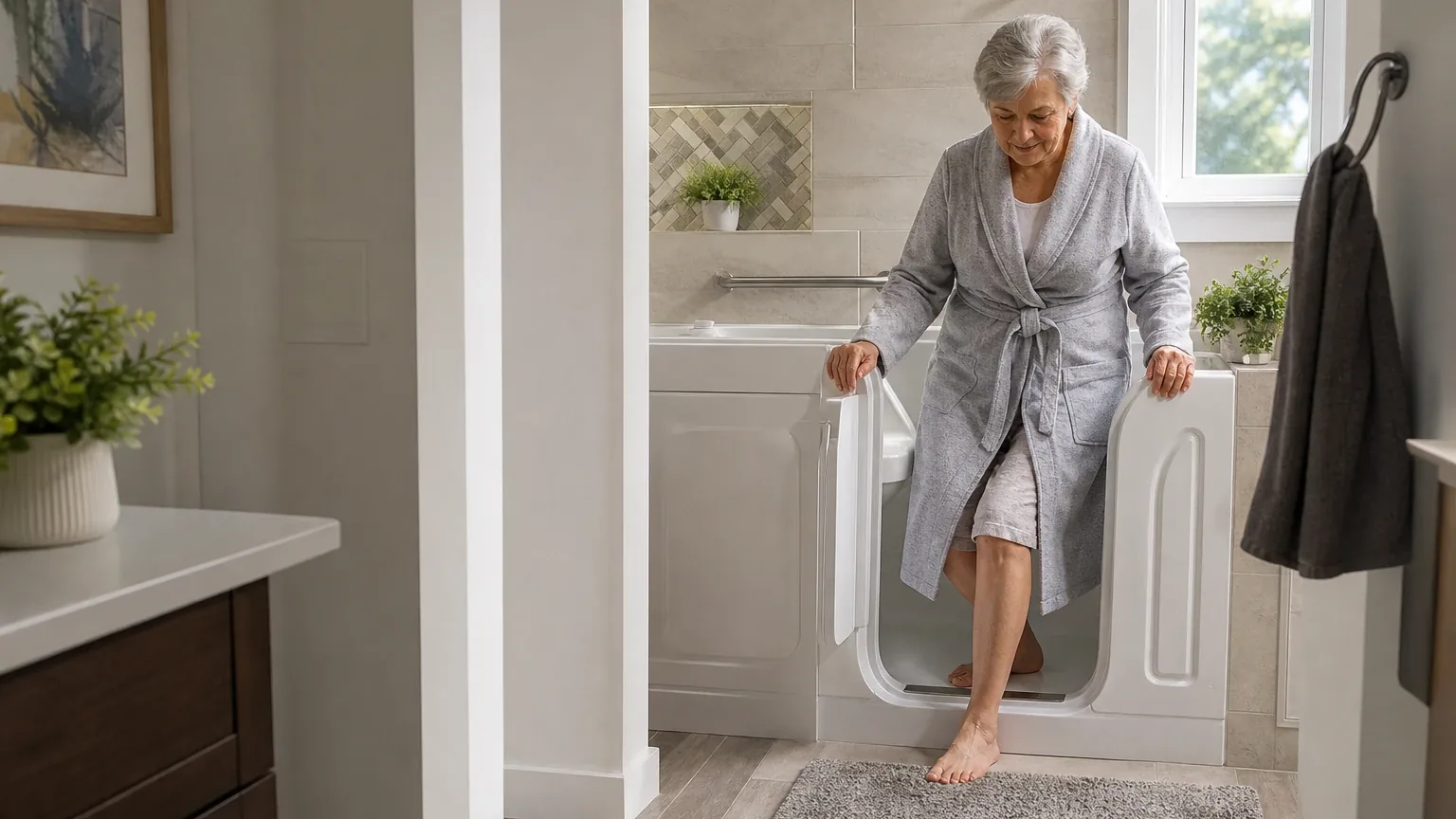
Answer Capsule
Safe Step is a mixed-to-good fit for Ultra-Low Entry Safety, depending on which threshold specification proves accurate for your installation. Six of seven AI platforms named Safe Step during the ranking stage, with an average listed rank of 2.83 and a best rank of 1. The strongest reason to consider Safe Step is its advertised 2-inch standard threshold—among the lowest for non-wheelchair walk-in tubs—plus a claimed 0.75-inch wheelchair-accessible variant. The main limitation is a documented conflict: Safe Step's own owner manual lists a 3.875-inch uninstalled step-in height, while marketing materials claim "ultra-low" without publishing exact numbers. Buyers with severe leg-lift limitations should not assume the 2-inch figure without an in-home measurement and written confirmation.
Research Snapshot
| Metric | Value |
|---|---|
| Platform mentions in ranking stage | 6 of 7 platforms |
| Share of included platform responses | 85.7% |
| Average listed rank | 2.83 |
| Best listed rank | 1 (DeepSeek) |
| Relevant product/model/plan | Safe Step Walk-In Tub (standard 2-inch threshold claim); wheelchair-accessible 0.75-inch variant; Hybrid Tub threshold unverified |
| Overall use-case fit | Mixed (2 strong/good, 3 mixed, 1 uncertain) |
| Research date | 2026-08-13 |
Why Safe Step Qualified for This Study
Safe Step appeared in the ranking stage for six of seven AI platforms evaluating best walk-in tubs with low step-in thresholds. Its ranks were: DeepSeek 1, Anthropic 2, OpenAI 2, Perplexity 2, Kimi 3, and Google 7. The company markets an "ultra-low threshold" walk-in tub and offers a wheelchair-accessible configuration, making it directly relevant to buyers seeking the lowest practical entry height [1].
The Product, Model, Plan, or Service Most Relevant to Ultra-Low Entry Safety
The most relevant product is the Safe Step Walk-In Tub in its standard configuration, which multiple platforms describe as having a 2-inch threshold for non-wheelchair users [4]. Anthropic also identified a wheelchair-accessible variant with a 0.75-inch ultra-low threshold for users who cannot manage even 2 inches [4]. Google's analysis focused on the standard and Hybrid Walk-In Tub models with a 4-inch threshold [7]. OpenAI noted the Hybrid Tub may be relevant but its exact threshold specification should be confirmed in writing [8].
Critical conflict: The Safe Step owner manual documents a 3.875-inch uninstalled step-in height for the listed Soaker, Classic, Deluxe, and MicroSoothe models [8]. This conflicts with the 2-inch marketing claim. The final installed height may differ from the uninstalled specification, but the relationship between the manual figure and the advertised ultra-low-threshold configuration is unclear [8].
What the AI Platforms Agreed About
Strong agreement on safety features. All platforms that provided detailed findings confirmed Safe Step includes two built-in grab bars, slip-resistant flooring, and a slip-resistant seat [10]. The 17-inch heated seat is standard across models [12].
Strong agreement on installation support. Safe Step provides professional in-house installation covering plumbing and electrical work, with old tub removal included at no additional cost [16]. Installation generally takes one to two days, with 95% completed in one day [14].
Majority agreement on warranty. Safe Step advertises a lifetime warranty covering the tub and installation when a company representative installs the product [17]. The warranty covers the door seal, faucets, water pumps, heaters, and blowers [18].
Majority agreement on pricing opacity. Safe Step does not publish prices online and requires a free in-home consultation for a custom quote [19]. Estimated installed costs range from $5,000 to $20,000 depending on model and features [19].
Majority agreement on Arthritis Foundation certification. Safe Step is the only walk-in tub company with Ease of Use Certification from the Arthritis Foundation [27].
Where the AI Platforms Disagreed or Were Uncertain
Threshold height: the central conflict. Platforms split on the actual step-in height:
- 2 inches: Anthropic, DeepSeek, and Kimi reported a 2-inch standard threshold [30]
- 4 inches: Google and Grok reported a 4-inch step-in height based on independent comparisons [33]
- 3.875 inches uninstalled: OpenAI cited the owner manual specification [35]
- Unverified: Perplexity found no independent verification of any threshold figure [36]
Fit ratings varied widely. DeepSeek rated Safe Step a "strong" fit, Anthropic and Google rated it "good," OpenAI, Grok, and Kimi rated it "mixed," and Perplexity rated it "uncertain" (fit_ratings_by_platform).
Door swing usability. Anthropic documented customer complaints that the inward-swinging door interferes with legs and knees when seated, making it impossible for some users to close the door [37]. Google noted the wheelchair-accessible model has an outward-swinging door [38], while Anthropic stated no outward-opening option exists for standard models [39].
Wheelchair-accessible configuration. Anthropic and Kimi described a 0.75-inch wheelchair-accessible variant [30], while Google described a wheelchair-accessible tub with a wide out-swing door [38]. Perplexity noted the evidence does not confirm whether this configuration is a separate current model with specified dimensions [36].
Use-Case-Specific Features and Capabilities
Step-In Threshold Height
The most critical factor for this use case. Safe Step's marketing describes an "ultra-low threshold" without publishing exact numbers [40]. Independent sources conflict: NCOA reports 2 inches as the lowest non-wheelchair threshold [42], while SeniorLiving.org comparisons state 4 inches [43]. The owner manual documents 3.875 inches uninstalled [45]. Buyers must obtain a written, measured installed threshold before purchase.
Entry Width and Door Design
Safe Step advertises "ultra-wide" doors [41] and "the widest doors available on the market" [46]. However, no platform found a precise clear-opening width in public sources. The standard door swings inward [47], which creates documented usability issues for some users [48]. The wheelchair-accessible model reportedly has an outward-swinging door [49].
Grab Bar Placement
Two built-in grab bars are standard [46]. The bars provide "balance, full-body support and leverage where needed when stepping over the threshold" [50]. No platform found published dimensions, height, orientation, or customization details [45].
Floor Traction
Slip-resistant flooring and seat are standard [46]. The floor and 17-inch heated seat are both non-slip [52]. No independent slip-testing results or coefficient-of-friction data were found [45].
Seat Height and Transfer Support
The 17-inch heated seat is standard [52]. No platform found published seat depth, lateral transfer space, or customization options [45].
Leak Protection and Door Sealing
The owner manual identifies a door seal, and the lifetime warranty covers it when Safe Step installs the product [45]. However, customer reviews report leaks soon after installation as the most common complaint, with adjustments typically needed [54]. No independent leak-rate testing was found [45].
Drain and Time Spent Seated
Safe Step claims its Quantum Quick Drain system reduces draining time by up to 38% compared with standard models [41]. This is a company claim; actual drain time depends on plumbing, pump configuration, and water volume [41].
Installation Requirements
Safe Step says installation generally takes one to two days, with 95% completed in one day [41]. The tub is designed to fit the existing tub footprint [41]. Some customers may need a water heater upgrade to at least 80-gallon capacity [55]. Required plumbing, electrical, or remodeling work depends on the home [41].
Pricing, Fees, Contracts, and Ongoing Costs
Pricing confidence is low across all platforms. Safe Step does not publish prices online and requires a free in-home consultation for a custom quote [56].
Estimated installed costs from independent sources:
- $5,000–$12,000 installed [61]
- $8,000–$12,000 installed; tub unit $3,000–$15,000 [62]
- $5,000–$15,000+ installed depending on model and features [63]
- $10,000–$20,000 average total with custom installation; unit-only $4,000–$8,500 [64]
- Starting costs almost $1,000 less than the next least-expensive brand on comparable review lists [65]
Additional fees to verify:
- Water heater upgrades to 80-gallon capacity may be required [66]
- Electrical upgrades for hydrotherapy features ($200–$600) [64]
- Optional features like heated seats, jets, and therapy systems add hundreds to thousands [63]
- Removal, disposal, permits, structural work, or damage repair inclusion should be confirmed in writing [59]
Warranty and discounts:
- Lifetime warranty on tub and installation for the original purchaser [65]
- Helping Hands Rebate up to $1,500 [67]
- Military veteran discounts [67]
- Promotions such as $2,000 off plus a free toilet including installation [67]
Contract terms: No standard cancellation or rescission policy was identified on official pages [59]. The written contract should specify deposit treatment, cancellation deadlines, restocking charges, installation scope, and warranty exclusions [59].
Best Suited For
Safe Step is best considered for seniors who can safely manage a low step (approximately 2–4 inches) and want a seated bathing system with built-in support features [68]. Specific best-fit profiles include:
- Seniors with balance issues or neuropathy who can manage a 2-inch step with grab bar assistance [69]
- Buyers prioritizing comprehensive safety features including grab bars, slip-resistant surfaces, and anti-scald technology [71]
- Buyers seeking professional in-house installation covering plumbing, electrical, and old tub removal [73]
- Wheelchair users who can perform lateral transfers and need the 0.75-inch wheelchair-accessible configuration [69]
- Buyers valuing a lifetime warranty on both tub and installation [69]
Probably Not Best Suited For
- Users who cannot reliably step over approximately 3–4 inches without confirmation of a lower installed threshold [76]
- Wheelchair users requiring roll-in access unless Safe Step confirms a genuinely wheelchair-accessible configuration for the specific bathroom [76]
- Buyers needing transparent online pricing or a readily comparable itemized quote before scheduling an in-home sales visit [76]
- Users with tall body proportions or long legs who report door swing interference when seated [80]
- Bathrooms with severe space constraints where an inward-swinging door creates obstacles [81]
- Buyers requiring a verified sub-2-inch threshold with independent certification [82]
When Another Option May Be Better
- Kohler offers a 3-inch step-in threshold and more design choices if the buyer can accommodate 1 additional inch over Safe Step's claimed 2-inch standard and wants more customization [83]
- American Standard makes models with outward-swinging doors, right- or left-handed configurations, and bariatric tubs if door swing direction or higher weight capacity is required
- A verified roll-in or curbless shower is the better choice when the buyer cannot safely lift a foot over even a 2-inch threshold [85]
- A competitor with published dimensional specifications and a clearly verified sub-2-inch threshold is preferable when the buyer cannot tolerate ambiguity around entry height [87]
- A more transparent seller with published model-level pricing and itemized installation costs is better when the buyer needs cost clarity before scheduling an in-home sales visit [85]
Questions to Verify Before Buying
- What is the exact step-in height in inches after installation, measured from the finished bathroom floor to the lowest point of the entry threshold? [88]
- Is the quoted tub the standard Walk-In Tub, Hybrid Tub, or another configuration, and does its threshold differ from the owner-manual 3.875-inch specification? [91]
- What is the clear door opening width, and does the door swing inward or outward? [88]
- What are the seat height, seat depth, and usable transfer space? [88]
- Where exactly are the grab bars positioned, and can their locations or heights be customized? [88]
- Is the tub suitable for a wheelchair transfer, or is a separate roll-in product required? [88]
- What plumbing, electrical, water-heater, drain-pump, flooring, framing, permit, and remodeling work is included or excluded? [88]
- What is the expected fill and drain time in this home using the quoted configuration? [88]
- What does the lifetime warranty cover for the door seal, drain pump, jets, controls, labor, and consequential water damage? [88]
- What are the cancellation, refund, deposit, and financing terms, including any required notice period or fees? [88]
- Can the representative provide a written, itemized quote and a signed specification sheet showing the threshold measurement and all included work? [88]
- Is the wheelchair-accessible configuration a different product with different threshold, seat, or door dimensions? [95]
Final AI Consensus Verdict
Safe Step is a mixed-to-good fit for Ultra-Low Entry Safety, with the outcome depending almost entirely on one unresolved question: the actual installed threshold height. The company's marketing claims an "ultra-low threshold," and multiple independent sources report a 2-inch standard—among the lowest for non-wheelchair walk-in tubs [96]. However, Safe Step's own owner manual documents a 3.875-inch uninstalled step-in height [99], and other independent comparisons state 4 inches [100].
The safety feature set is strong: two built-in grab bars, slip-resistant floor and seat, a 17-inch heated seat, anti-scald technology, and Arthritis Foundation Ease of Use Certification [102]. Professional in-house installation and a lifetime warranty on both tub and installation add value [96].
The documented limitations are significant for this specific use case: the inward-swinging door creates usability problems for some body types [106], customer reviews report post-installation leaks as the most common complaint [107], and pricing opacity requires an in-home sales consultation [108].
Bottom line: Safe Step belongs on the shortlist for ultra-low entry safety, but only for buyers who can verify the installed threshold in writing before purchase. For those who cannot manage even a 2-inch step, the wheelchair-accessible configuration may help—but its specifications must be confirmed. For buyers requiring a verified sub-2-inch threshold with independent certification, another option may be necessary.
For a broader comparison of low-entry walk-in tub options, see the Ultra-Low Entry Safety consensus index. You can also browse all walk in tubs reviews.
How This Review Was Produced
This review was generated by aggregating fit-research responses from seven AI platforms—Anthropic, DeepSeek, Google, Grok, Kimi, OpenAI, and Perplexity—each evaluating Safe Step against the Ultra-Low Entry Safety use case. The authoritative research date is 2026-08-13. Each platform provided citations to company-owned and independent sources, which were deduplicated into 28 unique sources (19 independent, 9 company-owned). Platform-reported research dates differ from the authoritative run date; DeepSeek's response was dated 2026-04-12, which is disclosed as a methodology limitation.
Methodology Limitations
- Threshold conflict unresolved: The 2-inch, 3.875-inch, and 4-inch figures come from different sources and were not reconciled by any platform. This review describes the conflict rather than resolving it.
- Platform-reported dates differ: DeepSeek's research date (2026-04-12) predates the authoritative run date (2026-08-13). All other platforms match the run date.
- Platform mentions vs. fit evaluations: All seven platforms evaluated fit, but only six named Safe Step during ranking discovery. Google ranked Safe Step 7th but still provided a detailed fit assessment.
- Unverified URLs: The supplied URLs were collected from platform responses and were not independently validated by the writer stage.
- No independent testing: No platform identified independent threshold-performance testing, slip-resistance testing, or leak-rate testing. Claims about these factors come from company marketing or anecdotal customer reviews.
- Product name ambiguity: Multiple model labels appear across platforms ("Ultra-Low Entry Walk-In Tub," "standard 60-inch model," "wheelchair-accessible configuration," "Hybrid Tub"). The evidence does not confirm which are current official product names versus ranking-stage descriptors.
- AI agreement does not prove quality: Consensus among AI platforms reflects the sources they drew from, not independent verification of product performance.
Sources
Company-Owned Sources
- Safe Step Tub Owner's Manual: https://customers.safesteptub.com/wp-content/uploads/2025/02/SS_TUB_OwnersManual.pdf
- Enhance Safety & Comfort | Walk-In Tubs for the Disabled - Safe Step Tub: https://vertexaisearch.cloud.google.com/grounding-api-redirect/AUZIYQFQAsKSmwJD5YuJIep6zD1-IUt88K0kY-uZilLluA0w_gLi7QcEkbrZA-9f0tVqM0royVf4eF6mZaELgyVY1VEd5o0P9if-iT71wbqtlYycctUN6AAOvuJG12EmHIoQEfR3sdXZ8sV_B5PE2USVjiuPL3Lt8GqV64fjyptejp2HpOLR037sU33eyDPIdRm7orFB1fjKsSGF4DIrDDH6SneY3-vcszAlhqfEIoY=
- How to Design Your Dream Walk-In Shower Resource Guide - Safe Step Tub: https://vertexaisearch.cloud.google.com/grounding-api-redirect/AUZIYQGX7lKhO6Gwm6kC_6U8xa5SAJcWjrzHGMoY4tVr_53UuVh5kjcxVhOzg-B1sd34GoFZ1JCcMLzqItbyaaz4dO1BFBrOgYk9xnypFc4dDNz3EZMFOd0uRohQu0uDaFtJgwM3sXMQ7Mzwzgl7ZBiq_7EuGi38wGCNvD8=
- Walk-In Tubs & Showers | Safe Step: https://www.safesteptub.com/
- Ultra-Low Threshold | Low-Profile Walk-In Tub | Safe Step: https://www.safesteptub.com/features/walk-in-tub/safety/ultra-low-threshold/
- Safe Step Walk-In Tub Cost Guide 2026: https://www.safesteptub.com/pricing/
- Walk-In Tubs for Seniors | Sit-In Bathtubs | Safe Step: https://www.safesteptub.com/products/walk-in-tub/
- Frequently Asked Questions | Safe Step: https://www.safesteptub.com/resources/faq/
- Safe Bathing Solutions for Seniors | Safe Step: https://www.safesteptub.com/solutions/seniors/
Additional AI research evidence109 records
- AI research evidence record anthropic:c2
- AI research evidence record deepseek:c1
- AI research evidence record openai:c2
- AI research evidence record anthropic:c2
- AI research evidence record deepseek:c1
- AI research evidence record kimi:c1
- AI research evidence record google:c1
- AI research evidence record openai:c1
- AI research evidence record openai:c2
- AI research evidence record anthropic:c1
- AI research evidence record anthropic:c7
- AI research evidence record anthropic:c12
- AI research evidence record openai:c1
- AI research evidence record openai:c2
- AI research evidence record deepseek:c1
- AI research evidence record anthropic:c19
- AI research evidence record anthropic:c2
- AI research evidence record anthropic:c8
- AI research evidence record anthropic:c6
- AI research evidence record deepseek:c2
- AI research evidence record kimi:c1
- AI research evidence record perplexity:c1
- AI research evidence record anthropic:c9
- AI research evidence record anthropic:c10
- AI research evidence record anthropic:c15
- AI research evidence record google:c1
- AI research evidence record anthropic:c18
- AI research evidence record google:c2
- AI research evidence record grok:c3
- AI research evidence record anthropic:c2
- AI research evidence record deepseek:c1
- AI research evidence record kimi:c1
- AI research evidence record google:c1
- AI research evidence record grok:c2
- AI research evidence record openai:c1
- AI research evidence record perplexity:c1
- AI research evidence record anthropic:c16
- AI research evidence record google:c3
- AI research evidence record anthropic:c14
- AI research evidence record grok:c1
- AI research evidence record openai:c2
- AI research evidence record anthropic:c2
- AI research evidence record google:c1
- AI research evidence record grok:c2
- AI research evidence record openai:c1
- AI research evidence record anthropic:c1
- AI research evidence record anthropic:c3
- AI research evidence record anthropic:c16
- AI research evidence record google:c3
- AI research evidence record anthropic:c7
- AI research evidence record kimi:c1
- AI research evidence record anthropic:c12
- AI research evidence record deepseek:c1
- AI research evidence record anthropic:c17
- AI research evidence record anthropic:c11
- AI research evidence record anthropic:c6
- AI research evidence record deepseek:c2
- AI research evidence record kimi:c1
- AI research evidence record openai:c2
- AI research evidence record perplexity:c1
- AI research evidence record anthropic:c9
- AI research evidence record anthropic:c10
- AI research evidence record anthropic:c15
- AI research evidence record google:c1
- AI research evidence record anthropic:c2
- AI research evidence record anthropic:c11
- AI research evidence record anthropic:c8
- AI research evidence record openai:c2
- AI research evidence record anthropic:c2
- AI research evidence record deepseek:c1
- AI research evidence record anthropic:c1
- AI research evidence record anthropic:c12
- AI research evidence record anthropic:c19
- AI research evidence record kimi:c1
- AI research evidence record anthropic:c8
- AI research evidence record openai:c2
- AI research evidence record anthropic:c14
- AI research evidence record anthropic:c6
- AI research evidence record kimi:c1
- AI research evidence record anthropic:c16
- AI research evidence record anthropic:c1
- AI research evidence record perplexity:c1
- AI research evidence record anthropic:c1
- AI research evidence record anthropic:c10
- AI research evidence record openai:c2
- AI research evidence record google:c4
- AI research evidence record perplexity:c1
- AI research evidence record openai:c2
- AI research evidence record deepseek:c1
- AI research evidence record kimi:c1
- AI research evidence record openai:c1
- AI research evidence record anthropic:c14
- AI research evidence record anthropic:c11
- AI research evidence record anthropic:c8
- AI research evidence record perplexity:c1
- AI research evidence record anthropic:c2
- AI research evidence record deepseek:c1
- AI research evidence record kimi:c1
- AI research evidence record openai:c1
- AI research evidence record google:c1
- AI research evidence record grok:c2
- AI research evidence record anthropic:c1
- AI research evidence record anthropic:c12
- AI research evidence record google:c2
- AI research evidence record anthropic:c19
- AI research evidence record anthropic:c16
- AI research evidence record anthropic:c17
- AI research evidence record anthropic:c6
- AI research evidence record openai:c2
Independent Sources
- How Much Does a Walk-in Tub Cost? (2026: https://homeguide.com/costs/walk-in-tub-cost
- Safe Step Walk-In Tub Review 2026: https://modernize.com/walk-in-tubs/best-walk-in-tubs/safe-step
- Safe Step Walk-in Tub Dimensions: A Comprehensive Guide: https://nation.steveharveyfm.com/free-minds/safe-step-walk-in-tub-dimensions-a-comprehensive-guide-1767648093
- The Safe-Step Walk-in Tub - Arthritis Foundation: https://vertexaisearch.cloud.google.com/grounding-api-redirect/AUZIYQFcyxwJIBdpTgKfkBSM9vi-rTE3-wAer8ZY4SSh_2plPlWe0_DePZeAPGHRcLaMBoQXKqOTP0XkREcS59iKCmvHFJA1UuJFYB8syU6Nsx4g6hNRX4iHKLIK9j_PHehQ90BU23hmJZD0ecHdZi9WWHepxoq_-bnUSPzfr8Dz2XqL63BHM4E42Q==
- Safe Step Walk-In Tubs Review and Costs in 2026 - SeniorLiving.org: https://vertexaisearch.cloud.google.com/grounding-api-redirect/AUZIYQFmiguCKUP4m5lqC_aJdfmDeJHsd0d6MmCvCHghtr3s0FmFjt-fTlqGDTLT0dkBcNsql4-XFzi2uOiRuJEKP2ijQi-oSPBWpiEO6G0474BFweFMMZ5nBR2AITOKXcAjXff8NOq6n3lUt3dA
- Safe Step Walk-in Tubs Review - Caring.com: https://www.caring.com/senior-products/best-walk-in-tubs/safe-step
- Safe Step Walk-In Showers Reviews (From First-hand Experiences: https://www.consumeraffairs.com/homeowners/safe-step-walk-in-showers.html
- Safe Step Walk-In Tub Reviews: Pros & Cons: https://www.consumeraffairs.com/homeowners/safe-step-walk-in-tubs.html
- Safe Step Walk-In Tub Cost Guide for 2026 | HomeBuddy: https://www.homebuddy.com/costs/walk-in-tubs/safe-step-walk-in-tub-cost
- Your Guide to the Best Walk-In Tubs 2026: https://www.ncoa.org/product-resources/mobility/best-walk-in-tubs/
- Safe Step Walk-In Tub Review (2026): With Costs: https://www.retirementliving.com/reviews/safe-step/
- Safe Step Walk-In Tub Review (2026): With Costs | Page: 5: https://www.retirementliving.com/reviews/safe-step/5
- Comparing Safe Step and American Standard Walk-in Tubs: https://www.seniorliving.org/walk-in-tubs/safe-step-vs-american-standard/
- Comparing Safe Step and Kohler Walk-in Tubs: https://www.seniorliving.org/walk-in-tubs/safe-step-vs-kohler/
- Safe Step Walk-In Tubs Review and Costs in 2026: https://www.seniorliving.org/walk-in-tubs/safe-step/
- Safe Step Walk-In Tub Review 2026: Costs and Coverage: https://www.seniorstrong.org/safe-step-walk-in-tub-a-review/
- Safe Step Walk-In Tubs & Showers Reviews: https://www.trustpilot.com/review/safesteptub.com
- Safe Step Walk-in Tub Review - WalkInTub.org: https://www.walkintub.org/safe-step-walk-in-tub-review/
- Safe Step Walk-In Tub Reviews & Prices (2025: https://www.walkintubadvisor.com/safe-step-walk-in-tub-reviews/
Additional AI research evidence109 records
- AI research evidence record anthropic:c2
- AI research evidence record deepseek:c1
- AI research evidence record openai:c2
- AI research evidence record anthropic:c2
- AI research evidence record deepseek:c1
- AI research evidence record kimi:c1
- AI research evidence record google:c1
- AI research evidence record openai:c1
- AI research evidence record openai:c2
- AI research evidence record anthropic:c1
- AI research evidence record anthropic:c7
- AI research evidence record anthropic:c12
- AI research evidence record openai:c1
- AI research evidence record openai:c2
- AI research evidence record deepseek:c1
- AI research evidence record anthropic:c19
- AI research evidence record anthropic:c2
- AI research evidence record anthropic:c8
- AI research evidence record anthropic:c6
- AI research evidence record deepseek:c2
- AI research evidence record kimi:c1
- AI research evidence record perplexity:c1
- AI research evidence record anthropic:c9
- AI research evidence record anthropic:c10
- AI research evidence record anthropic:c15
- AI research evidence record google:c1
- AI research evidence record anthropic:c18
- AI research evidence record google:c2
- AI research evidence record grok:c3
- AI research evidence record anthropic:c2
- AI research evidence record deepseek:c1
- AI research evidence record kimi:c1
- AI research evidence record google:c1
- AI research evidence record grok:c2
- AI research evidence record openai:c1
- AI research evidence record perplexity:c1
- AI research evidence record anthropic:c16
- AI research evidence record google:c3
- AI research evidence record anthropic:c14
- AI research evidence record grok:c1
- AI research evidence record openai:c2
- AI research evidence record anthropic:c2
- AI research evidence record google:c1
- AI research evidence record grok:c2
- AI research evidence record openai:c1
- AI research evidence record anthropic:c1
- AI research evidence record anthropic:c3
- AI research evidence record anthropic:c16
- AI research evidence record google:c3
- AI research evidence record anthropic:c7
- AI research evidence record kimi:c1
- AI research evidence record anthropic:c12
- AI research evidence record deepseek:c1
- AI research evidence record anthropic:c17
- AI research evidence record anthropic:c11
- AI research evidence record anthropic:c6
- AI research evidence record deepseek:c2
- AI research evidence record kimi:c1
- AI research evidence record openai:c2
- AI research evidence record perplexity:c1
- AI research evidence record anthropic:c9
- AI research evidence record anthropic:c10
- AI research evidence record anthropic:c15
- AI research evidence record google:c1
- AI research evidence record anthropic:c2
- AI research evidence record anthropic:c11
- AI research evidence record anthropic:c8
- AI research evidence record openai:c2
- AI research evidence record anthropic:c2
- AI research evidence record deepseek:c1
- AI research evidence record anthropic:c1
- AI research evidence record anthropic:c12
- AI research evidence record anthropic:c19
- AI research evidence record kimi:c1
- AI research evidence record anthropic:c8
- AI research evidence record openai:c2
- AI research evidence record anthropic:c14
- AI research evidence record anthropic:c6
- AI research evidence record kimi:c1
- AI research evidence record anthropic:c16
- AI research evidence record anthropic:c1
- AI research evidence record perplexity:c1
- AI research evidence record anthropic:c1
- AI research evidence record anthropic:c10
- AI research evidence record openai:c2
- AI research evidence record google:c4
- AI research evidence record perplexity:c1
- AI research evidence record openai:c2
- AI research evidence record deepseek:c1
- AI research evidence record kimi:c1
- AI research evidence record openai:c1
- AI research evidence record anthropic:c14
- AI research evidence record anthropic:c11
- AI research evidence record anthropic:c8
- AI research evidence record perplexity:c1
- AI research evidence record anthropic:c2
- AI research evidence record deepseek:c1
- AI research evidence record kimi:c1
- AI research evidence record openai:c1
- AI research evidence record google:c1
- AI research evidence record grok:c2
- AI research evidence record anthropic:c1
- AI research evidence record anthropic:c12
- AI research evidence record google:c2
- AI research evidence record anthropic:c19
- AI research evidence record anthropic:c16
- AI research evidence record anthropic:c17
- AI research evidence record anthropic:c6
- AI research evidence record openai:c2
Verify this research
Review the study details behind this page or download the public machine-readable verification record.
- Study date
- Aug 13, 2026
- Platforms analyzed
- 7
- Source records
- 28
- Ranking mentions
- 6 of 7
- Platform share
- 86%
- Final consensus rank
- #1
Research trail and source mix
Platforms
openai, anthropic, deepseek, grok, perplexity, kimi, google
Source mix
19 independent · 9 company-owned
Evidence support
24 direct · 4 partial
Important limitation
Use the run research_date as the study date. Platform-reported dates are provenance metadata and do not independently prove freshness.
Source snapshot SHA-256 681bfd14549f8d7ffab6caf5043176b547e9df1147e01ec3e0c669325a113ae4