
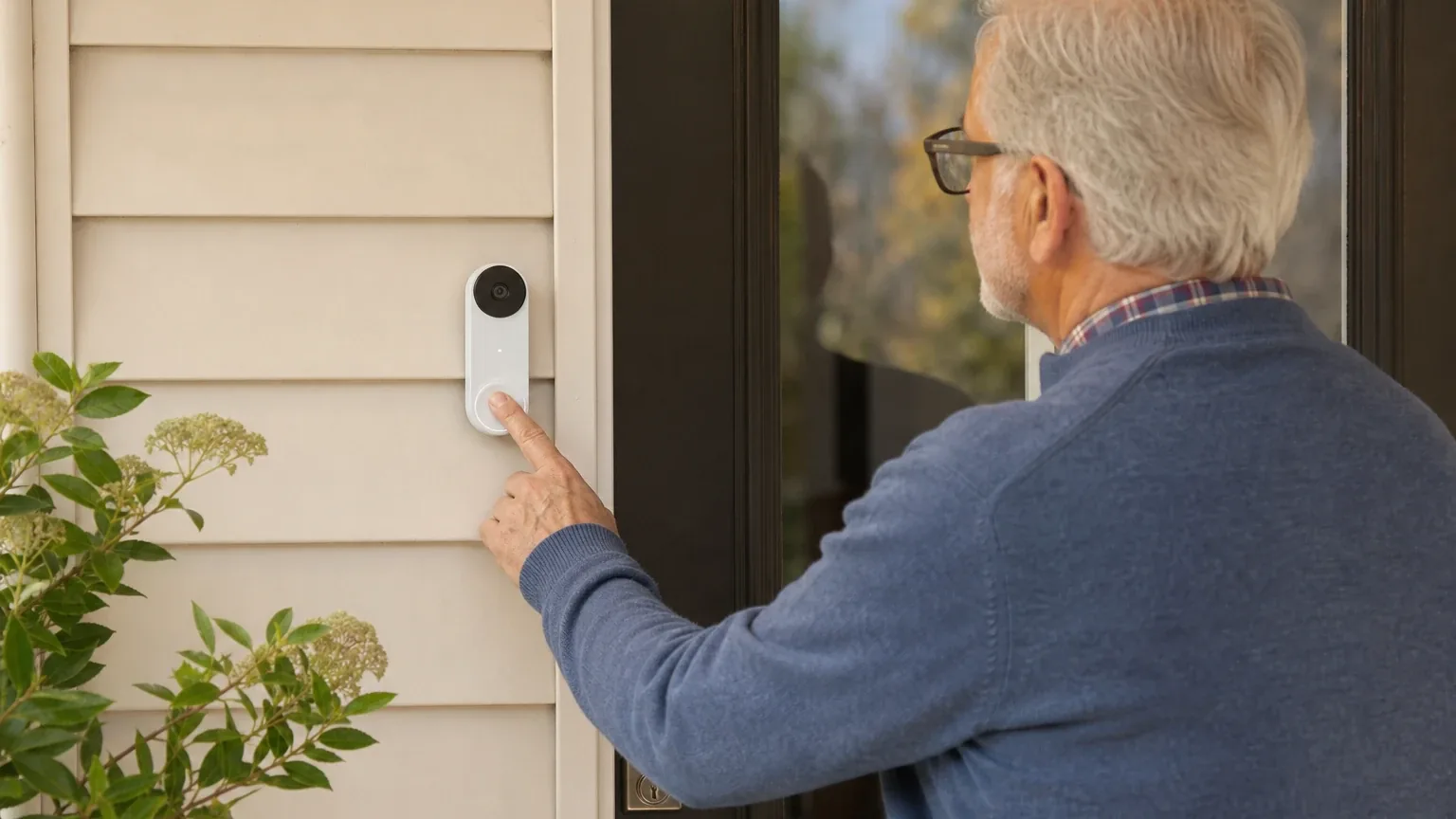
Answer Capsule
Google Nest Doorbell (Battery) is a good fit for front-door visitor screening for Seniors who want live video, two-way talk, person and package alerts, and battery-powered installation without wiring. Six of seven platforms named it during the ranking stage (86% of included platform responses), with an average listed rank of 3.17 and a best rank of 1. The strongest reason to consider it is free basic person/package detection plus 3 hours of included event history, so core screening works without a subscription. The main limitation is that the battery model cannot record 24/7 continuous video even with a subscription or optional wiring, and battery charging is a recurring physical task.
Research Snapshot
| Field | Detail |
|---|---|
| Platform mentions in ranking stage | 6 of 7 platforms (anthropic, deepseek, google, kimi, openai, perplexity) |
| Share of included platform responses | 86% (0.86) |
| Average listed rank | 3.17 |
| Best listed rank | 1 (google) |
| Relevant product/model/plan | Google Nest Doorbell (Battery) with Google Home app; optional Google Home Premium Standard or Advanced |
| Overall use-case fit | Good |
| Research date | 2026-09-27 |
What Changed Since August 2026
Google Nest Doorbell (Battery) moved down from No. 1 to No. 2, and platform mentions were unchanged at 6. The September 2026 review narrows the subject from the Google Nest lineup to the Google Nest Doorbell (Battery) specifically, so the buyer-facing advice is now tied to one model. Recommended setup is unchanged: the doorbell with the Google Home app, subscription optional. Free basic detection with 3 hours of included event history remains the core screening path, while the limitation is the same—no 24/7 continuous recording on this battery model. Reported hardware pricing now newly includes $179.99–$199.99, and the older $80/year subscription figure is no longer repeated. Differences between the two editions reflect what each article reports; they do not by themselves prove that the product, service, or price changed.
The August 2026 review preserves the earlier article for reference.
Why Google Nest Doorbell (Battery) Qualified for This Study
Questions This Section Answers
- Why did Google Nest Doorbell (Battery) qualify for a senior front-door visitor screening study?
- How many AI platforms named Google Nest Doorbell (Battery) for front-door visitor screening?
Google Nest Doorbell (Battery) qualified because six of seven included platforms named it during ranking discovery, clearing the two-mention minimum, and all seven platforms that evaluated fit rated it "good" for this use case [1]. Its listed ranks ranged from 1 (google) to 8 (kimi), producing an average of 3.17 and a final rank of 2.
Qualification rests on capabilities that map directly to screening visitors before opening the door: live HD video, two-way audio with noise cancellation, night vision, and person/package detection [1]. The battery design also removes the wiring requirement that would otherwise exclude renters and homes without a usable doorbell transformer [2].
This is a fit review, not a broad company review. It evaluates only how the product serves older adults screening front-door visitors, and it relies on platform-reported evidence rather than independent lab testing.
The Product, Model, Plan, or Service Most Relevant to Front-Door Visitor Screening
Questions This Section Answers
- Which Google Nest Doorbell (Battery) model and plan should a senior buyer choose for front-door visitor screening?
- Is a Google Home Premium subscription required for Google Nest Doorbell (Battery) to screen visitors?
The relevant configuration is the Nest Doorbell (Battery) hardware paired with the Google Home app, plus an optional Google Home Premium Standard or Advanced subscription for longer history and advanced alerts [6].
Platforms described the hardware with inconsistent generation labels. OpenAI, anthropic, grok, and perplexity referred to "Nest Doorbell (Battery)" or "Nest Video Doorbell (Battery)," while deepseek and kimi specified "Battery, 2nd Gen" [6]. Google's own store pages cited in the evidence identify the product as Nest Doorbell (Battery), so buyers should confirm the exact generation before ordering [6].
For screening specifically, the free tier covers the core loop: live view, two-way talk, and person/package alerts with 3 hours of event history [9]. Google Home Premium Standard adds 30 days of event history and familiar-face detection; Advanced adds 60 days plus additional AI description and search features [10]. No platform identified a plan that unlocks 24/7 continuous recording on this battery model [13].
What the AI Platforms Agreed About
Questions This Section Answers
- What do AI platforms agree Google Nest Doorbell (Battery) does well for senior visitor screening?
- Does Google Nest Doorbell (Battery) include free person and package detection without a subscription?
Agreement was strongest on free basic detection, live viewing, two-way talk, and battery installation. All seven platforms described person and package detection as available, and multiple platforms stated that basic detection and 3 hours of event history require no subscription [15].
Platforms also agreed on the physical specifications: 960 x 1280 HD video, a 145-degree diagonal field of view, HDR, night vision, and two-way audio with noise cancellation [18]. Night vision was described as infrared-based, with one platform citing four 850 nm LEDs rated to roughly 10 feet [19].
Installation agreement was unanimous in direction: the battery model is designed for self-installation, needs Wi-Fi and the Google Home app, and can optionally connect to existing 8–24 VAC wiring [21]. Google's setup page confirms professional installation is available through a partner but does not state the price [22].
All seven platforms rated overall fit as "good," and none rated it "excellent" or "poor." That consistency reflects shared strengths, not proof of product quality; no platform supplied independent lab measurements of audio clarity or alert latency.
Where the AI Platforms Disagreed or Were Uncertain
Questions This Section Answers
- How long does the Google Nest Doorbell (Battery) battery actually last between charges?
- Is Google Nest Doorbell (Battery) alert speed fast enough for a senior to catch a visitor before they leave?
Battery life was the sharpest conflict. Google's support documentation estimates roughly 1 month in a busy setting, 2.5 months typical, and 6 months in a quiet setting [23]. Deepseek cited "up to 6 months" while noting user reports of 2–3 months under heavy activity [24]. Kimi reported 1–3 months with cold-weather degradation (kimi:techhive-2024). Grok summarized the range as 1–6 months depending on usage (grok:0, grok:2). No platform supplied independently measured charge intervals.
Alert speed was unresolved rather than disputed. OpenAI stated Google does not publish a guaranteed notification-delivery time [26]. Anthropic and perplexity reached the same conclusion [28]. Kimi went further, reporting several seconds of latency from battery wake-from-sleep behavior and calling wired models faster (kimi:nytimes-wirecutter-2024, kimi:techhive-2024). That specific latency figure is platform-reported and was not independently verified.
App simplicity drew mixed signals. Grok described the Google Home app as intuitive with minimal learning curve (grok:15). Kimi cited Consumer Reports and AARP-linked material suggesting a learning curve for non-technical users (kimi:consumerreports-2024, kimi:aarp-review-2024-unclear). Anthropic found no documented accessibility features such as large text or voice guidance [28].
Pricing conflicts also surfaced. Hardware was listed at $199.99 by OpenAI and grok, $179.99–$199.99 by anthropic, roughly $179.99 by deepseek, and $149–$179.99 by google and kimi [26]. Kimi also cited an older Nest Aware tier at $8/month that conflicts with current Google Home Premium pricing (kimi:theverge-2024, perplexity:4).
Use-Case-Specific Features and Capabilities
Questions This Section Answers
- Does Google Nest Doorbell (Battery) have night vision and two-way audio clear enough for screening visitors?
- Can Google Nest Doorbell (Battery) tell a person from a package before a senior opens the door?
Screening performance is strongest on detection and live viewing, and weakest on verified audio clarity and alert timing.
| Criterion | Platform assessment | Key evidence |
|---|---|---|
| Two-way audio clarity | Advantage, but unverified | Noise cancellation claimed; no independent clarity measurement [32] |
| Motion alert speed | Unclear to limitation | No published latency; kimi reports multi-second wake delay [34] |
| Package/person detection | Advantage | People, packages, animals, vehicles distinguished; free basic tier [35] |
| Night vision | Advantage | Infrared LEDs, HDR, low-light viewing [32] |
| App simplicity | Neutral to mixed | Google Home app required; senior usability not independently tested (perplexity:9, kimi:consumerreports-2024) |
| Battery life | Limitation | 1–6 months depending on activity and temperature [36] |
| Subscription cost | Advantage for basic use | Free 3-hour history; $10–$20/month for extended history [37] |
| Installation | Advantage | Self-install, no wiring required; optional 8–24 VAC [32] |
Two capabilities deserve emphasis for this buyer. First, familiar-face detection requires Google Home Premium and carries geographic restrictions, including reported unavailability in Illinois [34]. Second, automatic streaming to a Google Nest Hub or compatible smart display lets a senior see and speak with a visitor without retrieving a phone, which several platforms flagged as the most senior-relevant integration [40].
Pricing, Fees, Contracts, and Ongoing Costs
Questions This Section Answers
- How much does Google Nest Doorbell (Battery) cost per month with Google Home Premium?
- Are there cancellation fees or long-term contracts with Google Nest Doorbell (Battery)?
Hardware is a one-time purchase and the subscription is optional and cancel-anytime, but the listed hardware price is not consistent across platforms.
| Cost item | Amount | Source |
|---|---|---|
| Doorbell hardware | $199.99 (openai, grok); $179.99–$199.99 (anthropic); ~$179.99 (deepseek); $149–$179.99 (google, kimi) | [41] |
| Google Home Premium Standard | $10/month or $100/year | [45] |
| Google Home Premium Advanced | $20/month or $200/year | [45] |
| Included without subscription | 3 hours of event history, live view, two-way talk, basic detection | [47] |
| Trial | 30-day trial reported with new device purchase; eligibility varies | [48] |
| Professional installation | Available; price not stated on cited page | [50] |
Contract terms are favorable: Google Home Premium is described as cancel-anytime and auto-renewing unless cancelled, with no long-term contract for the hardware [49]. If a subscription ends, the doorbell retains up to 3 hours of included event history while subscription-dependent history and intelligent-alert features are lost [49].
Unpriced or unverified items include replacement batteries, optional mounting accessories, taxes, delivery, and professional installation labor [49]. Wi-Fi and internet service are required but not priced by Google in the cited materials [53].
Best Suited For
Questions This Section Answers
- Is Google Nest Doorbell (Battery) a good choice for a senior who wants to see visitors before opening the door?
- Who gets the most value from Google Nest Doorbell (Battery) for front-door visitor screening?
It best suits older adults who want to see and speak with visitors before opening the door and who can manage periodic battery charging. All seven platforms converged on this profile [54].
Specific fits include homes without usable doorbell wiring, renters who cannot modify wiring, households already using Google Home or Nest devices, and buyers who want person and package alerts without a mandatory subscription [55]. Seniors with a Nest Hub or similar display gain a phone-free screening path, which multiple platforms identified as the strongest accessibility advantage [57].
Buyers who want extended history or familiar-face alerts should plan for Google Home Premium Standard or Advanced, since those features are subscription-gated [58].
Probably Not Best Suited For
Questions This Section Answers
- Who should not buy Google Nest Doorbell (Battery) for senior front-door visitor screening?
- Is Google Nest Doorbell (Battery) a poor choice for a senior with limited mobility or no smartphone?
It is a poor fit for seniors who cannot safely reach and unmount the doorbell for charging. The battery must be removed using a release key and charged indoors, and charging does not occur below 32°F/0°C [60].
It is also a weak fit for buyers who need continuous 24/7 recording, since the battery model cannot provide it even with wiring or the Advanced plan [64]. Seniors without a smartphone or tablet cannot use the required Google Home app, and the device is not compatible with the Nest app or home.nest.com [66].
Other poor fits: homes with unreliable Wi-Fi below roughly 2 Mbps upload, users unwilling to manage any subscription but needing history beyond 3 hours, and buyers in very cold climates without wired backup [63].
When Another Option May Be Better
Questions This Section Answers
- What is a better alternative to Google Nest Doorbell (Battery) for a senior who needs 24/7 recording?
- When should a buyer choose a wired doorbell or a local-storage doorbell instead of Google Nest Doorbell (Battery)?
Choose a wired doorbell when continuous recording, uninterrupted power, or faster alerts matter more than installation flexibility. Platforms specifically named the Nest Doorbell (Wired, 3rd Gen) with Google Home Premium Advanced for 24/7 history, and kimi reported wired models deliver faster alerts than battery models [68].
Choose a local-storage or subscription-free option when ongoing fees or cloud dependence are the concern. Platforms named Eufy and Reolink for local recording, and Eufy for local facial recognition without a subscription [69].
Choose a dedicated indoor monitor or a simpler ecosystem when the senior should not depend mainly on a smartphone. Platforms suggested doorbells with indoor monitors or dedicated chime units, and noted that a Google Nest Hub can serve this role if the household is already in Google's ecosystem [69].
Choose professionally installed or hardwired solutions when the buyer cannot remove, charge, and reinstall a battery [71].
Questions to Verify Before Buying
Questions This Section Answers
- What should a buyer confirm about Google Nest Doorbell (Battery) before purchasing for a senior?
- Which Google Nest Doorbell (Battery) generation and plan should be confirmed at checkout?
Confirm the exact hardware listing is the current Nest Doorbell (Battery) and not a different generation or regional variant, since platform naming varied between "Battery" and "Battery, 2nd Gen" [73].
Confirm the current US price at the point of sale, because platforms reported $149 to $199.99 [73]. Confirm whether a 30-day Google Home Premium trial applies and which tier it covers [76].
Confirm Wi-Fi upload speed of at least 2 Mbps at the door location [78]. Confirm whether existing 8–24 VAC wiring is present and compatible if the buyer wants to reduce charging frequency [79]. Confirm how often the battery will need charging at this home's traffic and winter temperatures [80].
Confirm whether familiar-face detection is legally and technically available in the buyer's state and account region [81]. Confirm professional installation price and scheduling, theft-replacement terms, warranty terms, and replacement-battery options [82]. Confirm the senior or a caregiver can manage Google-account recovery, app permissions, subscription renewal, and battery charging [73].
Final AI Consensus Verdict
Google Nest Doorbell (Battery) is a good fit for front-door visitor screening for seniors, with unanimous "good" fit ratings across all seven platforms that evaluated it and six of seven naming it during ranking. Its core screening loop — live video, two-way talk, night vision, and free person/package detection with 3 hours of history — works without a subscription, and battery installation avoids wiring constraints.
The limitations are material and consistent across platforms. There is no 24/7 continuous recording on this model under any plan or wiring configuration [83]. Battery life ranges from roughly 1 to 6 months depending on activity and temperature, and charging requires physical removal of the unit [85]. Alert latency is unpublished by Google and reported as multi-second by one platform [87]. Audio clarity and senior app usability were not independently verified by any platform.
Buyers who need continuous recording, guaranteed fast alerts, minimal maintenance, or local storage should evaluate wired or local-storage alternatives. Buyers who mainly need to see and speak with visitors before opening the door, and who can manage periodic charging, will find the core use case well covered. For the broader category comparison, see the Front-Door Visitor Screening consensus index, and browse additional home safety coverage.
How This Review Was Produced
This review synthesizes platform-reported fit research from seven AI platforms (anthropic, deepseek, google, grok, kimi, openai, perplexity) collected for the research date 2026-09-27. Each platform independently assessed Google Nest Doorbell (Battery) against eight criteria: two-way audio clarity, motion alert speed, package/person detection, night vision, app simplicity, battery life, subscription cost, and installation requirements.
Ranking statistics reflect how many platforms named the entity during ranking discovery and at what position. Fit ratings reflect each platform's own assessment. No platform performed independent laboratory testing, and no writer-stage verification was performed on the supplied URLs.
Methodology Limitations
Several constraints limit confidence in this review.
Company-owned citations materially outnumber independent citations (24 owned versus 23 independent and 1 unclear), so most technical claims trace to Google's own documentation rather than third-party verification. Company claims should not be read as independently verified.
Platform research dates differ from the authoritative run date. Anthropic reported 2026-01-15 and deepseek reported 2026-05-16, while the remaining platforms reported 2026-09-27. These dates are provenance metadata and do not independently prove freshness.
Deepseek's research ran with search disabled, so its claims are platform-reported rather than retrieved. One platform's official-site retrieval failed during ranking, and identity matching used an unverified reported-domain evidence that remains unverified.
Pricing conflicts were not resolved: hardware was reported between $149 and $199.99, and one platform cited an older Nest Aware tier at $8/month that conflicts with current Google Home Premium pricing. Product naming also conflicts between "Battery" and "Battery, 2nd Gen."
No independent testing validated two-way audio clarity, night-video quality, app accessibility for seniors, notification speed, or real-world battery life. Google does not publish a guaranteed alert-delivery time or a guaranteed charge interval. Theft-replacement terms were claimed but not fully documented in the cited material.
Sources
Company-Owned Sources
- We're introducing the new Google Home Premium subscription plus new benefits for AI Pro and Ultra subscribers: https://blog.google/products/google-one/google-home-premium-announcement
- Doorbell (battery) - Google Nest Device Access API: https://developers.google.com/nest/device-access/api/doorbell-battery
- Google Nest Doorbell (Battery) - Official Product Page: https://nest.google.com/doorbell
- Tech Specs - Google Store: https://store.google.com/au/product/nest_doorbell_battery_specs?hl=en-GB
- Smart Doorbell Cameras from Nest: https://store.google.com/category/nest_doorbells?hl=en-US
- Nest Doorbell (Battery) - Google Store: https://store.google.com/gb/product/nest_doorbell_battery?hl=en-GB
- Google Nest Aware subscription plans: https://store.google.com/product/nest_aware
- Nest Video Doorbell (Battery) - Google Store: https://store.google.com/product/nest_doorbell?hl=en-US
- Nest Doorbell (Battery, 2nd Gen) - Google Store: https://store.google.com/product/nest_doorbell_battery_2nd_gen
- Nest Doorbell Setup & Installation - Google Store: https://store.google.com/product/nest_doorbell_battery_install
- Nest Doorbell Setup & Installation: https://store.google.com/product/nest_doorbell_setup?hl=en-US
- Nest Doorbell Installation and Tech Specs: https://store.google.com/product/nest_doorbell_specs?hl=en-US
- Google Home Premium Subscription: https://store.google.com/us/product/google_home_premium?hl=en-US
- Google Home Premium Subscription: https://store.google.com/us/product/google_home_premium?hl=en-US&pli=1
- Nest Video Doorbell (Battery) with crisp HD video: https://store.google.com/us/product/nest_doorbell?hl=en-US
- Save battery for Nest cameras and doorbells: https://support.google.com/googlehome/answer/10901611?hl=en
- Event and 24/7 video history: https://support.google.com/googlehome/answer/16593318?hl=en
- Technical specs for Google Nest cameras and doorbells: https://support.google.com/googlehome/answer/9259110?hl=en
- Technical specs for Google Nest cameras and doorbells - Google Home and Nest Help: https://support.google.com/googlehome/answer/9259110?hl=en-GB
- Learn about event and 24/7 video history - Google Home and Nest Help: https://support.google.com/googlehome/answer/9681538?hl=en-GB
- Learn what you get with a Google Home Premium subscription: https://support.google.com/googlenest/answer/16625014?hl=en
- Use familiar face detection with your Google Nest camera: https://support.google.com/googlenest/answer/9294019
- Get started with Google Home Premium: https://support.google.com/googlenest/answer/9546397
- Buy & manage your Google Home Premium subscription: https://support.google.com/product-documentation/answer/12657252?hl=en
Additional AI research evidence87 records
- AI research evidence record openai:c1
- AI research evidence record anthropic:c1
- AI research evidence record deepseek:c1
- AI research evidence record google:1.1.6
- AI research evidence record anthropic:c2
- AI research evidence record openai:c1
- AI research evidence record anthropic:c5
- AI research evidence record deepseek:c1
- AI research evidence record google:3.2.4
- AI research evidence record openai:c3
- AI research evidence record openai:c4
- AI research evidence record anthropic:c4
- AI research evidence record openai:c6
- AI research evidence record anthropic:c6
- AI research evidence record google:3.2.4
- AI research evidence record anthropic:c5
- AI research evidence record deepseek:c1
- AI research evidence record openai:c2
- AI research evidence record anthropic:c1
- AI research evidence record anthropic:c2
- AI research evidence record openai:c1
- AI research evidence record openai:c7
- AI research evidence record openai:c5
- AI research evidence record deepseek:c1
- AI research evidence record deepseek:c2
- AI research evidence record openai:c1
- AI research evidence record openai:c3
- AI research evidence record anthropic:c1
- AI research evidence record anthropic:c2
- AI research evidence record anthropic:c5
- AI research evidence record google:1.2.3
- AI research evidence record anthropic:c1
- AI research evidence record anthropic:c2
- AI research evidence record openai:c3
- AI research evidence record anthropic:c5
- AI research evidence record openai:c5
- AI research evidence record openai:c8
- AI research evidence record anthropic:c4
- AI research evidence record openai:c4
- AI research evidence record google:1.1.6
- AI research evidence record openai:c1
- AI research evidence record anthropic:c5
- AI research evidence record deepseek:c1
- AI research evidence record google:1.2.3
- AI research evidence record openai:c8
- AI research evidence record anthropic:c4
- AI research evidence record google:3.2.4
- AI research evidence record anthropic:c7
- AI research evidence record openai:c4
- AI research evidence record openai:c7
- AI research evidence record google:3.1.5
- AI research evidence record google:1.2.8
- AI research evidence record anthropic:c2
- AI research evidence record openai:c1
- AI research evidence record anthropic:c1
- AI research evidence record deepseek:c1
- AI research evidence record google:1.1.6
- AI research evidence record openai:c3
- AI research evidence record openai:c4
- AI research evidence record google:1.1.1
- AI research evidence record google:2.2.2
- AI research evidence record openai:c5
- AI research evidence record anthropic:c2
- AI research evidence record openai:c6
- AI research evidence record anthropic:c6
- AI research evidence record openai:c1
- AI research evidence record anthropic:c1
- AI research evidence record anthropic:c1
- AI research evidence record deepseek:c1
- AI research evidence record google:1.1.6
- AI research evidence record openai:c1
- AI research evidence record google:1.1.1
- AI research evidence record openai:c1
- AI research evidence record deepseek:c1
- AI research evidence record google:1.2.3
- AI research evidence record anthropic:c7
- AI research evidence record openai:c4
- AI research evidence record anthropic:c2
- AI research evidence record anthropic:c1
- AI research evidence record openai:c5
- AI research evidence record openai:c3
- AI research evidence record openai:c7
- AI research evidence record openai:c6
- AI research evidence record anthropic:c6
- AI research evidence record openai:c5
- AI research evidence record google:1.1.1
- AI research evidence record openai:c3
Independent Sources
- Nest Doorbell (Battery, 2nd Gen) Audio Test and Comparison: https://kotoistudios.com/reviews/nest-doorbell-battery-audio-test
- Google Nest Doorbell (battery): Review & Specs: https://smarthomecompared.com/doorbells/google-nest-doorbell-battery
- Google Nest Doorbell Battery Review: https://techgearlab.com/reviews/smart-home/security-camera/google-nest-doorbell-battery
- Smart Home Devices for Aging in Place: https://www.aarp.org/home-family/your-home/info-2024/smart-home-devices-aging.html
- Google's Nest subscription changes are frustrating for long-time users: https://www.androidpolice.com/google-nest-aware-subscription-changes/
- Google Nest Doorbell (Battery) - Best Buy: https://www.bestbuy.com/site/google-nest-doorbell-battery/123456.p
- The Best Video Doorbells of 2026: Reinvent Your Front Door: https://www.cnet.com/home/security/best-video-doorbell-cameras/
- Nest Doorbell (Battery, 2nd Gen) Review: https://www.cnet.com/home/security/nest-doorbell-battery-2nd-gen-review/
- The Best Video Doorbells of 2026: Reinvent Your Front Door: https://www.cnet.com/home/security/the-best-video-doorbells-of-2026-reinvent-your-front-door/
- Video Doorbells for Seniors: Ease of Use Ratings: https://www.consumerreports.org/cro/video-doorbells.htm
- Nest Doorbell Battery Install: What to Know Before You Buy: https://www.diyexpert.com/nest-doorbell-battery-install-guide
- The Best Video Doorbell Camera: https://www.nytimes.com/wirecutter/reviews/best-video-doorbell-camera/
- Google Nest Doorbell (Battery) User Reviews: https://www.reddit.com/r/Nest/comments/example
- Nest Doorbell (wired or battery) Review: https://www.safewise.com/home-security-systems/nest/hello-doorbell/
- Nest Video Doorbell Battery Review for 2026: https://www.security.org/doorbell-camera/nest-hello/battery-review/
- Nest Doorbell Camera Cost & Pricing in 2026: https://www.security.org/doorbell-camera/nest-hello/pricing/
- Google Nest Doorbell (Battery, 2nd Gen) review: A few steps forward, one back: https://www.techhive.com/article/google-nest-doorbell-battery-2nd-gen-review/
- Google Nest Doorbell (Battery) Review: Subscription changes and familiar face paywall: https://www.theverge.com/23987458/google-nest-doorbell-battery-2nd-gen-review
- Google Nest Doorbell (Battery) Review: https://www.tomsguide.com/reviews/google-nest-doorbell-battery
- Nest Doorbell (Battery) 2nd Gen review: https://www.tomsguide.com/reviews/nest-doorbell-battery-2nd-gen
- Best Video Doorbells (2024): Wired and Wireless Tested: https://www.wired.com/gallery/best-video-doorbells/
- Nest Doorbell Battery Review: https://www.youtube.com/watch?v=-YkYUr9LxDs
- Nest Aware Explained | Features, Pricing, and Is It Worth It?: https://www.youtube.com/watch?v=AFWke0Ur8y8
Additional AI research evidence87 records
- AI research evidence record openai:c1
- AI research evidence record anthropic:c1
- AI research evidence record deepseek:c1
- AI research evidence record google:1.1.6
- AI research evidence record anthropic:c2
- AI research evidence record openai:c1
- AI research evidence record anthropic:c5
- AI research evidence record deepseek:c1
- AI research evidence record google:3.2.4
- AI research evidence record openai:c3
- AI research evidence record openai:c4
- AI research evidence record anthropic:c4
- AI research evidence record openai:c6
- AI research evidence record anthropic:c6
- AI research evidence record google:3.2.4
- AI research evidence record anthropic:c5
- AI research evidence record deepseek:c1
- AI research evidence record openai:c2
- AI research evidence record anthropic:c1
- AI research evidence record anthropic:c2
- AI research evidence record openai:c1
- AI research evidence record openai:c7
- AI research evidence record openai:c5
- AI research evidence record deepseek:c1
- AI research evidence record deepseek:c2
- AI research evidence record openai:c1
- AI research evidence record openai:c3
- AI research evidence record anthropic:c1
- AI research evidence record anthropic:c2
- AI research evidence record anthropic:c5
- AI research evidence record google:1.2.3
- AI research evidence record anthropic:c1
- AI research evidence record anthropic:c2
- AI research evidence record openai:c3
- AI research evidence record anthropic:c5
- AI research evidence record openai:c5
- AI research evidence record openai:c8
- AI research evidence record anthropic:c4
- AI research evidence record openai:c4
- AI research evidence record google:1.1.6
- AI research evidence record openai:c1
- AI research evidence record anthropic:c5
- AI research evidence record deepseek:c1
- AI research evidence record google:1.2.3
- AI research evidence record openai:c8
- AI research evidence record anthropic:c4
- AI research evidence record google:3.2.4
- AI research evidence record anthropic:c7
- AI research evidence record openai:c4
- AI research evidence record openai:c7
- AI research evidence record google:3.1.5
- AI research evidence record google:1.2.8
- AI research evidence record anthropic:c2
- AI research evidence record openai:c1
- AI research evidence record anthropic:c1
- AI research evidence record deepseek:c1
- AI research evidence record google:1.1.6
- AI research evidence record openai:c3
- AI research evidence record openai:c4
- AI research evidence record google:1.1.1
- AI research evidence record google:2.2.2
- AI research evidence record openai:c5
- AI research evidence record anthropic:c2
- AI research evidence record openai:c6
- AI research evidence record anthropic:c6
- AI research evidence record openai:c1
- AI research evidence record anthropic:c1
- AI research evidence record anthropic:c1
- AI research evidence record deepseek:c1
- AI research evidence record google:1.1.6
- AI research evidence record openai:c1
- AI research evidence record google:1.1.1
- AI research evidence record openai:c1
- AI research evidence record deepseek:c1
- AI research evidence record google:1.2.3
- AI research evidence record anthropic:c7
- AI research evidence record openai:c4
- AI research evidence record anthropic:c2
- AI research evidence record anthropic:c1
- AI research evidence record openai:c5
- AI research evidence record openai:c3
- AI research evidence record openai:c7
- AI research evidence record openai:c6
- AI research evidence record anthropic:c6
- AI research evidence record openai:c5
- AI research evidence record google:1.1.1
- AI research evidence record openai:c3
Other Sources
- Google Nest Doorbell (Battery) - Ash: https://www.amazon.com/Google-GWX3T-Nest-Doorbell-Battery/dp/B09FCLPLWX
Additional AI research evidence87 records
- AI research evidence record openai:c1
- AI research evidence record anthropic:c1
- AI research evidence record deepseek:c1
- AI research evidence record google:1.1.6
- AI research evidence record anthropic:c2
- AI research evidence record openai:c1
- AI research evidence record anthropic:c5
- AI research evidence record deepseek:c1
- AI research evidence record google:3.2.4
- AI research evidence record openai:c3
- AI research evidence record openai:c4
- AI research evidence record anthropic:c4
- AI research evidence record openai:c6
- AI research evidence record anthropic:c6
- AI research evidence record google:3.2.4
- AI research evidence record anthropic:c5
- AI research evidence record deepseek:c1
- AI research evidence record openai:c2
- AI research evidence record anthropic:c1
- AI research evidence record anthropic:c2
- AI research evidence record openai:c1
- AI research evidence record openai:c7
- AI research evidence record openai:c5
- AI research evidence record deepseek:c1
- AI research evidence record deepseek:c2
- AI research evidence record openai:c1
- AI research evidence record openai:c3
- AI research evidence record anthropic:c1
- AI research evidence record anthropic:c2
- AI research evidence record anthropic:c5
- AI research evidence record google:1.2.3
- AI research evidence record anthropic:c1
- AI research evidence record anthropic:c2
- AI research evidence record openai:c3
- AI research evidence record anthropic:c5
- AI research evidence record openai:c5
- AI research evidence record openai:c8
- AI research evidence record anthropic:c4
- AI research evidence record openai:c4
- AI research evidence record google:1.1.6
- AI research evidence record openai:c1
- AI research evidence record anthropic:c5
- AI research evidence record deepseek:c1
- AI research evidence record google:1.2.3
- AI research evidence record openai:c8
- AI research evidence record anthropic:c4
- AI research evidence record google:3.2.4
- AI research evidence record anthropic:c7
- AI research evidence record openai:c4
- AI research evidence record openai:c7
- AI research evidence record google:3.1.5
- AI research evidence record google:1.2.8
- AI research evidence record anthropic:c2
- AI research evidence record openai:c1
- AI research evidence record anthropic:c1
- AI research evidence record deepseek:c1
- AI research evidence record google:1.1.6
- AI research evidence record openai:c3
- AI research evidence record openai:c4
- AI research evidence record google:1.1.1
- AI research evidence record google:2.2.2
- AI research evidence record openai:c5
- AI research evidence record anthropic:c2
- AI research evidence record openai:c6
- AI research evidence record anthropic:c6
- AI research evidence record openai:c1
- AI research evidence record anthropic:c1
- AI research evidence record anthropic:c1
- AI research evidence record deepseek:c1
- AI research evidence record google:1.1.6
- AI research evidence record openai:c1
- AI research evidence record google:1.1.1
- AI research evidence record openai:c1
- AI research evidence record deepseek:c1
- AI research evidence record google:1.2.3
- AI research evidence record anthropic:c7
- AI research evidence record openai:c4
- AI research evidence record anthropic:c2
- AI research evidence record anthropic:c1
- AI research evidence record openai:c5
- AI research evidence record openai:c3
- AI research evidence record openai:c7
- AI research evidence record openai:c6
- AI research evidence record anthropic:c6
- AI research evidence record openai:c5
- AI research evidence record google:1.1.1
- AI research evidence record openai:c3
Verify This Research
Review the study details behind this page or download the public machine-readable verification record.
- Study date
- September 27, 2026
- Platforms analyzed
- 7
- Source records
- 48
- Ranking mentions
- 6 of 7
- Platform share
- 86%
- Final consensus rank
- #2
Research trail and source mix
Configured platforms
openai, anthropic, deepseek, grok, perplexity, kimi, google
Source mix
23 independent · 24 company-owned · 1 unclear
Evidence support
38 direct · 7 partial
Important limitation
Use the run research_date as the study date. Platform-reported dates are provenance metadata and do not independently prove freshness.
Source snapshot SHA-256 b86d351ea2f92563c3a8af8fbb577e63cf6a6f368fec024b83b1c2d70751fac5
Archived editions
Browse earlier published research snapshots for this article. The latest edition remains at the current URL.