
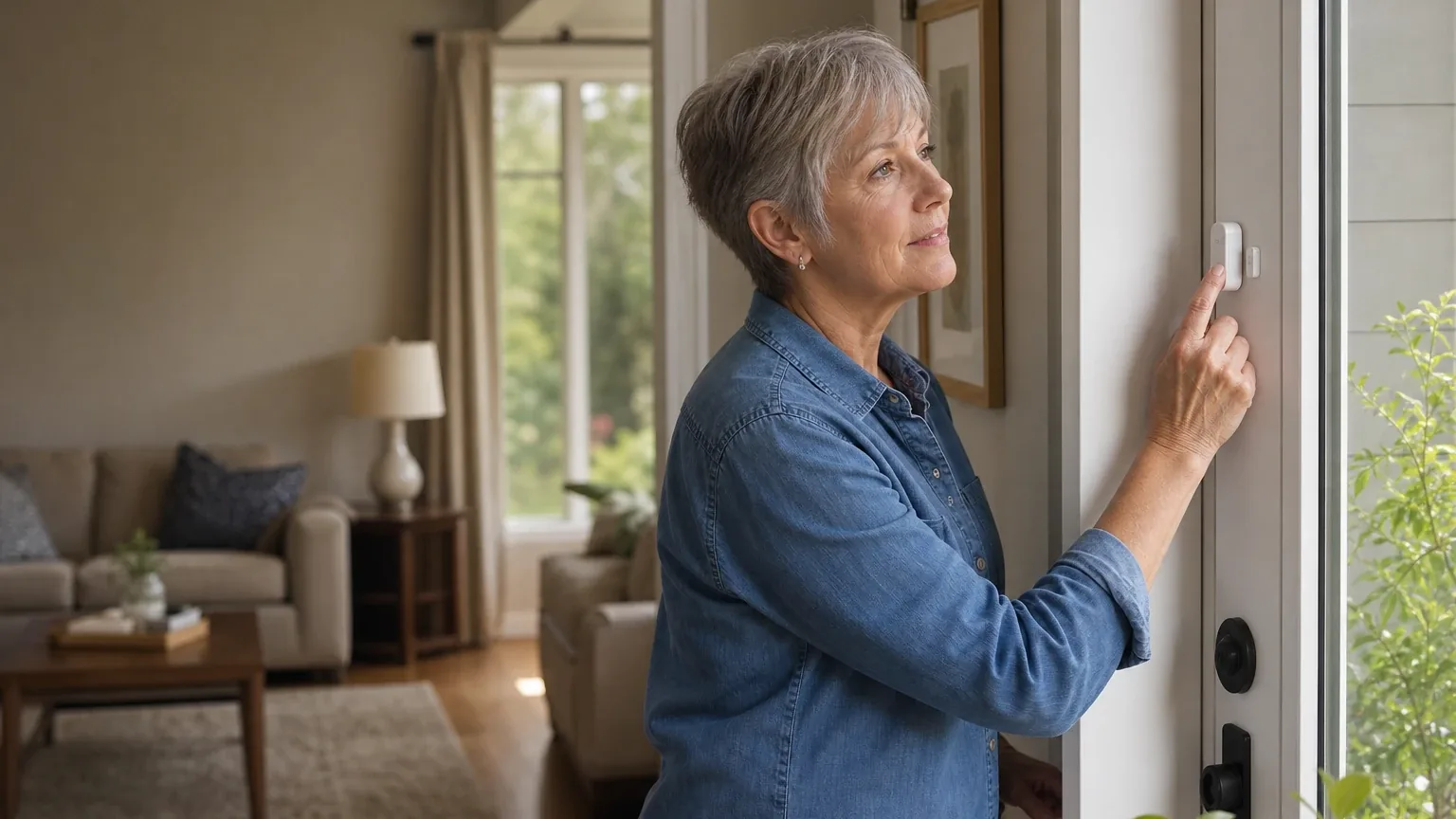
Answer Capsule
Ring leads the September 2026 consensus ranking for Door, Window & Motion Safety Alerts, followed by Aqara and SimpliSafe. The current study includes 7 valid AI-platform responses and 10 qualifying entities. Compared with August 2026, the leader changed. The current list added YoLink, ADT Blu Security Starter Kit, ecobee SmartSensor, eufy Alarm System, and Roku Entry Sensor with Motion Sensor System and removed Smart Caregiver, eufy Security, and Philips Hue Motion Sensor (Indoor). This is an immediately preceding-month comparison. Rank movement measures changes in this collection of standardized AI-platform responses. It is not product testing, customer-review evidence, or proof that a provider's underlying quality improved or declined.
What Changed Since August 2026
This comparison uses the immediately preceding completed month.
Ring remained No. 1 in September 2026. It was named by 5 platforms, compared with 4 in August 2026. Both studies used 7 valid platform responses.
The largest upward moves were Ring (up 2). The largest downward moves were Aqara (down 1), SimpliSafe (down 1), Abode iota Security Kit (down 1), and Wyze Home Monitoring with Wyze Sense Entry Sensor v2 and Wyze Sense Motion Sensor v2 (down 1).
The current qualifying set added YoLink, ADT Blu Security Starter Kit, ecobee SmartSensor, eufy Alarm System, and Roku Entry Sensor with Motion Sensor System. It no longer includes Smart Caregiver, eufy Security, and Philips Hue Motion Sensor (Indoor) from the earlier top group. Entry or exit reflects the minimum-mention rule and the current response set, not a product launch, discontinuation, or quality finding.
| Current rank | Entity | Previous rank | Rank movement | Current mentions | Previous mentions | Mention change |
|---|---|---|---|---|---|---|
| 1 | Ring | 3 | Up 2 | 5 | 4 | +1 |
| 2 | Aqara | 1 | Down 1 | 5 | 6 | -1 |
| 3 | SimpliSafe | 2 | Down 1 | 5 | 4 | +1 |
| 4 | YoLink | — | New | 4 | — | — |
| 5 | Abode iota Security Kit | 4 | Down 1 | 4 | 4 | +0 |
| 6 | ADT Blu Security Starter Kit | — | New | 4 | — | — |
| 7 | Wyze Home Monitoring with Wyze Sense Entry Sensor v2 and Wyze Sense Motion Sensor v2 | 6 | Down 1 | 3 | 2 | +1 |
| 8 | ecobee SmartSensor | — | New | 3 | — | — |
| 9 | eufy Alarm System | — | New | 3 | — | — |
| 10 | Roku Entry Sensor with Motion Sensor System | — | New | 2 | — | — |
| — | Smart Caregiver | 5 | Exited | — | 3 | — |
| — | eufy Security | 7 | Exited | — | 2 | — |
| — | Philips Hue Motion Sensor (Indoor) | 8 | Exited | — | 2 | — |
The table is calculated directly from the two stored ranking datasets. Positive rank movement means an entity moved closer to No. 1; mention change shows the difference in the number of included platform responses naming it.
The August 2026 edition preserves the complete earlier ranking and methodology for reference.
Research Snapshot
- Topic: Door, Window & Motion Safety Alerts within Home safety
- Target buyer: Caregivers and seniors monitoring entrances, hallways, garages, and rooms for security events or unusual activity patterns
- Geography: United States
- Platforms included (7): openai, anthropic, deepseek, grok, perplexity, kimi, google
- Research date: 2026-09-27
- Unique entities named: 28
- Qualifying entities: 10
- Eligibility rule: Named by at least two platforms during ranking discovery
- Ranking unit: Sensor device and security platform
Platform-reported research dates differ from the authoritative run date: anthropic reported 2026-01-15 for Ring and 2026-01-10 for Aqara, deepseek reported 2026-01-15 for Ring and 2026-06-12 for Aqara, and several other platforms reported dates earlier than 2026-09-27. These are provenance metadata only and do not independently prove freshness.
The Consensus Ranking
Questions This Section Answers
- What are the best door, window, and motion safety alert systems for senior homes in 2026?
- Which home safety sensor platform has the most cross-platform AI consensus for caregiver monitoring?
- How many AI platforms named each door and window sensor brand for senior home safety alerts?
Platform mentions count only ranking-discovery mentions. All 7 included platforms evaluated fit, but not every platform named every entity during ranking discovery.
| Rank | Entity | Platform mentions | Share of platform responses | Average listed position | Best position | Best considered for |
|---|---|---|---|---|---|---|
| 1 | Ring | 5 | 71.4% | 3.8 | 1 | Homes needing contact sensors on multiple doors and windows; Hallways, garages, or rooms where approximately 30-foot motion coverage is adequate; Caregivers who want remote Ring-app alerts and optional 24/7 professional monitoring |
| 2 | Aqara | 5 | 71.4% | 3.8 | 2 | DIY entry monitoring across multiple doors, windows, drawers, and rooms.; Caregivers already using Apple Home, Alexa, Google Home, SmartThings, or Aqara Home.; Room-level presence and unusual-activity automations using the wired FP2. |
| 3 | SimpliSafe | 5 | 71.4% | 4.2 | 1 | Caregivers monitoring multiple doors and windows with app alerts; Seniors who need peel-and-stick installation and a simple local alarm; Homes needing optional 24/7 professional dispatch through Core monitoring |
| 4 | YoLink | 4 | 57.1% | 3.75 | 1 | Long-range door and window status monitoring across basements, garages, outbuildings, and large homes; Caregivers who primarily need app push, email, audible SpeakerHub, or optional SMS and phone alerts; Installations requiring multi-year battery life and simple adhesive or screw mounting |
| 5 | Abode iota Security Kit | 4 | 57.1% | 5.25 | 1 | Apartments, condos, or smaller homes where the iota can cover a principal hallway or room.; Caregivers wanting remote push notifications and optional 24/7 professional monitoring.; Buyers needing adhesive, tool-free installation and expandable door/window sensors. |
| 6 | ADT Blu Security Starter Kit | 4 | 57.1% | 6.0 | 4 | Small or medium homes needing coverage for several priority doors or windows and one main hallway or room.; Caregivers who value ADT+ smartphone alerts and optional 24/7 professional monitoring.; Renters or seniors preferring peel-and-stick, self-installed equipment without a long-term contract. |
| 7 | Wyze Home Monitoring with Wyze Sense Entry Sensor v2 and Wyze Sense Motion Sensor v2 | 3 | 42.9% | 3.33 | 2 | DIY indoor monitoring of entry doors, accessible windows, hallways, bedrooms, and rooms; Homes needing many sensors at relatively low equipment cost; Buyers who want optional professional monitoring without a long-term contract |
| 8 | ecobee SmartSensor | 3 | 42.9% | 5.0 | 3 | Homes needing entry alerts for doors, windows, cabinets, safes, or medication storage.; Caregivers wanting remote smartphone alerts through one ecobee app.; Buyers wanting optional 24/7 professional monitoring without a long-term contract. |
| 9 | eufy Alarm System | 3 | 42.9% | 7.0 | 5 | Self-monitored homes needing multiple entry sensors and room-level motion alerts.; Buyers prioritizing low ongoing cost, local processing, and DIY installation.; Homes where caregivers can respond to app notifications and maintain the system. |
| 10 | Roku Entry Sensor with Motion Sensor System | 2 | 28.6% | 2.0 | 2 | Budget-conscious caregivers wanting basic door, window, hallway, or room alerts.; Seniors or families already using Roku Smart Home devices and comfortable with smartphone-based monitoring.; Homes where adhesive, battery-powered, indoor sensors and optional Noonlight monitoring are sufficient. |
Which Option Is Best for Which Version of the Buyer Need?
Questions This Section Answers
- Which door and window sensor system should a caregiver choose for a large home with a detached garage?
- Is Ring or SimpliSafe better for a senior home when local audible chimes matter more than app alerts?
- Which home safety sensor platform is best for a senior living alone who needs professional dispatch?
| Buyer need | Best-fit entity | Why |
|---|---|---|
| Largest sensor ecosystem with optional 24/7 monitoring | Ring | 5 mentions, best rank 1; contact sensors plus 30-foot motion; Ring Protect Pro monitoring [e1:openai:c_plans] |
| Open-ecosystem DIY with room-level presence detection | Aqara | Matter/Thread P2 contact sensor plus FP2 mmWave radar; no verified U.S. professional monitoring [e2:openai:c1] |
| Local chimes plus pet-aware motion and simple install | SimpliSafe | Base Station chimes, 35-foot motion, pet mode to 60 lb, Core monitoring [e3:openai:c3] |
| Long range to outbuildings and multi-year battery | YoLink | Up to 1/4-mile open-air LoRa range; 5+ year door sensor battery [e4:openai:c3] |
| All-in-one hub with camera, siren, and battery backup | Abode iota Security Kit | Built-in motion, 1080p camera, 93 dB siren, rechargeable backup [e5:openai:c2] |
| Legacy security brand. |
1. Ring
Questions This Section Answers
- Is Ring worth it for door, window, and motion safety alerts in a senior home, and what are its main drawbacks?
- Which Ring kit and sensors should a caregiver buy for multiple doors, windows, and a hallway?
- What does Ring Protect Pro cost, and what happens to alerts if the subscription is canceled?
Ring is the consensus leader for this use case, named by 5 of 7 platforms with a best position of 1 and an average listed position of 3.8. Platform fit ratings split: openai, anthropic, perplexity, and google rated Ring a good fit, while deepseek, grok, and kimi rated it mixed. The most relevant configuration is a Ring Alarm or Ring Alarm Pro base with Ring Alarm Contact Sensor (2nd Gen) units on doors and windows and Ring Motion Detector (Newest Model) units for rooms and hallways, plus optional Ring Protect Pro monitoring [e1:openai:c_contact_sensor].
Why it ranked here. Ring earned the top spot on platform mentions and tied Aqara on average position, but its best position of 1 and its repeated appearance in the top two across openai, perplexity, and deepseek kept it first. Google ranked Ring 6th and kimi ranked it 8th, which is the widest spread among the top three.
Best suited for. Homes needing contact sensors on multiple doors and windows, hallways, garages, or rooms where approximately 30-foot motion coverage is adequate, and caregivers who want remote Ring-app alerts with optional 24/7 professional monitoring.
Main strengths for the use case. Ring Alarm Contact Sensor (2nd Gen) is designed for doors and windows and provides real-time notifications when an opening is detected; it uses Z-Wave and is specified at up to 250 feet from the Base Station in open air and line of sight [e1:openai:c_contact_sensor]. The newest Motion Detector is specified for a 30-foot detection range and 90-degree field of view, with a pet-friendly setting for pets under 50 pounds [e1:openai:c_motion]. Stated battery life is up to three years for contact sensors and up to two years for the newest motion detector [e1:openai:c_contact_sensor]. Ring Protect Pro includes 24/7 professional monitoring for compatible Ring security systems and is available in all 50 U.S. states, excluding U.S. territories, though local alarm permits may be required [e1:openai:c_monitoring].
What Changed Since August 2026
Ring moved up from No. 3 to No. 1, and platform mentions increased from 4 to 5. The September 2026 article reframes Ring as the consensus leader for door, window, and motion safety alerts, shifting its emphasis from a broad whole-system value pitch to sensor-level specifics buyers can compare. The recommended setup is unchanged: an Alarm or Alarm Pro base with Contact Sensor (2nd Gen) units on doors and windows plus Motion Detector units for rooms and hallways, with optional Ring Protect Pro monitoring. The rewrite adds concrete measured detail, including a 30-foot motion range, a 90-degree field of view, and a pet-friendly setting for pets under 50 pounds. Prior pricing evidence is not repeated, including $199.99, $249.99, and $329.99–$379.99. Differences between the two editions reflect what each article reports; they do not by themselves prove that the product, service, or price changed.
2. Aqara
Questions This Section Answers
- Is Aqara worth it for senior home door and window alerts if the household already uses Apple Home or Alexa?
- Which Aqara sensors should a caregiver buy for entry monitoring plus room-level presence detection?
- Does Aqara offer professional monitoring for senior safety alerts in the United States?
Aqara tied Ring on platform mentions (5) and share (71.4%) with the same 3.8 average listed position, but its best position of 2 placed it second. Fit ratings split: openai, google, grok, and perplexity rated Aqara good, while anthropic, deepseek, and kimi rated it mixed. The most relevant configuration is the Aqara Door and Window Sensor P2 with a compatible Matter/Thread controller or border router, paired with the Aqara Presence Sensor FP2 for room-level presence detection; the Aqara Hub M3 is the most relevant hub option [e2:openai:c1].
Why it ranked here. Aqara appeared in the top three on grok (2nd), anthropic (3rd), and deepseek (3rd), but google ranked it 5th and kimi ranked it 6th. Its strength is breadth of sensor types rather than a single dominant product.
Best suited for. DIY entry monitoring across multiple doors, windows, drawers, and rooms; caregivers already using Apple Home, Alexa, Google Home, SmartThings, or Aqara Home; and room-level presence and unusual-activity automations using the wired FP2.
Main strengths for the use case. The Door and Window Sensor P2 detects open/closed status for doors, windows, and drawers, uses Thread and BLE, includes a CR123A battery, and supports Apple Home, Alexa, Google Home, SmartThings, and Aqara-related integrations; a Matter Controller and Thread Border Router are required for Matter operation [e2:openai:c1]. The Presence Sensor FP2 uses millimeter-wave radar, can monitor rooms up to 40 m², divide a room into up to 30 zones, detect multiple people, and support presence/absence and fall-detection-related automations; it is wired by USB-C and does not require an Aqara hub [e2:openai:c4]. The Hub M3 supports local automations, a 95 dB speaker for Aqara Home alerts, Zigbee, Thread, Matter, Wi-Fi, and up to 127 Thread/Zigbee devices [e2:openai:c6].
Main limitations. The reviewed U.S. product materials do not establish a U.S.
What Changed Since August 2026
Aqara moved down from No. 1 to No. 2, and platform mentions decreased from 6 to 5. The September 2026 article recasts Aqara as a breadth-of-sensors pick rather than a category leader, dropping the prior Verdict framing and the explicit "good fit for six of seven platforms" endorsement. The recommended setup is now the Door and Window Sensor P2 with a Matter/Thread border router, paired with the FP2 presence sensor and Hub M3. The earlier write-up emphasized the FP2's fall-detection mode; the current section focuses on its 40 m² room coverage and 30-zone division, and it no longer repeats the roughly 6-foot high-accuracy radius. Pricing evidence also changed: the earlier $119.99, $29.99, and $22.99 figures are not repeated. Differences between the two editions reflect what each article reports; they do not by themselves prove that the product, service, or price changed.
3. SimpliSafe
Questions This Section Answers
- Is SimpliSafe worth it for a senior home if the caregiver wants local chimes as well as phone alerts?
- Which SimpliSafe monitoring plan should a caregiver choose for 24/7 emergency dispatch?
- How long do SimpliSafe entry sensor batteries last on a frequently used front door?
SimpliSafe ranked third with 5 platform mentions (71.4% share), an average listed position of 4.2, and a best position of 1. Six of seven platforms rated it a good fit; only deepseek rated it mixed. The relevant configuration is the SimpliSafe Gen 3 system with Entry Sensors, Motion Sensor Gen 2, and Core professional monitoring [e3:openai:c1].
Why it ranked here. SimpliSafe was perplexity's top pick and appeared 3rd on openai and 4th on kimi, but google ranked it 8th and deepseek ranked it 5th. Its average position of 4.2 is the highest among the top three, which is why it sits behind Ring and Aqara despite tying them on mentions.
Best suited for. Caregivers monitoring multiple doors and windows with app alerts, seniors who need peel-and-stick installation and a simple local alarm, and homes needing optional 24/7 professional dispatch through Core monitoring.
Main strengths for the use case. The Entry Sensor uses a sensor-and-magnet design for doors and windows and treats the opening as open when components separate by more than approximately 2 inches; it can also be used on cabinets and safes, and the Base Station can announce or chime when a sensor is activated [e3:openai:c2]. Motion Sensor Gen 2 is specified for a 90-degree field of view and up to 35 feet of range, with mounting recommended about 6 feet above the floor [e3:openai:c3]. SimpliSafe claims Motion Sensor Gen 2 can distinguish people from pets up to 60 pounds and allows sensitivity adjustment in the app [e3:openai:c3]. The Entry Sensor is rated for up to 5 years of battery life depending on usage, and Motion Sensor Gen 2 is rated for up to 4 years on the product page, with a broader 3-to-5-year expectation in SimpliSafe's battery guide [e3:openai:c9].
Main limitations. No verified false-alert rate was found; SimpliSafe warns that pets, direct sunlight, rattling doors or windows, and placement can contribute to false alarms [e3:openai:c10].
What Changed Since August 2026
SimpliSafe moved down from No. 2 to No. 3, and platform mentions increased from 4 to 5. The September 2026 article reframes SimpliSafe around caregivers who want local chimes alongside phone alerts and optional 24/7 professional monitoring through Core, a more specific buyer profile than the earlier whole-home framing. Motion Sensor Gen 2 is now described as covering up to 35 feet with mounting about 6 feet above the floor, replacing the earlier 30–35 foot and 30 to 45 foot figures. Entry Sensor battery life is now up to 5 years, with Motion Sensor Gen 2 rated up to 4 years, replacing the previously cited 10-year third-party figure. The prior pricing summary's dollar ranges are not repeated, so no current price is reported. Pet discrimination remains 50–60 pounds. Differences between the two editions reflect what each article reports; they do not by themselves prove that the product, service, or price changed.
4. YoLink
Questions This Section Answers
- Is YoLink worth it for monitoring a detached garage or basement in a senior home?
- Which YoLink kit should a caregiver buy for door and window alerts with audible in-home notifications?
- Does YoLink offer professional monitoring, and what do SMS and phone-call alerts cost?
YoLink ranked fourth with 4 platform mentions (57.1% share), the best average listed position among all qualifiers at 3.75, and a best position of 1. Fit ratings ranged widely: grok and google rated it strong, openai, anthropic, and perplexity rated it good, kimi rated it mixed, and deepseek rated it uncertain. The relevant configuration is a YoLink Door Sensor with a YoLink Hub or SpeakerHub, plus the Indoor Motion Sensor RT [e4:openai:c1].
Why it ranked here. YoLink was anthropic's and grok's top pick, but deepseek ranked it 10th, which pulled its average to 3.75 and its final position to fourth despite the strongest average among all ten entities. Its mention count of 4 is one below the top three.
Best suited for. Long-range door and window status monitoring across basements, garages, outbuildings, and large homes; caregivers who primarily need app push, email, audible SpeakerHub, or optional SMS and phone alerts; and installations requiring multi-year battery life with simple adhesive or screw mounting.
Main strengths for the use case. YoLink states up to one-quarter mile of open-air range for its LoRa door sensors; an independent TechHive test reported approximately 1,300 feet before loss of registration, with increasingly erratic performance near the limit [e4:openai:c4]. The indoor Door Sensor reports open, closed, and prolonged-open conditions and is intended for doors and windows [e4:openai:c1]. The Indoor Motion Sensor RT uses radar according to YoLink and offers adjustable sensitivity, alert hold time, alarm suppression, and no-motion alerts [e4:openai:c7]. YoLink states more than five years of battery life for the indoor Door Sensor and up to 24 months for the Indoor Motion Sensor RT [e4:openai:c1]. A SpeakerHub can play sounds and text-to-speech messages, which is useful when a senior may not notice a phone notification [e4:openai:c11].
Main limitations. A hub is required; the basic Door Sensor is not a standalone alert device, and the basic door sensor does not itself sound an alarm [e4:openai:c1].
5. Abode iota Security Kit
Questions This Section Answers
- Is the Abode iota Security Kit worth it for a small senior apartment or condo?
- How many door and window sensors come with the Abode iota kit, and what does an extra sensor cost?
- Does the Abode iota motion sensor work in a home with pets?
The Abode iota Security Kit ranked fifth with 4 platform mentions (57.1% share), an average listed position of 5.25, and a best position of 1. Five platforms rated it good; deepseek and kimi rated it mixed. The relevant configuration is the Abode iota All-In-One Security Kit with built-in motion sensor, built-in camera and siren, one Mini Door/Window Sensor, optional additional Abode sensors, and optional Pro monitoring [e5:openai:c2].
Why it ranked here. Abode was openai's top pick and perplexity's 3rd, but deepseek ranked it 8th and kimi ranked it 9th. That spread produced the widest average-position gap among the top five.
Best suited for. Apartments, condos, or smaller homes where the iota can cover a principal hallway or room; caregivers wanting remote push notifications and optional 24/7 professional monitoring; and buyers needing adhesive, tool-free installation and expandable door/window sensors.
Main strengths for the use case. The kit includes one Mini Door/Window Sensor, and additional sensors can be added for other entrances; the Mini sensor reports open/close events to the Abode hub and supports push notifications, chimes, or alarms [e5:openai:c1]. Abode states that the Mini Door/Window Sensor communicates with the hub from up to 100+ feet, with a maximum sensor-to-magnet gap of 0.75 inches and up to four years of replaceable CR2450 battery life [e5:openai:c1]. The iota has a built-in motion sensor and camera, and Abode lists a 40-degree motion-sensor angle [e5:openai:c2]. The Pro plan includes 24/7 professional monitoring and cellular backup [e5:openai:c5]. The iota supports Wi-Fi or Ethernet and has a rechargeable battery backup [e5:openai:c2].
Main limitations. Only one Mini Door/Window Sensor is included, so multiple entrances require additional purchases [e5:openai:c1]. The built-in motion sensor has limited placement coverage and may need separate motion sensors for hallways, garages, or multiple rooms [e5:openai:c2].
What Changed Since August 2026
Abode iota Security Kit moved down from No. 4 to No. 5, and platform mentions were unchanged at 4. The September 2026 article reframes this pick as the Abode iota Security Kit rather than Abode generally, and rebuilds the buyer guidance around one hallway or room in an apartment, condo, or smaller home. The prior write-up leaned on independent speed tests and multi-platform compatibility; the current section instead emphasizes the included Mini Door/Window Sensor, adhesive tool-free installation, and 24/7 Pro monitoring with cellular backup. Dollar figures are no longer repeated: the earlier $120, $240, and $269.99 are gone, as are detailed battery-life and detection-range measurements. The pet-immunity question is now framed as a limitation of built-in motion coverage rather than a tested failure. Differences between the two editions reflect what each article reports; they do not by themselves prove that the product, service, or price changed.
6. ADT Blu Security Starter Kit
Questions This Section Answers
- Is the ADT Blu Security Starter Kit worth it for a senior home compared with Ring or SimpliSafe?
- What is the exact price of the ADT Blu starter kit and Pro-Protect monitoring?
- Does the ADT Blu motion sensor work in a home with a large dog?
The ADT Blu Security Starter Kit ranked sixth with 4 platform mentions (57.1% share), an average listed position of 6.0, and a best position of 4. Four platforms rated it good; deepseek, google, and kimi rated it mixed. The relevant configuration is the ADT Blu Security Starter Kit with three ADT Blu Door/Window Sensors, one ADT Motion Sensor, ADT Base, ADT+ app, and optional Pro-Protect professional monitoring [e6:openai:c1].
Why it ranked here. ADT Blu was anthropic's 4th pick and kimi's 5th, but openai ranked it 6th and perplexity ranked it 9th. No platform placed it in the top three, which is why it sits below the five entities above it.
Best suited for. Small or medium homes needing coverage for several priority doors or windows and one main hallway or room; caregivers who value ADT+ smartphone alerts and optional 24/7 professional monitoring; and renters or seniors preferring peel-and-stick, self-installed equipment without a long-term contract.
Main strengths for the use case. The starter kit includes three door/window sensors, one motion sensor, and one base, which is adequate for selected priority entrances and one main interior route [e6:openai:c1]. ADT states that the Blu Door/Window Sensor detects opening and closing, sends alerts through the ADT+ app, and can report tampering; it can be installed without drilling and is intended for doors, windows, cabinets, drawers, and interior doors [e6:openai:c2]. The ADT Blu motion sensor is marketed as pet-friendly, with adjustable sensitivity and a Convenience Mode that can notify without triggering an alarm [e6:openai:c3]. The Pro-Protect option is advertised as 24/7 professional monitoring, and ADT states that alarm cellular backup is available when the Pro-Protect plan is used [e6:openai:c5]. Google reported that sensors can be programmed as Convenience Sensors so they emit a local chime or push alert instead of sounding a full burglary alarm or dispatching police [e6:google:1.2.2].
7. Wyze Home Monitoring with Wyze Sense Entry Sensor v2 and Wyze Sense Motion Sensor v2
Read the full Wyze Home Monitoring with Wyze Sense Entry Sensor v2 and Wyze Sense Motion Sensor v2 fit review for supporting evidence and buying considerations.
Wyze ranked seventh with 3 platform mentions (42.9% share), the second-best average listed position at 3.33, and a best position of 2. Fit ratings split: openai, anthropic, and google rated it good, while deepseek, grok, perplexity, and kimi rated it mixed. The relevant configuration is a Wyze Sense Hub with Wyze Sense Entry Sensor v2 units for doors and windows, Wyze Sense Motion Sensor v2 units for rooms and hallways, and optionally Wyze Home Monitoring [e7:openai:c1].
Why it ranked here. Wyze was deepseek's 2nd pick and openai's and perplexity's 4th, but it was named by only 3 platforms, which is the lowest mention count among the top nine. Its strong average position could not overcome the mention gap.
Best suited for. DIY indoor monitoring of entry doors, accessible windows, hallways, bedrooms, and rooms; homes needing many sensors at relatively low equipment cost; and buyers who want optional professional monitoring without a long-term contract.
Main strengths for the use case. Wyze states that the Sense Hub can connect to sensors up to 500 feet in an unobstructed room, with walls and interference reducing practical range; the Motion Sensor v2 detection area is stated as 120 degrees within 25 feet [e7:openai:c1]. Entry Sensor v2 is designed for doors and windows and can support broad indoor coverage when multiple sensors are installed [e7:openai:c1]. Wyze states up to 18 months of battery life for both Entry Sensor v2 and Motion Sensor v2 [e7:openai:c1]. Paid Wyze Home Monitoring uses Noonlight for 24/7 professional monitoring; Wyze states that Noonlight can notify the user, call within 30 seconds after an alarm, and contact 911 if the user does not respond [e7:openai:c4]. One Sense Hub can connect up to 100 sensors and keypads [e7:openai:c1].
What Changed Since August 2026
Wyze Home Monitoring with Wyze Sense Entry Sensor v2 and Wyze Sense Motion Sensor v2 moved down from No. 6 to No. 7, and platform mentions increased from 2 to 3. The September 2026 article gives Wyze a fuller buyer-facing description, while the prior write-up led with price. The earlier section reported Home Monitoring at $9.99/month and listed starter kit and hub ranges including $79.98 to $110 and $29.99–$60; those figures are not repeated now, so the current section offers no dollar pricing evidence. The article now reports a stated 500-foot hub-to-sensor range, a 25-foot motion detection area, and Noonlight calling within 30 seconds after an alarm, while the earlier 1-year and 12-month battery figures are dropped. The recommended configuration is unchanged. Differences between the two editions reflect what each article reports; they do not by themselves prove that the product, service, or price changed.
8. ecobee SmartSensor
Questions This Section Answers
- Is the ecobee SmartSensor worth it for senior home entry alerts if the household does not own an ecobee thermostat?
- How fast does the ecobee SmartSensor detect motion, and is it fast enough for caregiver alerts?
- What do ecobee Smart Security plans cost, and which tier includes motion alerts?
The ecobee SmartSensor ranked eighth with 3 platform mentions (42.9% share), an average listed position of 5.0, and a best position of 3. Four platforms rated it good; anthropic, deepseek, grok, and kimi rated it mixed. The relevant configuration is the ecobee SmartSensor for doors and windows paired with an ecobee smart thermostat or camera and ecobee Smart Security; professional monitoring is an optional Total Protection add-on [e8:openai:c1].
Why it ranked here. Ecobee was kimi's 3rd pick, anthropic's 5th, and deepseek's 7th, but it was named by only 3 platforms. Its dependence on an existing ecobee hub device is the most frequently cited limitation across platforms.
Best suited for. Homes needing entry alerts for doors, windows, cabinets, safes, or medication storage; caregivers wanting remote smartphone alerts through one ecobee app; and buyers wanting optional 24/7 professional monitoring without a long-term contract.
Main strengths for the use case. The SmartSensor for doors and windows detects opening and closing and can be attached to doors, windows, safes, drawers, and medicine cabinets, using a contact gap range of 0.75 to 1.25 inches [e8:openai:c1]. The combined sensor has a 120-degree horizontal occupancy-sensing angle and a stated motion range of 16 feet when mounted 6.5 feet high on a door [e8:openai:c1]. ecobee states that sensors can be placed up to 60 feet from the compatible thermostat or camera and use 915 MHz connectivity [e8:openai:c1]. The Total Protection add-on provides 24/7 monitoring for break-ins and smoke alarms, and ecobee says sensor data can support incident review and emergency escalation through RapidSOS [e8:openai:c2]. The sensor uses a CR2477 battery with manufacturer-stated battery life of up to three years [e8:openai:c1].
Main limitations. The SmartSensor is not standalone; ecobee states it works only when paired with a compatible ecobee thermostat or camera [e8:openai:c1].
9. eufy Alarm System
Questions This Section Answers
- Is the eufy Alarm System worth it for a senior home if the caregiver wants no mandatory monthly fee?
- How long do eufy Entry Sensor E20 and Motion Sensor E20 batteries last?
- What happens to eufy alerts during a power outage if HomeBase 3 has no built-in battery?
The eufy Alarm System ranked ninth with 3 platform mentions (42.9% share), an average listed position of 7.0, and a best position of 5. Four platforms rated it good; openai and deepseek rated it mixed, and kimi rated it uncertain. The relevant configuration is the U.S. eufy Alarm System using HomeBase 3 with eufy Entry Sensor T8900, Motion Sensor T8910, and optional Plus Protection Plan [e9:openai:C1].
Why it ranked here. Eufy was openai's 5th pick and perplexity's 6th, but anthropic ranked it 10th. Its average position of 7.0 is the lowest among the top nine, and no platform placed it in the top four.
Best suited for. Self-monitored homes needing multiple entry sensors and room-level motion alerts; buyers prioritizing low ongoing cost, local processing, and DIY installation; and homes where caregivers can respond to app notifications and maintain the system.
Main strengths for the use case. The Entry Sensor is designed for doors and windows and sends an alert when a breach or opening is detected, and additional sensors can be purchased separately [e9:openai:C1]. The standard eufy Motion Sensor is advertised with 100-degree coverage up to 30 feet, and a separate eufy alarm bundle page states that alarm devices can connect to HomeBase at open-air distances up to 656 feet [e9:openai:C3]. eufy provides adjustable motion sensitivity, and the E20 Motion Sensor guide describes a pet mode intended to reduce alerts from pets under 80 pounds [e9:openai:C4]. Anthropic reported that the Entry Sensor E20 and Motion Sensor E20 each feature 5-year battery life using CR123A batteries [e9:anthropic:c1]. eufy's Plus Protection Plan is advertised at $9.99 per month or $99.99 per year and includes automatic professional monitoring and emergency dispatch [e9:openai:C2].
10. Roku Entry Sensor with Motion Sensor System
Questions This Section Answers
- Is the Roku Entry Sensor with Motion Sensor System worth it for a senior home on a tight budget?
- What is included in the $99.99 Roku Home Monitoring System SE starter kit?
- Does the Roku motion sensor work in a home with pets, and what is its detection range?
The Roku Entry Sensor with Motion Sensor System ranked tenth with 2 platform mentions (28.6% share), the best average listed position at 2.0, and a best position of 2. It qualified only because anthropic and kimi both named it, and both placed it 2nd. Five platforms rated it good or mixed; kimi rated it uncertain. The relevant configuration is the Roku Home Monitoring System SE with two Entry Sensors, one Motion Sensor, hub, and keypad, plus optional additional Roku Entry Sensor 3-Pack and Roku Motion Sensor [e10:openai:c1].
Why it ranked here. Roku has the strongest average position of any entity in the table, but it was named by only 2 platforms, the minimum for qualification. The ranking rule prioritizes platform mentions first, which places it last despite its high average.
Best suited for. Budget-conscious caregivers wanting basic door, window, hallway, or room alerts; seniors or families already using Roku Smart Home devices and comfortable with smartphone-based monitoring; and homes where adhesive, battery-powered, indoor sensors and optional Noonlight monitoring are sufficient.
Main strengths for the use case. The Home Monitoring System SE includes two entry sensors, and additional three-packs are offered; Roku states that entry sensors alert when a door or window is opened, closed, or left open, with sensor components required within 3/4 inch of each other [e10:openai:c1]. The Roku Motion Sensor detects motion up to 25 feet away, with a stated maximum 120-degree field of detection, and Roku states that it ignores pets [e10:openai:c1]. Roku lists a 500-foot sensor communication range using 915 MHz RF [e10:openai:c1]. Roku lists approximately 18 months of battery life for entry and motion sensors under normal usage, and the hub has a stated 10-hour backup battery [e10:openai:c1]. Optional 24/7 professional monitoring is powered by Noonlight, and Roku states that U.S.-based agents can contact the user and request emergency assistance after an alarm [e10:openai:c5].
What the Cross-Platform Study Reveals About This Market
Questions This Section Answers
- What do AI platforms consistently recommend for senior home door and window safety alerts?
- Which sensor features matter most across AI platform recommendations for caregiver monitoring?
Three patterns dominate the cross-platform evidence. First, every qualifying entity is a general home-security or smart-home platform rather than a senior-care or medical-alert system. Ring, Aqara, SimpliSafe, YoLink, Abode, ADT Blu, Wyze, ecobee, eufy, and Roku all lack verified fall detection, wandering detection, or clinically validated unusual-activity analytics in the reviewed sources. Buyers needing those capabilities are directed by multiple platforms toward dedicated medical-alert or aging-in-place systems.
Second, professional monitoring is available across most of the field but with materially different terms.
Where the AI Platforms Agreed
Questions This Section Answers
- Which door and window sensor brands do all AI platforms agree are suitable for senior homes?
- What limitations do AI platforms consistently flag across all home safety sensor systems?
Platforms agreed on several points. Ring, Aqara, and SimpliSafe all received 5 mentions and 71.4% share, and all three were rated good by at least four platforms. Every platform that assessed Ring, Aqara, SimpliSafe, Abode, ADT Blu, ecobee, eufy, and Roku noted the absence of independently verified false-alert or motion-accuracy data. Every platform that assessed indoor-only sensors noted that entry and motion sensors are not weatherproof and are unsuitable for exposed garages, patios, or outdoor gates. Multiple platforms independently flagged that none of these systems is a dedicated senior-care, fall-detection, or medical-alert platform. Platforms also agreed that app-based alerts depend on internet connectivity, a smartphone, and the hub remaining operational.
Where the AI Platforms Disagreed
Questions This Section Answers
- Why do AI platforms disagree about Ring motion detector range and SimpliSafe monitoring prices?
- Which home safety sensor brands received conflicting fit ratings across AI platforms?
Disagreements clustered in four areas. Motion detector range: Grok reported Ring's motion detector at approximately 10 feet, while openai, anthropic, and google reported 30 feet with a 90-degree field of view [e1:grok:2]. Monitoring prices: SimpliSafe monitoring was reported at $22.99–$32.99/month by anthropic, $1.10/day by openai, and $22.80–$32.99 by perplexity [e3:anthropic:C005]. Professional monitoring availability: Anthropic reported that ecobee does not offer 24/7 professional monitoring or third-party monitoring center integration, while openai, perplexity, and kimi reported optional professional monitoring through ecobee Smart Security [e8:anthropic:c7]. Fit ratings: YoLink was rated strong by grok and google but uncertain by deepseek; eufy was rated good by four platforms but uncertain by kimi; Roku was rated good by five platforms but uncertain by kimi, which could not verify the product's U.S. existence at all [e10:kimi:search_no_match_roku].
How Buyers Should Choose
Questions This Section Answers
- What should a caregiver check before buying a door and window sensor system for a senior home?
- Which home safety sensor system is best for a senior who cannot use a smartphone?
Start with the alert path. If the senior cannot reliably use a smartphone, prioritize systems with local audible alerts: SimpliSafe's Base Station chimes [e3:openai:c2], YoLink's SpeakerHub text-to-speech [e4:openai:c11], and ADT Blu's Convenience Sensor mode [e6:google:1.2.2]. If the caregiver is remote and needs dispatch, prioritize systems with verified professional monitoring: Ring Protect Pro, SimpliSafe Core, Abode Pro, ADT Pro-Protect, Wyze Home Monitoring, ecobee Total Protection, eufy Plus, and Roku Pro Monitoring.
Second, match range to the property. YoLink's LoRa range is the strongest for detached garages and outbuildings [e4:openai:c3]. Ring's Z-Wave range is specified at 250 feet open-air [e1:openai:c_contact_sensor]. eufy's HomeBase connection is specified at up to 656 feet open-air [e9:openai:C3]. Roku's sensor communication range is 500 feet using 915 MHz RF [e10:openai:c1].
Third, verify battery life against the actual door.
Methodology
This index was produced from a single standardized prompt sent once to each of 7 included platforms: openai, anthropic, deepseek, grok, perplexity, kimi, and google. The study date is 2026-09-27. Each platform was asked to identify and rank home safety sensor devices and security platforms for the defined use case: door, window, and motion safety alerts in senior homes in the United States.
Entities qualified for the final ranking if they were named by at least two platforms during ranking discovery. Of 28 unique entities named, 10 qualified. The final ranking order is based on platform mentions first, then average listed position, then best listed rank. The final ranking table is the sole authority for rank, platform mentions, platform share, average rank, and best rank.
Platform mentions count only ranking-discovery mentions. All included platforms evaluated fit, but not every platform named every entity during ranking discovery. Fit assessments, product details, pricing, strengths, limitations, and disagreements come from the entity evidence bundles supplied for each qualifying entity.
Methodology Limitations
This study used one standardized prompt sent once to each included platform. AI answers can vary by date, wording, location, account state, model, interface, browsing configuration, and the sources retrieved. A single run cannot capture that variance.
Platform-reported research dates differ from the authoritative run date. Anthropic reported 2026-01-15 for Ring and 2026-01-10 for Aqara; deepseek reported 2026-01-15 for Ring and 2026-06-12 for Aqara; other platforms reported dates earlier than 2026-09-27. These are provenance metadata and do not independently prove freshness.
Company-owned citations materially outnumber independent citations across every entity bundle. Company claims are not independently verified. Citations are platform-reported evidence, not independently verified facts. No-search model claims require explicit verification before being described as current facts.
The supplied URLs were collected from platform responses and were not independently validated by the writer stage. Official-site retrieval failed for one or more mentions for SimpliSafe, ADT Blu, eufy, and Roku; no failed fetch was used as a verified domain key. The available source evidence used unverified reported-domain evidence for some entities, and the matching reported domain remains unverified.
Platform recommendations are market intelligence, not independent customer reviews or proof of quality.
Final Verdict
Ring is the consensus leader for door, window, and motion safety alerts in senior homes, named by 5 of 7 platforms with a best position of 1. Aqara and SimpliSafe tie on mentions and share, with Aqara ahead on average position. YoLink offers the strongest average listed position and the longest range. Abode iota, ADT Blu, Wyze, ecobee, eufy, and Roku each serve narrower buyer needs. No qualifying entity is a dedicated senior-care or medical-alert system, and no platform published independently verified false-alert or motion-accuracy data for any of them. Buyers should treat this index as a shortlist and verify pricing, monitoring terms, battery behavior, outage resilience, and false-alert performance before purchase.
Frequently Asked Questions
What is the best door and window sensor system for a senior home in 2026?
Ring ranks first in this 7-platform consensus index, named by 5 of 7 platforms with a best position of 1. Aqara and SimpliSafe tie on mentions and share. The best choice depends on whether the buyer prioritizes ecosystem breadth (Ring), open-protocol flexibility (Aqara), or local chimes and pet-aware motion (SimpliSafe).
Do any of these systems detect falls or medical emergencies?
No. Every qualifying entity is a general home-security or smart-home platform. None of the reviewed sources establish fall detection, wandering detection, or clinically validated unusual-activity analytics. Buyers needing those capabilities should evaluate dedicated medical-alert or aging-in-place systems.
Which system has the longest sensor range?
YoLink states up to one-quarter mile of open-air range for its LoRa door sensors, with an independent TechHive test reporting approximately 1,300 feet before loss of registration [e4:openai:c4]. eufy specifies up to 656 feet open-air to HomeBase [e9:openai:C3], and Roku specifies 500 feet using 915 MHz RF [e10:openai:c1].
Consolidated Sources
Company-Owned Sources
- D0030104-000078-Aqara门窗传感器P2说明书(matter版)更新V3分页: http://aqara-id.com/cdn/website/mainland/static/docs/Door-and-Window-Sensor-P2_user-manual.pdf
- ecobee Pro Tech Spec SmartSensor for Doors and Windows: https://assets.ctfassets.net/a3qyhfznts9y/3CklavJ7OES8rfJYA1DtMC/d4d58f4a9364cbba75403bc20925193c/ecobee_Pro_TechSpec_SSDW_Oct_2021_US.pdf
- SmartSensor for doors and windows Web Manual: https://assets.ctfassets.net/a3qyhfznts9y/7LtO88opjxjrxnkdAy0CAs/28bc1a8c30c9865c09288817312066c3/SmartSensorDoorAndWindow_WebManual.pdf
- Presence Sensor FP2 User Manual: https://cdn.aqara.com/cdn/website/mainland/static/docs/Presence-Sensor-FP2_User-Manual.pdf
- Contact Sensor (2nd Gen): https://co.ring.com/support/products/alarm/contact-sensor-gen-2?page=1
- Aqara Presence Sensor FP2 – Ultimate Radar Motion Sensor for Smart Homes – Aqara LLC: https://eu.aqara.com/products/aqara-presence-sensor-fp2
- eufy Official Website - Security Products: https://eufy.com/
- Apple HomeKit integration with Siri - Wyze Forum: https://forums.wyze.com/t/apple-homekit-integration-with-siri/271253
- Entry Sensor Battery Low - Wyze Forum: https://forums.wyze.com/t/entry-sensor-battery-low/191350
- Entry Sensor V2 - Battery questions - Wyze Forum: https://forums.wyze.com/t/entry-sensor-v2-battery-questions/225345
- Wyze Community Forums - Sensor Battery and Connectivity Discussions: https://forums.wyze.com/t/entry-sensor-v2-battery-questions/226651
- Sense V2 Motion Sensor false alerts: https://forums.wyze.com/t/sense-v2-motion-sensor-false-alerts/188706
- Using Google Home - Services & Integrations - Wyze Forum: https://forums.wyze.com/t/using-google-home/292350
- View battery levels on sensors - Wyze Forum: https://forums.wyze.com/t/view-battery-levels-on-sensors/33132
- Wyze Sense Entry Sensor v2 Battery Requirements: https://forums.wyze.com/t/wyze-sense-entry-sensor-v2/150341
- Wyze Sense Motion Sensor v2 & Wyze Sense Entry Sensor v2 without Monitoring Service: https://forums.wyze.com/t/wyze-sense-motion-sensor-v2-wyze-sense-entry-sensor-v2-without-monitoring-service/210342
- No direct Abode source retrieved: https://goabode.com/
- Self-Monitoring Or Professional Monitoring: https://goabode.com/blog/self-monitoring-or-professional-monitoring/
- abode Products: https://goabode.com/collections/all-products
- abode Monitoring Plans: https://goabode.com/pages/monitoring
- Abode Plans and Pricing: https://goabode.com/plans/
- Iota All-In-One Security Kit: https://goabode.com/product/iota-all-in-one-security-kit/
- Mini Door/Window Sensor: https://goabode.com/product/mini-door-window-sensor/
- Motion Sensor - Abode - Whole-Room Coverage With One Sensor: https://goabode.com/product/motion-sensor/
- Smart Security Kit: https://goabode.com/product/smart-security-kit/
- abode iota All-In-One Security Kit: https://goabode.com/products/iota-all-in-one-security-kit
- ADT Blu- Door Window Sensor SSH5R0: https://help.adt.com/article/blu-adt-door-window-sensor
- ADT Blu- Motion Sensor SSM5R0-29: https://help.adt.com/article/blu-adt-motion-sensor
- ADT Blu- Device and Sensor Low Battery Beeping: https://help.adt.com/article/blu-device-and-sensor-low-battery
- Blue - Standard Sensors: https://help.adt.com/article/blue-standard-sensors
- ADT Self Setup- Convenience Sensors: https://help.adt.com/s/article/ADT-Self-Setup-Convenience-Sensors
- ADT Self Setup- Motion Sensor SSM1R0-29: https://help.adt.com/s/article/ADT-Self-Setup-Motion-Sensor-SSM1R0-29
- Iota Kit Setup Guide | Abode Home Security Support: https://help.goabode.com/en/articles/8819584-iota-kit-setup-guide
- Iota Kit Troubleshooting: https://help.goabode.com/en/articles/8819595-iota-kit-troubleshooting
- Mini Door/Window Sensor: https://help.goabode.com/en/articles/8849707-mini-door-window-sensor
- Motion Sensor | Abode Home Security Support: https://help.goabode.com/en/articles/8897860-motion-sensor
- Professional Monitoring Services Agreement: https://help.goabode.com/en/articles/8940953-professional-monitoring-services-agreement
- How Do I Prevent False Alarms?: https://help.goabode.com/en/articles/8940974-how-do-i-prevent-false-alarms
- Plans Compare | Abode Home Security Support: https://help.goabode.com/hc/en-us/articles/360022225152-Plans-Compare
- Mini Door/Window Sensor | Abode Home Security Support: https://help.goabode.com/hc/en-us/articles/360022489811-Mini-Door-Window-Sensor
- Motion Sensor | Abode Home Security Support: https://help.goabode.com/hc/en-us/articles/360022490071-Motion-Sensor
- Web search results absence for Roku security sensors: https://intl.roku.com/intl
- Professional Monitoring – Ring Alarm Emergency Support: https://partners.ring.com/professional-monitoring
- Ring Alarm Security Kit, 5-Piece Ring product documentation reference (from buyer guidance provided): https://ring.com
- 8-Piece Alarm Security Kit | Home Security System | Ring (Canada): https://ring.com/ca/en/products/security-system-alarm-8
- Shop All | Security Cameras, Alarms, Doorbells: https://ring.com/collections/all-products
- Alarm Systems - Ring Sensors & Alarms: https://ring.com/collections/home-security-systems
- Alarm Systems - Home Security Systems: https://ring.com/home-security-system
- Ring Protect - Subscription Plans for Home Security: https://ring.com/plans
- Ring Products: https://ring.com/products
- Motion Detector (Newest Model): https://ring.com/products/alarm-motion-detector-v2
- Motion Detector (Newest Model) Ring Sensors: https://ring.com/products/motion-detector
- Ring Alarm 8-Piece Kit: https://ring.com/products/ring-alarm-8-piece-kit
- Ring Alarm Contact Sensor (2nd Gen): https://ring.com/products/ring-alarm-contact-sensor-2nd-gen
- Ring Alarm Motion Detector: https://ring.com/products/ring-alarm-motion-detector
- 8-Piece Alarm Security Kit | Home Security System: https://ring.com/products/security-system-alarm-8
- Ring Protect Pro: https://ring.com/protect-plans
- Ring Alarm (2nd Gen) Installation Guide: https://ring.com/support/articles/v2560/Ring-Alarm-2nd-Gen-Installation-Guide
- Technical Specifications for Ring Alarm Devices: https://ring.com/support/articles/x9gba/Technical-Specifications-for-Ring-Alarm-Devices
- Tips for Installing Contact Sensor (2nd Gen): https://ring.com/support/articles/y44jn/Installing-Your-Contact-Sensor-Gen2
- Contact Sensor (2nd Gen): https://ring.com/support/products/alarm/contact-sensor-gen-2
- Terms of Service | Ring: https://ring.com/terms
- Setting up and using Ring Alarm Motion Detector (all generations): https://ring.com/us/en/support/articles/3osk6/Setting-up-and-Using-Your-Ring-Alarm-Motion-Detector
- eufy Protection Plan: https://security-mall.eufylife.com/landing/monitoring/intro/
- eufy Support | Troubleshooting & Customer Service: https://service.eufy.com/article-description/Centralize-Your-Security-Ecosystem-with-HomeBase-3
- Does HomeBase 3 have a built-in battery?: https://service.eufy.com/article-description/Does-HomeBase-3-have-a-built-in-battery
- eufy Security Complete HomeBase Compatibility Guide: https://service.eufy.com/article-description/eufy-Security-Complete-HomeBase-Compatibility-Guide
- Introducing Protection Plan: https://service.eufy.com/article-description/Introducing-Protection-Plan
- Centralize Your Security Ecosystem with HomeBase 3: https://service.eufy.com/sg/article-description/Centralize-Your-Security-Ecosystem-with-HomeBase-3
- Wyze Services Terms: https://services.wyze.com/terms/hms
- YoLink Official Store: https://shop.yosmart.com/
- Your Shopping Cart: https://shop.yosmart.com/cart
- YoLink Products on Official Store: https://shop.yosmart.com/collections/all-products
- Door Sensors: https://shop.yosmart.com/collections/door-sensors
- Security / Intrusion Detection: https://shop.yosmart.com/collections/security-intrusion-detection
- Security Starter Kits - YoLink: https://shop.yosmart.com/collections/security-starter-kits
- All Products, by Collection – YoLink: https://shop.yosmart.com/pages/all-products
- Get to Know YS7704 Door Sensor (Q&As) - YoLink: https://shop.yosmart.com/pages/get-to-know-ys7704-door-sensor-qas
- YoLink Smart Home Security System Overview: https://shop.yosmart.com/pages/smart-home-security
- YoLink Hub and Sensor Setup Guide: https://shop.yosmart.com/pages/support
- YoLink App Q&As: https://shop.yosmart.com/pages/yolink-app-qas
- Product Support - YS7103 Siren Alarm: https://shop.yosmart.com/pages/ys7103-support
- Product Support - YS7106 Power Fail Alarm: https://shop.yosmart.com/pages/ys7106-support
- Product Support - YS7704 Door Sensor: https://shop.yosmart.com/pages/ys7704-support
- Product Support - YS7805 Outdoor Motion Sensor: https://shop.yosmart.com/pages/ys7805-support
- Door Sensor 10-Pack, Indoor Door & Window Sensor, Hub Required: https://shop.yosmart.com/products/10ys7704
- Door Sensor 3-Pack, Hub REQUIRED – YoLink: https://shop.yosmart.com/products/3ys7704
- Motion Sensor 3-Pack, YoLink Hub Required!: https://shop.yosmart.com/products/3ys7804
- YoLink Door Sensor Product Specifications: https://shop.yosmart.com/products/yolink-door-sensor
- YoLink Hub Technical Specifications: https://shop.yosmart.com/products/yolink-hub
- YoLink Smart Motion Sensor Product Page: https://shop.yosmart.com/products/yolink-motion-sensor
- YoLink SpeakerHub Product Page: https://shop.yosmart.com/products/yolink-speaker-hub
- SpeakerHub: https://shop.yosmart.com/products/ys1604
- Door Sensor, Indoor Door & Window Sensor, Hub Required: https://shop.yosmart.com/products/ys7704
- YoLink Garage Door Sensor: https://shop.yosmart.com/products/ys7706
- Solar Door Sensor - YoLink: https://shop.yosmart.com/products/ys7717
- YoLink Smart Motion Detector Sensor: https://shop.yosmart.com/products/ys7804
- Indoor Motion Sensor RT: https://shop.yosmart.com/products/ys7806
- SimpliSafe Official Website: https://simplisafe.com/
- Alarm Monitoring Features: https://simplisafe.com/business/features-alarm-monitoring
- SimpliSafe Choose Monitoring & Features Pages: https://simplisafe.com/choose-monitoring
- SimpliSafe Monitoring Plans: https://simplisafe.com/choose-monitoring?height=266&inline=true&width=300
- Entry Sensor: https://simplisafe.com/entry-sensor
- Owner's Manual: https://simplisafe.com/files/manual2.pdf
- The Haven - 14 Piece Wireless Security System: https://simplisafe.com/home-security-system-haven
- The Starter: https://simplisafe.com/home-security-system-starter
- Website Terms of Sale: https://simplisafe.com/legal/terms-sale
- SimpliSafe Entry and Motion Sensor Product Pages & Support Documentation: https://simplisafe.com/motion-sensor
- Wireless Motion Sensor - Pet Friendly: https://simplisafe.com/motion-sensor?show_add_to_cart=true
- ecobee Smart Security Subscription Plans Customer FAQ: https://support.ecobee.com/s/articles/ecobee-Smart-Security-Subscription-Plans-Customer-FAQ
- Getting started with the ecobee Smart Security Standard plan: https://support.ecobee.com/s/articles/Getting-started-with-the-ecobee-Smart-Security-Standard-plan
- FAQ- Smart Sensors for Doors and Windows: https://support.ecobee.com/s/articles/SmartSensor-for-doors-and-windows-Frequently-Asked-Questions
- What you get with an ecobee Smart Security subscription: https://support.ecobee.com/s/articles/What-you-get-with-an-ecobee-Smart-Security-subscription
- eufy Support | Troubleshooting & Customer Service: https://support.eufy.com/s/article/Introducing-eufy-Entry-Sensor
- eufy Support | Troubleshooting & Customer Service: https://support.eufy.com/s/article/Introducing-Protection-Plan
- Ring Alarm Battery Life and Z-Wave Range Specifications: https://support.ring.com/hc/en-gb/articles/360039524072-Ring-Alarm-Device-Battery-Life
- Ring Alarm Contact Sensor (2nd Gen) Specs: https://support.ring.com/hc/en-gb/articles/360040149572-Ring-Alarm-Contact-Sensor-2nd-Gen-Information
- Ring Alarm Contact Sensor Tech Specs and Battery Life: https://support.ring.com/hc/en-us/articles/360039497552-Ring-Alarm-Contact-Sensor-Setup-and-Use
- Adjusting Settings and Testing Your Ring Alarm Motion Detector: https://support.ring.com/hc/en-us/articles/360039498552-Adjusting-Settings-and-Testing-Your-Ring-Alarm-Motion-Detector
- How to Set Up Ring Alarm: https://support.ring.com/hc/en-us/articles/360048853531-Ring-Alarm-Setup
- Roku Smart Home support: https://support.roku.com/
- Getting to know your Roku Home Monitoring System SE: https://support.roku.com/article/11794269989783
- How to add accessories to your Roku Home Monitoring System SE: https://support.roku.com/article/add-accessories-to-your-home-monitoring-system
- Getting to know your Roku Home Monitoring System SE: https://support.roku.com/article/learn-about-your-home-monitoring-system
- How to set up your Roku Home Monitoring System SE: https://support.roku.com/article/set-up-your-roku-home-monitoring-system-se
- How can I sign up for and manage a Roku Smart Home Subscription with Pro Monitoring?: https://support.roku.com/article/sign-up-for-pro-monitoring
- What are the home monitoring modes?: https://support.roku.com/en-us/article/learn-about-home-monitoring-modes
- SimpliSafe Monitoring Plans - Support Documentation: https://support.simplisafe.com/articles/alarm-event-monitoring/what-are-the-service-plan-options
- Entry Sensor Overview and Installation Guide: https://support.simplisafe.com/articles/entry-sensor/entry-sensor-installation-guide
- How to Replace the Entry Sensor's Battery: https://support.simplisafe.com/articles/entry-sensor/how-to-replace-entry-sensor-battery
- SimpliSafe Motion Sensor Alarm Response Documentation: https://support.simplisafe.com/articles/motion-sensors/how-do-motion-sensors-respond-during-an-alarm/65aae4cff394290aea4f3de3
- How SimpliSafe Products Communicate: https://support.simplisafe.com/articles/product-support/how-simplisafe-products-communicate
- How to Arm or Disarm Your System: https://support.simplisafe.com/articles/using-your-system/how-to-arm-or-disarm-your-system
- Understanding and Preventing False Alarms: https://support.simplisafe.com/en_GB/articles/getting-started/understanding-and-preventing-false-alarms
- Battery Life Guide: https://support.simplisafe.com/en_GB/articles/other-products/battery-life-guide
- SimpliSafe Monitoring Plans: https://support.simplisafe.com/pages/monitoring-plans
- Wyze Entry Sensor v2 Automations: https://support.wyze.com/hc/en-us/articles/12345678-Wyze-Entry-Sensor-v2-Automations
- Professional Monitoring and Self-Monitoring with Wyze: https://support.wyze.com/hc/en-us/articles/25941193099931-Professional-Monitoring-and-Self-Monitoring-with-Wyze
- Wyze Entry Sensor v2 Automations: https://support.wyze.com/hc/en-us/articles/35119579696411-Wyze-Entry-Sensor-v2-Automations
- About Wyze Sense: https://support.wyze.com/hc/en-us/articles/360022723591-About-Wyze
- How long does the sensor's battery last? - Wyze Support: https://support.wyze.com/hc/en-us/articles/360030802671-How-long-does-the-sensor-s-battery-last-
- Wyze Home Monitoring Setup Guide and PCMag Review: https://support.wyze.com/hc/en-us/articles/360059026571-Wyze-Home-Monitoring-Setup-Guide
- Installing your Wyze Home Monitoring System: https://support.wyze.com/hc/en-us/articles/360059027612-Installing-your-Wyze-Home-Monitoring-System
- Get to Know YS7704 Door Sensor (Q&As): https://support.yosmart.com/hc/en-001/articles/13972366359833-Get-to-Know-YS7704-Door-Sensor-Q-As
- Door and Window Sensor P2 Product Specifications: https://us.aqara.com/pages/product-specs/door-and-window-sensor-p-2
- Presence Sensor FP2: https://us.aqara.com/pages/product-specs/presence-sensor-fp-2
- Aqara Door and Window Sensor: https://us.aqara.com/products/door-and-window-sensor
- Aqara Door and Window Sensor P2: https://us.aqara.com/products/door-and-window-sensor-p2
- Aqara Hub M3: https://us.aqara.com/products/hub-m3
- Aqara Presence Sensor FP2: https://us.aqara.com/products/presence-sensor-fp2
- eufy Professional Monitoring Service: https://us.eufy.com/pages/professional-monitoring-service
- Indoor Cam S350 with Alarm System and HomeBase 3: https://us.eufy.com/products/bundle-t8416121-4-t80301d1-1-t90e0121-2-t90m0121-1-t90s0121-2
- eufy Entry Sensor E20 | Alarm Sensor | eufy US: https://us.eufy.com/products/t90e0121
- How long do the SimpliSafe system batteries last?: https://vertexaisearch.cloud.google.com/grounding-api-redirect/AUZIYQE5IZ5z1qZHC-iyhj9LJnaBbaDBzWx6RAImPOoyF0Lb_2STq3RfhE6YB_BbDEXDkWQiC4O9ZSa9PyuqU3T6JSW71luzVIo0_FTKMfUaVHlZzo7e2kIjBWym5cRfN5Alctj6bZaEhtP1QWeP8QHTfIz9n2B5SYebTffRos8cfBtedXa9z2U-cKHJ-es=
- How to Set Up Motion-Detection-Based Alerts for Elderly Care - General - Aqara Forum: https://vertexaisearch.cloud.google.com/grounding-api-redirect/AUZIYQEkJLcEwj3nqciICw3b5AsWgheV23aVOYsGhptrGynnc39Y0fzd3bExWjvphpVHHk9ch2DKTrUNT9pFa1WGMN_sGz1uUQWiX7_Lcq5DNsthuYvMoOOmtLt_iIhFbCXxENr80zDdrxGv9mHtXWJhdqUi6e100Mr7votc80R9y6OfoZ6msvS8o2bodYnZbwIymqEfmw==
- Exploring FP300 Presence Sensor for Elderly Care at Home - Aqara Forum: https://vertexaisearch.cloud.google.com/grounding-api-redirect/AUZIYQEZx7g2LB5GnigO2M9MJXOfuAOGIPmPNcPePQBrr8CN_m5MEyCWIp90j7a0YZE7tM7UVxPJjaCnGEDCkjwt9fgCkGzPqcX3c7DrTj_6yI5Qu6dPFo7Lgwzd38kdB2chrlo6rJdK5cmBNambjTFvhk3mNwNJT38sVSiKT7vBg0jJ4lz8wmuh5IadEUO-lg5Enw==
- SimpliSafe Motion Sensor Gen 2 and Pet Mode Settings: https://vertexaisearch.cloud.google.com/grounding-api-redirect/AUZIYQGu79gQvKhnPp6hB5Dpssl-_oR3-fdzUE49Zr4ZNdL_6QxMYtx8Im0QdaKD2NTcNmg1J28qYJUBwf_disQvq0vLcRVf1F3CPPhQc6aLKAdVH3W9_QIWdh21GsAYgMo_0f3-ulugjWH3f96XpFbtH4wRGGUZplqHE6OqNFHWwr-954DuNhidpTs6C20EjU9H960=
- ADT Blu Amazon Retail Customers: https://www.adt.com/about-adt/legal/amazon-retail-terms-and-conditions
- ADT Blu Security Starter Kit | ADT: https://www.adt.com/blu
- ADT+ App: https://www.adt.com/blu/adtplus-app
- Monitoring plans: https://www.adt.com/blu/monitoring
- ADT Blu Build My System: https://www.adt.com/blu/shop/build-my-system
- ADT Blu Door/Window Sensor: https://www.adt.com/blu/shop/door-window-sensor
- ADT Blu Premium Door/Window Sensor: https://www.adt.com/blu/shop/door-window-sensor-premium
- ADT Blu Motion Sensor: https://www.adt.com/blu/shop/motion-sensor
- ADT Blu Security Starter Kit: https://www.adt.com/blu/shop/security-starter-kit
- ADT Blu Security Starter Kit: https://www.adt.com/blu/shop/security-starter-kit?ecid=R_DM_LMK_ADT_ADT_l
- ADT Blu Sensors and System Comparison: https://www.adt.com/blu/shop?category=sensors
- Door Sensors | Window Sensors | ADT Security: https://www.adt.com/products/battery-door-window-sensor
- ADT Motion Sensor - Motion Detector: https://www.adt.com/products/indoor-motion-sensor
- ADT Blu Security Starter Kit product page: https://www.adt.com/shop/adtstore/home-security-starter-kit.html
- Official pricing and terms source: https://www.aqara.com/en/
- Aqara Home App - Aqara: https://www.aqara.com/en/aqara-home-app/
- Aqara Door and Window Sensor P2 - Aqara: https://www.aqara.com/en/product/aqara-door-and-window-sensor-p2/
- Door and Window Sensor P2 - Aqara: https://www.aqara.com/en/product/door-and-window-sensor-p2/
- Door and Window Sensor P2 Specs - Aqara: https://www.aqara.com/en/product/door-and-window-sensor-p2/specs/
- Aqara Multi-State Sensor P100 - Aqara: https://www.aqara.com/en/product/multi-state-sensor-p100/
- Aqara Presence Sensor FP2 - Aqara: https://www.aqara.com/en/product/presence-sensor-fp2/
- Aqara Smart Sensors: Motion, Climate, Contact, and More.: https://www.aqara.com/en/product/sensor/
- Official pricing and terms source: https://www.aqara.com/en/terms/
- Choosing The Right Home Security System For Your Home: https://www.aqara.com/us/blog-us/choosing-the-right-home-security-system-for-your-home/
- Aqara Releases Hub M3 to Global Markets: https://www.aqara.com/us/news-us-2/aqara-releases-hub-m3-to-global-markets/
- Aqara Teams up with Korean Telecom Operator LG Uplus: https://www.aqara.com/us/news-us-2/aqara-teams-up-with-korean-telecom-operator-lg-uplus-to-upgrade-co-branded-smart-home-security-solution/
- Aqara Debuts its First Thread-based Device with Native Matter Support: https://www.aqara.com/us/news-us/aqara-debuts-its-first-thread-based-device-with-native-matter-support/
- Presence Sensor FP2 Specs - Aqara: https://www.aqara.com/us/product/presence-sensor-fp2/specs/
- Presence Sensor FP2 User Manual - Aqara: https://www.aqara.com/wp-content/uploads/2023/06/Presence-Sensor-FP2_User-Manual.pdf
- Aqara Product Security Support Policy: https://www.aqara.com/wp-content/uploads/2024/08/Product-Security-Support-Policy.pdf
- Introducing Haven from ecobee: https://www.ecobee.com/en-ca/newsroom/press-releases/introducing-haven-from-ecobee/
- Smart Thermostats & Smart Home Devices | ecobee: https://www.ecobee.com/en-us/
- Comfort and Security Bundle: https://www.ecobee.com/en-us/bundles-exclusives/comfort-and-security-bundle/
- 10 Best Ways to Keep an Eye on Elderly Parents at Home: https://www.ecobee.com/en-us/citizen/10-best-ways-to-keep-an-eye-on-elderly-parents-at-home/
- Official pricing and terms source: https://www.ecobee.com/en-us/reseller-terms/
- Temperature, motion and contact sensors: https://www.ecobee.com/en-us/sensors/
- ecobee Smart Security: https://www.ecobee.com/en-us/smart-security/
- 24/7 Pro Monitoring & Fire Protection | ecobee Smart Security: https://www.ecobee.com/en-us/smart-security/professional-monitoring/
- Flexible Security Plans Starting from $5/mo. | ecobee Smart Security: https://www.ecobee.com/en-us/smart-security/security-plans/
- Official pricing and terms source: https://www.ecobee.com/en-us/terms-of-sale/
- eufy Motion Sensor Alarms for Enhanced Home Security: https://www.eufy.com/collections/motion-sensor-alarm
- 5-Piece Home Alarm Kit + Motion Sensor - eufy Europe: https://www.eufy.com/eu-en/products/bundle-t8990321-1-t8910021-1
- 5-Piece Home Alarm Kit + Motion Sensor + eufy Security Siren: https://www.eufy.com/eu-en/products/bundle-t8990321-1-t8910021-1-t89703d1-1
- Local Security with No Monthly Fees: https://www.eufy.com/eufy-local-security
- eufy 24/7 Professional Monitoring Subscriptions: https://www.eufy.com/pages/security-monitoring
- eufy Front Door Security Bundle with Alarm System + HomeBase™ S380: https://www.eufy.com/products/bundle-e85v0jy1-1-t8425121-2-t80301d1-1-t90e0121-2-t90m0121-2
- eufy Motion Sensor E20 (4 Pack): https://www.eufy.com/products/eufy-motion-sensor-e20
- eufy Security Protection Plan Basic Monthly (1 home): https://www.eufy.com/products/ppus1m011
- eufy Security Protection Plan Basic Monthly (2 home): https://www.eufy.com/products/ppus1m012
- eufy Security Protection Plan Plus Monthly (2 home) - eufy US: https://www.eufy.com/products/ppus2m012
- eufy Security Protection Plan Plus Annually (1 home): https://www.eufy.com/products/ppus2y011
- eufy Security Protection Plan Plus Annually (2 home): https://www.eufy.com/products/ppus2y012
- eufy Security Protection Plan Plus Annually (3 home): https://www.eufy.com/products/ppus2y013
- eufy Security Motion Sensor Specs: https://www.eufy.com/products/t8910021
- 5-Piece Home Alarm Kit: https://www.eufy.com/products/t8990
- eufy Entry Sensor E20 | Alarm Sensor - eufy US: https://www.eufy.com/products/t90e0121
- eufy Motion Sensor E20: https://www.eufy.com/products/t90m0121
- eufy Security Alarm Kit: https://www.eufy.com/security/alarm-system
- eufy Entry Sensor: https://www.eufy.com/security/entry-sensor
- eufy HomeBase 3: https://www.eufy.com/security/homebase-3
- eufy Motion Sensor: https://www.eufy.com/security/motion-sensor
- eufy Plus Protection Plan: https://www.eufy.com/security/plus-protection-plan
- Wandering Door Alarm Kit w/ Portable Alarm Monitor: https://www.mindcarestore.com/alzheimer-autism-door-motion-alarm-kit-p/mc-0070.htm
- Noonlight Integration with SmartThings and YoLink: https://www.noonlight.com/blog/noonlight-for-smartthings
- Roku Home Monitoring System Product Announcement: https://www.roku.com/blog/roku-home-monitoring-system
- Roku Smart Home Manager App: https://www.roku.com/en-us/mobile-app/smart-home
- Roku Home Monitoring System SE: https://www.roku.com/en-us/products/smart-home/home-monitoring-system/roku-home-monitoring-system-se
- Roku Smart Home | Smart Home Devices & Systems: https://www.roku.com/products/smart-home
- Roku Entry Sensor: https://www.roku.com/products/smart-home/entry-sensor
- Roku Home Monitoring System Main Product Page: https://www.roku.com/products/smart-home/home-monitoring-system
- Roku Entry Sensor Product Page: https://www.roku.com/products/smart-home/home-monitoring-system/roku-entry-sensor
- Roku Home Monitoring System SE: https://www.roku.com/products/smart-home/home-monitoring-system/roku-home-monitoring-system-se
- Roku Motion Sensor Product Page: https://www.roku.com/products/smart-home/home-monitoring-system/roku-motion-sensor
- Roku Motion Sensor: https://www.roku.com/products/smart-home/motion-sensor
- Door & Window Entry Sensors - Roku: https://www.roku.com/products/smart-home/sensors/entry-sensor
- Roku Keypad | Control Your Home Security: https://www.roku.com/products/smart-home/sensors/keypad
- Home Security Motion Sensor up to 25 ft. - Roku: https://www.roku.com/products/smart-home/sensors/motion-sensor
- Roku Smart Home Subscription | Cloud Recording...: https://www.roku.com/products/smart-home/smart-home-subscription
- Wyze Official Site: https://www.wyze.com/
- Smart Home Monitoring & Automation Systems: https://www.wyze.com/collections/home-monitoring-automation
- Wyze Sense Entry Sensor: https://www.wyze.com/en-ca/products/wyze-sense-entry-sensor-v2
- Build Your Wyze Home Security System: https://www.wyze.com/pages/build-my-security-system
- Build Your Wyze Home Security System: https://www.wyze.com/pages/build-your-own-bundle
- Compare Wyze Home Security Plans & Subscriptions: https://www.wyze.com/pages/compare
- Wyze Home Monitoring System FAQ: https://www.wyze.com/pages/hms-faq
- Wyze Home Monitoring & Security App - Wyze Service Plans: https://www.wyze.com/pages/service-plans
- Official pricing and terms source: https://www.wyze.com/pages/terms-of-service-sms
- Wyze Sense Hub Product Details: https://www.wyze.com/products/wyze-hms-bundle
- Wyze Home Monitoring Core Starter Kit: https://www.wyze.com/products/wyze-home-monitoring-core-starter-kit
- Wyze Home Monitoring Core Starter Kit: https://www.wyze.com/products/wyze-home-monitoring-core-starter-kit?related_selling_plan=43209902227618
- Motion Detection for Entryway | Wyze Sense Entry Sensor: https://www.wyze.com/products/wyze-sense-entry-sensor
- Wyze Sense Entry Sensor v2 Product Page: https://www.wyze.com/products/wyze-sense-entry-sensor-v2
- Wyze Sense Entry Sensor V2: https://www.wyze.com/products/wyze-sense-entry-sensor-v2-1
- Motion Detection for Entryway | Wyze Sense Entry Sensor Reviews: https://www.wyze.com/products/wyze-sense-entry-sensor?reviews
- Wyze Sense Motion Sensor v2 | Smart Indoor Home Motion Sensor: https://www.wyze.com/products/wyze-sense-motion-sensor
- Wyze Sense Motion Sensor v2 | Smart Indoor Home Motion Sensor Specs: https://www.wyze.com/products/wyze-sense-motion-sensor?specs
- YoLink Motion Sensor Quick Start Guide: https://www.yosmart.com/wp-content/uploads/media/YS7804-UC-QSG.pdf
- Alarm Strategy.cdr (YoLink App Guide): https://www.yosmart.com/wp-content/uploads/YoLink-App-Guide.pdf
- MOTION SENSOR MS NEW BLACK STYLE DATASHEET: https://www.yosmart.com/wp-content/uploads/YOLINK-MOTION-SENSOR-DATASHEET-081822c.pdf
- Introducing the Roku Home Monitoring System SE | Roku Smart Home: https://www.youtube.com/watch?v=fTzeS_vZUDA
Independent Sources
- Abode iota All-In-One Security Kit Review | PCMag: http://pcmag.com/reviews/abode-iota-all-in-one-security-kit
- Aqara P2 Sensor Review: HomeKit, Matter, and Thread: https://9to5mac.com/2025/05/16/aqara-p2-sensor/
- Vivint vs Eve 2026: Installed Alarm, Matter Sensors, Apple Home, Privacy, and Cost: https://alarm-reviews.net/vivint-vs-eve-2026-head-to-head/
- Ecobee Sensor: Guide to Working, Types, Setup, Pros, & Cons: https://bestsafetyequipments.com/ecobee-sensor-complete-guide/
- Real pricing in 2026 for Ring subscriptions: https://clickoff.io/is-ring-subscription-worth-it/
- Ecobee Smart Sensor consistency - beestat community: https://community.beestat.io/t/ecobee-smart-sensor-consistency/216
- eufy Home Security System Review: https://cybernews.com/best-home-security-systems/eufy-review/
- SimpliSafe Owner's Manual - Motion and Entry Sensor Installation: https://device.report/m/a29887f66ec2e39c924af97d41cb9c32f9ff55e1387ee899757f3ff6f9d483bb.pdf
- Family Caregiver Remote Door Minder - Frank's Easy Tech Corner: https://frankseasytechcorner.substack.com/p/family-caregiver-remote-door-minder
- Using Visual and Verbal Guidance Technology to Redirect Elder Wandering: https://frankseasytechcorner.substack.com/p/using-visual-and-verbal-guidance
- abode Motion Sensor: Detailed Information, Features, and Operation Guide: https://manuals.plus/abode/abode-motion-sensor-detailed-information-features-and-operation-guide
- eufy E20 Motion Sensor User Guide: https://manuals.plus/m/a4c1828476b615cd8ce1d4a3816406a920181e8a60234f8488ef9c2c19d8c158_optim.pdf
- YoLink App: An Introduction to Smart Home Automation: https://manuals.plus/yolink/yolink-app-an-introduction-to-smart-home-automation-manual
- YOLINK YS7804 Motion Sensor User Guide: https://manuals.plus/yolink/ys7804-uc-motion-sensor-manual
- Ring Alarm 8-piece kit (2nd Gen) – home security system with optional 24/7 professional monitoring-Complete Features/Owner's Guide: https://manualspro.net/488980-ring-alarm-8-piece-kit-2nd-gen-home-security-system-with-optional-24-7-professional-monitoring-complete-features-owners-guide
- YoLink – Apps on Google Play: https://play.google.com/store/apps/details?id=com.yosmart.yolink
- ADT Blu Home Security System Overview: https://realestate.usnews.com/home-services/home-security-systems/adt-blu
- Eufy Home Security System Review 2026: https://realestate.usnews.com/home-services/home-security-systems/eufy
- Stay Secure: YoLink Smart Door Sensor Kit: https://safehomeforparents.com/products/yolink-smart-door-sensor-kit-with-alerts
- Wyze Home Monitoring Review: https://safewise.com/wyze-home-monitoring-review/
- Best Door and Window Sensors: Protocol Matrix: https://sensorandlatch.com/sensors/best-door-window-sensors
- Best Motion Sensors for Smart Homes in 2026: https://smarthomecompared.com/best-motion-sensors-for-smart-homes/
- Aqara Door and Window Sensor vs Door and Window Sensor P2: https://smarthomecompared.com/door-window-sensors/aqara-door-and-window-sensor-vs-aqara-door-and-window-sensor-p2
- Ecobee SmartSensor for Doors & Windows: Review & Specs: https://smarthomecompared.com/door-window-sensors/ecobee-smart-sensor-door-window
- YoLink LoRa Smart Outdoor Contact Sensor: Review & Specs: https://smarthomecompared.com/door-window-sensors/yolink-lora-smart-outdoor-contact-sensor
- YoLink Indoor Motion Sensor RT: Review & Specs: https://smarthomecompared.com/motion-sensors/yolink-indoor-motion-sensor-rt
- YoLink LoRa 1/4 Mile Motion Sensor: Review & Specs: https://smarthomecompared.com/motion-sensors/yolink-lora-14-mile-motion-sensor
- Roku expands smart home lineup with new home monitoring system for $99: https://techcrunch.com/2023/05/10/roku-smart-home-monitoring-system-security/
- YoLink LoRa Smart Home Sensors Review and Range Test: https://thesmartcave.com/yolink-lora-smart-home-sensors-review/
- Aqara P2 Door and Window Sensor Review: Affordable and Reliable Matter over Thread Sensor | Matter Alpha: https://vertexaisearch.cloud.google.com/grounding-api-redirect/AUZIYQEfDScdkCZgEX0Py8bWkvjMt0iJxvn8BDKGW_rh1Wv4Cb6jPftTQy_ekHVTdbRBwVvaWua3AFI_dL6eWqkJ5qWfN0YksI9lIgLSlud0CdZwmlYDKjMflQUBDjzvqKXonXbiPT5xbzX7AxTr8XxZOICu3etE7TDVVKGwry0=
- Aqara Door and Window Sensor P2 review: Simple yet effective - Pocket-lint: https://vertexaisearch.cloud.google.com/grounding-api-redirect/AUZIYQEFnu2LgHRPZAxUX31jJJaDagYHWl7b1-DU3p91P4m2V96ZqQ3K-_tV4lLvKKgefgmbJJMeiLcuwJTCSsyY31cRjIVtn3YRRZ_lnoZAGnhu85T79xDbeDVqt6eysgRJrxSmTFkHPbCs_DTeYa-U0MHnSVDLTbdL
- Best Amazon Black Friday and Cyber Monday Smart Home Deals 2025 - SmartHomeScene: https://vertexaisearch.cloud.google.com/grounding-api-redirect/AUZIYQErktBiU6DOTV0IVNJU7LUC7d_y3aRLd_XVw95S6SfLsLICsJNFumj7sucQjTXxOsYUJvV1Iqkv5sw6HDhWxgzz8c23dKPAqisiO10MZ6BtGIBKuVELi1IdhumEAkawxawOZitCZUV9Jsd_V-OZzF1pvElLkhi68y6R0CTPzAI_Tr1pZrG-rDl_SGT8jNHu4qc9
- Aqara Door and Window Sensor P2 review: Simple yet effective - Pocket-lint: https://vertexaisearch.cloud.google.com/grounding-api-redirect/AUZIYQF1qzkGJiVeE8nLS3Fh-jugrpxD3AsCgiwiaD00HuUfK_-qUhrrM4q3jFKNfcaJwJwgzmD4OxYLQl2wWXAws4VDB64khRQ1uq8GcagE71fg5tyhlwaMLw5Lm7Df55_fdnizSttsL8MGr2kT2YtCKgrq5cGE7TYy
- Aqara Door and Window Sensor P2 — Matter over Thread - PassionHome.sg: https://vertexaisearch.cloud.google.com/grounding-api-redirect/AUZIYQFIDxBaeJD7TyA2f5nAKhlwfrixa6QuuU9_ALyJw_QMtywBbUIbJ7B4jdg54AwbKVlA5x-0fBti6luVRaygD6LWL7qwVCw8CXqh5w1TNiySCHsaqa_S_cU-lLWDZRUgs54rLOq72gRBlECzdUEDsCCCD7Kbdog=
- SimpliSafe vs Abode Home Security Comparison: https://vertexaisearch.cloud.google.com/grounding-api-redirect/AUZIYQFQ6-EY_JcDUaNs-3RXLVA9-SRLa6FLsRwz_S5OniqwRm89Sd2q0P3t7JUiGa9ADsCQwvQtCS09hwFkqBzxjm0HlZWhJ5HaidGBqSgUS3ZgZ3GtH-Qlyo0A9id1PjXnBd3w_V1syQ0mB7YJC91oQ8VZSjtrhDXKZmcynaTQ2C-kQ15hAJ1yDVbhY3wTkkwlbuu7LviFi6K0RyyWPUtL2fRPqnICfu5ItrtRlHC2WS3NeYK84h6ncKWX9qYQNS0=
- Review: Aqara's Presence Sensor FP2 Is a Unique, Ultra-Accurate HomeKit Accessory: https://vertexaisearch.cloud.google.com/grounding-api-redirect/AUZIYQFtC4EaJFeWhvM2D8GOp5FhTKkfuTKftUt3UEV8QV4glcga6WPGiECbmreGWFY6XMkoM134u0eSkcbleks_RgM7RO1t3SmBULX-sAR92Y0Au2FQ-HtkpwY344vGgOZp0yxRrbS3K8plvSX-x0QaCZUWyw==
- SimpliSafe Motion Sensor Features and Specifications: https://vertexaisearch.cloud.google.com/grounding-api-redirect/AUZIYQGSiiF2pH7pqf-3ZVdSNjjHvxSetnNsg_w6qN99BoUQyaFrnifuhpfBg9ExldHcsQpY0gpUt5i8S5MvJjl0HIUigAcnV7cxNDVQHgxHiJGolMYImqdF8wZ-ldlfn4lgw2lBIRpTkXf-ELb_5eVbJpzszTCx5x05Pl0MvlkbPC6nVdIGZTXXzt3otA==
- Wandering Alert Door -or- Motion Alarm Kits (H12): https://waytronicstore.com/product/wandering-alert-door-or-motion-alarm-kits
- ecobee SmartSensor for Doors and Windows (2 Pack) - EB-DWSHM2PK-01: https://www.abt.com/ecobee-SmartSensor-for-Doors-and-Windows-2-Pack-EBDWSHM2PK01.html
- 4 ways to add Wyze Smart Home Devices to Apple HomeKit: https://www.addtohomekit.com/wyze-to-homekit/
- Notes: Professional Security Monitoring for Yolink - VirtuAlarm Login: https://www.alarmmonitoringservices.com/i/Doc.setup.4.pdf
- YOLINK PRO ALARM SYSTEMS: https://www.alarmmonitoringservices.com/yolink.html
- ecobee SmartSensor for Doors and Windows 2-Pack | Alliant Energy Marketplace: https://www.alliantenergymarketplace.com/ecobee-smartsensor-for-doors-and-windows-2-pack/I-ECOBUNDL3-01-XXXX-XXXX-V1.html
- ADT Blu Security Starter Kit product listing: https://www.amazon.com/ADT-Blu-Security-Detector-Apartment/dp/B0GQNT6SD7
- Roku Home Security Review: https://www.androidguys.com/reviews/roku-home-security-review/
- Do You Need a Ring Subscription in 2026?: https://www.baba-blog.com/do-you-need-a-ring-subscription/
- ecobee SmartSensor for Doors and Windows (2-Pack) EB-DWSHM2PK-01: https://www.bhphotovideo.com/c/product/1557551-REG/ecobee_eb_dwshm2pk_01_smartsensor_for_doors_and.html
- Aqara FP2 im Test: https://www.bild.de/kaufberater/anwesenheitssensor-aqara-fp2-im-test/
- Roku Home Monitoring System Announcement via BusinessWire: https://www.businesswire.com/news/home/20230510005207/en/Roku-Adds-New-Home-Monitoring-System-and-Feature-Updates-to-Smart-Home-Lineup
- ADT's New Blu Kit Falls Far Behind the DIY Competition - CNET: https://www.cnet.com/home/security/adts-new-blu-kit-falls-far-behind-the-diy-competition/
- ADT’s New DIY Blu Kit review: https://www.cnet.com/home/security/my-test-of-adts-blu-kit-show-how-far-the-longtime-security-company-has-fallen
- Ring Alarm Review: Affordable DIY Security: https://www.cnet.com/home/security/ring-alarm-review/
- Roku's New $100 Home Security System Can Send Video to Your TV: https://www.cnet.com/home/security/rokus-new-100-home-security-system-can-send-video-to-your-tv/
- SimpliSafe Home Security Review 2024: Still a DIY Standout: https://www.cnet.com/home/security/simplisafe-home-security-review/
- ADT Blu Review 2026 - Consumer Affairs: https://www.consumeraffairs.com/homeowners/adt-blu.html
- ADT Blu Review 2026: https://www.consumeraffairs.com/homeowners/blue-by-adt.html
- SimpliSafe Reviews - ConsumerAffairs: https://www.consumeraffairs.com/homeowners/simplisafe.html
- eufy by Anker Entry Sensor E20 Add-on wireless window/door sensor: https://www.crutchfield.com/p_318ENTRY/eufy-by-Anker-Entry-Sensor-E20.html
- eufy by Anker Motion Sensor E20 Add-on wireless sensor: https://www.crutchfield.com/p_318MOTION/eufy-by-Anker-Motion-Sensor-E20.html
- SmartSensor for Doors and Windows | ecobee: https://www.ecobee.com/en-us/sensors/smart-door-window-sensor/
- Yolink motion sensor settings: https://www.facebook.com/groups/yolink/posts/11122234598457/
- Pet-Friendly Alarms Guide: https://www.gvlock.com/blog/pet-friendly-alarms/
- YoLink Home Security Wireless Door/Window Sensor: https://www.homedepot.com/p/325615022
- SimpliSafe - Smart Indoor Entry Sensor, Wi-Fi Connected, Wireless Battery, White, 1 Pack: https://www.homedepot.com/p/SimpliSafe-Smart-Indoor-Entry-Sensor-Wi-Fi-Connected-Wireless-Battery-White-1-Pack-ENS301/321099480
- Abode iota Security Kit Review: Security without a subscription: https://www.imore.com/abode-iota-security-kit-review
- Ring Alarm home security system review: https://www.independent.co.uk/home-improvement/ring-alarm-home-security-system-review-b2697467.html
- Simplisafe review: A comprehensive home security system: https://www.independent.co.uk/home-improvement/simplisafe-home-security-system-review-b2690710.html
- SimpliSafe Company Overview: https://www.linkedin.com/company/simplisafe
- eufy Security 5-Piece Home Alarm Kit Review: https://www.livingetc.com/reviews/eufy-security-5-piece-home-alarm-kit-review
- Aqara 開閉センサー P2 レビュー: https://www.livingtech.or.jp/column/aqara-door-and-window-sensor-review/
- eufy Security Smart Motion Sensor T8910021 Review: https://www.lowes.com/pd/eufy-Security-Smart-Motion-Sensor/5001941657
- Roku Introduces Low-Cost Home Security System: https://www.makeuseof.com/roku-introduces-low-cost-home-security-system/
- Aqara P2 Door and Window Sensor Review: https://www.matteralpha.com/review/aqara-p2-door-window-sensor-review
- Abode iota All-In-One Security Kit Review: https://www.pcmag.com/reviews/abode-iota-all-in-one-security-kit
- ADT Self Setup Home Security Review: https://www.pcmag.com/reviews/adt-self-setup-home-security
- eufy Security ExpertSecure E10 Review: https://www.pcmag.com/reviews/eufy-security-expertsecure-e10
- Roku Home Monitoring SE review: Basic security for ...: https://www.pcworld.com/article/2097093/roku-home-monitoring-se-review.html
- YoLink LoRa battery life? : r/homeautomation: https://www.reddit.com/r/homeautomation/comments/18r6asg/yolink_lora_battery_life/
- professional monitoring service for YoLink devices - recs : r/homesecurity: https://www.reddit.com/r/homesecurity/comments/1brp9xs/professional_monitoring_service_for_yolink_devices_recs/
- Wyze Sensors in Google Home: https://www.reddit.com/r/wyzecam/comments/15ydgfh/wyze_sensors_in_google_home/
- First battery replacement for Wyze Sense Entry Sensor v2: https://www.reddit.com/r/wyzecam/comments/pfyd12/first_battery_replacement_for_wyze_sense_entry/
- How to Calibrate Ecobee Smart Sensor: Complete Guide: https://www.s3semi.com/how-to-calibrate-ecobee-smart-sensor/
- Ring Alarm Security System Cost and Pricing: https://www.safehome.org/security-systems/ring/pricing/
- SimpliSafe Home Security 2026 Packages & Pricing: https://www.safehome.org/security-systems/simplisafe/
- ADT Self Setup Review and Pricing Plans in 2026: https://www.safehome.org/smart-home-security/adt/self-setup/
- Abode FAQs | SafeWise: https://www.safewise.com/abode-faq/
- Abode Home Security System Plans & Pricing 2026: https://www.safewise.com/abode/plans/
- SimpliSafe Home Security Review 2026 | SafeWise: https://www.safewise.com/home-security-systems/simplisafe/
- Wyze Home Monitoring Review 2026: https://www.safewise.com/wyze-home-monitoring-review/
- eufy Security Smart Motion Sensor - Sam's Club: https://www.samsclub.com/p/eufy-security-smart-motion-sensor/P03027845
- abode Security Review 2026 | Security.org: https://www.security.org/home-security-systems/abode/review/
- abode Home Security System 2026 Review: https://www.security.org/home-security-systems/abode/reviews/
- ADT Blu Review and Cost 2026: https://www.security.org/home-security-systems/adt/blu-review/
- ADT Blu Review and Cost 2026: https://www.security.org/home-security-systems/adt/review/blu/
- ecobee Smart Security Review & Pricing Guide 2026: https://www.security.org/home-security-systems/ecobee/
- ecobee Smart Security Review & Pricing Guide 2026: https://www.security.org/home-security-systems/ecobee/pricing/
- eufy Security System Review and Cost: https://www.security.org/home-security-systems/eufy/review/
- Ring Alarm Review 2026: https://www.security.org/home-security-systems/ring-alarm/review/
- 2026 SimpliSafe Home Security Package Costs & Monitoring Plans: https://www.security.org/home-security-systems/simplisafe/
- SimpliSafe Home Security System Review: https://www.security.org/home-security-systems/simplisafe/review/
- Abode Pricing 2026: https://www.securitycompasshq.com/pricing/abode
- Best Contact & Glass Break Sensors 2026: Aqara P2: https://www.smarthomeexplorer.com/guides/best-smart-contact-sensors-glass-break-detectors-2026
- Ring Alarm vs SimpliSafe (2026): https://www.smarthomeexplorer.com/guides/ring-alarm-vs-simplisafe-2026
- Ring Alarm 8-Piece Kit Review: https://www.smarthomeexplorer.com/reviews/smart-security/ring-alarm-8-piece-kit
- Eufy unveils new smart motion sensor with five-year battery life: https://www.t3.com/news/eufy-unveils-new-smart-motion-sensor-with-an-impressive-5-year-battery-life
- ecobee SmartSensor for Doors and Windows (2-Pack) - Tanotis: https://www.tanotis.com/products/ecobee-smartsensor-for-doors-and-windows-2-pack
- YoSmart YoLink Hub review: A long-range smart-home control solution: https://www.techhive.com/article/578879/yosmart-yolink-hub-review.html
- Eufy Home Alarm Kit review 2026: https://www.the-independent.com/home-improvement/eufy-home-alarm-kit-review-b2705082.html
- Abode Iota Review: DIY Security with a Built-in Camera: https://www.tomsguide.com/us/iota-home-security-kit%2Creview-6542.html
- Ring Alarm vs SimpliSafe (2026): https://www.trunetto.com/compare/ring-alarm-vs-simplisafe
- Why Does My Abode Security System Keep Sending False Alarm Notifications?: https://www.trunetto.com/troubleshooting/home-security/abode/abode-security-system-false-alarm-notifications
- Why Does My Wyze Sense Motion Sensor v2 Trigger False Alerts: https://www.trunetto.com/troubleshooting/smart-sensors/wyze/wyze-sense-motion-sensor-v2-false-alerts
- Roku Smart Home Entry Sensor 3-Pack Wireless Botswana | Ubuy: https://www.ubuy.co.bw/en/product/I9ID0T5S4-roku-smart-home-entry-sensor-3-pack-wireless-battery-powered-add-on-for-home-monitoring-system-with-entry-exit-detection-and-instant
- Door and Window Sensors | Vivint: https://www.vivint.com/products/door-window-sensors
- YoLink Academy: Setting up Critical Alerts & App Notification Tones: https://www.youtube.com/watch?v=F0k91w8X77E
- YoLink Speaker Hub Review | Custom Voice Alerts for Your Smart Home!: https://www.youtube.com/watch?v=Fof_A43_7H4
- How to Set Up ADT Door and Window Sensors with ADT+ App: https://www.youtube.com/watch?v=kYJzX3N6D0M
- Wyze Sense V2 Review - Motion and Door Sensors for Home Security: https://www.youtube.com/watch?v=R9K1u9Zid3U
Other Sources
- Are motion detectors pet friendly: https://community.ring.com/t/are-motion-detectors-pet-friendly/246416
- eufy Security Modes Manual: https://dix7fd4yse9rd.cloudfront.net/s/eufy/product/6675625377978/files/1622193877915_t8441-manual-en.pdf
- Aqara Door and Window Sensor P2, Matter Over Thread, Requires Thread Border Router, Contact Sensor with Remote Alarm and Local Automation: https://www.amazon.com/Aqara-Requires-Contact-Automation-Supports/dp/B0BTL8B72D
- YoLink Home Security Starter Kit - Wireless Smart DIY Burglar Alarm, Intrusion Detection, LoRa, Motion, Door Sensors, Siren & Hub: https://www.amazon.com/YoLink-Home-Security-Starter-Kit/dp/B098QM64WD
- How LoRaWAN Enables Long-Range Smart Home Devices: https://www.semtech.com/blog/how-lorawan-enables-long-range-smart-home-devices
Verify This Research
Review the study details behind this page or download the public machine-readable verification record.
- Study date
- September 27, 2026
- Platforms analyzed
- 7
- Source records
- 396
- Candidates reviewed
- 28
- Qualified finalists
- 10
Research trail and source mix
Configured platforms
openai, anthropic, deepseek, grok, perplexity, kimi, google
Source mix
126 independent · 264 company-owned · 6 unclear
Evidence support
328 direct · 59 partial
Important limitation
Exactly 7 platforms were included in this run: openai, anthropic, deepseek, grok, perplexity, kimi, google. The configured source value 7 is provenance only and must never be described as the number of platforms studied.
Source snapshot SHA-256 65825b2530f2ab1a19cc24141cb3def8744d5f01e67542da5a693d2c26f28832
Archived editions
Browse earlier published research snapshots for this article. The latest edition remains at the current URL.