
Answer Capsule
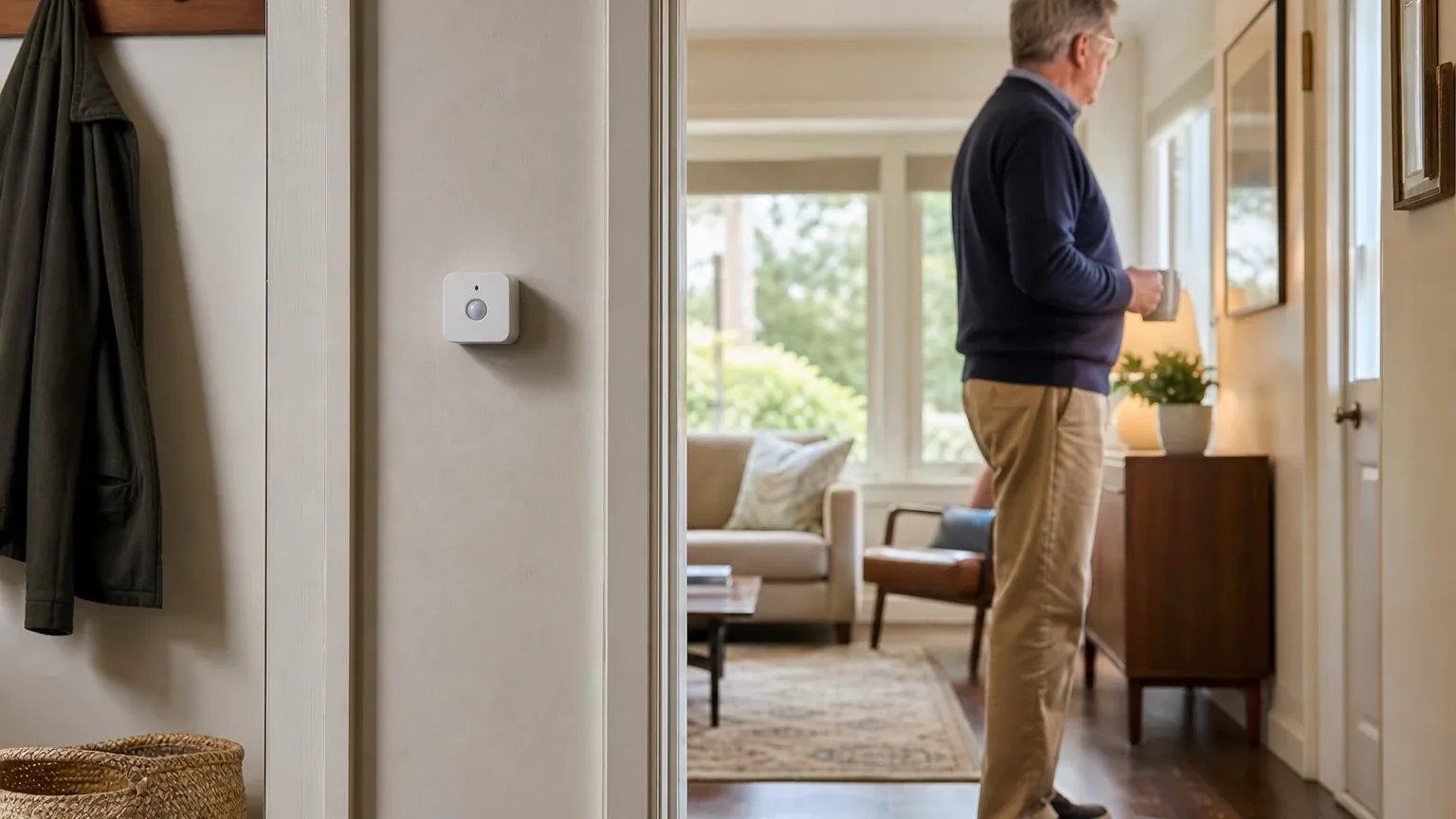
The Philips Hue Motion Sensor (Indoor) is a mixed fit for Door, Window & Motion Safety Alerts in Senior Homes. Two of the five platforms that produced fit research named it during the ranking stage — 40% of included platform responses — at an average and best listed rank of 8. It is a capable, wireless indoor PIR motion sensor for hallways, rooms, stairways, and garage interiors, and its strongest case is in a home that already runs Philips Hue lighting and a Hue Bridge, where it adds app-based motion notifications plus automatic lighting with no sensor subscription fee. The main limitation is structural: it is not a door or window contact sensor, requires a Hue Bridge, and no reviewed source documents professional monitoring or emergency dispatch compatibility. [16]
Research Snapshot
| Field | Detail |
|---|---|
| Platform mentions in ranking stage | 2 of 5 included platform responses (deepseek, perplexity) |
| Share of included platform responses | 40% |
| Average listed rank | 8.0 |
| Best listed rank | 8 |
| Relevant product/model/plan | Philips Hue Motion Sensor (Indoor), product number 046677570972; related Philips Hue Secure Contact Sensor sold separately |
| Overall use-case fit | Mixed — supplemental indoor motion awareness, not a complete door/window or monitored safety solution |
| Research date | 2026-11-10 |
Why Philips Hue Motion Sensor (Indoor) Qualified for This Study
Questions This Section Answers
- Why did only two of the five researched AI platforms name Philips Hue Motion Sensor (Indoor) for senior-home door, window, and motion safety alerts?
- Does Philips Hue Motion Sensor (Indoor) rank low among motion sensors for senior homes because it performs poorly, or because it is a lighting accessory?
Philips Hue Motion Sensor (Indoor) qualified because two platforms — deepseek and perplexity — named it during ranking discovery, both at position 8, giving it a 40% share of included platform responses and an average listed rank of 8.0. It cleared the study's two-mention minimum but landed near the bottom of the ranking stage, and its final rank was 9. [13]
The low placement reflects category mismatch more than measured failure. All five platforms evaluated fit for this use case, but only two named the entity in ranking, and the three that did not name it in ranking still assessed it in their fit research. Deepseek and kimi rated it a weak fit; openai, perplexity, and google rated it mixed. No platform rated it a strong fit for senior-home door, window, and motion safety alerts. [13]
The reason is consistent across responses: the device is designed primarily around smart-light automation, not security monitoring. Deepseek described it as "fundamentally a lighting accessory, not a security sensor," and kimi concluded it "excels at smart lighting automation but lacks the purpose-built security alerting" the use case requires. [13]
The Product, Model, Plan, or Service Most Relevant to Door, Window & Motion Safety Alerts
Questions This Section Answers
- Which Philips Hue product should a caregiver buy for door and window opening alerts versus hallway motion alerts in a senior home?
- Is the Philips Hue Motion Sensor (Indoor) alone enough to cover doors and windows in a senior's home?
The relevant product is the Philips Hue Motion Sensor (Indoor), product number 046677570972, a battery-powered indoor PIR motion sensor. It detects movement; it does not detect whether a door or window is open. Direct entry coverage requires a separate Philips Hue Secure Contact Sensor or another compatible contact-sensor system. [16]
Philips Hue sells the Secure Contact Sensor as the door and window product, listed at $39.99 on one checked U.S. page, with a second checked listing at $69.99 that may reflect a different pack size, color, or variant. Philips Hue also sells bundles that pair the motion sensor with contact sensors — including a starter kit with three Secure contact sensors, one motion sensor, two bulbs, and a Bridge, and a bundle combining a wired video doorbell, indoor motion sensor, and contact sensors — which indicates the motion sensor is commonly deployed as part of a multi-device setup rather than alone. [17]
For this use case, the practical configuration is therefore two products, not one: motion sensors for hallways, rooms, stairways, and garage interiors, plus Secure Contact Sensors on each door and window the caregiver wants monitored. [16]
What the AI Platforms Agreed About
Questions This Section Answers
- Do all five AI platforms agree that Philips Hue Motion Sensor (Indoor) is not a complete door and window safety solution for senior homes?
- What do the AI platforms unanimously agree the Philips Hue Motion Sensor (Indoor) requires to deliver app alerts?
Agreement was unanimous on four points. First, every platform that addressed door and window coverage concluded the motion sensor does not detect door or window opening and that entry coverage requires a separate contact sensor. [16]
Second, all five platforms stated or accepted that a Hue Bridge-controlled setup and the Hue app are required for the documented motion-alert workflow. [16]
Third, no platform documented professional monitoring, central-station dispatch, or emergency-response compatibility for this sensor. Openai found consumer smart-home integrations — Alexa, Google Home, Apple Home, IFTTT, SmartThings, and Matter through the Hue Bridge — but no professional alarm monitoring. [16]
Fourth, no platform located an independently measured false-alert rate or detection-accuracy benchmark. Openai characterized user-review evidence as anecdotal; deepseek and perplexity both reported no independent data found. [22]
Where the AI Platforms Disagreed or Were Uncertain
Questions This Section Answers
- Why do the AI platforms disagree on the Philips Hue Motion Sensor (Indoor) detection range and battery type for senior-home placement?
- Is the Philips Hue Motion Sensor (Indoor) a weak or mixed fit for senior-home safety alerts depending on which AI platform a caregiver asks?
Fit ratings split. Deepseek and kimi rated the sensor a weak fit; openai, perplexity, and google rated it mixed. The split tracks how much weight each platform gave to lighting automation as a safety benefit — google emphasized automatic pathway lighting that "helps prevent trips and falls for seniors navigating hallways and bathrooms at night," while deepseek and kimi treated lighting automation as outside the safety-alert use case. [13]
Range specifications conflict across sources. B&H lists up to 39 feet indoors; Crutchfield lists 5 meters (about 16 feet) and a 100-degree angle; deepseek's support-page citation lists 16 feet and 120 degrees; kimi lists approximately 5 meters with a 100-degree field of view; google lists approximately 16 feet with a 100-degree viewing angle. Philips Hue's current U.S. product page does not state one definitive range figure. [9]
Battery specifications also conflict. Openai and perplexity describe two AAA batteries; deepseek describes a CR123A battery; kimi describes two AAA batteries with a claimed life up to three years; google and openai cite a two-year figure. Philips Hue's product page states a minimum battery lifetime of two years, while retailer and review materials describe several years. Actual life is usage-dependent. [16]
Contact-sensor pricing is unresolved. Perplexity found two Hue Secure contact sensor prices, $39.99 and $69.99, on checked pages and flagged the discrepancy as possibly different pack sizes, colors, or listing variants. Kimi reported approximately $40 with variation by retailer. [17]
Bridge pricing was not established from a reviewed Philips Hue product page. Deepseek cited approximately $59.99 for a Hue Bridge v2; google cited approximately $59.99–$69.99; kimi cited approximately $50–$60. These are platform-reported figures, not confirmed from the reviewed official product page. [13]
One further uncertainty: the reviewed sources do not establish whether every app-alert workflow remains available without a particular Hue Bridge generation, internet configuration, or third-party integration. [16]
Use-Case-Specific Features and Capabilities
Questions This Section Answers
- How well does Philips Hue Motion Sensor (Indoor) cover hallways, rooms, and garages compared with dedicated security motion detectors for a senior's home?
- Can Philips Hue Motion Sensor (Indoor) send a caregiver a security alert that is separate from a lighting scene notification?
Coverage is room-level, not security-grade. The sensor is an indoor PIR device intended for rooms, hallways, staircases, garages, and similar indoor areas. Reported detection range runs from roughly 16 feet to 39 feet depending on source, with a 100- to 120-degree field of view, so practical coverage depends heavily on placement. Large rooms and garages may require multiple sensors. [16]
Door and window coverage is absent from the motion sensor itself. The Secure Contact Sensor attaches via adhesive or screws to monitor doors, windows, and cabinets, triggering app notifications or light actions when opened or closed. [17]
App alerts exist but are lighting-oriented. Philips Hue describes unexpected-motion notifications through the Hue app when the system is configured for security use, and motion-based phone notifications and automations. Deepseek argued alerts are typically tied to lighting actions with no dedicated security alert category and no separate notification profiles for caregivers versus seniors — a characterization deepseek reported but did not support with a Philips Hue citation. [14]
Installation is wireless and battery-powered, with wall-mounting or freestanding placement and no electrical wiring. Perplexity found the checked sources did not provide detailed installation time or mounting-method claims beyond the Hue ecosystem requirement. [16]
Battery maintenance is supported by app reporting. Philips Hue states the app monitors sensor battery status and notifies users when replacement is needed. [11]
False-alert performance is unverified. No authoritative, independently measured false-alert rate or accuracy figure was found. User and review evidence is anecdotal. Deepseek noted that PIR technology can be triggered by pets, temperature changes, and HVAC drafts, and advised verifying sensitivity adjustment and pet immunity before purchase. [22]
Professional monitoring compatibility is not documented. The reviewed product information does not document professional alarm monitoring or emergency dispatch compatibility. [16]
Environmental limits restrict placement. The reviewed model is rated for indoor use, with an operating temperature range of 0°C to 40°C and IP20 protection. It should not be treated as an outdoor garage-approach or exterior-entry sensor unless the installation area remains within the stated indoor conditions. Kimi noted this range is narrower than Ring's 0°C to 49°C or ADT's 0°C to 55°C. [16]
Pricing, Fees, Contracts, and Ongoing Costs
Questions This Section Answers
- What is the total first-year cost of a Philips Hue Motion Sensor (Indoor) setup for senior-home motion alerts once the required Hue Bridge is included?
- Does Philips Hue Motion Sensor (Indoor) require a subscription or long-term contract for motion alerts in a senior's home?
The sensor itself is a one-time hardware purchase with no identified sensor subscription fee. The reviewed Philips Hue U.S. product page lists the Indoor Motion Sensor at $48.99. Perplexity's checked pages show the same $48.99 figure. Deepseek reported a typical retail range of roughly $39.99–$44.99, and kimi reported approximately $40–$50 — platform-reported ranges that differ from the reviewed product page. [16]
A Hue Bridge is required, so buyers without one face an additional hardware cost. Current Bridge pricing was not established from the reviewed product page; platform-reported figures range from approximately $50 to $69.99. Deepseek estimated total entry cost at roughly $100 or more once the Bridge is included. [16]
Door and window coverage adds cost. The Secure Contact Sensor is listed at $39.99 on one checked U.S. page, with a conflicting $69.99 listing that may reflect a different variant. A home with several doors and windows needs one contact sensor per opening. [17]
Ongoing costs are limited to batteries. The sensor uses two AAA batteries per openai and perplexity, or a CR123A per deepseek; replacement cost is modest but the battery type should be confirmed for the exact hardware revision. [16]
Contract terms are minimal. Philips Hue lists a two-year warranty. The reviewed product page lists 30-day returns and free shipping over $49.99, with eligibility and conditions to confirm at purchase. No long-term contract was identified for the sensor, and no professional-monitoring fee or emergency-dispatch service was identified for this product. [16]
Kimi noted a Hue Secure subscription exists for camera and video features at approximately $3.33 per month when billed annually, but that subscription covers video, not sensor alerts. [12]
Best Suited For
Questions This Section Answers
- Is Philips Hue Motion Sensor (Indoor) worth buying for a caregiver whose senior already uses Philips Hue lights and a Hue Bridge?
- Which senior-home situations make Philips Hue Motion Sensor (Indoor) a reasonable supplemental motion-alert device?
It is best suited to caregivers who already own Philips Hue lights and a Hue Bridge and want app-based motion notifications plus automatic lighting. In that household, the marginal cost is the sensor alone and the setup fits an ecosystem already in place. [16]
It also suits indoor hallway, room, stairway, garage, or entrance-area motion detection where the goal is supplemental awareness rather than a complete security system. Google highlighted automatic pathway lighting as a fall-prevention aid for nighttime navigation, and kimi noted motion-activated lighting can reduce fall risk in dark hallways for seniors already using Hue lights. [16]
It fits low-maintenance, battery-powered deployments where app battery-status reporting reduces missed maintenance, and buyers who want no sensor subscription fee. [11]
Finally, it fits buyers who will pair it with Secure Contact Sensors for door and window openings inside the home, treating the motion sensor as one component of a broader Hue setup. [17]
Probably Not Best Suited For
Questions This Section Answers
- Why is Philips Hue Motion Sensor (Indoor) a poor choice for a senior home that needs direct door and window opening alerts?
- Is Philips Hue Motion Sensor (Indoor) unsuitable for a caregiver who needs professional monitoring or emergency dispatch?
It is not suited to homes needing direct door and window opening alerts from a single device, because the motion sensor cannot detect door or window state. [16]
It is not suited to buyers seeking professional monitoring, emergency dispatch, security-system certifications, or a complete alarm platform. No reviewed source documents those capabilities for this product. [16]
It is not suited to buyers needing independently verified false-alert rates or guaranteed motion-detection performance, because no such data was found. [22]
It is not suited to homes without a Hue Bridge, where the added hardware cost and setup complexity undercut the value case. [13]
It is not suited to exterior or exposed-garage placement outside the stated indoor conditions, given the IP20 rating and 0°C to 40°C operating range. [16]
It is not suited to caregivers needing dedicated medical panic buttons, urgent fall detection, or specialized caregiver wellness reporting such as daily movement timelines or inactivity alerts. [21]
When Another Option May Be Better
Questions This Section Answers
- When is a Ring or ADT contact sensor a better choice than Philips Hue Motion Sensor (Indoor) for door and window alerts in a senior home?
- When does a monitored security platform beat Philips Hue Motion Sensor (Indoor) for a senior living alone?
Choose a system with dedicated contact sensors when door and window opening alerts are central to the use case. Ring's Window & Door Sensor provides real-time alerts when a door or window opens, requires Amazon Sidewalk or an Alarm base station, and lists battery life up to three years; Ring's Alarm Window and Door Contact Sensor (2nd Gen) requires a Ring Alarm base kit and offers optional professional monitoring. ADT's Blu Door/Window Sensor costs $18.00, requires a base kit and a $14.99-per-month monitoring plan, and offers instant mobile alerts and tamper notification. [3]
Choose a professionally monitored alarm platform when caregivers require dispatch, cellular backup, battery supervision, or formal alarm workflows. Ring Alarm Pro with professional monitoring runs about $20 per month per deepseek; ADT monitoring plans start at $44.99 per month for professionally installed systems and $14.99 per month for Self Setup per kimi. [2]
Choose a security platform with independently tested detection performance when false alerts and detection reliability are critical. Ring's Motion Detector lists a 30-foot range, 90-degree field of view, and up to two years of battery life, and is designed for security alerts. [2]
Choose a combined contact-plus-motion sensor with optional monitoring when the buyer wants one device type for both. The ecobee SmartSensor for doors and windows costs $59.99, includes contact and occupancy sensing, a 120-degree field of view, and a 16-foot range, and requires an ecobee thermostat or camera plus a $5–$10-per-month subscription. [10]
Choose a unified senior-care system when unusual activity patterns, caregiver escalation, check-ins, or emergency response are needed beyond simple motion notifications. [16]
Questions to Verify Before Buying
Questions This Section Answers
- What should a caregiver confirm about Hue Bridge compatibility before buying Philips Hue Motion Sensor (Indoor) for a senior's home?
- What should a buyer confirm about alert delivery and backup before relying on Philips Hue Motion Sensor (Indoor) for senior safety?
Confirm the buyer's exact Hue Bridge model is compatible with the current Indoor Motion Sensor and the desired app-alert workflow. [16]
Confirm the effective detection range and angle in the specific hallway, room, garage, or entrance location, given the conflicting published figures. [9]
Confirm alerts can be configured for the caregiver's phones, schedules, quiet hours, and away/home states. [16]
Confirm whether a separate Hue Secure Contact Sensor is needed for every door and window, and confirm the exact contact-sensor price and package contents given the $39.99 versus $69.99 listing conflict. [16]
Confirm whether the setup can generate alerts if the Hue Bridge, home internet, or household power is unavailable. Kimi noted remote notifications will not function if the Bridge or internet fails, and no cellular backup option exists. [16]
Confirm whether any professional monitoring, cellular backup, emergency escalation, or dispatch service is available through the intended integration. [16]
Confirm the exact model revision and firmware being sold, the battery type for that revision, and any known compatibility limitations. [16]
Confirm how the system will distinguish normal household movement, pets, visitors, and caregiver activity from unusual activity. [16]
Final AI Consensus Verdict
The consensus is mixed fit, with a weak lean. Three of five platforms rated Philips Hue Motion Sensor (Indoor) a mixed fit and two rated it weak; none rated it strong. It is a practical supplemental indoor motion-alert device for rooms and passageways, particularly in an existing Hue ecosystem, and its lighting automation may add real nighttime-navigation value for seniors. It should not be selected as the sole solution for door and window coverage, professional monitoring, emergency response, or validated senior-home security. [16]
For the broader field, see the Door, Window & Motion Safety Alerts consensus index, which compares this sensor against the other ranked options.
How This Review Was Produced
This review was produced from fit-research responses supplied by five AI platforms — openai, deepseek, perplexity, kimi, and google — each researching the same use case: Door, Window & Motion Safety Alerts for senior homes in the United States, targeting caregivers and seniors monitoring entrances, hallways, garages, and rooms. The study date is 2026-11-10, taken from the run research date; platform-reported dates are provenance metadata and do not independently prove freshness.
Ranking statistics reflect only platforms that named the entity during ranking discovery: two of five, both at rank 8. All five platforms evaluated fit, but platform mentions count only ranking-stage naming. Fit ratings were assigned by each platform independently and are reported as given.
Citations are platform-reported evidence, not independently verified facts. Company-owned citations materially outnumber independent citations in the supplied material, so company claims are not described here as independently verified. The supplied URLs were collected from platform responses and were not independently validated at the writing stage. Where a platform supplied no citation for a factual claim, the claim is labeled platform-reported or unverified.
Methodology Limitations
Several limits constrain this review. No controlled independent false-alert or accuracy study was found for the Indoor Motion Sensor, so detection reliability for senior-home safety monitoring cannot be established from the supplied evidence. [22]
Published range specifications conflict across sources — 39 feet, 5 meters, 16 feet, 100 degrees, and 120 degrees all appear — and Philips Hue's current U.S. product page does not state one definitive range figure. Buyers should not treat any single figure as authoritative. [9]
Battery specifications conflict on both cell type and rated life, and the reviewed sources do not establish whether every app-alert workflow remains available without a particular Hue Bridge generation, internet configuration, or third-party integration. [16]
Bridge pricing was not established from a reviewed official product page; the figures cited are platform-reported. Contact-sensor pricing shows a $39.99 versus $69.99 conflict that may reflect pack size, color, or listing variant. [13]
The supplied official website is the India Philips Hue domain, while pricing and product terms were evaluated using U.S. Philips Hue product pages because the target geography is the United States. The India terms-of-use page retrieved for this study contains website registration and indemnification language, not sensor pricing or warranty terms, and does not corroborate the U.S. product-page figures. [23]
Finally, AI-platform agreement does not prove product quality. The consensus reported here reflects what five platforms concluded from their own searches, not independent testing.
Sources
Company-Owned Sources
- Alarm Window and Door Contact Sensor (2nd Gen) | Ring: https://ring.com/products/alarm-window-door-contact-sensor-v2
- Motion Detector (Newest Model) | Ring: https://ring.com/products/motion-detector
- Window & Door Sensor | Ring: https://ring.com/products/window-door-sensor
- ADT Home Security Terms & Conditions - ADT Security Services: https://www.adt.com/about-adt/legal/ecommerce-terms-and-conditions
- ADT Door/Window Sensor: https://www.adt.com/blu/shop/door-window-sensor
- SmartSensor for doors and windows | ecobee: https://www.ecobee.com/en-us/sensors/smart-door-window-sensor/
- What can you do with a Philips Hue motion sensor?: https://www.philips-hue.com/en-ca/products/smart-light-accessories/what-can-you-do-with-philips-hue-motion-sensor
- Philips Hue Official Product Pages - Motion Sensor and Hue Secure: https://www.philips-hue.com/en-in
- Philips Hue Motion Sensor (Indoor) support page: https://www.philips-hue.com/en-in/p/hue-motion-sensor/8719514388664
- What can you do with a motion sensor?: https://www.philips-hue.com/en-us/explore-hue/faq/controls/what-can-you-do-with-a-motion-sensor
- Doorbell + Motion Sensor + 2 Contact Sensor Black - Philips Hue: https://www.philips-hue.com/en-us/p/hue-bundle-wired-video-doorbell-motion-contact-sensor-black/330201
- Hue Motion Sensor to trigger your Smart Lights with Movement: https://www.philips-hue.com/en-us/p/hue-motion-sensor/046677570972
- Secure contact sensor: https://www.philips-hue.com/en-us/p/hue-secure-contact-sensor/046677580919
- Hue Starter kit: 3 Contact Sensors + 1 Motion Sensor + 2 E26: https://www.philips-hue.com/en-us/p/hue-secure-starter-kit-with-contact-sensors/046677582197
- Hue Motion Sensor to trigger your Smart Lights with Movement | Philips Hue: https://www.philips-hue.com/en-us/products/all-products/product-page.hue_motion-sensor_indoor
- Philips Hue Secure integrates smart lighting, sensors, and cameras: https://www.signify.com/global/our-company/news/press-releases/2023/20230831-philips-hue-secure-integrates-smart-lighting-sensors-and-cameras
- Official pricing and terms source: https://www.philips-hue.com/en-in/support/legal/terms-conditions
Independent Sources
- Philips Hue Motion Sensor Review: Smart Sensor Worth Buying?: https://smartlightingfinds.com/philips-hue-motion-sensor-review/
- Philips Hue Motion Sensor White - Best Buy customer reviews: https://www.bestbuy.com/site/reviews/philips-hue-motion-sensor-white/5540102
- Philips Hue Indoor Motion Sensor (White: https://www.bhphotovideo.com/c/product/1645696-REG/philips_570977_hue_indoor_motion_sensor.html
- Philips Hue Indoor Motion Sensor: https://www.crutchfield.com/p_945570977/Philips-Hue-Indoor-Motion-Sensor.html
- Philips Hue Secure Camera Turns Smart Lighting Into DIY Home Security: https://www.slashgear.com/1381395/philips-hue-secure-camera-smart-lighting-diy-home-security/
- This tiny sensor will turn your Philips Hue lights into a home security system: https://www.techradar.com/home/smart-home/philips-hue-motion-sensor-review
Verify This Research
Review the study details behind this page or download the public machine-readable verification record.
- Study date
- November 10, 2026
- Platforms analyzed
- 5
- Source records
- 23
- Ranking mentions
- 2 of 5
- Platform share
- 40%
- Final consensus rank
- #9
Research trail and source mix
Configured platforms
openai, anthropic, deepseek, grok, perplexity, kimi, google
Source mix
6 independent · 17 company-owned
Evidence support
16 direct · 7 partial
Important limitation
Use the run research_date as the study date. Platform-reported dates are provenance metadata and do not independently prove freshness.
Source snapshot SHA-256 08e62db9f0b4a08e6f25fe2ef8c9395a77929b42bfef74b7cce785b237966451