
Answer Capsule
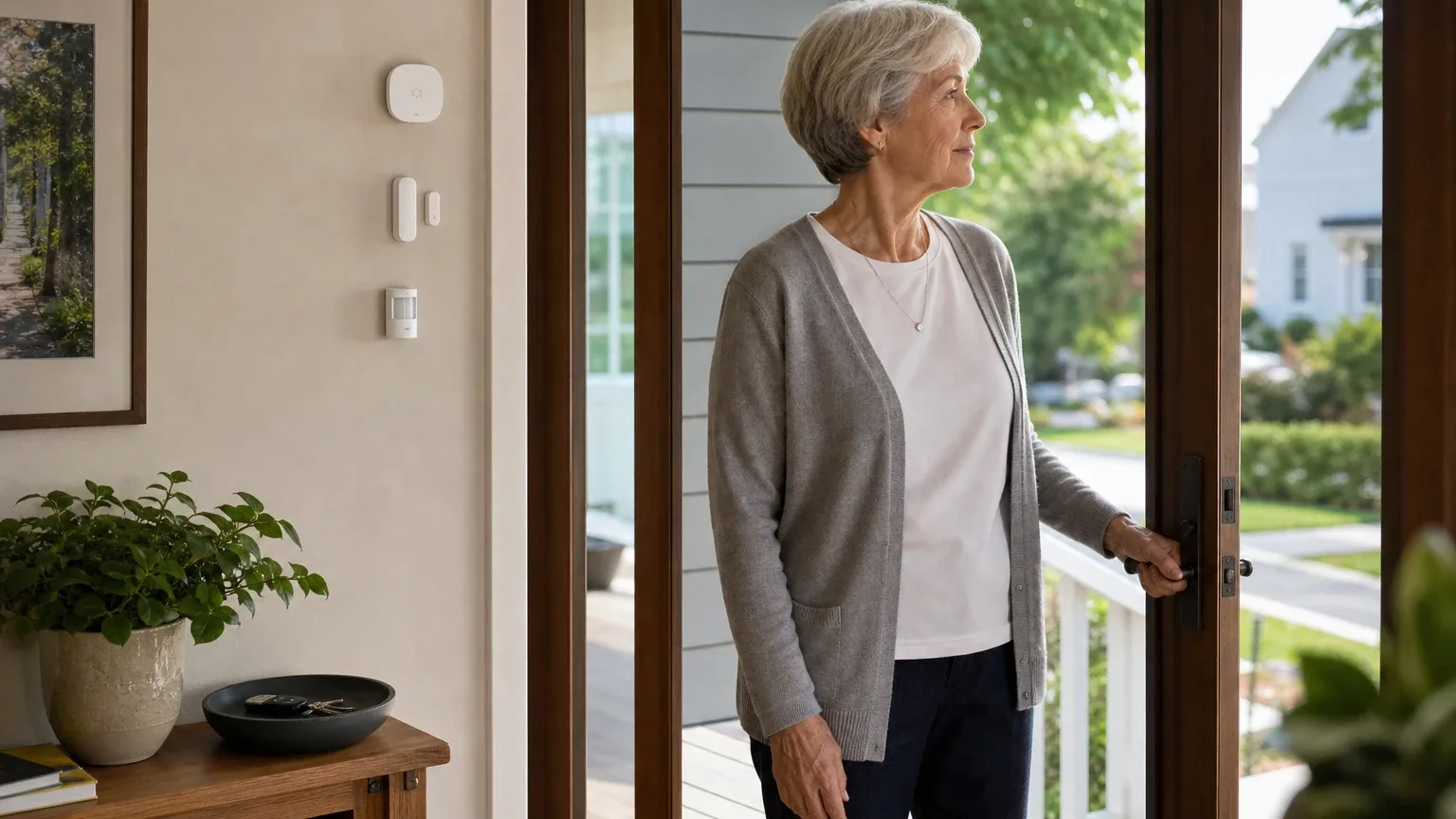
Aqara is a mixed fit for Door, Window & Motion Safety Alerts in Senior Homes. Four of the five platforms that evaluated fit named Aqara during the ranking stage (80% share), and all four ranked it third or better except OpenAI, which placed it fifth. The strongest reason to consider it is low-cost, subscription-free entry and motion sensing that works with Matter, Apple Home, Alexa, Google Home, SmartThings, and Home Assistant, with local automations and no verified recurring monitoring fee. The main limitation is that Aqara is a DIY smart-home ecosystem, not a turnkey senior-safety or professionally monitored alarm service: no verified 24/7 monitoring, no cellular backup, and no published UL burglary listing [24].
Research Snapshot
| Field | Detail |
|---|---|
| Platform mentions in ranking stage | 4 of 5 platforms (deepseek, google, openai, perplexity) |
| Share of included platform responses | 80% |
| Average listed rank | 3.5 |
| Best listed rank | 3 |
| Relevant product/model/plan | Aqara Door and Window Sensor P2; Motion Sensor P1 and Motion and Light Sensor P2; Presence Sensor FP2; compatible Aqara hub, Matter controller, or Thread Border Router |
| Overall use-case fit | Mixed (four platforms rated mixed; Google rated good) |
| Research date | 2026-11-10 |
What Changed Since September 2026
Aqara moved down from No. 2 to No. 3, and platform mentions decreased from 5 to 4. The November 2026 review keeps Aqara's buyer-facing recommendation essentially intact: it remains a do-it-yourself, subscription-free sensor pick for self-monitored door, window, and motion alerts, and the recommended setup is unchanged. The description now leans on the Door and Window Sensor P2 alongside the Motion Sensor P1 and P2 and the Presence Sensor FP2, with clearer emphasis on the missing professional monitoring, cellular backup, and UL listing. The Motion and Light Sensor P2 is newly reported at $33.99, while the earlier Hub M3 figure of $159.99 is no longer repeated. Motion guidance now includes a configurable 1–200 second timeout. Differences between the two editions reflect what each article reports; they do not by themselves prove that the product, service, or price changed.
The September 2026 review preserves the earlier article for reference.
Why Aqara Qualified for This Study
Questions This Section Answers
- Why did Aqara make the ranking for door, window, and motion safety alerts in senior homes when it is not a monitored alarm company?
- Is Aqara a strong enough pick for senior-home entry and motion alerts to justify comparing it with Ring or Ecolink?
Aqara qualified because it sells the exact hardware categories this use case requires — contact sensors for doors and windows and PIR or radar sensors for hallways, garages, and rooms — at low one-time prices with no verified monitoring contract. Four of the five platforms that evaluated fit named it in the ranking stage, at ranks of 3 (deepseek), 3 (google), 5 (openai), and 3 (perplexity), for an average listed rank of 3.5. It did not appear in the fifth platform's ranking output.
The qualification is about hardware fit, not safety certification. Aqara's Door and Window Sensor P2 detects open/closed status using a Hall sensor, runs on a CR123A battery over Thread/BLE, mounts with adhesive, and requires a compatible Matter controller plus Thread Border Router [2]. The Motion Sensor P1 offers roughly 170° detection up to 2 meters and 150° up to 7 meters, adjustable sensitivity, a configurable 1–200 second timeout, and a claimed battery life of up to five years [3]. The Presence Sensor FP2 adds millimeter-wave radar presence detection for rooms up to 40 square meters with up to 30 zones [18].
That combination — cheap contact sensing, long-claimed-battery motion sensing, and room-level presence — is why platforms placed Aqara in a senior-home sensor ranking despite its lack of monitoring. For the broader field, see the Door, Window & Motion Safety Alerts consensus index.
The Product, Model, Plan, or Service Most Relevant to Door, Window & Motion Safety Alerts
Questions This Section Answers
- Which Aqara sensor should a caregiver buy for door and window alerts versus hallway motion in a senior's home?
- Does the Aqara Door and Window Sensor P2 work without an Aqara hub, or does it need a separate Matter controller and Thread Border Router?
The most relevant Aqara configuration for this use case is the Door and Window Sensor P2 for openings, paired with either the Motion Sensor P1 (Zigbee) or Motion and Light Sensor P2 (Thread/Matter) for hallways and rooms, plus the Presence Sensor FP2 where room-level presence matters. There is no single Aqara bundle marketed for senior safety; components are sold separately [11].
The P2 is the entry-sensor anchor. It reports open/close events, supports smartphone alerts and local automations, and installs with adhesive [2]. Critically, it is Matter-over-Thread: it needs a compatible Matter controller and Thread Border Router, and Aqara's own product page states that Aqara Home support and some additional functions depend on Hub M3 or later [2]. That is a different compatibility path from Aqara's older Zigbee sensors, which require an Aqara hub [10].
For motion, the two options are not interchangeable. The Motion Sensor P1 is Zigbee and requires an Aqara hub, with a claimed five-year battery life [3]. The Motion and Light Sensor P2 is Thread/Matter, uses two CR2450 batteries, covers up to 170° and 7 meters, and was listed at $33.99 in the U.S. store [12]. Platforms disagreed on which motion model belongs in the recommendation — OpenAI's product string named both P1 and P2, and DeepSeek flagged that these are different products with different protocols and battery specifications.
The FP2 is the optional upgrade for unusual-activity patterns. It uses 60 GHz mmWave radar, detects static presence and subtle movement across up to 30 zones, and supports ceiling-mounted fall-detection alerts [17]. It requires continuous USB power rather than batteries [18].
What the AI Platforms Agreed About
Questions This Section Answers
- Do the AI platforms agree that Aqara is a good fit for senior-home door, window, and motion alerts?
- What do the platforms agree Aqara cannot do for a senior household?
All five platforms converged on the same core judgment: Aqara is a capable, inexpensive DIY sensor ecosystem and a weak standalone senior-safety system. Four rated it "mixed" and Google rated it "good," but the reasoning underneath is nearly identical.
Unanimous points across the five responses:
- No verified professional monitoring. Aqara materials describe smartphone notifications and smart-home automations, not a bundled 24/7 monitoring or emergency-dispatch service [2]. An independent PCWorld review states Aqara does not offer professional monitoring [24]. DeepSeek and Kimi both concluded the P2 cannot connect to professional alarm monitoring services [4].
- Hub or controller dependence. Every platform noted that setup requires an Aqara hub, a Matter controller, or a Thread Border Router, and that this is more complex than a turnkey alarm [2].
- Low hardware cost with no verified recurring fee. Verified U.S. direct-store prices were $29.99 for the Door and Window Sensor P2 and $33.99 for the Motion and Light Sensor P2 [11]. Perplexity listed the Motion Sensor P1 at $22.99 and the Presence Sensor FP2 at $82.99 [13].
- No independent false-alert or missed-event data. No platform verified a standardized false-alert rate, notification latency, or senior-care outcome for Aqara sensors (openai, deepseek, kimi, perplexity all list this as a limitation).
Agreement here reflects shared source material — largely Aqara's own product pages plus one independent comparison review — not independent verification of product quality.
Where the AI Platforms Disagreed or Were Uncertain
Questions This Section Answers
- Is the Aqara Presence Sensor FP2's fall detection reliable enough to rely on for a senior living alone?
- Which Aqara motion sensor is actually being recommended — P1 or P2 — and does the difference matter for a caregiver?
The platforms disagreed on fit rating, on which motion sensor is the right pick, and on how much weight to give the FP2's fall detection.
Fit rating. Google rated Aqara "good," citing mmWave micro-movement tracking and fall-detection alerts without subscriptions [17]. The other four rated it "mixed," with DeepSeek and Kimi emphasizing the absence of monitoring, UL listing, and cellular backup [4]. The gap is largely about how much value to assign to FP2 presence features versus the missing safety infrastructure.
Fall detection. Google described FP2 fall detection as a caregiver alert feature while noting Aqara says it is not a certified medical device and may miss slow tumbles or trigger false alarms [17]. OpenAI cited Aqara's own manual, which warns fall detection is for reference only, may miss slow or gradual falls, and can produce false alerts from rapidly falling or shaking objects [19]. Both point the same direction: auxiliary, not a safety guarantee.
Motion model confusion. DeepSeek's product string named "Motion Sensor P2," OpenAI named both P1 and P2, and Perplexity named P1. DeepSeek explicitly flagged that P1 and P2 are different products with different protocols and battery specifications. Buyers should confirm the exact model before comparing prices.
Battery life. OpenAI cited a claimed five-year life for the P1 [3]; DeepSeek stated two years for the P2 and the older Zigbee sensor, calling it shorter than Z-Wave alternatives [4]. These are manufacturer estimates for different products, not a contradiction, but they are routinely conflated.
Pricing spread. Google listed the FP2 at roughly $57.99–$82.99 with an MSRP of $129–$139 [17]; Perplexity listed $82.99 [14]. FP2 pricing was not verified from OpenAI's reviewed sources. Third-party listings also vary [16].
Use-Case-Specific Features and Capabilities
Questions This Section Answers
- How much door and window coverage does an Aqara P2 sensor give a caregiver, and what mounting gap does it require?
- Can Aqara motion sensors detect a senior who is sitting still or has fallen, or do they only catch walking movement?
Aqara covers the mechanical side of this use case well — reliable open/close reporting, adjustable motion sensitivity, and radar-based presence — but its PIR motion sensors are built for active movement, not stillness.
Door and window coverage. The P2 reports open/closed status for doors, windows, drawers, and closets via a Hall sensor, with adhesive installation and a CR123A battery [2]. DeepSeek noted it requires close mounting (gap of about 1/2 inch) and is rated for indoor use only [4]. The older Zigbee Door and Window Sensor uses the same form factor with a Zigbee radio and is marketed with more than two years of battery life under normal use [10].
Motion detection. The P1 provides approximately 170° detection up to 2 meters and 150° up to 7 meters, with adjustable sensitivity and a 1–200 second configurable timeout [3]. The Motion and Light Sensor P2 covers up to 170° and 7 meters over Thread/Matter [12]. DeepSeek cautioned that PIR sensors detect active motion such as walking across the field of view and may miss stationary people or slow movements common in senior homes, and that pets or HVAC drafts can cause false positives [4].
Presence and unusual activity. The FP2 uses millimeter-wave radar to detect static presence and subtle movement, monitors rooms up to 40 square meters, divides them into up to 30 zones, and detects up to five people [18]. It supports presence/absence, entry, exit, approach, and departure functions plus some fall detection, but requires continuous USB power [18].
Alerts and local operation. Aqara documents smartphone alerts for P2 door/window events and local automations for compatible setups; FP2 local automations can continue without internet in specified Aqara or Apple Home configurations [2]. Actual remote-alert behavior depends on the hub, controller, app, network, and ecosystem (openai).
Professional monitoring compatibility. None verified. Aqara materials describe notifications and automations, not dispatch [2].
Installation ease. P2 and standard contact sensors use adhesive mounting; motion sensors include adjustable stands [2]. Kimi noted 3M VHB tape allows clean removal for renters [4]. Pairing, automation setup, and alert testing remain the caregiver's job.
Pricing, Fees, Contracts, and Ongoing Costs
Questions This Section Answers
- What does an Aqara door and motion sensor setup cost for a senior's home once the required hub or Thread Border Router is included?
- Does Aqara charge a monthly monitoring fee or require a contract for door, window, and motion alerts?
Aqara's hardware is inexpensive and no recurring Aqara monitoring fee was verified, but the true installed cost depends on which hub or controller the household already owns.
| Item | Reported price | Source |
|---|---|---|
| Door and Window Sensor P2 | $29.99 | [11] |
| Door and Window Sensor (Zigbee) | $17.99 | [10] |
| Motion Sensor P1 | $22.99 | [13] |
| Motion and Light Sensor P2 | $33.99 | [12] |
| Presence Sensor FP2 | $82.99 (other listings $57.99–$82.99; MSRP cited $129–$139) | [14] |
| Aqara Hub M2 | about $80 (varies) | (deepseek) |
| Thread Border Router (e.g., HomePod mini) | $99 | (deepseek) |
Contracts and fees. No contract or cancellation terms for the sensor hardware were identified in the reviewed sources (openai). DeepSeek reported no contract required for self-monitored use, a 30-day money-back guarantee per Aqara LLC, and no early termination fees because no subscription is involved (deepseek). Aqara's U.S. store lists a 30-day money-back guarantee and warranty/support language on the P2 product page, but eligibility and exclusions should be confirmed before purchase [11].
Subscription uncertainty. Some FP2 newly added features may require an Aqara subscription according to Aqara's product information; the specific features and current U.S. pricing were not verified (openai). Treat any subscription claim as unconfirmed.
Total cost example. DeepSeek and Kimi both cited an independent comparison estimating roughly $239 over three years for five P2 sensors plus a HomePod mini as Thread Border Router, with no monitoring fees [4]. That figure excludes professional monitoring because none is available.
Unverified cost items. Taxes, shipping, retailer pricing, hub bundle discounts, batteries over time, replacement adhesive, and FP2 pricing from OpenAI's sources were not verified (openai, perplexity). Shipping may be calculated at checkout when ordering direct (deepseek).
Best Suited For
Questions This Section Answers
- Is Aqara a good choice for a tech-comfortable caregiver who wants door and hallway alerts without a monthly fee?
- Which households already have the hub or Thread Border Router that makes an Aqara sensor setup practical?
Aqara fits tech-comfortable caregivers who want low-cost entry and motion alerts, local automations, and no recurring fee — especially households already inside a compatible ecosystem.
Best-suited scenarios named across platforms:
- Tech-comfortable caregivers who can install sensors, pair devices, configure automations, and test alert delivery (openai, deepseek).
- Homes needing door/window, hallway, garage, or room alerts without a recurring monitoring plan (openai).
- Apple Home, Alexa, Google Home, SmartThings, Home Assistant, or Matter users who already own a compatible controller or Thread Border Router [4].
- Privacy-sensitive buyers who prefer sensor-based alerts and local automations over cameras; with Home Assistant, events can stay on the LAN, and Apple Home with Advanced Data Protection encrypts sync end-to-end [4].
- Renters who need removable, adhesive-mounted sensors without drilling [4].
- Room-level presence monitoring where FP2 zone positioning adds value beyond basic PIR [17].
For adjacent categories in this research program, browse the home safety directory.
Probably Not Best Suited For
Questions This Section Answers
- Is Aqara a poor choice for a senior who needs professional monitoring and emergency dispatch?
- Does Aqara work for a household that requires a UL-listed alarm component for an insurance discount?
Aqara is a poor fit when the household needs dispatch, certification, or simplicity — the three things a DIY sensor ecosystem does not provide.
Not best suited for:
- Seniors or caregivers needing turnkey installation and simple caregiver workflows (openai, deepseek).
- Buyers requiring 24/7 professional monitoring, cellular backup, emergency dispatch, or a conventional security-company service [4].
- Homes where missed alerts, hub failure, internet failure, or complex automation configuration would create unacceptable risk (openai).
- Buyers who need UL 634 or UL 1023 listing for insurance discounts or code compliance; Aqara does not publish such a listing for the P2 [4].
- Buyers expecting P2 sensors to work with every older Aqara Zigbee hub — compatibility differs (openai).
- Households with frequent power or internet outages where cellular failover is required [4].
- Anyone treating FP2 fall detection as a guaranteed safety system [19].
When Another Option May Be Better
Questions This Section Answers
- When is Ring Alarm a better choice than Aqara for a senior's door and motion alerts?
- When does a dedicated medical alert system beat an Aqara sensor setup for a senior living alone?
Another option is better whenever the buyer's priority is response rather than sensing. Platforms named specific alternatives and the conditions that favor them.
- Professional monitoring with cellular backup: Ring Alarm Pro with Ring Protect Pro ($20/mo) is cited as UL 1023 listed with a 24-hour internal battery and cellular failover [7]. Ring contact sensors pair only with a Ring Alarm base station [5].
- UL-listed intrusion components for insurance: Ecolink Z-Wave Plus (UL 634 listed) with a compatible panel is cited as superior for that requirement [4].
- Simpler pairing and a unified app for less technical seniors: Ring Alarm, self-monitored or monitored, is described as having smoother pairing [4].
- Longest battery life and panel-agnostic interoperability: Ecolink Z-Wave Plus with a compatible hub [4].
- Senior-specific fall detection or wellness monitoring: dedicated medical alert systems with motion or passive monitoring [4].
- Direct 24/7 emergency response dispatch: services such as Medical Guardian or Bay Alarm Medical, per Google's alternative guidance (google).
These alternatives are platform-reported comparisons, not independently tested by this review.
Questions to Verify Before Buying
Questions This Section Answers
- What should a caregiver confirm about hub compatibility before buying Aqara P2 sensors for a senior's doors and windows?
- How can a buyer test whether Aqara alerts actually reach a caregiver before relying on the system?
Confirm five things before purchase: the exact model, the required hub or controller, the alert path, the outage behavior, and the return terms.
- Which exact model and hub/controller? P1 with an Aqara Zigbee hub, or P2 with a Matter controller and Thread Border Router (openai, deepseek).
- Will alerts reach caregivers when the internet is down, and is cellular backup available? No cellular backup was verified (openai, deepseek).
- Can you create separate alerts per opening and room, with schedules and quiet hours? (openai)
- Can multiple caregivers receive, acknowledge, or escalate alerts? No built-in caregiver dashboard was verified (openai, deepseek).
- What happens after a hub, router, power supply, or battery fails? A hub power loss produces a silent outage (deepseek).
- Are all required P2 features available in your chosen ecosystem? Aqara Home support depends on Hub M3 or later [2].
- What are current U.S. prices for the hub, FP2, batteries, adhesive, and any subscription features? (openai, perplexity)
- Does the mounting surface and door/window gap meet placement requirements? Gap of about 1/2 inch [4].
- Can you test notification delivery and false alerts for several days before relying on the system? (openai)
- If monitoring is required, does a named third-party provider officially support this exact setup? None was verified (openai, deepseek).
Final AI Consensus Verdict
Aqara is a mixed fit for Door, Window & Motion Safety Alerts in senior homes: strong on cost, flexibility, and privacy-friendly local sensing, weak on monitoring, certification, and turnkey simplicity. Four of five platforms rated it mixed; Google rated it good. All five agreed it lacks verified professional monitoring and requires hub or controller setup.
The consensus recommendation is conditional. Buy Aqara if a tech-comfortable caregiver will install, configure, and test the system, the household already has a compatible Matter controller or Thread Border Router, and self-monitoring with push notifications is acceptable. Do not buy it as a substitute for a monitored alarm or medical alert service, or where UL listing, cellular backup, or dispatch is required. Confirm the exact model, hub path, current prices, and FP2 subscription terms before purchase.
How This Review Was Produced
This review synthesizes five platform fit-research responses (deepseek, google, kimi, openai, perplexity) gathered on 2026-11-10 for the use case "Door, Window & Motion Safety Alerts" targeting caregivers and seniors monitoring entrances, hallways, garages, and rooms. Each platform independently assessed Aqara's fit, cited sources, listed limitations, and named alternatives. Ranking statistics reflect how many platforms named Aqara during ranking discovery and at what rank. Company-owned citations materially outnumber independent citations in the supplied evidence; company claims are presented as manufacturer statements, not independently verified facts. No personal testing, customer experience, or independent lab verification was performed.
Methodology Limitations
- Platform mentions count only platforms that named Aqara during ranking discovery; all five evaluated fit, but one did not name it in ranking output.
- Citations are platform-reported evidence, not independently verified facts. Supplied URLs were collected from platform responses and were not independently validated.
- No independent standardized data was verified for false-alert rates, missed door/window events, notification latency, or senior-care outcomes.
- Battery-life figures are manufacturer estimates and vary with event frequency, network configuration, and environment.
- Pricing conflicts exist across channels and platforms; FP2 pricing and subscription requirements were not fully verified.
- Aqara's older P2 product page contains forward-looking or outdated language about Aqara Home support and Hub M3 availability.
- Platform-reported research dates are provenance metadata and do not independently prove freshness.
- AI-platform agreement reflects shared source material and does not prove product quality.
Sources
Company-Owned Sources
- Door and Window Sensor P2 Specs: https://aqara.com/en/product/door-and-window-sensor-p2/specs/
- Door and Window Sensor P2: https://aqara.com/us/product/door-and-window-sensor-p2/
- Motion Sensor P1: https://aqara.com/us/product/motion-sensor-p1/
- Alarm Window and Door Contact Sensor (for 2nd Generation) | Ring: https://ring.com/products/alarm-window-door-contact-sensor-v2
- Motion Detector (Newest Model) | Ring: https://ring.com/products/motion-detector
- Window & Door Sensor | Ring: https://ring.com/products/window-door-sensor
- Smart Home Sensor – Aqara LLC: https://us.aqara.com/collections/smart-home-sensor
- Aqara Door and Window Sensor: https://us.aqara.com/products/door-and-window-sensor
- Aqara Door and Window Sensor P2 product page: https://us.aqara.com/products/door-and-window-sensor-p2
- Motion and Light Sensor P2: https://us.aqara.com/products/motion-and-light-sensor-p2
- Aqara Motion Sensor P1 | 5-Year Battery Life & Smart: https://us.aqara.com/products/motion-sensor-p1
- Presence Sensor FP2: https://us.aqara.com/products/presence-sensor-fp2
- ADT Blu Door/Window Sensor: https://www.adt.com/blu/shop/door-window-sensor
- Aqara Official Website: https://www.aqara.com/en/
- Presence Sensor FP2: https://www.aqara.com/us/product/presence-sensor-fp2/
- Presence Sensor FP2 User Manual: https://www.aqara.com/wp-content/uploads/2023/06/Presence-Sensor-FP2_User-Manual.pdf
- ecobee SmartSensor for doors and windows: https://www.ecobee.com/en-us/sensors/smart-door-window-sensor/
- Official pricing and terms source: https://www.aqara.com/en/terms/
Independent Sources
- Aqara P2 vs Ring Alarm vs Ecolink Z-Wave Plus: which smart door/window sensor for 2026: https://homeguardreview.com/aqara-p2-vs-ring-alarm-vs-ecolink-zwave-smart-entry-sensor-2026/
- Aqara presence sensors: models and release dates: https://smarthomecanon.com/lines/aqara-presence
- Aqara Door and Window Sensor P2 Overview: https://www.matteralpha.com/
- Aqara Launches the Motion Sensor P1: https://www.notebookcheck.net/
- Aqara Camera Protect Kit Y100 review: https://www.pcworld.com/article/2805618/aqara-camera-protect-kit-y100-review.html
Other Sources
- Amazon.com: Aqara: https://www.amazon.com/aqara/s?k=aqara
- Amazon.com : Aqara Zigbee 3.0 Motion Sensor P1 1 Pack, for Alert System Automations | Aqara Hub Required, 5-Year Battery Life 150-170° Detection, Adjustable Timeout 1-200s, Compatible with HomeKit Home Assistant : Electronics: https://www.nytimes.com/wirecutter/out/link/50471/196860/4/226924?merchant=Amazon&dp=eyJyZWYiOiJ3d3cueWFob28uY29tLyJ9
Verify This Research
Review the study details behind this page or download the public machine-readable verification record.
- Study date
- November 10, 2026
- Platforms analyzed
- 5
- Source records
- 25
- Ranking mentions
- 4 of 5
- Platform share
- 80%
- Final consensus rank
- #3
Research trail and source mix
Configured platforms
openai, anthropic, deepseek, grok, perplexity, kimi, google
Source mix
5 independent · 18 company-owned · 2 unclear
Evidence support
20 direct · 5 partial
Important limitation
Use the run research_date as the study date. Platform-reported dates are provenance metadata and do not independently prove freshness.
Source snapshot SHA-256 f0eed79e4315bb772a0a09f555d90378e53fcb73b8523150c39c8725ec833edc
Archived editions
Browse earlier published research snapshots for this article. The latest edition remains at the current URL.