
Answer Capsule
Ring is a good fit for door, window, and motion safety alerts in U.S. Senior Homes when the buyer wants DIY sensors, app-based caregiver notifications, and optional professional monitoring. Five of the seven included platforms named Ring during the ranking stage, and it finished first overall with an average listed rank of 3.8 and a best rank of 1. The strongest reason to consider it is the combination of dedicated contact sensors, indoor motion detectors, long stated battery life, and Ring Protect Pro monitoring at $19.99 per month. The main limitation is that Ring is a general home-security system, not a senior-care or medical-alert platform, and no independent false-alert or motion-accuracy testing was located.
Research Snapshot
| Field | Finding |
|---|---|
| Platform mentions in ranking stage | 5 of 7 included platforms (deepseek, google, kimi, openai, perplexity) |
| Share of included platform responses | 71.4% |
| Average listed rank | 3.8 |
| Best listed rank | 1 |
| Relevant product/model/plan | Ring Alarm or Ring Alarm Pro with Ring Alarm Contact Sensor (2nd Gen), Ring Motion Detector (Newest Model), and Ring Protect Pro |
| Overall use-case fit | Good for standard entry and motion alerts; mixed for senior-specific monitoring |
| Research date | 2026-09-27 |
What Changed Since August 2026
Ring moved up from No. 3 to No. 1, and platform mentions increased from 4 to 5. The September 2026 review keeps Ring as the same practical pick for door, window, and motion alerts, but its buyer-facing description has shifted. The biggest substantive change is pricing evidence: the 8-piece kit is now described as newly reported at $199 to $249.99, while the $379.99 figure for the Alarm Pro kit is no longer repeated. Motion coverage is also presented differently, with current mounting guidance of 7 to 8 feet and a newly reported approximately 10-foot range figure, replacing the previously stated 30-foot rule. The recommended configuration is unchanged, and the core strengths and limitations remain the same. Differences between the two editions reflect what each article reports; they do not by themselves prove that the product, service, or price changed.
The August 2026 review preserves the earlier article for reference.
Why Ring Qualified for This Study
Questions This Section Answers
- Is Ring a good choice for door, window, and motion safety alerts in a senior home?
- How many AI platforms named Ring for senior home entry and motion sensors?
Ring qualified because it was named by five of the seven included platforms during the ranking stage and finished first overall, with an average listed rank of 3.8 and a best rank of 1. Its ranks by platform were 1 (deepseek), 6 (google), 8 (kimi), 2 (openai), and 2 (perplexity). Ring cleared the two-mention minimum comfortably, and every platform that named it also named a concrete Ring Alarm product or plan for this use case, most often the Ring Alarm 8-Piece Kit, the Ring Alarm Contact Sensor (2nd Gen), the Ring Motion Detector (Newest Model), and Ring Protect Pro.
Fit ratings were not unanimous. Four platforms rated Ring a good fit for this use case (openai, anthropic, google, perplexity) and three rated it mixed (deepseek, grok, kimi). That split is the central finding of this review: Ring is broadly recommended for standard entry and motion alerting, but the platforms that rated it mixed did so because of senior-specific gaps, subscription dependence, and unverified performance data rather than because of any reported hardware failure.
The Product, Model, Plan, or Service Most Relevant to Door, Window & Motion Safety Alerts
Questions This Section Answers
- Which Ring kit and sensors should a caregiver buy for door, window, and motion alerts?
- Does the Ring Alarm Contact Sensor (2nd Gen) work without a Ring Alarm base station?
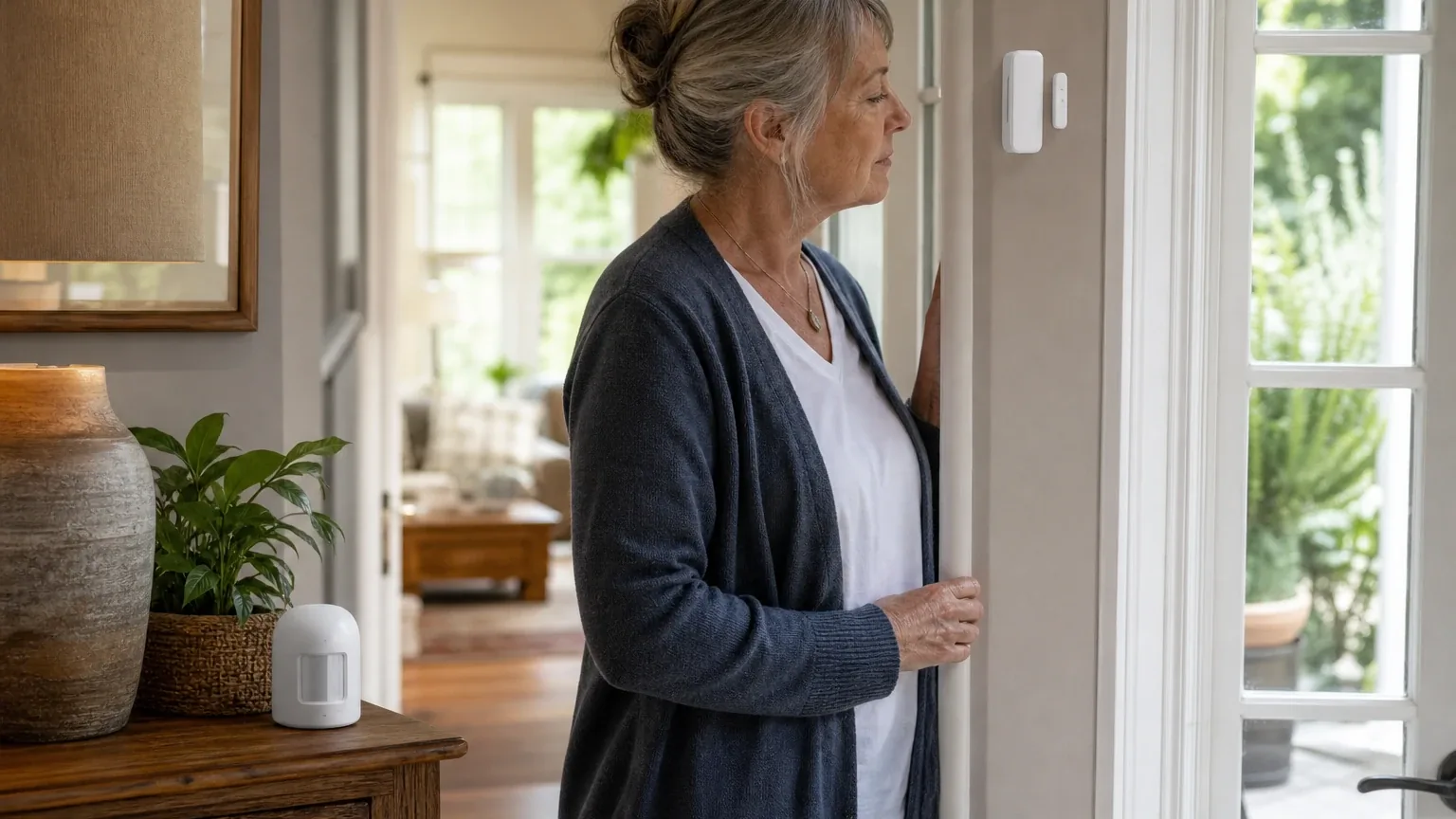
The relevant setup is a Ring Alarm or Ring Alarm Pro base system paired with Ring Alarm Contact Sensor (2nd Gen) units for doors and windows and Ring Motion Detector (Newest Model) units for indoor rooms, hallways, and garage access points, with Ring Protect Pro added if professional monitoring is wanted. The Ring Alarm 8-Piece Kit bundles one Base Station, one Keypad, four Contact Sensors, one Motion Detector, and one Range Extender [1].
The Contact Sensor (2nd Gen) is designed for doors and windows and sends real-time notifications when an opening is detected, but it requires a Ring Alarm or Ring Alarm Pro system and is sold separately from that base (openai:c_contact_sensor). It uses Z-Wave and is specified at up to 250 feet from the Base Station in open air and line of sight, with stated battery life of up to three years on two CR2032 coin cells [3]. The maximum gap between magnet and sensor is 2.54 cm, or about one inch, which limits adaptation to deep-set or warped frames [1].
The Motion Detector (Newest Model) is specified at a 30-foot detection range with a 90-degree field of view, a pet-friendly setting for pets under 50 pounds, up to two-year battery life on two AA batteries, and Amazon Sidewalk or Z-Wave connectivity [5]. Ring's setup guidance calls for mounting at roughly 7 to 8 feet and recommends multiple detectors for larger rooms [6]. One platform reported a conflicting motion range figure of approximately 10 feet from independent review sources, which is a material discrepancy addressed below (grok:2, grok:5).
What the AI Platforms Agreed About
Questions This Section Answers
- What do most AI platforms agree Ring does well for senior home safety alerts?
- Is Ring's professional monitoring available in all 50 U.S. states?
The platforms agreed on four points. First, Ring provides dedicated door and window contact sensors plus indoor motion detectors in one app-managed ecosystem, and this combination directly matches the door, window, and motion alert use case [7]. Second, installation is DIY-oriented and app-guided, with adhesive mounting for contact sensors and no required professional installer [11]. Third, stated battery life is long, at up to three years for contact sensors and up to two years for the newest motion detector, which reduces maintenance burden for caregivers [13]. Fourth, optional 24/7 professional monitoring is available through Ring Protect Pro, and Ring states monitoring is available in all 50 U.S. states but not U.S. territories, with local alarm permits possibly required (openai:c_monitoring, openai:c_plans).
The platforms also agreed that Ring is not a medical alert or fall-detection system. DeepSeek stated directly that Ring is not a medical alert system and that professional monitoring does not include medical emergency response [14]. Kimi reported that Ring sensors lack senior-specific features such as wandering alerts, fall detection, medication cabinet monitoring, or audible local alerts to bedside caregivers without internet (kimi:waytronic-senior). OpenAI found that the reviewed Ring Alarm sensor materials support opening and motion alerts but do not establish dedicated fall detection, wandering detection, caregiver escalation workflows, or validated unusual-activity-pattern detection (openai:c_contact_sensor, openai:c_motion).
Where the AI Platforms Disagreed or Were Uncertain
Questions This Section Answers
- Is Ring's motion detector range 30 feet or 10 feet for senior home coverage?
- Does Ring publish a verified false-alert rate for its motion detectors?
The clearest conflict is motion detector range. Ring's own product documentation and four platforms describe a 30-foot range with a 90-degree field of view for the newest model [15]. Grok, citing independent review sources, reported a motion sensor range of approximately 10 feet (grok:2, grok:5). These figures cannot both describe the same device, and the discrepancy is unresolved in the supplied evidence. Buyers planning coverage for a long hallway or large room should treat the effective range as unverified and confirm the specification for the exact model at purchase.
False-alert performance is the second unresolved area. Ring states the newest Motion Detector has a pet-friendly setting for pets under 50 pounds and three adjustable sensitivity levels, and that multiple pets moving together can combine heat signatures and cause false alarms [17]. Independent reviews and user reports note occasional false triggers from pets, drafts, or placement issues [19]. No platform located an independently verified false-alert rate or motion-accuracy benchmark, and OpenAI, Perplexity, and Kimi each explicitly flagged this as missing [20].
Pricing shows a smaller conflict. The ranking-stage wording referred to monitoring commonly starting around $20 per month, and the current Ring plan page lists Ring Protect Pro at $19.99 per month or $199.99 per year (openai:c_plans, official:C2). Grok reported the 8-Piece Kit at $199 to $249.99 (grok:10), Google reported a 5-Piece Kit at $189 and a 10-Piece Kit at $299.99 [21], and Anthropic reported the 8-Piece Kit at approximately $250 from a retail source [22]. Perplexity listed the Contact Sensor (2nd Gen) at $14.99 and the Motion Detector at $29.99 [20], while DeepSeek estimated roughly $20 and $30 respectively [23]. Hardware pricing is therefore inconsistent across platforms and should be confirmed at checkout.
Two further uncertainties matter for senior buyers. Kimi reported that Ring sensors are locked to the Ring ecosystem and will not join Home Assistant, Apple Home, or a Matter fabric (kimi:sensor-latch-matrix). And no platform confirmed whether the current base station includes cellular backup for internet outages in every configuration, or how alerts route to multiple caregivers (kimi:sensor-latch-matrix, openai:c_terms).
Use-Case-Specific Features and Capabilities
Questions This Section Answers
- How much door and window coverage does the Ring Alarm 8-Piece Kit provide?
- Can Ring motion detectors ignore pets under 50 pounds to reduce false alerts?
Door and window coverage is the strongest capability. The Contact Sensor (2nd Gen) mounts to door and window frames and triggers real-time notifications when an opening is detected, and the 8-Piece Kit includes four of them [24]. Ring's installation guide states that contact sensors alert when doors or windows open and that setup is app-guided, with self-monitoring sending phone and email alerts and professional monitoring sending signals to the monitoring center [26].
Motion coverage is adequate for rooms and hallway segments but not for large open spaces. The newest Motion Detector is specified at 30 feet and 90 degrees, and Ring recommends multiple detectors for larger rooms [27]. The detector generates a first alert on motion and becomes ready to alert again after three to four minutes of no activity [28]. Sensitivity is adjustable across low, medium, and high levels, and Home Mode can keep contact sensors active while disabling interior motion sensors to avoid pet-triggered alerts [29].
Battery life is a genuine maintenance advantage. Contact sensors use two CR2032 coin cells with up to three years of stated life, and the newest Motion Detector uses two AA batteries with up to two years [31]. Cold temperatures can drain batteries faster, which matters for unheated garages [32].
Connectivity and environment are the main constraints. All Ring Alarm sensors are indoor-only and rated for 32°F to 120°F, and Ring guidance says garages, warehouses, or sheds should not be used for sensor placement [32]. The newest Motion Detector can use Amazon Sidewalk or Z-Wave with a Ring Alarm Base Station, and Sidewalk coverage may vary by location (openai:c_motion). Ring states that full functionality requires reliable always-on internet, a supported mobile device, and other required system elements (openai:c_terms).
Professional monitoring is available but is not medical monitoring. Ring Protect Pro includes 24/7 professional monitoring for compatible Ring security systems, and Ring states monitoring is available in all 50 U.S. states excluding territories, with local permits possibly required (openai:c_plans, openai:c_monitoring). DeepSeek stated that monitoring does not include medical emergency response [34].
Pricing, Fees, Contracts, and Ongoing Costs
Questions This Section Answers
- How much does Ring Protect Pro cost per month, and does it auto-renew?
- What extra fees should a senior household expect beyond Ring hardware and monitoring?
The clearest verified recurring cost is Ring Protect Pro at $19.99 per month or $199.99 per year plus applicable tax, which includes 24/7 professional monitoring for the covered location (openai:c_plans, official:C2). Ring's plan page also lists Ring Solo at $4.99 per month or $49.99 per year, Ring Multi at $9.99 per month or $99.99 per year, and Virtual Security Guard at $99 per month (official:C2). Perplexity reported the same $19.99 monthly figure for alarm professional monitoring and the same $99 monthly Virtual Security Guard option [35].
Hardware pricing is inconsistent across platforms and should be confirmed before purchase. Reported figures include $199 to $249.99 for the 8-Piece Kit (grok:10), $189 for a 5-Piece Kit and $299.99 for a 10-Piece Kit [36], approximately $250 for the 8-Piece Kit from a retail source [37], $14.99 for the Contact Sensor (2nd Gen) and $29.99 for the Motion Detector [38], and roughly $20 and $30 respectively [40]. OpenAI explicitly stated that exact current prices for the Ring Alarm 8-Piece Kit, 5-Piece Kit, Alarm Pro bundles, Contact Sensor (2nd Gen), and Motion Detector were not verified from the sources checked (openai:c_plans).
Additional costs to expect include applicable taxes, potential local alarm-permit fees where required, replacement batteries, optional cameras, and a separately sold base station for the contact sensors (openai:c_plans, openai:c_monitoring, openai:c_contact_sensor). Professional installation starts at $129.99 per device and is billed separately [35].
Contract terms are comparatively flexible. Ring states that monthly and annual subscriptions auto-renew until canceled, that subscriptions can be canceled, and that fees already paid generally are not refundable, with access continuing through the paid period (openai:c_terms, official:C3). Google reported no long-term contracts, with plans operating month-to-month or annually and cancellable without penalty [41]. Perplexity stated that contract length and cancellation terms were not clearly verified in the sources it checked [35]. Self-monitoring with app alerts does not require a paid plan, though professional monitoring does [42].
Best Suited For
Questions This Section Answers
- Who gets the most value from Ring for door, window, and motion alerts in a senior home?
- Is Ring worth it for a caregiver who wants app alerts without a long-term contract?
Ring best suits caregivers who want app-based door, window, and motion alerts with optional professional monitoring and no long-term contract. The platforms converged on four buyer profiles: homes needing contact sensors on multiple doors and windows [43]; hallways, garages, or rooms where approximately 30-foot motion coverage is adequate (openai:c_motion); caregivers who want remote Ring-app alerts and optional 24/7 professional monitoring [44]; and buyers comfortable with DIY installation, batteries, Wi-Fi or hub connectivity, and subscription-based features [45].
It also fits households with pets under 50 pounds, since the newest Motion Detector supports a pet-friendly setting and adjustable sensitivity [46]. Buyers already inside the Amazon or Alexa ecosystem get additional value from voice control and ecosystem integration [47]. Cost-conscious buyers who want low per-sensor hardware pricing and a comparatively inexpensive monitoring tier are also a reasonable match [48].
Probably Not Best Suited For
Questions This Section Answers
- Who should not choose Ring for senior home safety monitoring?
- Is Ring suitable for a senior who needs fall detection or a medical alert pendant?
Ring is not the right choice when the primary need is medical or senior-specific monitoring. Buyers requiring fall detection, wandering detection, emergency call handling, or caregiver escalation should choose a senior-care or medical-alert platform instead [50]. Buyers who need published independent false-alert or motion-accuracy testing should look elsewhere, because no platform located that evidence for Ring [51].
Other poor fits include homes with difficult sensor placement, significant radio obstructions, or unreliable internet and cellular service [52]; buyers who need guaranteed operation during every power, internet, or network outage (openai:c_terms, kimi:sensor-latch-matrix); seniors with cognitive impairment who may not respond reliably to app notifications [50]; and buyers who want a fully local system without recurring fees or a professionally installed, fully managed package [53]. Homes needing outdoor or detached-structure coverage are also a poor fit, since Ring Alarm sensors are indoor-only and require the same building as the base station [52].
When Another Option May Be Better
Questions This Section Answers
- What is a better alternative to Ring for a senior who needs fall detection or a medical alert pendant?
- Which alternative beats Ring for local alerts that work without internet or a subscription?
Several platform-named alternatives address Ring's specific gaps. For fall detection, wandering detection, or a wearable medical alert pendant, the platforms pointed to dedicated medical alert providers such as Medical Guardian or Bay Alarm Medical [55]. For local audible caregiver alerts that work without internet or a subscription, Kimi named the Waytronic H12 wandering alert door or motion alarm kit (kimi:waytronic-senior). For open-ecosystem interoperability with Apple Home or Matter, Kimi named the Aqara Door and Window Sensor P2, and for extreme range to outbuildings or garages, YoLink LoRa sensors (kimi:sensor-latch-matrix).
For professionally installed and monitored systems with aging-in-place features, the platforms named Vivint, ADT, and Frontpoint [57]. For wider motion range or fewer false alerts, Grok named SimpliSafe (grok:3, grok:5). For a no-subscription, no-Wi-Fi kit, Kimi again named the Waytronic H12 (kimi:waytronic-senior). These are platform-reported suggestions, not independently tested comparisons, and buyers should verify current pricing and capabilities directly.
Questions to Verify Before Buying
Questions This Section Answers
- What should a buyer confirm with Ring before purchasing an Alarm kit for a senior home?
- How should a caregiver verify Ring's outage behavior and alert routing before signing up?
The platforms produced a consistent verification list. Confirm the current delivered price for the selected Ring Alarm or Ring Alarm Pro kit and each additional sensor, since hardware pricing was not reliably verified [58]. Confirm whether the planned door, window, hallway, garage, and room locations remain within practical Z-Wave range after accounting for walls, floors, and metal construction [59]. Confirm whether Amazon Sidewalk coverage is available at the specific U.S. address and whether the installation should rely on Sidewalk or a Ring Alarm Base Station (openai:c_motion).
Also confirm what happens to app alerts, monitoring, cellular backup, and local control during internet, power, Wi-Fi, or broadband outages (openai:c_terms, kimi:sensor-latch-matrix). Confirm whether the exact installation requires an alarm permit and what local fees or false-alarm rules apply (openai:c_monitoring, official:C2). Confirm which features continue if Ring Protect Pro is canceled, including remote control, monitoring, event history, and alerts (openai:c_terms, official:C3). Confirm how alerts route to caregivers and whether multiple caregivers can receive and acknowledge notifications (openai:c_terms, kimi:sensor-latch-matrix). Confirm expected battery-replacement intervals in the home's temperature and usage conditions [59]. And if the buyer needs activity-pattern detection, wandering detection, or fall response, confirm which exact Ring device or third-party service provides that capability, if any [60].
Final AI Consensus Verdict
Ring is a good, practical choice for standard door, window, and motion safety alerts in U.S. senior homes, especially when easy installation, app notifications, broad sensor deployment, and optional professional monitoring matter. Five of seven included platforms named it during the ranking stage, it finished first overall, and four of seven rated it a good fit for this use case. The strongest evidence supports dedicated contact sensors with up to 250-foot open-air Z-Wave range, indoor motion detectors with pet-friendly settings, long stated battery life, and Ring Protect Pro monitoring at $19.99 per month.
The limitations are equally clear. Ring is not established as a specialized senior-care monitoring system, and no platform located independent false-alert or motion-accuracy testing. Motion detector range is disputed between 30 feet and approximately 10 feet. Hardware pricing is inconsistent across platforms. The system depends on reliable internet and a supported mobile device for full functionality, and its sensors are locked to the Ring ecosystem. Buyers should treat false-alert performance, outage resilience, exact hardware pricing, and activity-pattern capabilities as items requiring verification before purchase.
How This Review Was Produced
This review was produced from platform-reported research collected on 2026-09-27 for the Door, Window & Motion Safety Alerts use case within the broader Door, Window & Motion Safety Alerts study. Seven platforms were included: openai, anthropic, deepseek, google, grok, kimi, and perplexity. Each platform independently evaluated Ring's fit for this use case and supplied citations, fit ratings, pricing notes, limitations, and verification questions. Five of the seven named Ring during the ranking stage, and this review is limited to that subset for ranking statistics.
The report is part of a wider home safety research series. All factual claims are attributed to the platform that supplied them, and company-owned sources are distinguished from independent ones throughout. No product was tested, and no claim in this review should be read as independent verification of Ring's marketing materials.
Methodology Limitations
Several limitations apply. All included platforms evaluated fit, but the platform-mention count covers only the five platforms that named Ring during ranking discovery. Platform-reported research dates differ from the authoritative run date: anthropic and deepseek reported 2026-01-15, while google, grok, kimi, openai, and perplexity reported 2026-09-27. Those provenance dates do not independently prove freshness, and the older dates may not reflect current pricing or product specifications.
Company-owned citations materially outnumber independent citations in the supplied evidence, so Ring's specifications, battery-life figures, range claims, and monitoring availability should be treated as company claims rather than independently verified facts. DeepSeek ran without search enabled, so its claims require explicit verification before being described as current. The supplied URLs were collected from platform responses and were not independently validated. Where platforms conflicted on motion range, hardware pricing, and false-alert performance, this review describes the conflict rather than resolving it. No independent evidence was located for false-alert rate, motion accuracy, caregiver outcomes, or senior-specific unusual-activity detection.
Sources
Company-Owned Sources
- Contact Sensor (2nd Gen: https://co.ring.com/support/products/alarm/contact-sensor-gen-2?page=1
- Professional Monitoring – Ring Alarm Emergency Support: https://partners.ring.com/professional-monitoring
- Ring Alarm Security Kit, 5-Piece Ring product documentation reference (from buyer guidance provided: https://ring.com
- 8-Piece Alarm Security Kit | Home Security System | Ring (Canada: https://ring.com/ca/en/products/security-system-alarm-8
- Shop All | Security Cameras, Alarms, Doorbells: https://ring.com/collections/all-products
- Alarm Systems - Ring Sensors & Alarms: https://ring.com/collections/home-security-systems
- Alarm Systems - Home Security Systems: https://ring.com/home-security-system
- Ring Protect - Subscription Plans for Home Security: https://ring.com/plans
- Ring Products: https://ring.com/products
- Motion Detector (Newest Model: https://ring.com/products/alarm-motion-detector-v2
- Motion Detector (Newest Model) Ring Sensors: https://ring.com/products/motion-detector
- Ring Alarm 8-Piece Kit: https://ring.com/products/ring-alarm-8-piece-kit
- Ring Alarm Contact Sensor (2nd Gen: https://ring.com/products/ring-alarm-contact-sensor-2nd-gen
- Ring Alarm Motion Detector: https://ring.com/products/ring-alarm-motion-detector
- 8-Piece Alarm Security Kit | Home Security System: https://ring.com/products/security-system-alarm-8
- Ring Protect Pro: https://ring.com/protect-plans
- Ring Alarm (2nd Gen) Installation Guide: https://ring.com/support/articles/v2560/Ring-Alarm-2nd-Gen-Installation-Guide
- Technical Specifications for Ring Alarm Devices: https://ring.com/support/articles/x9gba/Technical-Specifications-for-Ring-Alarm-Devices
- Tips for Installing Contact Sensor (2nd Gen: https://ring.com/support/articles/y44jn/Installing-Your-Contact-Sensor-Gen2
- Contact Sensor (2nd Gen: https://ring.com/support/products/alarm/contact-sensor-gen-2
- Terms of Service | Ring: https://ring.com/terms
- Setting up and using Ring Alarm Motion Detector (all generations: https://ring.com/us/en/support/articles/3osk6/Setting-up-and-Using-Your-Ring-Alarm-Motion-Detector
- Ring Alarm Battery Life and Z-Wave Range Specifications: https://support.ring.com/hc/en-gb/articles/360039524072-Ring-Alarm-Device-Battery-Life
- Ring Alarm Contact Sensor (2nd Gen) Specs: https://support.ring.com/hc/en-gb/articles/360040149572-Ring-Alarm-Contact-Sensor-2nd-Gen-Information
- Ring Alarm Contact Sensor Tech Specs and Battery Life: https://support.ring.com/hc/en-us/articles/360039497552-Ring-Alarm-Contact-Sensor-Setup-and-Use
- Adjusting Settings and Testing Your Ring Alarm Motion Detector: https://support.ring.com/hc/en-us/articles/360039498552-Adjusting-Settings-and-Testing-Your-Ring-Alarm-Motion-Detector
- How to Set Up Ring Alarm: https://support.ring.com/hc/en-us/articles/360048853531-Ring-Alarm-Setup
Additional AI research evidence60 records
- AI research evidence record anthropic:c1
- AI research evidence record anthropic:c3
- AI research evidence record google:1.3.4
- AI research evidence record google:1.3.5
- AI research evidence record anthropic:c4
- AI research evidence record anthropic:c5
- AI research evidence record deepseek:c1
- AI research evidence record deepseek:c4
- AI research evidence record perplexity:c1
- AI research evidence record perplexity:c2
- AI research evidence record deepseek:c7
- AI research evidence record perplexity:c4
- AI research evidence record google:1.3.2
- AI research evidence record deepseek:c6
- AI research evidence record anthropic:c4
- AI research evidence record perplexity:c2
- AI research evidence record google:1.1.1
- AI research evidence record google:1.1.3
- AI research evidence record deepseek:c3
- AI research evidence record perplexity:c1
- AI research evidence record google:1.2.5
- AI research evidence record anthropic:c1
- AI research evidence record deepseek:c4
- AI research evidence record anthropic:c1
- AI research evidence record perplexity:c1
- AI research evidence record perplexity:c4
- AI research evidence record anthropic:c5
- AI research evidence record anthropic:c6
- AI research evidence record google:1.1.1
- AI research evidence record google:1.1.2
- AI research evidence record google:1.3.4
- AI research evidence record anthropic:c2
- AI research evidence record google:1.3.2
- AI research evidence record deepseek:c6
- AI research evidence record perplexity:c5
- AI research evidence record google:1.2.5
- AI research evidence record anthropic:c1
- AI research evidence record perplexity:c1
- AI research evidence record perplexity:c2
- AI research evidence record deepseek:c4
- AI research evidence record google:1.2.4
- AI research evidence record deepseek:c5
- AI research evidence record anthropic:c1
- AI research evidence record perplexity:c4
- AI research evidence record deepseek:c7
- AI research evidence record google:1.1.1
- AI research evidence record google:1.3.4
- AI research evidence record perplexity:c1
- AI research evidence record google:1.2.2
- AI research evidence record deepseek:c6
- AI research evidence record perplexity:c1
- AI research evidence record anthropic:c2
- AI research evidence record perplexity:c5
- AI research evidence record anthropic:c5
- AI research evidence record google:1.2.5
- AI research evidence record deepseek:c6
- AI research evidence record anthropic:c7
- AI research evidence record anthropic:c1
- AI research evidence record anthropic:c2
- AI research evidence record deepseek:c6
Independent Sources
- Vivint vs Eve 2026: Installed Alarm, Matter Sensors, Apple Home, Privacy, and Cost: https://alarm-reviews.net/vivint-vs-eve-2026-head-to-head/
- Real pricing in 2026 for Ring subscriptions: https://clickoff.io/is-ring-subscription-worth-it/
- Ring Alarm 8-piece kit (2nd Gen) – home security system with optional 24/7 professional monitoring-Complete Features/Owner's Guide: https://manualspro.net/488980-ring-alarm-8-piece-kit-2nd-gen-home-security-system-with-optional-24-7-professional-monitoring-complete-features-owners-guide
- Best Door and Window Sensors: Protocol Matrix: https://sensorandlatch.com/sensors/best-door-window-sensors
- Wandering Alert Door -or- Motion Alarm Kits (H12: https://waytronicstore.com/product/wandering-alert-door-or-motion-alarm-kits
- Do You Need a Ring Subscription in 2026?: https://www.baba-blog.com/do-you-need-a-ring-subscription/
- Ring Alarm Review: Affordable DIY Security: https://www.cnet.com/home/security/ring-alarm-review/
- Pet-Friendly Alarms Guide: https://www.gvlock.com/blog/pet-friendly-alarms/
- Ring Alarm home security system review: https://www.independent.co.uk/home-improvement/ring-alarm-home-security-system-review-b2697467.html
- Ring Alarm Security System Cost and Pricing: https://www.safehome.org/security-systems/ring/pricing/
- Ring Alarm Review 2026: https://www.security.org/home-security-systems/ring-alarm/review/
- Ring Alarm vs SimpliSafe (2026: https://www.smarthomeexplorer.com/guides/ring-alarm-vs-simplisafe-2026
- Ring Alarm 8-Piece Kit Review: https://www.smarthomeexplorer.com/reviews/smart-security/ring-alarm-8-piece-kit
- Ring Alarm vs SimpliSafe (2026: https://www.trunetto.com/compare/ring-alarm-vs-simplisafe
Additional AI research evidence60 records
- AI research evidence record anthropic:c1
- AI research evidence record anthropic:c3
- AI research evidence record google:1.3.4
- AI research evidence record google:1.3.5
- AI research evidence record anthropic:c4
- AI research evidence record anthropic:c5
- AI research evidence record deepseek:c1
- AI research evidence record deepseek:c4
- AI research evidence record perplexity:c1
- AI research evidence record perplexity:c2
- AI research evidence record deepseek:c7
- AI research evidence record perplexity:c4
- AI research evidence record google:1.3.2
- AI research evidence record deepseek:c6
- AI research evidence record anthropic:c4
- AI research evidence record perplexity:c2
- AI research evidence record google:1.1.1
- AI research evidence record google:1.1.3
- AI research evidence record deepseek:c3
- AI research evidence record perplexity:c1
- AI research evidence record google:1.2.5
- AI research evidence record anthropic:c1
- AI research evidence record deepseek:c4
- AI research evidence record anthropic:c1
- AI research evidence record perplexity:c1
- AI research evidence record perplexity:c4
- AI research evidence record anthropic:c5
- AI research evidence record anthropic:c6
- AI research evidence record google:1.1.1
- AI research evidence record google:1.1.2
- AI research evidence record google:1.3.4
- AI research evidence record anthropic:c2
- AI research evidence record google:1.3.2
- AI research evidence record deepseek:c6
- AI research evidence record perplexity:c5
- AI research evidence record google:1.2.5
- AI research evidence record anthropic:c1
- AI research evidence record perplexity:c1
- AI research evidence record perplexity:c2
- AI research evidence record deepseek:c4
- AI research evidence record google:1.2.4
- AI research evidence record deepseek:c5
- AI research evidence record anthropic:c1
- AI research evidence record perplexity:c4
- AI research evidence record deepseek:c7
- AI research evidence record google:1.1.1
- AI research evidence record google:1.3.4
- AI research evidence record perplexity:c1
- AI research evidence record google:1.2.2
- AI research evidence record deepseek:c6
- AI research evidence record perplexity:c1
- AI research evidence record anthropic:c2
- AI research evidence record perplexity:c5
- AI research evidence record anthropic:c5
- AI research evidence record google:1.2.5
- AI research evidence record deepseek:c6
- AI research evidence record anthropic:c7
- AI research evidence record anthropic:c1
- AI research evidence record anthropic:c2
- AI research evidence record deepseek:c6
Other Sources
- Are motion detectors pet friendly: https://community.ring.com/t/are-motion-detectors-pet-friendly/246416
Additional AI research evidence60 records
- AI research evidence record anthropic:c1
- AI research evidence record anthropic:c3
- AI research evidence record google:1.3.4
- AI research evidence record google:1.3.5
- AI research evidence record anthropic:c4
- AI research evidence record anthropic:c5
- AI research evidence record deepseek:c1
- AI research evidence record deepseek:c4
- AI research evidence record perplexity:c1
- AI research evidence record perplexity:c2
- AI research evidence record deepseek:c7
- AI research evidence record perplexity:c4
- AI research evidence record google:1.3.2
- AI research evidence record deepseek:c6
- AI research evidence record anthropic:c4
- AI research evidence record perplexity:c2
- AI research evidence record google:1.1.1
- AI research evidence record google:1.1.3
- AI research evidence record deepseek:c3
- AI research evidence record perplexity:c1
- AI research evidence record google:1.2.5
- AI research evidence record anthropic:c1
- AI research evidence record deepseek:c4
- AI research evidence record anthropic:c1
- AI research evidence record perplexity:c1
- AI research evidence record perplexity:c4
- AI research evidence record anthropic:c5
- AI research evidence record anthropic:c6
- AI research evidence record google:1.1.1
- AI research evidence record google:1.1.2
- AI research evidence record google:1.3.4
- AI research evidence record anthropic:c2
- AI research evidence record google:1.3.2
- AI research evidence record deepseek:c6
- AI research evidence record perplexity:c5
- AI research evidence record google:1.2.5
- AI research evidence record anthropic:c1
- AI research evidence record perplexity:c1
- AI research evidence record perplexity:c2
- AI research evidence record deepseek:c4
- AI research evidence record google:1.2.4
- AI research evidence record deepseek:c5
- AI research evidence record anthropic:c1
- AI research evidence record perplexity:c4
- AI research evidence record deepseek:c7
- AI research evidence record google:1.1.1
- AI research evidence record google:1.3.4
- AI research evidence record perplexity:c1
- AI research evidence record google:1.2.2
- AI research evidence record deepseek:c6
- AI research evidence record perplexity:c1
- AI research evidence record anthropic:c2
- AI research evidence record perplexity:c5
- AI research evidence record anthropic:c5
- AI research evidence record google:1.2.5
- AI research evidence record deepseek:c6
- AI research evidence record anthropic:c7
- AI research evidence record anthropic:c1
- AI research evidence record anthropic:c2
- AI research evidence record deepseek:c6
Verify This Research
Review the study details behind this page or download the public machine-readable verification record.
- Study date
- September 27, 2026
- Platforms analyzed
- 7
- Source records
- 42
- Ranking mentions
- 5 of 7
- Platform share
- 71%
- Final consensus rank
- #1
Research trail and source mix
Configured platforms
openai, anthropic, deepseek, grok, perplexity, kimi, google
Source mix
14 independent · 27 company-owned · 1 unclear
Evidence support
34 direct · 5 partial
Important limitation
Use the run research_date as the study date. Platform-reported dates are provenance metadata and do not independently prove freshness.
Source snapshot SHA-256 86bf1ecf38501521ac89c10089773954cc951a3f8721eb245ab96679a919ac52
Archived editions
Browse earlier published research snapshots for this article. The latest edition remains at the current URL.