
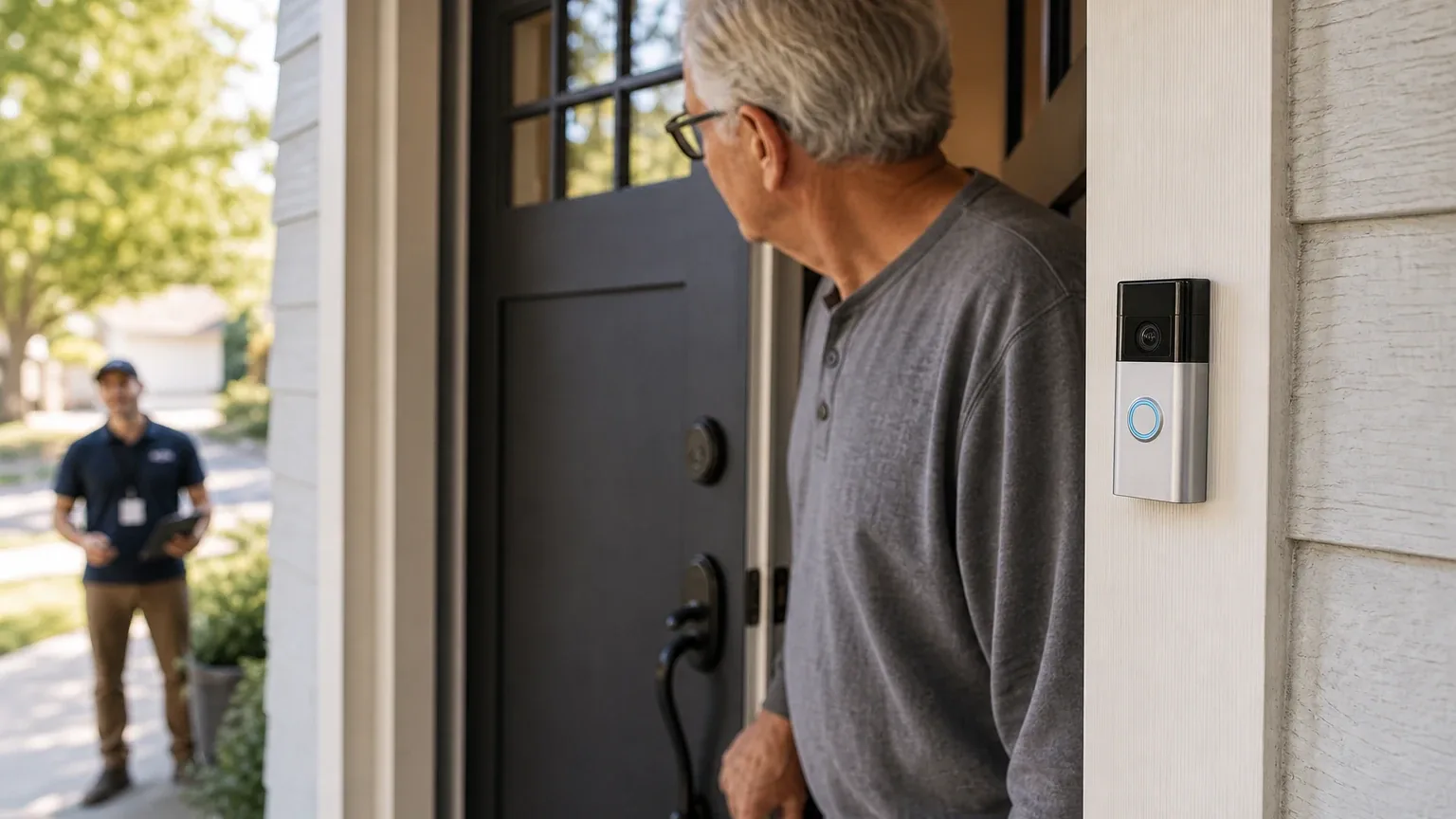
Answer Capsule
The Ring Video Doorbell (2nd Gen) is a mixed fit for older adults who want to see and speak with visitors before opening the door. Five of seven AI platforms named it during the ranking stage, with an average listed rank of 3.4 and a best rank of 2. Its strongest reason for consideration is core visitor screening: 1080p live video, two-way audio with noise cancellation, night vision, and battery-powered installation that avoids electrical work. Its main limitation is the non-removable internal battery that requires taking the entire unit down to recharge, plus subscription dependence for recorded history and smart alerts. The model was discontinued in 2024, creating uncertainty about long-term support and new-stock availability. Platform fit ratings ranged from strong to mixed, with no platform rating it as a poor fit.
Research Snapshot
| Metric | Value |
|---|---|
| Platform mentions in ranking stage | 5 of 7 platforms |
| Share of included platform responses | 71% |
| Average listed rank | 3.4 |
| Best listed rank | 2 |
| Relevant product/model/plan | Ring Video Doorbell (2nd Gen) with Ring Protect Basic/Solo subscription |
| Overall use-case fit | Mixed |
| Research date | 2026-08-13 |
Why Ring Video Doorbell (2nd Gen) Qualified for This Study
The Ring Video Doorbell (2nd Gen) qualified because five of seven AI platforms named it during the ranking stage for best video doorbells for seniors. Platforms that named it include Anthropic, DeepSeek, Google, OpenAI, and Perplexity. Its ranks ranged from 2 to 5, with DeepSeek and Perplexity giving it the best rank of 2. The model was evaluated specifically for Front-Door Visitor Screening, not as a general home security device.
The Product, Model, Plan, or Service Most Relevant to Front-Door Visitor Screening
The relevant product is the Ring Video Doorbell (2nd Gen), released in 2020, paired with a Ring Protect Basic or Ring Solo subscription for recorded history and smart alerts. The subscription name has changed over time: older materials reference Ring Protect Basic, while Ring's current plan page lists Ring Solo for one device [1]. One platform noted that Ring rebranded its plans from Ring Protect to Ring Home in late 2024, then renamed them again in January 2026, with Home Basic becoming Ring Solo [2].
What the AI Platforms Agreed About
Strong agreement: The device provides core visitor screening functions. All seven platforms confirmed the Ring Video Doorbell (2nd Gen) supports 1080p HD live video, two-way audio, night vision, and motion detection [3]. This is the foundation of front-door visitor screening: seeing who is there and speaking with them before opening the door.
Strong agreement: Battery operation simplifies installation but creates a maintenance burden. All platforms noted the device can run on its internal battery without existing doorbell wiring, avoiding electrical work [3]. However, the battery is non-removable, meaning the entire doorbell must be taken down and recharged via Micro-USB [10]. Independent testing reported battery life exceeding 4 years in one test, while user reports show real-world duration varies substantially with motion volume, Wi-Fi quality, settings, temperature, and live-view use [10].
Strong agreement: Recorded history and smart alerts require a subscription. All platforms stated that without a paid plan, the doorbell offers only live view and basic motion alerts [13]. Ring's support documentation confirms video recording, saving, and reviewing events require a subscription [17]. One source noted that canceling a Ring subscription deletes recorded videos immediately [20].
Majority agreement: The model was discontinued and replaced. Independent reporting indicates Ring discontinued the Video Doorbell (2nd Gen) in September 2024, replacing it with the Ring Battery Doorbell with head-to-toe video and 23% longer battery life [11]. The newer model provides a 66% taller view of visitors [22]. This creates uncertainty about new-stock availability, warranty coverage, and long-term software support.
Majority agreement: Two-way audio quality is adequate for close-range conversation. Independent testing found audio quality met Ring's usual high standard with no artifacts, distortion, or break-ups [10]. However, voices became more distant at approximately four feet from the doorbell [23]. Some seniors with hearing impairment report difficulty hearing through the live audio [24].
Where the AI Platforms Disagreed or Were Uncertain
Fit ratings varied from strong to mixed. Grok rated the device a "strong fit," DeepSeek and Google rated it "good," while Anthropic, Kimi, OpenAI, and Perplexity rated it "mixed." No platform rated it a poor fit, but the majority view leans mixed rather than strongly positive.
Subscription pricing conflicts exist across sources. Reported prices for the one-device plan include:
- $4.99/month or $49.99/year [25]
- $5.99/month or $69.99/year after a February 2026 price increase [29]
- $3.99/month or $39.99/year [31]
One source reported Ring Protect prices increased 17-20% effective February 1, 2026, marking the second price increase in three years [29]. Buyers should verify current pricing on Ring's website.
Package detection capability is disputed. One independent test found package detection achieved only a 65% success rate, constrained by the 16:9 aspect ratio limiting floor visibility, concluding "it's not something you could rely on to notify you of deliveries" [32]. Another platform stated the 2nd Gen has no package detection capability at all, noting this feature is limited to newer models [28]. Ring's current Solo plan lists person, package, and vehicle alerts, but Ring does not clearly state that every current smart-alert feature is available for this discontinued model [34].
Battery life claims vary widely. Independent testing reported battery life exceeding 4 years [35], while Ring states "several months" between charges [36]. User reports show 30% battery loss in 5 days in some real-world conditions [37]. Actual duration depends heavily on motion volume, Wi-Fi quality, settings, temperature, and live-view use [38].
Hardware pricing is unclear. The device originally retailed around $99.99, with frequent discounts to $59-$79 during sales [31]. However, since the model was discontinued in 2024, current new-stock pricing is uncertain and depends on remaining inventory and seller [40].
Use-Case-Specific Features and Capabilities
Two-Way Audio Clarity
The device supports two-way audio with noise cancellation [42]. Independent testing found audio quality high when a visitor stood close, but voices became more distant at approximately four feet [44]. Some seniors with hearing impairment report difficulty [45]. The 2nd Gen lacks the Audio+ noise cancellation found on newer Pro models [46].
Motion Alert Speed
The device uses PIR motion sensors with Advanced Motion Detection and customizable motion zones [42]. A Near Zone feature allows motion detection 5-15 feet in front of the home [48]. Independent testing found "super fast rich notifications" and reliable person detection [49]. However, the device lacks radar-based 3D motion detection found on premium models, and alert speed depends on Wi-Fi strength [46].
Package and Person Detection
Person detection requires a subscription [50]. Package detection is disputed: one test found 65% success with severe floor-visibility limitations [52], while another platform states package detection is not available on the 2nd Gen at all [46]. The 16:9 aspect ratio limits vertical field coverage, making it difficult to see packages on the ground [52].
Night Vision
The device features infrared night vision with 1080p resolution [42]. Independent testing found it "outperforms the plus model for infra-red night vision" with superb range exceeding competitors [54]. Recessed-door installations may produce infrared reflections [44].
App Simplicity
The Ring app is described as "very clever and intuitive" in user reviews [56]. It allows customization, Live View, two-way talk, and motion zone configuration. However, reliance on smartphone interfaces may challenge seniors with limited tech comfort [57]. Ring does not offer simplified senior-specific interface modes [58].
Battery Life and Charging
The internal battery is non-removable, requiring the entire doorbell to be taken down for charging via Micro-USB [54]. This is physically inconvenient for seniors with mobility challenges [59]. Battery life varies from several months to over 4 years depending on usage [47].
Installation Requirements
Battery-powered installation requires only mounting screws, avoiding electrical work [47]. The device can also be hardwired to existing doorbell wiring (8-24 VAC) or use a Solar Mount [42]. Hardwiring does not convert it to a removable-battery model [59]. Mounting still requires drilling, which may be difficult for some seniors [61].
Alexa Integration
The device is compatible with Amazon Alexa, allowing voice announcements and viewing on Echo Show devices [62]. This can benefit seniors by providing hands-free viewing on a large screen without finding a phone [43].
Pricing, Fees, Contracts, and Ongoing Costs
Hardware cost: Approximately $99.99 MSRP, frequently discounted to $59-$79 during sales [63]. Current pricing is unclear because the model was discontinued in 2024 [66].
Subscription cost: The one-device Ring Solo/Protect Basic plan is reported at $4.99/month or $49.99/year in most sources [67]. One source reports the price increased to $5.99/month or $69.99/year effective February 1, 2026 [70]. Another source lists $3.99/month or $39.99/year [63]. Verify current pricing.
What the subscription provides: Up to 180 days of event history, person/package/vehicle alerts, and snapshot previews [67]. Without it, only live view and basic motion alerts are available [72].
Contract terms: No contract for device purchase. Subscriptions are month-to-month or annual and can be canceled anytime [63]. Canceling deletes saved recordings immediately [73]. A free 30-day Protect trial starts after device setup [67].
Additional costs: Optional Ring Chime or Chime Pro for indoor alerting ($29.99-$59.99), Solar Mount accessory, compatible chime, installation labor, and sales tax [67].
Best Suited For
- Older adults who primarily need live viewing and two-way conversation before opening the door [74]
- Homes without usable doorbell wiring where battery installation avoids electrical work [76]
- Buyers already using Alexa or other Ring devices who want hands-free viewing on Echo Show [78]
- Budget-conscious buyers obtaining the model at a substantial discount [75]
- Seniors with caregivers who can assist with battery charging and app navigation [80]
Probably Not Best Suited For
- Seniors with limited dexterity who will struggle to unscrew and take down the entire doorbell to recharge it [81]
- Buyers who want reliable package detection (65% success rate with severe floor-view limitations) [83]
- Those who want head-to-toe visitor visibility (66% shorter field of view than newer Ring Battery Doorbell 2K) [84]
- Seniors who refuse ongoing subscription costs for recording and smart alerts [85]
- Users wanting local storage or no cloud dependence [87]
- Seniors with hearing impairment who rely on audio quality [88]
When Another Option May Be Better
- Ring Battery Doorbell 2K (current replacement): Provides 66% taller head-to-toe video, 2K resolution, removable battery, and 23% longer battery life [89]
- Ring Battery Doorbell Pro or Plus: Quick-release removable battery pack and radar-based 3D motion detection [91]
- Ring Wired Doorbell Pro: Avoids battery maintenance entirely with continuous power [92]
- Eufy or Aqara: Subscription-free options with local storage; Aqara G4 uses AA batteries with long life and no subscription [91]
- Eufy dual-camera models: Far superior package security with dedicated package monitoring [91]
Questions to Verify Before Buying
- Is the exact 2020 Video Doorbell (2nd Gen) new, refurbished, or used, and what warranty is included? [93]
- Will Ring Solo/Protect Basic provide person and package alerts for this exact device in your account? [94]
- What features remain available without a subscription? [95]
- How often will the device need to be removed and recharged at your home's motion level and Wi-Fi strength? [96]
- Can the buyer safely reach and remove the doorbell, or is professional installation and maintenance needed? [97]
- Is existing doorbell wiring compatible with the stated 8-24 VAC requirements? [98]
- Will the buyer need a separate indoor chime, Alexa device, or phone notification to hear alerts reliably? [99]
- How long will Ring provide software and security updates for this discontinued model? [93]
- What is the current subscription price, given reported increases in February 2026? [100]
- Is the front door within reliable Wi-Fi range (minimum 2 Mbps upload required)? [101]
Final AI Consensus Verdict
The Ring Video Doorbell (2nd Gen) is a mixed fit for front-door visitor screening for older adults. It delivers the core functions needed—1080p live video, two-way audio, night vision, and battery-powered installation—at an accessible price point. Independent testing confirms strong night vision and reliable person detection with fast notifications.
However, the device's discontinued status, non-removable internal battery, subscription dependence for recording and smart alerts, and limited package visibility create meaningful gaps for the target use case. The majority of platforms (4 of 7) rated it "mixed" rather than "good" or "strong." For seniors who primarily need live viewing and conversation with visitors and have caregiver support for battery maintenance, it remains workable—especially at a discount. For those prioritizing reliable package monitoring, head-to-toe visibility, minimal maintenance, or no subscription, newer Ring models or competing brands offer better alignment with senior safety needs.
For a broader comparison of top-rated options, see the Front-Door Visitor Screening consensus index. You can also explore other home safety solutions.
How This Review Was Produced
This review was produced by analyzing fit-research responses from seven AI platforms: Anthropic, DeepSeek, Google, Grok, Kimi, OpenAI, and Perplexity. Each platform evaluated the Ring Video Doorbell (2nd Gen) against eight criteria: two-way audio clarity, motion alert speed, package/person detection, night vision, app simplicity, battery life, subscription cost, and installation requirements. The research date is 2026-08-13. Platform responses drew on 29 unique sources, including Ring's official documentation and independent reviews from Tom's Guide, Consumer Reports, LinkdHome, SafeWise, and others.
Methodology Limitations
- Platform-reported dates differ: DeepSeek's research date is 2026-04-14, while the authoritative run date is 2026-08-13. This may affect pricing and availability claims.
- Subscription pricing conflicts: Sources disagree on the current one-device plan price ($3.99-$5.99/month). This reflects a February 2026 price increase reported by some sources but not reflected in others.
- Discontinued product status: The model was discontinued in September 2024, so current pricing and availability could not be verified from official sources.
- Package detection capability disputed: Platforms disagree on whether the 2nd Gen supports package detection at all.
- Supplied URLs were not independently validated by the writer stage.
- AI-platform agreement does not prove product quality; it reflects the platforms' synthesis of available sources.
- No personal testing or customer experience was conducted for this review.
Sources
Company-Owned Sources
- Compare Ring Video Doorbells: https://ring.com/doorbells/compare
- Ring Protect - Subscription Plans for Home Security: https://ring.com/plans
- Ring Video Doorbell product page: https://ring.com/products/video-doorbell-2nd-gen
- Ring Protect Subscription Plans: https://ring.com/protect
- Ring Protect Plans: https://ring.com/protect-plans
- Ring Video Doorbell (2nd Generation) Information: https://ring.com/support/articles/043lt/Ring-Video-Doorbell-2nd-Generation-Information
- Ring Home Plan Information / subscription support: https://ring.com/support/articles/5v3p5/understanding-ring-home-subscriptions
- Video Doorbell (2nd Gen: https://ring.com/support/products/doorbells/video-doorbell-gen-2?page=1&redirect=true
- Ring Video Doorbell (2nd Gen) - Official Product Page: https://ring.com/video-doorbell-2020
- Self Help for the Elderly (SHE) - Ring Video Doorbell Program: https://www.selfhelpelderly.org/shering
Additional AI research evidence101 records
- AI research evidence record openai:c4
- AI research evidence record google:2.1.3
- AI research evidence record openai:c1
- AI research evidence record anthropic:c2
- AI research evidence record deepseek:c1
- AI research evidence record grok:c1
- AI research evidence record perplexity:c1
- AI research evidence record google:1.1.1
- AI research evidence record kimi:c2
- AI research evidence record anthropic:c3
- AI research evidence record openai:c3
- AI research evidence record openai:c5
- AI research evidence record openai:c4
- AI research evidence record anthropic:c15
- AI research evidence record deepseek:c2
- AI research evidence record grok:c2
- AI research evidence record perplexity:c2
- AI research evidence record google:2.1.9
- AI research evidence record kimi:c1
- AI research evidence record google:2.2.5
- AI research evidence record anthropic:c6
- AI research evidence record anthropic:c12
- AI research evidence record openai:c2
- AI research evidence record anthropic:c9
- AI research evidence record openai:c4
- AI research evidence record grok:c2
- AI research evidence record google:2.1.5
- AI research evidence record kimi:c2
- AI research evidence record anthropic:c15
- AI research evidence record anthropic:c16
- AI research evidence record deepseek:c2
- AI research evidence record anthropic:c4
- AI research evidence record anthropic:c11
- AI research evidence record openai:c1
- AI research evidence record anthropic:c3
- AI research evidence record deepseek:c1
- AI research evidence record google:1.1.8
- AI research evidence record openai:c5
- AI research evidence record google:2.1.3
- AI research evidence record openai:c3
- AI research evidence record anthropic:c6
- AI research evidence record openai:c1
- AI research evidence record google:1.1.1
- AI research evidence record openai:c2
- AI research evidence record anthropic:c9
- AI research evidence record kimi:c2
- AI research evidence record deepseek:c1
- AI research evidence record anthropic:c5
- AI research evidence record anthropic:c8
- AI research evidence record deepseek:c2
- AI research evidence record kimi:c1
- AI research evidence record anthropic:c4
- AI research evidence record anthropic:c11
- AI research evidence record anthropic:c3
- AI research evidence record anthropic:c7
- AI research evidence record anthropic:c13
- AI research evidence record anthropic:c14
- AI research evidence record kimi:c3
- AI research evidence record openai:c3
- AI research evidence record google:1.1.8
- AI research evidence record anthropic:c10
- AI research evidence record anthropic:c2
- AI research evidence record deepseek:c2
- AI research evidence record google:2.1.3
- AI research evidence record kimi:c2
- AI research evidence record openai:c3
- AI research evidence record openai:c4
- AI research evidence record grok:c2
- AI research evidence record google:2.1.5
- AI research evidence record anthropic:c15
- AI research evidence record anthropic:c16
- AI research evidence record google:2.1.9
- AI research evidence record google:2.2.5
- AI research evidence record openai:c1
- AI research evidence record anthropic:c3
- AI research evidence record deepseek:c1
- AI research evidence record kimi:c2
- AI research evidence record google:1.1.1
- AI research evidence record deepseek:c2
- AI research evidence record kimi:c3
- AI research evidence record google:1.1.1
- AI research evidence record openai:c3
- AI research evidence record anthropic:c4
- AI research evidence record anthropic:c12
- AI research evidence record openai:c4
- AI research evidence record kimi:c1
- AI research evidence record google:2.1.9
- AI research evidence record anthropic:c9
- AI research evidence record anthropic:c12
- AI research evidence record anthropic:c6
- AI research evidence record anthropic:c3
- AI research evidence record kimi:c2
- AI research evidence record openai:c3
- AI research evidence record openai:c4
- AI research evidence record perplexity:c2
- AI research evidence record openai:c5
- AI research evidence record google:1.1.8
- AI research evidence record openai:c1
- AI research evidence record kimi:c2
- AI research evidence record anthropic:c15
- AI research evidence record google:1.1.1
Independent Sources
- Ring camera subscription pricing change 2026: https://cctvinfo.com/blog/ring-camera-subscription-pricing-change-2026
- Quest for the Ultimate Senior Video Doorbell: https://ipcamtalk.com/threads/quest-for-the-ultimate-senior-video-doorbell.60916/
- Ring Video Doorbell (2nd Gen): Full Test Results: https://linkdhome.com/reviews/ring-doorbell-2-review
- Ring Door Bell For Seniors: https://seniorsafetyadvice.com/products/technology/ring-door-bell-for-seniors/
- Ring's new battery doorbell has head-to-toe video: https://techcrunch.com/2024/08/21/ring-battery-doorbell-new-generation-head-to-toe-video
- Ring Solo vs Multi vs Pro: Which Plan Fits Your Home?: https://vertexaisearch.cloud.google.com/grounding-api-redirect/AUZIYQE_mJfJk2ogRUU4nSqHTjQ9bnjmvEJwqOFu5Huws46s4-NctvQqJLvZqvyHypWn52tax4Uev05742h5BAOQfwC3fMPm1UoXUdCNaBDLfOfxgzvNImFaWxqxi7UPNMz3K3wiyfGARuoW3qXTEWRO
- 30% battery loss in 5 days (Ring Doorbell 2nd Gen) - Reddit: https://vertexaisearch.cloud.google.com/grounding-api-redirect/AUZIYQEFKmnrOj-N3PkbFpwpW0ePYY9K02sF_hxEVmV-pI9ernMkZr1j-dRYIMRujTIJi5KstuqYUSoES530MNifsbqc0n8X7YpN8DI7P1LvFL3iZ1cDVnocSBKZX53YY3PkcVHjoOlL4rduBDP1QHYq51iWsBUR2TE95YotR7ARzkKf-o33UxN5WXl6GeKXMj3HnJedjI4=
- How much does the subscription to the Ring service cost? - Lowe's: https://vertexaisearch.cloud.google.com/grounding-api-redirect/AUZIYQGuW9Nhs6r3TVbf9Ly0APZJ45sNxI5nLIDHNLyz4H0xptgjj1JbH1hosGDA1djC7nlJNlZgIMxODZfH9wszhoKc6TF2HMgnIrQDb0eYvsHka7saIzJYLFZynpH-_1DHl-6WDckmpuMWvEiVE3uLJdNwJ8QevT3YaBgOW_admCuQ6zaca6qfXnABPt01uVnqc1epR8bCr2pshj0ARBPCRTL3mh_rMH2E
- How Much Is a Ring Subscription in Australia? 2026 Prices Explained - BestPicks: https://vertexaisearch.cloud.google.com/grounding-api-redirect/AUZIYQHioeLc17m81SPP36j8M6GJAx4BoGRsrIGSSL1TrUZlp2t0PxRhwnUYdYmwOsrRt1zOCmH_5dCFGA418vjeFxQhzDhsV0YbBZHyWBbt2vWwUFbxyjZw9BbN14u6lW6ggVPfz1vxerN7_CuwHwFjq8tMahPNoso=
- Best Video Doorbells Guide: 8 Smart Doorbells for the Elderly: https://www.agespace.org/tech/best-video-doorbells
- Which Ring Doorbell Should You Buy?: https://www.consumerreports.org/home-garden/home-security-cameras/ring-doorbell-review-a1607205040/
- Ring Video Doorbell (2nd Gen) eBay Customer Review: https://www.ebay.de/usr/nicjac8978
- Battery life: https://www.reddit.com/r/Ring/comments/1emavx0
- Ring subscription cost in 2026: what you pay, what you get: https://www.ring-doorbell-guru.com/ring-subscription-cost-in-2026-what-you-pay-what-you-get
- Best Video Doorbells for Seniors: https://www.safewise.com/home-security-devices/best-video-doorbells/seniors/
- Ring doorbell camera review: https://www.security.org/doorbell-camera/ring/review/
- Ring Video Doorbell (2nd generation) review: https://www.tomsguide.com/reviews/ring-video-doorbell-2nd-generation
Additional AI research evidence101 records
- AI research evidence record openai:c4
- AI research evidence record google:2.1.3
- AI research evidence record openai:c1
- AI research evidence record anthropic:c2
- AI research evidence record deepseek:c1
- AI research evidence record grok:c1
- AI research evidence record perplexity:c1
- AI research evidence record google:1.1.1
- AI research evidence record kimi:c2
- AI research evidence record anthropic:c3
- AI research evidence record openai:c3
- AI research evidence record openai:c5
- AI research evidence record openai:c4
- AI research evidence record anthropic:c15
- AI research evidence record deepseek:c2
- AI research evidence record grok:c2
- AI research evidence record perplexity:c2
- AI research evidence record google:2.1.9
- AI research evidence record kimi:c1
- AI research evidence record google:2.2.5
- AI research evidence record anthropic:c6
- AI research evidence record anthropic:c12
- AI research evidence record openai:c2
- AI research evidence record anthropic:c9
- AI research evidence record openai:c4
- AI research evidence record grok:c2
- AI research evidence record google:2.1.5
- AI research evidence record kimi:c2
- AI research evidence record anthropic:c15
- AI research evidence record anthropic:c16
- AI research evidence record deepseek:c2
- AI research evidence record anthropic:c4
- AI research evidence record anthropic:c11
- AI research evidence record openai:c1
- AI research evidence record anthropic:c3
- AI research evidence record deepseek:c1
- AI research evidence record google:1.1.8
- AI research evidence record openai:c5
- AI research evidence record google:2.1.3
- AI research evidence record openai:c3
- AI research evidence record anthropic:c6
- AI research evidence record openai:c1
- AI research evidence record google:1.1.1
- AI research evidence record openai:c2
- AI research evidence record anthropic:c9
- AI research evidence record kimi:c2
- AI research evidence record deepseek:c1
- AI research evidence record anthropic:c5
- AI research evidence record anthropic:c8
- AI research evidence record deepseek:c2
- AI research evidence record kimi:c1
- AI research evidence record anthropic:c4
- AI research evidence record anthropic:c11
- AI research evidence record anthropic:c3
- AI research evidence record anthropic:c7
- AI research evidence record anthropic:c13
- AI research evidence record anthropic:c14
- AI research evidence record kimi:c3
- AI research evidence record openai:c3
- AI research evidence record google:1.1.8
- AI research evidence record anthropic:c10
- AI research evidence record anthropic:c2
- AI research evidence record deepseek:c2
- AI research evidence record google:2.1.3
- AI research evidence record kimi:c2
- AI research evidence record openai:c3
- AI research evidence record openai:c4
- AI research evidence record grok:c2
- AI research evidence record google:2.1.5
- AI research evidence record anthropic:c15
- AI research evidence record anthropic:c16
- AI research evidence record google:2.1.9
- AI research evidence record google:2.2.5
- AI research evidence record openai:c1
- AI research evidence record anthropic:c3
- AI research evidence record deepseek:c1
- AI research evidence record kimi:c2
- AI research evidence record google:1.1.1
- AI research evidence record deepseek:c2
- AI research evidence record kimi:c3
- AI research evidence record google:1.1.1
- AI research evidence record openai:c3
- AI research evidence record anthropic:c4
- AI research evidence record anthropic:c12
- AI research evidence record openai:c4
- AI research evidence record kimi:c1
- AI research evidence record google:2.1.9
- AI research evidence record anthropic:c9
- AI research evidence record anthropic:c12
- AI research evidence record anthropic:c6
- AI research evidence record anthropic:c3
- AI research evidence record kimi:c2
- AI research evidence record openai:c3
- AI research evidence record openai:c4
- AI research evidence record perplexity:c2
- AI research evidence record openai:c5
- AI research evidence record google:1.1.8
- AI research evidence record openai:c1
- AI research evidence record kimi:c2
- AI research evidence record anthropic:c15
- AI research evidence record google:1.1.1
Verify this research
Review the study details behind this page or download the public machine-readable verification record.
- Study date
- Aug 13, 2026
- Platforms analyzed
- 7
- Source records
- 29
- Ranking mentions
- 5 of 7
- Platform share
- 71%
- Final consensus rank
- #3
Research trail and source mix
Platforms
openai, anthropic, deepseek, grok, perplexity, kimi, google
Source mix
17 independent · 12 company-owned
Evidence support
22 direct · 6 partial
Important limitation
Use the run research_date as the study date. Platform-reported dates are provenance metadata and do not independently prove freshness.
Source snapshot SHA-256 1d178b0033520949dc0cd48f8a5464781f39b6ac98189085dbee40fabd4889c4