
Answer Capsule
LifeFone is a good but contested fit for Cellular Home Monitoring without a landline. Four of seven AI platforms named LifeFone during the ranking stage, and it earned an average listed rank of 5.25 with a best rank of 4. The strongest reason to consider LifeFone is its dedicated At-Home Cellular system, which eliminates the landline requirement, offers an advertised 1,300-foot help-button range, up to 32 hours of backup battery, and flexible no-contract terms. The main limitation is a major discrepancy between company claims and independent testing: SafeWise measured actual pendant range at only 65 feet versus the advertised 1,300 feet, and reported poor speaker quality and unreliable backup battery. Two platforms rated LifeFone "good," two rated it "mixed," one rated it "strong," and two could not verify enough information to rate it at all.
Research Snapshot
| Metric | Value |
|---|---|
| Platform mentions in ranking stage | 4 of 7 platforms |
| Share of included platform responses | 57.1% (4 of 7) |
| Average listed rank | 5.25 |
| Best listed rank | 4 (grok) |
| Relevant product/model/plan | At-Home Cellular; At-Home & On-the-Go VIPx2 |
| Overall use-case fit | Good to mixed (platform-dependent) |
| Research date | 2026-08-07 |
Why LifeFone Qualified for This Study
LifeFone qualified for this cellular home monitoring review because four of the seven AI platforms (anthropic, google, grok, and openai) named the company during the ranking discovery stage. The platforms identified LifeFone's At-Home Cellular system as a landline-free monitoring option and the At-Home & On-the-Go VIPx2 as a hybrid home-and-mobile alternative. The company's products were evaluated against the category criteria of cellular network coverage, setup simplicity, base station signal reliability, backup battery duration, monthly monitoring fee, fall-detection support, and cancellation flexibility.
The Product, Model, Plan, or Service Most Relevant to Cellular Home Monitoring
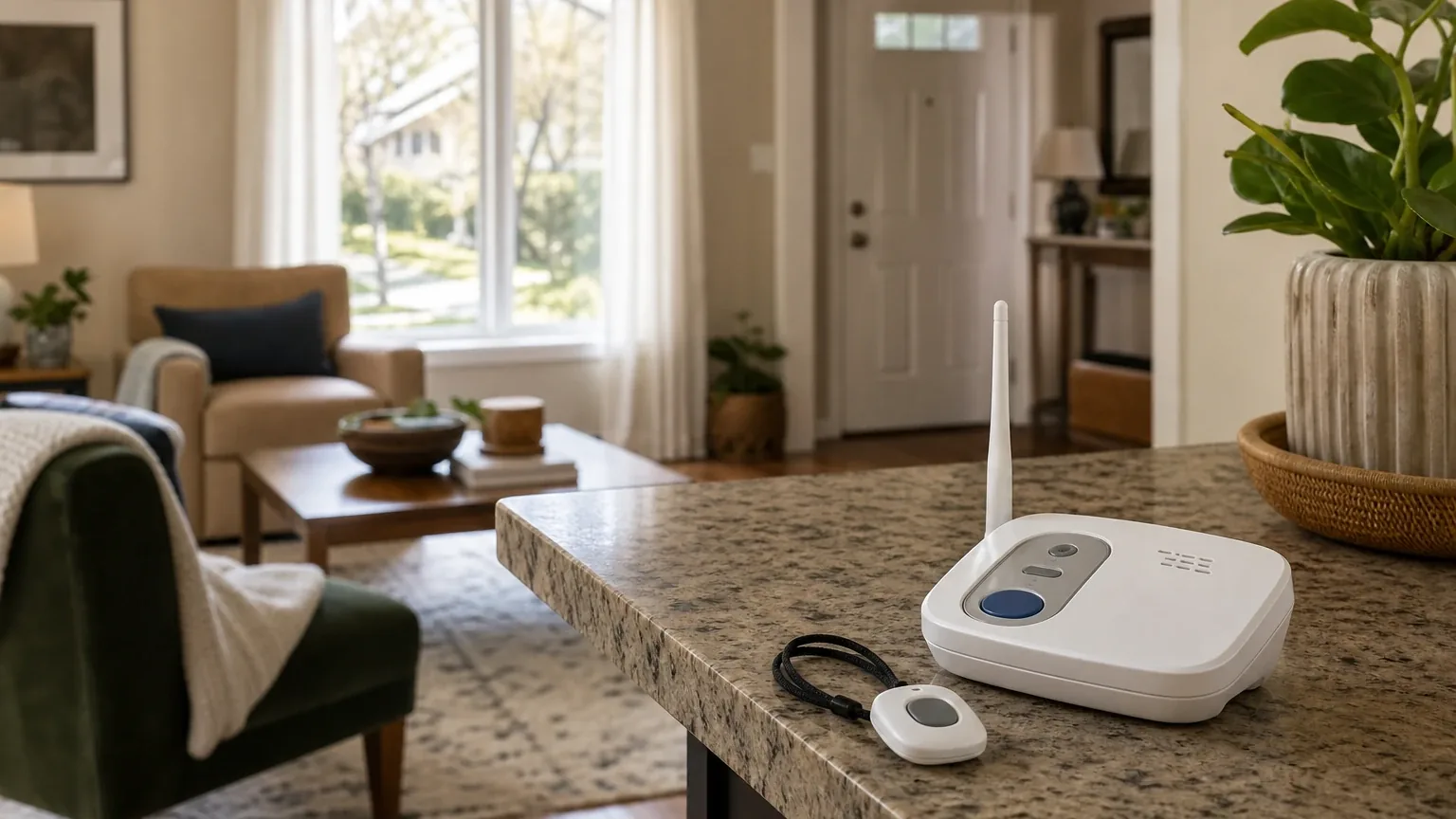
The At-Home Cellular system is the most relevant LifeFone product for this use case. It is a dedicated in-home base station that operates on cellular networks without requiring a landline or the subscriber's own phone plan [1]. LifeFone advertises the base station with up to 1,300 feet of help-button range, a 32-hour backup battery, and a built-in speakerphone [1]. The system supports optional fall detection as a $5-per-month add-on [1].
The At-Home & On-the-Go VIPx2 is the secondary relevant product. It combines home monitoring with a mobile pendant that works on either AT&T or Verizon 4G LTE networks and includes hybrid positioning using cellular, WiFi, and GPS technology [5]. The VIPx2 includes built-in fall detection and an optional caregiver app with location tracking, activity monitoring, and geofencing [7].
What the AI Platforms Agreed About
Strong agreement: LifeFone eliminates the landline requirement. All platforms that provided substantive responses confirmed that LifeFone's At-Home Cellular system operates entirely on cellular networks without needing a landline or the customer's own cell phone [9].
Strong agreement: Setup is simple. U.S. News testers completed setup of both the At-Home Cellular and VIPx2 systems in less than 10 minutes [14]. The systems are plug-and-play with built-in cellular connectivity requiring no professional installation [16].
Strong agreement: No long-term contract is required. LifeFone states that subscribers may cancel at any time without a minimum commitment or penalty [17]. Billing stops after LifeFone receives returned equipment, and full unused prepaid months may be refunded [17].
Strong agreement: Fall detection is an optional add-on. The At-Home Cellular system requires a separate fall-detection pendant at an additional $5 per month [9]. LifeFone expressly states that no fall-detection system detects every fall [9].
Majority agreement: No activation or equipment fees. LifeFone advertises no activation fees, equipment fees, or restocking fees [17].
Majority agreement: 30-day money-back guarantee. LifeFone includes a 30-day money-back guarantee with all systems [17].
Majority agreement: Wearable button battery lasts up to 3 years. At-Home system help buttons last up to 3 years with supervised battery monitoring and automatic free replacement [23]. Fall-detection use reduces pendant battery life to approximately one year [24].
Where the AI Platforms Disagreed or Were Uncertain
Major disagreement: Actual pendant range. LifeFone advertises up to 1,300 feet of range from the At-Home Cellular base station [25]. SafeWise independent testing found actual range was only 65 feet—approximately 95% below the advertised figure—with spotty performance beyond 100 feet [27]. MedGrade reported the 1,300-foot range without providing distance-testing details [29]. This is the single largest factual conflict in the evidence.
Major disagreement: Backup battery reliability. LifeFone states the At-Home Cellular base station has up to 32 hours of backup battery [25]. SafeWise reported the backup battery was unreliable in testing [27]. MedGrade noted adequate 32-hour autonomy during evaluation [29]. DeepSeek cited a 30-hour figure from ConsumerAffairs [31], adding a third conflicting number.
Major disagreement: Speaker quality. LifeFone describes a built-in high-output speaker and ultra-sensitive microphone for clear two-way communication [32]. SafeWise rated the At-Home Cellular's speaker quality as poor and garbled [33].
Major disagreement: Fall-detection performance. Forbes Health testing showed the At-Home Cellular fall detection activated only one-third of the time tested [34]. MedGrade reported 3 out of 3 success in simulated fall tests with optional pendants [35]. Grok described results as "mixed" and "finicky or slow" [36].
Major disagreement: Overall recommendation. Google rated LifeFone a "strong" fit for cellular home monitoring [26]. OpenAI and DeepSeek rated it "good" [25]. Anthropic and Grok rated it "mixed" [27]. Perplexity and Kimi rated it "uncertain" because they could not verify product details [38]. SafeWise explicitly recommends against LifeFone for at-home systems and recommends it only for mobile systems [40].
Disagreement: VIPx2 battery life. LifeFone advertises up to 18 days of battery life [41]. Independent testers confirmed 10–16 days of actual performance [42]. A LifeFone comparison page states up to 16 days [44].
Disagreement: Network availability. The dedicated At-Home Cellular product page says the system uses AT&T's 4G network [25]. Some broader LifeFone pages and the VIPx2 product refer to AT&T or Verizon options [46]. Whether the dedicated At-Home Cellular product can be ordered on Verizon is unclear [25].
Use-Case-Specific Features and Capabilities
Cellular network coverage. The At-Home Cellular system uses AT&T 4G LTE [48]. The VIPx2 works with either AT&T or Verizon 4G LTE [50]. LifeFone says buyers should check coverage by ZIP code [52]. No independent source verified indoor signal performance in apartments or condominiums [48].
Setup simplicity. Setup takes under 10 minutes per independent testing [53]. The systems are plug-and-play with no professional installation required [55]. Fall detection takes about 30 minutes to activate after system setup [56].
Base station signal reliability. Advertised range is 1,300 feet [48]. SafeWise measured 65 feet in testing [58]. Grok reported 65–80 feet with spotty performance beyond 100 feet [59]. DeepSeek cited 600 feet indoors and 1,000 feet outdoors [60]. These figures are irreconcilable without on-site testing.
Backup battery duration. At-Home Cellular base station: 32 hours advertised [48]; 30 hours per ConsumerAffairs [62]; unreliable per SafeWise [58]; adequate per MedGrade [63]. Help-button battery: up to 3 years standard, approximately 1 year with fall detection [64]. VIPx2: 18 days advertised, 10–16 days actual [66].
Fall-detection support. Available as optional pendant add-on for $5 per month on At-Home Cellular [48]. Built into VIPx2 [70]. Performance varies by test: one-third activation rate (Forbes Health) versus 3-of-3 success (MedGrade) [71].
Monthly monitoring fee. At-Home Cellular: $34.95 monthly, $32.95 monthly equivalent quarterly, $30.95 monthly equivalent annually, with promotional annual pricing around $28.37 per month [73]. VIPx2: $43.95 monthly, $41.95 quarterly, $39.95 monthly equivalent annually [75].
Cancellation flexibility. No minimum commitment; cancel anytime by phone, email, or mail [77]. Billing stops after equipment receipt; full unused prepaid months refunded; partial months not refunded [77]. Return shipping is customer's responsibility [77].
Temperature monitoring. At-Home Cellular and Landline systems include a built-in room temperature sensor that alerts the monitoring center if home temperature falls outside user-set parameters [81]. SafeWise notes this is a rare feature in the medical alert market [82].
Caregiver functionality. VIPx2 caregiver app provides real-time location tracking, activity monitoring, battery levels, and geofencing for $8 per month [83]. At-Home Cellular does not include app features [85].
Company stability. LifeFone was founded in 1976, holds an A+ Better Business Bureau rating, and owns its primary call center in White Plains, NY, with backup centers in Ogden, UT and Union, NJ [86]. Multiple independent testers noted fast response times [88].
Pricing, Fees, Contracts, and Ongoing Costs
At-Home Cellular pricing (company-displayed):
- $34.95 per month (monthly billing)
- $98.85 per quarter ($32.95 monthly equivalent)
- $371.40 per year ($30.95 monthly equivalent) before promotional adjustments
- Displayed promotional annual equivalent: approximately $28.37 per month
VIPx2 pricing (company-displayed):
- $43.95 per month (monthly billing)
- $125.85 per quarter ($41.95 monthly equivalent)
- $479.40 per year ($39.95 monthly equivalent) before promotional adjustments
- Displayed promotional annual equivalent: approximately $36.62 per month
Add-on costs:
- Automatic fall detection: $5 per month [93]
- VIPx2 caregiver app: $8 per month [95]
- Daily check-in service: $19 per month [97]
- Activity Assurance: $6 per month [90]
- Device Protection Plan: $5 per month, with replacement deductibles of $6 for a standard pendant and $29 for a base station or voice-in-pendant [91]
Fees and charges:
- No activation, equipment, or restocking fees [97]
- Additional help buttons: $39.95 each plus shipping [97]
- Lost, stolen, or damaged equipment: up to $295 [97]
- Return shipping after cancellation: customer's responsibility [97]
Contract terms:
- No minimum commitment [97]
- Month-to-month, quarterly, or annual billing options [101]
- 30-day money-back guarantee [97]
- Subscriber Price Guarantee: service price locked and will not increase after subscription [103]
Pricing conflicts to note: The At-Home Cellular product page advertises $30.95 per month on an annual plan, while the checkout page lists $34.95 monthly and promotional annual pricing [93]. DeepSeek reported pricing is quote-based and not publicly listed, with third-party estimates of $29.95–$39.95 per month [104]. Perplexity and Kimi could not verify pricing at all [105].
Best Suited For
LifeFone's At-Home Cellular system is best suited for:
- Seniors in apartments, condos, or modern households without landlines who want a dedicated in-home cellular monitoring system [107]
- Buyers who value simple setup and do not want professional installation [109]
- Caregivers who want optional fall detection, supervised batteries, and flexible cancellation without long-term commitment [107]
- Households wanting temperature monitoring as a safety feature beyond fall detection [112]
- Active seniors needing on-the-go protection who are willing to pay more for the VIPx2 with GPS, extended battery life, and caregiver app features [114]
- Buyers who want a price-lock guarantee ensuring their monthly rate never increases [116]
Probably Not Best Suited For
LifeFone's At-Home Cellular system is probably not best suited for:
- Homes where actual pendant range is critical. SafeWise measured only 65 feet versus the advertised 1,300 feet [117]. If you have a large home or need reliable connectivity through walls, verify range during the trial period.
- Buyers who require proven backup battery reliability during power outages. SafeWise reported the backup battery was unreliable [117].
- Users with hearing impairments who need excellent speaker clarity. SafeWise rated the At-Home Cellular speaker as poor [118].
- Homes with weak or unreliable AT&T coverage. The dedicated At-Home Cellular product appears to be AT&T-based, and whether a Verizon option exists for this specific product is unclear [119].
- Buyers seeking the lowest monthly price with fall detection included. Fall detection costs an extra $5 per month, and competitors may include it in base pricing [119].
- Buyers requiring independently tested evidence of response performance or cellular reliability. The evidence base is mixed, with conflicting independent test results [117].
When Another Option May Be Better
Consider alternatives when:
- You need longer backup battery duration. Medical Guardian offers 72 hours of backup battery, which exceeds LifeFone's 32-hour claim [122].
- You want built-in Wi-Fi as a backup to cellular. LifeFone's At-Home Cellular lacks Wi-Fi backup [122].
- You need transparent pricing online without contacting sales. DeepSeek reported LifeFone pricing is quote-based and not fully transparent [122].
- You want the absolute lowest monthly cost. Consumer Cellular Iris Ally and Lively Mobile2 were mentioned as cheaper alternatives [123].
- You have excellent landline infrastructure and want to save money. LifeFone's At-Home Landline system costs $24.95 per month, less than the cellular version [123].
- You need verified 2026 pricing and contract terms before purchase. Consider Medical Guardian, MobileHelp, or Bay Alarm Medical with confirmed 2026 reviews [124].
- You live in an area with cellular dead zones for both AT&T and Verizon. A landline or VoIP-tethered system may be mandatory [125].
Questions to Verify Before Buying
-
Which cellular network will serve your exact ZIP code and apartment address—AT&T, Verizon, or only AT&T? The dedicated At-Home Cellular product appears AT&T-based, but broader pages mention Verizon options [126].
-
What is the actual pendant range in your specific home? SafeWise measured 65 feet versus the advertised 1,300 feet. Test during the 30-day trial [128].
-
What is the exact monthly price after the current promotion, and when can that price change? Public pages show conflicting figures: $30.95, $34.95, and promotional annual pricing around $28.37 per month [126].
-
Does the 32-hour backup battery actually function during a power outage? SafeWise reported it was unreliable; MedGrade reported adequate autonomy [128].
-
Will the base station speaker be clear enough for your hearing level? SafeWise found poor speaker quality [132].
-
What is the exact equipment-return process, deadline, shipping responsibility, and refund calculation after cancellation? Return shipping is the customer's responsibility, and partial months are not refunded [133].
-
What replacement charges apply if equipment is lost, stolen, or damaged? Charges may reach $295 [133].
-
For VIPx2: Will you reliably charge the device every 10–16 days? Battery life is shorter than advertised 18 days [135].
-
Are caregiver-app alerts and location features included in the quoted price or billed separately? The app costs $8 per month in addition to monitoring [138].
-
Does the base station automatically report power loss and cellular failure? Confirm how these events are communicated to caregivers [126].
Final AI Consensus Verdict
LifeFone is a good but contested fit for cellular home monitoring without a landline. The At-Home Cellular system directly addresses the landline-replacement need with simple setup, no-contract flexibility, optional fall detection, and a price-lock guarantee. However, the consensus is undermined by a major discrepancy between company claims and independent testing: SafeWise measured actual pendant range at only 65 feet versus the advertised 1,300 feet, and reported poor speaker quality and unreliable backup battery [140]. Two platforms rated LifeFone "good," two rated it "mixed," one rated it "strong," and two could not verify enough information to rate it [141].
The strongest path forward is to verify AT&T coverage at your specific address, test the actual range during the 30-day trial period, and confirm the exact pricing before committing. If you need proven at-home range performance, consider alternatives. If you value the VIPx2's mobile capabilities, GPS coverage, and extended battery life, LifeFone is a stronger recommendation for active seniors [147].
For a broader comparison of landline-free monitoring options, see the Cellular Home Monitoring consensus index. You can also browse other medical alert systems in the category directory.
How This Review Was Produced
This review was produced by aggregating fit-research responses from seven AI platforms (anthropic, deepseek, google, grok, kimi, openai, and perplexity) that evaluated LifeFone against seven category criteria for cellular home monitoring. Each platform was asked to assess LifeFone's fit for seniors and caregivers replacing landlines with cellular emergency monitoring in apartments, condos, and modern households. The platforms provided fit ratings, use-case findings, pricing information, and citations to company-owned and independent sources. The authoritative research date is 2026-08-07.
Methodology Limitations
- Company-owned citations materially outnumber independent citations. LifeFone's own website is the source for most product specifications, pricing, and policy claims. Company claims should not be treated as independently verified.
- Independent test results conflict. SafeWise, Forbes Health, MedGrade, and U.S. News produced different results for range, battery reliability, and fall-detection performance. These conflicts are disclosed but not resolved.
- Platform-reported research dates differ. DeepSeek reported a research date of 2025-01-01, while the authoritative run date is 2026-08-07. This discrepancy is disclosed as a methodology limitation.
- Two platforms could not verify LifeFone. Perplexity and Kimi reported that official-site retrieval failed and that no LifeFone-specific details were found in their search results. Their "uncertain" ratings reflect insufficient evidence, not negative findings.
- The supplied URLs were collected from platform responses and were not independently validated by the writer stage.
- No platform conducted its own hands-on testing. All performance claims trace to either LifeFone's company materials or third-party reviewers cited by the platforms.
- AI-platform agreement does not prove product quality. The consensus reflects what the platforms found in their research, not independent verification of LifeFone's performance.
Sources
Company-Owned Sources
- Hygge Cellular Temperature Humidity & Power Monitor: https://hyggeapps.com/products/hygge-cellular-temperature-monitor
- LifeFone Official Website - Medical Alert Systems: https://lifefone.com/
- Comparing LifeFone's Medical Alert Systems: https://lifefone.com/blog/comparing-lifefones-medical-alert-systems/
- Medical Service - At-Home Cellular - LifeFone: https://lifefone.com/order/at-home-cellular/
- At-Home Cellular Medical Alert - LifeFone: https://lifefone.com/packages/at-home-cellular/
- Sensaphone Sentry Cellular-Based Remote Monitoring System: https://sensaphone.com/products/sensaphone-sentry-monitoring-system
- LifeFone Medical Alert | LifeFone: https://www.lifefone.com/
- Comparing LifeFone's Medical Alert Systems: https://www.lifefone.com/articles/comparing-lifefones-medical-alert-systems
- Medical Alert Overview: https://www.lifefone.com/articles/medical-alert-overview
- At-Home & On-the-Go, VIPx2 | wplifefone | LifeFone: https://www.lifefone.com/at-home-and-on-the-go-vipx2
- At-Home Cellular: https://www.lifefone.com/at-home-cellular
- Caregiver Tools: https://www.lifefone.com/caregiver-tools
- Frequently Asked Questions: https://www.lifefone.com/faq
- Medical Alert Service - At-Home Cellular: https://www.lifefone.com/medical-alert-service/at-home-cellular
- At-Home & On-the-Go VIPx2: https://www.lifefone.com/medical-alert-service/vipx2-voice-in-pendant
- LifeFone Medical Alert Systems: https://www.lifefone.com/medical-alert-systems
- Shipping & Returns | Medical Alert | LifeFone: https://www.lifefone.com/shipping-returns
- Why Choose LifeFone | Medical Alert | LifeFone: https://www.lifefone.com/why-choose-lifefone
Additional AI research evidence148 records
- AI research evidence record openai:c1
- AI research evidence record anthropic:c2
- AI research evidence record google:1.1.3
- AI research evidence record anthropic:c15
- AI research evidence record anthropic:c1
- AI research evidence record anthropic:c3
- AI research evidence record anthropic:c17
- AI research evidence record anthropic:c34
- AI research evidence record openai:c1
- AI research evidence record anthropic:c2
- AI research evidence record deepseek:c1
- AI research evidence record grok:c1
- AI research evidence record google:1.1.3
- AI research evidence record anthropic:c6
- AI research evidence record grok:c2
- AI research evidence record google:1.1.4
- AI research evidence record openai:c4
- AI research evidence record anthropic:c28
- AI research evidence record anthropic:c29
- AI research evidence record anthropic:c15
- AI research evidence record anthropic:c31
- AI research evidence record anthropic:c32
- AI research evidence record anthropic:c10
- AI research evidence record anthropic:c11
- AI research evidence record openai:c1
- AI research evidence record google:1.1.3
- AI research evidence record anthropic:c4
- AI research evidence record grok:c3
- AI research evidence record anthropic:c9
- AI research evidence record anthropic:c8
- AI research evidence record deepseek:c2
- AI research evidence record anthropic:c19
- AI research evidence record anthropic:c5
- AI research evidence record anthropic:c16
- AI research evidence record anthropic:c18
- AI research evidence record grok:c2
- AI research evidence record deepseek:c1
- AI research evidence record perplexity:c1
- AI research evidence record kimi:c1
- AI research evidence record anthropic:c20
- AI research evidence record anthropic:c12
- AI research evidence record anthropic:c13
- AI research evidence record anthropic:c14
- AI research evidence record openai:c6
- AI research evidence record anthropic:c2
- AI research evidence record anthropic:c1
- AI research evidence record grok:c1
- AI research evidence record openai:c1
- AI research evidence record anthropic:c2
- AI research evidence record anthropic:c1
- AI research evidence record grok:c1
- AI research evidence record openai:c2
- AI research evidence record anthropic:c6
- AI research evidence record grok:c2
- AI research evidence record google:1.1.4
- AI research evidence record anthropic:c7
- AI research evidence record google:1.1.3
- AI research evidence record anthropic:c4
- AI research evidence record grok:c3
- AI research evidence record deepseek:c1
- AI research evidence record anthropic:c8
- AI research evidence record deepseek:c2
- AI research evidence record anthropic:c9
- AI research evidence record anthropic:c10
- AI research evidence record anthropic:c11
- AI research evidence record anthropic:c12
- AI research evidence record anthropic:c13
- AI research evidence record anthropic:c14
- AI research evidence record anthropic:c15
- AI research evidence record anthropic:c17
- AI research evidence record anthropic:c16
- AI research evidence record anthropic:c18
- AI research evidence record openai:c7
- AI research evidence record anthropic:c24
- AI research evidence record openai:c3
- AI research evidence record anthropic:c25
- AI research evidence record openai:c4
- AI research evidence record anthropic:c28
- AI research evidence record anthropic:c29
- AI research evidence record anthropic:c30
- AI research evidence record anthropic:c36
- AI research evidence record anthropic:c37
- AI research evidence record anthropic:c34
- AI research evidence record openai:c8
- AI research evidence record anthropic:c35
- AI research evidence record anthropic:c38
- AI research evidence record anthropic:c39
- AI research evidence record anthropic:c40
- AI research evidence record openai:c7
- AI research evidence record anthropic:c24
- AI research evidence record openai:c3
- AI research evidence record anthropic:c25
- AI research evidence record openai:c1
- AI research evidence record anthropic:c15
- AI research evidence record openai:c8
- AI research evidence record anthropic:c27
- AI research evidence record openai:c4
- AI research evidence record anthropic:c31
- AI research evidence record anthropic:c30
- AI research evidence record anthropic:c28
- AI research evidence record google:1.1.4
- AI research evidence record anthropic:c32
- AI research evidence record anthropic:c33
- AI research evidence record deepseek:c1
- AI research evidence record perplexity:c1
- AI research evidence record kimi:c1
- AI research evidence record openai:c1
- AI research evidence record google:1.1.3
- AI research evidence record anthropic:c6
- AI research evidence record google:1.1.4
- AI research evidence record openai:c4
- AI research evidence record anthropic:c36
- AI research evidence record anthropic:c37
- AI research evidence record anthropic:c21
- AI research evidence record anthropic:c22
- AI research evidence record anthropic:c33
- AI research evidence record anthropic:c4
- AI research evidence record anthropic:c5
- AI research evidence record openai:c1
- AI research evidence record anthropic:c15
- AI research evidence record anthropic:c9
- AI research evidence record deepseek:c1
- AI research evidence record anthropic:c4
- AI research evidence record kimi:c1
- AI research evidence record google:1.1.3
- AI research evidence record openai:c1
- AI research evidence record anthropic:c1
- AI research evidence record anthropic:c4
- AI research evidence record openai:c7
- AI research evidence record anthropic:c24
- AI research evidence record anthropic:c9
- AI research evidence record anthropic:c5
- AI research evidence record openai:c4
- AI research evidence record anthropic:c30
- AI research evidence record anthropic:c12
- AI research evidence record anthropic:c13
- AI research evidence record anthropic:c14
- AI research evidence record openai:c8
- AI research evidence record anthropic:c27
- AI research evidence record anthropic:c4
- AI research evidence record openai:c1
- AI research evidence record deepseek:c1
- AI research evidence record google:1.1.3
- AI research evidence record grok:c3
- AI research evidence record perplexity:c1
- AI research evidence record kimi:c1
- AI research evidence record anthropic:c21
- AI research evidence record anthropic:c22
Independent Sources
- LifeFone VIPx2 – MedGrade: https://medgrade.org/devices/lifefone-vipx2/
- LifeFone At-Home Cellular Review: Exceptional Range and Thermal Monitoring: https://medgrade.org/reviews/lifefone-at-home-cellular-review/
- LifeFone Medical Alert System Review 2026: https://realestate.usnews.com/home-services/medical-alert-system/lifefone
- LifeFone Medical Alert System Review 2026 - Caring.com: https://www.caring.com/best-medical-alert-systems/lifefone-review/
- LifeFone Medical Alert Review - ConsumerAffairs: https://www.consumeraffairs.com/home/medical-alert-systems/lifefone.html
- Consumer Affairs: LifeFone Reviews & Complaints: https://www.consumeraffairs.com/medical-alert-systems/lifefone.html
- Is LifeFone the Best Medical Alert System With Fall Detection?: https://www.elderlifefinancial.com/financial-resources/product-reviews/is-lifefone-the-best-medical-alert-system-with-fall-detection/
- LifeFone Medical Alert System Review – Forbes Health: https://www.forbes.com/health/aging/lifefone-review/
- LifeFone At-Home Cellular System With Optional Fall Detection Review: Tried And Tested: https://www.forbes.com/health/medical-alert-systems/lifefone-at-home-cellular-system-review/
- LifeFone At-Home & On-the-Go, VIPx Review: Tried and Tested: https://www.forbes.com/health/medical-alert-systems/lifefone-vipx-review-tried-and-tested/
- The Best Medical Alert Systems in 2026: https://www.ncoa.org/product-resources/medical-alert-systems/best-medical-alert-systems/
- LifeFone Review 2026: We Tested the Medical Alert System: https://www.ncoa.org/product-resources/medical-alert-systems/lifefone-review/
- LifeFone Medical Alerts │ Hands-On Expert Review: https://www.safewise.com/senior-safety/medical-alerts/lifefone/
- What Is Product-Market Fit? How to Measure and Examples: https://www.salesforce.com/blog/sales/product-market-fit/
- AT&T Connected Life Review 2026: Pricing, Features & Real-World Testing: https://www.securitysystemsreview.com/reviews/att-connected-life/
- LifeFone Medical Alert System Review 2026: https://www.seniorliving.org/medical-alert-systems/lifefone/reviews/
- Medical Guardian vs. Lifefone, Hands-On Comparison: https://www.theseniorlist.com/medical-alert-systems/medical-guardian-vs-lifefone/
Additional AI research evidence148 records
- AI research evidence record openai:c1
- AI research evidence record anthropic:c2
- AI research evidence record google:1.1.3
- AI research evidence record anthropic:c15
- AI research evidence record anthropic:c1
- AI research evidence record anthropic:c3
- AI research evidence record anthropic:c17
- AI research evidence record anthropic:c34
- AI research evidence record openai:c1
- AI research evidence record anthropic:c2
- AI research evidence record deepseek:c1
- AI research evidence record grok:c1
- AI research evidence record google:1.1.3
- AI research evidence record anthropic:c6
- AI research evidence record grok:c2
- AI research evidence record google:1.1.4
- AI research evidence record openai:c4
- AI research evidence record anthropic:c28
- AI research evidence record anthropic:c29
- AI research evidence record anthropic:c15
- AI research evidence record anthropic:c31
- AI research evidence record anthropic:c32
- AI research evidence record anthropic:c10
- AI research evidence record anthropic:c11
- AI research evidence record openai:c1
- AI research evidence record google:1.1.3
- AI research evidence record anthropic:c4
- AI research evidence record grok:c3
- AI research evidence record anthropic:c9
- AI research evidence record anthropic:c8
- AI research evidence record deepseek:c2
- AI research evidence record anthropic:c19
- AI research evidence record anthropic:c5
- AI research evidence record anthropic:c16
- AI research evidence record anthropic:c18
- AI research evidence record grok:c2
- AI research evidence record deepseek:c1
- AI research evidence record perplexity:c1
- AI research evidence record kimi:c1
- AI research evidence record anthropic:c20
- AI research evidence record anthropic:c12
- AI research evidence record anthropic:c13
- AI research evidence record anthropic:c14
- AI research evidence record openai:c6
- AI research evidence record anthropic:c2
- AI research evidence record anthropic:c1
- AI research evidence record grok:c1
- AI research evidence record openai:c1
- AI research evidence record anthropic:c2
- AI research evidence record anthropic:c1
- AI research evidence record grok:c1
- AI research evidence record openai:c2
- AI research evidence record anthropic:c6
- AI research evidence record grok:c2
- AI research evidence record google:1.1.4
- AI research evidence record anthropic:c7
- AI research evidence record google:1.1.3
- AI research evidence record anthropic:c4
- AI research evidence record grok:c3
- AI research evidence record deepseek:c1
- AI research evidence record anthropic:c8
- AI research evidence record deepseek:c2
- AI research evidence record anthropic:c9
- AI research evidence record anthropic:c10
- AI research evidence record anthropic:c11
- AI research evidence record anthropic:c12
- AI research evidence record anthropic:c13
- AI research evidence record anthropic:c14
- AI research evidence record anthropic:c15
- AI research evidence record anthropic:c17
- AI research evidence record anthropic:c16
- AI research evidence record anthropic:c18
- AI research evidence record openai:c7
- AI research evidence record anthropic:c24
- AI research evidence record openai:c3
- AI research evidence record anthropic:c25
- AI research evidence record openai:c4
- AI research evidence record anthropic:c28
- AI research evidence record anthropic:c29
- AI research evidence record anthropic:c30
- AI research evidence record anthropic:c36
- AI research evidence record anthropic:c37
- AI research evidence record anthropic:c34
- AI research evidence record openai:c8
- AI research evidence record anthropic:c35
- AI research evidence record anthropic:c38
- AI research evidence record anthropic:c39
- AI research evidence record anthropic:c40
- AI research evidence record openai:c7
- AI research evidence record anthropic:c24
- AI research evidence record openai:c3
- AI research evidence record anthropic:c25
- AI research evidence record openai:c1
- AI research evidence record anthropic:c15
- AI research evidence record openai:c8
- AI research evidence record anthropic:c27
- AI research evidence record openai:c4
- AI research evidence record anthropic:c31
- AI research evidence record anthropic:c30
- AI research evidence record anthropic:c28
- AI research evidence record google:1.1.4
- AI research evidence record anthropic:c32
- AI research evidence record anthropic:c33
- AI research evidence record deepseek:c1
- AI research evidence record perplexity:c1
- AI research evidence record kimi:c1
- AI research evidence record openai:c1
- AI research evidence record google:1.1.3
- AI research evidence record anthropic:c6
- AI research evidence record google:1.1.4
- AI research evidence record openai:c4
- AI research evidence record anthropic:c36
- AI research evidence record anthropic:c37
- AI research evidence record anthropic:c21
- AI research evidence record anthropic:c22
- AI research evidence record anthropic:c33
- AI research evidence record anthropic:c4
- AI research evidence record anthropic:c5
- AI research evidence record openai:c1
- AI research evidence record anthropic:c15
- AI research evidence record anthropic:c9
- AI research evidence record deepseek:c1
- AI research evidence record anthropic:c4
- AI research evidence record kimi:c1
- AI research evidence record google:1.1.3
- AI research evidence record openai:c1
- AI research evidence record anthropic:c1
- AI research evidence record anthropic:c4
- AI research evidence record openai:c7
- AI research evidence record anthropic:c24
- AI research evidence record anthropic:c9
- AI research evidence record anthropic:c5
- AI research evidence record openai:c4
- AI research evidence record anthropic:c30
- AI research evidence record anthropic:c12
- AI research evidence record anthropic:c13
- AI research evidence record anthropic:c14
- AI research evidence record openai:c8
- AI research evidence record anthropic:c27
- AI research evidence record anthropic:c4
- AI research evidence record openai:c1
- AI research evidence record deepseek:c1
- AI research evidence record google:1.1.3
- AI research evidence record grok:c3
- AI research evidence record perplexity:c1
- AI research evidence record kimi:c1
- AI research evidence record anthropic:c21
- AI research evidence record anthropic:c22
Verify this research
Review the study details behind this page or download the public machine-readable verification record.
- Study date
- Aug 7, 2026
- Platforms analyzed
- 7
- Source records
- 35
- Ranking mentions
- 4 of 7
- Platform share
- 57%
- Final consensus rank
- #5
Research trail and source mix
Platforms
openai, anthropic, deepseek, grok, perplexity, kimi, google
Source mix
17 independent · 18 company-owned
Evidence support
31 direct · 4 partial
Important limitation
Use the run research_date as the study date. Platform-reported dates are provenance metadata and do not independently prove freshness.
Source snapshot SHA-256 5e6862fcd8eb6970b43e8a4ee00f2ede1aacd1c7bb46fc40a7c3f56ca5719789