
Answer Capsule
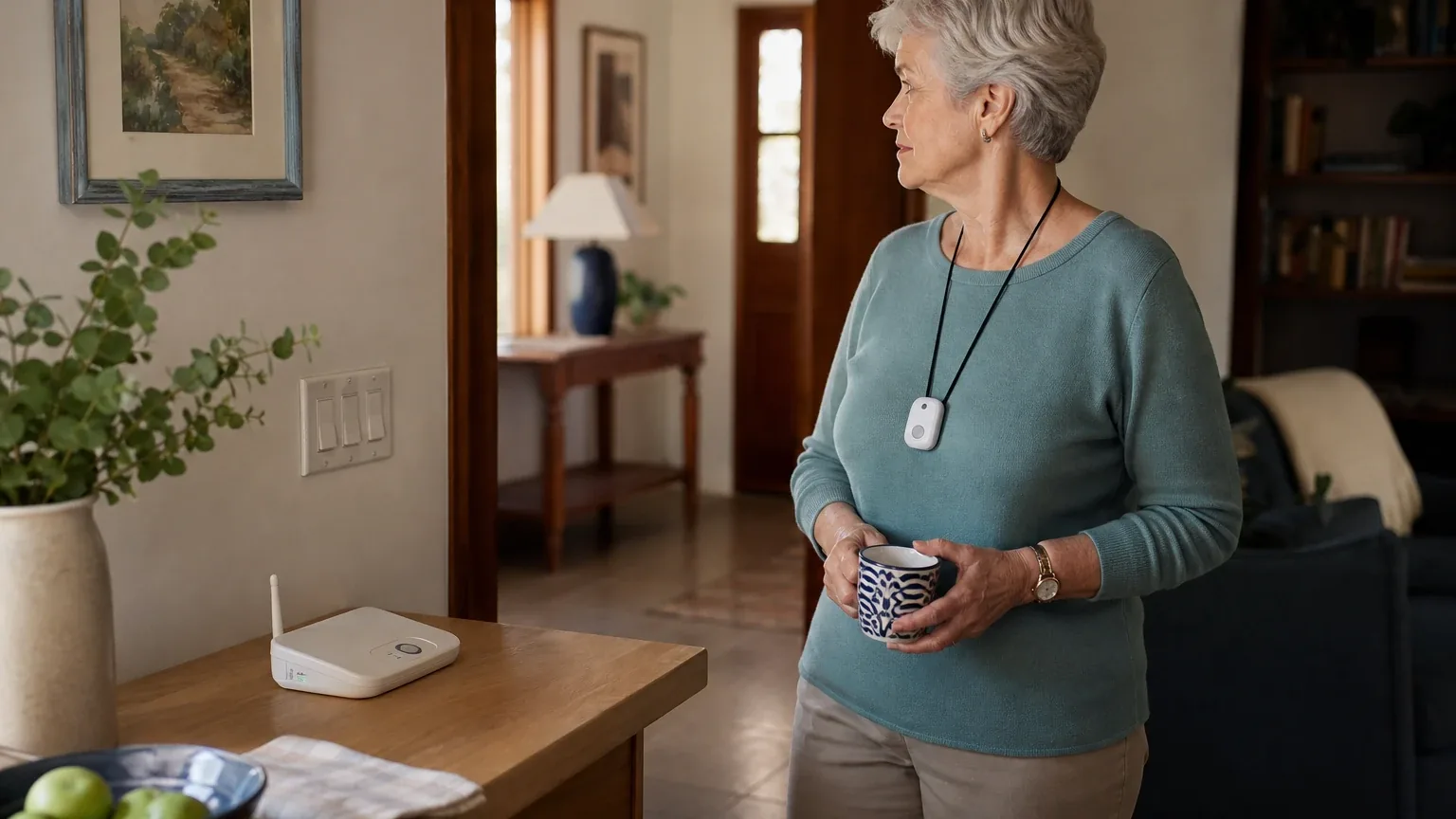
MobileHelp Classic Cellular is a strong fit for a senior who spends most of the day at home and needs one base station to cover the house and nearby yard. Four of the six platforms in this study named it during the ranking stage, and three of those four rated it a strong or good fit for In-Home Base Station Coverage. The strongest reason to consider it is the advertised 1,400-foot pendant-to-base range, paired with cellular operation that needs no landline [21]. The main limitation is that the 1,400-foot figure is a maximum, not a guarantee: one independent test measured roughly 500 feet, and coverage depends on AT&T signal at the address [6].
Research Snapshot
| Field | Detail |
|---|---|
| Platform mentions in ranking stage | 4 of 6 platforms (anthropic, deepseek, grok, perplexity) |
| Share of included platform responses | 66.7% |
| Average listed rank | 3.25 |
| Best listed rank | 1 (deepseek, grok) |
| Relevant product/model/plan | MobileHelp Classic Cellular in-home cellular medical alert system |
| Overall use-case fit | Strong for typical homes with reliable AT&T coverage; mixed for large or obstructed properties |
| Research date | 2026-11-10 |
What Changed Since September 2026
MobileHelp Classic Cellular remained at No. 4, and platform mentions decreased from 7 to 4. The November 2026 review renames the item MobileHelp Classic Cellular and gives a more confident buyer profile than the September 2026 edition. The recommended configuration is unchanged, but the description now leans on cellular operation without a landline and an advertised 1,400-foot pendant-to-base range. Pricing evidence shifted: $19.95 is newly reported, while $29.95 per month is no longer repeated. Measured details also moved, with a 24-hour backup battery and clear speaker audio to roughly 15 to 20 feet newly reported. Limitations still center on AT&T signal at the address and fall detection sold as a paid add-on. Differences between the two editions reflect what each article reports; they do not by themselves prove that the product, service, or price changed.
The September 2026 review preserves the earlier article for reference.
Why MobileHelp Classic Cellular Qualified for This Study
Questions This Section Answers
- Why did MobileHelp Classic Cellular make the in-home base station coverage ranking when it is a single-location system?
- Is MobileHelp Classic Cellular a good choice for a senior who stays home and wants one base station to cover the house and yard?
MobileHelp Classic Cellular qualified because it is a purpose-built in-home base station system with an unusually long advertised pendant range, and because four of the six platforms named it during ranking discovery [21]. It ranked first on two platforms (deepseek, grok) and second on one (anthropic), which pulled its average listed rank to 3.25 despite a ninth-place listing on perplexity.
The system is designed for exactly the buyer in this use case: a senior who stays mostly at home and wants emergency coverage across the house and yard without a landline. MobileHelp markets Classic Cellular as a no-landline in-home system with coverage up to 1,400 feet depending on the device [19]. It also sells a separate Classic Landline version for households that prefer a wired connection [19].
For a broader view of how this system compares with other in-home options, see the In-Home Base Station Coverage consensus index.
The Product, Model, Plan, or Service Most Relevant to In-Home Base Station Coverage
Questions This Section Answers
- Which MobileHelp Classic Cellular configuration should a buyer choose for in-home base station coverage, and does it need a landline?
- Does MobileHelp Classic Cellular cover a yard, or is the 1,400-foot range limited to the house?
The relevant product is the Classic Cellular in-home system: a plug-in base station with a two-way speaker that connects over AT&T cellular service and pairs with a wearable help button [21]. No landline is required, and MobileHelp states the monthly monitoring plan includes mobile service on AT&T's nationwide network [19].
The wearable is the part that travels around the property. MobileHelp advertises in-home coverage up to 1,400 feet between the base station and the help button, depending on the device [19]. Independent reviews repeat the 1,400-foot figure and describe it as enough for most home sizes, potentially extending into the yard [13]. That makes the pendant-to-base link, not the base station itself, the binding constraint on yard coverage.
Buyers who want automatic fall detection need a separate fall-detection pendant as an add-on; the standard help button does not include it [28].
What the AI Platforms Agreed About
Questions This Section Answers
- What do the AI platforms agree MobileHelp Classic Cellular does well for in-home base station coverage?
- Do the platforms agree that MobileHelp Classic Cellular needs a landline?
The platforms agreed, near-unanimously, on four points: the 1,400-foot advertised range, cellular operation without a landline, a base-station backup battery in the 24-to-30-hour range, and optional fall detection sold as a paid add-on.
On range, openai, anthropic, grok, perplexity, and google all repeat the 1,400-foot advertised figure from MobileHelp or from independent reviews [21]. On connectivity, the platforms consistently describe AT&T cellular service with no landline requirement [14]. On backup power, MobileHelp states the Classic Home base station has a backup battery lasting approximately 30 hours [20], and Caring.com repeats the 30-hour figure [13].
On monitoring, MobileHelp states it provides 24/7 U.S. monitoring, and AARP testing reported quick connections and clear communication with agents [21]. One review identified Rapid Response Monitoring as the monitoring partner [11]. This is platform-reported and review-reported evidence, not an independently audited response-time guarantee.
Where the AI Platforms Disagreed or Were Uncertain
Questions This Section Answers
- How far does MobileHelp Classic Cellular actually reach in a real home, given that one test measured 500 feet against a 1,400-foot claim?
- Why do sources list different monthly prices and fall-detection fees for MobileHelp Classic Cellular?
The platforms diverged on real-world range, backup battery duration, fall-detection accuracy, and price. None of these conflicts is resolved by the supplied evidence, and buyers should treat each as something to confirm before paying.
Range. Grok cited an independent test that measured a 500-foot maximum against the advertised 1,400 feet [6]. SafeWise listed a 600-to-1,400-foot range [26], and anthropic noted some older sources cite 600 feet. The 1,400-foot figure is a maximum, not a property-specific guarantee.
Backup battery. MobileHelp and Caring.com state approximately 30 hours [20], while an FCC filing cited by anthropic indicates 24 hours after a three-hour charge [3]. Deepseek reported that backup duration was not clearly published on the pages it reviewed [19].
Fall detection. AARP testing recorded 10 of 12 test falls detected [8]; Senior Living reported 7 of 10 [27]. MobileHelp's own terms state fall detection may not detect every fall and may send false alerts [34].
Price. Official pricing is $29.95 per month [21], while independent reviews cite $24.95, $25.95, and a $19.95-to-$29.95 spread [12]. Fall detection is reported at $10 or $11 per month [8].
Speaker clarity. AARP testing found clear audio and strong voice pickup, with only slight degradation beyond roughly 15 to 20 feet from the base [8]. Perplexity and deepseek reported that they could not verify a speaker specification [21].
Use-Case-Specific Features and Capabilities
Questions This Section Answers
- Is MobileHelp Classic Cellular's two-way speaker clear enough to be heard from a bedroom or the yard?
- How long does the MobileHelp Classic Cellular base station keep working in a power outage?
The table below maps each category criterion to what the supplied evidence actually establishes.
| Criterion | What the evidence shows | Assessment |
|---|---|---|
| Base station range | Advertised up to 1,400 ft pendant-to-base, depending on device [19] | Advantage, unverified per property |
| Pendant range | 1,400 ft advertised; one test measured ~500 ft [6]; SafeWise lists 600–1,400 ft [26] | Mixed |
| Landline/cellular setup | AT&T cellular, no landline needed; separate Classic Landline model exists [24] | Advantage |
| Two-way speaker clarity | Clear audio at 15–20 ft in AARP testing [9]; not verified by perplexity or deepseek | Advantage, partially verified |
| Backup battery life | ~30 hours per MobileHelp and Caring.com [20]; 24 hours per FCC filing [3] | Advantage, duration disputed |
| Fall-detection add-on cost | $10–$11/month; separate pendant required [8] | Neutral |
| Monitoring center reliability | 24/7 U.S. monitoring; quick connections in testing [21]; 26-second average response reported [30] | Advantage, no audited guarantee |
Two practical limits recur across platforms. The base station is not waterproof and is not wall-mountable, so it must sit near a power outlet [16]. The wearable help button is water-resistant and can be worn in the shower under normal conditions, but it is not designed for prolonged submersion [20]. The system also provides no GPS protection away from the base station [8].
Pricing, Fees, Contracts, and Ongoing Costs
Questions This Section Answers
- What does MobileHelp Classic Cellular actually cost per month for in-home base station coverage, and why do sources disagree?
- Is MobileHelp Classic Cellular really contract-free, or is there a minimum commitment?
Published pricing is inconsistent, and the official terms add a minimum commitment that some reviews do not mention. Buyers should confirm the all-in monthly total at checkout rather than relying on any single published figure.
MobileHelp's product page lists Classic Cellular starting at $29.95 per month [21]. Independent reviews cite $24.95, $25.95, and a $19.95-to-$29.95 range depending on promotion and billing cycle [12]. Quarterly and annual billing options are reported, with annual plans offering modest savings [28].
Fall detection is an add-on at $10 or $11 per month depending on the source [8]. Anthropic also reported an optional protection plan at $6.99 per month, a lockbox at $2.99 per month unless included with an annual plan, and optional add-ons at $2.99 per month each [28]. Google reported a ground shipping fee of roughly $15 on monthly plans, waived on longer terms [29]. No equipment or activation fee was reported by the official product page and independent reviews [21].
On contracts, MobileHelp states it does not require a contract and that service is month-to-month and cancellable at any time [19]. However, the official terms and conditions state all memberships carry a minimum three-month commitment, that early cancellation within that period does not relieve the obligation to pay for the full three months, and that leased devices not returned within 30 days trigger a $350 non-return fee, with a restocking fee of up to $50 [33]. AARP reported an up-to-30-day risk-free trial but said unused prepaid time may not be refunded after cancellation [8]. These terms should be read in full before paying.
Best Suited For
Questions This Section Answers
- Who gets the most value from MobileHelp Classic Cellular for in-home base station coverage?
- Is MobileHelp Classic Cellular a good fit for a senior who lives alone without a landline?
MobileHelp Classic Cellular suits a senior who lives alone, has no landline, has usable AT&T signal at the address, and needs one base station to cover a typical house plus a porch, garage, or nearby yard.
The platforms converged on this profile. Openai rated the fit strong for seniors who want a simple plug-in system without a landline and whose property fits within the tested practical range [21]. Google rated it strong for buyers seeking wide in-home pendant range and optional fall detection on a base system [19]. Anthropic rated it good for users without landlines who prioritize affordable monthly pricing with no equipment fees [14]. Perplexity rated it good for homes and yards needing up to 1,400 feet of help-button range [21].
It also fits buyers who want a wearable they do not have to charge daily: the help button uses a non-rechargeable battery rated to last up to five years [13].
Probably Not Best Suited For
Questions This Section Answers
- Is MobileHelp Classic Cellular a poor choice for a senior who leaves home often or lives in a large, obstructed house?
It is a poor fit for three buyer types: people who regularly leave home, households with weak AT&T coverage, and properties where the pendant-to-base link cannot reach every area.
Classic Cellular is an at-home system with no GPS tracking, so it does not provide the same protection when the user travels away from the base station [8]. Buyers in areas without dependable AT&T coverage should look elsewhere; AT&T covers roughly 97% of the continental U.S., but that figure does not guarantee signal inside a specific home [1]. Large, multi-building, hilly, or heavily obstructed properties may exceed practical coverage even within the nominal range [21].
Buyers who need guaranteed fall-detection performance should also weigh alternatives: fall detection is a paid add-on, testing results vary, and MobileHelp states it may not detect every fall [8].
When Another Option May Be Better
Questions This Section Answers
- When should a buyer choose a landline or mobile medical alert system instead of MobileHelp Classic Cellular for in-home coverage?
- Is MobileHelp Classic Cellular the best choice if fastest monitoring response time matters most?
Another option may be better in four situations: unreliable cellular signal with a working landline, regular travel away from home, a property too large for the pendant link, or a priority on verified response-time data.
If cellular signal inside the home is unreliable but a landline works, the Classic Landline version or a competitor's landline system is the more sensible choice [21]. If the senior leaves home regularly, a mobile GPS system such as MobileHelp Elite or a competitor's mobile unit provides coverage the base station cannot [21]. If the property is large or obstructed, a system with verified real-world range testing may be safer [6].
On response time, one review reported a 26-second average for MobileHelp and described it as slower than Bay Alarm Medical or Medical Guardian [30]. Buyers who treat response speed as the deciding factor should compare published figures directly, since the supplied evidence does not include audited response-time data for any system.
Questions to Verify Before Buying
Questions This Section Answers
- What should a buyer confirm with MobileHelp before paying for Classic Cellular for in-home base station coverage?
- Which contract and refund terms should a buyer read before committing to MobileHelp Classic Cellular?
Before paying, confirm six things with MobileHelp directly: AT&T signal at the exact address, real-world pendant range in the specific home, the current all-in monthly price, the fall-detection fee, the contract and refund terms, and what happens during a dual power-and-cellular outage.
The platforms' verification lists overlap heavily. Openai recommends testing the pendant from the farthest bedroom, bathroom, garage, porch, and intended yard areas, and asking whether the quoted 1,400-foot range applies to the specific included pendant and base model [21]. Anthropic recommends confirming a power outlet location that allows optimal coverage and checking whether any basement, attic, or garage area might exceed range [16]. Grok recommends testing pendant range in the actual home and yard before final commitment [6].
On money, perplexity recommends confirming the exact monthly price for the buyer's ZIP code, whether fall detection is $10 or $11, and whether any equipment, shipping, or activation fee applies [21]. On terms, the official conditions state a three-month minimum commitment, a $350 non-return fee for leased devices, and a restocking fee of up to $50, so buyers should read those sections before paying quarterly or annually [33]. Buyers should also ask what monitoring-center response-time and redundancy information MobileHelp can provide, since the supplied evidence does not establish an audited guarantee [21].
Final AI Consensus Verdict
The consensus is a qualified yes. MobileHelp Classic Cellular is a strong fit for in-home base station coverage when the senior stays mostly at home, AT&T signal is reliable at the address, and the property fits within the system's practical range.
Three platforms rated the fit strong (openai, google, grok), two rated it good (anthropic, perplexity), and one rated it mixed (deepseek). The strongest supporting evidence is the advertised 1,400-foot pendant range, cellular operation without a landline, a base-station backup battery in the 24-to-30-hour range, and clear two-way audio in independent testing [21]. The strongest cautions are the 500-foot real-world range measured in one test, dependence on AT&T coverage, inconsistent published pricing, a three-month minimum commitment in the official terms, and fall detection that is optional, paid, and imperfect [6].
Agreement among AI platforms does not prove product quality. It shows that the same published specifications and reviews were widely repeated. Buyers should verify range, price, and terms themselves before committing.
How This Review Was Produced
This review used six platform fit-research responses collected for the 2026-11-10 research run, plus the ranking statistics showing which platforms named MobileHelp Classic Cellular during ranking discovery. Four of the six platforms named the entity in the ranking stage, and all six supplied a fit assessment for the in-home base station use case. Company-owned sources were separated from independent reviews and government filings, and every factual claim is cited to a supplied source ID. Where platforms reported conflicting figures, the conflict is described rather than resolved. No product was tested by the author, and no claim of personal testing, customer experience, or medical benefit is made.
Methodology Limitations
- Platform-reported research dates differ from the authoritative run date. Deepseek's response is dated 2026-06-01; the other five are dated 2026-11-10. These dates are provenance metadata and do not independently prove freshness.
- Deepseek ran without search enabled, so its findings reflect model knowledge rather than retrieved sources and should be treated as platform-reported.
- All included platforms evaluated fit, but the platform-mentions count reflects only platforms that named the entity during ranking discovery.
- The supplied URLs were collected from platform responses and were not independently validated at the writing stage.
- Citations are platform-reported evidence, not independently verified facts.
- Conflicting product names, prices, and capabilities were not resolved by guessing; buyers are told what to verify.
- No audited monitoring response-time, uptime, or certification data was supplied for any system.
- The 1,400-foot range figure is an advertised maximum and is not a property-specific guarantee.
Explore more medical alert systems guidance in the category directory.
Sources
Company-Owned Sources
- Mobile Help Classic - Amazon Product Listing: https://www.amazon.com/MobileHelp-Classic-Remotely-Activated-Cellular/dp/B01EMYGXEQ
- MobileHelp Official Website: https://www.mobilehelp.com/
- MobileHelp FAQs: https://www.mobilehelp.com/pages/faqs
- Classic Cellular: In-Home Cellular Medical Alert System: https://www.mobilehelp.com/products/in-home-medical-alert-system
- Classic Cellular: https://www.mobilehelp.com/products/mobilehelp-classic/
- Official pricing and terms source: https://www.mobilehelp.com/pages/terms-and-conditions
- Official pricing and terms source: https://www.mobilehelp.com/pages/terms-of-use
Independent Sources
- MobileHelp Reviews - BestCompany: https://bestcompany.com/medical-alert-systems/mobilehelp
- MobileHelp Medical Alert System Review - ElderGuard: https://elderguardhome.com/safety-guides/smart-tech-monitoring/mobilehelp-medical-alert-system-review
- MobileHelp FCC Filing: https://fcc.report/FCC-ID/PXTCBS4-02/3976522.pdf
- MobileHelp Classic Cellular – MedGrade: https://medgrade.org/devices/mobilehelp-classic-cellular/
- MobileHelp Classic Cellular Review: Industry-Best Range and Exceptional Value: https://medgrade.org/reviews/mobilehelp-classic-cellular-review/
- MobileHelp Medical Alert System Review 2026: https://realestate.usnews.com/home-services/medical-alert-system/mobilehelp
- MobileHelp Costs, Plans, and Systems 2026 - SeniorsList: https://seniorslist.com/medical-alert-systems/mobilehelp/
- MobileHelp Medical Alert Review 2026: Our Test Results: https://www.aarp.org/caregiving/home-care/mobilehelp-review.html
- MobileHelp Medical Alert Review 2026 - AARP: https://www.aarp.org/caregiving/home-care/mobilehelp-review/
- MobileHelp Classic Cellular Medical Alert System Review: https://www.caring.com/best-medical-alert-systems/mobilehelp-classic-cellular/
- MobileHelp Medical Alert System Review 2026 - Caring.com: https://www.caring.com/senior-products/best-medical-alert-systems/mobilehelp
- MobileHelp Classic Cellular Medical Alert System Review - Caring.com: https://www.caring.com/senior-products/best-medical-alert-systems/mobilehelp-classic
- Is MobileHelp the Best Medical Alert System - ElderLife Financial: https://www.elderlifefinancial.com/financial-resources/product-reviews/is-mobilehelp-the-best-medical-alert-system/
- MobileHelp Classic Review: Tried and Tested: https://www.forbes.com/health/healthy-aging/mobilehelp-classic-review/
- MobileHelp Classic Review: Tried and Tested: https://www.forbes.com/health/medical-alert-systems/mobile-help-classic-review/
- MobileHelp Review: https://www.medicalalertadvice.com/reviews/mobilehelp/
- MobileHelp Review - Medical Alert Buyers Guide: https://www.medicalalertbuyersguide.org/medical-alert-system/mobilehelp-review/
- MobileHelp Review in 2026 - NCOA: https://www.ncoa.org/product-resources/medical-alert-systems/mobilehelp-review/
- MobileHelp Classic Medical Alert System Review - Paying for Senior Care: https://www.payingforseniorcare.com/best-medical-alert-systems/mobilehelp-classic
- MobileHelp Cost, Pricing, Packages & Monthly Plans: https://www.safehome.org/medical-alert-systems/mobilehelp/
- MobileHelp Medical Alert System Review - SafeWise: https://www.safewise.com/senior-safety/medical-alerts/mobile-help/
- Best Medical Alert Systems of 2026 - Senior Living: https://www.seniorliving.org/medical-alert-systems/best/
- MobileHelp Medical Alert System Cost & Pricing in 2026 - Senior Living: https://www.seniorliving.org/medical-alert-systems/mobilehelp/
- MobileHelp Medical Alert System Cost & Pricing in 2026: https://www.seniorliving.org/medical-alert/mobilehelp/cost/
- MobileHelp Medical Alert Review 2026 - SeniorsList: https://www.seniorslist.com/medical-alert-systems/mobilehelp-reviews/
- The 7 Best Medical Alert Systems (2026: https://www.theseniorlist.com/medical-alert-systems/best/
- MobileHelp Medical Alert - The Senior List: https://www.theseniorlist.com/medical-alert-systems/mobilehelp/
Verify This Research
Review the study details behind this page or download the public machine-readable verification record.
- Study date
- November 10, 2026
- Platforms analyzed
- 6
- Source records
- 34
- Ranking mentions
- 4 of 6
- Platform share
- 67%
- Final consensus rank
- #4
Research trail and source mix
Configured platforms
openai, anthropic, deepseek, grok, perplexity, kimi, google
Source mix
27 independent · 7 company-owned
Evidence support
29 direct · 5 partial
Important limitation
Use the run research_date as the study date. Platform-reported dates are provenance metadata and do not independently prove freshness.
Source snapshot SHA-256 b6a6d138327f542d3db87da13e69f00749101e3016bba51b1981513745927dac