
Answer Capsule
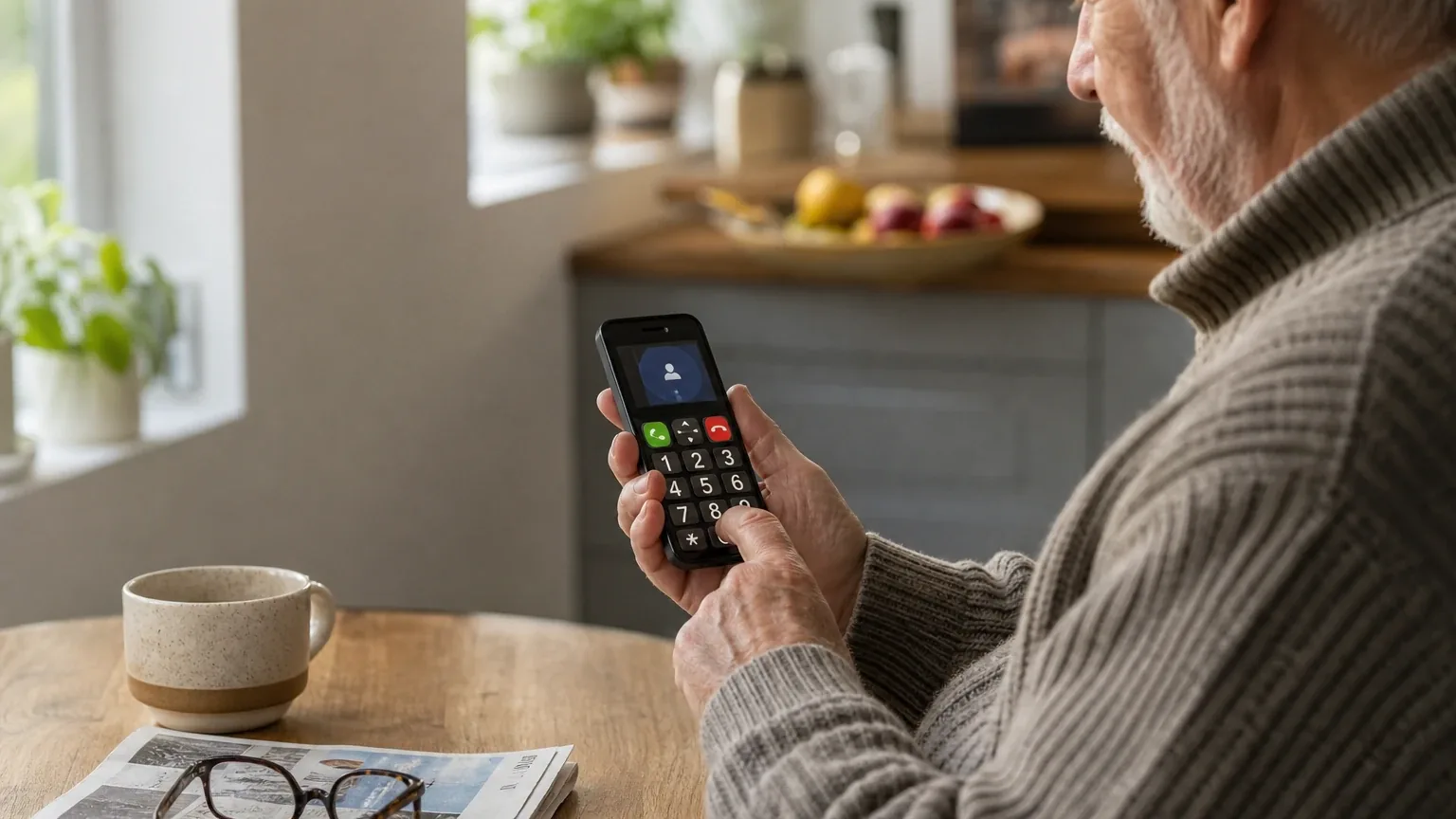
The MiniVision2+ Cell Phone is a strong fit for seniors with vision loss or low vision who need large tactile buttons, spoken guidance, and simple calling and texting. Three of seven AI platforms named it during the ranking stage, with an average listed rank of 2.67 and a best rank of 2. The strongest reason to consider it is its combination of large, well-spaced tactile keys, a fully vocalized interface, adjustable high-contrast display, dedicated SOS button, and included charging cradle—features that directly address vision and dexterity challenges. The main limitation is carrier compatibility: the phone is GSM-only and will not work on Verizon, and it lacks caregiver remote-management features found on the separate RAZ Memory Cell Phone. Fit ratings ranged from strong (three platforms) to uncertain (one platform), with one platform unable to verify the product name.
Research Snapshot
| Metric | Value |
|---|---|
| Platform mentions in ranking stage | 3 of 7 platforms (grok, kimi, openai) |
| Share of included platform responses | 3 of 7 platforms (43%) |
| Average listed rank | 2.67 |
| Best listed rank | 2 |
| Relevant product/model/plan | MiniVision2+ unlocked phone with AT&T, T-Mobile, or compatible GSM provider |
| Overall use-case fit | Strong for vision loss; mixed for memory impairment; unsuitable for Verizon |
| Research date | 2026-08-13 |
Why MiniVision2+ Cell Phone Qualified for This Study
The MiniVision2+ qualified because it was named by at least two AI platforms during the ranking stage for large-button calling and texting. Three platforms—grok, kimi, and openai—listed it in their rankings, with grok and kimi placing it at rank 2 and openai at rank 4. The product is marketed by RAZ Mobility as an easy-to-use cell phone for people with vision loss, and it was evaluated against category criteria including button size and spacing, high-contrast display, loudspeaker volume, charging dock usability, emergency contacts, hearing aid compatibility, and battery life.
The Product, Model, Plan, or Service Most Relevant to Large-Button Calling & Texting
The relevant product is the MiniVision2+ unlocked phone, sold by RAZ Mobility for use with AT&T, T-Mobile, or another compatible GSM provider [1]. The phone includes a charging cradle, charger, earbuds, and protective case [4]. RAZ advertises three months of free Affinity Cellular service with purchase, with service priced at $20 per month thereafter [1]. The phone is sold unlocked and does not require Affinity Cellular service [5].
One platform, kimi, could not verify the MiniVision2+ name as a current RAZ Mobility product and instead evaluated the RAZ Memory Cell Phone, which uses a touchscreen interface rather than physical buttons [6]. This naming discrepancy is discussed further in the disagreements section.
What the AI Platforms Agreed About
Strong agreement existed on the phone's core accessibility strengths. Six of seven platforms (openai, anthropic, deepseek, grok, google, and kimi) acknowledged the MiniVision2+ or its related RAZ products as relevant to senior calling and texting, with four platforms rating it strong or good for the use case.
Large tactile buttons with orientation cues were unanimously supported. The phone features a physical keypad with large, well-spaced buttons, a raised bump on the 5 key, and distinct tactile call/end-call controls [7]. The call button has vertical raised dots and the end-call/power button has horizontal raised dots for touch-only orientation [10].
Voice guidance was a consistent strength. The phone includes a full text-to-speech voice guide that reads phone status, contacts, missed calls, and text messages aloud [7]. It comes talking out of the box and supports voice commands for calls and text entry [12].
High-contrast display options were documented by multiple platforms. The 2.3-inch display with 240 x 320 resolution supports adjustable font sizes and multiple color schemes, including white-on-black and black-on-white [7]. The most recently typed character displays in extra-large font up to half an inch high [14].
A dedicated SOS button with customizable contacts was confirmed. The SOS button on the back of the phone can call or send messages to up to ten pre-programmed contacts [7].
The included charging cradle was a shared advantage. The phone ships with a drop-in charging dock that avoids the need to insert a cable into a small port [8].
GSM-only carrier compatibility was consistently flagged. Multiple platforms noted the phone is unlocked for AT&T, T-Mobile, and compatible GSM providers, and explicitly will not work on Verizon [19].
Where the AI Platforms Disagreed or Were Uncertain
Fit ratings varied from strong to uncertain. OpenAI, grok, and google rated the MiniVision2+ a strong fit; anthropic and deepseek rated it good; kimi rated it weak; and perplexity rated it uncertain (fit_ratings_by_platform). The spread reflects different interpretations of the product's target user and available evidence.
Product identity was disputed. Kimi stated the MiniVision2+ name could not be verified as a current RAZ Mobility product, noting the company's website shows the RAZ Memory Cell Phone and Lucia phone as main offerings [20]. Other platforms treated the MiniVision2+ as a real, current product. Buyers should confirm the exact model name and current availability on RAZ Mobility's website before purchasing.
Hearing aid compatibility ratings conflicted. Some sources list the MiniVision2 as M3/T3, while others list M3/T4 [22]. The Canadian source and one US source show M3/T4 for 3G and 4G, suggesting the rating may vary by network compatibility or testing standard [22]. The M3 rating meets the FCC standard for RF emissions, while T4 exceeds the ANSI standard for telecoil inductive coupling [23]. Buyers should confirm the HAC rating for their region and carrier before purchase.
Pricing varied across platforms. Grok reported approximately $329 [24], anthropic reported $309–$329, openai reported $369.00 from RAZ Mobility, and google confirmed $369.00 as the official store price [25]. The discrepancy likely reflects legacy reviews of the older MiniVision2 versus the current MiniVision2+ pricing.
Speaker volume adequacy was questioned. Google cited an independent review noting some users with hearing impairments found the speaker volume lower than expected even at maximum levels [27]. No platform found a decibel measurement in public specifications, and suitability for severe hearing loss was not established.
Charging cradle compatibility with the protective case was disputed. Anthropic stated the docking station is not compatible with the included protective case, requiring users to choose one or the other [28]. OpenAI reported user feedback that correct seating can be fickle and some protective covers may need removal [29]. The exact interaction between case and cradle should be verified.
Battery life claims were unverified. RAZ lists a 1600 mAh battery with up to 200 hours standby and 7 hours talk time [25]. No independent battery test was identified, and actual performance will vary with usage patterns.
Use-Case-Specific Features and Capabilities
Button Size and Spacing
The MiniVision2+ has a physical keypad with large, well-spaced tactile buttons [31]. The 5 key has a center bump, the call button has vertical raised dots, and the end-call/power button has horizontal raised dots [33]. Buttons light up when pressed [33]. Independent Perkins documentation describes the buttons as large and well spaced [32].
High-Contrast Display
The 2.3-inch display with 240 x 320 resolution supports six color schemes including white-on-black, black-on-white, and yellow-on-black [31]. Font size is adjustable and can be made very large, with the most recently typed character displayed up to half an inch high [34].
Loudspeaker Volume and Audio
The phone includes a back-port loudspeaker with adjustable volume [31]. RAZ lists a HAC rating of M3/T4 for 3G and 4G [31]. No decibel measurement is publicly available, and one independent review noted some users found the speaker volume lower than expected [36].
Charging Dock Usability
A charging cradle is included and permits drop-in charging [32]. The charger uses Micro-USB [38]. Independent user feedback reports that correct seating can be somewhat fickle and some protective covers may need removal [39]. The manufacturer recommends using only proprietary chargers [40].
Emergency Contacts and SOS
A dedicated SOS button on the back of the phone can call or send messages to up to ten pre-programmed contacts [31]. Voice announces incoming calls with caller ID [42].
Hearing Aid Compatibility
The listed HAC rating is M3/T4 [31]. M3 satisfies the FCC standard for RF emissions; T4 exceeds the ANSI standard for telecoil inductive coupling [44]. Real-world performance with specific hearing-aid models is not documented.
Battery Life
RAZ lists a 1600 mAh battery with up to 200 hours standby and 7 hours talk time [31]. Actual performance varies with coverage, usage, and accessibility features.
Text Messaging
Text messaging works via physical keypad (traditional T9 input) or voice commands [41]. Received messages are read aloud automatically [33]. The phone stores up to 50 contacts, importable from VCF files via Micro SD card [35].
Pricing, Fees, Contracts, and Ongoing Costs
Device price: RAZ Mobility lists the MiniVision2+ at $369.00 [45]. Some review sources cite $309–$329, likely reflecting legacy pricing for the older MiniVision2 model [47].
Wireless service: The phone is sold unlocked, so wireless service is purchased separately [49]. RAZ advertises three months of free Affinity Cellular service with purchase, with service at $20 per month thereafter [45]. Compatible carriers include AT&T, T-Mobile, Mint Mobile, Metro by T-Mobile, Cricket Wireless, Affinity Cellular, Simple Mobile, Red Pocket Mobile, and Straight Talk [48].
Optional accessories: A replacement battery is listed at $29.00, and a replacement charging cradle is listed at $29.00 [45].
Contract terms: The phone is unlocked with no long-term contract required from RAZ Mobility [49]. RAZ's public legal page states a one-year limited warranty against defects in materials or workmanship under ordinary consumer use [50]. Specific return-window, restocking, and cancellation terms were not verified from the reviewed sources.
Pricing confidence: Moderate. The $369.00 price is confirmed by RAZ's official store, but taxes, shipping, activation charges, and non-Affinity carrier pricing are not established [45].
Best Suited For
- Seniors with low vision or blindness who can learn a structured physical keypad and benefit from spoken guidance for calls, contacts, text messages, and phone status [51]
- Users who need large, spaced, embossed buttons with tactile key orientation [53]
- Seniors with dexterity challenges who benefit from well-spaced buttons and tactile feedback [55]
- Users who want a charging cradle to avoid fine-motor cable insertion [53]
- Buyers who want an unlocked GSM phone with no required proprietary caregiver subscription [57]
- Seniors with hearing aids rated for M3/T4 compatibility [51]
Probably Not Best Suited For
- Users requiring Verizon-network compatibility — the phone is GSM-only and will not work on Verizon [59]
- Seniors with advanced memory impairment who need caregiver-controlled contacts, remote management, or a picture-based one-touch interface — the RAZ Memory Cell Phone is better suited [61]
- Users with severe dexterity limitations who cannot reliably press small physical keys [63]
- Buyers wanting a smartphone, app ecosystem, or video-calling platform [64]
- Seniors who prefer photo-based dialing without voice navigation [65]
- Users with severe hearing loss who need verified loudspeaker output — no decibel measurement is publicly available [66]
When Another Option May Be Better
- Choose the RAZ Memory Cell Phone when memory loss, dementia, caregiver management, remote contact editing, or remote status/location monitoring is the primary need [67]. The RAZ Memory Cell Phone uses a single-screen photo-based interface with no menus and offers the RAZ Care app for caregiver management [68].
- Choose a Verizon-compatible senior phone when the buyer's reliable coverage depends on Verizon [69].
- Consider a simpler phone with fewer menus when the user cannot learn voice-guided navigation or multi-step keypad controls [70].
- Consider a larger-display or smartphone-based accessibility device when text visibility and video calling are more important than a tactile keypad [70].
- Consider dedicated large-button flip phones like the Jitterbug Flip2 when the senior needs the largest possible physical buttons and a simple clam-shell design [71].
- Consider lower-cost basic large-button phones priced at $29–$100 when budget is tight [68].
Questions to Verify Before Buying
- Will the exact MiniVision2+ version work with the buyer's current carrier, SIM, VoLTE requirements, and local coverage? [72]
- Is the buyer's carrier Verizon-based? If so, MiniVision2+ is likely unsuitable [72].
- What is the exact HAC rating (M3/T3 vs. M3/T4) for the buyer's region and intended carrier? [73]
- Are the keypad buttons sufficiently large and separated for the user's hand size, tremor, arthritis, or dexterity limitations? [74]
- Can the buyer hear the ringtone, call audio, and spoken menus at the required volume? [75]
- Is the buyer's hearing aid compatible with the phone's M3/T4 rating, and is telecoil mode usable in practice? [74]
- Does the protective case allow reliable placement in the charging cradle? [76]
- What connector, wall adapter, battery, and cradle are included in the current US package? [74]
- How many SOS contacts can be configured, and does SOS call, text, or perform both actions under the chosen carrier? [74]
- What is the current return window and who pays return shipping if the user cannot operate the phone? [78]
- Are caregiver controls, location monitoring, or remote contact management required? If yes, verify whether the separate RAZ Memory Cell Phone is a better match [79].
- Is the three-month free Affinity Cellular service included with all purchase channels, or only directly from RAZ Mobility? [74]
Final AI Consensus Verdict
The MiniVision2+ Cell Phone is a strong fit for seniors whose primary need is accessible calling and texting through large, spaced, tactile buttons, spoken menus, adjustable display settings, and an emergency-contact button. It is especially appropriate for vision loss or blindness. The phone's combination of large tactile keys, full voice guidance, high-contrast display options, dedicated SOS button, and included charging cradle directly addresses the category criteria for large-button calling and texting.
Fit is weaker for seniors with significant memory or dexterity impairment who need caregiver-controlled contacts, a very simplified picture-based interface, or Verizon compatibility. The phone is GSM-only and will not work on Verizon. For seniors with memory challenges, the RAZ Memory Cell Phone is the superior choice. For seniors with primary vision and dexterity challenges, the MiniVision2+ is a solid option—but buyers should verify the HAC rating, speaker volume adequacy, and charging cradle compatibility with the protective case before purchase.
For a broader comparison of large-button phone options, see the Large-Button Calling & Texting consensus index. You can also browse related products in the senior technology category directory.
How This Review Was Produced
This review was produced by aggregating fit-research responses from seven AI platforms: openai, anthropic, deepseek, grok, perplexity, kimi, and google. Each platform evaluated the MiniVision2+ Cell Phone against category criteria for large-button calling and texting, including button size and spacing, high-contrast display, loudspeaker volume, charging dock usability, emergency contacts, hearing aid compatibility, and battery life. Platform responses were compiled on the authoritative research date of 2026-08-13, with one platform (deepseek) reporting an earlier research date of 2026-04-20.
The entity ranking statistics reflect only platforms that named the MiniVision2+ during the ranking discovery stage: grok (rank 2), kimi (rank 2), and openai (rank 4). The remaining platforms evaluated the product for fit but did not name it in their rankings.
Methodology Limitations
- Company-owned citations materially outnumber independent citations. Of 21 deduplicated sources, 13 are company-owned (razmobility.com) and 8 are independent. Company claims should not be treated as independently verified.
- The supplied URLs were collected from platform responses and were not independently validated by the writer stage.
- Platform-reported research dates differ from the authoritative run date. Deepseek reported a research date of 2026-04-20, while the authoritative run date is 2026-08-13. Platform-reported dates are provenance metadata and do not independently prove freshness.
- One platform (kimi) could not verify the MiniVision2+ product name and instead evaluated the RAZ Memory Cell Phone, which is a different product with a touchscreen interface.
- One platform (perplexity) rated fit as uncertain because its search results did not include product-specific accessibility, pricing, or terms information.
- No independent battery test, loudspeaker decibel measurement, or real-world hearing-aid compatibility testing was identified in the supplied sources.
- Pricing varied across platforms ($309–$369), likely reflecting legacy versus current model pricing; the $369.00 official store price is the most recently confirmed figure.
- AI-platform agreement does not prove product quality. This review reports what the platforms stated; it does not constitute independent testing or verification.
Explore more senior technology guidance in the category directory.
Sources
Company-Owned Sources
- RAZ Mobility Official Website: https://www.razmobility.com/
- MiniVision2: A Simple Cell Phone for People who are Blind or Visually Impaired: https://www.razmobility.com/assistive-technology-blog/minivision2-a-simple-cell-phone-for-people-who-are-blind-or-visually-impaired/
- RAZ Mobility Legal Information: https://www.razmobility.com/legal/
- Charging Cradle for MiniVision2 Cell Phone | Shop - RAZ Mobility: https://www.razmobility.com/product/charging-cradle-for-minivision2-cell-phone/
- Charging Cradle for MiniVision2 Cell Phone: https://www.razmobility.com/product/charging-cradle-minivision2-phone/
- Horizontal Pouch for MiniVision2 Cell Phone | Shop - RAZ Mobility: https://www.razmobility.com/product/horizontal-pouch-for-minivision2-cell-phone/
- MiniVision2 Cell Phone - Easy-to-Use Cell Phone for Vision Loss: https://www.razmobility.com/product/minivision2-cell-phone/
- MiniVision2 Cell Phone - Product Details: https://www.razmobility.com/product/minivision2-cell-phone/?cpage=3
- RAZ Memory Cell Phone for Seniors (Verizon, AT&T, T-Mobile network compatible: https://www.razmobility.com/product/raz-memory-cell-phone-verizon/
- Lucia | Easy-to-Use Big-button Cell Phone for Blind and Visually Impaired: https://www.razmobility.com/solutions/lucia-cellphone/
- RAZ Memory Cell Phone: https://www.razmobility.com/solutions/memory-cellphone/
- MiniVision2 Cell Phone | Cell Phone for Blind or Visually Impaired: https://www.razmobility.com/solutions/minivision2/
- MiniVision2+ Support and FAQ: https://www.razmobility.com/support/minivision2/
Additional AI research evidence79 records
- AI research evidence record openai:c1
- AI research evidence record anthropic:c1
- AI research evidence record google:c1
- AI research evidence record anthropic:c5
- AI research evidence record openai:c4
- AI research evidence record kimi:c1
- AI research evidence record openai:c1
- AI research evidence record openai:c2
- AI research evidence record anthropic:c1
- AI research evidence record google:c3
- AI research evidence record openai:c3
- AI research evidence record anthropic:c10
- AI research evidence record google:c1
- AI research evidence record anthropic:c2
- AI research evidence record anthropic:c3
- AI research evidence record openai:c5
- AI research evidence record google:c4
- AI research evidence record anthropic:c5
- AI research evidence record openai:c4
- AI research evidence record kimi:c1
- AI research evidence record kimi:c2
- AI research evidence record anthropic:c8
- AI research evidence record anthropic:c9
- AI research evidence record grok:c2
- AI research evidence record openai:c1
- AI research evidence record google:c5
- AI research evidence record google:c2
- AI research evidence record anthropic:c6
- AI research evidence record openai:c5
- AI research evidence record anthropic:c4
- AI research evidence record openai:c1
- AI research evidence record openai:c2
- AI research evidence record google:c3
- AI research evidence record anthropic:c2
- AI research evidence record anthropic:c4
- AI research evidence record google:c2
- AI research evidence record google:c4
- AI research evidence record anthropic:c5
- AI research evidence record openai:c5
- AI research evidence record anthropic:c6
- AI research evidence record anthropic:c3
- AI research evidence record anthropic:c7
- AI research evidence record anthropic:c8
- AI research evidence record anthropic:c9
- AI research evidence record openai:c1
- AI research evidence record google:c5
- AI research evidence record grok:c2
- AI research evidence record anthropic:c5
- AI research evidence record openai:c4
- AI research evidence record openai:c7
- AI research evidence record openai:c1
- AI research evidence record google:c1
- AI research evidence record openai:c2
- AI research evidence record google:c3
- AI research evidence record anthropic:c1
- AI research evidence record google:c4
- AI research evidence record openai:c4
- AI research evidence record anthropic:c8
- AI research evidence record openai:c4
- AI research evidence record anthropic:c5
- AI research evidence record openai:c6
- AI research evidence record kimi:c1
- AI research evidence record openai:c1
- AI research evidence record anthropic:c3
- AI research evidence record grok:c1
- AI research evidence record google:c2
- AI research evidence record openai:c6
- AI research evidence record kimi:c1
- AI research evidence record openai:c4
- AI research evidence record openai:c1
- AI research evidence record deepseek:c1
- AI research evidence record openai:c4
- AI research evidence record anthropic:c8
- AI research evidence record openai:c1
- AI research evidence record google:c2
- AI research evidence record openai:c5
- AI research evidence record anthropic:c6
- AI research evidence record openai:c7
- AI research evidence record openai:c6
Independent Sources
- Understanding Mobile Phone Compatibility with Hearing Aids: FCC Requirements: https://customersupport.brctv.com/hc/en-us/articles/38092208501011-Understanding-Mobile-Phone-Compatibility-with-Hearing-Aids-FCC-Requirements
- MiniVision2: A Solid Basic Cell Phone: https://nfb.org/images/nfb/publications/bm/bm21/bm2105/bm210519.htm
- MiniVision2+ Cell Phone in Canada: https://specialneedscomputers.ca/products/minivision2-cell-phone
- MiniVision 2 Cell Phone - My Tools for Living: https://toolsforliving.com/products/minivision-2-cell-phone
- RAZ Mobility MiniVision2 Mobile Phone for Users with Visual Impairments: https://www.afb.org/aw/22/8/17664
- MiniVision2: A Simple Cell Phone for People who are Blind or Visually Impaired: https://www.perkins.org/resource/minivision2-simple-cell-phone-people-who-are-blind-or-visually-impaired/
- MiniVision2: A Simple Cell Phone for People Who are Blind or Visually Impaired: https://www.perkins.org/resource/minivision2-simple-cell-phone-people-who-are-visually-impaired/
- RAZ Mobility Cell Phone Review 2026: https://www.seniorliving.org/cell-phone/raz-mobility/
Additional AI research evidence79 records
- AI research evidence record openai:c1
- AI research evidence record anthropic:c1
- AI research evidence record google:c1
- AI research evidence record anthropic:c5
- AI research evidence record openai:c4
- AI research evidence record kimi:c1
- AI research evidence record openai:c1
- AI research evidence record openai:c2
- AI research evidence record anthropic:c1
- AI research evidence record google:c3
- AI research evidence record openai:c3
- AI research evidence record anthropic:c10
- AI research evidence record google:c1
- AI research evidence record anthropic:c2
- AI research evidence record anthropic:c3
- AI research evidence record openai:c5
- AI research evidence record google:c4
- AI research evidence record anthropic:c5
- AI research evidence record openai:c4
- AI research evidence record kimi:c1
- AI research evidence record kimi:c2
- AI research evidence record anthropic:c8
- AI research evidence record anthropic:c9
- AI research evidence record grok:c2
- AI research evidence record openai:c1
- AI research evidence record google:c5
- AI research evidence record google:c2
- AI research evidence record anthropic:c6
- AI research evidence record openai:c5
- AI research evidence record anthropic:c4
- AI research evidence record openai:c1
- AI research evidence record openai:c2
- AI research evidence record google:c3
- AI research evidence record anthropic:c2
- AI research evidence record anthropic:c4
- AI research evidence record google:c2
- AI research evidence record google:c4
- AI research evidence record anthropic:c5
- AI research evidence record openai:c5
- AI research evidence record anthropic:c6
- AI research evidence record anthropic:c3
- AI research evidence record anthropic:c7
- AI research evidence record anthropic:c8
- AI research evidence record anthropic:c9
- AI research evidence record openai:c1
- AI research evidence record google:c5
- AI research evidence record grok:c2
- AI research evidence record anthropic:c5
- AI research evidence record openai:c4
- AI research evidence record openai:c7
- AI research evidence record openai:c1
- AI research evidence record google:c1
- AI research evidence record openai:c2
- AI research evidence record google:c3
- AI research evidence record anthropic:c1
- AI research evidence record google:c4
- AI research evidence record openai:c4
- AI research evidence record anthropic:c8
- AI research evidence record openai:c4
- AI research evidence record anthropic:c5
- AI research evidence record openai:c6
- AI research evidence record kimi:c1
- AI research evidence record openai:c1
- AI research evidence record anthropic:c3
- AI research evidence record grok:c1
- AI research evidence record google:c2
- AI research evidence record openai:c6
- AI research evidence record kimi:c1
- AI research evidence record openai:c4
- AI research evidence record openai:c1
- AI research evidence record deepseek:c1
- AI research evidence record openai:c4
- AI research evidence record anthropic:c8
- AI research evidence record openai:c1
- AI research evidence record google:c2
- AI research evidence record openai:c5
- AI research evidence record anthropic:c6
- AI research evidence record openai:c7
- AI research evidence record openai:c6
Verify this research
Review the study details behind this page or download the public machine-readable verification record.
- Study date
- Aug 13, 2026
- Platforms analyzed
- 7
- Source records
- 21
- Ranking mentions
- 3 of 7
- Platform share
- 43%
- Final consensus rank
- #3
Research trail and source mix
Platforms
openai, anthropic, deepseek, grok, perplexity, kimi, google
Source mix
8 independent · 13 company-owned
Evidence support
18 direct · 3 partial
Important limitation
Use the run research_date as the study date. Platform-reported dates are provenance metadata and do not independently prove freshness.
Source snapshot SHA-256 60278bb264b5033171480cc4d96861eaa55fc5592f3822f47e280c12bcd208ea